


Brewers Video
Start here: Rhys Hoskins was never going to accept a straight one-year deal. At his age, and given the fact that he can have the qualifying offer attached to him the next time he hits free agency, he wasn't in a position to sign for a single season and then hit the market again, without some extra protection built into the deal. That's why he and agent Scott Boras went the same route fellow Boras client Michael Conforto recently did.
Conforto signed with the Giants for two years and $36 million last winter, with an opt-out he could have triggered in November. Instead, Conforto exercised his player option to stay by the Bay, highlighting the fact that the Hoskins deal really isn't just a dressed-up one-year deal (as, for instance, Carlos Correa (another Boras guy!) signed with the Twins coming out of the lockout two winters ago). He might end up sticking around, for any of a few reasons.
Both Hoskins and Conforto were born in March 1993, meaning that when Hoskins reaches his decision point next winter, he'll be a year older than Conforto was when he made his choice almost three months ago. He's also limited even more defensively than Conforto is, and Conforto is ineligible to receive another qualifying offer after turning one down in 2021, so the fact that he chose to stick with the Giants is interesting. He only batted .239/.334/.384 in his first season with San Francisco, but a lot of that apparent anemia is really just the impact of being a left-handed hitter who calls AT&T Park home. He still boasted a 100 wRC+, so he could have made a case that getting to a more hitter-friendly environment would revive his value. Instead, he stayed right where he is, knowing that he would now need a pretty huge year to get a significant payday next winter.
While Conforto's season wasn't good enough to push him back into the market, per se, considering all the factors there is a good reminder that whether or not a player exercises their opt-out is much more than a question of how they play. For Hoskins, performance will be the main variable, but the other one lurking is the ongoing (and even expanding) trend of teams wrestling with uncertainty about the future of their local TV revenues. There are a handful of big names left on the market this winter, and a bevy of smaller but recognizable ones, and then (as the season plays out) we'll all gain much more information about the logistics, the financials, and the viability of various TV options beyond 2024.
Count on Boras (on Hoskins's behalf) watching all that closely. If it looks (as I would guess right now, based on limited and imperfect information) like the market next winter is going to be deflated and restrained by growing pessimism about the long-term local TV plans for several teams, Boras and Hoskins might choose to stay with the Crew, even if Hoskins rebounds nicely from the injury that cost him his 2023 season and hits 30 homers with his typically strong on-base percentage.
Building in opt-outs is a good way for both team and player to manage risk and make bets on the player's performance during the life of a contract, without eschewing the deal altogether. They're not just about the player, though. Boras's essential insight, in making a trend out of these clauses, was that the market is occasionally collusive, frequently irrational, and always unpredictable, and that it made sense to balance some measure of extra guaranteed money with an ability to duck back into free agency when he and one of his clients found it to be promising. The opt-out is as much about the world all around a given player and team as it is about those two parties, themselves.
The good news there is that, should Hoskins have a good year but Diamond Sports Group have an especially bad one, the Brewers might end up getting to keep a fearsome slugger on a reasonable salary for a year longer than we might guess. There's no extra bad news from the team's side when thinking of things this way, either. If the player is more likely to opt out because of a bull market, well, we knew that the moment the contract was reported. If the player is less likely to do so because the prospects of a better deal are dim, it's likely that he's right in that area where the team will actually be happy to pay him $17 million and roll the dice on him nosing back upward in 2025. The worst-case scenario is that Hoskins is unable to get back his bat speed at all after the injury, but that's unlikely, and it's a risk the Brewers already embraced in order to secure his services at a non-premium annual rate.
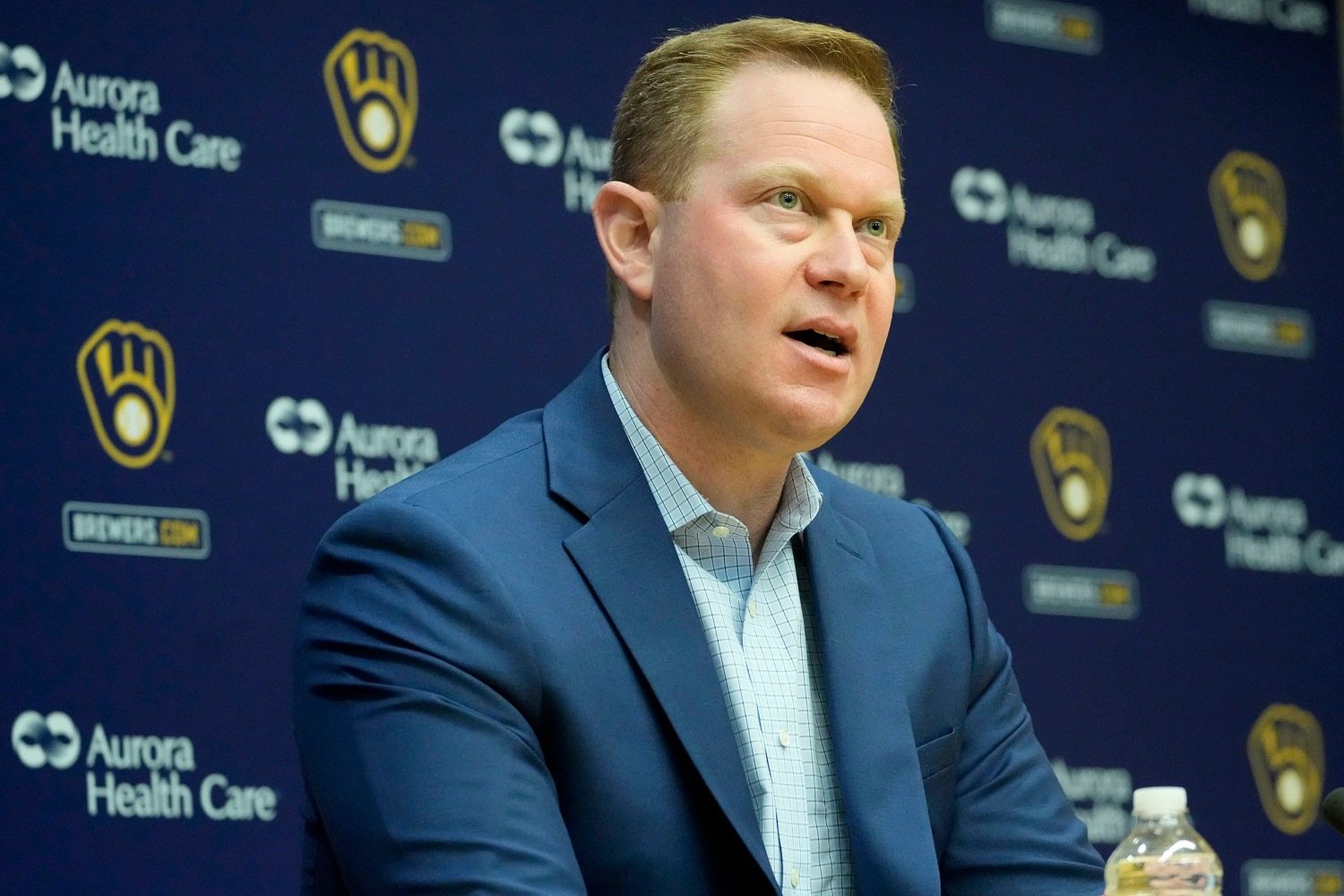
Thinking beyond his performance in terms of possible influences on his decision doesn't make the risk profile any less friendly to the team; it just makes it more friendly to the player. That's why these clauses have become popular, rather than being something proposed by the agent and resoundingly rejected by the team. Thinking big-picture is what makes Boras an innovator and leader among agents, and focusing on making the right evaluation and not worrying about it beyond that is what makes Matt Arnold a good executive.
How comfortable are you with opt-outs, in general, and with Hoskins's, specifically? Do you want to see Arnold use this tool to lock up more players in the future? What do you make of the difference between hitters and pitchers when it comes to opt-outs and their implications? Can George Costanza duck in here and give us a summary of his knowledge of risk management?





Recommended Comments
Create an account or sign in to comment
You need to be a member in order to leave a comment
Create an account
Sign up for a new account in our community. It's easy!
Register a new accountSign in
Already have an account? Sign in here.
Sign In Now