


Brewers Video
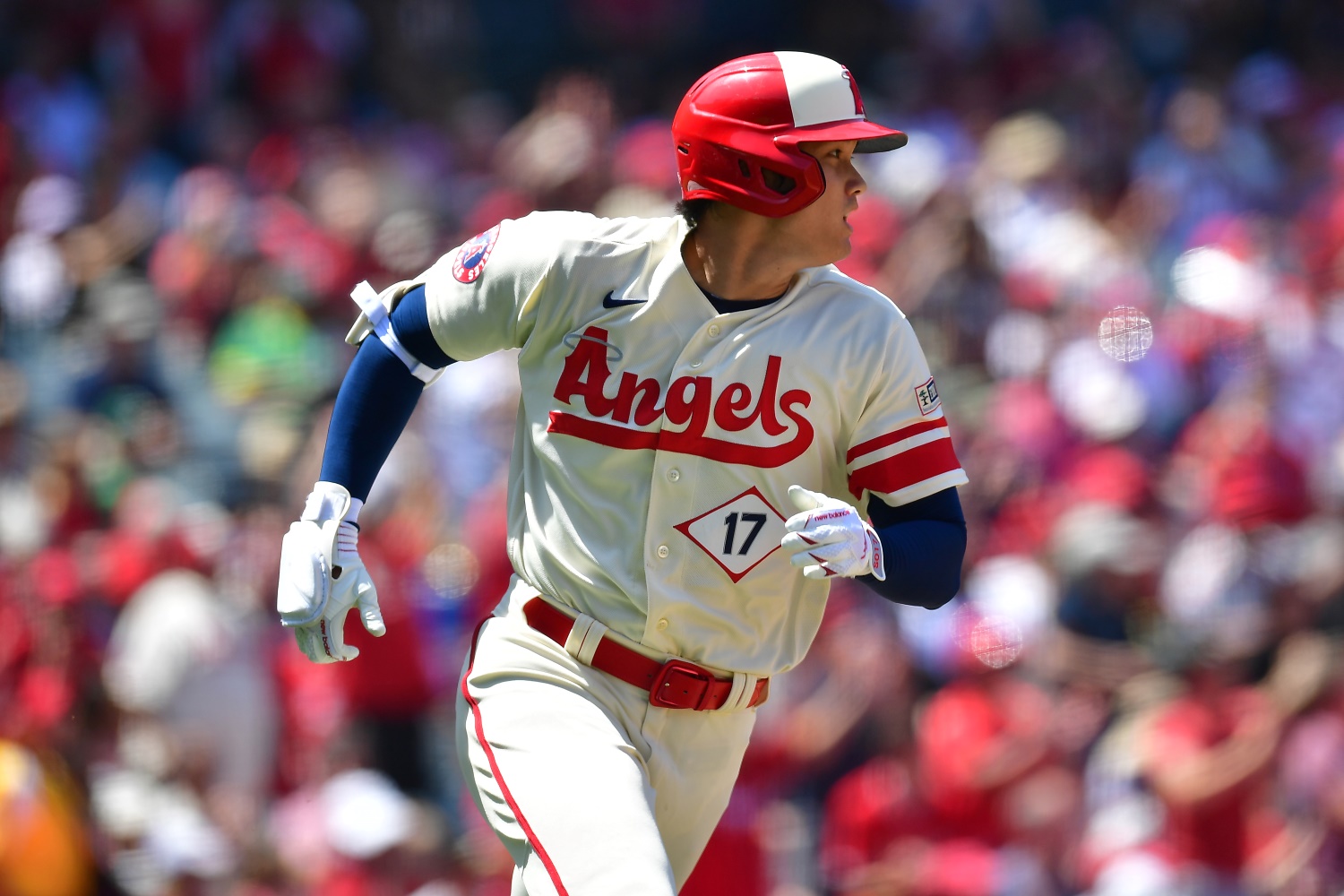
I don’t think we have any idea how good Shohei Ohtani is. The easiest historical comparison for elite two-way players is Babe Ruth, but even Ruth doesn’t hold a candle to Ohtani’s production combination. Rather, they each revolutionized the game: Ruth by demonstrating that the home run ball is not a sucker’s strategy at the plate, which arguably hastened the path to the modern game, and Ohtani by demonstrating that even within the hyper-specialized realm of contemporary Major League Baseball, a true two way player can not only succeed but break the game.
It’s easy to think of Ruth as a two-way revolutionary himself, but I’m not entirely sure that’s the correct framing. Ruth worked the bulk of his impact pitching seasons between 1915 and 1919, with his best pitching seasons occurring in 1916 (323.7 IP, 158 ERA+) and 1917 (326.3 IP, 128 ERA+). Ruth also batted in 119 games over these two seasons, producing a 122 OPS+ in 1916 and a 162 OPS+ in 1917. By 1918 and 1919, Ruth was becoming a home run masher (hitting 11 and 29 long balls respectively) even prior to his fateful trade to the Yankees, but for these truly transcendent offensive seasons, his pitching workload dwindled and his production also fell closer to league average (102 ERA+ by 1919). After the trade to the Yankees, Ruth basically became a one-way player, pitching only a handful of innings.
Ohtani worked through some injury issues and took a few years to build his batting approach in the MLB, emerging as a true two-way threat in 2021 and 2022. Here, we see a player that transcends even Ruth’s best two-way seasons. In 2021 and 2022, Ohtani worked 23 and 28 starts respectively, and improved from a 141 to a 174 ERA+--marking a jump from top-shelf number-two starter to true ace. Meanwhile, he batted full seasons in both years (155 and 157 games, with more than 630 plate appearances both years). At the plate, Ohtani was also far better than average, producing OPS+ metrics of 157 and 143 during these years. Sports Illustrated noted that these workloads in 2022 were enough for Ohtani to qualify for both pitching and hitting leaderboards in the same season, which had previously never happened. Not even Ruth ever worked enough as a two-way player to qualify for both leaderboards.
Ruth edges Ohtani slightly in the OPS+ department, but what I want to demonstrate is the importance of sequential production. In 1916 and 1917, Ruth alternated better-than-average and exceptional production in each category, with batting production lagging in 1916 and pitching production lagging in 1917. He was never bad at either of his tasks, mind you, but he was never as consistent as Ohtani. We are comparing completely different games and eras, of course, but by contextualized stats like ERA+, Ohtani simply was the better pitcher, too.
If you subscribe to the Wins Above Replacement (WAR) theory of baseball roster analysis, where players are assessed against the strength of the typical minor-league depth that would be called up in their absence, Ohtani’s numbers are pure comedy. I won’t even publish them because you won’t believe the numbers. If you think that players should be paid by production, Ohtani could be reasonably paid anywhere from $70 million to $140 million annually, when at his best. Not only do the Angels enjoy the luxury of elite pitching and batting production, the type that could lead the league in both categories, but they also get the privilege of consolidating this production in one roster spot. In a game where pitching tasks are becoming ever more specialized and having more relievers is advantageous, this gives the Angels the chance to eke out a few more wins annually by having an extra roster space for a pitcher. This surplus spot is probably worth anywhere from $5 million to $30 million, depending on whether the Angels are contending for a playoff spot (and therefore, wins are more lucrative).
Even compared to a 10 WAR player, however great they may be, Ohtani offers a benefit as a 5x5 WAR player, because he's only taking one roster spot and equally splitting elite performance on both sides of the ball. The trouble with the team that *only* has, say, a 10 WAR bat is, well, they have to take yet another roster spot to find a counterpart on the other side of the diamond.
Ruth’s revolution was one of approach, while Ohtani’s is one of roster usage and player development (can MLB clubs truly develop two-way impact players?). In this case, the Ruth revolution might remain more historically impactful, because it will be more difficult to achieve the Ohtani revolution, and we’re probably (at a minimum) a half-decade away from seeing if it works. Will MLB teams be able to replicate this two-way model to manipulate roster spots and gain true payroll value? At what point will teams settle for the benefits of even having near-league-average two-way baseball players sitting around the clubhouse, to preserve those roster spots?
Expected Records
Anaheim Angels (15-11 expected): 139 Runs Scored / 121 Runs Allowed, +14 Runs Scored / +4 Runs Allowed, 91 to 93 win pace.
The Angels followed a rough road trip against the Red Sox and Yankees with home cooking and series against the Royals and Athletics. That's a wild and uneven way to go 7-7 over your last 14.
Milwaukee Brewers (16-9 expected): 119 Runs Scored / 91 Runs Allowed, +9 Runs Scored / +17 Runs Allowed, 99 to 101 win pace.
The Brewers had a rough week: they have thus far gone 2-4 against the Red Sox and Tigers (24 RS / 31 RA, that's true 2-4 baseball for the week and the quality of 62-win baseball for an entire season).
Most Prominent Bats
Anaheim Angels: Entering Thursday's win against Oakland, the Angels' top bats were Taylor Ward (111 PA, .221 / .324 / .337, 85 OPS+), Mike Trout (106 PA, .311 / .415 / .578, 173 OPS+), Shohei Ohtani (106 PA, .261 / .330 / .489, 124 OPS+), and Hunter Renfroe (104 PA, .280 / .356 / .581, 155 OPS+).
Nope, no spot on the Brewers for another outfield bat.
Milwaukee Brewers: It's still Christian Yelich / Willy Adames / Brian Anderson / Rowdy Tellez as the top four bats in terms of plate appearances for the Brewers, but this time the order has changed.
Since the last preview, Yelich was knocked out of the top spot for Brewers playing time, and his OPS+ remains steadily below average (88 OPS+ after Wednesday's win against Detroit). Baseball Prospectus's Deserved Runs Created Plus (DRC+), a batting statistic that estimates a player's expected contribution based on contextual data, agrees that Yelich is truly below-average, with an 88 DRC+ and +/- 19 standard deviation (this early in the season, the error bars are going to be a bit wider). Even so, that suggests that underlying data mean Yelich would be expected produce a 69 DRC+ to 107 DRC+ range, meaning that his batting production could be as good as seven percent better than average, but as bad as 30 percent below average. In other words, thus far it's more probable that Yelich would be expected to produce below-average at the plate, and the trade off for his best possible outcomes is production 5 to 10 percent better than average.
After the top bats, Joey Wiemer has an incredible, ready-to-go, high-level fourth-outfielder profile, and I love it. His plate discipline profile (a non-disqualifying rate of strikeouts mixed with a great blend of walks), power profile (seven extra-base hits in 84 plate appearances), speed profile (three stolen bases on four attempts), and defensive acumen (he can play all three outfield positions without notable issues) thus far make him look like the perfect depth player for a contending outfield. Ideally, he'd be the next person up off the Brewers bench, rotating outfield starts to provide days off, and providing extended starts when a primary outfielder is injured. I already thought that Tyrone Taylor had the perfect role for his skillset, but Wiemer looks like an even better "true impact depth outfielder." I am excited to see how he can push his forthcoming hot streak.
Top Four Pitchers
Anaheim Angels: Shohei Ohtani (6 GS, 34.0 IP, 7 R); Patrick Sandoval (5 GS, 25.7 IP, 12 R); Reid Detmers (4 GS, 21.7 IP, 12 R); Tyler Anderson (4 GS, 20.0 IP, 17 R).
Milwaukee Brewers: Freddy Peralta (5 GS, 28.7 IP, 12 R); Corbin Burnes (5 GS, 27.7 IP, 15 R); Eric Lauer (5 GS, 26.0 IP, 15 R); Wade Miley (4 GS, 23.0 IP, 5 R).
If you're wondering why the Brewers have had such a rough homestand thus far, since last week's preview, Milwaukee's four top arms worked a total of 24.7 innings and allowed 15 runs. Over the span of 162 games, this pitching performance would take a .500 club down to approximately 71 wins.
Top Four Relievers
Anaheim Angels: Tucker Davidson (6 G, 1 SV, 15.0 IP, 4 R); Jaime Barria (7 G, 13.3 IP, 7 R); there are arguably two closers (two relievers with four saves each), the better one is Carlos Estevez (11 G, 11.7 IP, 3 R).
Milwaukee Brewers: Bryse Wilson (8 G, 2 SV, 16.0 IP, 3 R); Peter Strzelecki (12 G, 11.7 IP, 1 R); closer is Devin Williams (8 G, 8.0 IP, 0 R).
Even after a bad blow-up game against the Tigers, the Milwaukee bullpen remains on solid footing, outperforming the starting rotation by quite a bit. Not only are the Brewers relievers performing better relative to the starters based on National League stats, they are also 14 runs better than the average NL bullpen. If everything else was held equal, this bullpen alone would turn an 81 win club into a 90 win club. Let's hope this relatively anonymous, deep group can keep it up.
The Gist
I hope the Brewers win this series and sign Shohei Ohtani in the offseason--and the best part is there's no excuse not to do either.






Recommended Comments
There are no comments to display.
Create an account or sign in to comment
You need to be a member in order to leave a comment
Create an account
Sign up for a new account in our community. It's easy!
Register a new accountSign in
Already have an account? Sign in here.
Sign In Now