


Brewers Video
We typically talk about a pitch as a good one for a given pitcher only if it gets ground balls, induces whiffs, or forces weak contact from opponents. Sometimes, though, a pitch that doesn't grade well in any outcome-focused way is still essential to the arsenal of a good pitcher.
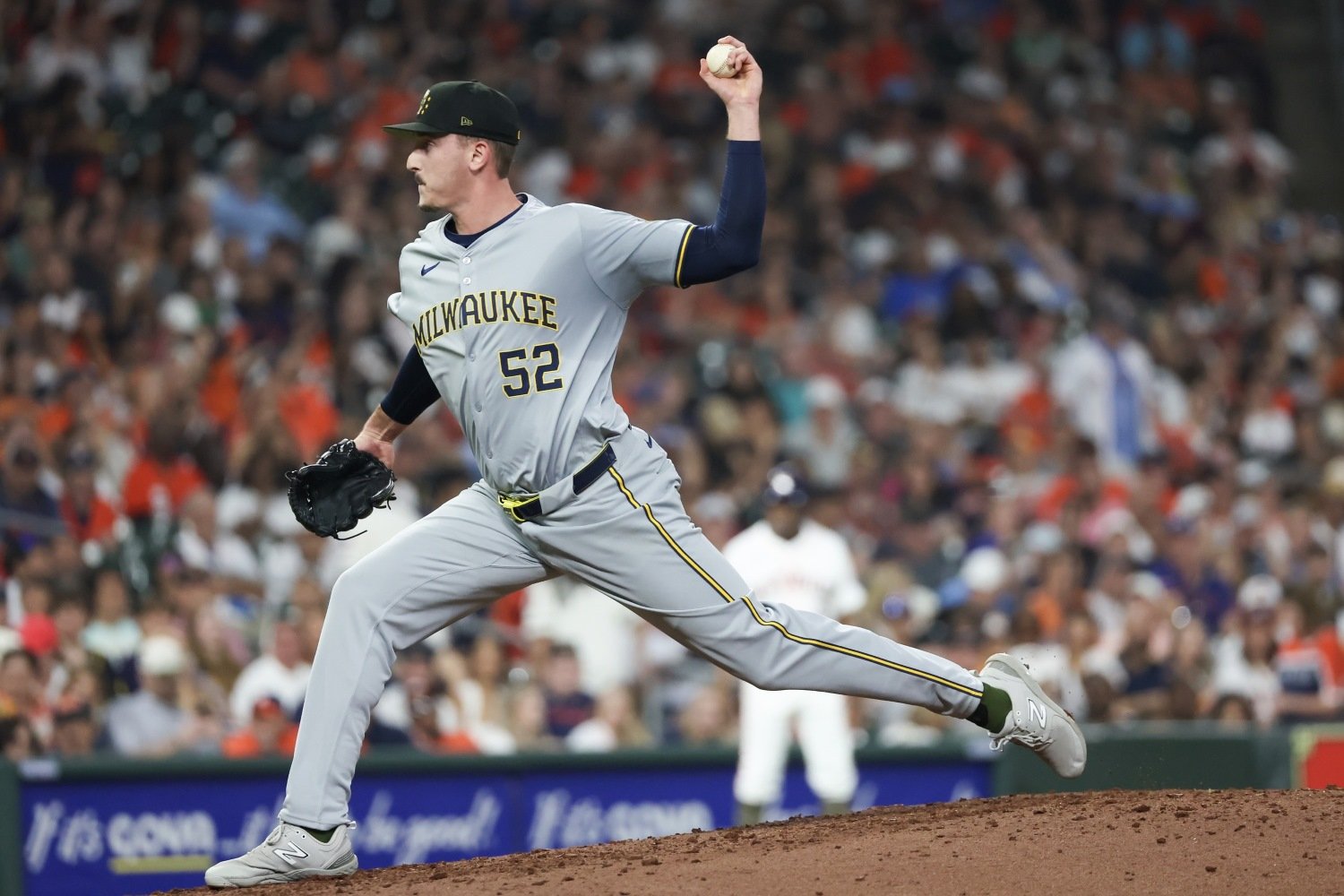
Two excellent pitches have turned Bryan Hudson into an unexpected relief ace this year. With elite extension on a fastball that touches 94 miles per hour, a sweeper with terrific two-plane movement, and a delivery that has the ball coming at a hitter from an almost unprecedented release point, he's racked up 31 strikeouts over his first 98 batters faced in a Brewers uniform. Scarcely three batters reach base for every four innings he pitches. His ERA is better than nice, at 0.68.
Hudson's fastball and sweeper are really good offerings. The heater isn't as hard as the average one, but from the left side (and accounting for that remarkable extension), it's plenty hard enough. Hitters struggle to square it up, thanks especially to a flat vertical approach angle and his good command of it. The sweeper has gotten whiffs on over 40 percent of opposing batters' swings, and ground balls on 57.1 percent of the batted balls they have managed against it.
We live, now, in the pitch modeling era, which means grades are assigned to specific pitches within a hurler's repertoire, based on measurements of their movement, speed, location, usage, and release point, using machine learning and other advanced tools to weigh those variables and determine what has historically worked against big-league hitters. There's Stuff+, from Eno Sarris of The Athletic. There's Pitching Bot, a similar system with a different numerical scale. Both of those are available at FanGraphs.
My favorite of the bunch, though, is StuffPro (and PitchPro) at Baseball Prospectus. Taking many of the same inputs as the others, this system expresses the value of individual pitches on a run vale scale, where 0 is average and a negative number is better (since the pitcher is, in effect, preventing runs by throwing that pitch). Here's how Hudson's pitches rate, by StuffPro (which focuses on the release and movement characteristics of the pitch) and PitchPro (which also includes location and is, therefore, more holistic in terms of evaluating the pitch).
| Pitch | PitchPro | StuffPro |
| Fastball | -0.7 | 0.2 |
| Sweeper | -1.2 | -0.5 |
| Cutter | 0.5 | 0 |
Few fastballs (especially those without elite velocity) score well in StuffPro, but Hudson locates his four-seamer so well that he gets significant actual value on a pitch that would grade out below-average without that variable in the mix. The sweeper, as you can see, is significantly valuable, especially (but not solely) because he commands it.
Then, there's the cutter. That one's not pretty. Hudson's raw stuff on the cutter is average, given his unusual release point (especially for that pitch) and how hard he throws it, but the pitch too often ends up in the meaty part of the zone, where it can get hit. In theory, it's a bad pitch.
In reality, though, that cutter is essential to what Hudson has been able to do this season. The numbers above are the run values per 100 pitches thrown, and when you do the math based on hos many of each Hudson has thrown, the PitchPro figures give you 2.29 runs saved. By contrast, according to Baseball Reference, Hudson has been worth 10 runs above average this year on the mound. That's probably too aggressive, so let's say he's been worth just 5. That still leaves about half his value unexplained by any of his pitches' inherent qualities. What explains that?
Whether you bat righty or lefty, you have to respect Hudson's cutter. He's not going to beat you with it very often--the pitch doesn't get whiffs, doesn't get ground balls, does get hit pretty hard--but he's going to throw it, and if you try to focus only on his fastball and sweeper, then he will stump you when the cutter comes.
Most relievers rely on two pitches. Some go to a third against opposite-handed batters, so they can keep hitters off the other two, which might be engineered primarily for same-handed guys. Hudson, however, has three different offerings he'll throw consistently to all types of hitters. That means minimal disruption in his rhythm, his targets, or his mechanics when a righty comes up after a lefty, or vice-versa. It also means that hitters can't comfortably sit on anything.

Plainly, a 0.68 ERA doesn't reflect Hudson's real talent level, and it's not sustainable. He might not get much worse than that even when regression comes, though. The main reason for that is his singular delivery and his two-pitch primary arsenal, but (to a greater extent than most relievers, especially) he keeps hitters honest. His cutter isn't good, but it's still valuable and useful. With all three pitches working and the ability to throw each for a strike, he's one of the toughest at-bats in baseball.
Do you approve of Brewers' ownership?

Follow Brewer Fanatic For Milwaukee Brewers News & Analysis



-
 1
1


Recommended Comments
There are no comments to display.
Create an account or sign in to comment
You need to be a member in order to leave a comment
Create an account
Sign up for a new account in our community. It's easy!
Register a new accountSign in
Already have an account? Sign in here.
Sign In Now