


Brewers Video
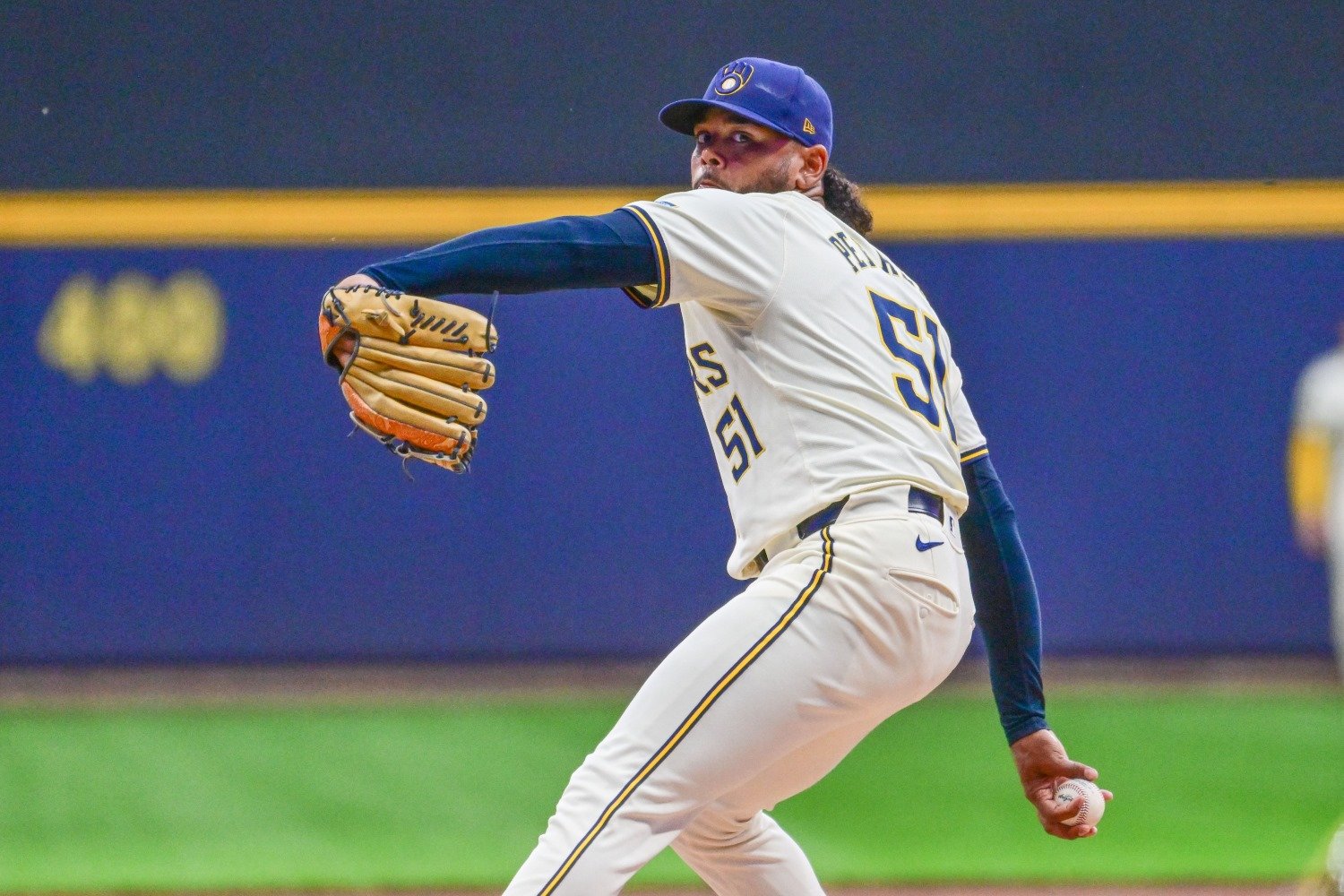
Freddy Peralta would confess that this season hasn’t gone to plan. He has tinkered a lot with his approach and his release point over the course of the campaign, and his most recent version of that seems to involve staying out of the heart of the zone altogether. So far in September, Peralta has his lowest called-strike rate (20%) and highest non-competitive pitch rate (23%) on the season, including just four called strikes in pitcher's counts this month out of 147 pitches thrown.
He is getting more chases to help his overall line, and has been successful on the surface with a 3.60 ERA. Under the hood, though, his opponents have an .877 OPS this month, while his expected FIP has risen each month--from 2.93 in April up to 4.84 in September. Declining strikeouts and increased walks aren’t productive for any pitcher, so the question becomes: What epitomizes a good start for Freddy Peralta?
Commanding The Fastball In Pitcher’s Counts
One of the more frustrating elements of a Peralta start has been how regularly he gets ahead of a hitter, only to throw wasteful pitches and let them get back into the at-bat. It’s happened time and again, but there has been a method to the madness, especially with the fastball. Compare starts where Peralta has given up fewer than two earned runs with those in which he’s given up three runs or more, and a trend emerges:

In pitcher’s counts, when Peralta has thrown more uncompetitive fastballs, it’s correlated with a swinging strike rate increase that offsets the reduction in called strikes. The "wilder" he's been out of the zone with the fastball in favorable counts, the more success he's had with limiting runs. When reviewing the pitch locations, it all starts to make a little more sense:

On days that turn out to be good ones, that fastball is in the upper third or above the strike zone in pitcher’s counts. His misses are up, out of reach and unlikely to induce a swing, but out of danger, too. Contrast that to the more damaging starts, where his misses with the fastball are down--right in any hitter's wheelhouse. Peralta's low arm slot and good induced vertical break lead to a great vertical approach angle (VAA) on his fastball, meaning hitters have a hard time getting on plane with it at the top of the zone. The problem is that a pitcher's VAA will drop as he locates lower down in the zone, and the heater can be a lot easier to square up as a result. You can see the difference below, depending on location:

The closer the VAA is to "0", the closer the pitch is to tracing a trajectory parallel to the ground as it nears the plate. A mark of above -4° is truly elite, so that -3.38° is absurd. The -4.47°, however, is more middling, and the less hoppy fastball in the heart of the zone gets squared up a lot more often--as you can see by the expected weighted on-base average (which measures the expected results, based on the quality and frequency of contact).
Taking all this into account, even though it can get uncompetitive above the zone at times, Peralta has to keep that fastball up--especially in pitcher’s counts, when a waste pitch isn't any great sin. He can reset a hitter's eye level and get some ugly swings because of the deceptiveness of the pitch, or he can miss up and survive with nothing worse than a less friendly count. But he cannot afford to drop it down into the meat of the zone, where hitters find it a lot easier to slug against him:

The stuff playing off the high fastball has been enormously effective as well. For pitches following a fastball in the upper third of the zone on a pitcher’s count, hitters are managing a batting average of .158 and slugging just .190 on the season. They have a 33% chase rate and 34% whiff rate. It seems safe to say that the fastball command will go a long way toward both his and the Brewers' results in October. That command doesn't necessarily mean staying in the strike zone, though. On the contrary, it means staying away from the middle and lower third of the zone when he gets ahead in the count, even if that means being well clear of the zone altogether.
Mixing It Up In Hitter’s Counts
When he falls behind (into 3-0, 3-1 and 2-0 counts), Peralta has seen a lot of loud contact. In part, that's due to a lack of variety in his arsenal during these counts. A 51% hard-hit rate, 40% sweet-spot launch angle rate and average exit velocity of almost 95 mph are not ideal. Neither is a home run rate of 9.1% in those counts. Limiting the long ball and the damage it can do with men on base will be pivotal for Peralta, and there might be a way he can mix his arsenal up to navigate away from some of that damage. Take a look at his pitch usage in 3-0 and 3-1 counts this season:


Peralta leans predominantly on his fastball when he gets behind in the count, as a lot of pitchers do. The league has leaned away from that trend over the years, though, and with some good reason. Defying the league's trend in this regard hasn't served Peralta well.
Interestingly, Peralta is more effective at garnering called strikes with his breaking pitches in those counts than he is with his fastball, and the results of those pitches have been markedly better. Hitters still sit fastball in what used to be called "fastball counts," especially against Peralta, who still hews to that notion. Thus, anything else fools them.

While the changeup has gotten wild at times, the slider and curveball in Peralta’s arsenal have been taken for strikes more often than not, and when hitters have swung, they’ve whiffed at a 31% clip. Most importantly, fewer balls are put in play, and when they are, the damage is considerably lower. (I have extended this to include 2-1 and 1-0 counts, to increase the sample size from nine batted balls in play.):

I’m not saying Peralta should leave the fastball in his locker, but mixing in more breaking pitches when he falls behind, especially against the more dangerous hitters he'll encounter next week, could allow him to mitigate the damage significantly. Even if he includes the changeup to keep hitters off-balance and accepts that he may lose the pitch, that walk is okay every now and then to avoid the long hit.
An ace's consistency has eluded Peralta this year, in his first season as the nominal staff ace for the Crew. There is a pattern to his more successful outings, however, and although it may be a fine line to walk, he has shown the skills to execute in patches throughout the year. I firmly believe Peralta can mow down a lineup several times through the order, if he can miss in the right direction with his fastball and mix his arsenal up more in hitter’s counts.
What do you think of the above? Do you think Freddy Peralta is capable of executing on the biggest stage? Or have you spotted any other keys to his success? Let us know your thoughts in the comments below!
Are you optimistic about the Brewers right now?

Follow Brewer Fanatic For Milwaukee Brewers News & Analysis



-
 1
1



Recommended Comments
Create an account or sign in to comment
You need to be a member in order to leave a comment
Create an account
Sign up for a new account in our community. It's easy!
Register a new accountSign in
Already have an account? Sign in here.
Sign In Now