


Darnell Junior
-
Posts
139 -
Joined
-
Last visited
Content Type
Profiles
Forums
Blogs
Events
Milwaukee Brewers News, Rumors & Analysis
2026 Milwaukee Brewers Top Prospect Rankings
Milwaukee Brewers Videos
2022 Milwaukee Brewers Draft Picks & Signing Bonuses
Milwaukee Brewers Trade & Free Agent Rumors
Milwaukee Brewers Fan Guides & Resources
2023 Milwaukee Brewers Draft Picks & Signing Bonuses
2024 Milwaukee Brewers Draft Picks & Signing Bonuses
The Milwaukee Brewers Players Project
2025 Milwaukee Brewers Draft Picks & Signing Bonuses
2026 Milwaukee Brewers Draft Picks & Signing Bonuses
Store
Downloads
Gallery
Everything posted by Darnell Junior
-
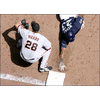 Gomez heard everyone talking smack about him, apparently. "That's just like hitting a home run" according to BA.
-
Great, great news. Marcum and Greinke are going to eat the NL alive. Marcum with a 3.5ish ERA in the AL East certainly projects well, and Greinke will have a chance to return to his 2009 form. Great, great trade. You don't get a Cy Young pitcher for much less than we gave up, ever. With the hole at CF and SS, any chance we could move Hart to center and stick Gamel or McGehee in right? I know they all played a few games at those positions last year.
-
I don't even really consider the shot on one knee to be a blown save. You can't blame a guy for throwing a changeup a foot out of the zone and a guy going yard on it. To me, Hoffman has blown one save against the 2nd best 3-4 lineup in all of baseball. In other words, I'm not concerned.
-
Thoughts on Expected Run Charts/Added Win Probability
Darnell Junior replied to topper09er's topic in Milwaukee Brewers Talk
This is because it is unlikely that that 40% number came from values of 38%, 39%, 43%, 44% etc, but rahter values like 20%, 30%, 40%, 50%, 60% etc. So even though 40 is the average it does not have a small spread of values. Just because a value has a higher uncertainty, that doesn't mean that the overall average still isn't useful in predicting future occurances. As in all statistics, the more samples that are taken, the better the data taken will be. Obviously for blocks of 10 at-bats (like you mentioned), the results aren't likely to match the predicted outcome. In the long run, however, basing decisions on the averages will come out to your advantage. It would be foolish to disregard a statistic because of a high standard deviation, as the mean itself still has value. What I'm trying to say is, these 3 year compilations of data are obviously useful. Take a look at the Gomez situation. The chances of scoring 1 run with a man on 2nd and none out is 34.8%, with a total run expectancy of 1.15. The chances of scoring 1 run with a man on 3rd and one out is 47.8%, with a total run expectancy of .967. This obviously doesn't look at the possibilities of a failed bunt attempt, or a bunt for a hit, but lets just *assume* those would roughly cancel out. This data is obviously useful. If you're playing for one run, bunt him over. If you're playing for the big inning, swing away. It's that simple. The manager should use that data, and make a decision based on those two options. You have to take into account, most importantly, the score, the inning, the 3 batters due, and the pitcher, in that order (in my opinion). A computer and a "gut" manager are the two extremes of using the data. A computer disregards the personel, and the manager pays no attention to the data. All I really want is someone who will look at both to make a decision, and not just bunt because Gomez is fast. -
I stopped watching on gameday when I saw Villy throw three balls to start. To my pleasant surprise he fought back for an unlikely K. Let's see some shadow boxing this inning.
-
There are few things in life that make me feel better than seeing "In Play, Run(s)" when the Brewers are up to bat.
-
Does Macha pinch hit for Yo to lead off this next inning? A lot of pitches, and he doesn't really have command. Plus on gameday his fastball is right around 90, which isn't like him.
-
Even though the Crew is losing, and I'm stuck in class watching gameday, it's just nice to have baseball back.
-
Good luck to him. I always enjoyed watching him play.
-
We have a few days left until the break, so if we're going to make a trade Melvin and Co. would have to decide pretty soon here. I don't want to be viewed as a pessimist here because I truly am not. I just think it's the right time. We are 2 games under .500, and we're lucky to have as many wins as that based on our pythagorean W-L. We have 2 gaping holes in our rotation, black hole position players at C, SS, and CF. We are 4.5 back in the division with 3 teams ahead of us, and 5 games back in the Wild Card with 6 teams ahead of us. By my rough estimate, for us to have a legitimate chance of the playoffs we would need about 89 wins (very generously). That means from here on out we would need to go 39-23 at a bare minimum. For a team that is on the verge of losing 3 or God forbid 4 at home to the Washington Nationals (Road Record: 12-35) I honestly do not see that happening. We have a few pieces that could be used, especially in the seller's market we're dealing with here. Cameron is the most obvious choice. Hoffman could reasonably bring back a decent prospect. I don't really like the idea of selling so low on Hardy or Hart, but I can't say I would be upset if I read in the paper tomorrow that we flipped one or both of them. My only fear would be a massive drop in attendance if we were to start selling, but I don't think it would be too great as long as we still had Gallardo, Braun, and Fielder. Thoughts?
-
Player Vehicles & Sightings Around Town
Darnell Junior replied to chuckcrim's topic in Milwaukee Brewers Talk
My buddy works at Coldstone on Highway 100. He said Prince Fielder and Casey Mcgehee walked in with their families and ordered ice cream on thursday. He told me about it by saying "In case you were wondering, and I know you were, Prince likes to get twix in his icecream." -
I feel like Mantle, Gehrig, Hornsby, Williams, etc... were always hitting around .370 when they won their crowns. I can't imagine anything lower than .350 winning a batting title back then. I'll guess Frank Robinson since Yazstrezsjfsieasfemski has already been eliminated. As for 5 I have no clue but the Orioles sure sound right.
-
Batting Order to start the 2009 season
Darnell Junior replied to UeckerAddict's topic in Milwaukee Brewers Talk
I'd like to see Hart stay at the one and put Weeks in the 2 hole once Braun is back for good. I know "The Book" and in an ideal world Braun would hit 4, but since that isn't changing any time soon, I think this is our next best option in my opinion. Weeks' new found power fits better at the 2 spot than the 1, and Harts new found patience works perfectly hitting leadoff. 1. Hart 2. Weeks 3. Braun 4. Fielder 5. Cameron 6. Hardy 7. Hall 8. Pitcher 9. Kendall At least that's how I set it up on MLB '09. -
Did anyone else chuckle when BA yelled "RICKIE WEEKS IS HAVING THE BEST GAME OF HIS CAREER!" after he made a nice play in the bottom of the ninth today? That's just great television.
-
I've been trying to think of a game that has been more thoroughly dominated than yesterday's Yovani Gallardo show. Can anyone remember anything like this happening before?
-
Per Gameday Rickie should have struck out twice and Braun is swinging at garbage again.
-
It's not really even fair how good Yovani is.
-
I think it's a little too early to be worrying about Weeks' walk totals. His OBP is too low, obviously, but the one thing he's done consistently his whole career is walk. I can't believe he just forgot how to overnight. Plus, if he keeps slugging the way he is pitchers will eventually stop giving him so many strikes. If his OBP is below .335 or so at the break, I'll start to worry. As for hitting to the opposite field, it really seems like most of the players are making a conscious effort to do so. It's unbelievably frustrating to watch players roll over outside pitch after pitch to the shortstop just because they stubbornly won't adjust their approach. It's good to see some guy's making an effort to use the whole field (Hart, Hall, Braun, Weeks). The walk totals for Braun, Hart, and Fielder are encouraging as well. I'm starting to feel pretty good about our team.
-
7-11 seems about right to me. Snake 3 wins out of these next six and start to right the ship. Too many things have gone wrong for me to worry about us being bad all year. Every starter hasn't pitched to their expectations, and I refuse to believe our bullpen is Coffey and nothing else. Cameron is the only guy really playing way over his head, while our 3-4-5 hitters are all starting slow. It's no time to panic. I said 87 wins before the season, and I won't change that because of an early skid.
-
Didn't think Macha would stick with the rivera-bush tandem after an off day but there you go.
-
How long of a leash should Gallardo have?
Darnell Junior replied to theavrock's topic in Milwaukee Brewers Talk
I say we flip Yo-gag-me Guy-sucko for a young up-and-comer like Felix Pie while we still have the chance. His arm is obviously shot from year after year of 200 IP, we'd be lucky to get a five-tool player like Pie out of this. Pull the trigger while we still have a chance! -
A casual fastball to the face is not enough to stop Rickie. Come on now Braun.
-
An RBI hit when you're least expecting it.
-
nevermind... it's 1310 for anyone else wondering.
