



Caswell
-
Posts
120 -
Joined
-
Last visited
Content Type
Profiles
Forums
Blogs
Events
News
2026 Milwaukee Brewers Top Prospects Ranking
Milwaukee Brewers Videos
2022 Milwaukee Brewers Draft Picks
Milwaukee Brewers Free Agent & Trade Rumors, Notes, & Tidbits
Guides & Resources
2023 Milwaukee Brewers Draft Picks
2024 Milwaukee Brewers Draft Picks
The Milwaukee Brewers Players Project
2025 Milwaukee Brewers Draft Pick Tracker
2026 Milwaukee Brewers Draft Tracker: Picks & Bonuses
Store
Downloads
Gallery
Everything posted by Caswell
-
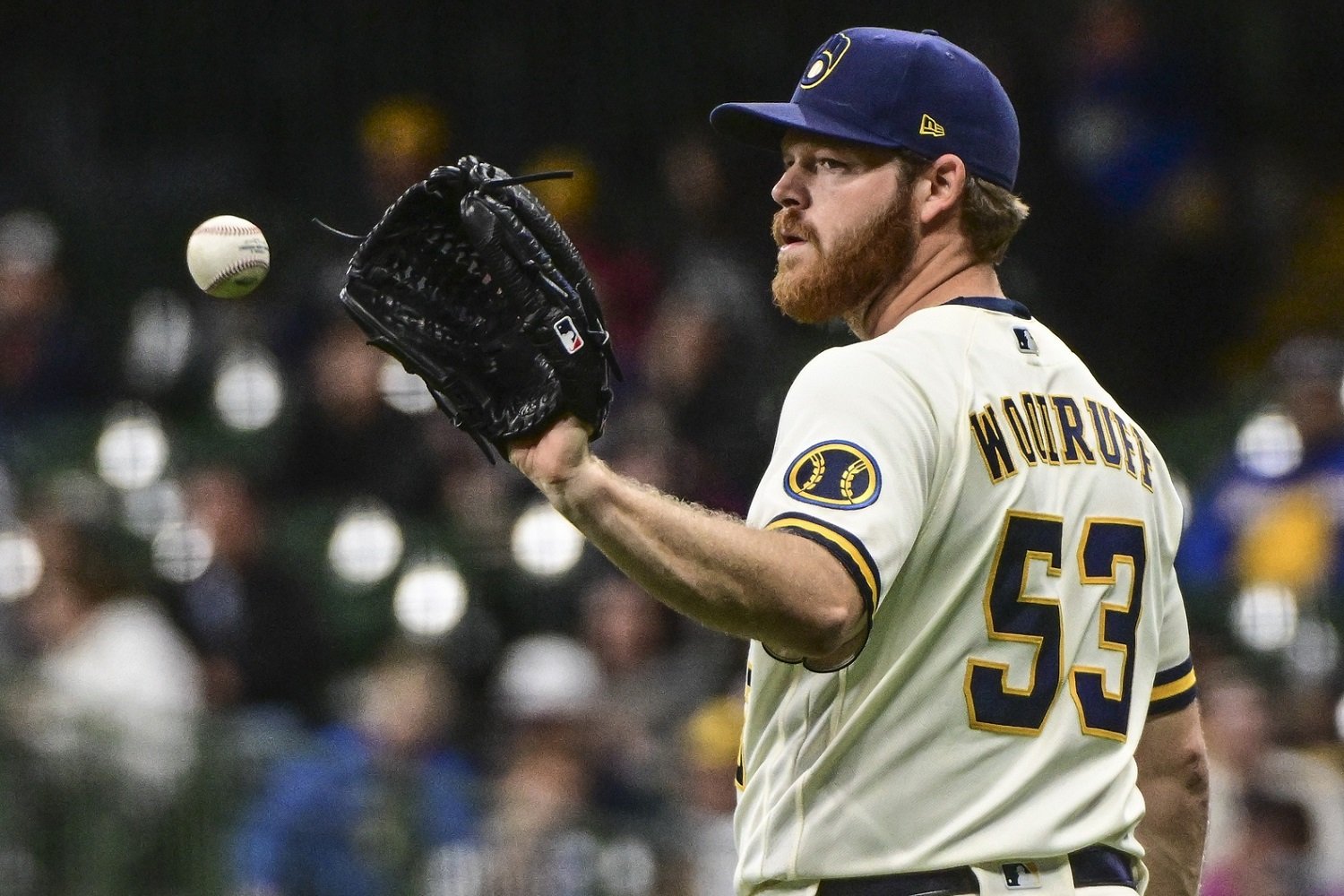 There’s a couple of recent stars drafted by the Crew in rounds 11 to 15, including one who may end up surpassing the top player signed in the future, but needs to prove it once again. Even with that current player who has shown absolute dominance in the past, it remained a difficult choice between two other former greats, but one just edges out another, while there is no true option all together for unsigned players, but a Brewer broadcaster just sneaks in. July 17th marks the beginning of the 2022 MLB Amateur Draft, so we’ve been looking back at the best players the Brewers have drafted, and the best that they failed to sign over the past week. Today we will take a look at players the Brewers drafted between rounds 11 and 15. Before you start with this one, at the last one on Saturday, where rounds 16-20 are looked at, or go back further to Wednesday’s article, where I check out players drafted by the Brewers in Round 31 or later or Friday's article where I check out players drafted by the Crew in Round 21 to Round 30. Best Player Who Signed The best player who signed with the Brewers in these rounds shared an infield with two Baseball Hall of Famers, and a potential HoF snub for over 10 years. It was a tight call between Jim Gantner and the corner-infield slugger Jeff Cirillo , but Gantner edges out Cirillo in my opinion. Eden, Wisconsin-raised Gantner was drafted with the 270th overall pick in the 12th Round of the 1974 draft out of University of Wisconsin-Oshkosh and it only took him two years to make his debut with his hometown Brewers in 1976. On that day, September 3rd, he played third base next to Hall of Famer Robin Yount and go 2 for 4 at the plate with a walk in the 11-2 win against the Detroit Tigers, which also featured a cycle by fellow Brewer, Mike Hagen. Gantner played second base, along with third in the crowded infield in the 80s of the aforementioned Yount, Hall-of-Famer Paul Molitor, and potential snub, Cecil Copper , and as such, was often overshadowed. Gumby, as Gantner was nicknamed, still earned a great reputation, with a smooth double play, and a decent bat, going 0.274 across his 17 year career, all spent with the Brewers. He didn’t have much power at the plate however, only hitting 47 home runs and once going on a four-year, 1,762 at bat streak without one. Despite this, he is the one who hit the walkoff home run, which was also his last career home run, in the 13th inning against the Boston Red Sox on August 14th, 1992 with Bob Uecker’s famous call "Here's the pitch to Gantner. He hits one to right and deep. Get up. Get up. Get outta here - gone! A dinger for Klinger! And this game is over. Woah, Jimmy Gantner!" Gantner earned 22.4 WAR in his career, is the best player to sign, and was elected to the Wisconsin Athletic Hall of Fame in 2005 for his feats. A great defensive player, he owns a career fielding percentage at third of 0.956 and at second of 0.985 for a total fielding percentage of 0.982. He only committed 152 errors in his 17 year career. Cirillo is a close second to Gantner, but will still be talked about here due to the lack of options for unsigned players. Cirillo was also a great defensive player, sharing a record of 99 consecutive games at third base without committing an error. He was signed by the Brewers after being drafted in the 1991 MLB Draft with the 286th pick and in the 11th round. His debut came in 1994, late in the May 11th game against the Boston Red Sox, and he would not take an at-bat. Cirillo played the next five seasons with Milwaukee, including earning an All-Star nod in 1997. His best offensive year came in 2000, after he was traded in 1999 from Milwaukee to the Colorado Rockies. That season he would bat 0.326 with 53 doubles and 115 RBIs, all career highs, and earn his second, and last All-Star appearance. He played another year with the Rockies before getting traded to the Seattle Mariners, in 2002, spending the 2002 season and 2003 season in the Pacific Northwest, before returning to Milwaukee once again for another two seasons. He left Milwaukee once again after the 2006 season, and spent his last year splitting time with the Minnesota Twins and the Arizona Diamondbacks before retiring in 2007. Across his 14-year career, Cirillo hit for an average of 0.286, though was better in his 8 seasons in Milwaukee, with an average of 0.306 while there. He also hit 112 home runs to pair with his 727 RBIs and accrued 34.5 WAR spending most of his time at the hot corner, owning a career fielding percentage of 0.970, but just missed out on the top spot. Best Unsigned Player This is much more boring, but I guess Mallex Smith owns this right now, as the “best player” who was unsigned. The speedy outfielder was drafted and ultimately unsigned by the Brewers in 2011, when he was drafted with the 401st pick in the 13th Round. He was drafted once again by the San Diego Padres the next year in the 5th round. He would not appear with them though, as he was packaged in a trade with Dustin Peterson, Jace Petersen, and Max Fried to the Atlanta Braves in exchange for Aaron Northcraft and Justin Upton in 2014. Smith debuted in 2016 with the Braves, before playing two years each with the Tampa Bay Rays and then Seattle Mariners. His last MLB appearance was in 2020 with the Mariners, though he owns a career batting average of 0.255 along with 5.3 WAR in his five-year career. Honorable Mentions Round 11 has been a great round for the Brewers across their history. Obviously there has been Cirillo, but there was also Darryl Hamilton back in 1986, drafted 269th overall. More recently there is Corey Hart, drafted 321st in 2000 and current pitcher, Brandon Woodruff, drafted 326th in 2014. Brewers’ broadcasters also represent in these rounds, both in the 15th round, as Jerry Augustine was 342nd overall in 1974. Also, current broadcaster Tim Dillard was drafted as a catcher in 2001 with the 448th pick, but was unsigned, though he did ultimately sign with the Brewers after being drafted in 2002 in the 34th round. Hamilton and Hart both missed out due to longevity and sustainability. Hamilton played 13 years in the MLB, with a career average of 0.291 along with 16.7 WAR, while Hart played 11 years in the bigs, and holds a career average of 0.271, along with 14.4 WAR and smashing 162 home runs. Both played as primary outfielders, and certainly had respectable careers, but Jim Gantner and Jeff Cirillo both surpass them. Woodruff is an interesting argument to be the best signed player drafted between rounds 11-15, but isn’t there yet, mostly due to struggles this year. If it weren’t for this year, he would likely be the best in my opinion, but his RAR and WAA both are concerning, and his recent fight with Raynaud’s Syndrome and some injuries provide some question marks. If he returns to his old self from 2019 onward, where he was a two-time All-Star (2019, 2021), and finished fifth in Cy Young voting in 2021, he will easily make it back to the top. The right-handed throwing Woodruff has started 89 of the 104 games pitched, with all of his outings of relief in his first two years in 2017 and 2018. He has an ERA of 3.32 in his 6]-year career, along with a great 129 ERA+ while having 12.7 WAR. If those question marks can be answered, which looks like they might, he will be the best of the bunch. Be sure to discuss in the comments about my rankings! Do you think that Woodruff should be the top? Or are the two pronged, Jim Gantner and Jeff Cirillo better right now? Unsigned doesn’t offer much, but is Tim Dillard better than Mallex Smith? Finally, should I have included John Jaha too? Let me know and keep an eye out for the next one!
 -
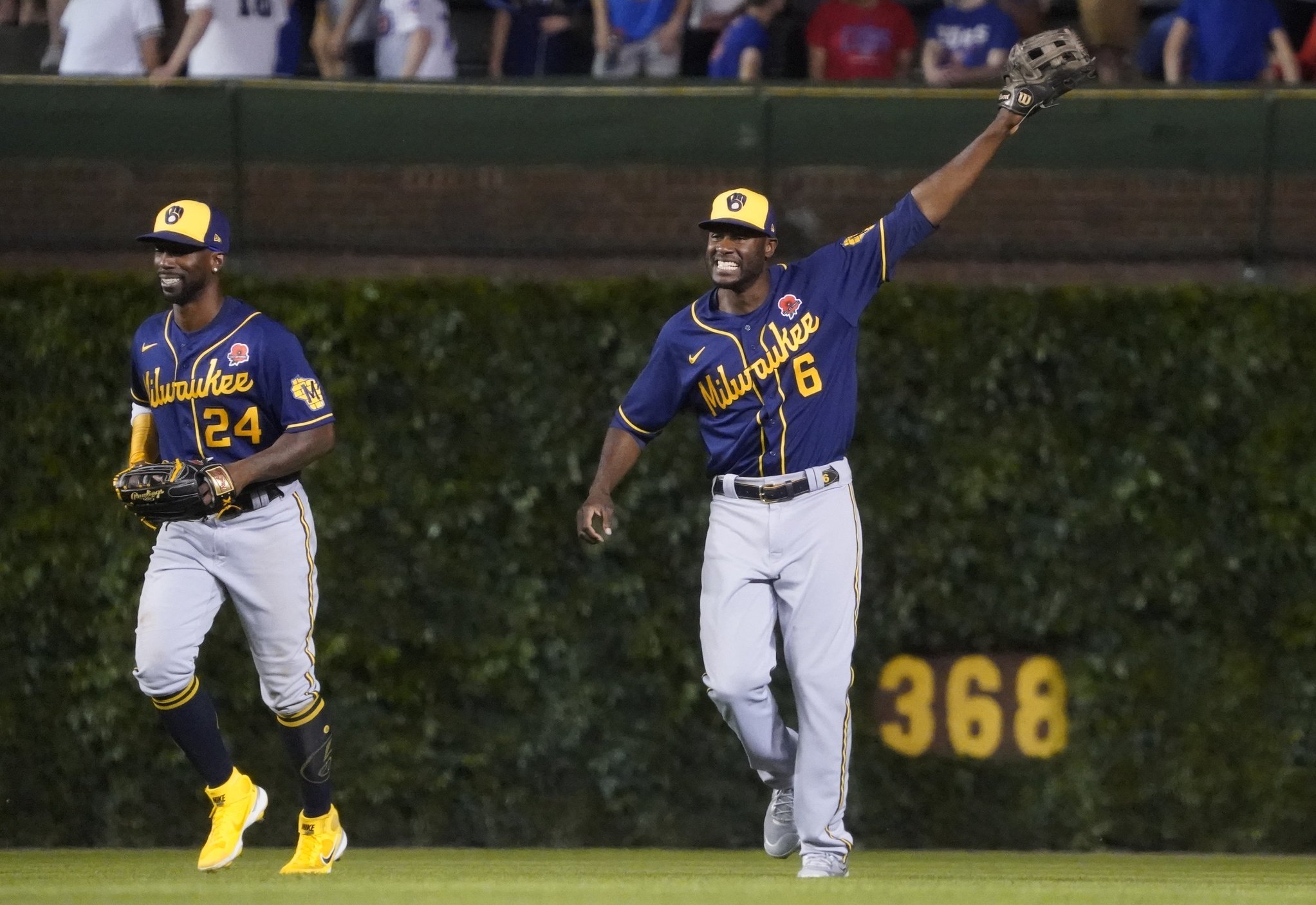 This year’s draft will have 20 rounds, and despite being potentially considered the new “bottom of the barrel” in the draft, there have been some great Major Leaguers, along with plenty of serviceable ones drafted between the 16th and 20th round. In fact, in rounds 16 through 20, the round which consists of the most players appearing in the MLB drafted by the Brewers is the 19th round. With the MLB Draft starting on July 17th, we're looking back at the best players the Brewers have drafted, and the best that they failed to sign. Today we will take a look at players the Brewers drafted between rounds 16 and 20. Before you start, take a look at Wednesday’s article, where I check out players drafted by the Brewers in Round 31 or later or Friday's article where I check out players drafted by the Crew in Round 21 to Round 30. Best Player Who Signed It has to be Lorenzo Cain . I am just repeating myself when I say that the best player to sign is obvious. The Brewers drafted Cain in the 17th round of the 2004 MLB Amateur Draft with the 496th overall pick out of Madison County High School in Madison, Florida. A very inexperienced player at the time, he only started playing baseball for the first time in his sophomore year as a result of not making the school’s basketball team. He didn't even own a baseball glove. Despite this, the Crew got a good one, but weren’t really able to see this in Milwaukee until the end of his career. Cain didn't make it to the majors until 2010, when he came up as a result of injury on June 16th and pinch hit for Brewers against the Braves in Milwaukee. Like so many he robbed of base hits, his first at-bat as a pinch hitter ended in a diving catch by the left fielder. Cain played in 43 games in 2010 with the Brewers, earning a 0.306 batting average with one home run. The following offseason, he was sent to Kansas City to play for the Royals along with Alcides Escobar, Jake Odorizzi, and Jeremy Jeffress in exchange for Yuniesky Betancourt and Zack Grienke. LoCain, the primary center fielder, wasn’t a key contributor at first, but was immense in the Royals back-to-back World Series appearances in 2014 and 2015. This was in large part due to offseason work with Al Hobson, a NJCAA Track and Field Hall of Famer, who was a track coach with the Kansas City Kansas Community College at the time, in order to better his speed and baserunning. He doubled his infield hits from his 2013 season, along with 28 stolen bases, a career high. He was great in 2014, but took it up a step in the postseason where he ended up winning the ALCS MVP in a sweep of the Baltimore Orioles following the Royals sweep of the Los Angeles Angels of Anaheim in the divisional round. The following 2015 season would be his best, with Cain being named to his first All-Star game and finishing third in MVP voting. This season ended with a World Series ring for his team. He went on to play another two seasons in Kansas City for a total of seven there with a batting average of 0.289 along with 56 home runs and 120 stolen bases. He returned to Milwaukee in 2018, as he signed a contract the same day Christian Yelich joined the Brewers in a trade. This move ended successfully, with an All-Star appearance in his first year. The following year, 2019, Cain was finally awarded a gold glove for his defensive prowess after leading all center fielders in fielding percentage. Things turned relatively sour though that year, as he battled through injuries. Injuries continued in 2021 after Cain opted out of the 2020 pandemic shortened season. He started this season with the Brewers, but struggled, leading the Brewers to designate Lo for assignment, likely ending his career. Despite this, he remains a pivotal and loved figure in Milwaukee, as his “show me love” celebration was adopted by the team immediately upon leaving the team. He accumulated 13.8 WAR with the Brewers, for a career total of 38.4, along with hitting 0.283 along with 87 home runs while only committing 42 errors for a career fielding percentage of 0.986. Best Unsigned Player I am certainly becoming a broken record, as there are again two players who earn the spot as best unsigned player. My choice for the top spot is left- handed starting pitcher Carlos Rodón who is the one who got away, after the Brewers drafted him in the round 11 with the 491th pick of the 2011 MLB Draft. He decided to go to North Carolina State University, where he was incredibly successful, leading him to be drafted in the 1st round, 3rd overall in the 2014 draft by the Chicago White Sox. Rodón made his MLB debut for White Sox just a year later, in 2015, against the Cleveland Indians on April 21st, where he allowed two earned runs off of three hits and three walks in 2.1 innings in relief with one strike out. That year, along with 2016 would be great, with over 20 starts each, but the injury bug hit. He performed enough to still be named the 2019 opening day starter, but was once again sidelined and shut down for the season and required Tommy John surgery. The COVID-19 shortened 2020 season did not feature Rodón often, but he flourished in 2021, earning him his first All-Star appearance and finishing fifth in Cy Young voting. He won 13 games with 5 losses in the 24 games started and would have led the entire major leagues with his ERA of 2.37 if he were to reach the innings threshold. He also pitched a no-hitter in a start against the Cleveland Indians on April 21st. His career year in 2021 marked the end of his seven years in Chicago with the White Sox, where he started 116 of the 121 games he played in, along with two complete games (the other coming in his rookie 2015 season). His ERA in this time: 3.79 along with a FIP of 3.94 and an ERA+ of 110. The overall career would be worse than the honorable mention if it weren’t for Rodón’s 2021 and what he has done so far with his 2022 season with the San Francisco Giants after signing a big money deal with them in the previous offseason. So far he has an ERA of 2.87 and an N.L. leading 2.23 FIP and 0.40 HR/9 in his seven wins and five loses across 16 games, all started. He also owns a fantastic ERA+ of 144. A candidate once again for the Cy Young Award, this time in the N.L., he has started 132 of his 137 games in his eight year career, winning 49 with an ERA of 3.68. Honorable Mention It was a difficult choice between Carlos Rodón and Kevin McReynolds , but the potential ceiling of the former edged out the latter. McReynolds more than earned his 19th round pick in the 1978 Draft with the 475th overall pick by the Milwaukee Brewers. As a senior in high school, he led his Sylvan Hills High School baseball team out of Sherwood, Arkansas to the Arkansas Class AAA State Baseball Championship, along with winning the MVP in the tournament and Arkansas High School Baseball Player of the Year largely in part to his 0.638 batting average and 60 RBIs with 15 home runs in his team’s first 25 regular season games. Rather than signing with the Brewers, McReynolds elected to play for the University of Arkansas Razorbacks before being picked once again in 1981 in the first round sixth overall by the San Diego Padres. He debuted in 1983 with the Padres on June 2nd against the Philadelphia Phillies, hitting a home run in his fourth at-bat for the day after previously making outs. The following year McReynolds starred with the Padres, helping them to reach the World Series for the first time in their history, though would lose in five games to the Detroit Tigers. He would not play in the world series, though, after breaking his wrist trying to break up a double play in game four of the NLCS. He went on to play another two seasons in San Diego for a total of four with a batting average of 0.263 along with 65 home runs and 260 RBIs across them before being dealt to the New York Mets. In his second year with the Mets, the 1988 season, he would go on to finish third in MVP voting, but is most known for a collision with Mike Scioscia in the NLCS against the Dodgers in the first game, which ended with the Dodgers going to the World Series in seven games. McReynolds played another three seasons with the Mets, but was dealt to the Kansas City Royals in the 1991 trade which saw him and two other players bring Bret Saberhagen to the Big Apple. He only spent two seasons there before returning to New York opposite Vince Coleman. Going on to retire the following year in 1994, McReynolds carried a career batting average of 0.265 across his twelve years with 211 home runs and 807 RBIs for 30.1 WAR. Let me know what you think of my rankings! Do you think Rodón will end his career better than McReynolds? Or do other players like Tim Teufel or Don Slaught out rank them both? I think Cain is the no doubt option for signed! Be sure to check out the previous iterations, and keep an eye out for the next one, where I check out the next five rounds!
 -
The Brewers drafted a universal fan favorite in the 16th round, who only ended up with significant playing time in Milwaukee in the twilight of his career. They also were unable to secure some greats, one of whom is a Cy Young contender. This year’s draft will have 20 rounds, and despite being potentially considered the new “bottom of the barrel” in the draft, there have been some great Major Leaguers, along with plenty of serviceable ones drafted between the 16th and 20th round. In fact, in rounds 16 through 20, the round which consists of the most players appearing in the MLB drafted by the Brewers is the 19th round. With the MLB Draft starting on July 17th, we're looking back at the best players the Brewers have drafted, and the best that they failed to sign. Today we will take a look at players the Brewers drafted between rounds 16 and 20. Before you start, take a look at Wednesday’s article, where I check out players drafted by the Brewers in Round 31 or later or Friday's article where I check out players drafted by the Crew in Round 21 to Round 30. Best Player Who Signed It has to be Lorenzo Cain . I am just repeating myself when I say that the best player to sign is obvious. The Brewers drafted Cain in the 17th round of the 2004 MLB Amateur Draft with the 496th overall pick out of Madison County High School in Madison, Florida. A very inexperienced player at the time, he only started playing baseball for the first time in his sophomore year as a result of not making the school’s basketball team. He didn't even own a baseball glove. Despite this, the Crew got a good one, but weren’t really able to see this in Milwaukee until the end of his career. Cain didn't make it to the majors until 2010, when he came up as a result of injury on June 16th and pinch hit for Brewers against the Braves in Milwaukee. Like so many he robbed of base hits, his first at-bat as a pinch hitter ended in a diving catch by the left fielder. Cain played in 43 games in 2010 with the Brewers, earning a 0.306 batting average with one home run. The following offseason, he was sent to Kansas City to play for the Royals along with Alcides Escobar, Jake Odorizzi, and Jeremy Jeffress in exchange for Yuniesky Betancourt and Zack Grienke. LoCain, the primary center fielder, wasn’t a key contributor at first, but was immense in the Royals back-to-back World Series appearances in 2014 and 2015. This was in large part due to offseason work with Al Hobson, a NJCAA Track and Field Hall of Famer, who was a track coach with the Kansas City Kansas Community College at the time, in order to better his speed and baserunning. He doubled his infield hits from his 2013 season, along with 28 stolen bases, a career high. He was great in 2014, but took it up a step in the postseason where he ended up winning the ALCS MVP in a sweep of the Baltimore Orioles following the Royals sweep of the Los Angeles Angels of Anaheim in the divisional round. The following 2015 season would be his best, with Cain being named to his first All-Star game and finishing third in MVP voting. This season ended with a World Series ring for his team. He went on to play another two seasons in Kansas City for a total of seven there with a batting average of 0.289 along with 56 home runs and 120 stolen bases. He returned to Milwaukee in 2018, as he signed a contract the same day Christian Yelich joined the Brewers in a trade. This move ended successfully, with an All-Star appearance in his first year. The following year, 2019, Cain was finally awarded a gold glove for his defensive prowess after leading all center fielders in fielding percentage. Things turned relatively sour though that year, as he battled through injuries. Injuries continued in 2021 after Cain opted out of the 2020 pandemic shortened season. He started this season with the Brewers, but struggled, leading the Brewers to designate Lo for assignment, likely ending his career. Despite this, he remains a pivotal and loved figure in Milwaukee, as his “show me love” celebration was adopted by the team immediately upon leaving the team. He accumulated 13.8 WAR with the Brewers, for a career total of 38.4, along with hitting 0.283 along with 87 home runs while only committing 42 errors for a career fielding percentage of 0.986. Best Unsigned Player I am certainly becoming a broken record, as there are again two players who earn the spot as best unsigned player. My choice for the top spot is left- handed starting pitcher Carlos Rodón who is the one who got away, after the Brewers drafted him in the round 11 with the 491th pick of the 2011 MLB Draft. He decided to go to North Carolina State University, where he was incredibly successful, leading him to be drafted in the 1st round, 3rd overall in the 2014 draft by the Chicago White Sox. Rodón made his MLB debut for White Sox just a year later, in 2015, against the Cleveland Indians on April 21st, where he allowed two earned runs off of three hits and three walks in 2.1 innings in relief with one strike out. That year, along with 2016 would be great, with over 20 starts each, but the injury bug hit. He performed enough to still be named the 2019 opening day starter, but was once again sidelined and shut down for the season and required Tommy John surgery. The COVID-19 shortened 2020 season did not feature Rodón often, but he flourished in 2021, earning him his first All-Star appearance and finishing fifth in Cy Young voting. He won 13 games with 5 losses in the 24 games started and would have led the entire major leagues with his ERA of 2.37 if he were to reach the innings threshold. He also pitched a no-hitter in a start against the Cleveland Indians on April 21st. His career year in 2021 marked the end of his seven years in Chicago with the White Sox, where he started 116 of the 121 games he played in, along with two complete games (the other coming in his rookie 2015 season). His ERA in this time: 3.79 along with a FIP of 3.94 and an ERA+ of 110. The overall career would be worse than the honorable mention if it weren’t for Rodón’s 2021 and what he has done so far with his 2022 season with the San Francisco Giants after signing a big money deal with them in the previous offseason. So far he has an ERA of 2.87 and an N.L. leading 2.23 FIP and 0.40 HR/9 in his seven wins and five loses across 16 games, all started. He also owns a fantastic ERA+ of 144. A candidate once again for the Cy Young Award, this time in the N.L., he has started 132 of his 137 games in his eight year career, winning 49 with an ERA of 3.68. Honorable Mention It was a difficult choice between Carlos Rodón and Kevin McReynolds , but the potential ceiling of the former edged out the latter. McReynolds more than earned his 19th round pick in the 1978 Draft with the 475th overall pick by the Milwaukee Brewers. As a senior in high school, he led his Sylvan Hills High School baseball team out of Sherwood, Arkansas to the Arkansas Class AAA State Baseball Championship, along with winning the MVP in the tournament and Arkansas High School Baseball Player of the Year largely in part to his 0.638 batting average and 60 RBIs with 15 home runs in his team’s first 25 regular season games. Rather than signing with the Brewers, McReynolds elected to play for the University of Arkansas Razorbacks before being picked once again in 1981 in the first round sixth overall by the San Diego Padres. He debuted in 1983 with the Padres on June 2nd against the Philadelphia Phillies, hitting a home run in his fourth at-bat for the day after previously making outs. The following year McReynolds starred with the Padres, helping them to reach the World Series for the first time in their history, though would lose in five games to the Detroit Tigers. He would not play in the world series, though, after breaking his wrist trying to break up a double play in game four of the NLCS. He went on to play another two seasons in San Diego for a total of four with a batting average of 0.263 along with 65 home runs and 260 RBIs across them before being dealt to the New York Mets. In his second year with the Mets, the 1988 season, he would go on to finish third in MVP voting, but is most known for a collision with Mike Scioscia in the NLCS against the Dodgers in the first game, which ended with the Dodgers going to the World Series in seven games. McReynolds played another three seasons with the Mets, but was dealt to the Kansas City Royals in the 1991 trade which saw him and two other players bring Bret Saberhagen to the Big Apple. He only spent two seasons there before returning to New York opposite Vince Coleman. Going on to retire the following year in 1994, McReynolds carried a career batting average of 0.265 across his twelve years with 211 home runs and 807 RBIs for 30.1 WAR. Let me know what you think of my rankings! Do you think Rodón will end his career better than McReynolds? Or do other players like Tim Teufel or Don Slaught out rank them both? I think Cain is the no doubt option for signed! Be sure to check out the previous iterations, and keep an eye out for the next one, where I check out the next five rounds! View full article
-
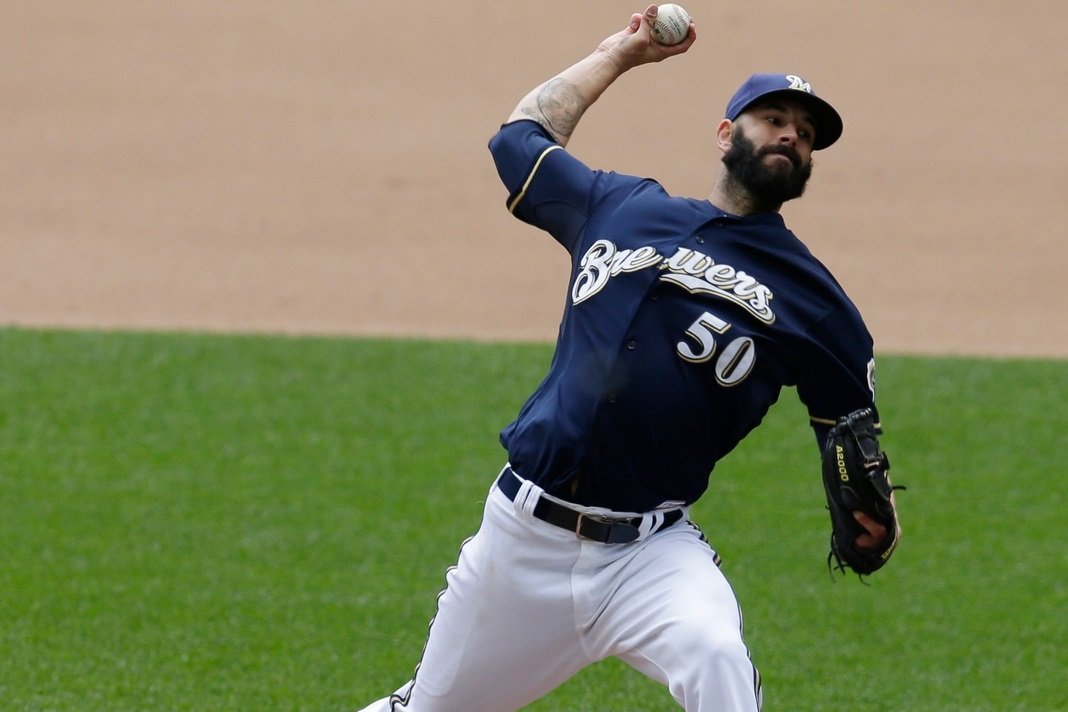 With the MLB Draft starting on July 17th, we're looking back at the best players the Brewers have drafted, and the best that they failed to sign. Today we will take a look at players the Brewers drafted between rounds 21 and 30. Before you start, take a look at Wednesday’s article, where I check out players drafted by the Brewers in Round 31 or later. The rounds covered here, 21st to 30th will not be included in this year's edition of the MLB Amateur Draft, but there have been some great players selected by the Crew in the past. Most of these players have not signed, just like we’ve seen in the past. There are more players to choose from here, especially in players who have signed, but it is a little lighter than what we will see later on. Let’s check it out. Best Player Who Signed Just like last time, there is one true option for the best player who actually signed. This time it is Mike Fiers. There is Craig Breslow, who was also considered, and Chris Sáenz, who will be getting another article in the future from me due to his incredibly interesting career, but Fiers surpasses both easily. Fiers was drafted by the Brewers with pick 676 in the 22nd round of the 2009 MLB Amateur Draft out of Nova Southeastern University based in Fort Lauderdale, Florida. He could be considered the best draft pick by the Brewers simply due to being the whistleblower for the Houston Astros’ cheating during their World Series winning 2017, along with 2018, along with some other unconfirmed years, when they stole signs using a camera located in centerfield before relaying pitch type to the batter in some way. Despite this, Fiers would still be the best player who signed with the Brewers between rounds 21 and 30. Not only was he a great pitcher in his time with the Crew, his trade away brought fantastic players and he continued to perform. The major league debut of Smoky, a nickname he goes by, was a game-ending inning where he allowed no runs on two hits and a walk, striking out two batters in Milwaukee against the Rockies in 2011. He continued to pitch 11 total seasons, to an ERA of 4.07 across 1151.0 innings in 218 games, 199 of those started. He played his first five years in Milwaukee, to an ERA of 3.66 there in 71 games, starting 56. He later spent time with the Houston Astros, where he won the 2017 World Series, as well as with the Detroit Tigers and Oakland Athletics. During this time, he pitched two no-hitters, one in 2015 with the Astros, and the other in 2019 with the Athletics. Fiers has earned 12.4 WAR thus far. His last major league appearance came in 2021, but he pitched in the Mexican League for the Leones de Yucatán in 2022 until June 29th when his contract was purchased by the Uni-President Lions who play in the Chinese Professional Baseball League. Regardless of his impressive resumé, he helped set up the Brewers for their future in a transaction which sent him away from Milwaukee. On the 30th of July, 2015, Fiers, along with Carlos Gómez were sent in a package which yielded a return of Adrian Houser, Brett Phillips, Domingo Santana and Josh Hader . These players have combined 20.1 WAR in their time with Milwaukee (3.2 Adrian Houser, 1.3 Brett Phillips, 3.7 Domingo Santana, 12.1 Josh Hader). Fiers continues to add value to the Brewer Organization due to Houser and Hader remaining with the team. Best Unsigned Player There are two players who were not signed by the Brewers, after being initially drafted who have the most accolades in their careers. Despite this, neither of them are the best unsigned players in my opinion. Rather, a guy drafted with the 781st pick in the 26th Round during the 2015 draft out of American Heritage High School in Delray Beach, Florida by the name of Jonathan India earns the mark as best unsigned Brewer draft pick in this round range. He doesn’t have the career history of the other players who will be considered honorable mentions, but India is, in my opinion, the superior player, and will only get better. After not signing with the Brewers, he spent three years playing for the University of Florida Gators before being selected by the Cincinnati Reds in the 2018 draft with the 5th pick in the 1st round. The 25-year-old second baseman made his MLB debut on April 1st, 2021 against the Cardinals, going 2-4 at the plate. In 2021, he batted .260 while blasting 21 home runs en route to winning N.L. Rookie of the Year Honors. This year he has been struggling with injuries, playing in only 28 games, batting .211 with a WAR of -1.1. Even with his struggles this year, I fully expect him to be a fantastic player, and one that the Brewers will regret not signing. This is especially the case since they will see him often since he plays for a divisional opponent. Honorable Mentions If it were not for Jonathan India, I would say that Jake Arrieta is the best unsigned Brewer draft pick in rounds 21-30. Arrieta was drafted in the 26th round with pick number 775 in the 2005 draft. Previously, he was drafted by the Cincinnati Reds in the 31st round in 2004, but finally was signed by the Baltimore Orioles, when they drafted him with the 159th pick in round 5 of the 2007 MLB Draft. Arrieta made his MLB debut with the Orioles on June 10th, 2010 against the Yankees, earning the win after allowing three earned runs on four hits and four walks while striking out six in his quality start. The right-handed pitcher played for 12 seasons, last appearing in a game in 2021, for a career ERA of 3.98 across 285 games, 279 of which were starts. He has played for the Phillies and the Padres in addition to the Orioles, but most (especially most Brewer fans) will remember him for his time with the Cubs, where he spent parts of six seasons, accumulating 19.2 of his 22.8 career WAR. In this time, he not only was part of the team which won the 2016 World Series, but he also was the 2015 N.L. CY Young Award winner, along with pitching a no-hitter in 2015 and then again in 2016, getting one All-Star Game nod in 2016. Another divisional foe lands in the honorable mentions, with right-handed pitcher Matt Morris not signing with the Brewers after getting picked 724th in the 26th round of the 1992 MLB Draft. Instead, he went to Seton Hall before getting drafted 12th overall in the first round of the 1995 MLB Draft by the St. Louis Cardinals. He debuted shortly thereafter, in 1997 against the Astros, getting a no decision in the five innings he pitched, allowing an earned run on seven hits, with a walk and a strikeout. Morris pitched 11 years, not playing in 1999 due to Tommy John surgery, mostly with the Cardinals, though did spend parts of two years with the San Francisco Giants and the Pittsburgh Pirates, retiring on April 30th of 2008. Over his career, he started 276 of the 307 games played to an ERA of 3.98 across 1806 innings. As part of the Cardinals, he led all N.L. pitchers in wins in 2001 en route to an All-Star appearance, which he followed up with another in 2002. Thank you for reading and don’t forget to check out the previous edition, where I go through rounds 31 and later! Be sure to let me know if you agree, especially with my choice of India!
 -
The Brewers found a gem in the 22nd round that helped the team when he was on it, and also helped the team when he was traded. But they also were unable to sign some players who ended up on rival teams. With the MLB Draft starting on July 17th, we're looking back at the best players the Brewers have drafted, and the best that they failed to sign. Today we will take a look at players the Brewers drafted between rounds 21 and 30. Before you start, take a look at Wednesday’s article, where I check out players drafted by the Brewers in Round 31 or later. The rounds covered here, 21st to 30th will not be included in this year's edition of the MLB Amateur Draft, but there have been some great players selected by the Crew in the past. Most of these players have not signed, just like we’ve seen in the past. There are more players to choose from here, especially in players who have signed, but it is a little lighter than what we will see later on. Let’s check it out. Best Player Who Signed Just like last time, there is one true option for the best player who actually signed. This time it is Mike Fiers. There is Craig Breslow, who was also considered, and Chris Sáenz, who will be getting another article in the future from me due to his incredibly interesting career, but Fiers surpasses both easily. Fiers was drafted by the Brewers with pick 676 in the 22nd round of the 2009 MLB Amateur Draft out of Nova Southeastern University based in Fort Lauderdale, Florida. He could be considered the best draft pick by the Brewers simply due to being the whistleblower for the Houston Astros’ cheating during their World Series winning 2017, along with 2018, along with some other unconfirmed years, when they stole signs using a camera located in centerfield before relaying pitch type to the batter in some way. Despite this, Fiers would still be the best player who signed with the Brewers between rounds 21 and 30. Not only was he a great pitcher in his time with the Crew, his trade away brought fantastic players and he continued to perform. The major league debut of Smoky, a nickname he goes by, was a game-ending inning where he allowed no runs on two hits and a walk, striking out two batters in Milwaukee against the Rockies in 2011. He continued to pitch 11 total seasons, to an ERA of 4.07 across 1151.0 innings in 218 games, 199 of those started. He played his first five years in Milwaukee, to an ERA of 3.66 there in 71 games, starting 56. He later spent time with the Houston Astros, where he won the 2017 World Series, as well as with the Detroit Tigers and Oakland Athletics. During this time, he pitched two no-hitters, one in 2015 with the Astros, and the other in 2019 with the Athletics. Fiers has earned 12.4 WAR thus far. His last major league appearance came in 2021, but he pitched in the Mexican League for the Leones de Yucatán in 2022 until June 29th when his contract was purchased by the Uni-President Lions who play in the Chinese Professional Baseball League. Regardless of his impressive resumé, he helped set up the Brewers for their future in a transaction which sent him away from Milwaukee. On the 30th of July, 2015, Fiers, along with Carlos Gómez were sent in a package which yielded a return of Adrian Houser, Brett Phillips, Domingo Santana and Josh Hader . These players have combined 20.1 WAR in their time with Milwaukee (3.2 Adrian Houser, 1.3 Brett Phillips, 3.7 Domingo Santana, 12.1 Josh Hader). Fiers continues to add value to the Brewer Organization due to Houser and Hader remaining with the team. Best Unsigned Player There are two players who were not signed by the Brewers, after being initially drafted who have the most accolades in their careers. Despite this, neither of them are the best unsigned players in my opinion. Rather, a guy drafted with the 781st pick in the 26th Round during the 2015 draft out of American Heritage High School in Delray Beach, Florida by the name of Jonathan India earns the mark as best unsigned Brewer draft pick in this round range. He doesn’t have the career history of the other players who will be considered honorable mentions, but India is, in my opinion, the superior player, and will only get better. After not signing with the Brewers, he spent three years playing for the University of Florida Gators before being selected by the Cincinnati Reds in the 2018 draft with the 5th pick in the 1st round. The 25-year-old second baseman made his MLB debut on April 1st, 2021 against the Cardinals, going 2-4 at the plate. In 2021, he batted .260 while blasting 21 home runs en route to winning N.L. Rookie of the Year Honors. This year he has been struggling with injuries, playing in only 28 games, batting .211 with a WAR of -1.1. Even with his struggles this year, I fully expect him to be a fantastic player, and one that the Brewers will regret not signing. This is especially the case since they will see him often since he plays for a divisional opponent. Honorable Mentions If it were not for Jonathan India, I would say that Jake Arrieta is the best unsigned Brewer draft pick in rounds 21-30. Arrieta was drafted in the 26th round with pick number 775 in the 2005 draft. Previously, he was drafted by the Cincinnati Reds in the 31st round in 2004, but finally was signed by the Baltimore Orioles, when they drafted him with the 159th pick in round 5 of the 2007 MLB Draft. Arrieta made his MLB debut with the Orioles on June 10th, 2010 against the Yankees, earning the win after allowing three earned runs on four hits and four walks while striking out six in his quality start. The right-handed pitcher played for 12 seasons, last appearing in a game in 2021, for a career ERA of 3.98 across 285 games, 279 of which were starts. He has played for the Phillies and the Padres in addition to the Orioles, but most (especially most Brewer fans) will remember him for his time with the Cubs, where he spent parts of six seasons, accumulating 19.2 of his 22.8 career WAR. In this time, he not only was part of the team which won the 2016 World Series, but he also was the 2015 N.L. CY Young Award winner, along with pitching a no-hitter in 2015 and then again in 2016, getting one All-Star Game nod in 2016. Another divisional foe lands in the honorable mentions, with right-handed pitcher Matt Morris not signing with the Brewers after getting picked 724th in the 26th round of the 1992 MLB Draft. Instead, he went to Seton Hall before getting drafted 12th overall in the first round of the 1995 MLB Draft by the St. Louis Cardinals. He debuted shortly thereafter, in 1997 against the Astros, getting a no decision in the five innings he pitched, allowing an earned run on seven hits, with a walk and a strikeout. Morris pitched 11 years, not playing in 1999 due to Tommy John surgery, mostly with the Cardinals, though did spend parts of two years with the San Francisco Giants and the Pittsburgh Pirates, retiring on April 30th of 2008. Over his career, he started 276 of the 307 games played to an ERA of 3.98 across 1806 innings. As part of the Cardinals, he led all N.L. pitchers in wins in 2001 en route to an All-Star appearance, which he followed up with another in 2002. Thank you for reading and don’t forget to check out the previous edition, where I go through rounds 31 and later! Be sure to let me know if you agree, especially with my choice of India! View full article
-
Article: Brewer Drafts from the Past: Round 31 or Later
Caswell replied to Caswell's topic in Brewer Fanatic Front Page News
Yeah he was the last one I considered for this. He very much could make this list in the future, but given his injury (recovering from Tommy John), I couldn't confidently speculate on his future. He has thrown exactly 1000 pitches in the MLB, with a hard hit percentage of 39.6%. So much of it will depend on how he recovers, and if he can develop a better off-speed pitch. He throws a lot of 4-seamers, but there isn't much swing and miss in it (Whiff% 19.3%) and doesn't get many outs with it (PutAway% 16.5%). If his changeup starts to work, and he can utilize it with his slider, he could be the best of the unsigned players, but right now, especially considering his injury, he's not better than Giambi or Pence in my opinion. -
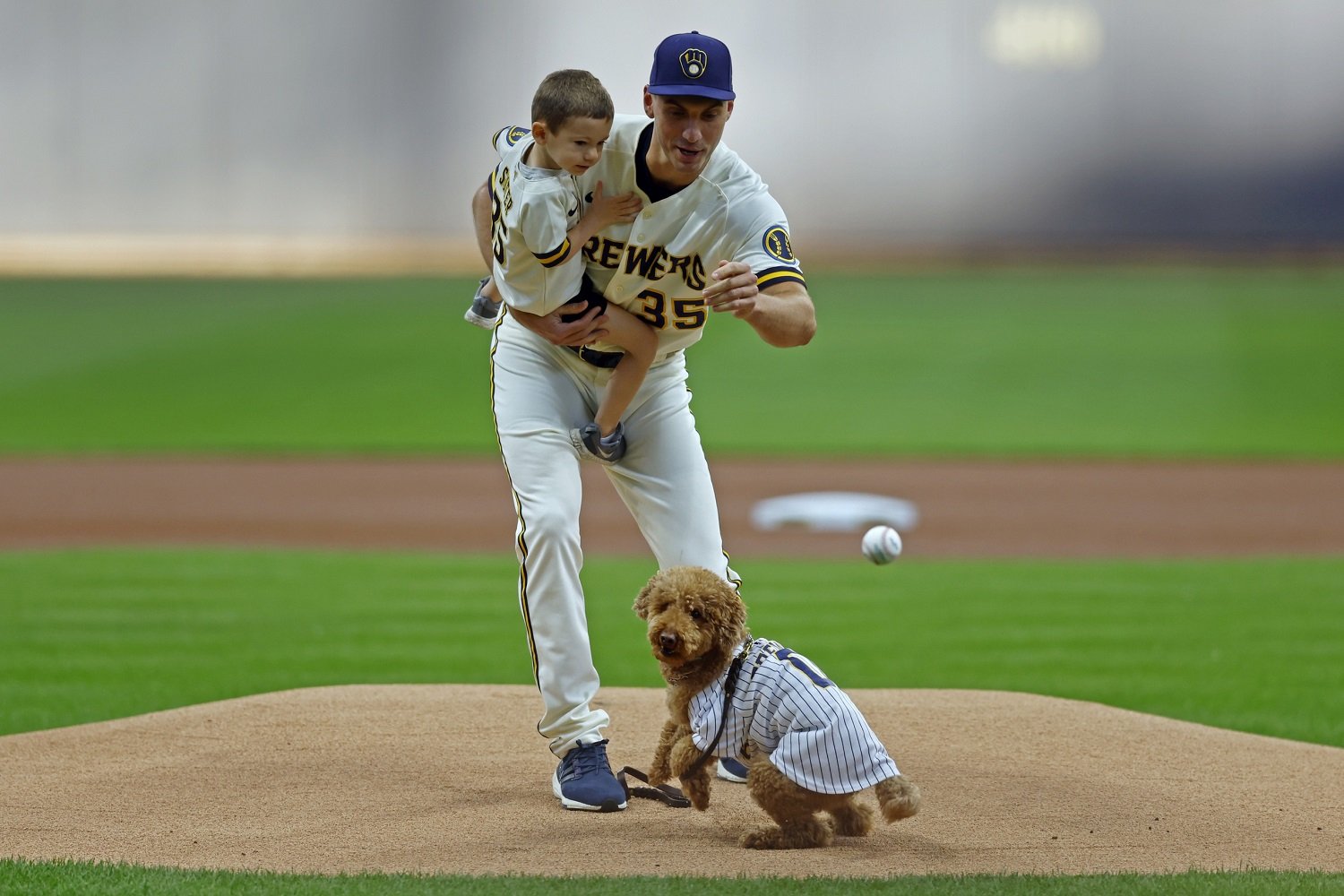 There hasn’t been a 31st round since 2019, and there won’t be one this year either, which is probably a good thing, because not many of these picks actually sign. In 2019, only 45% of the picks in rounds 31-40 were successfully signed. This is extremely top-heavy, as shown in the following graphic. Every team used a pick in each round, so there are 30 players drafted per round. This means in the round with the most signings that year, which happened to be round 34, only 20 of the 30 players actually signed for a rate of 66.67%, which is rather poor. With that being said, there have been some great players late, especially by the Brewers. So who is the best? Best Player Who Signed The trend for late round picks seen in 2019 is consistent for basically all drafts. As such, there’s few players drafted by the Brewers who actually signed, and even fewer that make it to the bigs. But there is one player who signed and has been a great player for the Crew in their time. Brent Suter is that player. The left-handed pitcher was drafted at pick 965 in the 31st round of the 2012 MLB Amateur Draft out of Harvard University. The Raptor, Suter’s fitting nickname due to his gait, was not a top prospect coming into the draft that year. He earned four wins and 11 losses in his two seasons with the Harvard Crimson. Suter pitched to a 5.44 ERA in his career there but had a respectable 4.36 in the season before the draft. He started eight of nine games his first year, and nine of 11 in his second, where he also earned a save. Between Suter’s two years with the Crimson, he also played summer in the Cape Cod League with the Wareham Gatemen, where he was better with a 3.96 ERA in his five games started and 10 total games played. During that summer season, he also had a complete game. With Manny Pina leaving in free agency this offseason, the 32-year-old Suter became the longest tenured player in the Brewers organization. He debuted in MLB in 2016 on August 19 against the Seattle Mariners where he took the loss in 4.1, allowing four earned runs off seven hits and three walks, while striking out two. Since then, he has been a solid contributor for the team in his seven years in the big leagues, with an ERA of 3.54 in the 358.1 innings pitched over 166 games played with 39 starts. He has earned one save, but has 15 holds, being mostly used as a multi-inning reliever. He was even named the NL Reliever of the Month in September 2019 after nine fantastic outings, earning four wins and allowing an ERA of just 0.49 with 15 batters striking out. Suter has accumulated 4.8 WAR thus far, and looks to get more with Crew, as he enters his last year of arbitration at the end of this year before becoming an unrestricted free agent. The father of two will be happy spending time with his family as he begins to enter the twilight of his career, but will surely find success outside of baseball, already writing The Binky Bandit, a children’s book released recently, and being a staunch supporter of efforts to limit climate change, while continuing his goofball antics. Best Unsigned Player Suter is far and beyond the best player to have signed with the Brewers, but there are quite a few players who did not sign in these late rounds that have become stars. The main one is Jason Giambi , who the Brewers drafted at pick 1118 in the 43rd round of the 1989 draft out of high school, before being drafted again by the Oakland Athletics in the 2nd round of the 1992 draft after spending a couple years at California State University. Giambi was drafted as a shortstop by the Crew but spent the majority of his career at first base. He spent 20 seasons in the MLB, hitting 440 home runs for an average of .277. Eight seasons were spent with the A’s, seven with the Yankees, four with the Rockies and two with the Indians, with one midseason transaction. Giambi won the 2000 MVP while with the A’s, beginning his run of five straight appearances at the All-Star Game, earning two Silver Sluggers in this time as well. Giambi won the 2002 Home Run Derby, competing in the 2001 and 2003 editions. Giambi has a career WAR of 50.5, good for 195th all time. He likely has enough accolades to make the Hall of Fame but was dropped from the ballot after just two years. This is largely due to his admitted usage of PEDs during his career in an article published in 2007. He retired in 2014, after beginning his career in 1995. Honorable Mention There aren’t many Brewers signings who went on to success in these rounds, but the Brewers did select a player nicknamed Captain Underpants with the 1189th pick in the 40th round of the 2002 MLB Draft. This player, Hunter Pence , did not sign with the Crew, and was selected once again, this time in the 2nd round in 2004 by the Houston Astros. Over his 14-year career, he accumulated 30.9 WAR, and made the All-Star team four times. He spent time with Astros, Phillies, and Rangers, but is mostly known for his time with the Giants, where he was part of the squad which won the World Series in 2012 and 2014. So do you agree with me here? There aren't many other options, especially those who signed, but Jason Giambi and Brent Suter are clear favorites in my mind. Keep an eye out for when I look into the next 10 rounds soon!
 -
The 2022 MLB Amateur Draft is just on the horizon, beginning on July 17th. Looking back at the late round gems of past Brewer drafts, one current Brewer stands out. So do a couple of unsigned draftees. There hasn’t been a 31st round since 2019, and there won’t be one this year either, which is probably a good thing, because not many of these picks actually sign. In 2019, only 45% of the picks in rounds 31-40 were successfully signed. This is extremely top-heavy, as shown in the following graphic. Every team used a pick in each round, so there are 30 players drafted per round. This means in the round with the most signings that year, which happened to be round 34, only 20 of the 30 players actually signed for a rate of 66.67%, which is rather poor. With that being said, there have been some great players late, especially by the Brewers. So who is the best? Best Player Who Signed The trend for late round picks seen in 2019 is consistent for basically all drafts. As such, there’s few players drafted by the Brewers who actually signed, and even fewer that make it to the bigs. But there is one player who signed and has been a great player for the Crew in their time. Brent Suter is that player. The left-handed pitcher was drafted at pick 965 in the 31st round of the 2012 MLB Amateur Draft out of Harvard University. The Raptor, Suter’s fitting nickname due to his gait, was not a top prospect coming into the draft that year. He earned four wins and 11 losses in his two seasons with the Harvard Crimson. Suter pitched to a 5.44 ERA in his career there but had a respectable 4.36 in the season before the draft. He started eight of nine games his first year, and nine of 11 in his second, where he also earned a save. Between Suter’s two years with the Crimson, he also played summer in the Cape Cod League with the Wareham Gatemen, where he was better with a 3.96 ERA in his five games started and 10 total games played. During that summer season, he also had a complete game. With Manny Pina leaving in free agency this offseason, the 32-year-old Suter became the longest tenured player in the Brewers organization. He debuted in MLB in 2016 on August 19 against the Seattle Mariners where he took the loss in 4.1, allowing four earned runs off seven hits and three walks, while striking out two. Since then, he has been a solid contributor for the team in his seven years in the big leagues, with an ERA of 3.54 in the 358.1 innings pitched over 166 games played with 39 starts. He has earned one save, but has 15 holds, being mostly used as a multi-inning reliever. He was even named the NL Reliever of the Month in September 2019 after nine fantastic outings, earning four wins and allowing an ERA of just 0.49 with 15 batters striking out. Suter has accumulated 4.8 WAR thus far, and looks to get more with Crew, as he enters his last year of arbitration at the end of this year before becoming an unrestricted free agent. The father of two will be happy spending time with his family as he begins to enter the twilight of his career, but will surely find success outside of baseball, already writing The Binky Bandit, a children’s book released recently, and being a staunch supporter of efforts to limit climate change, while continuing his goofball antics. Best Unsigned Player Suter is far and beyond the best player to have signed with the Brewers, but there are quite a few players who did not sign in these late rounds that have become stars. The main one is Jason Giambi , who the Brewers drafted at pick 1118 in the 43rd round of the 1989 draft out of high school, before being drafted again by the Oakland Athletics in the 2nd round of the 1992 draft after spending a couple years at California State University. Giambi was drafted as a shortstop by the Crew but spent the majority of his career at first base. He spent 20 seasons in the MLB, hitting 440 home runs for an average of .277. Eight seasons were spent with the A’s, seven with the Yankees, four with the Rockies and two with the Indians, with one midseason transaction. Giambi won the 2000 MVP while with the A’s, beginning his run of five straight appearances at the All-Star Game, earning two Silver Sluggers in this time as well. Giambi won the 2002 Home Run Derby, competing in the 2001 and 2003 editions. Giambi has a career WAR of 50.5, good for 195th all time. He likely has enough accolades to make the Hall of Fame but was dropped from the ballot after just two years. This is largely due to his admitted usage of PEDs during his career in an article published in 2007. He retired in 2014, after beginning his career in 1995. Honorable Mention There aren’t many Brewers signings who went on to success in these rounds, but the Brewers did select a player nicknamed Captain Underpants with the 1189th pick in the 40th round of the 2002 MLB Draft. This player, Hunter Pence , did not sign with the Crew, and was selected once again, this time in the 2nd round in 2004 by the Houston Astros. Over his 14-year career, he accumulated 30.9 WAR, and made the All-Star team four times. He spent time with Astros, Phillies, and Rangers, but is mostly known for his time with the Giants, where he was part of the squad which won the World Series in 2012 and 2014. So do you agree with me here? There aren't many other options, especially those who signed, but Jason Giambi and Brent Suter are clear favorites in my mind. Keep an eye out for when I look into the next 10 rounds soon! View full article
-
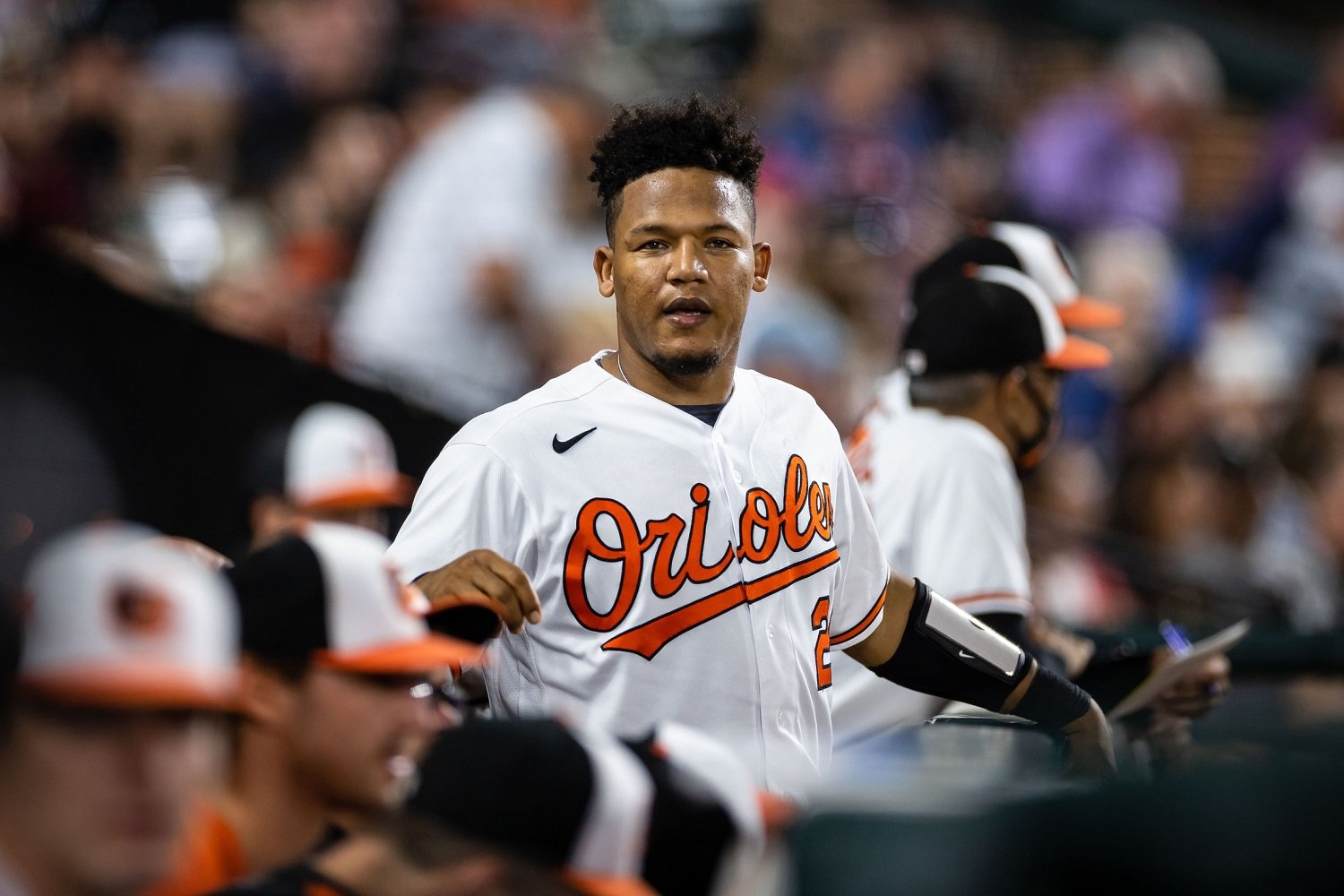 Pedro Severino was assumed to be the backup catcher to Omar Narvaez following the departure of Manny Pina in free agency during the offseason. This plan was tossed out on April 5th, just before the season started, after the results of a PED test administered before the MLB lockout began on December 2nd showed Clomiphene in his body, a substance banned by the MLB. Reason for Suspension Severino accepted responsibility for his mistake and apologized immediately in a statement released via the MLBPA, saying that his wife and himself have been working to start a family and had been unsuccessful thus far. A doctor in the Dominican Republic, where Severino is from, prescribed him a medication which contained Clomiphene to help aid in this endeavor. Clomiphene is often used to improve fertility, but typically only in females as it is what is termed an “ovary stimulant,” as it facilitates ovulation. As such, it has only been approved by the FDA in women. The use in men has shown varying results by increasing sperm count, but will often decrease with improper dosing. Another use for Clomiphene in men is as a “downer” following a steroid cycle. This is done by rebalancing the testosterone levels within the body and hiding the usage of a steroid. There is obviously much more science involved, but this is a quick summary. Now I am not saying that Pedro used anything besides Clomiphene, and this all may be a huge mistake, I just want to explain a bit about what he was marked positive for. Career Batting The seven-year veteran started his career with the Nationals in 2015. After four years there, he was waived and claimed by the Orioles in 2019, spending the next three years there, before being granted free agency by the Baltimore club. He signed with the Brewers shortly thereafter. In his major league career, he has played in 362 games, 327 of them as a catcher. Most of these games were during his time with the Orioles, as he played in 257 games in his time there, compared to the 105 games in his four years with the Nats. He definitely had improved success with more consistent playing time, raising his batting average over 60 points, to .249, in his years with the Orioles. The twenty-eight year-old has hit 33 home runs in his time in the bigs, with 133 rbis, accruing an OBP of 0.305. Defensive Comparison Defensively, he has been consistently decent, with a career fielding percentage of 0.993. Severino has caught 28% of runners trying to steal a base on him. His pop time to second base is in the middle of the rankings for catchers at 51 percentile, averaging 1.97 seconds in 2021. For reference, this year both Victor Caratini and Narvaez have pop times of 2.01. Caratini has an exchange time of 0.75, while Narvaez has an exchange time of 0.72. Severino had an exchange time of 0.75 in 2021, and also has a slightly stronger arm. His pitch framing, however, is quite poor. By that, I mean he was ranked in the bottom 1% of the league for stealing potential strikes for his pitchers, with a strike rate of just 43.7% in 2021, and never reaching 47.5% in a season in his entire career. He is marginally better at getting strike calls on the inside or outside edges, like most other catchers, but overall it is quite poor, to the tune of an absolutely horrible -10 catcher framing runs in 2021, and -22 in his entire career. For this metric, you want to be positive. In 2021, Narvaez actually led the league with 10 catcher framing runs and had a strike rate of 49.2%, but Tomas Nido led the league with a strike rate of 53.5%. Severino is bad at getting an extra strike call. Roster Situation Due to the suspension of Severino, Milwaukee went out and got Caratini, who has formed a formidable duo with Narvaez behind the plate. Severino could look to replace Alex Jackson , the catcher who filled in while either Caratini or Narvaez were unavailable, but that would mean the Brewers would have to carry three catchers on their 26-man roster. This is due to the fact Severino has no options remaining. Despite it being unlikely either active catcher gets sent down, it is worthwhile to include that Narvaez also has no options remaining, but Caratini does have one. A quick comparison of the catchers shows that Caratini and Severino have quite similar career numbers and Narvaez leads the group, but this year he has exploded to an OPS+ of 129, which would lead all Brewers’ hitters if he were to qualify. Severino is unlikely to usurp this, as there is not a reasonable scenario where Caratini would be sent down, and Narvaez will not be moved out of the organization. Positional Flexibility There is the chance that one of these players would get some time at another position. Severino has been taking reps at first base in his rehab stint with Biloxi as he prepares to be reactivated. He has never played first before in his minor league career, let alone in the majors before his first recovery game on June 18th. Narvaez has a little bit of experience, appearing in one game at first base, playing in five innings in a game in 2017 while with the White Sox. In that appearance, he made one error in his six defensive chances. When he first became professional while within the Tampa Bay organization, he did have much more experience at first base, starting in 37 of the 42 games played there, and even started a game in left field. Caratini has significantly more broad experience on the field than either other player. He has started at first base in 23 games in the majors, playing in 59. Caratini has also been deployed at third base seven times and in the outfield in one game, though that was on an emergency basis. In the minors, Caratini played in 86 games at first base, starting 84 of those and played in 59 games at third base, starting 57 of those. He even made a start at shortstop once while playing rookie ball in 2013 while with the Braves. His last start in the minors at third base was in 2018, but has more recently during the winter in 2018-2019 and again in 2019-2020 while playing in the Puerto Rican Winter League. He made appearances in eight games at third base, starting seven of those. Caratini has also started six games, playing in seven at first in those two seasons. Concluding Thoughts This leads to the question, could Severino join the catching tandem and push Caratini into a corner infield spot? My guess is no. With postseason intentions, Milwaukee must consider the fact that Severino will not be eligible for the playoffs this year due to the suspension. There could be value in limiting reps for the current catchers, but Severino has horrible framing, and his hitting is enough. I expect him to be traded or designated for assignment once he returns barring all injuries. I have spoken of positional flexibility, but the Brewers will not be likely to utilize Caratini outside of catcher often. Third base, or especially first base, have been performing decently enough, with an OPS of 0.659 for third basemen and 0.789 for first basemen. The OPS at third is lower than the league average for third basemen, which is 0.719, while the overall league average is 0.705. I don’t expect him to man the hot corner at all, due to lack of recent experience there as well as the return of Mike Brosseau and rise of Jace Peterson this year. Caratini could see reps at first, but not enough to need to carry an additional catcher. Rowdy Tellez will remain the main option at first base. TL;DR Pedro Severino would be a very useful player to have within the organization despite his framing concerns due to the rest of his defense and decent hitting, but is not a better option than what the Brewers have right now. Victor Caratini filled in the void left by the suspension, and Narvaez has performed as expected. Due to not having an remaining options to the minors, I expect Severino to be leaving the Milwaukee Brewer organization following his suspension's completion.
 -
Pedro Severino is slated to come off the restricted list after the game on Saturday following his 80 game suspension for a positive PED test. What will happen when he returns? Pedro Severino was assumed to be the backup catcher to Omar Narvaez following the departure of Manny Pina in free agency during the offseason. This plan was tossed out on April 5th, just before the season started, after the results of a PED test administered before the MLB lockout began on December 2nd showed Clomiphene in his body, a substance banned by the MLB. Reason for Suspension Severino accepted responsibility for his mistake and apologized immediately in a statement released via the MLBPA, saying that his wife and himself have been working to start a family and had been unsuccessful thus far. A doctor in the Dominican Republic, where Severino is from, prescribed him a medication which contained Clomiphene to help aid in this endeavor. Clomiphene is often used to improve fertility, but typically only in females as it is what is termed an “ovary stimulant,” as it facilitates ovulation. As such, it has only been approved by the FDA in women. The use in men has shown varying results by increasing sperm count, but will often decrease with improper dosing. Another use for Clomiphene in men is as a “downer” following a steroid cycle. This is done by rebalancing the testosterone levels within the body and hiding the usage of a steroid. There is obviously much more science involved, but this is a quick summary. Now I am not saying that Pedro used anything besides Clomiphene, and this all may be a huge mistake, I just want to explain a bit about what he was marked positive for. Career Batting The seven-year veteran started his career with the Nationals in 2015. After four years there, he was waived and claimed by the Orioles in 2019, spending the next three years there, before being granted free agency by the Baltimore club. He signed with the Brewers shortly thereafter. In his major league career, he has played in 362 games, 327 of them as a catcher. Most of these games were during his time with the Orioles, as he played in 257 games in his time there, compared to the 105 games in his four years with the Nats. He definitely had improved success with more consistent playing time, raising his batting average over 60 points, to .249, in his years with the Orioles. The twenty-eight year-old has hit 33 home runs in his time in the bigs, with 133 rbis, accruing an OBP of 0.305. Defensive Comparison Defensively, he has been consistently decent, with a career fielding percentage of 0.993. Severino has caught 28% of runners trying to steal a base on him. His pop time to second base is in the middle of the rankings for catchers at 51 percentile, averaging 1.97 seconds in 2021. For reference, this year both Victor Caratini and Narvaez have pop times of 2.01. Caratini has an exchange time of 0.75, while Narvaez has an exchange time of 0.72. Severino had an exchange time of 0.75 in 2021, and also has a slightly stronger arm. His pitch framing, however, is quite poor. By that, I mean he was ranked in the bottom 1% of the league for stealing potential strikes for his pitchers, with a strike rate of just 43.7% in 2021, and never reaching 47.5% in a season in his entire career. He is marginally better at getting strike calls on the inside or outside edges, like most other catchers, but overall it is quite poor, to the tune of an absolutely horrible -10 catcher framing runs in 2021, and -22 in his entire career. For this metric, you want to be positive. In 2021, Narvaez actually led the league with 10 catcher framing runs and had a strike rate of 49.2%, but Tomas Nido led the league with a strike rate of 53.5%. Severino is bad at getting an extra strike call. Roster Situation Due to the suspension of Severino, Milwaukee went out and got Caratini, who has formed a formidable duo with Narvaez behind the plate. Severino could look to replace Alex Jackson , the catcher who filled in while either Caratini or Narvaez were unavailable, but that would mean the Brewers would have to carry three catchers on their 26-man roster. This is due to the fact Severino has no options remaining. Despite it being unlikely either active catcher gets sent down, it is worthwhile to include that Narvaez also has no options remaining, but Caratini does have one. A quick comparison of the catchers shows that Caratini and Severino have quite similar career numbers and Narvaez leads the group, but this year he has exploded to an OPS+ of 129, which would lead all Brewers’ hitters if he were to qualify. Severino is unlikely to usurp this, as there is not a reasonable scenario where Caratini would be sent down, and Narvaez will not be moved out of the organization. Positional Flexibility There is the chance that one of these players would get some time at another position. Severino has been taking reps at first base in his rehab stint with Biloxi as he prepares to be reactivated. He has never played first before in his minor league career, let alone in the majors before his first recovery game on June 18th. Narvaez has a little bit of experience, appearing in one game at first base, playing in five innings in a game in 2017 while with the White Sox. In that appearance, he made one error in his six defensive chances. When he first became professional while within the Tampa Bay organization, he did have much more experience at first base, starting in 37 of the 42 games played there, and even started a game in left field. Caratini has significantly more broad experience on the field than either other player. He has started at first base in 23 games in the majors, playing in 59. Caratini has also been deployed at third base seven times and in the outfield in one game, though that was on an emergency basis. In the minors, Caratini played in 86 games at first base, starting 84 of those and played in 59 games at third base, starting 57 of those. He even made a start at shortstop once while playing rookie ball in 2013 while with the Braves. His last start in the minors at third base was in 2018, but has more recently during the winter in 2018-2019 and again in 2019-2020 while playing in the Puerto Rican Winter League. He made appearances in eight games at third base, starting seven of those. Caratini has also started six games, playing in seven at first in those two seasons. Concluding Thoughts This leads to the question, could Severino join the catching tandem and push Caratini into a corner infield spot? My guess is no. With postseason intentions, Milwaukee must consider the fact that Severino will not be eligible for the playoffs this year due to the suspension. There could be value in limiting reps for the current catchers, but Severino has horrible framing, and his hitting is enough. I expect him to be traded or designated for assignment once he returns barring all injuries. I have spoken of positional flexibility, but the Brewers will not be likely to utilize Caratini outside of catcher often. Third base, or especially first base, have been performing decently enough, with an OPS of 0.659 for third basemen and 0.789 for first basemen. The OPS at third is lower than the league average for third basemen, which is 0.719, while the overall league average is 0.705. I don’t expect him to man the hot corner at all, due to lack of recent experience there as well as the return of Mike Brosseau and rise of Jace Peterson this year. Caratini could see reps at first, but not enough to need to carry an additional catcher. Rowdy Tellez will remain the main option at first base. TL;DR Pedro Severino would be a very useful player to have within the organization despite his framing concerns due to the rest of his defense and decent hitting, but is not a better option than what the Brewers have right now. Victor Caratini filled in the void left by the suspension, and Narvaez has performed as expected. Due to not having an remaining options to the minors, I expect Severino to be leaving the Milwaukee Brewer organization following his suspension's completion. View full article
-
This is an awesome read! Thank you for putting it together! I would love to get Reynolds, but doubt we have the assets to acquire him. Unfortunately, I doubt we make a splash within the trade market, so those dream options will remain dreams I think. I can certainly see the Crew trading for one of those pitchers, and would prefer some of the internal options in the outfield rather than Naquin. I just want to see David Dahl up with the Crew!
-
Blue Jays are going to be coming in with some disdain for the umps. It was a messy series against the White Sox over the week with an awful showing behind the plate by Doug Eddings, who missed an amazingly bad 29 blown calls on Tuesday. On Wednesday during the lineup exchange before the game, hitting coach Guillermo Martinez was ejected by the home plate ump for that game, Phil Cuzzo, after giving Eddings his thoughts on the historically bad showing. Martinez is suspended for five games following this altercation, along with a fine of an unknown amount. It will be interesting to see if there is anything that comes from this! I'm going to the game this evening so looking forward to it even more! The umpiring crew is Jansen Visconti, Ted Barrett, Ed Hickox, and Brock Ballou for this series.
-
Article: The Brewers Are Mishandling Keston Hiura
Caswell replied to Cole McCormack's topic in Brewer Fanatic Front Page News
Keston is quite the interesting player and I have been musing over what to do with him for awhile. I've definitely noticed how much better he hits against righties, but there is such a small sample size, as Jopal78 said. He definitely needs consistent at bats, and he's not getting them here. I want him to succeed, but I don't think it'll be in the bigs with Milwaukee this year. -
Yes I agree! It was very interesting going through all the data I could and compiling it into a single entity. Yelich is definitely starting to get there. It seems like in 2020 he was trying so hard to increase his power numbers and was swinging too hard to an extent. Like his hard hit percentage went up to 56.6% that year, but that came at a cost. His K% increased a lot, and he also started to see a more significant struggle with changeups and curveballs, which is in part, due to the struggle against right handed pitchers. Then in 2021, he tried to overcorrect, and put the ball on the ground much more (average launch angle of 2.8). He got better against righties, but was going over the ball 43.9% of the time. He is getting there, but the pendulum swung a little wildly for a couple years.
-
 Two time All-Star, Christian Yelich has had a highly documented fall from grace from his 2018 N.L. MVP-winning season and 2019, where he came runner-up in the N.L. MVP race to Cody Bellinger. The Californian born in December 1991, making him 30 years old, earned many accolades from pundits in his first two years before injuries seemingly derailed his career, cutting short his monster 2019 season. He definitely did enough to sign a huge contract before the start of the 2020 season, but has not lived up to it. Hello! Welcome to a new series where I, Caswell, go through the nerdy stuff to try to make it a little more simple so others can be more Well Informed with the statistics. We are going to go through how a player compares to themselves over previous years, against the rest of the team and league for that year, and maybe even get some historical comparisons. So is he still falling? Are things back on track? Should fans shun him? Let’s find out Before Milwaukee Before joining the Brewers, Yelich wasn’t the star the Brewers saw his first two years in Milwaukee, but he was still very good. He never hit lower than 0.282 in his five seasons in Miami, launching 21 and 18 home runs in his last two years before the switch. Yelich consistently showed a great bat, along with a keen eye, walking 300 times in the five years in Florida. This culminated into a great OPS+ each season. OPS+ uses the players regular OPS, which is on-base plus slugging, and normalizes it across the entire league, while also adjusting for additional factors such as the ballpark played. The average OPS+ is 100, so a player who earns an OPS that is 10% better than league average will get an OPS+ of 110, without taking into account external factors. The above graph shows that he was above average every single year as a Marlin, so far as to get an OPS+ of 135 in 2016. WAR, which stands for Wins Above Replacement, is a lot of math which comes out to the number of wins a particular player gets for their team instead of a “replacement level player,” which is defined by Major League Baseball as a minor league replacement or available fill-in free agent. (If you want to read more about this very interesting statistic, Baseball Reference does a great job at explaining it further.) It is a counting statistic, such that it will culminate over the entirety of a player’s career. Despite this, it is earned throughout the entirety of the season, so one’s WAR can be found for just one year. WAR less than 0 means that a team is better off with a replacement. Commonly, WAR between 0-2 would be considered a bench player, while anything above that is considered a starter. Typically, when a player has a WAR above 5, they are All-Star worthy, and above 8 is MVP worthy. Yelich’s WAR over his 5 seasons with Miami, he was a 17.6 WAR player, getting as much as 4.9 WAR in 2016, which is the year he got his first Silver Slugger Award. He also only played 62 games in 2013, but still got 1.6 WAR as a rookie. He was definitely a good player as a Marlin, but his first two years in Milwaukee were down-right fantastic, winning his second and third Silver Slugger Awards, and placing first and second in MVP voting in the N.L. back to back. First Two Years in Milwaukee In the trade that brought Yelich to Milwaukee, the Brewers sent a haul of prospects, including highly ranked prospect, Lewis Brinson, along with Isan Diaz, Monte Harrison, and Jordan Yamamoto, fans weren’t too sure what they were going to get. He was definitely a good player as a Marlin, but Lewis Brinson was thought to have a very bright future, ranking in the top 20 of all prospects for over two years. Nonetheless, Yelich’s output in his first two years in Milwaukee were down-right fantastic, winning his second and third Silver Slugger Awards, and placing first and second in MVP voting in the N.L. back to back and silencing the critics. As such, I will just let the numbers speak for themselves by comparing him to some all-time greats and their 162 game average as calculated by Baseball Reference. The current generation is represented by Mike Trout, a player who is already being considered the greatest player of all time. Ty Cobb, the pure greatest hitter of all-time, is used. Finally, Henry Aaron, a Milwaukee baseball hero will end the comparison. Despite playing in 147 games in 2018 and 130 games in 2019, Yelich is still close in all counting statistics among the 162 game average for the legends of the game selected in this comparison. His 44 home runs in 2019 is at the top of the list. He has the second and third highest batting average and has the highest and third highest OPS. 2018 Yelich is three RBIs behind Henry Aaron in RBI, and second in totals hits behind Ty Cobb. He was quite frankly, fantastic. Christian earned 7.3 WAR in 2018 and 7 in 2019, his first two years in Milwaukee, ranking among the leaders in most statistics. Yelich’s Fall Yelich only played in 130 games in 2019, which is a result of a season ending broken kneecap he sustained in September of 2019. In that offseason, Yelich signed a 7 year, $188.5M contract extension, keeping him in Milwaukee until 2028, which also includes a mutual option for 2029. This seemed like an absolute bargain at the time due to his incredible play and being a fan favorite, marking him a Brewer for likely the rest of his career. The morale surrounding this deal would come crashing down as struggles persisted. In the COVID shortened year, he played 58 of the 60 games yielded a batting average of 0.205, down from 0.326 and 0.329 in his first two years. His on-base percentage slid to 0.356 with an OPS+ of only 110. He hit 12 big flies and had 22 RBIs. There was concern, but it wasn’t massive, as there were substantial abnormalities that year and many players struggled. Injuries plagued his 2021 season, in which he had three different stints on the injured list with a lower back strain. He spent 20 days in the INjured List, came off for a day, before going back on for another 15 days. The third was a 12-day stint on the COVID-19 IL. This back issue is one that first came up while in the Marlins’ farm system and early years in Miami. Yelich only played in 117 games in the full season. His batting average improved to 0.248, but his OBP only improved marginally to 0.362 and his power numbers truly tanked, hitting only 9 home runs on the year. This resulted in the lowest OPS of his career, at 0.736 and an OPS+ of 99, meaning he was an ever-so-slightly below average batter that year. Alarmingly, he went from an MVP caliber player, to a borderline bench player, in terms of WAR. What Changed? The stats clearly took a plunge, but what else varied in his second two years as a Brewer compared to his first? The first thing to look at is his strikeout percentage and his walk percentage each year. We can see that his strikeout rate went up significantly, and his walk rate went up as well, with a significant jump in 2020 which can be attributed to the COVID year and his stellar 2019. Typically, the average strikeout and walk rates across the MLB sit around 20% and 8%, respectively. This means Yelich’s strikeout rate is fine and he walks well. The bump in the later two years is significant, but would not impact his overall statistics that much The approach at the plate of Yelich seems to have changed after his first two years, as he was a center to pull hitter, which is seen above, but highlighted below. Meanwhile, the 2020 season showed a much more consistent approach, with hot zones to the opposite field and on the pull side of center, with the latter showing a glimpse of the old Yeli. 2021 appears to be going back to the old, but clearly shows a more even approach, skewing to the opposite field a lot more. Typically this would show improvement at the plate, but does not apply to Yelich, as most of his success comes from pulling the ball, or going towards center. Another very important thing is where he is missing the ball. The following four graphics are Whiff %, which is swing and miss strikes per swing, over the four years show that they increase and expand. Whiff %: Christian Yelich The K% shows similarities to above, as the rates expand and increase in the second year of two years. In addition to that, he wasn’t hitting the ball as well as often despite having a decent hard hit percentage. This is explicitly seen in the barrel per plate appearance stat, as it was an elite rate in the first two years, but slunk down to MLB average levels, which is denoted as the dashed line. `So what about now? To start, he is pulling the ball much more again, which is a good sign for Yelich. The minor issue, however, is still the strikeout rate, as it sits at 25.2%, which is 1.4% higher than last year’s mark of 23.8%, but 5.6% down from 2020’s dreadful 30.8% strikeout rate. Despite this, his zonal strikeout percent looks significantly better, as inside pitches are no longer as much of an issue. His K% on the outside of the zone is still quite high, but is less severe than in 2020-2021, and he has reintroduced more low strikeout zones, which allows him to look for pitches better, as many pitchers will look to avoid those areas on an at bat where they are looking for a strikeout. When considering these strikeout percent numbers, it is important to look at the swing rate, as well as the whiff rate in these areas. From this data, we can see that his swing and misses in the strike zone are quite slim, while he is swinging at most of the pitches inside the strike zone. This is evident by his 64.3% zone swing percentage (66.9%), which is actually lower than league average, but his 83.2% zone contact percentage is higher than league average (82.0%). This works well for him, as his chase rate is 20.2%, which is the rate pitches outside of the zone are swung at, is significantly less than league average (28.3%). This shows that pitchers have to look for other ways to get him out, especially considering his contact percentage on all swings is 76.1% The other way pitchers have to get him out for the most part is via the ground ball, which is how he hits the ball 55.9% of the time. The league average is 45.0%, meaning Yelich puts the ball on the ground more than 10% more than average! It may be surprising, but his career average is at 54.8%. A more telling metric however is the ratio of ground outs to air outs compared to his ratio of ground balls to fly balls. His GO:AO is 1.52, but his GB:FB is only 1.24. This means that when he hits the ball, he is significantly more likely to record an out than if he is to hit the ball on the ground. This is not just because the fly balls hit are gone for home runs however, as only 10.0% of balls hit in the air leave the park. This is down a lot from his numbers in 2018 and 2019, which were 22.2% and 20.7%, respectively. The most important thing about this trend, however, is what this means for his hitting, which is the major concern. His hit rate, which is the total hits per total at bats is down to 24.23%, which was up to as high as 32.58% in 2018, and 32.92% in 2019. He is hitting a home run 2.4% of the time, down from 5.5% in 2018 and 7.6% in 2019. Is Yelich Done For? The pure numbers don’t look great, I’ll admit it, but I still believe in Christian Yelich, and so should you. His barrel per plate appearance is up to 6.9 and at lead-off he is starting to tear it up, hitting 0.298 when first in the lineup, with an OBP of 0.353. His slugging is only at 0.426, leading to an OPS of 0.779 in this spot. This is better than the 0.703 OPS across the entire league, but I think his can go higher yet than what we have seen from him at the top of the order. This is in large part due to his lack of line drives he has hit, which is only at 16.8%, down from his career average of 25.5%. His hard hit rate is good, at 50.8% and even better, his sweet spot rate, which is the rate in which the idealized combination of launch angle and exit velocity, is at 31.8%. His line drive rate is just suboptimal. Not just this, but teams have begun to utilize a pitch, which he cannot seem to square up. This is the changeup, which is being hit hard only 36.8% of the time, and is only garnering a paltry 0.103 batting average off of. In fact, all of his off speed hitting is slightly down. The good thing about this though, is that he is absolutely destroying fastballs, and overall, his numbers should be quite a bit better. His expected weighted batting average is 0.310 and he is in the top 10% in the league in hard hit rate, he just needs to start hitting those off-speed pitches again and put the ball on a line. Christian Yelich might not be the best in the league, but he will be good, once a few things change. So what would you like for me to analyze next time on CasWell Informed? It could be anything baseball related! Let me know in the comments and I'll keep an eye out! Thank you for reading!
 -
Let's take a look at Christian Yelich to see if these last few years are the new him. Two time All-Star, Christian Yelich has had a highly documented fall from grace from his 2018 N.L. MVP-winning season and 2019, where he came runner-up in the N.L. MVP race to Cody Bellinger. The Californian born in December 1991, making him 30 years old, earned many accolades from pundits in his first two years before injuries seemingly derailed his career, cutting short his monster 2019 season. He definitely did enough to sign a huge contract before the start of the 2020 season, but has not lived up to it. Hello! Welcome to a new series where I, Caswell, go through the nerdy stuff to try to make it a little more simple so others can be more Well Informed with the statistics. We are going to go through how a player compares to themselves over previous years, against the rest of the team and league for that year, and maybe even get some historical comparisons. So is he still falling? Are things back on track? Should fans shun him? Let’s find out Before Milwaukee Before joining the Brewers, Yelich wasn’t the star the Brewers saw his first two years in Milwaukee, but he was still very good. He never hit lower than 0.282 in his five seasons in Miami, launching 21 and 18 home runs in his last two years before the switch. Yelich consistently showed a great bat, along with a keen eye, walking 300 times in the five years in Florida. This culminated into a great OPS+ each season. OPS+ uses the players regular OPS, which is on-base plus slugging, and normalizes it across the entire league, while also adjusting for additional factors such as the ballpark played. The average OPS+ is 100, so a player who earns an OPS that is 10% better than league average will get an OPS+ of 110, without taking into account external factors. The above graph shows that he was above average every single year as a Marlin, so far as to get an OPS+ of 135 in 2016. WAR, which stands for Wins Above Replacement, is a lot of math which comes out to the number of wins a particular player gets for their team instead of a “replacement level player,” which is defined by Major League Baseball as a minor league replacement or available fill-in free agent. (If you want to read more about this very interesting statistic, Baseball Reference does a great job at explaining it further.) It is a counting statistic, such that it will culminate over the entirety of a player’s career. Despite this, it is earned throughout the entirety of the season, so one’s WAR can be found for just one year. WAR less than 0 means that a team is better off with a replacement. Commonly, WAR between 0-2 would be considered a bench player, while anything above that is considered a starter. Typically, when a player has a WAR above 5, they are All-Star worthy, and above 8 is MVP worthy. Yelich’s WAR over his 5 seasons with Miami, he was a 17.6 WAR player, getting as much as 4.9 WAR in 2016, which is the year he got his first Silver Slugger Award. He also only played 62 games in 2013, but still got 1.6 WAR as a rookie. He was definitely a good player as a Marlin, but his first two years in Milwaukee were down-right fantastic, winning his second and third Silver Slugger Awards, and placing first and second in MVP voting in the N.L. back to back. First Two Years in Milwaukee In the trade that brought Yelich to Milwaukee, the Brewers sent a haul of prospects, including highly ranked prospect, Lewis Brinson, along with Isan Diaz, Monte Harrison, and Jordan Yamamoto, fans weren’t too sure what they were going to get. He was definitely a good player as a Marlin, but Lewis Brinson was thought to have a very bright future, ranking in the top 20 of all prospects for over two years. Nonetheless, Yelich’s output in his first two years in Milwaukee were down-right fantastic, winning his second and third Silver Slugger Awards, and placing first and second in MVP voting in the N.L. back to back and silencing the critics. As such, I will just let the numbers speak for themselves by comparing him to some all-time greats and their 162 game average as calculated by Baseball Reference. The current generation is represented by Mike Trout, a player who is already being considered the greatest player of all time. Ty Cobb, the pure greatest hitter of all-time, is used. Finally, Henry Aaron, a Milwaukee baseball hero will end the comparison. Despite playing in 147 games in 2018 and 130 games in 2019, Yelich is still close in all counting statistics among the 162 game average for the legends of the game selected in this comparison. His 44 home runs in 2019 is at the top of the list. He has the second and third highest batting average and has the highest and third highest OPS. 2018 Yelich is three RBIs behind Henry Aaron in RBI, and second in totals hits behind Ty Cobb. He was quite frankly, fantastic. Christian earned 7.3 WAR in 2018 and 7 in 2019, his first two years in Milwaukee, ranking among the leaders in most statistics. Yelich’s Fall Yelich only played in 130 games in 2019, which is a result of a season ending broken kneecap he sustained in September of 2019. In that offseason, Yelich signed a 7 year, $188.5M contract extension, keeping him in Milwaukee until 2028, which also includes a mutual option for 2029. This seemed like an absolute bargain at the time due to his incredible play and being a fan favorite, marking him a Brewer for likely the rest of his career. The morale surrounding this deal would come crashing down as struggles persisted. In the COVID shortened year, he played 58 of the 60 games yielded a batting average of 0.205, down from 0.326 and 0.329 in his first two years. His on-base percentage slid to 0.356 with an OPS+ of only 110. He hit 12 big flies and had 22 RBIs. There was concern, but it wasn’t massive, as there were substantial abnormalities that year and many players struggled. Injuries plagued his 2021 season, in which he had three different stints on the injured list with a lower back strain. He spent 20 days in the INjured List, came off for a day, before going back on for another 15 days. The third was a 12-day stint on the COVID-19 IL. This back issue is one that first came up while in the Marlins’ farm system and early years in Miami. Yelich only played in 117 games in the full season. His batting average improved to 0.248, but his OBP only improved marginally to 0.362 and his power numbers truly tanked, hitting only 9 home runs on the year. This resulted in the lowest OPS of his career, at 0.736 and an OPS+ of 99, meaning he was an ever-so-slightly below average batter that year. Alarmingly, he went from an MVP caliber player, to a borderline bench player, in terms of WAR. What Changed? The stats clearly took a plunge, but what else varied in his second two years as a Brewer compared to his first? The first thing to look at is his strikeout percentage and his walk percentage each year. We can see that his strikeout rate went up significantly, and his walk rate went up as well, with a significant jump in 2020 which can be attributed to the COVID year and his stellar 2019. Typically, the average strikeout and walk rates across the MLB sit around 20% and 8%, respectively. This means Yelich’s strikeout rate is fine and he walks well. The bump in the later two years is significant, but would not impact his overall statistics that much The approach at the plate of Yelich seems to have changed after his first two years, as he was a center to pull hitter, which is seen above, but highlighted below. Meanwhile, the 2020 season showed a much more consistent approach, with hot zones to the opposite field and on the pull side of center, with the latter showing a glimpse of the old Yeli. 2021 appears to be going back to the old, but clearly shows a more even approach, skewing to the opposite field a lot more. Typically this would show improvement at the plate, but does not apply to Yelich, as most of his success comes from pulling the ball, or going towards center. Another very important thing is where he is missing the ball. The following four graphics are Whiff %, which is swing and miss strikes per swing, over the four years show that they increase and expand. Whiff %: Christian Yelich The K% shows similarities to above, as the rates expand and increase in the second year of two years. In addition to that, he wasn’t hitting the ball as well as often despite having a decent hard hit percentage. This is explicitly seen in the barrel per plate appearance stat, as it was an elite rate in the first two years, but slunk down to MLB average levels, which is denoted as the dashed line. `So what about now? To start, he is pulling the ball much more again, which is a good sign for Yelich. The minor issue, however, is still the strikeout rate, as it sits at 25.2%, which is 1.4% higher than last year’s mark of 23.8%, but 5.6% down from 2020’s dreadful 30.8% strikeout rate. Despite this, his zonal strikeout percent looks significantly better, as inside pitches are no longer as much of an issue. His K% on the outside of the zone is still quite high, but is less severe than in 2020-2021, and he has reintroduced more low strikeout zones, which allows him to look for pitches better, as many pitchers will look to avoid those areas on an at bat where they are looking for a strikeout. When considering these strikeout percent numbers, it is important to look at the swing rate, as well as the whiff rate in these areas. From this data, we can see that his swing and misses in the strike zone are quite slim, while he is swinging at most of the pitches inside the strike zone. This is evident by his 64.3% zone swing percentage (66.9%), which is actually lower than league average, but his 83.2% zone contact percentage is higher than league average (82.0%). This works well for him, as his chase rate is 20.2%, which is the rate pitches outside of the zone are swung at, is significantly less than league average (28.3%). This shows that pitchers have to look for other ways to get him out, especially considering his contact percentage on all swings is 76.1% The other way pitchers have to get him out for the most part is via the ground ball, which is how he hits the ball 55.9% of the time. The league average is 45.0%, meaning Yelich puts the ball on the ground more than 10% more than average! It may be surprising, but his career average is at 54.8%. A more telling metric however is the ratio of ground outs to air outs compared to his ratio of ground balls to fly balls. His GO:AO is 1.52, but his GB:FB is only 1.24. This means that when he hits the ball, he is significantly more likely to record an out than if he is to hit the ball on the ground. This is not just because the fly balls hit are gone for home runs however, as only 10.0% of balls hit in the air leave the park. This is down a lot from his numbers in 2018 and 2019, which were 22.2% and 20.7%, respectively. The most important thing about this trend, however, is what this means for his hitting, which is the major concern. His hit rate, which is the total hits per total at bats is down to 24.23%, which was up to as high as 32.58% in 2018, and 32.92% in 2019. He is hitting a home run 2.4% of the time, down from 5.5% in 2018 and 7.6% in 2019. Is Yelich Done For? The pure numbers don’t look great, I’ll admit it, but I still believe in Christian Yelich, and so should you. His barrel per plate appearance is up to 6.9 and at lead-off he is starting to tear it up, hitting 0.298 when first in the lineup, with an OBP of 0.353. His slugging is only at 0.426, leading to an OPS of 0.779 in this spot. This is better than the 0.703 OPS across the entire league, but I think his can go higher yet than what we have seen from him at the top of the order. This is in large part due to his lack of line drives he has hit, which is only at 16.8%, down from his career average of 25.5%. His hard hit rate is good, at 50.8% and even better, his sweet spot rate, which is the rate in which the idealized combination of launch angle and exit velocity, is at 31.8%. His line drive rate is just suboptimal. Not just this, but teams have begun to utilize a pitch, which he cannot seem to square up. This is the changeup, which is being hit hard only 36.8% of the time, and is only garnering a paltry 0.103 batting average off of. In fact, all of his off speed hitting is slightly down. The good thing about this though, is that he is absolutely destroying fastballs, and overall, his numbers should be quite a bit better. His expected weighted batting average is 0.310 and he is in the top 10% in the league in hard hit rate, he just needs to start hitting those off-speed pitches again and put the ball on a line. Christian Yelich might not be the best in the league, but he will be good, once a few things change. So what would you like for me to analyze next time on CasWell Informed? It could be anything baseball related! Let me know in the comments and I'll keep an eye out! Thank you for reading! View full article
-
Let's hope for 4 innings and only a couple runs! I think the Crew can put up a couple in Flaherty's second outing of the year
-
Let's hope for 4 innings and only a couple runs! I think the Crew can put up a couple in Flaherty's second outing of the year
-
Great post! The MLB draft is almost always a bit of a toss up after the first couple of picks, it seems. It will be interesting to see though. I feel as if the Brewers have made a play towards an outfielder and a south paw pitcher in addition to the catcher you spoke about. I don't really follow the draft much, but definitely should start!
-
 It would be a good bet the Brewers start Chi Chi Gonzalez on Tuesday, with Aaron Ashby landing on the injured list with left forearm inflammation and Brandon Woodruff still recovering from a right ankle sprain and a bout with hand numbness related to Raynaud’s Syndrome. Woodruff is making his second rehab assignment game on Tuesday following his impressive 51 pitch, 2.2 inning outing where he struck out seven of the eight outs recorded, allowing just one earned run on one hit and a walk. With another rehab outing scheduled, Woodruff will likely be at least a week away, leaving only four healthy starters on the Brewers current active roster: Adrian Houser, Corbin Burnes, Eric Lauer, and Jason Alexander. Aaron Ashby was expected to start for the Brewers on Tuesday, but by landing on the IR, that won’t happen. Eric Lauer is slated to go on Wednesday, and Jason Alexander going on Thursday for the Crew, I think Chi Chi will take Tuesday. Lauer last pitched on the 17th of June, going 6.1 innings, striking out five and four earned runs off three home runs in the Brewers’ 5-4 win over Cincinnati. If he were to be moved up in the rotation to pitch on Tuesday, he would only have four days rest, which he has done twice this season, but only following shorter starts, so I don’t expect him to go. Gonazalez remains the likely option, as he has started 49 games in his six year MLB career, including making two starts this year with the Minnesota Twins, from whom the Brewers claimed him on June 14th. He has also made eight appearances with five of those being starts for the Twins Triple-A ball club. With the Twins, he allowed six runs in seven innings to a 7.71 ERA, but was markedly better in AAA, only allowing 16 runs in 36.2 innings to a 3.44 ERA. His career numbers are much worse than Jason Alexander’s, who has come onto the scene with the Crew this year and cemented his spot somewhere on the active roster, but Gonzalez could serve as a stopgap while injuries are healed, much as he did with the Twins. I don’t expect anything more than four innings for the 6-3 right hander, with the bullpen used to fill in the rest. Chi Chi Gonzalez uses a 4-seam fastball, sinker, slider and changeup to record his outs in the majors this year, but has used a curveball and cutter sparingly as recently as last year. With only two games under his belt this year in the majors, we might see some of those as well. His 4-seamer and sinker are almost identical, just varying in usage, as the 4-seamer is used on southpaws and the sinker used on righties. They each sit around 92 MPH, but the sinker will drop a little more and move in on right handers significantly, making me think it is more of a 2-seamer than a sinker. Neither of them miss the bats too well though, with a batting average of 0.333 on his 4-seamer, and 0.714 on his sinker. His off-speed fares much better, as his 84 MPH slider and 86 MPH changeup allowing a batting average of 0.250 and 0.286, respectively. His slider is most often used against righties this year, but usually has usage pretty even regardless of handedness. His changeup, however, has been used primarily against right-handed batters and has been very successful. The defense will be busy, as Chi Chi mostly plays to contact and doesn’t blow people away to strike them out, striking out only 13.4% of batters in his career. He walks even less, at a rate of 9.4% in his career, so limiting hard hit balls will be the most important and recording those ground ball outs when the defense can.
 -
With Aaron Ashby landing on the IR and Woodruff still a little ways out, the Brewers only have four starting pitchers on the roster. Chi Chi Gonzalez will likely make that five on Tuesday. It would be a good bet the Brewers start Chi Chi Gonzalez on Tuesday, with Aaron Ashby landing on the injured list with left forearm inflammation and Brandon Woodruff still recovering from a right ankle sprain and a bout with hand numbness related to Raynaud’s Syndrome. Woodruff is making his second rehab assignment game on Tuesday following his impressive 51 pitch, 2.2 inning outing where he struck out seven of the eight outs recorded, allowing just one earned run on one hit and a walk. With another rehab outing scheduled, Woodruff will likely be at least a week away, leaving only four healthy starters on the Brewers current active roster: Adrian Houser, Corbin Burnes, Eric Lauer, and Jason Alexander. Aaron Ashby was expected to start for the Brewers on Tuesday, but by landing on the IR, that won’t happen. Eric Lauer is slated to go on Wednesday, and Jason Alexander going on Thursday for the Crew, I think Chi Chi will take Tuesday. Lauer last pitched on the 17th of June, going 6.1 innings, striking out five and four earned runs off three home runs in the Brewers’ 5-4 win over Cincinnati. If he were to be moved up in the rotation to pitch on Tuesday, he would only have four days rest, which he has done twice this season, but only following shorter starts, so I don’t expect him to go. Gonazalez remains the likely option, as he has started 49 games in his six year MLB career, including making two starts this year with the Minnesota Twins, from whom the Brewers claimed him on June 14th. He has also made eight appearances with five of those being starts for the Twins Triple-A ball club. With the Twins, he allowed six runs in seven innings to a 7.71 ERA, but was markedly better in AAA, only allowing 16 runs in 36.2 innings to a 3.44 ERA. His career numbers are much worse than Jason Alexander’s, who has come onto the scene with the Crew this year and cemented his spot somewhere on the active roster, but Gonzalez could serve as a stopgap while injuries are healed, much as he did with the Twins. I don’t expect anything more than four innings for the 6-3 right hander, with the bullpen used to fill in the rest. Chi Chi Gonzalez uses a 4-seam fastball, sinker, slider and changeup to record his outs in the majors this year, but has used a curveball and cutter sparingly as recently as last year. With only two games under his belt this year in the majors, we might see some of those as well. His 4-seamer and sinker are almost identical, just varying in usage, as the 4-seamer is used on southpaws and the sinker used on righties. They each sit around 92 MPH, but the sinker will drop a little more and move in on right handers significantly, making me think it is more of a 2-seamer than a sinker. Neither of them miss the bats too well though, with a batting average of 0.333 on his 4-seamer, and 0.714 on his sinker. His off-speed fares much better, as his 84 MPH slider and 86 MPH changeup allowing a batting average of 0.250 and 0.286, respectively. His slider is most often used against righties this year, but usually has usage pretty even regardless of handedness. His changeup, however, has been used primarily against right-handed batters and has been very successful. The defense will be busy, as Chi Chi mostly plays to contact and doesn’t blow people away to strike them out, striking out only 13.4% of batters in his career. He walks even less, at a rate of 9.4% in his career, so limiting hard hit balls will be the most important and recording those ground ball outs when the defense can. View full article
-
Hunter Renfroe struck out five times and walked once over 13 at-bats this weekend, but made a big bang regardless with three long dongs. Hunter Renfroe has not torn the world apart since coming back from the injured list on June 7th against the Phillies, only batting 0.200 in this time. But he made a splash in the three-game weekend set in Cincinnati with three bombs off three different types of pitches. The Brewers took all three games, and took back a share of first in the N.L. Central as the Cardinals dropped two of three in Boston against the Red Sox.. Now, onto the home runs. Hunter Renfroe: June 17th The first home run Renfroe hit in this series came on Friday against Hunter Green when he sent a 98.3 MPH 4-seam fastball an expected 400 ft. to left field. This made it a 3 to 0 ballgame in the top of the 4th, scoring Rowdy Tellez and Andrew McCutchen. It came off the bat at 110.1 MPH with a launch angle of 19°. Hunter Renfroe: June 18th The second home run coming on Saturday against Luis Cessa in the 7th added the final run of the game, making it 7 to 3. The 82.7 MPH slider left the ballpark at 105.0 MPH with a launch angle of 23° for an expected distance of 409 feet out to left field once again. Hunter Renfroe: June 19th The final bomb happened on Sunday. This came off of a 90.4 MPH Joel Kuhnel changeup and soared to left field. This added a couple insurance runs in the 7th by scoring Andrew McCutchen once again, making the game 6 to 3. This ball left the bat at a whopping 108.3 MPH with a launch angle of 28°, landing an expected 444 feet from home plate. View full article
-
 Hunter Renfroe has not torn the world apart since coming back from the injured list on June 7th against the Phillies, only batting 0.200 in this time. But he made a splash in the three-game weekend set in Cincinnati with three bombs off three different types of pitches. The Brewers took all three games, and took back a share of first in the N.L. Central as the Cardinals dropped two of three in Boston against the Red Sox.. Now, onto the home runs. Hunter Renfroe: June 17th The first home run Renfroe hit in this series came on Friday against Hunter Green when he sent a 98.3 MPH 4-seam fastball an expected 400 ft. to left field. This made it a 3 to 0 ballgame in the top of the 4th, scoring Rowdy Tellez and Andrew McCutchen. It came off the bat at 110.1 MPH with a launch angle of 19°. Hunter Renfroe: June 18th The second home run coming on Saturday against Luis Cessa in the 7th added the final run of the game, making it 7 to 3. The 82.7 MPH slider left the ballpark at 105.0 MPH with a launch angle of 23° for an expected distance of 409 feet out to left field once again. Hunter Renfroe: June 19th The final bomb happened on Sunday. This came off of a 90.4 MPH Joel Kuhnel changeup and soared to left field. This added a couple insurance runs in the 7th by scoring Andrew McCutchen once again, making the game 6 to 3. This ball left the bat at a whopping 108.3 MPH with a launch angle of 28°, landing an expected 444 feet from home plate.
 -
 It hasn’t been easy watching the Crew the last few games. Before Sunday’s 4-1 win against the Nationals in D.C., they had lost 8 games in a row. This caused the Brewers to drop out of first place in the National League Central Division for the first time since they shared the top spot with the Cardinals back on April 24th. After that great first month, the Brewers had a significantly worse second month this season, which was highlighted by a recent post on Reddit. In this post, the graph shown below was shared, created by Ethan Peterson. The Brewers rank 3rd worst, ahead of the Rockies and Angels, in the worst change in winning percentage from the first month of the season to the second. Interesting enough, from this graphic, we can see that all but the division leaders in the A.L. West, Astros, and A.L. East, Yankees, have a worse win percentage in the second month of the season compared to the first. We can also see that there are three teams from the N.L. Central - the Reds, the Cubs, and the Pirates - who have all bettered themselves from the first month of the season, which could be a concern. Where are the Brewers in the Central? How does this streak affect their standings in the division which they’ve won two of the last four seasons, especially with the improvement of those three teams and the Cardinals being consistent? Well it is basically the same. Those three teams were never expected to be a contender in this division, and all of them actually had struggled quite a bit. A recent tweet on Friday June 10th by Bob Nightengale here, sums up how the entire division is struggling right now. Going into Friday’s games the Reds had lost two in a row, while the Cubs, Pirates, and Cardinals had all lost three in a row. At the time, the first place Brewers had lost 6 on the bounce. Over the weekend, the Pirates’ and Cubs’ losing continued, meaning they have lost 6 in a row, while the Cardinals won the first two games of their series with the Reds, before dropping their finale on Sunday. As such, the standings remain relatively unchanged, with the Cardinals leading the Brewers by 0.5 games. After that, the Brewers are eight games ahead of the Pirates, 9.5 games ahead of the Cubs, and 12 games ahead of the Reds. So even after that eight game losing streak, the Brewers are just half a game behind the Cardinals for the lead, and still have a healthy lead over the other teams in the division. Where are the Brewers in the National League? The goal going into the season, though, is making the playoffs and being successful there. Starting this year, six teams will be making the playoffs from each league, rather than just the five of the past. There won’t be a wild card game anymore, replacing it with a 3-game series. The three division winners will still make it, getting the top three seeds, while the next three best records will get the remaining three seeds in order of highest record. An important distinction is that there will no longer be a possibility for game 163, which we last saw in 2018. The Brewers and Dodgers each won against the Cubs and the Rockies, respectively, to win their division, sending the loser to the Wild Card Game, where the Rockies eventually prevailed. With the addition of a team, the format will have to change as well. The 3rd seed plays the 6th seed and the 4th and 5th seed play each other. The top 2 division winners both receive a bye in the first round. There isn’t any reseeding, so the number 1 seed has home field advantage for the winner of the 4th and 5th, and the 2nd seed hosts the winner of the 3rd and 6th. Now, all that being said, how are the Brewers looking in the entire National League? Well, it could be worse. The Brewers are currently the 7th seed. Below are standings for each of the divisions, graphed by wins. Now, although the Brewers are the 7th seed, they actually have the same number of wins as the 3rd seeded Cardinals and the 6th seeded Braves, along with one more win than the 5th seeded Giants, and are only lower based on winning percentage. The Cards and Braves have each played 61 games this year, while the Giants have only played 59 games so far compared to the Brewers’ 62 games played. So all-in-all, the Brewers really are in good shape in the N.L. despite how things have been going for just over a week. They sit half a game behind the Cardinals in the division and are half a game behind the 5th seeded Giants and 6th seeded Braves. How does the Current Brewer Season compare to Recent Brewer Seasons? With recent dismissals of Joe Girardi of the Phillies on June 3rd and Joe Maddon of the Angels on June 7th, two very successful managers - with six World Series wins as a coach or manager combined - find themselves without a job. It would be a jump to say the efforts of Craig Counsell are in vain, but the thoughts start to creep in. He is the longest tenured National League manager, and has made the postseason in the last 4 years, but hadn’t made the postseason in his first two full years, or the partial year when he began his managerial career. A knee-jerk reaction would say to jump ship, but right now, the Brewers are following the trend seen below. Everything is fine. They are currently at the same pace this far into the season as the 2019 Brewers, who went 89-73 and lost in the Wild Card Game as well as the 2021 Brewers who went 95-67 before becoming eliminated in the Division Series. Now, one may say, look at how that win count has not moved for so long, as they’ve lost eight in a row, but so did the 2021 Brewers, and the 2019 Brewers had a losing streak of five games. In reality, the amazing pace set in the first month of the season, which led to a winning percentage of 0.682, was the highest winning percentage in an April that had 20 or more games played since the 2014 team, which had a winning percentage of 0.704. That team only had one other month above 0.500, ending the season in 3rd place in the Central with a record of 82 and 80. This year is also only 5th the highest winning percentage in any calendar month with more than 20 games played in Craig Counsell’s managerial career. Since Craig Counsell started, this season had the best April winning percentage at 0.682, and second best May winning percentage at 0.586. Finally, usually he has a harder time in June, and his best month is September. Conclusions Yeah it stinks as a fan to see the Crew drop so many recently, but that is part of baseball. You’re going to lose a lot of games, just have to lose less than everyone else, and that is what is happening, especially after that great start, where the Brewers won so many. We are only 62 games in the year, with another 100 to play. Right now the Brewers are on pace to win 89 games this year, which makes the playoffs in every single year under the new playoff format since the strike shortened 1981 baseball year. Things aren’t great, but streaks happen. Everything will even out.
 -
The Brewers won! Let’s dig into how much that losing streak changes their postseason outlook. It hasn’t been easy watching the Crew the last few games. Before Sunday’s 4-1 win against the Nationals in D.C., they had lost 8 games in a row. This caused the Brewers to drop out of first place in the National League Central Division for the first time since they shared the top spot with the Cardinals back on April 24th. After that great first month, the Brewers had a significantly worse second month this season, which was highlighted by a recent post on Reddit. In this post, the graph shown below was shared, created by Ethan Peterson. The Brewers rank 3rd worst, ahead of the Rockies and Angels, in the worst change in winning percentage from the first month of the season to the second. Interesting enough, from this graphic, we can see that all but the division leaders in the A.L. West, Astros, and A.L. East, Yankees, have a worse win percentage in the second month of the season compared to the first. We can also see that there are three teams from the N.L. Central - the Reds, the Cubs, and the Pirates - who have all bettered themselves from the first month of the season, which could be a concern. Where are the Brewers in the Central? How does this streak affect their standings in the division which they’ve won two of the last four seasons, especially with the improvement of those three teams and the Cardinals being consistent? Well it is basically the same. Those three teams were never expected to be a contender in this division, and all of them actually had struggled quite a bit. A recent tweet on Friday June 10th by Bob Nightengale here, sums up how the entire division is struggling right now. Going into Friday’s games the Reds had lost two in a row, while the Cubs, Pirates, and Cardinals had all lost three in a row. At the time, the first place Brewers had lost 6 on the bounce. Over the weekend, the Pirates’ and Cubs’ losing continued, meaning they have lost 6 in a row, while the Cardinals won the first two games of their series with the Reds, before dropping their finale on Sunday. As such, the standings remain relatively unchanged, with the Cardinals leading the Brewers by 0.5 games. After that, the Brewers are eight games ahead of the Pirates, 9.5 games ahead of the Cubs, and 12 games ahead of the Reds. So even after that eight game losing streak, the Brewers are just half a game behind the Cardinals for the lead, and still have a healthy lead over the other teams in the division. Where are the Brewers in the National League? The goal going into the season, though, is making the playoffs and being successful there. Starting this year, six teams will be making the playoffs from each league, rather than just the five of the past. There won’t be a wild card game anymore, replacing it with a 3-game series. The three division winners will still make it, getting the top three seeds, while the next three best records will get the remaining three seeds in order of highest record. An important distinction is that there will no longer be a possibility for game 163, which we last saw in 2018. The Brewers and Dodgers each won against the Cubs and the Rockies, respectively, to win their division, sending the loser to the Wild Card Game, where the Rockies eventually prevailed. With the addition of a team, the format will have to change as well. The 3rd seed plays the 6th seed and the 4th and 5th seed play each other. The top 2 division winners both receive a bye in the first round. There isn’t any reseeding, so the number 1 seed has home field advantage for the winner of the 4th and 5th, and the 2nd seed hosts the winner of the 3rd and 6th. Now, all that being said, how are the Brewers looking in the entire National League? Well, it could be worse. The Brewers are currently the 7th seed. Below are standings for each of the divisions, graphed by wins. Now, although the Brewers are the 7th seed, they actually have the same number of wins as the 3rd seeded Cardinals and the 6th seeded Braves, along with one more win than the 5th seeded Giants, and are only lower based on winning percentage. The Cards and Braves have each played 61 games this year, while the Giants have only played 59 games so far compared to the Brewers’ 62 games played. So all-in-all, the Brewers really are in good shape in the N.L. despite how things have been going for just over a week. They sit half a game behind the Cardinals in the division and are half a game behind the 5th seeded Giants and 6th seeded Braves. How does the Current Brewer Season compare to Recent Brewer Seasons? With recent dismissals of Joe Girardi of the Phillies on June 3rd and Joe Maddon of the Angels on June 7th, two very successful managers - with six World Series wins as a coach or manager combined - find themselves without a job. It would be a jump to say the efforts of Craig Counsell are in vain, but the thoughts start to creep in. He is the longest tenured National League manager, and has made the postseason in the last 4 years, but hadn’t made the postseason in his first two full years, or the partial year when he began his managerial career. A knee-jerk reaction would say to jump ship, but right now, the Brewers are following the trend seen below. Everything is fine. They are currently at the same pace this far into the season as the 2019 Brewers, who went 89-73 and lost in the Wild Card Game as well as the 2021 Brewers who went 95-67 before becoming eliminated in the Division Series. Now, one may say, look at how that win count has not moved for so long, as they’ve lost eight in a row, but so did the 2021 Brewers, and the 2019 Brewers had a losing streak of five games. In reality, the amazing pace set in the first month of the season, which led to a winning percentage of 0.682, was the highest winning percentage in an April that had 20 or more games played since the 2014 team, which had a winning percentage of 0.704. That team only had one other month above 0.500, ending the season in 3rd place in the Central with a record of 82 and 80. This year is also only 5th the highest winning percentage in any calendar month with more than 20 games played in Craig Counsell’s managerial career. Since Craig Counsell started, this season had the best April winning percentage at 0.682, and second best May winning percentage at 0.586. Finally, usually he has a harder time in June, and his best month is September. Conclusions Yeah it stinks as a fan to see the Crew drop so many recently, but that is part of baseball. You’re going to lose a lot of games, just have to lose less than everyone else, and that is what is happening, especially after that great start, where the Brewers won so many. We are only 62 games in the year, with another 100 to play. Right now the Brewers are on pace to win 89 games this year, which makes the playoffs in every single year under the new playoff format since the strike shortened 1981 baseball year. Things aren’t great, but streaks happen. Everything will even out. View full article

