


Matthew Trueblood
-
Posts
1,922 -
Joined
-
Last visited
-
Days Won
10
Content Type
Profiles
Forums
Blogs
Events
News
2026 Milwaukee Brewers Top Prospects Ranking
Milwaukee Brewers Videos
2022 Milwaukee Brewers Draft Picks
Milwaukee Brewers Free Agent & Trade Rumors, Notes, & Tidbits
Guides & Resources
2023 Milwaukee Brewers Draft Picks
2024 Milwaukee Brewers Draft Picks
The Milwaukee Brewers Players Project
2025 Milwaukee Brewers Draft Pick Tracker
2026 Milwaukee Brewers Draft Tracker: Picks & Bonuses
Store
Downloads
Gallery
Everything posted by Matthew Trueblood
-
Now wait a minute. Kyle Lohse. Matt Garza. The Brewers spend for mid-rotation starters almost exactly as often as the Cubs do. I doubt it’s something Arnold himself is eager to do, but it’s certainly in his options box, especially if and when either Burnes or Woodruff departs and the money they’re currently committing to those two via arbitration comes off the books.
-
This makes me worry that I was very unclear. By no means should or would the Brewers need to trade both of those guys to acquire any of these trade candidates. Nor would or should they be trying to land more than one of the guys in this piece. I’m just laying out options. They’re alternatives to one another, not moves you’d stack on top of each other.
-
I get the perspective, but urge this: Never, ever assume that today’s bullpen will be tomorrow’s. There are plenty of reasons to be skeptical that this group, as currently comprised, can hold up and sustain what they’ve done over the first half. Being proactive, rather than just reactive, is the difference-maker for teams in close races at this time of year. Plus, the goal here shouldn’t be merely to win the division, but to pose a legitimate threat to Atlanta and the Dodgers in October. That means improving their strengths *and* their weaknesses.
-
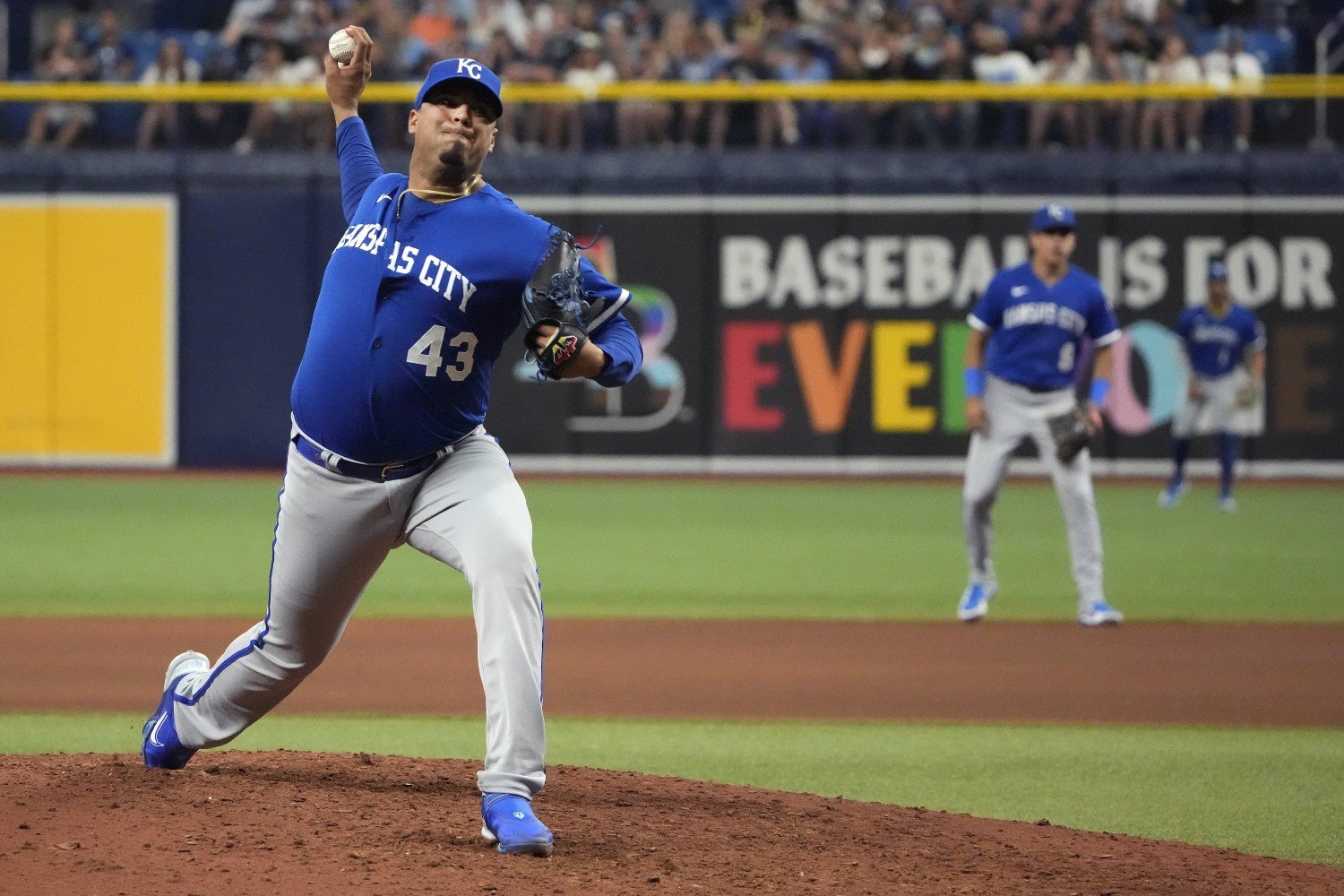 That the Brewers need to go shopping in the relief pitcher market this month is certainly no indictment of Devin Williams, Joel Payamps, or Elvis Peguero. Even after Peguero gave up a game-losing home run Sunday, that trio has led a supernal bullpen this year, and the Brewers' 19-8 record in one-run games is the biggest reason why they lead the NL Central (however precariously) entering this week's momentous series against the Reds. No one ever talks about a team's record in two-run games, but for what it's worth, the Brewers are 5-12 in them this year. That's as much on their offense as on their bullpen, but it illustrates the fact that their relief corps is not bulletproof. Nor will they look as good two months from now, if the team continues to need them as much as they have this month, unless the front office supplements the bullpen ahead of the deadline on August 1. Thus, we should take a quick look at some available relievers who would deepen that unit and lessen the burden on the guys whom Craig Counsell has come to trust the most this year. Carlos Hernandez, RHP, Royals Right off the bat, let's look past rental relievers and talk about what a more exciting acquisition could look like. After a conversion from starting to relieving, Hernandez has found two extra miles per hour and some added life on his fastball, plus some extra zip on his slider. He's used those two pitches and a modestly effective splitter to strike out nearly 30 percent of opposing batters this season, while walking a very tolerable 7 percent. He's a flamethrower already, and it's likely that the Brewers could tap into even more upon landing him. He also has four years of team control remaining beyond 2023. Because of that last fact, he'd be an unusually expensive trade piece, relative to the relievers who get swapped at most deadlines. He's similar to late-blooming reliever Scott Effross, whom the Cubs traded (with five years of club control left) to the Yankees last July for starter Hayden Wesneski. It was a steep price for New York, and Effross has now undergone Tommy John surgery, but the thought process at the time was that Effross might cement the team's status as favorites to charge through the American League playoffs. Wesneski had spent considerable time in the upper levels, but has shown his warts since getting his chance with the Cubs. The equivalent move for the Brewers would be to trade Robert Gasser for Hernandez, which sounds like a high price. However, Hernandez could find even greater utility for his stuff under the better tutelage of Brewers pitching coaches, and he would provide insurance against the regression or fatigue that might afflict Payamps, Peguero, or Williams late this season. He would also make it more possible to envision the long-term bullpen picture. David Robertson, RHP, Mets Apparently ageless, though not quite bionic, Robertson is having an even better season than he had last year, when he started the year with the Cubs and ended it as a linchpin of the Phillies' bullpen. He's eliminated the control problems that plagued him at times in 2022, and remains extremely effective with his unconventional mix of cutters and sharp curveballs. The Mets are stuck in the doldrums and are likely to move pieces just like Robertson, who's nearing 40 years of age and will be a free agent at year's end. He's a bit expensive monetarily, but that should only serve to keep the acquisition cost down. Failing that, the Mets might pay down his salary to facilitate the small-market Brewers taking him. Last year, he commanded a rising starting prospect in Double A. The equivalent in the Brewers farm would be someone like Carlos F. Rodriguez. Jose Cisnero, RHP, Tigers A lower-cost alternative to either of the above pitchers could be Cisnero, who is 34 and will be a free agent at season's end. He's a rare creature, a reliever with five pitches, and the Brewers would immediately clean up his pitch mix. (Gone, for instance, would be most of the sinkers he throws to lefties, and he'd follow in the steps of Payamps by becoming a sinker-slider guy to righties and a four-seam/changeup guy against lefties. Like Bryse Wilson, though, he'd also be likely to stick with and even emphasize the cutter, which seems to come out of his hand very naturally.) Cisnero won't be one of the five or six most talked-about right-handed relievers this deadline, but he's an obvious candidate to go somewhere, and the Brewers seem like an ideal destination. Any of these three, though, would lighten the loads of the team's existing triumvirate, and make it easier for them to both sew up the NL Central and push through the playoffs toward the World Series. Which one appeals most is about what you value most in a reliever; how much you want to plan for the future in that volatile area of the roster; and what appetite you have for giving up prospects to improve this flawed roster's chance to make a deep October run.
 -
Leading up to the MLB trade deadline next week, the buzz around the Brewers continues to center (rightfully) on hitters who can upgrade their inconsistent offense. If they want their success to last into October, though, they also need more depth in the bullpen. There are several options out there for them. Image courtesy of © Dave Nelson-USA TODAY Sports That the Brewers need to go shopping in the relief pitcher market this month is certainly no indictment of Devin Williams, Joel Payamps, or Elvis Peguero. Even after Peguero gave up a game-losing home run Sunday, that trio has led a supernal bullpen this year, and the Brewers' 19-8 record in one-run games is the biggest reason why they lead the NL Central (however precariously) entering this week's momentous series against the Reds. No one ever talks about a team's record in two-run games, but for what it's worth, the Brewers are 5-12 in them this year. That's as much on their offense as on their bullpen, but it illustrates the fact that their relief corps is not bulletproof. Nor will they look as good two months from now, if the team continues to need them as much as they have this month, unless the front office supplements the bullpen ahead of the deadline on August 1. Thus, we should take a quick look at some available relievers who would deepen that unit and lessen the burden on the guys whom Craig Counsell has come to trust the most this year. Carlos Hernandez, RHP, Royals Right off the bat, let's look past rental relievers and talk about what a more exciting acquisition could look like. After a conversion from starting to relieving, Hernandez has found two extra miles per hour and some added life on his fastball, plus some extra zip on his slider. He's used those two pitches and a modestly effective splitter to strike out nearly 30 percent of opposing batters this season, while walking a very tolerable 7 percent. He's a flamethrower already, and it's likely that the Brewers could tap into even more upon landing him. He also has four years of team control remaining beyond 2023. Because of that last fact, he'd be an unusually expensive trade piece, relative to the relievers who get swapped at most deadlines. He's similar to late-blooming reliever Scott Effross, whom the Cubs traded (with five years of club control left) to the Yankees last July for starter Hayden Wesneski. It was a steep price for New York, and Effross has now undergone Tommy John surgery, but the thought process at the time was that Effross might cement the team's status as favorites to charge through the American League playoffs. Wesneski had spent considerable time in the upper levels, but has shown his warts since getting his chance with the Cubs. The equivalent move for the Brewers would be to trade Robert Gasser for Hernandez, which sounds like a high price. However, Hernandez could find even greater utility for his stuff under the better tutelage of Brewers pitching coaches, and he would provide insurance against the regression or fatigue that might afflict Payamps, Peguero, or Williams late this season. He would also make it more possible to envision the long-term bullpen picture. David Robertson, RHP, Mets Apparently ageless, though not quite bionic, Robertson is having an even better season than he had last year, when he started the year with the Cubs and ended it as a linchpin of the Phillies' bullpen. He's eliminated the control problems that plagued him at times in 2022, and remains extremely effective with his unconventional mix of cutters and sharp curveballs. The Mets are stuck in the doldrums and are likely to move pieces just like Robertson, who's nearing 40 years of age and will be a free agent at year's end. He's a bit expensive monetarily, but that should only serve to keep the acquisition cost down. Failing that, the Mets might pay down his salary to facilitate the small-market Brewers taking him. Last year, he commanded a rising starting prospect in Double A. The equivalent in the Brewers farm would be someone like Carlos F. Rodriguez. Jose Cisnero, RHP, Tigers A lower-cost alternative to either of the above pitchers could be Cisnero, who is 34 and will be a free agent at season's end. He's a rare creature, a reliever with five pitches, and the Brewers would immediately clean up his pitch mix. (Gone, for instance, would be most of the sinkers he throws to lefties, and he'd follow in the steps of Payamps by becoming a sinker-slider guy to righties and a four-seam/changeup guy against lefties. Like Bryse Wilson, though, he'd also be likely to stick with and even emphasize the cutter, which seems to come out of his hand very naturally.) Cisnero won't be one of the five or six most talked-about right-handed relievers this deadline, but he's an obvious candidate to go somewhere, and the Brewers seem like an ideal destination. Any of these three, though, would lighten the loads of the team's existing triumvirate, and make it easier for them to both sew up the NL Central and push through the playoffs toward the World Series. Which one appeals most is about what you value most in a reliever; how much you want to plan for the future in that volatile area of the roster; and what appetite you have for giving up prospects to improve this flawed roster's chance to make a deep October run. View full article
-
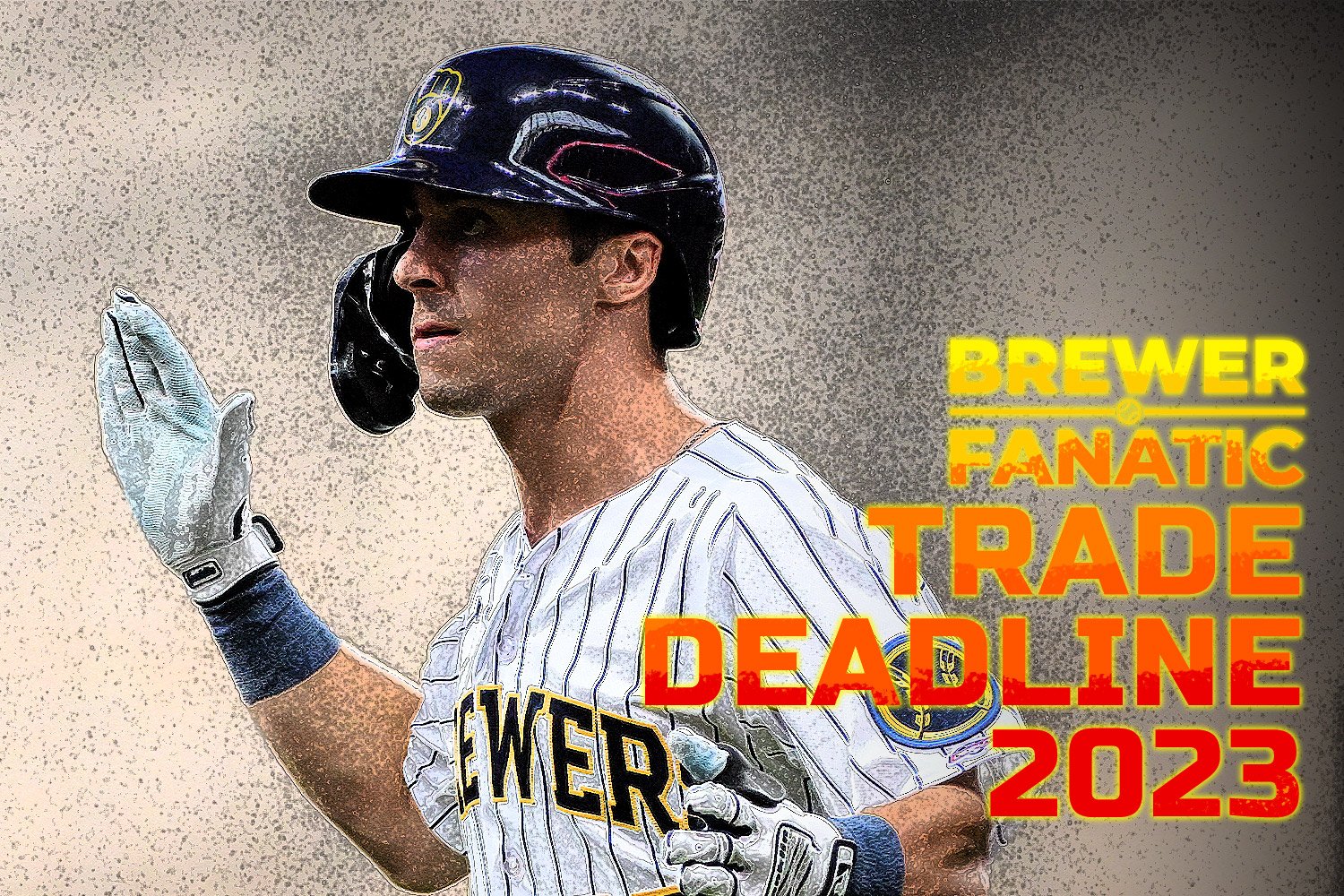 The Brewers had a galvanizing, exhilarating, season-shifting Saturday. They called up Sal Frelick and stuck him into the lineup for a nationally-televised home game against the best team in baseball, and the rookie came as close to singlehandedly winning them the game as a right fielder ever can. Frelick had the game-tying and go-ahead RBI, as the team came back from an early 3-0 deficit to win 4-3. Just as importantly, he made two dazzling catches near the fence in right, taking extra-base hits away as the Braves tried to add to their lead. Frelick now figures to be the everyday right fielder, or at least the strong side of a platoon with Tyrone Taylor. Until Taylor shows that he's regained his health and his form more completely than he did in his previous healthy stint, it should be mostly Frelick out there. The skills he showed with his hits and his sacrifice fly Saturday are the ones that made him a top prospect: a good approach, great feel for contact, and solid speed. He also, clearly, fits perfectly into one of the league's best defenses, a unit the Brewers have carefully cultivated and emphasized throughout the season. He shores up and lengthens the lineup nicely, though he clearly won't turn them overnight from a lousy offense into an average or better one. This development doesn't quite eliminate the possibility of a trade for a right fielder. Frelick has played center field the (narrow) majority of the time in the minors this year, and was primarily a center fielder last year. He could just as easily platoon with Joey Wiemer as with Taylor or Blake Perkins, should a good opportunity arise for the Brewers to trade for a right fielder. The better odds, though, have always been that the Brewers would find a first baseman or designated hitter to beef up the middle of the order, and Frelick being around makes that even more likely. That assumes, of course, that Frelick is still around on the other side of August 1. One reason to call up a prospect in the shadow of the approaching trade deadline is to showcase them for a potential trade. That's unlikely in this case, especially after Frelick immediately won the hearts of Brewers fans everywhere, but his trade stock rose right along with his Q-score on Saturday night. More plausibly, the team could take Frelick's arrival as an opportunity to shop Garrett Mitchell, who would be their dynamic, young left-handed outfielder if he weren't shelved with season-ending shoulder surgery back in April. Teams would give up more for Frelick than for Mitchell, of course, because the latter now has additional question marks on his scouting report--ones about his health and long-term prognosis, to go with the ones that already existed about his ability to make sufficient contact to get to his power and speed. However, the very fact of Frelick being in the mix (and, the Brewers hope, the improvement he brings to the offense even before they pursue external upgrades) could also make it less urgent that the team acquire someone new, anyway. If Frelick weren't part of the lineup, the team would need to trade for someone so good that they would need to trade Frelick to get them. If he can stick and help out on both sides of the ledger, they only need someone of the quality they can attain for a package starting with Mitchell. One game shouldn't guide the Brewers too forcefully. They should still keep the need for a big bat (ideally a right-handed one) front and center in their minds. With Frelick in the big-league fold, though, the necessary form of that deal is a bit less drastic, and they can husband their long-term resources (both talent and money) more closely, without it hurting their chances of winning the NL Central or making a run in October.
 -
With the MLB trade deadline a week and a half away, the Brewers made a roster change aimed at gaining some important information before making their key trade decisions. They just might have a new clarity about their needs, and about whom they should and shouldn't trade to fill them. Image courtesy of © Benny Sieu-USA TODAY Sports The Brewers had a galvanizing, exhilarating, season-shifting Saturday. They called up Sal Frelick and stuck him into the lineup for a nationally-televised home game against the best team in baseball, and the rookie came as close to singlehandedly winning them the game as a right fielder ever can. Frelick had the game-tying and go-ahead RBI, as the team came back from an early 3-0 deficit to win 4-3. Just as importantly, he made two dazzling catches near the fence in right, taking extra-base hits away as the Braves tried to add to their lead. Frelick now figures to be the everyday right fielder, or at least the strong side of a platoon with Tyrone Taylor. Until Taylor shows that he's regained his health and his form more completely than he did in his previous healthy stint, it should be mostly Frelick out there. The skills he showed with his hits and his sacrifice fly Saturday are the ones that made him a top prospect: a good approach, great feel for contact, and solid speed. He also, clearly, fits perfectly into one of the league's best defenses, a unit the Brewers have carefully cultivated and emphasized throughout the season. He shores up and lengthens the lineup nicely, though he clearly won't turn them overnight from a lousy offense into an average or better one. This development doesn't quite eliminate the possibility of a trade for a right fielder. Frelick has played center field the (narrow) majority of the time in the minors this year, and was primarily a center fielder last year. He could just as easily platoon with Joey Wiemer as with Taylor or Blake Perkins, should a good opportunity arise for the Brewers to trade for a right fielder. The better odds, though, have always been that the Brewers would find a first baseman or designated hitter to beef up the middle of the order, and Frelick being around makes that even more likely. That assumes, of course, that Frelick is still around on the other side of August 1. One reason to call up a prospect in the shadow of the approaching trade deadline is to showcase them for a potential trade. That's unlikely in this case, especially after Frelick immediately won the hearts of Brewers fans everywhere, but his trade stock rose right along with his Q-score on Saturday night. More plausibly, the team could take Frelick's arrival as an opportunity to shop Garrett Mitchell, who would be their dynamic, young left-handed outfielder if he weren't shelved with season-ending shoulder surgery back in April. Teams would give up more for Frelick than for Mitchell, of course, because the latter now has additional question marks on his scouting report--ones about his health and long-term prognosis, to go with the ones that already existed about his ability to make sufficient contact to get to his power and speed. However, the very fact of Frelick being in the mix (and, the Brewers hope, the improvement he brings to the offense even before they pursue external upgrades) could also make it less urgent that the team acquire someone new, anyway. If Frelick weren't part of the lineup, the team would need to trade for someone so good that they would need to trade Frelick to get them. If he can stick and help out on both sides of the ledger, they only need someone of the quality they can attain for a package starting with Mitchell. One game shouldn't guide the Brewers too forcefully. They should still keep the need for a big bat (ideally a right-handed one) front and center in their minds. With Frelick in the big-league fold, though, the necessary form of that deal is a bit less drastic, and they can husband their long-term resources (both talent and money) more closely, without it hurting their chances of winning the NL Central or making a run in October. View full article
-
The Milwaukee Brewers are alone in first place in the NL Central, and after their emphatic sweep of the Reds in Cincinnati, momentum is on their side. Nothing should stop the Brewers from being aggressive buyers at the trade deadline. So what do they need, and where can they get it? Image courtesy of © David Kohl-USA TODAY Sports Key Team Needs The Brewers' infamously anemic offense didn't do much to inspire new confidence, even during a triumphant weekend to open the second half. They scored just eight total runs, against a team who couldn't even line up three respectable starting pitchers coming out of the All-Star break. Harvey's Wallbangers they ain't, and that's not going to change, but Milwaukee badly needs a bat. Finding the position at which to make an upgrade got a bit easier, although in an unhappy way, when Brian Anderson went on the injured list this weekend with a strain in his lower back. Rowdy Tellez also looks to be sidelined for a while, after breaking his finger shagging flies on Saturday. That makes it easy to picture adding a hitter at either infield corner, in right field, or at designated hitter, and at the moment, none of Brice Turange, Andruw Monasterio, and Owen Miller are foreclosing the possibility of doing better at second base. All things considered, Turang's and Miller's gloves make it worth leaving the middle infield alone, but the Brewers will be listening even on players who would slot in there. No contender is ever fully satisfied with its pitching staff, of course, and with uncertainty still hanging over Brandon Woodruff's recovery from the injury that shelved him in April, the Brewers could look into help in their starting rotation. Given the sheer number of guys they already have to fill out the rotation and their depth, however, it feels much more likely that they pursue an extra relief arm, unless a starter controllable beyond 2024 unexpectedly hits the market. Likely Sellers Thanks to the ever-expanding playoff field and format, it's still hard to tell exactly who will be buying and selling, and how aggressively they might do so. There's little question about a fistful of teams, however, because they've collapsed so thoroughly as to be virtually eliminated long ago. That group includes the Oakland Athletics, the Kansas City Royals, the Detroit Tigers, the Chicago White Sox, the Washington Nationals, the Colorado Rockies, and the St. Louis Cardinals. It's possible that the Chicago Cubs, the Pittsburgh Pirates, the New York Mets, the Boston Red Sox, the San Diego Padres, the Seattle Mariners, and the Los Angeles Angels could join and double those ranks, though. A Fast Survey of Targets In the coming days, we'll have lots of breakdowns of specific trade candidates and rumors, and we'll break down the positional possibilities. Right off the bat, though, here are a half-dozen hitters from the teams above who make superficially solid matches with the Brewers' needs. Jeimer Candelario, the third baseman of whom the Nationals made a reclamation project this winter, has had a solid year at the plate and in the field. He's still young, though he'll hit free agency at the end of the season, and the bruised thumb that sidelined him this weekend doesn't seem terribly serious. Eloy Jimenez is under contract with the White Sox through the end of next season, and then they hold two club options on him. That could make it hard to trade for him, but the power upside in his right-handed bat is hard to overlook. Mets outfielder Mark Canha also has an affordable club option, for 2024. The Mets need a shakeup, though, and Canha's approach (on-base skills aplenty, but limited power) could be a nice counterbalance in the middle of the Brewers' lineup. While the complexities of any intradivisional deal might thwart this one, Paul Goldschmidt is an excellent potential fit for the first base void that has so hampered the team. After a stout 2022, A's first baseman and outfielder Seth Brown has had a nightmarish 2023. Buying him now would feel eerily similar to snapping up Tellez a few years ago, though. Teoscar Hernandez hasn't been the star slugger he was last year with the Blue Jays, but the Mariners' unfriendly home park might be part of the problem. Either way, he'd be another interesting middle-of-the-order target. Again, there's much more to come on these topics, including updates on the prospect names you might hear most and the more creative possibilities out there. For now, jump into the comments and let us know what you want to see the Brewers emphasize and prioritize as they gear up for an NL Central title run. View full article
-
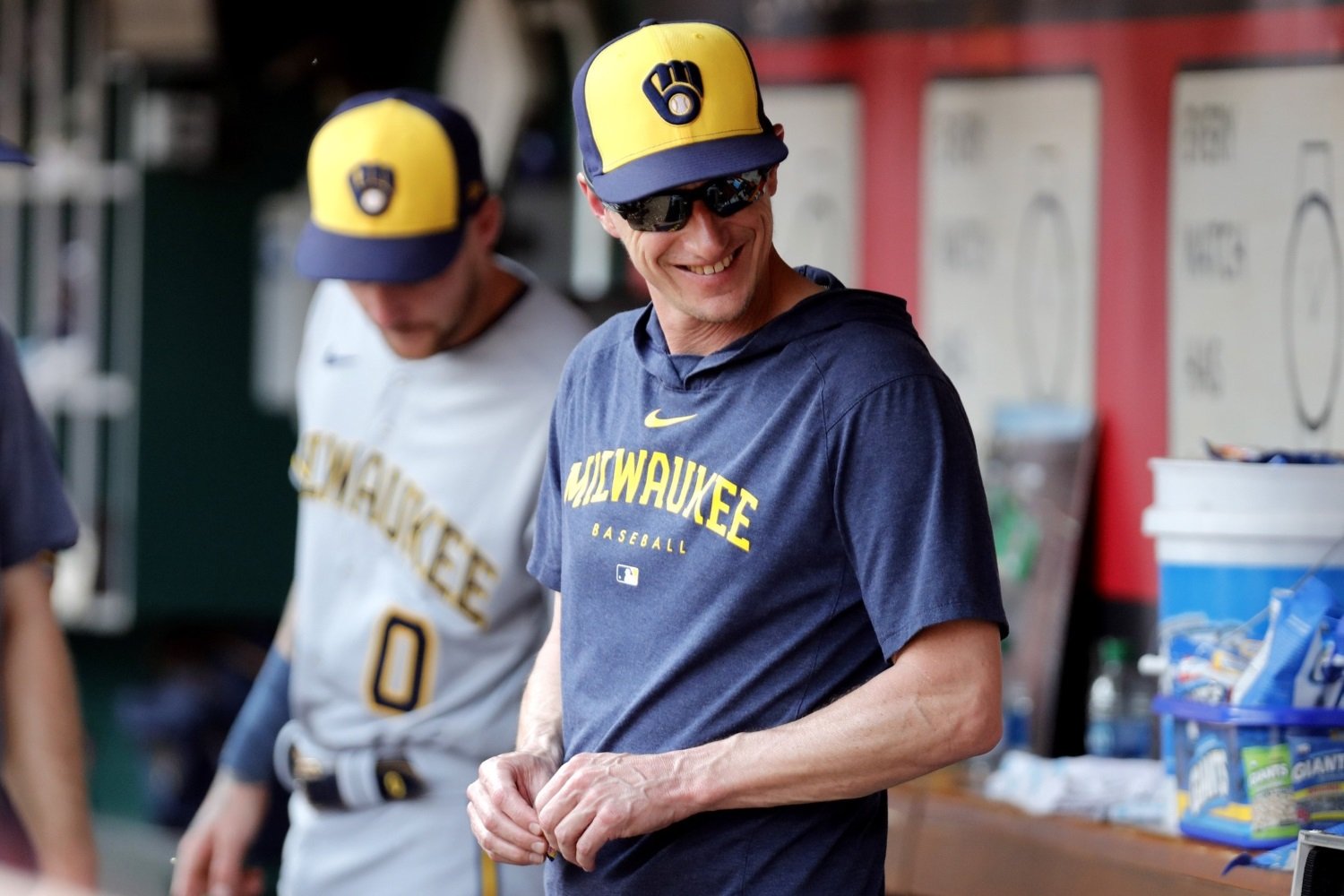 Key Team Needs The Brewers' infamously anemic offense didn't do much to inspire new confidence, even during a triumphant weekend to open the second half. They scored just eight total runs, against a team who couldn't even line up three respectable starting pitchers coming out of the All-Star break. Harvey's Wallbangers they ain't, and that's not going to change, but Milwaukee badly needs a bat. Finding the position at which to make an upgrade got a bit easier, although in an unhappy way, when Brian Anderson went on the injured list this weekend with a strain in his lower back. Rowdy Tellez also looks to be sidelined for a while, after breaking his finger shagging flies on Saturday. That makes it easy to picture adding a hitter at either infield corner, in right field, or at designated hitter, and at the moment, none of Brice Turange, Andruw Monasterio, and Owen Miller are foreclosing the possibility of doing better at second base. All things considered, Turang's and Miller's gloves make it worth leaving the middle infield alone, but the Brewers will be listening even on players who would slot in there. No contender is ever fully satisfied with its pitching staff, of course, and with uncertainty still hanging over Brandon Woodruff's recovery from the injury that shelved him in April, the Brewers could look into help in their starting rotation. Given the sheer number of guys they already have to fill out the rotation and their depth, however, it feels much more likely that they pursue an extra relief arm, unless a starter controllable beyond 2024 unexpectedly hits the market. Likely Sellers Thanks to the ever-expanding playoff field and format, it's still hard to tell exactly who will be buying and selling, and how aggressively they might do so. There's little question about a fistful of teams, however, because they've collapsed so thoroughly as to be virtually eliminated long ago. That group includes the Oakland Athletics, the Kansas City Royals, the Detroit Tigers, the Chicago White Sox, the Washington Nationals, the Colorado Rockies, and the St. Louis Cardinals. It's possible that the Chicago Cubs, the Pittsburgh Pirates, the New York Mets, the Boston Red Sox, the San Diego Padres, the Seattle Mariners, and the Los Angeles Angels could join and double those ranks, though. A Fast Survey of Targets In the coming days, we'll have lots of breakdowns of specific trade candidates and rumors, and we'll break down the positional possibilities. Right off the bat, though, here are a half-dozen hitters from the teams above who make superficially solid matches with the Brewers' needs. Jeimer Candelario, the third baseman of whom the Nationals made a reclamation project this winter, has had a solid year at the plate and in the field. He's still young, though he'll hit free agency at the end of the season, and the bruised thumb that sidelined him this weekend doesn't seem terribly serious. Eloy Jimenez is under contract with the White Sox through the end of next season, and then they hold two club options on him. That could make it hard to trade for him, but the power upside in his right-handed bat is hard to overlook. Mets outfielder Mark Canha also has an affordable club option, for 2024. The Mets need a shakeup, though, and Canha's approach (on-base skills aplenty, but limited power) could be a nice counterbalance in the middle of the Brewers' lineup. While the complexities of any intradivisional deal might thwart this one, Paul Goldschmidt is an excellent potential fit for the first base void that has so hampered the team. After a stout 2022, A's first baseman and outfielder Seth Brown has had a nightmarish 2023. Buying him now would feel eerily similar to snapping up Tellez a few years ago, though. Teoscar Hernandez hasn't been the star slugger he was last year with the Blue Jays, but the Mariners' unfriendly home park might be part of the problem. Either way, he'd be another interesting middle-of-the-order target. Again, there's much more to come on these topics, including updates on the prospect names you might hear most and the more creative possibilities out there. For now, jump into the comments and let us know what you want to see the Brewers emphasize and prioritize as they gear up for an NL Central title run.
 -
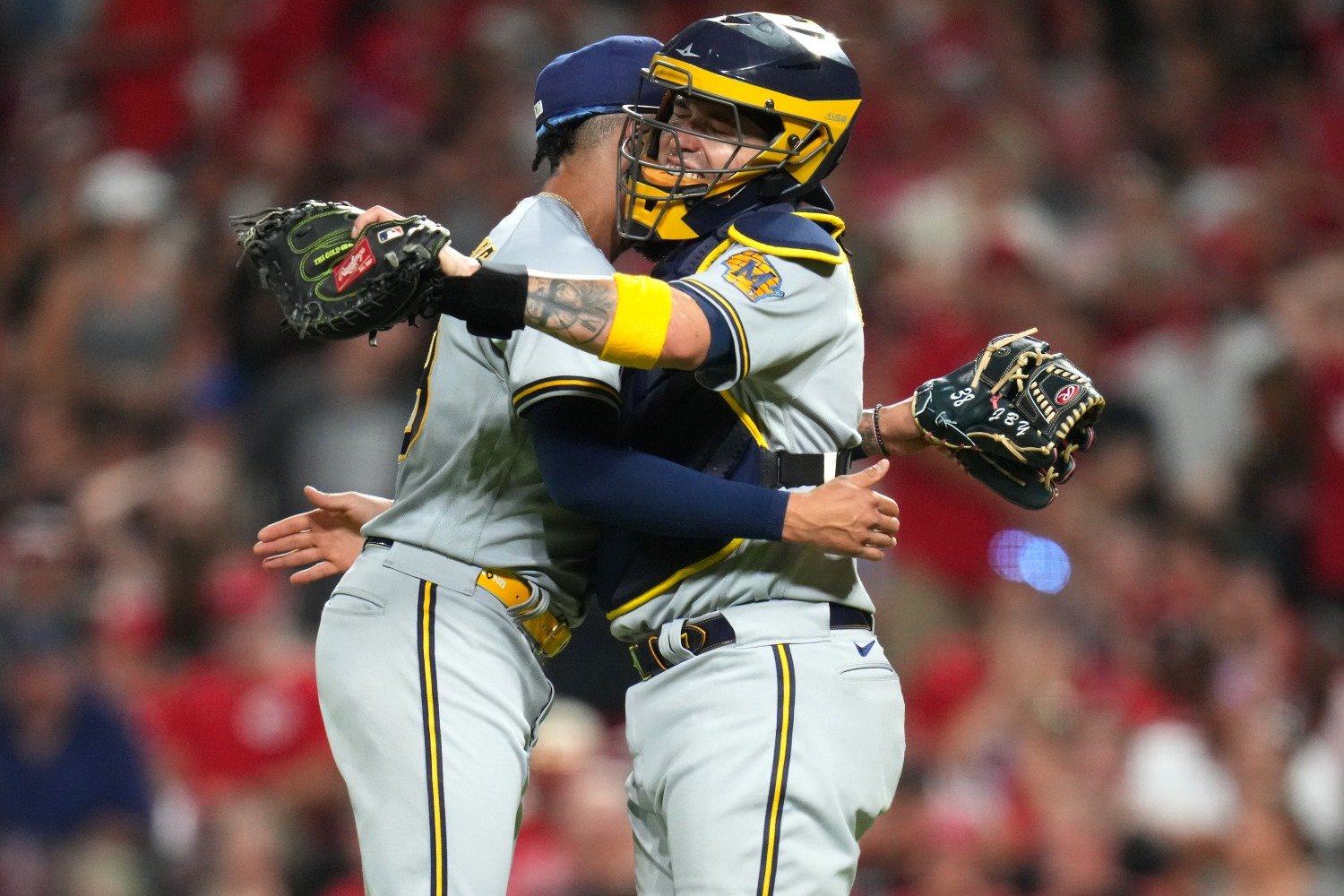 With the first three pitches, Devin Williams dotted the outer edge of the plate with fastballs. One was too high, but the other two were called strikes--much to the consternation of the Reds dugout. They were great pitches, though, and with McLain in a 1-2 hole, Williams was then able to throw his screwball over the inner edge and catch the rookie looking outside, completing the strikeout with a whiff. At Baseball Savant, where MLB keeps its neatest but nerdiest numbers, there are multiple ways to slice and dice the strike zone. One of them is a subdivision that essentially consists of concentric rectangles. There are four categories: Waste, Chase, Shadow, and Heart. Waste pitches, in the outermost rectangle, are either total misfires or attempts by the pitcher just to set up future offerings. Only Javier Baez-type hitters ever really engage with them. Chase pitches are a bit closer, but still clearly outside the strike zone, and the hitter just needs to identify them and lay off. The two innermost rectangles in the chart are Shadow and Heart. The Shadow category rings the edges of the strike zone on all sides. It's where pitchers most want to live, because doing so will force hitters to swing more often but rarely result in hard contact. The danger, or one of the dangers, is in a pitch meandering into the Heart zone, which is just what it sounds like: the meaty part of the strike zone, where the league's average exit velocity is 93 miles per hour and their average launch angle is 15 degrees. By contrast, batted balls in the Shadow zone average 86.4 miles per hour. There's a difference of over .100 in expected weighted on-base average (xwOBA) between the two regions. It's vital, then, to be able to work in the Shadow region without also spending too much time in the Heart. In one sense, this is the difference between control and command, expressed quantitatively. Teams who fill up the Chase and Waste areas will walk too many hitters, or end up behind in counts and have to use too much of the plate eventually. Those who lean too far toward Heart when they're around the zone will get hammered. You have to be able to work within the zone, but also expand it--to avoid damage, but still get strikes. The Brewers are, perhaps, the masters of this craft for 2023. On the year, only the Cubs and Mets have thrown fewer pitches in the Heart than has the Crew. Yet, only the Dodgers, Tigers, and Twins have thrown more of their pitches in the Shadow zone. Pain in broad strokes (by combining Shadow and Heart into a category, and consolidating Chase and Waste into another), and the Brewers look average. They spend the 18th-most time around the zone and 15th-most time well beyond it. When you break it down, though, they're clearly more adept than almost anyone at working the edges. No team has allowed a lower percentage of opponents' balls in play on pitches in the Heart this year than the Brewers. That's why they've been so devastatingly effective against the Reds. Cincinnati is the offense that has had the highest percentage of their batted balls on Heart pitches this year. It would be unfairly reductionist to say that the Reds are just mistake hitters, but they rely on pitchers eventually caving to their pressure and throwing them something very hittable. Because the Brewers avoid that as assiduously as anyone in baseball, and also avoid veering too far the other way and putting the Reds' speedy runners on base for free, they've frustrated that approach. This is a credit to everyone involved in the process, from the pitchers themselves, to pitching coach Chris Hook and the overall pitching infrastructure the team has assembled, to the catchers who set the targets and help the pitchers find the (literal and figurative) edges this way. It's not as easy as overpowering hitters with 102 down the gut, but it's much more repeatable than that is, and it's easier to find pitchers who can do it. At a certain point, it becomes a culture within the pitching staff, and then everything spirals in a good direction. Let's mix and match the numbers one more time, to clarify what we're saying here. Combine Shadow and Chase into a single category containing (on average) the most valuable pitches--the ones hitters might swing at, but on which they can't hurt you--and the Brewers trail only the Rangers and the Tigers in the share of their pitches that end up there. Because the Brewers' hurlers have the Tigers' beat on sheer stuff, it's fair to say that the only pitching staff executing better than Milwaukee's this season is that of the AL West-leading Rangers. It's hardly news that, if Craig Counsell and company win the NL Central, it will be mostly thanks to the pitching staff. Still, this is an illuminating look at the ways in which they've effected that dominance.
 -
As the Brewers sought to close out their third straight shutout of the Reds Saturday night, Devin Williams came on to face Reds rookie Matt McLain. Leading off the inning, McLain could have put considerable pressure on the Brewers by getting on base. Instead, Williams picked him apart, and the way he did so is the trademark of the Brewers' season to date. Image courtesy of © Kareem Elgazzar/The Enquirer / USA TODAY NETWORK With the first three pitches, Devin Williams dotted the outer edge of the plate with fastballs. One was too high, but the other two were called strikes--much to the consternation of the Reds dugout. They were great pitches, though, and with McLain in a 1-2 hole, Williams was then able to throw his screwball over the inner edge and catch the rookie looking outside, completing the strikeout with a whiff. At Baseball Savant, where MLB keeps its neatest but nerdiest numbers, there are multiple ways to slice and dice the strike zone. One of them is a subdivision that essentially consists of concentric rectangles. There are four categories: Waste, Chase, Shadow, and Heart. Waste pitches, in the outermost rectangle, are either total misfires or attempts by the pitcher just to set up future offerings. Only Javier Baez-type hitters ever really engage with them. Chase pitches are a bit closer, but still clearly outside the strike zone, and the hitter just needs to identify them and lay off. The two innermost rectangles in the chart are Shadow and Heart. The Shadow category rings the edges of the strike zone on all sides. It's where pitchers most want to live, because doing so will force hitters to swing more often but rarely result in hard contact. The danger, or one of the dangers, is in a pitch meandering into the Heart zone, which is just what it sounds like: the meaty part of the strike zone, where the league's average exit velocity is 93 miles per hour and their average launch angle is 15 degrees. By contrast, batted balls in the Shadow zone average 86.4 miles per hour. There's a difference of over .100 in expected weighted on-base average (xwOBA) between the two regions. It's vital, then, to be able to work in the Shadow region without also spending too much time in the Heart. In one sense, this is the difference between control and command, expressed quantitatively. Teams who fill up the Chase and Waste areas will walk too many hitters, or end up behind in counts and have to use too much of the plate eventually. Those who lean too far toward Heart when they're around the zone will get hammered. You have to be able to work within the zone, but also expand it--to avoid damage, but still get strikes. The Brewers are, perhaps, the masters of this craft for 2023. On the year, only the Cubs and Mets have thrown fewer pitches in the Heart than has the Crew. Yet, only the Dodgers, Tigers, and Twins have thrown more of their pitches in the Shadow zone. Pain in broad strokes (by combining Shadow and Heart into a category, and consolidating Chase and Waste into another), and the Brewers look average. They spend the 18th-most time around the zone and 15th-most time well beyond it. When you break it down, though, they're clearly more adept than almost anyone at working the edges. No team has allowed a lower percentage of opponents' balls in play on pitches in the Heart this year than the Brewers. That's why they've been so devastatingly effective against the Reds. Cincinnati is the offense that has had the highest percentage of their batted balls on Heart pitches this year. It would be unfairly reductionist to say that the Reds are just mistake hitters, but they rely on pitchers eventually caving to their pressure and throwing them something very hittable. Because the Brewers avoid that as assiduously as anyone in baseball, and also avoid veering too far the other way and putting the Reds' speedy runners on base for free, they've frustrated that approach. This is a credit to everyone involved in the process, from the pitchers themselves, to pitching coach Chris Hook and the overall pitching infrastructure the team has assembled, to the catchers who set the targets and help the pitchers find the (literal and figurative) edges this way. It's not as easy as overpowering hitters with 102 down the gut, but it's much more repeatable than that is, and it's easier to find pitchers who can do it. At a certain point, it becomes a culture within the pitching staff, and then everything spirals in a good direction. Let's mix and match the numbers one more time, to clarify what we're saying here. Combine Shadow and Chase into a single category containing (on average) the most valuable pitches--the ones hitters might swing at, but on which they can't hurt you--and the Brewers trail only the Rangers and the Tigers in the share of their pitches that end up there. Because the Brewers' hurlers have the Tigers' beat on sheer stuff, it's fair to say that the only pitching staff executing better than Milwaukee's this season is that of the AL West-leading Rangers. It's hardly news that, if Craig Counsell and company win the NL Central, it will be mostly thanks to the pitching staff. Still, this is an illuminating look at the ways in which they've effected that dominance. View full article
-
Here's something fun for a Saturday. The Brewers are on the road coming out of the All-Star break, with series against the Reds and Phillies. Care to play a little bit of Immaculate Grid? Image courtesy of Immaculate Grid If you're reading these words, your life has almost surely been touched already by Immaculate Grid, the collision of Wordle and Remember Some Guys that took Baseball Twitter by storm and has recently been bought by Baseball Reference. In case you've been under a rock, though, the game goes thusly: Players receive a 3x3 grid with teams and/or career or seasonal statistical achievements lining each side, and the challenge is to fill in the grid with players who fit both criteria for that square. We can do a different, but related, game right here, though. There have been 12 players who have played for the Brewers and each of their opponents on this road trip. It's like the Grid has become a Cube! How many of the 12 can you name? Below, I'll place the answers, plus some quick info on each player--including other teams for whom they played, for your future Grid-filling uses. I'm guessing a couple of those six would have stumped you. Here's the second half of the group, led off by a couple of guys you probably could guess, given some time to sit with it. There you have it. The Dirty Dozen, we could call these guys. I just made that up. What do you think? View full article
-
Want to Have Some Immaculate Grid-Style Brewers Fun?
Matthew Trueblood posted an article in Just For Fun
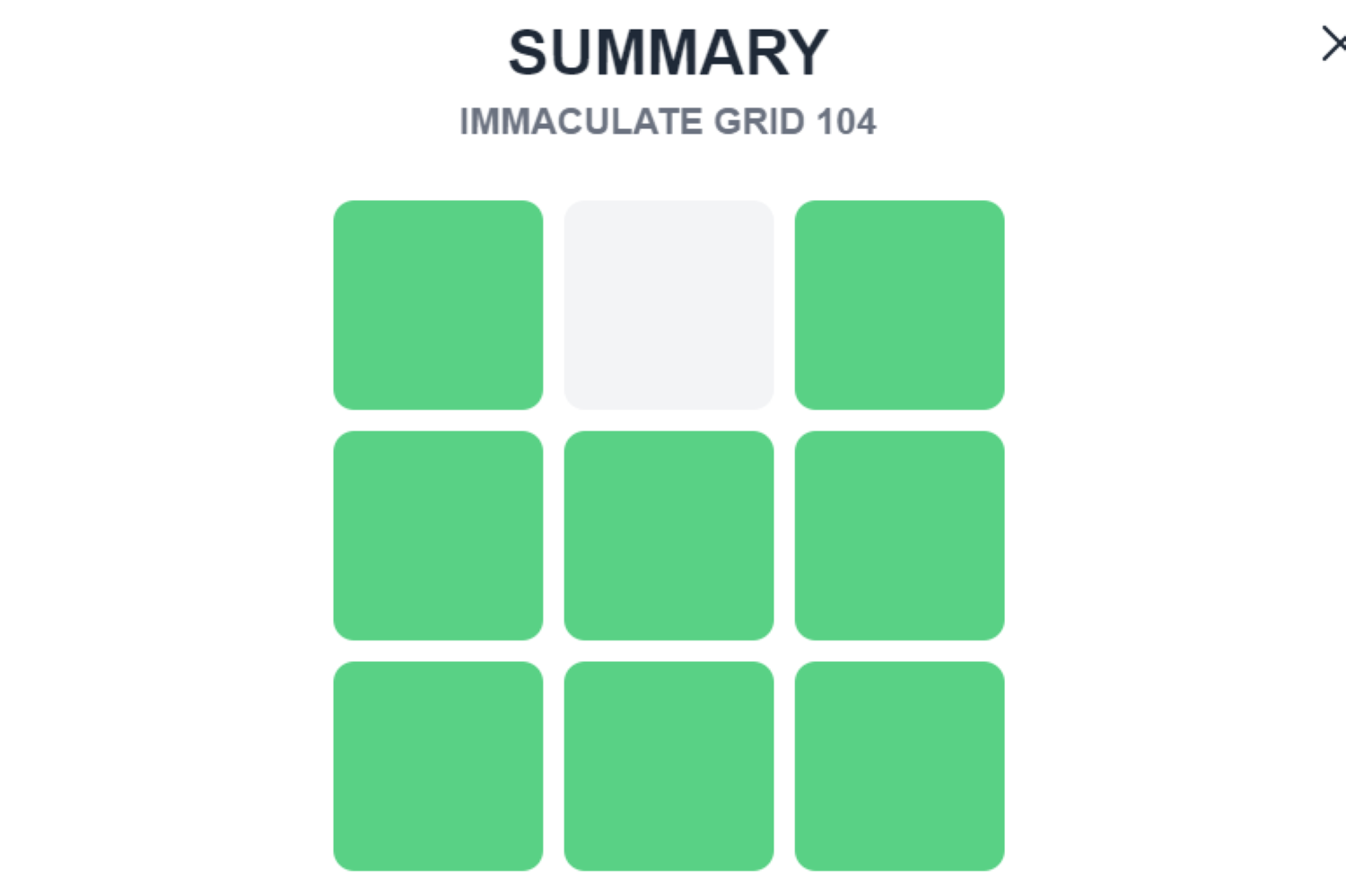 If you're reading these words, your life has almost surely been touched already by Immaculate Grid, the collision of Wordle and Remember Some Guys that took Baseball Twitter by storm and has recently been bought by Baseball Reference. In case you've been under a rock, though, the game goes thusly: Players receive a 3x3 grid with teams and/or career or seasonal statistical achievements lining each side, and the challenge is to fill in the grid with players who fit both criteria for that square. We can do a different, but related, game right here, though. There have been 12 players who have played for the Brewers and each of their opponents on this road trip. It's like the Grid has become a Cube! How many of the 12 can you name? Below, I'll place the answers, plus some quick info on each player--including other teams for whom they played, for your future Grid-filling uses. I'm guessing a couple of those six would have stumped you. Here's the second half of the group, led off by a couple of guys you probably could guess, given some time to sit with it. There you have it. The Dirty Dozen, we could call these guys. I just made that up. What do you think?
 -
As the Brewers emerge from the All-Star break, they have a tough schedule and an urgent need to pass the Reds and reclaim first place in the NL Central. It's been assumed that they would compress their starting rotation back to five pitchers after the break, but is that true? What's the best way for them to structure their pitching staff for the next few weeks? Image courtesy of © Charles LeClaire-USA TODAY Sports The number of variables involved in an effort to decide whether to use five or six in the rotation can be mind-boggling. Obviously, it's not ideal to lose a start or two by Corbin Burnes, who seems to be rounding back into Cy Young form just in time for the stretch run. On the other hand, keeping starters fresher both decreases the likelihood that they will get hurt and increases their ability to work a bit deeper into games. In a vacuum, and until the next round of expansion eventually stretches pitching staffs thinner again, there's a good argument that six-man rotations are the highest use of a 13-man pitching staff in modern MLB. We don't live in a vacuum, though, and the eccentricities of any particular situation usually weigh more heavily than a guiding principle. Let's talk, then, about the particulars of the Brewers' case. Firstly, as noted, Burnes seems to be thriving on the six-man schedule. At some point in the near future, the Brewers hope to get Brandon Woodruff back, and it makes all the sense in the world to give him an extra day's rest when possible. Wade Miley's not going to magically leave the lat, oblique, and other injuries he's had over the last couple of years behind without being given sufficient rest, so the six-man schedule would benefit him, too. The big questions are: How long will it turn out to be before Woodruff actually returns? In the meantime, can the Brewers really afford to give half their starts to Adrian Houser, Colin Rea, and Julio Teheran? Last week, Teheran was available out of the bullpen just before the break. He could be the clearest candidate for eviction from the rotation, since he's allowed 13 runs in 11 2/3 innings over his last two starts. On the other hand, he did get the team at least 17 outs in each of those contests. In fact, he's gone at least five innings in all eight of his starts as a member of the Crew. If you believe he's been figured out again by the league after these two discouraging outings, it makes sense to move on from him, but he probably isn't of much use in the bullpen. The argument for keeping him there is that he eats innings, and that in six of his eight outings, he's done so without allowing more than two runs. Rea would seem to be the other candidate to get the boot. Since he returned to the rotation May 14, Rea has made 10 starts, with a 4.58 ERA. He's striking out fewer than 20 percent of opposing batters. He's also walking very few batters and keeping the ball in the park, though, and although he can't claim all the credit for it, the Brewers are 7-3 in those 10 starts. Rea has kept the team in the game in all but one or two outings this year, though his pitch count rises and he is forced to depart early more often than Teheran. Before the season began, the plan was to have Houser working in relief. Between his own injuries and those suffered by some of the starters, he's ended up making nine starts, including two since his return from a bullpen assignment in late June. Those starts were superficially encouraging, with three runs allowed in 11 innings, but he put 18 runners on base and allowed two homers during those frames, so he probably got a bit lucky with the top-line results. Rea could be optioned to Triple-A Nashville, if needed, but the team has to keep both Teheran and Houser on their roster unless and until they're willing to lose them. Thus, it's Rea who's most likely to lose his place whenever Woodruff returns. Before then, however, it would be Houser who makes most sense to relegate to relief work. He's done it more effectively than either of the others, and his stuff has the best chance to play up in that role. It's a bit of an unsatisfying answer to the question of "Five or six?", but the answer to the Brewers' rotation dilemma is probably to use five and a half starters, and to flex the rotation as needed. After this series in Cincinnati, they have a day off before playing three games in Philadelphia. Using a strict six-man rotation, Burnes wouldn't pitch again until next Friday, at home against Atlanta. It's not the worst idea in the world to throw one's ace out there against that gauntlet of a lineup, but going a week between Burnes starts at this stage of the season seems excessive. The best thing could be to have Houser available in relief for the short term. Beginning with the Philadelphia series, though, the Crew does play nine straight games, and 22 games in 23 days. Even if Woodruff begins a rehab stint very soon, it's unlikely that he'll be back before the midpoint of that summer slog. It's more likely that he'll return only near the tail end of it, and thus, keeping all six of the incumbents starting (or starting-ready) makes sense for now. Houser has shown the versatility to go to the bullpen and return to the rotation without breaking down in either role. For now, cutting loose Teheran or farming out Rea would be premature, and the team should keep all six of their starters in a rough rotation. View full article
- 3 replies
-
- 1
-

-
- corbin burnes
- wade miley
- (and 3 more)
-
Will the Brewers Stick With a Six-Man Rotation? Should They?
Matthew Trueblood posted an article in Brewers
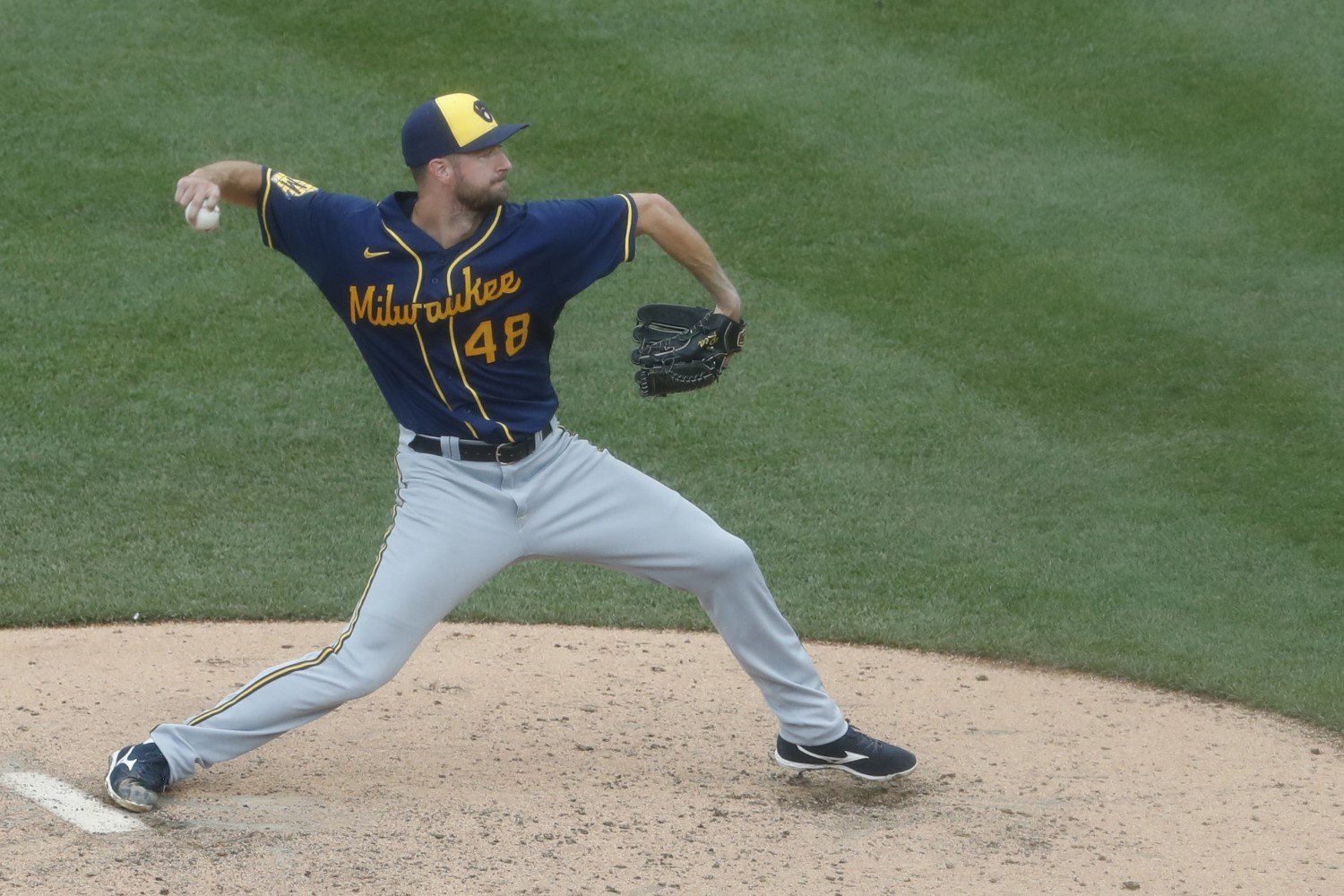 The number of variables involved in an effort to decide whether to use five or six in the rotation can be mind-boggling. Obviously, it's not ideal to lose a start or two by Corbin Burnes, who seems to be rounding back into Cy Young form just in time for the stretch run. On the other hand, keeping starters fresher both decreases the likelihood that they will get hurt and increases their ability to work a bit deeper into games. In a vacuum, and until the next round of expansion eventually stretches pitching staffs thinner again, there's a good argument that six-man rotations are the highest use of a 13-man pitching staff in modern MLB. We don't live in a vacuum, though, and the eccentricities of any particular situation usually weigh more heavily than a guiding principle. Let's talk, then, about the particulars of the Brewers' case. Firstly, as noted, Burnes seems to be thriving on the six-man schedule. At some point in the near future, the Brewers hope to get Brandon Woodruff back, and it makes all the sense in the world to give him an extra day's rest when possible. Wade Miley's not going to magically leave the lat, oblique, and other injuries he's had over the last couple of years behind without being given sufficient rest, so the six-man schedule would benefit him, too. The big questions are: How long will it turn out to be before Woodruff actually returns? In the meantime, can the Brewers really afford to give half their starts to Adrian Houser, Colin Rea, and Julio Teheran? Last week, Teheran was available out of the bullpen just before the break. He could be the clearest candidate for eviction from the rotation, since he's allowed 13 runs in 11 2/3 innings over his last two starts. On the other hand, he did get the team at least 17 outs in each of those contests. In fact, he's gone at least five innings in all eight of his starts as a member of the Crew. If you believe he's been figured out again by the league after these two discouraging outings, it makes sense to move on from him, but he probably isn't of much use in the bullpen. The argument for keeping him there is that he eats innings, and that in six of his eight outings, he's done so without allowing more than two runs. Rea would seem to be the other candidate to get the boot. Since he returned to the rotation May 14, Rea has made 10 starts, with a 4.58 ERA. He's striking out fewer than 20 percent of opposing batters. He's also walking very few batters and keeping the ball in the park, though, and although he can't claim all the credit for it, the Brewers are 7-3 in those 10 starts. Rea has kept the team in the game in all but one or two outings this year, though his pitch count rises and he is forced to depart early more often than Teheran. Before the season began, the plan was to have Houser working in relief. Between his own injuries and those suffered by some of the starters, he's ended up making nine starts, including two since his return from a bullpen assignment in late June. Those starts were superficially encouraging, with three runs allowed in 11 innings, but he put 18 runners on base and allowed two homers during those frames, so he probably got a bit lucky with the top-line results. Rea could be optioned to Triple-A Nashville, if needed, but the team has to keep both Teheran and Houser on their roster unless and until they're willing to lose them. Thus, it's Rea who's most likely to lose his place whenever Woodruff returns. Before then, however, it would be Houser who makes most sense to relegate to relief work. He's done it more effectively than either of the others, and his stuff has the best chance to play up in that role. It's a bit of an unsatisfying answer to the question of "Five or six?", but the answer to the Brewers' rotation dilemma is probably to use five and a half starters, and to flex the rotation as needed. After this series in Cincinnati, they have a day off before playing three games in Philadelphia. Using a strict six-man rotation, Burnes wouldn't pitch again until next Friday, at home against Atlanta. It's not the worst idea in the world to throw one's ace out there against that gauntlet of a lineup, but going a week between Burnes starts at this stage of the season seems excessive. The best thing could be to have Houser available in relief for the short term. Beginning with the Philadelphia series, though, the Crew does play nine straight games, and 22 games in 23 days. Even if Woodruff begins a rehab stint very soon, it's unlikely that he'll be back before the midpoint of that summer slog. It's more likely that he'll return only near the tail end of it, and thus, keeping all six of the incumbents starting (or starting-ready) makes sense for now. Houser has shown the versatility to go to the bullpen and return to the rotation without breaking down in either role. For now, cutting loose Teheran or farming out Rea would be premature, and the team should keep all six of their starters in a rough rotation.
 -
In baseball, it's rare for an individual player to take over a game, or to become (of necessity) the focus of an opposing team's gameplan. It's just not in the nature of the sport for anyone to consistently determine games on their own. As Reds rookie Elly De La Cruz tests that tenet, though, the Brewers have to treat him that way--because they still have seven games left with the division leaders this month. Image courtesy of © Michael McLoone-USA TODAY Sports It was breathtaking to watch Elly De La Cruz break open a taut, seesawing game Saturday afternoon--even if, for Brewers fans, that lost breath was by way of a gut punch. It all began when, with a runner on third and an 0-2 count against him, De La Cruz flared the go-ahead single into left field. The ball wasn't hit hard, but De La Cruz managed to get enough of it to dump it in front of Christian Yelich. It's notable, though, that the ball De La Cruz guided the other way was a hanging slider from Elvis Peguero--and a second one in a row, at that. We'll get back to the significance of that fact in a moment, but we have to talk about what happened next. De La Cruz stole second base with relative ease, but then, despite there already being two outs, he also stole third. It was the kind of rookie exuberance that borders on counterproductivity, because it gains the team relatively little, but risks ending the inning. In this case, though, Brian Anderson didn't even break to cover the bag, so William Contreras didn't even throw it down there. De La Cruz had his high-risk, low-reward steal at no real cost. Then, he showed what the real reward potential of that steal was, by taking off for the plate with a walking lead when Peguero turned his back. He stole home, electrifying his bench and the scattered Reds fans in attendance, and the game was virtually over at that moment. Stealing second was a perfectly ordinary play, made impressive only by his speed and length. It had the flavor of Lou Brock, who always saw stealing bases as an act belonging as much to the category of power as to small ball. Taking off for third was more of a Rickey Henderson move; it was brash and unapologetic. Seizing the momentum and the frustration of the moment for the Brewers and swiping home, though, was a page right out of Javier Baez's book. Several times over the last half-decade, Baez had come to Milwaukee with the Cubs and performed one of his infuriating baserunning magic tricks, with the Brewers permitting that by making bad mistakes or having momentary lapses of concentration. The most important lesson of Saturday's sequence is one the Crew had learned with regard to Baez, by the time he departed the division: you can't even let De La Cruz reach base, because if you do, problems ensue. Including Sunday's rubber game for the weekend series, the Brewers play the Reds seven more times before the end of this month. They open play after the All-Star break with a series at Great American Ballpark in Cincinnati, and then the Reds come back to Miller Park the week of July 24. The Brewers can't let De La Cruz break them down and beat them in those games, and that means getting him out at the plate. Happily, on that front, there's some good news. No one said it would be easy, of course. In his young big-league career, De La Cruz is hitting .328/.366/.533. The Brewers' task is to be the team against whom he endures a sustained slump, and based on his swings and his approach, here's how they can do it. The first challenge with De La Cruz is that he's a switch-hitter, so you have to know him as both a right-handed batter and a left-handed one to make much headway. What works for lefties against him will not necessarily work for righties. It's a challenge for switch-hitters themselves to keep two sets of swings and visual cues together, but to whatever extent they can do so, they get an advantage on their first couple of turns through the league, because pitchers will find their holes and weaknesses more slowly due to the slower exposure from each side. Let's talk about De La Cruz as a lefty batter, facing righty pitching, first. As you'd expect, he's taken more of his plate appearances from that side so far, so the samples of both numbers and video are a bit bigger. We have a fuller picture of what works and what doesn't. One thing to do with him from this side, to be sure, is to elevate the ball, but get it out away from him. That's counterintuitive. Most hitters prefer the ball up and away, or down and in. De La Cruz is so quick (and his swing, as we'll see soon, is so unusual) that those rules just don't apply. Within the zone, the only place to reliably get whiffs against him is on the outer edge, and at or above the belt. Why is that the case? It's thanks to a swing full of violence and danger, but also of movement, and one geared entirely toward pulling the ball. Here's an illustrative swing. On a high pitch that doesn't even touch 90 miles per hour, De La Cruz gets beaten. Watch his whole body throughout the swing. EDLC Can Be Beat Upstairs v R.mp4 Note the length of his stride. That's always one sign that a hitter wants to get a low pitch to drive. Because his hands (like the rest of his body) are so fast, he's able to use big, exaggerated movements that generate a lot of power, but if a pitcher can locate at the top of the zone, he's in trouble. His swing path and plane just don't align well with that pitch. Notice, too, the angles he creates. With such a slender frame, he's nonetheless generated some frightening power already. He does it by stretching the rubber band of his musculature exceptionally far, but in so doing, he does also leave himself lunging and lining up only to pull the ball with authority. Watch his back foot move away from home plate as he transfers his weight to the front foot. It's not an unheard-of move. Fernando Tatis, Jr. has sometimes done the same thing. It's about staying on the ball a bit longer, while still getting the bat head out and hitting the ball well in front of home plate. As a result of all that, though, De La Cruz can also be gotten out with well-located stuff low and away. In short: force him to use the opposite field, and he'll rarely hurt you. EDLC Whiffs Because Of Mvmt v R.mp4 Defensively, it's tough to set up for De La Cruz. His speed is an active and lethal element of his game, even before he safely reaches base. Routine ground balls can become infield hits if teams aren't sufficiently careful, or if an infielder just doesn't field the ball cleanly. However, there's a correct way to defend him, especially from the left side, coming into focus. Firstly, you have to fearlessly shade him to pull on the infield. He'll occasionally mishit and poke the ball down toward third base, but that's the price of doing business. The first baseman needs to be right on the line, because De La Cruz hits a lot of sharp grounders there, and if the ball gets into the corner, it's a triple every time. Besides, you want the first baseman to be sure of beating De La Cruz to the base every time, at the very least. The second baseman needs to shade toward the hole, too, just to cover the extra step's worth of range the first baseman gives up. De La Cruz often hits the ball right up the middle, too, so the shortstop needs to be pulled close to the bag there. The third baseman slides over and plays shallow, cutting off the ball hit toward the traditional shortstop spot as best he can, and the rest is up to God. In the outfield, a bold stratagem is in order: the right field should play pretty shallow. That, like the right way to attack De La Cruz pitching-wise, is wildly counterintuitive, given all the power he's shown, but that very power is the reason for it. If he pulls the ball in the air, it has a great chance to be a home run, anyway. The right fielder might as well come in and try to cut off ground balls that get through as soon as possible, so that De La Cruz can't stretch routine singles into doubles. The center fielder can shade toward right-center, because the left fielder will also shade toward center, so the ball hit deep to the gap in right-center will belong to the center fielder, anyway. The good news is that De La Cruz is, so far, a pretty extreme ground ball hitter. That means that his speed is often in play, but if the Brewers use what we can see in terms of how to tick up his strikeout rate (just under 30 percent, so far) and align their defense correctly, they can minimize damage against him reasonably well. From the right side, against southpaws like Sunday starter Wade Miley, De La Cruz is a slightly different hitter, but with many of the same vulnerabilities. He's still trying to pull everything, so the plan needs to be to frustrate that approach. The big thing from that side is that De La Cruz is not only looking for particular pitches, but guessing on them. His swing is ever-so-slightly stiffer from the right side, which means that he has to sit on something and hope the timing is right. When he guesses wrong, he can be easily tied up or wrong-footed. EDLC Tied Up Because Guessing v L.mp4 As many hitters with that type of approach do, De La Cruz hits a lot of grounders from the right side, too. Because of his signature footwork in the box, he also doesn't get an especially fast start out of the box from that side, so his speed can be neutralized a bit, as long as the infield is ready and sure-handed. It'll be important to play Brice Turang as close to second base as the rules permit against De La Cruz, because he'll need to be able to field the ball going away from first base and still get enough on a throw to beat the speedy runner. The other thing to do against De La Cruz, from either side, is to expand the zone often. He's not Baez, in that he's up there with an idea of the zone and will take walks when they're given to him, but he's far from being truly patient up there. On the contrary, he's chased pitches outside the zone more than 35 percent of the time this year. As most athletic freaks can, he can still hurt a pitcher on a pitch outside the zone, but well-executed stuff that looks like a strike but ends up as a ball will work most of the time. This might seem like an overlong post about a Reds hitter on a Brewers site. Worse, the advice offered here ultimately boils down to execution. After all, the hit that touched off De La Cruz's mad dash around the bases Saturday came on a really bad slider, left in the heart of the zone on 0-2. That he only fought it off the other way is a reminder that he's not, in a traditional way, a deadly force at the plate. Still, there's no hitter in baseball against whom back-to-back hangers in pitcher-friendly counts are going to be very successful. Nonetheless, there's value in this study, because it's so imperative that the Brewers stop De La Cruz from wreaking havoc in these seven remaining games. Yesterday's loss pushed the Brewers back to two games behind Cincinnati. These head-to-head games are huge. Yesterday, De La Cruz's plate appearances had an average Championship Leverage Index (an estimate of the relative importance of a plate appearance to a team's chances of winning the World Series, scaled such that 1.0 is average and 2.0 is twice as important) of 2.13, That figure could well rise even further in the next several contests. The Brewers need to execute well to get him out and win these games, but they also need a thoughtful and sound plan to execute well. View full article
-
- 1
-

-
- elly de la cruz
- wade miley
- (and 2 more)
-
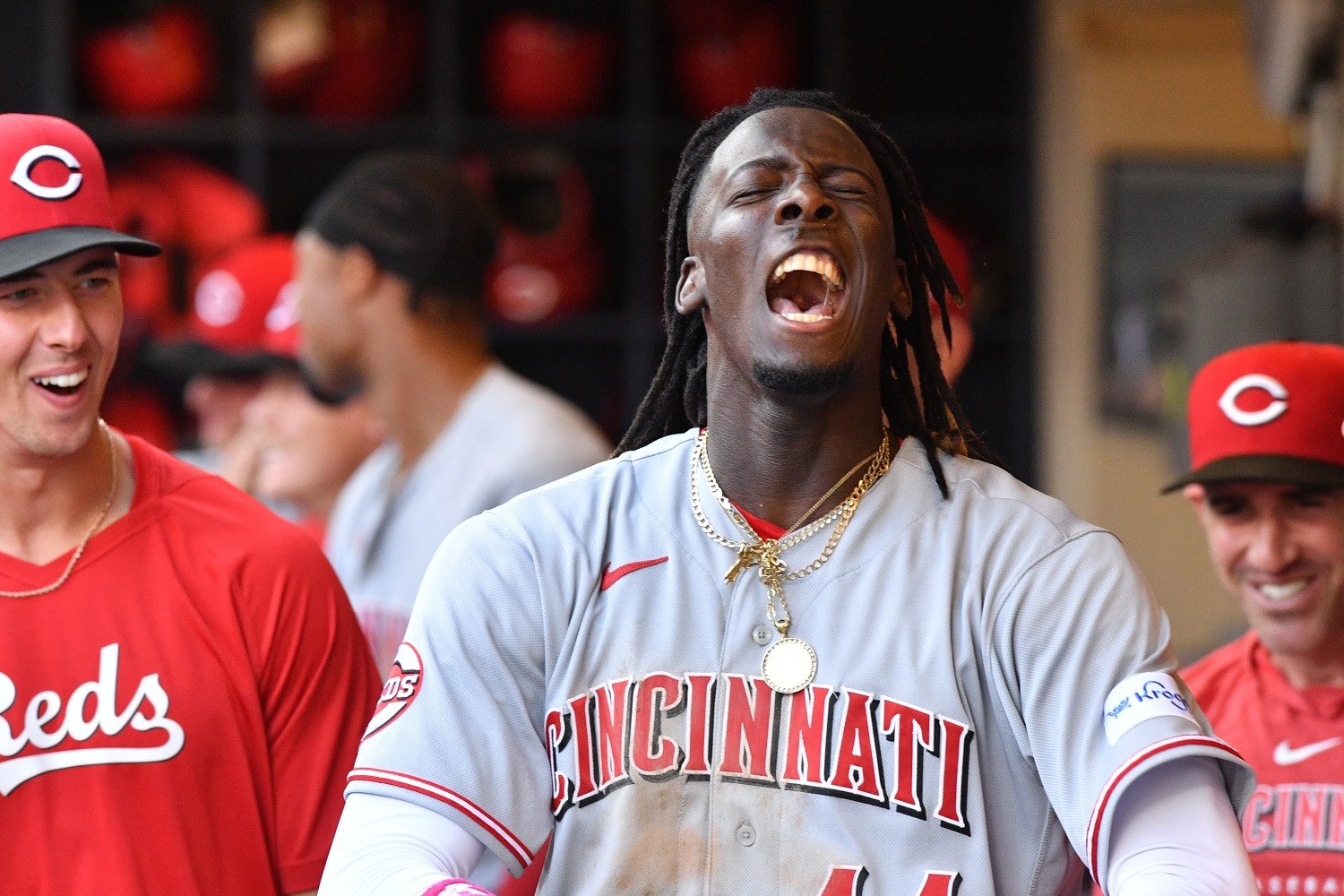 It was breathtaking to watch Elly De La Cruz break open a taut, seesawing game Saturday afternoon--even if, for Brewers fans, that lost breath was by way of a gut punch. It all began when, with a runner on third and an 0-2 count against him, De La Cruz flared the go-ahead single into left field. The ball wasn't hit hard, but De La Cruz managed to get enough of it to dump it in front of Christian Yelich. It's notable, though, that the ball De La Cruz guided the other way was a hanging slider from Elvis Peguero--and a second one in a row, at that. We'll get back to the significance of that fact in a moment, but we have to talk about what happened next. De La Cruz stole second base with relative ease, but then, despite there already being two outs, he also stole third. It was the kind of rookie exuberance that borders on counterproductivity, because it gains the team relatively little, but risks ending the inning. In this case, though, Brian Anderson didn't even break to cover the bag, so William Contreras didn't even throw it down there. De La Cruz had his high-risk, low-reward steal at no real cost. Then, he showed what the real reward potential of that steal was, by taking off for the plate with a walking lead when Peguero turned his back. He stole home, electrifying his bench and the scattered Reds fans in attendance, and the game was virtually over at that moment. Stealing second was a perfectly ordinary play, made impressive only by his speed and length. It had the flavor of Lou Brock, who always saw stealing bases as an act belonging as much to the category of power as to small ball. Taking off for third was more of a Rickey Henderson move; it was brash and unapologetic. Seizing the momentum and the frustration of the moment for the Brewers and swiping home, though, was a page right out of Javier Baez's book. Several times over the last half-decade, Baez had come to Milwaukee with the Cubs and performed one of his infuriating baserunning magic tricks, with the Brewers permitting that by making bad mistakes or having momentary lapses of concentration. The most important lesson of Saturday's sequence is one the Crew had learned with regard to Baez, by the time he departed the division: you can't even let De La Cruz reach base, because if you do, problems ensue. Including Sunday's rubber game for the weekend series, the Brewers play the Reds seven more times before the end of this month. They open play after the All-Star break with a series at Great American Ballpark in Cincinnati, and then the Reds come back to Miller Park the week of July 24. The Brewers can't let De La Cruz break them down and beat them in those games, and that means getting him out at the plate. Happily, on that front, there's some good news. No one said it would be easy, of course. In his young big-league career, De La Cruz is hitting .328/.366/.533. The Brewers' task is to be the team against whom he endures a sustained slump, and based on his swings and his approach, here's how they can do it. The first challenge with De La Cruz is that he's a switch-hitter, so you have to know him as both a right-handed batter and a left-handed one to make much headway. What works for lefties against him will not necessarily work for righties. It's a challenge for switch-hitters themselves to keep two sets of swings and visual cues together, but to whatever extent they can do so, they get an advantage on their first couple of turns through the league, because pitchers will find their holes and weaknesses more slowly due to the slower exposure from each side. Let's talk about De La Cruz as a lefty batter, facing righty pitching, first. As you'd expect, he's taken more of his plate appearances from that side so far, so the samples of both numbers and video are a bit bigger. We have a fuller picture of what works and what doesn't. One thing to do with him from this side, to be sure, is to elevate the ball, but get it out away from him. That's counterintuitive. Most hitters prefer the ball up and away, or down and in. De La Cruz is so quick (and his swing, as we'll see soon, is so unusual) that those rules just don't apply. Within the zone, the only place to reliably get whiffs against him is on the outer edge, and at or above the belt. Why is that the case? It's thanks to a swing full of violence and danger, but also of movement, and one geared entirely toward pulling the ball. Here's an illustrative swing. On a high pitch that doesn't even touch 90 miles per hour, De La Cruz gets beaten. Watch his whole body throughout the swing. EDLC Can Be Beat Upstairs v R.mp4 Note the length of his stride. That's always one sign that a hitter wants to get a low pitch to drive. Because his hands (like the rest of his body) are so fast, he's able to use big, exaggerated movements that generate a lot of power, but if a pitcher can locate at the top of the zone, he's in trouble. His swing path and plane just don't align well with that pitch. Notice, too, the angles he creates. With such a slender frame, he's nonetheless generated some frightening power already. He does it by stretching the rubber band of his musculature exceptionally far, but in so doing, he does also leave himself lunging and lining up only to pull the ball with authority. Watch his back foot move away from home plate as he transfers his weight to the front foot. It's not an unheard-of move. Fernando Tatis, Jr. has sometimes done the same thing. It's about staying on the ball a bit longer, while still getting the bat head out and hitting the ball well in front of home plate. As a result of all that, though, De La Cruz can also be gotten out with well-located stuff low and away. In short: force him to use the opposite field, and he'll rarely hurt you. EDLC Whiffs Because Of Mvmt v R.mp4 Defensively, it's tough to set up for De La Cruz. His speed is an active and lethal element of his game, even before he safely reaches base. Routine ground balls can become infield hits if teams aren't sufficiently careful, or if an infielder just doesn't field the ball cleanly. However, there's a correct way to defend him, especially from the left side, coming into focus. Firstly, you have to fearlessly shade him to pull on the infield. He'll occasionally mishit and poke the ball down toward third base, but that's the price of doing business. The first baseman needs to be right on the line, because De La Cruz hits a lot of sharp grounders there, and if the ball gets into the corner, it's a triple every time. Besides, you want the first baseman to be sure of beating De La Cruz to the base every time, at the very least. The second baseman needs to shade toward the hole, too, just to cover the extra step's worth of range the first baseman gives up. De La Cruz often hits the ball right up the middle, too, so the shortstop needs to be pulled close to the bag there. The third baseman slides over and plays shallow, cutting off the ball hit toward the traditional shortstop spot as best he can, and the rest is up to God. In the outfield, a bold stratagem is in order: the right field should play pretty shallow. That, like the right way to attack De La Cruz pitching-wise, is wildly counterintuitive, given all the power he's shown, but that very power is the reason for it. If he pulls the ball in the air, it has a great chance to be a home run, anyway. The right fielder might as well come in and try to cut off ground balls that get through as soon as possible, so that De La Cruz can't stretch routine singles into doubles. The center fielder can shade toward right-center, because the left fielder will also shade toward center, so the ball hit deep to the gap in right-center will belong to the center fielder, anyway. The good news is that De La Cruz is, so far, a pretty extreme ground ball hitter. That means that his speed is often in play, but if the Brewers use what we can see in terms of how to tick up his strikeout rate (just under 30 percent, so far) and align their defense correctly, they can minimize damage against him reasonably well. From the right side, against southpaws like Sunday starter Wade Miley, De La Cruz is a slightly different hitter, but with many of the same vulnerabilities. He's still trying to pull everything, so the plan needs to be to frustrate that approach. The big thing from that side is that De La Cruz is not only looking for particular pitches, but guessing on them. His swing is ever-so-slightly stiffer from the right side, which means that he has to sit on something and hope the timing is right. When he guesses wrong, he can be easily tied up or wrong-footed. EDLC Tied Up Because Guessing v L.mp4 As many hitters with that type of approach do, De La Cruz hits a lot of grounders from the right side, too. Because of his signature footwork in the box, he also doesn't get an especially fast start out of the box from that side, so his speed can be neutralized a bit, as long as the infield is ready and sure-handed. It'll be important to play Brice Turang as close to second base as the rules permit against De La Cruz, because he'll need to be able to field the ball going away from first base and still get enough on a throw to beat the speedy runner. The other thing to do against De La Cruz, from either side, is to expand the zone often. He's not Baez, in that he's up there with an idea of the zone and will take walks when they're given to him, but he's far from being truly patient up there. On the contrary, he's chased pitches outside the zone more than 35 percent of the time this year. As most athletic freaks can, he can still hurt a pitcher on a pitch outside the zone, but well-executed stuff that looks like a strike but ends up as a ball will work most of the time. This might seem like an overlong post about a Reds hitter on a Brewers site. Worse, the advice offered here ultimately boils down to execution. After all, the hit that touched off De La Cruz's mad dash around the bases Saturday came on a really bad slider, left in the heart of the zone on 0-2. That he only fought it off the other way is a reminder that he's not, in a traditional way, a deadly force at the plate. Still, there's no hitter in baseball against whom back-to-back hangers in pitcher-friendly counts are going to be very successful. Nonetheless, there's value in this study, because it's so imperative that the Brewers stop De La Cruz from wreaking havoc in these seven remaining games. Yesterday's loss pushed the Brewers back to two games behind Cincinnati. These head-to-head games are huge. Yesterday, De La Cruz's plate appearances had an average Championship Leverage Index (an estimate of the relative importance of a plate appearance to a team's chances of winning the World Series, scaled such that 1.0 is average and 2.0 is twice as important) of 2.13, That figure could well rise even further in the next several contests. The Brewers need to execute well to get him out and win these games, but they also need a thoughtful and sound plan to execute well.
 -
Four-game series of as much intensity as the one the Brewers just played against the visiting Cubs are rare. They can swing seasons and lodge themselves in the memories of fans of each side for years. The Crew pulled out a split, though, making it less likely that this particular one will be especially memorable. That's a good thing. Milwaukee only needed a split in those four games. Now, they need a series win, with the first-place Reds coming to town. Image courtesy of © Kayla Wolf-USA TODAY Sports In a series crowded with comebacks and dragging, at the end, as each team struggled to find the energy to finish off the fight, the Brewers could easily have won three out of four, but they could just as easily have lost that many. Craig Counsell leaned hard on both his starters (availing himself of the team's six-man rotation, and shielding his relievers) and his bullpen. With the bullpen shortened to seven arms, the latter group will be especially weary as they enter the final weekend before the All-Star break. Still, Counsell did brilliantly, as usual. He thrives when the challenge before him is to carefully husband limited player resources, and he navigated the contests--especially Monday's comeback win--expertly. Still, the series seemed to take every ounce of energy the Brewers had. That's troubling, because the Reds don't lack energy. To the contrary, ever since Elly De La Cruz came up, that roster has been like a live wire. It will be up to Counsell (and, of course, to his charges) to be ready to answer that crackling combination of talent and vibes. These two teams play each other six straight times, with four days between the two series for the All-Star break, and then they play another series back in Milwaukee July 23-25. Coming out flat even on Friday could set an unfortunate tone for a stretch that could determine the increasingly two-team NL Central race. Offensively, things are finally looking up. I think we can stop waiting for Christian Yelich to go back to pulling home runs. It's becoming clear that, to an unusual and abundantly valuable extent, Yelich is able to look for a certain pitch (especially hard stuff low and away) and drive it to the opposite field. He's showing patience and power, and he's not missing mistakes. He will not be 2019 Yelich again, but for all intents and purposes, Yelich is back. Willy Adames has pulled out of the slump into which he sagged for such a long time through the late spring. William Contreras is looking more consistently dangerous again, too, and showing the ability to pull the ball with authority while still keeping his bat in the hitting zone a long time. The pitching side of things is trickier. The workloads borne by the team's high-leverage relievers have (inevitably) ticked up recently, as the team has gotten back into the habit of building leads that they needed to protect. Counsell will be counting on some innings from Corbin Burnes Friday night, to set them up for the rest of the series, but if he can't get them, there will be further pressure on some of the middle relievers in the group. J.C. Mejia adds some impressive stuff to that group. He gave up the lead Thursday, when he was asked to pitch the eighth inning like a seasoned setup man and ultimately gave up the game-tying home run, but two weakly hit bloop singles were what allowed Yan Gomes even to come to the plate. Mejia has an incredibly heavy sinker. It drops as much as his slider does, something you see somewhat often from sidearmers and submariners, but rarely from guys like Mejia, who has a low slot but stays tall on the mound and gives hitters a look much different from most low-slot hurlers. Mejia might need to be optioned, or even designated for assignment, though, depending on what happens and whether the Brewers think they have enough fresh and available arms. That's the phase through which the team is passing right now. They're banged-up. They're tired. They're winning games again, but it's coming at a cost. In that sense, the break is coming at the perfect time. Before they can enjoy and make use of that down time, though, there's vital business to which to attend. The Cubs were a stout opponent, but the Brewers only needed to keep them at bay, and they managed that. Now, they face a team on whom they need to make up ground, and a split is not one of the possible outcomes. This series should be a blast, but it will be a stern test, too. View full article
-
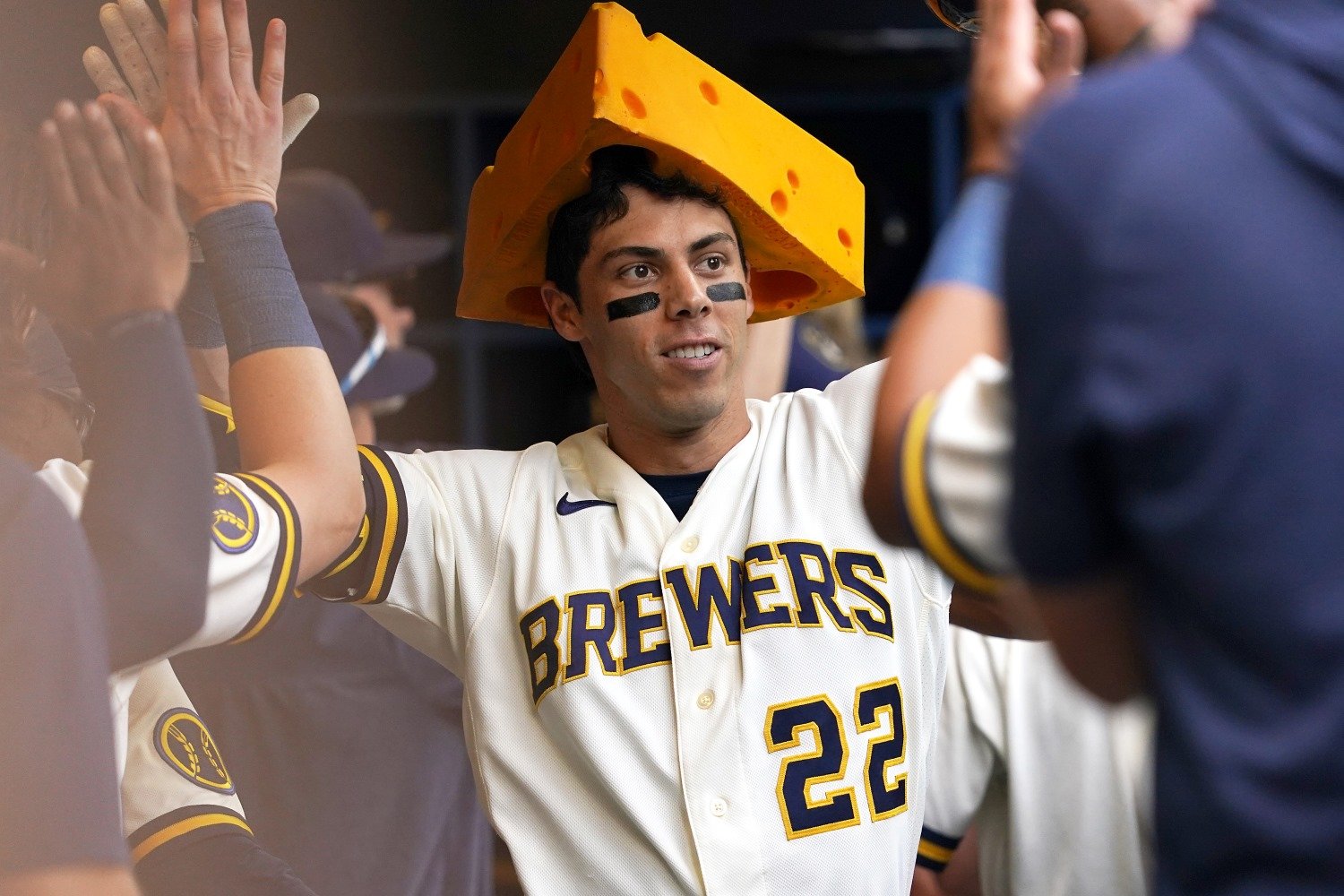 In a series crowded with comebacks and dragging, at the end, as each team struggled to find the energy to finish off the fight, the Brewers could easily have won three out of four, but they could just as easily have lost that many. Craig Counsell leaned hard on both his starters (availing himself of the team's six-man rotation, and shielding his relievers) and his bullpen. With the bullpen shortened to seven arms, the latter group will be especially weary as they enter the final weekend before the All-Star break. Still, Counsell did brilliantly, as usual. He thrives when the challenge before him is to carefully husband limited player resources, and he navigated the contests--especially Monday's comeback win--expertly. Still, the series seemed to take every ounce of energy the Brewers had. That's troubling, because the Reds don't lack energy. To the contrary, ever since Elly De La Cruz came up, that roster has been like a live wire. It will be up to Counsell (and, of course, to his charges) to be ready to answer that crackling combination of talent and vibes. These two teams play each other six straight times, with four days between the two series for the All-Star break, and then they play another series back in Milwaukee July 23-25. Coming out flat even on Friday could set an unfortunate tone for a stretch that could determine the increasingly two-team NL Central race. Offensively, things are finally looking up. I think we can stop waiting for Christian Yelich to go back to pulling home runs. It's becoming clear that, to an unusual and abundantly valuable extent, Yelich is able to look for a certain pitch (especially hard stuff low and away) and drive it to the opposite field. He's showing patience and power, and he's not missing mistakes. He will not be 2019 Yelich again, but for all intents and purposes, Yelich is back. Willy Adames has pulled out of the slump into which he sagged for such a long time through the late spring. William Contreras is looking more consistently dangerous again, too, and showing the ability to pull the ball with authority while still keeping his bat in the hitting zone a long time. The pitching side of things is trickier. The workloads borne by the team's high-leverage relievers have (inevitably) ticked up recently, as the team has gotten back into the habit of building leads that they needed to protect. Counsell will be counting on some innings from Corbin Burnes Friday night, to set them up for the rest of the series, but if he can't get them, there will be further pressure on some of the middle relievers in the group. J.C. Mejia adds some impressive stuff to that group. He gave up the lead Thursday, when he was asked to pitch the eighth inning like a seasoned setup man and ultimately gave up the game-tying home run, but two weakly hit bloop singles were what allowed Yan Gomes even to come to the plate. Mejia has an incredibly heavy sinker. It drops as much as his slider does, something you see somewhat often from sidearmers and submariners, but rarely from guys like Mejia, who has a low slot but stays tall on the mound and gives hitters a look much different from most low-slot hurlers. Mejia might need to be optioned, or even designated for assignment, though, depending on what happens and whether the Brewers think they have enough fresh and available arms. That's the phase through which the team is passing right now. They're banged-up. They're tired. They're winning games again, but it's coming at a cost. In that sense, the break is coming at the perfect time. Before they can enjoy and make use of that down time, though, there's vital business to which to attend. The Cubs were a stout opponent, but the Brewers only needed to keep them at bay, and they managed that. Now, they face a team on whom they need to make up ground, and a split is not one of the possible outcomes. This series should be a blast, but it will be a stern test, too.
 -
The Brewers are masters of details. Few teams pay as much attention to the small things, or get them right as readily. Sometimes, though, that fierce desire to gain every advantage turns counterproductive. Wednesday night's loss was a good example of that. Image courtesy of © Charles LeClaire-USA TODAY Sports The Brewers think, as they have with a few other teams this season, that the Cubs are out to steal and relay pitch locations to hitters when a runner reaches second base. That's a common concern, and far from a new one. In days blessedly now past, pitchers and catchers policed that effort by intimidating and menacing batters, runners, and opposing dugouts. As that's become increasingly taboo, they've adapted. Nowadays, catchers more often try to neutralize runners who would tip off hitters by delaying the setting of their target, or by setting a false one--a decoy. William Contreras tries hard at that particular aspect of pitcher support. He begrudges his opponents every inch of ground they gain against him and his hurlers, and he thwarts them as often as he can. Here's the problem: manipulating a target to fool runners is a subtle craft, and Contreras doesn't do subtle well. Instead, he lunges back and forth back there, wiggling and waving and opening and closing his mitt in all kinds of misleading places. Technically, he's having the desired effect. Runners can't tip a batter off with that much misdirection happening. There isn't even a code to crack, as there used to be with manual pitch calling. Opposing batters, including and especially the Cubs in the ninth inning Wednesday, can't figure out where the pitch is going to come in based on the way Contreras sets up. Unfortunately, Contreras's fidgety, paranoid style doesn't only affect opponents. Whether it's waiting until the last possible moment to set up to receive a pitch or making big, dramatic, distracting moves en route to his real spot, all that motion makes it harder for a pitcher to stay locked in on their actual target. Devin Williams was the partner and victim Wednesday night. He missed his spots several times, and while that's not unusual for pitchers with good stuff in this day and age, it's not entirely a coincidence, either. The new state of the art in pitch framing has this same problem. It encourages the catcher to drop their mitt nonchalantly as they await the ball, then move toward it and beat the ball to its spot. It's surprisingly effective, in terms of getting umpires to call strikes, but it forces the pitcher to pick out a different visual target. For some guys, that's no problem. Some pitchers have become comfortable using their backstop's shin guard or the bottom of their mask as an aiming rock. Overall, though, the trend has contributed to the tendency toward imprecision in pitching--toward needing to beat hitters with sheer stuff, because command is less fine and less consistent than needed otherwise. What Contreras is doing, however, creates even greater difficulties. If a catcher is bobbing and weaving to foil location-tipping, he's not even static enough to let the pitcher lock in on some body part as a target. Now, the hurler is working in abstractions, instead of tactical scoping and firing. It's an obstacle to maximizing the effectiveness of pitchers, and in the long run, that's a more important objective than heading off the opponent as they strive to gain an informational edge. That's just the visual, physical aspect of things, too. It doesn't speak to the psychological effect of seeing a catcher dancing like a spider with restless leg syndrome. It's possible the Cubs really do try to relay location to their hitters--maybe even more aggressively than other teams. It's something David Ross took pride in doing during his time as a player. Until Contreras can find a way to be more calm, more quiet, and more intentional in his countermoves, though, the Brewers would be better off letting that detail go, and focusing on the greater goals of executing great pitches and getting outs. View full article
-
William Contreras's Paranoia Hurts More Than It Helps
Matthew Trueblood posted an article in Brewers
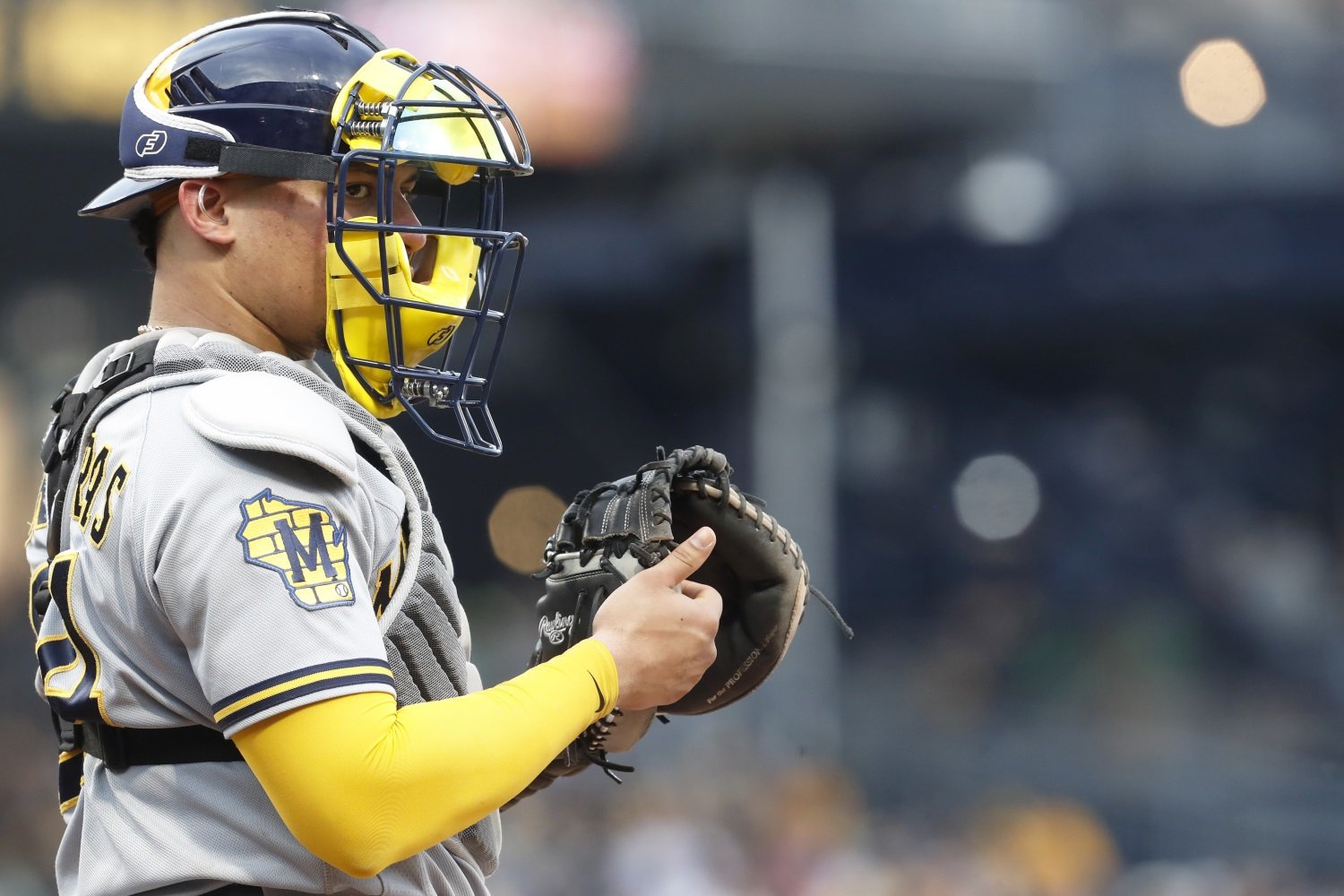 The Brewers think, as they have with a few other teams this season, that the Cubs are out to steal and relay pitch locations to hitters when a runner reaches second base. That's a common concern, and far from a new one. In days blessedly now past, pitchers and catchers policed that effort by intimidating and menacing batters, runners, and opposing dugouts. As that's become increasingly taboo, they've adapted. Nowadays, catchers more often try to neutralize runners who would tip off hitters by delaying the setting of their target, or by setting a false one--a decoy. William Contreras tries hard at that particular aspect of pitcher support. He begrudges his opponents every inch of ground they gain against him and his hurlers, and he thwarts them as often as he can. Here's the problem: manipulating a target to fool runners is a subtle craft, and Contreras doesn't do subtle well. Instead, he lunges back and forth back there, wiggling and waving and opening and closing his mitt in all kinds of misleading places. Technically, he's having the desired effect. Runners can't tip a batter off with that much misdirection happening. There isn't even a code to crack, as there used to be with manual pitch calling. Opposing batters, including and especially the Cubs in the ninth inning Wednesday, can't figure out where the pitch is going to come in based on the way Contreras sets up. Unfortunately, Contreras's fidgety, paranoid style doesn't only affect opponents. Whether it's waiting until the last possible moment to set up to receive a pitch or making big, dramatic, distracting moves en route to his real spot, all that motion makes it harder for a pitcher to stay locked in on their actual target. Devin Williams was the partner and victim Wednesday night. He missed his spots several times, and while that's not unusual for pitchers with good stuff in this day and age, it's not entirely a coincidence, either. The new state of the art in pitch framing has this same problem. It encourages the catcher to drop their mitt nonchalantly as they await the ball, then move toward it and beat the ball to its spot. It's surprisingly effective, in terms of getting umpires to call strikes, but it forces the pitcher to pick out a different visual target. For some guys, that's no problem. Some pitchers have become comfortable using their backstop's shin guard or the bottom of their mask as an aiming rock. Overall, though, the trend has contributed to the tendency toward imprecision in pitching--toward needing to beat hitters with sheer stuff, because command is less fine and less consistent than needed otherwise. What Contreras is doing, however, creates even greater difficulties. If a catcher is bobbing and weaving to foil location-tipping, he's not even static enough to let the pitcher lock in on some body part as a target. Now, the hurler is working in abstractions, instead of tactical scoping and firing. It's an obstacle to maximizing the effectiveness of pitchers, and in the long run, that's a more important objective than heading off the opponent as they strive to gain an informational edge. That's just the visual, physical aspect of things, too. It doesn't speak to the psychological effect of seeing a catcher dancing like a spider with restless leg syndrome. It's possible the Cubs really do try to relay location to their hitters--maybe even more aggressively than other teams. It's something David Ross took pride in doing during his time as a player. Until Contreras can find a way to be more calm, more quiet, and more intentional in his countermoves, though, the Brewers would be better off letting that detail go, and focusing on the greater goals of executing great pitches and getting outs.
 -
The full rosters for the 2023 All-Star Game were announced Sunday, and while the Brewers will have just one representative in Seattle for the occasion, he's likely to be the National League's closer--just as he was (at least sometimes) America's in the spring. Image courtesy of © Charles LeClaire-USA TODAY Sports It's slightly disappointing that the first-place Brewers didn't get more robust rewards in the construction of the NL All-Star team. Certainly, one could make a strong case that Christian Yelich was snubbed. However, Devin Williams is a second-time All-Star, and he's very deserving of the honor. His screwball continues to stymy opposing batters, and as a result, he's likely to rack up 30 or 40 saves in his first full season as the Crew's closer. Admittedly, Williams's 2023 has been a bit less sparkling than his 2022 campaign. He's striking out fewer hitters (although a 33.3-percent strikeout rate is still nothing to sneeze at), and his walk rate is starting to send up some red flags. Even so, opponents have an OPS scarcely over .500 against him. An increasing number of hitters have learned that they'll need to sit on his screwball in order to avoid flailing helplessly at it, but in doing so, they've only augmented his fastball. The heater is inducing whiffs on a league=leading 41.6 percent of swings. The slider he tentatively brought along to keep hitters from looking for just two offerings last year has not been much help this season. That could be something on which he needs to work during the second half, because without doubt, the Brewers will need Williams at full strength and effectiveness down the stretch. They're tied for first place, but their run differential belies that standing, and they need to keep winning close games in order to win the tight NL Central race. Hopefully, doing so will involve the reemergence of the struggling (and now demoted) Peter Strzelecki, as well as continued success from Joel Payamps, Elvis Peguero, and Bryse Wilson. Williams has never been as notable for his durability as for his excellence, and although Craig Counsell has done well to shield him from overuse (even, sometimes, at the cost of a win in the short term), there could be trouble if the Crew can't keep him fresh. All of those worries can wait. On Sunday, Williams only needed nine pitches to record a three-batter, one-strikeout, zero-drama save in Pittsburgh, securing a series win for the Brewers in a place that has been a house of horrors for them in July over the last half-decade. It's fitting and joyous that he was able to cap that day by celebrating a second straight trip to the All-Star Game. While he's far from an obvious extension candidate, the Brewers have to start pondering whether he's worth a long-term investment, as both a demonstration of their faith in him and a gesture of gratitude for the dominance he's given them in the late innings over several seasons. View full article
-
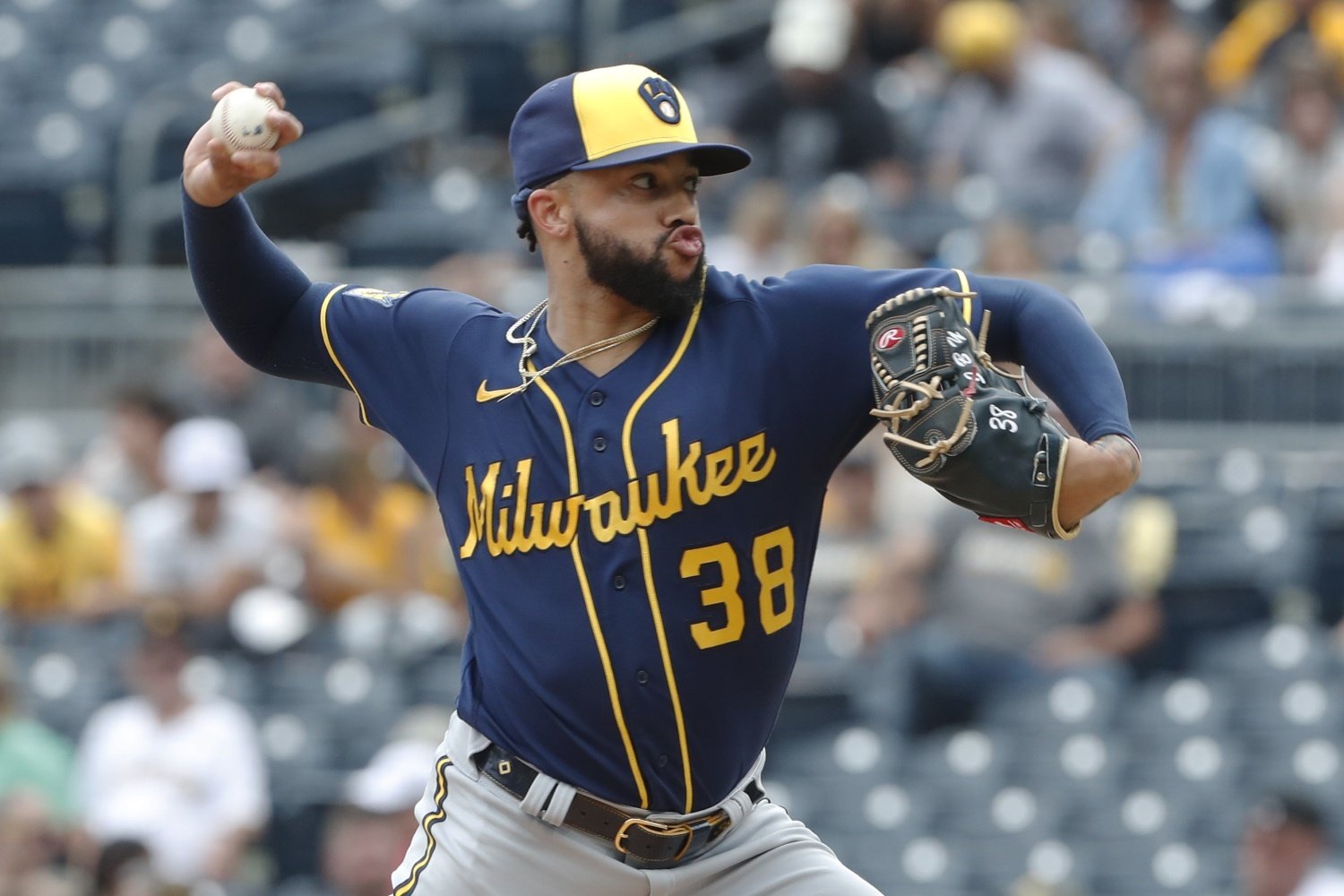 It's slightly disappointing that the first-place Brewers didn't get more robust rewards in the construction of the NL All-Star team. Certainly, one could make a strong case that Christian Yelich was snubbed. However, Devin Williams is a second-time All-Star, and he's very deserving of the honor. His screwball continues to stymy opposing batters, and as a result, he's likely to rack up 30 or 40 saves in his first full season as the Crew's closer. Admittedly, Williams's 2023 has been a bit less sparkling than his 2022 campaign. He's striking out fewer hitters (although a 33.3-percent strikeout rate is still nothing to sneeze at), and his walk rate is starting to send up some red flags. Even so, opponents have an OPS scarcely over .500 against him. An increasing number of hitters have learned that they'll need to sit on his screwball in order to avoid flailing helplessly at it, but in doing so, they've only augmented his fastball. The heater is inducing whiffs on a league=leading 41.6 percent of swings. The slider he tentatively brought along to keep hitters from looking for just two offerings last year has not been much help this season. That could be something on which he needs to work during the second half, because without doubt, the Brewers will need Williams at full strength and effectiveness down the stretch. They're tied for first place, but their run differential belies that standing, and they need to keep winning close games in order to win the tight NL Central race. Hopefully, doing so will involve the reemergence of the struggling (and now demoted) Peter Strzelecki, as well as continued success from Joel Payamps, Elvis Peguero, and Bryse Wilson. Williams has never been as notable for his durability as for his excellence, and although Craig Counsell has done well to shield him from overuse (even, sometimes, at the cost of a win in the short term), there could be trouble if the Crew can't keep him fresh. All of those worries can wait. On Sunday, Williams only needed nine pitches to record a three-batter, one-strikeout, zero-drama save in Pittsburgh, securing a series win for the Brewers in a place that has been a house of horrors for them in July over the last half-decade. It's fitting and joyous that he was able to cap that day by celebrating a second straight trip to the All-Star Game. While he's far from an obvious extension candidate, the Brewers have to start pondering whether he's worth a long-term investment, as both a demonstration of their faith in him and a gesture of gratitude for the dominance he's given them in the late innings over several seasons.
 -
On Thursday evening, Willy Adames went 0-4. He hit into a double play, and he struck out twice. The Brewers' first two runs (of only three) came on a homer by Victor Caratini. A day after Peter Strzelecki was demoted to Nashville, Elvis Peguero was asked to save them from a bases-loaded, one-out jam, and Devin Williams created another one two innings later. The Brewers won, anyway. Image courtesy of © Vincent Carchietta-USA TODAY Sports Most days, in the long season schedule MLB teams play, you can watch every pitch and every mound meeting and every check for sticky stuff on the pitcher's hands, and you can still see little that really changes your opinions or expectations of a team. Most games are ordinary, and the ones that aren't sometimes feel like empty calories: lots of drama, but relatively little substance. Thursday's win, even over a downtrodden and embroiled Mets team, was one of the special games that make things a bit more clear. In his first game back from the minor leagues, after the front office took a very bold step by swapping him with established veteran Luis Urias, Brice Turang made three crucial defensive plays. Adrian Houser, whom the team worked so hard this winter not to need to rely on as a starter, returned to the rotation with six sturdy innings of two-run ball, striking out five. Hoby Milner, Elvis Peguero, Joel Payamps, and Devin Williams survived another stern test, just after the front office made another bold swap by demoting Peter Strzelecki (who would have been part of that late-inning sequence just a couple of weeks ago). That game marked the halfway point of the Brewers season. They arrived at it by pulling into a tie for first place. They're only on pace for 86 wins, but that's 10 more than their run differential would lead us to expect. Players at the heart of their plans, like Willy Adames, Rowdy Tellez, Corbin Burnes, and Freddy Peralta, have been underwhelming or inconsistent, but guys like Peguero, Joey Wiemer, and Turang have stepped forward--no more consistent or excellent than the would-be stars, but more timely, and in ways that swing games unexpectedly in the team's favor. Some credit for that has to go to Craig Counsell. It remains worrisome that he and the Brewers haven't agreed on a contract extension to ensure he remains in their dugout beyond this autumn, but Counsell has put on another managerial clinic this season. He's winning by trusting young players, but not too much, and by being aggressive, but not too much so. It's not his finest work as their skipper, but only because he's set that bar quite high in previous seasons. Obviously, though, it goes further than Counsell, too. The front office, after all, makes the final call on things like the demotions of Urias and Strzelecki, and they're the ones who traded for Peguero and Payamps (among others) this winter. They're the ones who signed Wade Miley. They did a better job of anticipating the obstacles this team has faced, and of building bulwarks against them, than they've gotten credit for doing. That doesn't mean the team has found open seas, with smooth sailing ahead. They have plenty of talent, they're better-run than any other team in the NL Central, and they have a share of first place with 81 games left. Alas, just about anything can happen in 81 games. The failure to create a cushion for themselves in the first half, due to some of those talented players underperforming and some of them getting hurt, leaves the team vulnerable to the vagaries of small samples. Still, Thursday's win was one of those stolen victories that make you feel good about threading the needle. View full article
-
With Duct Tape and Baling Wire, the Brewers Win a Series in New York
Matthew Trueblood posted an article in Brewers
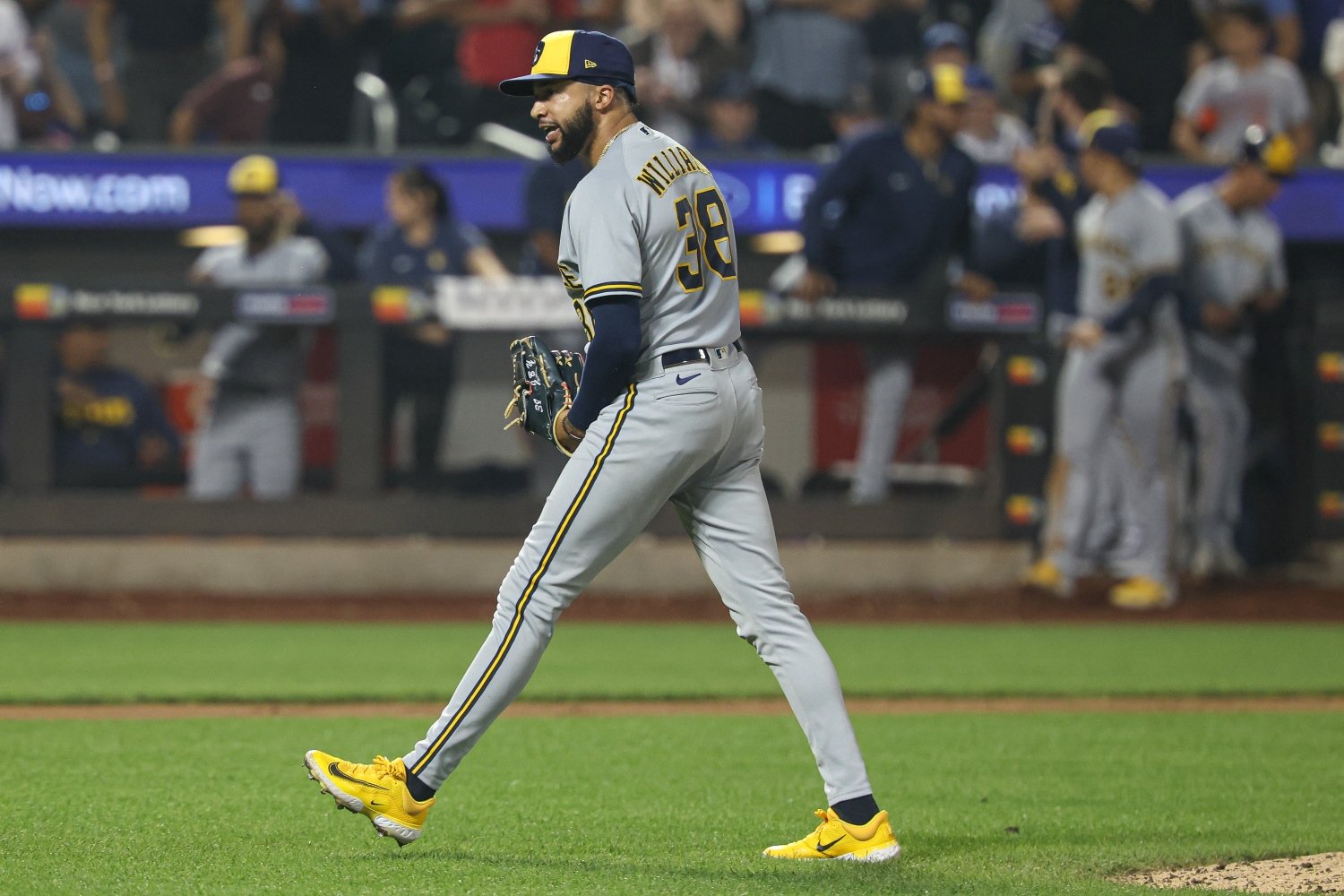 Most days, in the long season schedule MLB teams play, you can watch every pitch and every mound meeting and every check for sticky stuff on the pitcher's hands, and you can still see little that really changes your opinions or expectations of a team. Most games are ordinary, and the ones that aren't sometimes feel like empty calories: lots of drama, but relatively little substance. Thursday's win, even over a downtrodden and embroiled Mets team, was one of the special games that make things a bit more clear. In his first game back from the minor leagues, after the front office took a very bold step by swapping him with established veteran Luis Urias, Brice Turang made three crucial defensive plays. Adrian Houser, whom the team worked so hard this winter not to need to rely on as a starter, returned to the rotation with six sturdy innings of two-run ball, striking out five. Hoby Milner, Elvis Peguero, Joel Payamps, and Devin Williams survived another stern test, just after the front office made another bold swap by demoting Peter Strzelecki (who would have been part of that late-inning sequence just a couple of weeks ago). That game marked the halfway point of the Brewers season. They arrived at it by pulling into a tie for first place. They're only on pace for 86 wins, but that's 10 more than their run differential would lead us to expect. Players at the heart of their plans, like Willy Adames, Rowdy Tellez, Corbin Burnes, and Freddy Peralta, have been underwhelming or inconsistent, but guys like Peguero, Joey Wiemer, and Turang have stepped forward--no more consistent or excellent than the would-be stars, but more timely, and in ways that swing games unexpectedly in the team's favor. Some credit for that has to go to Craig Counsell. It remains worrisome that he and the Brewers haven't agreed on a contract extension to ensure he remains in their dugout beyond this autumn, but Counsell has put on another managerial clinic this season. He's winning by trusting young players, but not too much, and by being aggressive, but not too much so. It's not his finest work as their skipper, but only because he's set that bar quite high in previous seasons. Obviously, though, it goes further than Counsell, too. The front office, after all, makes the final call on things like the demotions of Urias and Strzelecki, and they're the ones who traded for Peguero and Payamps (among others) this winter. They're the ones who signed Wade Miley. They did a better job of anticipating the obstacles this team has faced, and of building bulwarks against them, than they've gotten credit for doing. That doesn't mean the team has found open seas, with smooth sailing ahead. They have plenty of talent, they're better-run than any other team in the NL Central, and they have a share of first place with 81 games left. Alas, just about anything can happen in 81 games. The failure to create a cushion for themselves in the first half, due to some of those talented players underperforming and some of them getting hurt, leaves the team vulnerable to the vagaries of small samples. Still, Thursday's win was one of those stolen victories that make you feel good about threading the needle.

