


Matthew Trueblood
-
Posts
1,964 -
Joined
-
Last visited
-
Days Won
10
Content Type
Profiles
Forums
Blogs
Events
News
2026 Milwaukee Brewers Top Prospects Ranking
Milwaukee Brewers Videos
2022 Milwaukee Brewers Draft Picks
Milwaukee Brewers Free Agent & Trade Rumors, Notes, & Tidbits
Guides & Resources
2023 Milwaukee Brewers Draft Picks
2024 Milwaukee Brewers Draft Picks
The Milwaukee Brewers Players Project
2025 Milwaukee Brewers Draft Pick Tracker
2026 Milwaukee Brewers Draft Tracker: Picks & Bonuses
Store
Downloads
Gallery
Everything posted by Matthew Trueblood
-
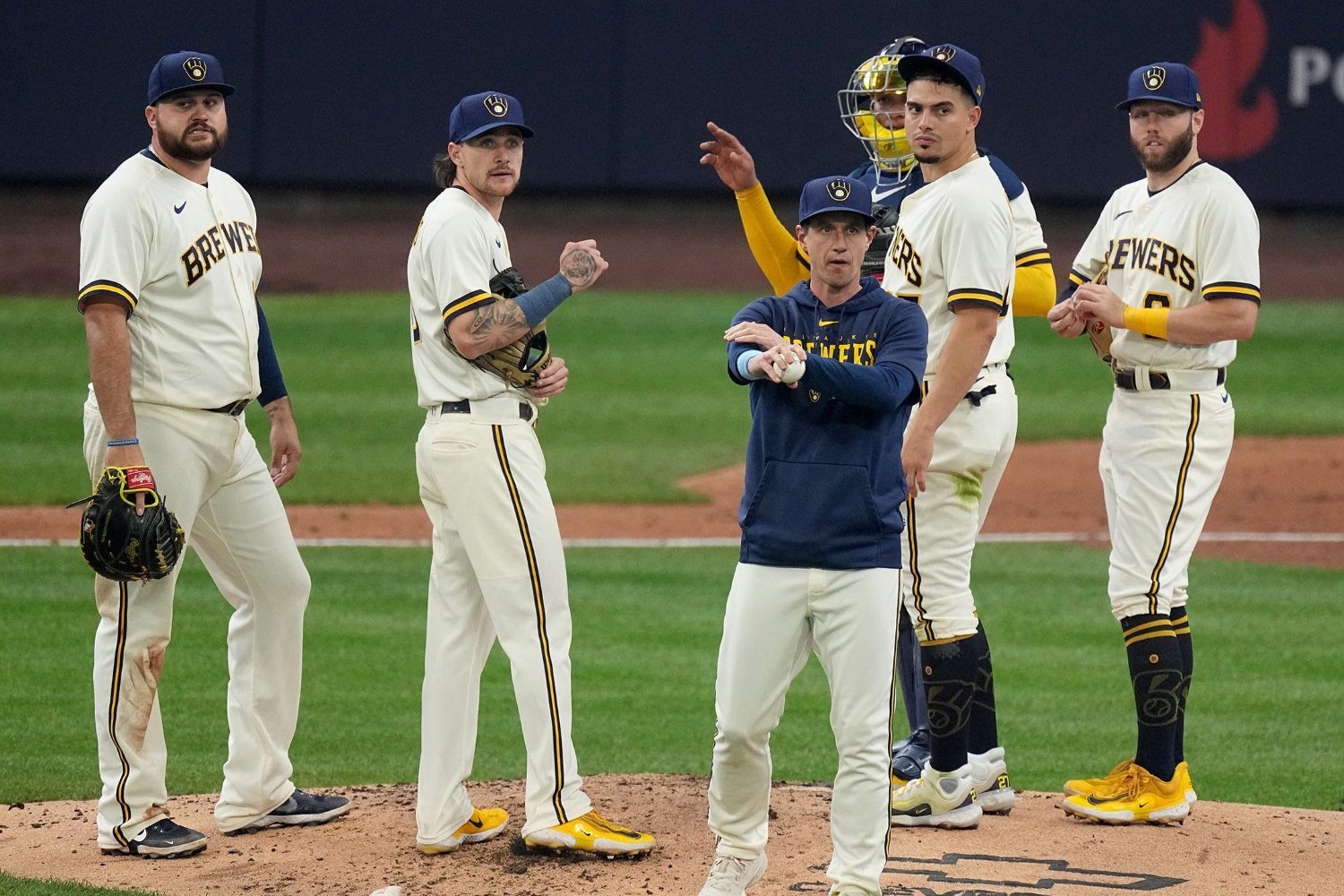 Most of the time, a starter makes it at least twice through the batting order, even if they're struggling. Except in blowup starts or cases in which managers intend a strategy like the opener or a bullpen game, teams need their starter to get into the third trip through the opposing lineup. That prevents the bullpen from being overtaxed, since facing at least 18 batters often gets a starter at least into the fifth inning. Ideally, of course, the starter goes more like six or seven innings, even in the modern game. As a pitcher works deeper into a given game, though, they tire, and as each hitter in the order gets more and more looks at the hurler's stuff, they slowly gain an advantage over them. A manager ignorant of the times-through-the-order penalty (or just insufficiently proactive in mitigating it) can lose a lot of games before even getting the chance to have their bullpen save them. As we all know, starters pitch much less deep than they used to, and it's not only because of times-through-the-order effects. Still, that's a key factor to consider, and it's also different from one year to the next. When, on average, should a manager let the progress of the game nudge their starter off the mound? It depends as much on the dynamics of the opposing order as on the pitcher himself. Start, then, by considering the average relative production from each place in the batting order this season. I also tried to place that production in historical context. To do so, I confined my search to the American League, over the last 51 years. That way, we're looking only at lineups that go nine players deep, without the complicating factor of the pitcher in the ninth spot. League OPS+ By Lineup Spot, 2023 Batting Order Pos. OPS+ Rank (of 51) 1 100 24th 2 108 4th 3 104 49th 4 100 50th 5 100 45th 6 96 46th 7 92 49th 8 93 14th 9 89 11th As you can see, the third through seventh spots in the order were about as bad (relative to the rest of the league) as they have been at any time in the last five decades. By contrast, the top and bottom of the order were more dangerous than they have traditionally been. Modern lineups are flatter than their predecessors, and the bad hitters in them have more power than they used to. The danger in a lineup starts earlier, but in the middle, you don't have titanic and well-rounded sluggers to fear. Managers have reacted accordingly. By looking at the frequency of each number of batters faced within a start throughout the league, we can see trends and changes in when the skipper is going to get his starter and turn to his relief corps. Again, we already knew about the macro trend toward starters facing fewer batters and working less deep into games. What this illustrates, though, is that it's not a uniform change. There's a distribution shift taking place, too. The bell curve is taller and thinner than it was in the past. Notice how much more often pitchers are lifted before seeing the first or second hitter a third time. The biggest spikes are in the relative frequency of taking pitchers out after 22, 23, or 24 batters, though. That means that skippers are disproportionately removing their guys as they wade through that soft(er than the historical norm) spot in the middle of the batting order. The sweet spot is right in there. Assuming a good bullpen and a healthy starter, managers do best when they take their starters out after somewhere between 21 and 25 batters, at least under 2023 conditions. That worked like gangbusters for the Brewers this season. Only the Orioles lifted their starters in the 21-25 sweet spot more times (108) than Milwaukee's 105. Craig Counsell only left his starters in past that sweet spot 21 times. Given the shape of their pitching staffs, no team better timed the key substitution of any ball game--taking out the starter--than did the Crew. It was part of why they were so sensational at run prevention. Many of these dynamics could subtly shift again in 2024. Many things could change on the Brewers' end, too, including Brandon Woodruff being out for the year and Counsell (perhaps) not being the one pressing the buttons and pulling the levers. For this season, though, everything worked gorgeously, because the team was ahead of the curve of league-wide change.
 -
In 2023, the Brewers got below-average production from second base, but it came from an exciting young player with excellent defensive chops. Does that mean the job is spoken-for going into the offseason? Image courtesy of © Jovanny Hernandez / Milwaukee Journal Sentinel / USA TODAY NETWORK Much of any evaluation of Brice Turang as a rookie depends on how you slice and dice his season. He burst onto the scene with one of the most thrilling and memorable moments of the season, with that grand slam in the home opener against the Mets. In large part, though, he was overmatched during the first two months of the season, striking out often and showing poor plate discipline. After being demoted to Triple-A Nashville for a while, Turang came back a different player. When he was sent down in early June, he was hitting just .205/.254/.307, and striking out over a quarter of the time. His defense at second base was terrific, but you can't run a .560 OPS and hold down a regular job in MLB, unless you're an elite defensive catcher. Upon that return, though, Turang had a new batting stance, an altered approach, and two months of sufficient production to justify his place in the lineup. From June 29 through Aug. 28, he hit .244/.335/.340. In 179 trips to the plate, he drew 22 walks and struck out just 27 times. His profile was still light on power, but it's easy to write a guy with good speed and a .335 OBP in at the bottom of the batting order, when they also bring value with the glove. In fact, it's a privilege. Alas, the transformation didn't last. So often, we make changes in our lives, and then we find out that maintaining those changes and converting a project into a lifestyle is the hard part. Starting with the series against the Cubs at Wrigley Field at the end of August, Turang hit .195/.247/.207 in 92 plate appearances. He kept the whiffs under control, but he only managed one extra-base hit (a double) during that long stretch of playing time, and the league realized that they didn't need to worry about him at all. He drew only five walks, not because his chase rate went through the roof (though, around mid-September, it did, as frustration set in), but because pitchers pounded the strike zone against him. When a hitter with limited power is coming up through the minors, scouts say they worry the guy will "have the bat knocked out of his hands". It's a harsh image, but it can be a fitting one. The velocity and movement of fastballs in the big leagues these days can overpower hitters like Turang. Frighteningly, there's every indication that that's what has happened here. Of the 402 hitters who finished at least 50 plate appearances on four-seam fastballs this year, none had a worse Run Value against them than Turang's -17. He was better against sinkers, but not by much. Pitchers were able to avoid walking Turang not only because they were unafraid of him, but because they could stick to the heat and still beat him. The fact that he ran such lousy numbers against fastballs as a rookie doesn't mean that he'll always be thus limited. Turang has some career ahead of him, and we don't need to be prisoners to the moment in forecasting it. Still, this is important information. The Brewers already face the formidable challenge of bolstering at least one corner infield position this winter. That Turang might not be a viable hitter at the big-league level raises the possibility that they also need an upgrade at the keystone, and suddenly, there's a whole overhaul afoot. Of course, Turang isn't the only incumbent option. Andruw Monasterio took a good chunk of the playing time as Turang floundered down the stretch. The problem is that Monasterio has many of the same shortcomings as his younger, left-hitting colleague. He only slugged .348 for the year, and from the middle of August through season's end, that number was .276. Monasterio hit his final home run of the year on Aug. 9. He also rated poorly against four-seamers, in particular. Owen Miller came to the plate 205 times after May 25. He had one home run and slugged .273 in that span. He's no more a potential solution than the other two, though all three of them are good fielders. The only in-house option who performed like the kind of hitter the Brewers need at that position was Abraham Toro, who didn't get as much of a shot as he probably ought to have. On the other hand, Toro has had his own prolonged batting slumps in the past. More importantly, perhaps, Toro only played 20 games at second base in Triple A this year, and none at that spot in the majors. By every indication, the Brewers don't really trust his glove there. Defense is important, and the 2023 Brewers were a great defensive team. They might even be one again in 2024. They have to be better at bat next season, though, and second base might be one spot at which they need to sacrifice some of their comfort and glovework to get more pop. View full article
-
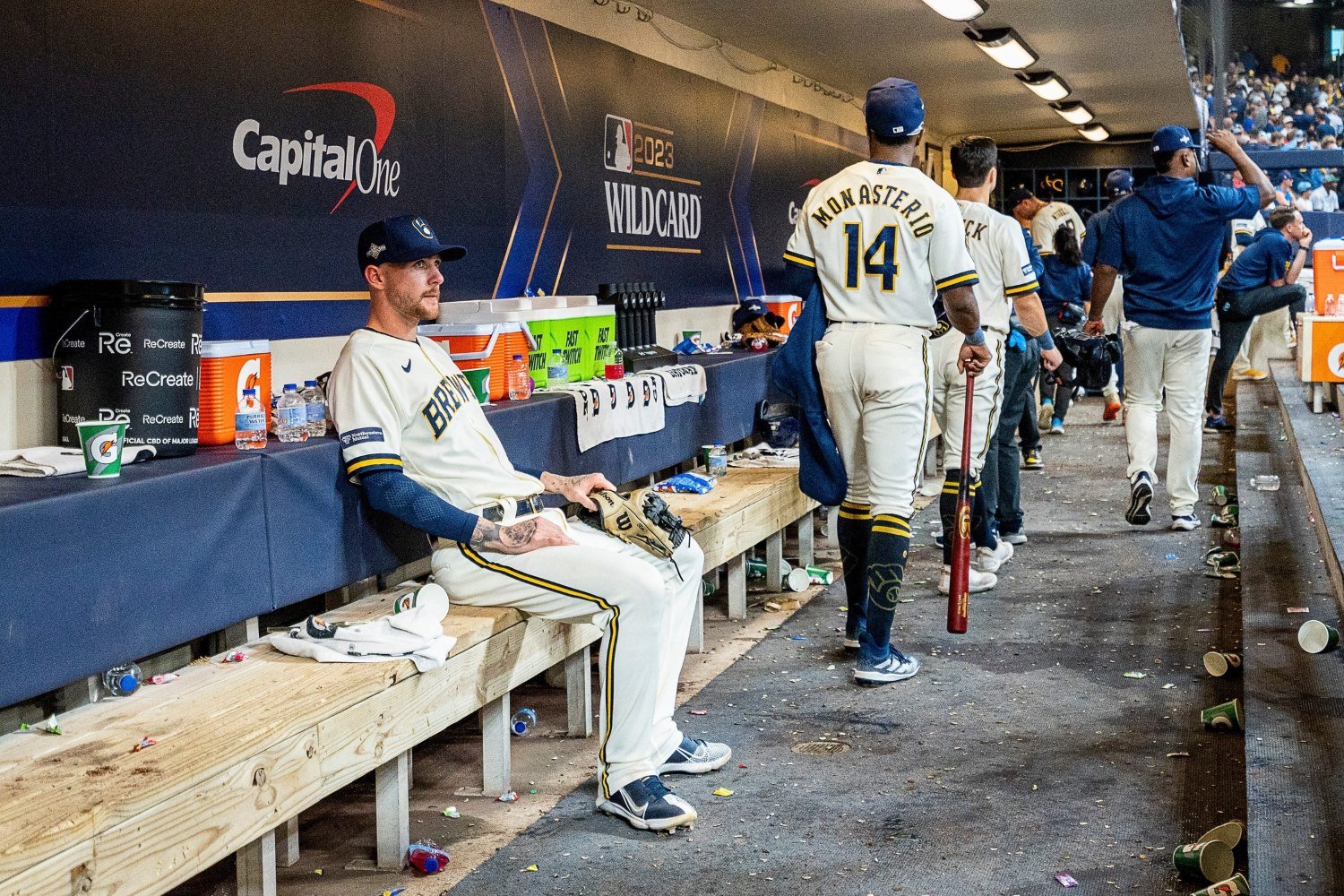 Much of any evaluation of Brice Turang as a rookie depends on how you slice and dice his season. He burst onto the scene with one of the most thrilling and memorable moments of the season, with that grand slam in the home opener against the Mets. In large part, though, he was overmatched during the first two months of the season, striking out often and showing poor plate discipline. After being demoted to Triple-A Nashville for a while, Turang came back a different player. When he was sent down in early June, he was hitting just .205/.254/.307, and striking out over a quarter of the time. His defense at second base was terrific, but you can't run a .560 OPS and hold down a regular job in MLB, unless you're an elite defensive catcher. Upon that return, though, Turang had a new batting stance, an altered approach, and two months of sufficient production to justify his place in the lineup. From June 29 through Aug. 28, he hit .244/.335/.340. In 179 trips to the plate, he drew 22 walks and struck out just 27 times. His profile was still light on power, but it's easy to write a guy with good speed and a .335 OBP in at the bottom of the batting order, when they also bring value with the glove. In fact, it's a privilege. Alas, the transformation didn't last. So often, we make changes in our lives, and then we find out that maintaining those changes and converting a project into a lifestyle is the hard part. Starting with the series against the Cubs at Wrigley Field at the end of August, Turang hit .195/.247/.207 in 92 plate appearances. He kept the whiffs under control, but he only managed one extra-base hit (a double) during that long stretch of playing time, and the league realized that they didn't need to worry about him at all. He drew only five walks, not because his chase rate went through the roof (though, around mid-September, it did, as frustration set in), but because pitchers pounded the strike zone against him. When a hitter with limited power is coming up through the minors, scouts say they worry the guy will "have the bat knocked out of his hands". It's a harsh image, but it can be a fitting one. The velocity and movement of fastballs in the big leagues these days can overpower hitters like Turang. Frighteningly, there's every indication that that's what has happened here. Of the 402 hitters who finished at least 50 plate appearances on four-seam fastballs this year, none had a worse Run Value against them than Turang's -17. He was better against sinkers, but not by much. Pitchers were able to avoid walking Turang not only because they were unafraid of him, but because they could stick to the heat and still beat him. The fact that he ran such lousy numbers against fastballs as a rookie doesn't mean that he'll always be thus limited. Turang has some career ahead of him, and we don't need to be prisoners to the moment in forecasting it. Still, this is important information. The Brewers already face the formidable challenge of bolstering at least one corner infield position this winter. That Turang might not be a viable hitter at the big-league level raises the possibility that they also need an upgrade at the keystone, and suddenly, there's a whole overhaul afoot. Of course, Turang isn't the only incumbent option. Andruw Monasterio took a good chunk of the playing time as Turang floundered down the stretch. The problem is that Monasterio has many of the same shortcomings as his younger, left-hitting colleague. He only slugged .348 for the year, and from the middle of August through season's end, that number was .276. Monasterio hit his final home run of the year on Aug. 9. He also rated poorly against four-seamers, in particular. Owen Miller came to the plate 205 times after May 25. He had one home run and slugged .273 in that span. He's no more a potential solution than the other two, though all three of them are good fielders. The only in-house option who performed like the kind of hitter the Brewers need at that position was Abraham Toro, who didn't get as much of a shot as he probably ought to have. On the other hand, Toro has had his own prolonged batting slumps in the past. More importantly, perhaps, Toro only played 20 games at second base in Triple A this year, and none at that spot in the majors. By every indication, the Brewers don't really trust his glove there. Defense is important, and the 2023 Brewers were a great defensive team. They might even be one again in 2024. They have to be better at bat next season, though, and second base might be one spot at which they need to sacrifice some of their comfort and glovework to get more pop.
 -
Certainly not in a normal way for a guy going year to year through arb. He’ll stay only if they come to a multiyear deal that backloads the pay, like the one I suggest in the article.
- 6 replies
-
- 2
-

-
- brandon woodruff
- corbin burnes
- (and 1 more)
-
I guess it’s gotta depend on what you *actually* get offered, right? But at first blush, I can get with that idea. Maybe it’s a creative solution to the problem posed by this injury, which makes it harder to trade Burnes and get the haul you had hoped for in exchange. We’ll see. Good thought.
-
If your winter wish list for the Milwaukee Brewers included a Brandon Woodruff contract extension, you might (perversely) be in luck. In the wake of brutal news about the ace's shoulder, let's examine the many ripple effects thereof. Image courtesy of © Jerome Miron-USA TODAY Sports On Friday, the Brewers announced that Brandon Woodruff will need surgery to repair the anterior capsule in his throwing shoulder. The operation and the required rehab will sideline Woodruff for all of 2024, which was to be his final season under club control. We should be upfront about that fact, because while the team was (with good reason) optimistic in their wording of their statement about this injury, there's virtually no chance that Woodruff toes a big-league mound again before 2025. Tears of the shoulder capsule that require surgery never permit pitchers to return to their highest level of competition in under 12 months. That could always change, of course. Sports medicine gets better all the time. 'Never' is not an overstatement, though, given the data we have. In the last 15 years, a fistful of pitchers around Woodruff's age have had this surgery. Johan Santana had it when he was about a year older than Woodruff. He returned to a big-league mound 19 months later. Chris Young was almost exactly Woodruff's age when he had the surgery. He returned in 15 months. Rich Harden was also 30 years old when he underwent the surgery. He never pitched in the majors again. Dallas Braden was a few years younger than Woodruff is now, when he went under the knife. He, too, never pitched in MLB again. Chien-Ming Wang, then of the Yankees, was about a year younger than Woodruff is now when he suffered this injury in 2009. He didn't step onto a big-league mound again for a little over two years. John Danks is the dream--the best-case scenario. He was a few years younger than Woodruff, about 27 and a half years old, when he had surgery in 2013. He was back on the mound in less than 13 months, but narrowly, and he was never really the same. In May, Guardians prospect Daniel Espino had this same procedure. The team immediately announced that his return-to-play timeline was 12-14 months. Braves righthander Kyle Wright had the same surgery as Woodruff this week, and the team is already declaring him out for all of 2024. More so than with an elbow surgery (like Tommy John surgery), these shoulder issues can vary widely in their severity, which can shape recovery timelines significantly. However, almost regardless of severity, they strongly tend to carry a major risk of recurrence, and having the injury shortens the careers even of those pitchers who make it back from it. There's no way Woodruff is coming back in 2024, and in a month or so, the team will have to either non-tender him or agree with him on a multiyear contract that circumvents the arbitration process. The $11-12 million he would have pocketed for next season via arbitration is utterly off the table, because (though the team did voice an admirable and honest affection for him and his family Friday) the Brewers are in no position to voluntarily shell out that sum to an inactive player. That, then, is the first major knock-on effect we should examine from this. Matt Arnold will probably approach Woodruff to see if he has interest in a deal that would keep him around through 2025 or longer, paying him a reasonable but healthy amount each year. We're talking about a two-year deal worth, perhaps, $14 million, with $3 million of that paid in 2024 (while he rehabs) and $11 million due in 2025. It's hard to overstate the extent to which this dents Woodruff's value, so he's very likely to be open to some version of this. It's profoundly sad, for a pitcher who has been so important to the team and such a joy to watch over the years, but giving him anything more than that now would be irresponsible. Whether they consummate such a deal or not, it's now obvious that the Brewers will have to spend some money (or trade capital) on starting pitching this winter. Even if they find a way to keep him around on a backloaded deal, the front office now has a good chunk of what they would have paid Woodruff in arbitration with which to make some moves. It's unlikely that they'll be able to compete for the elite arms on the market (Yoshinobu Yamamoto and Blake Snell), but this should nudge them toward at least talking seriously with Aaron Nola, Sonny Gray, and Eduardo Rodriguez. It's rare for a mutual option to be picked up, but this is exactly the sort of exigency that might make bringing Wade Miley back for $10 million (really, $9 million, since the team would owe him a $1-million buyout if they turn down their side of that deal, anyway) appealing. Naturally, no news about Woodruff can be hashed out in full without reflection on what it means for the players with whom his name has been said in such rhythmic concatenation the last few years: Corbin Burnes and Freddy Peralta (the Big Three in the rotation), and Willy Adames (along with Burnes, the Big Three due to be free agents after 2024). The Brewers ought to be thinking about winning another division title in 2024, not rebuilding in any way, shape or form, and as such, this news makes a trade of Burnes materially less likely. It also boosts the odds of an extension for either Burnes or Adames, because if Woodruff had been healthier, he'd have been the most natural fit for such a contract in the set. It still feels unlikely that the team takes the plunge on Burnes, but if they were inclined to trade him, the price at which they can reasonably say yes to a deal just rose. For Peralta, this only means a nominal elevation, into the top echelon of the team's rotation. He earned that in the second half of this season, anyway, but it will certainly be thrown into sharper relief now that he only has Burnes as a co-ace. Robert Gasser is the internal pitcher who will see the greatest share of what the team hoped would be Woodruff's regular workload. Treated as emergency depth throughout 2023, Gasser now figures to be a full-time starter for the Crew in 2024. One thing this news should not influence, in any meaningful measure, is the likelihood of Craig Counsell departing and a new manager coming in. Whether or not that happens might influence what route the team decides to take more than it would have if Woodruff were healthy, though. Again, a rebuild should be off the table, but absent Woodruff, a post-Counsell team might not face overwhelming urgency to augment the team in the short term. Such a team would be more likely to trade from their stock of guys nearing free agency and getting more expensive, like Burnes and Adames, than would a team that brings back Counsell for another run. Woodruff could have earned a massive payday, as soon as this winter (via extension) but no later than next winter. Now, that's on hold, and it might turn out to be canceled, rather than merely postponed. The timing of this injury is as excruciating as the thing itself. Hopefully, the Brewers can work out a way to keep him around the team this year. That way, he can (at least) contribute to the team with the optimism and leadership that seem to come naturally to him. In the meantime, though, their offseason shopping list just got longer, and the need for one of the items on it has deepened. View full article
- 6 replies
-
- 1
-
-
- brandon woodruff
- corbin burnes
- (and 1 more)
-
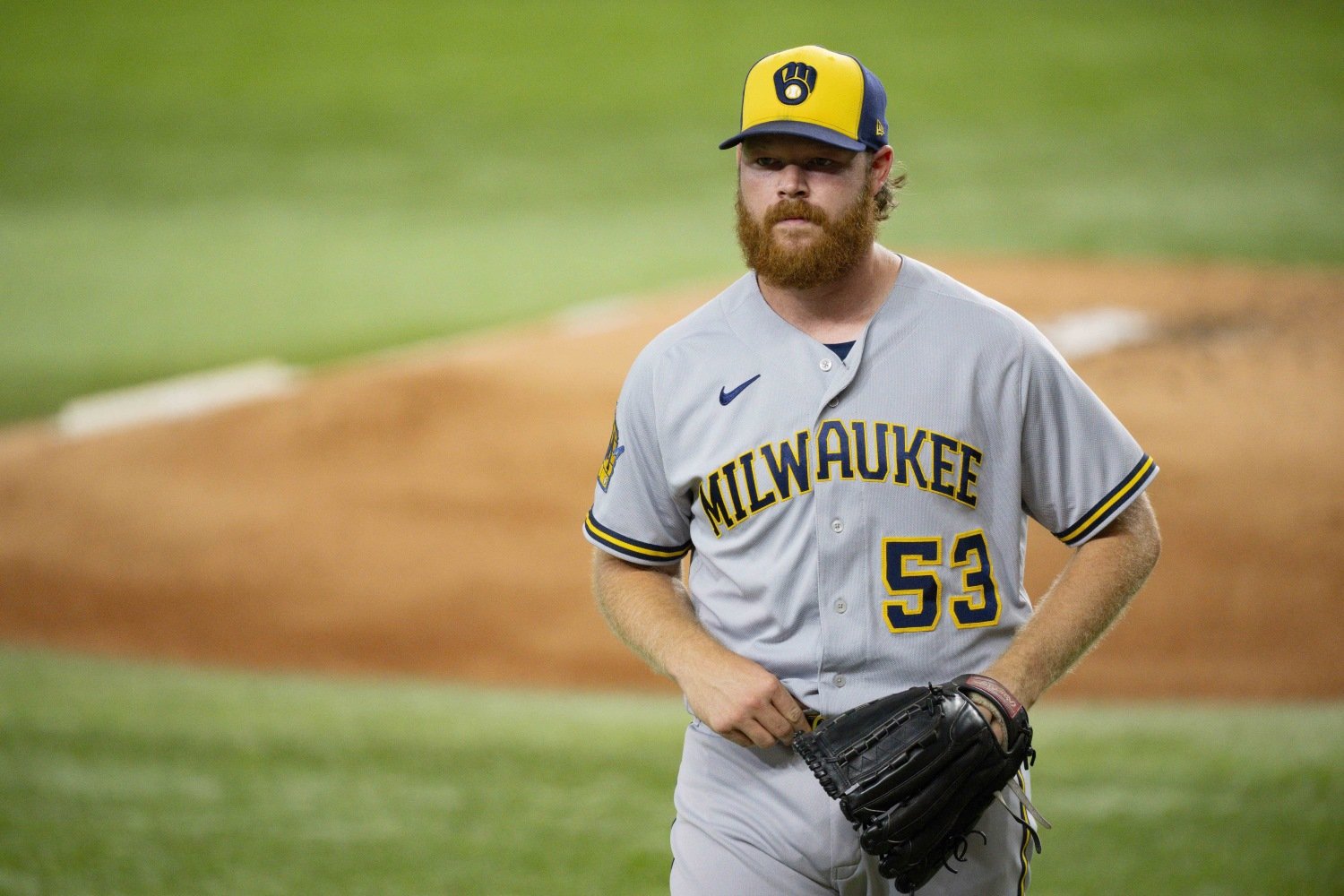 On Friday, the Brewers announced that Brandon Woodruff will need surgery to repair the anterior capsule in his throwing shoulder. The operation and the required rehab will sideline Woodruff for all of 2024, which was to be his final season under club control. We should be upfront about that fact, because while the team was (with good reason) optimistic in their wording of their statement about this injury, there's virtually no chance that Woodruff toes a big-league mound again before 2025. Tears of the shoulder capsule that require surgery never permit pitchers to return to their highest level of competition in under 12 months. That could always change, of course. Sports medicine gets better all the time. 'Never' is not an overstatement, though, given the data we have. In the last 15 years, a fistful of pitchers around Woodruff's age have had this surgery. Johan Santana had it when he was about a year older than Woodruff. He returned to a big-league mound 19 months later. Chris Young was almost exactly Woodruff's age when he had the surgery. He returned in 15 months. Rich Harden was also 30 years old when he underwent the surgery. He never pitched in the majors again. Dallas Braden was a few years younger than Woodruff is now, when he went under the knife. He, too, never pitched in MLB again. Chien-Ming Wang, then of the Yankees, was about a year younger than Woodruff is now when he suffered this injury in 2009. He didn't step onto a big-league mound again for a little over two years. John Danks is the dream--the best-case scenario. He was a few years younger than Woodruff, about 27 and a half years old, when he had surgery in 2013. He was back on the mound in less than 13 months, but narrowly, and he was never really the same. In May, Guardians prospect Daniel Espino had this same procedure. The team immediately announced that his return-to-play timeline was 12-14 months. Braves righthander Kyle Wright had the same surgery as Woodruff this week, and the team is already declaring him out for all of 2024. More so than with an elbow surgery (like Tommy John surgery), these shoulder issues can vary widely in their severity, which can shape recovery timelines significantly. However, almost regardless of severity, they strongly tend to carry a major risk of recurrence, and having the injury shortens the careers even of those pitchers who make it back from it. There's no way Woodruff is coming back in 2024, and in a month or so, the team will have to either non-tender him or agree with him on a multiyear contract that circumvents the arbitration process. The $11-12 million he would have pocketed for next season via arbitration is utterly off the table, because (though the team did voice an admirable and honest affection for him and his family Friday) the Brewers are in no position to voluntarily shell out that sum to an inactive player. That, then, is the first major knock-on effect we should examine from this. Matt Arnold will probably approach Woodruff to see if he has interest in a deal that would keep him around through 2025 or longer, paying him a reasonable but healthy amount each year. We're talking about a two-year deal worth, perhaps, $14 million, with $3 million of that paid in 2024 (while he rehabs) and $11 million due in 2025. It's hard to overstate the extent to which this dents Woodruff's value, so he's very likely to be open to some version of this. It's profoundly sad, for a pitcher who has been so important to the team and such a joy to watch over the years, but giving him anything more than that now would be irresponsible. Whether they consummate such a deal or not, it's now obvious that the Brewers will have to spend some money (or trade capital) on starting pitching this winter. Even if they find a way to keep him around on a backloaded deal, the front office now has a good chunk of what they would have paid Woodruff in arbitration with which to make some moves. It's unlikely that they'll be able to compete for the elite arms on the market (Yoshinobu Yamamoto and Blake Snell), but this should nudge them toward at least talking seriously with Aaron Nola, Sonny Gray, and Eduardo Rodriguez. It's rare for a mutual option to be picked up, but this is exactly the sort of exigency that might make bringing Wade Miley back for $10 million (really, $9 million, since the team would owe him a $1-million buyout if they turn down their side of that deal, anyway) appealing. Naturally, no news about Woodruff can be hashed out in full without reflection on what it means for the players with whom his name has been said in such rhythmic concatenation the last few years: Corbin Burnes and Freddy Peralta (the Big Three in the rotation), and Willy Adames (along with Burnes, the Big Three due to be free agents after 2024). The Brewers ought to be thinking about winning another division title in 2024, not rebuilding in any way, shape or form, and as such, this news makes a trade of Burnes materially less likely. It also boosts the odds of an extension for either Burnes or Adames, because if Woodruff had been healthier, he'd have been the most natural fit for such a contract in the set. It still feels unlikely that the team takes the plunge on Burnes, but if they were inclined to trade him, the price at which they can reasonably say yes to a deal just rose. For Peralta, this only means a nominal elevation, into the top echelon of the team's rotation. He earned that in the second half of this season, anyway, but it will certainly be thrown into sharper relief now that he only has Burnes as a co-ace. Robert Gasser is the internal pitcher who will see the greatest share of what the team hoped would be Woodruff's regular workload. Treated as emergency depth throughout 2023, Gasser now figures to be a full-time starter for the Crew in 2024. One thing this news should not influence, in any meaningful measure, is the likelihood of Craig Counsell departing and a new manager coming in. Whether or not that happens might influence what route the team decides to take more than it would have if Woodruff were healthy, though. Again, a rebuild should be off the table, but absent Woodruff, a post-Counsell team might not face overwhelming urgency to augment the team in the short term. Such a team would be more likely to trade from their stock of guys nearing free agency and getting more expensive, like Burnes and Adames, than would a team that brings back Counsell for another run. Woodruff could have earned a massive payday, as soon as this winter (via extension) but no later than next winter. Now, that's on hold, and it might turn out to be canceled, rather than merely postponed. The timing of this injury is as excruciating as the thing itself. Hopefully, the Brewers can work out a way to keep him around the team this year. That way, he can (at least) contribute to the team with the optimism and leadership that seem to come naturally to him. In the meantime, though, their offseason shopping list just got longer, and the need for one of the items on it has deepened.
- 6 comments
-
- 1
-
-
- brandon woodruff
- corbin burnes
- (and 1 more)
-
With Whom Do the Brewers Match Up Well in Trades This Winter?
Matthew Trueblood posted an article in Brewers
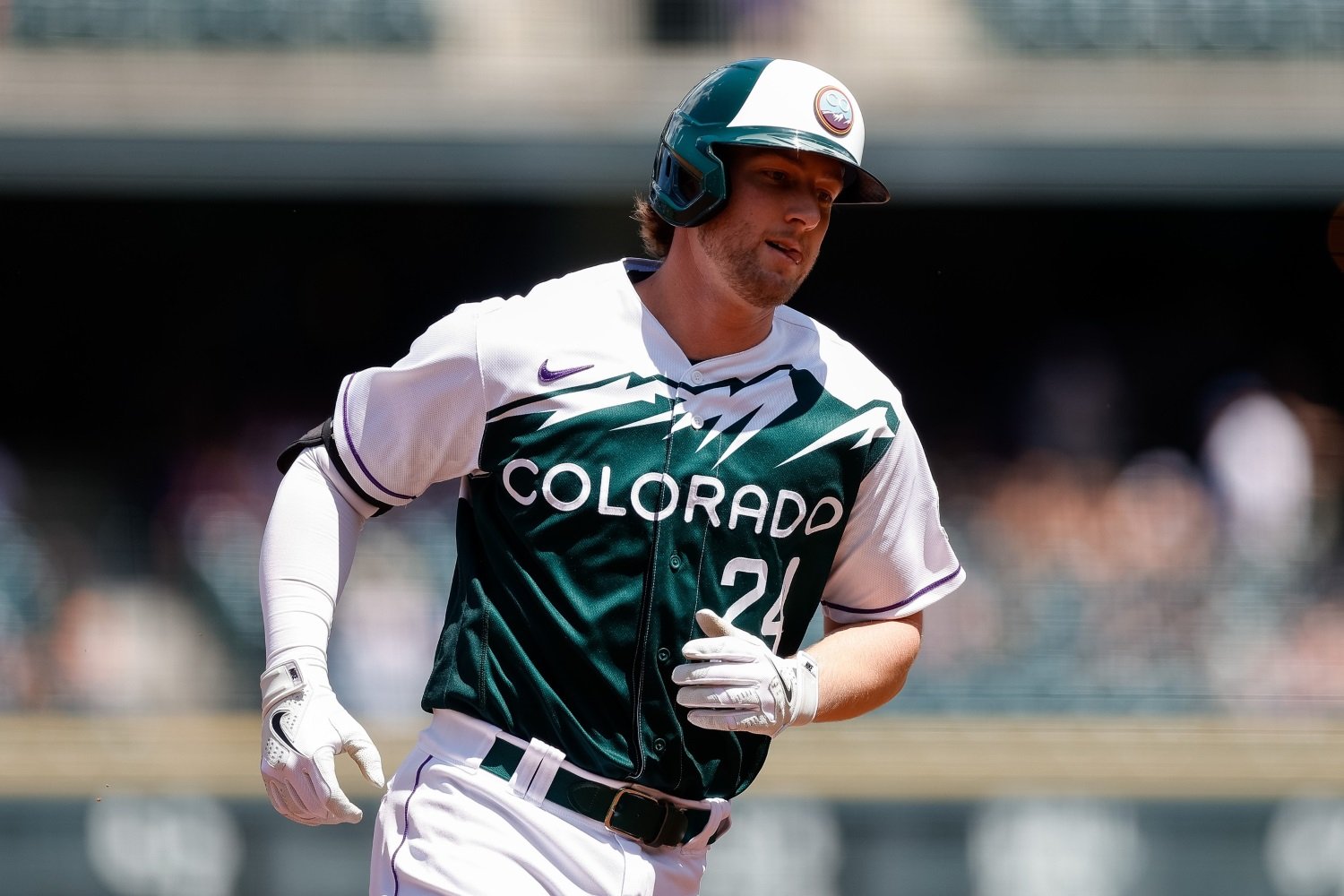 In today's game, free agency has sapped some of the imagination and interest from the trade market. Everyone goes shopping for their top talent on the open market. Trades only seem to happen when one team is positioned as a "buyer" and they find agreeable ground with one who identifies as a "seller". That dichotomy dominates trade rumors, even in the offseason. Teams are as guilty as the lamest ESPN pundit. It's a bummer. The Brewers might be able to break out of that mold again this winter. They've certainly done so in recent years. That makes it harder to find the right fit, but it could make for fireworks when those pieces fall into place, as happened last year when the team landed William Contreras. Here are three teams who could have what the Brewers need, and vice versa. Kansas City Royals I wrote about the potential for the Crew to have some interest in Kansas City's MJ Melendez or Carlos Hernandez before the trade deadline. Hernandez crashed and burned at the end of the year, and Melendez is a defensive mess who has been hampered offensively by the team's inability to give him any runway at a given spot. Both would be buy-low options, and Melendez is an especially intriguing one. The Brewers' catching coaching triad could still mill him into a backstop, at which point he'd have major value, given his raw power from the left side of the plate. He won't turn 25 years old until November. The offseason creates some openings that probably didn't exist in the summer, too. There are already rumors that the Royals could trade Salvador Perez (and the modest amount they still owe him over the final two years of his contract) as part of diving deeper into a rebuild under their new front office. They also have a couple of pitchers who could be candidates for a change of scenery--most notably, Brady Singer, the right-handed sinkerballer who was once a first-round pick but whose four-year career has been uneven. The Brewers' bevy of young outfielders would certainly hold some appeal for Kansas City, but depending on the shape of any deal, it might make more sense for one of the team's many solid lower-level pitching prospects to go the other way. Boston Red Sox These two teams completed a minor deal at the trade deadline, with Luis Urias landing unexpectedly with Boston. The fit for a winter trade would seem to be more conventional. The Red Sox have big holes both in their middle infield and atop their rotation. Manager Alex Cora announced that Chris Sale is the team's likely Opening Day starter for 2024, which is both telling and (given Sale's recent health record) a hilarious act of hubris. Corbin Burnes would be a perfect fit for the Sox's needs. So, too, would be Willy Adames. Boston got nothing good out of the amalgamation of Enrique Hernandez, Christian Arroyo, Pablo Reyes, Trevor Story and others this season, and they have no immediate, exciting answer at either second or third base. Adames would bolster their defense and significantly lengthen their lineup. Obviously, the Brewers shouldn't be in the business of strictly selling on players like Adames and Burnes right now. The Red Sox could offer controllable but readymade players who would soften the blow, if such a trade did occur. Kutter Crawford might shake loose from the Boston rotation, in good trade talks. Venezuelan rookie outfielder Wilyer Abreu made a strong impression, and has a Brewers-friendly overall profile. There are paths to a compelling trade there. Colorado Rockies To me, there's no clearer target for the Brewers this winter than Colorado third baseman Ryan McMahon. He's a left-handed hitter with the power that was so glaringly absent from the Milwaukee lineup in 2023. He strikes out too much, but he would preserve the impressive defensive phalanx the team cobbled together this year and could bat cleanup at times without fans feeling miserable about the lineup that day. The Rockies have a lot of other interesting parts lying around, too, for a team that lost 103 teams last season. The Brewers surely believe that they could unlock a few things with some of Colorado's pitchers. Perhaps no two teams are further separated in their ability to develop and instruct pitchers than these two. We're still a few weeks away from seeing real offseason action. These three are just part of a larger subset of teams whom Matt Arnold figures to talk to several times over the winter. Who jumps out to you here? What other teams are you keeping an eye on, as you glance ahead to the Hot Stove? Let us know in the comments.
 -
One way or another, the Brewers will be making some important trades this winter. it's how they've been building contenders ever since 2018, and it's a disproportionately powerful tool for a small-market team. Consummating deals requires a good fit between teams, though, in terms of needs, competitive circumstances, and excess talent. Let's find those fits for the Brewers. Image courtesy of © Isaiah J. Downing-USA TODAY Sports In today's game, free agency has sapped some of the imagination and interest from the trade market. Everyone goes shopping for their top talent on the open market. Trades only seem to happen when one team is positioned as a "buyer" and they find agreeable ground with one who identifies as a "seller". That dichotomy dominates trade rumors, even in the offseason. Teams are as guilty as the lamest ESPN pundit. It's a bummer. The Brewers might be able to break out of that mold again this winter. They've certainly done so in recent years. That makes it harder to find the right fit, but it could make for fireworks when those pieces fall into place, as happened last year when the team landed William Contreras. Here are three teams who could have what the Brewers need, and vice versa. Kansas City Royals I wrote about the potential for the Crew to have some interest in Kansas City's MJ Melendez or Carlos Hernandez before the trade deadline. Hernandez crashed and burned at the end of the year, and Melendez is a defensive mess who has been hampered offensively by the team's inability to give him any runway at a given spot. Both would be buy-low options, and Melendez is an especially intriguing one. The Brewers' catching coaching triad could still mill him into a backstop, at which point he'd have major value, given his raw power from the left side of the plate. He won't turn 25 years old until November. The offseason creates some openings that probably didn't exist in the summer, too. There are already rumors that the Royals could trade Salvador Perez (and the modest amount they still owe him over the final two years of his contract) as part of diving deeper into a rebuild under their new front office. They also have a couple of pitchers who could be candidates for a change of scenery--most notably, Brady Singer, the right-handed sinkerballer who was once a first-round pick but whose four-year career has been uneven. The Brewers' bevy of young outfielders would certainly hold some appeal for Kansas City, but depending on the shape of any deal, it might make more sense for one of the team's many solid lower-level pitching prospects to go the other way. Boston Red Sox These two teams completed a minor deal at the trade deadline, with Luis Urias landing unexpectedly with Boston. The fit for a winter trade would seem to be more conventional. The Red Sox have big holes both in their middle infield and atop their rotation. Manager Alex Cora announced that Chris Sale is the team's likely Opening Day starter for 2024, which is both telling and (given Sale's recent health record) a hilarious act of hubris. Corbin Burnes would be a perfect fit for the Sox's needs. So, too, would be Willy Adames. Boston got nothing good out of the amalgamation of Enrique Hernandez, Christian Arroyo, Pablo Reyes, Trevor Story and others this season, and they have no immediate, exciting answer at either second or third base. Adames would bolster their defense and significantly lengthen their lineup. Obviously, the Brewers shouldn't be in the business of strictly selling on players like Adames and Burnes right now. The Red Sox could offer controllable but readymade players who would soften the blow, if such a trade did occur. Kutter Crawford might shake loose from the Boston rotation, in good trade talks. Venezuelan rookie outfielder Wilyer Abreu made a strong impression, and has a Brewers-friendly overall profile. There are paths to a compelling trade there. Colorado Rockies To me, there's no clearer target for the Brewers this winter than Colorado third baseman Ryan McMahon. He's a left-handed hitter with the power that was so glaringly absent from the Milwaukee lineup in 2023. He strikes out too much, but he would preserve the impressive defensive phalanx the team cobbled together this year and could bat cleanup at times without fans feeling miserable about the lineup that day. The Rockies have a lot of other interesting parts lying around, too, for a team that lost 103 teams last season. The Brewers surely believe that they could unlock a few things with some of Colorado's pitchers. Perhaps no two teams are further separated in their ability to develop and instruct pitchers than these two. We're still a few weeks away from seeing real offseason action. These three are just part of a larger subset of teams whom Matt Arnold figures to talk to several times over the winter. Who jumps out to you here? What other teams are you keeping an eye on, as you glance ahead to the Hot Stove? Let us know in the comments. View full article
-
By no means! I’m not calling it anything else.
-
It should absolutely not have happened this way. Ninety-seven percent of all MLB teams end their season shy of a championship, but this ending was excruciating and unfair. It was also inevitable. Image courtesy of © Michael McLoone-USA TODAY Sports We pay a heavy price to be more complex than alligators and snails. Those creatures have been around for tens of millions of years, and they've changed relatively little in that time. Evolution bumped into something viable and stable pretty early, with them. It isn't fancy, but it works, and it works on a scale of eons. It's staggering to consider how much longer they have been around, compared to humans, and to realize that they'll probably be relatively unchanged for some time after we are gone. Our species, by contrast, has been doomed all along. The brain activity required for all the non-survival interests we started to pursue even relatively early in our evolution make us unusually ravenous, for mammals of our size. As we've grown in number and formed civilizations, we've become deadly (to many, many other species, and to ourselves), because that energy need has moved far beyond simply feeding those hyperactive brains. There is no force stronger than entropy, which is the universe's desperate desire to reach a lower-energy state. Order is made of energy. We have to consume massive amounts of energy--supermassive amounts--to maintain what we perceive as order. We've challenged entropy to a bare-knuckled brawl, and not only will we lose it, but having invited the fight will accelerate our destruction. It takes a tremendous amount of energy to maintain the finely-calibrated order that is Brandon Woodruff's attack on hitters, too. You can see it, if you can set the current Woodruff side-by-side with the 2018 version in your mind. The younger Woodruff had electric stuff, and he could even sort of find the plate with it, but he had no command within the zone. He couldn't sequence. He had a shallow arsenal. His location was imprecise. As we demand that pitchers do (but as we have learned not to truly expect, because it's so difficult), Woodruff matured as a pitcher. More than that, he evolved. He's honed two fastballs, shaping and feeling them until he can assail all parts of the strike zone with each, putting hitters on the defensive without suffering the wildness that usually comes with that much velocity and movement. For a while, he threw them harder than when he first came up, too. A natural pronator, he's developed good enough feel for supination to command both his slider and his curveball, such that (while neither will ever be an elite weapon, by the lofty standards of modern breaking balls) they further allow him to set up hitters and put them away. From 2017 through 2019, Woodruff was very good. He had a 113 ERA+ during those seasons, suggesting he was 13 percent better than an average pitcher. Since 2020, though, he's up to 152. He's a special pitcher. He's an ace. There was always going to be a price to pay for that. The modern pitcher is one of the clearest microcosms of our declaration of war against entropy, and the late-blooming, pitch-adding Woodruff is the very model of the modern pitcher. As no less an authority than Bill James recently showed, fewer and fewer pitchers enjoy long careers, these days. We're asking them to cheat the baseball version of death, and for most of them, it's impossible. Woodruff, who had plenty of talent but had to work so hard and impose such a new order within his physique to get to this point, was one of the tallest plants in the row. He was not going to be one of the lucky ones missed by entropy's ruthless scythe. When Woodruff's shoulder gave out a second time, in a second place, the foreboding feeling hit like a rock in the gut. The Brewers could have overcome Woodruff's absence to beat the Diamondbacks, and even to go fairly deep into October, but that possibility felt remote and abstract. The reality was that entropy had entered the chat, and that could not help but be bad news for the Brewers. Like Woodruff, the Brewers have established a pattern of near-dominance, with something less than that level of actual talent or resources. They've been MLB's refrigerator: the nigh-miraculous subverters of entropy. Craig Counsell keeps getting better performances than expected from teams, and they keep finding new talents and new levels within players. Without overpowering strikeout rates from their pitchers or big power from their hitters, they spent this year cobbling together enough runs and staving off opponent rallies well enough to win 92 games. They were great at defense. They were great at pitch framing. They were great, down the stretch, at getting on base. Those means of victory require more energy--the team-level kind, if not the individual kind--than racking up strikeouts and hitting homers. That's why the modern game leans so much toward those means of getting outs and scoring runs, respectively. Not every team who reaches October with great defense and concatenations of walks and singles falls victim to autumn chaos, but once Woodruff went down, you really had to work to convince yourself that entropy wasn't going to win out. When we think of entropy, we think of chaos, and when we think of chaos, we think of frenzy. At the weary end of that sweep at the hands of the visiting Snakes, though, we saw what it really looks like: quietude. Stillness. When entropy's job is done, or at least well in progress, energy gets evenly dispersed, and then it becomes much less clear that it's there at all. As the crowd departed Miller Park like rain sliding off a roof, it was funereal, because the future of this team is as uncertain as that of Woodruff and his shoulder capsule. Counsell, the chief agent of the team's defiance of baseball entropy, could be leaving. Corbin Burnes and Willy Adames, like Woodruff, have one year of team control left, but they all have warts of various kinds, and they're going to be very well-paid via arbitration in 2024. Money is one of the forms of energy that builds up entropy within a team. So is the tick-tock of everyone's service clock. Several guys from this team will not be back, and several of the ones who do return will regress (math speak, in one way of viewing things, for getting punched in the mouth by entropy). Teams who get great work from their bullpen one year almost always see a step backward from that corps in the following season. Ditto for teams who play great team defense in a given season. The Brewers not only got both this year, but depended on both. Next season will be harder, even if it's ultimately successful. That's what made this loss so brutal. It felt like, while it came thanks to just a few bad breaks, it could not have been avoided. It felt like, just as Woodruff's shoulder did, the Brewers were due to give way under the pressure of keeping everything closely ordered--like doing so had gotten too hard and tiring, especially for Counsell. Whether they can get back to this place next year is one question. Whether they can do so with more in the tank is another, even more daunting one. View full article
-
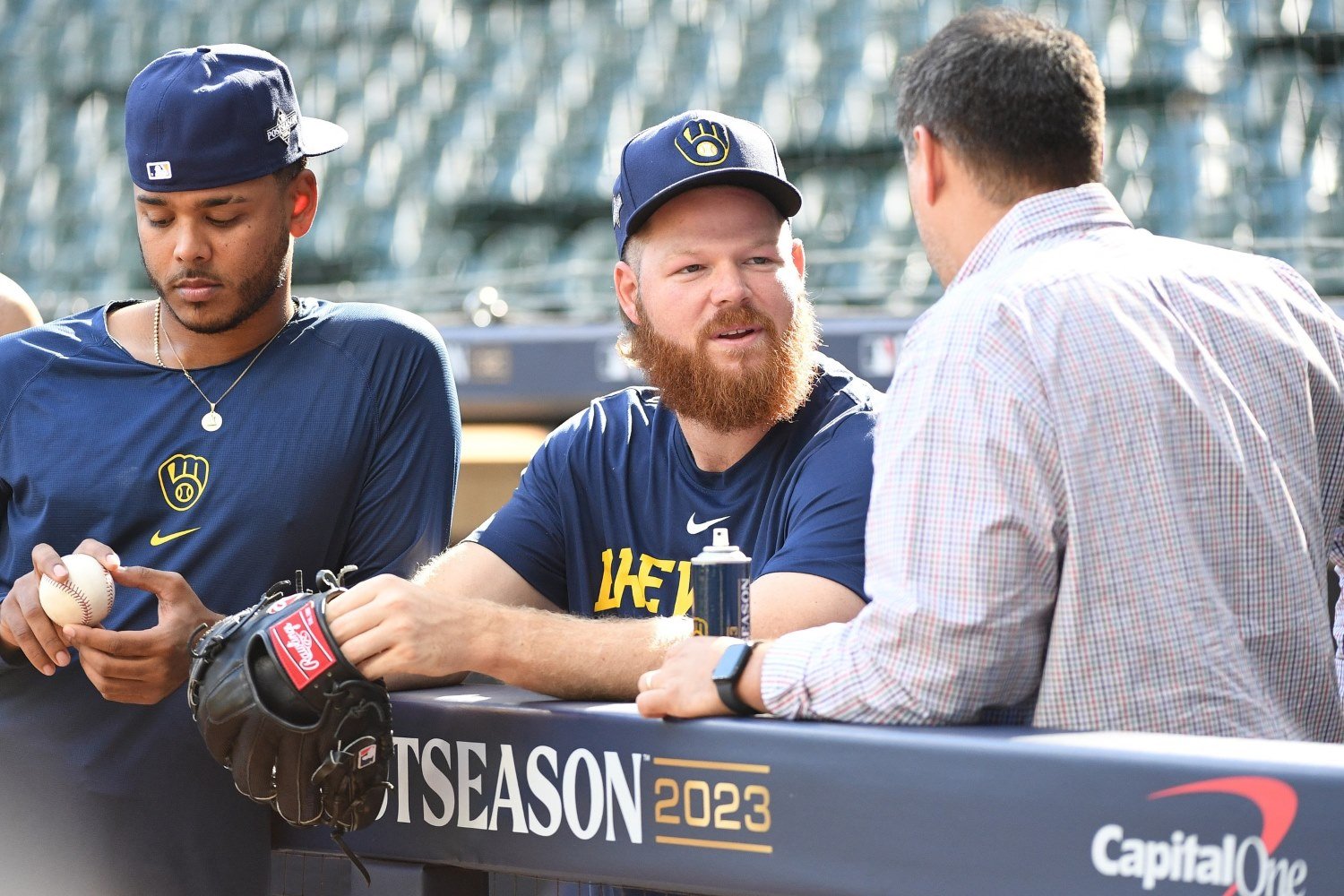 We pay a heavy price to be more complex than alligators and snails. Those creatures have been around for tens of millions of years, and they've changed relatively little in that time. Evolution bumped into something viable and stable pretty early, with them. It isn't fancy, but it works, and it works on a scale of eons. It's staggering to consider how much longer they have been around, compared to humans, and to realize that they'll probably be relatively unchanged for some time after we are gone. Our species, by contrast, has been doomed all along. The brain activity required for all the non-survival interests we started to pursue even relatively early in our evolution make us unusually ravenous, for mammals of our size. As we've grown in number and formed civilizations, we've become deadly (to many, many other species, and to ourselves), because that energy need has moved far beyond simply feeding those hyperactive brains. There is no force stronger than entropy, which is the universe's desperate desire to reach a lower-energy state. Order is made of energy. We have to consume massive amounts of energy--supermassive amounts--to maintain what we perceive as order. We've challenged entropy to a bare-knuckled brawl, and not only will we lose it, but having invited the fight will accelerate our destruction. It takes a tremendous amount of energy to maintain the finely-calibrated order that is Brandon Woodruff's attack on hitters, too. You can see it, if you can set the current Woodruff side-by-side with the 2018 version in your mind. The younger Woodruff had electric stuff, and he could even sort of find the plate with it, but he had no command within the zone. He couldn't sequence. He had a shallow arsenal. His location was imprecise. As we demand that pitchers do (but as we have learned not to truly expect, because it's so difficult), Woodruff matured as a pitcher. More than that, he evolved. He's honed two fastballs, shaping and feeling them until he can assail all parts of the strike zone with each, putting hitters on the defensive without suffering the wildness that usually comes with that much velocity and movement. For a while, he threw them harder than when he first came up, too. A natural pronator, he's developed good enough feel for supination to command both his slider and his curveball, such that (while neither will ever be an elite weapon, by the lofty standards of modern breaking balls) they further allow him to set up hitters and put them away. From 2017 through 2019, Woodruff was very good. He had a 113 ERA+ during those seasons, suggesting he was 13 percent better than an average pitcher. Since 2020, though, he's up to 152. He's a special pitcher. He's an ace. There was always going to be a price to pay for that. The modern pitcher is one of the clearest microcosms of our declaration of war against entropy, and the late-blooming, pitch-adding Woodruff is the very model of the modern pitcher. As no less an authority than Bill James recently showed, fewer and fewer pitchers enjoy long careers, these days. We're asking them to cheat the baseball version of death, and for most of them, it's impossible. Woodruff, who had plenty of talent but had to work so hard and impose such a new order within his physique to get to this point, was one of the tallest plants in the row. He was not going to be one of the lucky ones missed by entropy's ruthless scythe. When Woodruff's shoulder gave out a second time, in a second place, the foreboding feeling hit like a rock in the gut. The Brewers could have overcome Woodruff's absence to beat the Diamondbacks, and even to go fairly deep into October, but that possibility felt remote and abstract. The reality was that entropy had entered the chat, and that could not help but be bad news for the Brewers. Like Woodruff, the Brewers have established a pattern of near-dominance, with something less than that level of actual talent or resources. They've been MLB's refrigerator: the nigh-miraculous subverters of entropy. Craig Counsell keeps getting better performances than expected from teams, and they keep finding new talents and new levels within players. Without overpowering strikeout rates from their pitchers or big power from their hitters, they spent this year cobbling together enough runs and staving off opponent rallies well enough to win 92 games. They were great at defense. They were great at pitch framing. They were great, down the stretch, at getting on base. Those means of victory require more energy--the team-level kind, if not the individual kind--than racking up strikeouts and hitting homers. That's why the modern game leans so much toward those means of getting outs and scoring runs, respectively. Not every team who reaches October with great defense and concatenations of walks and singles falls victim to autumn chaos, but once Woodruff went down, you really had to work to convince yourself that entropy wasn't going to win out. When we think of entropy, we think of chaos, and when we think of chaos, we think of frenzy. At the weary end of that sweep at the hands of the visiting Snakes, though, we saw what it really looks like: quietude. Stillness. When entropy's job is done, or at least well in progress, energy gets evenly dispersed, and then it becomes much less clear that it's there at all. As the crowd departed Miller Park like rain sliding off a roof, it was funereal, because the future of this team is as uncertain as that of Woodruff and his shoulder capsule. Counsell, the chief agent of the team's defiance of baseball entropy, could be leaving. Corbin Burnes and Willy Adames, like Woodruff, have one year of team control left, but they all have warts of various kinds, and they're going to be very well-paid via arbitration in 2024. Money is one of the forms of energy that builds up entropy within a team. So is the tick-tock of everyone's service clock. Several guys from this team will not be back, and several of the ones who do return will regress (math speak, in one way of viewing things, for getting punched in the mouth by entropy). Teams who get great work from their bullpen one year almost always see a step backward from that corps in the following season. Ditto for teams who play great team defense in a given season. The Brewers not only got both this year, but depended on both. Next season will be harder, even if it's ultimately successful. That's what made this loss so brutal. It felt like, while it came thanks to just a few bad breaks, it could not have been avoided. It felt like, just as Woodruff's shoulder did, the Brewers were due to give way under the pressure of keeping everything closely ordered--like doing so had gotten too hard and tiring, especially for Counsell. Whether they can get back to this place next year is one question. Whether they can do so with more in the tank is another, even more daunting one.
 -
Luckless and Not Quite Deep Enough, Brewers Go Home Early
Matthew Trueblood posted an article in Brewers
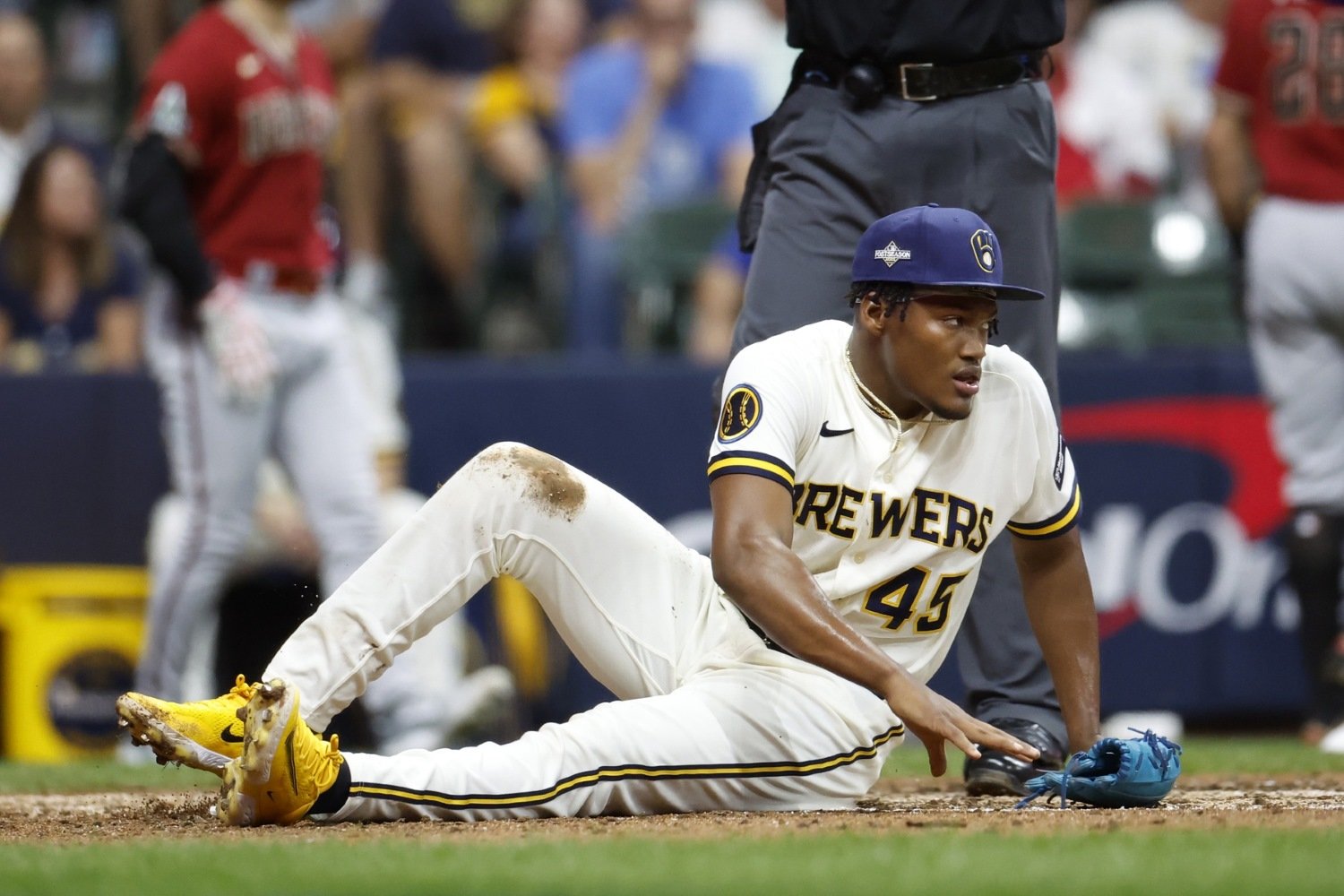 No one thing swung this series. The fact that the Brewers only scored five runs between the two games (really? Is that all? They had traffic on the bases constantly!) makes it hard to dream on a different version of events in which a healthy Brandon Woodruff pushes them right past the Diamondbacks. While the pitching staff ultimately cracked a bit and let the lead widen in each game, the onus for this loss falls where we would have guessed, given the construction of this team: the offense. Some of it, as was the case in Game One, really was just terrible luck. In the bottom of the third, Sal Frelick scalded a ball back through the box with two runners on--only for Zac Gallen to find it and start an impressive double play to end the inning. Much more of it was a genuine dearth of depth and good execution by Arizona, though. The Crew went down in order three times in Game Two, and that's not counting the inning in which a leadoff walk was erased immediately on a double play or the one in which Carlos Santana drew a leadoff walk and never moved from first base. Craig Counsell could have been more aggressive, to be sure. There was a chance to pinch-hit Andruw Monasterio for Brice Turang early in Game One that could have tilted the balance of that contest. There was an opportunity to pinch-hit Blake Perkins for Sal Frelick late in Game Two that could have done the same thing. Santana got on a few times during the series in situations where using a pinch-runner might have given the Crew a chance for a stolen base and better odds to score, but it was never in a situation wherein the need for that particular run seemed urgent enough to justify that substitution--especially given that the Diamondbacks' catchers both throw so well. It's easy, now, to second-guess the choice to put Jesse Winker on this roster in lieu of Rowdy Tellez. I doubted the wisdom of that move even when it was announced. Tellez had a miserable season, but if the Brewers had had a power hitter anywhere on their bench, there were a few places where Counsell might have been able to deploy them. Instead, he was always choosing between guys with good on-base skills (skills, alas, thwarted by the combination of the Diamondbacks pitchers' good control and their fielders' superb play) but no power whatsoever. When it's a player who scuffled as much as Tellez for whom we're pining, though, the reality of the situation is clear: the Brewers just weren't a deep enough offensive team. Arizona got some luck, in the production of their runs. Alek Thomas's home run in the fifth Wednesday night was the closest thing to an actual wallscraper I can remember. He poked it just far enough to halve the Arizona deficit, but it could almost as easily have been a flyout. It's harder to dismiss Arizona's sixth-inning rally, though. Geraldo Perdomo drew three walks and added a hit in this series, wreaking havoc from the bottom of the batting order and twice scoring ahead of long hits by the guys at the top of it. His self-awareness--a stubborn refusal to expand his strike zone, given that he's been mired in a funk in terms of actually swinging the bat for the whole second half--allowed him to outfox the Brewers, who never figured out that they could attack the zone more aggressively against him than they were. Once Perdomo took that leadoff walk in the sixth, a pit formed in my stomach. In Game One, it had been an ambush by the top two in the Arizona order that erased the Brewers' lead. They did it again in Game Two. A Corbin Carroll double into the corner and a Ketel Marte single flipped the game. Both hits were well-struck balls in deep, two-strike counts. Peralta tried to put them away, but seeing him for the third time, they simply beat him. This is the pesky nature of the Diamondbacks' offense. They had the fourth-lowest swing rate in baseball this season (just behind the Brewers, in that regard), but the third-highest contact rate, too. The top of their order is full of tough outs, and the Brewers couldn't get them when they needed to do so the most. They could have contained the situation much better than they did, though. Frelick missing the cutoff with a hopeless throw home on Marte's go-ahead single let him move into scoring position. That was a signature of tis series, too: crisp, heads-up play by the Diamondbacks, and shocking physical and mental mistakes by the Brewers. It was a series in which all the tendencies and potential adjustments you identify before a matchup like this broke in favor of one team. The Brewers hit into double plays more often than any team except the Marlins this year, and that held. The Diamondbacks tied for the league lead in getting calls overturned on replays, and boy did they get some calls overturned on replays. Only the Twins and Astros had relievers inherit fewer baserunners than did Counsell, and when he tried changing that pattern by making many mid-inning moves during this series, it came up snake-eyes for him at just the wrong time. Meanwhile, the Diamondbacks used relievers for fewer than three outs in an appearance less often than any team except the Orioles this year, but when Torey Lovullo made 10 calls to his bullpen (five of them for two or fewer outs), they worked out flawlessly. The Brewers didn't score a run against the Arizona relief corps, in 9 2/3 innings of trying. Both teams ran a high ground-ball rate and had a dearth of power production this year, despite guys who can hit the ball a mile when they get a little air under it. Only the Brewers' grounders became a problem for them in this series. Both teams were unable to run out the starting pitchers they'd have preferred for these two games. Only the Brewers' plan seemed to come unglued because of that. There are small failures of roster building and roster management here, to be sure, but the hard facts here are that the Brewers got awfully unlucky. They played slightly less than their best baseball, which will often get you in trouble in October, and their opponents played their very best baseball, which is almost always fatal. This winter, the team needs to create greater margin for error--but the pressure not to use that margin will still exist next fall.
 -
Over 162 games, the Milwaukee Brewers were eight games better than the Arizona Diamondbacks. With each club's season on the line, though, it was Arizona who proved a little bit deeper, and who got a little bit better bounces. Image courtesy of © Kamil Krzaczynski-USA TODAY Sports No one thing swung this series. The fact that the Brewers only scored five runs between the two games (really? Is that all? They had traffic on the bases constantly!) makes it hard to dream on a different version of events in which a healthy Brandon Woodruff pushes them right past the Diamondbacks. While the pitching staff ultimately cracked a bit and let the lead widen in each game, the onus for this loss falls where we would have guessed, given the construction of this team: the offense. Some of it, as was the case in Game One, really was just terrible luck. In the bottom of the third, Sal Frelick scalded a ball back through the box with two runners on--only for Zac Gallen to find it and start an impressive double play to end the inning. Much more of it was a genuine dearth of depth and good execution by Arizona, though. The Crew went down in order three times in Game Two, and that's not counting the inning in which a leadoff walk was erased immediately on a double play or the one in which Carlos Santana drew a leadoff walk and never moved from first base. Craig Counsell could have been more aggressive, to be sure. There was a chance to pinch-hit Andruw Monasterio for Brice Turang early in Game One that could have tilted the balance of that contest. There was an opportunity to pinch-hit Blake Perkins for Sal Frelick late in Game Two that could have done the same thing. Santana got on a few times during the series in situations where using a pinch-runner might have given the Crew a chance for a stolen base and better odds to score, but it was never in a situation wherein the need for that particular run seemed urgent enough to justify that substitution--especially given that the Diamondbacks' catchers both throw so well. It's easy, now, to second-guess the choice to put Jesse Winker on this roster in lieu of Rowdy Tellez. I doubted the wisdom of that move even when it was announced. Tellez had a miserable season, but if the Brewers had had a power hitter anywhere on their bench, there were a few places where Counsell might have been able to deploy them. Instead, he was always choosing between guys with good on-base skills (skills, alas, thwarted by the combination of the Diamondbacks pitchers' good control and their fielders' superb play) but no power whatsoever. When it's a player who scuffled as much as Tellez for whom we're pining, though, the reality of the situation is clear: the Brewers just weren't a deep enough offensive team. Arizona got some luck, in the production of their runs. Alek Thomas's home run in the fifth Wednesday night was the closest thing to an actual wallscraper I can remember. He poked it just far enough to halve the Arizona deficit, but it could almost as easily have been a flyout. It's harder to dismiss Arizona's sixth-inning rally, though. Geraldo Perdomo drew three walks and added a hit in this series, wreaking havoc from the bottom of the batting order and twice scoring ahead of long hits by the guys at the top of it. His self-awareness--a stubborn refusal to expand his strike zone, given that he's been mired in a funk in terms of actually swinging the bat for the whole second half--allowed him to outfox the Brewers, who never figured out that they could attack the zone more aggressively against him than they were. Once Perdomo took that leadoff walk in the sixth, a pit formed in my stomach. In Game One, it had been an ambush by the top two in the Arizona order that erased the Brewers' lead. They did it again in Game Two. A Corbin Carroll double into the corner and a Ketel Marte single flipped the game. Both hits were well-struck balls in deep, two-strike counts. Peralta tried to put them away, but seeing him for the third time, they simply beat him. This is the pesky nature of the Diamondbacks' offense. They had the fourth-lowest swing rate in baseball this season (just behind the Brewers, in that regard), but the third-highest contact rate, too. The top of their order is full of tough outs, and the Brewers couldn't get them when they needed to do so the most. They could have contained the situation much better than they did, though. Frelick missing the cutoff with a hopeless throw home on Marte's go-ahead single let him move into scoring position. That was a signature of tis series, too: crisp, heads-up play by the Diamondbacks, and shocking physical and mental mistakes by the Brewers. It was a series in which all the tendencies and potential adjustments you identify before a matchup like this broke in favor of one team. The Brewers hit into double plays more often than any team except the Marlins this year, and that held. The Diamondbacks tied for the league lead in getting calls overturned on replays, and boy did they get some calls overturned on replays. Only the Twins and Astros had relievers inherit fewer baserunners than did Counsell, and when he tried changing that pattern by making many mid-inning moves during this series, it came up snake-eyes for him at just the wrong time. Meanwhile, the Diamondbacks used relievers for fewer than three outs in an appearance less often than any team except the Orioles this year, but when Torey Lovullo made 10 calls to his bullpen (five of them for two or fewer outs), they worked out flawlessly. The Brewers didn't score a run against the Arizona relief corps, in 9 2/3 innings of trying. Both teams ran a high ground-ball rate and had a dearth of power production this year, despite guys who can hit the ball a mile when they get a little air under it. Only the Brewers' grounders became a problem for them in this series. Both teams were unable to run out the starting pitchers they'd have preferred for these two games. Only the Brewers' plan seemed to come unglued because of that. There are small failures of roster building and roster management here, to be sure, but the hard facts here are that the Brewers got awfully unlucky. They played slightly less than their best baseball, which will often get you in trouble in October, and their opponents played their very best baseball, which is almost always fatal. This winter, the team needs to create greater margin for error--but the pressure not to use that margin will still exist next fall. View full article
-
Technically speaking, the Brewers' greatest chances of winning Tuesday night came right when they'd jumped out to a 3-0 lead in the second inning. In reality, though, we know that's not how the game went. Image courtesy of © Jovanny Hernandez / Milwaukee Journal Sentinel / USA TODAY NETWORK When Christian Yelich followed Tyrone Taylor's two-run home run with a single of his own, the Brewers led 3-0 very early, and it looked like they might run the Diamondbacks (and rookie starter Brandon Pfaadt) out of the building. Their Win Probability, at that moment, stood at 83 percent. But Win Probability is a framework initially built to analyze decisions, not to tell us stories. To understand the game from the fan's and the purist's perspective, we have to shine a light into some of the framework's dark corners. Win Probability is blind to all sorts of things. It can spit out the chances that a given team will win, based on the occupancy of the bases, the number of outs in the inning, which inning, the relative score, and which team is home and away, but it doesn't even attempt to adjust for the quality of the players or teams involved. That would introduce a level of complexity that creates genuine paralysis via analysis. The system also pauses and makes all its official adjustments and recalibrations between plays. That, after all, is when decisions can be made and new strategies can be adopted. As fans watching the game, though, we don't jutter and jump from one interstice to the next, like the second hand on a clock. We live the full breadth of each play. We don't just feel the rise or fall of the chances of winning in snapshots taken between at-bats. We can sense (and sometimes even calculate) the ebb and flow of those chances even as a play unfolds. It's the real stuff of baseball--the joy, and the agony--and Win Probability models often miss it. For instance, let's jump ahead from the second inning to the fifth. Ohp, the Diamondbacks caught up. In fact, they've taken the lead, because their young, dangerous offense has shown exactly what makes it so much the latter, despite the former. Three home runs have given Arizona a slim one-run edge, although (at least) the Brewers did knock Pfaadt out of the game in the third frame. Now, with the same set of hitters who effected that, they're trying to get to fungible middle relief man Ryne Nelson. The Brewers started this half-inning with a 40.7-percent chance of winning the game. That's not great, but it might undersell them, too. They have a better roster than Arizona. They have a better bullpen, and this just became a battle thereof. Win Probability doesn't bake that in. Maybe the Brewers have the momentum, too. After all, when Corbin Burnes departed after two straight walks to open the top of the fifth, the Crew was down to a 26.7-percent chance of winning. Abner Uribe both reminded everyone of the Brewers' superb bullpen, and escaped Burnes's jam without damage. We could tick that 40.7 percent number upward, then, but let's leave it. It's good enough as it is. Sal Frelick leads off the bottom of the fifth with a single, and Willy Adames backs that up with another one, and there you go: the Crew after favorites again. Even this half-blind Win Probability framework says so. They're up to 54.2 percent. Now, starting right here, stay close with me. Josh Donaldson comes to bat, with Frelick at second and Adames on first. He hits a laser shot of a single to center field. Right now, as the ball is leaving his bat on a clean line, what are the chances that the Brewers win this game? Here's how I would figure them, in the instant before the camera cuts and then zooms in on the outfield, where the ball is being collected. Frelick, with good speed and no reason to hold up to discern whether this ball might be caught, is going to score. That will tie the game, right there. It's probably too firmly hit for Adames to race around to third base, but still, the Brewers have just gone from two on and nobody out down a run to the same base-out state in a tie. If all that comes to fruition, the next Win Probability number I see is going to be 70.1 percent. That's awfully good. Alas: there are some factors we neglected to consider. Donaldson hits the ball very hard, for one. He didn't just line the ball to center field. He hit it 102 miles per hour. More important than Donaldson, though, is Alek Thomas. The Arizona center fielder plays shallower, on average, than all but one other player who saw even semi-regular time at the position in 2023. He doesn't have a rocket for an arm, but by playing so shallowly and using his speed and sure hands to get the ball and fire it in quickly, he'll easily hold Frelick at third base. Thus, we get an actual Win Probability that reflects the cold reality. The Brewers still have a good chance to at least tie the game this inning (perhaps better than an 85-percent chance of it), but their overall odds of winning the contest have only leavened to 65.2 percent. Oof. Win Probability also didn't account for Brice Turang. Every time the Brewers need a hit tonight, it seems to be Turang coming to bat, and there are just no big hits in the overmatched rookie's bat right now. His strikeout brings the odds of a Milwaukee win back down to 55.6 percent, and we wonder whether Win Probability math might have told us (if it knew these guys as individuals, rather than theoretically average pawns in the game) that it was worth sending Frelick, anyway. If Thomas had thrown out Frelick, the Win Probability would have sagged to 51.4 percent, so comparing that number to the 70.1 percent if he were safe and comparing it to the 65.2 percent achieved by staying put, we reckon Frelick would have needed about a 74-percent chance of being safe to make going home a worthwhile risk. If that math is right, so was the decision to hold him up. If we adjust and account for Turang, though, maybe the breakeven point is lower. Of course, Thomas's positioning pushed the likely success rate of a send lower, too. See why Win Probability likes to just wait and only analyze the non-moving moments of the game, with everyone treated as interchangeable? Anyway, Turang is out, and now Tyrone Taylor is at bat. Nelson has given way to Ryan Thompson, but that's not going to change the Win Probability numbers we're working with. All it does do is make Taylor a bit more likely to run into a ball in the specific way he does now. Taylor's power is up at the top of the zone, where we saw him leap on a Pfaadt pitch for the big home run in the early going. When pitchers work him down (including down and in), as the sidearm Thompson does, Taylor doesn't get the ball far off the ground. With one out and the sacks packed, though, he admirably lofts a sinker to the left side. This is the one. This ball is hit on the screws, just like Donaldson's was. Taylor has busted things open again, baby. He hits a rising line drive toward left field, and Adames doesn't hesitate much. He's going to score right on Frelick's heels. This won't just be a tie. Even against the strong arm of left fielder Lourdes Gurriel, Jr., the Brewers are going to take the lead. Well, except, no they're not. You know that; you're here, with me, in the future. Evan Longoria, although an old man, is going to bend his aching legs and find in them one last young man's bounce, and he's going to pluck Taylor's drive right out of the air, perhaps nine and a half feet off the ground. With Adames overcommitted, it's a double play. The inning is over. Win Probability reports that the Crew have cratered to a 33.3 percent chance of victory. The plunge from 55.6 to 33.3 is not nearly a rich enough account of that play, though. In the moment just after Taylor makes contact, the Brewers' real chances of winning haven't dropped. They're actually rising sharply, right alongside the ball. They'll only crash back to Earth once Longoria intercepts them on that line and greedily pulls them down with him in his losing battle with gravity. Off the bat, Taylor's ball had a 77.7-percent chance to be a hit, according to Statcast. If it had been one, with Adames so recklessly running, the play would have ended with a 78.6-percent Win Probability for the Brewers. Taylor's shot was worth almost a quarter of a crucial playoff victory. It was just that Longoria, aided by Christopher Lloyd or some other angel of the infield, went up in the air and came down with 45 percent of a win in his glove--or, perhaps, 30 percent of a win there, and 15 percent more strewn across the basepath where Adames was helplessly trying to reclaim second base. That kind of rollercoaster of a play probably has some hangover effect, and if Win Probability made any effort to adjust for how the players on the field feel or for the specifics of the plays that brought the game to its current state, it might have dinged the Brewers the whole rest of the way. With Markov's own blind optimism, though, it blocks all that stuff out. Thus, when the Brewers stifled Arizona's offense in the sixth and Yelich led off their half with a walk, Win Probability allowed itself to hope. It ticked up to 45.1 percent. William Contreras batted next, and he hit a dribbler into no-man's land on the left side of the infield. This is one of my favorite areas of the diamond. It seems like an absolute dead zone, a place where nothing good should ever happen for the offense and nothing interesting should ever happen for the defense, but that isn't how it works. With a right-handed pitcher on the mound, the ball often sneaks just past them and into this area just shy of the dirt. The third baseman and the shortstop often have to converge, or to begin to do so and then call one another off like outfielders, to grab the ball and get it over to first base for the out. No ball hit there has ever been a double play, and it's usually not even going to let you get the lead runner, if there is one. Because it's a longer throw from there than from the equivalent spot on the right side of the diamond, and because the fielders have to run just as far as a second baseman trying to get to that mirrored spot, it takes sure hands and a rocket arm to find outs when the ball gets hit to no-man's land. Statcast sort of misses this, though. The system captures batted-ball velocity and launch angle very neatly, but it's much less good at accounting for spin or specific directionality, especially on hits like Contreras's. It only gives his squibber a .200 expected batting average. That's a lot better than routine ground ball's, but it stinks. In that moment, there's about a 20-percent chance that both runners reach, and an 80-percent one that Yelich advances but Contreras is thrown out. The resulting Win Probability estimate from that pair of potential outcomes would have been 56.4 percent. You could talk me up from there, because Carlos Santana and Mark Canha are due, and the Brewers front office did such a great job adding those two at the deadline. It would be perfect for them to come through and win this game for the team. Since that's not what happened, though, let's be satisfied with the imaginary number of 56.4 percent. That's if Longoria (who won the footrace to the ball) fields cleanly and throws out the slow-afoot Contreras. But he doesn't! He bobbles! Now, in this moment, lost in no-man's land and not having handled cleanly, Longoria is in trouble. He's not going to get an out on this play at all, and with runners on first and second and nobody out ahead of Santana and Canha, the Brewers have a sparkling, shiny Win Probability of 59.4 percent. It's not through the roof, but the number has surged. Then, Longoria catches his bobble cleanly. It's too late to get Contreras, but Yelich had been thinking big thoughts. With Longoria charging across and Thompson falling off toward first base, who's going to beat him to third base? This error could put runners at the corners instead of at first and second! That would steer the Win Probability all the way up to 63.6 percent, and again, we're not baking in the good hitters due or the superiority of the Brewers' bullpen options from here. Yelich is thinking right. He's just made to look wrong, because the ball doesn't get away from Longoria the way he expected. The clean catch of the bobble lets Longoria throw behind him, and though the play is excruciatingly close, he's out at second. Win Probability: 39.2 percent. Longoria just got the lead runner on a slow chopper to no-man's land. The catch on that Taylor ball was (jokes aside) dazzling, exhilarating skill, and he earned the fractions of a win he took back to the dugout with him after that play. This one is dumb luck. He tried to make a tough play, couldn't, and ended up profiting from the confusion of his initial flub more than he could have had he done everything perfectly from the beginning of the play to the end. We know what happens the rest of the way. Once you make the first out in the bottom of the sixth, even if the tying run is on base, the countdown clock starts to tick more loudly. The Brewers will never have an official Win Probability even as high as this 39 percent number the rest of the way. They just get ground into the dust. They experienced a lot of big shifts in Win Probability in those few plays relatively early in the game, and then (even if we interrogate every batted ball and scrutinize its expected value the rest of the way) the suspense died. Sometimes, Win Probability actually does accurately and completely capture the tone of a game. It's just that usually, when that's happening, it's a pretty boring game. Near the end, that's how this one came to feel. The Brewers valiantly fought off most of the Diamondbacks' rallies in Game One. They were done in by three home runs and one ball that couldn't have missed being one by much less. As has been the case all season, the pitching staff bore down and got some huge strikeouts when needed, and they didn't issue the backbreaking walk. The defense was as good as it has been throughout the season, which is a high compliment. They only failed to catch what was hit basically on the other side of a wall from them, which is the only way opponents have reliably scored on the Crew all season. It's how good hitting can beat good pitching, even if it can't do so all that often. The Brewers just have to hope they can return the favor in Game Two, because their Win Probability for this series undeniably plunged Tuesday night, no matter what extra factors one elects to bake in (or not). View full article
-
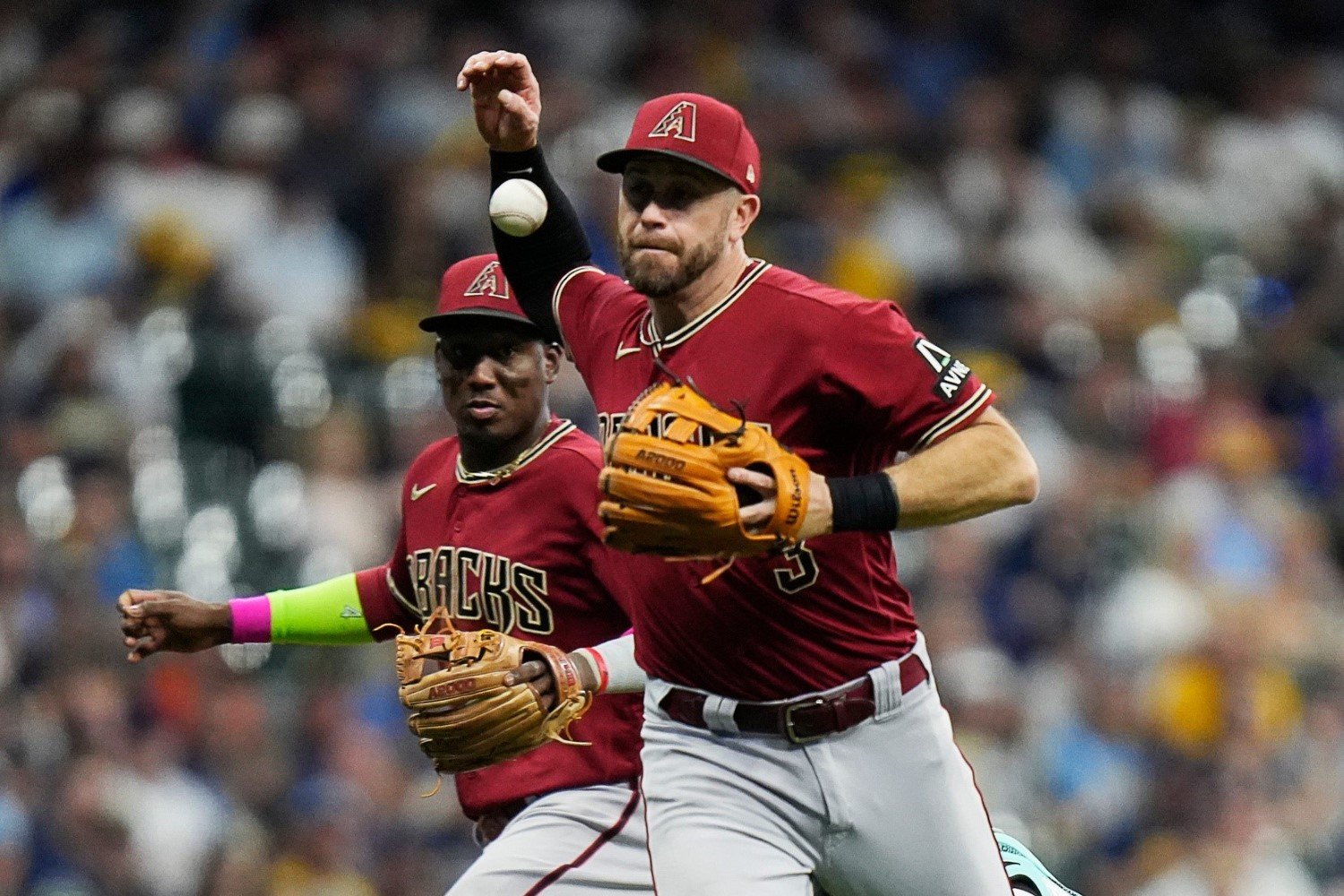 When Christian Yelich followed Tyrone Taylor's two-run home run with a single of his own, the Brewers led 3-0 very early, and it looked like they might run the Diamondbacks (and rookie starter Brandon Pfaadt) out of the building. Their Win Probability, at that moment, stood at 83 percent. But Win Probability is a framework initially built to analyze decisions, not to tell us stories. To understand the game from the fan's and the purist's perspective, we have to shine a light into some of the framework's dark corners. Win Probability is blind to all sorts of things. It can spit out the chances that a given team will win, based on the occupancy of the bases, the number of outs in the inning, which inning, the relative score, and which team is home and away, but it doesn't even attempt to adjust for the quality of the players or teams involved. That would introduce a level of complexity that creates genuine paralysis via analysis. The system also pauses and makes all its official adjustments and recalibrations between plays. That, after all, is when decisions can be made and new strategies can be adopted. As fans watching the game, though, we don't jutter and jump from one interstice to the next, like the second hand on a clock. We live the full breadth of each play. We don't just feel the rise or fall of the chances of winning in snapshots taken between at-bats. We can sense (and sometimes even calculate) the ebb and flow of those chances even as a play unfolds. It's the real stuff of baseball--the joy, and the agony--and Win Probability models often miss it. For instance, let's jump ahead from the second inning to the fifth. Ohp, the Diamondbacks caught up. In fact, they've taken the lead, because their young, dangerous offense has shown exactly what makes it so much the latter, despite the former. Three home runs have given Arizona a slim one-run edge, although (at least) the Brewers did knock Pfaadt out of the game in the third frame. Now, with the same set of hitters who effected that, they're trying to get to fungible middle relief man Ryne Nelson. The Brewers started this half-inning with a 40.7-percent chance of winning the game. That's not great, but it might undersell them, too. They have a better roster than Arizona. They have a better bullpen, and this just became a battle thereof. Win Probability doesn't bake that in. Maybe the Brewers have the momentum, too. After all, when Corbin Burnes departed after two straight walks to open the top of the fifth, the Crew was down to a 26.7-percent chance of winning. Abner Uribe both reminded everyone of the Brewers' superb bullpen, and escaped Burnes's jam without damage. We could tick that 40.7 percent number upward, then, but let's leave it. It's good enough as it is. Sal Frelick leads off the bottom of the fifth with a single, and Willy Adames backs that up with another one, and there you go: the Crew after favorites again. Even this half-blind Win Probability framework says so. They're up to 54.2 percent. Now, starting right here, stay close with me. Josh Donaldson comes to bat, with Frelick at second and Adames on first. He hits a laser shot of a single to center field. Right now, as the ball is leaving his bat on a clean line, what are the chances that the Brewers win this game? Here's how I would figure them, in the instant before the camera cuts and then zooms in on the outfield, where the ball is being collected. Frelick, with good speed and no reason to hold up to discern whether this ball might be caught, is going to score. That will tie the game, right there. It's probably too firmly hit for Adames to race around to third base, but still, the Brewers have just gone from two on and nobody out down a run to the same base-out state in a tie. If all that comes to fruition, the next Win Probability number I see is going to be 70.1 percent. That's awfully good. Alas: there are some factors we neglected to consider. Donaldson hits the ball very hard, for one. He didn't just line the ball to center field. He hit it 102 miles per hour. More important than Donaldson, though, is Alek Thomas. The Arizona center fielder plays shallower, on average, than all but one other player who saw even semi-regular time at the position in 2023. He doesn't have a rocket for an arm, but by playing so shallowly and using his speed and sure hands to get the ball and fire it in quickly, he'll easily hold Frelick at third base. Thus, we get an actual Win Probability that reflects the cold reality. The Brewers still have a good chance to at least tie the game this inning (perhaps better than an 85-percent chance of it), but their overall odds of winning the contest have only leavened to 65.2 percent. Oof. Win Probability also didn't account for Brice Turang. Every time the Brewers need a hit tonight, it seems to be Turang coming to bat, and there are just no big hits in the overmatched rookie's bat right now. His strikeout brings the odds of a Milwaukee win back down to 55.6 percent, and we wonder whether Win Probability math might have told us (if it knew these guys as individuals, rather than theoretically average pawns in the game) that it was worth sending Frelick, anyway. If Thomas had thrown out Frelick, the Win Probability would have sagged to 51.4 percent, so comparing that number to the 70.1 percent if he were safe and comparing it to the 65.2 percent achieved by staying put, we reckon Frelick would have needed about a 74-percent chance of being safe to make going home a worthwhile risk. If that math is right, so was the decision to hold him up. If we adjust and account for Turang, though, maybe the breakeven point is lower. Of course, Thomas's positioning pushed the likely success rate of a send lower, too. See why Win Probability likes to just wait and only analyze the non-moving moments of the game, with everyone treated as interchangeable? Anyway, Turang is out, and now Tyrone Taylor is at bat. Nelson has given way to Ryan Thompson, but that's not going to change the Win Probability numbers we're working with. All it does do is make Taylor a bit more likely to run into a ball in the specific way he does now. Taylor's power is up at the top of the zone, where we saw him leap on a Pfaadt pitch for the big home run in the early going. When pitchers work him down (including down and in), as the sidearm Thompson does, Taylor doesn't get the ball far off the ground. With one out and the sacks packed, though, he admirably lofts a sinker to the left side. This is the one. This ball is hit on the screws, just like Donaldson's was. Taylor has busted things open again, baby. He hits a rising line drive toward left field, and Adames doesn't hesitate much. He's going to score right on Frelick's heels. This won't just be a tie. Even against the strong arm of left fielder Lourdes Gurriel, Jr., the Brewers are going to take the lead. Well, except, no they're not. You know that; you're here, with me, in the future. Evan Longoria, although an old man, is going to bend his aching legs and find in them one last young man's bounce, and he's going to pluck Taylor's drive right out of the air, perhaps nine and a half feet off the ground. With Adames overcommitted, it's a double play. The inning is over. Win Probability reports that the Crew have cratered to a 33.3 percent chance of victory. The plunge from 55.6 to 33.3 is not nearly a rich enough account of that play, though. In the moment just after Taylor makes contact, the Brewers' real chances of winning haven't dropped. They're actually rising sharply, right alongside the ball. They'll only crash back to Earth once Longoria intercepts them on that line and greedily pulls them down with him in his losing battle with gravity. Off the bat, Taylor's ball had a 77.7-percent chance to be a hit, according to Statcast. If it had been one, with Adames so recklessly running, the play would have ended with a 78.6-percent Win Probability for the Brewers. Taylor's shot was worth almost a quarter of a crucial playoff victory. It was just that Longoria, aided by Christopher Lloyd or some other angel of the infield, went up in the air and came down with 45 percent of a win in his glove--or, perhaps, 30 percent of a win there, and 15 percent more strewn across the basepath where Adames was helplessly trying to reclaim second base. That kind of rollercoaster of a play probably has some hangover effect, and if Win Probability made any effort to adjust for how the players on the field feel or for the specifics of the plays that brought the game to its current state, it might have dinged the Brewers the whole rest of the way. With Markov's own blind optimism, though, it blocks all that stuff out. Thus, when the Brewers stifled Arizona's offense in the sixth and Yelich led off their half with a walk, Win Probability allowed itself to hope. It ticked up to 45.1 percent. William Contreras batted next, and he hit a dribbler into no-man's land on the left side of the infield. This is one of my favorite areas of the diamond. It seems like an absolute dead zone, a place where nothing good should ever happen for the offense and nothing interesting should ever happen for the defense, but that isn't how it works. With a right-handed pitcher on the mound, the ball often sneaks just past them and into this area just shy of the dirt. The third baseman and the shortstop often have to converge, or to begin to do so and then call one another off like outfielders, to grab the ball and get it over to first base for the out. No ball hit there has ever been a double play, and it's usually not even going to let you get the lead runner, if there is one. Because it's a longer throw from there than from the equivalent spot on the right side of the diamond, and because the fielders have to run just as far as a second baseman trying to get to that mirrored spot, it takes sure hands and a rocket arm to find outs when the ball gets hit to no-man's land. Statcast sort of misses this, though. The system captures batted-ball velocity and launch angle very neatly, but it's much less good at accounting for spin or specific directionality, especially on hits like Contreras's. It only gives his squibber a .200 expected batting average. That's a lot better than routine ground ball's, but it stinks. In that moment, there's about a 20-percent chance that both runners reach, and an 80-percent one that Yelich advances but Contreras is thrown out. The resulting Win Probability estimate from that pair of potential outcomes would have been 56.4 percent. You could talk me up from there, because Carlos Santana and Mark Canha are due, and the Brewers front office did such a great job adding those two at the deadline. It would be perfect for them to come through and win this game for the team. Since that's not what happened, though, let's be satisfied with the imaginary number of 56.4 percent. That's if Longoria (who won the footrace to the ball) fields cleanly and throws out the slow-afoot Contreras. But he doesn't! He bobbles! Now, in this moment, lost in no-man's land and not having handled cleanly, Longoria is in trouble. He's not going to get an out on this play at all, and with runners on first and second and nobody out ahead of Santana and Canha, the Brewers have a sparkling, shiny Win Probability of 59.4 percent. It's not through the roof, but the number has surged. Then, Longoria catches his bobble cleanly. It's too late to get Contreras, but Yelich had been thinking big thoughts. With Longoria charging across and Thompson falling off toward first base, who's going to beat him to third base? This error could put runners at the corners instead of at first and second! That would steer the Win Probability all the way up to 63.6 percent, and again, we're not baking in the good hitters due or the superiority of the Brewers' bullpen options from here. Yelich is thinking right. He's just made to look wrong, because the ball doesn't get away from Longoria the way he expected. The clean catch of the bobble lets Longoria throw behind him, and though the play is excruciatingly close, he's out at second. Win Probability: 39.2 percent. Longoria just got the lead runner on a slow chopper to no-man's land. The catch on that Taylor ball was (jokes aside) dazzling, exhilarating skill, and he earned the fractions of a win he took back to the dugout with him after that play. This one is dumb luck. He tried to make a tough play, couldn't, and ended up profiting from the confusion of his initial flub more than he could have had he done everything perfectly from the beginning of the play to the end. We know what happens the rest of the way. Once you make the first out in the bottom of the sixth, even if the tying run is on base, the countdown clock starts to tick more loudly. The Brewers will never have an official Win Probability even as high as this 39 percent number the rest of the way. They just get ground into the dust. They experienced a lot of big shifts in Win Probability in those few plays relatively early in the game, and then (even if we interrogate every batted ball and scrutinize its expected value the rest of the way) the suspense died. Sometimes, Win Probability actually does accurately and completely capture the tone of a game. It's just that usually, when that's happening, it's a pretty boring game. Near the end, that's how this one came to feel. The Brewers valiantly fought off most of the Diamondbacks' rallies in Game One. They were done in by three home runs and one ball that couldn't have missed being one by much less. As has been the case all season, the pitching staff bore down and got some huge strikeouts when needed, and they didn't issue the backbreaking walk. The defense was as good as it has been throughout the season, which is a high compliment. They only failed to catch what was hit basically on the other side of a wall from them, which is the only way opponents have reliably scored on the Crew all season. It's how good hitting can beat good pitching, even if it can't do so all that often. The Brewers just have to hope they can return the favor in Game Two, because their Win Probability for this series undeniably plunged Tuesday night, no matter what extra factors one elects to bake in (or not).
 -
The Brewers announced their playoff roster for the Wild Card Series this morning. It includes 15 position players and 11 pitchers, and it certainly raises a few questions--but it answers a few, too. Image courtesy of © Jovanny Hernandez / Milwaukee Journal Sentinel / USA TODAY NETWORK In the wake of the Brandon Woodruff injury news, the Brewers had to make an unexpected shift in their construction of the roster for this best-of-three series. Still, some of the included and excluded players are sure to spark conversation. Here's the roster: Catchers William Contreras Victor Caratini Infielders Willy Adames Josh Donaldson Owen Miller Andruw Monasterio Carlos Santana Brice Turang Outfielders Mark Canha Sal Frelick Blake Perkins Tyrone Taylor Joey Wiemer Jesse Winker Christian Yelich Pitchers Corbin Burnes Trevor Megill Wade Miley Hoby Milner Joel Payamps Elvis Peguero Freddy Peralta Colin Rea Abner Uribe Devin Williams Bryse Wilson To avoid burying the lede: the inclusion of Winker, at the expense of Rowdy Tellez, is downright shocking. We have no reason to believe that Winker can play the outfield in games of this magnitude, and while Tellez wouldn't have been likely to appear in more than a pinch-hit capacity anyway, he's been on the roster for the last month and a half. He had a miserable September, with a sub-.500 OPS, but Winker hasn't even appeared for the big-league team since July 24. His strong on-base percentage with Triple-A Nashville in September does almost nothing to inspire confidence about his ability to hit big-league pitching, since he hasn't done so all season and hasn't gotten to try it in over two months. Even beyond that choice, though, there are some interesting and telling choices here. Matched up against the best catcher in baseball at blunting the running game, the Brewers elected not to carry Garrett Mitchell, whose primary value might have been as a pinch-runner to swipe a base at a high-leverage moment. Instead, they'll turn to Joey Wiemer for that if the situation demands it, but also have him available to hit left-handed pitchers like Arizona reliever Joe Mantiply. Less surprising are the inclusions of Owen Miller and Blake Perkins, which give the team greater defensive upside and could let Counsell move three players each through a couple of lineup spots in a game. Miller can facilitate a shuttle between second and third base for Andruw Monasterio, while Perkins could be the defensive sub that lets Counsell pinch-hit Winker for either Wiemer or Taylor in certain moments without worrying about how to configure his outfield for the rest of the game. Neither of these guys are good hitters, but depending on how Counsell uses Josh Donaldson, Mark Canha, Brice Turang, William Contreras, Victor Caratini, and Monasterio, it might be possible to pinch-hit for them even after they enter the game. If not, but if the Brewers have a lead to protect, Miller and Perkins could help do that job. On the pitching side, there are fewer surprises. As was hoped and expected, Elvis Peguero is healthy enough to fit into the bullpen. In the place of Woodruff, Colin Rea claims a spot on the playoff roster, after all. Adrian Houser, who started Sunday in the regular-season finale, is clearly slated for a potential Game 1 start in the NLDS, should the Brewers need all three games to win this first set, so Houser isn't included here. The only mild surprise is that there are only 11 pitchers on the 26-man roster, but in a best-of-three series with such high stakes, they certainly don't need any more than that. All told, this is still a roster that should beat the Diamondbacks. However, they don't match up perfectly with them, and the choice to carry Winker doesn't seem to advance their cause at all. It'll be interesting to see how Counsell uses the group he's been given to overcome the strengths of Arizona's roster and the loss of Woodruff. View full article
-
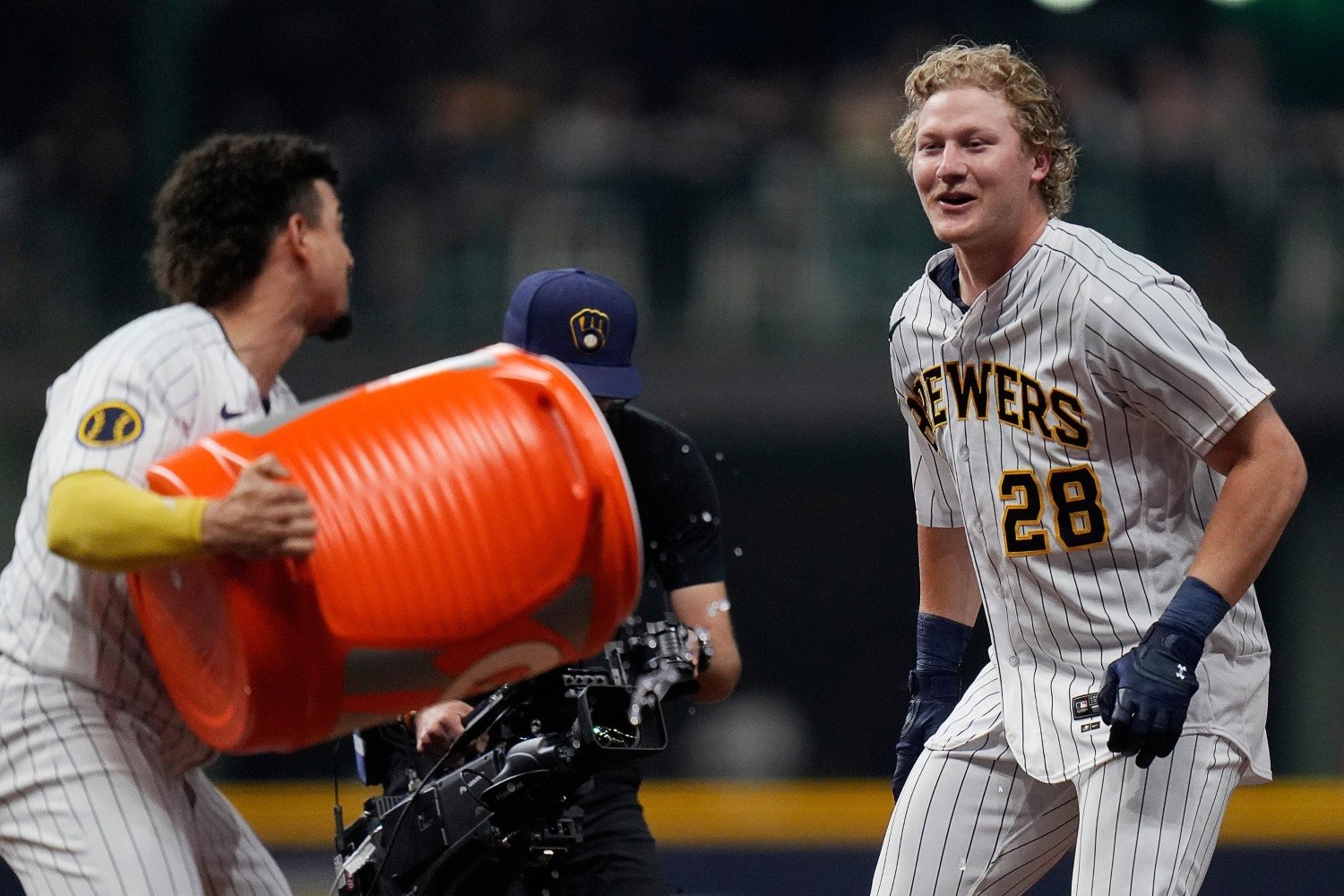 In the wake of the Brandon Woodruff injury news, the Brewers had to make an unexpected shift in their construction of the roster for this best-of-three series. Still, some of the included and excluded players are sure to spark conversation. Here's the roster: Catchers William Contreras Victor Caratini Infielders Willy Adames Josh Donaldson Owen Miller Andruw Monasterio Carlos Santana Brice Turang Outfielders Mark Canha Sal Frelick Blake Perkins Tyrone Taylor Joey Wiemer Jesse Winker Christian Yelich Pitchers Corbin Burnes Trevor Megill Wade Miley Hoby Milner Joel Payamps Elvis Peguero Freddy Peralta Colin Rea Abner Uribe Devin Williams Bryse Wilson To avoid burying the lede: the inclusion of Winker, at the expense of Rowdy Tellez, is downright shocking. We have no reason to believe that Winker can play the outfield in games of this magnitude, and while Tellez wouldn't have been likely to appear in more than a pinch-hit capacity anyway, he's been on the roster for the last month and a half. He had a miserable September, with a sub-.500 OPS, but Winker hasn't even appeared for the big-league team since July 24. His strong on-base percentage with Triple-A Nashville in September does almost nothing to inspire confidence about his ability to hit big-league pitching, since he hasn't done so all season and hasn't gotten to try it in over two months. Even beyond that choice, though, there are some interesting and telling choices here. Matched up against the best catcher in baseball at blunting the running game, the Brewers elected not to carry Garrett Mitchell, whose primary value might have been as a pinch-runner to swipe a base at a high-leverage moment. Instead, they'll turn to Joey Wiemer for that if the situation demands it, but also have him available to hit left-handed pitchers like Arizona reliever Joe Mantiply. Less surprising are the inclusions of Owen Miller and Blake Perkins, which give the team greater defensive upside and could let Counsell move three players each through a couple of lineup spots in a game. Miller can facilitate a shuttle between second and third base for Andruw Monasterio, while Perkins could be the defensive sub that lets Counsell pinch-hit Winker for either Wiemer or Taylor in certain moments without worrying about how to configure his outfield for the rest of the game. Neither of these guys are good hitters, but depending on how Counsell uses Josh Donaldson, Mark Canha, Brice Turang, William Contreras, Victor Caratini, and Monasterio, it might be possible to pinch-hit for them even after they enter the game. If not, but if the Brewers have a lead to protect, Miller and Perkins could help do that job. On the pitching side, there are fewer surprises. As was hoped and expected, Elvis Peguero is healthy enough to fit into the bullpen. In the place of Woodruff, Colin Rea claims a spot on the playoff roster, after all. Adrian Houser, who started Sunday in the regular-season finale, is clearly slated for a potential Game 1 start in the NLDS, should the Brewers need all three games to win this first set, so Houser isn't included here. The only mild surprise is that there are only 11 pitchers on the 26-man roster, but in a best-of-three series with such high stakes, they certainly don't need any more than that. All told, this is still a roster that should beat the Diamondbacks. However, they don't match up perfectly with them, and the choice to carry Winker doesn't seem to advance their cause at all. It'll be interesting to see how Counsell uses the group he's been given to overcome the strengths of Arizona's roster and the loss of Woodruff.
 -
Perdomo will play much more than McCarthy, in all likelihood, but yeah. And he's one of their chief bunters, so definitely one to watch in this specific context. He tried to get them down especially often late in the campaign, as his numbers spiraled down.
-
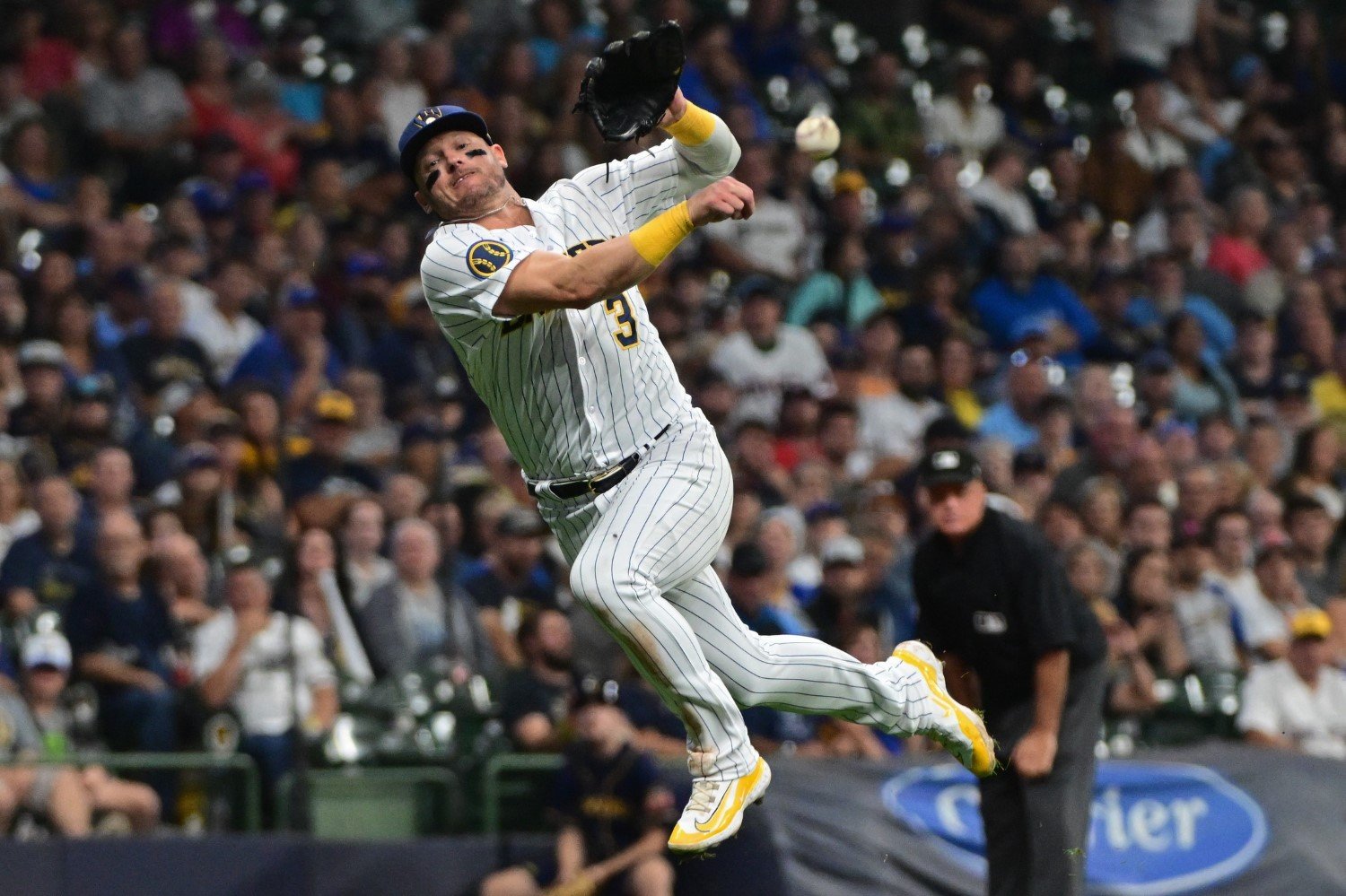 The Brewers and Diamondbacks have some matched strengths, but overall, they play different brands of baseball. That means that they might benefit from different gameflows and types of showdown–and that makes it hard to predict what a given game might look like. For instance, it's hard to guess when it might happen, but it's a good bet that the bunt will come into play this week. No team in MLB attempted more sacrifice bunts than did the Diamondbacks this season. It’s a favorite stratagem for Torey Lovullo–or at least, it’s one to which he turns more often than the average modern manager. Twenty years ago, his league-leading use of the bunt would have been just about the lowest rate in baseball. Arizona doesn’t just attempt the bunt often, though. They get it down and move that runner over with above-average consistency. Thanks to the speed of their chief bunters, they also pose a real threat to reach base and deny the defense any outs, if that fielding unit isn’t careful and ready. Let’s talk, therefore, about the corner infielders for the Brewers. It’s a safe bet that Carlos Santana will be in there in all three games of this series at first base. The other options (Mark Canha and Rowdy Tellez) are worse defenders than he is, by a mile. Santana is sure-handed, smart, and fairly quick for a first baseman in his late 30s. He also has the arm of a converted ex-catcher, even if it’s gone mostly to seed. On the other side of the diamond, Craig Counsell faces a bit more of a dilemma. Josh Donaldson is as old and experienced as Santana, but nowhere near as competent athletically, at this stage of his career. Donaldson has made all the routine plays in his brief time at the hot corner for the Crew, but we’re not talking about routine plays here. We’re talking about how well he’d charge and make the fast play on a bunt. This season, Donaldson is playing (on average) a step deeper than he has even over the last two years, in a concession to his diminishing range. In sacrifice situations, you can pull him in quite a bit, but it’s still notable that he defaults to starting deeper, because the Diamondbacks also bunt for hits at a higher rate than the average team. Certainly, it’s easy to imagine a Geraldo Perdomo or an Alek Thomas trying to steal a hit against the Brewers’ supernal pitching staff with a bunt if they catch Donaldson laying back. When he does have to come in on ground balls, Donaldson is one run worse than average, according to Baseball Savant’s Outs Above Average directional breakdown. Andruw Monasterio, by contrast, is good at coming in on the ball and getting it over to first. He’s quicker and more comfortable with the straightline charge than Donaldson is at this point. To thwart a bunt, it’s Monasterio the Brewers want at third. The question, though, is whether Counsell feels like he can afford to start Donaldson at designated hitter at any point in this series, or even to lose his bat for part of a game by making Monasterio a mid-game defensive sub. It seems unlikely, both because the Brewers might need more offense than initially expected to win this series and because Monasterio might be needed at second base. It might be one of those small weaknesses a team recognizes, but can’t fully ameliorate. The broader question of how to balance the need for Donaldson's bat and that for Brice Turang's glove at second with the liabilities they each bring to the other side of the ledger is one of the most interesting Counsell has to tackle during this series. He won't want Turang batting anywhere but the bottom of the order, and even then, he'll rarely allow him to see a left-handed pitcher. However, he probably shouldn't make his decisions based solely on the offensive matchup, especially now that Brandon Woodruff is down. Donaldson has always been exceptional at going to his left from third base. He's especially good and comfortable, therefore, when playing closer to the line. Monasterio is dreadful going to his left, and does his best when initially positioned more up the middle. If Wade Miley gets a start in this series, the Diamondbacks are unlikely to be bunting much against him, and they're probably going to load up on right-handed hitters--for instance, putting in Evan Longoria or Emmanuel Rivera at third base, instead of Jace Peterson. In that contest, Donaldson should definitely be the third baseman. When Arizona is hungrier for offense and a shade more left-leaning in the lineup, though, Monasterio might be the better play. The Brewers, like most teams, position the third baseman further toward shortstop with lefty batters up, so Monasterio would be more comfortable and adroit there. There's a knock-on effect to consider, then, because playing Monasterio at third means either benching Donaldson or slotting him in as the DH, pushing Mark Canha to the outfield. Either way, it seems to preclude using Victor Caratini behind the plate in his usual pairing with Corbin Burnes, but that might not have been in order, anyway. After all, the team used William Contreras as Burnes's catcher twice down the stretch for just this kind of eventuality. Contreras is also the better catcher for slowing down the Diamondbacks' incredibly potent running game, although even he seems an inadequate match for it. There are always cascades in the playoffs--chains of decisions and outcomes and surprises that make the series wildly unpredictable, but also lots of fun. This year, and this series, will be no exception. At the hot corner, the Brewers have a tough call on their hands right away.
- 2 comments
-
- 1
-
-
- josh donaldson
- andruw monasterio
- (and 3 more)
-
There are many great things about postseason baseball, but the very best one is this: In the playoffs, everything matters. Details that are hard to unpack or even notice during the long, all-smoothing grind of a 162-game schedule become unmistakable, urgent, and enthralling. Something tiny will determine this series. We just don’t know what yet. Image courtesy of © Benny Sieu-USA TODAY Sports The Brewers and Diamondbacks have some matched strengths, but overall, they play different brands of baseball. That means that they might benefit from different gameflows and types of showdown–and that makes it hard to predict what a given game might look like. For instance, it's hard to guess when it might happen, but it's a good bet that the bunt will come into play this week. No team in MLB attempted more sacrifice bunts than did the Diamondbacks this season. It’s a favorite stratagem for Torey Lovullo–or at least, it’s one to which he turns more often than the average modern manager. Twenty years ago, his league-leading use of the bunt would have been just about the lowest rate in baseball. Arizona doesn’t just attempt the bunt often, though. They get it down and move that runner over with above-average consistency. Thanks to the speed of their chief bunters, they also pose a real threat to reach base and deny the defense any outs, if that fielding unit isn’t careful and ready. Let’s talk, therefore, about the corner infielders for the Brewers. It’s a safe bet that Carlos Santana will be in there in all three games of this series at first base. The other options (Mark Canha and Rowdy Tellez) are worse defenders than he is, by a mile. Santana is sure-handed, smart, and fairly quick for a first baseman in his late 30s. He also has the arm of a converted ex-catcher, even if it’s gone mostly to seed. On the other side of the diamond, Craig Counsell faces a bit more of a dilemma. Josh Donaldson is as old and experienced as Santana, but nowhere near as competent athletically, at this stage of his career. Donaldson has made all the routine plays in his brief time at the hot corner for the Crew, but we’re not talking about routine plays here. We’re talking about how well he’d charge and make the fast play on a bunt. This season, Donaldson is playing (on average) a step deeper than he has even over the last two years, in a concession to his diminishing range. In sacrifice situations, you can pull him in quite a bit, but it’s still notable that he defaults to starting deeper, because the Diamondbacks also bunt for hits at a higher rate than the average team. Certainly, it’s easy to imagine a Geraldo Perdomo or an Alek Thomas trying to steal a hit against the Brewers’ supernal pitching staff with a bunt if they catch Donaldson laying back. When he does have to come in on ground balls, Donaldson is one run worse than average, according to Baseball Savant’s Outs Above Average directional breakdown. Andruw Monasterio, by contrast, is good at coming in on the ball and getting it over to first. He’s quicker and more comfortable with the straightline charge than Donaldson is at this point. To thwart a bunt, it’s Monasterio the Brewers want at third. The question, though, is whether Counsell feels like he can afford to start Donaldson at designated hitter at any point in this series, or even to lose his bat for part of a game by making Monasterio a mid-game defensive sub. It seems unlikely, both because the Brewers might need more offense than initially expected to win this series and because Monasterio might be needed at second base. It might be one of those small weaknesses a team recognizes, but can’t fully ameliorate. The broader question of how to balance the need for Donaldson's bat and that for Brice Turang's glove at second with the liabilities they each bring to the other side of the ledger is one of the most interesting Counsell has to tackle during this series. He won't want Turang batting anywhere but the bottom of the order, and even then, he'll rarely allow him to see a left-handed pitcher. However, he probably shouldn't make his decisions based solely on the offensive matchup, especially now that Brandon Woodruff is down. Donaldson has always been exceptional at going to his left from third base. He's especially good and comfortable, therefore, when playing closer to the line. Monasterio is dreadful going to his left, and does his best when initially positioned more up the middle. If Wade Miley gets a start in this series, the Diamondbacks are unlikely to be bunting much against him, and they're probably going to load up on right-handed hitters--for instance, putting in Evan Longoria or Emmanuel Rivera at third base, instead of Jace Peterson. In that contest, Donaldson should definitely be the third baseman. When Arizona is hungrier for offense and a shade more left-leaning in the lineup, though, Monasterio might be the better play. The Brewers, like most teams, position the third baseman further toward shortstop with lefty batters up, so Monasterio would be more comfortable and adroit there. There's a knock-on effect to consider, then, because playing Monasterio at third means either benching Donaldson or slotting him in as the DH, pushing Mark Canha to the outfield. Either way, it seems to preclude using Victor Caratini behind the plate in his usual pairing with Corbin Burnes, but that might not have been in order, anyway. After all, the team used William Contreras as Burnes's catcher twice down the stretch for just this kind of eventuality. Contreras is also the better catcher for slowing down the Diamondbacks' incredibly potent running game, although even he seems an inadequate match for it. There are always cascades in the playoffs--chains of decisions and outcomes and surprises that make the series wildly unpredictable, but also lots of fun. This year, and this series, will be no exception. At the hot corner, the Brewers have a tough call on their hands right away. View full article
-
It’s absolutely the thing to worry about when it comes to these two teams matching up. Even makes me wonder about some of their lineup options.
-
 For almost anyone you ask, William Contreras was the MVP of the 2023 Milwaukee Brewers. He not only led the way for an otherwise anemic offense, but worked with the Brewers' deservedly famous cadre of catching coaches (Charlie Greene, Nestor Corredor, and Walker McKinven) to become a capable and valuable receiver behind the plate. He batted .291/.369/.459, and came up with some of the biggest hits of the Brewers' season, often by changing his approach, his swing, and even his stance to suit the situation. He was fifth-best among catchers in both Fielding Run Value and Framing Runs, according to Statcast, It's the single most exciting individual performance the Brewers got this year, made much more so because of the way they acquired Contreras--by crashing in on the trade that sent Sean Murphy from Oakland to Atlanta in December. Getting Contreras and eventual setup stud Joel Payamps for the low cost of Esteury Ruiz constitutes the biggest trade coup for the Crew in decades, and it was almost immediately obvious that that would be the case. The only surprise is how quickly and thoroughly that has come to fruition. Shockingly, though, the Diamondbacks might have done just as well, albeit in a slightly fairer trade. Gabriel Moreno is two-plus years younger than Contreras, and a year further from free agency. He's not as thunderous a hitter, and he's not a match for Contreras as a pitch framer. In his rookie campaign, though, he batted .284/.339/.408. He, too, showed a knack for the clutch knock, and especially for driving it through the right side. He struggled a bit with pitch framing, but in a season history will remember as the renaissance moment for the stolen base, Moreno shut down opposing running games, cold. No one in the league was worth more runs with their arm behind the plate, despite the fact that an injury limited Moreno to fewer than 900 innings of work at catcher. He was also an excellent blocker of balls in the dirt. Extra bases are not available against the Diamondbacks, even as they're more available than at any time in recent memory against everyone else. These guys are the new gold standard for National League backstops. They each had years that put them right in the picture with J.T. Realmuto and Will Smith, as well as Murphy, and because of the unforgiving aging curve at the position, Moreno and Contreras figure to be better than all three within a couple years. They can hit, they take great pride in their defense, and they always seem to be thinking the game. At the very least, they're the favorites to be Venezuela's catching tandem at the next World Baseball Classic. The Diamondbacks had to give up Daulton Varsho, a young outfielder with exceptional defensive skills and a little offensive upside, to get Moreno. It was a bit more akin to surrendering Sal Frelick than to sending Ruiz. The second piece Arizona got in the deal was also better, though. Lourdes Gurriel, Jr. will be a free agent after next season, but he asserted himself as a fixture for Arizona this season, whacking 24 home runs and contributing to their league-best outfield defense. Moreno and Gurriel have given the Diamondbacks somewhere between five and seven wins of value above replacement players this year, depending on your website and model of choice. Contreras and Payamps have given the Brewers almost exactly the same amount, albeit in deeply different shapes. This series will be fascinating on several levels. For baseball junkies and lovers of a good trade tale, though, these two young catchers make for the most scintillating viewing. The battle between Contreras's trimming of the strike zone and Moreno's gunning down of runners will be exhilarating, and the showdown could well hinge on which (perhaps with the other calling the pitches) comes through with a game-breaking hit. It's exquisite playoff baseball storyline stuff.
 -
The Brewers would not have claimed their place in the Wild Card Series that starts Tuesday night, if not for a brilliant offseason trade that netted them their catcher of the present and future, plus extra help. Funny: the same is true of their opponents. Image courtesy of © Jerome Miron-USA TODAY Sports For almost anyone you ask, William Contreras was the MVP of the 2023 Milwaukee Brewers. He not only led the way for an otherwise anemic offense, but worked with the Brewers' deservedly famous cadre of catching coaches (Charlie Greene, Nestor Corredor, and Walker McKinven) to become a capable and valuable receiver behind the plate. He batted .291/.369/.459, and came up with some of the biggest hits of the Brewers' season, often by changing his approach, his swing, and even his stance to suit the situation. He was fifth-best among catchers in both Fielding Run Value and Framing Runs, according to Statcast, It's the single most exciting individual performance the Brewers got this year, made much more so because of the way they acquired Contreras--by crashing in on the trade that sent Sean Murphy from Oakland to Atlanta in December. Getting Contreras and eventual setup stud Joel Payamps for the low cost of Esteury Ruiz constitutes the biggest trade coup for the Crew in decades, and it was almost immediately obvious that that would be the case. The only surprise is how quickly and thoroughly that has come to fruition. Shockingly, though, the Diamondbacks might have done just as well, albeit in a slightly fairer trade. Gabriel Moreno is two-plus years younger than Contreras, and a year further from free agency. He's not as thunderous a hitter, and he's not a match for Contreras as a pitch framer. In his rookie campaign, though, he batted .284/.339/.408. He, too, showed a knack for the clutch knock, and especially for driving it through the right side. He struggled a bit with pitch framing, but in a season history will remember as the renaissance moment for the stolen base, Moreno shut down opposing running games, cold. No one in the league was worth more runs with their arm behind the plate, despite the fact that an injury limited Moreno to fewer than 900 innings of work at catcher. He was also an excellent blocker of balls in the dirt. Extra bases are not available against the Diamondbacks, even as they're more available than at any time in recent memory against everyone else. These guys are the new gold standard for National League backstops. They each had years that put them right in the picture with J.T. Realmuto and Will Smith, as well as Murphy, and because of the unforgiving aging curve at the position, Moreno and Contreras figure to be better than all three within a couple years. They can hit, they take great pride in their defense, and they always seem to be thinking the game. At the very least, they're the favorites to be Venezuela's catching tandem at the next World Baseball Classic. The Diamondbacks had to give up Daulton Varsho, a young outfielder with exceptional defensive skills and a little offensive upside, to get Moreno. It was a bit more akin to surrendering Sal Frelick than to sending Ruiz. The second piece Arizona got in the deal was also better, though. Lourdes Gurriel, Jr. will be a free agent after next season, but he asserted himself as a fixture for Arizona this season, whacking 24 home runs and contributing to their league-best outfield defense. Moreno and Gurriel have given the Diamondbacks somewhere between five and seven wins of value above replacement players this year, depending on your website and model of choice. Contreras and Payamps have given the Brewers almost exactly the same amount, albeit in deeply different shapes. This series will be fascinating on several levels. For baseball junkies and lovers of a good trade tale, though, these two young catchers make for the most scintillating viewing. The battle between Contreras's trimming of the strike zone and Moreno's gunning down of runners will be exhilarating, and the showdown could well hinge on which (perhaps with the other calling the pitches) comes through with a game-breaking hit. It's exquisite playoff baseball storyline stuff. View full article
-
Entering the final day of the regular season, it's still not quite clear whom the Brewers will face in the Wild Card Series starting Tuesday. We're down to two options, though, and one is much more likely than the other. That's essentially fair, as I'm sure the Marlins would rather have the day off and take the lesser seed than have to schlep back to Queens for those final four outs. In effect, they forfeit that right, and now it comes down to whether either the Marlins or the Astros win. If so, it'll be Arizona coming to town Tuesday. If the Marlins lose and Arizona wins, then the Brewers will be fighting with the Fish. View full article
