


Matthew Trueblood
-
Posts
1,962 -
Joined
-
Last visited
-
Days Won
10
Content Type
Profiles
Forums
Blogs
Events
News
2026 Milwaukee Brewers Top Prospects Ranking
Milwaukee Brewers Videos
2022 Milwaukee Brewers Draft Picks
Milwaukee Brewers Free Agent & Trade Rumors, Notes, & Tidbits
Guides & Resources
2023 Milwaukee Brewers Draft Picks
2024 Milwaukee Brewers Draft Picks
The Milwaukee Brewers Players Project
2025 Milwaukee Brewers Draft Pick Tracker
2026 Milwaukee Brewers Draft Tracker: Picks & Bonuses
Store
Downloads
Gallery
Everything posted by Matthew Trueblood
-
The Brewers' thrilling walkoff win Friday was more than the final nail in the coffin of their closest rival. It was a great start to a final weekend in which fans get a final chance to appreciate some players who helped get the team this far. In reality, though, it's just impossible to imagine things going that way. All five of the team's healthy starters will have a stronger claim to a roster spot than Rea has. Devin Williams, Joel Payamps, Abner Uribe, Hoby Milner, Trevor Megill, Peguero, and Bryse Wilson all have clear priority over him. The Brewers won't and shouldn't carry 13 pitchers in either the Wild Card Series or (should they advance) the Division Series. That doesn't invalidate Rea's huge contributions to this division champion, though. Stepping into the breach when Brandon Woodruff hit the injured list, he delivered at least five innings in 16 of his first 18 starts. Later in the year, Counsell got more aggressive about lifting him in the fifth, but Rea still consistently gave his team a chance to win when he took the mound. He filled 124 2/3 innings, with an ERA not much above the league average. He bought into what the team asked of him, throwing strikes and trusting the defense behind him. He maintained a respectable strikeout rate, and although he gave up a lot of home runs with his tepid stuff, he kept the team in the game. Rea is just one of the players who had a quietly positive impact on the team, but who will not appear in a postseason box score. Julio Teheran, who arrived as an emergency fill-in starter, has already been designated for assignment. Joey Wiemer, who stood the gap while Garrett Mitchell and Tyrone Taylor were hurt and before Sal Frelick was ready to join the fray, is not on the active roster, Victor Caratini started at catcher Friday night, but unless William Contreras is unable to pair with Corbin Burnes in a playoff setting, he'll ride the bench throughout the playoffs. Clinching with a handful of days left in the season has allowed the Brewers to give some of these guys, and some of the other fringe players within the organization who never had significant roles on this team, to take a happy victory lap in front of the appreciative home crowd. Obviously, Caleb Boushley's storybook MLB debut is the most poignant of several such examples. These are ways to ensure that the vibes around the team are perfect, heading into next week. It might seem unimportant, but for a team that depends so much on its interdependency, it matters. This team is gelling at the perfect time, and although some of the faces who became familiar and chipped in heroically during this long grind of a season now have to stay behind, their good moments augment the sense of team chemistry that empowers a group as they embark on a playoff journey. View full article
-
The 2023 Milwaukee Brewers have earned the right to play on past Game 162. Their hitters will face a stern test, there, against teams whose pitching staffs got them this far. Can they meet that challenge? Image courtesy of Brock Beauchamp & Brewer Fanatic The Brewers are, offensively, a unique team. Their two best hitters, Christian Yelich and William Contreras, are both extreme ground-ball guys. That sounds like a relatively small quirk, but often, power wins out in October. Can a team fueled by two guys who so consistently hit the ball on the ground carry a team deep into October? History gives us little in the way of an answer. Over the last 20 years, there have been 153 player-seasons in which a batter who played enough to qualify for the batting title had a ground-ball rate at least 25 percent higher than the average one for his league. Of those, a little over half (79) have been above-average offensive seasons overall. That might sound surprisingly high, since hitting the ball on the ground usually isn't a good thing, but it makes sense under the hood. For one thing, teams tend to give up on guys who can't get the ball in the air before they give them 500 at-bats, unless the player can do some other things well. For another, though, players who do prove themselves adept overall hitters despite ground-ball proclivities account for multiple entries on the list. Derek Jeter and Ichiro Suzuki had a handful of seasons like this, apiece. This year, Yelich has a ground-ball rate 33 percent higher than the league average. Yet, he's also 19 percent better than an average hitter, overall, according to wRC+. Contreras is slightly less extreme, at 26 percent above the average for ground-ball rate, but he's also 26 percent better than average in general. That makes these two one of just three pairs of teammates in the last two decades to reach the playoffs while having individual seasons that meet the criteria above. Funnily enough, both of the other two came in the same season, and it was exactly 20 years ago. The 2003 Yankees were not very much like the 2023 Brewers. They do happen to have this thread of similarity to them, though. Jeter hit grounders 30 percent more often than the league average that season, but was 29 percent better than the average hitter. Hideki Matsui was also 30 percent above the ground-ball standard, but only 9 percent better than an average hitter in total production. Still, they qualify. The separator is the fact that those Yankees got nearly 80 home runs from the right side of their infield, where Jason Giambi and Alfonso Soriano slammed the ball mercilessly, and that they enjoyed a career power year from Jorge Posada. In the World Series, the Yankees ran into the then-Florida Marlins, who are probably the better comparison for this Brewers group. That Florida team did get power from the traditional places, with Derrek Lee and Mike Lowell thumping at the infield corners. They had the well-rounded offense of catcher Ivan Rodriguez, and by October, they had the extra depth provided by round-faced rookie Miguel Cabrera. At the top of their order, though, they got their ignition from Juan Pierre (33 percent more grounders than average, but an average hitter, overall) and Luis Castillo (32 percent more grounders, but 13 percent better than an average hitter). Those two each batted over .300, which made up for their lack of power and walks, and they ran the bases like jackrabbits. The parallels are imperfect, hut there's a little bit of this Brewers team in each of those lineups--in the ways they scored runs and the lack of reliance on home runs. They kept the line moving and emphasized timely hitting, as well as good baserunning. That's what has made this Milwaukee offense a force to be reckoned with for the last two months, as they've charged ahead of the field and sewn up their playoff spot. They don't have guys who overshadow their go-to ground-ballers, the way the Marlins and Yankees each did, but when they're healthy and hitting to the top of their talent range, Willy Adames, Mark Canha, Carlos Santana, and Josh Donaldson can be good enough in their power roles to cash in the opportunities Yelich and Contreras create. Moreover, it's notable that both Yelich and Contreras have good power, despite their tendency not to tap into it consistently. Each hits plenty of doubles, and can easily clear the fence to all fields when they get ahold of a mistake. That makes them more dangerous than your typical ground-ball hitter, which feeds into their on-base skills, as well. Certainly, they're better overall offensive players than were Pierre and Castillo, and are right on par with the 2003 versions of Jeter and Matsui. If those teams (each of whom relied plenty on their excellent pitching staffs, anyway) could meet in the World Series, there's no reason not to believe that this Brewers team can do the same thing, fueled by Yelich and Contreras. View full article
-
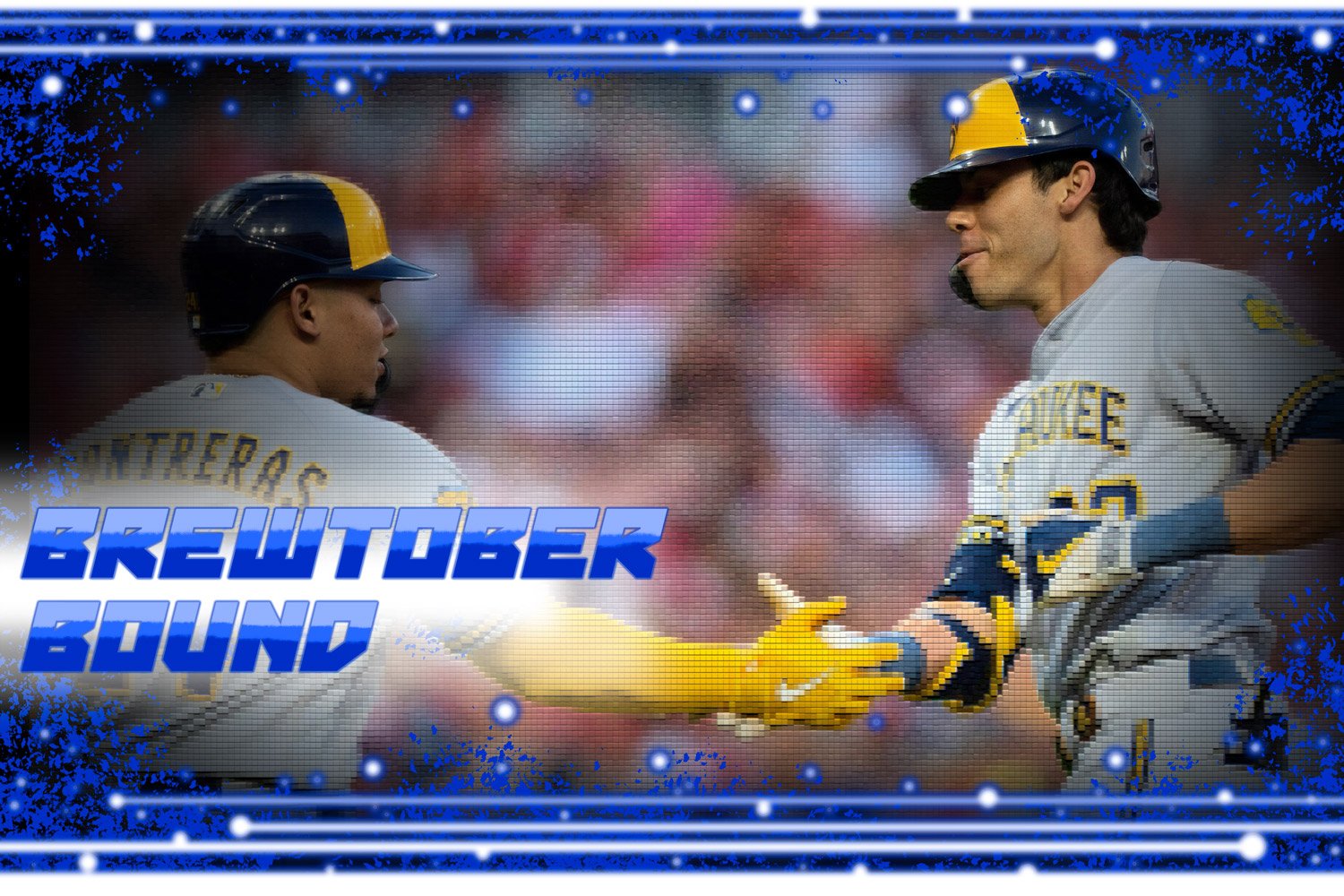 The Brewers are, offensively, a unique team. Their two best hitters, Christian Yelich and William Contreras, are both extreme ground-ball guys. That sounds like a relatively small quirk, but often, power wins out in October. Can a team fueled by two guys who so consistently hit the ball on the ground carry a team deep into October? History gives us little in the way of an answer. Over the last 20 years, there have been 153 player-seasons in which a batter who played enough to qualify for the batting title had a ground-ball rate at least 25 percent higher than the average one for his league. Of those, a little over half (79) have been above-average offensive seasons overall. That might sound surprisingly high, since hitting the ball on the ground usually isn't a good thing, but it makes sense under the hood. For one thing, teams tend to give up on guys who can't get the ball in the air before they give them 500 at-bats, unless the player can do some other things well. For another, though, players who do prove themselves adept overall hitters despite ground-ball proclivities account for multiple entries on the list. Derek Jeter and Ichiro Suzuki had a handful of seasons like this, apiece. This year, Yelich has a ground-ball rate 33 percent higher than the league average. Yet, he's also 19 percent better than an average hitter, overall, according to wRC+. Contreras is slightly less extreme, at 26 percent above the average for ground-ball rate, but he's also 26 percent better than average in general. That makes these two one of just three pairs of teammates in the last two decades to reach the playoffs while having individual seasons that meet the criteria above. Funnily enough, both of the other two came in the same season, and it was exactly 20 years ago. The 2003 Yankees were not very much like the 2023 Brewers. They do happen to have this thread of similarity to them, though. Jeter hit grounders 30 percent more often than the league average that season, but was 29 percent better than the average hitter. Hideki Matsui was also 30 percent above the ground-ball standard, but only 9 percent better than an average hitter in total production. Still, they qualify. The separator is the fact that those Yankees got nearly 80 home runs from the right side of their infield, where Jason Giambi and Alfonso Soriano slammed the ball mercilessly, and that they enjoyed a career power year from Jorge Posada. In the World Series, the Yankees ran into the then-Florida Marlins, who are probably the better comparison for this Brewers group. That Florida team did get power from the traditional places, with Derrek Lee and Mike Lowell thumping at the infield corners. They had the well-rounded offense of catcher Ivan Rodriguez, and by October, they had the extra depth provided by round-faced rookie Miguel Cabrera. At the top of their order, though, they got their ignition from Juan Pierre (33 percent more grounders than average, but an average hitter, overall) and Luis Castillo (32 percent more grounders, but 13 percent better than an average hitter). Those two each batted over .300, which made up for their lack of power and walks, and they ran the bases like jackrabbits. The parallels are imperfect, hut there's a little bit of this Brewers team in each of those lineups--in the ways they scored runs and the lack of reliance on home runs. They kept the line moving and emphasized timely hitting, as well as good baserunning. That's what has made this Milwaukee offense a force to be reckoned with for the last two months, as they've charged ahead of the field and sewn up their playoff spot. They don't have guys who overshadow their go-to ground-ballers, the way the Marlins and Yankees each did, but when they're healthy and hitting to the top of their talent range, Willy Adames, Mark Canha, Carlos Santana, and Josh Donaldson can be good enough in their power roles to cash in the opportunities Yelich and Contreras create. Moreover, it's notable that both Yelich and Contreras have good power, despite their tendency not to tap into it consistently. Each hits plenty of doubles, and can easily clear the fence to all fields when they get ahold of a mistake. That makes them more dangerous than your typical ground-ball hitter, which feeds into their on-base skills, as well. Certainly, they're better overall offensive players than were Pierre and Castillo, and are right on par with the 2003 versions of Jeter and Matsui. If those teams (each of whom relied plenty on their excellent pitching staffs, anyway) could meet in the World Series, there's no reason not to believe that this Brewers team can do the same thing, fueled by Yelich and Contreras.
 -
The clinching moment had a whiff of anticlimax to it. The Brewers didn't get to record a triumphant final out and dogpile immediately. They can save that for next time, because there will be one. Image courtesy of © Jovanny Hernandez / Milwaukee Journal Sentinel / USA TODAY NETWORK One of the unhappy byproducts of the revolution in the understanding of baseball over the last 40 years is that, as the knowledge first shouted from rooftops by outsiders has suffused front offices and ownership suites and trickled down to dugouts, the game has been reduced to fit into the neat boxes required by analytical thinking. One of the old saws of sabermetric writing is that, while technically a team game, baseball is made up mostly of atomic, isolated duels between individuals. The pitcher and the batter are the soul of the game, to many of the people who happened to accidentally remake the game by talking about it in a new way. It's an easy mistake to make. Once the math disproves the virtue of the sacrifice bunt and gives the lie to a pitcher's ability to limit hits on balls in play, why bother focusing on team baseball? If balls in play are so inextricably mired in the quagmire of chance, why spend time wallowing in them? That's been the bent of baseball men (and it has, mostly, been men) looking for a competitive edge over the last few decades. Those people have been given free rein to change the way players are scouted, developed, and evaluated, and as they've done so, they've systematically molded the game to suit their economic approaches. This is why there are many more home runs and many more strikeouts in the modern game. It's why, until an invasive rule change was finally made to shake things up, the stolen base was in its dying throes. Executives trained to relentlessly optimize and iterate have streamlined the game as much as they possible can, and that endeavor leaves little room for the trust between teammates or the interaction factors that make two players better than either would be alone. The math says, stop betting on concatenations of singles and hit dingers. Now, every hitter in all 30 lineups can hit dingers. The math says, there's almost no diminishing return point on strikeouts for pitchers. Now, every pitching staff chases strikeouts, often at considerable cost in other areas. Partially by loving and brilliant construction, and partially by the sheer serendipity that gives the game its most vivid color, the 2023 Milwaukee Brewers buck all of that a little. They're a championship-caliber team, even if their record is less gaudy than those of the Atlanta and Los Angeles Goliaths, but they're not dominant in the hypermodern sense. They win with team baseball. Only six teams have hit home runs in a lower share of their plate appearances than have the Brewers this season. None of the six will finish with a winning record. On the other hand, only two teams have drawn walks at a higher rate than have the Brewers this season. This lineup trusts in each other. They don't press in the big moment. They take their free pass, toss the bat aside, and wait for the big blow to be struck by whichever teammate first gets a mistake. It's been their approach all season. It's not well-suited to the base rates of the modern game. It might be riskier in October. When it works, though, it's beautiful, in a way that (say) the Braves' offense isn't. Nor do the pitchers dominate in the way teams most prefer their hurlers to do, these days. They're 10th in the league in strikeout rate, and 23rd in home-run prevention. Yet, they have the best, most productive pitching staff in the big leagues. They have allowed the lowest batting average on balls in play (.269) in MLB, and their advantage over the Yankees and Dodgers is 10 points. That's partially because they have smart, dedicated catchers--including a relatively inexperienced starter, learning the way they like to plan and call games on the fly--who help their talented pitchers seek weak contact. It's also partially because they have an excellent team defense. In an era increasingly focused on individual greatness, the Brewers have won the NL Central without a player who ranks in the top 50 position players in Wins Above Replacement, according to Baseball Reference. (William Contreras comes in 53rd.) They've had the best pitching staff in the game, without a pitcher who ranks in the top 25 for WAR. (Corbin Burnes is 26th.) This team has had to weather significant injuries, such as to Brandon Woodruff, Garrett Mitchell, and Christian Yelich. They've had players on whom they were heavily depending as of Opening Day return virtually no value. They've had to remake their bench and the supporting cast to Devin Williams in the bullpen. With depth, aggressive front-office moves, superb administration by the field staff, and a bit of good luck, they've done all of that. Craig Counsell should be the National League Manager of the Year. It's the only award any Brewer has a credible chance to win, but it would be the fitting one. There hasn't been a playoff team quite this extreme in its interdependences and reliance on coaching as this one since before the pandemic. Counsell and his cohort have empowered rookies and newcomers, stabilized struggling veterans, and extracted every scrap of spare advantage opponents left lying around, all season. They couldn't have done it without the talented players and the impressive number of valuable reinforcements that Matt Arnold and his charges found, but nor could the players or the front office have done this without the coaching staff. The work is far from over, of course. The Brewers have a minor playoff monkey to get off their backs. They'll host the Wild Card Series starting next Tuesday, and no extra credit will be given for the special pleasure an old-fashioned baseball aesthete might have felt in watching them throughout the regular season. Before this year, I predicted that this team would win the division, and that it would get to the NLCS. Had I known about some of the adversity they would encounter, I don't know if I would have made that pick. Now, though, I feel that it's more within their reach than ever. Counsell has done an exceptional job. Unfortunately, he gets no reprieve now. It's time to do another exceptional, difficult thing, and the work (even if it be the work of minimizing some guys' work) needs to start right away. View full article
-
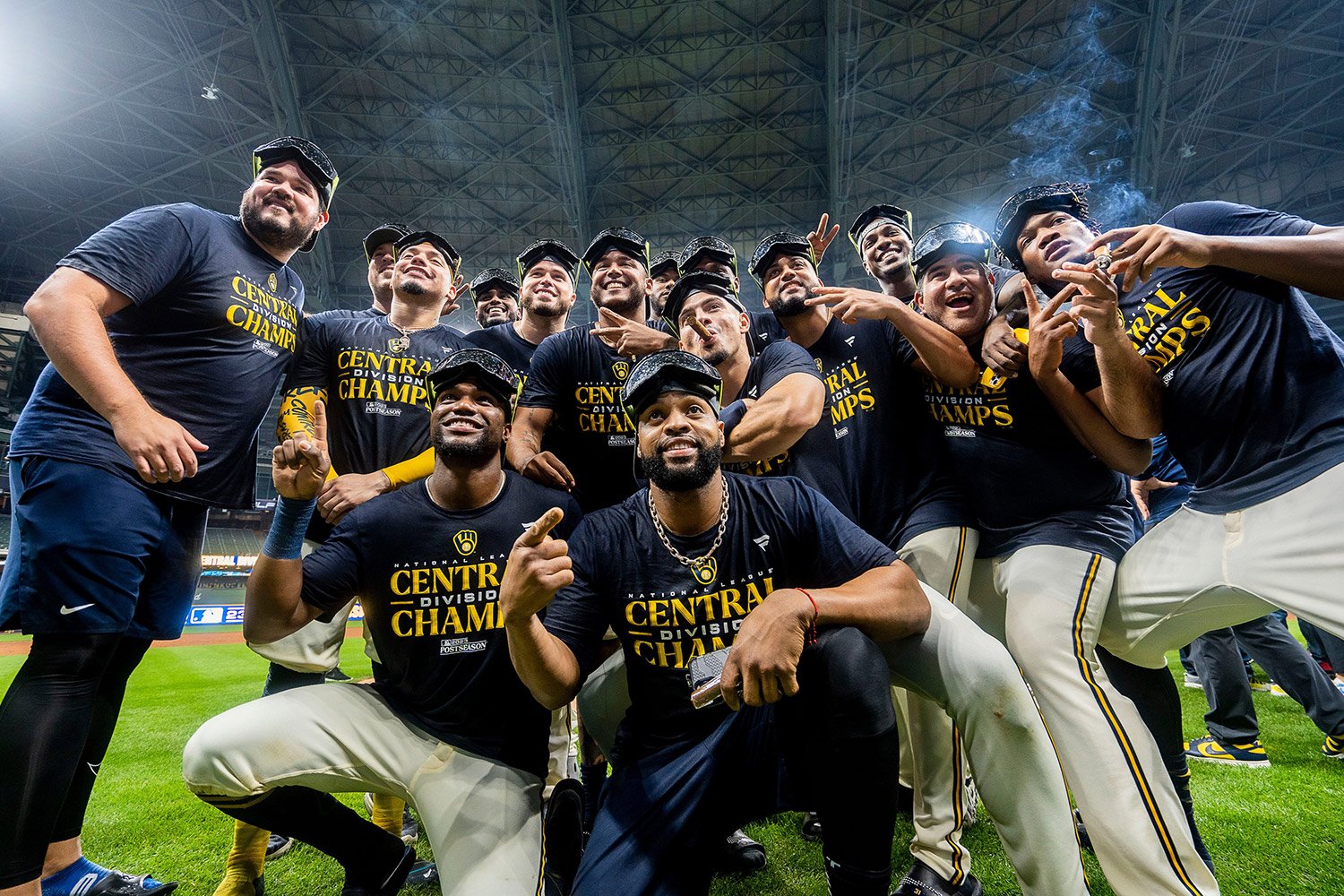 One of the unhappy byproducts of the revolution in the understanding of baseball over the last 40 years is that, as the knowledge first shouted from rooftops by outsiders has suffused front offices and ownership suites and trickled down to dugouts, the game has been reduced to fit into the neat boxes required by analytical thinking. One of the old saws of sabermetric writing is that, while technically a team game, baseball is made up mostly of atomic, isolated duels between individuals. The pitcher and the batter are the soul of the game, to many of the people who happened to accidentally remake the game by talking about it in a new way. It's an easy mistake to make. Once the math disproves the virtue of the sacrifice bunt and gives the lie to a pitcher's ability to limit hits on balls in play, why bother focusing on team baseball? If balls in play are so inextricably mired in the quagmire of chance, why spend time wallowing in them? That's been the bent of baseball men (and it has, mostly, been men) looking for a competitive edge over the last few decades. Those people have been given free rein to change the way players are scouted, developed, and evaluated, and as they've done so, they've systematically molded the game to suit their economic approaches. This is why there are many more home runs and many more strikeouts in the modern game. It's why, until an invasive rule change was finally made to shake things up, the stolen base was in its dying throes. Executives trained to relentlessly optimize and iterate have streamlined the game as much as they possible can, and that endeavor leaves little room for the trust between teammates or the interaction factors that make two players better than either would be alone. The math says, stop betting on concatenations of singles and hit dingers. Now, every hitter in all 30 lineups can hit dingers. The math says, there's almost no diminishing return point on strikeouts for pitchers. Now, every pitching staff chases strikeouts, often at considerable cost in other areas. Partially by loving and brilliant construction, and partially by the sheer serendipity that gives the game its most vivid color, the 2023 Milwaukee Brewers buck all of that a little. They're a championship-caliber team, even if their record is less gaudy than those of the Atlanta and Los Angeles Goliaths, but they're not dominant in the hypermodern sense. They win with team baseball. Only six teams have hit home runs in a lower share of their plate appearances than have the Brewers this season. None of the six will finish with a winning record. On the other hand, only two teams have drawn walks at a higher rate than have the Brewers this season. This lineup trusts in each other. They don't press in the big moment. They take their free pass, toss the bat aside, and wait for the big blow to be struck by whichever teammate first gets a mistake. It's been their approach all season. It's not well-suited to the base rates of the modern game. It might be riskier in October. When it works, though, it's beautiful, in a way that (say) the Braves' offense isn't. Nor do the pitchers dominate in the way teams most prefer their hurlers to do, these days. They're 10th in the league in strikeout rate, and 23rd in home-run prevention. Yet, they have the best, most productive pitching staff in the big leagues. They have allowed the lowest batting average on balls in play (.269) in MLB, and their advantage over the Yankees and Dodgers is 10 points. That's partially because they have smart, dedicated catchers--including a relatively inexperienced starter, learning the way they like to plan and call games on the fly--who help their talented pitchers seek weak contact. It's also partially because they have an excellent team defense. In an era increasingly focused on individual greatness, the Brewers have won the NL Central without a player who ranks in the top 50 position players in Wins Above Replacement, according to Baseball Reference. (William Contreras comes in 53rd.) They've had the best pitching staff in the game, without a pitcher who ranks in the top 25 for WAR. (Corbin Burnes is 26th.) This team has had to weather significant injuries, such as to Brandon Woodruff, Garrett Mitchell, and Christian Yelich. They've had players on whom they were heavily depending as of Opening Day return virtually no value. They've had to remake their bench and the supporting cast to Devin Williams in the bullpen. With depth, aggressive front-office moves, superb administration by the field staff, and a bit of good luck, they've done all of that. Craig Counsell should be the National League Manager of the Year. It's the only award any Brewer has a credible chance to win, but it would be the fitting one. There hasn't been a playoff team quite this extreme in its interdependences and reliance on coaching as this one since before the pandemic. Counsell and his cohort have empowered rookies and newcomers, stabilized struggling veterans, and extracted every scrap of spare advantage opponents left lying around, all season. They couldn't have done it without the talented players and the impressive number of valuable reinforcements that Matt Arnold and his charges found, but nor could the players or the front office have done this without the coaching staff. The work is far from over, of course. The Brewers have a minor playoff monkey to get off their backs. They'll host the Wild Card Series starting next Tuesday, and no extra credit will be given for the special pleasure an old-fashioned baseball aesthete might have felt in watching them throughout the regular season. Before this year, I predicted that this team would win the division, and that it would get to the NLCS. Had I known about some of the adversity they would encounter, I don't know if I would have made that pick. Now, though, I feel that it's more within their reach than ever. Counsell has done an exceptional job. Unfortunately, he gets no reprieve now. It's time to do another exceptional, difficult thing, and the work (even if it be the work of minimizing some guys' work) needs to start right away.
 -
Though it's been maddeningly elusive for the last couple days, a clinch is coming. The Milwaukee Brewers will win the NL Central and host the Wild Card Series next week. But who will they face there? Let's check in. Image courtesy of © Jim Rassol-USA TODAY Sports A wild weekend shook up the race for the final two Wild Card spots in the National League--in feel, if not in fact. The Diamondbacks still hold the second Wild Card position, but their lead over the Cubs is just half a game, after Chicago swept the Rockies at Wrigley Field. Thanks to two days of rainy weather in New York, the Snakes now have to play every day during the final week (in three different time zones), while the Cubs and Marlins rest Monday and the Reds (the final team truly in the mix for the two spots behind the Phillies in the Wild Card shuffle) have both Monday and Thursday off. The Brewers need just one win (or one Cubs loss) to clinch the division crown, but can't catch the Dodgers for the second seed (and the accompanying bye to the NLDS), so they have only to watch and wait to see which of these teams falls into the sixth and final playoff position. At this point, it looks most likely to be the Cubs, but there, the Brewers do have some agency. If they win or sweep the series this weekend at Miller Park, it could knock Chicago out of the postseason altogether. The Cubs don't enjoy the tiebreaker edge over any of their three rivals for the two spots still up for grabs--Arizona, Cincinnati, or Miami. All three clubs took the season series from Chicago, so if any of them finish tied with the Cubs, they'd get the edge. It's unlikely, then, that the Cubs can pass the Diamondbacks, who have a series against the necrotic White Sox in Chicago this week on their way home to play the Astros for the final weekend set. That Houston series will be tough, but not as tough as the Cubs needing to play three games apiece in Atlanta and Milwaukee. That's good news. The Diamondbacks are the team to avoid in all of this. As is a young team's wont, they've been very inconsistent this year, but they're capable of playing excellent baseball even against high-level competition. Corbin Carroll and Gabriel Montero are two of the five best rookies on the senior circuit, and their supporting cast is a group of veteran hitters who look a lot like the Brewers', only they're slightly better. Arizona's pitching isn't anywhere near being as deep as the Brewers', but overall, they're more dangerous than any of the other three. Brewers fans should root for them to claim the second Wild Card spot and go off to Philadelphia, rather than coming to Milwaukee. That leaves the Cubs, Marlins, and Reds in an all-out fight for the one remaining opening. Technically, both the Giants and the Padres are still alive, as of Monday morning, but with elimination numbers of 2, neither will even be alive by Friday. Again, both Miami and Cincinnati have the tiebreaker over the Cubs. The Marlins hold the tiebreaker over the Reds, too. Thus, Cincinnati is really up against it here. They have three more losses than Chicago, two more than Miami, and four more than Arizona, and they can't finish tied with any of them. The two off days this week should help them immensely, because they looked thoroughly exhausted this weekend against the Pirates, but playoff hopes are dimming in Cincy. That's a shame, because the Reds are the team the Brewers should most want to face in the Wild Card Series. They handled that team easily all year, and are a huge reason why they'll probably miss the playoffs. As worn out as their bullpen looks, though, they would make as easy an opponent as this format permits. Instead, the Crew is most likely to see either the Marlins or the Cubs. Which should they prefer? Where should Brewers fans' secondary rooting interests lie this week? It seems pretty clear. Craig Counsell and his team should, within reason, try to knock out the Cubs. That team is, itself, a bit of a shambles. Their bullpen is crumbling piece by piece, just a game or two more slowly than the Reds'. They have a better patchwork both in the lineup and in the rotation, though. Moreover, and most importantly, the Marlins now know for certain that they won't get Sandy Alcantara or Eury Perez back this season. Without either of them, the team just doesn't have any realistic path to beating the Brewers in the Wild Card Series. Luis Arraez's left foot is doing its best to escape completely, by snapping off at the ankle. Arraez has suffered two separate accidents resulting in a rolled ankle in the last week, an indicator of how tired he is and how hard it's been for him to stay on the field even this long. The Brewers have made their choice. They'll use both Adrian Houser and Wade Miley during their series against the Cardinals, leaving Brandon Woodruff and Freddy Peralta lined up to start the first two games of the Cubs series. That gives them the best chance to knock Chicago out, or at least contribute to their demise, and to get another look at the Marlins. Things could still change--and, as soon as Monday afternoon, they will. Since the Brewers have earned the privilege of caring relatively little about the fight for these lesser playoff berths, though, they can watch with only one eye, keeping their primary focus on preparing themselves to be fresh and keyed up when the tournament begins next Tuesday. View full article
-
A Check on the Standings and the Playoff Scenarios for the Brewers
Matthew Trueblood posted an article in Brewers
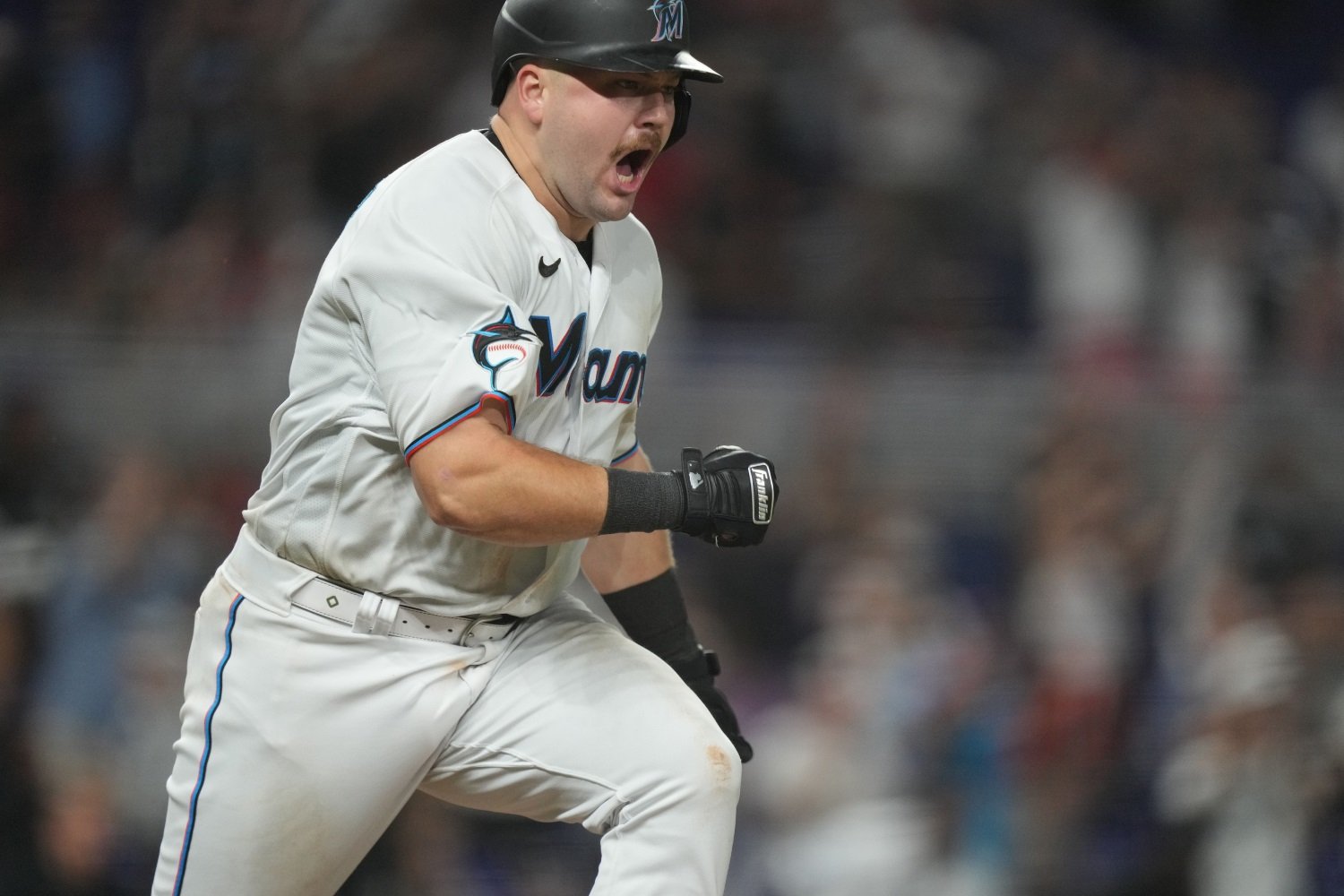 A wild weekend shook up the race for the final two Wild Card spots in the National League--in feel, if not in fact. The Diamondbacks still hold the second Wild Card position, but their lead over the Cubs is just half a game, after Chicago swept the Rockies at Wrigley Field. Thanks to two days of rainy weather in New York, the Snakes now have to play every day during the final week (in three different time zones), while the Cubs and Marlins rest Monday and the Reds (the final team truly in the mix for the two spots behind the Phillies in the Wild Card shuffle) have both Monday and Thursday off. The Brewers need just one win (or one Cubs loss) to clinch the division crown, but can't catch the Dodgers for the second seed (and the accompanying bye to the NLDS), so they have only to watch and wait to see which of these teams falls into the sixth and final playoff position. At this point, it looks most likely to be the Cubs, but there, the Brewers do have some agency. If they win or sweep the series this weekend at Miller Park, it could knock Chicago out of the postseason altogether. The Cubs don't enjoy the tiebreaker edge over any of their three rivals for the two spots still up for grabs--Arizona, Cincinnati, or Miami. All three clubs took the season series from Chicago, so if any of them finish tied with the Cubs, they'd get the edge. It's unlikely, then, that the Cubs can pass the Diamondbacks, who have a series against the necrotic White Sox in Chicago this week on their way home to play the Astros for the final weekend set. That Houston series will be tough, but not as tough as the Cubs needing to play three games apiece in Atlanta and Milwaukee. That's good news. The Diamondbacks are the team to avoid in all of this. As is a young team's wont, they've been very inconsistent this year, but they're capable of playing excellent baseball even against high-level competition. Corbin Carroll and Gabriel Montero are two of the five best rookies on the senior circuit, and their supporting cast is a group of veteran hitters who look a lot like the Brewers', only they're slightly better. Arizona's pitching isn't anywhere near being as deep as the Brewers', but overall, they're more dangerous than any of the other three. Brewers fans should root for them to claim the second Wild Card spot and go off to Philadelphia, rather than coming to Milwaukee. That leaves the Cubs, Marlins, and Reds in an all-out fight for the one remaining opening. Technically, both the Giants and the Padres are still alive, as of Monday morning, but with elimination numbers of 2, neither will even be alive by Friday. Again, both Miami and Cincinnati have the tiebreaker over the Cubs. The Marlins hold the tiebreaker over the Reds, too. Thus, Cincinnati is really up against it here. They have three more losses than Chicago, two more than Miami, and four more than Arizona, and they can't finish tied with any of them. The two off days this week should help them immensely, because they looked thoroughly exhausted this weekend against the Pirates, but playoff hopes are dimming in Cincy. That's a shame, because the Reds are the team the Brewers should most want to face in the Wild Card Series. They handled that team easily all year, and are a huge reason why they'll probably miss the playoffs. As worn out as their bullpen looks, though, they would make as easy an opponent as this format permits. Instead, the Crew is most likely to see either the Marlins or the Cubs. Which should they prefer? Where should Brewers fans' secondary rooting interests lie this week? It seems pretty clear. Craig Counsell and his team should, within reason, try to knock out the Cubs. That team is, itself, a bit of a shambles. Their bullpen is crumbling piece by piece, just a game or two more slowly than the Reds'. They have a better patchwork both in the lineup and in the rotation, though. Moreover, and most importantly, the Marlins now know for certain that they won't get Sandy Alcantara or Eury Perez back this season. Without either of them, the team just doesn't have any realistic path to beating the Brewers in the Wild Card Series. Luis Arraez's left foot is doing its best to escape completely, by snapping off at the ankle. Arraez has suffered two separate accidents resulting in a rolled ankle in the last week, an indicator of how tired he is and how hard it's been for him to stay on the field even this long. The Brewers have made their choice. They'll use both Adrian Houser and Wade Miley during their series against the Cardinals, leaving Brandon Woodruff and Freddy Peralta lined up to start the first two games of the Cubs series. That gives them the best chance to knock Chicago out, or at least contribute to their demise, and to get another look at the Marlins. Things could still change--and, as soon as Monday afternoon, they will. Since the Brewers have earned the privilege of caring relatively little about the fight for these lesser playoff berths, though, they can watch with only one eye, keeping their primary focus on preparing themselves to be fresh and keyed up when the tournament begins next Tuesday.
 -
For a few years, now, the Brewers have had a Big Three in their starting rotation. There was always a fairly clear hierarchy among the trio, though. Now, that pecking order might need to be updated. Image courtesy of © Jeff Curry-USA TODAY Sports If they don't change anything over the final week, the Brewers will have Corbin Burnes lined up to pitch Game 1 of the National League Wild Card Series a week from Tuesday, with Brandon Woodruff set to go in Game 2 and Freddy Peralta pitching either Game 3 of that series or (if the Brewers win the series in a sweep) Game 1 of the NLDS. That makes sense, given where these three have long stood in relation to one another. Burnes was the Cy Young Award winner two years ago, after being the breakout star in 2020. Woodruff has the most seniority of the group, is the oldest, and has been the most consistent over the half-decade during which they've been staples of this pitching staff. Peralta has always been considered the wild card of the bunch. He came up younger than they did, with a shallower arsenal of pitches and some occasional control issues. He struggled in 2019 and worked mostly in relief in 2020, before breaking out and earning shared billing with the other two in 2021. Fairly or not, he's never quite garnered the same respect or accolades as have Burnes and Woodruff. It's time for that to change, because Peralta is now the best of the bunch. He's quietly made himself as dominant and well-rounded as any starting pitcher in baseball, and if he stays hot, he could be the biggest X-factor in what the Brewers hope will be a deep run this October. By now, you've probably heard quite a bit about Peralta's new slider. In case you've missed it, though, let's talk a bit about it. Just before the All-Star break, Peralta tweaked the movement profile of his slider. It wasn't an extreme, drastic alteration, but it happened. That slider (one of two breaking balls for Peralta) used to be more of a sweeping slider, with greater lateral movement and less vertical depth. You can see the sweeper shape in the plot of his pitch movement prior to the change at the beginning of July. By contrast, note the tighter clustering and the different shape of the scatter since the start of July. Peralta's slider (the yellow dots) is now fractionally less distinct from his curveball (the blue ones), but it has a greater movement differential from his fastball (red), The new version is a bit firmer, too, coming in perhaps a mile per hour harder than the old one. It's simply a pitch he commands better, and he can fool hitters better with it, too, for a couple of notable reasons. Firstly, Peralta is making it much harder than in the past for hitters to lock in on his release point and pick up the spin of the ball--because he's varying his release more than he ever has before. Here's a scatter plot of all his release points in 2022. Here's the same chart for 2023. Note the slight shift toward third base, but more importantly, notice the greater vertical spread in his release points. He's allowing himself to let his release creep slightly higher on the curveball, but disguising that from hitters by varying his release point more than in the past on all his other offerings, too. Typically, this would be bad news. Pitchers who have a lot of success talk about repeating their release point well. Pitchers who repeat their release point well have a lot of success. Really good, tight clustering of release points is one way to make it hard for hitters to find a cue that lets them guess which pitch is coming, and it's generally been accepted as the best way to both keep a hurler healthy and keep them throwing strikes. Another way to look at the same thing, though, is to consider release point distribution as a spectrum, where the thing you most want to avoid is being average. Either repeat your release perfectly, because of stellar mechanical efficiency, or scatter it enough to make hitters uncomfortable and force them to widen their focal point when they're trying to pick it up out of the hand. Just don't fall right in the middle. It seems an awful lot like Peralta has made the conscious choice to lean toward the latter means of putting hitters on the defensive. We can say that with some confidence, because Peralta has not only toyed with hitters utilizing this newfound dimension of deception, but shown excellent command, as well. Here's the average height (as it crosses the plate) of his pitches to left-handed batters, by month, for his entire career. Spot the point at which he figured something out with his four-seam fastball, and cleaved to it. What we're seeing, in essence, is Freddy Peralta achieving satori--taking on properties and reaching levels that were beyond him before--through a series of small changes. At the root of them all, beginning a bit before the slider alteration and catalyzing the new approach of letting his release points diverge and attacking the top of the zone with his fastball, lies his newfound ability to use his entire arsenal. I first wrote about this in June, after a start against the Pirates in which Peralta made unusually heavy use of his changeup and both breaking balls. Ever since, in different ways, he's been doing the same thing. He's reshaped the slider and relocated the fastball, but it's the subtle twiddling of dials--a few more changeups here, an extra curve there--that has allowed him to level up recently. Against lefties, he just keeps gently pressing that changeup use upward, trying to find the place where it might start to have negative returns. He hasn't yet gotten there. Against righties, though, he's doing much the same. It's just easier to miss it, because he remains primarily focused on the fastball and slider. The changeup has crept in especially invidiously. The hitter is looking up and away, for that fastball, and they're trying to stay back on the slider when it snaps down and away, but Peralta is increasingly getting to them with the change instead, down and in, like a back-foot breaking ball to an opposite-handed batter. Peralta has figured out that his fastball works best in the area above the belt and away, and thus, he's tweaked the slider to move in a way that better suits the setup pitch: he can start them going toward the same place, without the hitter being able to say, "Slider; let it go," and have the ball skid off the plate for a ball. Peralta still has the capacity to ratchet up the sweep on the slider. He's done it a few times since (largely) switching to his tighter, more vertical pitch, when the scouting report has led him to work inside on righties more with the fastball. That's how he dominated the Marlins last time he saw them, earlier this month. Sunday will mark an interesting test of whether he needs to change his approach (radically or almost subliminally) when seeing an opponent twice in such close proximity. In one sense, though, he passes that test already. Peralta violates one of the nearly inviolable laws of pitching: hitters hit him worse as his starts progress. The first time through the order this year, opponents have a .686 OPS against Peralta. The second time through, that number drops to .647. The third time, it's .573. That's extraordinary. Of the 159 pitchers who have faced at least 100 batters the first time through the order this year, Peralta ranks 57th in opponents' weighted on-base average (wOBA). Take the second, third, and fourth times through and lump them together, and of 151 qualifying starters, Peralta has allowed the seventh-lowest wOBA. The only pitchers with a higher strikeout rate than Peralta's 30.1 percent from the first flip of the lineup card onward are Atlanta ace Spencer Strider and Mets rookie sensation Kodai Senga. This isn't an entirely new skill for Peralta. In his career, he has allowed a roughly flat OPS based on times through the order, which is an achievement in itself. For most pitchers, that number steadily rises, as they tire and hitters get a better look at their stuff. Still, he's doing something different and better this year--and specifically, in the second half, as this new version of him has come fully into bloom. Of the 104 pitchers who have faced at least 125 batters the second, third, and fourth times through the lineup since the break, the lowest wOBA allowed belongs to Peralta--a staggeringly anemic .190. For a bit of context, hitters' wOBA against Devin Williams in 2023 is .215. Peralta is bettering that even as opponents see him a second and third time within a game. How did he turn this particular corner? Small changes in pitch usage can make a big difference, and in a pitch mix becoming as rich a symphony as Peralta's, there are plenty of small changes available. Here's how Peralta attacked lefties based on the pass through the order in the first half. This is a pretty common pattern. Pitchers try to establish their fastball early, and go more to offspeed and breaking stuff as the game progresses. The theory underpinning that approach is radical only in its simplicity: A guy can't scope and shoot at a pitch they haven't yet seen. It's common sense, and (to some extent) it works. It's why pitchers with deeper repertoires can better resist the degradation in performance that comes each time through, but it's also one of the misunderstood drivers of that progressive penalty itself. Hitters know you'll show them the fastball first, then go with soft and spin more as the game wears on. They look for that. Here's what Peralta has done against lefties since the All-Star break. That's a lot more changeups. It's also interesting, though, in the way it reflects Peralta's evolution beyond the first, simplest level of pitch sequencing theory. He (and catchers William Contreras and Victor Caratini, all in cooperation with the Brewers' pitching coaches) has seen past the principle of using fewer heaters as the game goes on. He's differentiating the changeup and using the curveball and slider more interchangeably, rather than the changeup and the curve. That change has been the real breakout star of his recent run. It's the pitch that makes everything else work better. Let's look at how Peralta has dealt with righties this season, in the first half: and in the second: The first thing that jumps out is that, rather than that bowtie-shaped progression where he works fastball-heavy, then brings the secondary offering close to even, then goes back to the fastball the third time through is gone. Peralta steadily pushes the slider button more often as the game goes, having set hitters up better for it by making smarter, slightly greater early use of his curveball and changeup. By the third trip through the order, fewer than 45 percent of the pitches thrown by Fastball Freddy are heaters. Combine all these things--the ability to work deep into games without running into trouble, the skyrocketing strikeout rate on the back of his greater reliance on the slider and changeup, and the way he's maintained his control while moving his release point around a bit more--and you have one of the toughest hurlers in the game. Baseball Prospectus's value metric for pitchers centers on Deserved Run Average (DRA-). Peralta has the 12th-best among pitchers with at least 100 innings pitched this season, and he's 13th on BP's leaderboard for pitcher Wins Above Replacement Player (WARP). Both of those marks are better than those of either Burnes or Woodruff. In all likelihood, Peralta will start next weekend, during the final series of the season against the Cubs. Then, he'll be the team's third starter for the playoffs. In reality, though, he's their best starter at the moment, and he's the one whom Brewers fans should want taking the ball whenever the season is on the line the rest of the way. View full article
-
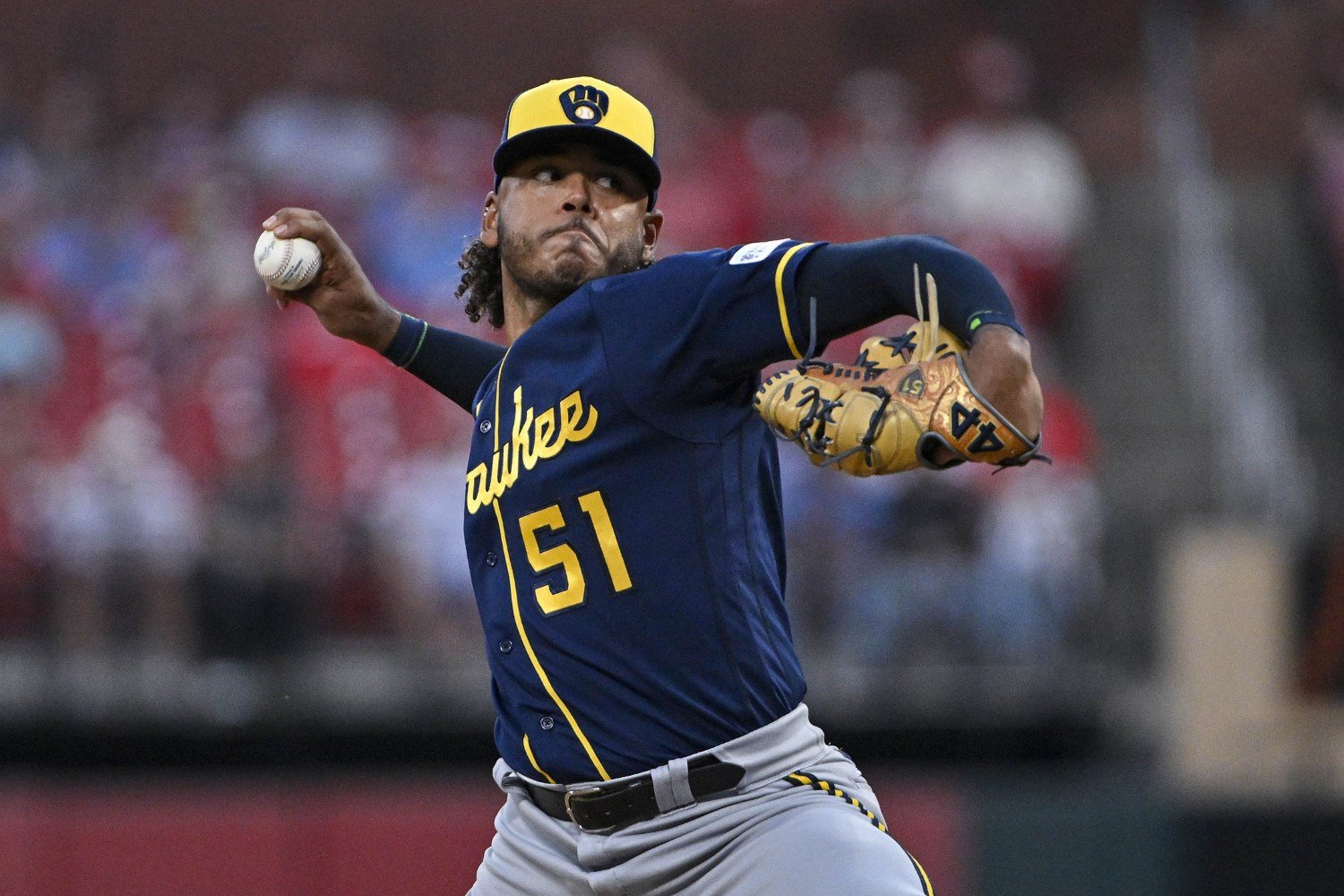 If they don't change anything over the final week, the Brewers will have Corbin Burnes lined up to pitch Game 1 of the National League Wild Card Series a week from Tuesday, with Brandon Woodruff set to go in Game 2 and Freddy Peralta pitching either Game 3 of that series or (if the Brewers win the series in a sweep) Game 1 of the NLDS. That makes sense, given where these three have long stood in relation to one another. Burnes was the Cy Young Award winner two years ago, after being the breakout star in 2020. Woodruff has the most seniority of the group, is the oldest, and has been the most consistent over the half-decade during which they've been staples of this pitching staff. Peralta has always been considered the wild card of the bunch. He came up younger than they did, with a shallower arsenal of pitches and some occasional control issues. He struggled in 2019 and worked mostly in relief in 2020, before breaking out and earning shared billing with the other two in 2021. Fairly or not, he's never quite garnered the same respect or accolades as have Burnes and Woodruff. It's time for that to change, because Peralta is now the best of the bunch. He's quietly made himself as dominant and well-rounded as any starting pitcher in baseball, and if he stays hot, he could be the biggest X-factor in what the Brewers hope will be a deep run this October. By now, you've probably heard quite a bit about Peralta's new slider. In case you've missed it, though, let's talk a bit about it. Just before the All-Star break, Peralta tweaked the movement profile of his slider. It wasn't an extreme, drastic alteration, but it happened. That slider (one of two breaking balls for Peralta) used to be more of a sweeping slider, with greater lateral movement and less vertical depth. You can see the sweeper shape in the plot of his pitch movement prior to the change at the beginning of July. By contrast, note the tighter clustering and the different shape of the scatter since the start of July. Peralta's slider (the yellow dots) is now fractionally less distinct from his curveball (the blue ones), but it has a greater movement differential from his fastball (red), The new version is a bit firmer, too, coming in perhaps a mile per hour harder than the old one. It's simply a pitch he commands better, and he can fool hitters better with it, too, for a couple of notable reasons. Firstly, Peralta is making it much harder than in the past for hitters to lock in on his release point and pick up the spin of the ball--because he's varying his release more than he ever has before. Here's a scatter plot of all his release points in 2022. Here's the same chart for 2023. Note the slight shift toward third base, but more importantly, notice the greater vertical spread in his release points. He's allowing himself to let his release creep slightly higher on the curveball, but disguising that from hitters by varying his release point more than in the past on all his other offerings, too. Typically, this would be bad news. Pitchers who have a lot of success talk about repeating their release point well. Pitchers who repeat their release point well have a lot of success. Really good, tight clustering of release points is one way to make it hard for hitters to find a cue that lets them guess which pitch is coming, and it's generally been accepted as the best way to both keep a hurler healthy and keep them throwing strikes. Another way to look at the same thing, though, is to consider release point distribution as a spectrum, where the thing you most want to avoid is being average. Either repeat your release perfectly, because of stellar mechanical efficiency, or scatter it enough to make hitters uncomfortable and force them to widen their focal point when they're trying to pick it up out of the hand. Just don't fall right in the middle. It seems an awful lot like Peralta has made the conscious choice to lean toward the latter means of putting hitters on the defensive. We can say that with some confidence, because Peralta has not only toyed with hitters utilizing this newfound dimension of deception, but shown excellent command, as well. Here's the average height (as it crosses the plate) of his pitches to left-handed batters, by month, for his entire career. Spot the point at which he figured something out with his four-seam fastball, and cleaved to it. What we're seeing, in essence, is Freddy Peralta achieving satori--taking on properties and reaching levels that were beyond him before--through a series of small changes. At the root of them all, beginning a bit before the slider alteration and catalyzing the new approach of letting his release points diverge and attacking the top of the zone with his fastball, lies his newfound ability to use his entire arsenal. I first wrote about this in June, after a start against the Pirates in which Peralta made unusually heavy use of his changeup and both breaking balls. Ever since, in different ways, he's been doing the same thing. He's reshaped the slider and relocated the fastball, but it's the subtle twiddling of dials--a few more changeups here, an extra curve there--that has allowed him to level up recently. Against lefties, he just keeps gently pressing that changeup use upward, trying to find the place where it might start to have negative returns. He hasn't yet gotten there. Against righties, though, he's doing much the same. It's just easier to miss it, because he remains primarily focused on the fastball and slider. The changeup has crept in especially invidiously. The hitter is looking up and away, for that fastball, and they're trying to stay back on the slider when it snaps down and away, but Peralta is increasingly getting to them with the change instead, down and in, like a back-foot breaking ball to an opposite-handed batter. Peralta has figured out that his fastball works best in the area above the belt and away, and thus, he's tweaked the slider to move in a way that better suits the setup pitch: he can start them going toward the same place, without the hitter being able to say, "Slider; let it go," and have the ball skid off the plate for a ball. Peralta still has the capacity to ratchet up the sweep on the slider. He's done it a few times since (largely) switching to his tighter, more vertical pitch, when the scouting report has led him to work inside on righties more with the fastball. That's how he dominated the Marlins last time he saw them, earlier this month. Sunday will mark an interesting test of whether he needs to change his approach (radically or almost subliminally) when seeing an opponent twice in such close proximity. In one sense, though, he passes that test already. Peralta violates one of the nearly inviolable laws of pitching: hitters hit him worse as his starts progress. The first time through the order this year, opponents have a .686 OPS against Peralta. The second time through, that number drops to .647. The third time, it's .573. That's extraordinary. Of the 159 pitchers who have faced at least 100 batters the first time through the order this year, Peralta ranks 57th in opponents' weighted on-base average (wOBA). Take the second, third, and fourth times through and lump them together, and of 151 qualifying starters, Peralta has allowed the seventh-lowest wOBA. The only pitchers with a higher strikeout rate than Peralta's 30.1 percent from the first flip of the lineup card onward are Atlanta ace Spencer Strider and Mets rookie sensation Kodai Senga. This isn't an entirely new skill for Peralta. In his career, he has allowed a roughly flat OPS based on times through the order, which is an achievement in itself. For most pitchers, that number steadily rises, as they tire and hitters get a better look at their stuff. Still, he's doing something different and better this year--and specifically, in the second half, as this new version of him has come fully into bloom. Of the 104 pitchers who have faced at least 125 batters the second, third, and fourth times through the lineup since the break, the lowest wOBA allowed belongs to Peralta--a staggeringly anemic .190. For a bit of context, hitters' wOBA against Devin Williams in 2023 is .215. Peralta is bettering that even as opponents see him a second and third time within a game. How did he turn this particular corner? Small changes in pitch usage can make a big difference, and in a pitch mix becoming as rich a symphony as Peralta's, there are plenty of small changes available. Here's how Peralta attacked lefties based on the pass through the order in the first half. This is a pretty common pattern. Pitchers try to establish their fastball early, and go more to offspeed and breaking stuff as the game progresses. The theory underpinning that approach is radical only in its simplicity: A guy can't scope and shoot at a pitch they haven't yet seen. It's common sense, and (to some extent) it works. It's why pitchers with deeper repertoires can better resist the degradation in performance that comes each time through, but it's also one of the misunderstood drivers of that progressive penalty itself. Hitters know you'll show them the fastball first, then go with soft and spin more as the game wears on. They look for that. Here's what Peralta has done against lefties since the All-Star break. That's a lot more changeups. It's also interesting, though, in the way it reflects Peralta's evolution beyond the first, simplest level of pitch sequencing theory. He (and catchers William Contreras and Victor Caratini, all in cooperation with the Brewers' pitching coaches) has seen past the principle of using fewer heaters as the game goes on. He's differentiating the changeup and using the curveball and slider more interchangeably, rather than the changeup and the curve. That change has been the real breakout star of his recent run. It's the pitch that makes everything else work better. Let's look at how Peralta has dealt with righties this season, in the first half: and in the second: The first thing that jumps out is that, rather than that bowtie-shaped progression where he works fastball-heavy, then brings the secondary offering close to even, then goes back to the fastball the third time through is gone. Peralta steadily pushes the slider button more often as the game goes, having set hitters up better for it by making smarter, slightly greater early use of his curveball and changeup. By the third trip through the order, fewer than 45 percent of the pitches thrown by Fastball Freddy are heaters. Combine all these things--the ability to work deep into games without running into trouble, the skyrocketing strikeout rate on the back of his greater reliance on the slider and changeup, and the way he's maintained his control while moving his release point around a bit more--and you have one of the toughest hurlers in the game. Baseball Prospectus's value metric for pitchers centers on Deserved Run Average (DRA-). Peralta has the 12th-best among pitchers with at least 100 innings pitched this season, and he's 13th on BP's leaderboard for pitcher Wins Above Replacement Player (WARP). Both of those marks are better than those of either Burnes or Woodruff. In all likelihood, Peralta will start next weekend, during the final series of the season against the Cubs. Then, he'll be the team's third starter for the playoffs. In reality, though, he's their best starter at the moment, and he's the one whom Brewers fans should want taking the ball whenever the season is on the line the rest of the way.
 -
When the Brewers take the field in Miami Friday night, they'll be on the cusp of an NL Central title, and in pursuit of a (highly obscure) big-league record. They're securing their identity as one of the best defensive teams ever. Image courtesy of © Jeff Curry-USA TODAY Sports After their win Thursday in St. Louis, the Brewers distributed a postgame note mentioning that the team has allowed nine or fewer hits in 26 straight games. Not since the 1968 Orioles--the consummate dynasty built on pitching and defense, in the Year of the Pitcher--has any team gone 27 games without allowing an opponent to reach double digits in that column. It's an extraordinary feat, but not a wholly surprising one, because the Brewers are keeping elite historical company, anyway. FanGraphs keeps adjusted versions of various statistics on both an individual and team level, to facilitate comparisons between teams across eras, ballparks, and league rules changes. To fans who know how to read an OPS+ (100 is average, higher is better for run scoring), these are familiar, but whereas OPS+ is meant to convey a holistic quality, the +Stats page on FanGraphs lets us compare specific skills in the same way. Here are the teams who have allowed the lowest BABIP+ (batting average on balls in play, adjusted for league and park contexts) since the game began to be re-integrated in 1947 (excluding 2020, for obvious reasons): 2016 Cubs: 86 2022 Dodgers: 88 1975 Dodgers: 88 2001 Mariners: 88 1999 Reds: 89 2023 Brewers: 90 Because of the context in which it was first introduced to the world, BABIP tends to be filed into a corner of fans' brains where unfriendly reminders of the luck involved in the game go. On a team level, it should be obvious that luck plays a much smaller role, but what's less obvious is that it's not a function purely of fielding prowess, either. The ability to deny opponents hits on balls in play is a team skill--a shared achievement by the pitching staff, the catchers who direct them, and the defenders behind them. To be elite in this way requires all of those units to be dominant. The Brewers certainly meet that threshold. Look at the other teams on that list. We all well remember the 2016 Cubs, who blended extraordinary athleticism around a young infield with excellent pitch framers and game callers behind the plate, plus an accomplished veteran pitching staff. That's roughly the formula, but the teams tend to share some other common threads. Great center field play is a requirement. Two of these teams had a young Mike Cameron patrolling that area. The Brewers haven't enjoyed the stability some of these teams had at that spot, but they run as deep with great defenders in center as any team in recent memory (even with Garrett Mitchell hurt most of the year, and Jackson Chourio not yet in the mix). Several of them had a second baseman who would have been a well-qualified shortstop, too. That includes the 1999 Reds (Pokey Reese), the 2016 Cubs (Javier Baez), and these Brewers, with Brice Turang. Each team has had at least one excellent utility defender--someone who roves to various positions based on need and catches and throws well at each. The Brewers have the most in common, though, with those 1975 Dodgers. It's a young infield, with some cohesion but plenty of question marks. It's an eclectic outfield, with many moving parts for many different reasons. Most of all, though, they had a tremendous pitching staff. It didn't look like anything a fan in 2023 would recognize. They ran one of the last true four-man rotations, with Andy Messersmith, Doug Rau, Don Sutton, and Burt Hooton combining for 143 starts and 1,057 1/3 innings. Only four other pitchers (Mike Marshall, Rick Rhoden, Al Downing, and rough, tough Charlie Hough) pitched more than 33 innings for them, and even in that group, only Marshall exceeded 100. Still, that group was the 1975 equivalent of this Milwaukee staff. They walked the fewest batters in the NL and struck out the third-most, and their only fault was in allowing an above-average number of home runs. Like that team did, this Brewers group leads the senior circuit in ERA. Unlike that group, they aren't exceptional at avoiding the walk, but they do that perfectly well. They also strike out batters at a healthy rate. Their only vulnerability lies in allowing too many home runs. If those pesky walls weren't in the way, a few of the Crew's outfielders would probably go catch those, too. The 1975 Dodgers got boat-raced in the NL West, which perversely included the Cincinnati Reds in those days. The Big Red Machine, in a triumph of offense over pitching and defense, steamrolled to 108 wins that year. The Dodgers might have been an awfully dangerous team in the postseason that year, but they weren't granted entry into them. The Brewers don't face that problem. They're going to have a chance to show whether their unique mixture of pitching and defensive excellence can banish the organization's October demons. View full article
-
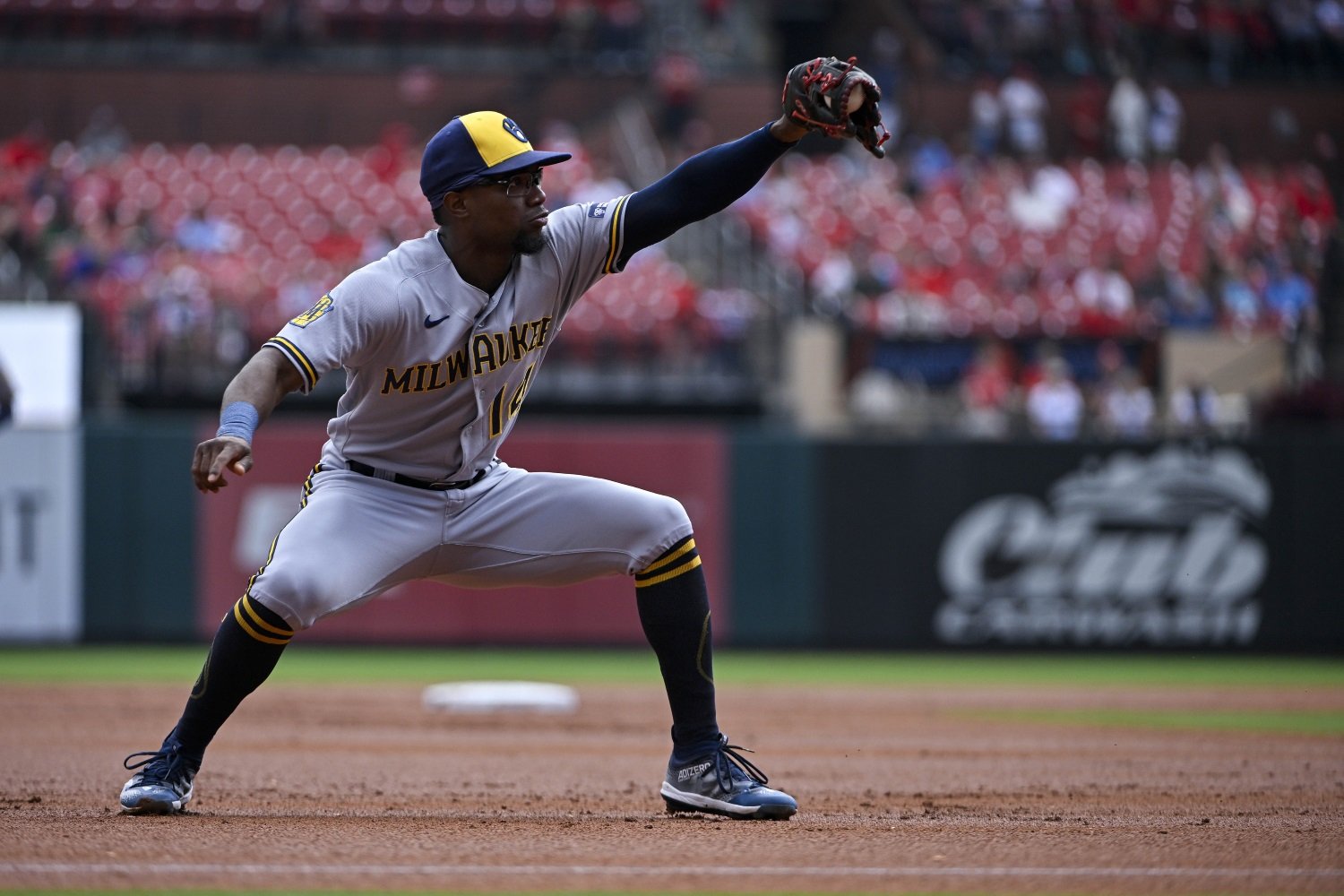 After their win Thursday in St. Louis, the Brewers distributed a postgame note mentioning that the team has allowed nine or fewer hits in 26 straight games. Not since the 1968 Orioles--the consummate dynasty built on pitching and defense, in the Year of the Pitcher--has any team gone 27 games without allowing an opponent to reach double digits in that column. It's an extraordinary feat, but not a wholly surprising one, because the Brewers are keeping elite historical company, anyway. FanGraphs keeps adjusted versions of various statistics on both an individual and team level, to facilitate comparisons between teams across eras, ballparks, and league rules changes. To fans who know how to read an OPS+ (100 is average, higher is better for run scoring), these are familiar, but whereas OPS+ is meant to convey a holistic quality, the +Stats page on FanGraphs lets us compare specific skills in the same way. Here are the teams who have allowed the lowest BABIP+ (batting average on balls in play, adjusted for league and park contexts) since the game began to be re-integrated in 1947 (excluding 2020, for obvious reasons): 2016 Cubs: 86 2022 Dodgers: 88 1975 Dodgers: 88 2001 Mariners: 88 1999 Reds: 89 2023 Brewers: 90 Because of the context in which it was first introduced to the world, BABIP tends to be filed into a corner of fans' brains where unfriendly reminders of the luck involved in the game go. On a team level, it should be obvious that luck plays a much smaller role, but what's less obvious is that it's not a function purely of fielding prowess, either. The ability to deny opponents hits on balls in play is a team skill--a shared achievement by the pitching staff, the catchers who direct them, and the defenders behind them. To be elite in this way requires all of those units to be dominant. The Brewers certainly meet that threshold. Look at the other teams on that list. We all well remember the 2016 Cubs, who blended extraordinary athleticism around a young infield with excellent pitch framers and game callers behind the plate, plus an accomplished veteran pitching staff. That's roughly the formula, but the teams tend to share some other common threads. Great center field play is a requirement. Two of these teams had a young Mike Cameron patrolling that area. The Brewers haven't enjoyed the stability some of these teams had at that spot, but they run as deep with great defenders in center as any team in recent memory (even with Garrett Mitchell hurt most of the year, and Jackson Chourio not yet in the mix). Several of them had a second baseman who would have been a well-qualified shortstop, too. That includes the 1999 Reds (Pokey Reese), the 2016 Cubs (Javier Baez), and these Brewers, with Brice Turang. Each team has had at least one excellent utility defender--someone who roves to various positions based on need and catches and throws well at each. The Brewers have the most in common, though, with those 1975 Dodgers. It's a young infield, with some cohesion but plenty of question marks. It's an eclectic outfield, with many moving parts for many different reasons. Most of all, though, they had a tremendous pitching staff. It didn't look like anything a fan in 2023 would recognize. They ran one of the last true four-man rotations, with Andy Messersmith, Doug Rau, Don Sutton, and Burt Hooton combining for 143 starts and 1,057 1/3 innings. Only four other pitchers (Mike Marshall, Rick Rhoden, Al Downing, and rough, tough Charlie Hough) pitched more than 33 innings for them, and even in that group, only Marshall exceeded 100. Still, that group was the 1975 equivalent of this Milwaukee staff. They walked the fewest batters in the NL and struck out the third-most, and their only fault was in allowing an above-average number of home runs. Like that team did, this Brewers group leads the senior circuit in ERA. Unlike that group, they aren't exceptional at avoiding the walk, but they do that perfectly well. They also strike out batters at a healthy rate. Their only vulnerability lies in allowing too many home runs. If those pesky walls weren't in the way, a few of the Crew's outfielders would probably go catch those, too. The 1975 Dodgers got boat-raced in the NL West, which perversely included the Cincinnati Reds in those days. The Big Red Machine, in a triumph of offense over pitching and defense, steamrolled to 108 wins that year. The Dodgers might have been an awfully dangerous team in the postseason that year, but they weren't granted entry into them. The Brewers don't face that problem. They're going to have a chance to show whether their unique mixture of pitching and defensive excellence can banish the organization's October demons.
 -
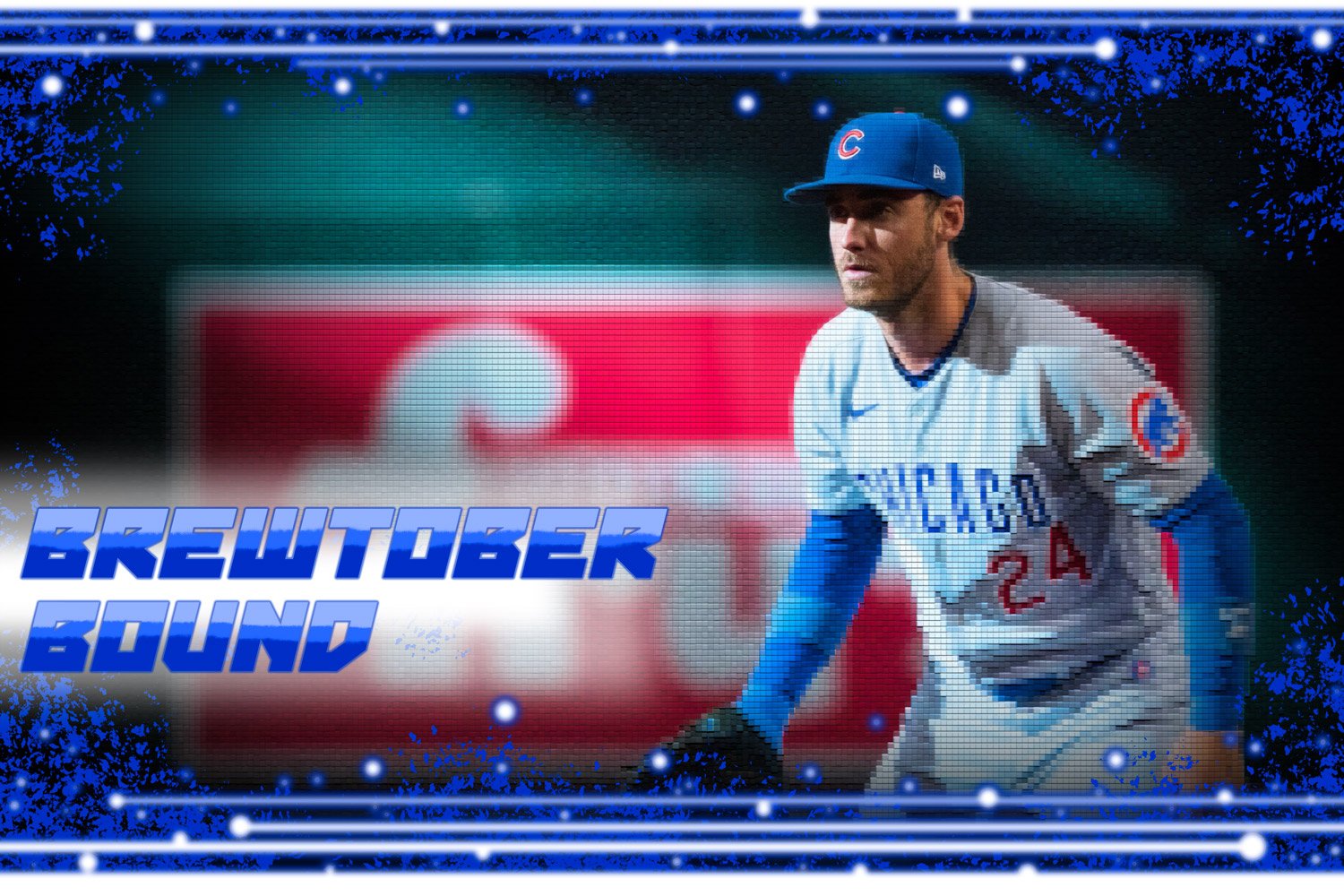 With the Brewers having virtually guaranteed themselves the NL Central title already, the only way they would end up facing the Cubs in the Wild Card Series is if the Baby Bears finished in the third Wild Card position. At the moment, though, that seems genuinely plausible. As an added wrinkle of this particular matchup, the two teams could determine its viability on the field on the final weekend of the season, and if they do end up playing in the postseason, it will be a weeklong stay in Milwaukee for the North Siders. Chicago Cubs Record: 78-72 Runs Scored/Allowed Per Game: 5.0 RS/G, 4.4 RA/G, +86 Run Differential Season Series Against Brewers: 5-5 (with three to play) What They Do Well Oddly, the Cubs were built around pitching and defense, but they've won mostly because (and mostly when) they score runs. Thirteen teams have hit more home runs and six have stolen more bases, but only the Rays appear on both lists. Only six teams have drawn more walks, and they have an above-average team contact rate. That's not to say that, at times, they can't be an excellent pitching and defense outfit. Justin Steele has faded slightly from Cy Young consideration, but he's been one of the half-dozen best starting pitchers in the National League this season. The bullpen, if and when closer Adbert Alzolay returns from his forearm issue, has good depth, although it lacks the dazzling array of reliable hurlers on whom Craig Counsell can lean. Only three teams have accrued more Defensive Runs Saved than the Cubs, and they're even better than that fact might suggest. During the season, they've found above-average defensive solutions to trouble spots at third base (converted second baseman Nick Madrigal) and in center field (rookie Pete Crow-Armstrong). Where They're Vulnerable At no point this season have more than three of the five spots in the Chicago starting rotation seemed locked in and steady. That's true of most teams, and it's slightly less important in a best-of-three playoff series than in a longer one, but it hints at a bigger picture. As attrition has announced itself near the end of the year, the whole pitching staff has worn thin. Marcus Stroman is only working in relief right now. In fact, three-fifths of the team's Opening Day rotation is currently stuck in its bullpen, thanks to a combination of injury, ineffectiveness, and usurpation. In their sudden tailspin (facilitating the Brewers' cruise-control division title, coming soon to a visiting clubhouse somewhere), though, it's the offense that has let down the Cubs again, after all. The reality is that it's an average offense, capable of looking much better than that when the right concatenation of hitters get hot but just as liable to look brutally bad for a fortnight. Don't Let Him Beat You In this unusual circumstance, the Brewers will get the chance to push the Cubs so hard at the end of the season that even if they survive to earn a chance to face Milwaukee in the Wild Card Series, they won't be able to have Justin Steele make any starts within it. That would be great news, as Steele has had a dazzling 2023. The player the Crew would most need to stop, then, would be Cody Bellinger. Aside from being Chicago's obvious MVP, the left-handed slugger had nine hits, six runs, and five RBI when the Cubs visited Miller Park in early July. As we know, the Crew's home field is one at which certain hitters seem to especially appreciate the sightlines and the hitting background, and Bellinger is one of them. He has a career .339/.,391/.581 line there, and that doesn't include the go-ahead home run he hit in Game 7 of the 2018 NLCS. Look for Craig Counsell to get Hoby Milner ready every time Bellinger's spot in the order draws near, if this matchup materializes. Overall Prognosis The Brewers are a better team than the Cubs. They've proved it, by outlasting them and running away from them in the NL Central. If the two teams are pitted against one another in a win-or-go-home series, though, Chicago (like just about any playoff-caliber team, but more so than the Reds or Marlins, for sure) could be a dangerous opponent. It would be sweet to get such lasting and emphatic bragging rights, but it might be better for the Crew to establish them by being the agents of the Cubs' demise during the regular season. That's still very much in play.
 -
The rivalry between the Brewers and the Chicago Cubs is only a quarter-century old, but it feels like an ancient one. What would the first-ever playoff series between these teams look like? Image courtesy of Brock Beauchamp & Brewer Fanatic With the Brewers having virtually guaranteed themselves the NL Central title already, the only way they would end up facing the Cubs in the Wild Card Series is if the Baby Bears finished in the third Wild Card position. At the moment, though, that seems genuinely plausible. As an added wrinkle of this particular matchup, the two teams could determine its viability on the field on the final weekend of the season, and if they do end up playing in the postseason, it will be a weeklong stay in Milwaukee for the North Siders. Chicago Cubs Record: 78-72 Runs Scored/Allowed Per Game: 5.0 RS/G, 4.4 RA/G, +86 Run Differential Season Series Against Brewers: 5-5 (with three to play) What They Do Well Oddly, the Cubs were built around pitching and defense, but they've won mostly because (and mostly when) they score runs. Thirteen teams have hit more home runs and six have stolen more bases, but only the Rays appear on both lists. Only six teams have drawn more walks, and they have an above-average team contact rate. That's not to say that, at times, they can't be an excellent pitching and defense outfit. Justin Steele has faded slightly from Cy Young consideration, but he's been one of the half-dozen best starting pitchers in the National League this season. The bullpen, if and when closer Adbert Alzolay returns from his forearm issue, has good depth, although it lacks the dazzling array of reliable hurlers on whom Craig Counsell can lean. Only three teams have accrued more Defensive Runs Saved than the Cubs, and they're even better than that fact might suggest. During the season, they've found above-average defensive solutions to trouble spots at third base (converted second baseman Nick Madrigal) and in center field (rookie Pete Crow-Armstrong). Where They're Vulnerable At no point this season have more than three of the five spots in the Chicago starting rotation seemed locked in and steady. That's true of most teams, and it's slightly less important in a best-of-three playoff series than in a longer one, but it hints at a bigger picture. As attrition has announced itself near the end of the year, the whole pitching staff has worn thin. Marcus Stroman is only working in relief right now. In fact, three-fifths of the team's Opening Day rotation is currently stuck in its bullpen, thanks to a combination of injury, ineffectiveness, and usurpation. In their sudden tailspin (facilitating the Brewers' cruise-control division title, coming soon to a visiting clubhouse somewhere), though, it's the offense that has let down the Cubs again, after all. The reality is that it's an average offense, capable of looking much better than that when the right concatenation of hitters get hot but just as liable to look brutally bad for a fortnight. Don't Let Him Beat You In this unusual circumstance, the Brewers will get the chance to push the Cubs so hard at the end of the season that even if they survive to earn a chance to face Milwaukee in the Wild Card Series, they won't be able to have Justin Steele make any starts within it. That would be great news, as Steele has had a dazzling 2023. The player the Crew would most need to stop, then, would be Cody Bellinger. Aside from being Chicago's obvious MVP, the left-handed slugger had nine hits, six runs, and five RBI when the Cubs visited Miller Park in early July. As we know, the Crew's home field is one at which certain hitters seem to especially appreciate the sightlines and the hitting background, and Bellinger is one of them. He has a career .339/.,391/.581 line there, and that doesn't include the go-ahead home run he hit in Game 7 of the 2018 NLCS. Look for Craig Counsell to get Hoby Milner ready every time Bellinger's spot in the order draws near, if this matchup materializes. Overall Prognosis The Brewers are a better team than the Cubs. They've proved it, by outlasting them and running away from them in the NL Central. If the two teams are pitted against one another in a win-or-go-home series, though, Chicago (like just about any playoff-caliber team, but more so than the Reds or Marlins, for sure) could be a dangerous opponent. It would be sweet to get such lasting and emphatic bragging rights, but it might be better for the Crew to establish them by being the agents of the Cubs' demise during the regular season. That's still very much in play. View full article
-
I agree, it’s very very unlikely. I do think it’s an interesting call though. There’s a potential tension between the regret-minimizing decision and what Joe Sheehan likes to call the “championship-maximizing” decision here. I always think that makes for a fascinating debate.
-
The Brewers' scorching September has given them an unexpected luxury. They can look ahead to the playoffs, rather than scrape and scrap for every win over the final two weeks. They should use this time to answer some key questions before the postseason begins. Image courtesy of Brock Beauchamp & Brewer Fanatic The latest masterpiece of September management by Craig Counsell has made the Brewers comfortable atop the NL Central. The competition will be stiffer in the Wild Card Series and beyond, though. To meet the challenge their opponents will pose, the Brewers need to answer a handful of questions about their club. What's the Bullpen Hierarchy, After Devin Williams? No team in baseball, perhaps, has as secure and reliable a closer as do the Brewers. Williams still has the highest average Leverage Index of any pitcher in baseball, but although he and Counsell have given us a glimpse or two of a future in which he might pitch multiple innings for a playoff save, he's not likely to work solo during October. Behind him in the relief corps pecking order, meanwhile, things have been much more fluid. Joel Payamps was the clear-cut primary setup man for the meaty middle chunk of this season, and after a slightly later emergence, Elvis Peguero became a reliable secondary one. Lately, though, Counsell has experimented pretty liberally, making later and more high-stakes use of both Abner Uribe and Trevor Megill. Those guys have the utterly overwhelming stuff to rack up strikeouts late in playoff contests, whereas Peguero and Payamps lean more toward managing contact and throwing strikes. If Counsell is going to trust either of his triple-digit terrors with a slim lead in the seventh or eighth inning of a postseason game, though, he's going to have to see that they can find the zone consistently, too. Can William Contreras Earn Corbin Burnes's Trust? The Brewers really wanted the match of Corbin Burnes and William Contreras to work. They were paired up in spring training, and on Opening Day, and twice more in April. Contreras started behind the plate for two Burnes starts in May. Then, that having rather resoundingly not worked, Victor Caratini became Burnes's personal catcher for four months solid. Not until Saturday did Contreras resume his place in a battery with Burnes. The results were mixed. The first five innings were dominant, but Burnes fell apart in the sixth, and Contreras wasn't able to help him survive it. Over the course of the season, Contreras has earned the faith and respect of almost everyone on the Milwaukee pitching staff, as a game-caller, a receiver, and a situation manager. If he can get to that place with Burnes, there's a good chance Caratini doesn't make a start in the playoffs, except perhaps deep in a second- or third-round series. If not, Caratini will have to pair with the ace, but that will mean squeezing one of the team's bat-first players out of the lineup. Who Will Start at Second Base? Remember when Brice Turang returned from Triple-A Nashville and looked downright competent at the plate for an extended period? In his first 40 games after that sojourn in the minors, he batted .230/.331/.353. That sounds underwhelming, but it's all the team needed from him and more. He's an excellent defensive second baseman, and he had an above-average on-base percentage in 142 plate appearances. Over that span, he had 19 walks and just 21 strikeouts. Now, the league has adjusted back to him, and it's a nightmare. In 98 plate appearances over the last 30 days, he's hitting .239/.292/.250. He has one extra-base hit (a double), six walks, and 21 strikeouts during that month of work. Just as he's sagging toward inutility, Josh Donaldson has arrived, giving the team a credible third baseman and freeing up Andruw Monasterio to slide to second base if needed. Monasterio isn't a Turang-caliber fielder at the keystone, but he's above-average, and he's a much more valuable hitter. The most dangerous formulation of this team is likely to include Monasterio at second most days, with Turang available for late defense and as a pinch-runner--especially for Donaldson, if he gets on base with a potentially game-changing run late. Because Turang and Willy Adames work so well together around the bag, though, the team is likely to give the lefty swinger a chance to snap out of this deep slump before the playoffs roll around. Is a Healthy Garrett Mitchell the Secret Weapon? Though he nosed his way back into the lineup for a bit during Christian Yelich's time on the bench with back trouble, Joey Wiemer looks overmatched at the plate and less confident and dazzling afield than he did early in the season. Yelich and Sal Frelick seem like the fixtures in the lineup for a postseason series, and Mark Canha and Tyrone Taylor have locked in their places in the outfield firmament. The missing element, in terms of tactical usage in a playoff setting, is a speedy bench player with good defensive skills. Wiemer could have been that guy, but doesn't feel like he's ready to be right now. Mitchell, out since April after that bummer of a shoulder injury in Seattle, has the perfect toolkit. He'd work nicely as a left-handed counterbalance to Taylor and Canha, too. The question is whether he can get ready and healthy enough during his rehab assignment in Nashville to make the team confident adding him to their 26-man crew when the chips are down. How Should The Rotation Line Up? This sounds like an easy question, at first. Obviously, you want Burnes, Brandon Woodruff, and Freddy Peralta to start the Wild Card Series games, right? That means ensuring that the first two pitch in the first half of the final week, and that Peralta goes no later than Saturday in the Cubs series, but that series isn't going to matter, as it turns out. Just line them up. It's not actually that simple. The new playoff schedule includes the Wild Card Series the Tuesday, Wednesday, and Thursday after the season ends, but then the Division Series starts Saturday. The NLDSes each take Sunday off, then resume with Game 2 Monday, take another day off, play two games in the lower seed's city, then return for Game 5 (if needed) the following Saturday. That's a bizarre schedule, and it introduces some fascinating dilemmas. None of the three guys who start in the Wild Card Series can come back (except on short rest) in Game 1 of the Division Series. Could the Brewers line things up, instead, to have one of their Big Three make the final start of the regular season, and slot in Wade Miley as the starter in a potential Wild Card Series Game 3? It sounds crazy, but it isn't. If (for instance) Burnes doesn't start during the Wild Card Series, he can pitch Game 1 and Game 4 against the Dodgers on regular rest. Another member of the Big Three (let's say Brandon Woodruff) could start Game 1 of the Wild Card Series and Game 2 of the NLDS, and still be ready for Game 5 of that series on regular rest. Freddy Peralta would be in position to start Game 2 of the WCS and Game 3 of the NLDS. The risk of letting your season end without one of your three star starters taking the mound is considerable. It's the kind of thing teams don't do, just because they fear the backlash if things go wrong. In the Brewers' case, though, it might be the right move. The goal here should not be merely to win the Wild Card Series. They can and should aspire to reach the World Series, and taking a bit of a gamble might be the approach that maximizes the chances of that. At any rate, it's nice that none of the remaining questions about the Brewers' playoff push are, "Will they make it?", or even "Will they be at home for the Wild Card Series?" They've won the regular season. Now, they can focus on the kinds of difficult problems that only teams who earn the privilege of doing so have to solve. View full article
-
 The latest masterpiece of September management by Craig Counsell has made the Brewers comfortable atop the NL Central. The competition will be stiffer in the Wild Card Series and beyond, though. To meet the challenge their opponents will pose, the Brewers need to answer a handful of questions about their club. What's the Bullpen Hierarchy, After Devin Williams? No team in baseball, perhaps, has as secure and reliable a closer as do the Brewers. Williams still has the highest average Leverage Index of any pitcher in baseball, but although he and Counsell have given us a glimpse or two of a future in which he might pitch multiple innings for a playoff save, he's not likely to work solo during October. Behind him in the relief corps pecking order, meanwhile, things have been much more fluid. Joel Payamps was the clear-cut primary setup man for the meaty middle chunk of this season, and after a slightly later emergence, Elvis Peguero became a reliable secondary one. Lately, though, Counsell has experimented pretty liberally, making later and more high-stakes use of both Abner Uribe and Trevor Megill. Those guys have the utterly overwhelming stuff to rack up strikeouts late in playoff contests, whereas Peguero and Payamps lean more toward managing contact and throwing strikes. If Counsell is going to trust either of his triple-digit terrors with a slim lead in the seventh or eighth inning of a postseason game, though, he's going to have to see that they can find the zone consistently, too. Can William Contreras Earn Corbin Burnes's Trust? The Brewers really wanted the match of Corbin Burnes and William Contreras to work. They were paired up in spring training, and on Opening Day, and twice more in April. Contreras started behind the plate for two Burnes starts in May. Then, that having rather resoundingly not worked, Victor Caratini became Burnes's personal catcher for four months solid. Not until Saturday did Contreras resume his place in a battery with Burnes. The results were mixed. The first five innings were dominant, but Burnes fell apart in the sixth, and Contreras wasn't able to help him survive it. Over the course of the season, Contreras has earned the faith and respect of almost everyone on the Milwaukee pitching staff, as a game-caller, a receiver, and a situation manager. If he can get to that place with Burnes, there's a good chance Caratini doesn't make a start in the playoffs, except perhaps deep in a second- or third-round series. If not, Caratini will have to pair with the ace, but that will mean squeezing one of the team's bat-first players out of the lineup. Who Will Start at Second Base? Remember when Brice Turang returned from Triple-A Nashville and looked downright competent at the plate for an extended period? In his first 40 games after that sojourn in the minors, he batted .230/.331/.353. That sounds underwhelming, but it's all the team needed from him and more. He's an excellent defensive second baseman, and he had an above-average on-base percentage in 142 plate appearances. Over that span, he had 19 walks and just 21 strikeouts. Now, the league has adjusted back to him, and it's a nightmare. In 98 plate appearances over the last 30 days, he's hitting .239/.292/.250. He has one extra-base hit (a double), six walks, and 21 strikeouts during that month of work. Just as he's sagging toward inutility, Josh Donaldson has arrived, giving the team a credible third baseman and freeing up Andruw Monasterio to slide to second base if needed. Monasterio isn't a Turang-caliber fielder at the keystone, but he's above-average, and he's a much more valuable hitter. The most dangerous formulation of this team is likely to include Monasterio at second most days, with Turang available for late defense and as a pinch-runner--especially for Donaldson, if he gets on base with a potentially game-changing run late. Because Turang and Willy Adames work so well together around the bag, though, the team is likely to give the lefty swinger a chance to snap out of this deep slump before the playoffs roll around. Is a Healthy Garrett Mitchell the Secret Weapon? Though he nosed his way back into the lineup for a bit during Christian Yelich's time on the bench with back trouble, Joey Wiemer looks overmatched at the plate and less confident and dazzling afield than he did early in the season. Yelich and Sal Frelick seem like the fixtures in the lineup for a postseason series, and Mark Canha and Tyrone Taylor have locked in their places in the outfield firmament. The missing element, in terms of tactical usage in a playoff setting, is a speedy bench player with good defensive skills. Wiemer could have been that guy, but doesn't feel like he's ready to be right now. Mitchell, out since April after that bummer of a shoulder injury in Seattle, has the perfect toolkit. He'd work nicely as a left-handed counterbalance to Taylor and Canha, too. The question is whether he can get ready and healthy enough during his rehab assignment in Nashville to make the team confident adding him to their 26-man crew when the chips are down. How Should The Rotation Line Up? This sounds like an easy question, at first. Obviously, you want Burnes, Brandon Woodruff, and Freddy Peralta to start the Wild Card Series games, right? That means ensuring that the first two pitch in the first half of the final week, and that Peralta goes no later than Saturday in the Cubs series, but that series isn't going to matter, as it turns out. Just line them up. It's not actually that simple. The new playoff schedule includes the Wild Card Series the Tuesday, Wednesday, and Thursday after the season ends, but then the Division Series starts Saturday. The NLDSes each take Sunday off, then resume with Game 2 Monday, take another day off, play two games in the lower seed's city, then return for Game 5 (if needed) the following Saturday. That's a bizarre schedule, and it introduces some fascinating dilemmas. None of the three guys who start in the Wild Card Series can come back (except on short rest) in Game 1 of the Division Series. Could the Brewers line things up, instead, to have one of their Big Three make the final start of the regular season, and slot in Wade Miley as the starter in a potential Wild Card Series Game 3? It sounds crazy, but it isn't. If (for instance) Burnes doesn't start during the Wild Card Series, he can pitch Game 1 and Game 4 against the Dodgers on regular rest. Another member of the Big Three (let's say Brandon Woodruff) could start Game 1 of the Wild Card Series and Game 2 of the NLDS, and still be ready for Game 5 of that series on regular rest. Freddy Peralta would be in position to start Game 2 of the WCS and Game 3 of the NLDS. The risk of letting your season end without one of your three star starters taking the mound is considerable. It's the kind of thing teams don't do, just because they fear the backlash if things go wrong. In the Brewers' case, though, it might be the right move. The goal here should not be merely to win the Wild Card Series. They can and should aspire to reach the World Series, and taking a bit of a gamble might be the approach that maximizes the chances of that. At any rate, it's nice that none of the remaining questions about the Brewers' playoff push are, "Will they make it?", or even "Will they be at home for the Wild Card Series?" They've won the regular season. Now, they can focus on the kinds of difficult problems that only teams who earn the privilege of doing so have to solve.
 -
Effectively, the National League Central race is over. The Brewers still have to win a game or two over the final fortnight, but it's over, and the particular guys who sewed it up make it extra sweet for Matt Arnold. In their month and a half with the team, Santana and Canha have become focal points of an offense that suddenly looks good enough to sustain a deep playoff run. Santana is only hitting .234/.309/.430 with the Crew overall, but that's a meaningful upgrade over the production they got from first base and DH for long stretches of the season. More telling, too, are his numbers since he got his feet under him with his new team. In his last 30 games, he's gone .259/.344/.474, with seven home runs. The Brewers are 21-9 over that stretch, thanks in no small part to Santana. He drew a crucial walk ahead of the Canha grand slam last night, after his two-homer effort Friday. Canha, though, has been a genuine star for the team. Filling the DH role and taking plenty of outfield reps as that unit has dealt with both injuries and rough rookie adjustment periods, he's hit .313/.397/.481. He's the most complete offensive threat they have right now, which (given the way Contreras is hitting) is saying something. The team holds an option on Canha for 2024, and he's made it a no-brainer to exercise it, when it seemed just as clear that this was a pure rental at the time of the trade. This team will bear the fingerprints of Stearns for years to come, and that's a good thing. Stearns is, after Harry Dalton, the second-best executive in the history of the Brewers. He put in place both people and processes that will keep the Brewers in contention for the NL Central crown (and often more) for at least the next half-decade. If there were any worries about whether Arnold can be that good, though, this season should have assuaged them. Out of nowhere, and for so little cost, he landed Contreras and Joel Payamps in a trade that ranks among the most impactful in team history. He brought in Julio Teheran in an emergency, when the starting rotation was almost a shambles, and the team onboarded Teheran smoothly enough to get some great numbers (and several team wins) out of him over the summer. He won the trade deadline handily, even accounting for the clunker that is the Andrew Chafin trade. With Josh Donaldson also looking good, and certainly without any sign of clubhouse friction or tsuris at the moment, you can add another feather to Arnold's cap. The Brewers will host the Wild Card Series, and with the Dodgers and the Braves both experiencing real pitching problems right now, it's not hard to imagine a National League pennant finally coming back to Milwaukee, for the first time since another franchise was in town. Even if that doesn't come to fruition, though, Arnold has proved that his Brewers will be just as dangerous as his predecessor's. View full article
-
The Milwaukee Brewers' Matt Arnold Era is Already Glorious
Matthew Trueblood posted an article in Brewers
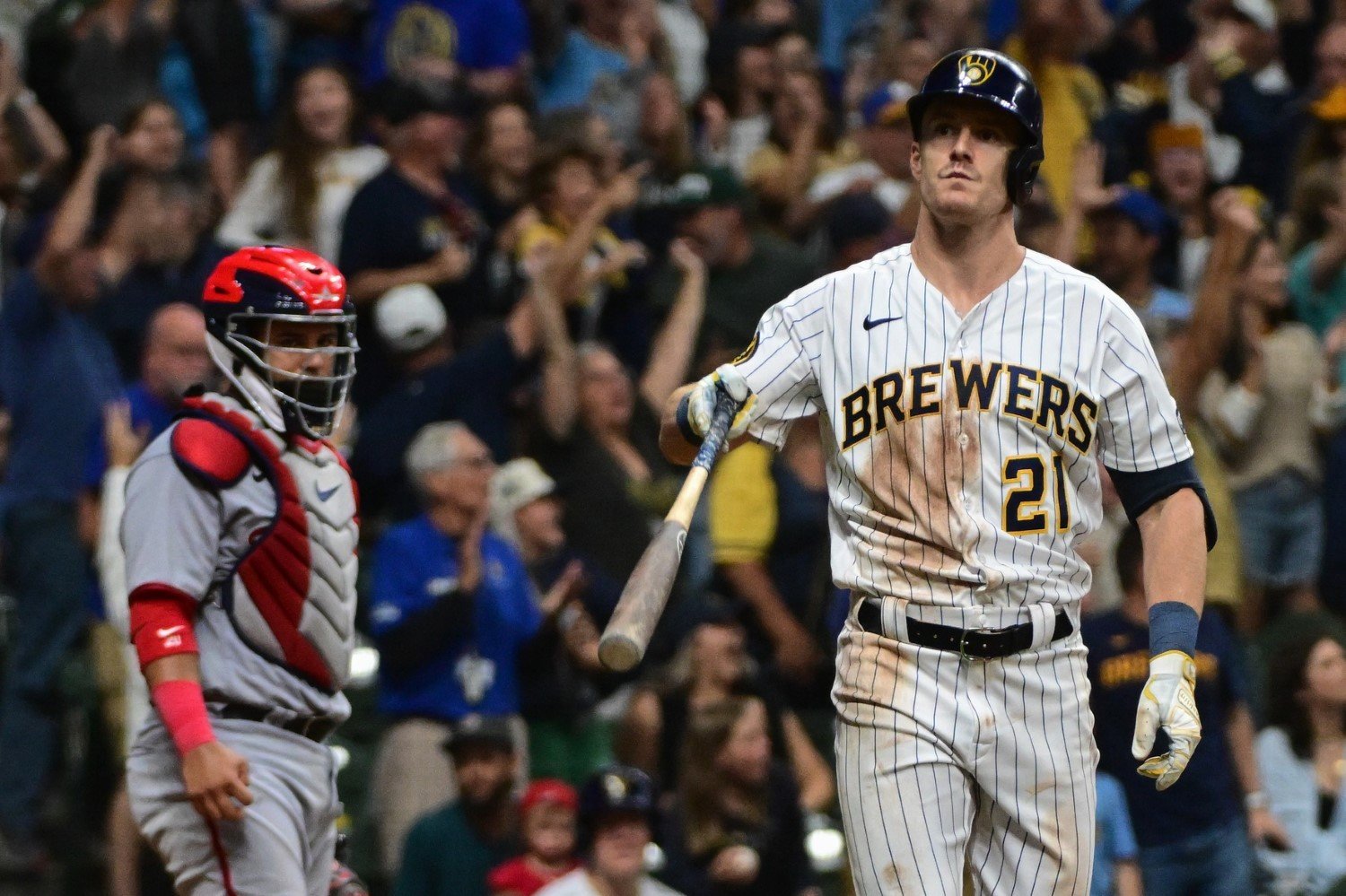 There was never going to be a non-awkward time for the seemingly inevitable departure of David Stearns to run the New York Mets. Even so, the middle of September was a tough time for the news to spread, with the team in good position but still very much in a fight for the division title. With a series of very loud noises, though, three guys acquired by Matt Arnold--not Stearns--erased any thoughts of distraction or tension and made a profound statement: The Brewers are the class of this division, and they're going to be fine under new management. On Friday night, it was William Contreras who brought the Crew back from an early 3-0 deficit with a single, majestic blast. We talked about that hit (in a different context) yesterday. No sooner had Contreras entered the dugout, though, than did the ball leave the park again, thanks to trade deadline acquisition Carlos Santana. It was Santana, too, who piled on the only insurance run to sew things up from there. Saturday's game was even more taut, and seemed even more perilous for a moment. The Nationals completed a four-run comeback when they pushed across a run in the top of the eighth, squaring the score at 5-5. It was still that way when Mark Canha stepped to the plate with the bases loaded and two outs, in the bottom half of the frame. In their month and a half with the team, Santana and Canha have become focal points of an offense that suddenly looks good enough to sustain a deep playoff run. Santana is only hitting .234/.309/.430 with the Crew overall, but that's a meaningful upgrade over the production they got from first base and DH for long stretches of the season. More telling, too, are his numbers since he got his feet under him with his new team. In his last 30 games, he's gone .259/.344/.474, with seven home runs. The Brewers are 21-9 over that stretch, thanks in no small part to Santana. He drew a crucial walk ahead of the Canha grand slam last night, after his two-homer effort Friday. Canha, though, has been a genuine star for the team. Filling the DH role and taking plenty of outfield reps as that unit has dealt with both injuries and rough rookie adjustment periods, he's hit .313/.397/.481. He's the most complete offensive threat they have right now, which (given the way Contreras is hitting) is saying something. The team holds an option on Canha for 2024, and he's made it a no-brainer to exercise it, when it seemed just as clear that this was a pure rental at the time of the trade. This team will bear the fingerprints of Stearns for years to come, and that's a good thing. Stearns is, after Harry Dalton, the second-best executive in the history of the Brewers. He put in place both people and processes that will keep the Brewers in contention for the NL Central crown (and often more) for at least the next half-decade. If there were any worries about whether Arnold can be that good, though, this season should have assuaged them. Out of nowhere, and for so little cost, he landed Contreras and Joel Payamps in a trade that ranks among the most impactful in team history. He brought in Julio Teheran in an emergency, when the starting rotation was almost a shambles, and the team onboarded Teheran smoothly enough to get some great numbers (and several team wins) out of him over the summer. He won the trade deadline handily, even accounting for the clunker that is the Andrew Chafin trade. With Josh Donaldson also looking good, and certainly without any sign of clubhouse friction or tsuris at the moment, you can add another feather to Arnold's cap. The Brewers will host the Wild Card Series, and with the Dodgers and the Braves both experiencing real pitching problems right now, it's not hard to imagine a National League pennant finally coming back to Milwaukee, for the first time since another franchise was in town. Even if that doesn't come to fruition, though, Arnold has proved that his Brewers will be just as dangerous as his predecessor's.
- 8 comments
-
- 2
-

-
- mark canha
- carlos santana
- (and 2 more)
-
"Pitch me outside, and I'll hit .400," Roberto Clemente once said. "Pitch me inside, and they will never find that ball." When the lights went down, they might as well not have come up again. The game was technically only tied, but it was over at that moment. Actually, it was over the moment Contreras--the Brewers' new superstar, their protean slugger with the ability to tailor his swing and his approach to the moment, and a trove of defensive skills never in evidence before he arrived here--connected. The ball sailed 466 feet, which is pure trivia. It could have gone 500, without being one iota more impressive. Clemente's legacy on the field, notably, has never been treated as equal to those of Willie Mays or Henry Aaron. Even Frank Robinson, another contemporary, is widely considered to have been a better player. The stats say those three were all a cut above Clemente. Talk to those who watched Clemente, though, and you hear a reverence that envies nothing. He played in a style and with a completeness and ferocity that made him somehow more impactful than the numbers. That's how that home run by Contreras was. That it flew so far, on such a perfect arc, and that his swing looked so indelibly lethal, was important. It wasn't a wall-scraper. The game might end in a close score, that home run said, but the Brewers and the Nationals were not in the same league. Not really. Sometimes, style does matter. The next batter (Carlos Santana) gave the team a lead they would not relinquish, because this team does not relinquish leads. They're falling into a bit of a habit. It's a bit of rope-a-dope: let the opponent take an early lead or two, claim the advantage in the middle innings, and then shut things down with the lights-out bullpen that has been the constant for this team for half a decade. It's only one of multiple formulae they have in production to keep wins rolling off the assembly line right now, but it's an effective and absorbing one. It's also the best microcosm of what they're now doing with the NL Central. Their lead has stretched to five and a half games, and their magic number has dwindled to 10, They should have the division crown on their heads before they even come home for the final homestand, making their planning much easier in the days ahead. They'll have their aces lined up for the Wild Card Series. They'll have their full stable of relievers ready to back them up. They'll also have Contreras, the man who cut through the nonsense and left an imprint on this game about as deep as the one Clemente left (even if from a huge remove) on the lives of Contreras himself, along with everyone else who has ever loved this hard game. View full article
-
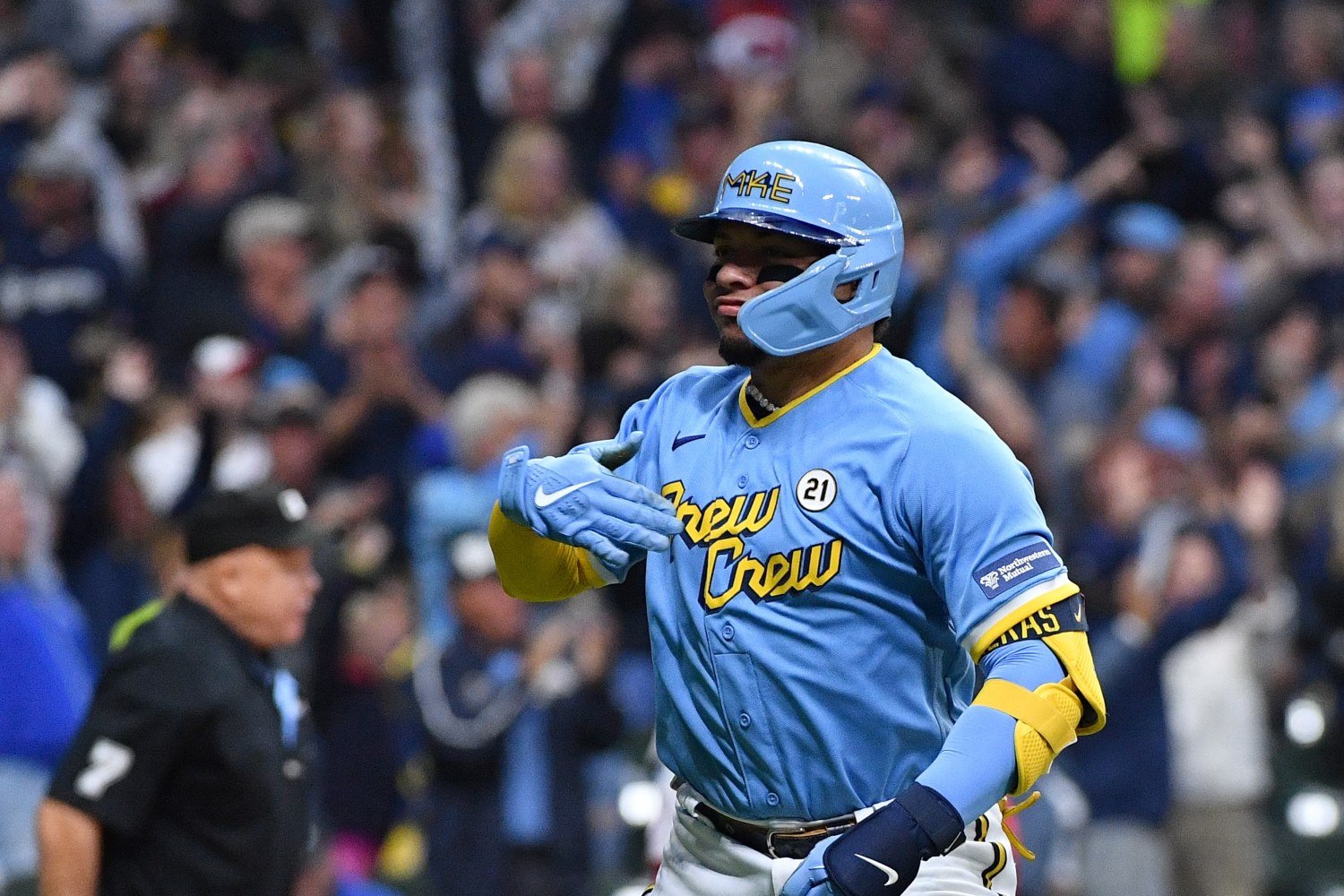 Not all of the juxtapositions Friday night at American Family Field were comfortable ones. It was Roberto Clemente Day throughout MLB, which meant that everyone donned a patch high on the left side of the chest of their jerseys with Clemente's number 21 on it. It's a worthy tribute to one of the giants of the game's history, and it's even more poignant to see many players of Caribbean heritage wear 21 (without a name) on the backs of their jerseys. On the other hand, fun and well-considered as they are in general, the Crew's City Connect uniforms felt garish underneath that patch. Clemente said, and not in a tossed-off way, "When I put on my uniform, I feel I am the proudest man on Earth." He took every aspect of the game that he played with such fire and grace seriously, and that included the trim cleanness of the uniform. Nike's logo resting level with his commemorative patch across a player's chest, alone, would make Clemente uneasy. Their cash- and attention-grabbing alternate uniforms might have flipped the switch between his simmering glower and the tirades of which he was capable, when he saw indignity anywhere. It was a lousy night, too, for the first game in which the Brewers donned a sleeve patch advertising Northwestern Mutual. The pileup of bits of flair made it easy for a casual viewer to think of them all as equally important: the slightly goofy grill logo on the City Connect caps, the Nike logo, the Northwestern Mutual insignia, and that understated 21. Forget what Clemente would think of any of that. I, speaking just for myself, didn't like it. Still, whatever anxieties and even furies Clemente had within him, he masterfully compartmentalized and channeled them when he took the field. His high batting average and (by modern standards) modest power numbers paint a potentially misleading picture of The Great One, to a 21st-century stats ogler. He had speed, and he had extraordinary natural fluidity of movement, but he played with power. He played it hard, and that word--"hard"--doesn't just describe the quantity of exertion he gave each day or night. Clemente wanted a hard game: hard swing, hard contact, hard running, hard slide, hard throw. William Contreras came to the plate in the bottom of the fifth inning, with two on and two outs. At a similar juncture of Thursday's game against the Marlins, the visitors lifted starting pitcher Eury Perez. They brought on slider-slinging righthander George Soriano, who struck out Contreras to end the inning and escape further damage. This time, with the Nationals playing more for pride than position and owning a 3-0 lead, Dave Martinez let his young starter face Contreras for a third time. Refer, if you will, to the Clemente quotation that led this article. When the lights went down, they might as well not have come up again. The game was technically only tied, but it was over at that moment. Actually, it was over the moment Contreras--the Brewers' new superstar, their protean slugger with the ability to tailor his swing and his approach to the moment, and a trove of defensive skills never in evidence before he arrived here--connected. The ball sailed 466 feet, which is pure trivia. It could have gone 500, without being one iota more impressive. Clemente's legacy on the field, notably, has never been treated as equal to those of Willie Mays or Henry Aaron. Even Frank Robinson, another contemporary, is widely considered to have been a better player. The stats say those three were all a cut above Clemente. Talk to those who watched Clemente, though, and you hear a reverence that envies nothing. He played in a style and with a completeness and ferocity that made him somehow more impactful than the numbers. That's how that home run by Contreras was. That it flew so far, on such a perfect arc, and that his swing looked so indelibly lethal, was important. It wasn't a wall-scraper. The game might end in a close score, that home run said, but the Brewers and the Nationals were not in the same league. Not really. Sometimes, style does matter. The next batter (Carlos Santana) gave the team a lead they would not relinquish, because this team does not relinquish leads. They're falling into a bit of a habit. It's a bit of rope-a-dope: let the opponent take an early lead or two, claim the advantage in the middle innings, and then shut things down with the lights-out bullpen that has been the constant for this team for half a decade. It's only one of multiple formulae they have in production to keep wins rolling off the assembly line right now, but it's an effective and absorbing one. It's also the best microcosm of what they're now doing with the NL Central. Their lead has stretched to five and a half games, and their magic number has dwindled to 10, They should have the division crown on their heads before they even come home for the final homestand, making their planning much easier in the days ahead. They'll have their aces lined up for the Wild Card Series. They'll have their full stable of relievers ready to back them up. They'll also have Contreras, the man who cut through the nonsense and left an imprint on this game about as deep as the one Clemente left (even if from a huge remove) on the lives of Contreras himself, along with everyone else who has ever loved this hard game.
 -
By mid-September, every MLB team is tired. The season is long and the schedule is ruthless. On Thursday, though, the Brewers served up a reminder of their signature strength: resisting that physical and mental fatigue better than everyone else. After that, it was just incumbent on the Brewers to hold the lead, and they're experts at that. Adrian Houser gave Craig Counsell five innings, something Perez hadn't quite been able to do for Skip Schumaker. Counsell had fresh arms in his pen, including Joel Payamps, who hadn't pitched in any of the previous three contests in the series. Meanwhile, the Brewers hewed out an insurance run, making things easier for Devin Williams at the end of the day. Throughout the game, there was just more energy on one side than on the other. The Marlins didn't lack talent or interest; they just couldn't keep up with Milwaukee's tenacity and attention to detail. Both Miami batters and pitchers would get ahead in the count, but then be unable to leverage their edge. Instead, the Brewers whittled it away, and then got the win that really matters. Marlins hitters who jumped ahead 2-0 would ground out yawningly on 2-2. Brewers hitters down 1-2 would work back to a full count, then single cleanly over the head of the infield. Games like Thursday are why the Brewers will win the NL Central, and why Counsell should be named the NL Manager of the Year after they do. In various ways, and in partnership with a front office that tries to give him as fresh and balanced a roster as possible, Counsell keeps his charges ready to play games like that one, even on a tough afternoon when the other team needs the win worse than the Brewers do and have the starting pitching advantage. The management of the relentless grind of the season is a skill, and while no team is immune to fatigue or to lapses, the Brewers are as consistent in their mastery of that challenge as any club in baseball. By stealing that win, they got materially closer to another proof of that tenet. View full article
-
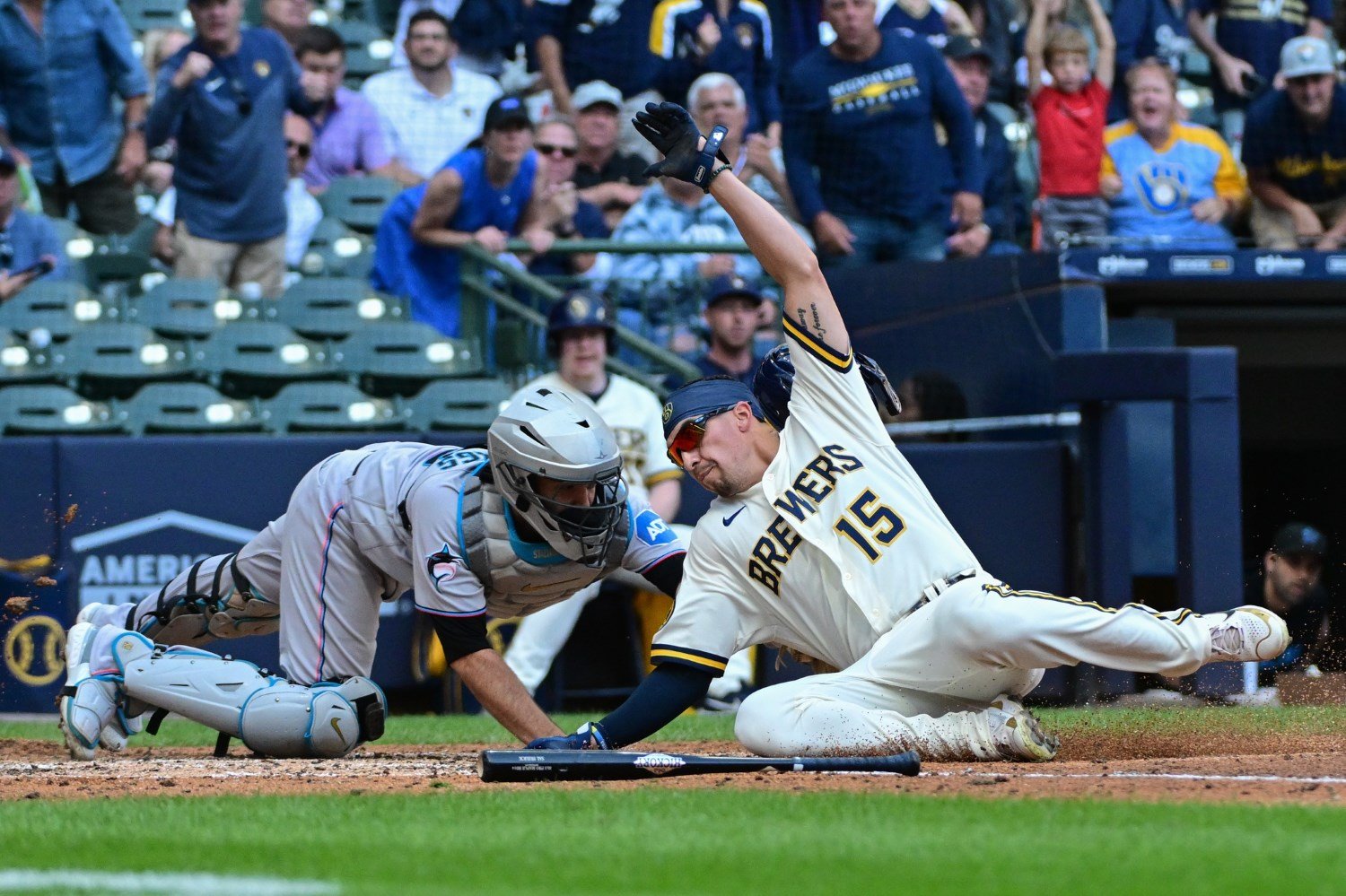 At every juncture during the 4-2 win that secured a three-out-of-four series win for the Brewers over the Miami Marlins Thursday, you could see that the Crew just had more left in their tank than the Wild Card hopefuls from South Florida. They're a deeper, more experienced, smarter team, but in the slanting sunlight and deeper, cooler shadows of September, they also looked like a sharper, fresher one. That showed up in a few big ways. William Contreras hit a gapper in the fourth inning for a leadoff double, but if Marlins left fielder Bryan De La Cruz had been a bit quicker on his first step toward center field, he could have cut it off. The next batted ball was a fly to De La Cruz, and he caught it, but it was a bit more of a wrestling match than it should have been. De La Cruz ended up catching the routine ball with his feet still moving toward the foul line, but reaching back up to the other side with his gloved left hand. His minute imperfection in technique and position was an opening, and Contreras pressed the unlikely advantage, taking third base (albeit with an ugly, half-accidental dive). Contreras then scored on a sacrifice fly, erasing the thin lead the Marlins had scratched out in the top of the first inning, before the chilling and obfuscating shadows swept out from behind home plate and made life Hell for hitters for a few frames. If De La Cruz makes either of two plays slightly better, the tally never happens, but Contreras hit the ball sharply enough to beat him in the first case, and he surprised him and won the base with speed in the second. The Marlins got the lead back in the top of the fifth, but it didn't last. Tyrone Taylor swatted a game-tying double in the bottom of the frame, getting around on an inside fastball from Eury Perez. (Again, De La Cruz was surprisingly late in getting to the ball, costing the Fish 90 feet.) The 20-year-old rookie righthander had beaten the Brewers often with his heater the first time through the order, when he had the benefit of the shadows and of the team's unfamiliarity with his formidable combination of 98-MPH gas and breaking stuff. He was down to 95 and 96 miles per hour by the fourth and fifth, though, and when he tried to go to a more breaking ball-heavy approach, the Crew waited him out. They wore down the young hurler and sat on the pitch they knew was losing its hop. The decisive moment, as it turned out, came not long after Taylor's double, when Sal Frelick lined a single to right. Jesús Sánchez got there quickly and made a hard, accurate throw. With two outs, Taylor was going home all the way, but he'd just been rounding third when the ball got to Sánchez. In trying to anticipate and leave room to adjust to Taylor's slide, though, catcher Jacob Stallings moved just behind the foul line and the plate to take the ball on a long hop. That was a fatal mistake, and Taylor made Stallings and the Marlins pay. With a late adjustment to slide to the front of the dish, he narrowly avoided Stallings's tag, too slow and too short because he'd had to catch the ball and then lunge back in the direction whence the ball came. After that, it was just incumbent on the Brewers to hold the lead, and they're experts at that. Adrian Houser gave Craig Counsell five innings, something Perez hadn't quite been able to do for Skip Schumaker. Counsell had fresh arms in his pen, including Joel Payamps, who hadn't pitched in any of the previous three contests in the series. Meanwhile, the Brewers hewed out an insurance run, making things easier for Devin Williams at the end of the day. Throughout the game, there was just more energy on one side than on the other. The Marlins didn't lack talent or interest; they just couldn't keep up with Milwaukee's tenacity and attention to detail. Both Miami batters and pitchers would get ahead in the count, but then be unable to leverage their edge. Instead, the Brewers whittled it away, and then got the win that really matters. Marlins hitters who jumped ahead 2-0 would ground out yawningly on 2-2. Brewers hitters down 1-2 would work back to a full count, then single cleanly over the head of the infield. Games like Thursday are why the Brewers will win the NL Central, and why Counsell should be named the NL Manager of the Year after they do. In various ways, and in partnership with a front office that tries to give him as fresh and balanced a roster as possible, Counsell keeps his charges ready to play games like that one, even on a tough afternoon when the other team needs the win worse than the Brewers do and have the starting pitching advantage. The management of the relentless grind of the season is a skill, and while no team is immune to fatigue or to lapses, the Brewers are as consistent in their mastery of that challenge as any club in baseball. By stealing that win, they got materially closer to another proof of that tenet.
 -
Rather than welcome back their previously injured fifth starter to fill his old slot in the rotation Wednesday night, the Brewers will do so today. Doing so gives them a rare gift at this time of year: time. Image courtesy of © Michael McLoone-USA TODAY Sports With 18 days left in the regular season, the Brewers still have 17 games to play. The MLB season is a grind, and the challenges Milwaukee will face are hardly unique, but they're one week into what will be 23 games in 24 days to finish the year. Adrian Houser's return to the starting rotation is perfectly timed to give a little relief to the whole pitching staff down the stretch, beginning by stretching out that rotation itself. In electing to withhold Houser until Thursday and give Colin Rea a (slightly disguised) start Wednesday, the team bought a fifth day of rest between starts for Corbin Burnes, Brandon Woodruff, and Freddy Peralta. Burnes and Woodruff had pitch counts near 110 in their dominant outings last turn, and Peralta just pitches better and more often on five days' rest, anyway. In fact, Peralta has had at least five days between starts 13 of the last 15 times he's gone. Burnes has gone on four days just twice in his last 16 starts. Only one of Woodruff's starts since coming off the injured list was on four days, After the Crew had such success with a six-man rotation in 2021, it's tempting to see that as an intentional tactic, but it's just as much a product of the vagaries of the schedule. They've enjoyed eight off days since the All-Star break, tied for the most in baseball. The Cubs, Guardians, and Mariners, by contrast, have had just five. The imbalance will begin to resolve itself Thursday, as a few other teams get an off day while the Brewers finish their four-game series with the Marlins, but that's how open their calendar has been for the last two months. As a result, they've rarely needed to use the tight, five-man, five-day rotation. Since they have a four-game lead with which to work and the depth to do it, we could see Craig Counsell and Chris Hook choose not to change that now. One option for the balance of the season is to stick with a six-man rotation the whole way. That would involve using Wade Miley, Burnes, and Woodruff this weekend against the Nationals, then Peralta, Rea, and Houser to start next week's four-game set in St. Louis, before starting the rotation again. It's unlikely they'll want to go all the way to the end of the season using all six. That would line up the big three to pitch the Cubs series at the end of the campaign, but that's far from ideal, because it would force them to use Miley as the Game 1 starter in the eventual Wild Card Series. Instead, they're most likely to want to drop Rea back out of the mix now, converting him to long relief. That would lead, eventually, to Peralta, Houser, and Miley starting the final three games of the regular season, which could make them fractionally more vulnerable to the Cubs winning that series. It's still unlikely the Cubs will catch them, though, and by doing things that way, the team would line up Burnes, Woodruff, and Peralta to start the three Wild Card Series on their customary five days' rest. In the meantime, they'd each make one more start on four days, but that shouldn't be a significant problem. A rotation this perfectly balanced for a playoff push--deep enough to finish off a division title, but loaded enough at the top to be lethal in a long postseason series--is a tremendous gift. The thin schedule the team enjoyed during the slog of the late summer is another. Now, they should be fresh and in excellent shape for the final fortnight, even if that stretch will be more relentless (in terms of having to be at the park every day) than usual. View full article
-
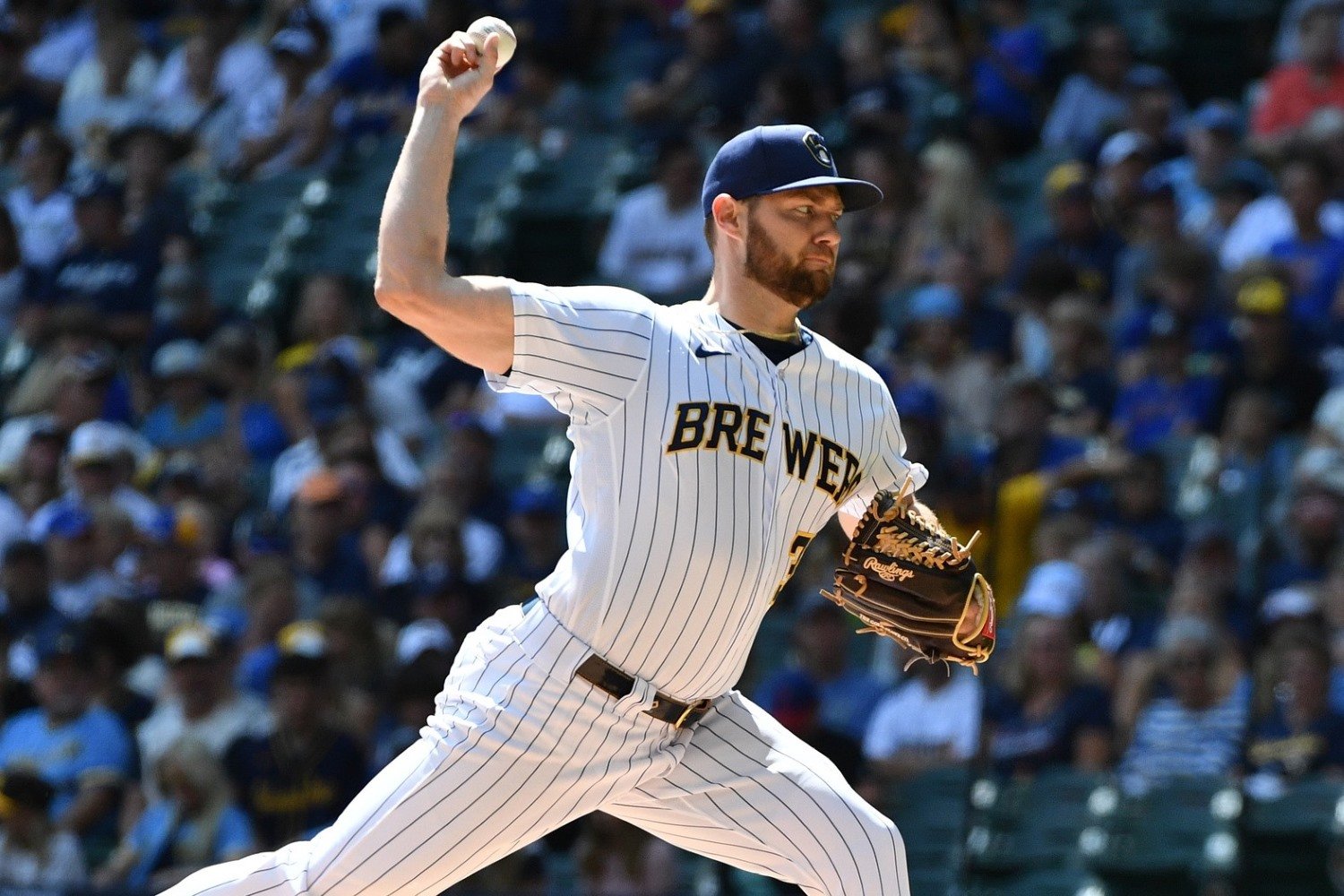 With 18 days left in the regular season, the Brewers still have 17 games to play. The MLB season is a grind, and the challenges Milwaukee will face are hardly unique, but they're one week into what will be 23 games in 24 days to finish the year. Adrian Houser's return to the starting rotation is perfectly timed to give a little relief to the whole pitching staff down the stretch, beginning by stretching out that rotation itself. In electing to withhold Houser until Thursday and give Colin Rea a (slightly disguised) start Wednesday, the team bought a fifth day of rest between starts for Corbin Burnes, Brandon Woodruff, and Freddy Peralta. Burnes and Woodruff had pitch counts near 110 in their dominant outings last turn, and Peralta just pitches better and more often on five days' rest, anyway. In fact, Peralta has had at least five days between starts 13 of the last 15 times he's gone. Burnes has gone on four days just twice in his last 16 starts. Only one of Woodruff's starts since coming off the injured list was on four days, After the Crew had such success with a six-man rotation in 2021, it's tempting to see that as an intentional tactic, but it's just as much a product of the vagaries of the schedule. They've enjoyed eight off days since the All-Star break, tied for the most in baseball. The Cubs, Guardians, and Mariners, by contrast, have had just five. The imbalance will begin to resolve itself Thursday, as a few other teams get an off day while the Brewers finish their four-game series with the Marlins, but that's how open their calendar has been for the last two months. As a result, they've rarely needed to use the tight, five-man, five-day rotation. Since they have a four-game lead with which to work and the depth to do it, we could see Craig Counsell and Chris Hook choose not to change that now. One option for the balance of the season is to stick with a six-man rotation the whole way. That would involve using Wade Miley, Burnes, and Woodruff this weekend against the Nationals, then Peralta, Rea, and Houser to start next week's four-game set in St. Louis, before starting the rotation again. It's unlikely they'll want to go all the way to the end of the season using all six. That would line up the big three to pitch the Cubs series at the end of the campaign, but that's far from ideal, because it would force them to use Miley as the Game 1 starter in the eventual Wild Card Series. Instead, they're most likely to want to drop Rea back out of the mix now, converting him to long relief. That would lead, eventually, to Peralta, Houser, and Miley starting the final three games of the regular season, which could make them fractionally more vulnerable to the Cubs winning that series. It's still unlikely the Cubs will catch them, though, and by doing things that way, the team would line up Burnes, Woodruff, and Peralta to start the three Wild Card Series on their customary five days' rest. In the meantime, they'd each make one more start on four days, but that shouldn't be a significant problem. A rotation this perfectly balanced for a playoff push--deep enough to finish off a division title, but loaded enough at the top to be lethal in a long postseason series--is a tremendous gift. The thin schedule the team enjoyed during the slog of the late summer is another. Now, they should be fresh and in excellent shape for the final fortnight, even if that stretch will be more relentless (in terms of having to be at the park every day) than usual.
 -
By now, several members of the Brewers bullpen have become feared throughout the league. They have two of the hardest throwers in baseball and the man with the single most devastating pitch. Quietly, though, a funky middle reliever is dominating just as much. Image courtesy of © Benny Sieu-USA TODAY Sports It's almost impossible to be intimidated by Hoby Milner. He's thin, bordering on gawky. He has one of those open, friendly faces that turn the most imposing glare into more of an accidental smolder. He throws 89 miles per hour. His name is Hoby, for God's sake. Of course, he also has a 1.98 ERA this season. He's been, by Win Probability Added, the 42nd-most valuable pitcher in the National League. Only Giants closer Camilo Doval has made more appearances on zero days' rest, and Milner has often come into dirty innings, with runners on base and the game in danger of getting out of hand, only to freeze it right where it is. He began to emerge as a secret weapon for Craig Counsell in 2022. This season, he's no secret, but he's an even more lethal weapon. Everything about Milner's steady improvement since joining the Brewers in 2021 bespeaks their brilliance at pitching development and instruction. Last summer, he moved beyond life as a left-handed specialist, thanks to changes he and the Brewers made in his pitch mix, his mechanics, and his approach. In baseball, though, you always have to be moving forward, or the league will catch up to you and you might as well be moving backward. Even after a season in which he finally put down roots with a team and earned a lasting spot, Milner had to keep improving. He's done so, in several impressive ways. First, consider his release point. In the pieces linked above from last August, we discussed the way he moved toward the first-base side of the rubber, making the horizontal angle of his pitches more extreme for opponents. He's only ventured farther this year. That horizontal extreme is possible, in part, because of his odd arm angle, and that's another way in which he's made himself even more of an outlier this season. Hitters have to pick up a ball coming at them from roughly the height of their navel, and from a yard wide of the edge of the rubber. This season, however, he's continued another, equally valuable and even more impressive trend: he's releasing the ball closer to home plate, by getting down the mound better and extending slightly further through release. The extra few inches of depth on that release point make it even more of a head-wrecker for the batter. The ball gets on them more quickly, and they have less time to make sense of what they're able to pick up out of his hand. As a result of this, even though he's lost half a tick of velocity on his fastballs this year, he's actually had a very slightly higher perceived velocity, according to Statcast. In the above paragraph, the most important letter is the 's' at the end of 'fastballs'. In the past, Milner has mostly been a one-fastball guy. When he got to the Brewers in 2021, he relied on a four-seamer. The Brewers, seeing the potential for a huge horizontal contrast in movements and location between his various pitches, had him swap it out for a sinker in 2022. That's sound pitching development theory. Teams sometimes get themselves and their players into trouble when they try to implement multiple changes at once. That can be necessary, at times, but it's very difficult. Milner was able to be a successful reliever for a season with the substitution of the four-seamer for a sinker. In 2023, though, he's come back having consolidated that improvement, and compounded its value by reintroducing the four-seamer. In so doing, he's throwing harder in another way, too, because his four-seamer works at the top of the strike zone, while everything else he throws dips down to the knees or below. That means that he can once again change hitters' eye levels. His four-seamer earns whiffs on about twice as high a share of swings as does his sinker, so by throwing the four-seamer more, he gets the same benefits he would get out of an extra mile per hour or two of velocity. Breaking it down by handedness, we can see that Milner really still leans on the sinker against lefties, but has added the four-seamer as that different look. It's righties against whom the four-seamer has come back as an especially potent weapon, though, as Milner uses it to set up his changeup and put hitters on the defensive. Thanks to these adjustments, Milner is getting even weaker and less dangerous contact than he induced last year. He's always been good at limiting exit velocity, and the switch to the sinker in 2022 turned him into a good earner of ground balls. With the four-seamer helping him utilize the whole strike zone, though, he's gotten more pop-ups and allowed fewer well-hit line drives this year, without losing the grounders. Of the 264 pitchers who have allowed at least 150 batted balls, Milner has the ninth-lowest expected weighted on-base average (xwOBA) against him. It's funny: Most of Milner's changes this year have been to his release characteristics and his fastballs, but he remains very much a junkballer. His essential, indispensable skills are the movement and command and unusual looks of his curve and changeup, which have changed little this year. Slightly altering the overall package, though--adding a pitch that targets a different part of the zone, and tweaking the probabilities the hitter has to weigh as they look for his staple offerings--has made a significant difference. Last year, Milner was good. This year, he's been great, and he's as big a part of the team's success as a relief unit as anyone but Devin Williams. No player better symbolizes the value of the Brewers' pitching support infrastructure than Milner. View full article
