


Matthew Trueblood
-
Posts
1,964 -
Joined
-
Last visited
-
Days Won
10
Content Type
Profiles
Forums
Blogs
Events
News
2026 Milwaukee Brewers Top Prospects Ranking
Milwaukee Brewers Videos
2022 Milwaukee Brewers Draft Picks
Milwaukee Brewers Free Agent & Trade Rumors, Notes, & Tidbits
Guides & Resources
2023 Milwaukee Brewers Draft Picks
2024 Milwaukee Brewers Draft Picks
The Milwaukee Brewers Players Project
2025 Milwaukee Brewers Draft Pick Tracker
2026 Milwaukee Brewers Draft Tracker: Picks & Bonuses
Store
Downloads
Gallery
Everything posted by Matthew Trueblood
-
 Entering 2023, it would have been hard to imagine a world in which trading Corbin Burnes could make any significant bloc of Brewers fans happy. The 2021 NL Cy Young Award winner was only a half-step worse than that in 2022, and he's put up some of the most dazzling pitching performances in team history. When he and the team were at odds in the window around his arbitration hearing in the spring, fans (rightly) sided with Burnes. One more disappointing playoff exit and one more not-quite-ace-level season later, though, it's now possible to imagine life after Burnes without gritting one's teeth in anger. Had Craig Counsell still been the manager of this team, it would have been awfully difficult to envision the team trading Burnes, because Counsell is not only a great manager, but an experienced and established one. He's disliked previous moves in that same vein. It might have happened anyway, but it would have had to be done delicately. It might have, however slightly, even shaped the return the team accepted. Those considerations are out the window now. Whoever becomes the new manager of the Brewers in the next week, they will have far less capital with the fans and with the organization than Counsell had. The only bounds on Matt Arnold and his deep supporting cast, now, are the ones handed down by Mark Attanasio. In the first full week of the offseason, with the GM Meetings yielding their usual explosion of half-sourced, vague-but-interesting rumors, all we heard about was the Brewers being in sell mode. That might turn out to be true, or true-adjacent. The team did decline an affordable option on Mark Canha, effectively, by trading him even before the Counsell news broke. When Ken Rosenthal reports the team is open to trading any player on the roster, it's clear that the team is (at least) not poised to make a huge splash in free agency and chase a World Series title at big future cost. Let's hit pause, though. Arnold is not David Stearns, but even in his very short time at the top of the baseball operations hierarchy, he's shown a Stearns-like nose for the football, metaphorically speaking. No one expected the Milwaukee Brewers to jump into the Sean Murphy trade last winter and come out with both a long-term answer at catcher and a valuable set-up reliever, but that's just what they did. That was, in all likelihood, a once-in-a-decade confluence of stupidity by other teams and having the right resources ready to capitalize, but lesser cousins of the Contreras trade could show up this winter. Trading Burnes, for example, does not have to be a pure selloff. The Brewers could make a deal with their neighbors to the west, sending Burnes to the Minnesota Twins in exchange for Jorge Polanco, who would help shore up the weak lineup and who has the versatility to play some second base and some third base, according to the team's needs. A swap that sent Burnes to the Bronx in exchange for Gleyber Torres (another, even better potential solution to the team's holes on the infield) might sound like a pipedream, but the Yankees are looking to give some of their younger talent a try around the horn, and Burnes would fill an obvious need for them. Those aren't even especially creative possibilities. Arnold could, instead, trade a talented young outfielder (Garrett Mitchell best hits the sweet spot of having real trade value but not looking like a long-term fixture for this team) and a starting pitching prospect for a player whom the Brewers could then turn into a star via their strong player development--someone like Tigers righthander Matt Manning, or the Royals' Brady Singer, or a hitter like the Rockies' Brendan Rodgers. Remember, it was only two years ago that the Brewers acquired an inconsistent shortstop and turned him into a star. Over the last several years, they've been very good at grabbing fringy first basemen and designated hitters and turning them into legitimate sluggers. This could be a winter in which they find another diamond in the rough, and Counsell being gone almost makes that easier--it allows the team to gamble on an unproven player to an extent that would be harder to pull off with the higher, more rigid expectations that Counsell's success created. I could see a Devin Williams trade this winter, infusing the upper levels of the farm system with an exciting piece or two and handing over the relief corps to the perfectly capable quartet of Joel Payamps, Abner Uribe, Trevor Megill, and Hoby Milner. I could see a deal in which Willy Adames brings back a controllable starting pitcher with some upside. I could see the team further speculating in the catching market, because in addition to having a short-term need for a backup to William Contreras, they have that instruction and development infrastructure around the catching position that could allow them to brew up another surprise star and create numerous options for the future. All of that neglects the reality that, in Tyler Black, Jackson Chourio, and Robert Gasser, the Brewers also have three players who figure to emerge as major, positive contributors in 2024, whether that be filling the holes that became apparent as 2023 wore on or stepping into new voids created by trades. This farm system isn't quite elite, but it offers a lot of potential impact as soon as next year. Chourio, in particular, could have a transformative impact on this lineup, even if it won't happen until June or so. There's no question that Counsell's departure changes the matrix of possibilities for the Brewers this winter. It forecloses some, but it also opens others. The Brewers might be more likely to unload some veteran talent this winter than they were a fortnight ago, but count me among those who still expect them to compete (perhaps with a much different style of team) in 2024. In the meantime, we could see another couple of moves that put the same charge in this community that happened when the Contreras trade happened last December. Am I telling myself a fairytale? Can the Brewers use some newfound flexibility to change lanes without losing time on their road to the World Series? Let's talk about options, old and new, and whether this managerial change could create new avenues to succeeding in the small market that is Milwaukee.
 -
For a few minutes Monday afternoon, Brewers fans could exhale with a feeling of relief. The Mets hired Carlos Mendoza, not Craig Counsell, to manage the team in 2024. Then, the other shoe fell. Counsell is gone, to take the helm of (of all teams) the rival Chicago Cubs. Who do you want to see take over? Does this change what you want to see the Crew do this winter? Let's begin the conversation. View full article
-
Oh My Goodness: Craig Counsell is Leaving, and It's for the Cubs
Matthew Trueblood posted an article in Brewers
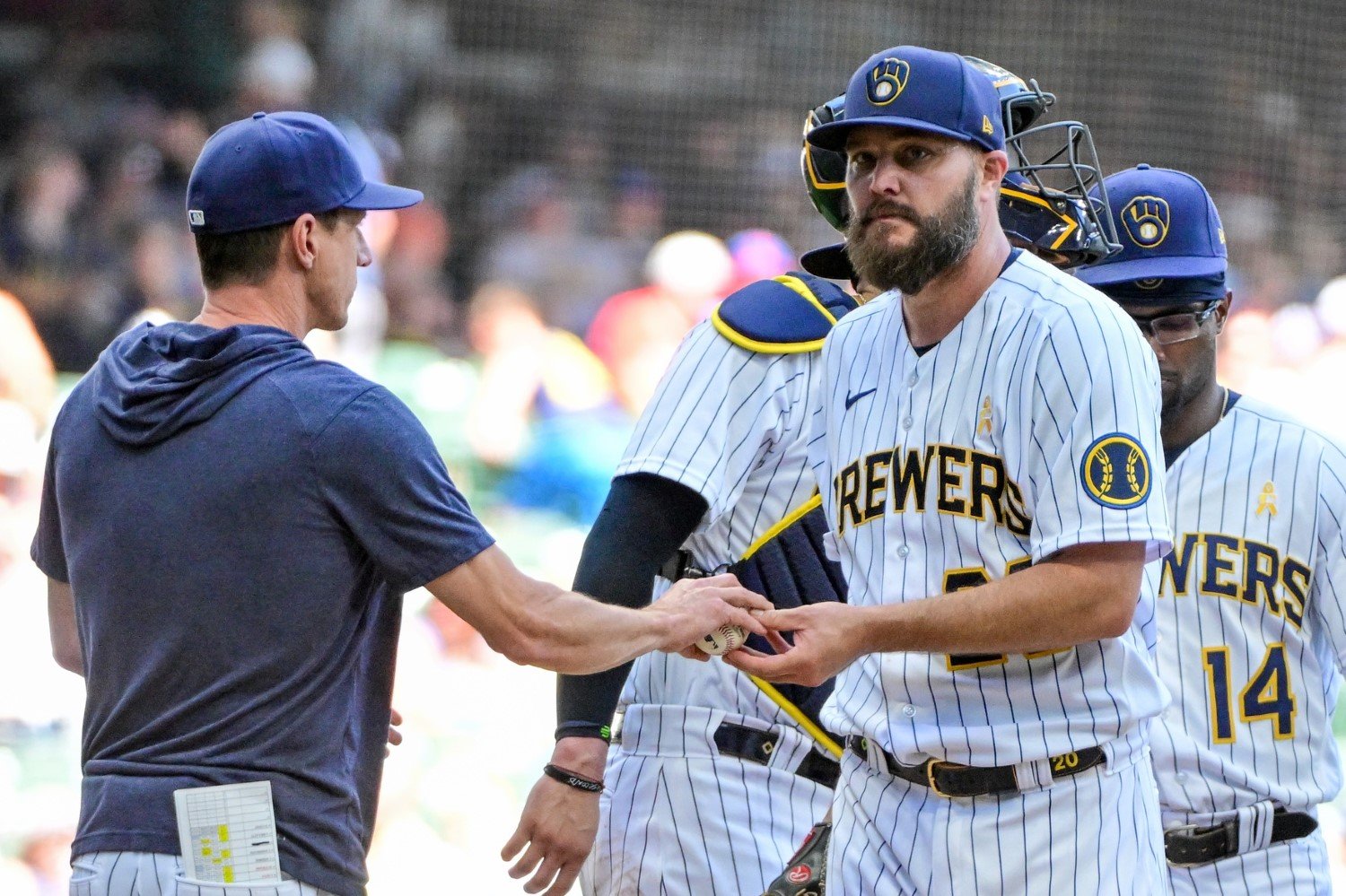
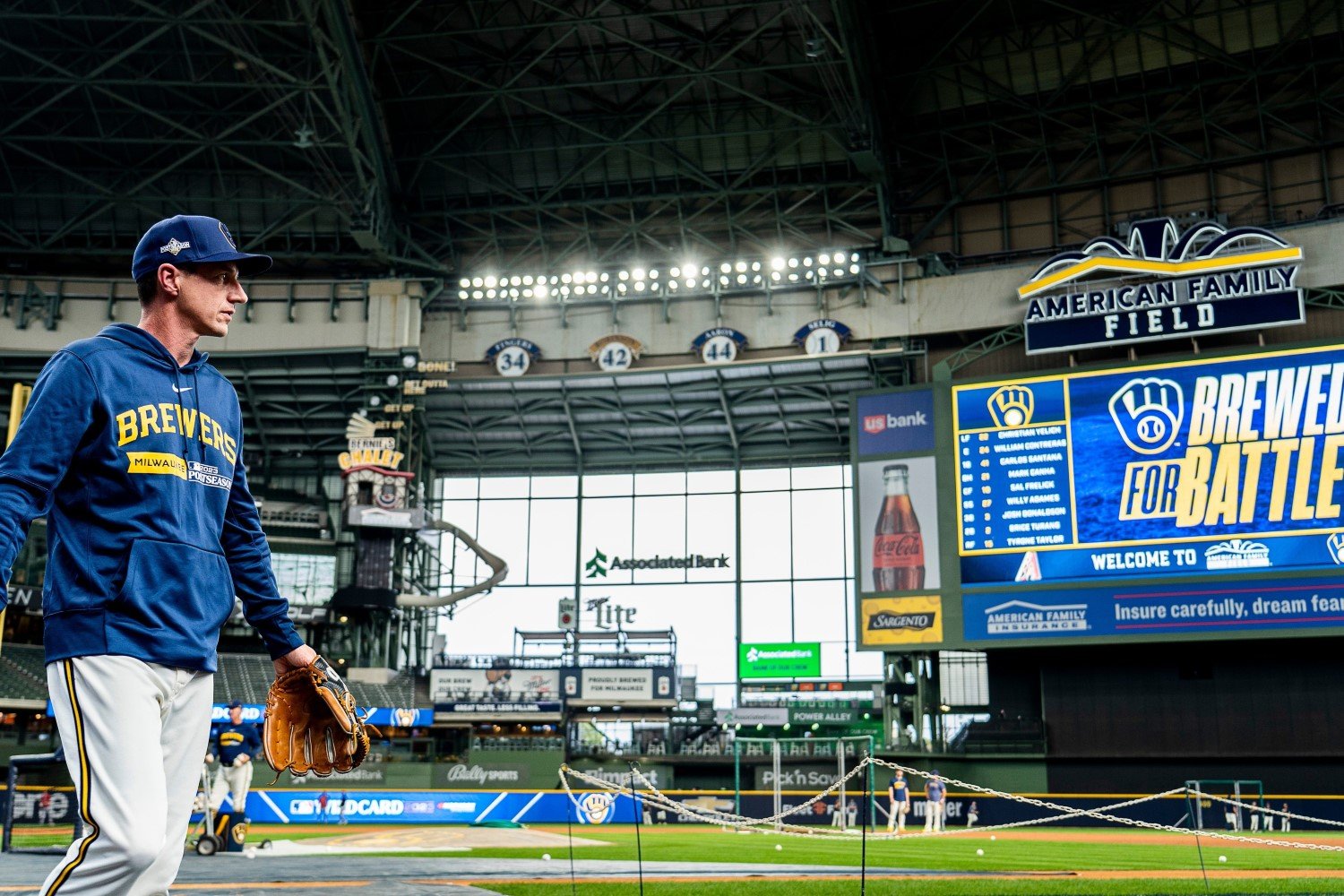 This is an Earth-shattering turn of events, for the whole NL Central. Counsell's departure forces the Crew to find a new manager, of course, but his defection to the North Siders instantly makes that team a greater and more formidable threat to win the division title next year, too. This is a double whammy, and will make the next few weeks and months immensely important (and immensely unpredictable) for the Brewers. Right away, the news we had to expect has come: Counsell will be the highest-paid manager, not just in 2024, but in baseball history. He'll make more than $40 million on a five-year contract, one that soars far beyond even what the Cubs did to land Joe Maddon almost a decade ago. Who do you want to see take over? Does this change what you want to see the Crew do this winter? Let's begin the conversation.
 -
 Well into his late 30s and after a second straight season haunted by injuries to his back and shoulder, Wade Miley isn't likely to find more than $9 million on this winter's free-agent market. By declining his side of a mutual option in the deal he signed with the Brewers prior to 2023, then, he's either indicating a desire to find a multiyear deal on which to finish his career, or announcing (albeit not in so many words) that he doesn't want to try pitching through the incessant pain anymore, even for a healthy payday. Either way, he now seems wildly unlikely to be back with Milwaukee. The Brewers will pay Miley a $1-milllion buyout, but this gives them some newfound flexibility. Even had Miley exercised his option, they could have elected to shove him out the door, but now they definitely have a new opening in their rotation. That unit looks like this: Corbin Burnes Freddy Peralta Adrian Houser Colin Rea Robert Gasser In all likelihood, the team wants to enter 2024 with at least one better pitcher than those last three. Houser figures to make north of $5 million via arbitration, and could be a non-tender candidate for that reason. Even assuming they retain him, he could be used in relief. The Brewers need an external upgrade to the rotation. This development shakes loose some money they could spend on a pitcher with significant upside, but without the kind of recent success that would push them into the upper tier of this deep class of starters. Let's run through a few of them. Michael Wacha Despite two consecutive seasons in which he's limited hard contact and posted a solid ERA, Wacha is a free agent, after the cash-strapped Padres declined his two-year, $32-million option for 2024-25. He's gone to a sinker more often these last two years, so there's some reason to believe he can sustain the improvements he's made recently. He'd slot in well in the middle of the rotation, and his skill set meshes well with the Brewers' strong defense. Lucas Giolito The second half of 2023 was a disaster for Giolito, who was traded twice and didn't find any success with either the Angels or the Guardians. He's enjoyed long stretches of success in the big leagues, though, and his pitch mix and delivery are reminiscent of some guys with whom Chris Hook and his staff have had good success recently. Whereas Wacha is likely to sign for just two years, a Giolito deal could stretch to four, but he might also be open to a make-good contract that would make him a free agent again after 2024. Jack Flaherty A former high-school teammate of Giolito, Flaherty is even further disconnected from his former star status than Giolito is. He's been dreadful since the start of 2022, with a WHIP of 1.60. His stuff has fallen off badly, but it's still playable, in theory. In practice, however, Flaherty might have the worst fastball command in the league at the moment. Nor has he had any feel or gotten any utility from the sinker that contributed significantly to his Cy Young-contending season in 2019. Happily, though, the Brewers are the kind of team who could plausibly fix that--and thereby get a good pitcher at a deep discount. Michael Lorenzen In the first season in which he's ever stayed healthy as a full-time starter, Lorenzen looked so good that he got traded from the Tigers to the contending Phillies. He threw a no-hitter in his first start wearing red pinstripes at Citizen's Bank Park. Then, everything collapsed on him. Still, the core skills he demonstrated during the majority of the season mark him as a potential mid-rotation starter, and he's likely to cost less than many of the other ones available this winter. Kenta Maeda He's not much younger or much healthier than Miley, but the small differences in each axis make Maeda much more desirable. Without even average velocity, he spun yet another season of good work in the rotation, employing good command and control and showing a facility with all quadrants of the strike zone. He's athletic in the way the Brewers like their starters to be, just as Lorenzen and Flaherty are, and despite his age, he could be a trustworthy playoff starter--if he's managed carefully over the course of the season. The Brewers can and should aim for an even bigger addition than these guys, but the loss of Miley opens the door to signing one of them without foreclosing on the chances of signing another, higher-profile hurler. This winter of seemingly endless possibilities (but also many complex constraints) only seems to be getting more unpredictable.
 -
In something of a surprise, Wade Miley declined his side of a mutual option for 2024 this weekend. Miley joins a crowded group of free-agent starting pitchers, and the Brewers now have some money to spend and another slot in their rotation to fill. Image courtesy of © Benny Sieu-USA TODAY Sports Well into his late 30s and after a second straight season haunted by injuries to his back and shoulder, Wade Miley isn't likely to find more than $9 million on this winter's free-agent market. By declining his side of a mutual option in the deal he signed with the Brewers prior to 2023, then, he's either indicating a desire to find a multiyear deal on which to finish his career, or announcing (albeit not in so many words) that he doesn't want to try pitching through the incessant pain anymore, even for a healthy payday. Either way, he now seems wildly unlikely to be back with Milwaukee. The Brewers will pay Miley a $1-milllion buyout, but this gives them some newfound flexibility. Even had Miley exercised his option, they could have elected to shove him out the door, but now they definitely have a new opening in their rotation. That unit looks like this: Corbin Burnes Freddy Peralta Adrian Houser Colin Rea Robert Gasser In all likelihood, the team wants to enter 2024 with at least one better pitcher than those last three. Houser figures to make north of $5 million via arbitration, and could be a non-tender candidate for that reason. Even assuming they retain him, he could be used in relief. The Brewers need an external upgrade to the rotation. This development shakes loose some money they could spend on a pitcher with significant upside, but without the kind of recent success that would push them into the upper tier of this deep class of starters. Let's run through a few of them. Michael Wacha Despite two consecutive seasons in which he's limited hard contact and posted a solid ERA, Wacha is a free agent, after the cash-strapped Padres declined his two-year, $32-million option for 2024-25. He's gone to a sinker more often these last two years, so there's some reason to believe he can sustain the improvements he's made recently. He'd slot in well in the middle of the rotation, and his skill set meshes well with the Brewers' strong defense. Lucas Giolito The second half of 2023 was a disaster for Giolito, who was traded twice and didn't find any success with either the Angels or the Guardians. He's enjoyed long stretches of success in the big leagues, though, and his pitch mix and delivery are reminiscent of some guys with whom Chris Hook and his staff have had good success recently. Whereas Wacha is likely to sign for just two years, a Giolito deal could stretch to four, but he might also be open to a make-good contract that would make him a free agent again after 2024. Jack Flaherty A former high-school teammate of Giolito, Flaherty is even further disconnected from his former star status than Giolito is. He's been dreadful since the start of 2022, with a WHIP of 1.60. His stuff has fallen off badly, but it's still playable, in theory. In practice, however, Flaherty might have the worst fastball command in the league at the moment. Nor has he had any feel or gotten any utility from the sinker that contributed significantly to his Cy Young-contending season in 2019. Happily, though, the Brewers are the kind of team who could plausibly fix that--and thereby get a good pitcher at a deep discount. Michael Lorenzen In the first season in which he's ever stayed healthy as a full-time starter, Lorenzen looked so good that he got traded from the Tigers to the contending Phillies. He threw a no-hitter in his first start wearing red pinstripes at Citizen's Bank Park. Then, everything collapsed on him. Still, the core skills he demonstrated during the majority of the season mark him as a potential mid-rotation starter, and he's likely to cost less than many of the other ones available this winter. Kenta Maeda He's not much younger or much healthier than Miley, but the small differences in each axis make Maeda much more desirable. Without even average velocity, he spun yet another season of good work in the rotation, employing good command and control and showing a facility with all quadrants of the strike zone. He's athletic in the way the Brewers like their starters to be, just as Lorenzen and Flaherty are, and despite his age, he could be a trustworthy playoff starter--if he's managed carefully over the course of the season. The Brewers can and should aim for an even bigger addition than these guys, but the loss of Miley opens the door to signing one of them without foreclosing on the chances of signing another, higher-profile hurler. This winter of seemingly endless possibilities (but also many complex constraints) only seems to be getting more unpredictable. View full article
-
Today's an exciting day. Just as MLB free agency officially opens, we're launching the first-ever Brewer Fanatic Offseason Handbook, a comprehensive project covering the Brewers offseason. Check it out. Image courtesy of © Charles LeClaire-USA TODAY Sports Over the next four weeks, we're going to roll out an avalanche of deep-dive content here at Brewer Fanatic, in the form of a downloadable (and downright gorgeous) PDF. The Handbook is a four-week product, with this first week covering the big-picture questions and laying out a blueprint for the overall winter; next week focusing on free agency and the options that exist there; the following week focused on trade possibilities; and the final one centered on the considerable and pivotal role that will be played by the team's internal pipeline of talent. You can download this week's installment of the handbook for free, using the link at the bottom of this piece. In it, you'll find my breakdown of the team's complicated payroll situation and their broad needs; Harold Hutchison's examination of the crucial Craig Counsell question; Jason Wang on the many tricky option and arbitration decisions the team needs to navigate; and Jake McKibbin's overview of the opportunities for the team to execute some contract extensions. Starting next week, though, this especially detailed, high-level content will be available exclusively to our Caretakers. For those of you who aren't yet familiar with it, our Caretakers program is a way to support the site and its growth financially, and it comes with some nifty perks. Sign up to become a Caretaker, and you'll have full access to the Offseason Handbook, plus ad-free use of the site and more great opportunities as we continue to grow and branch out. Interested in becoming a Caretaker of the site? 100% of Caretaking proceeds go back to our content creators, helping fund projects like this Offseason Handbook. During the handbook release period, we are offering 25% off all Caretaker packages, just use the coupon code HANDBOOK at checkout. To become a Brewer Fanatic Caretaker, click here. Whether Counsell stays or goes, whether or not the team extends any of their incumbent stars, and whether or not they find another creative way to acquire a talented and controllable player this winter, the offseason ahead looks like a very important one to the future of the franchise. We've got it covered in a big, expansive, and immensely enjoyable way. Click the link below to download Week One of the Offseason Handbook, and sign up to become one of our Caretakers so that you can keep reading about the world of possibilities that will keep the hot stove warm this winter. Download this week's FREE handbook file below: View full article
-
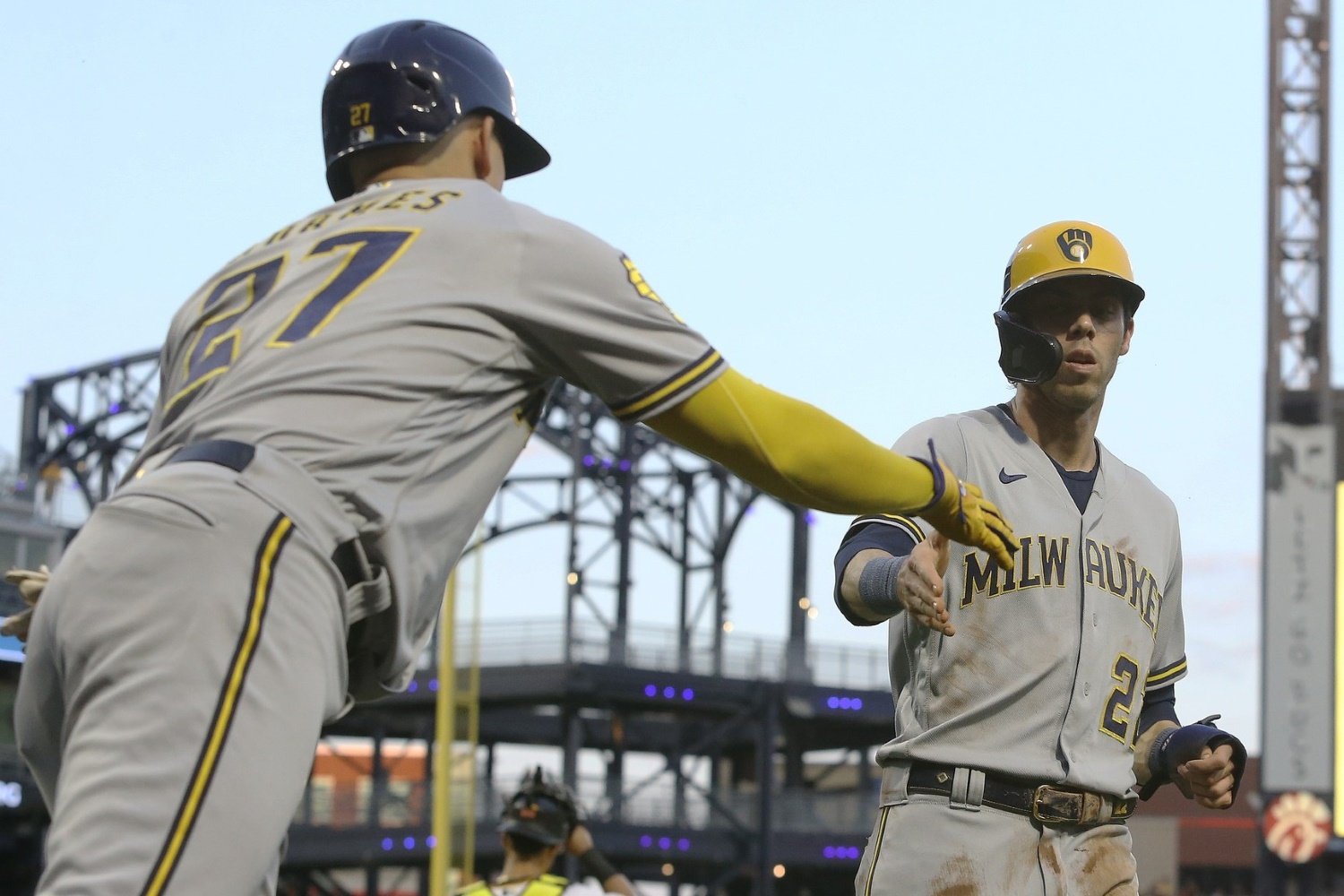 Over the next four weeks, we're going to roll out an avalanche of deep-dive content here at Brewer Fanatic, in the form of a downloadable (and downright gorgeous) PDF. The Handbook is a four-week product, with this first week covering the big-picture questions and laying out a blueprint for the overall winter; next week focusing on free agency and the options that exist there; the following week focused on trade possibilities; and the final one centered on the considerable and pivotal role that will be played by the team's internal pipeline of talent. You can download this week's installment of the handbook for free, using the link at the bottom of this piece. In it, you'll find my breakdown of the team's complicated payroll situation and their broad needs; Harold Hutchison's examination of the crucial Craig Counsell question; Jason Wang on the many tricky option and arbitration decisions the team needs to navigate; and Jake McKibbin's overview of the opportunities for the team to execute some contract extensions. Starting next week, though, this especially detailed, high-level content will be available exclusively to our Caretakers. For those of you who aren't yet familiar with it, our Caretakers program is a way to support the site and its growth financially, and it comes with some nifty perks. Sign up to become a Caretaker, and you'll have full access to the Offseason Handbook, plus ad-free use of the site and more great opportunities as we continue to grow and branch out. Interested in becoming a Caretaker of the site? 100% of Caretaking proceeds go back to our content creators, helping fund projects like this Offseason Handbook. During the handbook release period, we are offering 25% off all Caretaker packages, just use the coupon code HANDBOOK at checkout. To become a Brewer Fanatic Caretaker, click here. Whether Counsell stays or goes, whether or not the team extends any of their incumbent stars, and whether or not they find another creative way to acquire a talented and controllable player this winter, the offseason ahead looks like a very important one to the future of the franchise. We've got it covered in a big, expansive, and immensely enjoyable way. Click the link below to download Week One of the Offseason Handbook, and sign up to become one of our Caretakers so that you can keep reading about the world of possibilities that will keep the hot stove warm this winter. Download this week's FREE handbook file below:
 -
I love stuff like that. Hearkens to the earliest days of sabermetrics on the web, when pitcher wins still had a strong foothold in player evaluation and it was necessary to dig deep to find stuff like this. We all watched and saw reasons for the Brewers' fluctuations in offensive production throughout the year, but the result and impact for any one starter feels random, because it is.
-
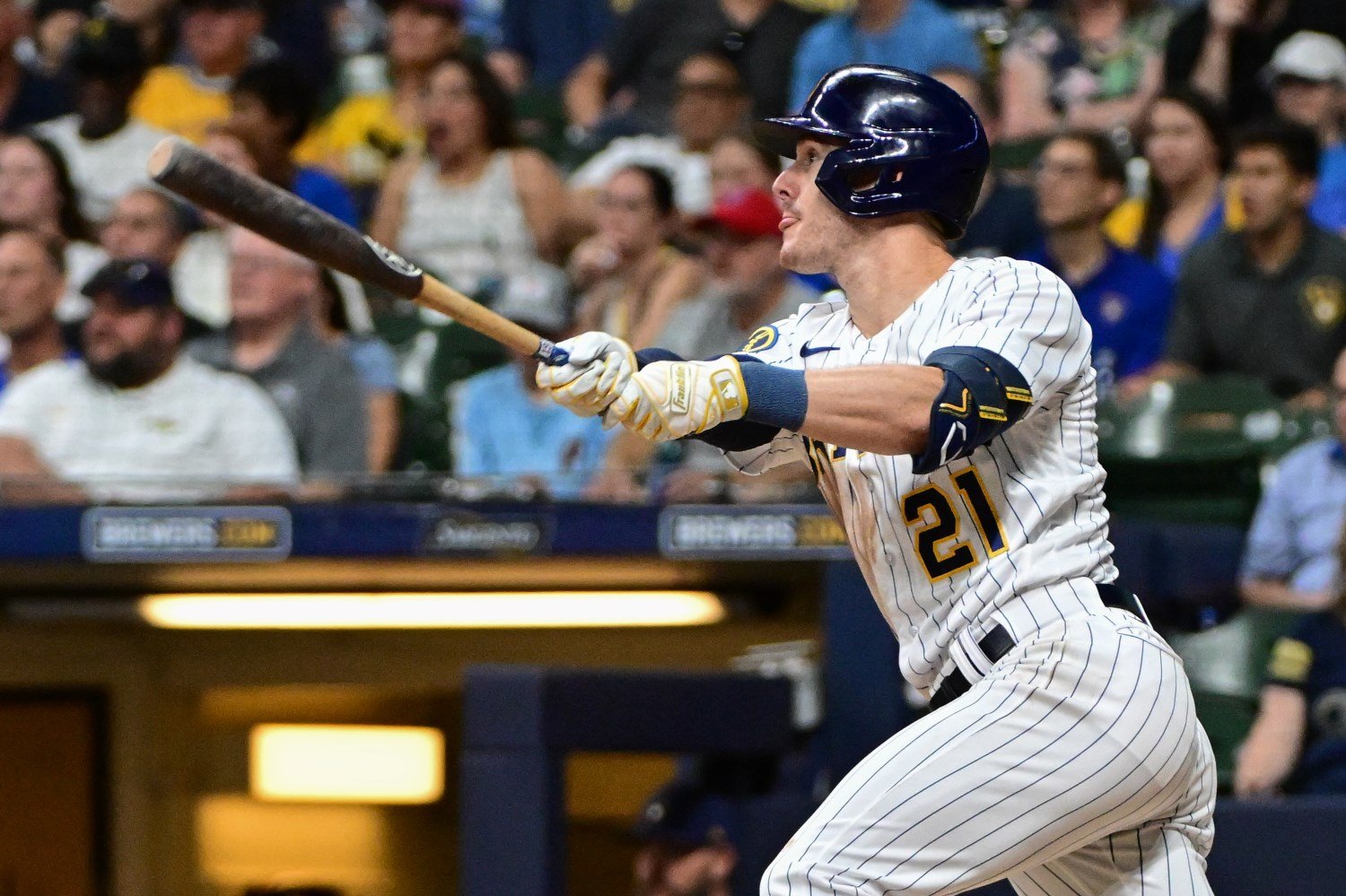 It shouldn't surprise us that the Brewers elected not to pay Mark Canha $11.5 million for 2024. Just under a year ago, they traded Hunter Renfroe (a similarly valuable but limited player who was set to earn a similar salary via arbitration) to the Angels. They believe they can find and acquire adequate versions of this type of player for a fraction of the price, and that they can always go get someone (as they did with Canha) if their first attempt (like Brian Anderson, in 2023) doesn't pan out. The last time around, that confidence was augmented by the fact that the team anticipated having Garrett Mitchell, Joey Wiemer, Tyrone Taylor, and Sal Frelick feature prominently in the 2023 outfield. Injuries interrupted Taylor's season, nearly obliterated Mitchell's, and delayed Frelick's debut, but sure enough, the team patched together the outfield well enough to get them over the finish line as NL Central champions--partially thanks to Canha himself. This time, those players are all still in the picture (at least for the moment), but the people helping to drive their decision are two who have yet to crack the big-league roster: Jackson Chourio and Tyler Black. Chourio projects to reach the majors and have a significant impact in 2024, and Black is already knocking loudly on the door thereto. Canha would have gotten his playing time with next year's squad as a designated hitter, in right field, and at first base. If Chourio and Black play the way the organization hopes they will, they'll have to take up a significant share of the reps at those positions. Trading Canha cleared the way for the club's two top prospects. It's hard not to see this as something more, though. Canha's departure also clears an eight-figure space in the budget for next year, which figures to be pretty tight. The timing of this deal tells us, in pretty certain terms, that the Brewers were unwilling to exercise the option themselves, despite Canha's solid production in 2023 and his long track record as a useful hitter. That's a bummer. It implies that the payroll might have a lower, harder ceiling on it than we hoped as of a few weeks ago, and if that's true, it ripples out to other, more obvious aspects of the endeavor of repeating as division champions. That the team got only a minor-league reliever in exchange for Canha (though a relatively promising one) signals the lack of any real leverage on the part of the team. It does help them, in a small way, because Blake Holub not only isn't on the 40-man roster, but doesn't need to be added to it until next winter. The team gained a little bit of pitching depth, and they cleared a spot on their roster, and they saved some money they clearly didn't feel that they could spend, anyway. In that way, this is a good move. In the context of the Crew's winter plans, it's clearly necessary. Whether it will ultimately pay dividends, though, depends on what comes next. We've seen the warts on all of the internal options to replace Canha. External ones who will cost meaningfully less than he would have could include names like Carlos Santana, Michael Brantley, Randal Grichuk, or Adam Duvall, and Santana would be a welcome returnee, but he'd hardly move the needle in the lineup. This reads as a big gamble on either an unprecedently healthy and consistent season from Taylor; a sudden developmental step forward by Wiemer, Mitchell, or Frelick; or the massive rookie breakout by either Chourio or Black that is the secret hope of every Brewers fan. Teams who are willing to spend a bit more liberally can bet on that kind of upside without giving up the surety and positive clubhouse influence of Canha. The Brewers are actively choosing what could be a more sustainable path, but they do so at the cost of some depth and margin for error. Canha will be 35 by next spring, and he might not have repeated the good work he did late in 2023 with Milwaukee even if they brought him back. By deciding they can't risk that at the price of his option, though, the team is rolling a different set of dice. That's the nature of this front office, and it brings their next likely decisions into clearer focus.
 -
Saturday saw the first significant news of the MLB offseason for the Milwaukee Brewers, as they traded away a key piece of their division championship team and began charting a course for the winter ahead. Image courtesy of © Benny Sieu-USA TODAY Sports It shouldn't surprise us that the Brewers elected not to pay Mark Canha $11.5 million for 2024. Just under a year ago, they traded Hunter Renfroe (a similarly valuable but limited player who was set to earn a similar salary via arbitration) to the Angels. They believe they can find and acquire adequate versions of this type of player for a fraction of the price, and that they can always go get someone (as they did with Canha) if their first attempt (like Brian Anderson, in 2023) doesn't pan out. The last time around, that confidence was augmented by the fact that the team anticipated having Garrett Mitchell, Joey Wiemer, Tyrone Taylor, and Sal Frelick feature prominently in the 2023 outfield. Injuries interrupted Taylor's season, nearly obliterated Mitchell's, and delayed Frelick's debut, but sure enough, the team patched together the outfield well enough to get them over the finish line as NL Central champions--partially thanks to Canha himself. This time, those players are all still in the picture (at least for the moment), but the people helping to drive their decision are two who have yet to crack the big-league roster: Jackson Chourio and Tyler Black. Chourio projects to reach the majors and have a significant impact in 2024, and Black is already knocking loudly on the door thereto. Canha would have gotten his playing time with next year's squad as a designated hitter, in right field, and at first base. If Chourio and Black play the way the organization hopes they will, they'll have to take up a significant share of the reps at those positions. Trading Canha cleared the way for the club's two top prospects. It's hard not to see this as something more, though. Canha's departure also clears an eight-figure space in the budget for next year, which figures to be pretty tight. The timing of this deal tells us, in pretty certain terms, that the Brewers were unwilling to exercise the option themselves, despite Canha's solid production in 2023 and his long track record as a useful hitter. That's a bummer. It implies that the payroll might have a lower, harder ceiling on it than we hoped as of a few weeks ago, and if that's true, it ripples out to other, more obvious aspects of the endeavor of repeating as division champions. That the team got only a minor-league reliever in exchange for Canha (though a relatively promising one) signals the lack of any real leverage on the part of the team. It does help them, in a small way, because Blake Holub not only isn't on the 40-man roster, but doesn't need to be added to it until next winter. The team gained a little bit of pitching depth, and they cleared a spot on their roster, and they saved some money they clearly didn't feel that they could spend, anyway. In that way, this is a good move. In the context of the Crew's winter plans, it's clearly necessary. Whether it will ultimately pay dividends, though, depends on what comes next. We've seen the warts on all of the internal options to replace Canha. External ones who will cost meaningfully less than he would have could include names like Carlos Santana, Michael Brantley, Randal Grichuk, or Adam Duvall, and Santana would be a welcome returnee, but he'd hardly move the needle in the lineup. This reads as a big gamble on either an unprecedently healthy and consistent season from Taylor; a sudden developmental step forward by Wiemer, Mitchell, or Frelick; or the massive rookie breakout by either Chourio or Black that is the secret hope of every Brewers fan. Teams who are willing to spend a bit more liberally can bet on that kind of upside without giving up the surety and positive clubhouse influence of Canha. The Brewers are actively choosing what could be a more sustainable path, but they do so at the cost of some depth and margin for error. Canha will be 35 by next spring, and he might not have repeated the good work he did late in 2023 with Milwaukee even if they brought him back. By deciding they can't risk that at the price of his option, though, the team is rolling a different set of dice. That's the nature of this front office, and it brings their next likely decisions into clearer focus. View full article
-
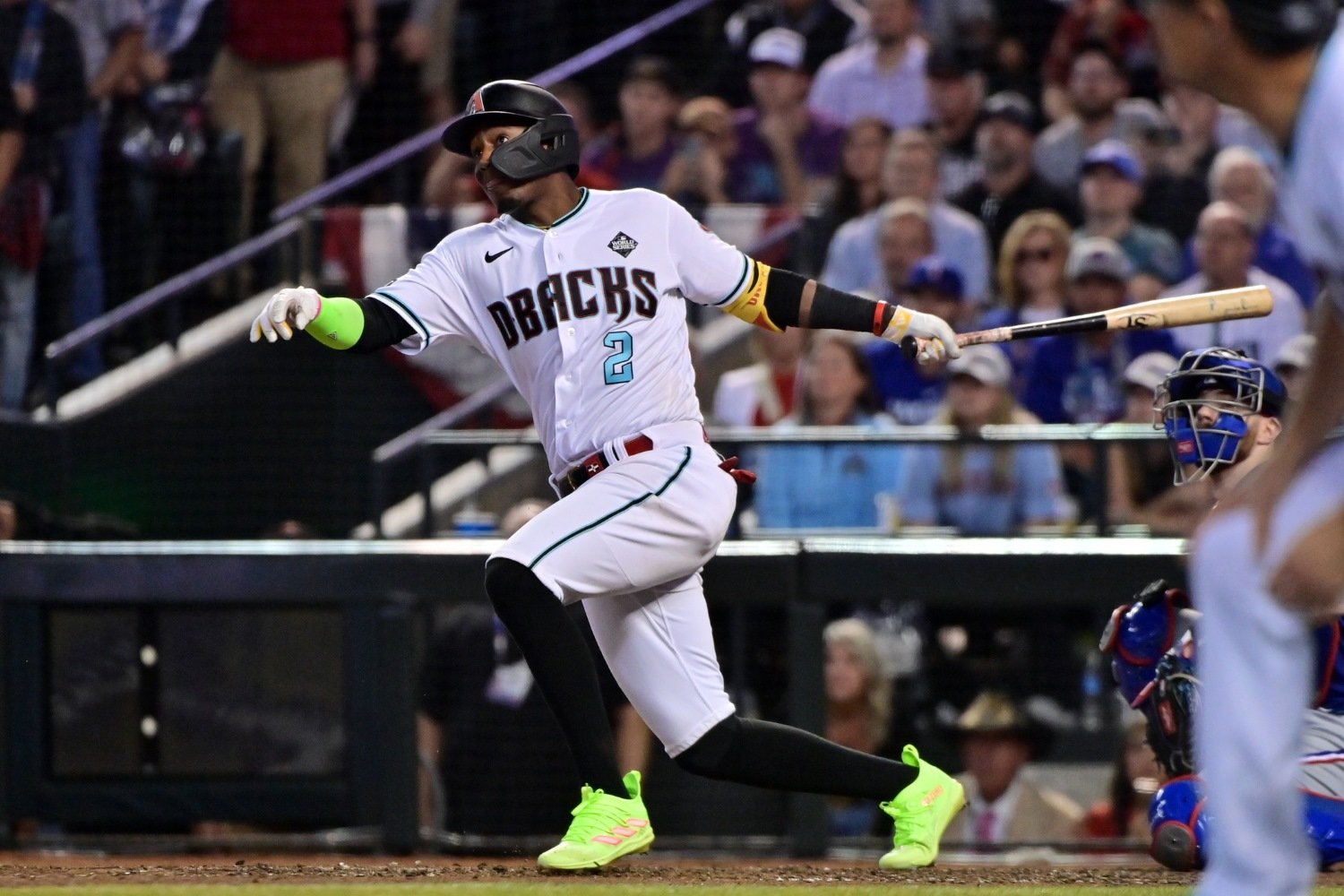 As underwhelming as Jordan Lawlar's first cup of coffee in the big leagues was, he's likely to be the starting shortstop for Arizona on Opening Day in 2024. His speed and power are dazzling, and he could be an impactful defender at the most important position on the infield. Since Ketel Marte was terrific in the first season of his contract extension (and even better in the playoffs), he's pretty well locked in at second base. At third, there's more fluidity, because Evan Longoria might retire or sign elsewhere, but they do still have Emmanuel Rivera in the mix. Somewhere in there, Geraldo Perdomo has to find a home. The 2023 All-Star just turned 24 last month, during the Snakes' magical postseason run. He doesn't have Lawlar's or Marte's tools. He makes up for the shortfall, though, by being one of the best hitters in baseball at the art of controlling the strike zone. He chases outside the zone extraordinarily rarely, and when he swings, he makes contact at one of the highest rates in baseball. That's why Perdomo had a .353 OBP this year. Pair those skills with good speed and above-average defense at shortstop, and Perdomo is a first-division regular--even if he won't come close to making the All-Star team most years. He's under team control through 2027, and won't even become arbitration-eligible until after 2024. He's the kind of player who can catalyze the lineup from the bottom of the batting order, in addition to his considerable defensive value. It's not hard to imagine why the Brewers would have interest. Under what circumstances could they pry him loose? After all, while Perdomo would be a third baseman so unorthodox as to make any roster builder uneasy, he could play the position, and he's a better hitter than is Rivera. He could also remain the regular shortstop to open the season, with Lawlar either sanding off his rough edges in the minor leagues or manning the hot corner. Perdomo is a valuable player, and although he's a problematic fit for the team who currently hold the rights to him, any trade for him would have to include someone pretty good. As it happens, the Diamondbacks came up one legitimate starting pitcher short of giving the Rangers a real fight in the Series this fall. They'll still have Zac Gallen and Merrill Kelly next year, and Brandon Pfaadt seems to have turned the corner in his emergence as a mid-rotation starter, but the team still needs help in that unit. Kelly is likely to decline slightly, with age. Injuries are always a lurking threat. There's a framework, here, involving the Brewers trading Corbin Burnes to Arizona in exchange for a package centered around Perdomo. Obviously, barring a trade of Willy Adames, Perdomo wouldn't play shortstop for the Crew. Nor is Milwaukee any better positioned to use him at third base than are the Diamondbacks given their need for power at the corners. At second base, though, Perdomo could be an improvement on Brice Turang, who showed a similar dearth of power but nowhere near the same zone and contact skills as Perdomo this year. Then, too, there's always a chance that the Crew do elect to trade Adames, and Perdomo would make a fine replacement. Marte would be the best fit for Milwaukee, but he's probably endeared himself too much to the fan base for the team to consider trading him now, even as his contract makes him fairly expensive. Lawlar is exciting enough to be almost untouchable in trades. Rivera wouldn't make the Brewers any better, relative to fringe options like Owen Miller and Abraham Toro who already cling to the edges of the roster. Perdomo might represent a sweet spot, though, and could be a high-upside addition to a team still in need of depth throughout the lineup. What do you think of the Diamondbacks as potential trade partners for the Crew this winter? Are there any other members of the team who make more sense? Let the hot stove percolate.
 -
The Arizona Diamondbacks eliminated the Brewers from the 2023 postseason, and went on to the World Series. Their magic ran out there, though, and now, they might be a prime place for Milwaukee to find infield help for 2024. Image courtesy of © Matt Kartozian-USA TODAY Sports As underwhelming as Jordan Lawlar's first cup of coffee in the big leagues was, he's likely to be the starting shortstop for Arizona on Opening Day in 2024. His speed and power are dazzling, and he could be an impactful defender at the most important position on the infield. Since Ketel Marte was terrific in the first season of his contract extension (and even better in the playoffs), he's pretty well locked in at second base. At third, there's more fluidity, because Evan Longoria might retire or sign elsewhere, but they do still have Emmanuel Rivera in the mix. Somewhere in there, Geraldo Perdomo has to find a home. The 2023 All-Star just turned 24 last month, during the Snakes' magical postseason run. He doesn't have Lawlar's or Marte's tools. He makes up for the shortfall, though, by being one of the best hitters in baseball at the art of controlling the strike zone. He chases outside the zone extraordinarily rarely, and when he swings, he makes contact at one of the highest rates in baseball. That's why Perdomo had a .353 OBP this year. Pair those skills with good speed and above-average defense at shortstop, and Perdomo is a first-division regular--even if he won't come close to making the All-Star team most years. He's under team control through 2027, and won't even become arbitration-eligible until after 2024. He's the kind of player who can catalyze the lineup from the bottom of the batting order, in addition to his considerable defensive value. It's not hard to imagine why the Brewers would have interest. Under what circumstances could they pry him loose? After all, while Perdomo would be a third baseman so unorthodox as to make any roster builder uneasy, he could play the position, and he's a better hitter than is Rivera. He could also remain the regular shortstop to open the season, with Lawlar either sanding off his rough edges in the minor leagues or manning the hot corner. Perdomo is a valuable player, and although he's a problematic fit for the team who currently hold the rights to him, any trade for him would have to include someone pretty good. As it happens, the Diamondbacks came up one legitimate starting pitcher short of giving the Rangers a real fight in the Series this fall. They'll still have Zac Gallen and Merrill Kelly next year, and Brandon Pfaadt seems to have turned the corner in his emergence as a mid-rotation starter, but the team still needs help in that unit. Kelly is likely to decline slightly, with age. Injuries are always a lurking threat. There's a framework, here, involving the Brewers trading Corbin Burnes to Arizona in exchange for a package centered around Perdomo. Obviously, barring a trade of Willy Adames, Perdomo wouldn't play shortstop for the Crew. Nor is Milwaukee any better positioned to use him at third base than are the Diamondbacks given their need for power at the corners. At second base, though, Perdomo could be an improvement on Brice Turang, who showed a similar dearth of power but nowhere near the same zone and contact skills as Perdomo this year. Then, too, there's always a chance that the Crew do elect to trade Adames, and Perdomo would make a fine replacement. Marte would be the best fit for Milwaukee, but he's probably endeared himself too much to the fan base for the team to consider trading him now, even as his contract makes him fairly expensive. Lawlar is exciting enough to be almost untouchable in trades. Rivera wouldn't make the Brewers any better, relative to fringe options like Owen Miller and Abraham Toro who already cling to the edges of the roster. Perdomo might represent a sweet spot, though, and could be a high-upside addition to a team still in need of depth throughout the lineup. What do you think of the Diamondbacks as potential trade partners for the Crew this winter? Are there any other members of the team who make more sense? Let the hot stove percolate. View full article
-
Earlier this week, Sports Info Solutions released the runners-up for their prestigious Fielding Bible Awards at each position. Technically speaking, the Brewers had two players on that list. Should they bring both back in 2024? Image courtesy of © Benny Sieu-USA TODAY Sports It wasn't Carlos Santana's glove that made him most attractive to the Brewers at last year's trade deadline. The team needed an infusion of power that didn't come with a nullifying sub-.300 on-base percentage. That's a specialty for Santana, who has spent a decade and a half drifting around MLB, racking up walks and hitting for steady (if generally unspectacular) power. A former catcher, he's also been very good with the leather since his long-ago transition to first base. He'll turn 38 years old next April, and other first basemen have better range, but Santana has terrific hands, good fundamentals, and a vestige of the arm that made him a viable catcher, on the rare occasions when that comes into play at the cold corner. The Brewers saw all of this on display after they acquired Santana in July. He clubbed 11 home runs over the final two months of the season, and although they came at the cost of some of his usual patience, that was exactly what Milwaukee's lineup needed. His defense was a noticeable upgrade from the likes of Rowdy Tellez and Owen Miller. Perhaps most of all, though, he became immediately respected and beloved in the clubhouse. He's played for four different teams since the start of 2022, and the last two teams to sign him as a free agent were both non-contenders looking to sew up some production on the cheap. Yet, he's ended each of the last two campaigns as a leader in the clubhouse of a playoff team. All of this invites us to ask: under what circumstances would it make sense for the Brewers to bring Santana back in 2024? Presumably, given his age and his non-elite (however venerable) status, he's only going to command a one-year deal. In 2023, he got $6.75 million from the Pirates on the free market. Good as he was, he's one year closer to the inevitable day when he'll be unable to catch up to the fastball anymore, or when good positioning and footwork won't allow him to get to ground balls at the edge of his range. He's unlikely to make substantially more than that 2023 salary in 2024. At roughly $7 million, he'd be a reasonably cheap solution at first base for the Brewers. They're not going to tender a contract to Tellez, who would be in line to make $5 million or so via arbitration and was nowhere near being worth that in 2023. Santana is a much more dependable, well-rounded alternative, for almost no more money. Alas, it's not just Tellez to whom we need to compare him. If Santana is merely a league-average hitter (as some metrics suggest), then he's a below-average one for his position. The Brewers need to bolster their offense, and have a fairly limited budget and just a few positions at which to do it. Spending $7 million without materially closing the gap between themselves and the superior offenses with whom they were competing at the top of the National League last year is a tough sell. To some extent, perhaps, the feasibility of bringing back Santana depends on how strongly you feel that Tyler Black and Jackson Chourio can be plus bats right away. While neither seems all that likely to break camp with the Crew, both Black and Chourio figure to be with the parent club by Flag Day or so. If they hit the way they've each demonstrated the ability to, they can do much of the heavy lifting in terms of making this a better offense. At that point, a veteran hitter and leader like Santana would be well worth a deal like the one we've discussed. Finally, let's turn our attention Willy Adames, the other Brewer who came in second for one of the (should-be) coveted Fielding Bible Awards. As the shortstop and the biggest star on the team's infield, Adames is almost a de facto captain of this squad. He's entering the final year of his arbitration eligibility (and thus, of the Brewers' control over him), and in line to claim an eight-figure salary through that process. As we knew there would be, there have been whispers and rumors and MLB Trade Rumors polls about whether the team should trade Adames this winter. In fact, in that poll of readers of MLBTR, 60.7 percent of respondents think the team should pull the trigger and move their star shortstop. It feels like most of those voters must be non-Brewers fans. Having seen Brice Turang fail to hit big-league pitching for a season, and without another obvious candidate in the organization to take the reins, extending Adames makes far more sense than trading him--not least because, after an uneven season, his trade value is slightly down. anyway. More likely than either trading or extending him, of course, is keeping him for one year and letting him leave via free agency next winter. For now, suffice it to say that keeping him for 2024 seems like a no-brainer. If that's true, it makes keeping Santana slightly more attractive. At third base (and perhaps at second, too), the Brewers will have to sacrifice some defense to improve their offense. To maintain the sterling glovework that was integral to the division title we just saw this team claim, it would make some good sense to keep two guys who can deliver average or better offense and are among the five best defenders in the game at their respective positions--particularly in light of the instant connection the two Dominicans seemed to enjoy. William Contreras was also an immediate disciple of Santana's. The vibes of a return engagement for El Oso would be tremendous. What do you think? At what price, and in combination with which other moves, would bringing back Santana make sense? The Brewers will need to make this decision fairly soon, so it's a good time to have a conversation about it. View full article
- 8 replies
-
- 1
-

-
- carlos santana
- rowdy tellez
- (and 1 more)
-
Does Bringing Back Carlos Santana Make Sense for the Brewers?
Matthew Trueblood posted an article in Brewers
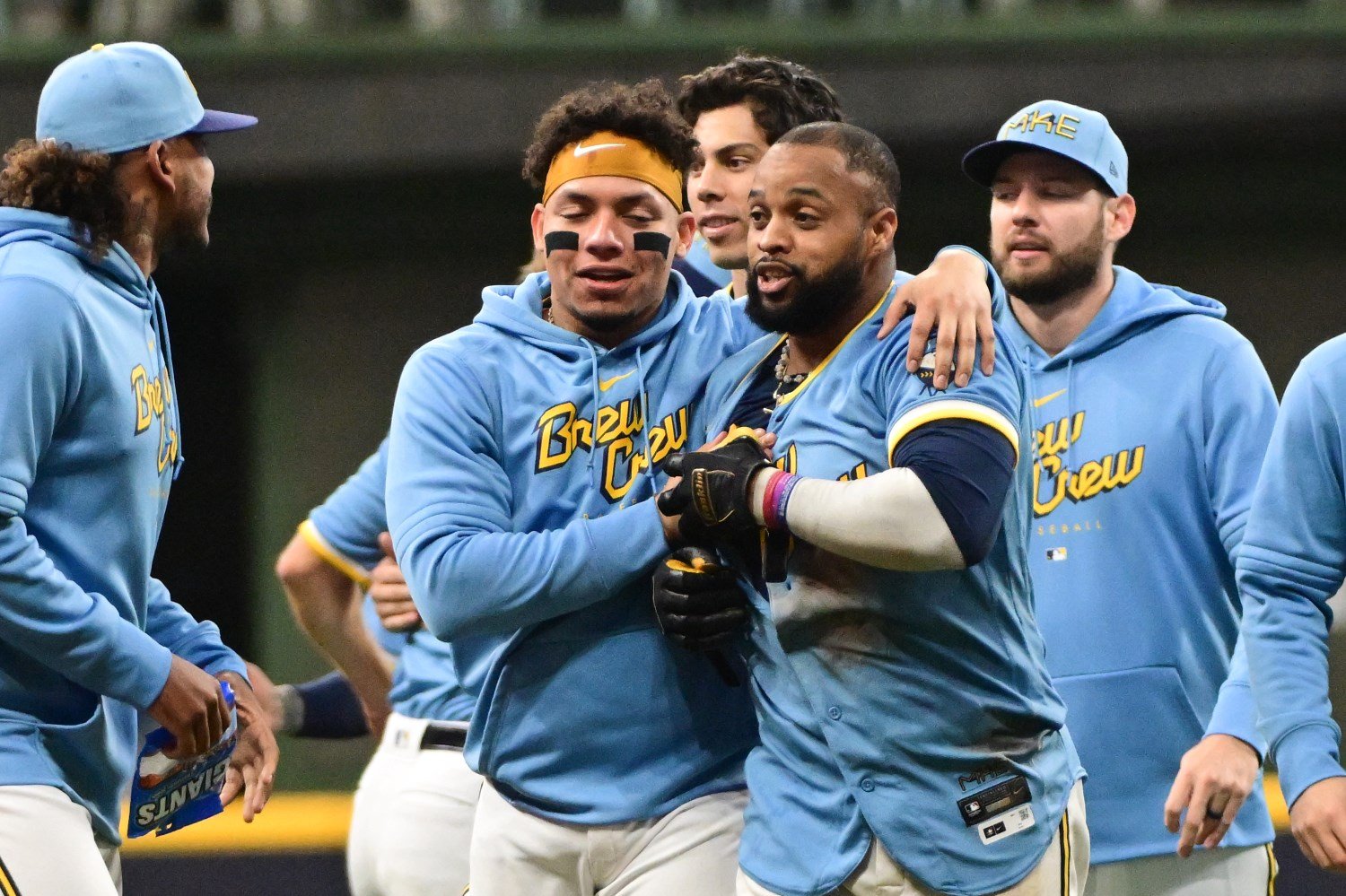 It wasn't Carlos Santana's glove that made him most attractive to the Brewers at last year's trade deadline. The team needed an infusion of power that didn't come with a nullifying sub-.300 on-base percentage. That's a specialty for Santana, who has spent a decade and a half drifting around MLB, racking up walks and hitting for steady (if generally unspectacular) power. A former catcher, he's also been very good with the leather since his long-ago transition to first base. He'll turn 38 years old next April, and other first basemen have better range, but Santana has terrific hands, good fundamentals, and a vestige of the arm that made him a viable catcher, on the rare occasions when that comes into play at the cold corner. The Brewers saw all of this on display after they acquired Santana in July. He clubbed 11 home runs over the final two months of the season, and although they came at the cost of some of his usual patience, that was exactly what Milwaukee's lineup needed. His defense was a noticeable upgrade from the likes of Rowdy Tellez and Owen Miller. Perhaps most of all, though, he became immediately respected and beloved in the clubhouse. He's played for four different teams since the start of 2022, and the last two teams to sign him as a free agent were both non-contenders looking to sew up some production on the cheap. Yet, he's ended each of the last two campaigns as a leader in the clubhouse of a playoff team. All of this invites us to ask: under what circumstances would it make sense for the Brewers to bring Santana back in 2024? Presumably, given his age and his non-elite (however venerable) status, he's only going to command a one-year deal. In 2023, he got $6.75 million from the Pirates on the free market. Good as he was, he's one year closer to the inevitable day when he'll be unable to catch up to the fastball anymore, or when good positioning and footwork won't allow him to get to ground balls at the edge of his range. He's unlikely to make substantially more than that 2023 salary in 2024. At roughly $7 million, he'd be a reasonably cheap solution at first base for the Brewers. They're not going to tender a contract to Tellez, who would be in line to make $5 million or so via arbitration and was nowhere near being worth that in 2023. Santana is a much more dependable, well-rounded alternative, for almost no more money. Alas, it's not just Tellez to whom we need to compare him. If Santana is merely a league-average hitter (as some metrics suggest), then he's a below-average one for his position. The Brewers need to bolster their offense, and have a fairly limited budget and just a few positions at which to do it. Spending $7 million without materially closing the gap between themselves and the superior offenses with whom they were competing at the top of the National League last year is a tough sell. To some extent, perhaps, the feasibility of bringing back Santana depends on how strongly you feel that Tyler Black and Jackson Chourio can be plus bats right away. While neither seems all that likely to break camp with the Crew, both Black and Chourio figure to be with the parent club by Flag Day or so. If they hit the way they've each demonstrated the ability to, they can do much of the heavy lifting in terms of making this a better offense. At that point, a veteran hitter and leader like Santana would be well worth a deal like the one we've discussed. Finally, let's turn our attention Willy Adames, the other Brewer who came in second for one of the (should-be) coveted Fielding Bible Awards. As the shortstop and the biggest star on the team's infield, Adames is almost a de facto captain of this squad. He's entering the final year of his arbitration eligibility (and thus, of the Brewers' control over him), and in line to claim an eight-figure salary through that process. As we knew there would be, there have been whispers and rumors and MLB Trade Rumors polls about whether the team should trade Adames this winter. In fact, in that poll of readers of MLBTR, 60.7 percent of respondents think the team should pull the trigger and move their star shortstop. It feels like most of those voters must be non-Brewers fans. Having seen Brice Turang fail to hit big-league pitching for a season, and without another obvious candidate in the organization to take the reins, extending Adames makes far more sense than trading him--not least because, after an uneven season, his trade value is slightly down. anyway. More likely than either trading or extending him, of course, is keeping him for one year and letting him leave via free agency next winter. For now, suffice it to say that keeping him for 2024 seems like a no-brainer. If that's true, it makes keeping Santana slightly more attractive. At third base (and perhaps at second, too), the Brewers will have to sacrifice some defense to improve their offense. To maintain the sterling glovework that was integral to the division title we just saw this team claim, it would make some good sense to keep two guys who can deliver average or better offense and are among the five best defenders in the game at their respective positions--particularly in light of the instant connection the two Dominicans seemed to enjoy. William Contreras was also an immediate disciple of Santana's. The vibes of a return engagement for El Oso would be tremendous. What do you think? At what price, and in combination with which other moves, would bringing back Santana make sense? The Brewers will need to make this decision fairly soon, so it's a good time to have a conversation about it.
- 8 comments
-
- 2
-
-
- carlos santana
- rowdy tellez
- (and 1 more)
-
It's rare to see the Brewers wade deep into the waters of MLB free agency. Entering this offseason, though, the defending NL Central champions have some high-profile needs. Will those needs compel them to make a splash? With Brandon Woodruff on the shelf for 2024, there is a glaring hole in the formerly formidable Brewers starting rotation. Corbin Burnes and Freddy Peralta were stout on the bump in 2023, and they form the spine of a fine starting corps for next season. Take out Woodruff, though, and a daunting chasm emerges between a sturdy front of the rotation and an underwhelming back half. It's enough to send a frisson of fear from the back of Mark Attanasio's neck all the way down to his wallet, but the Brewers need to consider chasing a dependable starter in free agency. The top two arms on the market this winter will be presumptive NL Cy Young winner Blake Snell and Nippon Professional Baseball import Yoshinobu Yamamoto. Snell, who will turn 31 in early December, will enter free agency on the heels of his second Cy Young Award-winning season. He's a strikeout machine and an elite suppressor of hits. Of the 89 active pitchers with at least 800 career innings pitched, the only ones who have allowed a lower opponents' batting average than Snell are Kenley Jansen, David Robertson, Clayton Kershaw, and Jacob deGrom. The same goes for opponent slugging average. However, Snell issues a lot of walks, and has often struggled to work deep into games during his career (thanks to pitch counts that pile up quickly behind those control issues). The price tag on Snell is also likely to be prohibitive for the Brewers--it could exceed $200 million over six or seven years. Yamamoto doesn't have any particular warts. His command and control are superb. With a deep arsenal and good (if not quite overwhelming) velocity, he should strike out plenty of hitters, without walking many. He also just turned 25 years old in August. The catch, then, is that he's very likely to be the highest-paid starting pitcher on this winter's market. Unless Steve Cohen executes a hostile takeover, the Brewers aren't going to be in play for anyone that pricey. Nor does Aaron Nola seem like a great fit for the Crew. While he does loosely align with their preferred styles and have an impressive track record, he should command a nine-figure deal that spans at least six years on this market. That's a bit much, given some of the warts he's shown even during his best campaigns. Though on a much shorter deal, Sonny Gray is similarly likely to get more on a per-year basis than his outlook (as a smallish hurler in his mid-30s) warrants. The next tier of starters is where the Brewers figure to have an opportunity or two. There are two left-handed starters there who seem to hit the sweet spot for which Milwaukee could be aiming in their quest to replace what Woodruff won't be around to give them. Both will be 31 years old next year, and both are ineligible to receive a qualifying offer--unlike Snell, Nola, and Gray. That means that the Crew can sign them without giving up a draft pick in 2024, making them especially attractive options. Jordan Montgomery is the more visible of the two at the moment, which makes him the more obvious choice. His curveball has been one of the stars of this postseason, but for those with long memories, it's not the first time he's popped up on the national stage this way. Way back in 2017, when he first cracked the Yankees' rotation, Montgomery showed off a hook that baffled opposing hitters. It's not dominant in the way one might expect, based on modern pitching analysis orthodoxy, but it's dominant, nonetheless. Montgomery has faced over 900 batters this season, between a full regular-season workload and an often dazzling playoff run, and since joining the Rangers, he's walking roughly 4.5 percent of the batters he faces, while striking out plenty and limiting power. Obviously, in that process, Montgomery has made himself quite a bit of money this year. He's going to get at least a four-year deal, and it could stretch to five or six if someone is unexpectedly high on him. Without elite strikeout stuff or high velocity working for him, though, he'll be dinged a bit on both upside and perceived staying power. That could swoop him down into the 2024 version of the price ranges in which the Brewers were able to snatch up guys like Jeff Suppan, Matt Garza, and Lorenzo Cain in seasons past. We should assume, though it will be several days before we know for certain, that Eduardo Rodriguez will opt out of the $49 million he would be guaranteed over the final three years of a five-year pact he signed two winters ago with the Tigers. If so, he'll become a free agent, and he's essentially a more volatile version of Montgomery. He strikes out more batters than does Montgomery, but he also walks more of them. Injury trouble has plagued him more consistently than Montgomery, too, so while he's still easily worth more than $16.3 million per year, he's unlikely to get what Montgomery will on the open market. Of the two, Rodriguez seems like an easier fit for this roster, and perhaps a more natural one for the existing Brewers pitching infrastructure. His lower price tag would make it easier to squeeze him into a tight budget, and his pitch mix and delivery match the predilections of Chris Hook and company (to the extent that they even have them) better than do Montgomery's. However, there are some key variables for which we can't yet fully solve. If the Brewers trade Burnes, they're likely to get someone who can help immediately in return, but it's more likely to be an inexpensive hitter than a reliable starting pitcher. Thus, it could make more sense to sign Montgomery in that case. He'd soak up some of the money saved by dealing Burnes, take the big righty's place in the long-term rotation outlook, and lend the team whatever upside is lost by giving up a former Cy Young winner. Furthermore, while Rodriguez might slightly better fit a staff coached and supervised by Hook, we don't yet know whether Hook will be the pitching coach next year--or what other changes might take place in the coaching staff. If Craig Counsell leaves as a free agent himself (be it to New York, Cleveland, or elsewhere), there are plenty of ways a new order might emerge within the Brewers' player development system, even at the big-league level. We also don't yet know how many staffers from the front office might leave to join David Stearns in New York. All that said, either Rodriguez or Montgomery would be a welcome addition to the rotation of a team whose goal should be to defend their division crown next year. They might be out of the club's price range, but there are various scenarios in which one or both are available at a palatable cost. Do you think this is the right place to allocate such significant resources? Is there another free-agent starter on whom you have your eye? Let's talk about it. View full article
-
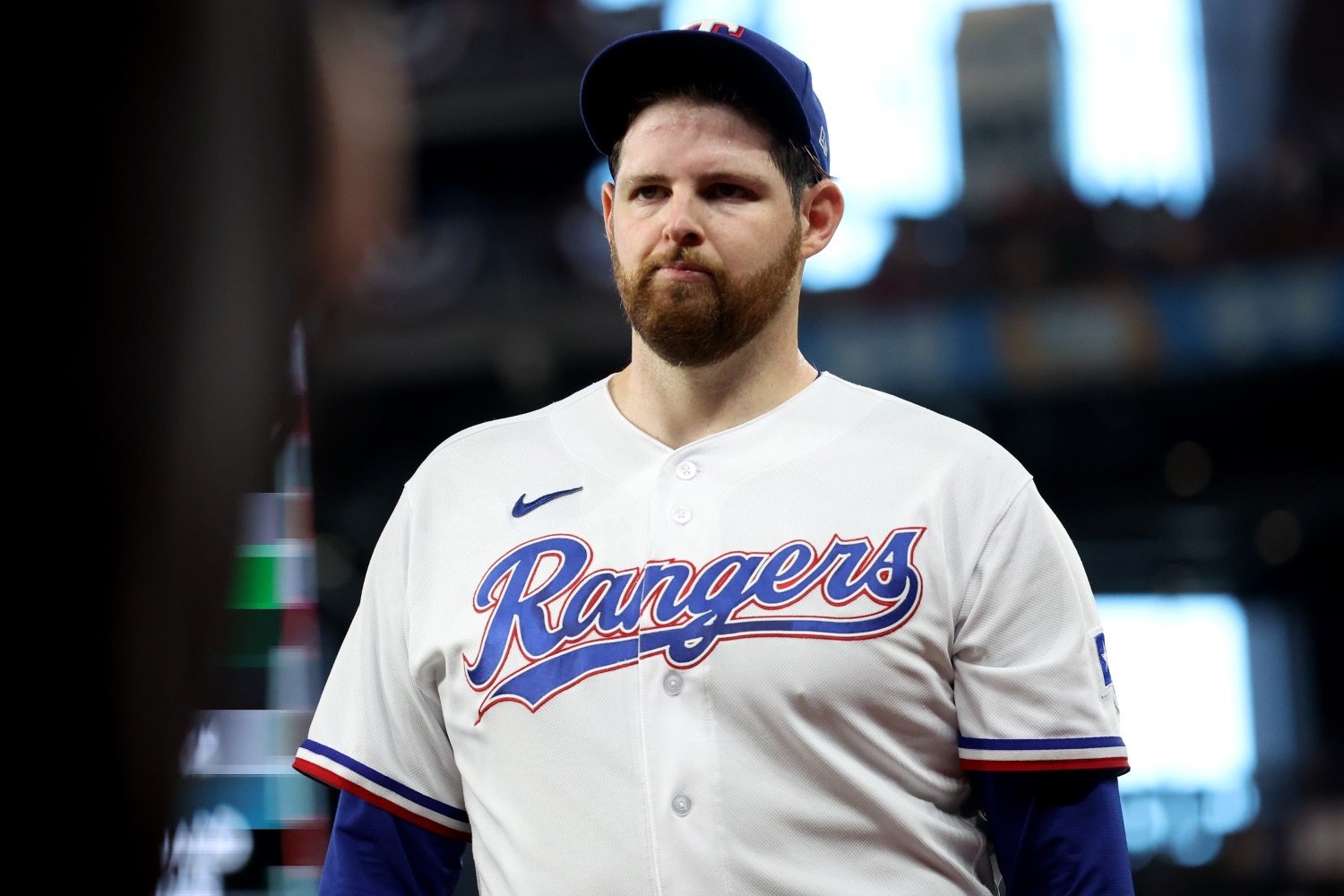 With Brandon Woodruff on the shelf for 2024, there is a glaring hole in the formerly formidable Brewers starting rotation. Corbin Burnes and Freddy Peralta were stout on the bump in 2023, and they form the spine of a fine starting corps for next season. Take out Woodruff, though, and a daunting chasm emerges between a sturdy front of the rotation and an underwhelming back half. It's enough to send a frisson of fear from the back of Mark Attanasio's neck all the way down to his wallet, but the Brewers need to consider chasing a dependable starter in free agency. The top two arms on the market this winter will be presumptive NL Cy Young winner Blake Snell and Nippon Professional Baseball import Yoshinobu Yamamoto. Snell, who will turn 31 in early December, will enter free agency on the heels of his second Cy Young Award-winning season. He's a strikeout machine and an elite suppressor of hits. Of the 89 active pitchers with at least 800 career innings pitched, the only ones who have allowed a lower opponents' batting average than Snell are Kenley Jansen, David Robertson, Clayton Kershaw, and Jacob deGrom. The same goes for opponent slugging average. However, Snell issues a lot of walks, and has often struggled to work deep into games during his career (thanks to pitch counts that pile up quickly behind those control issues). The price tag on Snell is also likely to be prohibitive for the Brewers--it could exceed $200 million over six or seven years. Yamamoto doesn't have any particular warts. His command and control are superb. With a deep arsenal and good (if not quite overwhelming) velocity, he should strike out plenty of hitters, without walking many. He also just turned 25 years old in August. The catch, then, is that he's very likely to be the highest-paid starting pitcher on this winter's market. Unless Steve Cohen executes a hostile takeover, the Brewers aren't going to be in play for anyone that pricey. Nor does Aaron Nola seem like a great fit for the Crew. While he does loosely align with their preferred styles and have an impressive track record, he should command a nine-figure deal that spans at least six years on this market. That's a bit much, given some of the warts he's shown even during his best campaigns. Though on a much shorter deal, Sonny Gray is similarly likely to get more on a per-year basis than his outlook (as a smallish hurler in his mid-30s) warrants. The next tier of starters is where the Brewers figure to have an opportunity or two. There are two left-handed starters there who seem to hit the sweet spot for which Milwaukee could be aiming in their quest to replace what Woodruff won't be around to give them. Both will be 31 years old next year, and both are ineligible to receive a qualifying offer--unlike Snell, Nola, and Gray. That means that the Crew can sign them without giving up a draft pick in 2024, making them especially attractive options. Jordan Montgomery is the more visible of the two at the moment, which makes him the more obvious choice. His curveball has been one of the stars of this postseason, but for those with long memories, it's not the first time he's popped up on the national stage this way. Way back in 2017, when he first cracked the Yankees' rotation, Montgomery showed off a hook that baffled opposing hitters. It's not dominant in the way one might expect, based on modern pitching analysis orthodoxy, but it's dominant, nonetheless. Montgomery has faced over 900 batters this season, between a full regular-season workload and an often dazzling playoff run, and since joining the Rangers, he's walking roughly 4.5 percent of the batters he faces, while striking out plenty and limiting power. Obviously, in that process, Montgomery has made himself quite a bit of money this year. He's going to get at least a four-year deal, and it could stretch to five or six if someone is unexpectedly high on him. Without elite strikeout stuff or high velocity working for him, though, he'll be dinged a bit on both upside and perceived staying power. That could swoop him down into the 2024 version of the price ranges in which the Brewers were able to snatch up guys like Jeff Suppan, Matt Garza, and Lorenzo Cain in seasons past. We should assume, though it will be several days before we know for certain, that Eduardo Rodriguez will opt out of the $49 million he would be guaranteed over the final three years of a five-year pact he signed two winters ago with the Tigers. If so, he'll become a free agent, and he's essentially a more volatile version of Montgomery. He strikes out more batters than does Montgomery, but he also walks more of them. Injury trouble has plagued him more consistently than Montgomery, too, so while he's still easily worth more than $16.3 million per year, he's unlikely to get what Montgomery will on the open market. Of the two, Rodriguez seems like an easier fit for this roster, and perhaps a more natural one for the existing Brewers pitching infrastructure. His lower price tag would make it easier to squeeze him into a tight budget, and his pitch mix and delivery match the predilections of Chris Hook and company (to the extent that they even have them) better than do Montgomery's. However, there are some key variables for which we can't yet fully solve. If the Brewers trade Burnes, they're likely to get someone who can help immediately in return, but it's more likely to be an inexpensive hitter than a reliable starting pitcher. Thus, it could make more sense to sign Montgomery in that case. He'd soak up some of the money saved by dealing Burnes, take the big righty's place in the long-term rotation outlook, and lend the team whatever upside is lost by giving up a former Cy Young winner. Furthermore, while Rodriguez might slightly better fit a staff coached and supervised by Hook, we don't yet know whether Hook will be the pitching coach next year--or what other changes might take place in the coaching staff. If Craig Counsell leaves as a free agent himself (be it to New York, Cleveland, or elsewhere), there are plenty of ways a new order might emerge within the Brewers' player development system, even at the big-league level. We also don't yet know how many staffers from the front office might leave to join David Stearns in New York. All that said, either Rodriguez or Montgomery would be a welcome addition to the rotation of a team whose goal should be to defend their division crown next year. They might be out of the club's price range, but there are various scenarios in which one or both are available at a palatable cost. Do you think this is the right place to allocate such significant resources? Is there another free-agent starter on whom you have your eye? Let's talk about it.
 -
We have a pretty good idea of who will play left field for the 2024 Brewers. The other two spots seem fairly wide-open, though, and the huge number of credible candidates for those jobs illustrates that the team really doesn't have a solution yet. Image courtesy of © Michael McLoone-USA TODAY Sports Obviously, in a perfect world, Jackson Chourio would simply hammer big-league pitching next spring training. Were he relentlessly competent and dominant enough, he could force his way onto the Opening Day roster as the center fielder, leaving the team with clarity at two of the three outfield positions. (Christian Yelich, of course, is locked in as the left fielder.) We don't live in a perfect world, though, and in the deeply flawed one we do call home, Chourio is an untested prospect. He showed plenty of flashes of his future stardom in 2023, but a dearth of chances even to prove himself at the Triple-A level made it impossible to project how he'll do in MLB in 2024 with any confidence. He's unlikely to debut before May, and even less likely to earn an everyday role and play like a star when he does get his shot--as the up-and-down rookie campaigns of prospects like Joey Wiemer and Sal Frelick just demonstrated to us. We're very likely to see a trade shipping out some young outfielder this winter. Be it Frelick, Wiemer, Garrett Mitchell, Tyrone Taylor, or Blake Perkins, someone is getting moved. The first move the front office made this offseason, more or less, was to add outfielder Chris Roller to the 40-man roster. That only exacerbated their logjam in center and right, and made clear that the team sees at least Perkins and Taylor as potentially fungible. It was a smart and necessary move. After getting Roller in a minor trade this summer, they needed to do this in order to prevent him from hitting minor-league free agency--the same roster mechanism by which Perkins became available last winter, at which point the Brewers pounced with an unusual guaranteed deal. Frelick seems like the surest bet to stay and to play. His outfield defense is tremendous, in center or in right, and he controls the strike zone very well. However, his lack of power during his time in the big leagues this season was troubling. If he continues to get the bat knocked out of his hands, he'll lose playing time, or at least need to hit at the bottom of the lineup. The biggest problem, in this area of the roster, is that the rest of the group's outlooks each rhyme with Frelick's. Wiemer has much more raw power, but strikes out too much and saw his defense slump badly late in the season. Mitchell has the power missing from Frelick's profile, but strikes out even more than Wiemer. Taylor is the most well-rounded of the group, but runs hot and cold at bat and doesn't seem able to stay healthy over a full season. Perkins was almost a pure defensive asset last year, but came up with a couple of big hits. This is a big group of deeply incomplete players, and they don't complement each other as nicely as one might prefer. Milwaukee will probably only be able to carry five outfielders. Modern roster construction doesn't allow for more. There's value in versatility, such as what Frelick and Taylor bring by being able to play center field well and to hit enough to be right fielders if needed. There's also value in depth that provides a high floor, in case of catastrophic injury or failure. Carrying Yelich, Frelick, Taylor, Wiemer, Perkins, and Mitchell is impossible, though, and even if it weren't, the latter half of those players aren't good enough to merit all the trouble it would cause. Carrying Perkins as a defensive specialist worked very well for the 2023 Brewers. Doing that again, with Yelich, Frelick, and Taylor as the regulars and Wiemer spelling all three in the right turns, seems like the best use of all of these resources to me. Mitchell is the one with the most volatile skill set, and that might dent his potential trade value, but he still has the upside necessary to be part of a package for a good player. Frelick is too good to trade; Taylor and Wiemer wouldn't fetch enough. Mitchell feels like the sweet spot, and once you remove him from the picture, everything falls into place. The handedness of the various options makes sense. The offensive picture starts to take shape. Who would you move in order to clarify the Crew's outfield for next season? Would you tender Taylor a contract? Whose bat do you believe in, in this motley bunch? Let's talk through this fascinating collection of rough-edged talent. View full article
-
Who Should Emerge as the Brewers' Top Outfielders in 2024?
Matthew Trueblood posted an article in Brewers
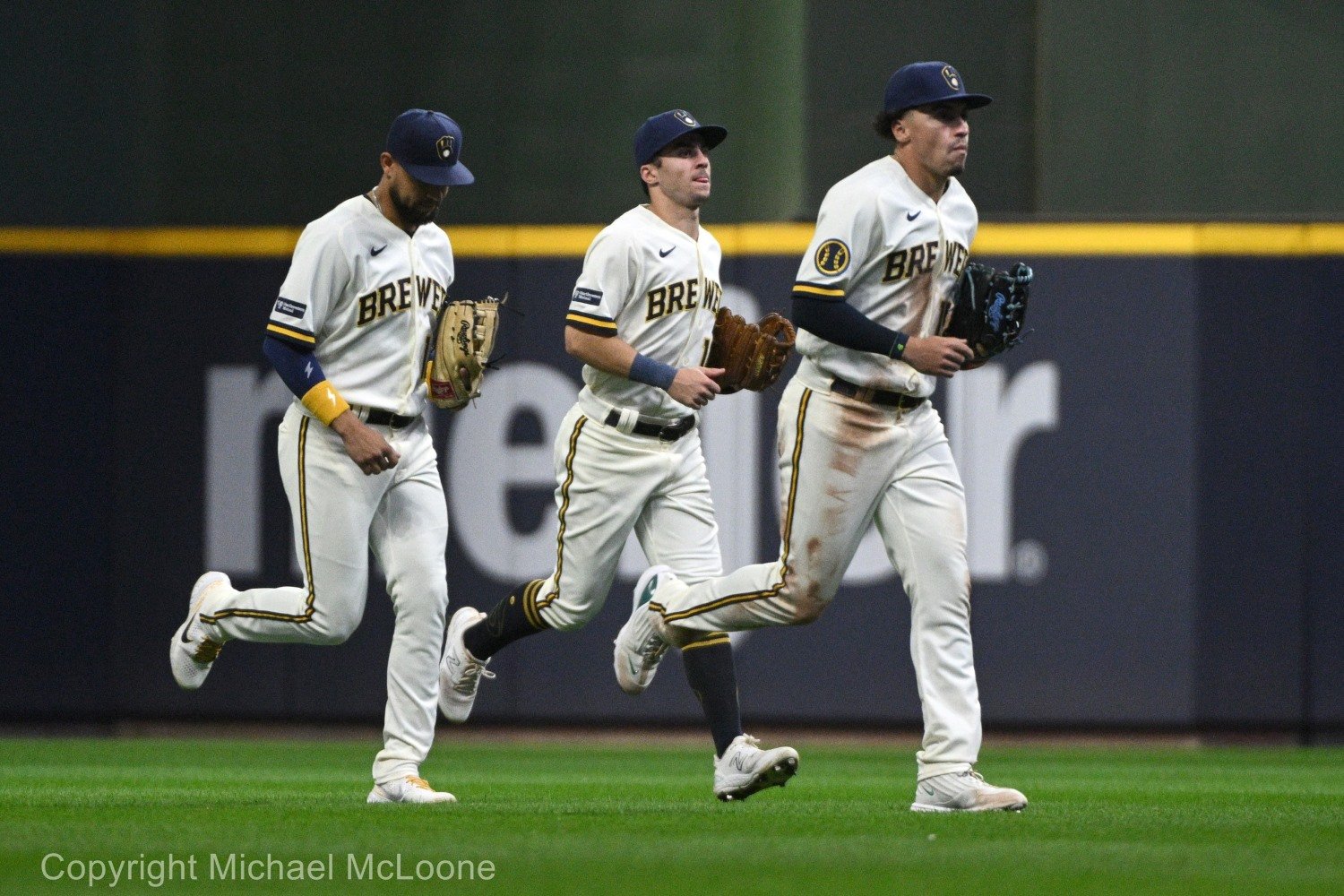 Obviously, in a perfect world, Jackson Chourio would simply hammer big-league pitching next spring training. Were he relentlessly competent and dominant enough, he could force his way onto the Opening Day roster as the center fielder, leaving the team with clarity at two of the three outfield positions. (Christian Yelich, of course, is locked in as the left fielder.) We don't live in a perfect world, though, and in the deeply flawed one we do call home, Chourio is an untested prospect. He showed plenty of flashes of his future stardom in 2023, but a dearth of chances even to prove himself at the Triple-A level made it impossible to project how he'll do in MLB in 2024 with any confidence. He's unlikely to debut before May, and even less likely to earn an everyday role and play like a star when he does get his shot--as the up-and-down rookie campaigns of prospects like Joey Wiemer and Sal Frelick just demonstrated to us. We're very likely to see a trade shipping out some young outfielder this winter. Be it Frelick, Wiemer, Garrett Mitchell, Tyrone Taylor, or Blake Perkins, someone is getting moved. The first move the front office made this offseason, more or less, was to add outfielder Chris Roller to the 40-man roster. That only exacerbated their logjam in center and right, and made clear that the team sees at least Perkins and Taylor as potentially fungible. It was a smart and necessary move. After getting Roller in a minor trade this summer, they needed to do this in order to prevent him from hitting minor-league free agency--the same roster mechanism by which Perkins became available last winter, at which point the Brewers pounced with an unusual guaranteed deal. Frelick seems like the surest bet to stay and to play. His outfield defense is tremendous, in center or in right, and he controls the strike zone very well. However, his lack of power during his time in the big leagues this season was troubling. If he continues to get the bat knocked out of his hands, he'll lose playing time, or at least need to hit at the bottom of the lineup. The biggest problem, in this area of the roster, is that the rest of the group's outlooks each rhyme with Frelick's. Wiemer has much more raw power, but strikes out too much and saw his defense slump badly late in the season. Mitchell has the power missing from Frelick's profile, but strikes out even more than Wiemer. Taylor is the most well-rounded of the group, but runs hot and cold at bat and doesn't seem able to stay healthy over a full season. Perkins was almost a pure defensive asset last year, but came up with a couple of big hits. This is a big group of deeply incomplete players, and they don't complement each other as nicely as one might prefer. Milwaukee will probably only be able to carry five outfielders. Modern roster construction doesn't allow for more. There's value in versatility, such as what Frelick and Taylor bring by being able to play center field well and to hit enough to be right fielders if needed. There's also value in depth that provides a high floor, in case of catastrophic injury or failure. Carrying Yelich, Frelick, Taylor, Wiemer, Perkins, and Mitchell is impossible, though, and even if it weren't, the latter half of those players aren't good enough to merit all the trouble it would cause. Carrying Perkins as a defensive specialist worked very well for the 2023 Brewers. Doing that again, with Yelich, Frelick, and Taylor as the regulars and Wiemer spelling all three in the right turns, seems like the best use of all of these resources to me. Mitchell is the one with the most volatile skill set, and that might dent his potential trade value, but he still has the upside necessary to be part of a package for a good player. Frelick is too good to trade; Taylor and Wiemer wouldn't fetch enough. Mitchell feels like the sweet spot, and once you remove him from the picture, everything falls into place. The handedness of the various options makes sense. The offensive picture starts to take shape. Who would you move in order to clarify the Crew's outfield for next season? Would you tender Taylor a contract? Whose bat do you believe in, in this motley bunch? Let's talk through this fascinating collection of rough-edged talent.
- 7 comments
-
- 1
-
-
- sal frelick
- tyrone taylor
- (and 3 more)
-
Matching Up With the Orioles in a Trade for a Big Bat
Matthew Trueblood posted an article in Brewers
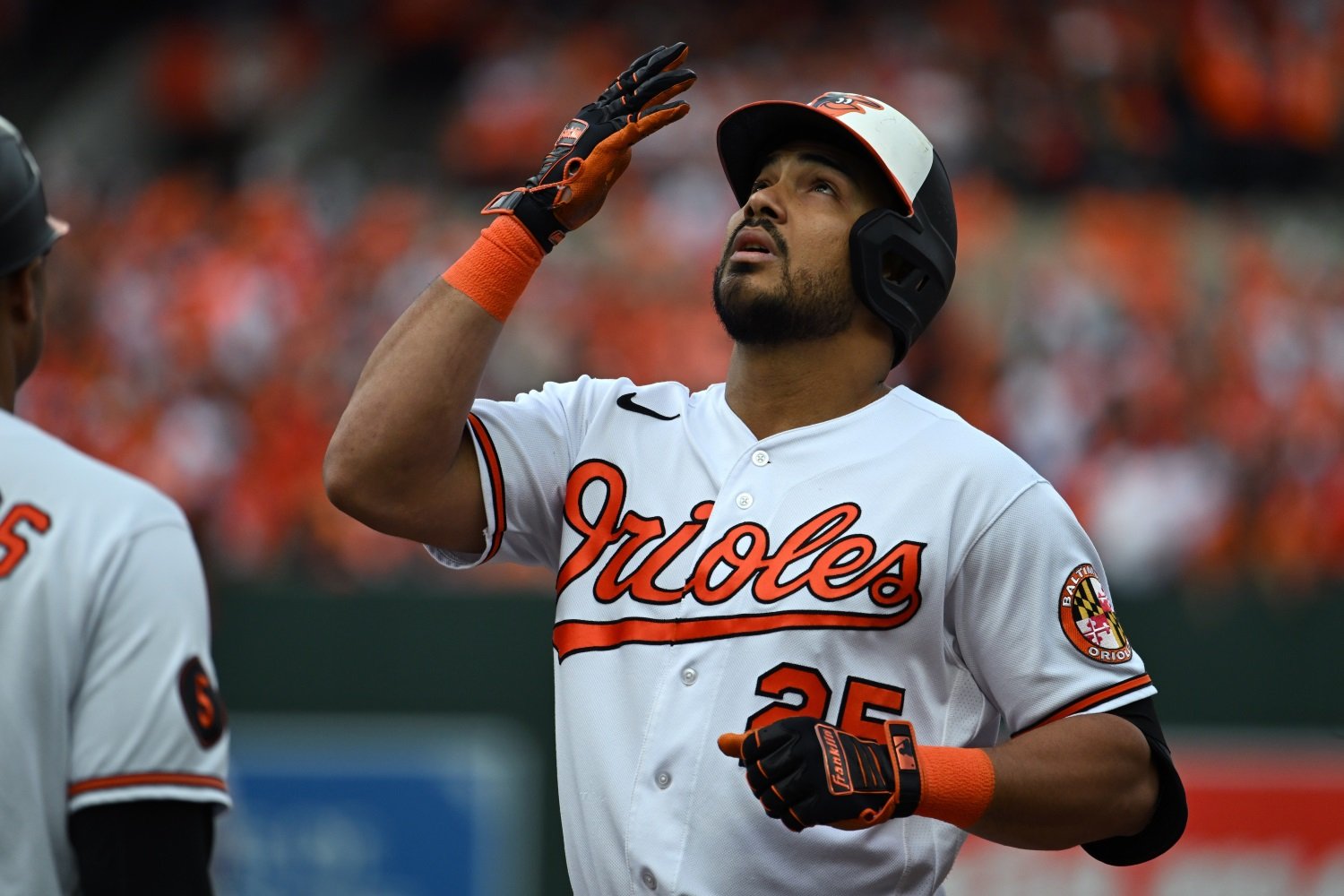 There are several ways the Brewers and the Baltimore Orioles can fit together well on a trade this winter. Coming off a 100-win season that only led to a disappointing Division Series ouster, the O's will be looking for ways to further shore up their roster for the long slog back through the AL East in 2024. The Brewers, as we know, need to augment their offense, and they almost certainly need to make those improvements at first base, third base, and/or in right field. That's the single area of their roster where the Orioles seem to have the greatest likely surplus from which to deal. They probably aren't inclined to put overweening confidence in Ryan O'Hearn at first base, even after his surprisingly productive campaign as a platoon bat there, so he could be had at a low price. The Brewers have had good luck with players who share O'Hearn's basic profile in recent years--guys who hit for power, but don't show the requisite patience from the left side. Still, he would feel like a low bid on upgrading at that position. More exciting and more expensive would be guys like Anthony Santander, Austin Hays, or Ryan Mountcastle. Santander and Hays have one and two years of team control remaining, respectively, so neither would be a long-term solution for the Crew, but they became two of the most important cogs in the productive Baltimore machine this year. Santander played the first 72 innings of his career at first base in 2023, and that might be his permanent defensive home soon. He, unlike O'Hearn, should hit more than enough to be worth regular playing time, even at that demanding position. Hays is a very good righty bat, but just limited enough in the outfield to make him an imperfect fit for the Milwaukee roster; he and Christian Yelich could be redundant. A challenge trade of Santander and more for Corbin Burnes would be awfully intriguing, but it probably wouldn't work. The Brewers would want something substantial beyond Santander, and the Orioles would balk at giving up much of anything else. Burnes would be a seamless fit into the Orioles' porous starting rotation picture, though. In a deal involving him, the Brewers' plan ought to be to aim higher. In this case, 'higher' means Coby Mayo. The funky-swinging, gawkish corner infielder is almost big-league ready, but Baltimore probably doesn't have an immediate opening in their lineup for him. Mayo hit 29 homers and maintained an OBP north of .400 in the two highest levels of the minors this season, and although his size and athletic profile both indicate his home will eventually be first base (not third), he could be a middle-of-the-order threat for the Crew well before the All-Star break. Naturally, though, Mayo isn't available for Burnes, alone. The Brewers would have to kick in someone to help the Orioles fill in other holes and maintain their depth, in order to get this deal done. That's how the trade value of an impending free agent works. After Milwaukee acquired Chris Roller in August and added him to the 40-man roster this month, they have the spare parts to make it all work. Joey Wiemer, Garrett Mitchell, Tyrone Taylor, and Blake Perkins all have a chance to be the right piece to round out a trade. Which one it could be depends on how quickly the Brewers think they can bring along Jackson Chourio from here; on how much the Orioles are willing to spend to put down the roots of a new dynasty; and on the other options they end up having to bolster their rotation. The Brewers need a hitter, though. The Orioles have them. If Milwaukee's spending is as limited as we expect it to be, they won't be able to fill all their principal needs via free agency. This is a line of trade discussion the team will need to keep open throughout the hot stove period.
 -
We know the Brewers need to add a big bat in an infield or outfield corner this winter. We also know some of what they'll have to offer in trades. With that information, a good potential match can start to come into focus. Image courtesy of © Tommy Gilligan-USA TODAY Sports There are several ways the Brewers and the Baltimore Orioles can fit together well on a trade this winter. Coming off a 100-win season that only led to a disappointing Division Series ouster, the O's will be looking for ways to further shore up their roster for the long slog back through the AL East in 2024. The Brewers, as we know, need to augment their offense, and they almost certainly need to make those improvements at first base, third base, and/or in right field. That's the single area of their roster where the Orioles seem to have the greatest likely surplus from which to deal. They probably aren't inclined to put overweening confidence in Ryan O'Hearn at first base, even after his surprisingly productive campaign as a platoon bat there, so he could be had at a low price. The Brewers have had good luck with players who share O'Hearn's basic profile in recent years--guys who hit for power, but don't show the requisite patience from the left side. Still, he would feel like a low bid on upgrading at that position. More exciting and more expensive would be guys like Anthony Santander, Austin Hays, or Ryan Mountcastle. Santander and Hays have one and two years of team control remaining, respectively, so neither would be a long-term solution for the Crew, but they became two of the most important cogs in the productive Baltimore machine this year. Santander played the first 72 innings of his career at first base in 2023, and that might be his permanent defensive home soon. He, unlike O'Hearn, should hit more than enough to be worth regular playing time, even at that demanding position. Hays is a very good righty bat, but just limited enough in the outfield to make him an imperfect fit for the Milwaukee roster; he and Christian Yelich could be redundant. A challenge trade of Santander and more for Corbin Burnes would be awfully intriguing, but it probably wouldn't work. The Brewers would want something substantial beyond Santander, and the Orioles would balk at giving up much of anything else. Burnes would be a seamless fit into the Orioles' porous starting rotation picture, though. In a deal involving him, the Brewers' plan ought to be to aim higher. In this case, 'higher' means Coby Mayo. The funky-swinging, gawkish corner infielder is almost big-league ready, but Baltimore probably doesn't have an immediate opening in their lineup for him. Mayo hit 29 homers and maintained an OBP north of .400 in the two highest levels of the minors this season, and although his size and athletic profile both indicate his home will eventually be first base (not third), he could be a middle-of-the-order threat for the Crew well before the All-Star break. Naturally, though, Mayo isn't available for Burnes, alone. The Brewers would have to kick in someone to help the Orioles fill in other holes and maintain their depth, in order to get this deal done. That's how the trade value of an impending free agent works. After Milwaukee acquired Chris Roller in August and added him to the 40-man roster this month, they have the spare parts to make it all work. Joey Wiemer, Garrett Mitchell, Tyrone Taylor, and Blake Perkins all have a chance to be the right piece to round out a trade. Which one it could be depends on how quickly the Brewers think they can bring along Jackson Chourio from here; on how much the Orioles are willing to spend to put down the roots of a new dynasty; and on the other options they end up having to bolster their rotation. The Brewers need a hitter, though. The Orioles have them. If Milwaukee's spending is as limited as we expect it to be, they won't be able to fill all their principal needs via free agency. This is a line of trade discussion the team will need to keep open throughout the hot stove period. View full article
- 18 replies
-
- 1
-
-
- corbin burnes
- anthony santander
- (and 2 more)
-
On Wednesday, news broke that the New York Mets obtained permission to interview Craig Counsell for their managerial vacancy, even before his contract officially expires next week. One way or another, this thing is about to ratchet up a notch. Image courtesy of © Michael McLoone-USA TODAY Sports It's no surprise to anyone that the Mets, having so recently officially hired David Stearns to run their baseball operations department, are interested in Craig Counsell. According to reporting by The Athletic, the Cleveland Guardians are at least feeling out Counsell, as well. It sounds odd to suggest that Counsell would even ponder a move to such a small-market alternative, without the same bonds of geography and personal history that tie him to Milwaukee, but Cleveland is trying to replace Terry Francona, who was making more than $500,000 more than Counsell has been getting. That, increasingly, seems to be the peg around which this story spins. Counsell not only wants to be one of the highest-paid managers of the game, but hopes to shape (or maybe even rescue) managerial salaries for the future. The game has trended so strongly toward front offices domineering their skippers that Counsell might reasonably view himself as the last bulwark against the invasion of the dugout by the executive suite. Then again, he could even garner some notice from teams trying to fill one of those front-office jobs--most notably, the Marlins, an organization with whom he might have a nostalgic connection. No one has yet linked Counsell to the likely managerial opening in Houston, where Dusty Baker might be set to retire. If this goes on long enough, that will change. The Padres are considering internal candidates Ryan Flaherty and Mike Shildt, but they might yet expand their search to include Counsell. These aren't just a sufficient number of openings; they're precisely the right ones. Whether it's a noble and magnanimous purpose that drives Counsell to seek a bigger payday, or whether he just wants to be compensated the way he's earned the right to be, he's in position to land a big salary and some unusual measure of influence or control. That gives this whole, formerly complicated mess a cathartic new clarity. The Brewers are going to have to pony up, if they want to keep Counsell. In all likelihood, though, there is some price (perhaps both a monetary and a non-monetary one, but some price) at which they can keep him. That shifts the spotlight to Mark Attanasio and Matt Arnold. They have to decide how far they're willing to go to keep baseball's best manager in their employ, and what line they won't cross. Should Counsell move on, the team needs to identify some potential replacements, and do it quickly. Pat Murphy would probably follow Counsell to a new destination, so there's no obvious alternative on the team's existing depth chart. Andy Green of the Cubs is interviewing for the Cleveland job. If he doesn't get that, he could be a fit with Milwaukee. So could fired ex-Giants manager Gabe Kapler. (For various reasons, some of them very legitimate, fans might have misgivings about Kapler, but he's had a modicum of success with two teams whose front offices related to him the way Arnold seems to want to relate to his manager.) Stephen Vogt will interview for the Cleveland job. DeMarlo Hale has been Francona's right-hand man in Cleveland the last several years, and is at least as qualified as Green, Kapler, or Vogt. Alyssa Nakken interviewed for the Giants job before it went to Bob Melvin, and has proved an adroit member of San Francisco's staff over the last few years. Joe Espada might shake loose from the Houston staff, if Baker does retire and if Espada doesn't get that job. All of these are credible candidates, and there are plenty more who aren't as famous or familiar, but who could be just as good. The thing is, none of them are Counsell. If the Mets don't deliver the Godfather offer, the Brewers should step up and pay Counsell what it takes to retain him. View full article
-
 It's no surprise to anyone that the Mets, having so recently officially hired David Stearns to run their baseball operations department, are interested in Craig Counsell. According to reporting by The Athletic, the Cleveland Guardians are at least feeling out Counsell, as well. It sounds odd to suggest that Counsell would even ponder a move to such a small-market alternative, without the same bonds of geography and personal history that tie him to Milwaukee, but Cleveland is trying to replace Terry Francona, who was making more than $500,000 more than Counsell has been getting. That, increasingly, seems to be the peg around which this story spins. Counsell not only wants to be one of the highest-paid managers of the game, but hopes to shape (or maybe even rescue) managerial salaries for the future. The game has trended so strongly toward front offices domineering their skippers that Counsell might reasonably view himself as the last bulwark against the invasion of the dugout by the executive suite. Then again, he could even garner some notice from teams trying to fill one of those front-office jobs--most notably, the Marlins, an organization with whom he might have a nostalgic connection. No one has yet linked Counsell to the likely managerial opening in Houston, where Dusty Baker might be set to retire. If this goes on long enough, that will change. The Padres are considering internal candidates Ryan Flaherty and Mike Shildt, but they might yet expand their search to include Counsell. These aren't just a sufficient number of openings; they're precisely the right ones. Whether it's a noble and magnanimous purpose that drives Counsell to seek a bigger payday, or whether he just wants to be compensated the way he's earned the right to be, he's in position to land a big salary and some unusual measure of influence or control. That gives this whole, formerly complicated mess a cathartic new clarity. The Brewers are going to have to pony up, if they want to keep Counsell. In all likelihood, though, there is some price (perhaps both a monetary and a non-monetary one, but some price) at which they can keep him. That shifts the spotlight to Mark Attanasio and Matt Arnold. They have to decide how far they're willing to go to keep baseball's best manager in their employ, and what line they won't cross. Should Counsell move on, the team needs to identify some potential replacements, and do it quickly. Pat Murphy would probably follow Counsell to a new destination, so there's no obvious alternative on the team's existing depth chart. Andy Green of the Cubs is interviewing for the Cleveland job. If he doesn't get that, he could be a fit with Milwaukee. So could fired ex-Giants manager Gabe Kapler. (For various reasons, some of them very legitimate, fans might have misgivings about Kapler, but he's had a modicum of success with two teams whose front offices related to him the way Arnold seems to want to relate to his manager.) Stephen Vogt will interview for the Cleveland job. DeMarlo Hale has been Francona's right-hand man in Cleveland the last several years, and is at least as qualified as Green, Kapler, or Vogt. Alyssa Nakken interviewed for the Giants job before it went to Bob Melvin, and has proved an adroit member of San Francisco's staff over the last few years. Joe Espada might shake loose from the Houston staff, if Baker does retire and if Espada doesn't get that job. All of these are credible candidates, and there are plenty more who aren't as famous or familiar, but who could be just as good. The thing is, none of them are Counsell. If the Mets don't deliver the Godfather offer, the Brewers should step up and pay Counsell what it takes to retain him.
 -
At this extremely early juncture of the Brewers' offseason, most of the attention has centered on the fates of the two Milwaukee starting pitchers due to hit free agency next fall. Let's take a beat to focus on the other in their triumvirate of arbitration-eligible stars. Image courtesy of © Kamil Krzaczynski-USA TODAY Sports It was an uneven season for Willy Adames. As much as his consistent defense at shortstop meant to the team, his streaks and slumps at bat added to the Brewers' difficulty in generating runs. Adames hit .217/.310/.407 on the year, which constituted a slight uptick in OBP from 2022 but a major power outage. His hard-hit rate plunged, and for a full two months--May and June, combined--he batted .175/.249/.331, striking out 27.4 percent of the time. Around that, though, Adames was still a pretty productive hitter. He had a .780 OPS in April and a .772 mark from July 1 through the end of the season. Once you account for the fact that he missed a chunk of time during the ugly stretch of his season after being struck in the head by a line drive, it's tempting to say that Adames was his usual self, and that his prolonged period of struggle was just a blip. There's one problem there, though: Adames didn't hit fastballs in 2023. He was 25 runs above average against fastballs in 2021. That figure fell to 8 in 2022, but that's still sturdy. This past season, Adames was six runs below average on heaters. That problem wasn't confined to his slumpy May and June, either. It lasted throughout the season. Ok, we've diagnosed a problem here. Adames didn't hit heat in 2023. That's just going by results, though. Using expected stats, including whiff rate and quality of contact, we can home in on Adames's process against those pitches. The picture looks rosier that way. These are plotted out by month to dissuade anyone from thinking his problems were exclusive to that troublesome stretch in spring and early summer. Don't read into the apparent trendlines. The headline is that while Adames produced horrendous results against the fastball, the underlying metrics indicate that he was better than those results imply. Alas, we can't quite stop there. There are times when expected stats and batted-ball data tell a clear and simple story, even (or especially) if that story belies the one apparently told by surface-level numbers. Just as often, though, they tell a complicated and self-contradictory tale. This is one of those times. For one thing, Adames's Barrel Rate on fastballs was up, but his average exit velocity was a full 1.5 miles per hour lower. His contact rate on fastballs in the zone was higher, but so was the rate at which he chased (and missed) heaters outside the zone. Here's the intriguing and encouraging news: the problem might be partially demographic. Here's a chart tracking expected weighted on-base average (xwOBA) against fastballs by age bracket, since the start of the Statcast era in 2015. We can debate whether there's really much signal within the obvious noise, but the data says hitters have the toughest time hitting hard stuff from ages 25-27, and (perhaps peculiarly) the most success from ages 28-30. It seems improbable that a switch would flip between ages 27 and 28, of course, but talk to baseball people, and they can articulate a theory of the case. You have to learn how to find and zero in on your pitch, and that takes time. After 30, naturally, you're likely to decline, as catching up with pure velocity gets harder. The sweet spot, then, comes in your late 20s. Adames turned 28 on Sept. 2. It's just possible that, as he continues to mature at the plate, he'll get back to mashing fastballs in 2024. That should inform our understanding of the Brewers' overall offensive outlook, and of Adames's future--two things that are, obviously, intertwined with one another, especially since this is the offseason in which the team needs to make their decision about whether to extend Adames and retain him beyond 2024. Before committing to him (or not), the team needs to ascertain their level of confidence that Adames will take that step, because they have to hit fastballs better in 2024 than they did in 2023. They were 25th in run value against heaters this year. Christian Yelich, Sal Frelick and William Contreras (perhaps not coincidentally, the team's only three markedly above-average hitters) were the only guys who had strongly positive run values on those pitches. Adames was 280th of 330 qualifying hitters in fastball run value. Brice Turang was 328th on that list. We already knew this, but the Brewers have to go out and add prime-aged hitters with power to their lineup this winter. That they specifically need to do better against fastballs only underscores that. Adames should be better on heat next season, between his age and some regression, but they need a lot more than a bit of friendly mathematical course correction. View full article
-
Willy Adames's Fastball Folly and the Future of the Brewers Lineup
Matthew Trueblood posted an article in Brewers
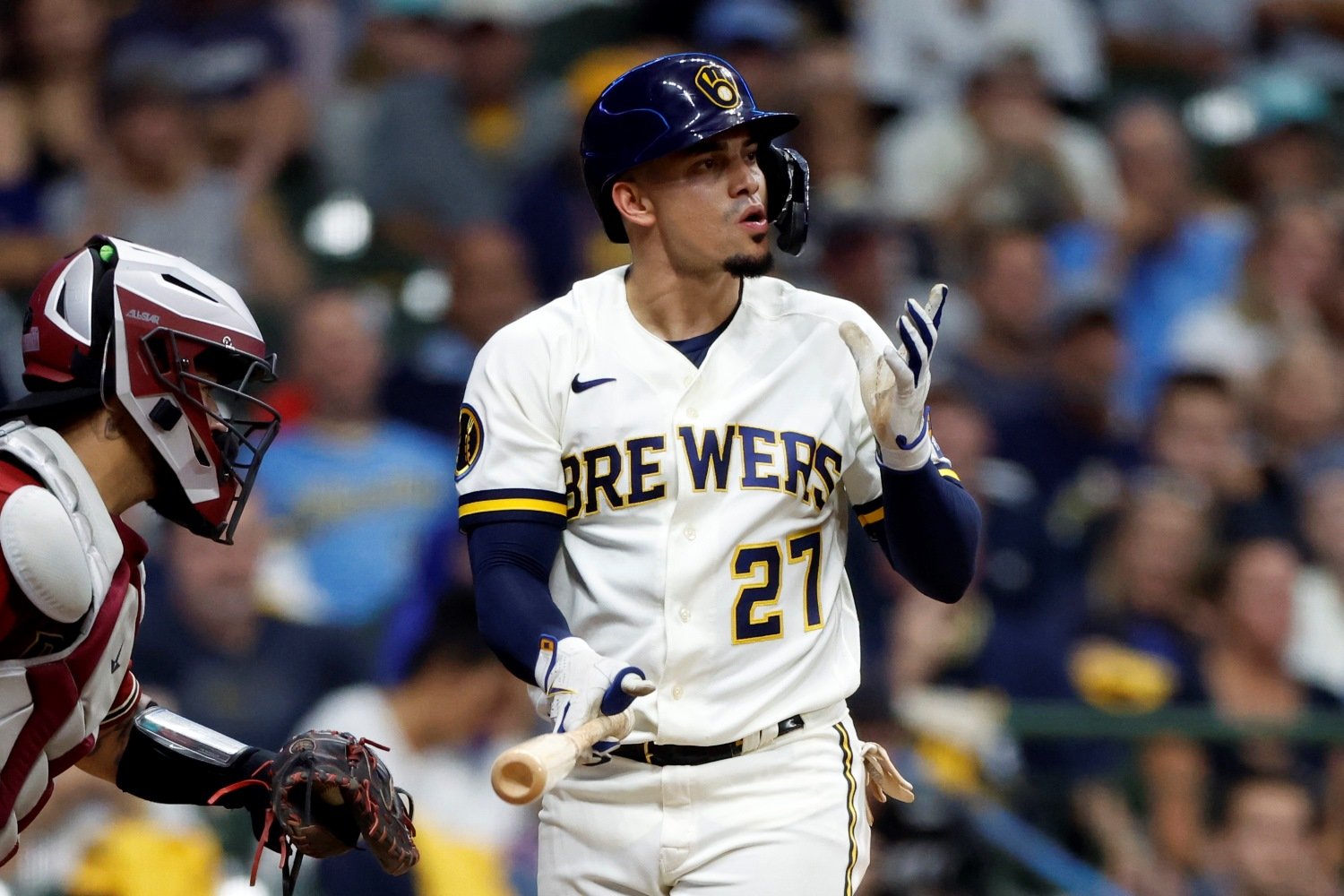 It was an uneven season for Willy Adames. As much as his consistent defense at shortstop meant to the team, his streaks and slumps at bat added to the Brewers' difficulty in generating runs. Adames hit .217/.310/.407 on the year, which constituted a slight uptick in OBP from 2022 but a major power outage. His hard-hit rate plunged, and for a full two months--May and June, combined--he batted .175/.249/.331, striking out 27.4 percent of the time. Around that, though, Adames was still a pretty productive hitter. He had a .780 OPS in April and a .772 mark from July 1 through the end of the season. Once you account for the fact that he missed a chunk of time during the ugly stretch of his season after being struck in the head by a line drive, it's tempting to say that Adames was his usual self, and that his prolonged period of struggle was just a blip. There's one problem there, though: Adames didn't hit fastballs in 2023. He was 25 runs above average against fastballs in 2021. That figure fell to 8 in 2022, but that's still sturdy. This past season, Adames was six runs below average on heaters. That problem wasn't confined to his slumpy May and June, either. It lasted throughout the season. Ok, we've diagnosed a problem here. Adames didn't hit heat in 2023. That's just going by results, though. Using expected stats, including whiff rate and quality of contact, we can home in on Adames's process against those pitches. The picture looks rosier that way. These are plotted out by month to dissuade anyone from thinking his problems were exclusive to that troublesome stretch in spring and early summer. Don't read into the apparent trendlines. The headline is that while Adames produced horrendous results against the fastball, the underlying metrics indicate that he was better than those results imply. Alas, we can't quite stop there. There are times when expected stats and batted-ball data tell a clear and simple story, even (or especially) if that story belies the one apparently told by surface-level numbers. Just as often, though, they tell a complicated and self-contradictory tale. This is one of those times. For one thing, Adames's Barrel Rate on fastballs was up, but his average exit velocity was a full 1.5 miles per hour lower. His contact rate on fastballs in the zone was higher, but so was the rate at which he chased (and missed) heaters outside the zone. Here's the intriguing and encouraging news: the problem might be partially demographic. Here's a chart tracking expected weighted on-base average (xwOBA) against fastballs by age bracket, since the start of the Statcast era in 2015. We can debate whether there's really much signal within the obvious noise, but the data says hitters have the toughest time hitting hard stuff from ages 25-27, and (perhaps peculiarly) the most success from ages 28-30. It seems improbable that a switch would flip between ages 27 and 28, of course, but talk to baseball people, and they can articulate a theory of the case. You have to learn how to find and zero in on your pitch, and that takes time. After 30, naturally, you're likely to decline, as catching up with pure velocity gets harder. The sweet spot, then, comes in your late 20s. Adames turned 28 on Sept. 2. It's just possible that, as he continues to mature at the plate, he'll get back to mashing fastballs in 2024. That should inform our understanding of the Brewers' overall offensive outlook, and of Adames's future--two things that are, obviously, intertwined with one another, especially since this is the offseason in which the team needs to make their decision about whether to extend Adames and retain him beyond 2024. Before committing to him (or not), the team needs to ascertain their level of confidence that Adames will take that step, because they have to hit fastballs better in 2024 than they did in 2023. They were 25th in run value against heaters this year. Christian Yelich, Sal Frelick and William Contreras (perhaps not coincidentally, the team's only three markedly above-average hitters) were the only guys who had strongly positive run values on those pitches. Adames was 280th of 330 qualifying hitters in fastball run value. Brice Turang was 328th on that list. We already knew this, but the Brewers have to go out and add prime-aged hitters with power to their lineup this winter. That they specifically need to do better against fastballs only underscores that. Adames should be better on heat next season, between his age and some regression, but they need a lot more than a bit of friendly mathematical course correction.
 -
There's no one time at which it's always correct to take out a starting pitcher. Situations vary. So do both pitchers, and the lineups they're facing. We can identify the places where it most often makes the most sense to remove a starter, though, and in 2023, the Brewers were the masters of doing it right. Image courtesy of © Mark Hoffman / Milwaukee Journal Sentinel / USA TODAY NETWORK Most of the time, a starter makes it at least twice through the batting order, even if they're struggling. Except in blowup starts or cases in which managers intend a strategy like the opener or a bullpen game, teams need their starter to get into the third trip through the opposing lineup. That prevents the bullpen from being overtaxed, since facing at least 18 batters often gets a starter at least into the fifth inning. Ideally, of course, the starter goes more like six or seven innings, even in the modern game. As a pitcher works deeper into a given game, though, they tire, and as each hitter in the order gets more and more looks at the hurler's stuff, they slowly gain an advantage over them. A manager ignorant of the times-through-the-order penalty (or just insufficiently proactive in mitigating it) can lose a lot of games before even getting the chance to have their bullpen save them. As we all know, starters pitch much less deep than they used to, and it's not only because of times-through-the-order effects. Still, that's a key factor to consider, and it's also different from one year to the next. When, on average, should a manager let the progress of the game nudge their starter off the mound? It depends as much on the dynamics of the opposing order as on the pitcher himself. Start, then, by considering the average relative production from each place in the batting order this season. I also tried to place that production in historical context. To do so, I confined my search to the American League, over the last 51 years. That way, we're looking only at lineups that go nine players deep, without the complicating factor of the pitcher in the ninth spot. League OPS+ By Lineup Spot, 2023 Batting Order Pos. OPS+ Rank (of 51) 1 100 24th 2 108 4th 3 104 49th 4 100 50th 5 100 45th 6 96 46th 7 92 49th 8 93 14th 9 89 11th As you can see, the third through seventh spots in the order were about as bad (relative to the rest of the league) as they have been at any time in the last five decades. By contrast, the top and bottom of the order were more dangerous than they have traditionally been. Modern lineups are flatter than their predecessors, and the bad hitters in them have more power than they used to. The danger in a lineup starts earlier, but in the middle, you don't have titanic and well-rounded sluggers to fear. Managers have reacted accordingly. By looking at the frequency of each number of batters faced within a start throughout the league, we can see trends and changes in when the skipper is going to get his starter and turn to his relief corps. Again, we already knew about the macro trend toward starters facing fewer batters and working less deep into games. What this illustrates, though, is that it's not a uniform change. There's a distribution shift taking place, too. The bell curve is taller and thinner than it was in the past. Notice how much more often pitchers are lifted before seeing the first or second hitter a third time. The biggest spikes are in the relative frequency of taking pitchers out after 22, 23, or 24 batters, though. That means that skippers are disproportionately removing their guys as they wade through that soft(er than the historical norm) spot in the middle of the batting order. The sweet spot is right in there. Assuming a good bullpen and a healthy starter, managers do best when they take their starters out after somewhere between 21 and 25 batters, at least under 2023 conditions. That worked like gangbusters for the Brewers this season. Only the Orioles lifted their starters in the 21-25 sweet spot more times (108) than Milwaukee's 105. Craig Counsell only left his starters in past that sweet spot 21 times. Given the shape of their pitching staffs, no team better timed the key substitution of any ball game--taking out the starter--than did the Crew. It was part of why they were so sensational at run prevention. Many of these dynamics could subtly shift again in 2024. Many things could change on the Brewers' end, too, including Brandon Woodruff being out for the year and Counsell (perhaps) not being the one pressing the buttons and pulling the levers. For this season, though, everything worked gorgeously, because the team was ahead of the curve of league-wide change. View full article
