Matt Breen
-
Posts
9,122 -
Joined
-
Last visited
-
Days Won
1
Content Type
Profiles
Forums
Blogs
Events
Milwaukee Brewers News, Rumors & Analysis
2026 Milwaukee Brewers Top Prospect Rankings
Milwaukee Brewers Videos
2022 Milwaukee Brewers Draft Picks & Signing Bonuses
Milwaukee Brewers Trade & Free Agent Rumors
Milwaukee Brewers Fan Guides & Resources
2023 Milwaukee Brewers Draft Picks & Signing Bonuses
2024 Milwaukee Brewers Draft Picks & Signing Bonuses
2025 Milwaukee Brewers Draft Picks & Signing Bonuses
2026 Milwaukee Brewers Draft Picks & Signing Bonuses
Store
Downloads
Gallery
Everything posted by Matt Breen
-
Ken Sanders Was The First Great Brewer Pitcher
Matt Breen replied to Matt Breen's topic in Brewer Fanatic Front Page News
Thanks, JohnBriggs, for the great story. -
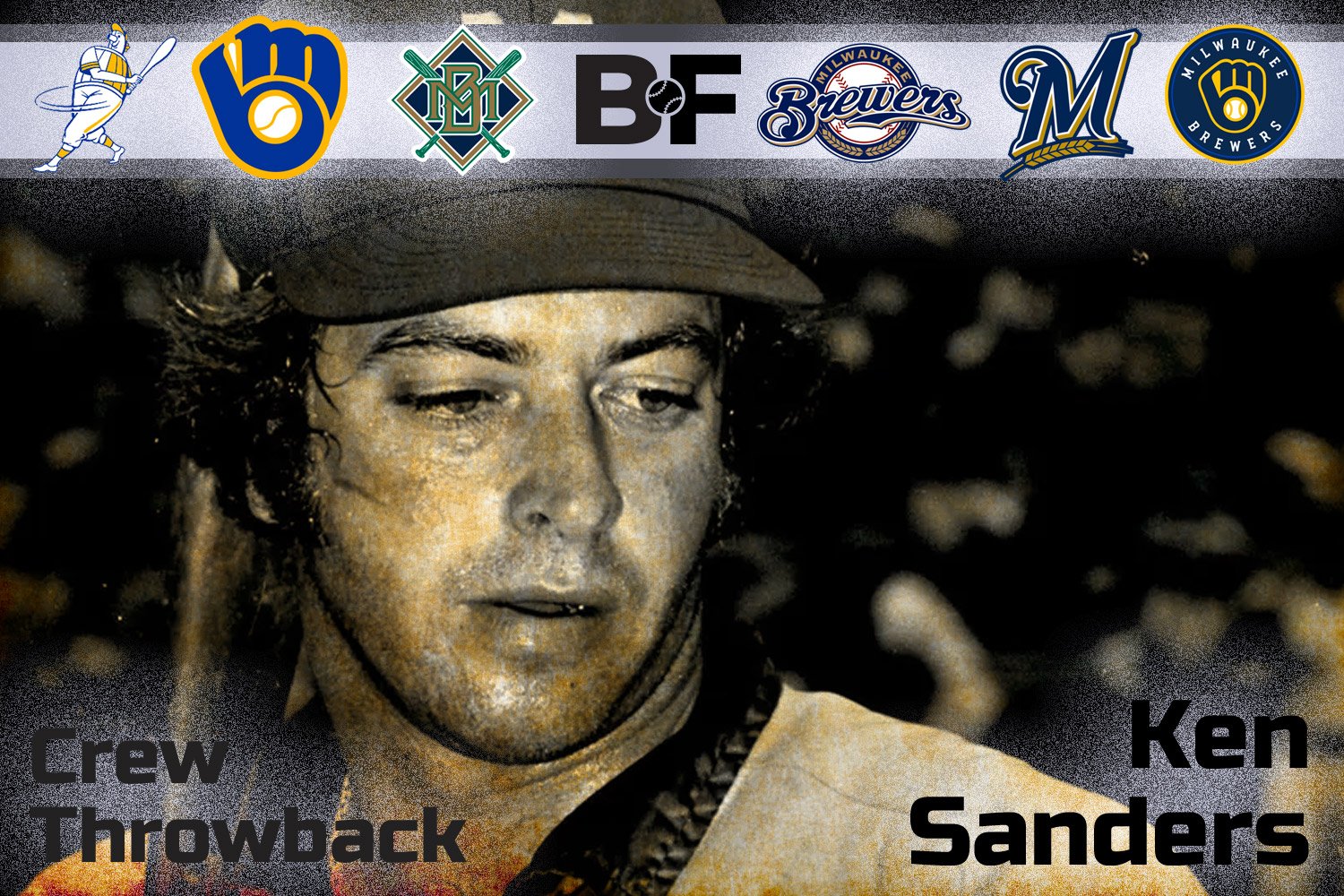
Who was the first great Milwaukee Brewers pitcher? That moniker falls on an unlikely man - journeyman reliever Ken Sanders, who rose from obscurity to become baseball’s Fireman of the Year in 1971 - and be the first Brewer pitcher to receive MVP votes. Ken George Sanders was born in St. Louis, Missouri on July 8, 1941. He attended high school in St. Louis, where he starred in football, baseball, and soccer. After graduation, Sanders briefly went to St. Louis University before signing with the Kansas City Athletics as a free agent in 1960. In his first season in D-affiliate ball, Sanders threw an astounding 240 innings, racking up 22 complete games and 19 wins - all while still a teenager. The next few years saw Sanders find middling success, and in 1964, he was converted to a full-time reliever. He made his major league debut later that year. Sanders spent the rest of the 1960s bouncing between the major and minor leagues including time in Oakland, Boston, and Kansas City. At times, he struggled with his control, walking too many batters. Still, he was mostly effective; his ERA was never more than 3.80. And then, before the 1970 season, Sanders was dealt by the A’s to the Brewers, along with Mike Hershberger, Lew Krausse Jr., and Phil Roof in exchange for Don Mincher and Ron Clark. The 28-year-old Sanders began the season at Spokane, the Brewers Triple-A affiliate, before getting the call to Milwaukee. What followed was Sanders' greatest stint in baseball. That season, he was outstanding, tossing 92 innings to the tune of a 1.75 ERA. He also had 13 saves and demonstrated improved command. Brewers Manager Dave Bristol nicknamed Sanders ‘Bulldog’ because he was “So mean, tough and stubborn on the mound.” It was great stuff - but even better was yet to come. In 1971, Sanders had the finest campaign of his career. Operating as the club’s closer, he appeared in 83 games, threw 136 innings, and had 31 saves - the latter leading the majors. It was all highlighted by a sparkling 1.91 ERA, plus a major league record 77 games finished. He was selected as the Brewers MVP. For his stellar campaign, Sanders was named Fireman of the Year by the Sporting News and even received MVP votes - the first Brewer pitcher to ever do so. The 1972 season began well for Sanders, but some mid-season struggles saw him removed from the closer’s role as manager Del Crandall lost faith in him. Sanders's numbers - 92 IP, 3.12 ERA, and 17 saves - were respectable but far from the heights of his previous work with the club. In the offseason, the Brewers decided to move on from Sanders, trading him to Philadelphia along with Jim Lonborg, Ken Brett, and Earl Stephenson in exchange for Don Money, John Vukovich, and Bill Champion. The Phillies flipped Sanders to Minnesota a month later. Sanders spent the next four years on five major league teams (as well as some minor league clubs) - sometimes pitching well, sometimes not so good. In 1977, he rejoined the Brewers organization, tossing 30 ineffective innings at Triple-A Spokane. After that, he knew the writing was on the wall and retired. Ken Sanders was 35 years old. After his retirement, Sanders stayed in the Milwaukee area, living in Hales Corners, where he and his wife, Mary Ann - his childhood sweetheart - raised three children. Sanders began a career in real estate and then moved into banking. One interesting tidbit where real estate and baseball came together was when Sanders, in 2013, was the listing agent for the Field of Dreams site in Iowa. Sanders stayed involved in baseball in retirement, serving on the MLB Players Alumni Association board for 20 years and participating in various fantasy camps for two decades. Sanders, 82 as of this article, splits his time between Milwaukee and Florida. Ken Sanders was, at first glance, the very definition of a journeyman ball player. 18 seasons. Parts of 13 years in the minor leagues. Eight major league teams over 11 years. But he was, when given the opportunity, effective. He has a lifetime ERA of 2.97 in 409 games and 656 innings pitched. That includes 86 saves. Sanders' time in Milwaukee (less than three full seasons) defines him in most fans' eyes. Yes, it was a short run but the 1970-71 stint was brilliant. Sanders still holds the Brewers record for the most games pitched in a season, 83, tied with Alex Claudio. And his 77 games finished that same year - is a team record. He is one of only two Brewers to win the Fireman of the Year award (the other being Rollie Fingers). The award was discontinued in 2011. So hats off to Ken Sanders - who saved (pun intended) his very best for Milwaukee. Please share your memories of former Brewer pitcher Ken Sanders. Image courtesy of Brewer Fanatic & Brock Beauchamp View full article
-
 Ken George Sanders was born in St. Louis, Missouri on July 8, 1941. He attended high school in St. Louis, where he starred in football, baseball, and soccer. After graduation, Sanders briefly went to St. Louis University before signing with the Kansas City Athletics as a free agent in 1960. In his first season in D-affiliate ball, Sanders threw an astounding 240 innings, racking up 22 complete games and 19 wins - all while still a teenager. The next few years saw Sanders find middling success, and in 1964, he was converted to a full-time reliever. He made his major league debut later that year. Sanders spent the rest of the 1960s bouncing between the major and minor leagues including time in Oakland, Boston, and Kansas City. At times, he struggled with his control, walking too many batters. Still, he was mostly effective; his ERA was never more than 3.80. And then, before the 1970 season, Sanders was dealt by the A’s to the Brewers, along with Mike Hershberger, Lew Krausse Jr., and Phil Roof in exchange for Don Mincher and Ron Clark. The 28-year-old Sanders began the season at Spokane, the Brewers Triple-A affiliate, before getting the call to Milwaukee. What followed was Sanders' greatest stint in baseball. That season, he was outstanding, tossing 92 innings to the tune of a 1.75 ERA. He also had 13 saves and demonstrated improved command. Brewers Manager Dave Bristol nicknamed Sanders ‘Bulldog’ because he was “So mean, tough and stubborn on the mound.” It was great stuff - but even better was yet to come. In 1971, Sanders had the finest campaign of his career. Operating as the club’s closer, he appeared in 83 games, threw 136 innings, and had 31 saves - the latter leading the majors. It was all highlighted by a sparkling 1.91 ERA, plus a major league record 77 games finished. He was selected as the Brewers MVP. For his stellar campaign, Sanders was named Fireman of the Year by the Sporting News and even received MVP votes - the first Brewer pitcher to ever do so. The 1972 season began well for Sanders, but some mid-season struggles saw him removed from the closer’s role as manager Del Crandall lost faith in him. Sanders's numbers - 92 IP, 3.12 ERA, and 17 saves - were respectable but far from the heights of his previous work with the club. In the offseason, the Brewers decided to move on from Sanders, trading him to Philadelphia along with Jim Lonborg, Ken Brett, and Earl Stephenson in exchange for Don Money, John Vukovich, and Bill Champion. The Phillies flipped Sanders to Minnesota a month later. Sanders spent the next four years on five major league teams (as well as some minor league clubs) - sometimes pitching well, sometimes not so good. In 1977, he rejoined the Brewers organization, tossing 30 ineffective innings at Triple-A Spokane. After that, he knew the writing was on the wall and retired. Ken Sanders was 35 years old. After his retirement, Sanders stayed in the Milwaukee area, living in Hales Corners, where he and his wife, Mary Ann - his childhood sweetheart - raised three children. Sanders began a career in real estate and then moved into banking. One interesting tidbit where real estate and baseball came together was when Sanders, in 2013, was the listing agent for the Field of Dreams site in Iowa. Sanders stayed involved in baseball in retirement, serving on the MLB Players Alumni Association board for 20 years and participating in various fantasy camps for two decades. Sanders, 82 as of this article, splits his time between Milwaukee and Florida. Ken Sanders was, at first glance, the very definition of a journeyman ball player. 18 seasons. Parts of 13 years in the minor leagues. Eight major league teams over 11 years. But he was, when given the opportunity, effective. He has a lifetime ERA of 2.97 in 409 games and 656 innings pitched. That includes 86 saves. Sanders' time in Milwaukee (less than three full seasons) defines him in most fans' eyes. Yes, it was a short run but the 1970-71 stint was brilliant. Sanders still holds the Brewers record for the most games pitched in a season, 83, tied with Alex Claudio. And his 77 games finished that same year - is a team record. He is one of only two Brewers to win the Fireman of the Year award (the other being Rollie Fingers). The award was discontinued in 2011. So hats off to Ken Sanders - who saved (pun intended) his very best for Milwaukee. Please share your memories of former Brewer pitcher Ken Sanders.
-
The front office has done a great job identifying relief arms that last few years. Wilson, Payamps, Milner, Peguero, Megill - those guys were huge for the club last year. It doesn't mean anyone they pick up will be great. Not every acquisition pans out. But they must have seen something interesting in Clarke to get him. Let's hope the staff can help him up his game.
-
The Royals have a lot of holes. They're filling them with (relatively) affordable pieces without longterm baggage. The quality of those players isn't the best - but for KC - they hope they are at least serviceable so their younger players can develop. The Brewers are lucky in that we don't need a ton of pieces. Doesn't mean we can spend to get better - but it's not like we are filling three rotation slots - like the Cardinals. That's costing them $50m this year.
-
Royals are going nuts! First they nab Seth Lugo, then they add Michael Wacha (2-years/$32m) and Hunter Renfroe (2-years/$13m). https://www.mlbtraderumors.com/2023/12/royals-sign-michael-wacha.html https://www.mlbtraderumors.com/2023/12/royals-finalizing-deal-with-hunter-renfroe.html
-
Or maybe it's just the Dodgers blowing smoke to try and scare Milwaukee into dealing them Burnes. "Oh look, Matt Arnold, we are going to get Glasnow. I guess you have one less suitor for Burnes - unless you lower your asking price..." In reality, I'm betting that no one - myself included - has any clue what is really going on. Maybe the Dodgers truly believe Burnes is out of reach and are now focusing on Glasnow. But whatever. They should be going hard after Burnes.
-
That's kind of wild. Good for Lugo, but that's a lot of cash for him. Makes Burnes even more attractive.
-
Three trade proposals from Twins Daily
Matt Breen replied to Brock Beauchamp's topic in Transaction Rumors & Proposals
Agree. Julien is interesting as heck. Just not sure what his defensive spot will ultimately be. -
This. The Brewers will be all about bringing Burnes back - and to a degree that's legit. But in reality, they will move him if the offer is right. It's all about waiting for someone to blink and overpay. If it doesn't happen - so be it. We can wait until the trade deadline or even just take the pick. The latter is not ideal, but at least you get something. And it likely means we're doing well enough to contend.
-
I love it. Keep him in the AL, and make all those other teams desperate for our players - now and in the future.
-
Cronenworth is due around $80m over the next 7 years. A lot for a guy who did not look good last year. Was it an aberration? I don't know. The club would have to be pretty sure they can fix him.
-
Eduardo Rodriguez to the Dbacks. 4-years/$80m. https://www.mlbtraderumors.com/2023/12/diamondbacks-agree-to-four-year-deal-with-eduardo-rodriguez.html I like this for Milwaukee - if they want to deal Burnes. The more higher end arms that get picked up by clubs such as Arizona, the more value Burnes should have as a trade target.
-
Victor Caratini signs with Astros
Matt Breen replied to Brock Beauchamp's topic in Milwaukee Brewers Talk
The guy did well for him - $12m. Nice coin. I didn't expect him to get that much - but good for Caratini. -
With the price people are having to pay free agents (and willing to pay), I think Burnes will be in heavy demand once the smoke clears - especially after Ohtani, Yamamoto and Montgomery sign. The key is will anyone meet our equally heavy demands. If so, then Burnes will be gone. The beauty of things is that if no one meets our price, we can just take our football and go home. Burnes will be just fine in our 2024 rotation.
-
Nice to see the statement from Arnold regarding Yelich at 1B. I would have been fine with it, but let's just move on from it if it's not in the cards. I hope Yelich spends most of his time at DH. An outfield of Chourio, Mitchell, Frelick, Wiemer and Taylor is great defensively.
-
Totally get wanting pitching. Key is finding it. I think it's easier to find a player blocked at a position - such as 3B (Coby Mayo for instance) than high end arms. It's not like you have one starter. If we can find the arms, great. Go for it. But teams really seem reluctant to trade high end young pitching - which I understand. It's hard to find.
-
Two steps here. Step 1: Burnes and Williams to Orioles. SS Joey Ortiz and 3B Coby Mayo and a lottery ticket or two) to Brewers Ortiz and Turang are our new SS/2B combo. Mayo goes to 3B. Reports are somewhat mixed on his ability at 3B. He's got a huge arm, and might best fit in the OF, but we don't need him there. If he can't handle 3B, he moves to 1B and/or DH. He's a big, power hitting right-hander that we could really use. Step 2: Adames to someone else for a starting pitcher. This probably isn't as easy as I make it sound - but find someone to get a young starter who is ready - or nearly ready - for the majors. Example would be Ryan Pepiot of the Dodgers. The goal would be to have a young arm to replace Burnes. No, he won't replace Burnes' production, but at least be serviceable. In the end, you add six years of a couple of good looking position players - including a power bat in Mayo that the team lacks.
-
Agree. The team would do this deal in a heartbeat if it was offered. Holliday is too good of a talent to let go. Baltimore won't do it. They have other pieces they can deal.
-
Joey Ortiz would be a nice addition, especially if Willie gets traded.
-
It's going to be fun. I just hope fans and the organization is patient with him. There's bound to be some adjustment time in there.
-
Game 12: Chiefs @ Packers - Sunday, Dec. 3rd 7:20 PM
Matt Breen replied to HarryDoyle's topic in Other Sports
Biles would crush her. That woman is powerful. -
Williams and Burnes for pitcher DL Hall, 3B Coby Mayo, and 2B Connor Norby. Hall moves into the rotation. Mayo goes to 3B (or 1B if the team doesn't like him at 3B), Norby gets a shot at 2B. Ideally we get more than one pitcher, but this is what I came up with. I like IF Joey Ortiz as well, but that's getting too pricey for Baltimore.
-
Sounds like it's done. Just a matter of team announcing it. https://twitter.com/ByAndrewWagner/status/1731149491015716986?s=20
-
Regarding Yelich at 1B, that would be great - if it works for everyone. I doubt Yelich couldn't play 1B - he did play the position in high school and is a pretty athletic guy. However, as CheezWizHead noted above, is 1B worse for Yelich's health. He has had back issues in the past, and 1B involves a lot bending over and crouching. Honestly, I think the only person who can answer that is Yelich. He might say it's awful on him - or it's not a big deal. Or it would help him due to having to run less (or whatever would be the reason). Every back issue isn't the same. Just as any knee issue or shoulder issue isn't the same. 10 players with back issues could list 10 different things that are most likely to trigger a recurrence of those problems. In the end, the team should talk to Yelich about his thoughts on playing 1B. If he's amendable and it doesn't cause problems with his health - then go for it. If not, the best position is DH and some occasional starts in LF.