



Matt Breen
-
Posts
9,112 -
Joined
-
Last visited
-
Days Won
1
Content Type
Profiles
Forums
Blogs
Events
News
2026 Milwaukee Brewers Top Prospects Ranking
Milwaukee Brewers Videos
2022 Milwaukee Brewers Draft Picks
Milwaukee Brewers Free Agent & Trade Rumors, Notes, & Tidbits
Guides & Resources
2023 Milwaukee Brewers Draft Picks
2024 Milwaukee Brewers Draft Picks
The Milwaukee Brewers Players Project
2025 Milwaukee Brewers Draft Pick Tracker
2026 Milwaukee Brewers Draft Tracker: Picks & Bonuses
Store
Downloads
Gallery
Everything posted by Matt Breen
-
 Glenn Braggs was probably - pound-for-pound - the strongest man in Brewer history. He was a chiseled 6’3” and 210 pounds when he arrived in Milwaukee - looking every part of a superstar in the making. But looking like an All-Star and becoming one are two very different things. Image courtesy of Brewer Fanatic Glenn Erick Braggs was born in 1962 in San Bernardino, California. A right-handed hitter, he attended the University of Hawaii and was drafted in the 2nd round of the 1983 amateur draft. Braggs quickly developed into one of Milwaukee's brightest young prospects, hitting .390 and producing an OPS of 1.189 in rookie ball. The powerful young outfielder quickly moved through the minors, hitting a robust .360 with 15 HR in only 90 games at AAA in 1986. It led to the Brewers calling up Braggs and installing him in left field that season (he bounced between left and right field during his career). Braggs struggled his first season, hitting .237 in 58 games. But in 1987, with some experience under his belt, he improved, hitting .269 with 13 HR and a .762 OPS. It was a solid full-season debut, and many saw stardom in Braggs' future. He had a sweet swing, and many said he was one of the most powerful men they had ever seen in the game. However, a shoulder injury the following season cost Braggs more than half the year, and his 1989 season saw him regress in many areas (although he hit a career-high 15 home runs). Things soured for Braggs as he tried to fulfill lofty expectations, and he saw less and less playing time as he struggled, particularly against right-handed pitching. In June 1990, he was traded to Cincinnati for pitchers Ron Robinson and Bob Sebra - neither of whom had any meaningful impact in Milwaukee. He settled in as a part-time player in Cincinnati for three seasons with modest success and was part of the Reds' 1990 World Series team, making a nice home run-saving catch to preserve his team's lead in game six. In 1993, he signed with Yokohama in the Japanese League, beginning a successful four-year run overseas. He hit .300 in Japan and, in 1994, smashed 35 home runs. Braggs retired from professional baseball after the 1996 season at age 33. After retiring, Braggs became a real estate agent. He married Cindy Herron of the R&B group En Vogue in 1994, and the couple had four children - although Herron filed for divorce early in 2022 after 29 years of marriage. Braggs has focused on his real estate business and doesn't do much involving baseball, but he has participated in past Brewer Fantasy Camps. He is a vegan, and he has a lifelong interest in fitness. Braggs hit .255 with 45 home runs for his career with Milwaukee, and produced a .726 OPS. His career was solid, if undistinguished. But in hindsight, the results were a disappointment to most. When he arrived in Milwaukee, he was a "can't miss" player - and one of the most hyped prospects in years. Scouts raved about his swing and physical tools. Everyone expected a star. Braggs later said that he felt that he tried too hard. Ultimately, his excellent physical tools weren't enough. He was stiff in the field and at the plate. Many great players have an effortlessness to their game - something Braggs never developed. As noted, Braggs was considered one of the strongest players in the league, looking more like a football player than a baseball player. One of the things people remember him for was the time he shattered a bat on his own back after swinging and missing at a pitch. Take a look - it's pretty amazing. Glenn Braggs' bat breaks on back"> Please share your memories of former Milwaukee Brewer outfielder Glenn Braggs. View full article
 -
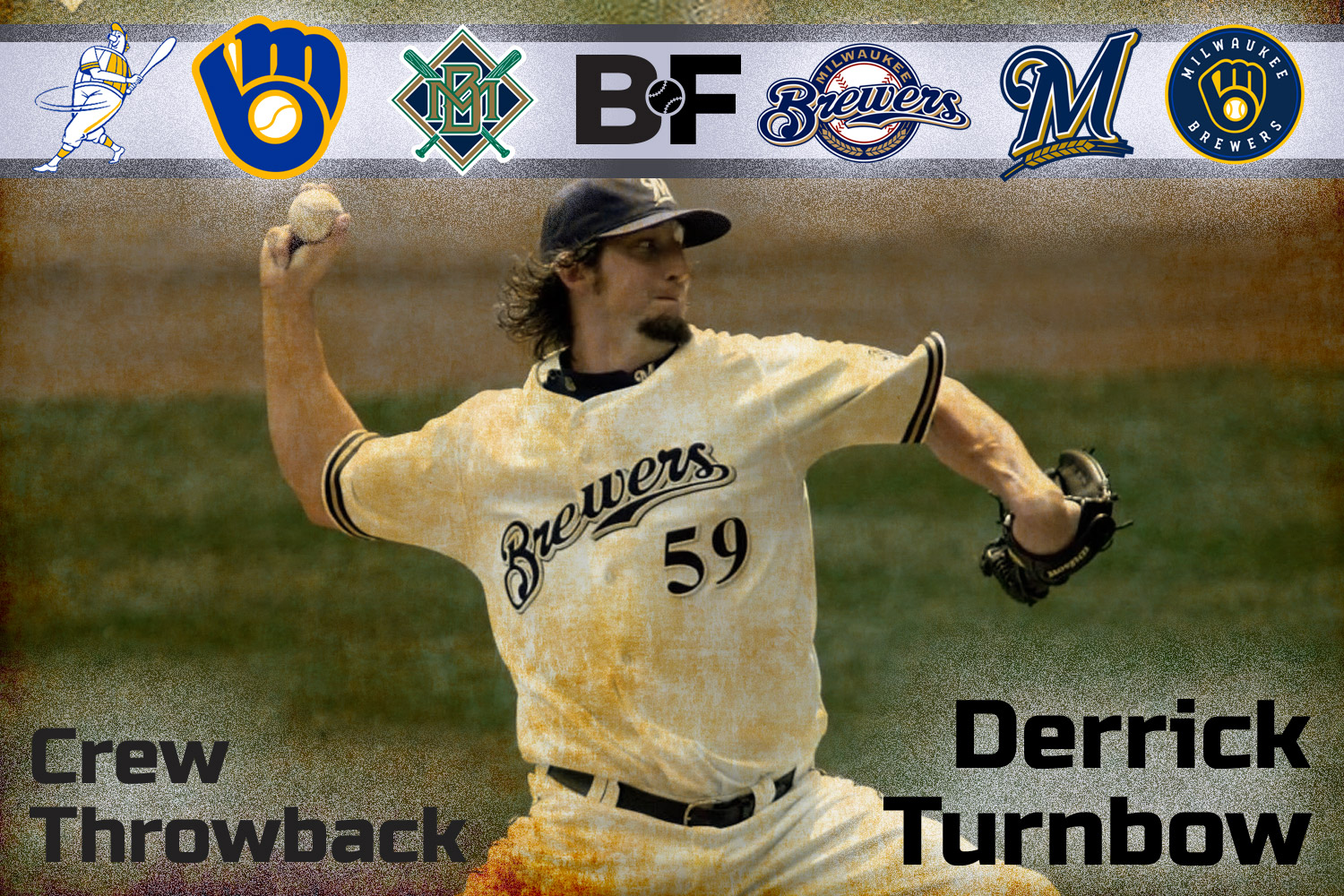
Relief pitching is often volatile by nature. They can have fleeting moments (or seasons) of brilliance, followed by implosions that can send them into retirement. One of the most extreme examples of this is former Brewer relief pitcher Derrick Turnbow, who went from a waiver claim to an All-Star game to being done as a major league pitcher within four years. Image courtesy of Brewer Fanatic Thomas Derrick Turnbow was born in Tennessee in 1978 and was selected in the fifth round of the 1997 draft by the Philadelphia Phillies. Derrick Turnbow was developed as a starter in the minors, but in 2000 he was nabbed by the Angels in the Rule 5 draft, despite having no AA or AAA experience. The Angels moved Turnbow to the bullpen for the year - essentially stashing him on the major league roster so they wouldn't have to return him to the Phillies. He was sent back to the minors in 2001, and the shift to the bullpen was permanent. An arm injury cost Turnbow much of the next two years, and he struggled upon returning to the bullpen. He tantalized with his explosive fastball but frustrated with bouts of wildness, and after several seasons with the Angels organization, Turnbow was waived in October 2004. Milwaukee claimed the big right-hander. Turnbow surprised many by making the club in 2005, and after Mike Adams struggled in the closer role, manager Ned Yost gave the job to Turnbow. He would have a magnificent season, posting 39 saves and a 1.74 ERA. He was second in the Rolaids Relief Man of the Year Award. The Brewers rewarded Turnbow with a three-year contract worth $6.5M. The 2006 season began well enough for Turnbow as he registered eight saves in the first month. But then the old bugaboo - his control - would rear its ugly head. His play was uneven for the next couple of months, but he still managed to record 23 saves and an All-Star game nomination. But then the wheels came off - and would never be put back on. His post-All-Star numbers were an ugly 0-5 record and an ERA of 11.29 - causing him to lose the closer's job. Turnbow would rebound somewhat in 2007, managing a 4.63 ERA in 69 innings. But in 2008, things got ugly. He began the season walking 13 batters in six innings. The Brewers sent Turnbow to AAA, where things only got worse - 41 walks and ten wild pitches in 18 IP. The Brewers released him after the season. Turnbow unsuccessfully attempted comebacks in 2009 and 2010 with the Rangers and Marlins, respectively, but with no luck. After his release during 2010 spring training, he decided to call it quits. Turnbow was 32. After retiring, Turnbow stepped away from baseball, joining a financial planning firm where he now specializes in wealth management services. He lives in Seattle, Washington, with his family. Turnbow is the classic example of a pitcher with a ton of ability (98 mph fastball, outstanding for the mid-to-late-2000s) but one who struggled with control. Many attributed his brilliant 2005 season to the work Turnbow did with pitching coach Mike Maddux. Fans loved the big, shaggy-haired righty who could throw heat with the best of them, and for one season, he was as good as any relief pitcher in baseball. Unfortunately, Turnbow could not repeat his success, and he quickly faded from the baseball scene. Turnbow's 39 saves in 2005 rank 4th all-time, and his all-time save mark of 65 ranks 80th. Please share your memories of former Brewer Derrick Turnbow. View full article
-
 Thomas Derrick Turnbow was born in Tennessee in 1978 and was selected in the fifth round of the 1997 draft by the Philadelphia Phillies. Derrick Turnbow was developed as a starter in the minors, but in 2000 he was nabbed by the Angels in the Rule 5 draft, despite having no AA or AAA experience. The Angels moved Turnbow to the bullpen for the year - essentially stashing him on the major league roster so they wouldn't have to return him to the Phillies. He was sent back to the minors in 2001, and the shift to the bullpen was permanent. An arm injury cost Turnbow much of the next two years, and he struggled upon returning to the bullpen. He tantalized with his explosive fastball but frustrated with bouts of wildness, and after several seasons with the Angels organization, Turnbow was waived in October 2004. Milwaukee claimed the big right-hander. Turnbow surprised many by making the club in 2005, and after Mike Adams struggled in the closer role, manager Ned Yost gave the job to Turnbow. He would have a magnificent season, posting 39 saves and a 1.74 ERA. He was second in the Rolaids Relief Man of the Year Award. The Brewers rewarded Turnbow with a three-year contract worth $6.5M. The 2006 season began well enough for Turnbow as he registered eight saves in the first month. But then the old bugaboo - his control - would rear its ugly head. His play was uneven for the next couple of months, but he still managed to record 23 saves and an All-Star game nomination. But then the wheels came off - and would never be put back on. His post-All-Star numbers were an ugly 0-5 record and an ERA of 11.29 - causing him to lose the closer's job. Turnbow would rebound somewhat in 2007, managing a 4.63 ERA in 69 innings. But in 2008, things got ugly. He began the season walking 13 batters in six innings. The Brewers sent Turnbow to AAA, where things only got worse - 41 walks and ten wild pitches in 18 IP. The Brewers released him after the season. Turnbow unsuccessfully attempted comebacks in 2009 and 2010 with the Rangers and Marlins, respectively, but with no luck. After his release during 2010 spring training, he decided to call it quits. Turnbow was 32. After retiring, Turnbow stepped away from baseball, joining a financial planning firm where he now specializes in wealth management services. He lives in Seattle, Washington, with his family. Turnbow is the classic example of a pitcher with a ton of ability (98 mph fastball, outstanding for the mid-to-late-2000s) but one who struggled with control. Many attributed his brilliant 2005 season to the work Turnbow did with pitching coach Mike Maddux. Fans loved the big, shaggy-haired righty who could throw heat with the best of them, and for one season, he was as good as any relief pitcher in baseball. Unfortunately, Turnbow could not repeat his success, and he quickly faded from the baseball scene. Turnbow's 39 saves in 2005 rank 4th all-time, and his all-time save mark of 65 ranks 80th. Please share your memories of former Brewer Derrick Turnbow.
 -
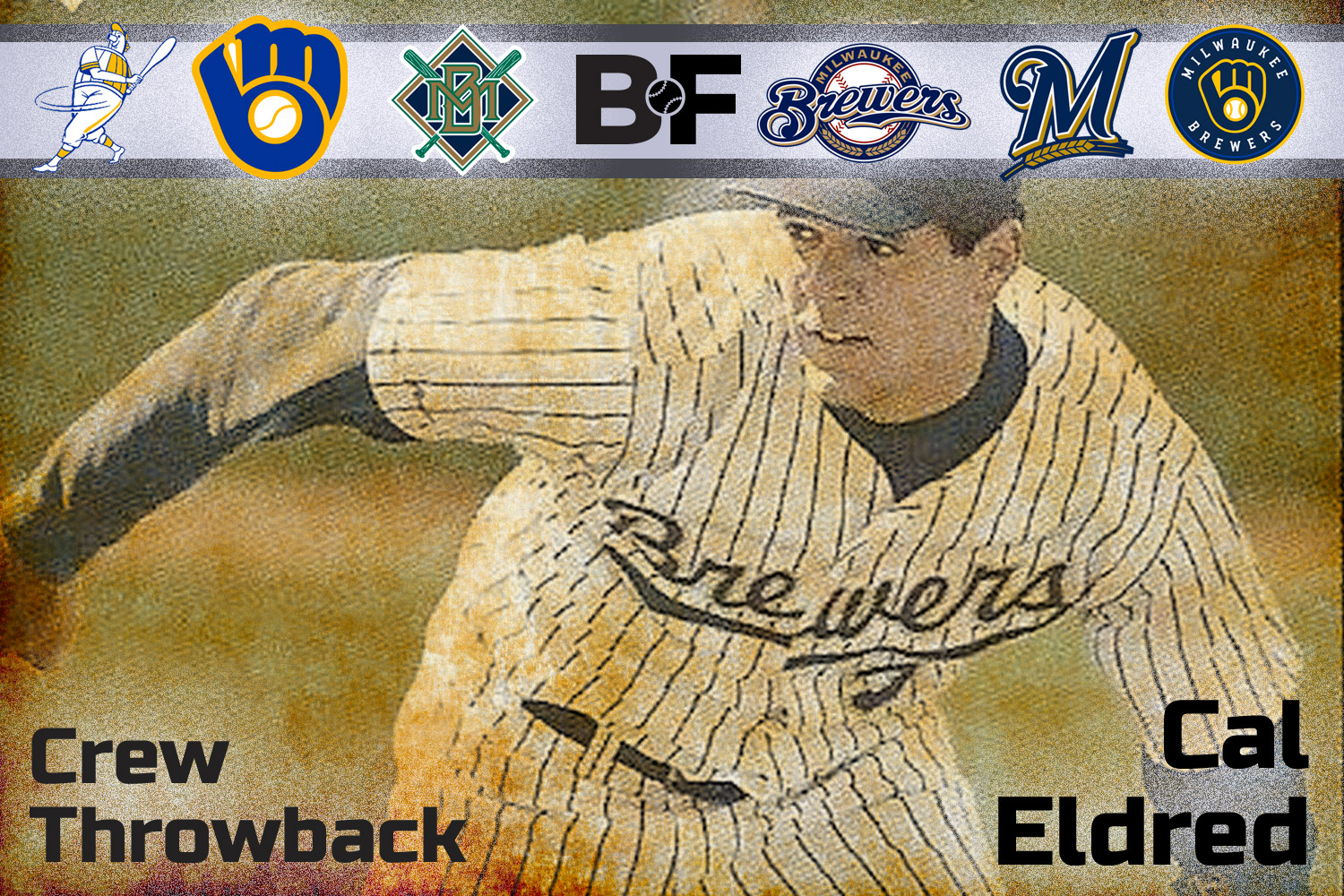
What might have been? In July of 1992, Cal Eldred arrived in Milwaukee and proceeded to put up numbers that Cy Young would have admired. The Brewers and their fans thought they had the makings of an ace. But it was not to be. Image courtesy of Brewer Fanatic Cal John Eldred was born in Cedar Rapids, Iowa, in 1967. He attended the University of Iowa and was drafted by the Brewers in the 1st round (17th overall) in 1989. Eldred was a big right-hander with everything you'd want in a pitcher - size, athleticism, and a plus fastball and curve. As an advanced college arm, he moved quickly through the Brewer system, enjoying a cup of coffee in 1991. But it was Cal Eldred's masterful 1992 debut that Brewer fans would forever remember. Eldred began the '92 season at AAA, logging 141 innings in 19 starts before being called up to the big leagues mid-July. Over the rest of the season, he threw 100 innings, produced an ERA of 1.88, and won 11 games in 14 starts. He finished 4th in the AL Rookie of the Year voting. The team won 92 games - good, but not enough to capture the division (stupid Wild Card game - where were you when we needed you). Few pitchers have begun a career on such a high note - and certainly not one for the Brewers. Big things were expected from the young Midwesterner. With expectations high, Eldred came down to earth in his second year. He won 16 games plus led the league in innings pitched, but his ERA rose to 4.01. In 1994, his numbers continued to falter as his strikeout rates dropped and his walk rates increased. Then, in 1995, after only four starts, Eldred was placed on the Disabled List with a sore elbow. Tommy John surgery was next, and he missed the rest of the season, plus parts of the 1996 campaign. Eldred threw 202 innings in 1997, but he was not the same pitcher - as his 4.99 ERA would attest. He fought injuries and ineffectiveness for two seasons, including an ugly 7.79 ERA in 82 IP in 1999, before being dealt with Jose Valentin to the White Sox in return for Jaime Navarro and John Snyder. Eldred’s first season in Chicago wasn’t bad - until elbow problems flared up, and he was forced to shut down his season in July. But it was worse in 2001. Another elbow injury limited him to just two games. He spent the rest of 2001 and all of 2002 rehabilitating his arm, and in 2003, at the age of 35, he returned to the majors with the St. Louis Cardinals as a reliever. He pitched three more years, retiring after the 2005 season. He was 37. After retiring, Eldred moved into the broadcast booth, serving as an analyst for the Big Ten Network and the Cardinals. He also served as a Special Assistant to Cardinals General Manager John Mozeliak. In 2017, he became the pitching coach for the Kansas City Royals. He was fired from that position after the 2022 season. Two of Eldred’s sons played collegiate baseball, including C.J. Eldred - who pitched for Iowa - just like his father. Looking back, Eldred's rookie season was electric. The team was competitive, and Eldred was a large part of that, as he produced a 4.2 bWAR in only 100 innings. He was a Midwest kid with a strong work ethic - an All-Star in the making. But it was not to be as injuries ultimately undid a promising career. Many points to the hefty workload imposed upon him in 1993 as the source of Eldred's woes. He was only 25 years old, and Manager Phil Garner had him work a league-leading 258 innings (after he had thrown 241 the previous year). A sore arm and TJ surgery were almost inevitable, and the rest of his career was marred by various arm injuries. During his time in Milwaukee (parts of nine seasons), Eldred threw 1,078 innings, struck out 686 batters, won 64 games, and produced 13.1 bWAR - all of which slot him in the top 10 in club history for each of those categories. Please share your memories of former Milwaukee Brewer pitcher Cal Eldred. View full article
-
Cal Eldred Started Strong But Injuries Derailed a Promising Career
Matt Breen posted an article in History
 Cal John Eldred was born in Cedar Rapids, Iowa, in 1967. He attended the University of Iowa and was drafted by the Brewers in the 1st round (17th overall) in 1989. Eldred was a big right-hander with everything you'd want in a pitcher - size, athleticism, and a plus fastball and curve. As an advanced college arm, he moved quickly through the Brewer system, enjoying a cup of coffee in 1991. But it was Cal Eldred's masterful 1992 debut that Brewer fans would forever remember. Eldred began the '92 season at AAA, logging 141 innings in 19 starts before being called up to the big leagues mid-July. Over the rest of the season, he threw 100 innings, produced an ERA of 1.88, and won 11 games in 14 starts. He finished 4th in the AL Rookie of the Year voting. The team won 92 games - good, but not enough to capture the division (stupid Wild Card game - where were you when we needed you). Few pitchers have begun a career on such a high note - and certainly not one for the Brewers. Big things were expected from the young Midwesterner. With expectations high, Eldred came down to earth in his second year. He won 16 games plus led the league in innings pitched, but his ERA rose to 4.01. In 1994, his numbers continued to falter as his strikeout rates dropped and his walk rates increased. Then, in 1995, after only four starts, Eldred was placed on the Disabled List with a sore elbow. Tommy John surgery was next, and he missed the rest of the season, plus parts of the 1996 campaign. Eldred threw 202 innings in 1997, but he was not the same pitcher - as his 4.99 ERA would attest. He fought injuries and ineffectiveness for two seasons, including an ugly 7.79 ERA in 82 IP in 1999, before being dealt with Jose Valentin to the White Sox in return for Jaime Navarro and John Snyder. Eldred’s first season in Chicago wasn’t bad - until elbow problems flared up, and he was forced to shut down his season in July. But it was worse in 2001. Another elbow injury limited him to just two games. He spent the rest of 2001 and all of 2002 rehabilitating his arm, and in 2003, at the age of 35, he returned to the majors with the St. Louis Cardinals as a reliever. He pitched three more years, retiring after the 2005 season. He was 37. After retiring, Eldred moved into the broadcast booth, serving as an analyst for the Big Ten Network and the Cardinals. He also served as a Special Assistant to Cardinals General Manager John Mozeliak. In 2017, he became the pitching coach for the Kansas City Royals. He was fired from that position after the 2022 season. Two of Eldred’s sons played collegiate baseball, including C.J. Eldred - who pitched for Iowa - just like his father. Looking back, Eldred's rookie season was electric. The team was competitive, and Eldred was a large part of that, as he produced a 4.2 bWAR in only 100 innings. He was a Midwest kid with a strong work ethic - an All-Star in the making. But it was not to be as injuries ultimately undid a promising career. Many points to the hefty workload imposed upon him in 1993 as the source of Eldred's woes. He was only 25 years old, and Manager Phil Garner had him work a league-leading 258 innings (after he had thrown 241 the previous year). A sore arm and TJ surgery were almost inevitable, and the rest of his career was marred by various arm injuries. During his time in Milwaukee (parts of nine seasons), Eldred threw 1,078 innings, struck out 686 batters, won 64 games, and produced 13.1 bWAR - all of which slot him in the top 10 in club history for each of those categories. Please share your memories of former Milwaukee Brewer pitcher Cal Eldred.
 -
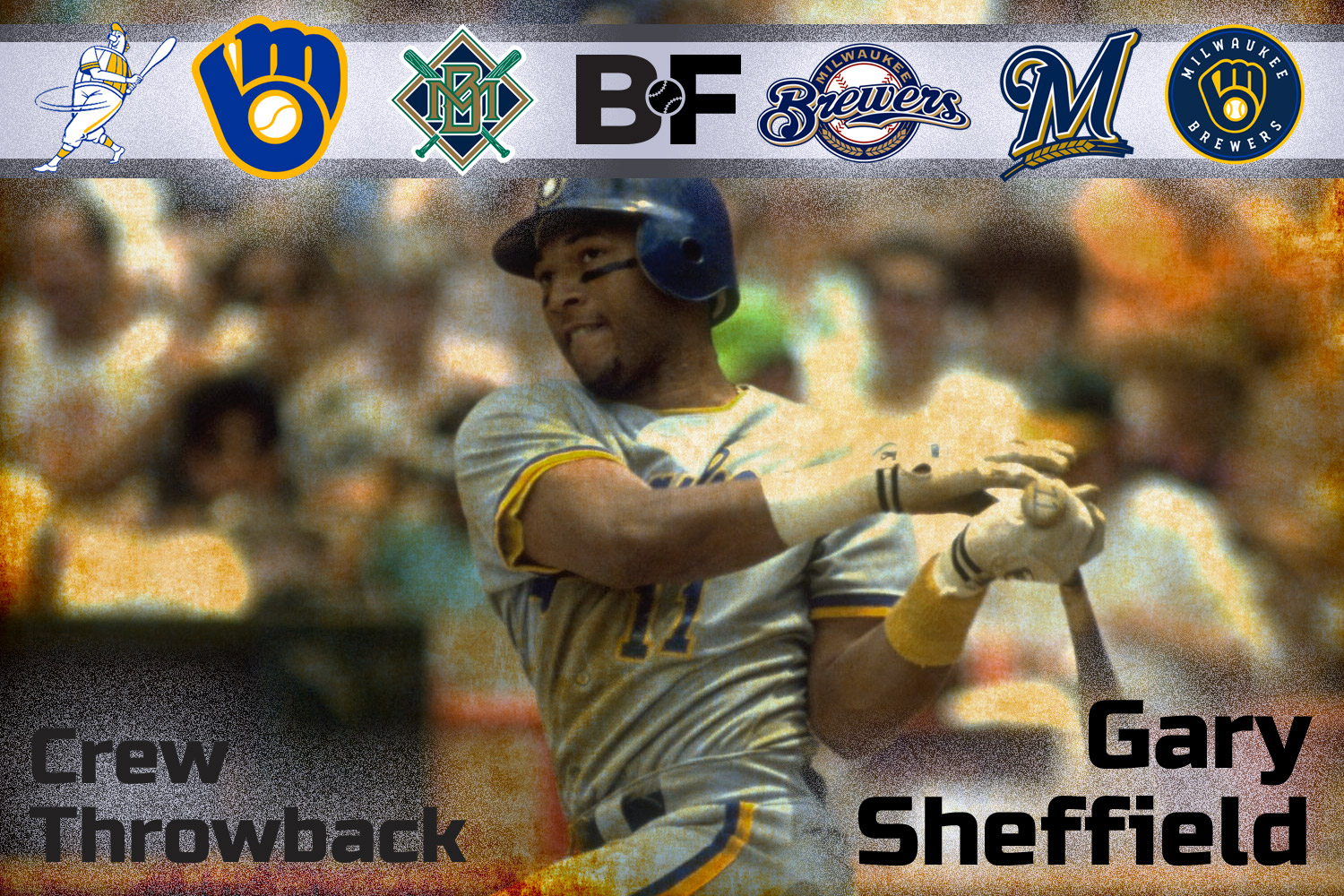
There are many "what might have been" moments in the history of any franchise. The Brewers reportedly wanted to draft Mike Trout in 2009, but the Angels took him one slot ahead of Milwaukee. Or how about if Nomar Garciaparra had signed with the Brewers after he was selected in 1991 instead of choosing college? Another great ‘what if’ surrounds Gary Sheffield, who came up with Milwaukee with great fanfare in 1988 at the age of 19 - only to be traded after showing promise - but also inconsistency and immaturity. He went on to have a long and stellar career. Image courtesy of Brewer Fanatic Gary Antonian Sheffield was born in Tampa Bay, Florida, in 1968. His uncle is Dwight Gooden - who was four years older. As a senior in high school, he was named the Gatorade National Player of the Year. The Brewers selected Sheffield in the 1st round of the 1986 draft - the sixth overall pick. It didn’t take long for Sheffield to become one of the top prospects in baseball. At Helena, Sheffield hit .365 and walloped 15 HR in just 57 games. He was only 17 years old. The abuse of minor league pitching continued as Sheffield showed an advanced hit tool, power, and a great eye at the plate. In 1988, at 19, Sheffield would debut in Milwaukee - playing 24 games. However, there were signs of trouble ahead for Sheffield when he was arrested in early 1987 - alongside Dwight Gooden - and charged with resisting arrest and battery of an officer. Later that year, he was arrested for a DUI. Besides a 7-game stint in the minors in 1989, Sheffield stayed in the big leagues. In his rookie campaign, Sheffield had mixed success as he battled several injuries - and a move to third base in favor of Bill Spiers. He hit only .247 in 94 games that year and said his move to third was race related. 1990 demonstrated the enormous potential that Sheffield possessed. Working with hitting coach Don Baylor, Sheffield hit .294, although his considerable power had yet to emerge. But the fans and the Brewers thought they saw a star in the making. But there were cracks in the relationship between Sheffield and the organization and the fans. His willingness to candidly discuss racial issues was not common at the time, making many fans, members of the organization, and some of his teammates uneasy. Sheffield complained about the team favoring white players and how the organization mistreated him. He was generally portrayed as a talented but disloyal and immature malcontent. Had Sheffield come into 1991 and hit well - all of these things would likely have been put aside - at least for a time. Instead, it would be a lost year. Various injuries would limit Sheffield to 50 games - and he hit a paltry .194. Fans booed Sheffield mercilessly, who later admitted he was miserable and requested a trade (something he had already done more than once). Organizations are often hesitant to trade talented players - even if they are struggling - for fear they will find themselves in a new city. But the Brewers had had enough of Sheffield. On March 26, 1992, they pulled the trigger on a trade sending the talented but troubled infielder to the San Diego Padres for pitcher Ricky Bones, SS José Valentin, and OF Matt Mieske. Much to the Brewers' chagrin, Sheffield turned into an all-star in San Diego, hitting .330 and 30 home runs and winning the NL batting title. The Brewers won 92 games that year - but missed the playoffs. Had Sheffield been in the lineup, things may have turned out differently. We don’t need to go on about Sheffield’s career, but the numbers are quite astonishing. 509 HR. Almost 2700 hits. 9 All-Star teams. More walks than strikeouts. Sheffield was not without his warts. He was never a good fielder. After leaving Milwaukee, he stayed at third base for a time before being moved to corner outfielder and finishing his career as a designated hitter. He never went back to shortstop, save for a few games here and there. He was also a baseball nomad - playing for eight teams in 22 years - often wearing out his welcome due to his quick temper, outspoken opinions, and a seemingly never-ending desire for a better contract. Sheffield’s supporters say he was simply an honest man - willing to talk about uncomfortable topics that many felt were too often swept under the rug. Sheffield also had other issues - including multiple arrests for DUI, speeding, and altercations with fans. But the issue that - to this day - looms over Sheffield is regarding performance-enhancing drugs (PEDs). Sheffield was mentioned in the Mitchell Report and implicated in the 2004 BALCO scandal concerning using PEDs. And he was named in the book Game of Shadows as having received testosterone and human growth hormone from Greg Anderson, the personal trainer he shared with Barry Bonds. Without those accusations, Sheffield may have reached the Hall of Fame. He received 40% of the vote in 2022 - but with only two more years of eligibility left in his candidacy - he’s unlikely to receive the 75% needed for induction. After baseball, Sheffield formed the Sheffield Management Group and became a sports agent. As we think about the ‘what ifs’ of baseball - it’s easy to look at 1992 and wonder if having Sheffield in the lineup would have helped the Brewers capture the NL East crown (the Brewers were four games behind Toronto). Kevin Seitzer had a solid season at 3B for the Crew that year, but it was nothing like Sheffield’s monster numbers. Yet even if Milwaukee had kept Sheffield, you have to wonder if he would have realized his full potential, especially considering the animosity between him and the organization. Even if Sheffield had stayed in Milwaukee and played well, it’s unlikely he would have lasted with the Brewers. The team went into a long string of losing seasons starting in 1993, and Sheffield would have likely been traded at some point. His bat would not have elevated the team to playoff contenders during that time, making him more alluring as a trade candidate than a long-term fixture. The only good thing would have been the team could have netted a more substantial return than what they received from San Diego. Regarding the players brought in from San Diego, the results were uninspiring. Mieske was average in many ways. Ricky Bones wavered between ‘not bad,’ ‘bad,’ and ‘really bad'. Only SS José Valentin emerged as a solid, everyday player and would later be flipped for pitcher Jaime Navarro. The Brewer career of infielder Gary Sheffield was tumultuous. He was a talented young man, but the Brewers and Milwaukee were the wrong place for him to start his career. He was immature in many ways, and in an era of staying quiet and letting your bat do the talking, Sheffield was not embraced by the blue-collar - and mostly white - Brewer fan base. Please share your memories about his short - but controversial time - in Milwaukee. View full article
-
Gary Sheffield, an Immensely Talented, Polarizing Part of Brewers History
Matt Breen posted an article in History
 Gary Antonian Sheffield was born in Tampa Bay, Florida, in 1968. His uncle is Dwight Gooden - who was four years older. As a senior in high school, he was named the Gatorade National Player of the Year. The Brewers selected Sheffield in the 1st round of the 1986 draft - the sixth overall pick. It didn’t take long for Sheffield to become one of the top prospects in baseball. At Helena, Sheffield hit .365 and walloped 15 HR in just 57 games. He was only 17 years old. The abuse of minor league pitching continued as Sheffield showed an advanced hit tool, power, and a great eye at the plate. In 1988, at 19, Sheffield would debut in Milwaukee - playing 24 games. However, there were signs of trouble ahead for Sheffield when he was arrested in early 1987 - alongside Dwight Gooden - and charged with resisting arrest and battery of an officer. Later that year, he was arrested for a DUI. Besides a 7-game stint in the minors in 1989, Sheffield stayed in the big leagues. In his rookie campaign, Sheffield had mixed success as he battled several injuries - and a move to third base in favor of Bill Spiers. He hit only .247 in 94 games that year and said his move to third was race related. 1990 demonstrated the enormous potential that Sheffield possessed. Working with hitting coach Don Baylor, Sheffield hit .294, although his considerable power had yet to emerge. But the fans and the Brewers thought they saw a star in the making. But there were cracks in the relationship between Sheffield and the organization and the fans. His willingness to candidly discuss racial issues was not common at the time, making many fans, members of the organization, and some of his teammates uneasy. Sheffield complained about the team favoring white players and how the organization mistreated him. He was generally portrayed as a talented but disloyal and immature malcontent. Had Sheffield come into 1991 and hit well - all of these things would likely have been put aside - at least for a time. Instead, it would be a lost year. Various injuries would limit Sheffield to 50 games - and he hit a paltry .194. Fans booed Sheffield mercilessly, who later admitted he was miserable and requested a trade (something he had already done more than once). Organizations are often hesitant to trade talented players - even if they are struggling - for fear they will find themselves in a new city. But the Brewers had had enough of Sheffield. On March 26, 1992, they pulled the trigger on a trade sending the talented but troubled infielder to the San Diego Padres for pitcher Ricky Bones, SS José Valentin, and OF Matt Mieske. Much to the Brewers' chagrin, Sheffield turned into an all-star in San Diego, hitting .330 and 30 home runs and winning the NL batting title. The Brewers won 92 games that year - but missed the playoffs. Had Sheffield been in the lineup, things may have turned out differently. We don’t need to go on about Sheffield’s career, but the numbers are quite astonishing. 509 HR. Almost 2700 hits. 9 All-Star teams. More walks than strikeouts. Sheffield was not without his warts. He was never a good fielder. After leaving Milwaukee, he stayed at third base for a time before being moved to corner outfielder and finishing his career as a designated hitter. He never went back to shortstop, save for a few games here and there. He was also a baseball nomad - playing for eight teams in 22 years - often wearing out his welcome due to his quick temper, outspoken opinions, and a seemingly never-ending desire for a better contract. Sheffield’s supporters say he was simply an honest man - willing to talk about uncomfortable topics that many felt were too often swept under the rug. Sheffield also had other issues - including multiple arrests for DUI, speeding, and altercations with fans. But the issue that - to this day - looms over Sheffield is regarding performance-enhancing drugs (PEDs). Sheffield was mentioned in the Mitchell Report and implicated in the 2004 BALCO scandal concerning using PEDs. And he was named in the book Game of Shadows as having received testosterone and human growth hormone from Greg Anderson, the personal trainer he shared with Barry Bonds. Without those accusations, Sheffield may have reached the Hall of Fame. He received 40% of the vote in 2022 - but with only two more years of eligibility left in his candidacy - he’s unlikely to receive the 75% needed for induction. After baseball, Sheffield formed the Sheffield Management Group and became a sports agent. As we think about the ‘what ifs’ of baseball - it’s easy to look at 1992 and wonder if having Sheffield in the lineup would have helped the Brewers capture the NL East crown (the Brewers were four games behind Toronto). Kevin Seitzer had a solid season at 3B for the Crew that year, but it was nothing like Sheffield’s monster numbers. Yet even if Milwaukee had kept Sheffield, you have to wonder if he would have realized his full potential, especially considering the animosity between him and the organization. Even if Sheffield had stayed in Milwaukee and played well, it’s unlikely he would have lasted with the Brewers. The team went into a long string of losing seasons starting in 1993, and Sheffield would have likely been traded at some point. His bat would not have elevated the team to playoff contenders during that time, making him more alluring as a trade candidate than a long-term fixture. The only good thing would have been the team could have netted a more substantial return than what they received from San Diego. Regarding the players brought in from San Diego, the results were uninspiring. Mieske was average in many ways. Ricky Bones wavered between ‘not bad,’ ‘bad,’ and ‘really bad'. Only SS José Valentin emerged as a solid, everyday player and would later be flipped for pitcher Jaime Navarro. The Brewer career of infielder Gary Sheffield was tumultuous. He was a talented young man, but the Brewers and Milwaukee were the wrong place for him to start his career. He was immature in many ways, and in an era of staying quiet and letting your bat do the talking, Sheffield was not embraced by the blue-collar - and mostly white - Brewer fan base. Please share your memories about his short - but controversial time - in Milwaukee.
 -
Not every Brewer was great (or even good), but that doesn't mean players can’t make their mark with the team. Outfielder Matt Mieske was such a player - a guy who was never a difference maker - but had his share of memorable moments in his time with the organization. Matthew Todd Mieske was born in Michigan in 1968. He became one of the state's most heralded players, earning all-state honors in high school three times before going on to Western Michigan, graduating as a three-time All-American with 11 school records. Mieske's college success led him to be selected by the San Diego Padres in the 17th round of the 1990 draft. A right-handed hitting outfielder, Mieske was not the most athletic player, but he had a good swing that led to early success, including .340 and .342 batting averages in his first two years at A ball. Then, just before the 1992 season, the Padres sent Mieske, Ricky Bones and Jose Valentin to the Brewers for disgruntled infielder Gary Sheffield as well as minor leaguer Geoff Kellogg. Mieske got a cup of coffee in 1993, then established himself as a semi-regular with the Brewers in 1994. He spent the next four seasons with Milwaukee, essentially serving as an adequate, if uninspiring, right field option on a series of poor Brewer teams. He hit double figure home runs each year from 1994-1996, and produced an OPS ranging from .753 to .794. His best year at the plate was 1996, when he hit 14 HR and had a .278 BA. Mieske was a classic replacement level player (his career bWAR is 0.1) whose value came against left-handed pitchers (he had a .913 OPS against them in his career). His problem came when he was forced to face righties, as his .638 OPS attests. He was also a tweener; a guy who played corner OF, but didn't quite hit enough to justify claiming the spot full time. After a poor 1997 campaign, the Brewers allowed Mieske to become a free agent. He went on to spend parts of three more years in the big leagues, bouncing between three different teams. After retiring following the 2000 season, Mieske returned to his home state of Michigan, settling in Saginaw, where he became a Certified Financial Planner. Matt Mieske is not the sexiest player in Brewer history - not even one that makes you think of worthy of a retrospective. But the man had his moments. He fought the odds of being a 17th round pick to play parts of eight seasons in the majors. Fans liked his hard working, Midwestern approach. (Gotta love those gritty battlers without a lot of talent). Mieske hit 41 HR in his four full seasons in Milwaukee, and had a .753 OPS. If the Brewers had utilized him a little less (meaning fewer at-bats against right-handers), he would have posted some better statistics. Unfortunately for Mieske, he will probably be remembered mostly for being part of the ill-fated Sheffield trade. Please share your memories of former Brewer outfielder Matt Mieske. View full article
-
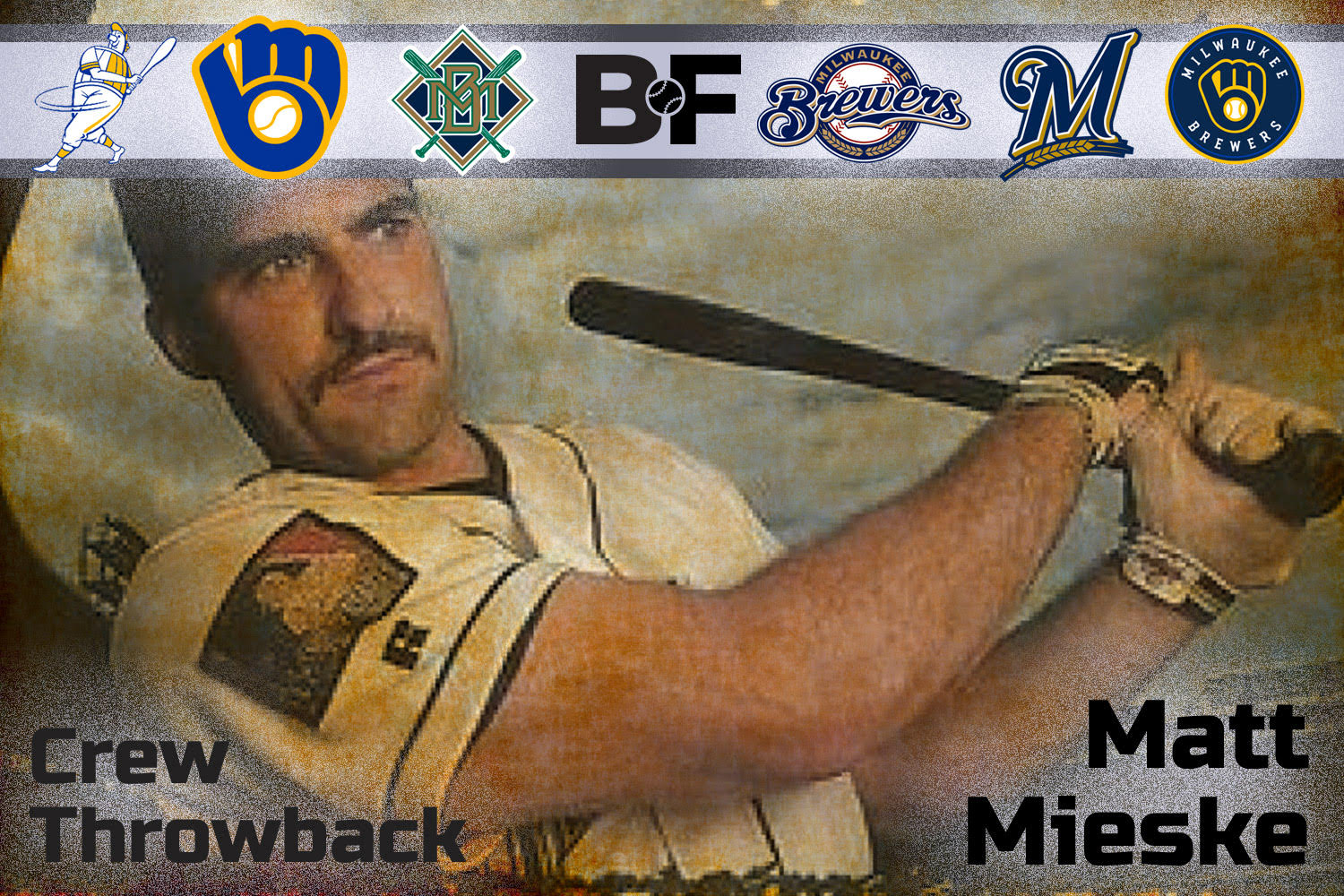 Matthew Todd Mieske was born in Michigan in 1968. He became one of the state's most heralded players, earning all-state honors in high school three times before going on to Western Michigan, graduating as a three-time All-American with 11 school records. Mieske's college success led him to be selected by the San Diego Padres in the 17th round of the 1990 draft. A right-handed hitting outfielder, Mieske was not the most athletic player, but he had a good swing that led to early success, including .340 and .342 batting averages in his first two years at A ball. Then, just before the 1992 season, the Padres sent Mieske, Ricky Bones and Jose Valentin to the Brewers for disgruntled infielder Gary Sheffield as well as minor leaguer Geoff Kellogg. Mieske got a cup of coffee in 1993, then established himself as a semi-regular with the Brewers in 1994. He spent the next four seasons with Milwaukee, essentially serving as an adequate, if uninspiring, right field option on a series of poor Brewer teams. He hit double figure home runs each year from 1994-1996, and produced an OPS ranging from .753 to .794. His best year at the plate was 1996, when he hit 14 HR and had a .278 BA. Mieske was a classic replacement level player (his career bWAR is 0.1) whose value came against left-handed pitchers (he had a .913 OPS against them in his career). His problem came when he was forced to face righties, as his .638 OPS attests. He was also a tweener; a guy who played corner OF, but didn't quite hit enough to justify claiming the spot full time. After a poor 1997 campaign, the Brewers allowed Mieske to become a free agent. He went on to spend parts of three more years in the big leagues, bouncing between three different teams. After retiring following the 2000 season, Mieske returned to his home state of Michigan, settling in Saginaw, where he became a Certified Financial Planner. Matt Mieske is not the sexiest player in Brewer history - not even one that makes you think of worthy of a retrospective. But the man had his moments. He fought the odds of being a 17th round pick to play parts of eight seasons in the majors. Fans liked his hard working, Midwestern approach. (Gotta love those gritty battlers without a lot of talent). Mieske hit 41 HR in his four full seasons in Milwaukee, and had a .753 OPS. If the Brewers had utilized him a little less (meaning fewer at-bats against right-handers), he would have posted some better statistics. Unfortunately for Mieske, he will probably be remembered mostly for being part of the ill-fated Sheffield trade. Please share your memories of former Brewer outfielder Matt Mieske.
 -
George Scott, the Brewers First 35 Home Run Hitter
Matt Breen replied to Matt Breen's topic in Milwaukee Brewers Talk
The title of the article was a simple mistake. They can happen. -
George Scott, the Brewers First 35 Home Run Hitter
Matt Breen replied to Matt Breen's topic in Milwaukee Brewers Talk
The title of the article was a simple mistake. They can happen. -
Five Gold Gloves. In a row. Let's add in 115 taters during that span. Plus we can tack on one of the best nicknames in team history. That can only mean this week’s throwback is about former Brewer slugger George 'Boomer' Scott. Image courtesy of Brewer Fanatic George Scott Jr. was born in Mississippi in 1944. His father died when he was only two years old, and George Jr. picked cotton to help the family at age nine. Scott excelled at athletics as a teen and signed with the Boston Red Sox out of high school in 1962. Initially, Scott worked all over the diamond but eventually settled at 3B as his primary position. Position aside, Scott quickly demonstrated the ability to hit - both for power and average. Scott reached the majors in 1966, shifting to 1B a week into the season. He made the all-star team and finished 3rd in the Rookie of the Year voting while hitting 27 HR. Scott's first stint (six years) in Boston was inconsistent. He won two Gold Gloves and hit .303 in his second season but also hit an abysmal .171 in his third year. After the 1971 season, the Red Sox decided to shake up their club, dealing Scott, Jim Lonborg, Joe Lahoud, Billy Conigliaro, Ken Brett, and Don Pavletich to the Brewers for Tommy Harper, Marty Pattin, Lew Krausse and a minor leaguer. The move was a boon for Scott. He spent the next five seasons in Milwaukee, winning a Gold Glove each year and making the all-star team in 1975 - a season where he led the majors with 36 HR and 109 RBI. During his time in Milwaukee, the big first baseman averaged 23 HR and 89 RBI a year to go with a .283 BA and a .798 OPS. With Milwaukee continuing to struggle in the standings, Scott asked to be traded after the 1976 season. The Brewers obliged, sending him back to Boston (along with Bernie Carbo) for Cecil Cooper. Scott had one more good season in 1977, slugging 33 HR. After that, he struggled through two more years, bouncing between three clubs. At age 36, he went to the Mexican League, where he played (as well as managed) for five more years. He stayed in baseball as a manager in independent and college ball, finishing up in 2002 in the Northern League. After retiring, Scott moved to Greenville, Mississippi. He died in July 2013 at the age of 69. While Scott is most associated with the Red Sox, he was a vital member of the early years of the Brewers, providing power and outstanding defense during his five years in Milwaukee. He hit 115 of his 271 HR while with the Brewers and won five of his eight Gold Gloves. For his career, he had 1,992 hits. His 22.4 bWAR ranks seventh amongst hitters in franchise history. While the trade back to Boston disappointed many, it brought back one of the franchise's best players - Cecil Cooper - a trade that helped establish Milwaukee as a powerhouse team in the late 1970s and 1980s. Scott, nicknamed 'Boomer' due to the massive home runs he hit, was an athletic man despite fighting weight problems much of his life. He was also known for his oversized personality and is often credited with popularizing the term 'taters' as another name for a home run. Please share your memories of the former Brewer slugger George 'Boomer' Scott. View full article
-
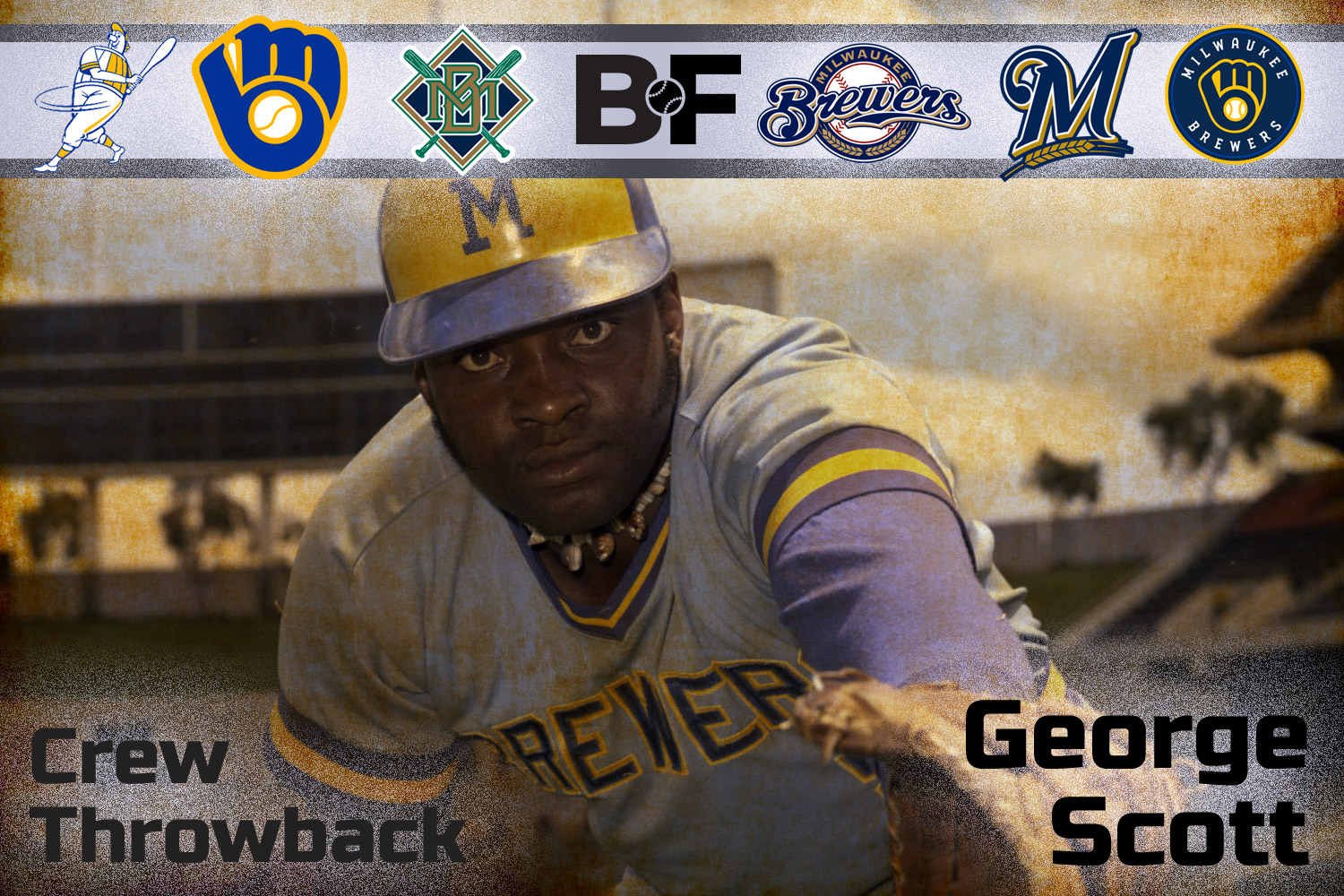 George Scott Jr. was born in Mississippi in 1944. His father died when he was only two years old, and George Jr. picked cotton to help the family at age nine. Scott excelled at athletics as a teen and signed with the Boston Red Sox out of high school in 1962. Initially, Scott worked all over the diamond but eventually settled at 3B as his primary position. Position aside, Scott quickly demonstrated the ability to hit - both for power and average. Scott reached the majors in 1966, shifting to 1B a week into the season. He made the all-star team and finished 3rd in the Rookie of the Year voting while hitting 27 HR. Scott's first stint (six years) in Boston was inconsistent. He won two Gold Gloves and hit .303 in his second season but also hit an abysmal .171 in his third year. After the 1971 season, the Red Sox decided to shake up their club, dealing Scott, Jim Lonborg, Joe Lahoud, Billy Conigliaro, Ken Brett, and Don Pavletich to the Brewers for Tommy Harper, Marty Pattin, Lew Krausse and a minor leaguer. The move was a boon for Scott. He spent the next five seasons in Milwaukee, winning a Gold Glove each year and making the all-star team in 1975 - a season where he led the majors with 36 HR and 109 RBI. During his time in Milwaukee, the big first baseman averaged 23 HR and 89 RBI a year to go with a .283 BA and a .798 OPS. With Milwaukee continuing to struggle in the standings, Scott asked to be traded after the 1976 season. The Brewers obliged, sending him back to Boston (along with Bernie Carbo) for Cecil Cooper. Scott had one more good season in 1977, slugging 33 HR. After that, he struggled through two more years, bouncing between three clubs. At age 36, he went to the Mexican League, where he played (as well as managed) for five more years. He stayed in baseball as a manager in independent and college ball, finishing up in 2002 in the Northern League. After retiring, Scott moved to Greenville, Mississippi. He died in July 2013 at the age of 69. While Scott is most associated with the Red Sox, he was a vital member of the early years of the Brewers, providing power and outstanding defense during his five years in Milwaukee. He hit 115 of his 271 HR while with the Brewers and won five of his eight Gold Gloves. For his career, he had 1,992 hits. His 22.4 bWAR ranks seventh amongst hitters in franchise history. While the trade back to Boston disappointed many, it brought back one of the franchise's best players - Cecil Cooper - a trade that helped establish Milwaukee as a powerhouse team in the late 1970s and 1980s. Scott, nicknamed 'Boomer' due to the massive home runs he hit, was an athletic man despite fighting weight problems much of his life. He was also known for his oversized personality and is often credited with popularizing the term 'taters' as another name for a home run. Please share your memories of the former Brewer slugger George 'Boomer' Scott.
 -
In 1973, the Milwaukee Brewers had their first 20 game winner. Can you name him? Not many people can as the club struggled to win a lot of games in the early years of the franchise. The answer - in case you are wondering - is right hander Jim Colborn. James William Colborn was born in California in 1946. An excellent student, Known as Jim Colborn, he attended Whittier College as well as Edinburgh University in Scotland (he would strike out 21 batters in a college all-star game in Europe in 1966). He planned on being a professor, but baseball came calling and he was signed by the Cubs as an amateur free agent in 1967. He quickly moved up the Cubs minor league system, reaching the big leagues just two years later. But Colborn would struggle for a couple of seasons, moving between the starting and relieving, as well as AAA and Chicago. His big break came in 1972 when he was dealt to the Brewers (along with Brock Davis and Earl Stephenson) for OF Jose Cardenal. Colborn quickly worked his way into the Brewer rotation, becoming a mainstay from 1972 through 1976. The highlight for Colborn would be the 1973 season, when he would win 20 games - the first time that had been accomplished in franchise history. He threw 314 innings that year (still a franchise record), had a 3.18 ERA and tossed 22 complete games (2nd most in team history behind Mike Caldwell). He was named to the all-star team (but did not play) and finished 6th in the Cy Young voting. Colborn never reached the heights of 1973 again. He proved to be a reliable workhorse in the rotation, tossing more than 200 innings for four straight years. After the 1976 season, the Brewers dealt Colborn to Kansas City (along with catcher Darrell Porter) for Jamie Quirk and Jim Wohlford and Bob McClure (yikes, who approved that deal!). He had an excellent 1977 campaign, winning 18 games and throwing a no-hitter, then fell off a cliff the next year (1978), which would be his final in the big leagues. After retiring from baseball, Colborn spent 30 years as a pitching coach and a scout, not just in the U.S., but in Japan and Australia. As a scout, he signed all-star Shin-Soo Choo. Another fun note: Colborn appeared in the 1999 movie "For the Love of the Game" as the Tigers third base coach. For his 5-year Brewer career, Colborn won 57 games (losing 60), tossed 1118 innings (9th most in team history), threw 51 complete games (4th most) and had 7 shutouts. His ERA was a respectable 3.65. His 20 win season is only one of three produced by a Brewer (the others are by Mike Caldwell and Teddy Higuera). Unfortunately for Colborn he was forced to play in the early phase of the Brewer franchise, thus being part of a lot of bad teams (none of which had a winning record). This has made him somewhat of a forgotten man in Brewer history, despite his achievements. Jim Colborn wasn't a great pitcher, but he was a solid arm who provided reliability in a very chaotic time in Brewer history. His 1973 campaign is still one of the best in the team's history. Please share your memories of former Brewer pitcher Jim Colborn. View full article
-
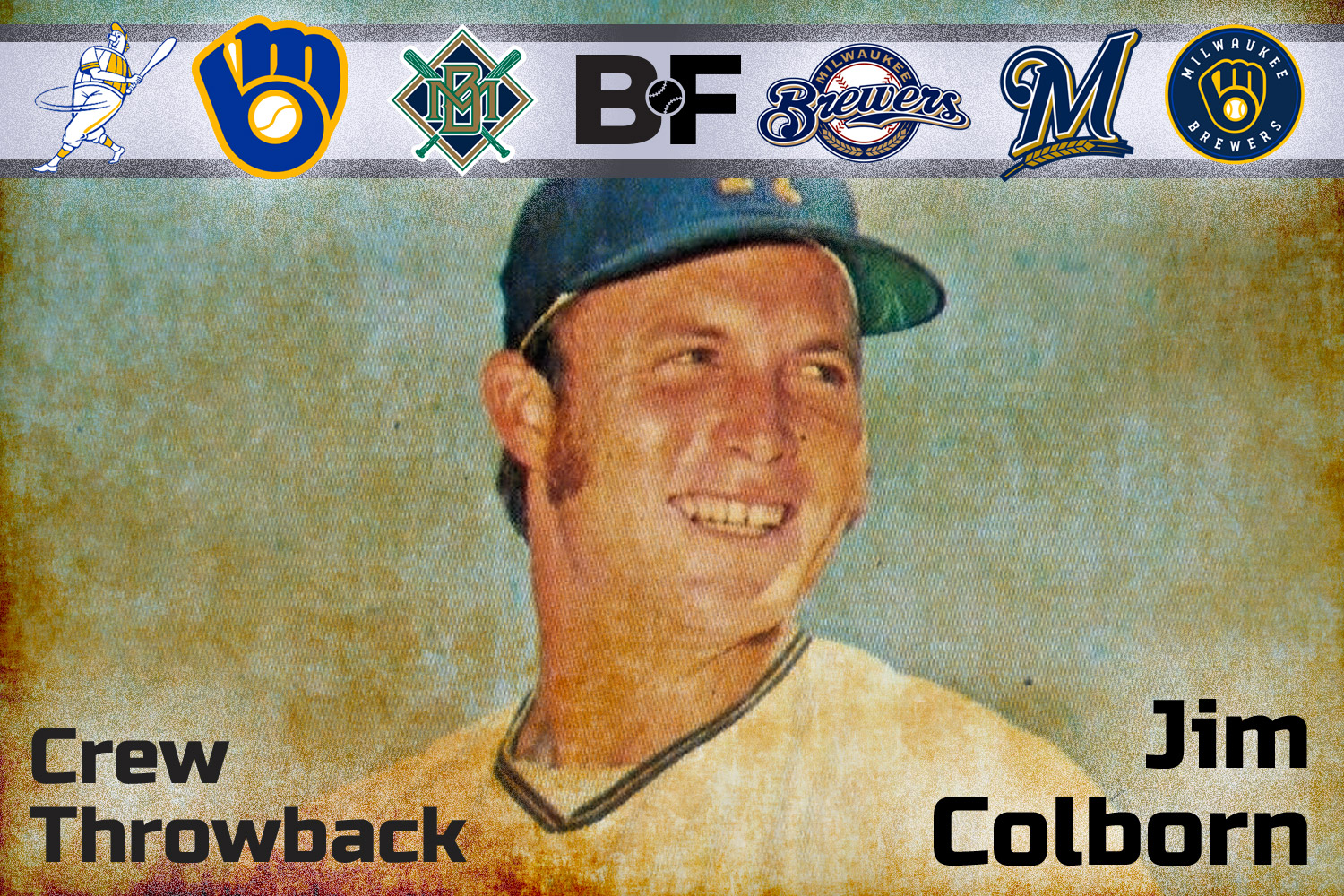 James William Colborn was born in California in 1946. An excellent student, Known as Jim Colborn, he attended Whittier College as well as Edinburgh University in Scotland (he would strike out 21 batters in a college all-star game in Europe in 1966). He planned on being a professor, but baseball came calling and he was signed by the Cubs as an amateur free agent in 1967. He quickly moved up the Cubs minor league system, reaching the big leagues just two years later. But Colborn would struggle for a couple of seasons, moving between the starting and relieving, as well as AAA and Chicago. His big break came in 1972 when he was dealt to the Brewers (along with Brock Davis and Earl Stephenson) for OF Jose Cardenal. Colborn quickly worked his way into the Brewer rotation, becoming a mainstay from 1972 through 1976. The highlight for Colborn would be the 1973 season, when he would win 20 games - the first time that had been accomplished in franchise history. He threw 314 innings that year (still a franchise record), had a 3.18 ERA and tossed 22 complete games (2nd most in team history behind Mike Caldwell). He was named to the all-star team (but did not play) and finished 6th in the Cy Young voting. Colborn never reached the heights of 1973 again. He proved to be a reliable workhorse in the rotation, tossing more than 200 innings for four straight years. After the 1976 season, the Brewers dealt Colborn to Kansas City (along with catcher Darrell Porter) for Jamie Quirk and Jim Wohlford and Bob McClure (yikes, who approved that deal!). He had an excellent 1977 campaign, winning 18 games and throwing a no-hitter, then fell off a cliff the next year (1978), which would be his final in the big leagues. After retiring from baseball, Colborn spent 30 years as a pitching coach and a scout, not just in the U.S., but in Japan and Australia. As a scout, he signed all-star Shin-Soo Choo. Another fun note: Colborn appeared in the 1999 movie "For the Love of the Game" as the Tigers third base coach. For his 5-year Brewer career, Colborn won 57 games (losing 60), tossed 1118 innings (9th most in team history), threw 51 complete games (4th most) and had 7 shutouts. His ERA was a respectable 3.65. His 20 win season is only one of three produced by a Brewer (the others are by Mike Caldwell and Teddy Higuera). Unfortunately for Colborn he was forced to play in the early phase of the Brewer franchise, thus being part of a lot of bad teams (none of which had a winning record). This has made him somewhat of a forgotten man in Brewer history, despite his achievements. Jim Colborn wasn't a great pitcher, but he was a solid arm who provided reliability in a very chaotic time in Brewer history. His 1973 campaign is still one of the best in the team's history. Please share your memories of former Brewer pitcher Jim Colborn.
 -
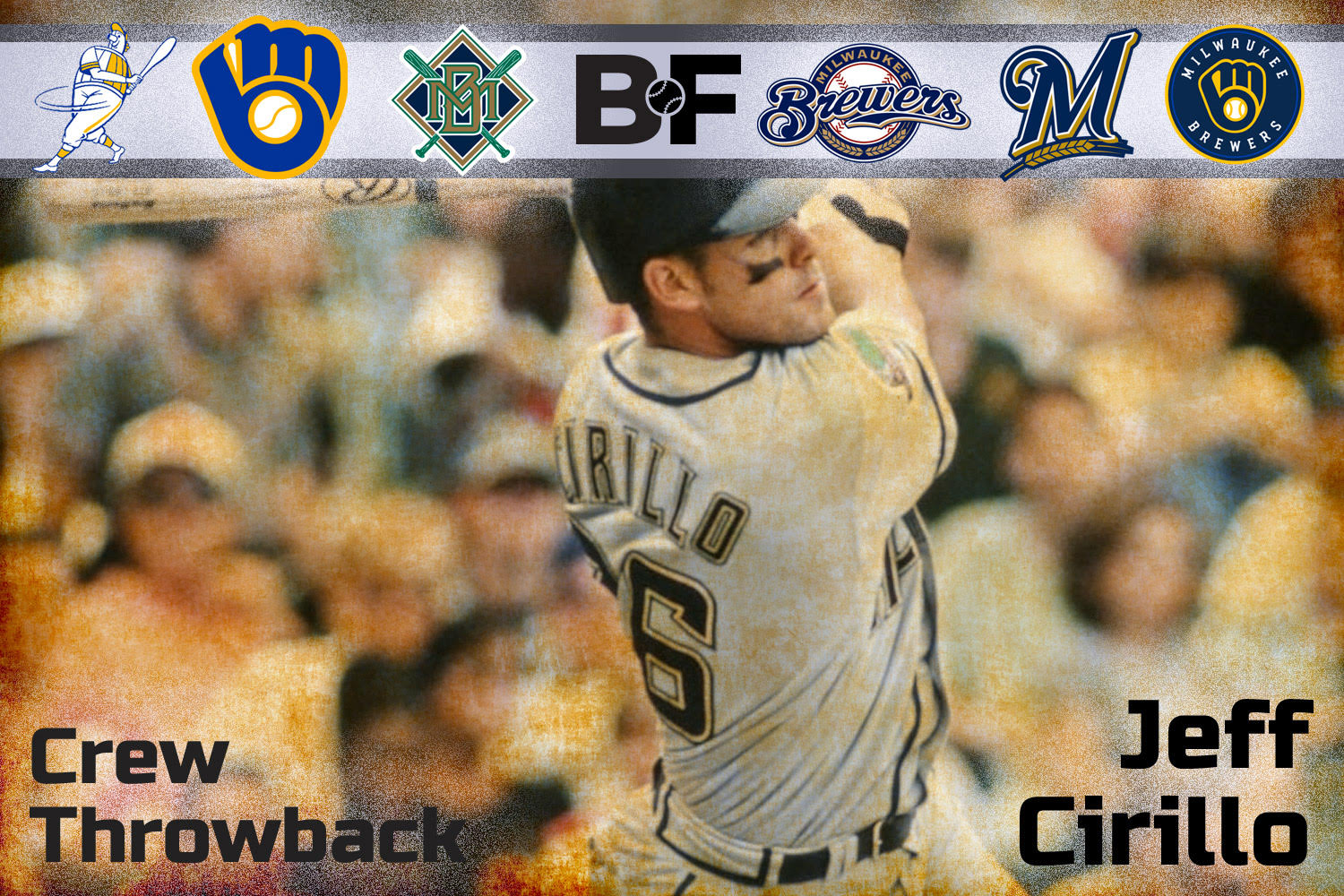 Jeff Howard Cirillo was born in California in 1969. He attended USC and was selected by the Brewers in the 11th round of the 1991 draft. Cirillo quickly established himself as a quality bat, hitting .350 at Helena his first year. A right-handed hitting third baseman, he progressed through the system, hitting for average at every stop to go with solid power and respectable walk rates. In 1994, Milwaukee called up Cirillo, and the 24-year old struggled with a .238 BA in 39 games. But the following season saw Cirillo work his way into the lineup on a semi-regular basis as he hit a solid .277 with an .813 OPS. By 1996, he was a regular, and one of the best offensive and defensive players on the team. From 1996-1999, Cirillo averaged more than 5.0 WAR a year, and hit over .300 three times, including .325 in 1996 and .326 in 1999. His OBP was routinely between .390 and .400, and he hit double digit HRs every year. He made the all-star team in 1996. As Milwaukee struggled to produce quality pitching, the Crew decided to package Cirillo - along with Scott Karl - in a three team deal that netted the club pitchers Jimmy Haynes and Jamey Wright, plus catcher Henry Blanco. The trade was a disaster for the Crew, as Haynes and Wright struggled in their time in the rotation (although Wright did go on to a long career). Blanco - who also had a long career - was a good defender, but a poor hitter. The club signed free agent Jose Hernandez to replace Cirillo. Cirillo spent two years in Colorado (hitting over .300 both seasons), before being dealt to Seattle, where his bat suddenly faltered at age 32. Looking for work in 2005, the 35-year old Cirillo wrangled a spring training invite from the Crew, and made the club. For two years he provided some quality at bats (hitting .281 and .319) while serving as a reserve infielder. With the promise of more playing time, Cirillo left Milwaukee in 2007 and played a final season - splitting time between Minnesota and Arizona. After retiring, Cirillo worked for FSN Wisconsin for a few years, then was a scout for the Diamondbacks and Angels. He is currently a partner in Pacific Baseball Ventures, which owns the Walla Walla Sweets and the Yakima Valley Pippins in a summer collegiate wood-bat league located in Walla Walla, Washington. Jeff Cirillo played 14 years in the majors, eight in Milwaukee. In his time with the Brewers, he produced a .307 batting average - the best in franchise history. He also produced 26.2 bWAR during that time, the sixth best for position players. His .325 and .326 season averages rank 8th and 9th, respectively, and his .383 career OBP is third - behind only Prince Fielder and Christian Yelich. Cirillo was a doubles machine at his peak, hitting 46 in back-to-back seasons. To go along with Cirillo's offensive achievements, he was considered an excellent defensive third baseman as well - especially in his prime. Cirillo wasn't a big home run hitter, but he took his share of walks, and he could flat out hit. He was not the most athletic player, but he did a lot of the little things well - and the fans and coaches loved him for it. Unfortunately, Cirillo was part of Brewer clubs that lacked pitching, and the organization used him to try and fill those needs, prematurely ending his great run in Milwaukee. He may not have had the longevity of Molitor or Yount, and he didn't put up the big power numbers, but Jeff Cirillo was one of the finest hitters the team has ever produced. Please share your memories of former Milwaukee third baseman Jeff Cirillo.
 -
When looking at batting average, who is the best hitter in Brewer history? Cooper? Molitor? Young? Braun? Yelich? Well, if you guessed Jeff Cirillo, then you know your Brewer history. Cirillo has the highest career batting average in franchise history - edging out Paul Molitor (.303) and Cecil Cooper (.302). Jeff Howard Cirillo was born in California in 1969. He attended USC and was selected by the Brewers in the 11th round of the 1991 draft. Cirillo quickly established himself as a quality bat, hitting .350 at Helena his first year. A right-handed hitting third baseman, he progressed through the system, hitting for average at every stop to go with solid power and respectable walk rates. In 1994, Milwaukee called up Cirillo, and the 24-year old struggled with a .238 BA in 39 games. But the following season saw Cirillo work his way into the lineup on a semi-regular basis as he hit a solid .277 with an .813 OPS. By 1996, he was a regular, and one of the best offensive and defensive players on the team. From 1996-1999, Cirillo averaged more than 5.0 WAR a year, and hit over .300 three times, including .325 in 1996 and .326 in 1999. His OBP was routinely between .390 and .400, and he hit double digit HRs every year. He made the all-star team in 1996. As Milwaukee struggled to produce quality pitching, the Crew decided to package Cirillo - along with Scott Karl - in a three team deal that netted the club pitchers Jimmy Haynes and Jamey Wright, plus catcher Henry Blanco. The trade was a disaster for the Crew, as Haynes and Wright struggled in their time in the rotation (although Wright did go on to a long career). Blanco - who also had a long career - was a good defender, but a poor hitter. The club signed free agent Jose Hernandez to replace Cirillo. Cirillo spent two years in Colorado (hitting over .300 both seasons), before being dealt to Seattle, where his bat suddenly faltered at age 32. Looking for work in 2005, the 35-year old Cirillo wrangled a spring training invite from the Crew, and made the club. For two years he provided some quality at bats (hitting .281 and .319) while serving as a reserve infielder. With the promise of more playing time, Cirillo left Milwaukee in 2007 and played a final season - splitting time between Minnesota and Arizona. After retiring, Cirillo worked for FSN Wisconsin for a few years, then was a scout for the Diamondbacks and Angels. He is currently a partner in Pacific Baseball Ventures, which owns the Walla Walla Sweets and the Yakima Valley Pippins in a summer collegiate wood-bat league located in Walla Walla, Washington. Jeff Cirillo played 14 years in the majors, eight in Milwaukee. In his time with the Brewers, he produced a .307 batting average - the best in franchise history. He also produced 26.2 bWAR during that time, the sixth best for position players. His .325 and .326 season averages rank 8th and 9th, respectively, and his .383 career OBP is third - behind only Prince Fielder and Christian Yelich. Cirillo was a doubles machine at his peak, hitting 46 in back-to-back seasons. To go along with Cirillo's offensive achievements, he was considered an excellent defensive third baseman as well - especially in his prime. Cirillo wasn't a big home run hitter, but he took his share of walks, and he could flat out hit. He was not the most athletic player, but he did a lot of the little things well - and the fans and coaches loved him for it. Unfortunately, Cirillo was part of Brewer clubs that lacked pitching, and the organization used him to try and fill those needs, prematurely ending his great run in Milwaukee. He may not have had the longevity of Molitor or Yount, and he didn't put up the big power numbers, but Jeff Cirillo was one of the finest hitters the team has ever produced. Please share your memories of former Milwaukee third baseman Jeff Cirillo. View full article
-
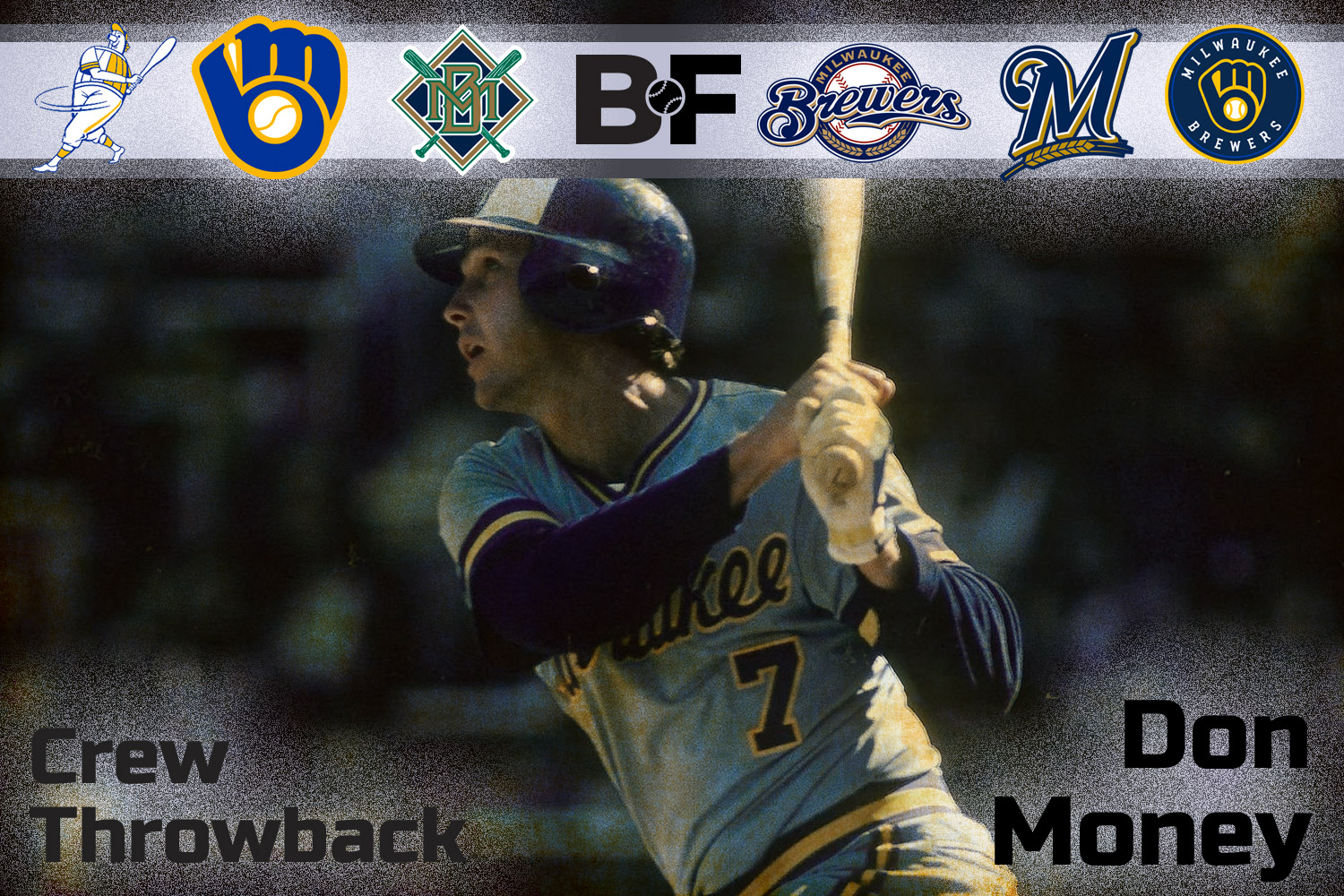 Donald Wayne Money was born in Washington, DC, on June 7, 1947, and signed with Pittsburgh as an amateur free agent in 1965. He primarily played SS in the minors, but also found himself at third base and second base. Money had an excellent 1967 campaign at A ball, but was dealt to Philadelphia in the off season. Bumped up to AAA, the 21-year-old got a cup of coffee the next season, then settled in as a big leaguer in 1969. After spending his rookie season at shortstop, Money was shifted to third base the following season, but played just about anywhere, including OF. After a strong sophomore campaign (.295 BA and 14 HR), he struggled the next two years, hitting just .223 and .222, respectively. With future all-star Mike Schmidt ready to take over 3B, the Phillies packaged Money with Bill Champion and John Vukovich, and sent him to Milwaukee in exchange for Ken Brett, Jim Lonborg, Ken Sanders and Earl Stephenson. The move signaled an 11-year run with the Crew for Money, including four all-star game appearances between 1974 and 1978. Money held down the third base spot in Milwaukee for the next four years before he shifted into a super sub role. For example, in 1978 he played 61 games at 1B, 36 at 2B, 22 at 3B, 13 at DH and 2 at SS. He produced solid numbers at the plate with Milwaukee; his OPS generally ranged from the mid-.750 to the low .800s. In addition, he was known for his excellent defense (and eventually, his versatility). In fact, he was nicknamed 'Brooks' because of his glovework. Another nickname was 'Easy'. He slugged double digit HRs in 8 of his 11 seasons, including a career high 25 in 1977. His best batting average was a .293 mark, which he slashed in 1978. Injuries, age and the emergence of other players, including free agent Sal Bando and rookie Paul Molitor, began to eat into Money's playing time by 1979. But he remained a key part of the club through 1982, producing a career high .891 OPS in 1982 on 275 ABs that year. In 1983, Money struggled with injuries and reduced playing time, resulting in only 114 at-bats. The Brewers released him in the off season. He spent part of 1984 in Japan, and despite playing well, decided to retire when he didn't enjoy the experience. Within a couple of years of retiring, Money moved into coaching in the Yankees organization. In 1998, he became manager of the Beloit Snappers in the Milwaukee organization. From there he moved up the chain, going to AA-Huntsville in 2005 and Nashville in 2009. Following the 2011 campaign, Money became Milwaukee's special instructor of player development, a position he holds to this day. Don Money spent parts of 16 seasons in the majors, 11 in Milwaukee. He hit .270 with 134 HRs during his time with the Crew, and produced a solid .760 OPS. In 1978, he became the first Brewer voted as a starter in the all-star game (at 2B). He was a key member of the powerful up-and-coming Brewer clubs in the late 70s, then a valuable reserve during their World Series team in 1982. In 1974, he set a major league record for errorless games at third base (86). For his Brewer career, he produced 27.4 bWAR - 5th best of any hitter in franchise history. His coaching career highlight was being named Southern League manager of the year in 2007. Don Money was an excellent baseball player. Probably his greatest sin was that he did everything good, not great. Nothing really stood out for Money, thus he never really got the love other players enjoyed. He was the kind of guy who would hit .280 with 15 HRs, and move around the diamond as needed, sort of the Tony Phillips or Ben Zobrist of his time. It allowed Milwaukee to plug Money into just about any position that they needed. In 2005, Money was inducted into the Brewers Walk of Fame. In 2022, Money’s grandson, Buddy Kennedy, an infielder in the Arizona Diamondbacks organization, made his major league debut. Please share your remembrances of former Milwaukee Brewer Don Money.
 -
Name the first Brewer ever elected to start an all-star game? Most fans would struggle for the answer. Maybe George Scott with his monster 36 HR campaign of 1975. Or perhaps it was one of Yount, Molitor or Cooper. But the answer is Don Money in 1978. It was one of four all-star appearances for Money - who went on to have a steady 11-year career in Milwaukee. Donald Wayne Money was born in Washington, DC, on June 7, 1947, and signed with Pittsburgh as an amateur free agent in 1965. He primarily played SS in the minors, but also found himself at third base and second base. Money had an excellent 1967 campaign at A ball, but was dealt to Philadelphia in the off season. Bumped up to AAA, the 21-year-old got a cup of coffee the next season, then settled in as a big leaguer in 1969. After spending his rookie season at shortstop, Money was shifted to third base the following season, but played just about anywhere, including OF. After a strong sophomore campaign (.295 BA and 14 HR), he struggled the next two years, hitting just .223 and .222, respectively. With future all-star Mike Schmidt ready to take over 3B, the Phillies packaged Money with Bill Champion and John Vukovich, and sent him to Milwaukee in exchange for Ken Brett, Jim Lonborg, Ken Sanders and Earl Stephenson. The move signaled an 11-year run with the Crew for Money, including four all-star game appearances between 1974 and 1978. Money held down the third base spot in Milwaukee for the next four years before he shifted into a super sub role. For example, in 1978 he played 61 games at 1B, 36 at 2B, 22 at 3B, 13 at DH and 2 at SS. He produced solid numbers at the plate with Milwaukee; his OPS generally ranged from the mid-.750 to the low .800s. In addition, he was known for his excellent defense (and eventually, his versatility). In fact, he was nicknamed 'Brooks' because of his glovework. Another nickname was 'Easy'. He slugged double digit HRs in 8 of his 11 seasons, including a career high 25 in 1977. His best batting average was a .293 mark, which he slashed in 1978. Injuries, age and the emergence of other players, including free agent Sal Bando and rookie Paul Molitor, began to eat into Money's playing time by 1979. But he remained a key part of the club through 1982, producing a career high .891 OPS in 1982 on 275 ABs that year. In 1983, Money struggled with injuries and reduced playing time, resulting in only 114 at-bats. The Brewers released him in the off season. He spent part of 1984 in Japan, and despite playing well, decided to retire when he didn't enjoy the experience. Within a couple of years of retiring, Money moved into coaching in the Yankees organization. In 1998, he became manager of the Beloit Snappers in the Milwaukee organization. From there he moved up the chain, going to AA-Huntsville in 2005 and Nashville in 2009. Following the 2011 campaign, Money became Milwaukee's special instructor of player development, a position he holds to this day. Don Money spent parts of 16 seasons in the majors, 11 in Milwaukee. He hit .270 with 134 HRs during his time with the Crew, and produced a solid .760 OPS. In 1978, he became the first Brewer voted as a starter in the all-star game (at 2B). He was a key member of the powerful up-and-coming Brewer clubs in the late 70s, then a valuable reserve during their World Series team in 1982. In 1974, he set a major league record for errorless games at third base (86). For his Brewer career, he produced 27.4 bWAR - 5th best of any hitter in franchise history. His coaching career highlight was being named Southern League manager of the year in 2007. Don Money was an excellent baseball player. Probably his greatest sin was that he did everything good, not great. Nothing really stood out for Money, thus he never really got the love other players enjoyed. He was the kind of guy who would hit .280 with 15 HRs, and move around the diamond as needed, sort of the Tony Phillips or Ben Zobrist of his time. It allowed Milwaukee to plug Money into just about any position that they needed. In 2005, Money was inducted into the Brewers Walk of Fame. In 2022, Money’s grandson, Buddy Kennedy, an infielder in the Arizona Diamondbacks organization, made his major league debut. Please share your remembrances of former Milwaukee Brewer Don Money. View full article
-
When Mike Hegan’s contract was sold to the expansion Seattle Pilots, little did he realize that it would lead to a relationship with the organization that would last 19 years - including two stints as a player, and then a 12-year run as an announcer. James Michael "Mike" Hegan was born in Cleveland in 1942. His father, Jim Hegan, was a big league catcher for 17 years, primarily with Cleveland, and Mike served as the Indians batboy. Hegan, a left-handed hitter, was signed by the Yankees in 1961. For a first baseman, he didn't show a lot of pop in the minors, but did take a lot of walks. He bounced between the minors and majors from 1964 through 1968 but was blocked by players such as Mickey Mantle and Joe Pepitone . Then, in June of 1968, Hegan was sold to the expansion Seattle Pilots (who weren't scheduled to debut until 1969) for $25,000. He finished out the season with AAA Syracuse, then became the first man signed by the Pilots. Hegan opened as the Pilots first baseman, and was selected as the franchise's first All-Star, though he did not play due to injury. He hit .292 for Seattle, producing an .888 OPS, but he missed 67 games with injuries. In 1970, Hegan came to Milwaukee for the Brewers inaugural campaign, serving as the team's primary first baseman. The next year, he was dealt to Oakland, where he was part of the A's 1972 World Championship team (becoming the first father/son duo to win a World Series). Strictly a platoon player at this point of his career (playing 1B, OF and DH), Hegan went to the Yankees in 1973, and then found himself back in Milwaukee in 1974. He played for the Crew until 1977, before the club released him in July, ending his career. But baseball - and Milwaukee - was not done with Mike Hegan. He had become interested in broadcasting years before, working at WTMJ-TV in the offseason. Within 10 days of his release he was filling in as the color commentator for the Brewers television broadcasts. The next season he was tabbed to do Milwaukee's play-by-play, and he stayed in the booth for the next 11 years. In 1989, Hegan joined the Indians broadcast team, doing play-by-play and color commentary until he retired after the 2011 season, a run of 23 years. Hegan passed away on Christmas Day in 2013 at the age of 71, the result of heart complications. Mike Hegan's career with Milwaukee was not anything special. He spent parts of seven seasons with the franchise, hitting .249 with a .735 OPS. He didn't have much power (42 HRs on 1529 ABs), but did get on base (.355 OBP) due to a nice walk rate. He was mostly a platoon player through his career, but he had a reputation as a good defender and a smart baseball man (qualities no doubt inherited from his father). A highlight of his time in was an errorless streak of 178 games at first base, which stood as the American League record for 12 years. He also hit for the cycle in 1976 (driving in six runs that day), the first Brewer to ever do so. But Hegan's legacy rests mostly with his long stint in the TV booth during the late 70s and into the 80s. Many people (myself included) watched many a broadcast, with Hegan behind the microphone, as the Brewers produced some of their best ever ball clubs. Please share your memories of former Brewer player and announcer Mike Hegan. View full article
-
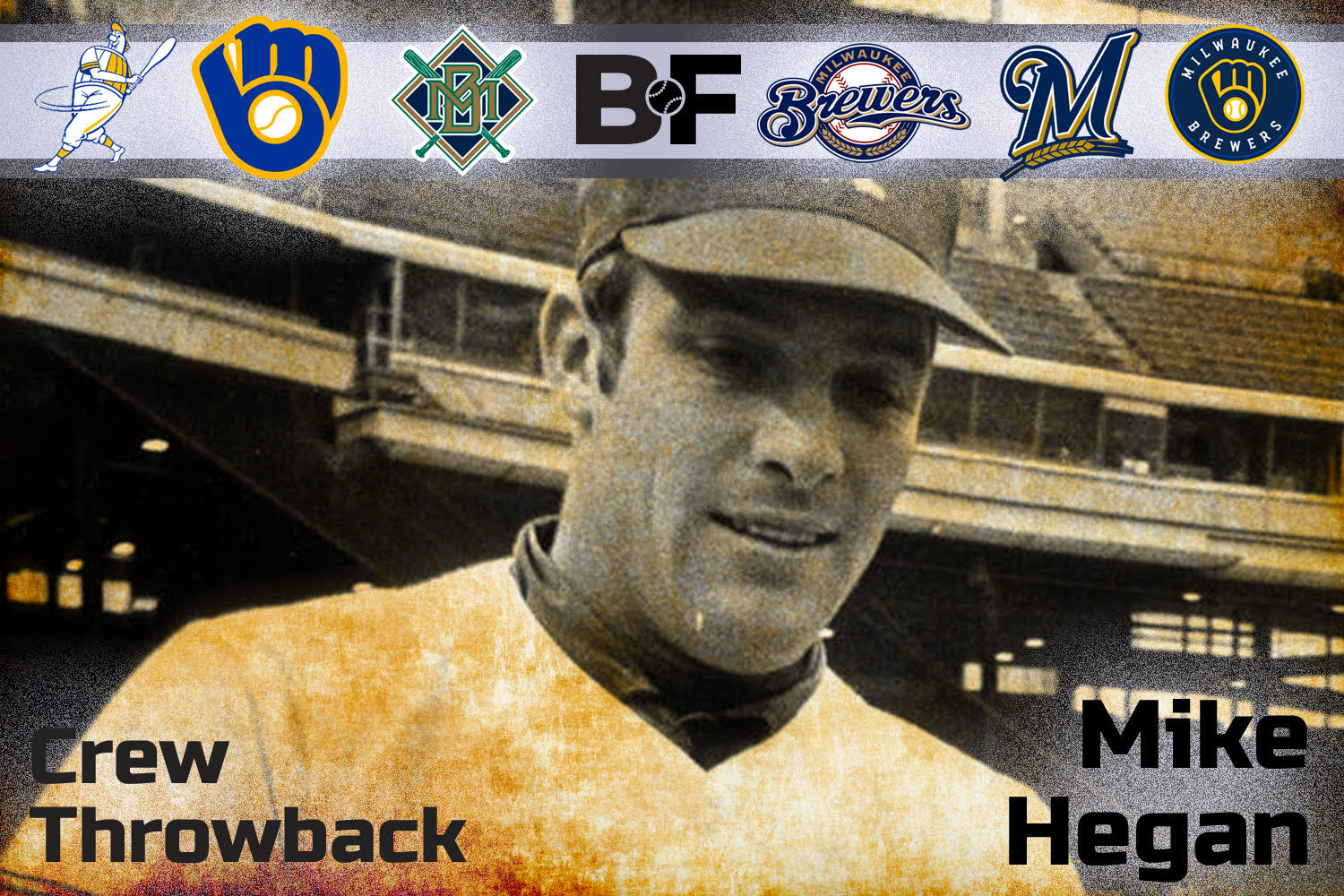 James Michael "Mike" Hegan was born in Cleveland in 1942. His father, Jim Hegan, was a big league catcher for 17 years, primarily with Cleveland, and Mike served as the Indians batboy. Hegan, a left-handed hitter, was signed by the Yankees in 1961. For a first baseman, he didn't show a lot of pop in the minors, but did take a lot of walks. He bounced between the minors and majors from 1964 through 1968 but was blocked by players such as Mickey Mantle and Joe Pepitone . Then, in June of 1968, Hegan was sold to the expansion Seattle Pilots (who weren't scheduled to debut until 1969) for $25,000. He finished out the season with AAA Syracuse, then became the first man signed by the Pilots. Hegan opened as the Pilots first baseman, and was selected as the franchise's first All-Star, though he did not play due to injury. He hit .292 for Seattle, producing an .888 OPS, but he missed 67 games with injuries. In 1970, Hegan came to Milwaukee for the Brewers inaugural campaign, serving as the team's primary first baseman. The next year, he was dealt to Oakland, where he was part of the A's 1972 World Championship team (becoming the first father/son duo to win a World Series). Strictly a platoon player at this point of his career (playing 1B, OF and DH), Hegan went to the Yankees in 1973, and then found himself back in Milwaukee in 1974. He played for the Crew until 1977, before the club released him in July, ending his career. But baseball - and Milwaukee - was not done with Mike Hegan. He had become interested in broadcasting years before, working at WTMJ-TV in the offseason. Within 10 days of his release he was filling in as the color commentator for the Brewers television broadcasts. The next season he was tabbed to do Milwaukee's play-by-play, and he stayed in the booth for the next 11 years. In 1989, Hegan joined the Indians broadcast team, doing play-by-play and color commentary until he retired after the 2011 season, a run of 23 years. Hegan passed away on Christmas Day in 2013 at the age of 71, the result of heart complications. Mike Hegan's career with Milwaukee was not anything special. He spent parts of seven seasons with the franchise, hitting .249 with a .735 OPS. He didn't have much power (42 HRs on 1529 ABs), but did get on base (.355 OBP) due to a nice walk rate. He was mostly a platoon player through his career, but he had a reputation as a good defender and a smart baseball man (qualities no doubt inherited from his father). A highlight of his time in was an errorless streak of 178 games at first base, which stood as the American League record for 12 years. He also hit for the cycle in 1976 (driving in six runs that day), the first Brewer to ever do so. But Hegan's legacy rests mostly with his long stint in the TV booth during the late 70s and into the 80s. Many people (myself included) watched many a broadcast, with Hegan behind the microphone, as the Brewers produced some of their best ever ball clubs. Please share your memories of former Brewer player and announcer Mike Hegan.
 -
You are not wrong. In 1977. Grammas left Travers in for 8 innings and 155 pitches. He gave up 14 runs. He had elbow surgery again the off season. Really a travesty to waste players like that. I'm sure it was an old school 'make him gut it out' kind of thing. But screwing up a guy's arm was just stupid.
-
You are not wrong. In 1977. Grammas left Travers in for 8 innings and 155 pitches. He gave up 14 runs. He had elbow surgery again the off season. Really a travesty to waste players like that. I'm sure it was an old school 'make him gut it out' kind of thing. But screwing up a guy's arm was just stupid.
-
In 1976, 23-year old Bill Travers broke out with the Brewers with a 2.81 ERA over 240 innings (including 15 complete games) and an All-Star Game appearance. It made Travers one of the first successful home grown pitchers for the young Brewers organization. William Edward Travers was born in Massachusetts in 1952. His father was a semi-pro baseball player. Travers was drafted by the Brewers in the 6th round of the 1970 draft when Bill was only 17 years old. After a rough first year (again, at age 17), Travers quickly rounded into form, showing promise as a starter. However, in 1972, he developed arm troubles (requiring an early version of Tommy John surgery) and missed much of the next two years. But the Brewers loved Travers' fastball and control, thus earning him a call up to Milwaukee in 1974, where he (predictably) struggled in 53 innings of relief. Moving back into the rotation, Travers split 1975 between AAA and Milwaukee, ultimately solidifying himself in the rotation - where he remained for six years. Travers had his breakout 1976 season - winning 15 games and leading the team with 4.5 bWAR and earning his only All-Star appearance. Sadly, this was Travers' high point, with various injuries (including another Tommy John operation) limiting his effectiveness and production. From 1977 through 1980, Travers was a mainstay in the rotation, with some bad years (1977-78) and some solid ones (1979-1980). After the 1980 campaign, the Brewers let the 27-year old Travers walk in free agency. He signed a four-year deal (worth $4 million) with the Angels, but injuries limited him to only 52 ineffective innings over the length of the contract. His career was done at age 30. Travers had one of those 'what if' careers. An All-Star season at age 23 was the pinnacle, but injuries would dim his star. Perhaps the heavy workload of that season contributed to his subsequent elbow issues, but you never know. A tall, lanky guy, Travers played in 191 games for Milwaukee (157 starts - completing 46 of those games and tossing 10 shutouts) and threw more than 1,000 innings. He won 65 games (against 71 losses) and produced a 3.99 ERA and a 1.366 WHIP. He was part of the rise of the big hitting Brewer teams of the late 70s/early 80s. In addition to his work on the field, Travers was known for his boundless sense of humor. After baseball, Travers invested his earnings into real estate, and has enjoyed his life after the game. He coached youth baseball for years in Foxboro, MA, and was lauded as one of the architects of the community's youth baseball league. He also became heavily involved in candlepin bowling, and has been recognized as one of the best in the world. He was part of the U.S. team that won the 1998 World Championship. Travers was inducted into the Brewer Wall of Fame in 2014. Please share your memories of former Brewer pitcher Bill Travers. View full article
-
Bill Travers Dominated Early, but Injuries Limited His Career
Matt Breen posted an article in Brewers
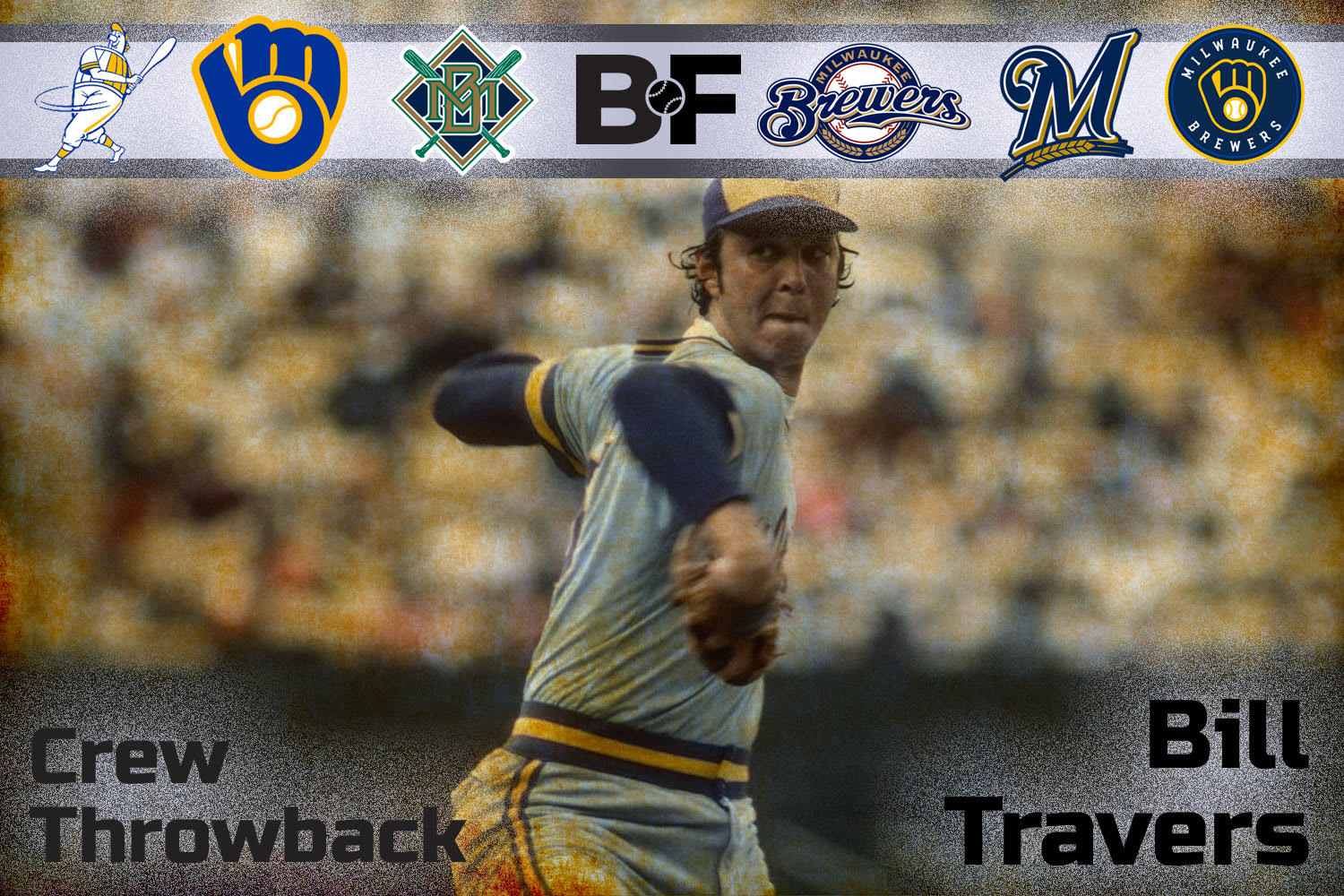 William Edward Travers was born in Massachusetts in 1952. His father was a semi-pro baseball player. Travers was drafted by the Brewers in the 6th round of the 1970 draft when Bill was only 17 years old. After a rough first year (again, at age 17), Travers quickly rounded into form, showing promise as a starter. However, in 1972, he developed arm troubles (requiring an early version of Tommy John surgery) and missed much of the next two years. But the Brewers loved Travers' fastball and control, thus earning him a call up to Milwaukee in 1974, where he (predictably) struggled in 53 innings of relief. Moving back into the rotation, Travers split 1975 between AAA and Milwaukee, ultimately solidifying himself in the rotation - where he remained for six years. Travers had his breakout 1976 season - winning 15 games and leading the team with 4.5 bWAR and earning his only All-Star appearance. Sadly, this was Travers' high point, with various injuries (including another Tommy John operation) limiting his effectiveness and production. From 1977 through 1980, Travers was a mainstay in the rotation, with some bad years (1977-78) and some solid ones (1979-1980). After the 1980 campaign, the Brewers let the 27-year old Travers walk in free agency. He signed a four-year deal (worth $4 million) with the Angels, but injuries limited him to only 52 ineffective innings over the length of the contract. His career was done at age 30. Travers had one of those 'what if' careers. An All-Star season at age 23 was the pinnacle, but injuries would dim his star. Perhaps the heavy workload of that season contributed to his subsequent elbow issues, but you never know. A tall, lanky guy, Travers played in 191 games for Milwaukee (157 starts - completing 46 of those games and tossing 10 shutouts) and threw more than 1,000 innings. He won 65 games (against 71 losses) and produced a 3.99 ERA and a 1.366 WHIP. He was part of the rise of the big hitting Brewer teams of the late 70s/early 80s. In addition to his work on the field, Travers was known for his boundless sense of humor. After baseball, Travers invested his earnings into real estate, and has enjoyed his life after the game. He coached youth baseball for years in Foxboro, MA, and was lauded as one of the architects of the community's youth baseball league. He also became heavily involved in candlepin bowling, and has been recognized as one of the best in the world. He was part of the U.S. team that won the 1998 World Championship. Travers was inducted into the Brewer Wall of Fame in 2014. Please share your memories of former Brewer pitcher Bill Travers.

