



Matt Breen
-
Posts
9,112 -
Joined
-
Last visited
-
Days Won
1
Content Type
Profiles
Forums
Blogs
Events
News
2026 Milwaukee Brewers Top Prospects Ranking
Milwaukee Brewers Videos
2022 Milwaukee Brewers Draft Picks
Milwaukee Brewers Free Agent & Trade Rumors, Notes, & Tidbits
Guides & Resources
2023 Milwaukee Brewers Draft Picks
2024 Milwaukee Brewers Draft Picks
The Milwaukee Brewers Players Project
2025 Milwaukee Brewers Draft Pick Tracker
2026 Milwaukee Brewers Draft Tracker: Picks & Bonuses
Store
Downloads
Gallery
Everything posted by Matt Breen
-
 The early years of the Milwaukee Brewers franchise were not pretty. In the first three years in Milwaukee, the team lost more than 90 games each season. But the era would reward the club with some good players. One of those was slugging outfielder Johnny Briggs. Johnny Briggs was born in New Jersey in 1944. He was signed as an amateur free agent by Philadelphia in 1962. A left-handed hitting outfielder, he reached the big leagues in 1964 after only one minor league season. He was a semi-regular for the Phillies from 1965 through 1970, showing modest power and good on-base skills. But he could never quite breakout as an everyday player - perhaps due to his struggles against left-handers. He spent most of his time in centerfield, but also played right field, left field, and first base. Early into the 1971 season, Milwaukee acquired Briggs in exchange for Pete Koegel and Ray Peters (neither player would have more than a cup of coffee in the bigs). The deal was an immediate boon for Briggs and Milwaukee. Given the chance to play everyday, the 27-year old Briggs posted his best numbers, including 21 HRs and a .845 OPS. For four seasons, Briggs would provide a consistent bat in the Brewer lineup, hitting between 17 and 21 HRs each season, and boasting a .358 OBP and a .799 OPS. Both Fangraphs and Baseball Reference have him as roughly a 3.0 WAR player for each of his years as a Brewers. During his time in Milwaukee, Briggs primarily played left field, but he moved around as needed, getting starts at first base, center field, right field, and designated hitter. Some highlights of Briggs career include drawing four walks in a game, driving in six runs in a game (off Nolan Ryan ), and accomplishing the rare feat of having six hits in a nine inning game. The 1975 season saw Briggs miss a month with an injury. Then, after appearing in only 28 games, he was dealt to the Twins for Bobby Darwin . After one mediocre season in Minnesota, Briggs saw an opportunity in Japan, and he signed a two year deal with the Lotte Orions. Unfortunately, Briggs became ill from food parasites, and left the team after only 47 games. He would not return to Japan, and when no major league team would guarantee him a roster spot, he elected to retire. Briggs moved back to his hometown of Patterson, New Jersey, and join the Passaic County Sheriff’s Department. He retired in 2008 as a lieutenant after 25 years. He stayed active in sports by spending more than 20 years as a Paterson recreation supervisor, running baseball leagues and clinics, and counseling kids. John Briggs spent four years in Milwaukee. These were the early years of the franchise - tough, losing years. Still, he provided a quality bat during the lean times and twice lead the team in OPS. His strong on-base skills are probably more appreciated today than they were back in the early 70s, and thus he never got the accolades he deserved. Briggs, a soft-spoken man, said he enjoyed playing in Milwaukee. "Going to Milwaukee," Briggs said in a 2007 interview, "that was probably the best thing that ever happened to me." Please share your memories of former Brewer outfielder Johnny Briggs. View full article
 -
Crew Throwback: Johnny Briggs was a Bright Spot in Early Years
Matt Breen posted an article in Brewers
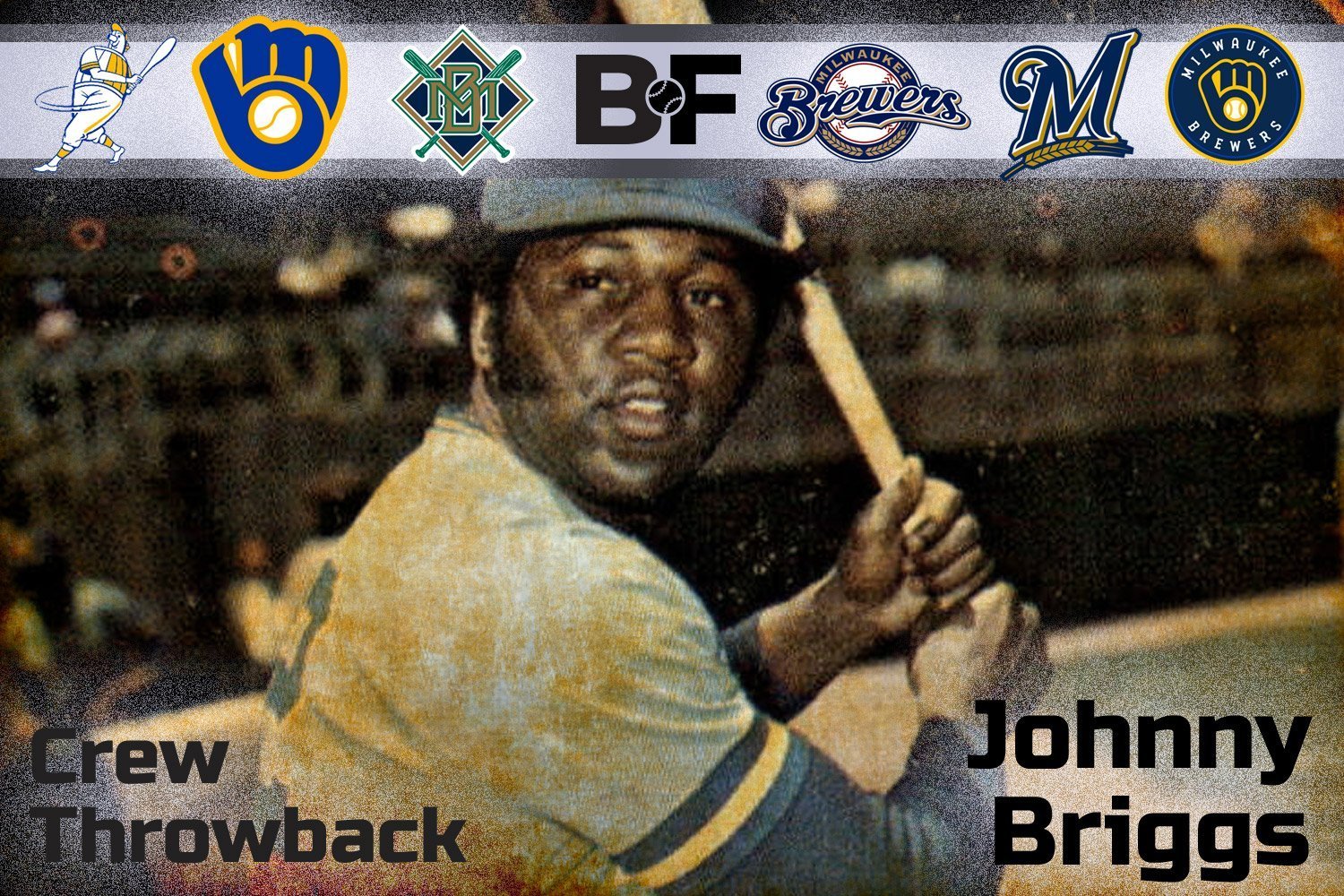 Johnny Briggs was born in New Jersey in 1944. He was signed as an amateur free agent by Philadelphia in 1962. A left-handed hitting outfielder, he reached the big leagues in 1964 after only one minor league season. He was a semi-regular for the Phillies from 1965 through 1970, showing modest power and good on-base skills. But he could never quite breakout as an everyday player - perhaps due to his struggles against left-handers. He spent most of his time in centerfield, but also played right field, left field, and first base. Early into the 1971 season, Milwaukee acquired Briggs in exchange for Pete Koegel and Ray Peters (neither player would have more than a cup of coffee in the bigs). The deal was an immediate boon for Briggs and Milwaukee. Given the chance to play everyday, the 27-year old Briggs posted his best numbers, including 21 HRs and a .845 OPS. For four seasons, Briggs would provide a consistent bat in the Brewer lineup, hitting between 17 and 21 HRs each season, and boasting a .358 OBP and a .799 OPS. Both Fangraphs and Baseball Reference have him as roughly a 3.0 WAR player for each of his years as a Brewers. During his time in Milwaukee, Briggs primarily played left field, but he moved around as needed, getting starts at first base, center field, right field, and designated hitter. Some highlights of Briggs career include drawing four walks in a game, driving in six runs in a game (off Nolan Ryan ), and accomplishing the rare feat of having six hits in a nine inning game. The 1975 season saw Briggs miss a month with an injury. Then, after appearing in only 28 games, he was dealt to the Twins for Bobby Darwin . After one mediocre season in Minnesota, Briggs saw an opportunity in Japan, and he signed a two year deal with the Lotte Orions. Unfortunately, Briggs became ill from food parasites, and left the team after only 47 games. He would not return to Japan, and when no major league team would guarantee him a roster spot, he elected to retire. Briggs moved back to his hometown of Patterson, New Jersey, and join the Passaic County Sheriff’s Department. He retired in 2008 as a lieutenant after 25 years. He stayed active in sports by spending more than 20 years as a Paterson recreation supervisor, running baseball leagues and clinics, and counseling kids. John Briggs spent four years in Milwaukee. These were the early years of the franchise - tough, losing years. Still, he provided a quality bat during the lean times and twice lead the team in OPS. His strong on-base skills are probably more appreciated today than they were back in the early 70s, and thus he never got the accolades he deserved. Briggs, a soft-spoken man, said he enjoyed playing in Milwaukee. "Going to Milwaukee," Briggs said in a 2007 interview, "that was probably the best thing that ever happened to me." Please share your memories of former Brewer outfielder Johnny Briggs.
 -
The names, faces and stories from the era are legendary to Brewer fans: Stormin' Gorman, Coop, The Igniter, Benji, Vuke, Moose, The Kid, Gumby, Fingers' mustache, Caldwell's 'sinker' (aka spitball) and others. But for all the team's greatness, one long time Brewer often gets forgotten. And that is catcher/outfielder Charlie Moore - who spent 14 seasons (yes, 14!) with the club. Charlie Moore was born in 1953 in Birmingham, Alabama. He was a 5th round pick by Milwaukee in 1971 out of the University of Alabama at Birmingham. He was a catcher with all-around, if unspectacular, skills. He moved quickly through the Brewer system, reaching Milwaukee for a cup of coffee in 1973. In 1974, the 21 year old served as the reserve catcher behind Darrell Porter. He held that position for eight years, generally getting 250-350 ABs each year. During that time, he showed the ability to hit for average (.290+ four different times), but not much power. Throughout his career, Moore showed good contact skills, striking out only 10% of his at bats. His finest season as a catcher was 1979 when he hit .300 in 111 games. In 1980, the Brewers acquired all-star catcher Ted Simmons from the Cardinals (along with Pete Vukovich and Rollie Fingers). The move caused the Brewers to rethink Moore's role with the club, and by 1981 they were experimenting with him in RF, a position where they were lacking a capable starter. In 1982, Moore made the shift from catcher to full time outfielder, and helped the Brewers reach the World Series. His play was nothing special, but on a team littered with all-stars, he quietly played the role required of him. He provided solid defense in RF, got on base, and was a steady presence in the clubhouse. In 1983, he played a career high 151 games while hitting a respectable .284 - walking more times than he struck out. In 1985, Moore shifted back to catcher, where he played until 1986. In 1987, Moore went to Toronto for a final season before retiring. Moore played 14 seasons for Milwaukee - topped only by Robin Yount, Jim Gantner and Paul Molitor. His 1,283 games rank 6th in team history, and his 1,029 hits is 10th on the team list. In 1980, he hit for the cycle. In postseason play he sports a robust .354 batting average. One other claim to fame: he was the last runner batted in by the great Hank Aaron (on October 3, 1976). With his big league career behind him, Moore returned to his hometown of Birmingham, Alabama. He became a sales rep for Birmingham Fastener, Inc., a manufacturer of bolts and fasteners - for more than 15 years. Charlie Moore is the classic organizational soldier. He was a quiet guy who went about his business without much fanfare. When the team needed a right fielder, he answered the call. Perhaps his biggest challenge was that he never did anything really well. He hit .261 for his career - not bad, but nothing special. He had modest power (only 36 career HR), and while he didn't strike out a lot, he didn't walk that much either (a career OBP of .319). His longevity with the team is probably his most defining trait. Still, 14 seasons in Milwaukee earned Charlie Moore a place on the Brewers Wall of Fame, testifying to his contributions to the club. Share your memories of former Brewer Charlie Moore. View full article
-
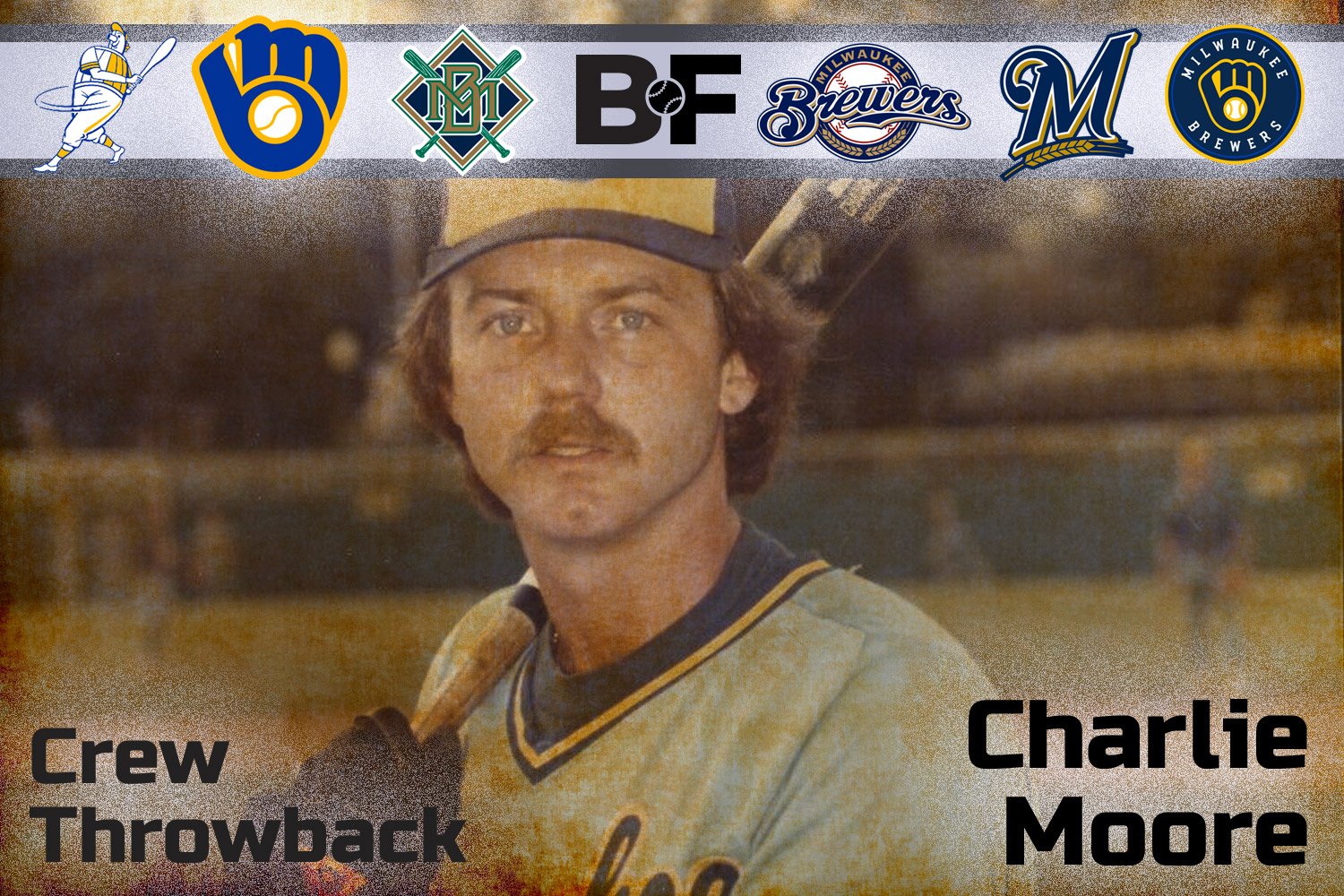 Charlie Moore was born in 1953 in Birmingham, Alabama. He was a 5th round pick by Milwaukee in 1971 out of the University of Alabama at Birmingham. He was a catcher with all-around, if unspectacular, skills. He moved quickly through the Brewer system, reaching Milwaukee for a cup of coffee in 1973. In 1974, the 21 year old served as the reserve catcher behind Darrell Porter. He held that position for eight years, generally getting 250-350 ABs each year. During that time, he showed the ability to hit for average (.290+ four different times), but not much power. Throughout his career, Moore showed good contact skills, striking out only 10% of his at bats. His finest season as a catcher was 1979 when he hit .300 in 111 games. In 1980, the Brewers acquired all-star catcher Ted Simmons from the Cardinals (along with Pete Vukovich and Rollie Fingers). The move caused the Brewers to rethink Moore's role with the club, and by 1981 they were experimenting with him in RF, a position where they were lacking a capable starter. In 1982, Moore made the shift from catcher to full time outfielder, and helped the Brewers reach the World Series. His play was nothing special, but on a team littered with all-stars, he quietly played the role required of him. He provided solid defense in RF, got on base, and was a steady presence in the clubhouse. In 1983, he played a career high 151 games while hitting a respectable .284 - walking more times than he struck out. In 1985, Moore shifted back to catcher, where he played until 1986. In 1987, Moore went to Toronto for a final season before retiring. Moore played 14 seasons for Milwaukee - topped only by Robin Yount, Jim Gantner and Paul Molitor. His 1,283 games rank 6th in team history, and his 1,029 hits is 10th on the team list. In 1980, he hit for the cycle. In postseason play he sports a robust .354 batting average. One other claim to fame: he was the last runner batted in by the great Hank Aaron (on October 3, 1976). With his big league career behind him, Moore returned to his hometown of Birmingham, Alabama. He became a sales rep for Birmingham Fastener, Inc., a manufacturer of bolts and fasteners - for more than 15 years. Charlie Moore is the classic organizational soldier. He was a quiet guy who went about his business without much fanfare. When the team needed a right fielder, he answered the call. Perhaps his biggest challenge was that he never did anything really well. He hit .261 for his career - not bad, but nothing special. He had modest power (only 36 career HR), and while he didn't strike out a lot, he didn't walk that much either (a career OBP of .319). His longevity with the team is probably his most defining trait. Still, 14 seasons in Milwaukee earned Charlie Moore a place on the Brewers Wall of Fame, testifying to his contributions to the club. Share your memories of former Brewer Charlie Moore.
 -
Crew Throwback: Jeromy Burnitz
Matt Breen replied to Matt Breen's topic in Brewer Fanatic Front Page News
I wonder how many times that has happened. -
Crew Throwback: Jeromy Burnitz
Matt Breen replied to Matt Breen's topic in Brewer Fanatic Front Page News
I wonder how many times that has happened. -
Power. Everyone loves power. So when a player can average more than 32 HRs per season over a five year span - well, that's special. And that's precisely what Jeremy Burnitz did for the Brewers from 1997-2001. Image courtesy of Brewer Fanatic Jeromy Burnitz was born in 1969 in Westminster, California. He was a 1st round selection (17th overall) by the NY Mets in 1990 out of Oklahoma State University. He quickly displayed his calling card - power - hitting 31 HR (and drawing over 100 walks) the following season at AA. After bouncing back and forth between the minors and majors, the Mets - tired of his streaky play, plus his clashes with manager Dallas Green - dealt Burnitz to Cleveland in 1994. He spent some more time in the minors before finally staying put in the big leagues in 1996. Despite playing well for Cleveland, they dealt the then 27-year old to Milwaukee for veteran Kevin Seitzer. The trade would be a boon for Burnitz, who emerged as a legitimate slugger in 1997, crushing 27 home runs in his first full season in Milwaukee. He followed with home run totals of 38, 33, 31 and 34 - before being dealt back to the Mets after the 2001 season. (He hit 30+ HR for two more seasons - giving him an impressive run of 30+ HR for six years). The trade to New York cleared Burnitz's large salary, and brought in a young starting pitcher, Glendon Rusch (who floundered in his time in Milwaukee). While in Milwaukee, Burnitz averaged 32+ HR and 100+ RBI a season. He never had less than 70 walks, and he hit a respectable .258 - which led to a .362 OBP. His big power made him a fan favorite in Milwaukee. Sadly, the Brewers never had a winning team during Burnitz's time with the club. Jeromy bounced around the rest of his career, playing four more seasons for the Mets, Dodgers, Rockies, Cubs and Pirates. He retired after the 2006 season at age 37. All told, Burnitz hit a 315 HRs (totals made more impressive because he didn't became a regular until age 28) and had a SLG% of .481. For Milwaukee, he hit 165 HRs and had an .870 OPS during his 5+ seasons. He averaged 3.0+ bWAR a year during his Brewer tenure. Burnitz had the honor of starting the 1999 all-star - in place of an injured Tony Gwynn - the first Brewer to start an all-star game since Paul Molitor. Despite his reputation as a bit of a hot head, Burnitz was also known to be laid back and well-liked in the clubhouse. He loved to pull pranks, and Peter Abraham of the "Boston Globe" reported this: "Burnitz would have fit in with the cast of 'Jackass.' As a practical joke, he would empty out bottles of shampoo in the showers on road trips after the last game of the series and pee in them." After retiring, Burnitz settled down with his wife and three children in California. He has elected to remain out of the public eye ever since. Jeromy Burnitz will hold a special place in the hearts and minds of Brewer fans (like many other sluggers). A powerful looking man, Burnitz looked more like a linebacker than a baseball player. During the dark days of the franchise in the late 90s and early 2000s, he provided excitement and thrills when they were few and far between. He is a member of the Brewer Wall of Honor. Please share your memories of Jeromy Burnitz. View full article
-
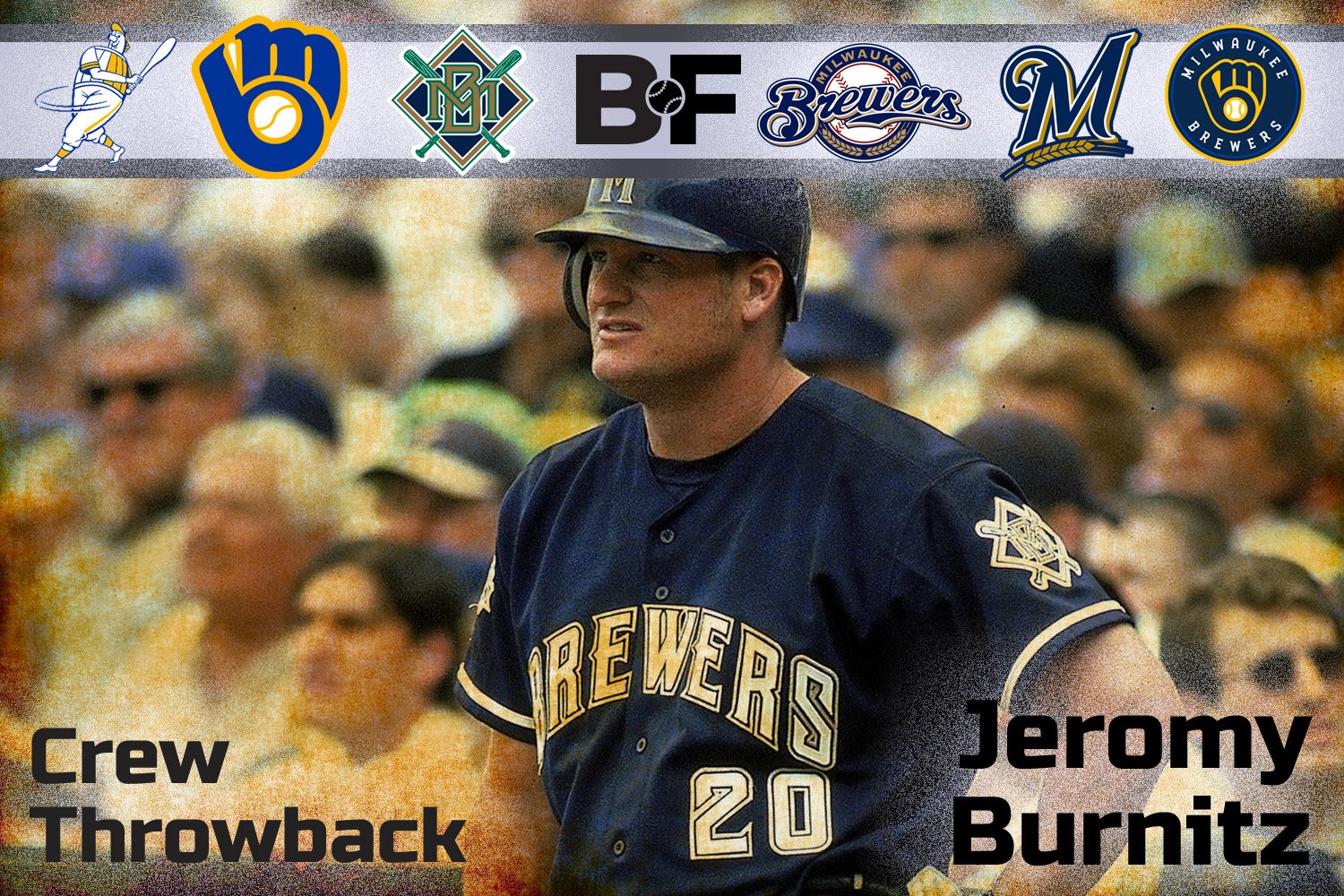 Jeromy Burnitz was born in 1969 in Westminster, California. He was a 1st round selection (17th overall) by the NY Mets in 1990 out of Oklahoma State University. He quickly displayed his calling card - power - hitting 31 HR (and drawing over 100 walks) the following season at AA. After bouncing back and forth between the minors and majors, the Mets - tired of his streaky play, plus his clashes with manager Dallas Green - dealt Burnitz to Cleveland in 1994. He spent some more time in the minors before finally staying put in the big leagues in 1996. Despite playing well for Cleveland, they dealt the then 27-year old to Milwaukee for veteran Kevin Seitzer. The trade would be a boon for Burnitz, who emerged as a legitimate slugger in 1997, crushing 27 home runs in his first full season in Milwaukee. He followed with home run totals of 38, 33, 31 and 34 - before being dealt back to the Mets after the 2001 season. (He hit 30+ HR for two more seasons - giving him an impressive run of 30+ HR for six years). The trade to New York cleared Burnitz's large salary, and brought in a young starting pitcher, Glendon Rusch (who floundered in his time in Milwaukee). While in Milwaukee, Burnitz averaged 32+ HR and 100+ RBI a season. He never had less than 70 walks, and he hit a respectable .258 - which led to a .362 OBP. His big power made him a fan favorite in Milwaukee. Sadly, the Brewers never had a winning team during Burnitz's time with the club. Jeromy bounced around the rest of his career, playing four more seasons for the Mets, Dodgers, Rockies, Cubs and Pirates. He retired after the 2006 season at age 37. All told, Burnitz hit a 315 HRs (totals made more impressive because he didn't became a regular until age 28) and had a SLG% of .481. For Milwaukee, he hit 165 HRs and had an .870 OPS during his 5+ seasons. He averaged 3.0+ bWAR a year during his Brewer tenure. Burnitz had the honor of starting the 1999 all-star - in place of an injured Tony Gwynn - the first Brewer to start an all-star game since Paul Molitor. Despite his reputation as a bit of a hot head, Burnitz was also known to be laid back and well-liked in the clubhouse. He loved to pull pranks, and Peter Abraham of the "Boston Globe" reported this: "Burnitz would have fit in with the cast of 'Jackass.' As a practical joke, he would empty out bottles of shampoo in the showers on road trips after the last game of the series and pee in them." After retiring, Burnitz settled down with his wife and three children in California. He has elected to remain out of the public eye ever since. Jeromy Burnitz will hold a special place in the hearts and minds of Brewer fans (like many other sluggers). A powerful looking man, Burnitz looked more like a linebacker than a baseball player. During the dark days of the franchise in the late 90s and early 2000s, he provided excitement and thrills when they were few and far between. He is a member of the Brewer Wall of Honor. Please share your memories of Jeromy Burnitz.
 -
If you ask, who wore a Milwaukee Brewer uniform the longest? The answer is likely Bill Castro, who spent seven seasons with the club as a player, and 18 more as a coach. William Radhames Castro Checo, born in 1952 in the Dominican Republic, was signed by the Brewers in as an amateur free agent in 1970. Castro was immediately moved into the bullpen, reaching the big leagues in 1974. Working almost exclusively out of the pen, Castro spent more than six years in Milwaukee, appearing in 253 games. Castro left Milwaukee after the 1980 season as a free agent, spending one year with the Yankees and two with the Royals, before retiring after the 1983 season. During his time in Milwaukee, he was an effective reliever. His best run came from 1978-80, when he produced ERAs of 1.81, 2.03 and 2.77, respectively. Not a strikeout pitcher, Castro succeeded by limiting home runs and walks. In addition to appearing in 253 games, Castro saved 44 games, and posted a 3.56 ERA. After retiring, Castro worked as a scout and minor league coach for the Brewers from 1985 through 1991, before becoming Milwaukee's bullpen coach in 1992. He served in that capacity until 2008, when he was promoted to pitching coach. The Brewers fired him in August 2009, but he returned to the organization in 2010 and 2011 as their Latin American pitching advisor. In 2012, Castro served as the Baltimore bullpen coach, and then as their pitching coach in 2013, before retiring from baseball. Bill Castro is a great example of an organizational role player providing solid, but unspectacular, results from the bullpen for seven seasons. He didn't do anything exceptionally well, but the team was able to count on him for solid production during his tenure. Share your memories of relief pitcher long time Brewer coach Bill Castro below. View full article
-
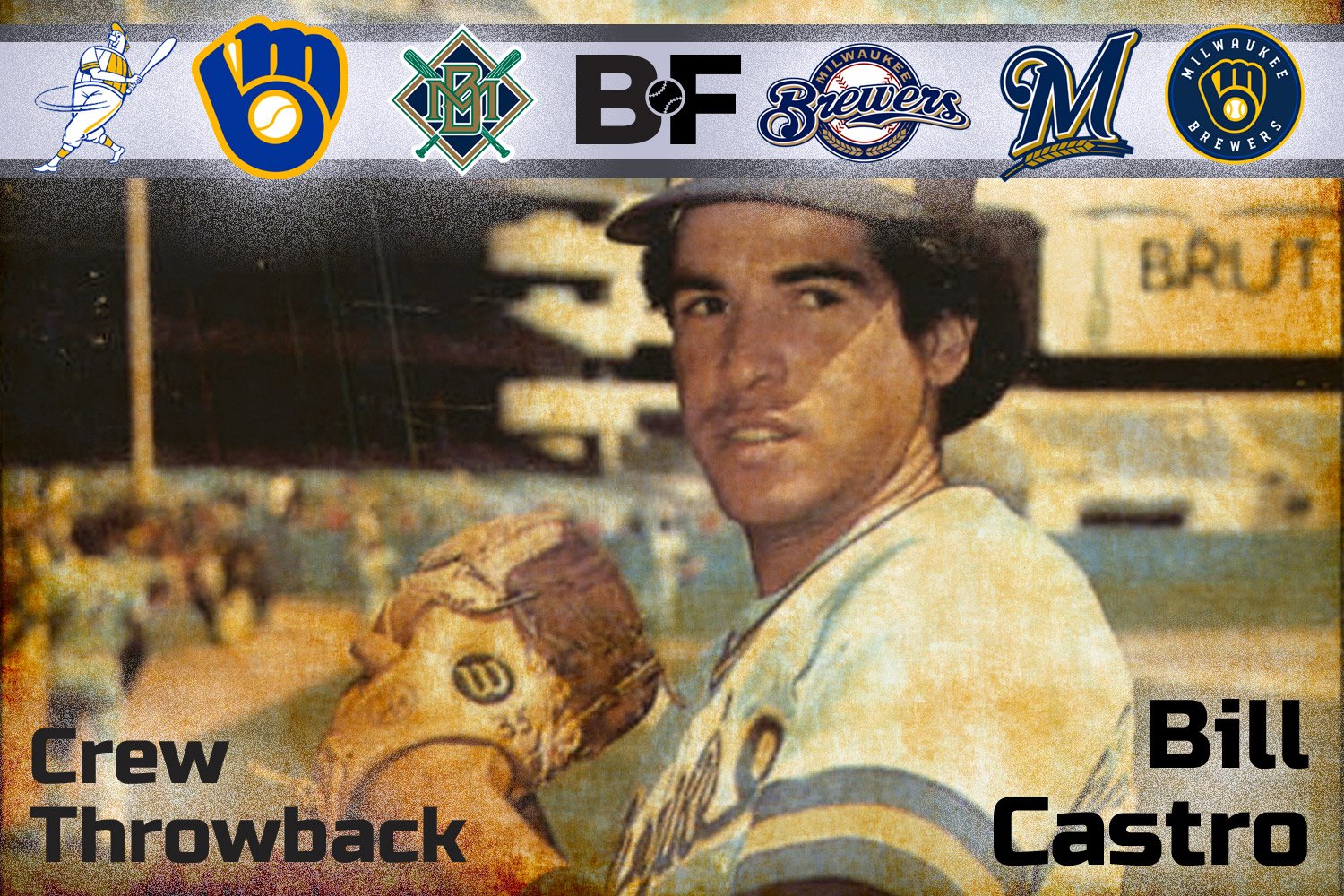 William Radhames Castro Checo, born in 1952 in the Dominican Republic, was signed by the Brewers in as an amateur free agent in 1970. Castro was immediately moved into the bullpen, reaching the big leagues in 1974. Working almost exclusively out of the pen, Castro spent more than six years in Milwaukee, appearing in 253 games. Castro left Milwaukee after the 1980 season as a free agent, spending one year with the Yankees and two with the Royals, before retiring after the 1983 season. During his time in Milwaukee, he was an effective reliever. His best run came from 1978-80, when he produced ERAs of 1.81, 2.03 and 2.77, respectively. Not a strikeout pitcher, Castro succeeded by limiting home runs and walks. In addition to appearing in 253 games, Castro saved 44 games, and posted a 3.56 ERA. After retiring, Castro worked as a scout and minor league coach for the Brewers from 1985 through 1991, before becoming Milwaukee's bullpen coach in 1992. He served in that capacity until 2008, when he was promoted to pitching coach. The Brewers fired him in August 2009, but he returned to the organization in 2010 and 2011 as their Latin American pitching advisor. In 2012, Castro served as the Baltimore bullpen coach, and then as their pitching coach in 2013, before retiring from baseball. Bill Castro is a great example of an organizational role player providing solid, but unspectacular, results from the bullpen for seven seasons. He didn't do anything exceptionally well, but the team was able to count on him for solid production during his tenure. Share your memories of relief pitcher long time Brewer coach Bill Castro below.
 -
When you think of the best Brewer pitchers, the names such as Sheets, Higuera, Caldwell, Gallardo, Plesac, Hader, and Fingers come to mind. Yet if you want to know who leads the organization in career wins, games started, shutouts, innings pitched and a host of other categories - the name that rises to the top is Jim Slaton. Jim Slaton was born in Long Beach, California, in 1970. After a short stint at Antelope Valley College in Lancaster, California, Slaton was drafted by the Seattle Pilots in the 15th round in 1969. He moved quickly through the minor leagues, reaching Milwaukee in 1971. By 1973, Slaton established himself as a workhorse starting pitcher, throwing more than 210 innings in each of the next seven seasons, including 292 innings in 1976. After the 1977 season, the Brewers sent Slaton to Detroit for slugging outfielder Ben Oglivie. After a solid year, he returned to the Brewers as a free agent, picking up right where he left off. Slaton's career was forever changed in 1980 when he suffered a rotator cuff injury. He missed most of the year and then returned and played for six more seasons. However, his days as an innings-eating starter were over. Instead, Slaton returned as a long reliever and spot starter. The Brewers dealt Slaton to the Angels after the 1983 season for OF Bobby Clark. He played three more years before retiring at age 36. Slaton's time in Milwaukee was not insignificant. While he was never a great pitcher, his ability to soak up innings was a tremendous asset. He owned a 3.86 ERA over 12 years, and his 117 wins, 69 complete games, and 2,025 innings pitched are still Brewer records. His longevity also means he has the most losses in team history and has given up the most hits, home runs, and walks. Some other highlights include an all-star appearance in 1977 and the winning pitcher for the Crew in the fourth game of the 1982 World Series. Despite the many accomplishments of Slaton, he is often forgotten. He was consistent and solid, never striking out many batters or flashing fantastic stuff. His walk-to-strike out rate is relatively poor - for his career, he walked 1,004 batters and struck out 1,202. Still, his longevity and workhorse performance solidifies Slaton a place in Brewer history. After retiring, Slaton got into coaching. For more than two decades, he has worked in several capacities in the minor and major leagues, including stints as the bullpen coach for the Mariners and the Dodgers. Slaton was added to the Milwaukee Brewers Wall of Honor in 2014. Please share your memories of former Brewer pitcher Jim Slaton. View full article
-
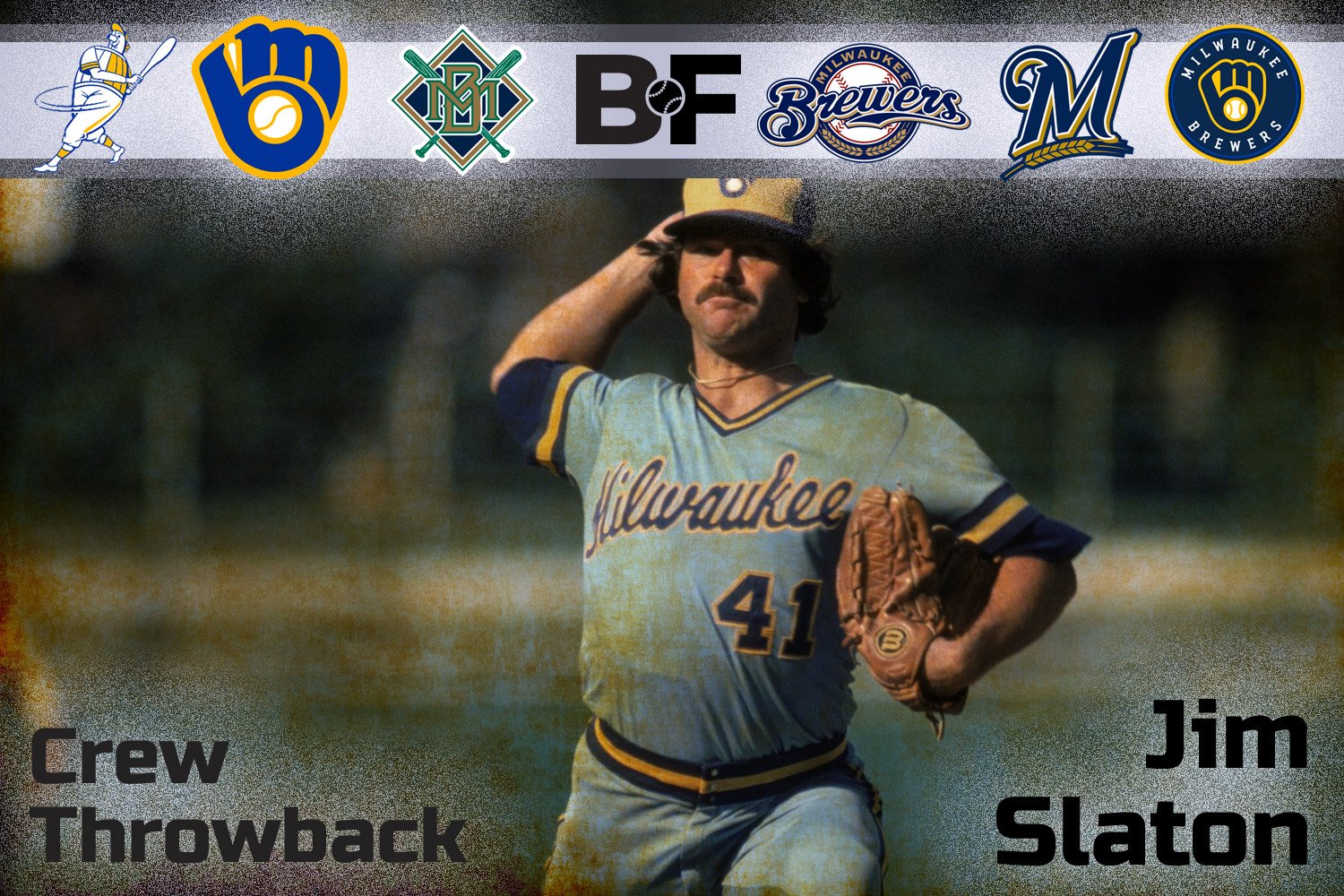 Jim Slaton was born in Long Beach, California, in 1970. After a short stint at Antelope Valley College in Lancaster, California, Slaton was drafted by the Seattle Pilots in the 15th round in 1969. He moved quickly through the minor leagues, reaching Milwaukee in 1971. By 1973, Slaton established himself as a workhorse starting pitcher, throwing more than 210 innings in each of the next seven seasons, including 292 innings in 1976. After the 1977 season, the Brewers sent Slaton to Detroit for slugging outfielder Ben Oglivie. After a solid year, he returned to the Brewers as a free agent, picking up right where he left off. Slaton's career was forever changed in 1980 when he suffered a rotator cuff injury. He missed most of the year and then returned and played for six more seasons. However, his days as an innings-eating starter were over. Instead, Slaton returned as a long reliever and spot starter. The Brewers dealt Slaton to the Angels after the 1983 season for OF Bobby Clark. He played three more years before retiring at age 36. Slaton's time in Milwaukee was not insignificant. While he was never a great pitcher, his ability to soak up innings was a tremendous asset. He owned a 3.86 ERA over 12 years, and his 117 wins, 69 complete games, and 2,025 innings pitched are still Brewer records. His longevity also means he has the most losses in team history and has given up the most hits, home runs, and walks. Some other highlights include an all-star appearance in 1977 and the winning pitcher for the Crew in the fourth game of the 1982 World Series. Despite the many accomplishments of Slaton, he is often forgotten. He was consistent and solid, never striking out many batters or flashing fantastic stuff. His walk-to-strike out rate is relatively poor - for his career, he walked 1,004 batters and struck out 1,202. Still, his longevity and workhorse performance solidifies Slaton a place in Brewer history. After retiring, Slaton got into coaching. For more than two decades, he has worked in several capacities in the minor and major leagues, including stints as the bullpen coach for the Mariners and the Dodgers. Slaton was added to the Milwaukee Brewers Wall of Honor in 2014. Please share your memories of former Brewer pitcher Jim Slaton.
 -
Trevor Bauer suspended for two seasons
Matt Breen replied to NBBrewFan's topic in Milwaukee Brewers Talk
Wow. The hammer has fallen. And hard. https://www.espn.com/mlb/story/_/id/33827168/los-angeles-dodgers-trevor-bauer-suspended-two-seasons -
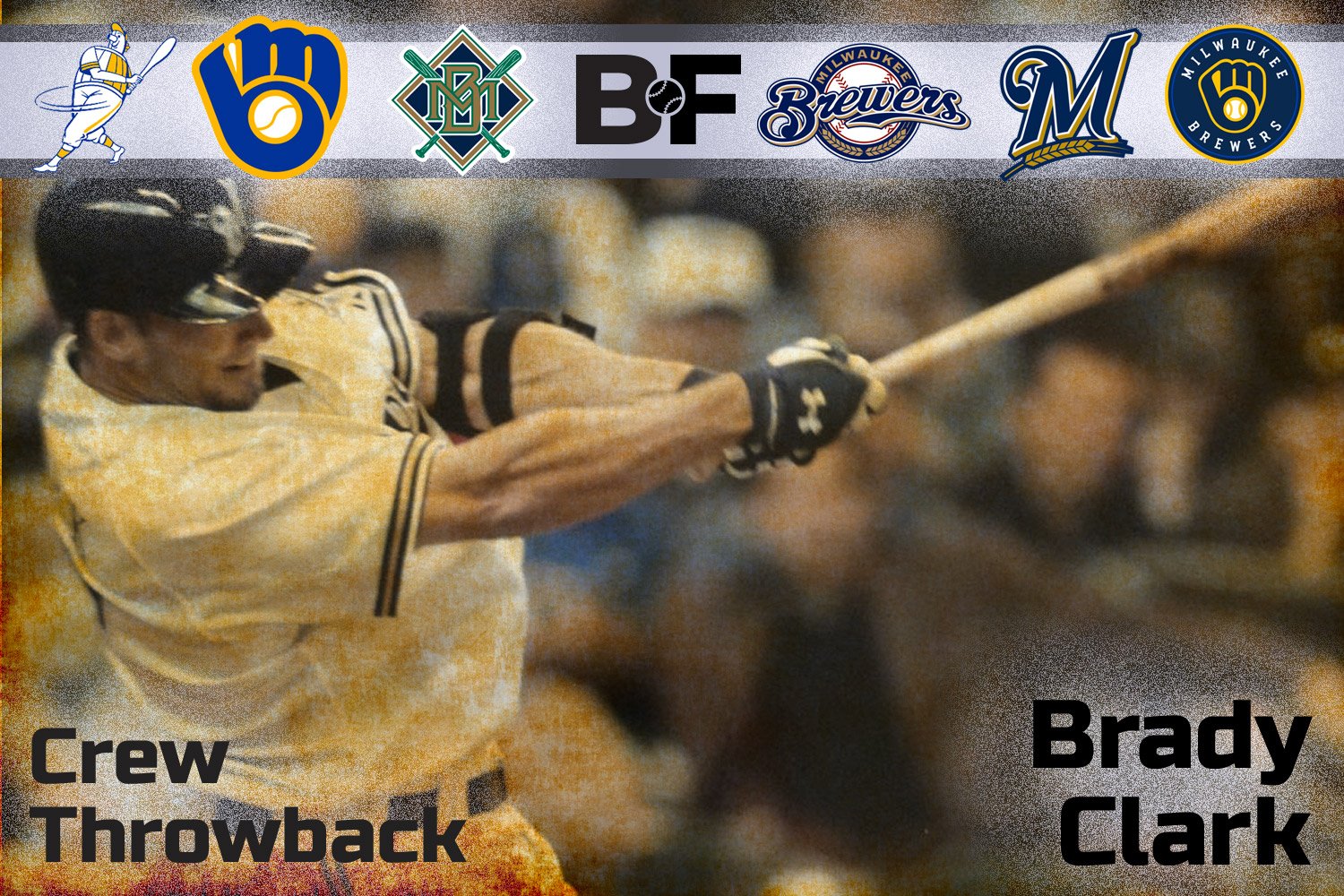 Brady Clark was born in Portland, Oregon, in 1973. A right-handed hitter, Clark played outfield for San Diego State. He would be signed as an undrafted free agent by Cincinnati. He came up through the Reds system, hitting everywhere he went (.307 minor league BA). He made his major league debut in 2000 at age 27 and then spent the next three years bouncing between the minors and majors (mostly the minors). But Clark's life would change when the Brewers plucked him off waivers in 2003. He was a 30-year-old journeyman outfielder who lacked the power to play corner outfield and the range to play center field. Clark would spend only nine games at AAA before getting called up by Milwaukee. Initially, he was a reserve outfielder and pinch hitter, but as time went on, he found himself with more and more playing time, especially in right field. Clark served as a part-time starter for two seasons, hitting .273 and .280, respectively. He improved his power numbers (modestly) and walk rate, prompting the Brewers to give Clark the center field job in 2005 after the club traded Scott Podsednik for Carlos Lee. Clark, playing full time in the majors for the first time at age 33, responded with an excellent season, batting .306 with a .372 OBP and a .798 OPS. His defense in center was solid, if unspectacular. Alas, 2005 would be Clark's high watermark. His numbers would drop across the board in 2006, and before the 2007 season began, he was dealt to the Dodgers after being replaced by Bill Hall. Brady would bounce between the Dodgers, Padres and Mets, and the minor leagues before wrapping up his playing days after the 2008 season. A brief comeback attempt in the spring of 2010 officially marked the end of his career. For Milwaukee, Brady Clark was a good player in the years, leading to a return to relevance. His lack of speed and power always limited him, but he had a good eye at the plate and knew how to put the ball in play. His 2005 season was memorable, producing 2.8 fWAR / 2.4 bWAR in center while hitting .306 (10th in the NL). In his four years in Milwaukee, he produced a .284 BA and a .361 OBP while playing all three outfield positions. Not bad for a guy who was never drafted. After retiring, Clark returned to Oregon (where he grew up) to raise his family and begin a career as an investment banker. Also, he stays involved with baseball by offering hitting instruction and clinics to individuals and groups. Please share your memories of former Brewer outfielder Brady Clark.
 -
Brady Clark was a perfect Milwaukee Brewer. He was a gritty, blue-collar battler (overblown adjectives intended) who never would have been a major leaguer if talent was the only deciding factor. His potential was so underwhelming that he wasn't even drafted out of college. But he would spend parts of nine seasons in the majors, including four with Milwaukee. Brady Clark was born in Portland, Oregon, in 1973. A right-handed hitter, Clark played outfield for San Diego State. He would be signed as an undrafted free agent by Cincinnati. He came up through the Reds system, hitting everywhere he went (.307 minor league BA). He made his major league debut in 2000 at age 27 and then spent the next three years bouncing between the minors and majors (mostly the minors). But Clark's life would change when the Brewers plucked him off waivers in 2003. He was a 30-year-old journeyman outfielder who lacked the power to play corner outfield and the range to play center field. Clark would spend only nine games at AAA before getting called up by Milwaukee. Initially, he was a reserve outfielder and pinch hitter, but as time went on, he found himself with more and more playing time, especially in right field. Clark served as a part-time starter for two seasons, hitting .273 and .280, respectively. He improved his power numbers (modestly) and walk rate, prompting the Brewers to give Clark the center field job in 2005 after the club traded Scott Podsednik for Carlos Lee. Clark, playing full time in the majors for the first time at age 33, responded with an excellent season, batting .306 with a .372 OBP and a .798 OPS. His defense in center was solid, if unspectacular. Alas, 2005 would be Clark's high watermark. His numbers would drop across the board in 2006, and before the 2007 season began, he was dealt to the Dodgers after being replaced by Bill Hall. Brady would bounce between the Dodgers, Padres and Mets, and the minor leagues before wrapping up his playing days after the 2008 season. A brief comeback attempt in the spring of 2010 officially marked the end of his career. For Milwaukee, Brady Clark was a good player in the years, leading to a return to relevance. His lack of speed and power always limited him, but he had a good eye at the plate and knew how to put the ball in play. His 2005 season was memorable, producing 2.8 fWAR / 2.4 bWAR in center while hitting .306 (10th in the NL). In his four years in Milwaukee, he produced a .284 BA and a .361 OBP while playing all three outfield positions. Not bad for a guy who was never drafted. After retiring, Clark returned to Oregon (where he grew up) to raise his family and begin a career as an investment banker. Also, he stays involved with baseball by offering hitting instruction and clinics to individuals and groups. Please share your memories of former Brewer outfielder Brady Clark. View full article
-
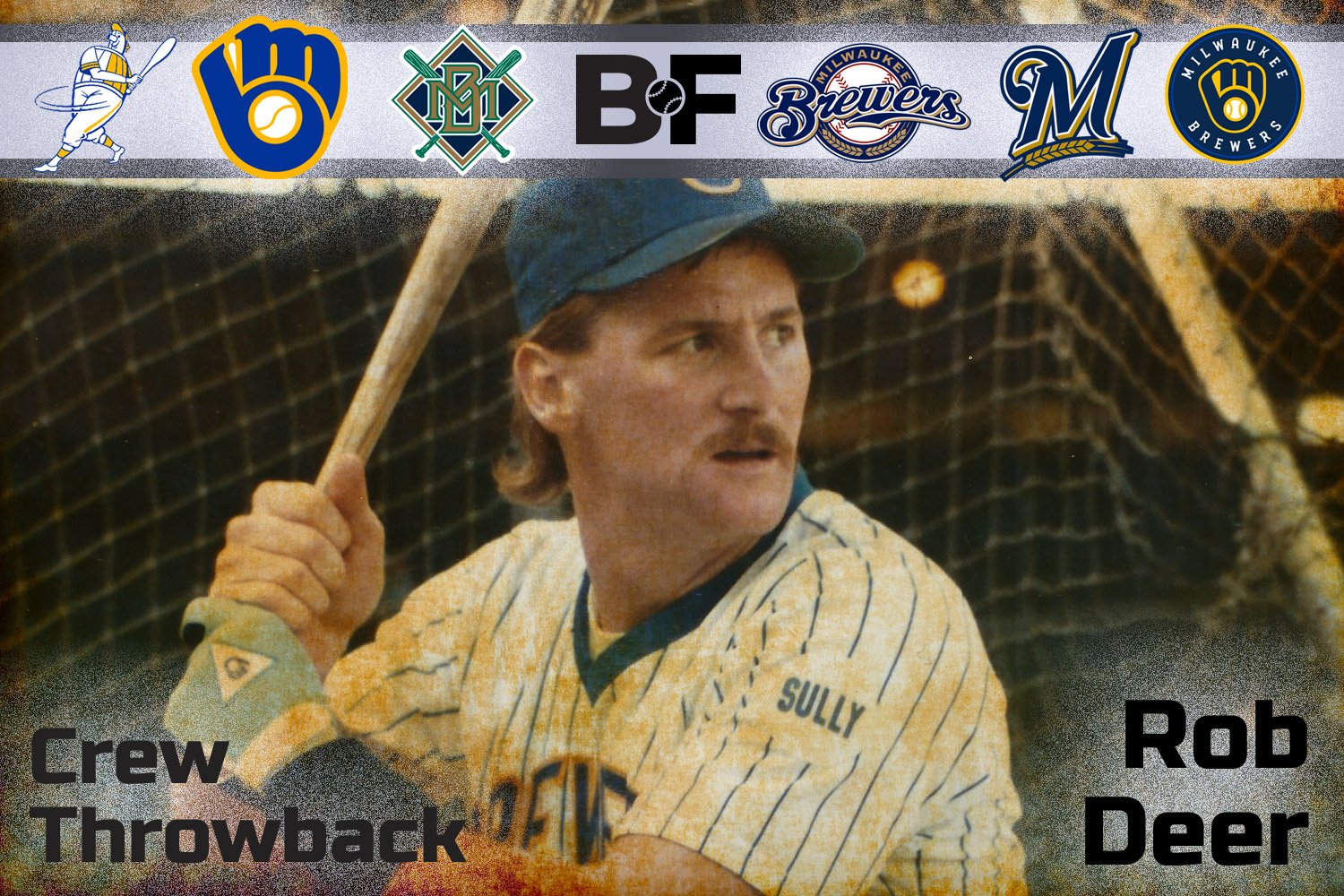 Deer was a 3TO player before it was cool to be 3TO (meaning three true outcomes - a walk, a strikeout, or a home run). What followed next was the biggest hit of Deer's career - a towering blast to left into the wind. County stadium went wild. Dale Sveum followed with a home run of his own, and the Brewers had one of their wildest victories in franchise history. And Rob Deer became a legend as the home run was featured on the Sports Illustrated cover. Rob Deer was born in 1960 in Orange, California. He was a big, powerful young man and was selected out of high school in the fourth round by the Detroit Tigers in the 1978 draft. Deer's calling card then - and throughout his career - was his prodigious right-handed power. He hit more than 30 home runs three times in the minors. However, while Deer took his share of walks, he had a big hole in his bat. He struck out at an alarming rate (especially for the 1980s, when striking out 180+ times in a season was frowned upon). Deer moved up the minor league ranks despite the strikeouts and low batting averages, reaching the majors in 1984. He spent all of the next season with San Francisco but struggled in a part-time role (.185 BA, 71K in 162 ABs). This would lead to the Giants shipping Deer to the Brewers for minor leaguers Dean Freeland and Eric Pilkington in the offseason. Deer was installed in right field, which he manned for the next five years. Despite low batting averages and huge strikeout rates, he quickly became a fan favorite as Milwaukee fans embraced the big outfielder due to his massive power. In those five years with Milwaukee, Deer slugged 137 homers while striking out 823 times. The strikeouts and low average (.229) would hamper Deer's effectiveness. The big issue was Deer's struggles against right-handers. If you dig into the numbers; he had a .922 OPS vs. lefties but a .701 vs. righties for his career. Modern teams would probably be more accepting of Deer's strengths and limit his exposure to right-handers. After 1990, Deer departed via free agency and took his 3TO act to Detroit for a few more years. Other than a 25-game stint in San Diego in 1996, Deer spent the last few years of his career in the minors and in Japan. He retired after the 1996 season. For his career, Deer led the majors in strikeouts five times. He held the American League single-season record for strikeouts before Jack Cust 'beat' him in 2008. And for a long time, he held the dubious honor of having the lowest official batting average while still qualifying for the batting title when he hit .179 in 1991 for Detroit. Chris Davis of Baltimore hit .168 in 2018. Home runs and strikeouts defined Rob Deer as a player. You never knew what would happen when Deer stepped up to the plate - which brought electricity to the stadium with each at-bat. Milwaukee fans will never forget the towering blast he launched out of County Stadium or the 1987 Easter Sunday game. After retiring, Deer toyed with racing but stayed in baseball as a hitting coach with the Padres and Cubs. He mainly works as a private instructor and runs baseball camps for kids. Deer struggled with alcohol and pain killer addiction (the latter due to various back surgeries), but he has put those demons in the review mirror. A fan favorite and icon of the latter 80s Brewers, Rob Deer was added to the Milwaukee Brewers Wall of Honor in 2014. Please share your memories of Brewer Rob Deer.
 -
On Easter Sunday, April 19, 1987, the Brewers were riding a season-opening 11-game win streak. The day was hot - 80 degrees - and County Stadium was packed. But the Brewers fell behind the Rangers and entered the 9th trailing 4-1. Glenn Braggs walked, and Greg Brock followed with a single. With one out, slugging outfielder Rob Deer stepped up to the plate. Deer was a 3TO player before it was cool to be 3TO (meaning three true outcomes - a walk, a strikeout, or a home run). What followed next was the biggest hit of Deer's career - a towering blast to left into the wind. County stadium went wild. Dale Sveum followed with a home run of his own, and the Brewers had one of their wildest victories in franchise history. And Rob Deer became a legend as the home run was featured on the Sports Illustrated cover. Rob Deer was born in 1960 in Orange, California. He was a big, powerful young man and was selected out of high school in the fourth round by the Detroit Tigers in the 1978 draft. Deer's calling card then - and throughout his career - was his prodigious right-handed power. He hit more than 30 home runs three times in the minors. However, while Deer took his share of walks, he had a big hole in his bat. He struck out at an alarming rate (especially for the 1980s, when striking out 180+ times in a season was frowned upon). Deer moved up the minor league ranks despite the strikeouts and low batting averages, reaching the majors in 1984. He spent all of the next season with San Francisco but struggled in a part-time role (.185 BA, 71K in 162 ABs). This would lead to the Giants shipping Deer to the Brewers for minor leaguers Dean Freeland and Eric Pilkington in the offseason. Deer was installed in right field, which he manned for the next five years. Despite low batting averages and huge strikeout rates, he quickly became a fan favorite as Milwaukee fans embraced the big outfielder due to his massive power. In those five years with Milwaukee, Deer slugged 137 homers while striking out 823 times. The strikeouts and low average (.229) would hamper Deer's effectiveness. The big issue was Deer's struggles against right-handers. If you dig into the numbers; he had a .922 OPS vs. lefties but a .701 vs. righties for his career. Modern teams would probably be more accepting of Deer's strengths and limit his exposure to right-handers. After 1990, Deer departed via free agency and took his 3TO act to Detroit for a few more years. Other than a 25-game stint in San Diego in 1996, Deer spent the last few years of his career in the minors and in Japan. He retired after the 1996 season. For his career, Deer led the majors in strikeouts five times. He held the American League single-season record for strikeouts before Jack Cust 'beat' him in 2008. And for a long time, he held the dubious honor of having the lowest official batting average while still qualifying for the batting title when he hit .179 in 1991 for Detroit. Chris Davis of Baltimore hit .168 in 2018. Home runs and strikeouts defined Rob Deer as a player. You never knew what would happen when Deer stepped up to the plate - which brought electricity to the stadium with each at-bat. Milwaukee fans will never forget the towering blast he launched out of County Stadium or the 1987 Easter Sunday game. After retiring, Deer toyed with racing but stayed in baseball as a hitting coach with the Padres and Cubs. He mainly works as a private instructor and runs baseball camps for kids. Deer struggled with alcohol and pain killer addiction (the latter due to various back surgeries), but he has put those demons in the review mirror. A fan favorite and icon of the latter 80s Brewers, Rob Deer was added to the Milwaukee Brewers Wall of Honor in 2014. Please share your memories of Brewer Rob Deer. View full article
-
Crew Throwback: Lary Sorensen
Matt Breen replied to Matt Breen's topic in Brewer Fanatic Front Page News
I never saw any information about a book. So I'm guessing it just fell by the wayside. -
Crew Throwback: Lary Sorensen
Matt Breen replied to Matt Breen's topic in Brewer Fanatic Front Page News
I never saw any information about a book. So I'm guessing it just fell by the wayside. -
Crew Throwback: Lary Sorensen
Matt Breen replied to Matt Breen's topic in Brewer Fanatic Front Page News
I never saw any information about a book. So I'm guessing it just fell by the wayside. -
Crew Throwback: Lary Sorensen
Matt Breen replied to Matt Breen's topic in Brewer Fanatic Front Page News
I never saw any information about a book. So I'm guessing it just fell by the wayside. -
The numbers were phenomenal. 18-12 record. 280 innings pitched. 17 complete games. Only 14 home runs and 50 walks allowed. Three shutout innings in the All-Star game. It was 1978, and for 22-year-old Lary Sorensen, it was one of the finest years any Brewer pitcher ever put together. Sadly, he would never match his glorious 1978 campaign, and Sorensen's personal life would eventually overshadow his baseball achievements. Image courtesy of Brewer Fanatic Lary Sorensen was born in Michigan in 1955. He attended the University of Michigan for college and was drafted by the Brewers in the 8th round in the 1975 draft; He rocketed through the Brewers' minor league system, needing only 45 games to reach the majors. From there, he became a rotation mainstay for four seasons. Sorensen was a sinkerball pitcher who rarely walked batters (for his career, his walk rate is an impressive 2.1 walks per 9 innings). He hated walking batters, and he said that walking a batter sometimes made him more upset than giving up a home run. He never struck out many batters either, inducing countless grounders throughout his career. Sorensen's rookie season was promising, but it was his sophomore campaign in 1978 that made people take notice. Sorensen was a workhorse, averaging roughly eight innings per start. Surprisingly, his 17 complete games did not lead the team that year - Mike Caldwell had 23. Named to the all-star team (his only appearance in the mid-season classic), Sorensen worked three shutout innings in the Midsummer Classic. While Sorensen appeared to be a star in the making, the workload would take its toll on his arm. He had decent seasons in 1979 and 1980 but was far less dominant than his 1978 campaign. His innings and effectiveness waned with each season. Sorensen was dealt to the St. Louis Cardinals after the 1980 season in the famed deal that brought Pete Vukovich, Ted Simmons, and Rollie Fingers to Milwaukee. Sorensen would have a solid (but injury-limited) year in St. Louis before being traded to Cleveland. By 1984, his career as a starting pitcher was almost over. He would bounce around the majors and minors until 1988 with limited success. He was done as a player at age 32. During his four years in Milwaukee, Sorensen won 52 games, averaged 213 innings pitched a season, and had a 3.72 ERA. He produced a solid 12.2 bWAR / 11.6 fWAR. After baseball, Sorensen got into broadcasting, working for ESPN and then the Detroit Tigers. He was praised for his quick wit and friendly nature. However, Sorensen won't be best remembered for his time on the diamond or in the booth. Instead, his life has been littered with drug and alcohol-related problems. The first incident occurred while he was still a player when he was one of 11 players fined for admitting to cocaine use during a drug trial in Pittsburgh. In 1992, he received a DUI - the first of seven in his life. In 1998, Sorensen was let go as a Tigers announcer due to substance abuse problems. Things continued to spiral downhill for Sorensen. In the 2000s, he served two prison terms related to his alcohol-related arrests. In 2008, after crashing his auto, his blood-alcohol level was a staggering .480 - a level that would kill most adults. He lost his job, freedom, and marriage to alcohol. In 2014, Sorensen landed a broadcasting job for Wake Forest baseball and then added football in 2017, which he continues to do. But more importantly, he got - and stayed - sober. He credits much of his recovery to his now-wife, Elaine. Before becoming a lawyer, Sorensen's son, Mark, pitched for Michigan State before spending four seasons (2008-12) in the Detroit Tigers minor league system. Please share your memories of former Brewer pitcher Lary Sorensen. View full article
-
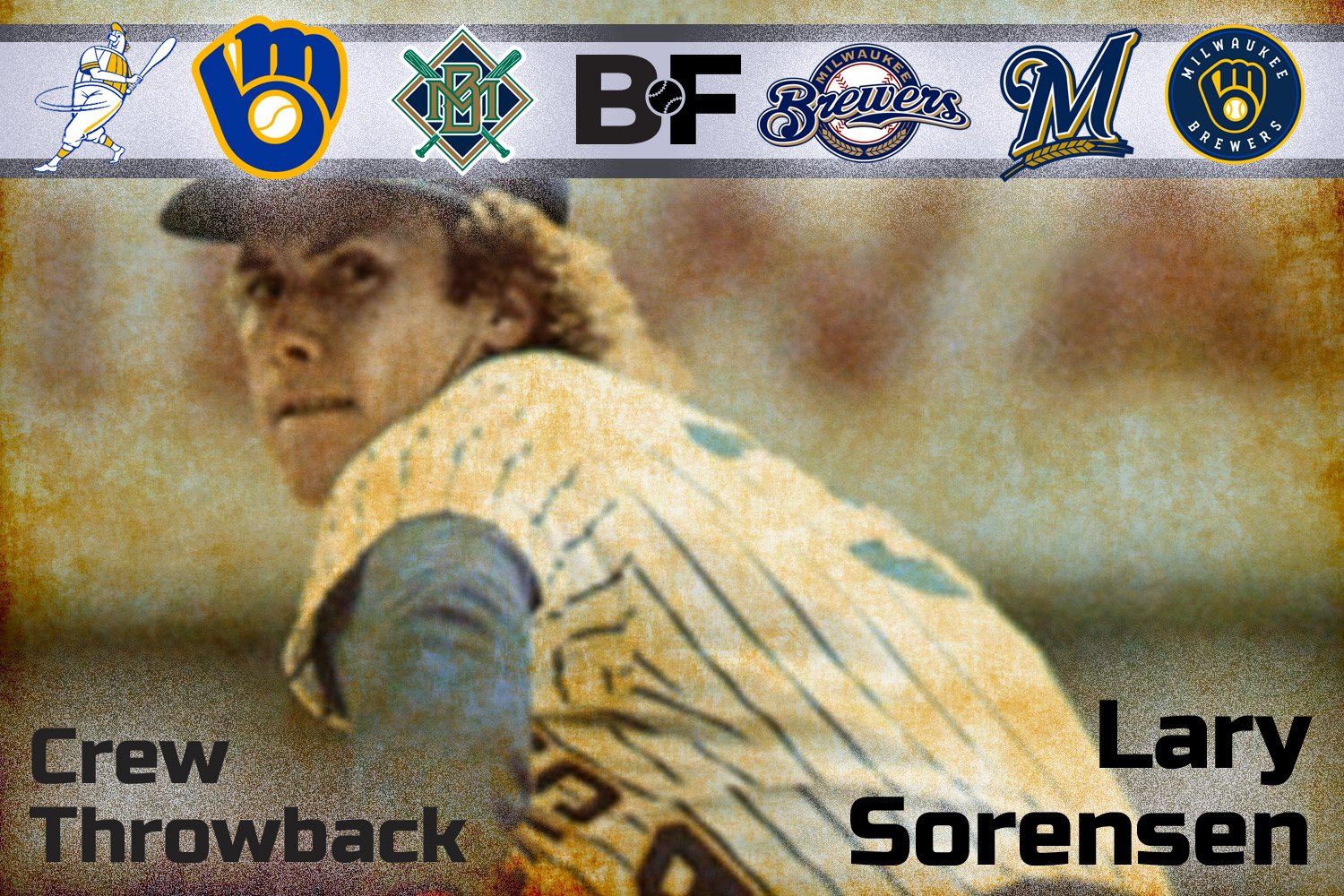 Lary Sorensen was born in Michigan in 1955. He attended the University of Michigan for college and was drafted by the Brewers in the 8th round in the 1975 draft; He rocketed through the Brewers' minor league system, needing only 45 games to reach the majors. From there, he became a rotation mainstay for four seasons. Sorensen was a sinkerball pitcher who rarely walked batters (for his career, his walk rate is an impressive 2.1 walks per 9 innings). He hated walking batters, and he said that walking a batter sometimes made him more upset than giving up a home run. He never struck out many batters either, inducing countless grounders throughout his career. Sorensen's rookie season was promising, but it was his sophomore campaign in 1978 that made people take notice. Sorensen was a workhorse, averaging roughly eight innings per start. Surprisingly, his 17 complete games did not lead the team that year - Mike Caldwell had 23. Named to the all-star team (his only appearance in the mid-season classic), Sorensen worked three shutout innings in the Midsummer Classic. While Sorensen appeared to be a star in the making, the workload would take its toll on his arm. He had decent seasons in 1979 and 1980 but was far less dominant than his 1978 campaign. His innings and effectiveness waned with each season. Sorensen was dealt to the St. Louis Cardinals after the 1980 season in the famed deal that brought Pete Vukovich, Ted Simmons, and Rollie Fingers to Milwaukee. Sorensen would have a solid (but injury-limited) year in St. Louis before being traded to Cleveland. By 1984, his career as a starting pitcher was almost over. He would bounce around the majors and minors until 1988 with limited success. He was done as a player at age 32. During his four years in Milwaukee, Sorensen won 52 games, averaged 213 innings pitched a season, and had a 3.72 ERA. He produced a solid 12.2 bWAR / 11.6 fWAR. After baseball, Sorensen got into broadcasting, working for ESPN and then the Detroit Tigers. He was praised for his quick wit and friendly nature. However, Sorensen won't be best remembered for his time on the diamond or in the booth. Instead, his life has been littered with drug and alcohol-related problems. The first incident occurred while he was still a player when he was one of 11 players fined for admitting to cocaine use during a drug trial in Pittsburgh. In 1992, he received a DUI - the first of seven in his life. In 1998, Sorensen was let go as a Tigers announcer due to substance abuse problems. Things continued to spiral downhill for Sorensen. In the 2000s, he served two prison terms related to his alcohol-related arrests. In 2008, after crashing his auto, his blood-alcohol level was a staggering .480 - a level that would kill most adults. He lost his job, freedom, and marriage to alcohol. In 2014, Sorensen landed a broadcasting job for Wake Forest baseball and then added football in 2017, which he continues to do. But more importantly, he got - and stayed - sober. He credits much of his recovery to his now-wife, Elaine. Before becoming a lawyer, Sorensen's son, Mark, pitched for Michigan State before spending four seasons (2008-12) in the Detroit Tigers minor league system. Please share your memories of former Brewer pitcher Lary Sorensen.
 -
Article: Crew Throwback: Mike Felder
Matt Breen replied to Matt Breen's topic in Brewer Fanatic Front Page News
Thank you. -
Article: Crew Throwback: Mike Felder
Matt Breen replied to Matt Breen's topic in Brewer Fanatic Front Page News
Thank you.

