Matt Breen
-
Posts
9,112 -
Joined
-
Last visited
-
Days Won
1
Content Type
Profiles
Forums
Blogs
Events
News
2026 Milwaukee Brewers Top Prospects Ranking
Milwaukee Brewers Videos
2022 Milwaukee Brewers Draft Picks
Milwaukee Brewers Free Agent & Trade Rumors, Notes, & Tidbits
Guides & Resources
2023 Milwaukee Brewers Draft Picks
2024 Milwaukee Brewers Draft Picks
The Milwaukee Brewers Players Project
2025 Milwaukee Brewers Draft Pick Tracker
2026 Milwaukee Brewers Draft Tracker: Picks & Bonuses
Store
Downloads
Gallery
Everything posted by Matt Breen
-
 Sometimes a player just looks like a Milwaukee Brewer. Mike Fetters was one of those guys. Image courtesy of Brewer Fanatic Mike Fetters was a stocky player with a goatee and mullet. He had some pitching quirks, including a narrow-eyed scowl. It all gave him the appearance of a bulldog - which was not an inaccurate description of Fetters - one of the best relievers for the franchise in the 1990s. Mike Fetters was born in 1964 in Van Nuys, California, but grew up in Hawaii. He attended Pepperdine University and was drafted by the California Angels in the 1st round (27th overall) of the 1986 draft. A big, right-handed pitcher, Fetters moved steadily through the minors as a starter. He displayed good strikeout rates, but he also walked too many batters. He got a one-game call to the majors in 1989, then spent most of 1990 and 1991 with the Angels, who used him primarily as a reliever. The results were mixed. Then, in December of 1991, the Angels traded Fetters and minor leaguer Glenn Carter to the Brewers for workhorse reliever Chuck Crim. The 27-year-old Fetters was moved to the bullpen full-time by Milwaukee and proceeded to have his finest season, throwing 62.2 innings with a 1.87 ERA. Two years later, Fetters was given the closer’s job and saved 17, 22, and 32 games between 1994 and 1996. Fetters landed on the DL early in 1997 and surrendered the closer’s role to Doug Jones that season. During the 1993-97 seasons, Fetters was a good, not a great, player. He walked a few too many batters and gave up a few too many hits. But still, he was a quality contributor to the team from the bullpen. After the 1997 season, the Brewers dealt Fetters Ben McDonald and Ron Villone to the Cleveland Indians for Marquis Grissom and Jeff Juden. The reason for the trade was that Fetters was due nearly $2.5M the next season, and with Doug Jones occupying the closer’s role, that was a bit expensive for the front office. Fetters’ 6-year stint with Milwaukee was - without question - the highlight of his career. Once out of Milwaukee, he bounced around the league for seven more years, playing for seven different teams. He had Tommy John surgery in 2003 and retired before the 2005 season. He was 39 years old. During his time in Milwaukee, Mike Fetters was a good reliever. He produced a 2.99 ERA over six years and tossed 334 innings. He walked 152 batters and struck out 245. His 79 career saves ranks sixth all-time for the Brewers, and his 32 saves in 1996 was a team record (it has been broken many times since). For his career, Fetters played in 16 different seasons for eight different teams. He appeared in 620 games, had 100 saves, won 31 games, lost 41, and had an ERA of 3.58. He never made an all-star game during his career. After his playing days, Fetters worked in radio and TV for the Arizona Diamondbacks and moved into coaching. He is currently the Diamondbacks bullpen coach. On the mound, Fetters was known for his head movement. Before pitching, he took a deep breath and quickly moved his head 90 degrees to the left. He claimed he did this because of the stress of pitching. He was also known for having a good sense of humor, making him popular with his teammates and the media. Please share your memories of former Brewer reliever Mike Fetters. View full article
 -
Mike Fetters, Milwaukee's Under-appreciated Closer of the 90s
Matt Breen posted an article in History
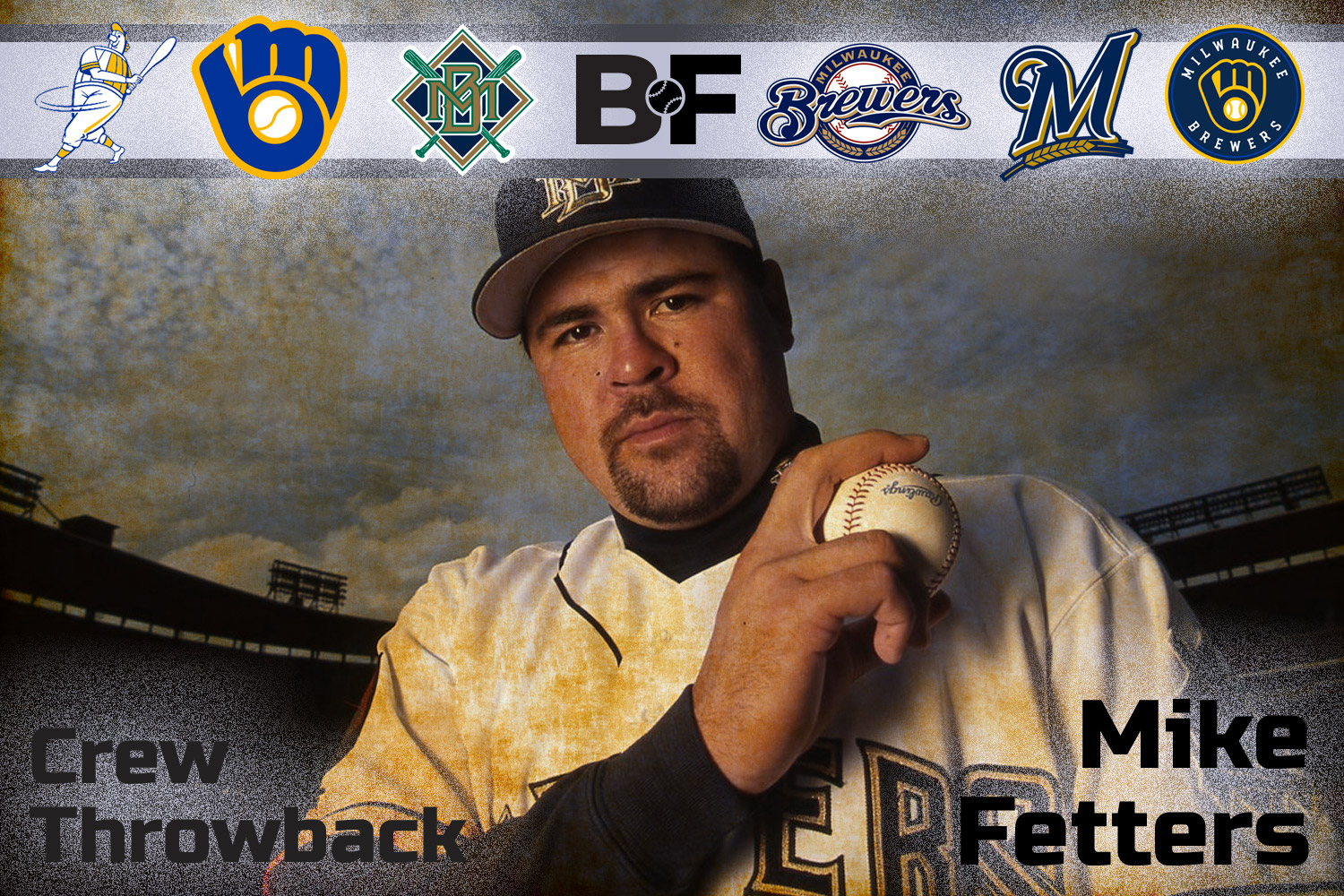 Mike Fetters was a stocky player with a goatee and mullet. He had some pitching quirks, including a narrow-eyed scowl. It all gave him the appearance of a bulldog - which was not an inaccurate description of Fetters - one of the best relievers for the franchise in the 1990s. Mike Fetters was born in 1964 in Van Nuys, California, but grew up in Hawaii. He attended Pepperdine University and was drafted by the California Angels in the 1st round (27th overall) of the 1986 draft. A big, right-handed pitcher, Fetters moved steadily through the minors as a starter. He displayed good strikeout rates, but he also walked too many batters. He got a one-game call to the majors in 1989, then spent most of 1990 and 1991 with the Angels, who used him primarily as a reliever. The results were mixed. Then, in December of 1991, the Angels traded Fetters and minor leaguer Glenn Carter to the Brewers for workhorse reliever Chuck Crim. The 27-year-old Fetters was moved to the bullpen full-time by Milwaukee and proceeded to have his finest season, throwing 62.2 innings with a 1.87 ERA. Two years later, Fetters was given the closer’s job and saved 17, 22, and 32 games between 1994 and 1996. Fetters landed on the DL early in 1997 and surrendered the closer’s role to Doug Jones that season. During the 1993-97 seasons, Fetters was a good, not a great, player. He walked a few too many batters and gave up a few too many hits. But still, he was a quality contributor to the team from the bullpen. After the 1997 season, the Brewers dealt Fetters Ben McDonald and Ron Villone to the Cleveland Indians for Marquis Grissom and Jeff Juden. The reason for the trade was that Fetters was due nearly $2.5M the next season, and with Doug Jones occupying the closer’s role, that was a bit expensive for the front office. Fetters’ 6-year stint with Milwaukee was - without question - the highlight of his career. Once out of Milwaukee, he bounced around the league for seven more years, playing for seven different teams. He had Tommy John surgery in 2003 and retired before the 2005 season. He was 39 years old. During his time in Milwaukee, Mike Fetters was a good reliever. He produced a 2.99 ERA over six years and tossed 334 innings. He walked 152 batters and struck out 245. His 79 career saves ranks sixth all-time for the Brewers, and his 32 saves in 1996 was a team record (it has been broken many times since). For his career, Fetters played in 16 different seasons for eight different teams. He appeared in 620 games, had 100 saves, won 31 games, lost 41, and had an ERA of 3.58. He never made an all-star game during his career. After his playing days, Fetters worked in radio and TV for the Arizona Diamondbacks and moved into coaching. He is currently the Diamondbacks bullpen coach. On the mound, Fetters was known for his head movement. Before pitching, he took a deep breath and quickly moved his head 90 degrees to the left. He claimed he did this because of the stress of pitching. He was also known for having a good sense of humor, making him popular with his teammates and the media. Please share your memories of former Brewer reliever Mike Fetters.
 -
I'm thinking we can still get something decent for Rodgers. A future #2 seems light. Maybe I'm wrong. If we can't get a #1 this year, then how about: 2023 2nd Round Pick 2023 3rd Round Pick WR Elijah Moore (I've said that I think he'd be a good addition. Jets were reportedly down a bit on him last year - and he requested a trade). 2024 3rd round pick (becomes a 2nd if the Jets make the playoffs next year) 2025 4th round pick (becomes a 3rd if Rodgers plays in 2024) Just an idea. I'm not a fan of adding WR Corey Davis due to his $10m+ salary. With Lazard joining the team, he seems redundant (and expensive). There's a chance he be cut at that price.
-
Packers supposedly holding out for a #1 pick from the Jets (and then some). https://www.profootballrumors.com/2023/03/packers-still-eyeing-first-round-pick-from-jets-for-aaron-rodgers
-
I think that last year the club didn't think Love was ready to take over. And let's face it - Rodgers was coming off two consecutive MVP seasons. You've got a Super Bowl in your sights. You don't mess with that if don't have to. Obviously it didn't work out - but stuff like that happens. You take your shots when you can.
-
It looks like an Aaron Rodgers bobblehead is flying that thing. I think I could do a better photoshop job. Although maybe they wanted it to look wonky.
-
In the end, I really don't care much about how all of this transpired (I care - just not that much). I just want my team - the Packers - to get something decent back in compensation from the Jets. I have no problem saying 'thanks' to Rodgers, and good luck (except for when you face Green Bay). He did a lot for the franchise, and I appreciate that. Now I want to get the team set up so we can go forward with Love (and hugs and kisses). So I'm excited for the draft.
-
I'll just be glad when everything is ironed out and we can move on. Personally, I get the feeling the club wanted to move from Rodgers. Maybe not right after the season - but at some point since then they came to that conclusion. Whatever. Because neither party seems to have the ability to communicate properly, now we have to endure a million stories about 'he said this' and 'they said that' and so forth and so on. It'll probably make both sides seem like idiots who refuse to just sit down and talk. I hope we can have a great 15 year run now of Jordan Love (and least one Super Bowl).
-
I believe we got a 5th for MVS, so that seems pretty comparable.
-
I'm guessing money plays a big part. I don't know what Waller makes - but it can't be cheap. The team will likely be short on cap room. I think if we deal Rogers our cap hit increases to around $40m. We can handle that - but adding big salaries probably won't be in the cards.
-
Garrett Wilson is a stud. 83 catches and 1100 yards as a rookie last season. Other guys I'm not so sure about.
-
Giants just acquired Darren Waller from the Raiders for the 3rd Round pick. Waller was a guy the Packers were interested in last year.
-
I don't know anything about Davis, but I would like Elijah Moore. The Jets were down on him last year. He'd be a nice fit for the slot. Of course, he'd be a nice slot receiver for the Jets - so who knows. I really liked him coming out of college two years ago. I guess it comes down to what the team thinks of him going forward.
-
Yeah, you'd think this is the case. Just hashing out details. Only other thing I can think of is Rodgers is having last minute doubts.
-
I think the big thing is that he's had months to figure this out. I'm guessing the packers and jets would have loved to have figured this out ages ago. But you never know. Maybe it's nothing to do with Rodgers. Perhaps most of it is set, and there are some final tweaks to be done before announcing whatever the decision is.
-
Rodgers is sitting on a hill somewhere thinking, ‘The jets? Really? Is that it? The Jets? Hmmm….. Maybe I should call the packer front office and chat about coming back. Just to see what they say.’
-
Time for the Packers to announce they are trading Jordan Love for a 4th round pick, and Rodgers will be back.
-
This is so silly. Poop or get off the pot.
-
Jim Gantner Was a Fixture of Milwaukee Baseball for 17 Seasons
Matt Breen posted an article in History
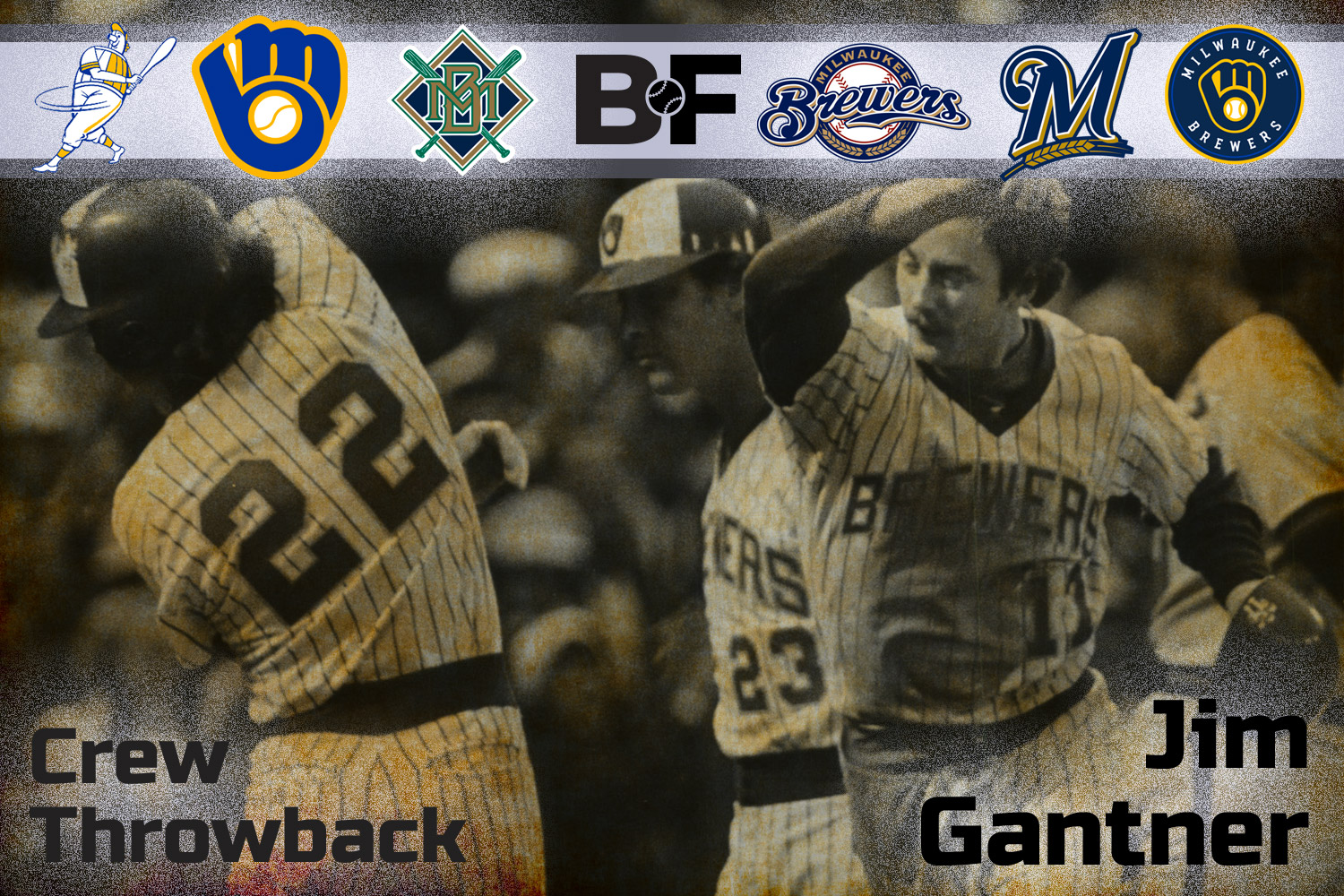 Jim Gantner was born in Fond du Lac, Wisconsin, in 1953 and grew up in nearby Eden. He played two seasons at UW-Oshkosh before being selected by the Brewers in the 12th round of the 1974 draft. He moved steadily through the minor league system, playing primarily shortstop and a little 3B. Gantner was not a heralded prospect, showing a solid hit tool and above-average speed (but by no means great speed) - but modest power. The Brewers called up Gantner from AA ball in 1976, giving him a 26-game tryout. That season, he pinch-ran for Hank Aaron in the future hall-of-famer’s final major league game on October 3, 1976. After spending most of 1977 at AAA, Gantner stuck with the club the following year and remained on the roster for 15 years. Initially a utility type playing mostly 2B and 3B, Gantner eventually settled in at 2B for much of his career. He became a regular in 1980 - at age 27 - and provided solid, if unspectacular, play for the next decade. Gantner became the scrappy guy who did the little things and complimented the big bats of the era - Yount, Molitor, Cooper, Thomas, Oglivie, etc. He was not that athletic and lacked standout skills, but he got the job done. Gumby became a vital cog in the high-scoring Brewer machine of the era. He was a remarkably consistent player - generally hitting between about .270-.290 almost every year of his career. He hit over .280 seven times. His power was limited - 11 HRs was his top long ball season - he wasn’t a good base stealer, and he didn’t walk much. But for all that, he put the ball in play - rarely striking out (the highest K number in his career was 51), and - as noted - hitting for a solid batting average. Even as Gantner got older, he still hit for a decent average, even as his modest power diminished even further. Gantner's last season was in 1992. He had played part of the year with a labrum tear and torn rotator cuff. He considered playing longer, but injuries wouldn't allow it. He officially retired in 1994, having played parts of 17 years with Milwaukee. Those 17 seasons with the Brewers - and no other team - ranks him 38th on the list of players to have played their entire career for one club. Robin Yount’s 20 years with the franchise is the Brewer record. Gantner’s best season came in 1983 when he hit .282 with career highs in HR (11), RBI (74), and OPS (.730). For his career, he hit .274 and had an OPS of .671. They weren't great numbers but were not bad for a middle infielder of the era. Also, he was generally an above-average defender, which brought value to his overall game. Due to Gantner's longevity, his name is all over the Brewer record books. Baseball-Reference has him at 22.4 WAR (8th all-time), and his 9.9 defensive WAR is the best for any Brewer career. Other numbers: 1801 games played (3rd all-time), 6189 ABs (4th), 726 runs (5th), 1696 hits (5th), 262 doubles (6th), 38 triples (5th), 568 RBI (9th), 137 SB (5th), 52 HBP (6th), 106 sacrifice hits (#1), 52 sacrifice flies (5th). He also has the 3rd lowest strikeout rate in Brewers' history. Overall, Gantner was a classic overachiever who succeeded through hard work and playing an overall solid game. He was always a positive to the team - but rarely was he anything more than good. But that allowed him to stay around and play in the big leagues for a long time. Fans loved Gartner’s hard play - not to mention his Wisconsin roots. He was an important part of the great Brewer teams of the early 1980s and helped the team reach the World Series for the only time in history (he hit .333 in the fall classic). Gantner was inducted into the UW-Oshkosh Titan Hall of Fame in 1984. He was also inducted into the Wisconsin Sports Hall of Fame in 2005 and is a member of the Brewers Wall of Honor and Walk of Fame. After baseball, Gantner took part in various business ventures and became a coach. He was the Brewers first base coach in 1996-97 and managed the Wisconsin Woodchucks in the Northwoods League in 2007. He moved back to Eden in 2008, where he became the part owner of a pub - Scuds Buds. For years he served as a part-time coach at Brewer home games and participated in clinics and fantasy camps. Please share your memories of former Brewer Jim Gantner.
 -
A formula to be a beloved part of Brewer history is to a) be born and raised in Wisconsin, b) be a grinding, gritty, battling overachiever, and c) be part of some of the best teams in franchise history. Add all that together, and you get Jim “Gumby” Gantner. Image courtesy of © Milwaukee Journal Sentinel via Imagn Content Services, LLC Jim Gantner was born in Fond du Lac, Wisconsin, in 1953 and grew up in nearby Eden. He played two seasons at UW-Oshkosh before being selected by the Brewers in the 12th round of the 1974 draft. He moved steadily through the minor league system, playing primarily shortstop and a little 3B. Gantner was not a heralded prospect, showing a solid hit tool and above-average speed (but by no means great speed) - but modest power. The Brewers called up Gantner from AA ball in 1976, giving him a 26-game tryout. That season, he pinch-ran for Hank Aaron in the future hall-of-famer’s final major league game on October 3, 1976. After spending most of 1977 at AAA, Gantner stuck with the club the following year and remained on the roster for 15 years. Initially a utility type playing mostly 2B and 3B, Gantner eventually settled in at 2B for much of his career. He became a regular in 1980 - at age 27 - and provided solid, if unspectacular, play for the next decade. Gantner became the scrappy guy who did the little things and complimented the big bats of the era - Yount, Molitor, Cooper, Thomas, Oglivie, etc. He was not that athletic and lacked standout skills, but he got the job done. Gumby became a vital cog in the high-scoring Brewer machine of the era. He was a remarkably consistent player - generally hitting between about .270-.290 almost every year of his career. He hit over .280 seven times. His power was limited - 11 HRs was his top long ball season - he wasn’t a good base stealer, and he didn’t walk much. But for all that, he put the ball in play - rarely striking out (the highest K number in his career was 51), and - as noted - hitting for a solid batting average. Even as Gantner got older, he still hit for a decent average, even as his modest power diminished even further. Gantner's last season was in 1992. He had played part of the year with a labrum tear and torn rotator cuff. He considered playing longer, but injuries wouldn't allow it. He officially retired in 1994, having played parts of 17 years with Milwaukee. Those 17 seasons with the Brewers - and no other team - ranks him 38th on the list of players to have played their entire career for one club. Robin Yount’s 20 years with the franchise is the Brewer record. Gantner’s best season came in 1983 when he hit .282 with career highs in HR (11), RBI (74), and OPS (.730). For his career, he hit .274 and had an OPS of .671. They weren't great numbers but were not bad for a middle infielder of the era. Also, he was generally an above-average defender, which brought value to his overall game. Due to Gantner's longevity, his name is all over the Brewer record books. Baseball-Reference has him at 22.4 WAR (8th all-time), and his 9.9 defensive WAR is the best for any Brewer career. Other numbers: 1801 games played (3rd all-time), 6189 ABs (4th), 726 runs (5th), 1696 hits (5th), 262 doubles (6th), 38 triples (5th), 568 RBI (9th), 137 SB (5th), 52 HBP (6th), 106 sacrifice hits (#1), 52 sacrifice flies (5th). He also has the 3rd lowest strikeout rate in Brewers' history. Overall, Gantner was a classic overachiever who succeeded through hard work and playing an overall solid game. He was always a positive to the team - but rarely was he anything more than good. But that allowed him to stay around and play in the big leagues for a long time. Fans loved Gartner’s hard play - not to mention his Wisconsin roots. He was an important part of the great Brewer teams of the early 1980s and helped the team reach the World Series for the only time in history (he hit .333 in the fall classic). Gantner was inducted into the UW-Oshkosh Titan Hall of Fame in 1984. He was also inducted into the Wisconsin Sports Hall of Fame in 2005 and is a member of the Brewers Wall of Honor and Walk of Fame. After baseball, Gantner took part in various business ventures and became a coach. He was the Brewers first base coach in 1996-97 and managed the Wisconsin Woodchucks in the Northwoods League in 2007. He moved back to Eden in 2008, where he became the part owner of a pub - Scuds Buds. For years he served as a part-time coach at Brewer home games and participated in clinics and fantasy camps. Please share your memories of former Brewer Jim Gantner. View full article
-
https://www.theonion.com/aaron-rodgers-reflects-on-life-choices-after-jets-emerg-1850213899
-
This would be pretty good if we can't get the 1st. I'll add this: Jets get: Rodgers Packers #1 pick (15th) Packers get: Jets #1 pick (13th) Jets #2 pick (43rd) Jets #2 pick in 2024 (upgrades to #1 depending on Rodgers' playing beyond this year) WR Elijah Moore Just a thought. Moore could compete for our slot receiver role this year.
-
It certainly seems like something is going to happen here. Neither the Packers or Rodgers is denying anything. Regarding compensation - I'd love the 1st round pick from the Jets. Some speculate it won't be that good. But the Jets are in a tough spot. They don't want the Packers walking away and talking to other teams. They need to seal the deal before anything like that happens.
-
I was thinking about this as well. But there's enough talent to - potentially - do well with Love at the helm. If we reboot, we should move on from guys (such as Bakhtiari) and take as many cap hits as possible this season. But whatever. The front office knows the personnel better than I do. It will be interesting what happens.
-
Dane Brugler of the Athletic had Branch coming to the Packers with the 15th pick. He said that many will be will be hung up on his 4.58 40 time, but notes he was outstanding during positional drills. And he had 'stellar' meetings. One of the teams he met with was the Packers. Brugler also notes that his versatility would be a great fit in Green Bay’s scheme.