


Brewers Video
After departing his last start for the Brewers on April 30 with his fastballs averaging 85.4 miles per hour, Brandon Woodruff faced another round of questions regarding his future—not just about his health, but what kind of pitcher he would be when he was ready to return to a big-league mound.
The first question faded away once imaging revealed that Woodruff avoided a serious injury. However, he and the Brewers played things slowly with his recovery, and there were hints along the way that he was preparing to adapt, if necessary, to changes in his stuff. In his first rehab start in the Arizona Complex League on June 9, Woodruff used his arsenal differently and tested a lower arm slot, which seemed to affect the movement of his fastballs.
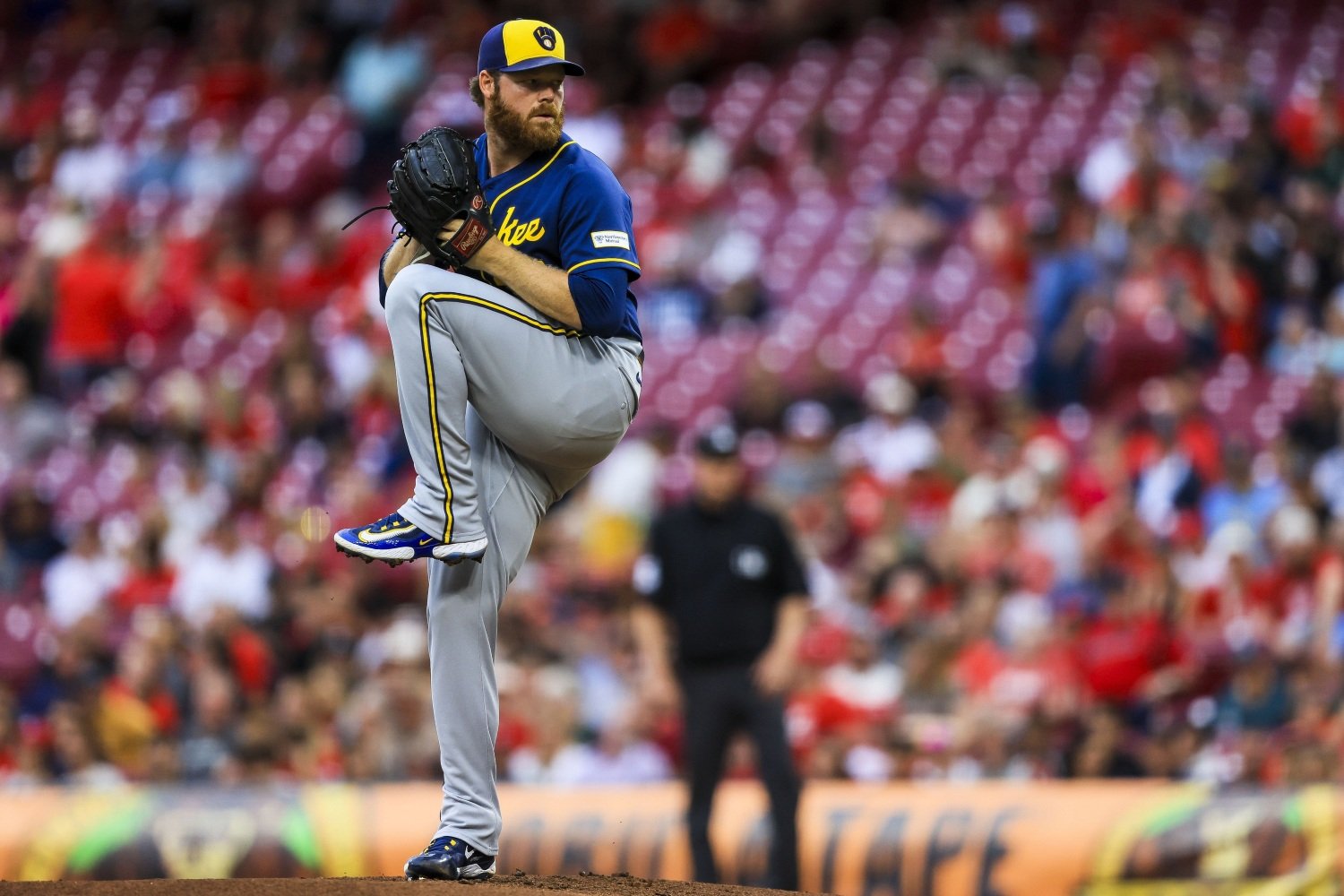
In his first start off the injured list in Cincinnati on Monday night, he took a step toward putting those concerns to rest. Woodruff tossed six shutout innings with 10 strikeouts and did not allow his lone baserunner until a sixth-inning single. More importantly, in nearly every process-based sense—velocity, movement, and control—he was in his usual post-surgery form. That was the version that pitched to a 3.20 ERA, 2.20 xERA, and 3.17 FIP last season.
“He looked like Big Woo,” said Joey Ortiz, who broke a scoreless tie in the 10th inning with a sacrifice fly in an eventual 2-1 Milwaukee win. “He attacks the zone, attacks hitters, and he gets outs.”
“Nobody’s shocked,” manager Pat Murphy said. “Just because that’s ‘Woo,’ and he takes his craft seriously.”
It was an inauspicious start. Woodruff’s four-seam fastball averaged just 89.5 mph in his first inning, while his two-seamer averaged 90.5. He fell behind 3-0 to the first two hitters he faced. He was battling his mechanics and said he briefly considered pitching from the stretch with the bases empty to make his delivery more direct down the mound to home plate.
“To be honest, it took me a couple of innings to find it there,” Woodruff said.
The control improved, though, and so did the velocity. In the third inning, Woodruff started averaging over 92 mph, maxing out at 94.9 mph in the sixth. By the end of the night, his overall average fastball velocity of 91.9 was barely below his season average of 92.2. His stuff was moving like it always had, if not slightly better. After his four-seamer had less backspin carry in that ACL start, it averaged 18 inches of induced vertical break, matching his season average.
“I’ve always been a slow starter, but in the past, before surgery, it’s more of the 93, 94, and then it goes up. Now, it’s a little less than that, and that’s okay,” he said. “I just try to put the ball in good spots, and the hitter tells me everything.”
The hitters were telling Woodruff to keep doing what he did before his hiatus: pound the strike zone with fastballs. As he did last season, he leaned heavily on his four-seamer and two-seamer, throwing one or the other for 61 of his 79 pitches. He expanded above the strike zone in putaway counts, but otherwise threw many of those fastballs right over the heart of the plate.

“He commands the baseball, and he challenges them to hit his heater,” Murphy said.
The Reds, like most teams facing the good version of Woodruff, were often late and underneath the heaters. They whiffed on 24.2% of swings against the four-seamer and two-seamer. There was some hard contact early, but five of the eight balls in play against those fastballs were hit with a launch angle above 30°, so they were hit high enough to be routine flyouts.
“If I’m seeing guys, if they’re late, whether it’s 90, 91, it still plays, and I try to treat it that way,” Woodruff said.
Now he faces the challenge of staying healthy for a prolonged stretch, which will take the rest of the season to prove. But for now, the fact that Woodruff still looks like himself is a positive development for him and the Brewers. Not only does it reinstate a stabilizing force near the back of the rotation, but it could also bolster the bullpen by sending Shane Drohan, Robert Gasser, or eventually Coleman Crow—each of whom has flashed abilities to be capable starting pitchers—back to multi-inning relief roles.
“I’m really proud of him and what he did for the club,” Murphy said. “Because the leadership he shows doing that, it’s pretty special.”
Do you approve of the job the Brewers' front office is doing?

Follow Brewer Fanatic For Milwaukee Brewers News & Analysis



-
 1
1


Recommended Comments
Create an account or sign in to comment
You need to be a member in order to leave a comment
Create an account
Sign up for a new account in our community. It's easy!
Register a new accountSign in
Already have an account? Sign in here.
Sign In Now