


Brewers Video
Four times, this year, Brewers batters have been called for pitch timer violations. They've given up a strike four times, which is right around the middle of the pack for the league. Three teams have gone the whole year, so far, without a batter being called for a timer violation, so on one level, the Crew are unremarkable.
Here's the thing, though: they're not. There is something unusual and valuable about the way the Crew approaches plate appearances, in terms of playing under the clock of the modern game. Of the four timer violations called on Milwaukee batters, three—one each by Caleb Durbin and Isaac Collins in June, and another by Jake Bauers last week—came before the first pitch of at-bats. Durbin and Collins were coming up right behind players who had gotten big hits, and they were really just letting the energy of the play and the dugout resettle before making ready for the pitch. Bauers was leading off an inning in Texas last Wednesday, when he was called for not engaging with the pitcher in a timely manner. The only other instance came in early April, when Joey Ortiz spent too long pondering a bunt sign on a 2-0 count.
Overall, the Brewers are much more likely to push the opposing pitcher out of their comfort zone, in the opposite direction. With no runners on base, the Crew have the second-fastest average pitch tempo by batters in the league, trailing only the alacrity of the White Sox. With runners on, they're just sixth-fastest on average, but they're faster than the White Sox in that split. Furthermore, only three teams—Washington, Detroit, and quasi-Atlanta—see a higher percentage of their pitches within 15 seconds of the previous one with runners on base.
This might not sound like something that matters, or even something that a batter can substantially influence, but it is. The hitter has to be in the box and attentive to the pitcher by the time the clock reads :08, but of course, they have the option to do so sooner. The pitcher, meanwhile, can't pitch without making eye contact (or, at least, ensuring that the batter is ready), so there's a real sense in which the batter controls the tempo of the at-bat.
Of the 345 batters who qualify for the leaderboard in pitch tempo at Baseball Savant, eight Brewers rank in the top 69 for fastest pace with no runners on. That covers most of their main contributors, including Brice Turang, Sal Frelick, Jackson Chourio, Joey Ortiz, William Contreras and Andrew Vaughn. Garrett Mitchell, Eric Haase and Andruw Monasterio have all played too little to qualify for that leaderboard, but all of them would also crowd in near the top.
It's something they even preach to newcomers. When Danny Jansen was traded from the Rays to the Brewers, he went from the 23rd percentile in average pace to the 72nd. Only 27.8% of his pitches with the bases empty came within 15 seconds of the previous one during his Tampa tenure, but with Milwaukee, that number has jumped to 37.5%. Once it's your turn, the Brewers want you in the box and forcing the issue.
What effect does this have? Well, firstly, consider this: when Brewers batters are ahead in the count, opposing pitchers throw 35.3% of their pitches in the heart of the zone, according to Statcast. That's the highest rate in the league. As a result, no team in baseball can match the 266 hits the Brewers have collected on exactly that kind of pitch: a meatball, when they're already ahead. The Crew's patient approach at the plate forces pitchers to work from a disadvantage, and then their insistence on being ready for the next pitch almost instantly pressures the hurler into mistakes.
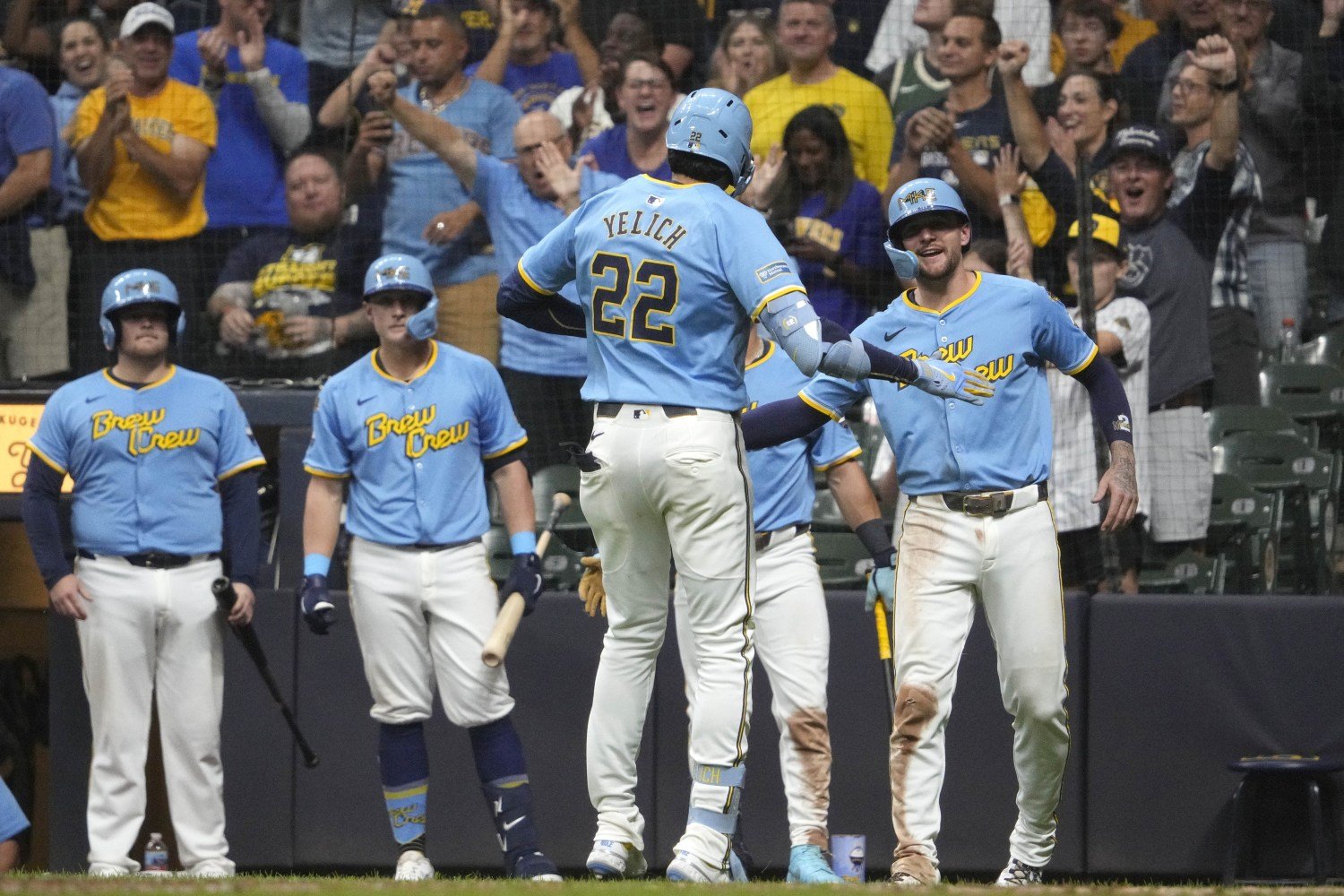
That's within an at-bat. There's also the effect across at-bats, especially within innings. Countless times, this season, the situation has seemed to snowball for opponents, and the Brewers don't just push across a run; they get three. In fact, they've scored at least four runs in an inning 52 times, leading the league. They don't just string together positive outcomes. They rush them at you. There's less time for a pitcher to collect themselves, and less time for them to recover from the previous offering, and less time for the coaching staff to get a reliever warm. Things get out of control.
Normally, the compensation for that comes from the other team playing more crisp defense. You've heard, countless times over the years, how a pitcher who works quickly keeps their defense alert and ready. However, as we've discussed several times over the last two years, that compensation never really comes for poor opponents with this team. The Brewers have team speed, and they bunt and they run the bases aggressively, and they use the whole field and make you defend it. Making the pitcher work quickly doesn't cannibalize that edge for them, because they're in control of the pace. It puts defenders on their heels, instead. That's why they've reached on 40 errors this year, to boot.
We're into the realm of subtleties so small it's hard to believe they're intentional, but look at the difference it made when Jansen arrived in Milwaukee. Vaughn didn't even need that nod; they picked him up from the only offense more dedicated to rushing opponents than they are. The Brewers are, to borrow and (wistfully) sanitize Pat Murphy's mantra a bit, friggin' relentless. They're running to the bat racks, and from there to the on-deck circle, and then to the batter's box, and then around the bases. You'd better keep up. (You can't keep up.)
Do you approve of the job Pat Murphy is doing as Brewers manager?

Follow Brewer Fanatic For Milwaukee Brewers News & Analysis



-
 2
2


Recommended Comments
Create an account or sign in to comment
You need to be a member in order to leave a comment
Create an account
Sign up for a new account in our community. It's easy!
Register a new accountSign in
Already have an account? Sign in here.
Sign In Now