


Brewers Video
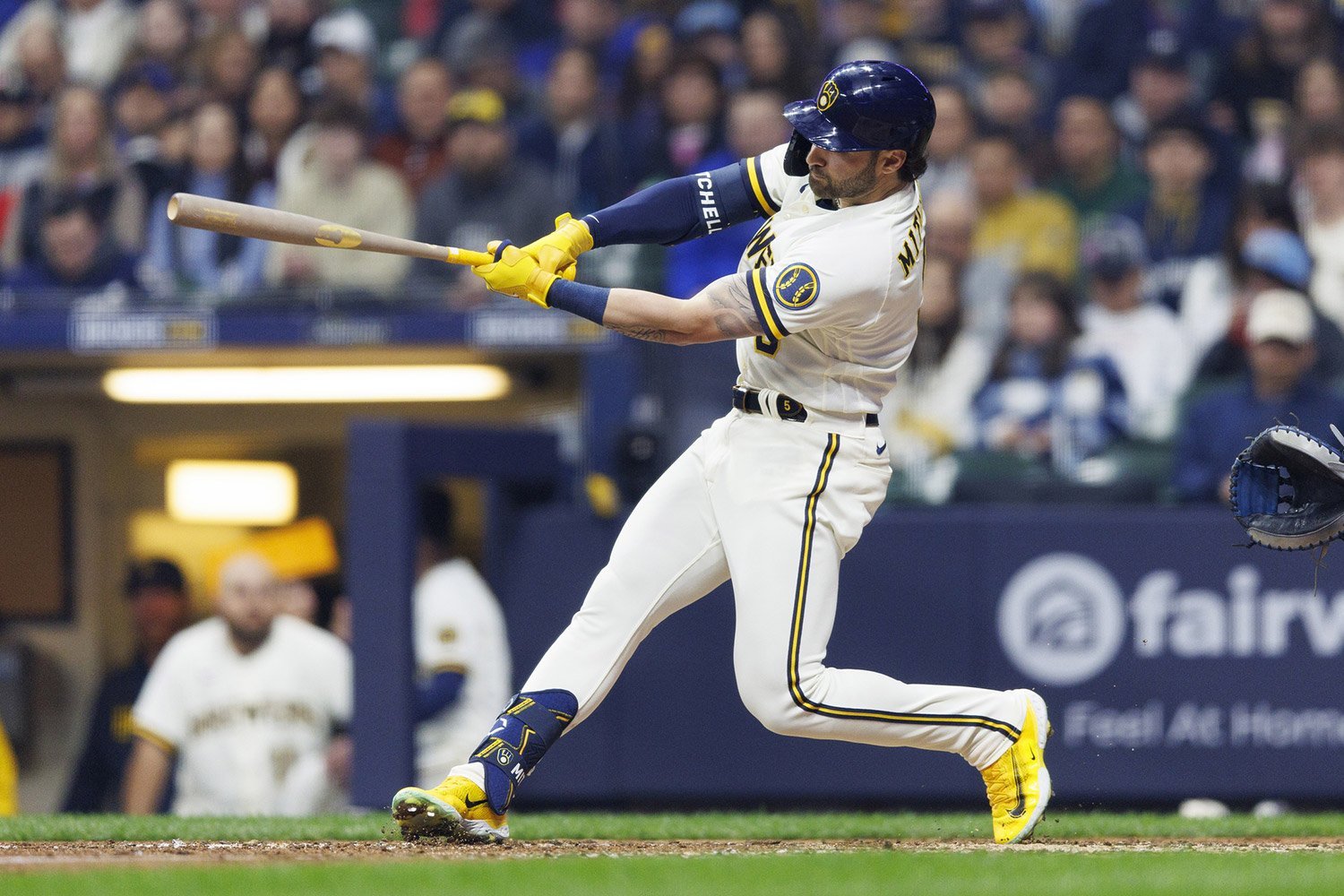
Garrett Mitchell recognized that his issues with the high fastball throughout his career would be unsustainable for future seasons, and went to work at Driveline in the offseason in an effort to adjust his swing and make it easier for him to access this particular part of the zone before it became his downfall.
Mitchell's entire success came from pitchers throwing him breaking balls and seeing them get punished in zone with unerring accuracy, as we saw in the 2024 playoffs. But it was only a matter of time before they just spammed those upper-third fastballs where his whiff rates and strikeout rates looked something like this in 2024 (apologies, I can't isolate to just fastballs, but that would tell a similar story):

The big reason for Mitchell's struggles is how far behind the pitch he was. Baseball savant's new swing metrics allow us to see how Mitchell's swings against high fastballs looked when he whiffed, fouled, or put the ball in play, and it's shown an interesting trend despite a small sample size.

These are the raw numbers for 2024/2025, and we can immediately see a pattern in the attack direction. Mitchell's average attack direction is 4°, and we can see he's managing to get to this on the balls he hits in play. On those that he fouls, and even more extreme on those he whiffs on however, the attack direction is extreme. Due to the natural arc of the swing, it's easily explained that Mitchell is incredibly late to the pitch and finds himself unable to achieve a short bat path towards the top of the zone.
Garrett Mitchell's swing length is only slightly above average, which suggests a different issue altogether going on here. His swing decisions were absolutely elite in 2024, taking an approach to lay off anything that looked like a high fastball and attempting to sit on those breaking pitches. He made his swing decisions late, resulting in an 11% walk rate and 17.6% chase rate, both elite numbers in the 90th percentile or above for 2024, despite big swing and miss concerns. His patient approach, however, was likely to come undone if pitchers just pounded the strike zone with those upper third pitches.

So, Mitchell went to work and we can see the fruits of that in the results above. Between 2024 and 2025 in each of the above pitch locations on fastballs, Mitchell's "swing path tilt" (demonstrated in the photo above), the angle at which his shoulders and hips tilt when making contact, has flattened out to make it easier to reach fastballs at the top of the strike zone. Coming flatter through the zone rather than his previous technique of dipping underneath and coming up on the ball allowed him to be shorter to the pitch, and it's borne interesting results so far. It's also exactly what he worked on at Driveline:
The swing and miss rates still aren't great, but they're significantly better, especially on the up-and-in third of the strike zone, which, in the small sample size we have, has dropped from 60% in 2024 to just 10% whiff rates in 2025. He's also achieved (and again, remember this isn't a lot of swings as Mitchell tends to take pitches in the upper third of the zone early in counts) a 100% ideal attack angle across every swing in the upper third of the zone so far in 2025.
His overall production against fastballs has improved too, with an expected batting average/expected slugging of .274/.417, an average exit velocity of 91.7 mph alongside improved launch angles, xWOBA and whiff rates. The issue is a significant drop off in his contact quality against breaking pitches where he's whiffing more often and hasn't found any slugging power whatsoever in 2025:

So, let's take a look into his swings against these pitches, and the answer might again be his swing tilt. It's the method Mitchell uses to adjust his swing and allow the bat to cover as much of the zone as possible, but it's flattened out this season as a result of the changes made to make more contact on the high fastball. Even a few degrees can make a big difference here, and although it won't stop him punishing breaking pitches, it will take some time to adjust in terms of timing.

When we isolate it down to breaking pitches, the swing path tilt has reduced by 3° on competitive swings against breaking pitches, but his overall swing speed and attack angles are fairly similar. This suggests that, if Mitchell can find the barrel of the bat more often, then the damage potential is still there. The contact point is different, finding himself catching the ball less out in front of his center of mass, but this indicates a timing issue more than anything
The other noticeable change in Mitchell's swing is, like Sal Frelick and Brice Turang, he's narrowed his stance, at least initially. His leg kick and stride after that point is longer by almost a foot. meaning that, although the initial set up is narrower, he actually gets in the same position which might create a little more pressure on the timing element of getting that front foot down. In doing so, it's completely natural for Mitchell to have some timing issues affect his contact point, especially as he'll have spent the majority of the offseason focusing purely on that high fastball, to solid success so far.
2024 Stance (Black is the initial stance, red is the stance at the point of contact)

2025 Stance

Once he finds the timing that allows him to uncork on those breaking balls, all the elements are still there to do damage as he did in 2024. He's got the bat speed, he's finding good attack angles, and is just catching them a little bit late, which could largely be as a result of the longer leg kick. It's purely timing, but Mitchell's swing is showing that if he can just stay on the field and find some rhythm, he could be a major force in the second half of 2025.





Recommended Comments
Create an account or sign in to comment
You need to be a member in order to leave a comment
Create an account
Sign up for a new account in our community. It's easy!
Register a new accountSign in
Already have an account? Sign in here.
Sign In Now