


Brewers Video
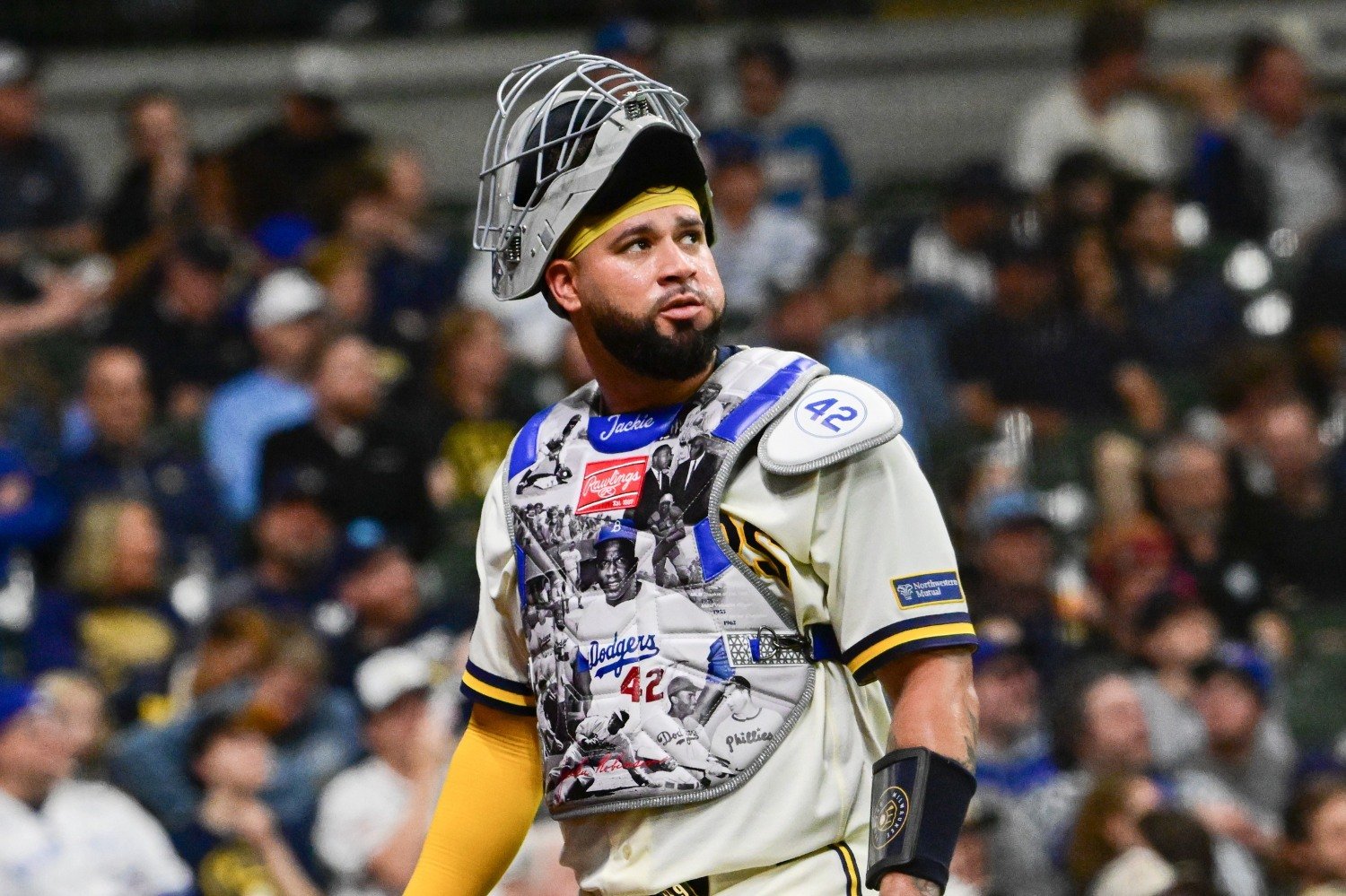
Gary Sánchez has challenged 14 called strikes this season. No other batter in the majors has challenged more than 11. Sánchez should probably challenge less often, based solely on the fact that he's only 6-for-14. He thinks he knows the outside edge of the strike zone, but he's wrong. Thirteen of the 14 challenges he's mounted came on pitches on that side of the zone. Sánchez, an extreme pull hitter trying to get a pitch up and on the inner half to generate damage, wants to stop pitchers from stealing strikes on him in a sector where he can't do much, anyway. That makes sense in a vacuum, but he's cost the Brewers one of their challenges several times.

In fact, Sánchez has challenged 17.7% of all called strikes against him this season. That number is an outlier for any group; only Josh Naylor and Mark Vientos have higher challenge rates. However, it's especially notable given the subgroup to which Sánchez belongs, within the broader population of hitters: catchers.
For as long as there has been a strike zone, catchers have tried to shape and expand it, and that has always been (in part) a political endeavor. Yes, there are vital physical aspects to pitch-framing, but catchers also work umpires with conversations between pitches and the long, slow development of relationships. That's not to say that umpires consciously favor catchers they like; it's just a reflection of reality. Good communication with the ump helps them understand what you're trying to do, and what you're not trying to do (i.e., bamboozle them). Listen to any color commentator over the last 40 years (many of them former catchers!), and you'll hear talk about a catcher being more deferential than most batters when they're at the plate. Why? Because they want that call for their pitcher, too.
It shouldn't be a surprise, then, that catchers challenge pitches less often than any other position group under the ABS system. It's a noticeable gap, too. Here's the share of all initially called strikes challenged by hitters, split by defensive position.
- Catcher: 2.65%
- First Base: 4.54%
- Second Base: 3.34%
- Shortstop: 4.16%
- Third Base: 3.63%
- Outfield: 3.87%
- Designated Hitter: 4.19%
It's not just blather from old, leathery baseball men anymore. Here is concrete evidence that when catchers take their turns in the batter's box, they're still politicking for their pitchers. They might see the ball and understand the edges of the zone a bit better than some of their counterparts at other positions, too, but inarguably, catchers are trading some potential offensive value at the margins for the odd call when they're working the zone themselves, behind the dish.
Even Sánchez feels this pressure. Of those 14 challenges, three came when he was playing first base, and another nine came on days when he was serving as the Brewers' DH. Only twice has he challenged a call on a day when he was actually catching, and one of those came on a pitch that missed the zone by the width of a baseball—one egregious enough that Sánchez dared not even dream of getting the call himself on a consistent basis.
That's a fascinating insight into the nature of this dynamic. If a player sometimes catches but is serving in a different capacity that day, what drives them to be more challenge-prone? Is it a greater sense of pressure to deliver value offensively? Is the understanding between catchers and umps deep and tangled enough that a batter-catcher knows their zone at the plate is truly tied to the one they'll get behind it, in a way that doesn't transfer to the same player on days when they're not the backstop? Either way, it's interesting that Sánchez is opting out of any efforts at diplomacy—but only when he's not the catcher for that day.
Unwritten though they might be, rules are rules, and there are real, unwritten rules growing around ABS. For one, catchers have agreed not to waste the ump's time or challenge their acuity as eagerly when they're in the batter's box, instead of the catcher's box. Sánchez is defying those frameworks, but even he can't flout them outright—at least, not when it's his turn to catch.






Recommended Comments
Create an account or sign in to comment
You need to be a member in order to leave a comment
Create an account
Sign up for a new account in our community. It's easy!
Register a new accountSign in
Already have an account? Sign in here.
Sign In Now