


Brewers Video
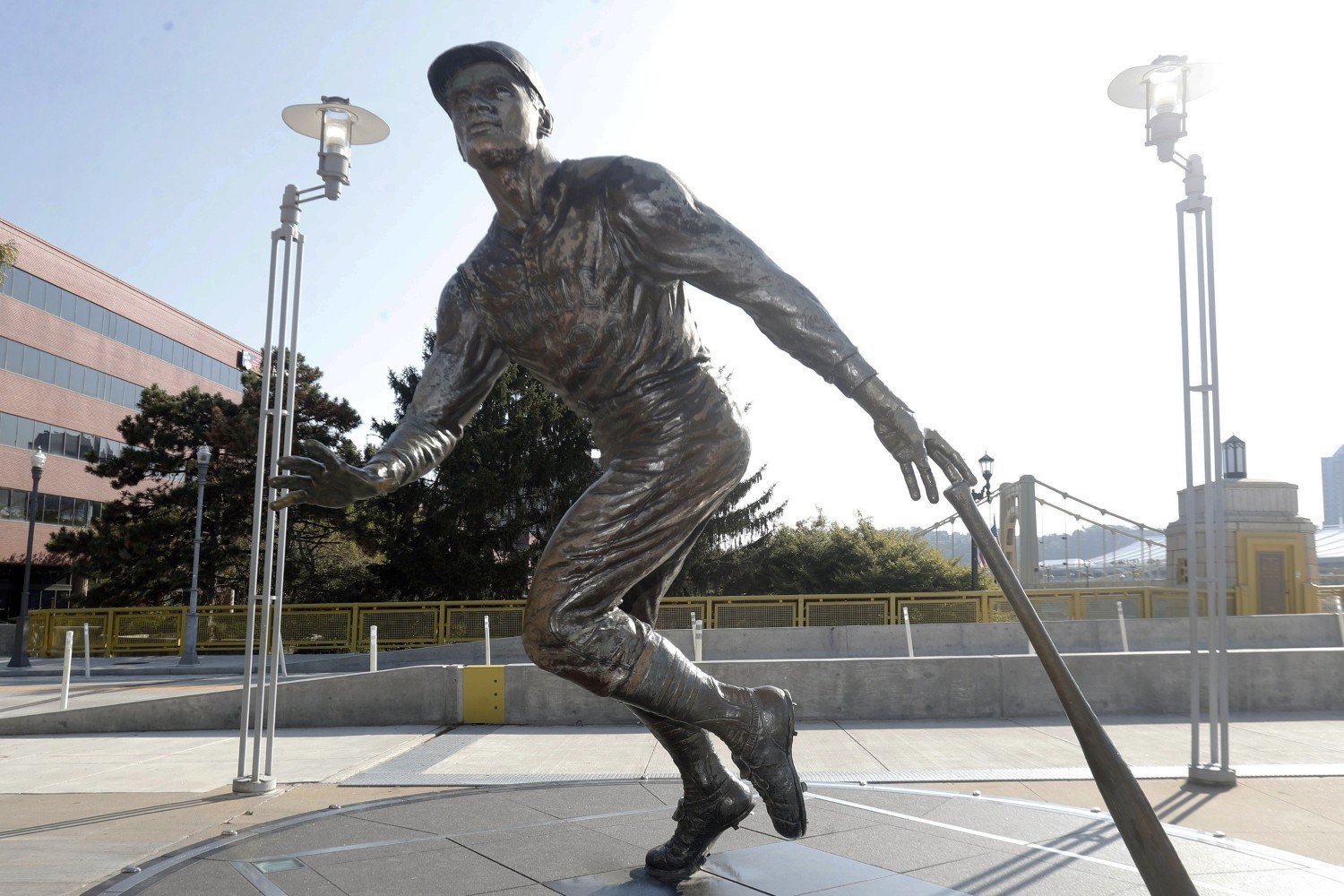
The nominees for the 2025 Roberto Clemente Award were announced Monday, as each of the 30 MLB teams selected the player they believe best embodies the league's values of character, community involvement, philanthropy and positive contributions on and off the field. The award is, in effect, the league's Man of the Year trophy, named after a player who had an enormous, transformative impact on the game—one very much akin to Robinson's.
Though not the first Black player from Latin America to play in the majors, Clemente was very much the first star from that demographic, and like Robinson, he was unafraid to speak his mind or to back his thoughts and words with action. He endured slightly less focused racial animus than did Robinson, coming along more than half a decade into the integration of the National and American Leagues, but he had to deal with different prejudices, too—of culture and language, as well as skin color. Clemente was mercurial, but deeply dedicated to that which he believed in.
He died in a plane crash, after he was so irrepressible in collecting and delivering relief supplies to an earthquake-stricken Nicaragua that he chartered a plane that wasn't airworthy and couldn't handle the load he'd amassed. That made Clemente baseball's closest facsimile of a saint, and has made it easy for the league to deify him as a symbol of charity and nobility ever since. That's not an inaccurate image of the man, but nor is it complete. The institution of baseball has always been comfortable with that.
For that very reason, they're not sweating as much at the league's central office in New York today. Robinson, who died the same year as Clemente but had spent 15 years in post-playing career public life by then, left a legacy that could never be untangled from the racism and inequality that made up so much of the game's history. Clemente, however, had never been heralded as the same sort of trailblazer as Robinson; his story was mixed in with others somewhat like it. He was a phenomenal player with such a leonine off-field reputation that he could be upheld as the perfect confluence of baseball and personal virtue, in an uncomplicated narrative.
Just as three rivers (not two) flow into one another in the city where Clemente became a baseball legend, though, there's a third element that needs to be part of a serious conversation about his impact. Clemente was born in Carolina, Puerto Rico, a majority-Black city that lies cheek-by-jowl alongside the larger, better-resourced, majority-White capital of San Juan. From a young age, he was aware of the tension of his own existence, and when he journeyed to the States and became a professional ballplayer, he never ceased to be. Clemente was born into a Puerto Rico whose future was still very much undecided, as the post-Spanish Caribbean basin took shape under the heavy influence of the United States.
Throughout his childhood, though, the U.S. firmed up its control of the archipelago. Clemente was 16 years old when the U.S. military violently quashed a revolution by Puerto Rican nationalists, including by bombing the town of Jayuya and killing civilians who were American citizens. Clemente himself never took up the cause of Puerto Rican independence, but nor did he denounce it. He signed up to serve as an American military reservist, but as he experienced more of the country and its contradictions, he would go on to consider himself a "double outsider," which itself seemed to be a double-entendre. Both his Blackness and his Latino heritage alienated him from neighbors and fans in the States, while his life as a rich and famous boricua made him occasionally feel less welcome on his own home soil—though, of course, he's now virtually venerated there, as some idealized (and partially silenced) version of him is here.
Though they have always wanted to trade on his exemplary attitude of service and his extraordinary, stylish play, the league has never wanted much to do with the third current of Clemente's story. Even in times when the political and cultural climate invited more attention to the history and the modern reality of racism and xenophobia, the league never used Roberto Clemente Day to talk much about it. In this climate—one that actively discourages such conversation and whitewashes history to serve the maintenance of an inequitable social order—they've been especially quiet on that front.
In fact, in each of the past three years, the league announced the Clemente Award nominees earlier in September, leaving at least a bit more space to (specifically) honor Clemente and (generally) celebrate Hispanic Heritage Month. This year, they've held back those nominations until the day designated for Clemente, crowding the schedule. As for the nominees themselves, whereas 14 players of color were nominated in 2022 and 2023 and 12 in 2024, only seven of this year's 30 are people of color.
It's a real shame that the league finds the waters of that third river too swift and too dangerous, because there's great power to be drawn from that current. At a moment when the world seems increasingly obsessed with mutual protection between self-selected tribes, it might be wonderful to make a bigger deal of the fact that Clemente wasn't rushing to his own home with the relief shipment that never made it. Nor was he seeking to serve his adopted hometown, or home nation. He'd only visited Nicaragua a few months earlier, while coaching Team Puerto Rico in the Amateur World Series, but that was enough to make him feel an obligation to his fellow humans.
Clemente, who got used to being slapped with labels throughout his life and who came from a place that has lived in a colonialized limbo for over a century now, didn't pause a moment to consider whether the people affected by a disaster thousands of miles away were within his required circle of empathy or help. He took action, with conviction, because those people were worth as much to him as he himself was.
We haven't resolved the colonial status of Puerto Rico in any satisfactory way, and life there gets more precarious by the year, as economic forces and climate change conspire against it. We also haven't resolved the sense of twice-baked alienation Clemente so often felt early in his baseball career. Preferring to read the direction of the wind and blow with it, the Commissioner's Office has abdicated any responsibility to address either issue.
It can't be that way, for those of us who care a bit more about the game and the world it's played in than do Rob Manfred and his cohort. The history of American influence (sometimes imperialist, sometimes colonialist, sometimes covert, sometimes salutary, sometimes calamitous) in Puerto Rico, the Dominican Republic, Cuba, Venezuela and other places is inextricably connected to the growth and development of baseball. In a sport awash in Spanish speakers and immigrants and supported by no small number of people who sound and look like those players, baseball has a huge, urgent duty to speak up each September—not just about the virtue of a great throwing arm and mission work, but about the relationship between the U.S. and many of its neighbors, and about how wide our circles of empathy ought to sweep. The league doesn't want that conversation right now, so please, start it yourselves. Otherwise, we'll be paying just two-thirds tribute to the legacy of Clemente—and letting too much water flow under the bridge.
Do you approve of the job Pat Murphy is doing as Brewers manager?

Follow Brewer Fanatic For Milwaukee Brewers News & Analysis



-
 3
3


Recommended Comments
Create an account or sign in to comment
You need to be a member in order to leave a comment
Create an account
Sign up for a new account in our community. It's easy!
Register a new accountSign in
Already have an account? Sign in here.
Sign In Now