


Brewers Video
He hasn’t had the best time in spring training, but is it a cause for concern—or simply how the preseason goes?
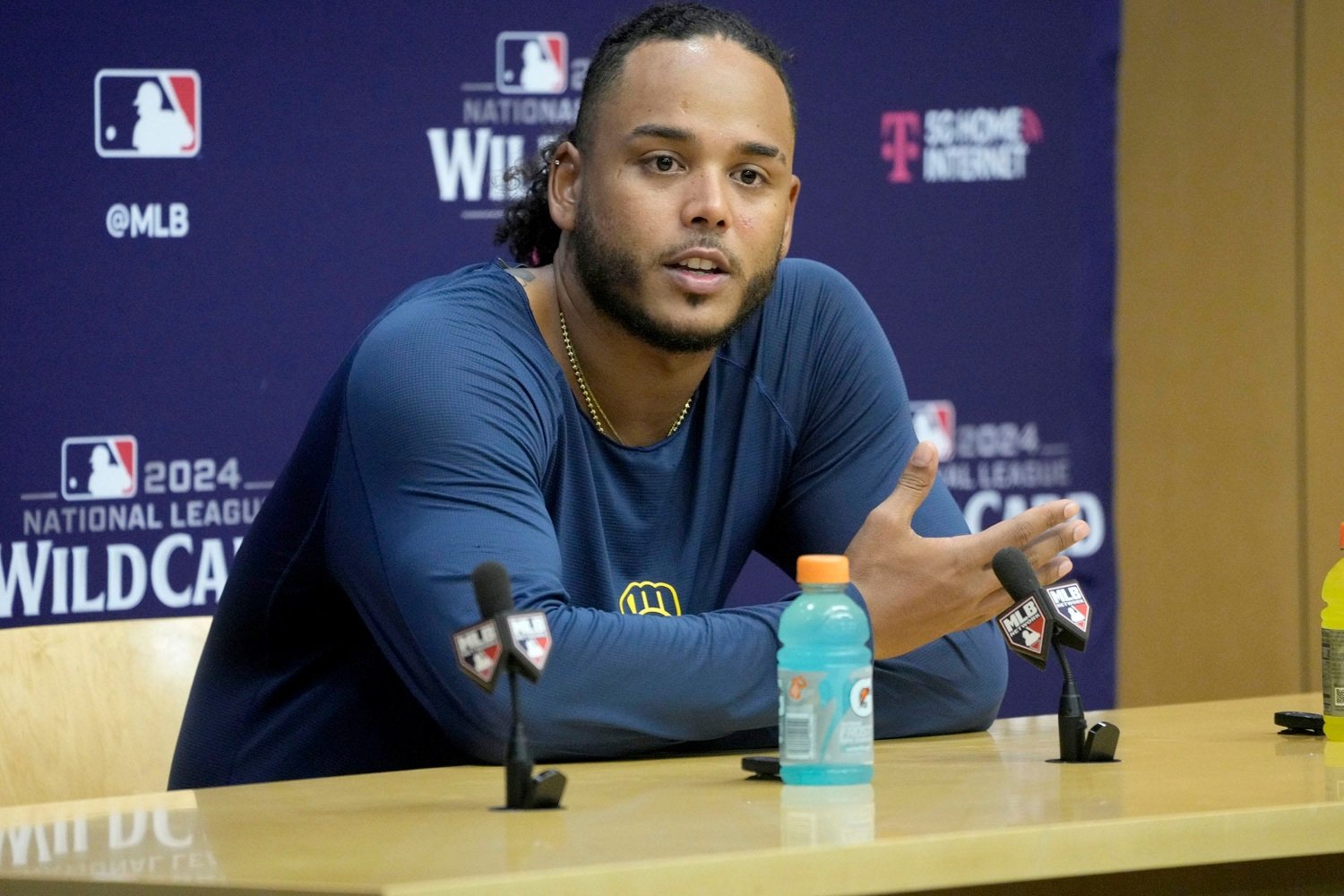
Freddy Peralta was one of the first Opening Day starters to be named, getting the nod all the way back on February 13th. It will be his second year at the top of Milwaukee’s rotation, a spot typically granted to the most effective starting pitcher. However, if you caught his most recent spring training outing against the Diamondbacks, you’ll know that he has looked like anything but a true ace.
In what will be his final spring training outing, Peralta pitched 3 ⅓ innings with five strikeouts—not bad, until you realize he also gave up eight hits, four walks, and ten (10) (TEN!) earned runs. He was on the receiving end of a lot of hard contact, conceding two home runs and four earned runs in the first inning alone.
In a way, it was an appropriate bookend for his spring training experience. In his first start of the spring, he also gave up two home runs and three earned runs in two innings of work against the Giants. After two solid scoreless starts against the White Sox and Athletics, things seemed like they would return to normal and he entered his final start with a 2.61 ERA over 8 ⅓ innings. That has now ballooned to an 8.56 ERA over 13 ⅔ innings.
The real question is whether all of this means anything. Pitchers are known to be apathetic about spring training numbers, with many often claiming that they “don’t want to waste good pitching.” In 2023, Zack Greinke intentionally (according to him, at least) gave up nine earned runs in 2 ⅓ innings after lamenting that he hadn’t seen enough baserunners to practice the new pickoff protocol that had been introduced that year. Of course, he posted a 5.06 ERA over 142 ⅓ innings in what ended up being his final year in the league, but hey, maybe that was intentional, too.
So what’s the deal with Peralta? Is he just a slow starter? Well, I wanted to start by looking at his past spring training numbers from each year since he debuted in 2018:
Based on this, my takeaway is that it just varies. Some years he’s decent, and others he isn't. His ERA hasn’t gotten quite as high as it has this spring, but he was at a 7.20 last year and he turned out okay—even if he didn’t resemble your ideal ace.
In fact, this sort of behavior should be expected. If you’ve been watching Peralta for a while, you'll know that he tends to oscillate between being as dominant as any other starter in the league and struggling to make it through four innings. Funnily enough, he’s often consistent enough with his inconsistency to make it undetectable when looking at data by season or even by month, but trust me, it’s there.
Here are some examples from 2024 of his back-and-forth performances. To help capture the difference in performance, I’ll be making use of Baseball Reference’s game score statistic as a high-level proxy for the quality of each outing.
-
On Apr. 19, 2024, he made a start against the Cardinals where he pitched six scoreless innings with seven strikeouts.
Game score: 69-
His next start on Apr. 25, against the Pirates, saw him give up five earned runs in 4 ⅔ innings.
Game score: 34
-
His next start on Apr. 25, against the Pirates, saw him give up five earned runs in 4 ⅔ innings.
-
On Jun. 14, he made a start against the Reds wherein he gave up 10 hits and six earned runs across 5 ⅓ innings.
Game score: 29-
In his next start (on Jun. 19 against the Angels), he struck out eight and walked two in six scoreless innings.
Game score: 72
-
In his next start (on Jun. 19 against the Angels), he struck out eight and walked two in six scoreless innings.
-
On Jul. 12, he made a start against the Nationals in which he gave up 10 hits and four earned runs in five innings.
Game score: 37-
In the very next start against the Twins on Jul. 20, he struck out eight and gave up just two hits in six innings.
Game score: 74
-
In the very next start against the Twins on Jul. 20, he struck out eight and gave up just two hits in six innings.
If you were to plot all his game scores on a line, it could serve as the draft to a roller coaster turbulent enough to replace the now-retired Kingda Ka. Otherwise, you can use it as reassurance that Peralta will almost always be valued incorrectly over small sample sizes, because of how mercurial he often is on the mound. (When you see this, keep in mind that 50 is a roughly average appearance, and that anything above 70 or below 35 is considered fairly extreme.)

Based on his reaction to the whole thing, he and the squad aren’t too worried. In fact, they were more worried about Joey Ortiz’s mad dash to the bathroom than anything else. Overall, it was a weird game with the Brewers facing off against Corbin Burnes, the team’s former perennial ace (who had a pretty rough outing himself). It didn't seem like anyone remembered how to play a classy game of baseball.
At the end of the day, the purpose of spring training is to get some good practice in before the season starts. Every minute detail of every player's performance is quantified and tracked obsessively for 162 games. Once Opening Day rolls around, you’ll probably forget this all ever happened.





Recommended Comments
Create an account or sign in to comment
You need to be a member in order to leave a comment
Create an account
Sign up for a new account in our community. It's easy!
Register a new accountSign in
Already have an account? Sign in here.
Sign In Now