


Brewers Video
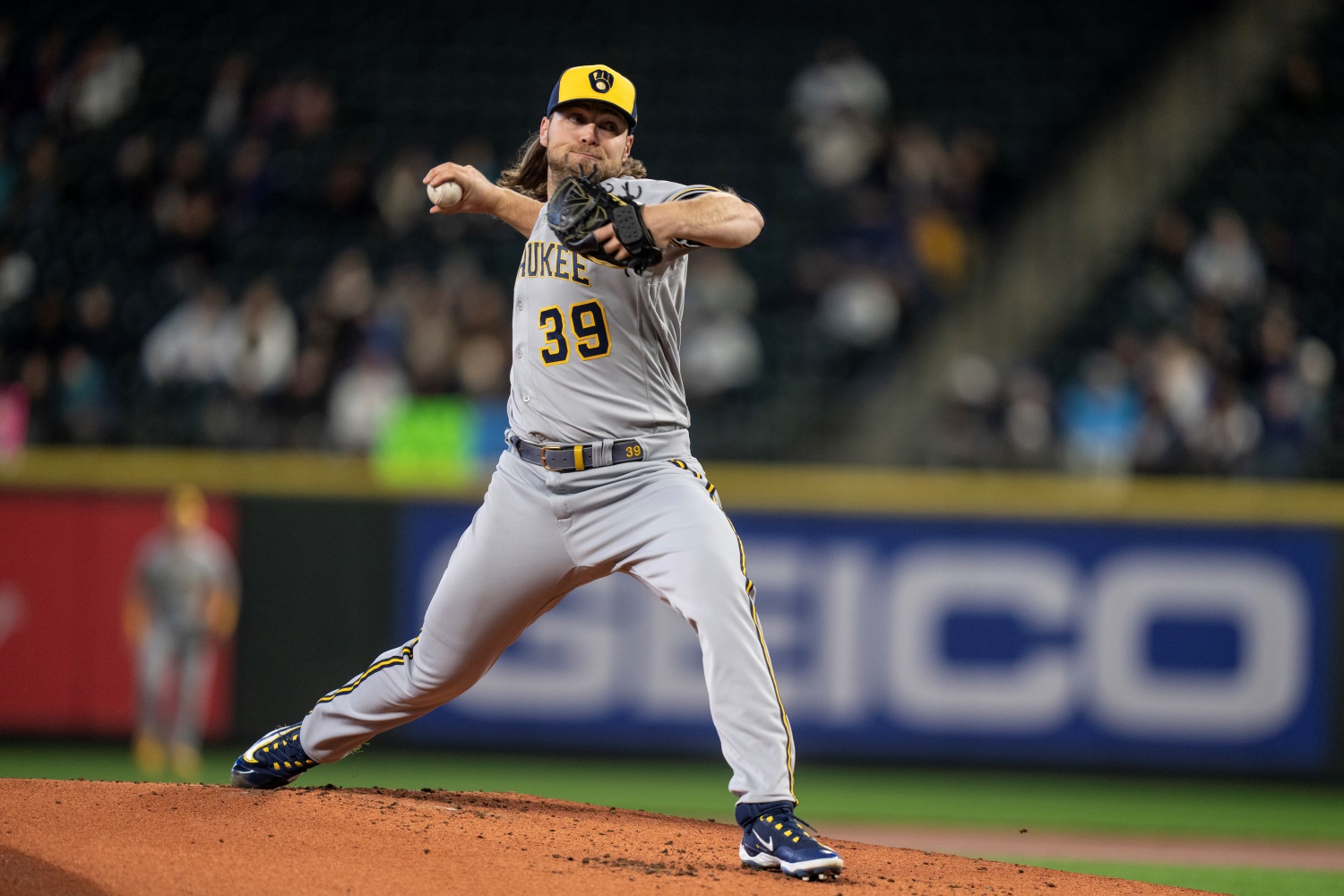
Burnes left the field early during the 6th inning, citing a tightening feeling in his chest, and noticing his velocity start to drop against Julio Rodriguez, along with an inability to locate, describing the feeling as akin to cramping. After the game, Craig Counsell commented that it was minor, and that it occurred during the tag on Eugenio Suarez to end the fourth inning.
What is a pectoral strain?
The pectoral muscle is the large muscle in your chest used in the majority of upper body “push” movements, i.e. moving your arms forward and away from the body. It is a relatively sturdy muscle, and most of these injuries occur in higher intensity movements pushing too fast or too far (in the concentric contraction), usually on the dominant throwing or hitting side. The higher-intensity movement can lead to a higher chance of a full rupture, but because Burnes merely overstretched attempting a tag, stretching too sharply in a lower-intensity movement during the eccentric contraction, it’s likely the strain is just a small tear. As such, resting the muscle for a short period should suffice, as well as hot/cold treatment.
Recovery Prognosis
Low-grade strains (which are minor muscle tears) carry a recovery period for the average joe of a few weeks, and as such, it’s likely that Burnes will miss his next start–if only in the name of caution, given the mounting number of injuries the Brewers currently have. If it turns out to be a high-grade strain (known as a full thickness tear, or muscle rupture) then the return period is much longer, around six months. That could sideline Burnes for the remainder of the season.
Current Player Examples
While leaping for a home-run robbery (stretching out with his glove arm like Burnes), Jiménez ruptured his left pectoral muscle, leaving him out for four months (a much faster recovery than expected) from late March to July 20, 2021.
Injured his right pectoralis while pitching on May 30, 2022. It was a minor strain, and he returned to pitch five innings of scoreless baseball on June 15.
There’s been a lot of discussion on the forum about the severity of Woodruff’s shoulder injury, so what exactly is the injury, and how can we expect him to come back from it?
What is a Subscapular injury?
The subscapularis is a large, triangular muscle underneath the scapula, part of the four-muscle group forming the “rotator cuff”. It’s the largest and strongest of the four, connecting the humerus bone to the front of the shoulder capsule, with its primary function being the internal rotation of the humerus (this is when your hand rotates clockwise). The muscle itself plays a key role in the stabilization of the shoulder, an incredibly complex task given the variety of ways in which the shoulder moves. The main symptoms occur when the arm is raised above shoulder height, with an overworked subscapularis making it feel as though you are unable to lift your arm. The most common symptoms in pitchers are either pain, or a decrease in velocity, the latter of which Woodruff demonstrated in his last outing after his first inning of work.
Recovery Process
The treatment of subscapularis tears depends on the severity of the injury, ideally not requiring surgery. The good news about Brandon Woodruff is that he has been diagnosed with a “mild” Grade II strain, which is a distinct lesion of over 25% of the craniocaudal diameter, but, crucially, the muscle is still attached to the bone. Therefore, the process for recovery will be simpler, likely involving hot/cold treatment and non-steroidal anti-inflammatory medication such as Ibuprofen, as well as physical therapy to prevent frozen shoulder during the recovery process.
Timeline
A survey performed on one unnamed professional baseball organization over the course of five years found 10 clinical findings (using MRIs) of subscapularis strains of various degrees of severity (four Grade I, four Grade II and two Grade III), all of which were treated without surgery. The average number of days without throwing activity was 27 days (the range was 11-61 days). The majority of these injuries were rehabbed with no lasting performance drop.
Current Player Examples
Diagnosed with a subscapularis strain in late May 2021, he was shut down for four weeks, and took a further four weeks to build up again. The original prognosis was off by a month, and he didn’t return until August 30.
With a Grade III strain (torn off the bone), Espino was put on the 60-day injured list and shut down for a minimum of eight weeks, though it is important to stress this is a more severe form of Woodruff’s injury.
Initially upon diagnosis in May 2021, Bieber was shut down for two weeks, and re-evaluated after that on June 13. He didn’t return to action until three months later, on the September 24.
Currently on the 60-day injured list for an undetermined length of time.
Kluber and Bieber are the most comparable out of these injuries, as both were Grade II tears, and each took around three months to return to the mound. With that in mind, it seems likely that the Milwaukee Brewers won’t see Woodruff back until just after the All-Star break.





Recommended Comments
Create an account or sign in to comment
You need to be a member in order to leave a comment
Create an account
Sign up for a new account in our community. It's easy!
Register a new accountSign in
Already have an account? Sign in here.
Sign In Now