


Brewers Video
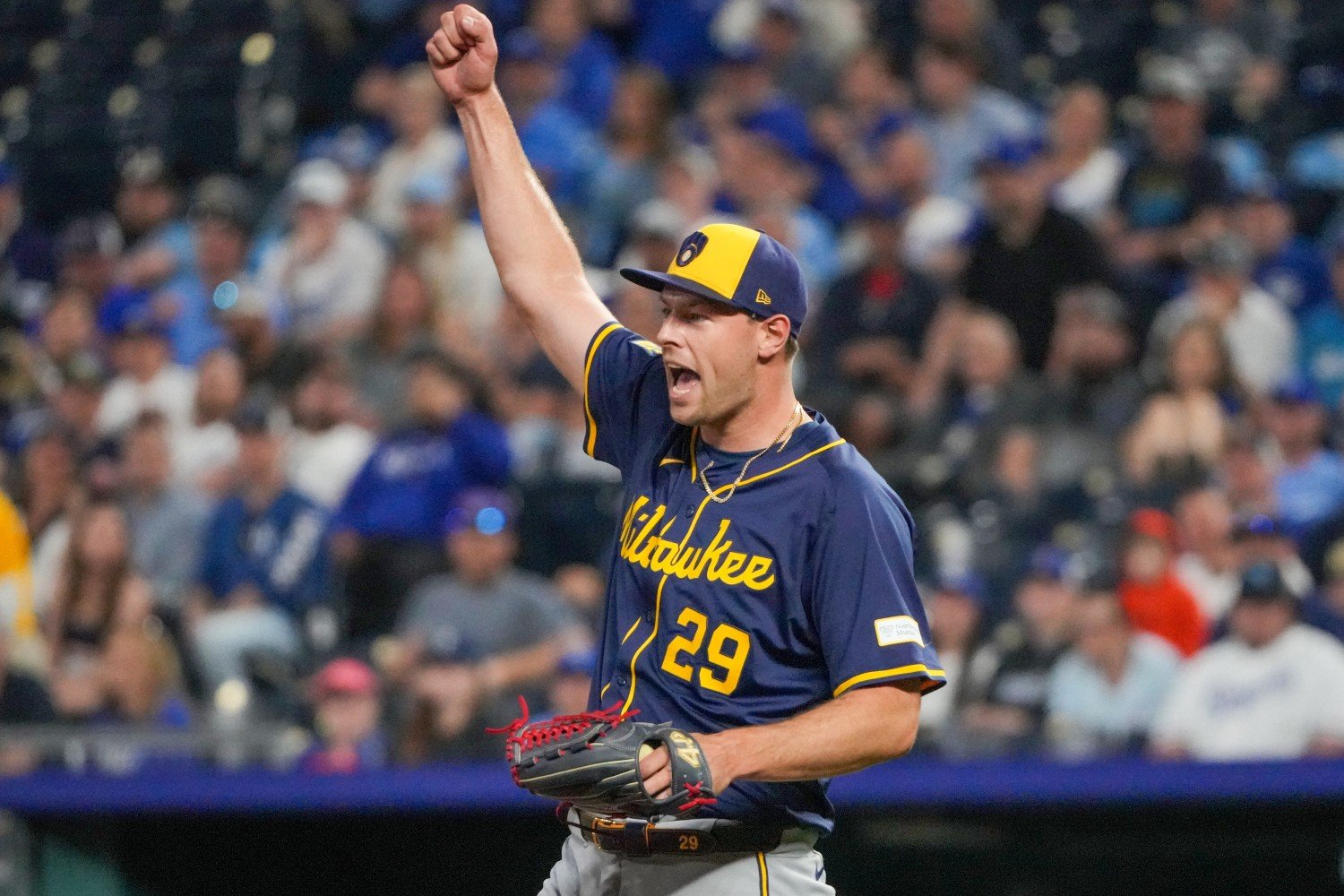
Trevor Megill fits the archetype of a dominant late-inning reliever. He’s big, standing 6-foot-8 and weighing just shy of 260 pounds. He throws hard, averaging 98.8 miles per hour with a four-seam fastball he threw 72% of the time last year. Megill’s approach is simple: fire the ball within the strike zone and let his raw stuff do the work. There are no gimmicks.
For flamethrowing relievers who lean predominantly on riding heaters with minimal horizontal movement, extreme outcomes are common. Hitters often swing hopelessly late, underneath the ball, or both, particularly at the top of the zone. When they time it up, though, the pitch’s velocity and shape mean it screams off the barrel in the air.
A Jekyll-and-Hyde act is common for these kinds of relievers, sometimes within a single outing. They're untouchable in most plate appearances but get crushed when they're not. The result is often extreme strikeout and home-run rates, and an amusing juxtaposition of elite swing-and-miss numbers with jarring quality-of-contact metrics. Josh Hader is the most prominent example from recent Brewers history.
Megill mostly lived up to that profile in 2024. He punched out 27.3% of opponents while generating whiffs on 29.7% of swings, but he also allowed an average exit velocity of 91.2 mph and a 42.4% hard-hit rate (percentage of batted balls hit at least 95 mph). Among pitchers to throw at least 30 innings, his 35.6% fly ball rate was the 19th-highest.
There was one key difference, though: he evaded the long ball. Megill allowed just four home runs in 46 ⅓ innings. Only 2.2% of opponent plate appearances ended in a homer; the league average was 3.0%. Despite being an extreme fly-ball pitcher who surrendered plenty of loud contact, Megill’s 7.1% home-run rate on fly balls was less than half the league average of 15.6%. That made him an extreme outlier, even though most fly-ball pitchers do allow fewer homers as a percentage of their fly balls than others.
Within the aforementioned list of pitchers, there were 38 who allowed a fly-ball rate of at least 30% and a hard-hit rate of at least 40%. Their average HR/FB was 16.5%. Megill was one of just two hurlers with a single-digit rate, trailing only Carlos Estévez’s 6.1%.
In other words, it’s highly improbable for a pitcher to allow so much loud contact and so many fly balls while having so few of them leave the yard. Megill’s case was partially explainable—he allowed just a 33% hard-hit rate on fly balls last year, another thing typical of fly-ball guys (since usually, when a hitter hits a fly ball off a fly-ball pitcher, the pitcher won the battle to set the trajectory of the batted ball)—but given the small sample size, his arsenal, and the documented year-to-year inconsistencies of HR/FB, it cannot be reliably identified as a legitimate and repeatable skill.
That holds implications for Megill and the structure of a post-Devin Williams bullpen. He handled closing duties with aplomb as Williams recovered from stress fractures in his back, and he's the leading candidate to slide back into the role moving forward. Asking him to replicate the near-automatic dominance of Milwaukee closers before him was already a tall order, and the threat of the long ball means the Brewers should be prepared for less stability in the ninth inning than they’ve enjoyed in recent years.
Megill will still be a vital member of Pat Murphy’s bullpen, but he’s more likely to be a solid reliever moving forward than an elite one. With a league-average HR/FB, he would have had a home-run rate around 3.8% in 2024, vaulting from the right side of average to the wrong side of it by about the same distance. For 2025, Steamer and ZiPS each project an ERA between 3.40 and 3.50, partially because of the home runs.
The Brewers, who boast one of the deepest relief corps in baseball, will still do fine with that version of Megill. He's earned consideration to close without an interim tag, but even if he lands the job out of spring training, the club should entertain the possibility that someone else may emerge as the best candidate. Megill's home-run rate could become one of the more impactful factors in how Murphy conducts the late innings.





Recommended Comments
Create an account or sign in to comment
You need to be a member in order to leave a comment
Create an account
Sign up for a new account in our community. It's easy!
Register a new accountSign in
Already have an account? Sign in here.
Sign In Now