


Brewers Video
One thing you need to know about me is that I'm a catcher's interference nerd from way back. I've always loved tracking them, especially when a hitter is unusually good at causing them, or when a catcher is unusually bad at avoiding them. (I bet it won't surprise you to learn that Pete Rose long held the record for times reaching base that way, but are enough of a head to remember Jacoby Ellsbury's extraordinary race for that record?)
Even absent that aspect of it, though, it's interesting to attune to catcher's interference, because the trend line league-wide in their frequency is impossible to miss.
Catcher's interference calls per MLB season:
— Codify (@CodifyBaseball) August 16, 2023
23 <--- 2012
25 <--- 2013
23 <--- 2014
33 <--- 2015
41 <--- 2016
43 <--- 2017
41 <--- 2018
61 <--- 2019
62 <--- 2021
74 <--- 2022
76 <--- 2023 so far! (an MLB single season record) pic.twitter.com/RdI57jcxh5
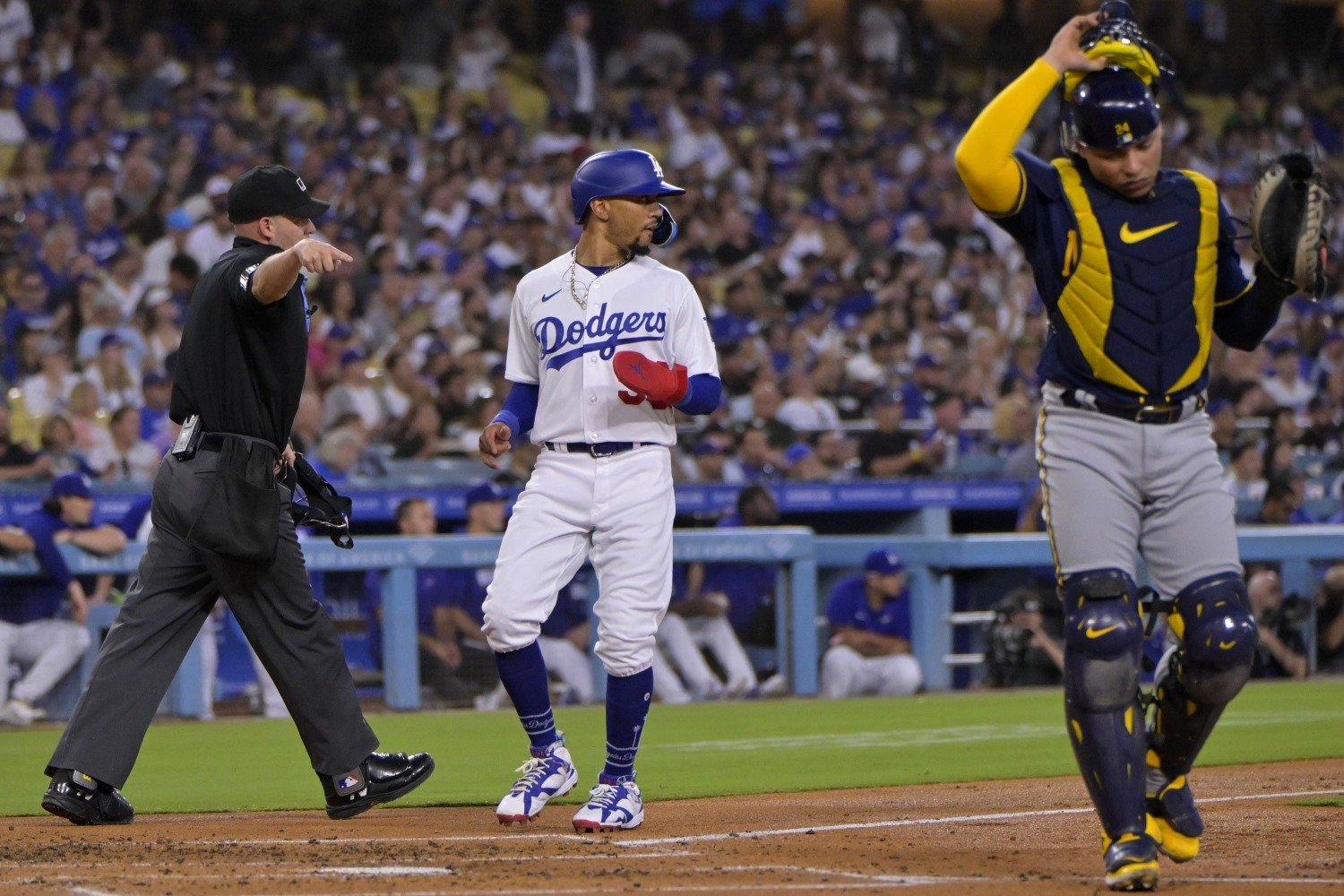
A decade ago, a night like the one William Contreras just had--twice committing interference in one game--would constitute almost 10 percent of all the instances of interference over an entire season, for the whole season. Now, it feels much more like a drop in the bucket. The numbers above don't even include Contreras's foibles last night.
That's another thing, though. Are these really mistakes? Or are they just the natural, unavoidable, occasional result of changes in the way hitters, pitchers, catchers, and umpires interact? I wrote at length about this in 2017, for Baseball Prospectus. Hitters are trained, more than ever, to let their barrel travel backward as they begin their swing, to generate power and get on plane with the incoming pitch. They do so from the very back edge of the box, because pitchers throw harder than ever and are trained to maximize their extension toward home plate, so the precious extra inches of distance from setting up even in the middle of the box are much-needed.
Catchers, meanwhile, know they're increasingly evaluated (and eventually paid) based on their pitch framing. They try to catch most pitches earlier, closer to when they cross home plate, because that's when they're more likely to look like strikes to the umpire. Thus, we have hitters taking bigger swings from deeper in the box and catchers creeping up to stick their mitts out there to get the ball if the big swing doesn't come. The real estate within which so much of the game is decided has moved slightly back, and it's become more densely populated. Collisions are inevitable.
The Brewers' famous prioritization and excellent instruction of catchers in the area of framing seems to come at some cost in this area. They're now up to six catcher's interferences this season, second-most in MLB. Contreras, alone, accounts for five of those. No individual catcher in baseball has that many. In the medium term, he'll have to find some way to continue being a good pitch framer, without putting his glove out there quite so far. Giving up outs and runner advancement that way is always frustrating, but just as importantly, there's always some risk that this kind of collision could lead to an injury.
For now, it's not a huge deal. The Brewers would not have won Wednesday night, even absent those accidents. It's just a little baseball enigma worth unraveling, while we have the chance.





Recommended Comments
Create an account or sign in to comment
You need to be a member in order to leave a comment
Create an account
Sign up for a new account in our community. It's easy!
Register a new accountSign in
Already have an account? Sign in here.
Sign In Now