



recte44
-
Posts
680 -
Joined
-
Last visited
1 Follower

recte44's Achievements






-
 This is the second piece of a series in which I will take a look at individual decisions that Matt Arnold and his team will have to make over the next couple of months. I'm looking at each as if I were the GM, and will go through the factors that I consider in making the decision. Today: The Brewers and Wade Miley have a mutual contract option. Let's make a call on it. Image courtesy of © Brad Penner-USA TODAY Sports This is the second piece of a series in which I will take a look at individual decisions that Matt Arnold and his team will have to make over the next couple of months. I'm looking at each as if I were the GM, and will go through the factors that I consider in making the decision. Today: The Brewers and Wade Miley have a mutual contract option. Let's make a call on it. If both the Brewers and Wade Miley exercise their contract option for 2024, he will earn $10 million. If either party declines, Miley will receive $1 million and become a free agent. Factor 1: Affordability vs. Performance Miley will be 37 years old next month. When healthy, he's pitched effectively. Unfortunately, over the past four years, that good health has been elusive. He started 23 games in 2023 for the Brewers, posting 2.5 WAR. In 2022 with the Cubs, he pitched in just nine games (eight of them starts) and posted 0.1 WAR. The 2021 season was arguably the best of Miley's career. As a Cincinnati Red, he started 28 games and earned a career-high 5.3 WAR. He was also with the Reds for the 2020 season, but even in that truncated campaign, he was only able to toe the rubber six times (four starts) and posted a -0.1 WAR. His four-year average, then, is 2.0 WAR. Based off that number, the Brewers would be paying Miley $5.1 million per WAR. Milwaukee earned a cumulative WAR of 36.9 in 2023, winning 92 games with a payroll of approximately $135 million. That means that they paid $3.7 million per WAR. Recte's View as the GM: It's a bit higher than I would like to see, particularly considering the risk involved. Factor 2: Risk There's significant risk here. Given his age and injury history, it's completely unreasonable to think that he would give the Brewers a full season of starts. It would be fair to say there is a better-than-even chance that Miley would underperform his four-year average in WAR. Another factor to take into consideration here would be the decision Milwaukee will have to make on Brandon Woodruff. With Woodruff out, it does open up some salary space they would have put into Woodruff and now can go to Miley. Still, it's a gamble if he can give the Brewers enough starts to make it a wise investment. Recte's View as the GM: Very high risk. Factor 3: Roster Fit Milwaukee's starting rotation is very much in flux moving into next season. That may be an understatement. We know Woodruff is (in all likelihood) lost for the season. If the Brewers were ever going to trade Corbin Burnes, this offseason is the last chance to get peak return (we'll talk about that in a subsequent article). Freddy Peralta is the "for sure" man in the rotation. Given the commotion in this group, the Brewers may lean toward bringing Adrian Houser back (he's an arbitration eligible player). Colin Rea will be a free agent, as will Julio Teheran. The bigger names in the farm system (such as Carlos Rodriguez and Jacob Misiorowski) are probably not guys who will break camp with the club, though they could factor in later. Aaron Ashby is coming off of a missed season, and wasn't particularly effective as a starter before the injury. Whew. That's a lot to unpack. One could say that the success or failure of the 2024 season will be tied to the decisions made in building the rotation, and depth when the inevitable injuries hit. That being said, there is plenty of opportunity for Miley if he is brought back. Also, not for nothing, he's a beloved member of the clubhouse and all-around good guy. Recte's View as the GM: There would certainly be a spot for him in the 2024 rotation. At the end of the day, any GM takes many different factors into play when making these decisions. In regard to Miley, I believe the major discussion points are those reviewed above. This isn't a cut-and-dry decision by any means, and the mutual option makes it even murkier. Recte's Final Decision as GM: The Milwaukee Brewers exercise their club option on Miley. The loss of Woodruff almost makes this a certainty. In the grand scheme of things, $10M isn't a massive investment in terms of a starting pitcher with the ability to produce 3-5 WAR. There's always going to be some element of risk in building a roster. I'm certainly aware that I have to limit the risk to salary. In Miley's case, it's a risk I'll have to take. Do you agree with my choice? What would you do with Miley? Let's discuss it in the comments. View full article
 -
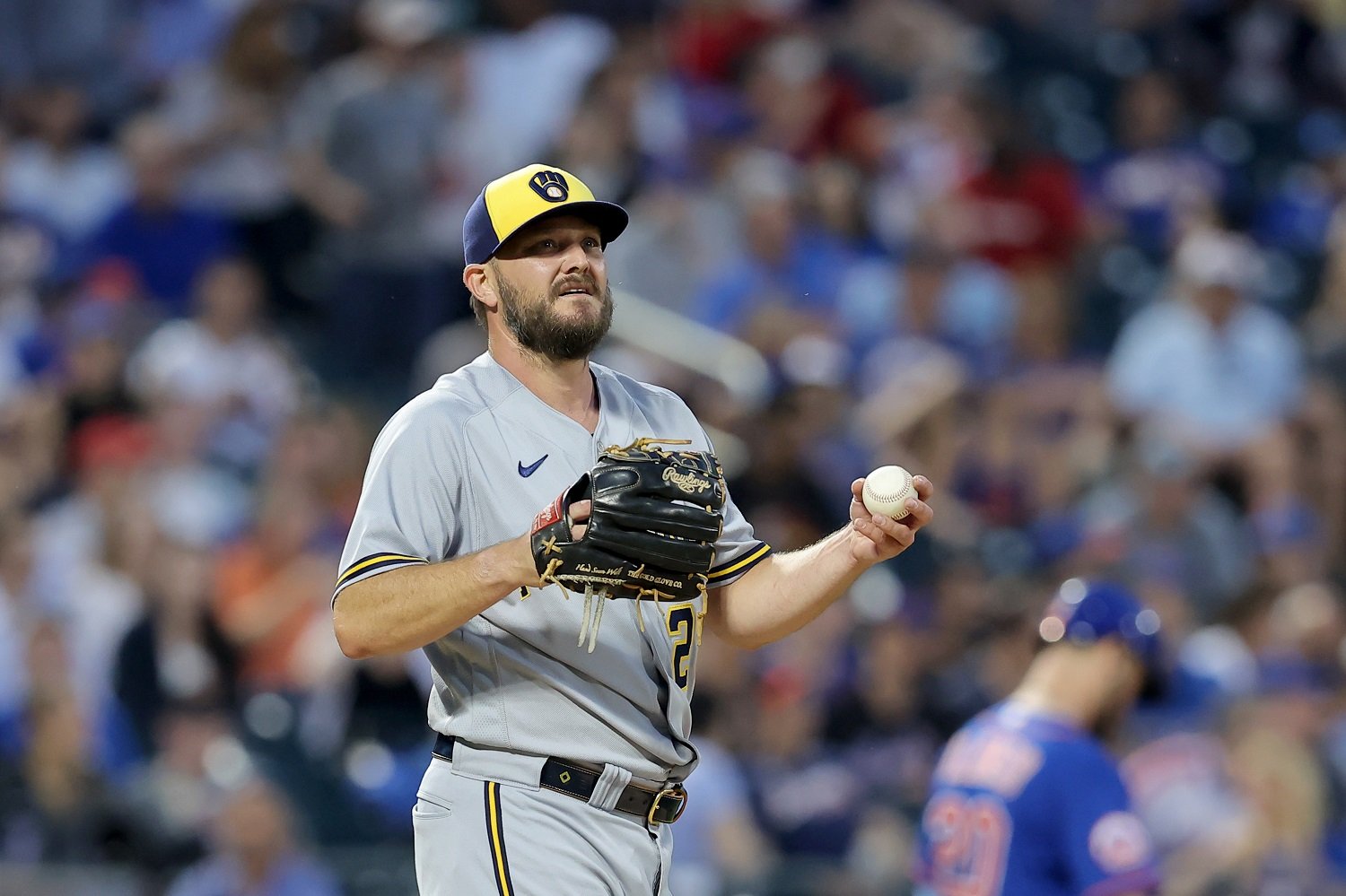 If both the Brewers and Wade Miley exercise their contract option for 2024, he will earn $10 million. If either party declines, Miley will receive $1 million and become a free agent. Factor 1: Affordability vs. Performance Miley will be 37 years old next month. When healthy, he's pitched effectively. Unfortunately, over the past four years, that good health has been elusive. He started 23 games in 2023 for the Brewers, posting 2.5 WAR. In 2022 with the Cubs, he pitched in just nine games (eight of them starts) and posted 0.1 WAR. The 2021 season was arguably the best of Miley's career. As a Cincinnati Red, he started 28 games and earned a career-high 5.3 WAR. He was also with the Reds for the 2020 season, but even in that truncated campaign, he was only able to toe the rubber six times (four starts) and posted a -0.1 WAR. His four-year average, then, is 2.0 WAR. Based off that number, the Brewers would be paying Miley $5.1 million per WAR. Milwaukee earned a cumulative WAR of 36.9 in 2023, winning 92 games with a payroll of approximately $135 million. That means that they paid $3.7 million per WAR. Recte's View as the GM: It's a bit higher than I would like to see, particularly considering the risk involved. Factor 2: Risk There's significant risk here. Given his age and injury history, it's completely unreasonable to think that he would give the Brewers a full season of starts. It would be fair to say there is a better-than-even chance that Miley would underperform his four-year average in WAR. Another factor to take into consideration here would be the decision Milwaukee will have to make on Brandon Woodruff. With Woodruff out, it does open up some salary space they would have put into Woodruff and now can go to Miley. Still, it's a gamble if he can give the Brewers enough starts to make it a wise investment. Recte's View as the GM: Very high risk. Factor 3: Roster Fit Milwaukee's starting rotation is very much in flux moving into next season. That may be an understatement. We know Woodruff is (in all likelihood) lost for the season. If the Brewers were ever going to trade Corbin Burnes, this offseason is the last chance to get peak return (we'll talk about that in a subsequent article). Freddy Peralta is the "for sure" man in the rotation. Given the commotion in this group, the Brewers may lean toward bringing Adrian Houser back (he's an arbitration eligible player). Colin Rea will be a free agent, as will Julio Teheran. The bigger names in the farm system (such as Carlos Rodriguez and Jacob Misiorowski) are probably not guys who will break camp with the club, though they could factor in later. Aaron Ashby is coming off of a missed season, and wasn't particularly effective as a starter before the injury. Whew. That's a lot to unpack. One could say that the success or failure of the 2024 season will be tied to the decisions made in building the rotation, and depth when the inevitable injuries hit. That being said, there is plenty of opportunity for Miley if he is brought back. Also, not for nothing, he's a beloved member of the clubhouse and all-around good guy. Recte's View as the GM: There would certainly be a spot for him in the 2024 rotation. At the end of the day, any GM takes many different factors into play when making these decisions. In regard to Miley, I believe the major discussion points are those reviewed above. This isn't a cut-and-dry decision by any means, and the mutual option makes it even murkier. Recte's Final Decision as GM: The Milwaukee Brewers exercise their club option on Miley. The loss of Woodruff almost makes this a certainty. In the grand scheme of things, $10M isn't a massive investment in terms of a starting pitcher with the ability to produce 3-5 WAR. There's always going to be some element of risk in building a roster. I'm certainly aware that I have to limit the risk to salary. In Miley's case, it's a risk I'll have to take. Do you agree with my choice? What would you do with Miley? Let's discuss it in the comments.
 -
This post is the first of a series, in which I will take a look at individual decisions that Matt Arnold and his team will have to make over the next couple of months. I'm looking at each as if I was the GM of the Brewers, and will go through the factors that I consider in making the decision. Today: The Brewers hold a club option on Mark Canha's contract. Let's make a call on it. Image courtesy of © Michael McLoone-USA TODAY Sports This post is the first of a series, in which I will take a look at individual decisions that Matt Arnold and his team will have to make over the next couple of months. I'm looking at each as if I was the GM of the Brewers, and will go through the factors that I consider in making the decision. Today: The Brewers hold a club option on Mark Canha's contract. Let's make a call on it. If the Brewers exercise their 2024 option on Mark Canha, they'll owe him $11.5 million. If they decline it, he'd still cost $2 million as a buyout, so effectively, this is a $9-million decision. Factor 1: Affordability vs. Performance Canha produced 1 WAR over 50 games with Milwaukee. Projected to 162 games, that's 3.2 WAR. With an average of 140 games played over the last three years, his adjusted 2023 projection based off of his WAR with Milwaukee would be 2.8 WAR. Canha's last three years' WAR figures have been 2.2 (2023), 2.5 (2022), and 2.6 (2021). Let's take the average of those four numbers, to come up with a rough projection of 2.5 WAR. Based off that number, the Brewers would be paying him $4.6 million per win next year. Milwaukee earned a cumulative WAR of 36.9 in 2023, winning 92 games with a payroll of approximately $135 million. That means that they paid $3.7 million per WAR in 2023. Canha's $4.6 million-per-win projection for 2024 is certainly higher than the average, but it's not out of whack for a player of his age and experience. Recte's View as the GM: Canha's affordability vs performance is in line with the Brewers' needs. Factor 2: Roster Fit The Brewers acquired Canha for a number of reasons. With Garrett Mitchell injured, they played Sal Frelick most of the time in center field down the stretch. Tyrone Taylor was arguably the best hitter on the team over the last month and played most of the time in right field. They needed a designated hitter--someone to spell Christian Yelich without losing too much from the lineup, and occasionally someone to fill in for Carlos Santana at first base. More importantly, they needed a professional hitter in the mold of Canha, someone who put the ball in play consistently. He certainly did all of those things (and a little more) for the 2023 Brewers. Looking forward to 2024, how would Canha fit into the Brewers lineup? That's a complicated question. Santana will be a free agent, and that leaves a hole at first base. It seems likely the Brewers will try to bring Santana back, as the power in the lineup is lacking. The outfield will be crowded again: Yelich in left field, and some combination of Mitchell, Frelick and Taylor playing in right field. They will also have Blake Perkins available for depth, and don't forget that Jackson Chourio figures to be a factor in the outfield situation at some point very soon. Where does that leave Canha? Well, the designated hitter spot would still be open. The Brewers could use Canha just as they did down the stretch, in a number of roles (but primarily as the designated hitter). Another consideration would be the lack of power in the lineup. Do the Brewers want to allocate the money they would have spent on Canha to finding a truer slugger to fill that spot? It sounds good in theory, but I don't know of too many available sluggers who will make just $11.5 million next year. Recte's View as the GM: There should be plenty of opportunities for Canha on the 2024 team. Only William Contreras and Yelich were close to his .373 OBP with the Brewers, and that's a number that would be extremely hard to replace. At the end of the day, any GM takes many different factors into play when making these decisions. In regard to Canha, I believe the major discussion points are those reviewed above. To me, this is a fairly easy decision. Recte's Final Decision as GM: The Milwaukee Brewers exercise their club option on the contract of outfielder Mark Canha for the 2024 season. Do you agree with my choice? What would you do with Canha? Let's discuss it in the comments. View full article
-
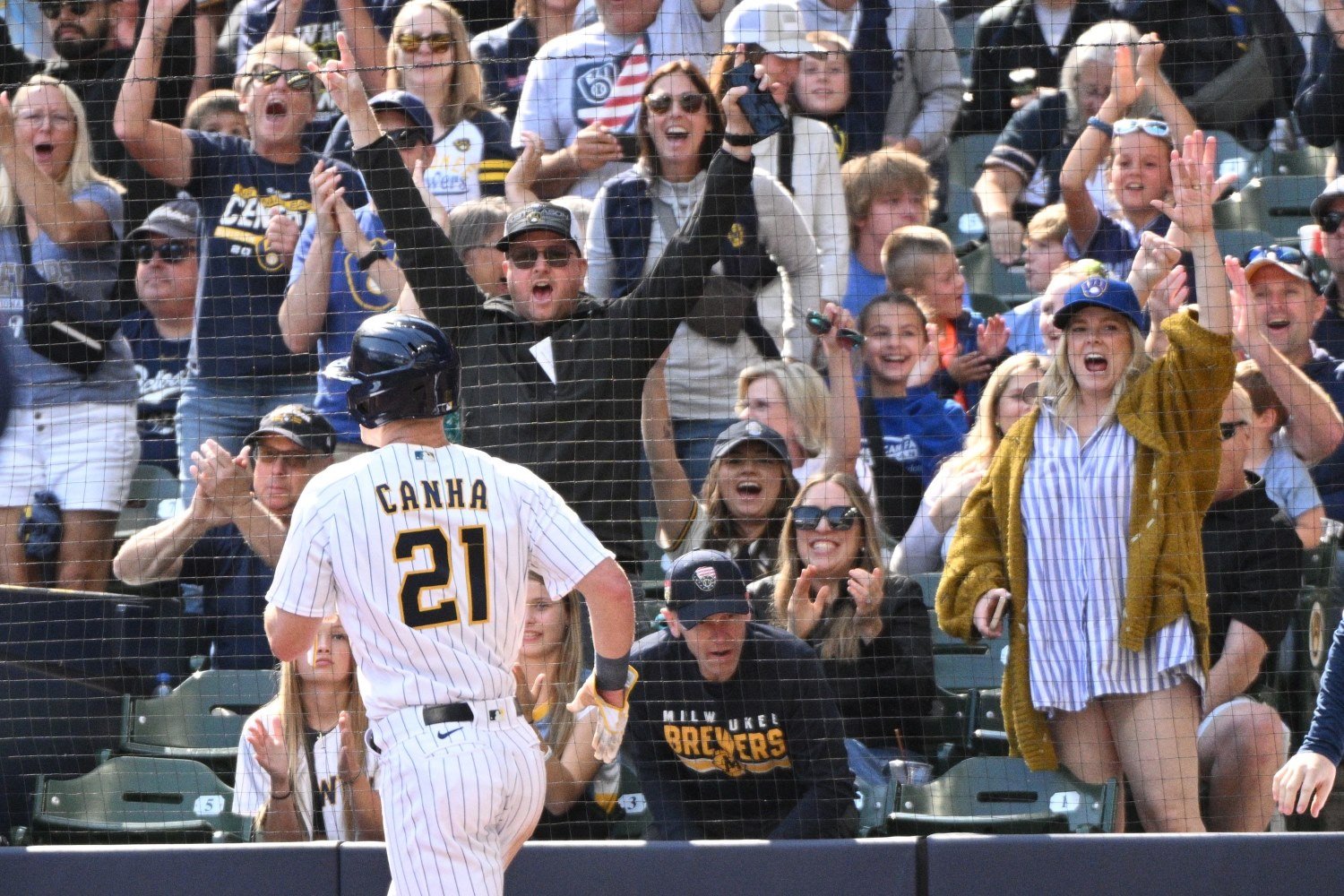 If the Brewers exercise their 2024 option on Mark Canha, they'll owe him $11.5 million. If they decline it, he'd still cost $2 million as a buyout, so effectively, this is a $9-million decision. Factor 1: Affordability vs. Performance Canha produced 1 WAR over 50 games with Milwaukee. Projected to 162 games, that's 3.2 WAR. With an average of 140 games played over the last three years, his adjusted 2023 projection based off of his WAR with Milwaukee would be 2.8 WAR. Canha's last three years' WAR figures have been 2.2 (2023), 2.5 (2022), and 2.6 (2021). Let's take the average of those four numbers, to come up with a rough projection of 2.5 WAR. Based off that number, the Brewers would be paying him $4.6 million per win next year. Milwaukee earned a cumulative WAR of 36.9 in 2023, winning 92 games with a payroll of approximately $135 million. That means that they paid $3.7 million per WAR in 2023. Canha's $4.6 million-per-win projection for 2024 is certainly higher than the average, but it's not out of whack for a player of his age and experience. Recte's View as the GM: Canha's affordability vs performance is in line with the Brewers' needs. Factor 2: Roster Fit The Brewers acquired Canha for a number of reasons. With Garrett Mitchell injured, they played Sal Frelick most of the time in center field down the stretch. Tyrone Taylor was arguably the best hitter on the team over the last month and played most of the time in right field. They needed a designated hitter--someone to spell Christian Yelich without losing too much from the lineup, and occasionally someone to fill in for Carlos Santana at first base. More importantly, they needed a professional hitter in the mold of Canha, someone who put the ball in play consistently. He certainly did all of those things (and a little more) for the 2023 Brewers. Looking forward to 2024, how would Canha fit into the Brewers lineup? That's a complicated question. Santana will be a free agent, and that leaves a hole at first base. It seems likely the Brewers will try to bring Santana back, as the power in the lineup is lacking. The outfield will be crowded again: Yelich in left field, and some combination of Mitchell, Frelick and Taylor playing in right field. They will also have Blake Perkins available for depth, and don't forget that Jackson Chourio figures to be a factor in the outfield situation at some point very soon. Where does that leave Canha? Well, the designated hitter spot would still be open. The Brewers could use Canha just as they did down the stretch, in a number of roles (but primarily as the designated hitter). Another consideration would be the lack of power in the lineup. Do the Brewers want to allocate the money they would have spent on Canha to finding a truer slugger to fill that spot? It sounds good in theory, but I don't know of too many available sluggers who will make just $11.5 million next year. Recte's View as the GM: There should be plenty of opportunities for Canha on the 2024 team. Only William Contreras and Yelich were close to his .373 OBP with the Brewers, and that's a number that would be extremely hard to replace. At the end of the day, any GM takes many different factors into play when making these decisions. In regard to Canha, I believe the major discussion points are those reviewed above. To me, this is a fairly easy decision. Recte's Final Decision as GM: The Milwaukee Brewers exercise their club option on the contract of outfielder Mark Canha for the 2024 season. Do you agree with my choice? What would you do with Canha? Let's discuss it in the comments.
 -
Coming up on five decades of disappointment for me. It's not funny anymore. It's not unlucky. If there is some being or force that controls events, there is certainly some storyline of punishing Brewers fans. What did we do to deserve this? I get myself so emotionally invested and it's the same old song and dance every single year. The definition of insanity is doing the same thing over and over again and expecting different results. Is an alternate definition of insanity simply being a Milwaukee Brewers fan? I know for sure it feels like this to me:
-
Not sure it was bad timing, after all. :)
-
He's been even better since this article was written than I thought he was before.
-
I cannot say enough about Tyrone Taylor, folks.
-
They are definitely leaning in on the numbers. Adding Miller was a big surprise, but they are leaning in on metrics. Jesse Winker theoretically is the play against Arizona's lefties. Same with Wiemer over Mitchell.
-
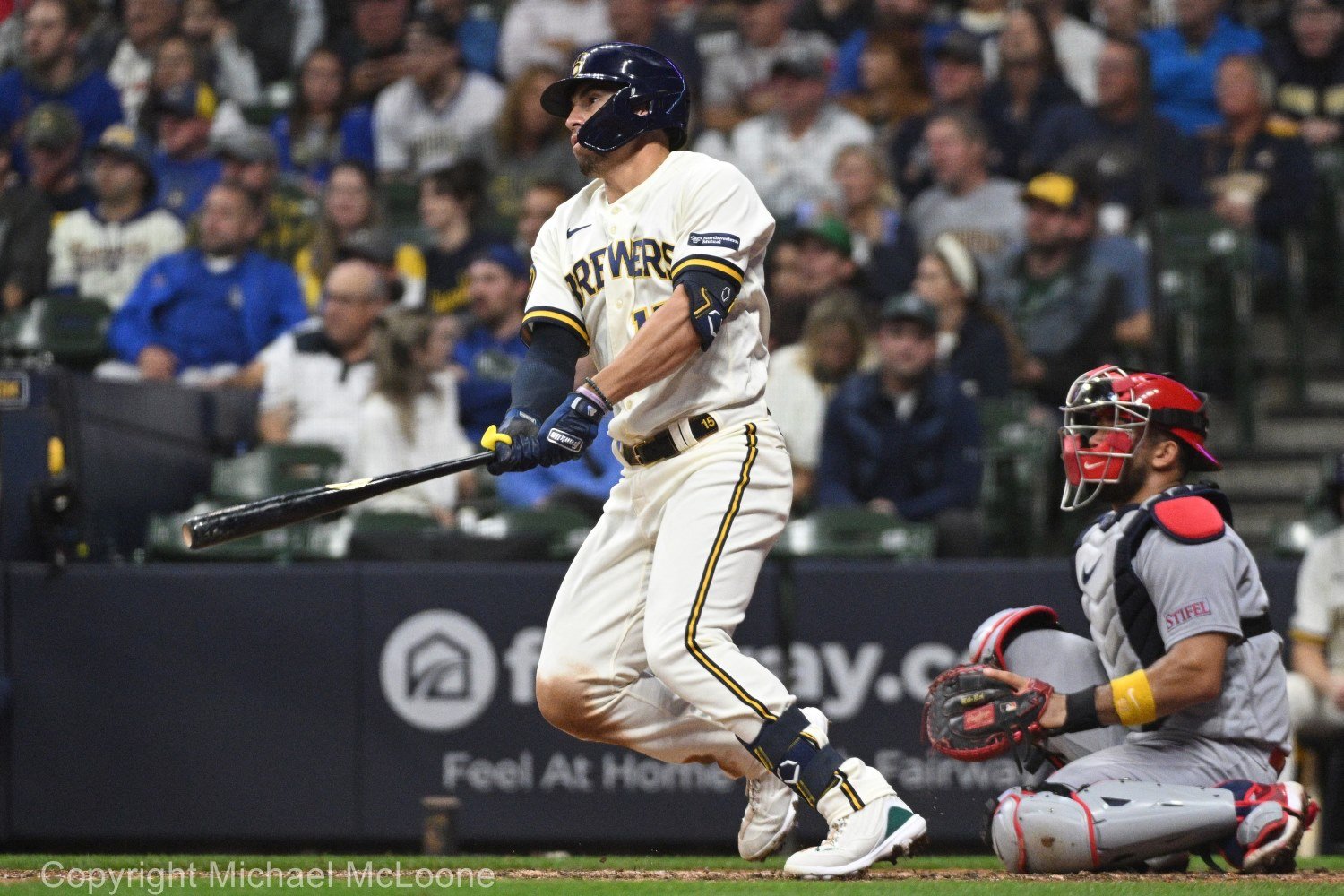 There's been a lot of talk about the Milwaukee Brewers offense as the club heads into the playoffs. The prevailing opinions seem to be that the Brewers offense is not good enough to make a true World Series run--that is, that the offense that will ultimately be Milwaukee's downfall. It's true that the Brewers offense, over the full course of the season, has not been stellar. Let's take a look at the whole of the 2023 regular-season numbers: They are slightly below the National League average in Runs, finishing eighth in the NL (ironically, 16 runs behind the Arizona Diamondbacks, who finished seventh). When it comes to OPS, the Brewers put up a dismal .705, barely finishing above the San Francisco Giants at 14th in the NL. This was largely driven by their slugging percentage, an incomprehensible .385 (again, just barely above the Giants). Their OBP was better, but still below league-average, at .319 (ninth place in the NL, just behind the Diamondbacks). They hit just 165 homers, 12th in the NL. But looking at a whole season can be misleading. Looking at these numbers is quite eye-opening. The last 28 days have shown a different offensive club. The Milwaukee Brewers of September 2023 are a completely different offense than they were for the majority of the season, not just in numeric value but also in personnel. This was the Brewers Opening Day Lineup this year: There has been a huge shift in the primary offensive personnel since Opening Day. Five of the nine Opening Day starters were not the primary starters in September. Designated Hitter: Jesse Winker was a negative factor on the Brewers offense when healthy, with a dreadful .567 OPS this year. He has not had a single at-bat in the months of August or September. Mark Canha, acquired at the deadline, has been the primary DH over that span, and has produced an .800 OPS (and one magical grand slam). First Base: Carlos Santana replaced Rowdy Tellez, and has produced a .773 OPS as a Brewer, a healthy improvement on the incumbent’s .667 mark. Third Base: Luis Urias was horrific, even after coming back from the Opening Day injury that made Brian Anderson the primary third baseman for most of the first half. Unheralded rookie Andruw Monasterio has, surprisingly, put up an OBP-heavy .678 OPS to go along with steady defense. Milwaukee signed Josh Donaldson for September, in an effort to provide some much-needed power against left-handed pitchers. He posted a .680 OPS, with three homers. That's nothing to shout about--it's nearly identical to Monasterio’s OPS--but Donaldson did, indeed, add the power dimension. Center Field: Garrett Mitchell, as we know, got hurt early. He was replaced primarily by Joey Wiemer, who had a .645 OPS. Wiemer was then essentially replaced by Sal Frelick, who was really good until fading at the end of the season to finish with a .692 OPS. Now Mitchell, and his .761 OPS, looks to be back for the postseason, although probably in a backup role. Right Field: Anderson and his .678 OPS played primarily at third, and in the second half of the season, Tyrone Taylor got the majority of the at-bats here, posting a season OPS of .713. However, Taylor’s second half numbers (as I’ve written about in a previous article) have been borderline elite: To summarize, here are the OPSes for the primary Brewers hitters over the last 28 days: William Contreras: .859 Carlos Santana: .816 Brice Turang: .509 Willy Adames: .875 Andruw Monasterio: .650 Josh Donaldson: .680 Christian Yelich: .950 Sal Frelick: .660 Tyrone Taylor: .935 Mark Canha: .747 Obviously, that doesn't constitute an elite attack, and perhaps 28 days is not much more reliable than the full-season data. It's good to at least ensure that we're studying the right players, though, rather than discounting the team's chances at all on the basis of some empty at-bats from Winker in May or Anderson in July.
 -
As the Brewers embark on their postseason run, the prevailing national sentiment seems to be that their offense isn't strong enough to carry them very far. We, who have watched them all year (and especially recently), know better. Image courtesy of © Michael McLoone-USA TODAY Sports As the Brewers embark on their postseason run, the prevailing national sentiment seems to be that their offense isn't strong enough to carry them very far. We, who have watched them all year (and especially recently), know better. There's been a lot of talk about the Milwaukee Brewers offense as the club heads into the playoffs. The prevailing opinions seem to be that the Brewers offense is not good enough to make a true World Series run--that is, that the offense that will ultimately be Milwaukee's downfall. It's true that the Brewers offense, over the full course of the season, has not been stellar. Let's take a look at the whole of the 2023 regular-season numbers: They are slightly below the National League average in Runs, finishing eighth in the NL (ironically, 16 runs behind the Arizona Diamondbacks, who finished seventh). When it comes to OPS, the Brewers put up a dismal .705, barely finishing above the San Francisco Giants at 14th in the NL. This was largely driven by their slugging percentage, an incomprehensible .385 (again, just barely above the Giants). Their OBP was better, but still below league-average, at .319 (ninth place in the NL, just behind the Diamondbacks). They hit just 165 homers, 12th in the NL. But looking at a whole season can be misleading. Looking at these numbers is quite eye-opening. The last 28 days have shown a different offensive club. The Milwaukee Brewers of September 2023 are a completely different offense than they were for the majority of the season, not just in numeric value but also in personnel. This was the Brewers Opening Day Lineup this year: There has been a huge shift in the primary offensive personnel since Opening Day. Five of the nine Opening Day starters were not the primary starters in September. Designated Hitter: Jesse Winker was a negative factor on the Brewers offense when healthy, with a dreadful .567 OPS this year. He has not had a single at-bat in the months of August or September. Mark Canha, acquired at the deadline, has been the primary DH over that span, and has produced an .800 OPS (and one magical grand slam). First Base: Carlos Santana replaced Rowdy Tellez, and has produced a .773 OPS as a Brewer, a healthy improvement on the incumbent’s .667 mark. Third Base: Luis Urias was horrific, even after coming back from the Opening Day injury that made Brian Anderson the primary third baseman for most of the first half. Unheralded rookie Andruw Monasterio has, surprisingly, put up an OBP-heavy .678 OPS to go along with steady defense. Milwaukee signed Josh Donaldson for September, in an effort to provide some much-needed power against left-handed pitchers. He posted a .680 OPS, with three homers. That's nothing to shout about--it's nearly identical to Monasterio’s OPS--but Donaldson did, indeed, add the power dimension. Center Field: Garrett Mitchell, as we know, got hurt early. He was replaced primarily by Joey Wiemer, who had a .645 OPS. Wiemer was then essentially replaced by Sal Frelick, who was really good until fading at the end of the season to finish with a .692 OPS. Now Mitchell, and his .761 OPS, looks to be back for the postseason, although probably in a backup role. Right Field: Anderson and his .678 OPS played primarily at third, and in the second half of the season, Tyrone Taylor got the majority of the at-bats here, posting a season OPS of .713. However, Taylor’s second half numbers (as I’ve written about in a previous article) have been borderline elite: To summarize, here are the OPSes for the primary Brewers hitters over the last 28 days: William Contreras: .859 Carlos Santana: .816 Brice Turang: .509 Willy Adames: .875 Andruw Monasterio: .650 Josh Donaldson: .680 Christian Yelich: .950 Sal Frelick: .660 Tyrone Taylor: .935 Mark Canha: .747 Obviously, that doesn't constitute an elite attack, and perhaps 28 days is not much more reliable than the full-season data. It's good to at least ensure that we're studying the right players, though, rather than discounting the team's chances at all on the basis of some empty at-bats from Winker in May or Anderson in July. View full article
-
Unreal. This is one of the most "Brewer" things ever. Man, we just cannot ever catch a break.
-
This quote makes all the speculation real
-
It's mind boggling, really. We're starved for RH bats, so why not bring up Tyler Black or really anything other than sitting on a player they clearly had no confidence in playing.
-
It's hard to understand why in the world they kept Anderson around this long and just never used him.

