


Seth Stohs
-
Posts
432 -
Joined
-
Last visited
Content Type
Profiles
Forums
Blogs
Events
News
2026 Milwaukee Brewers Top Prospects Ranking
Milwaukee Brewers Videos
2022 Milwaukee Brewers Draft Picks
Milwaukee Brewers Free Agent & Trade Rumors, Notes, & Tidbits
Guides & Resources
2023 Milwaukee Brewers Draft Picks
2024 Milwaukee Brewers Draft Picks
The Milwaukee Brewers Players Project
2025 Milwaukee Brewers Draft Pick Tracker
2026 Milwaukee Brewers Draft Tracker: Picks & Bonuses
Store
Downloads
Gallery
Everything posted by Seth Stohs
-
What Might an Extension Look Like with Corbin Burnes?
Seth Stohs replied to Seth Stohs's topic in Milwaukee Brewers Talk
That is correct, and the goal would be to front load it enough to be able to keep the last years down a little too. -
What Might an Extension Look Like with Corbin Burnes?
Seth Stohs replied to Seth Stohs's topic in Milwaukee Brewers Talk
That is correct, and the goal would be to front load it enough to be able to keep the last years down a little too. -
From the Sounds... Congratulations Rick Sweet! RICK SWEET NAMED INTERNATIONAL LEAGUE MANAGER OF THE YEAR Nashville skipper led team to division title, 91 wins NASHVILLE – Minor League Baseball announced today that Rick Sweet has been named International League Manager of the Year as part of the 2022 Triple-A All-Star Teams and League Awards. Votes were cast by league managers. Sweet led Nashville to the International West Division Championship with a 91-58 record and an appearance in the International League Championship Game. The Sounds were the only team in Minor League Baseball to surpass 90 wins in 2022. Sweet has tallied 2,192 wins as a minor league manager, the fifth-most in the history of Minor League Baseball. In three seasons (2014, 2021-22) as Nashville’s manager, Sweet is 238-176. His .575 winning percentage is the second-best in franchise history among managers with at least two seasons at the helm. The Manager of the Year award is the fifth of Sweet’s career. He was named Pacific Coast League Manager of the Year in 1994, International League Manager of the Year in 2008 and 2009 and Baseball America’s Manager of the Year in 2010. Sweet is the sixth Sounds manager in franchise history to garner a Manager of the Year award. Prior winners include Steve Scarsone in 2016 (Pacific Coast League Manager of the Year), Frank Kremblas in 2007 (PCL Manager of the Year), Rick Renick in 1996 and 1993 (American Association Manager of the Year) and Carl “Stump” Merrill in 1980 (Southern League Manager of the Year). The Nashville Sounds are the Triple-A affiliate of the Milwaukee Brewers and play at First Horizon Park. The 2023 season begins at home on Friday, March 31 against the Louisville Bats. Season ticket memberships are available now.
-
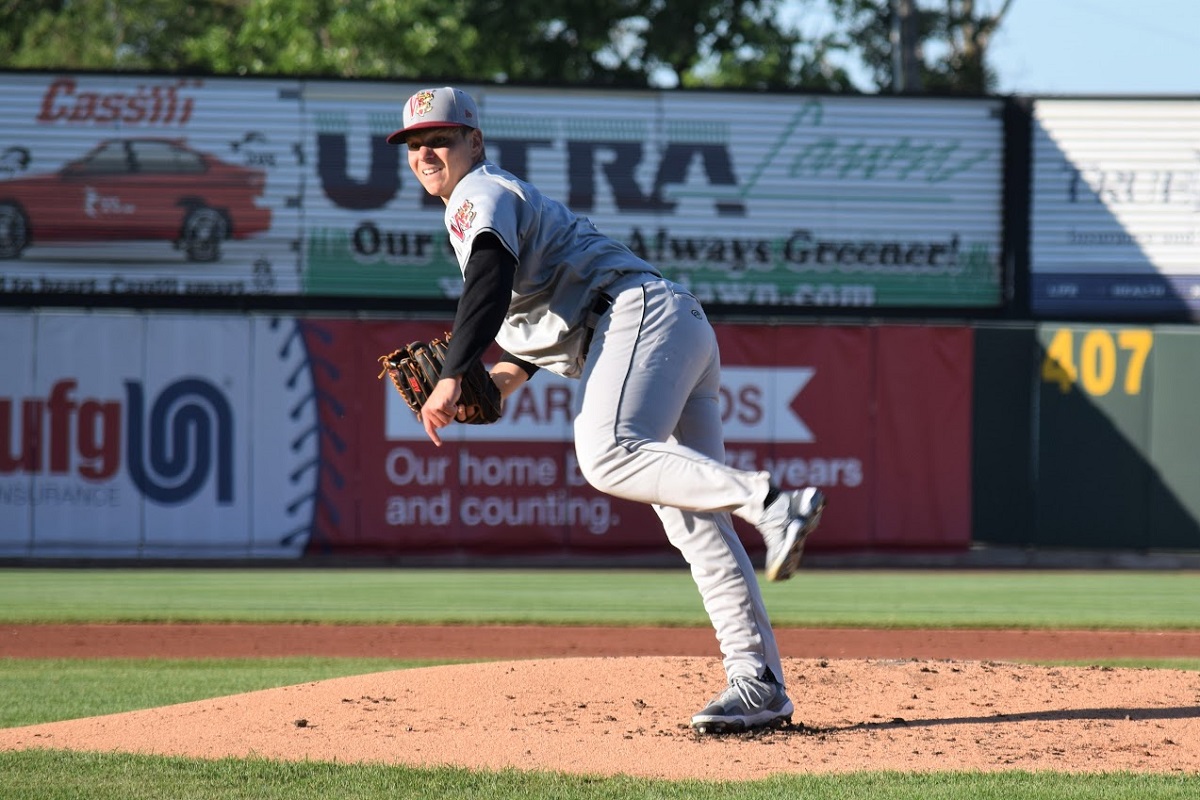 Brandon Knarr had a strong breakout season in 2022, split between the Wisconsin Timber Rattlers and the Biloxi Shuckers. He’s got a terrific mix of pitches. In fact, he actually learned how to grip one pitch from a Hall of Famer. Growing up in York, Pennsylvania, just about two hours from Philadelphia, a young Brandon Knarr attended Phillies Phestival with his family. The Phillies won a World Series championship during his formative years. It had to be a fun team for a pre-teen baseball fan to follow. At the event, fans had the opportunity to go through lines and take pictures with players. Knarr was walking through the line to get a photo with Roy Halladay. “My dad ushered me along. During the photo ops, you’re not supposed to take a baseball or anything in. They don’t want you to sign anything. So, I’m going up for my photo, and my dad hands me a baseball and says, ‘Hey, ask him how he throws his sinker.’ So I got through the line, and I asked him - I was so nervous - I’ll never forget. He placed my fingers on the ball, exactly how he throws it. The really funny part was that he showed me on my right hand. I was too nervous to tell him I am a lefty.” At Eastern York High School in eastern Pennsylvania, Brandon Knarr played his high school ball in a ballpark with an incredible mountain view and the Susquehanna River in the backdrop. It was a smaller school, but especially Knarr’s sophomore and junior seasons, they were talented enough to compete with the large schools with much bigger talent pools. Knarr was a solid high school hitter, but he is also self-aware enough to know that pitching was where his future was in baseball. “I was a cage all-star.” The southpaw played in several Perfect Game tournaments, Prep Baseball Report events, and other regional and national events. “I was playing all over, up and down the East Coast.” Out of high school, he attended Notre Dame for one season. He then transferred to the College of Central Florida, one of the best junior college baseball programs in the country, under the tutelage of legendary coach Marty Smith. His assistants included his son Ryan Smith (now the Triple-A hitting coach with the Twins) and Zach Bove (now the assistant minor-league pitching coordinator with the Twins). When Bove left midseason to join the Twins, Brett Merritt became the pitching coach. Following the season, he joined the Red Sox organization. “That team and staff and everything there was like the perfect storm to walk into. I feel very fortunate that I was able to go there when I did.” The staff was just starting to use Rapsodo, and digging into training and development methods. All of that was intriguing to Knarr, and he knew that it would be a good place for him to get better. “From whenever we woke up to whenever we went to bed, there were guys at the field doing something. On any random day, you’d find guys in the cage at eight or nine o’clock at night. It was just a really incredible environment.” The team lost their first game of the season and then went on a school-record winning streak that moved them from unranked to #1 in the country. Listen to Part 1 of our Brewers Spotlight with lefty Brandon Knarr. Later in the week, we’ll discuss his 2020 season at a D2 powerhouse, the shortened draft, and deciding to sign with the Brewers in Part 2. And in Part 3, you can hear him discuss his pitches, his preparation for a game, what he does between starts, how he uses available technology and analytics, his offseason goals, and much more.
-
Brewers Spotlight: LHP Brandon Knarr (Part 1)
Seth Stohs posted a topic in Brewers Minor League Talk
Left-handed pitcher Brandon Knarr pitched very well in Wisconsin and Biloxi in 2022. Recently, he joined us for a three-part Brewers Spotlight. In Part 1 today, we hear about growing up in Pennsylvania, learning a pitch from a Hall of Famer, his hitting ability, spending a season at Notre Dame and a big year at the College of Central Florida. Image courtesy of Steve Buhr, Twins Daily Left-handed pitcher Brandon Knarr pitched very well in Wisconsin and Biloxi in 2022. Recently, he joined us for a three-part Brewers Spotlight. In Part 1 today, we hear about growing up in Pennsylvania, learning a pitch from a Hall of Famer, his hitting ability, spending a season at Notre Dame and a big year at the College of Central Florida. Brandon Knarr had a strong breakout season in 2022, split between the Wisconsin Timber Rattlers and the Biloxi Shuckers. He’s got a terrific mix of pitches. In fact, he actually learned how to grip one pitch from a Hall of Famer. Growing up in York, Pennsylvania, just about two hours from Philadelphia, a young Brandon Knarr attended Phillies Phestival with his family. The Phillies won a World Series championship during his formative years. It had to be a fun team for a pre-teen baseball fan to follow. At the event, fans had the opportunity to go through lines and take pictures with players. Knarr was walking through the line to get a photo with Roy Halladay. “My dad ushered me along. During the photo ops, you’re not supposed to take a baseball or anything in. They don’t want you to sign anything. So, I’m going up for my photo, and my dad hands me a baseball and says, ‘Hey, ask him how he throws his sinker.’ So I got through the line, and I asked him - I was so nervous - I’ll never forget. He placed my fingers on the ball, exactly how he throws it. The really funny part was that he showed me on my right hand. I was too nervous to tell him I am a lefty.” At Eastern York High School in eastern Pennsylvania, Brandon Knarr played his high school ball in a ballpark with an incredible mountain view and the Susquehanna River in the backdrop. It was a smaller school, but especially Knarr’s sophomore and junior seasons, they were talented enough to compete with the large schools with much bigger talent pools. Knarr was a solid high school hitter, but he is also self-aware enough to know that pitching was where his future was in baseball. “I was a cage all-star.” The southpaw played in several Perfect Game tournaments, Prep Baseball Report events, and other regional and national events. “I was playing all over, up and down the East Coast.” Out of high school, he attended Notre Dame for one season. He then transferred to the College of Central Florida, one of the best junior college baseball programs in the country, under the tutelage of legendary coach Marty Smith. His assistants included his son Ryan Smith (now the Triple-A hitting coach with the Twins) and Zach Bove (now the assistant minor-league pitching coordinator with the Twins). When Bove left midseason to join the Twins, Brett Merritt became the pitching coach. Following the season, he joined the Red Sox organization. “That team and staff and everything there was like the perfect storm to walk into. I feel very fortunate that I was able to go there when I did.” The staff was just starting to use Rapsodo, and digging into training and development methods. All of that was intriguing to Knarr, and he knew that it would be a good place for him to get better. “From whenever we woke up to whenever we went to bed, there were guys at the field doing something. On any random day, you’d find guys in the cage at eight or nine o’clock at night. It was just a really incredible environment.” The team lost their first game of the season and then went on a school-record winning streak that moved them from unranked to #1 in the country. Listen to Part 1 of our Brewers Spotlight with lefty Brandon Knarr. Later in the week, we’ll discuss his 2020 season at a D2 powerhouse, the shortened draft, and deciding to sign with the Brewers in Part 2. And in Part 3, you can hear him discuss his pitches, his preparation for a game, what he does between starts, how he uses available technology and analytics, his offseason goals, and much more. View full article -
In the first part of this three-part series, Seth chats with Brewers left-handed pitching prospect Brandon Knarr about his circuitous path to pro baseball, his development, and his fantastic 2022 season. He began the season with High-A Wisconsin before jumping to Double-A Biloxi. Combined, he went 11-8 with a 2.83 ERA. He had 152 strikeouts and 47 walks over an impressive 146 1/3 innings pitched. We will discuss his background in the game, signing with the Brewers, and his daily routines and preparation for each start.
-
In the first part of this three-part series, Seth chats with Brewers left-handed pitching prospect Brandon Knarr about his circuitous path to pro baseball, his development, and his fantastic 2022 season. He began the season with High-A Wisconsin before jumping to Double-A Biloxi. Combined, he went 11-8 with a 2.83 ERA. He had 152 strikeouts and 47 walks over an impressive 146 1/3 innings pitched. We will discuss his background in the game, signing with the Brewers, and his daily routines and preparation for each start. View full video
-
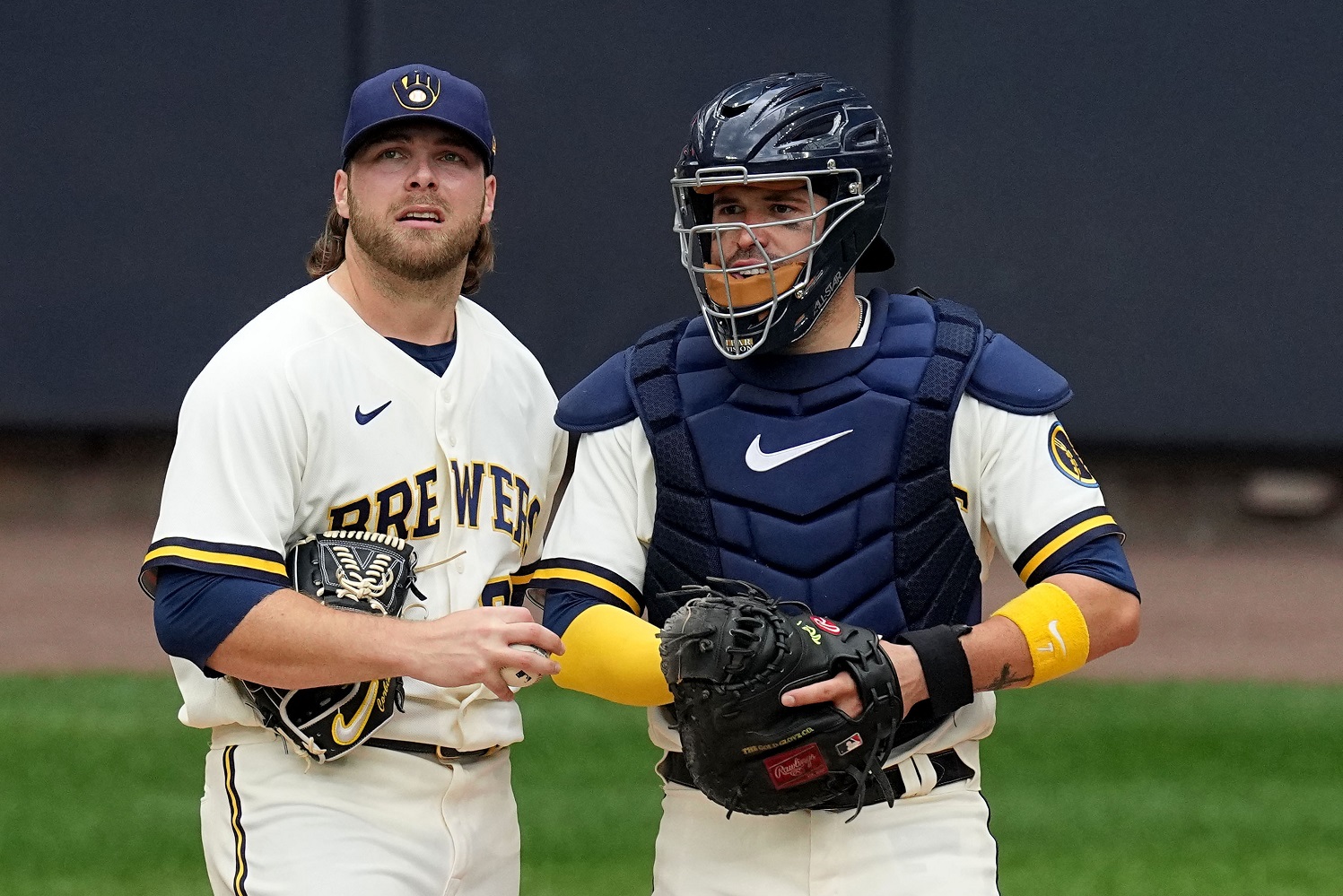 I think we can all agree that it will be a very interesting off-season for the Milwaukee Brewers. And there are some really difficult decisions for Matt Arnold and Company to consider. Between free agency and potential trades, the front office should be busy. How much will they be able to spend, or will they need to make decisions to reduce salaries? If that’s the case, fans will need to know that there will be some really good, really popular players that could be dealt. Today, we consider what a contract extension with Corbin Burnes might look like. (SPOILER ALERT! Quick summary, in case you need to come back later to see the actual numbers… It’s going to be a bunch of years and a really big dollar value.) Last weekend, we considered what a trade of co-ace Brandon Woodruff might look like as well as what Woodruff might be able to get in a long-term contract extension. Yesterday, Tim considered what the Brewers could get in return for Cy Young Corbin Burnes. So today, the pressure is on me to do a little research and provide Brewers fans with a realistic look at what a long-term contract extension with Burnes might look like Let’s start with the basics. Burnes was drafted in the fourth round of the 2016 draft out of St. Mary’s University. He made his MLB debut in July of 2018 and tossed 30 games out of the Brewers bullpen. In 2019, he went 1-5 with an ERA at 8.82, again, most out of the bullpen. That is the point in which I dropped him from the minor-league roster of my long-time keeper league. He had 243 strikeouts to go with 51 walks. So of course, in 2020, he went 4-1 with a 2.11 ERA. In 2021, he went 11-5 with a 2.43 ERA. In 167 innings, he walked 34 and struck out 234 batters on his way to his first Cy Young award. So far, it’s “just” one Cy Young Award, but if healthy, he appears to be a guy who will be a perennial All Star and Cy Young candidate. In 2022, he made a career-high 33 starts (to lead the league) and 202 innings. He was 12-8 with a 2.94 ERA. He has 4.049 years of service time which means he has two years of arbitration left potentially. So in reality, the Brewers (and Burnes) should not feel forced to make a deal, but it is also the ideal time for the Brewers to do this because the closer Burnes gets to free agency, the more likely he will want to hold out for that time when multiple teams will be able to court him. A quick look at his velocities. In 2022, his fastball averaged 96.0 to 96.9 mph. In the past couple of years, the pitch has been coded more often as a cutter and the velocity has been 95.3 and 95.1 mph. His slider has been over 88 mph. His curveball has been between 81 and 82 mph. He even throws a change-up, and it has been right over 90 mph. In other words, the stuff has not changed. According to Fan Graphs, Burnes has been worth 14.5 Wins Above Replacement (WAR) over the past three seasons, and that includes the Covid-shortened 2020 season (he was a 2.4 WAR pitcher in the 60-game season, which equates to about 6.5 WAR over a full season). In those three seasons, his ‘Value’ has been worth $115.6 million. Again, if you give him a full season for 2020, you can add about $33 million more to that number. So yes, per 162 games, he has been worth just over $50 million per year. Corbin Burnes has been on the Injured List just once. In 2020, he missed time with an oblique injury. In 2021, his Cy Young season, he left one game with a jammed knee but didn’t miss a start. Knock on proverbial wood, but to this point, he has remained healthy. Comparable Contracts Simply, there are not a lot of long-term contracts signed with dominant, Cy Young Award winners with two years of arbitration remaining. So, it is possible that the only decent comparables might be free agents, but that’s not the same. Free agents can talk to multiple teams in their negotiations. That said, those top contracts such as Gerrit Cole’s deal with the Yankees (9 years, $324 million) or Stephen Strasburg’s deal with the Nationals (7 years, $245 million). The Average Annual Value (AAV) of Cole’s deal was $36 million while Strasburg’s was $35 million. Of course, Trevor Bauer also signed before the 2020 season at an AAV of $34 million. Going back five years earlier, Max Scherzer signed a seven-year, $210 million deal with Washington ($30 million per year). The one contract that is probably most similar to this Burnes’ situation might be that of Jacob deGrom. Before the 2019 season, deGrom and the Mets agreed to a five-year, $137.5 million deal. At the time, deGrom was coming off of his first Cy Young season in 2018 and then won his second in 2019. So, he had two more years of arbitration remaining if he wanted to go in that direction. Instead, he signed a deal and received: 2019: $7M, 2020: $23M, 2021: $33.5M, 2022: $33.5M, 2023: $30.5M, 2024: $32.5M (club option). (AAV = $27.5M) As you know, the deal allowed deGrom to opt out after the 2022 season (so we should hear more about that soon). It’s also important to note that nearly half of the contract is deferred. Could that be included in a deal with Burnes? deGrom also received a full no-trade clause. There is one significant difference between deGrom’s extension and a long-term extension with Burnes, if he signs this offseason. Age. 2019 was the first season of deGrom’s deal, and it was his Age-31 season. Burnes will be 28 years old throughout the first season of such a deal. While that doesn’t need to mean more AAV, it could mean extending the contract out. So, let’s get to a proposal I would send to Burnes and his agents and advisors. OK, I’d probably start just a little bit lower in hopes of reaching a deal around this number. Will this be a deal that Brewers management, and ownership, would be comfortable agreeing upon? Age Year Salary 28 2023 $18.00 29 2024 $25.00 30 2025 $28.00 31 2026 $30.00 32 2027 $32.00 opt out 33 2028 $33.00 34 2029 $34.00 35 2030 $35.00 buyout $10M This contract is similar to deGrom’s deal with the Mets. The difference is that it extends longer, and I don’t want to have to consider deferments and such. I do like the idea of options, at least one, at the end of any contract. I really do not like the idea of opt-outs. However, in this case, I am going to add one. I feel like these huge contracts are far riskier for the organization than it is for the player. In this case, I would let Burnes make that decision after five years and $133 million. If he did opt out, he would be giving up the final two years and $77 million. However, if he would opt out, it would be because he could sign a deal for much more than that. If that happens, the Brewers would save that money by not paying a 33-34 year old $77 million when the risk is obviously much higher. The Brewers risk, of course, is that Burnes doesn’t opt out, it would likely mean that either he wasn’t pitching well or was injured. With Opt Out 5 years, $133M Guaranteed 7 years, $210M Up To 8 years, $235M Ultimately, it is the same contract that Max Scherzer signed as a free agent seven years ago. Again, Scherzer was a free agent. He won his first Cy Young Award two years earlier, in his age-28 season with the Tigers. In 2018, he finished fifth in Cy Young voting. He had pitched in his second straight All-Star game. The economics of baseball has grown significantly over the past seven years. I think that two years of arbitration and five years of free agency today could be worth the same as a seven-year contract would have seven years ago. So what do you think? Is this a contract that you would feel comfortable with the Brewers offering Corbin Burnes at this time? If his representation is willing to negotiate from there, awesome. Keep the talks going. If they aren’t willing to even listen to that offer, then Milwaukee should reach out to other teams to see what his trade value is (It will be very, very big). If they’re not happy with the offers, then you offer him arbitration, have him pitch in 2023 for something close to $20 million, and try again next offseason with the same three options. Your turn. What would you do?
-
The Brewers have a lot of very intriguing questions to answer this offseason, and we will try to provide some thoughts on many of the possibilities. Last weekend, we considered the options with Brandon Woodruff. This weekend, we are considering options for the organization to consider as it relates to Corbin Burnes. Image courtesy of Milwaukee Journal Sentinel-USA TODAY NETWORK The Brewers have a lot of very intriguing questions to answer this offseason, and we will try to provide some thoughts on many of the possibilities. Last weekend, we considered the options with Brandon Woodruff. This weekend, we are considering options for the organization to consider as it relates to Corbin Burnes. I think we can all agree that it will be a very interesting off-season for the Milwaukee Brewers. And there are some really difficult decisions for Matt Arnold and Company to consider. Between free agency and potential trades, the front office should be busy. How much will they be able to spend, or will they need to make decisions to reduce salaries? If that’s the case, fans will need to know that there will be some really good, really popular players that could be dealt. Today, we consider what a contract extension with Corbin Burnes might look like. (SPOILER ALERT! Quick summary, in case you need to come back later to see the actual numbers… It’s going to be a bunch of years and a really big dollar value.) Last weekend, we considered what a trade of co-ace Brandon Woodruff might look like as well as what Woodruff might be able to get in a long-term contract extension. Yesterday, Tim considered what the Brewers could get in return for Cy Young Corbin Burnes. So today, the pressure is on me to do a little research and provide Brewers fans with a realistic look at what a long-term contract extension with Burnes might look like Let’s start with the basics. Burnes was drafted in the fourth round of the 2016 draft out of St. Mary’s University. He made his MLB debut in July of 2018 and tossed 30 games out of the Brewers bullpen. In 2019, he went 1-5 with an ERA at 8.82, again, most out of the bullpen. That is the point in which I dropped him from the minor-league roster of my long-time keeper league. He had 243 strikeouts to go with 51 walks. So of course, in 2020, he went 4-1 with a 2.11 ERA. In 2021, he went 11-5 with a 2.43 ERA. In 167 innings, he walked 34 and struck out 234 batters on his way to his first Cy Young award. So far, it’s “just” one Cy Young Award, but if healthy, he appears to be a guy who will be a perennial All Star and Cy Young candidate. In 2022, he made a career-high 33 starts (to lead the league) and 202 innings. He was 12-8 with a 2.94 ERA. He has 4.049 years of service time which means he has two years of arbitration left potentially. So in reality, the Brewers (and Burnes) should not feel forced to make a deal, but it is also the ideal time for the Brewers to do this because the closer Burnes gets to free agency, the more likely he will want to hold out for that time when multiple teams will be able to court him. A quick look at his velocities. In 2022, his fastball averaged 96.0 to 96.9 mph. In the past couple of years, the pitch has been coded more often as a cutter and the velocity has been 95.3 and 95.1 mph. His slider has been over 88 mph. His curveball has been between 81 and 82 mph. He even throws a change-up, and it has been right over 90 mph. In other words, the stuff has not changed. According to Fan Graphs, Burnes has been worth 14.5 Wins Above Replacement (WAR) over the past three seasons, and that includes the Covid-shortened 2020 season (he was a 2.4 WAR pitcher in the 60-game season, which equates to about 6.5 WAR over a full season). In those three seasons, his ‘Value’ has been worth $115.6 million. Again, if you give him a full season for 2020, you can add about $33 million more to that number. So yes, per 162 games, he has been worth just over $50 million per year. Corbin Burnes has been on the Injured List just once. In 2020, he missed time with an oblique injury. In 2021, his Cy Young season, he left one game with a jammed knee but didn’t miss a start. Knock on proverbial wood, but to this point, he has remained healthy. Comparable Contracts Simply, there are not a lot of long-term contracts signed with dominant, Cy Young Award winners with two years of arbitration remaining. So, it is possible that the only decent comparables might be free agents, but that’s not the same. Free agents can talk to multiple teams in their negotiations. That said, those top contracts such as Gerrit Cole’s deal with the Yankees (9 years, $324 million) or Stephen Strasburg’s deal with the Nationals (7 years, $245 million). The Average Annual Value (AAV) of Cole’s deal was $36 million while Strasburg’s was $35 million. Of course, Trevor Bauer also signed before the 2020 season at an AAV of $34 million. Going back five years earlier, Max Scherzer signed a seven-year, $210 million deal with Washington ($30 million per year). The one contract that is probably most similar to this Burnes’ situation might be that of Jacob deGrom. Before the 2019 season, deGrom and the Mets agreed to a five-year, $137.5 million deal. At the time, deGrom was coming off of his first Cy Young season in 2018 and then won his second in 2019. So, he had two more years of arbitration remaining if he wanted to go in that direction. Instead, he signed a deal and received: 2019: $7M, 2020: $23M, 2021: $33.5M, 2022: $33.5M, 2023: $30.5M, 2024: $32.5M (club option). (AAV = $27.5M) As you know, the deal allowed deGrom to opt out after the 2022 season (so we should hear more about that soon). It’s also important to note that nearly half of the contract is deferred. Could that be included in a deal with Burnes? deGrom also received a full no-trade clause. There is one significant difference between deGrom’s extension and a long-term extension with Burnes, if he signs this offseason. Age. 2019 was the first season of deGrom’s deal, and it was his Age-31 season. Burnes will be 28 years old throughout the first season of such a deal. While that doesn’t need to mean more AAV, it could mean extending the contract out. So, let’s get to a proposal I would send to Burnes and his agents and advisors. OK, I’d probably start just a little bit lower in hopes of reaching a deal around this number. Will this be a deal that Brewers management, and ownership, would be comfortable agreeing upon? Age Year Salary 28 2023 $18.00 29 2024 $25.00 30 2025 $28.00 31 2026 $30.00 32 2027 $32.00 opt out 33 2028 $33.00 34 2029 $34.00 35 2030 $35.00 buyout $10M This contract is similar to deGrom’s deal with the Mets. The difference is that it extends longer, and I don’t want to have to consider deferments and such. I do like the idea of options, at least one, at the end of any contract. I really do not like the idea of opt-outs. However, in this case, I am going to add one. I feel like these huge contracts are far riskier for the organization than it is for the player. In this case, I would let Burnes make that decision after five years and $133 million. If he did opt out, he would be giving up the final two years and $77 million. However, if he would opt out, it would be because he could sign a deal for much more than that. If that happens, the Brewers would save that money by not paying a 33-34 year old $77 million when the risk is obviously much higher. The Brewers risk, of course, is that Burnes doesn’t opt out, it would likely mean that either he wasn’t pitching well or was injured. With Opt Out 5 years, $133M Guaranteed 7 years, $210M Up To 8 years, $235M Ultimately, it is the same contract that Max Scherzer signed as a free agent seven years ago. Again, Scherzer was a free agent. He won his first Cy Young Award two years earlier, in his age-28 season with the Tigers. In 2018, he finished fifth in Cy Young voting. He had pitched in his second straight All-Star game. The economics of baseball has grown significantly over the past seven years. I think that two years of arbitration and five years of free agency today could be worth the same as a seven-year contract would have seven years ago. So what do you think? Is this a contract that you would feel comfortable with the Brewers offering Corbin Burnes at this time? If his representation is willing to negotiate from there, awesome. Keep the talks going. If they aren’t willing to even listen to that offer, then Milwaukee should reach out to other teams to see what his trade value is (It will be very, very big). If they’re not happy with the offers, then you offer him arbitration, have him pitch in 2023 for something close to $20 million, and try again next offseason with the same three options. Your turn. What would you do? View full article
- 13 replies
-
- 1
-

-
- corbin burnes
- matt arnold
- (and 1 more)
-
Seth sits down with the Brewers' 2022 first round draft pick, shortstop Eric Brown, Jr. In the second and final segment of this interview, the two talk about Brown's collegiate years, being drafted in the first round, and his introduction to the Milwaukee Brewers organization.
-
Seth sits down with the Brewers' 2022 first round draft pick, shortstop Eric Brown, Jr. In the second and final segment of this interview, the two talk about Brown's collegiate years, being drafted in the first round, and his introduction to the Milwaukee Brewers organization. View full video
-
In Part 2 of our conversation with Milwaukee Brewers first-round pick, shortstop Eric Brown, Jr., we discussed his time at Coastal Carolina, his development, the draft, and the beginning of his professional career in the Brewers organization. Image courtesy of Neal Hock, Carolina Mudcats In Part 2 of our conversation with Milwaukee Brewers first-round pick, shortstop Eric Brown, Jr., we discussed his time at Coastal Carolina, his development, the draft, and the beginning of his professional career in the Brewers organization. If you missed Part 1 of our Brewers Spotlight interview with Eric Brown, Jr., click here. When we ended Part 1, Brown had just gone to a world wood bat tournament and played so well that he came out of it with 17 college offers. Coastal Carolina made it clear that they wanted him. In fact, as soon as Brown’s team was out of the tournament, the Brown family drove the five hours from Georgia straight to the campus in Conway, South Carolina. It was already about 9:00 pm, and the baseball coach showed them all around campus, right up until about 1:00 am. Dallas Baptist was another school that Brown strongly considered, and with his family’s religious beliefs and faith it was another very good option for him. In addition, Dallas was just three hours from the Brown’s home. Ultimately, Coastal Carolina was the choice for Brown. He hit just .259 as a freshman, “but it was a struggle to hit .259.” He considers the lost Covid season a “blessing in disguise” and took advantage of it. Brown said, “I truly do feel that for me personally, it was. This is God showing me, you can get your feet wet right here, I’m going to show you what you need to work on for next year. You can get your feet wet and you come in next year and you’re ready to go.” Specifically, he worked on his mental approach to the game and felt that was very important for him to develop. But he also learned from the games he did play, and what he needed to work on, and he set out to improve. He also put on 22 pounds between his freshman and his sophomore year as well. In 50 games as a sophomore in 2021, he hit .294/.413/.513 (.926) with 12 doubles, a triple, and nine home runs. He spent that summer playing for Cotuit in the Cape Cod League. As a junior in 2022, he was even better. Brown played in 57 games and hit .330/.460/.544 (1.004) with 10 doubles, two triples, and seven home runs. Going into the 2022 draft, rankings and draft boards had Brown going anywhere from the middle of the first round to the middle of the second round, so they just weren’t sure what was going to happen. Brown’s father has always been a huge Yankees fan. So when his son’s phone rang at the Number 24 pick, Eric Sr. got nervous and said, “Oh no!” The Boston Red Sox had that 24th pick. But I’m sure Mr. Brown was quite happy when the Sox didn’t take his son. The Yankees had the 25th pick, but they selected Vanderbilt outfielder Spencer Jones. The White Sox took a high school pitcher at #26. With the 27th overall pick in the 2022 MLB Draft, the Milwaukee Brewers selected Eric Brown, Jr. “The night that I got drafted… I don’t remember that night. Honestly, I don’t. I got my name called and the rest of the night was a blur. I was on the phone left and right. I didn’t know if I was too happy. I was crying. I can’t believe this just happened. It was crazy!” Later that week, he had the opportunity to go to Milwaukee where he signed. He met a lot of players including “one of my idols, Christian Yelich.” Brown added, “Our swings are somewhat similar from our lower half. If he can do it, I can do it. He was my motivation. It was pretty awesome meeting him.” From Milwaukee, he flew to Arizona and played four Arizona Complex League games before jumping up to Low-A Carolina where he finished with the Carolina Mudcats. Brown notes that he sees himself currently as a four-tool player. One of the things that he is specifically working on this offseason is his speed. Yes, he can get quicker, but if base stealing is any sort of measure of speed (it can be, but so are instincts), stealing 19 bases in 21 attempts in his pro debut is a pretty exciting sign of things to come. He has hit for average. He is strong and could turn all those doubles into homers over time. He is a solid defensive shortstop, but he also spent a lot of time in high school at the hot corner, and he’s got the strong arm to prove it. Some say there is a sixth ‘tool,’ plate discipline. In his college career, he walked more than he struck out. Eric Brown, Jr., is a very exciting prospect for the Brewers. There are a lot of reasons to be encouraged about his future with the Brewers organization. It will be interesting to see how quickly he is able to work his way up the organization. Join me in congratulating Brown on being drafted, and thanking him for taking the time to answer our questions. And if you have more questions for Brown, include them in the Comments below. Either I will try to ask him, or maybe he’ll log in and answer himself. View full article
- 4 replies
-
- 1
-
-
- eric brown jr
- eric brown jr
- (and 1 more)
-
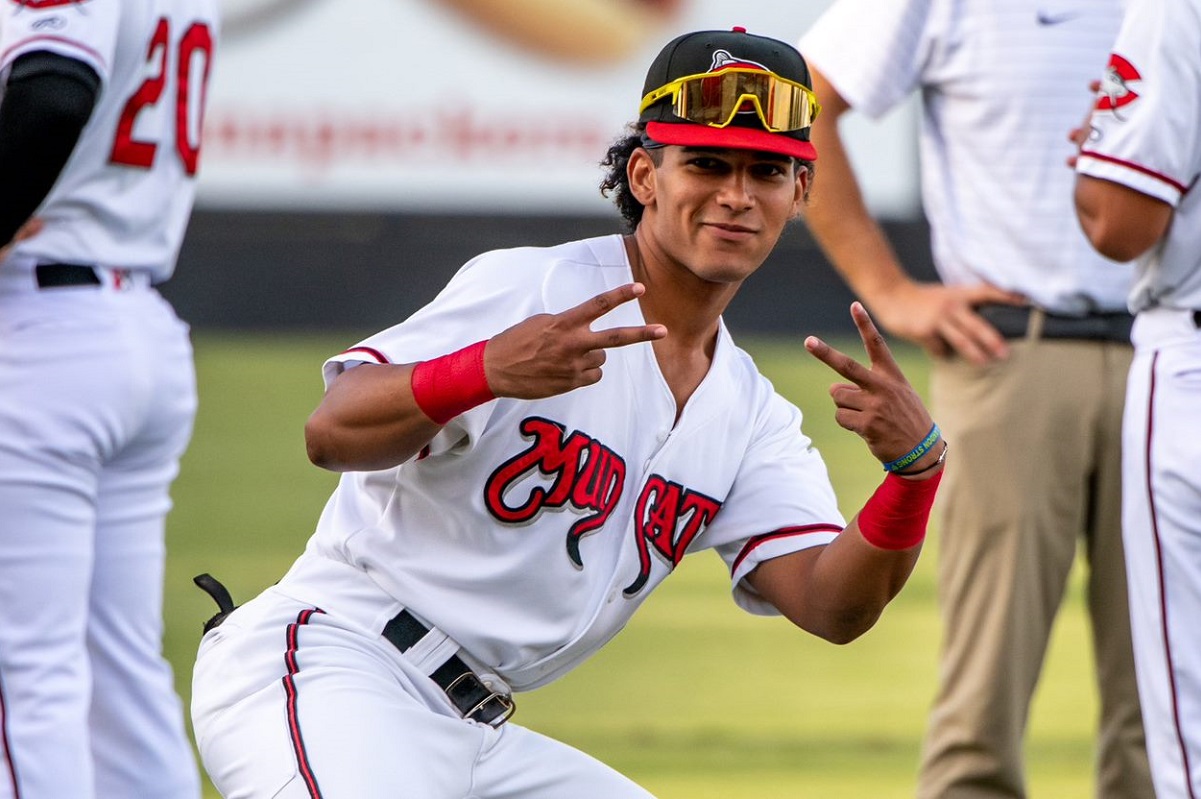 If you missed Part 1 of our Brewers Spotlight interview with Eric Brown, Jr., click here. When we ended Part 1, Brown had just gone to a world wood bat tournament and played so well that he came out of it with 17 college offers. Coastal Carolina made it clear that they wanted him. In fact, as soon as Brown’s team was out of the tournament, the Brown family drove the five hours from Georgia straight to the campus in Conway, South Carolina. It was already about 9:00 pm, and the baseball coach showed them all around campus, right up until about 1:00 am. Dallas Baptist was another school that Brown strongly considered, and with his family’s religious beliefs and faith it was another very good option for him. In addition, Dallas was just three hours from the Brown’s home. Ultimately, Coastal Carolina was the choice for Brown. He hit just .259 as a freshman, “but it was a struggle to hit .259.” He considers the lost Covid season a “blessing in disguise” and took advantage of it. Brown said, “I truly do feel that for me personally, it was. This is God showing me, you can get your feet wet right here, I’m going to show you what you need to work on for next year. You can get your feet wet and you come in next year and you’re ready to go.” Specifically, he worked on his mental approach to the game and felt that was very important for him to develop. But he also learned from the games he did play, and what he needed to work on, and he set out to improve. He also put on 22 pounds between his freshman and his sophomore year as well. In 50 games as a sophomore in 2021, he hit .294/.413/.513 (.926) with 12 doubles, a triple, and nine home runs. He spent that summer playing for Cotuit in the Cape Cod League. As a junior in 2022, he was even better. Brown played in 57 games and hit .330/.460/.544 (1.004) with 10 doubles, two triples, and seven home runs. Going into the 2022 draft, rankings and draft boards had Brown going anywhere from the middle of the first round to the middle of the second round, so they just weren’t sure what was going to happen. Brown’s father has always been a huge Yankees fan. So when his son’s phone rang at the Number 24 pick, Eric Sr. got nervous and said, “Oh no!” The Boston Red Sox had that 24th pick. But I’m sure Mr. Brown was quite happy when the Sox didn’t take his son. The Yankees had the 25th pick, but they selected Vanderbilt outfielder Spencer Jones. The White Sox took a high school pitcher at #26. With the 27th overall pick in the 2022 MLB Draft, the Milwaukee Brewers selected Eric Brown, Jr. “The night that I got drafted… I don’t remember that night. Honestly, I don’t. I got my name called and the rest of the night was a blur. I was on the phone left and right. I didn’t know if I was too happy. I was crying. I can’t believe this just happened. It was crazy!” Later that week, he had the opportunity to go to Milwaukee where he signed. He met a lot of players including “one of my idols, Christian Yelich.” Brown added, “Our swings are somewhat similar from our lower half. If he can do it, I can do it. He was my motivation. It was pretty awesome meeting him.” From Milwaukee, he flew to Arizona and played four Arizona Complex League games before jumping up to Low-A Carolina where he finished with the Carolina Mudcats. Brown notes that he sees himself currently as a four-tool player. One of the things that he is specifically working on this offseason is his speed. Yes, he can get quicker, but if base stealing is any sort of measure of speed (it can be, but so are instincts), stealing 19 bases in 21 attempts in his pro debut is a pretty exciting sign of things to come. He has hit for average. He is strong and could turn all those doubles into homers over time. He is a solid defensive shortstop, but he also spent a lot of time in high school at the hot corner, and he’s got the strong arm to prove it. Some say there is a sixth ‘tool,’ plate discipline. In his college career, he walked more than he struck out. Eric Brown, Jr., is a very exciting prospect for the Brewers. There are a lot of reasons to be encouraged about his future with the Brewers organization. It will be interesting to see how quickly he is able to work his way up the organization. Join me in congratulating Brown on being drafted, and thanking him for taking the time to answer our questions. And if you have more questions for Brown, include them in the Comments below. Either I will try to ask him, or maybe he’ll log in and answer himself.
-
With the 27th overall pick in the 2022 MLB Draft, the Milwaukee Brewers selected Eric Brown, Jr., a shortstop from Coastal Carolina. We recently chatted with him on Brewers Spotlight. In Part 1, get to know his background, amateur days, and much more. Image courtesy of Neal Hock, Carolina Mudcats With the 27th overall pick in the 2022 MLB Draft, the Milwaukee Brewers selected Eric Brown, Jr., a shortstop from Coastal Carolina. We recently chatted with him on Brewers Spotlight. In Part 1, get to know his background, amateur days, and much more. Eric Brown spent 23 years in the military. In December of 2000, the family lived in Arizona when his wife gave birth to a son, Eric Brown, Jr. Two months later, the family moved from Arizona to Alabama, and then they moved to Georgia and finally to Northwest Louisiana in 2008. He said, “I was always the new kid. Moving to new places was fun to me, always being the new kid.” Baseball has always been his first love, and it grew with the support of his family. While his favorite player was Yankees legend Derek Jeter, Brown acknowledged that he is a big fan of the sports teams in Philadelphia, at least until he was drafted by the Brewers, of course. The Phillies are now a distant second to the Brewers as his favorite organization. Before the draft, Brown had a workout at Citizens Bank Park. “It was an awesome experience.” He is a big 76ers fan, and he predicted good things for the now 7-0 Eagles very early in the season. At Parkway High School in Bossier City, LA, Brown played other sports in his early years. He knew football wasn’t for him because you need to be “a little psycho.” In his first basketball game, the 5-10 guard saw that the opponent that he was guarding was 6-5. It wasn’t part of his future. Baseball is where Brown stood out. He played four years on the varsity baseball team and saw his team get better each year. He received his first college offer as a sophomore. In fact, after his junior year, he called Louisiana Tech, ready to verbally commit. But when he called, he was told they had received six commitments, but they would call him back at the end of the season. Brown said, “Don’t worry about it,” and hung up. He bet on himself. He told himself that he “would make every college team pay for it.” He went to a wood bat tournament the next week and “played the tournament of my life.” He walked away from that tournament with 17 offers. Brown felt that it was a big eye-opener for him and his family and their Christian faith. “We believe strongly in God’s timing. You want to do something right now, but God’s plan makes for something else. When that got stripped away, I really had to lean strong on my faith and that helped me out a lot.” Going into his senior year, he had two college offers and was talking with three MLB teams. He admits that he was a bit gullible and wanted to believe what the teams were telling him about potentially being drafted out of high school. “I’m grateful those teams didn’t take me out of high school. I wasn’t ready for it mentally or physically. I’m so glad I got to experience everything I did through college. In the summers, he played in Mississippi with the East Coast Sox, coached by Joe Caruso. A theme for Brown often involves having a chip on his shoulder. “I didn’t get any invites to any Area Code games. Growing up in my baseball career, I was never the top of the top. I always had that grit of ‘alright, they didn’t select me this time, but I’m going to make sure they select me next time.’ It just kept happening every year. So none of the years did I get selected for Area Code. I didn’t get Perfect Game All-American, I wasn’t Under Armour All-American. I wasn’t any of that. I use that as motivation.” Brown has a great family support system around him. His dad provided that military toughness. “My dad is the tough one, where he pushes me to the brink of breaking, but I need that. Everybody needs that. Then you also have to have that other end.” “My mom, she is my backbone. She is my rock. I would do anything in this world for her, and I know she would do anything in this world for me. Without her, there’s absolutely no way I could have accomplished half of the things in my life without her. She’s been my motivation. She’s the one when I’m feeling down, she picks me up.” His sisters have always been very supportive. His brother played at Texas Tech, and “he kind of laid out a road map.” A year ago, he also met his girlfriend Lauren. “She’s always been there for me emotionally. She’s been there supporting me, and helped me get through the ups and downs of the draft, and the draft year.” In Part 2 tomorrow, we will discuss his time at Coastal Carolina, the draft, and the beginning of his professional career with the Brewers. View full article
-
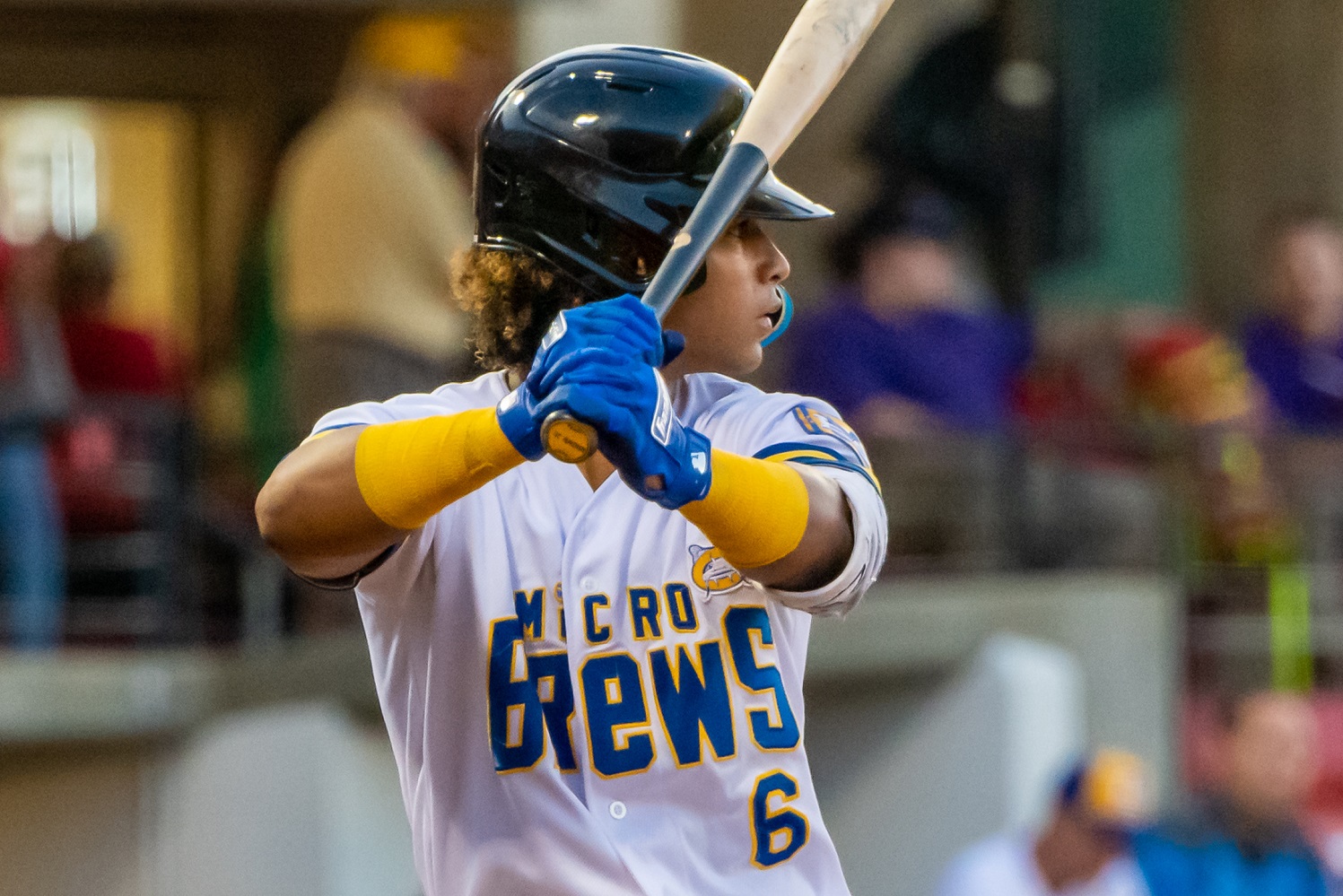 Eric Brown spent 23 years in the military. In December of 2000, the family lived in Arizona when his wife gave birth to a son, Eric Brown, Jr. Two months later, the family moved from Arizona to Alabama, and then they moved to Georgia and finally to Northwest Louisiana in 2008. He said, “I was always the new kid. Moving to new places was fun to me, always being the new kid.” Baseball has always been his first love, and it grew with the support of his family. While his favorite player was Yankees legend Derek Jeter, Brown acknowledged that he is a big fan of the sports teams in Philadelphia, at least until he was drafted by the Brewers, of course. The Phillies are now a distant second to the Brewers as his favorite organization. Before the draft, Brown had a workout at Citizens Bank Park. “It was an awesome experience.” He is a big 76ers fan, and he predicted good things for the now 7-0 Eagles very early in the season. At Parkway High School in Bossier City, LA, Brown played other sports in his early years. He knew football wasn’t for him because you need to be “a little psycho.” In his first basketball game, the 5-10 guard saw that the opponent that he was guarding was 6-5. It wasn’t part of his future. Baseball is where Brown stood out. He played four years on the varsity baseball team and saw his team get better each year. He received his first college offer as a sophomore. In fact, after his junior year, he called Louisiana Tech, ready to verbally commit. But when he called, he was told they had received six commitments, but they would call him back at the end of the season. Brown said, “Don’t worry about it,” and hung up. He bet on himself. He told himself that he “would make every college team pay for it.” He went to a wood bat tournament the next week and “played the tournament of my life.” He walked away from that tournament with 17 offers. Brown felt that it was a big eye-opener for him and his family and their Christian faith. “We believe strongly in God’s timing. You want to do something right now, but God’s plan makes for something else. When that got stripped away, I really had to lean strong on my faith and that helped me out a lot.” Going into his senior year, he had two college offers and was talking with three MLB teams. He admits that he was a bit gullible and wanted to believe what the teams were telling him about potentially being drafted out of high school. “I’m grateful those teams didn’t take me out of high school. I wasn’t ready for it mentally or physically. I’m so glad I got to experience everything I did through college. In the summers, he played in Mississippi with the East Coast Sox, coached by Joe Caruso. A theme for Brown often involves having a chip on his shoulder. “I didn’t get any invites to any Area Code games. Growing up in my baseball career, I was never the top of the top. I always had that grit of ‘alright, they didn’t select me this time, but I’m going to make sure they select me next time.’ It just kept happening every year. So none of the years did I get selected for Area Code. I didn’t get Perfect Game All-American, I wasn’t Under Armour All-American. I wasn’t any of that. I use that as motivation.” Brown has a great family support system around him. His dad provided that military toughness. “My dad is the tough one, where he pushes me to the brink of breaking, but I need that. Everybody needs that. Then you also have to have that other end.” “My mom, she is my backbone. She is my rock. I would do anything in this world for her, and I know she would do anything in this world for me. Without her, there’s absolutely no way I could have accomplished half of the things in my life without her. She’s been my motivation. She’s the one when I’m feeling down, she picks me up.” His sisters have always been very supportive. His brother played at Texas Tech, and “he kind of laid out a road map.” A year ago, he also met his girlfriend Lauren. “She’s always been there for me emotionally. She’s been there supporting me, and helped me get through the ups and downs of the draft, and the draft year.” In Part 2 tomorrow, we will discuss his time at Coastal Carolina, the draft, and the beginning of his professional career with the Brewers.
-
Seth sits down with the Brewers' 2022 first round draft pick, shortstop Eric Brown, Jr. In the first segment of this interview, they talk about Brown's childhood and growing up with the game.
-
Seth sits down with the Brewers' 2022 first round draft pick, shortstop Eric Brown, Jr. In the first segment of this interview, they talk about Brown's childhood and growing up with the game. View full video
-
I think we can all agree that it will be a very interesting offseason for the Milwaukee Brewers. Between free agency and possible trades, the front office should be busy. The idea of locking up some key players to long-term deals may also be a theme this offseason. Today, we start this series by considering what a contract extension with Brandon Woodruff look like? Image courtesy of Benny Sieu-USA TODAY Sports I think we can all agree that it will be a very interesting offseason for the Milwaukee Brewers. Between free agency and possible trades, the front office should be busy. The idea of locking up some key players to long-term deals may also be a theme this offseason. Today, we start this series by considering what a contract extension with Brandon Woodruff look like? There will be many interesting decisions to be made this offseason. It is very possible that the front office may have more conversations internally about Brandon Woodruff than anyone else. He is under team control for the next two seasons and has earned significant raises. They could just go year to year. They should at least work with Woodruff’s representatives about a long-term deal, but if he is completely against that idea and looking to become a free agent, the Brewers owe it to themselves and the fans to consider trading him at peak value. But in this article, we are discussing the idea of a long-term contract extension with Woodruff. There are, of course, several factors that go into the decision to retain a player for an extended period of time. The first factor, obviously, is performance. Performance can be looked at in two ways. First, consider his statistics and track record. Well, Woodruff has been an All-Star twice in the past three seasons with All-Star games (there was no game in 2020). His ERA+ since 2019 have been 123, 149, 161, and 129. He received Cy Young votes in 2021 when he went just 9-10 but had an ERA of 2.56 and a WHIP of 0.97. In an average year, he is worth more than 3 fWAR. Based on that, he has been worth $108.7 million over the past four years. The performance also speaks to his stuff. Has he lost anything, velocity, spin, etc.? Well, Woodruff’s average fastball in 2019 was 96.3 mph. In 2022, it was 96.2 mph. He’s got a four-pitch mix. He’s got good control and command. So there are the reasons that the Brewers should absolutely want to lock up such a talented arm. In addition, anyone who has watched the playoffs knows that for a team to make a legitimate run toward a World Series title, they have to have at least two, and preferably three or four top starting pitchers. A big concern, especially with pitchers, has to be an injury. While past health doesn’t necessarily mean a pitcher will remain healthy, the track record is really all teams have to go by (although, they get access to his medicals before such expenditures are made). Brandon Woodruff has been on the Injured List three times. In 2019, he had an Oblique injury. In September of 2021, he was out with an illness. In May, he missed time with a sprained ankle. At that time, he confirmed that he had been diagnosed with Raynaud’s syndrome. It is a circulatory condition that causes numbness in the extremities due to reduced blood flow. While it doesn’t appear to have any real short or long-term effects, it is something to keep in mind. Comparable Contracts There have been a couple of long-term extensions for pitchers with similar success to Woodruff. Late this season, Luis Castillo signed a five-year, $108 million deal with a vesting option for 2028. Last November, the Blue Jays signed Jose Berrios to a seven-year, $131 million contract. Let’s start with the Berrios contract. The Puerto Rican right-hander had been acquired by Toronto from the Minnesota Twins in exchange for top prospects Austin Martin and Simeon Woods Richardson. It certainly had to be a goal of the Blue Jays’ front office to keep him beyond the 2022 season. He was able to get a seven-year deal because he was about two years younger than Woodruff at the time of the deal. Luis Castillo is actually about three months older than Woodruff and their service time is very similar. Castillo has twice been an All Star and put up terrific numbers in Cincinnati. He was acquired by the Mariners before the trade deadline this year and pitched very well in a pennant race and in the playoffs. Castillo has three plus-pitches and his fastball is just a bit faster than Woodruff’s, but the Brewers’ co-ace has slightly better statistics. His FanGraphs WAR has been worth $112.3 million over the past four seasons. Berrios Castillo 2022 $10.70 2023 $15.70 $11.40 2024 $17.70 $24.15 2025 $18.70 $24.15 2026 $18.80 $24.15 2027 $24.70 $24.15 2028 $24.70 $25.00 There are a few things about these two agreements that the Brewers could choose to add to a Woodruff deal. For instance, if Castillo throws 180 or more innings in 2027, his $25 million contract vests. However, if he missed 130 or more days in 2025 through 2027 with a UCL injury, it becomes a $5 million team option. He has a full no-trade clause for the first three years of the deal, and if he’s traded over those final three years, he gets a $1 million bonus. Berrios has an opt-out after the 2026 season. There is a limited no-trade clause. He also has incentives in his deal based on his performance in 2025 and 2026 that could increase his 2027 and 2028 contracts by up to $5 million. So, let’s get to a proposal I would send to Woodruff and his agents and advisors. Age Salary Signing Bonus Total 2023 29 $10.50 $1.50 $12.00 2024 30 $21.00 $1.50 $22.50 2025 31 $21.50 $1.50 $23.00 2026 32 $22.00 $1.25 $23.25 2027 33 $23.00 $1.25 $24.25 2028 34 $25.00 buyout $5 This contract is incredibly similar to Castillo’s overall. I’ve included signing bonuses for each season. It would guarantee Woodruff five years and $110 million, an average annual value of $22 million. I personally like to include a team option or two, and in this case, I have an option for a sixth season at $25 million with a $5 million buyout. So, the contract could be worth $130 million over six seasons. I think that deal, if it could be completed, would be a home run for the Brewers and a very fair deal for Woodruff. Maybe a home run for both? So what do you think? Is this a contract that you would feel comfortable with the Brewers offering Brandon Woodruff? If his side is willing to negotiate from there, fantastic. If they basically scoff at the offer, then the team should reach out to other organizations to see what his trade value is. If they’re not happy with the offers, then you offer him arbitration, have him pitch in 2023 for something around $10-12 million, and try again next offseason with the same three options. Your turn. Share your thoughts. View full article
-
 There will be many interesting decisions to be made this offseason. It is very possible that the front office may have more conversations internally about Brandon Woodruff than anyone else. He is under team control for the next two seasons and has earned significant raises. They could just go year to year. They should at least work with Woodruff’s representatives about a long-term deal, but if he is completely against that idea and looking to become a free agent, the Brewers owe it to themselves and the fans to consider trading him at peak value. But in this article, we are discussing the idea of a long-term contract extension with Woodruff. There are, of course, several factors that go into the decision to retain a player for an extended period of time. The first factor, obviously, is performance. Performance can be looked at in two ways. First, consider his statistics and track record. Well, Woodruff has been an All-Star twice in the past three seasons with All-Star games (there was no game in 2020). His ERA+ since 2019 have been 123, 149, 161, and 129. He received Cy Young votes in 2021 when he went just 9-10 but had an ERA of 2.56 and a WHIP of 0.97. In an average year, he is worth more than 3 fWAR. Based on that, he has been worth $108.7 million over the past four years. The performance also speaks to his stuff. Has he lost anything, velocity, spin, etc.? Well, Woodruff’s average fastball in 2019 was 96.3 mph. In 2022, it was 96.2 mph. He’s got a four-pitch mix. He’s got good control and command. So there are the reasons that the Brewers should absolutely want to lock up such a talented arm. In addition, anyone who has watched the playoffs knows that for a team to make a legitimate run toward a World Series title, they have to have at least two, and preferably three or four top starting pitchers. A big concern, especially with pitchers, has to be an injury. While past health doesn’t necessarily mean a pitcher will remain healthy, the track record is really all teams have to go by (although, they get access to his medicals before such expenditures are made). Brandon Woodruff has been on the Injured List three times. In 2019, he had an Oblique injury. In September of 2021, he was out with an illness. In May, he missed time with a sprained ankle. At that time, he confirmed that he had been diagnosed with Raynaud’s syndrome. It is a circulatory condition that causes numbness in the extremities due to reduced blood flow. While it doesn’t appear to have any real short or long-term effects, it is something to keep in mind. Comparable Contracts There have been a couple of long-term extensions for pitchers with similar success to Woodruff. Late this season, Luis Castillo signed a five-year, $108 million deal with a vesting option for 2028. Last November, the Blue Jays signed Jose Berrios to a seven-year, $131 million contract. Let’s start with the Berrios contract. The Puerto Rican right-hander had been acquired by Toronto from the Minnesota Twins in exchange for top prospects Austin Martin and Simeon Woods Richardson. It certainly had to be a goal of the Blue Jays’ front office to keep him beyond the 2022 season. He was able to get a seven-year deal because he was about two years younger than Woodruff at the time of the deal. Luis Castillo is actually about three months older than Woodruff and their service time is very similar. Castillo has twice been an All Star and put up terrific numbers in Cincinnati. He was acquired by the Mariners before the trade deadline this year and pitched very well in a pennant race and in the playoffs. Castillo has three plus-pitches and his fastball is just a bit faster than Woodruff’s, but the Brewers’ co-ace has slightly better statistics. His FanGraphs WAR has been worth $112.3 million over the past four seasons. Berrios Castillo 2022 $10.70 2023 $15.70 $11.40 2024 $17.70 $24.15 2025 $18.70 $24.15 2026 $18.80 $24.15 2027 $24.70 $24.15 2028 $24.70 $25.00 There are a few things about these two agreements that the Brewers could choose to add to a Woodruff deal. For instance, if Castillo throws 180 or more innings in 2027, his $25 million contract vests. However, if he missed 130 or more days in 2025 through 2027 with a UCL injury, it becomes a $5 million team option. He has a full no-trade clause for the first three years of the deal, and if he’s traded over those final three years, he gets a $1 million bonus. Berrios has an opt-out after the 2026 season. There is a limited no-trade clause. He also has incentives in his deal based on his performance in 2025 and 2026 that could increase his 2027 and 2028 contracts by up to $5 million. So, let’s get to a proposal I would send to Woodruff and his agents and advisors. Age Salary Signing Bonus Total 2023 29 $10.50 $1.50 $12.00 2024 30 $21.00 $1.50 $22.50 2025 31 $21.50 $1.50 $23.00 2026 32 $22.00 $1.25 $23.25 2027 33 $23.00 $1.25 $24.25 2028 34 $25.00 buyout $5 This contract is incredibly similar to Castillo’s overall. I’ve included signing bonuses for each season. It would guarantee Woodruff five years and $110 million, an average annual value of $22 million. I personally like to include a team option or two, and in this case, I have an option for a sixth season at $25 million with a $5 million buyout. So, the contract could be worth $130 million over six seasons. I think that deal, if it could be completed, would be a home run for the Brewers and a very fair deal for Woodruff. Maybe a home run for both? So what do you think? Is this a contract that you would feel comfortable with the Brewers offering Brandon Woodruff? If his side is willing to negotiate from there, fantastic. If they basically scoff at the offer, then the team should reach out to other organizations to see what his trade value is. If they’re not happy with the offers, then you offer him arbitration, have him pitch in 2023 for something around $10-12 million, and try again next offseason with the same three options. Your turn. Share your thoughts.
- 6 comments
-
- 1
-
-
- brandon woodruff
- luis castillo
- (and 1 more)
-
On Thursday, MLB announced the 2022 Silver Slugger Award finalists. Three Milwaukee Brewers find themselves as finalists. They are infielders Willy Adames and Kolten Wong as well as outfielder Hunter Renfroe. Image courtesy of Kamil Krzaczynski-USA TODAY Sports On Thursday, MLB announced the 2022 Silver Slugger Award finalists. Three Milwaukee Brewers find themselves as finalists. They are infielders Willy Adames and Kolten Wong as well as outfielder Hunter Renfroe. Willy Adames and Kolten Wong have provided solid defense up the middle for the Brewers, but on Thursday, both were recognized for their bats. The infielders, along with outfielder Hunter Renfroe, were names finalists for a National League Silver Slugger Award. The honor recognizes the top hitter in each league at each position, and the winners will be announced on Thursday, November 10th. MLB Managers and coaches select the finalists. Craig Counsell and three of his coaches were the Brewers voting members. The competition for the Brewers players will be quite strong. At shortstop, Adames is joined by fellow nominees Trea Turner (Dodgers), Francisco Lindor (Mets) and Dansby Swanson (Braves) as finalists. Wong's competition at second base includes Ketel Marte (Diamondbacks), Brendan Rodgers (Rockies), Jake Cronenworth (Padres) and batting champ Jeff McNeil (Mets). The outfield has nine finalists, and three Silver Sluggers will be handed out. Renfroe's competition includes Mookie Betts (Dodgers), Kyle Schwarber (Phillies), Juan Soto (Nationals/Padres), Starling Marte (Braves), Joc Pederson (Giants), Michael Harris (Braves), Bryan Reynolds (Pirates) and Brandon Nimmo (Mets). In other words, it seems unlikely that any of the three will actually be awarded a Silver Slugger, but it's nice to get the recognition and have people in the game recognize their success. If one does receive an award, it will be the Brewers first since 2019 when Christian Yelich won the award. Of the 2022 Brewers, the following players have won Silver Slugger Awards: Andrew McCutchen (2012, 2013, 2014, 2015), Christian Yelich (2016, 2018, 2019). There have been 21 Silver Sluggers in Brewers history: Christian Yelich (2018, 2019) Ryan Braun (2008, 2009, 2010, 2011, 2012) Prince Fielder (2007, 2011) Yovani Gallardo (2010) Carlos Lee (2005) Dave Parker (1990) Robin Yount (1980, 1982, 1989) Paul Molitor (1987, 1988) Cecil Cooper (1980, 1981, 1982) Ben Oglivie (1980) What are your thoughts on the Brewers who were named finalists? Was anyone snubbed? View full article
-
Adames, Renfroe and Wong Named 2022 Silver Slugger Finalists
Seth Stohs posted an article in Brewers
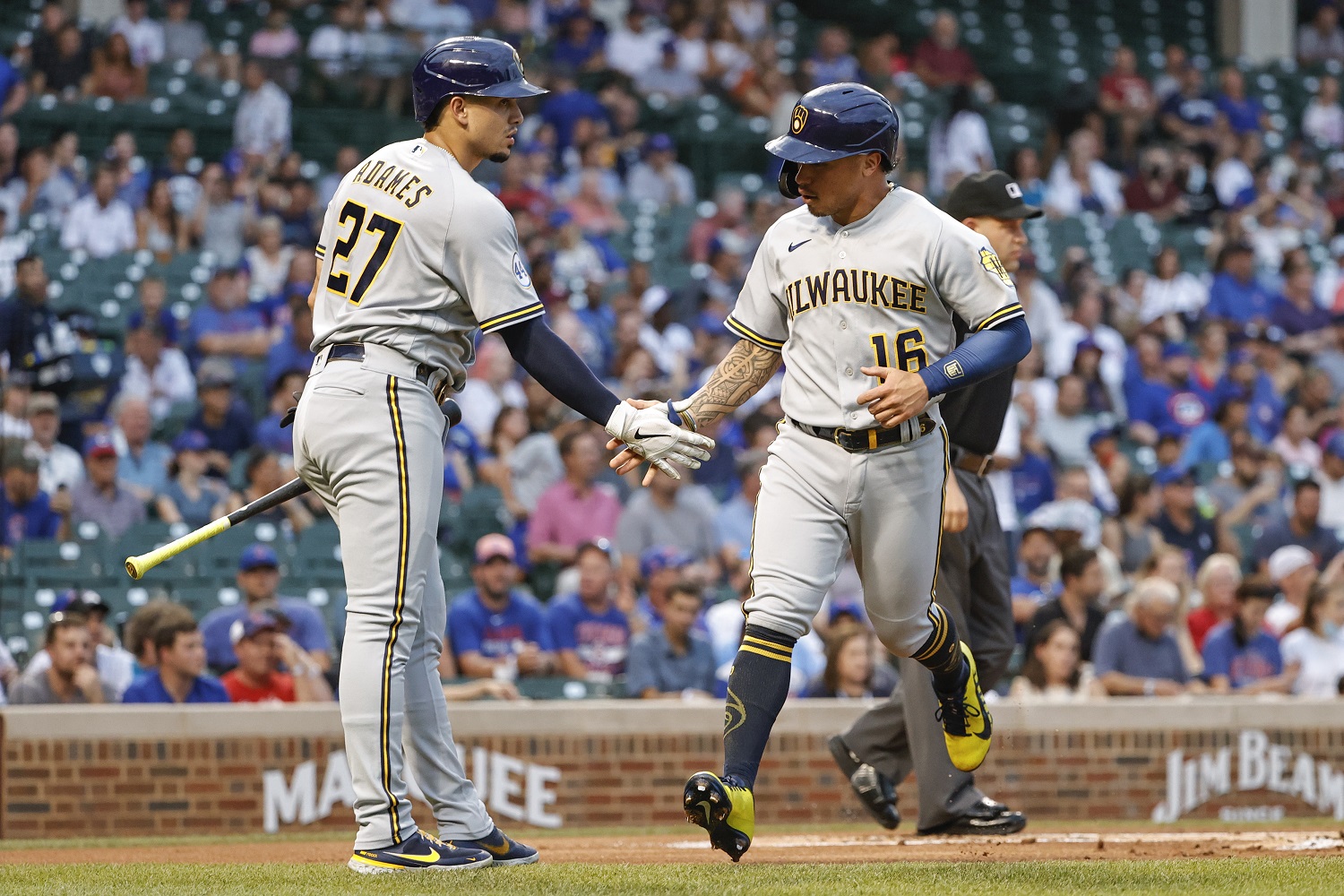 Willy Adames and Kolten Wong have provided solid defense up the middle for the Brewers, but on Thursday, both were recognized for their bats. The infielders, along with outfielder Hunter Renfroe, were names finalists for a National League Silver Slugger Award. The honor recognizes the top hitter in each league at each position, and the winners will be announced on Thursday, November 10th. MLB Managers and coaches select the finalists. Craig Counsell and three of his coaches were the Brewers voting members. The competition for the Brewers players will be quite strong. At shortstop, Adames is joined by fellow nominees Trea Turner (Dodgers), Francisco Lindor (Mets) and Dansby Swanson (Braves) as finalists. Wong's competition at second base includes Ketel Marte (Diamondbacks), Brendan Rodgers (Rockies), Jake Cronenworth (Padres) and batting champ Jeff McNeil (Mets). The outfield has nine finalists, and three Silver Sluggers will be handed out. Renfroe's competition includes Mookie Betts (Dodgers), Kyle Schwarber (Phillies), Juan Soto (Nationals/Padres), Starling Marte (Braves), Joc Pederson (Giants), Michael Harris (Braves), Bryan Reynolds (Pirates) and Brandon Nimmo (Mets). In other words, it seems unlikely that any of the three will actually be awarded a Silver Slugger, but it's nice to get the recognition and have people in the game recognize their success. If one does receive an award, it will be the Brewers first since 2019 when Christian Yelich won the award. Of the 2022 Brewers, the following players have won Silver Slugger Awards: Andrew McCutchen (2012, 2013, 2014, 2015), Christian Yelich (2016, 2018, 2019). There have been 21 Silver Sluggers in Brewers history: Christian Yelich (2018, 2019) Ryan Braun (2008, 2009, 2010, 2011, 2012) Prince Fielder (2007, 2011) Yovani Gallardo (2010) Carlos Lee (2005) Dave Parker (1990) Robin Yount (1980, 1982, 1989) Paul Molitor (1987, 1988) Cecil Cooper (1980, 1981, 1982) Ben Oglivie (1980) What are your thoughts on the Brewers who were named finalists? Was anyone snubbed?
-
News broke on Thursday morning that Brewers president of baseball operations, David Stearns, is stepping down from that role and will become an advisor to ownership and the baseball operations group. Matt Arnold, who has been GM since 2020, will now be overseeing the baseball operations department. Image courtesy of Mike De Sisti / Milwaukee Journal Sentinel / USA TODAY NETWORK News broke on Thursday morning that Brewers president of baseball operations, David Stearns, is stepping down from that role and will become an advisor to ownership and the baseball operations group. Matt Arnold, who has been GM since 2020, will now be overseeing the baseball operations department. David Stearns joined the Brewers in October of 2015 when he was named the general manager. At the time, he was touted as highly intelligent, very into the baseball analytics, and very young. Before the 2019 season, Stearns was named the president of baseball operations. Soon after, he hired Matt Arnold to take over the role of general manager. Together, they have helped lead the Brewers to four postseason trips in the past five seasons, and this year, they missed the playoffs by one game. Over the past six seasons, the Brewers have the third most wins in the National League behind only the Dodgers and Braves. Adam McCalvy was the first to break the news online. A 10:00 press conference this morning will air on MLB Network. The decision to step down was not an easy one for Stearns who said that it is he has "been wrestling with for a long time." He continued, "Mark Attanasio and I have had an open dialogue and we both knew this day could eventually come. It has been a priority for both of us that any transition would take place while the organization is in a healthy position with solid leadership and a talented roster going forward. That is certainly the case today." The team is certainly talented and filled with players who have helped the team win a lot of games. But the leadership will now come from Matt Arnold. Arnold has been in the game for a long time. His first job in baseball came with the Dodgers in 2000. He spent 2002 with the Rangers before four years with the Reds. He then joined the Tampa Bay Rays in 2007 and remained there until 2015 when he joined the Brewers at the same time as Stearns. Arnold said, "I want to thank Mark (Attanasio) and David (Stearns) for their support throughout my seven years here. I am excited to be taking the reins in leading our baseball operation efforts." Attanasio noted in the team's press release, "While we will miss David, I am excited for the opportunity this provides Matt. Matt is one of the brightest executives in the game. He brings a diverse set of experiences and has been integral to everything we have done as an organization during his time here." So Brewers fans, is this a good move for the organization? It will be a very interesting offseason for the team as a lot of very difficult decisions will need to be made. View full article
-
David Stearns Steps Down as President of Brewers Baseball Operations
Seth Stohs posted an article in Brewers
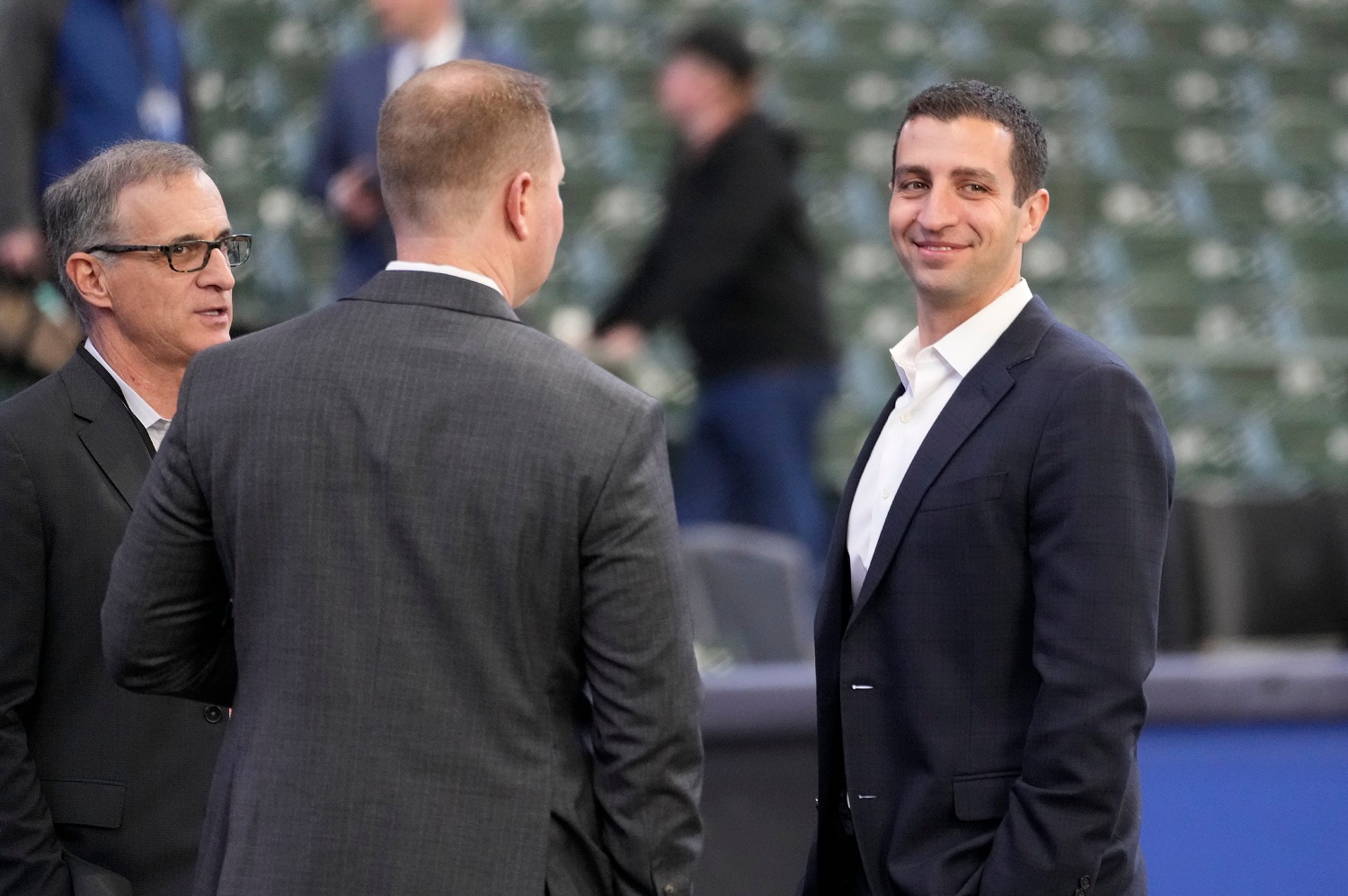 David Stearns joined the Brewers in October of 2015 when he was named the general manager. At the time, he was touted as highly intelligent, very into the baseball analytics, and very young. Before the 2019 season, Stearns was named the president of baseball operations. Soon after, he hired Matt Arnold to take over the role of general manager. Together, they have helped lead the Brewers to four postseason trips in the past five seasons, and this year, they missed the playoffs by one game. Over the past six seasons, the Brewers have the third most wins in the National League behind only the Dodgers and Braves. Adam McCalvy was the first to break the news online. A 10:00 press conference this morning will air on MLB Network. The decision to step down was not an easy one for Stearns who said that it is he has "been wrestling with for a long time." He continued, "Mark Attanasio and I have had an open dialogue and we both knew this day could eventually come. It has been a priority for both of us that any transition would take place while the organization is in a healthy position with solid leadership and a talented roster going forward. That is certainly the case today." The team is certainly talented and filled with players who have helped the team win a lot of games. But the leadership will now come from Matt Arnold. Arnold has been in the game for a long time. His first job in baseball came with the Dodgers in 2000. He spent 2002 with the Rangers before four years with the Reds. He then joined the Tampa Bay Rays in 2007 and remained there until 2015 when he joined the Brewers at the same time as Stearns. Arnold said, "I want to thank Mark (Attanasio) and David (Stearns) for their support throughout my seven years here. I am excited to be taking the reins in leading our baseball operation efforts." Attanasio noted in the team's press release, "While we will miss David, I am excited for the opportunity this provides Matt. Matt is one of the brightest executives in the game. He brings a diverse set of experiences and has been integral to everything we have done as an organization during his time here." So Brewers fans, is this a good move for the organization? It will be a very interesting offseason for the team as a lot of very difficult decisions will need to be made.
-
Brewers Spotlight: RHP Cameron Wagoner
Seth Stohs replied to Seth Stohs's topic in Brewers Minor League Talk
By the way, I have two more interviews with Brewers prospects... one hopefully coming in the next day or so, and another interview next week. But, I am curious which prospects people would most want to hear from in a Brewers Spotlight type of show? -
Brewers Spotlight: RHP Cameron Wagoner
Seth Stohs replied to Seth Stohs's topic in Brewers Minor League Talk
By the way, I have two more interviews with Brewers prospects... one hopefully coming in the next day or so, and another interview next week. But, I am curious which prospects people would most want to hear from in a Brewers Spotlight type of show?

