



Caswell
-
Posts
120 -
Joined
-
Last visited
Content Type
Profiles
Forums
Blogs
Events
News
2026 Milwaukee Brewers Top Prospects Ranking
Milwaukee Brewers Videos
2022 Milwaukee Brewers Draft Picks
Milwaukee Brewers Free Agent & Trade Rumors, Notes, & Tidbits
Guides & Resources
2023 Milwaukee Brewers Draft Picks
2024 Milwaukee Brewers Draft Picks
The Milwaukee Brewers Players Project
2025 Milwaukee Brewers Draft Pick Tracker
2026 Milwaukee Brewers Draft Tracker: Picks & Bonuses
Store
Downloads
Gallery
Everything posted by Caswell
-
Everyone is rightfully talking about the Brewers bullpen after a crazy trade deadline.. But there's a pitcher in the bullpen who deserves more recognition for his fantastic season. How the hell did that happen? Just as I expected going into the season, Hoby Milner is playing at an All-Star caliber and is the biggest snub for the midsummer classic on the Brewers since Devin Williams rightfully was named as an alternate. (This was not what I expected.) Prior to this season, Milner held a career MLB ERA of 4.77 in 93 games pitched, totaling 77.1 innings. The southpaw throws sidearm and doesn’t blow people away with his pitch speed. He wasn’t used as the now-extinct LOOGY (Lefty-One-Out-GuY), but has certainly excelled against same-handed batters over the course of his six-year career, similar to most pitchers. It is a huge surprise to say that this veteran of six years with four different teams, who owns a career WHIP of 1.513 and allowed 10.0 Hits per 9 innings prior to this season, would be vaulted to a place in the club of dominant relievers. On a surface level, it is quite obvious to see where this improvement came from. Milner has struggled mightily against right-handed hitters in his first five seasons. This season, however, he has stifled those pesky opposite handed batters, allowing a batting average of .216 to them. In the chart above, there is a palpable shift in his effectiveness pitching to right-handed hitters. There are two other seasons which are better than the career averages which is denoted by the dashed line of the appropriate color. Part of the reason for those very low numbers seen in 2019 and 2020 is due to small sample size, with only 3.2 innings with the Tampa Bay Rays then 13.1 with the Los Angeles Angels. Amazingly, right-handed batters have a slugging percentage lower this season than the batting average allowed over the entirety of Milner’s career, culminating to an OPS of just 0.578. This means that not only is he limiting hits, but he is limiting extra base hits, and also not allowing many free passes, specifically to righties. How did this actually happen though? A good place to start is pitch selection. Milner has almost entirely eliminated his usage of the four-seamer, rather using a sinker as his primary fastball which is now used 47% of the time compared to the four-seam’s 5.4%. This is the only year, besides 2019 (where there is that small sample size), where the sinker is used most of any pitch. His offspeed selection has changed a little too, with an increased reliance on the changeup; used 17.9% of the time. This is a variant to historical usage of his non-fastball, as the curveball has been most often used as the secondary pitch. This stays true, with the curveball as his secondary pitch, but is used 29.7% of the time now. Milner's pitch change directly contributes to the success he has had this season against right-handed batters. In total, the above graph shows a clear shift in pitch selection, but doesn’t tell the whole story. So let's dive more into that tomorrow, as we discuss why a ton more sinkers and changeups have suddenly made Milner a devastating bullpen option. Part 2: Pitch Selection Part 3: Mechanics and Strategy View full article
-
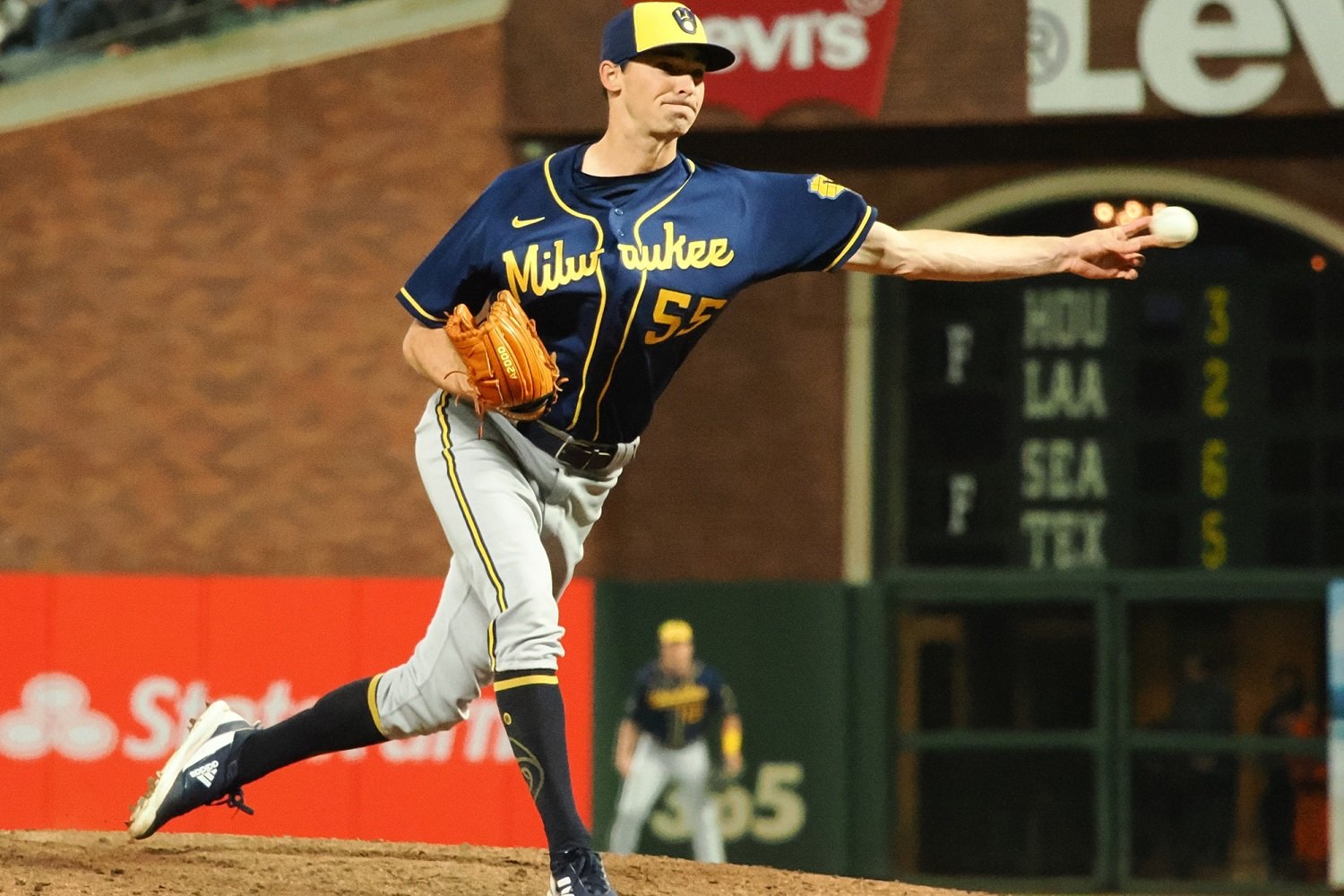 Just as I expected going into the season, Hoby Milner is playing at an All-Star caliber and is the biggest snub for the midsummer classic on the Brewers since Devin Williams rightfully was named as an alternate. (This was not what I expected.) Prior to this season, Milner held a career MLB ERA of 4.77 in 93 games pitched, totaling 77.1 innings. The southpaw throws sidearm and doesn’t blow people away with his pitch speed. He wasn’t used as the now-extinct LOOGY (Lefty-One-Out-GuY), but has certainly excelled against same-handed batters over the course of his six-year career, similar to most pitchers. It is a huge surprise to say that this veteran of six years with four different teams, who owns a career WHIP of 1.513 and allowed 10.0 Hits per 9 innings prior to this season, would be vaulted to a place in the club of dominant relievers. On a surface level, it is quite obvious to see where this improvement came from. Milner has struggled mightily against right-handed hitters in his first five seasons. This season, however, he has stifled those pesky opposite handed batters, allowing a batting average of .216 to them. In the chart above, there is a palpable shift in his effectiveness pitching to right-handed hitters. There are two other seasons which are better than the career averages which is denoted by the dashed line of the appropriate color. Part of the reason for those very low numbers seen in 2019 and 2020 is due to small sample size, with only 3.2 innings with the Tampa Bay Rays then 13.1 with the Los Angeles Angels. Amazingly, right-handed batters have a slugging percentage lower this season than the batting average allowed over the entirety of Milner’s career, culminating to an OPS of just 0.578. This means that not only is he limiting hits, but he is limiting extra base hits, and also not allowing many free passes, specifically to righties. How did this actually happen though? A good place to start is pitch selection. Milner has almost entirely eliminated his usage of the four-seamer, rather using a sinker as his primary fastball which is now used 47% of the time compared to the four-seam’s 5.4%. This is the only year, besides 2019 (where there is that small sample size), where the sinker is used most of any pitch. His offspeed selection has changed a little too, with an increased reliance on the changeup; used 17.9% of the time. This is a variant to historical usage of his non-fastball, as the curveball has been most often used as the secondary pitch. This stays true, with the curveball as his secondary pitch, but is used 29.7% of the time now. Milner's pitch change directly contributes to the success he has had this season against right-handed batters. In total, the above graph shows a clear shift in pitch selection, but doesn’t tell the whole story. So let's dive more into that tomorrow, as we discuss why a ton more sinkers and changeups have suddenly made Milner a devastating bullpen option. Part 2: Pitch Selection Part 3: Mechanics and Strategy
 -
After DFA-ing Severino and Lamet, I can't help but question what the heck is going on.
-
You're focusing way too much on that hard hit rate and not taking into account many of the other things. You don't like this trade, but it is very good for the organization. Relievers aren't getting what they used to, and it is a great way to get talent for now, and for the future. Lamet will be getting tendered first of all. He and the Padres agreed to $4.2mil, and I forecast between $4.5mil-$5mil next season. Which is very modest and a good rate. Finally, the hard hit rate of 50.0%. Obviously, not ideal, isn't the end of the world. There has been an increase in fly balls, but that is in part due to the location he has been working in. He also has been basically a two pitch pitcher this year, which hasn't bode well. I expect his curveball to come back into the swing next season, which is a great pitch for him. I'm not sure why is was removed in the first place. His slider is off this year. Finally, everything is down this year for Lamet. Spin, break, drop, everything. Velocity is mostly down as well. Despite this, his zone contact rate is absolutely elite. Some minor tweaks, and he will be incredibly useful.
-
This trade is awesome at first glance, which makes my opinion a little different than most I've seen. I think this will end up being an amazing trade, not only now, but in the future too.
-
Lamet will be really good next year, and those prospects make me feel better and better. They look pretty good. Hader will be making much more than what Lamet will earn, and it opens salary for, may I suggest, a nice little extension to Burnes or Woodruff. I think Rogers will get back to a dominant reliever as well, and will probably save games with Williams depending on the situation.
-
I am so happy to see that he is retiring as a Brewer. He was such a key player, and was utterly dominant for a while. I'm bummed I won't be able to make it to the game on Saturday to see the ceremony in person, but Lucroy will likely be seen again in Milwaukee. Wonder if he takes a role in coaching somewhere?
-
They also saved quite a bit of money for next year too, so I am hoping that maybe the Crew could sign one of Burnes or Woodruff for a longer term contract. I'm excited to see how the rest of today goes for sure!
-
Neither of these trades should ever happen. There is so much I would like to say about this but just shouldn't to be honest. Thinking that the Brewers will make this Bell trade is crazy, and then thinking that Trey will be dealt by the O's is even crazier. Neither of these players will be acquired by the Brewers, and Trey will remain an Oriole.
-
Just like the Rockies series, I think this is a good little tryout for some potential trade targets. Enrique Hernandez is a player I would love for the Crew to go out and acquire if Bryan Reynolds will not be available. There's a couple other interesting options with the Red Sox too. Looking forward to these games!
-
Article: Wanted at the Deadline: a Southpaw Killer
Caswell replied to Caswell's topic in Brewer Fanatic Front Page News
I wouldn't look too into trade simulator and those valuations. Just looking quickly at the valuation of the Benintendi trade, it doesn't quite add up. It is not perfect, and certainly isn't a what GMs are using to value their players in trades. It is an interesting tool, but definitely should be taken with a grain of salt. -
Article: Wanted at the Deadline: a Southpaw Killer
Caswell replied to Caswell's topic in Brewer Fanatic Front Page News
Quite frankly, his advanced metrics don't look very good. This would be a significant downgrade defensively as well. So much so, that it would be better to move Yelich to center. There isn't really a reason to think that his first half is much of a fluke considering his career numbers and tying him up for a longer period would not be good. If we were to go after a non-rental in center, there are better options, but with all the outfield prospects knocking at the door, a move for Laureano would be very bad for the Brewers. He would demand too much in terms of resources to get him over here and arbitration just wouldn't be worth it. -
Article: Wanted at the Deadline: a Southpaw Killer
Caswell replied to Caswell's topic in Brewer Fanatic Front Page News
Thank you all so much for the responses! I figured this would be an area of question, but was focusing more on needs, rather than the after effect on the roster. First of all, there is no way that McCutchen will get released. That is totally out of the equation. He hasn't been what the Brewers have hoped when he was signed, but has been quite good still. Not worth the contract, but is decent enough and offers good experience. After his poor start, he has been satisfactory. Now, who I think will be replaced is Pedro Severino and Jonathan Davis. I think Severino will be used as a trade piece to a team looking to have an outside chance at contending next year, or one looking to use him in a rental trade next season. The Angels specifically come to mind with him, though there are many possibilities. Davis will likely be sent down to AAA or a low level move for a reliever maybe. Jace will take one of those spots, while an added player will take the other. Brosseau should stay, but should be in a platoon situation with one of Rowdy or Wong (if Wong doesn't get moved). I know these two players are talked about a lot, Drury and Bell, but I'm not very high on either of them for the Brewers. I believe the Brewers are looking to avoid playing McCutchen at center as much as possible, so a move here would be the most likely, and ideal scenario. This is also part of the reason I don't really expect an acquisition of Bell, as that would congest things a bit. This is often a good thing, but congestion at first base and designated hitter is not what the Brewers want, especially given the positional versatility wanted by the club. I did look at Laureano quite a bit some time ago, but he seems to be a downgrade from Tyrone Taylor with a lower ceiling while commanding more resources. He is worse defensively and strikes out even more than Taylor. Just isn't the type of move the Brewers would make. This is another thing too. Injuries happen, and happen often. Having some depth would be great. I don't think many fans want to rely on the bats of Mark Mathias or Pablo Reyes in a tight game late in the season. -
If the Brewers want their offense to be more consistent, there is an obvious trade deadline need beyond that of a better centerfielder. August 2nd is the MLB trade deadline, and with it fast approaching, teams are looking to make deals to solidify their second half playoff push, or retool for future seasons. The Milwaukee Brewers find themselves in the playoff hunt with a lead of 3.5 games in the NL Central, meaning they will likely look to add contributors for their second half push. Realistically, there are not too many true offensive needs which must be addressed, though there is room for improvement. The one clear need is in the outfield, where center field has been a black hole at the plate for much of the season. It has appeared, in stretches, that Tyrone Taylor may be the guy to fill this void, but has been unable to sustain his success. Unfortunately, centerfielders who can add offense are difficult to find in this trade market. Less rare, and maybe just as important, would be a batter who hits lefties. This was meant to be fixed with the signing of Andrew McCutchen in the offseason, who has feasted on southpaws over his career. But he has diverged from career norms, as he has hit right-handed pitchers better for just the third time in his fourteen year career. Not only has McCutchen faltered against southpaws, so have the Crew cumulatively. As you can see in the graph above, while the Brewers are among elite teams in their performance versus right-handed pitching, they're well below average versus lefties. In fact, there is only one winning team who hits left-handers worse, and the Brewers are the worst of any division leader. There has also been quite a bit of interest on the fan side to acquire another first baseman, specifically one who fills the need of a lefty killer. This is not a position I think the Brewers require improvement most within the infield, as there are other areas which could be upgraded to a larger degree. Another supplementary option in the infield would be possible, especially with struggles by Kolten Wong all year, and some stumbles by Luis Urias and Willy Adames. Realistically, the return of Jace Peterson could help this, and a platoon containing Mike Brosseau (who also leads the team in OPS against left-handed pitching). So this isn’t a key need, especially compared to centerfield. In conclusion, a centerfielder is most needed positionally, but a bat which excels against left-handed pitchers is a need as well. This bat could be at centerfield, or any position within the infield. View full article
-
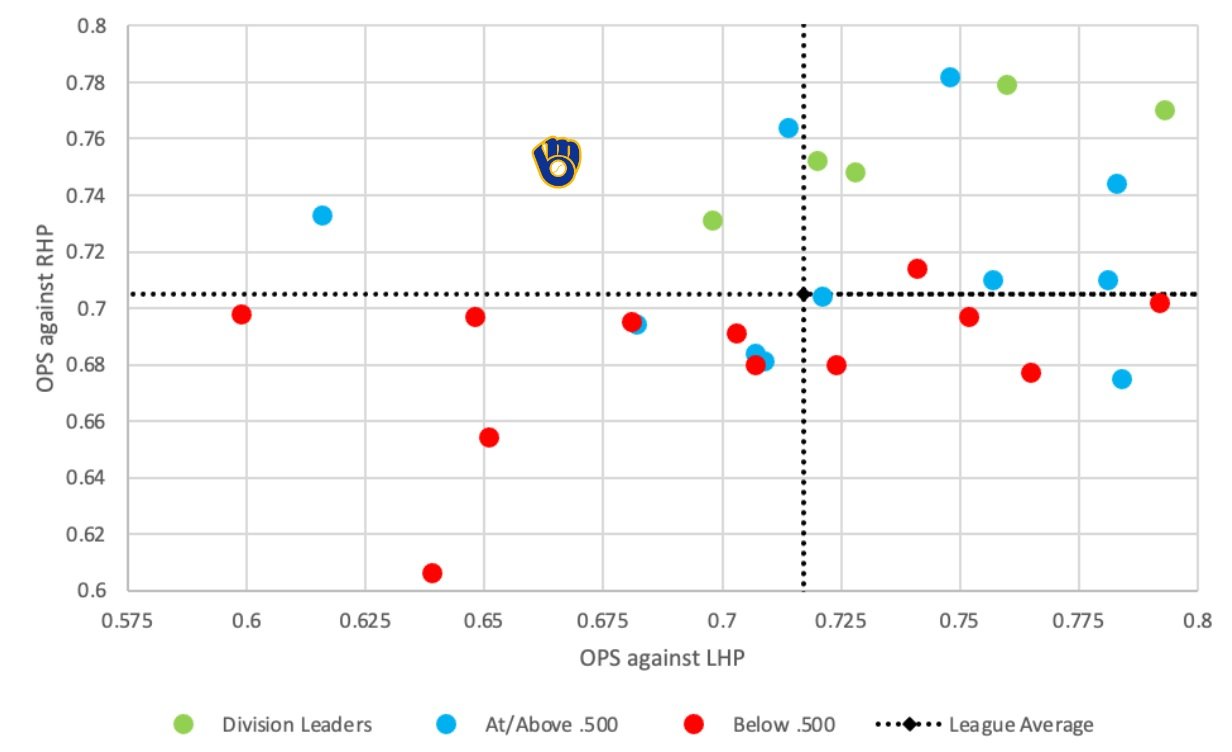 August 2nd is the MLB trade deadline, and with it fast approaching, teams are looking to make deals to solidify their second half playoff push, or retool for future seasons. The Milwaukee Brewers find themselves in the playoff hunt with a lead of 3.5 games in the NL Central, meaning they will likely look to add contributors for their second half push. Realistically, there are not too many true offensive needs which must be addressed, though there is room for improvement. The one clear need is in the outfield, where center field has been a black hole at the plate for much of the season. It has appeared, in stretches, that Tyrone Taylor may be the guy to fill this void, but has been unable to sustain his success. Unfortunately, centerfielders who can add offense are difficult to find in this trade market. Less rare, and maybe just as important, would be a batter who hits lefties. This was meant to be fixed with the signing of Andrew McCutchen in the offseason, who has feasted on southpaws over his career. But he has diverged from career norms, as he has hit right-handed pitchers better for just the third time in his fourteen year career. Not only has McCutchen faltered against southpaws, so have the Crew cumulatively. As you can see in the graph above, while the Brewers are among elite teams in their performance versus right-handed pitching, they're well below average versus lefties. In fact, there is only one winning team who hits left-handers worse, and the Brewers are the worst of any division leader. There has also been quite a bit of interest on the fan side to acquire another first baseman, specifically one who fills the need of a lefty killer. This is not a position I think the Brewers require improvement most within the infield, as there are other areas which could be upgraded to a larger degree. Another supplementary option in the infield would be possible, especially with struggles by Kolten Wong all year, and some stumbles by Luis Urias and Willy Adames. Realistically, the return of Jace Peterson could help this, and a platoon containing Mike Brosseau (who also leads the team in OPS against left-handed pitching). So this isn’t a key need, especially compared to centerfield. In conclusion, a centerfielder is most needed positionally, but a bat which excels against left-handed pitchers is a need as well. This bat could be at centerfield, or any position within the infield.
 -
Article: Brewers Lose Angel Perdomo on Waivers
Caswell replied to TL Schwerz's topic in Brewer Fanatic Front Page News
This isn't a horrible thing. His stuff is good when he has control. From my counting, that leaves 39 players on the 40 man roster. Those on the 60 day IL are Jake Cousins, Freddy Peralta, and Justin Topa. Topa and Cousins are each predicted to be back soon, while Peralta isn't expected until August. Maybe some sort of moves are coming? One can hope! -
I don't think there is any way he is up unless for injury. The fielding percentage and total errors aren't that important with catching. Like obviously them being low is important, but there is soooo much more for it. Calling a good game, framing, and blocking are not finally represented by fielding percentage. He has had nine passed balls this year, second most in a season in his career. With all the pitchers the Brewers have with good stuff and great movement, that doesn't bode well. In addition to this, he has not been good with catching runners, allowing 29 stolen bases and throwing out 5 for 15% caught stealing rate. I think he will be the third guy next year, but unlikely this year.
-
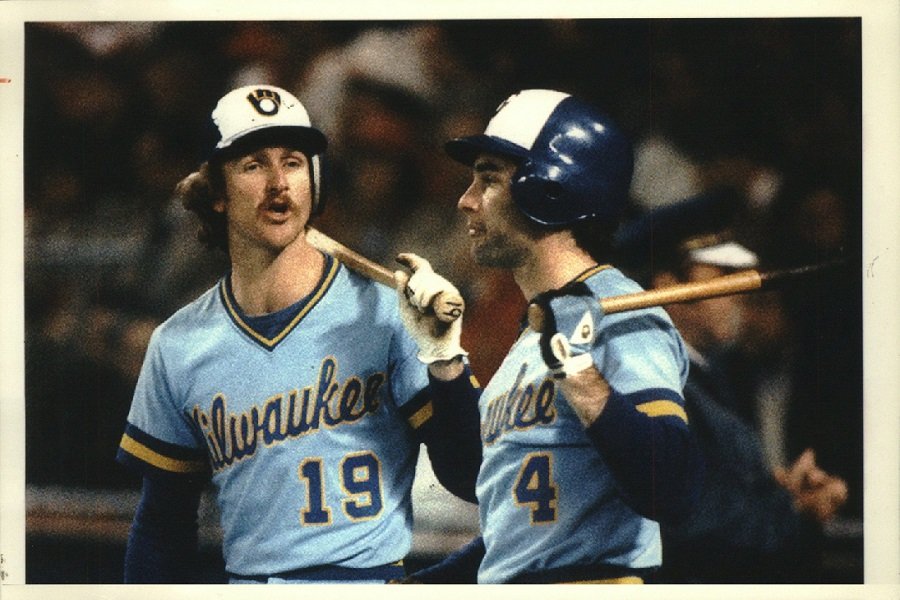 It has been a long journey, and after looking through thousands of players’ stats, we have come to the conclusion of Brewers Drafts from the Past. This Sunday, July 17th is the first day of the MLB amateur draft this year, and there are so many young stars in the making, but we had to look at the history a bit first. The Brewers drafted two Hall of Famers so far in the first round, so it is always exciting to see what they can come up with for the future! Before checking out this finale, be sure to catch up in all the other editions. We started last week, going over round 31 or later and have since gone through every round in between. Rounds 21-30 was when a couple divisional rivals slipped through the cracks, and rounds 16-20 had a true runaway candidate before round 11-15 had one that was too close to call. Rounds 6-10 returned to a blowout, but things got real interesting once again in rounds 2-5. Best Player Who Signed It isn’t possible for me to choose between the only two Hall of Famers whose primary team was the Milwaukee Brewers (yes Henry Aaron went in as a player in a Milwaukee franchise, but it was the Braves organization). Robin Yount or Paul Molitor both are deserving of being the best player drafted in the first round, and ever to play for the Brewers thus far. Each were drafted third overall in their respective draft year, Yount in 1973 and Molitor in 1977. Helping to lead the Brewers to a 1982 World Series berth, losing to the Saint Louis Cardinals in seven games, Yount’s number 19 and Molitor’s number 4 will never be worn by another Brewer. Robin Yount made his debut with Milwaukee just a year after he was drafted, on April 5th, 1974 in County Stadium against the Red Sox. He went 0 for 1 with a walk on opening day that year. The 20-year MLB Veteran made just three All-Star games (1980, 1982, 1983) yet would be named the MVP in 1982 and 1989. Primarily playing as shortstop early before switching to the outfield due to a shoulder injury, Yount was a Silver Slugger three times (1980, 1982, 1989) as well as getting a Gold Glove in 1982. He earned 77.4 WAR and hit 0.285 over his entire career, retiring after the 1993 season. Yount hit 251 home runs, had 1406 RBI and drew a walk 966 times. His career OPS is 0.772 and has over 3,000 hits, one of 33 players all time to achieve this. Paul Molitor was able to make his debut early in the 1978 season due to contract issues with the aforementioned Yount. His first game was in Milwaukee on April 7th against the Baltimore Orioles, where he batted leadoff, going 1 for 5 with an RBI. Molitor moved to second base upon Yount’s return, where he played for a while before a couple seasons in the outfield. He was named the rookie of the year in that 1978 season. Molitor is most known for his time at third base, though he would only make two appearances at the hot corner after 1989, thereafter being deployed at first base or designated hitter. Molitor spent his first 15 seasons with Milwaukee, moving north to the Toronto Blue Jays in 1993, winning the World Series that year over the Philadelphia Phillies and being named the series’ MVP. This was his first postseason since his appearance with Milwaukee in 1982. After three seasons with Toronto, the Saint Paul, Minnesota born player went back to his hometown Minnesota Twins, spending three more seasons there before retiring after the 1998 season. He was an All-Star seven times, five of those in Milwaukee, and was a silver slugger four times, half with the Brewers, and had a career batting average of 0.306. He belted 234 home runs, had 1307 RBIs and stole an incredible 504 bags, earning 75.6 WAR. Best Unsigned Player Unlike the longevity of the careers of Yount or Molitor, the best player drafted by the Brewers in the first round who did not sign retired by the time he was 30 years old . Alex Fernandez, a right-handed pitcher, was originally drafted by the Brewers with the 24th overall pick in the 1988 draft. He opted not to sign, and was later drafted once again in the first round, this time with the fourth overall pick in the 1990 draft by the Chicago White Sox. He made his debut with Chicago in Milwaukee that year on August 2nd. He pitched seven strong, only allowing two runs off five hits with two walks and four strikeouts and was in line for the win before a blown save by a reliever, though the the White Sox won the game. Fernandez spent his first seven years on the South Side of Chicago, spending his last three with the Florida Marlins and was part of their 1997 World Series triumph. He missed the entire 1998 season after missing the World Series in 1997 due to injury, though was able to play in the other postseason games. His ten-year career was cut short due to these injuries, primarily in the shoulder, after the 2000 season. He started in 261 of the 263 games he pitched in and owned a 3.74 ERA with a 107-87 record. Playing in a different era of the sport, Fernandez had 33 complete games while maintaining a 115 ERA+. He earned 28.5 WAR, which would surely be higher had he been able to play longer. Honorable Mentions The Milwaukee Brewers have selected some really good players in the first round over the years, with picks such as Geoff Jenkins 9th overall in 1995, Ben Sheets 10th overall in 1999, Prince Fielder 7th in 2002, or Ryan Braun with the 5th overall pick in 2005. Going further back, there was Gorman Thomas in 1969, Darrell Porter in 1970, Dan Plesac in 1983, or B.J. Surhoff in 1985 all drafted in the first round. Even more recently, Sal Frelick in 2021, Garrett Mitchell in 2020, and Brice Turang in 2018 all look to have the capability to become stars. There is one, though, who is a step above all others, but not quite the level of Yount or Molitor. Gary Sheffield was drafted by the Brewers sixth overall in 1986, and appeared in 1988 at the age of 19 on September 3rd against the Detroit Tigers. With some major personality differences, Sheffield effectively forced a move away from Milwaukee in 1992 after four seasons with the team. His next two years resulted in back to back All-Star appearances, two of the nine times he was named to the game in his 22-year career, as the move out of Wisconsin was likely best for his career. He played with eight total teams and batted 0.292 with an OBP of 0.393 while hitting 509 home runs and having 1676 RBIs. He earned 60.5 WAR and retired before the 2011 season. His legacy is quite sullied due to some off-the-field issues and inclusion in the Mitchell Report (source). And that is a wrap this time! Do you agree with all my rankings or what would you change? I think it is safe to say this time out is pretty set, but would definitely understand arguments to get ahead of Sheffield. Thank you so much for reading and following along! If you missed any of the other rounds, be sure to check them out. I can’t wait to see who the Brewers choose this time!
 -
The best Brewer of all time was drafted in the first round. There have been quite a few other greats, including one which they couldn't sign who would be a workhorse until injuries took over. It has been a long journey, and after looking through thousands of players’ stats, we have come to the conclusion of Brewers Drafts from the Past. This Sunday, July 17th is the first day of the MLB amateur draft this year, and there are so many young stars in the making, but we had to look at the history a bit first. The Brewers drafted two Hall of Famers so far in the first round, so it is always exciting to see what they can come up with for the future! Before checking out this finale, be sure to catch up in all the other editions. We started last week, going over round 31 or later and have since gone through every round in between. Rounds 21-30 was when a couple divisional rivals slipped through the cracks, and rounds 16-20 had a true runaway candidate before round 11-15 had one that was too close to call. Rounds 6-10 returned to a blowout, but things got real interesting once again in rounds 2-5. Best Player Who Signed It isn’t possible for me to choose between the only two Hall of Famers whose primary team was the Milwaukee Brewers (yes Henry Aaron went in as a player in a Milwaukee franchise, but it was the Braves organization). Robin Yount or Paul Molitor both are deserving of being the best player drafted in the first round, and ever to play for the Brewers thus far. Each were drafted third overall in their respective draft year, Yount in 1973 and Molitor in 1977. Helping to lead the Brewers to a 1982 World Series berth, losing to the Saint Louis Cardinals in seven games, Yount’s number 19 and Molitor’s number 4 will never be worn by another Brewer. Robin Yount made his debut with Milwaukee just a year after he was drafted, on April 5th, 1974 in County Stadium against the Red Sox. He went 0 for 1 with a walk on opening day that year. The 20-year MLB Veteran made just three All-Star games (1980, 1982, 1983) yet would be named the MVP in 1982 and 1989. Primarily playing as shortstop early before switching to the outfield due to a shoulder injury, Yount was a Silver Slugger three times (1980, 1982, 1989) as well as getting a Gold Glove in 1982. He earned 77.4 WAR and hit 0.285 over his entire career, retiring after the 1993 season. Yount hit 251 home runs, had 1406 RBI and drew a walk 966 times. His career OPS is 0.772 and has over 3,000 hits, one of 33 players all time to achieve this. Paul Molitor was able to make his debut early in the 1978 season due to contract issues with the aforementioned Yount. His first game was in Milwaukee on April 7th against the Baltimore Orioles, where he batted leadoff, going 1 for 5 with an RBI. Molitor moved to second base upon Yount’s return, where he played for a while before a couple seasons in the outfield. He was named the rookie of the year in that 1978 season. Molitor is most known for his time at third base, though he would only make two appearances at the hot corner after 1989, thereafter being deployed at first base or designated hitter. Molitor spent his first 15 seasons with Milwaukee, moving north to the Toronto Blue Jays in 1993, winning the World Series that year over the Philadelphia Phillies and being named the series’ MVP. This was his first postseason since his appearance with Milwaukee in 1982. After three seasons with Toronto, the Saint Paul, Minnesota born player went back to his hometown Minnesota Twins, spending three more seasons there before retiring after the 1998 season. He was an All-Star seven times, five of those in Milwaukee, and was a silver slugger four times, half with the Brewers, and had a career batting average of 0.306. He belted 234 home runs, had 1307 RBIs and stole an incredible 504 bags, earning 75.6 WAR. Best Unsigned Player Unlike the longevity of the careers of Yount or Molitor, the best player drafted by the Brewers in the first round who did not sign retired by the time he was 30 years old . Alex Fernandez, a right-handed pitcher, was originally drafted by the Brewers with the 24th overall pick in the 1988 draft. He opted not to sign, and was later drafted once again in the first round, this time with the fourth overall pick in the 1990 draft by the Chicago White Sox. He made his debut with Chicago in Milwaukee that year on August 2nd. He pitched seven strong, only allowing two runs off five hits with two walks and four strikeouts and was in line for the win before a blown save by a reliever, though the the White Sox won the game. Fernandez spent his first seven years on the South Side of Chicago, spending his last three with the Florida Marlins and was part of their 1997 World Series triumph. He missed the entire 1998 season after missing the World Series in 1997 due to injury, though was able to play in the other postseason games. His ten-year career was cut short due to these injuries, primarily in the shoulder, after the 2000 season. He started in 261 of the 263 games he pitched in and owned a 3.74 ERA with a 107-87 record. Playing in a different era of the sport, Fernandez had 33 complete games while maintaining a 115 ERA+. He earned 28.5 WAR, which would surely be higher had he been able to play longer. Honorable Mentions The Milwaukee Brewers have selected some really good players in the first round over the years, with picks such as Geoff Jenkins 9th overall in 1995, Ben Sheets 10th overall in 1999, Prince Fielder 7th in 2002, or Ryan Braun with the 5th overall pick in 2005. Going further back, there was Gorman Thomas in 1969, Darrell Porter in 1970, Dan Plesac in 1983, or B.J. Surhoff in 1985 all drafted in the first round. Even more recently, Sal Frelick in 2021, Garrett Mitchell in 2020, and Brice Turang in 2018 all look to have the capability to become stars. There is one, though, who is a step above all others, but not quite the level of Yount or Molitor. Gary Sheffield was drafted by the Brewers sixth overall in 1986, and appeared in 1988 at the age of 19 on September 3rd against the Detroit Tigers. With some major personality differences, Sheffield effectively forced a move away from Milwaukee in 1992 after four seasons with the team. His next two years resulted in back to back All-Star appearances, two of the nine times he was named to the game in his 22-year career, as the move out of Wisconsin was likely best for his career. He played with eight total teams and batted 0.292 with an OBP of 0.393 while hitting 509 home runs and having 1676 RBIs. He earned 60.5 WAR and retired before the 2011 season. His legacy is quite sullied due to some off-the-field issues and inclusion in the Mitchell Report (source). And that is a wrap this time! Do you agree with all my rankings or what would you change? I think it is safe to say this time out is pretty set, but would definitely understand arguments to get ahead of Sheffield. Thank you so much for reading and following along! If you missed any of the other rounds, be sure to check them out. I can’t wait to see who the Brewers choose this time! View full article
-
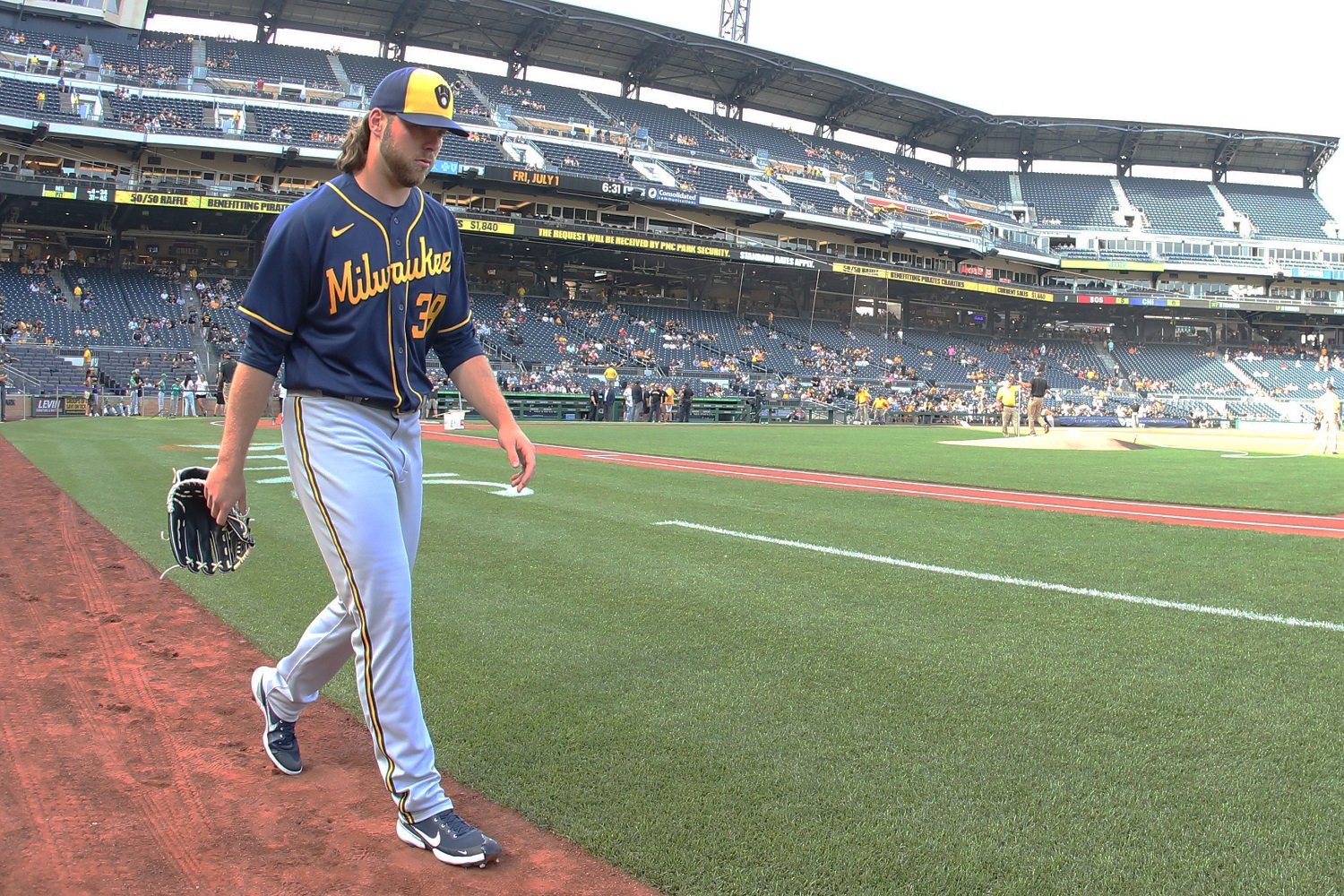 There have been so many all-time greats drafted in these rounds, such as Tony Gwynn or Rickey Henderson, but there are also so many really freaking good players. There’s quite a few Brewers all time greats found here too, leading to some tough choices. The 17th of July is the beginning of this year’s edition of the MLB amateur draft. I’ve already checked out picks by the Brewers after round 31, those made between rounds 21-30, rounds 16-20, 11-15, and 6-10. Be sure to check those out before getting started here, and come back tomorrow for round 1! Best Player Who Signed The 2021 N.L. Cy Young Award winner has to be the best player to have signed. Corbin Burnes was drafted in the fourth round in 2016 with the 111st overall pick. He was an All-Star in 2021, and has been named to this year’s midsummer classic as well. Burnes made a huge jump in prospect rankings, up to second in the Brewers system before the 2018 season. That season would be his debut, recording a two-inning save in Miami against the Marlins on July 18th, 2018, retiring all six he faced perfectly with one strikeout. The first two years of Burnes’ career were primarily out of the bullpen, with his first starts coming in 2019. He struggled starting games, with 43.75% of his earned runs coming in those 4 games, the rest coming in the remaining 28 where he was pitching in relief. 2020 was his first year of success as a starter, and he would finish 6th in the Cy Young voting. Today, Burnes is one of the most feared pitchers in the game, owning a career ERA of 3.09, with only one of his five seasons ending with an ERA above 2.61. He has a dominant cutter, which was used very sparingly until he finally took control of it in 2020, throwing it over half of the time now. His career WHIP is an incredible 1.050, while striking out 561 batters, and has recorded 30 wins and 15 loses. Corbin has earned 9.7 WAR. Best Unsigned Player Initially drafted in the 5th round, 130th overall in 1991, Nomar Garciaparra opted not to sign, enrolling in Georgia Institute of Technology to play baseball instead. This would pay off, as in the 1994 draft he was taken 12th overall by the Boston Red Sox in the first round. The shortstop made his debut in 1996, and won the A.L. Rookie of the Year in 1997, along with winning a Silver Slugger and named an All-Star. Garciaparra was a perennial MVP candidate and was an All-Star five of his nine seasons with Boston. Injuries derailed his career, unfortunately, and he would have been the best shortstop of all time if they would not have been so detrimental. There were multiple seasons winning the batting title and racing to the seemingly impossible 0.400 batting average, but never quite making it, with a career high of 0.372 in 2000, and overall career batting average of 0.313. An excellent defensive player, Nomar shifted to playing in either corner infield spot, favoring first base after leaving Boston in the 2004 deadline. The Chicago Cubs acquired him in a four-team deal at the trade deadline. The Red Sox went on to win the World Series that year, and Nomar would still be given a ring, as well as a portion of the playoff earnings. When Garciaparra left the Cubs, he signed with his hometown, Los Angeles Dodgers, playing for them for three seasons, and had one short season with the Oakland Athletics before ending his 14 year career in 2009. He earned 44.3 WAR, had 229 home runs, and just missed the 1,000 mark for RBIs, ending with 936. His career OPS is an amazing 0.882, and is definitely a player the Brewers missed out on, even with those injuries. Honorable Mentions There are just so many options for these rounds, and so many things that could be discussed for all the players previously mentioned, and those missing out on the top spot. Some major Brewer legends of the 2000s such as the second round picks J.J. Hardy 56th overall in 2001 or Yovani Gallardo 46th overall in 2004, third rounder Jonathan Lucroy, drafted 101st overall in 2007. I could go into a ramble about a couple guys who have recently reinvented themselves, like Jorge López, drafted 70th overall in the second round of the 2011 draft, or Tyler Thornburg, drafted 96th overall in the third round of the 2010 draft. This is before mentioning the old guys from back in the day like most recently Bill Wegman, taken in the fifth round, 124th overall in 1981, or two guys taken in the second round by the names of Kevin Bass, 29th overall in 1977, or Moose Hass, 30th overall in 1974. And there are still those young guys who haven’t made a lasting mark yet such as second rounders Tyrone Taylor in 2012, 92nd overall, and Mario Feliciano in 2016, 75th overall or fourth rounders Aaron Ashby in 2018, 125th overall, and Joey Wiemer in 2020, 121st overall. Oh and wait! The 2020 N.L. Rookie of the Year and Reliever of the Year, Devin Williams was drafted in the second round back in 2013 with the 54th overall pick. All of these players were great, or might become great, but Devin Williams is currently great. After Tommy John surgery back in 2017, sidelining him that year, he bounced back and earned his debut in 2019, pitching 1.2 innings of relief while allowing two runs, neither earned, off three hits and a walk, striking out three. Williams’ 2020 season was the year people knew about him and his airbender, what he calls his changeup. In that season, he allowed only one earned run in 22 appearances across 27 innings for an ERA of 0.33 and a seemingly impossible 1375 ERA+. 2021 and thus far in 2022 have been up to standard as well, having some early season control struggles, and he owns a career ERA of 2.05 in 129 games (127.1 innings) across his four seasons, allowing only eight home runs total. His bat does need to improve though, as he struck out in his only plate appearance, which happened to be on his debut. Despite this, he has earned 4.0 WAR, and has a record of 14 wins and 3 loses, along with a WHIP of 1.107 and eight saves. Be sure to tell me what you think of the list! Do any of those players deserve higher praises? Is Garciaparra the best shortstop of all time in those first years before injuries? Do any of those young guns have a shot at discussion for best ever Brewer draft pick or will Williams or Burnes duke it out at the top? Keep an eye out next time where I look at the first round!
 -
This is where choices get way too tough, as there are so many great players drafted by the Brewers between round 2 and round 5. The signed player ends up being a current star of the MLB, while the player who Milwaukee couldn’t secure should’ve been the best shortstop of all time, but injuries cut that short. There have been so many all-time greats drafted in these rounds, such as Tony Gwynn or Rickey Henderson, but there are also so many really freaking good players. There’s quite a few Brewers all time greats found here too, leading to some tough choices. The 17th of July is the beginning of this year’s edition of the MLB amateur draft. I’ve already checked out picks by the Brewers after round 31, those made between rounds 21-30, rounds 16-20, 11-15, and 6-10. Be sure to check those out before getting started here, and come back tomorrow for round 1! Best Player Who Signed The 2021 N.L. Cy Young Award winner has to be the best player to have signed. Corbin Burnes was drafted in the fourth round in 2016 with the 111st overall pick. He was an All-Star in 2021, and has been named to this year’s midsummer classic as well. Burnes made a huge jump in prospect rankings, up to second in the Brewers system before the 2018 season. That season would be his debut, recording a two-inning save in Miami against the Marlins on July 18th, 2018, retiring all six he faced perfectly with one strikeout. The first two years of Burnes’ career were primarily out of the bullpen, with his first starts coming in 2019. He struggled starting games, with 43.75% of his earned runs coming in those 4 games, the rest coming in the remaining 28 where he was pitching in relief. 2020 was his first year of success as a starter, and he would finish 6th in the Cy Young voting. Today, Burnes is one of the most feared pitchers in the game, owning a career ERA of 3.09, with only one of his five seasons ending with an ERA above 2.61. He has a dominant cutter, which was used very sparingly until he finally took control of it in 2020, throwing it over half of the time now. His career WHIP is an incredible 1.050, while striking out 561 batters, and has recorded 30 wins and 15 loses. Corbin has earned 9.7 WAR. Best Unsigned Player Initially drafted in the 5th round, 130th overall in 1991, Nomar Garciaparra opted not to sign, enrolling in Georgia Institute of Technology to play baseball instead. This would pay off, as in the 1994 draft he was taken 12th overall by the Boston Red Sox in the first round. The shortstop made his debut in 1996, and won the A.L. Rookie of the Year in 1997, along with winning a Silver Slugger and named an All-Star. Garciaparra was a perennial MVP candidate and was an All-Star five of his nine seasons with Boston. Injuries derailed his career, unfortunately, and he would have been the best shortstop of all time if they would not have been so detrimental. There were multiple seasons winning the batting title and racing to the seemingly impossible 0.400 batting average, but never quite making it, with a career high of 0.372 in 2000, and overall career batting average of 0.313. An excellent defensive player, Nomar shifted to playing in either corner infield spot, favoring first base after leaving Boston in the 2004 deadline. The Chicago Cubs acquired him in a four-team deal at the trade deadline. The Red Sox went on to win the World Series that year, and Nomar would still be given a ring, as well as a portion of the playoff earnings. When Garciaparra left the Cubs, he signed with his hometown, Los Angeles Dodgers, playing for them for three seasons, and had one short season with the Oakland Athletics before ending his 14 year career in 2009. He earned 44.3 WAR, had 229 home runs, and just missed the 1,000 mark for RBIs, ending with 936. His career OPS is an amazing 0.882, and is definitely a player the Brewers missed out on, even with those injuries. Honorable Mentions There are just so many options for these rounds, and so many things that could be discussed for all the players previously mentioned, and those missing out on the top spot. Some major Brewer legends of the 2000s such as the second round picks J.J. Hardy 56th overall in 2001 or Yovani Gallardo 46th overall in 2004, third rounder Jonathan Lucroy, drafted 101st overall in 2007. I could go into a ramble about a couple guys who have recently reinvented themselves, like Jorge López, drafted 70th overall in the second round of the 2011 draft, or Tyler Thornburg, drafted 96th overall in the third round of the 2010 draft. This is before mentioning the old guys from back in the day like most recently Bill Wegman, taken in the fifth round, 124th overall in 1981, or two guys taken in the second round by the names of Kevin Bass, 29th overall in 1977, or Moose Hass, 30th overall in 1974. And there are still those young guys who haven’t made a lasting mark yet such as second rounders Tyrone Taylor in 2012, 92nd overall, and Mario Feliciano in 2016, 75th overall or fourth rounders Aaron Ashby in 2018, 125th overall, and Joey Wiemer in 2020, 121st overall. Oh and wait! The 2020 N.L. Rookie of the Year and Reliever of the Year, Devin Williams was drafted in the second round back in 2013 with the 54th overall pick. All of these players were great, or might become great, but Devin Williams is currently great. After Tommy John surgery back in 2017, sidelining him that year, he bounced back and earned his debut in 2019, pitching 1.2 innings of relief while allowing two runs, neither earned, off three hits and a walk, striking out three. Williams’ 2020 season was the year people knew about him and his airbender, what he calls his changeup. In that season, he allowed only one earned run in 22 appearances across 27 innings for an ERA of 0.33 and a seemingly impossible 1375 ERA+. 2021 and thus far in 2022 have been up to standard as well, having some early season control struggles, and he owns a career ERA of 2.05 in 129 games (127.1 innings) across his four seasons, allowing only eight home runs total. His bat does need to improve though, as he struck out in his only plate appearance, which happened to be on his debut. Despite this, he has earned 4.0 WAR, and has a record of 14 wins and 3 loses, along with a WHIP of 1.107 and eight saves. Be sure to tell me what you think of the list! Do any of those players deserve higher praises? Is Garciaparra the best shortstop of all time in those first years before injuries? Do any of those young guns have a shot at discussion for best ever Brewer draft pick or will Williams or Burnes duke it out at the top? Keep an eye out next time where I look at the first round! View full article
-
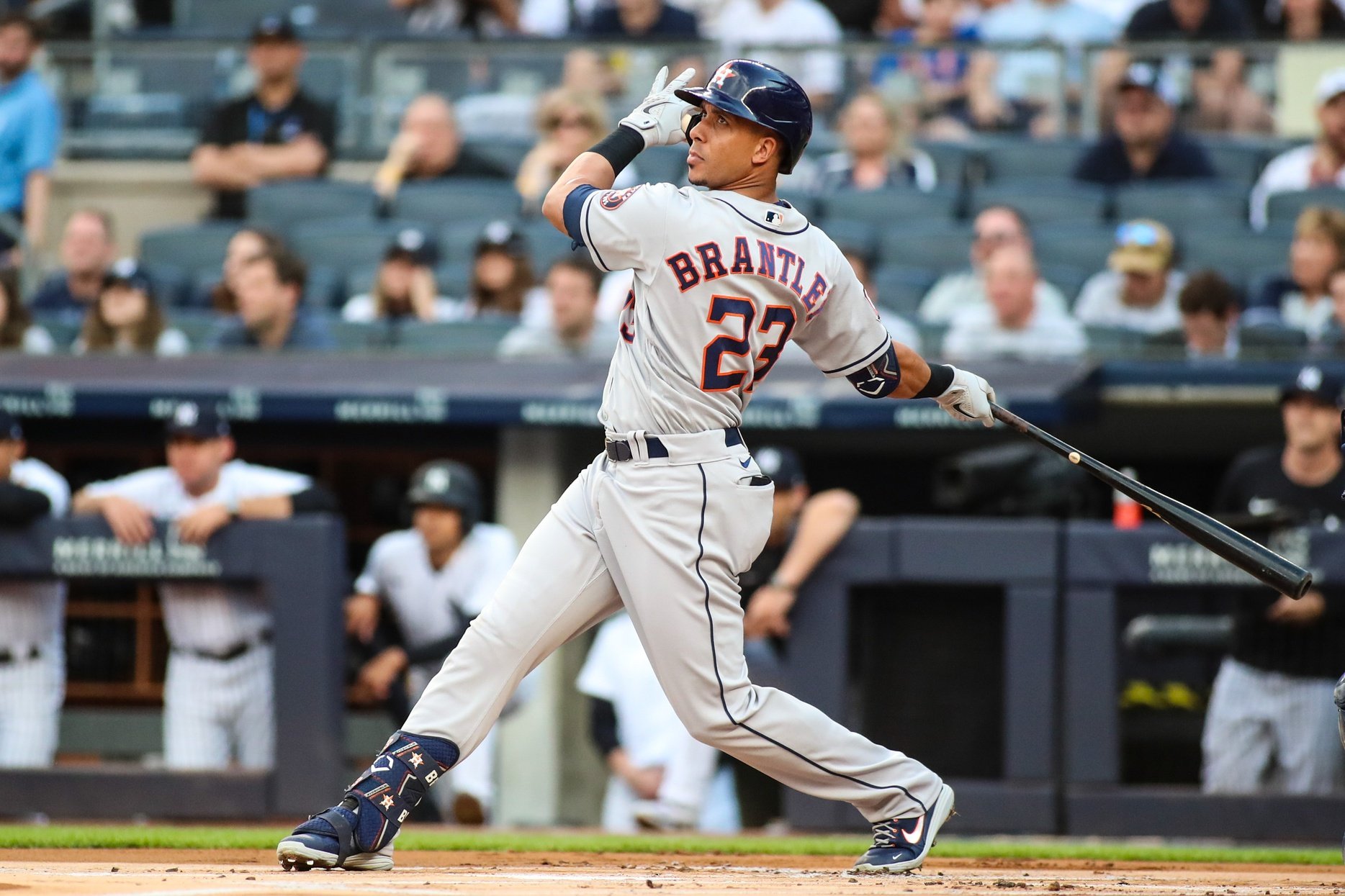 After a tight choice in the previous five rounds, we make it to the top 10 where once again, we see a clear choice, but one who never made it to the majors with Milwaukee. Meanwhile, we have to go to the 60s before we find a player drafted by the Brewers organization The 17th of July is the beginning of this year’s edition of the MLB amateur draft. I’ve already checked out picks by the Brewers after round 31, those made between rounds 21-30, rounds 16-20, and 11-15. Be sure to check those out before getting started here, and come back tomorrow for round 2 through five! Best Player Who Signed After a photo-finish the last time out, we return to an obvious choice for those signed. Michael Brantley never appeared with the Brewers in the Majors, but is above and beyond the best drafted and signed in these rounds. The outfielder was drafted by Milwaukee back in 2005 in the 7th round with the 205th overall pick. He reached AA in the Milwaukee Brewers organization before the infamous trade with the Cleveland Indians which brought C.C. Sabathia to Milwaukee in 2008. Brantley was notably the player to be named later in this transaction, joining Rob Bryson, Matt LaPorta , and Zach Jackson in the trade. Brantley made his MLB debut on September 1st the following year, in 2009, in Detroit against the Tigers where he started in left field and went 2-4 at the plate, scoring a run in the loss. He went on to reach base safely in his first eight games after his call up when the rosters expanded, and performed well enough to be named the opening day starter in left field for the 2010 season. Brantley struggled a bit that year, but thereafter became a force at the plate, known for a great, patient approach with an easy swing, excelling at contact, earning him the nickname Dr. Smooth by Dennis Manoloff, a Cleveland Indians sports writer. 2014 was the best year of Brantley’s career, being named to his first career All-Star game and ending the season with a 0.327 average and 20 home runs, good for third place in the MVP voting. He was once again an All-Star in 2017 and 2018 while also making the postseason for the first time since his first year in 2013 where the Indians lost the wildcard game. In 2017 and 2018 his squad fell in the ALDS each time. In part due to lack of postseason success, Brantley left Cleveland. Across 10 seasons with the Indians, he had a batting average of 0.295, hitting 87 home runs and batting in 528 runners. Brantley signed with the Houston Astros, and continued his great play, being named an All-Star in 2019 for the third year in a row and once again in 2021. His choice to leave was fruitful, despite coming at a hot time due to the sign stealing scandal He has not be a World Series winner thus far, losing in the final series in both 2019 and 2021. Brantley will come to the end of his second two-year contract with the Astros following the completion of this season, for a total of 4 in Houston and 14 across his entire MLB career. He holds a career batting average of 0.298, and has hit 127 home runs with 346 doubles and 713 RBIs for a total WAR of 34.1. Best Unsigned Player There is not much to offer in terms of unsigned players from these rounds, but there is one notable player drafted by the Brewer organization by the name of Doug Bird , a pitcher who spent his first six MLB seasons with the Kansas City Royals starting in 1973 before spending the next five seasons with four different teams: first with the Philadelphia Phillies in 1979, then New York Yankees in 1980. He split time the following year in 1981 between New York and the Chicago Cubs. He remained in Chicago with the Cubs in 1982 before spending his final, 1983 season in Boston with the Red Sox. Despite playing as a pitcher in his time in the MLB, he was originally drafted by the Brewer organization when they were the Seattle Pilots back in the 1969 June Amateur Draft in the eighth round with the 189th overall pick as a shortstop. He instead signed with the Kansas City Royals after they selected him in the third round in the secondary phase of the 1969 MLB June Draft. Over his 11-year career, he accumulated 8.9 WAR in his 432 games, 100 of which were starts. He owns a record of 73 wins and 60 loses with a respectable 3.99 ERA. Honorable Mentions Behind the obvious best player drafted in this range, there is another plateau of players a little further back by the name of Mark Loretta and Ronnie Belliard. Their similarities and career paths are striking. Both were drafted in back-to-back years with the exact same pick, the 207th overall; first Loretta in 1993 in the 7th round, then Belliard in 1994 in the 8th round. Interestingly enough, each of them also made their debut while they were 23 years of age: Loretta in 1995 and Belliard in 1998. The right-handed throwing and batting players shared an infield in Milwaukee for many seasons. Loretta primarily played second base before the second baseman, Belliard, made his way to the majors, but later spent much of his time at shortstop and less often third while together in Milwaukee. The double play duo left Milwaukee in 2002, with Loretta being traded out midseason, and Belliard leaving in free agency in the offseason following the completion of the season. Loretta played eight of his 15 seasons with the Crew, later spending time with the San Diego Padres, Houston Astros, Los Angeles Dodgers, and Boston Red Sox, and hit 0.295 and earned 19.3 WAR. Belliard spent five of his 13 seasons with Milwaukee, later spending time with the Washington Nationals, Cleveland Indians, Los Angeles Dodgers, Colorado Rockies, and Saint Louis Cardinals. He had a batting average of 0.273 and earned 20.7 WAR. There are a couple other players drafted in these rounds who had made some contributions in the bigs with the Brewers. Bill Hall was drafted in the sixth round back in 1998 with the 176th pick and played eight years in Milwaukee. He led the team in home runs in 2006, hitting 35 that year. He played 11 years total, mostly as a shortstop or third basemen, and in the outfield, holding an average of 0.248 while hitting 125 home runs and earning 9.6 WAR. Another, more recent example, is Khris "Khrush" Davis , who was drafted in 2009 in the seventh round with the 226th overall pick. The corner outfielder and designated hitter made his debut with Milwaukee in 2013, only playing with the Crew until 2015. He played with the Oakland Athletics, where he led all major leaguers in home runs with 48 in the 2018 season, along with briefly appearing with the Texas Rangers. The nine-year veteran last appeared in MLB in 2021 and is currently a free agent. Davis hit 221 home runs with a batting average of 0.242 while earning 10.8 WAR. Finally, like last time out, we have a career contributor in these rounds, as Bill "Rock" Schroeder was drafted in the eighth round of the 1979 draft. The catcher hit 0.240 and earned 2.7 WAR in his eight year career, with the first six spent with the Brewers, where he was the catcher in Juan Nieves’ April 15th, 1987 no-hitter. He has been the Brewers’ color commentator on TV since 1995. So what do you think of my list here? Should I have included anyone else, such as right handed pitcher Lary Sorenson ? Or will some more recent picks like Garret Cooper or Drew Rasmussen end up on this list with some continued success? Is my omission of Mike Matheny just, or should his managerial career earn him a spot? Let me know and keep your eye out for the next one!
 -
Top 10! This time we’ve got quite a few major leaguers, though not too many stars. In fact, we have to go to the Seattle Pilots to get to the best unsigned player, but there are still quite a few good players for those signed. After a tight choice in the previous five rounds, we make it to the top 10 where once again, we see a clear choice, but one who never made it to the majors with Milwaukee. Meanwhile, we have to go to the 60s before we find a player drafted by the Brewers organization The 17th of July is the beginning of this year’s edition of the MLB amateur draft. I’ve already checked out picks by the Brewers after round 31, those made between rounds 21-30, rounds 16-20, and 11-15. Be sure to check those out before getting started here, and come back tomorrow for round 2 through five! Best Player Who Signed After a photo-finish the last time out, we return to an obvious choice for those signed. Michael Brantley never appeared with the Brewers in the Majors, but is above and beyond the best drafted and signed in these rounds. The outfielder was drafted by Milwaukee back in 2005 in the 7th round with the 205th overall pick. He reached AA in the Milwaukee Brewers organization before the infamous trade with the Cleveland Indians which brought C.C. Sabathia to Milwaukee in 2008. Brantley was notably the player to be named later in this transaction, joining Rob Bryson, Matt LaPorta , and Zach Jackson in the trade. Brantley made his MLB debut on September 1st the following year, in 2009, in Detroit against the Tigers where he started in left field and went 2-4 at the plate, scoring a run in the loss. He went on to reach base safely in his first eight games after his call up when the rosters expanded, and performed well enough to be named the opening day starter in left field for the 2010 season. Brantley struggled a bit that year, but thereafter became a force at the plate, known for a great, patient approach with an easy swing, excelling at contact, earning him the nickname Dr. Smooth by Dennis Manoloff, a Cleveland Indians sports writer. 2014 was the best year of Brantley’s career, being named to his first career All-Star game and ending the season with a 0.327 average and 20 home runs, good for third place in the MVP voting. He was once again an All-Star in 2017 and 2018 while also making the postseason for the first time since his first year in 2013 where the Indians lost the wildcard game. In 2017 and 2018 his squad fell in the ALDS each time. In part due to lack of postseason success, Brantley left Cleveland. Across 10 seasons with the Indians, he had a batting average of 0.295, hitting 87 home runs and batting in 528 runners. Brantley signed with the Houston Astros, and continued his great play, being named an All-Star in 2019 for the third year in a row and once again in 2021. His choice to leave was fruitful, despite coming at a hot time due to the sign stealing scandal He has not be a World Series winner thus far, losing in the final series in both 2019 and 2021. Brantley will come to the end of his second two-year contract with the Astros following the completion of this season, for a total of 4 in Houston and 14 across his entire MLB career. He holds a career batting average of 0.298, and has hit 127 home runs with 346 doubles and 713 RBIs for a total WAR of 34.1. Best Unsigned Player There is not much to offer in terms of unsigned players from these rounds, but there is one notable player drafted by the Brewer organization by the name of Doug Bird , a pitcher who spent his first six MLB seasons with the Kansas City Royals starting in 1973 before spending the next five seasons with four different teams: first with the Philadelphia Phillies in 1979, then New York Yankees in 1980. He split time the following year in 1981 between New York and the Chicago Cubs. He remained in Chicago with the Cubs in 1982 before spending his final, 1983 season in Boston with the Red Sox. Despite playing as a pitcher in his time in the MLB, he was originally drafted by the Brewer organization when they were the Seattle Pilots back in the 1969 June Amateur Draft in the eighth round with the 189th overall pick as a shortstop. He instead signed with the Kansas City Royals after they selected him in the third round in the secondary phase of the 1969 MLB June Draft. Over his 11-year career, he accumulated 8.9 WAR in his 432 games, 100 of which were starts. He owns a record of 73 wins and 60 loses with a respectable 3.99 ERA. Honorable Mentions Behind the obvious best player drafted in this range, there is another plateau of players a little further back by the name of Mark Loretta and Ronnie Belliard. Their similarities and career paths are striking. Both were drafted in back-to-back years with the exact same pick, the 207th overall; first Loretta in 1993 in the 7th round, then Belliard in 1994 in the 8th round. Interestingly enough, each of them also made their debut while they were 23 years of age: Loretta in 1995 and Belliard in 1998. The right-handed throwing and batting players shared an infield in Milwaukee for many seasons. Loretta primarily played second base before the second baseman, Belliard, made his way to the majors, but later spent much of his time at shortstop and less often third while together in Milwaukee. The double play duo left Milwaukee in 2002, with Loretta being traded out midseason, and Belliard leaving in free agency in the offseason following the completion of the season. Loretta played eight of his 15 seasons with the Crew, later spending time with the San Diego Padres, Houston Astros, Los Angeles Dodgers, and Boston Red Sox, and hit 0.295 and earned 19.3 WAR. Belliard spent five of his 13 seasons with Milwaukee, later spending time with the Washington Nationals, Cleveland Indians, Los Angeles Dodgers, Colorado Rockies, and Saint Louis Cardinals. He had a batting average of 0.273 and earned 20.7 WAR. There are a couple other players drafted in these rounds who had made some contributions in the bigs with the Brewers. Bill Hall was drafted in the sixth round back in 1998 with the 176th pick and played eight years in Milwaukee. He led the team in home runs in 2006, hitting 35 that year. He played 11 years total, mostly as a shortstop or third basemen, and in the outfield, holding an average of 0.248 while hitting 125 home runs and earning 9.6 WAR. Another, more recent example, is Khris "Khrush" Davis , who was drafted in 2009 in the seventh round with the 226th overall pick. The corner outfielder and designated hitter made his debut with Milwaukee in 2013, only playing with the Crew until 2015. He played with the Oakland Athletics, where he led all major leaguers in home runs with 48 in the 2018 season, along with briefly appearing with the Texas Rangers. The nine-year veteran last appeared in MLB in 2021 and is currently a free agent. Davis hit 221 home runs with a batting average of 0.242 while earning 10.8 WAR. Finally, like last time out, we have a career contributor in these rounds, as Bill "Rock" Schroeder was drafted in the eighth round of the 1979 draft. The catcher hit 0.240 and earned 2.7 WAR in his eight year career, with the first six spent with the Brewers, where he was the catcher in Juan Nieves’ April 15th, 1987 no-hitter. He has been the Brewers’ color commentator on TV since 1995. So what do you think of my list here? Should I have included anyone else, such as right handed pitcher Lary Sorenson ? Or will some more recent picks like Garret Cooper or Drew Rasmussen end up on this list with some continued success? Is my omission of Mike Matheny just, or should his managerial career earn him a spot? Let me know and keep your eye out for the next one! View full article
-
Article: Brewer Drafts From the Past: Rounds 11-15
Caswell replied to Caswell's topic in Brewer Fanatic Front Page News
Wow, I can't believe that one slipped past me! Sorry Jerry and all readers. I mistakenly swapped Augie with the late Davey Nelson. Thank you for the correction! -
This is where things start to get really interesting, with a gluttony of good players drafted in Round 11 to Round 15, most of whom signed, leaving only a couple of notable unsigned players drafted by the Brewers in these rounds. There’s a couple of recent stars drafted by the Crew in rounds 11 to 15, including one who may end up surpassing the top player signed in the future, but needs to prove it once again. Even with that current player who has shown absolute dominance in the past, it remained a difficult choice between two other former greats, but one just edges out another, while there is no true option all together for unsigned players, but a Brewer broadcaster just sneaks in. July 17th marks the beginning of the 2022 MLB Amateur Draft, so we’ve been looking back at the best players the Brewers have drafted, and the best that they failed to sign over the past week. Today we will take a look at players the Brewers drafted between rounds 11 and 15. Before you start with this one, at the last one on Saturday, where rounds 16-20 are looked at, or go back further to Wednesday’s article, where I check out players drafted by the Brewers in Round 31 or later or Friday's article where I check out players drafted by the Crew in Round 21 to Round 30. Best Player Who Signed The best player who signed with the Brewers in these rounds shared an infield with two Baseball Hall of Famers, and a potential HoF snub for over 10 years. It was a tight call between Jim Gantner and the corner-infield slugger Jeff Cirillo , but Gantner edges out Cirillo in my opinion. Eden, Wisconsin-raised Gantner was drafted with the 270th overall pick in the 12th Round of the 1974 draft out of University of Wisconsin-Oshkosh and it only took him two years to make his debut with his hometown Brewers in 1976. On that day, September 3rd, he played third base next to Hall of Famer Robin Yount and go 2 for 4 at the plate with a walk in the 11-2 win against the Detroit Tigers, which also featured a cycle by fellow Brewer, Mike Hagen. Gantner played second base, along with third in the crowded infield in the 80s of the aforementioned Yount, Hall-of-Famer Paul Molitor, and potential snub, Cecil Copper , and as such, was often overshadowed. Gumby, as Gantner was nicknamed, still earned a great reputation, with a smooth double play, and a decent bat, going 0.274 across his 17 year career, all spent with the Brewers. He didn’t have much power at the plate however, only hitting 47 home runs and once going on a four-year, 1,762 at bat streak without one. Despite this, he is the one who hit the walkoff home run, which was also his last career home run, in the 13th inning against the Boston Red Sox on August 14th, 1992 with Bob Uecker’s famous call "Here's the pitch to Gantner. He hits one to right and deep. Get up. Get up. Get outta here - gone! A dinger for Klinger! And this game is over. Woah, Jimmy Gantner!" Gantner earned 22.4 WAR in his career, is the best player to sign, and was elected to the Wisconsin Athletic Hall of Fame in 2005 for his feats. A great defensive player, he owns a career fielding percentage at third of 0.956 and at second of 0.985 for a total fielding percentage of 0.982. He only committed 152 errors in his 17 year career. Cirillo is a close second to Gantner, but will still be talked about here due to the lack of options for unsigned players. Cirillo was also a great defensive player, sharing a record of 99 consecutive games at third base without committing an error. He was signed by the Brewers after being drafted in the 1991 MLB Draft with the 286th pick and in the 11th round. His debut came in 1994, late in the May 11th game against the Boston Red Sox, and he would not take an at-bat. Cirillo played the next five seasons with Milwaukee, including earning an All-Star nod in 1997. His best offensive year came in 2000, after he was traded in 1999 from Milwaukee to the Colorado Rockies. That season he would bat 0.326 with 53 doubles and 115 RBIs, all career highs, and earn his second, and last All-Star appearance. He played another year with the Rockies before getting traded to the Seattle Mariners, in 2002, spending the 2002 season and 2003 season in the Pacific Northwest, before returning to Milwaukee once again for another two seasons. He left Milwaukee once again after the 2006 season, and spent his last year splitting time with the Minnesota Twins and the Arizona Diamondbacks before retiring in 2007. Across his 14-year career, Cirillo hit for an average of 0.286, though was better in his 8 seasons in Milwaukee, with an average of 0.306 while there. He also hit 112 home runs to pair with his 727 RBIs and accrued 34.5 WAR spending most of his time at the hot corner, owning a career fielding percentage of 0.970, but just missed out on the top spot. Best Unsigned Player This is much more boring, but I guess Mallex Smith owns this right now, as the “best player” who was unsigned. The speedy outfielder was drafted and ultimately unsigned by the Brewers in 2011, when he was drafted with the 401st pick in the 13th Round. He was drafted once again by the San Diego Padres the next year in the 5th round. He would not appear with them though, as he was packaged in a trade with Dustin Peterson, Jace Petersen, and Max Fried to the Atlanta Braves in exchange for Aaron Northcraft and Justin Upton in 2014. Smith debuted in 2016 with the Braves, before playing two years each with the Tampa Bay Rays and then Seattle Mariners. His last MLB appearance was in 2020 with the Mariners, though he owns a career batting average of 0.255 along with 5.3 WAR in his five-year career. Honorable Mentions Round 11 has been a great round for the Brewers across their history. Obviously there has been Cirillo, but there was also Darryl Hamilton back in 1986, drafted 269th overall. More recently there is Corey Hart, drafted 321st in 2000 and current pitcher, Brandon Woodruff, drafted 326th in 2014. Brewers’ broadcasters also represent in these rounds, both in the 15th round, as Jerry Augustine was 342nd overall in 1974. Also, current broadcaster Tim Dillard was drafted as a catcher in 2001 with the 448th pick, but was unsigned, though he did ultimately sign with the Brewers after being drafted in 2002 in the 34th round. Hamilton and Hart both missed out due to longevity and sustainability. Hamilton played 13 years in the MLB, with a career average of 0.291 along with 16.7 WAR, while Hart played 11 years in the bigs, and holds a career average of 0.271, along with 14.4 WAR and smashing 162 home runs. Both played as primary outfielders, and certainly had respectable careers, but Jim Gantner and Jeff Cirillo both surpass them. Woodruff is an interesting argument to be the best signed player drafted between rounds 11-15, but isn’t there yet, mostly due to struggles this year. If it weren’t for this year, he would likely be the best in my opinion, but his RAR and WAA both are concerning, and his recent fight with Raynaud’s Syndrome and some injuries provide some question marks. If he returns to his old self from 2019 onward, where he was a two-time All-Star (2019, 2021), and finished fifth in Cy Young voting in 2021, he will easily make it back to the top. The right-handed throwing Woodruff has started 89 of the 104 games pitched, with all of his outings of relief in his first two years in 2017 and 2018. He has an ERA of 3.32 in his 6]-year career, along with a great 129 ERA+ while having 12.7 WAR. If those question marks can be answered, which looks like they might, he will be the best of the bunch. Be sure to discuss in the comments about my rankings! Do you think that Woodruff should be the top? Or are the two pronged, Jim Gantner and Jeff Cirillo better right now? Unsigned doesn’t offer much, but is Tim Dillard better than Mallex Smith? Finally, should I have included John Jaha too? Let me know and keep an eye out for the next one! View full article

