



Jason Wang
-
Posts
955 -
Joined
-
Last visited
-
Days Won
1
Content Type
Profiles
Forums
Blogs
Events
News
2026 Milwaukee Brewers Top Prospects Ranking
Milwaukee Brewers Videos
2022 Milwaukee Brewers Draft Picks
Milwaukee Brewers Free Agent & Trade Rumors, Notes, & Tidbits
Guides & Resources
2023 Milwaukee Brewers Draft Picks
2024 Milwaukee Brewers Draft Picks
The Milwaukee Brewers Players Project
2025 Milwaukee Brewers Draft Pick Tracker
2026 Milwaukee Brewers Draft Tracker: Picks & Bonuses
Store
Downloads
Gallery
Everything posted by Jason Wang
-
 Image courtesy of Wendell Cruz-Imagn Images Honorable Mentions Aaron Ashby 12 GS, 14 ⅓ IP, 0.63 ERA, 2.32 FIP, 36.2 K%, 10.3 BB% It's been a season of ups and downs for Ashby. After getting off to an outstanding start as the Brewers’ bullpen workhorse, a summer slump threatened to derail his season. Across 24 ⅔ innings in June and July, he posted a 6.57 ERA with four blown saves. Luckily, Ashby got back on the horse in August and had his best month of the season. He gave up just one earned run this month, on a solo homer to Michael Harris II, and made some small but meaningful adjustments to make his pitches more difficult to square up. In August, opposing hitters made contact in the strike zone just 81.5% of the time and had a ground ball rate of 77.4%. Statistical Nugget: Ashby’s slider has been his best pitch this year by run value (5). Hitters are slugging just .189 while whiffing 56.4% of the time. Trevor Megill 11 G, 12 IP, 0.00 ERA, 2.67 FIP, 17.1 K%, 7.3 BB% It seems like an eternity ago at this point, but there was a point this season at which Megill was pitching so poorly that he was removed from the closer role. Given his 6.55 ERA across his first 11 innings, the decision was unsurprising. Since then, he has been so dominant that his season ERA of 2.24 would lead you to forget he was ever anything other than elite. From May 1st onward, Megill has posted a 1.09 ERA with a 1.61 FIP over 41 ⅓ innings, a span that ended with a scoreless August. His fastball is better than ever. His knuckle curve is better than ever. He’s better than ever. The Brewers started the year with concerns about his ability to remain consistent in high leverage and now it seems the only concern they’ll have is how much they may have to pay him in arbitration next year. Statistical Nugget: Megill is tied with Mason Miller and Adrian Morejon for the most fWAR accumulated by a reliever since May 1st (2.0). Logan Henderson 5 GS, 32 ⅓ IP, 2.23 ERA, 3.98 FIP, 27.4 K%, 4.3 BB% If Logan Henderson didn’t do enough to impress you last year, then surely he has put himself on your radar this year. Aside from pitching to an enticing 2.48 ERA and 3.29 FIP over 76 ⅓ innings this year, he also made headlines after the Brewers allegedly rejected a proposal that would’ve sent him to the Tigers in exchange for Tarik Skubal. He continued what’s technically still his rookie campaign with an outstanding August. Two of his best starts of the season by Game Score came in this month — a seven-inning start against the Rangers and a seven-inning start against the Dodgers, holding both teams to just one earned run. The final month of the regular season will come with some roster decisions for Milwaukee, namely deciding how they want to configure their postseason rotation. With Kyle Harrison hitting some road bumps lately, Henderson could find himself right behind Jacob Misiorowski if he continues to perform at this level. Statistical Nugget: Henderson averages 2,558 RPM on his changeup. Only Trevor Richards (2,559) and Devin Williams (2,612) spin the ball more. Pitcher of the Month — Jacob Misiorowski 5 GS, 31 IP, 2.32 ERA, 2.63 FIP, 32.2 K%, 6.1 BB% August was arguably the worst month of the season for Misiorowski since April. Of course, that’s somewhat of a misleading statement because he still pitched to strong numbers. After posting a 0.54 ERA from May 1st to June 30th, anything short of utter dominance can feel disappointing but he’s still the leading candidate for this year’s NL Cy Young award. Hitters still aren’t touching his fastball, they’re still getting cooked by his cutter, and they’re still failing to square up his breaking balls. He still has more fWAR (5.7) than any pitcher other than Cristopher Sánchez (who has three more starts and 24 ⅓ more innings of work). He’s undoubtedly the best arm talent in Milwaukee and perhaps the entire sport. Statistical Nugget: Misiorowski has a higher whiff rate (41.0%) on his four-seam fastball than any pitcher in baseball this year. View full article
 -
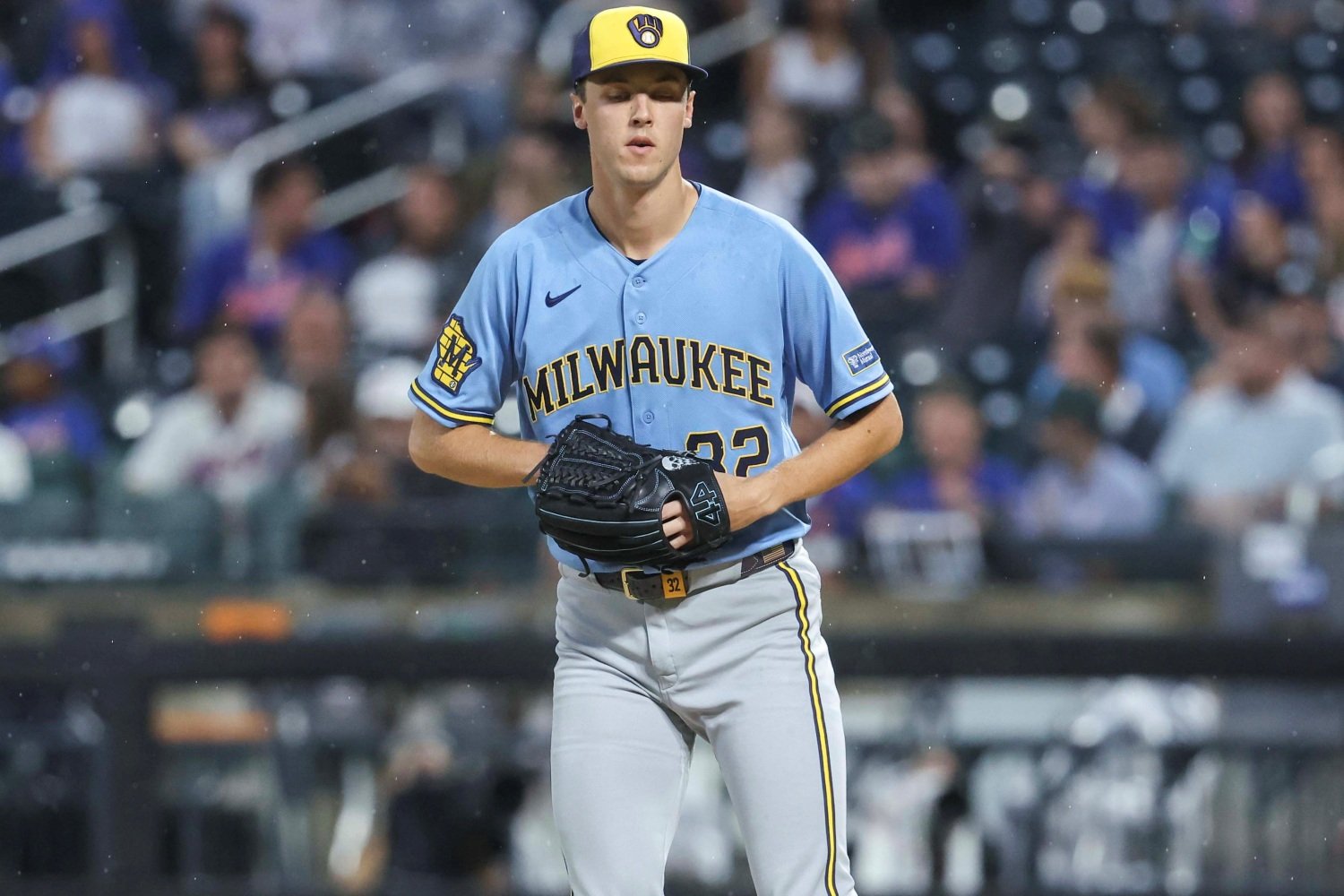 Honorable Mentions Aaron Ashby 12 GS, 14 ⅓ IP, 0.63 ERA, 2.32 FIP, 36.2 K%, 10.3 BB% It's been a season of ups and downs for Ashby. After getting off to an outstanding start as the Brewers’ bullpen workhorse, a summer slump threatened to derail his season. Across 24 ⅔ innings in June and July, he posted a 6.57 ERA with four blown saves. Luckily, Ashby got back on the horse in August and had his best month of the season. He gave up just one earned run this month, on a solo homer to Michael Harris II, and made some small but meaningful adjustments to make his pitches more difficult to square up. In August, opposing hitters made contact in the strike zone just 81.5% of the time and had a ground ball rate of 77.4%. Statistical Nugget: Ashby’s slider has been his best pitch this year by run value (5). Hitters are slugging just .189 while whiffing 56.4% of the time. Trevor Megill 11 G, 12 IP, 0.00 ERA, 2.67 FIP, 17.1 K%, 7.3 BB% It seems like an eternity ago at this point, but there was a point this season at which Megill was pitching so poorly that he was removed from the closer role. Given his 6.55 ERA across his first 11 innings, the decision was unsurprising. Since then, he has been so dominant that his season ERA of 2.24 would lead you to forget he was ever anything other than elite. From May 1st onward, Megill has posted a 1.09 ERA with a 1.61 FIP over 41 ⅓ innings, a span that ended with a scoreless August. His fastball is better than ever. His knuckle curve is better than ever. He’s better than ever. The Brewers started the year with concerns about his ability to remain consistent in high leverage and now it seems the only concern they’ll have is how much they may have to pay him in arbitration next year. Statistical Nugget: Megill is tied with Mason Miller and Adrian Morejon for the most fWAR accumulated by a reliever since May 1st (2.0). Logan Henderson 5 GS, 32 ⅓ IP, 2.23 ERA, 3.98 FIP, 27.4 K%, 4.3 BB% If Logan Henderson didn’t do enough to impress you last year, then surely he has put himself on your radar this year. Aside from pitching to an enticing 2.48 ERA and 3.29 FIP over 76 ⅓ innings this year, he also made headlines after the Brewers allegedly rejected a proposal that would’ve sent him to the Tigers in exchange for Tarik Skubal. He continued what’s technically still his rookie campaign with an outstanding August. Two of his best starts of the season by Game Score came in this month — a seven-inning start against the Rangers and a seven-inning start against the Dodgers, holding both teams to just one earned run. The final month of the regular season will come with some roster decisions for Milwaukee, namely deciding how they want to configure their postseason rotation. With Kyle Harrison hitting some road bumps lately, Henderson could find himself right behind Jacob Misiorowski if he continues to perform at this level. Statistical Nugget: Henderson averages 2,558 RPM on his changeup. Only Trevor Richards (2,559) and Devin Williams (2,612) spin the ball more. Pitcher of the Month — Jacob Misiorowski 5 GS, 31 IP, 2.32 ERA, 2.63 FIP, 32.2 K%, 6.1 BB% August was arguably the worst month of the season for Misiorowski since April. Of course, that’s somewhat of a misleading statement because he still pitched to strong numbers. After posting a 0.54 ERA from May 1st to June 30th, anything short of utter dominance can feel disappointing but he’s still the leading candidate for this year’s NL Cy Young award. Hitters still aren’t touching his fastball, they’re still getting cooked by his cutter, and they’re still failing to square up his breaking balls. He still has more fWAR (5.7) than any pitcher other than Cristopher Sánchez (who has three more starts and 24 ⅓ more innings of work). He’s undoubtedly the best arm talent in Milwaukee and perhaps the entire sport. Statistical Nugget: Misiorowski has a higher whiff rate (41.0%) on his four-seam fastball than any pitcher in baseball this year.
 -
work dirtier?
-
work harder not smarter
-
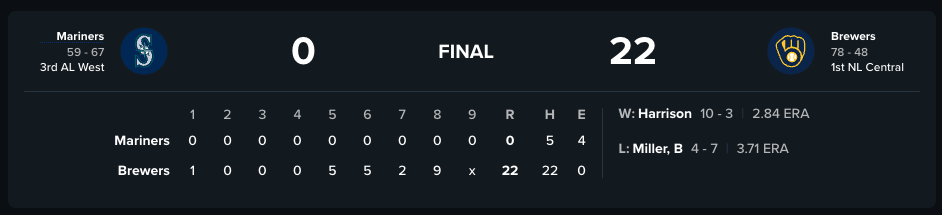
The MLB's anti-bullying policy clearly states: I wonder if this also extends to members of other clubs. If not, will this be added to the growing docket of agenda items in this season's CBA discussions? I wonder if this will make the lockout even longer...
-
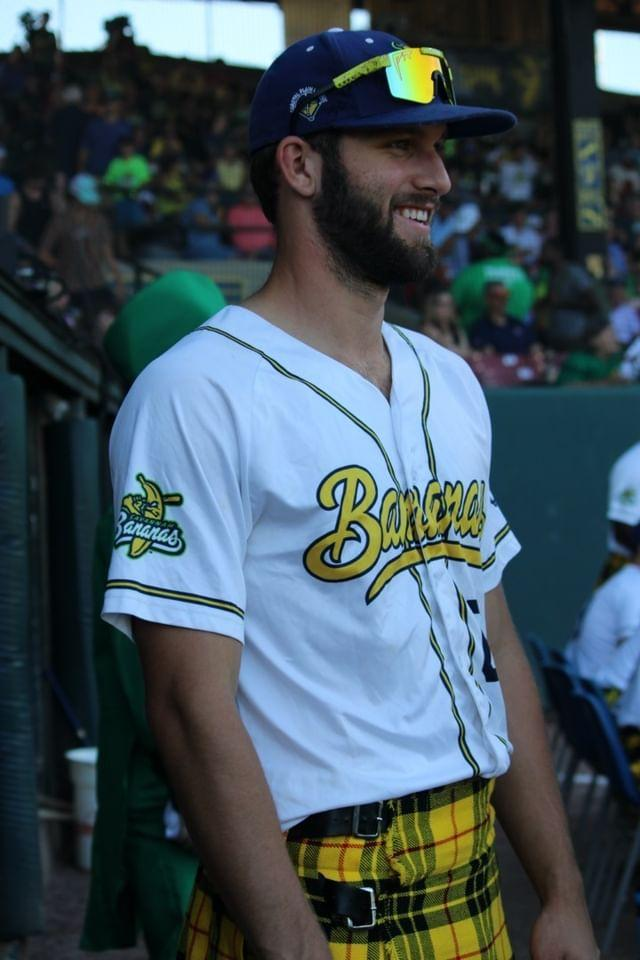
where do the savannah bananas come into this trade history
-
ai could never recreate this 5head wordplay and I tip my cap to u good sir
-
JoJo Romero: Bullpen Behemoth Or Trade Package Afterthought?
Jason Wang posted an article in Brewers
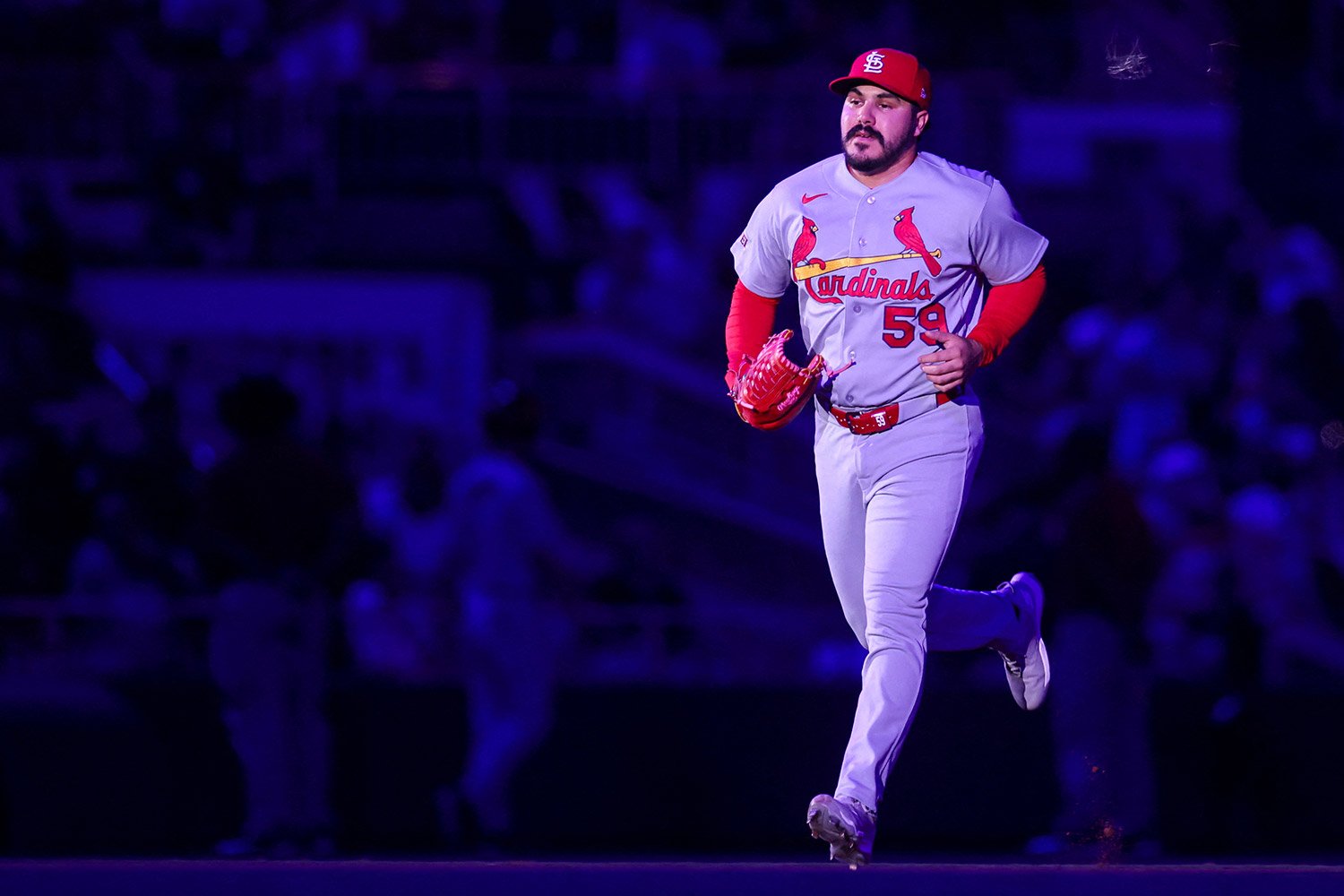 In what may have come as a bit of a shock, the Brewers struck their biggest deal of the deadline with the St. Louis Cardinals, a notable division rival. The last time these two franchises did business was in 2015 when Milwaukee sent Jonathan Broxton to St. Louis in exchange for Malik Collymore, so it’s been a while, to say the least. What was even more surprising than the trade partner was the package. In exchange for Dustin May and JoJo Romero, the Brewers gave up Josiah Ragsdale and Alexander Frias, two highly-touted prospects. Dustin May is responsible for the bulk of the value coming to Milwaukee as he’ll reinforce an injury-ridden rotation and does carry some meaningful upside. However, JoJo Romero is no slouch either. He was mentioned on DiamondCentric’s list of Top 80 trade targets and has had a decent season with the Cardinals, posting a 3.35 ERA over 43 innings. But as a rental reliever, how much does he actually bring to the table? A quick glance at his Statcast numbers would suggest not much. The majority of his numbers are below average, and his average exit velocity of 91.3 mph places him in the fourth percentile among qualified pitchers. His 48.8% ground ball rate seems to be his only saving grace, but there must be more to the 29-year-old southpaw. The only weapon in his arsenal with a positive run value this season is his sinker, which he has used as his primary fastball offering since 2022. It’s definitely one of the pitches of all time, which, in other words, means that it’s serviceable. Opposing hitters are averaging .265 against it, which isn’t totally out of the ordinary for sinkers. What’s more concerning is the hard-hit rate, which stands at 56.1%. He has gotten somewhat lucky so far, limiting the opposing slugging percentage to just .324, but it does seem like it’s only a matter of time before that levy breaks. His secondary pitch of choice is a sweeper with quite a bit of movement. On paper, it complements his sinker well since there are 32 inches of net lateral movement between the two pitches. In practice, it has a whiff rate of just 26.9%. This is largely a location issue, as Romero lands almost half of his sweepers in the zone, which can result in considerable damage. Three of his five home runs have come against the pitch. His tertiary offering is the changeup, which has been mostly uncompetitive this year. It has a chase rate of 34.6% and a whiff rate of 30.4%, which are satisfactory by themselves but hardly enough to compensate for the 17.5% zone rate, meaning it’s landing as a waste pitch far too often to be effective. So far, this all sounds pretty underwhelming. But surely the Brewers, in their infinite wisdom, were excited about something if they wanted him included in the trade. But what is it? To start, there’s a real bullpen need for left-handed pitching. Aaron Ashby seems to be falling apart before our very eyes, posting a gruesome 6.57 ERA and 4.31 FIP since the start of June. DL Hall recently returned from the injured list, but who knows what his readiness will be like. Furthermore, both of these players profile more like starting pitchers, boasting deep arsenals and excellent stamina. Romero’s east/west tendencies seem to be what specifically made him stand out, as it’s also what Dustin May brings to the table. The Brewers don’t currently have a lot of it in their pitching staff, and adding what’s almost like a left-handed Grant Anderson in Romero gives opposing hitters yet another attack vector to prepare for. As a ground ball pitcher, he’s more reliant on the defensive capabilities of his infield, which should be better in Milwaukee. The Brewers are exceptional up the middle with Brice Turang and Cooper Pratt, and now that Joey Ortiz is spending more time at third base, he also brings his exceptional glove to the hot corner. His understudy, David Hamilton, isn’t too shabby either. Together, this defensive ensemble should augment Romero’s run prevention abilities even if his intrinsic abilities remain unchanged. There may be some pitch design changes that the Brewers decide to implement, but with two months left in the regular season, that may be asking for too much too soon. As a rental reliever, Romero’s value proposition seems to be adding a new dimension to the team’s pitching staff that synergizes well with Milwaukee’s infield defense. JoJo Romero has the potential to be a solid piece of the bullpen and will likely excel in double play situations. He doesn’t have the stuff to take the ball in high-leverage situations, but he doesn’t need to be — the Brewers already have other guys for that. If one is asked to decide whether he’s a forgettable piece of an already questionable trade or the man to finally take the Brewers to the World Series, the answer is probably something far less extreme. He’ll eat up important relief innings and get outs for the squad when needed. What more can one ask of a pitcher?
 -
Image courtesy of IMAGN IMAGES via Reuters Connect In what may have come as a bit of a shock, the Brewers struck their biggest deal of the deadline with the St. Louis Cardinals, a notable division rival. The last time these two franchises did business was in 2015 when Milwaukee sent Jonathan Broxton to St. Louis in exchange for Malik Collymore, so it’s been a while, to say the least. What was even more surprising than the trade partner was the package. In exchange for Dustin May and JoJo Romero, the Brewers gave up Josiah Ragsdale and Alexander Frias, two highly-touted prospects. Dustin May is responsible for the bulk of the value coming to Milwaukee as he’ll reinforce an injury-ridden rotation and does carry some meaningful upside. However, JoJo Romero is no slouch either. He was mentioned on DiamondCentric’s list of Top 80 trade targets and has had a decent season with the Cardinals, posting a 3.35 ERA over 43 innings. But as a rental reliever, how much does he actually bring to the table? A quick glance at his Statcast numbers would suggest not much. The majority of his numbers are below average, and his average exit velocity of 91.3 mph places him in the fourth percentile among qualified pitchers. His 48.8% ground ball rate seems to be his only saving grace, but there must be more to the 29-year-old southpaw. The only weapon in his arsenal with a positive run value this season is his sinker, which he has used as his primary fastball offering since 2022. It’s definitely one of the pitches of all time, which, in other words, means that it’s serviceable. Opposing hitters are averaging .265 against it, which isn’t totally out of the ordinary for sinkers. What’s more concerning is the hard-hit rate, which stands at 56.1%. He has gotten somewhat lucky so far, limiting the opposing slugging percentage to just .324, but it does seem like it’s only a matter of time before that levy breaks. His secondary pitch of choice is a sweeper with quite a bit of movement. On paper, it complements his sinker well since there are 32 inches of net lateral movement between the two pitches. In practice, it has a whiff rate of just 26.9%. This is largely a location issue, as Romero lands almost half of his sweepers in the zone, which can result in considerable damage. Three of his five home runs have come against the pitch. His tertiary offering is the changeup, which has been mostly uncompetitive this year. It has a chase rate of 34.6% and a whiff rate of 30.4%, which are satisfactory by themselves but hardly enough to compensate for the 17.5% zone rate, meaning it’s landing as a waste pitch far too often to be effective. So far, this all sounds pretty underwhelming. But surely the Brewers, in their infinite wisdom, were excited about something if they wanted him included in the trade. But what is it? To start, there’s a real bullpen need for left-handed pitching. Aaron Ashby seems to be falling apart before our very eyes, posting a gruesome 6.57 ERA and 4.31 FIP since the start of June. DL Hall recently returned from the injured list, but who knows what his readiness will be like. Furthermore, both of these players profile more like starting pitchers, boasting deep arsenals and excellent stamina. Romero’s east/west tendencies seem to be what specifically made him stand out, as it’s also what Dustin May brings to the table. The Brewers don’t currently have a lot of it in their pitching staff, and adding what’s almost like a left-handed Grant Anderson in Romero gives opposing hitters yet another attack vector to prepare for. As a ground ball pitcher, he’s more reliant on the defensive capabilities of his infield, which should be better in Milwaukee. The Brewers are exceptional up the middle with Brice Turang and Cooper Pratt, and now that Joey Ortiz is spending more time at third base, he also brings his exceptional glove to the hot corner. His understudy, David Hamilton, isn’t too shabby either. Together, this defensive ensemble should augment Romero’s run prevention abilities even if his intrinsic abilities remain unchanged. There may be some pitch design changes that the Brewers decide to implement, but with two months left in the regular season, that may be asking for too much too soon. As a rental reliever, Romero’s value proposition seems to be adding a new dimension to the team’s pitching staff that synergizes well with Milwaukee’s infield defense. JoJo Romero has the potential to be a solid piece of the bullpen and will likely excel in double play situations. He doesn’t have the stuff to take the ball in high-leverage situations, but he doesn’t need to be — the Brewers already have other guys for that. If one is asked to decide whether he’s a forgettable piece of an already questionable trade or the man to finally take the Brewers to the World Series, the answer is probably something far less extreme. He’ll eat up important relief innings and get outs for the squad when needed. What more can one ask of a pitcher? View full article
-
has anyone checked in on keston hiura lately 🤔 wonder what the kiwoom heroes would want for him.
- 11 replies
-
- 2
-

-
- 2026 trade deadline
- james wood
- (and 8 more)
-
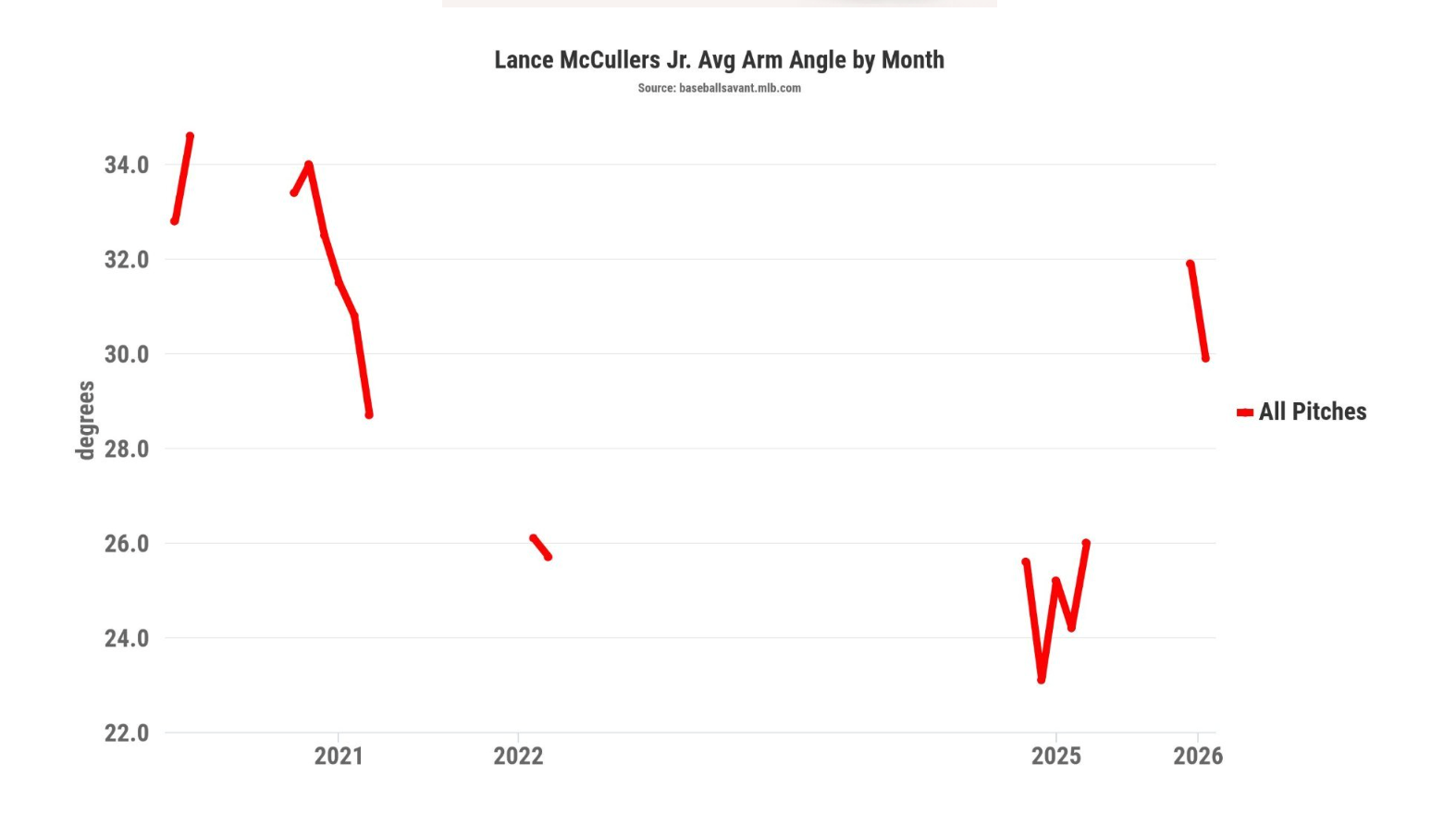
this chart is so sporadic due to his on and off injuries it looks like the scribblings of an unsound mind
- 3 replies
-
- 3
-
-
- lance mccullers jr.
- chris hook
- (and 1 more)
-
Image courtesy of © Sam Navarro-Imagn Images Round 1, Pick No. 20: 3B Andrew Fischer Fischer had outstanding numbers in college last season, playing his final season with Tennessee and slashing .341/.497/.760 with 25 home runs over 292 plate appearances. His defensive abilities at third base raised some questions, though, and he signed for $3.5 million, far below the slot value of $4.27 million. Fischer got some playing time as a pro in 2025, but things really took off for him this year. After being an imposing force on a surprisingly competitive Team Italy roster in the World Baseball Classic, he's torched minor-league opponents. He hit to a 170 wRC+ across 54 High-A plate appearances and has been similarly effective in Double-A thus far. His position on most prospect lists should continue to increase along with his impressive numbers; he's already climbed to fifth on our top-20 prospect list for the organization. Currently slated to debut in 2027 according to MLB Pipeline, Fischer could breathe some offensive life into a position that has been one of the weaker parts of the lineup over the past few years. With the Brewers currently relying on the light-hitting talents of David Hamilton and Joey Ortiz, having someone with the slugging potential of Fischer at the position could be a meaningful boost to the team’s hitting production. This looks like a home run of a pick in the back half of the first round. Round 1, Pick No. 32: SS Brady Ebel Taken out of Corona High School in California, Ebel was teammates with fellow elite prospects Seth Hernandez and Billy Carlson. He suffered from some offensive regression in the spring, which lowered his draft stock, but the Brewers seemed excited about his other strengths like his baseball IQ, arm strength, and quality of contact. One big concern is his ability to remain at shortstop as he faces higher levels of competition. Many scouts anticipate that his lack of speed and agility could necessitate a move to third base, which would allow the best parts of his profile to shine. Ebel has had encouraging results with Single-A Wilson this year, posting a 117 wRC+ over 344 plate appearances. The most notable statistic is a 20.1% walk rate, which has allowed him to maintain an on-base percentage of .404 despite a batting average of just .239. Additionally, despite concerns over his running ability, he's stolen 24 bases. He’s 15th in this very strong, deep system, according to our latest update. It's a much slower burn than Fischer, but again, this looks like a win. Round 2, Pick No. 59: LHP J.D. Thompson Thompson wasn’t the most obviously appealing pitching prospect in the draft class, but he managed to make things work across three seasons at Vanderbilt. At just six feet tall, he isn’t the most physically imposing pitcher. Nor is he blowing past batters; his fastball sits in the low 90s. However, with excellent induced vertical break on his heater and some effective secondary offerings, he finds ways to get outs. Unfortunately for Thompson, his first year of professional baseball has already been marred by injury. He got off to a late start due to a hamstring strain, but finally managed to make his first appearance for High-A Wisconsin in May. After pitching just 18 ⅓ innings, he was placed on the injured list again at the start of June and hasn’t returned. He's clinging to the 20th spot in our latest prospect rankings update. Round 2, Pick No. 68: LHP Frank Cairone Cairone was drafted out of Delsea Regional High School in New Jersey and was noted by scouts for having an impressive arsenal for a 17-year-old. His heater was already sitting at 95 mph and had great ride from a low release point. His slider is already spinning at nearly 3,000 RPM, and he's steadily developing his cutter and changeup. As a player out of high school, he has much to prove, but the Brewers seem excited about his upside. He also made headlines after being involved in a serious car accident in January, but he seems to be well on the road to recovery. He finally got around to making his professional debut a few days ago, throwing one inning in the Arizona Complex League. It will take him quite a bit of time to be fully healthy and ramped up, but at just 18 years old, there’s no rush to get him anywhere fast. Round 3, Pick No. 94: RHP Jacob Morrison Morrison cut an imposing figure while at Coastal Carolina University, measuring in at 6-foot-8 and 245 pounds. His final year with the Chanticleers was exceptional, pitching to a 2.42 ERA and 3.56 FIP over 107 ⅔ innings thanks to a fastball in the mid-90s that has carry at the top of the strike zone. He does struggle with commanding his secondary offerings sometimes, but the shape is effective enough to avoid hard contact fairly well. He has pitched 19 ⅔ innings for Single-A Wilson, with a 4.58 ERA and 4.58 FIP. Although opposing hitters are averaging just .171 against him this year, his 16.7% walk rate has become a glaring issue. This doesn't look like a bumper crop unto itself for the Brewers, like (for instance) the 2023 group could prove to be. Then again, their most important wins in that 2023 class so far are guys whom they selected lower than the ones above. What does seem clear, already, is that last year's draft netted the team a player with star-caliber upside and charisma to match; an impressive young infielder with great ballplayer bloodlines; and a trio of intriguing arms. One year later, the 2025 class looks like further proof that the Brewers run the best scouting and development operation in the league. View full article
- 2 replies
-
- 3
-

-
- andrew fischer
- jd thompson
- (and 3 more)
-
Checking in on Milwaukee Brewers’ Top 2025 MLB Draft Picks
Jason Wang posted an article in Minor Leagues
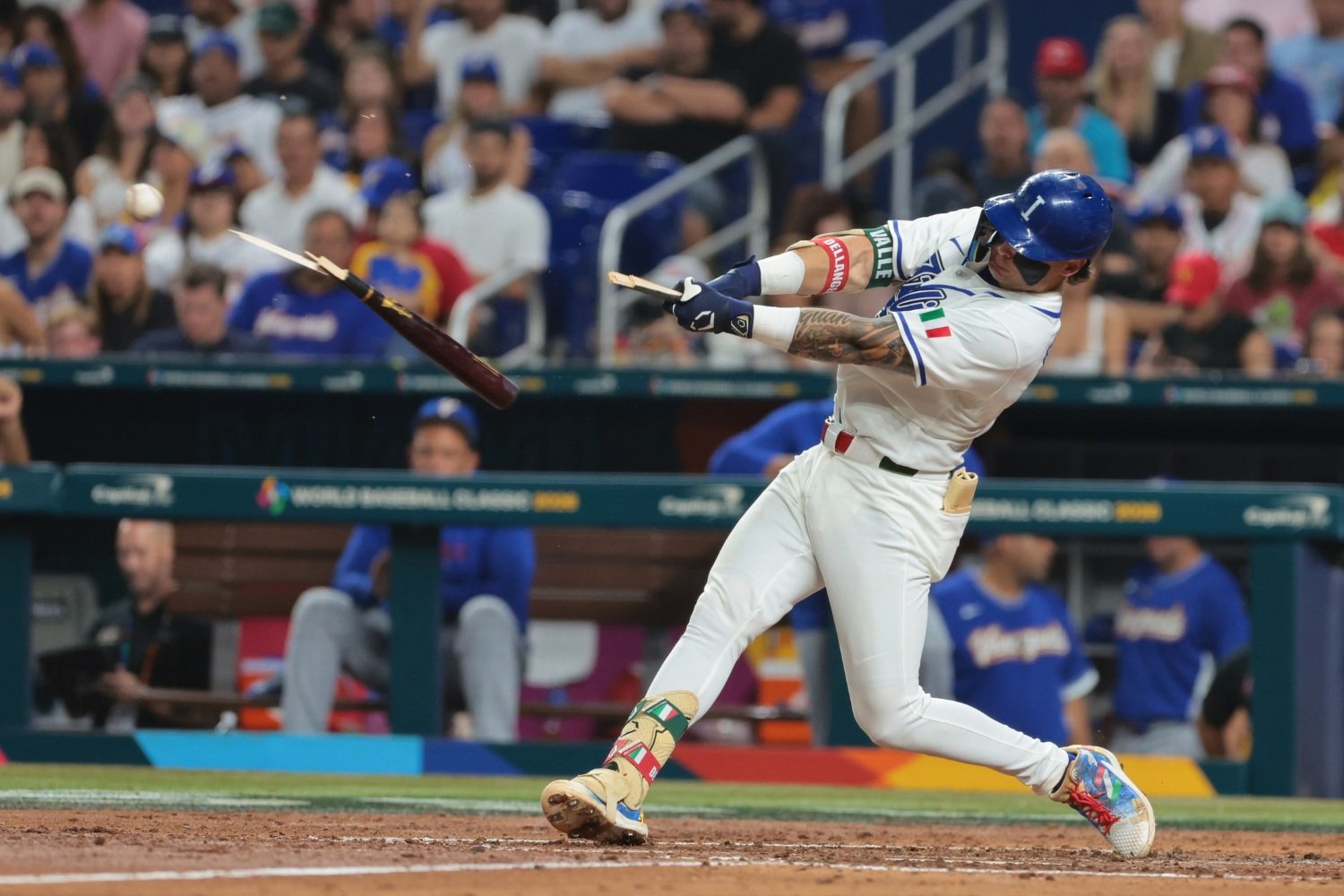 Round 1, Pick No. 20: 3B Andrew Fischer Fischer had outstanding numbers in college last season, playing his final season with Tennessee and slashing .341/.497/.760 with 25 home runs over 292 plate appearances. His defensive abilities at third base raised some questions, though, and he signed for $3.5 million, far below the slot value of $4.27 million. Fischer got some playing time as a pro in 2025, but things really took off for him this year. After being an imposing force on a surprisingly competitive Team Italy roster in the World Baseball Classic, he's torched minor-league opponents. He hit to a 170 wRC+ across 54 High-A plate appearances and has been similarly effective in Double-A thus far. His position on most prospect lists should continue to increase along with his impressive numbers; he's already climbed to fifth on our top-20 prospect list for the organization. Currently slated to debut in 2027 according to MLB Pipeline, Fischer could breathe some offensive life into a position that has been one of the weaker parts of the lineup over the past few years. With the Brewers currently relying on the light-hitting talents of David Hamilton and Joey Ortiz, having someone with the slugging potential of Fischer at the position could be a meaningful boost to the team’s hitting production. This looks like a home run of a pick in the back half of the first round. Round 1, Pick No. 32: SS Brady Ebel Taken out of Corona High School in California, Ebel was teammates with fellow elite prospects Seth Hernandez and Billy Carlson. He suffered from some offensive regression in the spring, which lowered his draft stock, but the Brewers seemed excited about his other strengths like his baseball IQ, arm strength, and quality of contact. One big concern is his ability to remain at shortstop as he faces higher levels of competition. Many scouts anticipate that his lack of speed and agility could necessitate a move to third base, which would allow the best parts of his profile to shine. Ebel has had encouraging results with Single-A Wilson this year, posting a 117 wRC+ over 344 plate appearances. The most notable statistic is a 20.1% walk rate, which has allowed him to maintain an on-base percentage of .404 despite a batting average of just .239. Additionally, despite concerns over his running ability, he's stolen 24 bases. He’s 15th in this very strong, deep system, according to our latest update. It's a much slower burn than Fischer, but again, this looks like a win. Round 2, Pick No. 59: LHP J.D. Thompson Thompson wasn’t the most obviously appealing pitching prospect in the draft class, but he managed to make things work across three seasons at Vanderbilt. At just six feet tall, he isn’t the most physically imposing pitcher. Nor is he blowing past batters; his fastball sits in the low 90s. However, with excellent induced vertical break on his heater and some effective secondary offerings, he finds ways to get outs. Unfortunately for Thompson, his first year of professional baseball has already been marred by injury. He got off to a late start due to a hamstring strain, but finally managed to make his first appearance for High-A Wisconsin in May. After pitching just 18 ⅓ innings, he was placed on the injured list again at the start of June and hasn’t returned. He's clinging to the 20th spot in our latest prospect rankings update. Round 2, Pick No. 68: LHP Frank Cairone Cairone was drafted out of Delsea Regional High School in New Jersey and was noted by scouts for having an impressive arsenal for a 17-year-old. His heater was already sitting at 95 mph and had great ride from a low release point. His slider is already spinning at nearly 3,000 RPM, and he's steadily developing his cutter and changeup. As a player out of high school, he has much to prove, but the Brewers seem excited about his upside. He also made headlines after being involved in a serious car accident in January, but he seems to be well on the road to recovery. He finally got around to making his professional debut a few days ago, throwing one inning in the Arizona Complex League. It will take him quite a bit of time to be fully healthy and ramped up, but at just 18 years old, there’s no rush to get him anywhere fast. Round 3, Pick No. 94: RHP Jacob Morrison Morrison cut an imposing figure while at Coastal Carolina University, measuring in at 6-foot-8 and 245 pounds. His final year with the Chanticleers was exceptional, pitching to a 2.42 ERA and 3.56 FIP over 107 ⅔ innings thanks to a fastball in the mid-90s that has carry at the top of the strike zone. He does struggle with commanding his secondary offerings sometimes, but the shape is effective enough to avoid hard contact fairly well. He has pitched 19 ⅔ innings for Single-A Wilson, with a 4.58 ERA and 4.58 FIP. Although opposing hitters are averaging just .171 against him this year, his 16.7% walk rate has become a glaring issue. This doesn't look like a bumper crop unto itself for the Brewers, like (for instance) the 2023 group could prove to be. Then again, their most important wins in that 2023 class so far are guys whom they selected lower than the ones above. What does seem clear, already, is that last year's draft netted the team a player with star-caliber upside and charisma to match; an impressive young infielder with great ballplayer bloodlines; and a trio of intriguing arms. One year later, the 2025 class looks like further proof that the Brewers run the best scouting and development operation in the league.
- 2 comments
-
- 4
-
-
- andrew fischer
- jd thompson
- (and 3 more)
-
Milwaukee Brewers Hitter of the Month: May 2026
Jason Wang replied to Jason Wang's topic in Brewer Fanatic Front Page News
need to give some of the other players a chance! -
 Honorable Mentions Logan Henderson 4 GS, 21 IP, 2.14 ERA, 2.49 FIP, 33.3 K%, 6.2 BB% For the past two seasons, Henderson has been just outside the major-league rotation, but he's been effective when called up. Brandon Woodruff’s injury seemed like the perfect time for him to get some real innings under his belt, but then came the unfortunate news that he would be hitting the injured list with a back strain. The situation is even sadder when considering that, prior to getting hurt, he continued his strong showing from last year and was one of the better starters for Milwaukee last month. His tendency to give up plenty of pulled balls in the air may have been a concern in the long run, but he managed to keep most of the fly balls in the ballpark. He’ll be out of commission for about a month, but assuming his comrades start to get healthier, the team may not have a clear place to put him when he gets back. Statistical Nugget: Despite having an average velocity of 93.1 mph, Henderson’s four-seam fastball has a whiff rate of 28.4%, partly thanks to its 18.1 inches of induced vertical break. Aaron Ashby 11 G, 17 ⅔ IP, 1.53 ERA, 2.09 FIP, 29.6 K%, 9.9 BB% Ashby has a real shot at being one of the league’s most impactful relievers this year. It’s only the start of June, and he has already pitched 40 innings, setting him up to comfortably eclipse the 66 ⅔ innings he pitched last year. The best part is that he has remained effective despite his monstrous workload. The Brewers ask a lot out of their trusty multi-inning southpaw, and he has consistently delivered. His sinker has gotten hit around a bit, but the breaking ball duo of his curveball and slider has helped limit the damage, with both pitches having whiff rates greater than 56%. Along with his sheer stamina, he is a rare case of a pitcher who has both elite strikeout (32.6%) and ground ball (53.7%) rates, making him an invaluable component of Milwaukee’s bullpen. Statistical Nugget: Ashby has a higher whiff rate on his curveball (56.8%) than any MLB pitcher who has thrown at least 100 pitches. Trevor Megill is in second place (50.6%). Kyle Harrison 5 GS, 28 IP, 0.96 ERA, 2.00 FIP, 28.2 K%, 5.5 BB% In the offseason, the Brewers packaged away much of their infield depth to acquire a couple of underwhelming young starting pitchers and David Hamilton. It seemed like a bizarre move at the time, but after a few months of seeing the results, it’s clear that Milwaukee may have committed their most egregious act of robbery yet. Kyle Harrison has officially broken out and has become one of the best left-handed starters in the sport. In May, the only pitchers to accumulate more fWAR (1.2) than him were Chris Sale (1.3) and Cristopher Sánchez (2.1) He recently had the unfortunate privilege of pitching in the first game of the high-altitude Las Vegas Series, where he was on the wrong end of an offensive onslaught by the Athletics. This caused his numbers to take a steep decline, but he’s clearly demonstrated that under more normal conditions, he has what it takes to be a very solid #2 option in the Brewers’ rotation. Statistical Nugget: Harrison’s go-to secondary pitch is his slurve. Last year, opposing hitters slugged .639 against the pitch. This year, they’re slugging just .227. Pitcher of the Month — Jacob Misiorowski 6 GS, 38 ⅓ IP, 0.23 ERA, 0.68 FIP, 41.9 K%, 4.4 BB% Was there ever any doubt? I would say that Misiorowski posted video-game numbers in the month of May, but it’s difficult to find any video games that are this easy. Milwaukee’s ace dominated opposing hitters in his six starts, and if not for a historic scoreless stretch by Phillies ace Cristopher Sánchez and the medical marvel that is Shohei Ohtani, Misiorowski would be a clear favorite for the NL Cy Young. Two of the main criticisms levied at the 24-year-old were that his inning count was limited by being inefficient and that he lacked command of his otherworldly stuff. Last month, only one of his six starts was shorter than six innings, and three of his starts were stretched to seven. He did this while limiting free passes and reducing his overall walk rate on the season to just 7.3%. His dominance in May rightfully earned him quite a bit of the mainstream spotlight, but this is the pitcher that Milwaukee has known about since they drafted him in 2022. With a 1.50 ERA over his first 78 innings of the year, the sky’s the limit for the future face of the franchise. Statistical Nugget: Misiorowski officially added a cutter this year, and it has quickly become a lethal weapon in his arsenal. Its Run Value per 100 pitches is 5.5, more than any other cutter in baseball (min. 100 pitches).
 -
Image courtesy of © Ron Chenoy-Imagn Images Honorable Mentions Logan Henderson 4 GS, 21 IP, 2.14 ERA, 2.49 FIP, 33.3 K%, 6.2 BB% For the past two seasons, Henderson has been just outside the major-league rotation, but he's been effective when called up. Brandon Woodruff’s injury seemed like the perfect time for him to get some real innings under his belt, but then came the unfortunate news that he would be hitting the injured list with a back strain. The situation is even sadder when considering that, prior to getting hurt, he continued his strong showing from last year and was one of the better starters for Milwaukee last month. His tendency to give up plenty of pulled balls in the air may have been a concern in the long run, but he managed to keep most of the fly balls in the ballpark. He’ll be out of commission for about a month, but assuming his comrades start to get healthier, the team may not have a clear place to put him when he gets back. Statistical Nugget: Despite having an average velocity of 93.1 mph, Henderson’s four-seam fastball has a whiff rate of 28.4%, partly thanks to its 18.1 inches of induced vertical break. Aaron Ashby 11 G, 17 ⅔ IP, 1.53 ERA, 2.09 FIP, 29.6 K%, 9.9 BB% Ashby has a real shot at being one of the league’s most impactful relievers this year. It’s only the start of June, and he has already pitched 40 innings, setting him up to comfortably eclipse the 66 ⅔ innings he pitched last year. The best part is that he has remained effective despite his monstrous workload. The Brewers ask a lot out of their trusty multi-inning southpaw, and he has consistently delivered. His sinker has gotten hit around a bit, but the breaking ball duo of his curveball and slider has helped limit the damage, with both pitches having whiff rates greater than 56%. Along with his sheer stamina, he is a rare case of a pitcher who has both elite strikeout (32.6%) and ground ball (53.7%) rates, making him an invaluable component of Milwaukee’s bullpen. Statistical Nugget: Ashby has a higher whiff rate on his curveball (56.8%) than any MLB pitcher who has thrown at least 100 pitches. Trevor Megill is in second place (50.6%). Kyle Harrison 5 GS, 28 IP, 0.96 ERA, 2.00 FIP, 28.2 K%, 5.5 BB% In the offseason, the Brewers packaged away much of their infield depth to acquire a couple of underwhelming young starting pitchers and David Hamilton. It seemed like a bizarre move at the time, but after a few months of seeing the results, it’s clear that Milwaukee may have committed their most egregious act of robbery yet. Kyle Harrison has officially broken out and has become one of the best left-handed starters in the sport. In May, the only pitchers to accumulate more fWAR (1.2) than him were Chris Sale (1.3) and Cristopher Sánchez (2.1) He recently had the unfortunate privilege of pitching in the first game of the high-altitude Las Vegas Series, where he was on the wrong end of an offensive onslaught by the Athletics. This caused his numbers to take a steep decline, but he’s clearly demonstrated that under more normal conditions, he has what it takes to be a very solid #2 option in the Brewers’ rotation. Statistical Nugget: Harrison’s go-to secondary pitch is his slurve. Last year, opposing hitters slugged .639 against the pitch. This year, they’re slugging just .227. Pitcher of the Month — Jacob Misiorowski 6 GS, 38 ⅓ IP, 0.23 ERA, 0.68 FIP, 41.9 K%, 4.4 BB% Was there ever any doubt? I would say that Misiorowski posted video-game numbers in the month of May, but it’s difficult to find any video games that are this easy. Milwaukee’s ace dominated opposing hitters in his six starts, and if not for a historic scoreless stretch by Phillies ace Cristopher Sánchez and the medical marvel that is Shohei Ohtani, Misiorowski would be a clear favorite for the NL Cy Young. Two of the main criticisms levied at the 24-year-old were that his inning count was limited by being inefficient and that he lacked command of his otherworldly stuff. Last month, only one of his six starts was shorter than six innings, and three of his starts were stretched to seven. He did this while limiting free passes and reducing his overall walk rate on the season to just 7.3%. His dominance in May rightfully earned him quite a bit of the mainstream spotlight, but this is the pitcher that Milwaukee has known about since they drafted him in 2022. With a 1.50 ERA over his first 78 innings of the year, the sky’s the limit for the future face of the franchise. Statistical Nugget: Misiorowski officially added a cutter this year, and it has quickly become a lethal weapon in his arsenal. Its Run Value per 100 pitches is 5.5, more than any other cutter in baseball (min. 100 pitches). View full article
-
 Honorable Mentions Brice Turang 111 PA, .231/.355/.363, 21 H, 3 2B, 3 HR, 11 RBI, 18 BB, 2 SB, 107 wRC+ Turang slowed down a bit in the month of May, especially when it came to hitting for power, but his walk rate remained exceptional. His walk rate of 17.0% is exceptional and has helped keep his offensive production afloat even when the power has slipped. Luckily, things began turning around toward the end of the month, and June is off to a great start. He has slugged an impressive .778 in 27 at-bats so far and is doing plenty of damage once again, as noted by our very own Matt Trueblood. Statistical Nugget: Turang’s average exit velocity this season is 91.3 mph, the highest mark in his career so far. His average exit velocity as a rookie was 85.5 mph. William Contreras 106 PA, .302/.358/.365, 29 H, 3 2B, 1 HR, 14 RBI, 8 BB, 1 SB, 106 wRC+ Turang isn’t the only person who suffered from an apparent power outage last month. Contreras has been on a steady decline when it comes to his pop, which isn’t unexpected for a catcher who slugged .506 in his final season with his old team. The silver lining is that he has been hitting for a higher average and striking out far less. This has spurred some questions as to whether his power production and bat speed have declined as a result of the physical toll of playing as frequently as he does, given the grueling mental and physical demands of being a big-league catcher. While he hasn’t been able to do it consistently, he has shown occasional glimpses of being able to punish baseballs just as much as he did in his slightly younger days. Statistical Nugget: This season, Contreras is averaging .462 and slugging .731 against cutters. Andrew Vaughn 65 PA, .351/.431/.526, 20 H, 7 2B, 1 HR, 7 RBI, 6 BB, 173 wRC+ Although he started the year on the injured list due to surgery on his left hamate bone, Vaughn wasted no time getting to work after returning to the team. He has been on an absolute tear and was one of the few truly standout bats in the lineup last month. Milwaukee’s ability to hit the ball into the stands is worse than one might assume. The Brewers’ combined 54 home runs are 28th in MLB. They haven’t really needed it, as shown by them being third in MLB for runs scored (344), but having a bat with real power potential like Vaughn will (if nothing else) give fans a few more long balls to admire than they would’ve had otherwise. Statistical Nugget: This season, Vaughn has a .692 OPS with runners in scoring position and a 1.016 OPS with the bases empty. Hitter of the Month – Jake Bauers 85 PA, .307/.388/.533, 23 H, 5 2B, 4 HR, 14 RBI, 8 BB, 1 SB, 160 wRC+ When Bauers first joined the team, it was assumed that he would be the latest in a long line of disappointing talent at first base, and there wasn’t much of a reason to believe otherwise. Prior to 2024, he had accumulated -1.4 fWAR and had never posted a wRC+ of 100 or higher. His first year as a Brewer was more of the same, but 2025 seemed to be an inflection point in his career. Now, at 30 years old in his seventh big-league season, Bauers has arguably been the best hitter on the team, and his numbers are in elite territory. In baseball, regression to the norm is always one freezing-cold month away, but the same was said about Vaughn after he was acquired from the White Sox. Vaughn has remained productive ever since. Milwaukee has become known for reviving the careers of pitchers, but they may have cracked the hitter puzzle, too. Bauers is a prime example of what’s now possible. Statistical Nugget: Jake Bauers’s 148 wRC+ this year is fifth among qualified first basemen and is higher than Bryce Harper (141) and Matt Olson (140).
 -
Image courtesy of © Ron Chenoy-Imagn Images Honorable Mentions Brice Turang 111 PA, .231/.355/.363, 21 H, 3 2B, 3 HR, 11 RBI, 18 BB, 2 SB, 107 wRC+ Turang slowed down a bit in the month of May, especially when it came to hitting for power, but his walk rate remained exceptional. His walk rate of 17.0% is exceptional and has helped keep his offensive production afloat even when the power has slipped. Luckily, things began turning around toward the end of the month, and June is off to a great start. He has slugged an impressive .778 in 27 at-bats so far and is doing plenty of damage once again, as noted by our very own Matt Trueblood. Statistical Nugget: Turang’s average exit velocity this season is 91.3 mph, the highest mark in his career so far. His average exit velocity as a rookie was 85.5 mph. William Contreras 106 PA, .302/.358/.365, 29 H, 3 2B, 1 HR, 14 RBI, 8 BB, 1 SB, 106 wRC+ Turang isn’t the only person who suffered from an apparent power outage last month. Contreras has been on a steady decline when it comes to his pop, which isn’t unexpected for a catcher who slugged .506 in his final season with his old team. The silver lining is that he has been hitting for a higher average and striking out far less. This has spurred some questions as to whether his power production and bat speed have declined as a result of the physical toll of playing as frequently as he does, given the grueling mental and physical demands of being a big-league catcher. While he hasn’t been able to do it consistently, he has shown occasional glimpses of being able to punish baseballs just as much as he did in his slightly younger days. Statistical Nugget: This season, Contreras is averaging .462 and slugging .731 against cutters. Andrew Vaughn 65 PA, .351/.431/.526, 20 H, 7 2B, 1 HR, 7 RBI, 6 BB, 173 wRC+ Although he started the year on the injured list due to surgery on his left hamate bone, Vaughn wasted no time getting to work after returning to the team. He has been on an absolute tear and was one of the few truly standout bats in the lineup last month. Milwaukee’s ability to hit the ball into the stands is worse than one might assume. The Brewers’ combined 54 home runs are 28th in MLB. They haven’t really needed it, as shown by them being third in MLB for runs scored (344), but having a bat with real power potential like Vaughn will (if nothing else) give fans a few more long balls to admire than they would’ve had otherwise. Statistical Nugget: This season, Vaughn has a .692 OPS with runners in scoring position and a 1.016 OPS with the bases empty. Hitter of the Month – Jake Bauers 85 PA, .307/.388/.533, 23 H, 5 2B, 4 HR, 14 RBI, 8 BB, 1 SB, 160 wRC+ When Bauers first joined the team, it was assumed that he would be the latest in a long line of disappointing talent at first base, and there wasn’t much of a reason to believe otherwise. Prior to 2024, he had accumulated -1.4 fWAR and had never posted a wRC+ of 100 or higher. His first year as a Brewer was more of the same, but 2025 seemed to be an inflection point in his career. Now, at 30 years old in his seventh big-league season, Bauers has arguably been the best hitter on the team, and his numbers are in elite territory. In baseball, regression to the norm is always one freezing-cold month away, but the same was said about Vaughn after he was acquired from the White Sox. Vaughn has remained productive ever since. Milwaukee has become known for reviving the careers of pitchers, but they may have cracked the hitter puzzle, too. Bauers is a prime example of what’s now possible. Statistical Nugget: Jake Bauers’s 148 wRC+ this year is fifth among qualified first basemen and is higher than Bryce Harper (141) and Matt Olson (140). View full article
-
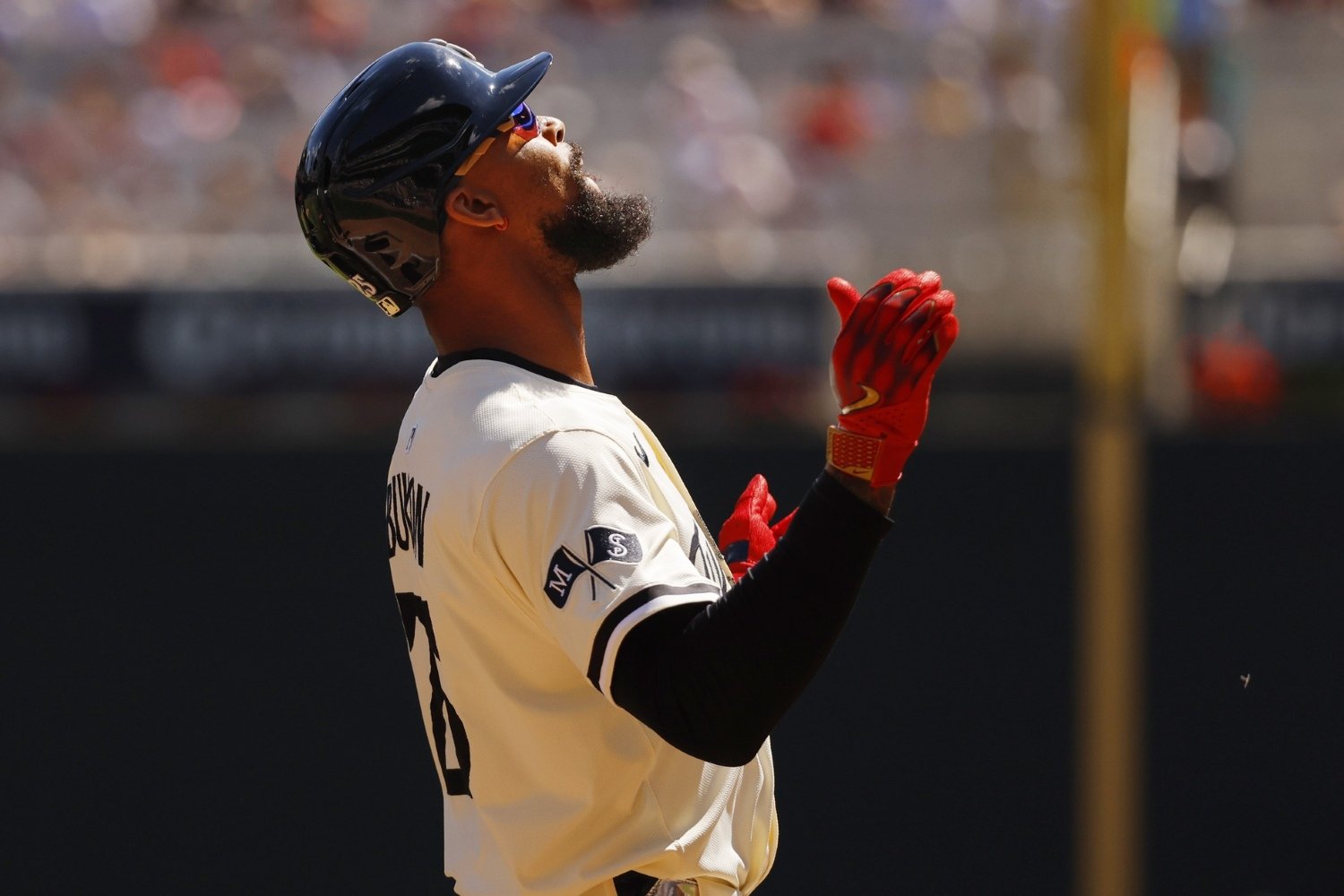 Last Friday, we posted a forum thread that asked for our readers’ preferred trade targets for this year’s deadline, assuming they could only pick one name. We had more than a few intriguing answers, and I’m here to take a closer look at each pitch. @TwinsBrewersWorldSeries said: Freddy Peralta (just to watch heads explode). We roll with some combo of Miz, Harrison, Patrick, Henderson in the playoffs….but Peralta replacing Sproat or Gasser gets us the 1 seed. Aside from the obvious value of a homecoming for our glorious king Freddy Peralta, this is a pretty solid take. On the surface, his 3.38 ERA and average Statcast numbers don’t seem like much to write home about, but because he’s Freddy Peralta, there’s a solid chance that he would be even more effective in Milwaukee than he currently is in Queens. To me, the most important quality that Peralta would give to the Brewers’ rotation is length. The current rotation is mostly made up of younger players, and while one of them is throwing jet fuel on his 90th pitch, the others don’t quite have the same stamina. Milwaukee already has a tendency to demand a lot from its bullpen, and with many of their starters going fewer than six innings, it’s even more pronounced this year. Five of Milwaukee’s relievers have already made 23 or more appearances, and Aaron Ashby has been forced to throw 37 ⅓ innings. Poor guy. @owbc said: Joe Ryan is mine. It would be Skubal, but I think he might go ahead of the deadline, and we are more concerned about October than getting more regular-season starts. Joe Ryan is arguably the only good thing the Twins rotation has had going for them over the last two years. After a strong 2025 campaign, he has been even better this year, pitching to a 3.20 ERA with a 2.76 FIP over his first 13 starts. He has elite strikeout and walk rates, and his four-seam fastball is one of the best in the business. Minnesota isn’t out of the playoff race just yet, but it seems like it’ll be quite the uphill battle for them to make it there. Thus, it’s likely that they’ll be sellers at the deadline as they were last year. Their farm system is quite solid (ranked No. 9 by MLB Pipeline in March), and Ryan seems like he’ll be their most sought-after asset this year, so expect a steep asking price. @cragi said: Skubal The Tigers are going to get a lot of calls about Skubal this summer, but I’d be surprised if the Brewers were one of the parties dialing in, mostly because I think the $32 million salary is enough for Milwaukee to pass. You could ask the Tigers to pay down what he's owed, but that means giving up even better prospects. Additionally, their current southpaw options aren’t too shabby. Kyle Harrison is putting up video-game numbers and would probably be getting even more attention if his stablemate Misiorowski weren’t playing an even cooler video game. Shane Drohan hasn’t had as many innings but hasn’t been half bad when he has pitched, posting a 2.87 ERA over 31.1 IP with a 2.77 FIP. You can thank the Red Sox for both of these fellas. Throw in the fact that the Brewers have two multi-inning left-handed relievers in Ashby and DL Hall, and I don’t think the front office is even willing to pay Skubal’s remaining salary, let alone give up significant prospect capital to even have the ability to do so. @nate82 said: Highly unlikely, but if Witt becomes available, that is the only player I would go after. Highly unlikely indeed, especially given his eye-watering $288-million contract, but it would be nice to have a player of his caliber covering one of Milwaukee’s weakest positions. Neither Joey Ortiz nor David Hamilton has been offensively viable at shortstop this year, and they’ve combined for a .531 OPS, making the Brewers comfortably dead last in terms of shortstop OPS. Third base isn’t much better, which means that the entire left side of the infield is a point of concern and will probably be one of the organization’s priorities down the stretch. I don’t know if that means making a trade or calling up one of their current infield prospects, but I do know that it definitely doesn’t involve getting Bobby Witt Jr. in a Brewers jersey. @jay87shot said: Byron Buxton, I would love a SS/3B, but I don’t see a difference maker really being available. I will give a shout out to Reid Detmers, I think he is a guy like Harrison that has the tools to be a top line guy but needs to get out of LA. Thank you for agreeing with my last point Mr. 87shot! What a timely response. This seems like it will be the third consecutive season that Buxton will post an OPS+ above 130, and I’m all for it. He’s a great player with some exceptional tools and is one of the best outfielders in the game when healthy. His seven-year, $100-million contract extension might actually be the only successful move made by Minnesota’s front office since I started watching baseball. Assuming the Twins would be willing to trade their current face of the franchise, he’d be a great fit on paper for the Brewers, but I have to wonder if Milwaukee would be willing to give up on the cheaper and almost-as-good alternative in Garrett Mitchell. At least they both share a penchant for spending time on the injured list. As for Detmers, I don’t doubt that he’d excel in Milwaukee over Anaheim and would likely benefit from more separation between his arsenal (his four-seam, sinker, and changeup have very similar profiles right now). However, the Brewers may not be as enthusiastic about giving up minor-league talent for a project starter who may not even fit in the current postseason rotation. I do want to point out that over the last two seasons, he has pitched to a 4.31 ERA and 3.04 FIP. Tantalizing, but not sure if it’s enough to push him over the edge. The front office is probably keeping an eye on him, though. @LouisEly said: If Toronto stays out of it, Ernie Clement. This gets back to the original problem the team currently has with the left side of the infield, which has simply been lackluster. Ernie, whose legal name is evidently not Ernest, has been a valuable utility piece for the Blue Jays. While many teams have utility players that simply fill several roles at a near replacement level, Clement has been one of the most valuable players on the team since 2024. He has spent most of his time filling in at second base now that Kazuma Okamoto has taken over the starting job at third base, but Clement would still be a meaningful upgrade over Luis Rengifo, who has struggled to be impactful with the bat or the glove thus far. With a strong skillset, a few remaining years of club control, and a dedicated fanbase in Toronto, he won’t come cheap, but he could be the answer to one of Milwaukee’s most glaring issues right now. @HarryDoyle said: Literally any mediocre hitting third baseman. It’s time to start a dialogue. Thanks for all of your contributions. I hope to do this again soon!
- 29 comments
-
- 2
-
-
- tarik skubal
- luis rengifo
- (and 4 more)
-
Image courtesy of © Bruce Kluckhohn-Imagn Images Last Friday, we posted a forum thread that asked for our readers’ preferred trade targets for this year’s deadline, assuming they could only pick one name. We had more than a few intriguing answers, and I’m here to take a closer look at each pitch. @TwinsBrewersWorldSeries said: Freddy Peralta (just to watch heads explode). We roll with some combo of Miz, Harrison, Patrick, Henderson in the playoffs….but Peralta replacing Sproat or Gasser gets us the 1 seed. Aside from the obvious value of a homecoming for our glorious king Freddy Peralta, this is a pretty solid take. On the surface, his 3.38 ERA and average Statcast numbers don’t seem like much to write home about, but because he’s Freddy Peralta, there’s a solid chance that he would be even more effective in Milwaukee than he currently is in Queens. To me, the most important quality that Peralta would give to the Brewers’ rotation is length. The current rotation is mostly made up of younger players, and while one of them is throwing jet fuel on his 90th pitch, the others don’t quite have the same stamina. Milwaukee already has a tendency to demand a lot from its bullpen, and with many of their starters going fewer than six innings, it’s even more pronounced this year. Five of Milwaukee’s relievers have already made 23 or more appearances, and Aaron Ashby has been forced to throw 37 ⅓ innings. Poor guy. @owbc said: Joe Ryan is mine. It would be Skubal, but I think he might go ahead of the deadline, and we are more concerned about October than getting more regular-season starts. Joe Ryan is arguably the only good thing the Twins rotation has had going for them over the last two years. After a strong 2025 campaign, he has been even better this year, pitching to a 3.20 ERA with a 2.76 FIP over his first 13 starts. He has elite strikeout and walk rates, and his four-seam fastball is one of the best in the business. Minnesota isn’t out of the playoff race just yet, but it seems like it’ll be quite the uphill battle for them to make it there. Thus, it’s likely that they’ll be sellers at the deadline as they were last year. Their farm system is quite solid (ranked No. 9 by MLB Pipeline in March), and Ryan seems like he’ll be their most sought-after asset this year, so expect a steep asking price. @cragi said: Skubal The Tigers are going to get a lot of calls about Skubal this summer, but I’d be surprised if the Brewers were one of the parties dialing in, mostly because I think the $32 million salary is enough for Milwaukee to pass. You could ask the Tigers to pay down what he's owed, but that means giving up even better prospects. Additionally, their current southpaw options aren’t too shabby. Kyle Harrison is putting up video-game numbers and would probably be getting even more attention if his stablemate Misiorowski weren’t playing an even cooler video game. Shane Drohan hasn’t had as many innings but hasn’t been half bad when he has pitched, posting a 2.87 ERA over 31.1 IP with a 2.77 FIP. You can thank the Red Sox for both of these fellas. Throw in the fact that the Brewers have two multi-inning left-handed relievers in Ashby and DL Hall, and I don’t think the front office is even willing to pay Skubal’s remaining salary, let alone give up significant prospect capital to even have the ability to do so. @nate82 said: Highly unlikely, but if Witt becomes available, that is the only player I would go after. Highly unlikely indeed, especially given his eye-watering $288-million contract, but it would be nice to have a player of his caliber covering one of Milwaukee’s weakest positions. Neither Joey Ortiz nor David Hamilton has been offensively viable at shortstop this year, and they’ve combined for a .531 OPS, making the Brewers comfortably dead last in terms of shortstop OPS. Third base isn’t much better, which means that the entire left side of the infield is a point of concern and will probably be one of the organization’s priorities down the stretch. I don’t know if that means making a trade or calling up one of their current infield prospects, but I do know that it definitely doesn’t involve getting Bobby Witt Jr. in a Brewers jersey. @jay87shot said: Byron Buxton, I would love a SS/3B, but I don’t see a difference maker really being available. I will give a shout out to Reid Detmers, I think he is a guy like Harrison that has the tools to be a top line guy but needs to get out of LA. Thank you for agreeing with my last point Mr. 87shot! What a timely response. This seems like it will be the third consecutive season that Buxton will post an OPS+ above 130, and I’m all for it. He’s a great player with some exceptional tools and is one of the best outfielders in the game when healthy. His seven-year, $100-million contract extension might actually be the only successful move made by Minnesota’s front office since I started watching baseball. Assuming the Twins would be willing to trade their current face of the franchise, he’d be a great fit on paper for the Brewers, but I have to wonder if Milwaukee would be willing to give up on the cheaper and almost-as-good alternative in Garrett Mitchell. At least they both share a penchant for spending time on the injured list. As for Detmers, I don’t doubt that he’d excel in Milwaukee over Anaheim and would likely benefit from more separation between his arsenal (his four-seam, sinker, and changeup have very similar profiles right now). However, the Brewers may not be as enthusiastic about giving up minor-league talent for a project starter who may not even fit in the current postseason rotation. I do want to point out that over the last two seasons, he has pitched to a 4.31 ERA and 3.04 FIP. Tantalizing, but not sure if it’s enough to push him over the edge. The front office is probably keeping an eye on him, though. @LouisEly said: If Toronto stays out of it, Ernie Clement. This gets back to the original problem the team currently has with the left side of the infield, which has simply been lackluster. Ernie, whose legal name is evidently not Ernest, has been a valuable utility piece for the Blue Jays. While many teams have utility players that simply fill several roles at a near replacement level, Clement has been one of the most valuable players on the team since 2024. He has spent most of his time filling in at second base now that Kazuma Okamoto has taken over the starting job at third base, but Clement would still be a meaningful upgrade over Luis Rengifo, who has struggled to be impactful with the bat or the glove thus far. With a strong skillset, a few remaining years of club control, and a dedicated fanbase in Toronto, he won’t come cheap, but he could be the answer to one of Milwaukee’s most glaring issues right now. @HarryDoyle said: Literally any mediocre hitting third baseman. It’s time to start a dialogue. Thanks for all of your contributions. I hope to do this again soon! View full article
- 29 replies
-
- 3
-
-
- tarik skubal
- luis rengifo
- (and 4 more)
-
Just How Historic Could Jacob Misiorowski’s Season Be for the Brewers?
Jason Wang posted an article in Brewers
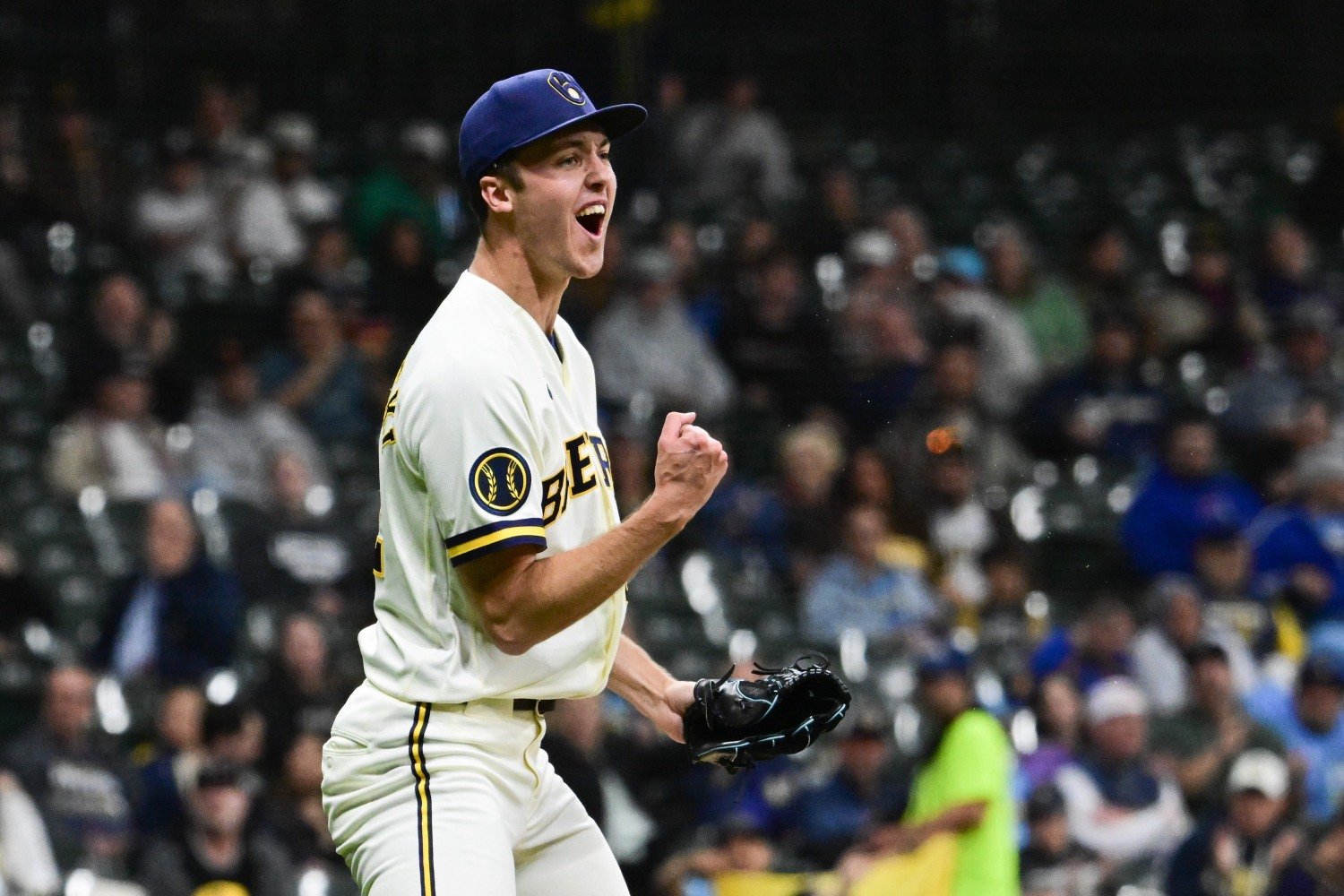 Jacob Misiorowski took over baseball headlines last year by being a flamethrowing rookie who was controversially nominated to the All-Star game after just five career games. At the time, his numbers looked good, but things deteriorated in the second half, during which he posted a 5.36 ERA over 40 ⅓ innings. Now, he has recaptured the attention of fans across the sport—not because of some gimmick or contentious award, but because he has simply been dominant. He's currently tied with Cristopher Sánchez for the most strikeouts in MLB (80) and has absurd Statcast numbers, landing in the top decile for several statistics, including whiff rate (39.5%) and barrel rate (3.0%). He’s just nine starts into the season, but after 51 innings, how do his other rate stats compare to some of the best pitching seasons in Brewers history? Here are the top five single-season performances by descending fWAR and how Misiorowski’s current numbers stack up. fWAR IP ERA FIP K% BB% Ben Sheets (2004) 8.0 237.0 2.70 2.65 28.2% 3.4% Corbin Burnes (2021) 7.5 167.0 2.43 1.63 35.6% 5.2% Teddy Higuera (1987) 6.7 261.2 3.85 3.25 22.1% 8.0% Mike Caldwell (1978) 6.3 293.1 2.36 2.94 11.1% 4.6% Teddy Higuera (1988) 5.9 227.1 2.45 2.80 21.5% 6.6% Jacob Misiorowski (2026) 1.9 51.0 2.12 2.27 39.6% 8.4% Because nearly five decades separate Caldwell’s 1978 campaign and Misiorowski’s current work, there are quite a few differences that jump out almost immediately, with pitcher workload being perhaps the most notable. Caldwell’s workload in 1978 was already a Herculean task by his standards, but the culture of the modern game likely means that no Brewer will ever get anywhere close to that number of innings again. In fact, the only player to pitch more than 200 innings for Milwaukee since 2012 was Corbin Burnes in 2022. Burnes just barely crossed the milestone marker, logging 202 innings of work. Another key difference is strikeout rates, which have steadily climbed over the years. While Caldwell managed to accumulate 6.3 fWAR with a strikeout rate that would’ve been the worst among qualified pitchers in 2025, the team’s modern aces (Burnes and Misiorowski) have thrived by punching as many tickets as they could. Misiorowski is the most extreme example of this contemporary pitching philosophy, which seems to prioritize dominance in shorter spans over longevity. Of his nine starts so far, only one has been more than six innings. It doesn’t help that he has been exiting games early due to cramping in his legs, but those injuries are a side effect of averaging 92 pitches per start, 61% of which are fastballs that average nearly 100 mph. To some, this may seem like a problem, but to the Brewers, this is sort of the desired outcome. So while he might not be able to reach the counting-stat excellence of preceding franchise greats, he has a solid chance of having one of the most impressive rate-stat seasons in Milwaukee history. Assuming he maintains his current rate stats for the remainder of the year, this is where he’d stand compared to every other qualified pitching season for the Brewers. ERA 2.12 (1st) FIP 2.27 (2nd) K% 35.6% (1st) AVG .161 (1st) WHIP 0.90 (1st) Figures like SIERA and expected statistics are excluded because we don’t have data for earlier seasons. Naturally, maintaining this torrid pace is much easier said than done. There’s still a chance that, like last year, the wheels of his season start to fall off once we approach the dog days of summer. Conversely, a year of working with Chris Hook and the Brewers’ pitching development program can do wonders for a young baseball talent, and there’s good reason to believe that he’s much closer to his true potential than he was as a rookie. Strikeouts and whiffs are up, walks are down, and he’s no longer solely reliant on his fastball to get through at-bats. There are still plenty of things to nitpick, like how inefficient his outings can be or what things will look like if he does experience diminished velocity in later innings, especially since he opts to fill up the zone. Can he continue to get away with a three-pitch arsenal that’s really more like a two-pitch arsenal? Maybe, but it’d be nice to have some more fun offerings. The question of where this season by Misiorowski will land in the history of all-time great campaigns by Brewers pitchers is one worth revisiting at the end of the season, even if it’s not the only year we’ll be on watch. In fact, it’d be quite surprising for a player to peak at just 24 years old, so his best years may even be ahead of him. The organization has had no shortage of premier pitching talent over the years, but finding someone of his caliber may be a first. This season should be the first of many to prove it.
 -
Image courtesy of © Benny Sieu-Imagn Images Jacob Misiorowski took over baseball headlines last year by being a flamethrowing rookie who was controversially nominated to the All-Star game after just five career games. At the time, his numbers looked good, but things deteriorated in the second half, during which he posted a 5.36 ERA over 40 ⅓ innings. Now, he has recaptured the attention of fans across the sport—not because of some gimmick or contentious award, but because he has simply been dominant. He's currently tied with Cristopher Sánchez for the most strikeouts in MLB (80) and has absurd Statcast numbers, landing in the top decile for several statistics, including whiff rate (39.5%) and barrel rate (3.0%). He’s just nine starts into the season, but after 51 innings, how do his other rate stats compare to some of the best pitching seasons in Brewers history? Here are the top five single-season performances by descending fWAR and how Misiorowski’s current numbers stack up. fWAR IP ERA FIP K% BB% Ben Sheets (2004) 8.0 237.0 2.70 2.65 28.2% 3.4% Corbin Burnes (2021) 7.5 167.0 2.43 1.63 35.6% 5.2% Teddy Higuera (1987) 6.7 261.2 3.85 3.25 22.1% 8.0% Mike Caldwell (1978) 6.3 293.1 2.36 2.94 11.1% 4.6% Teddy Higuera (1988) 5.9 227.1 2.45 2.80 21.5% 6.6% Jacob Misiorowski (2026) 1.9 51.0 2.12 2.27 39.6% 8.4% Because nearly five decades separate Caldwell’s 1978 campaign and Misiorowski’s current work, there are quite a few differences that jump out almost immediately, with pitcher workload being perhaps the most notable. Caldwell’s workload in 1978 was already a Herculean task by his standards, but the culture of the modern game likely means that no Brewer will ever get anywhere close to that number of innings again. In fact, the only player to pitch more than 200 innings for Milwaukee since 2012 was Corbin Burnes in 2022. Burnes just barely crossed the milestone marker, logging 202 innings of work. Another key difference is strikeout rates, which have steadily climbed over the years. While Caldwell managed to accumulate 6.3 fWAR with a strikeout rate that would’ve been the worst among qualified pitchers in 2025, the team’s modern aces (Burnes and Misiorowski) have thrived by punching as many tickets as they could. Misiorowski is the most extreme example of this contemporary pitching philosophy, which seems to prioritize dominance in shorter spans over longevity. Of his nine starts so far, only one has been more than six innings. It doesn’t help that he has been exiting games early due to cramping in his legs, but those injuries are a side effect of averaging 92 pitches per start, 61% of which are fastballs that average nearly 100 mph. To some, this may seem like a problem, but to the Brewers, this is sort of the desired outcome. So while he might not be able to reach the counting-stat excellence of preceding franchise greats, he has a solid chance of having one of the most impressive rate-stat seasons in Milwaukee history. Assuming he maintains his current rate stats for the remainder of the year, this is where he’d stand compared to every other qualified pitching season for the Brewers. ERA 2.12 (1st) FIP 2.27 (2nd) K% 35.6% (1st) AVG .161 (1st) WHIP 0.90 (1st) Figures like SIERA and expected statistics are excluded because we don’t have data for earlier seasons. Naturally, maintaining this torrid pace is much easier said than done. There’s still a chance that, like last year, the wheels of his season start to fall off once we approach the dog days of summer. Conversely, a year of working with Chris Hook and the Brewers’ pitching development program can do wonders for a young baseball talent, and there’s good reason to believe that he’s much closer to his true potential than he was as a rookie. Strikeouts and whiffs are up, walks are down, and he’s no longer solely reliant on his fastball to get through at-bats. There are still plenty of things to nitpick, like how inefficient his outings can be or what things will look like if he does experience diminished velocity in later innings, especially since he opts to fill up the zone. Can he continue to get away with a three-pitch arsenal that’s really more like a two-pitch arsenal? Maybe, but it’d be nice to have some more fun offerings. The question of where this season by Misiorowski will land in the history of all-time great campaigns by Brewers pitchers is one worth revisiting at the end of the season, even if it’s not the only year we’ll be on watch. In fact, it’d be quite surprising for a player to peak at just 24 years old, so his best years may even be ahead of him. The organization has had no shortage of premier pitching talent over the years, but finding someone of his caliber may be a first. This season should be the first of many to prove it. View full article

