



Ryan Pollak
-
Posts
144 -
Joined
-
Last visited
Content Type
Profiles
Forums
Blogs
Events
News
2026 Milwaukee Brewers Top Prospects Ranking
Milwaukee Brewers Videos
2022 Milwaukee Brewers Draft Picks
Milwaukee Brewers Free Agent & Trade Rumors, Notes, & Tidbits
Guides & Resources
2023 Milwaukee Brewers Draft Picks
2024 Milwaukee Brewers Draft Picks
The Milwaukee Brewers Players Project
2025 Milwaukee Brewers Draft Pick Tracker
2026 Milwaukee Brewers Draft Tracker: Picks & Bonuses
Store
Downloads
Gallery
Everything posted by Ryan Pollak
-
 Great Question! If McGuire were to be added onto the 40 Man Roster, he would have no minor league options left. He would be subject to revocable waivers and designated for assignment should we try to send him down.
 -
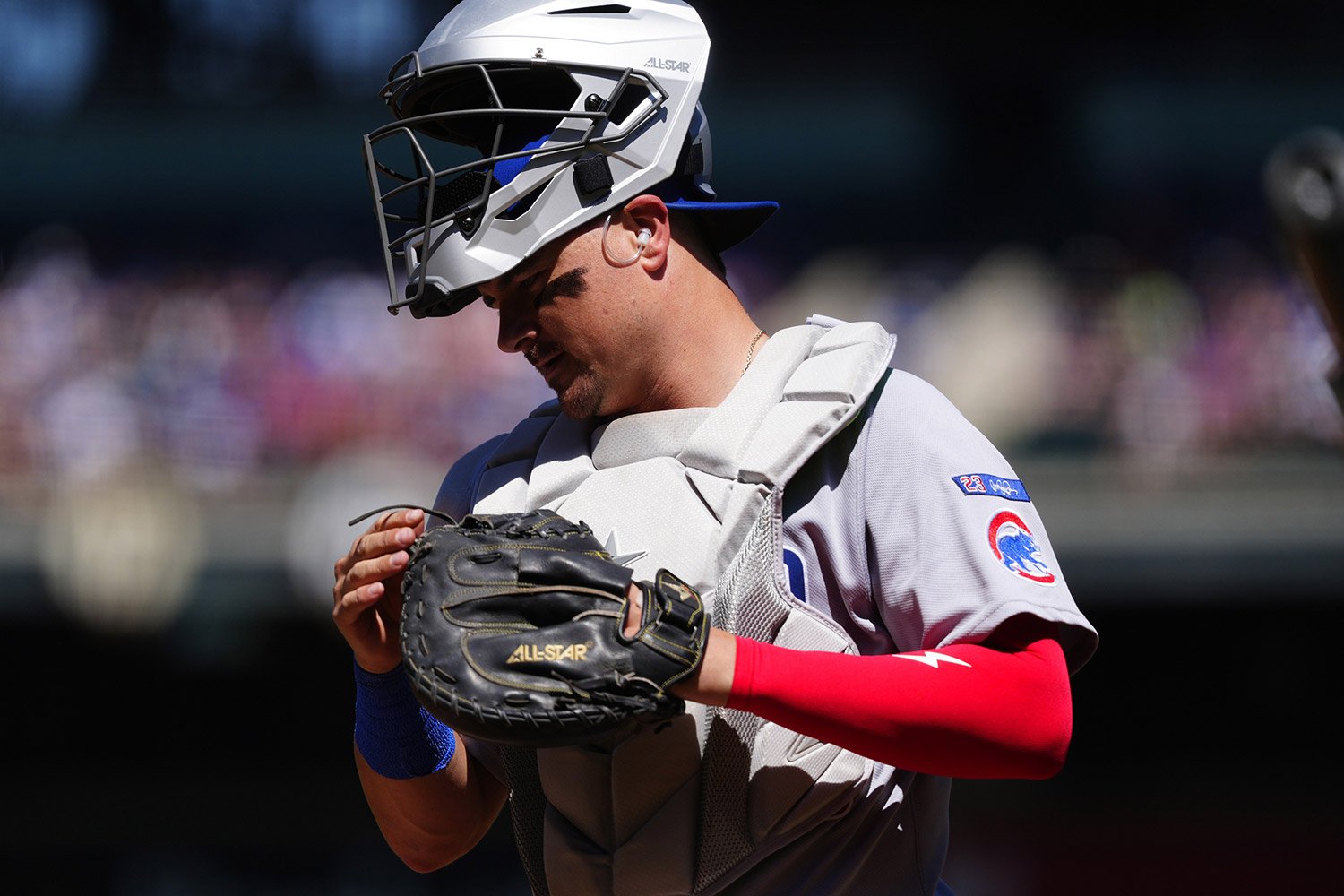 The Brewers add a veteran to their catching depth, signing former Blue Jay and Red Sox Reese McGuire to a minor league contract with an invitation to Spring Training and Major League camp, according to Adam McCalvy. This comes after the Brewers have announced 15 non-roster invitees to spring training. Amongst those names are Ramon Rodriguez, Matt Wood, and Darrien Miller, who all play the catcher position. The former 14th overall pick in the 2013 MLB Draft has had stints with the Blue Jays, White Sox, and Red Sox before signing a minor league deal last season with the Cubs. McGuire played 44 games last season with a .226/.245/.444 line with nine home runs and 24 RBI. Both of which are career highs across his eight seasons in the league. With only 38 men on the 40-man roster, and only two catchers occupying spots, McGuire has the opportunity to earn a spot on the Opening Day roster as the backup for two-time all-star and silver slugger winner, William Contreras. The only person who stands in his way is catcher prospect Jeferson Quero. McGuire has played more of a platoon role with his previous teams, with the likes of Carson Kelly last season, Connor Wong, and even former Brewers catcher Danny Jansen. He has more success against a right-handed pitcher, so he would likely be used in those situations. He would provide a solid competition for Quero, who has had a history of injuries that have stunted his growth to the major league roster and has even been removed from MLB Pipeline’s top 100 prospects. If McGuire earns a spot, they can still option Quero back down to Nashville. While it may use his third minor league option, Quero does qualify for a fourth option should they go with McGuire.
 -
Image courtesy of © Ron Chenoy-Imagn Images The Brewers add a veteran to their catching depth, signing former Blue Jay and Red Sox Reese McGuire to a minor league contract with an invitation to Spring Training and Major League camp, according to Adam McCalvy. This comes after the Brewers have announced 15 non-roster invitees to spring training. Amongst those names are Ramon Rodriguez, Matt Wood, and Darrien Miller, who all play the catcher position. The former 14th overall pick in the 2013 MLB Draft has had stints with the Blue Jays, White Sox, and Red Sox before signing a minor league deal last season with the Cubs. McGuire played 44 games last season with a .226/.245/.444 line with nine home runs and 24 RBI. Both of which are career highs across his eight seasons in the league. With only 38 men on the 40-man roster, and only two catchers occupying spots, McGuire has the opportunity to earn a spot on the Opening Day roster as the backup for two-time all-star and silver slugger winner, William Contreras. The only person who stands in his way is catcher prospect Jeferson Quero. McGuire has played more of a platoon role with his previous teams, with the likes of Carson Kelly last season, Connor Wong, and even former Brewers catcher Danny Jansen. He has more success against a right-handed pitcher, so he would likely be used in those situations. He would provide a solid competition for Quero, who has had a history of injuries that have stunted his growth to the major league roster and has even been removed from MLB Pipeline’s top 100 prospects. If McGuire earns a spot, they can still option Quero back down to Nashville. While it may use his third minor league option, Quero does qualify for a fourth option should they go with McGuire. View full article
-
I love all of this. Yes, Ortiz has been a lot better since June. That is very factual. He's hitting a .277 in the last 30 games. But I'd still like another option in the dugout other than Monasterio and Seigler. If it's a better bat than Ortiz, then make Ortiz the platoon bat. Just any way to improve the team.
-
Three Trades to Upgrade the Brewers' Lineup At The Trade Deadline
Ryan Pollak posted an article in Brewers
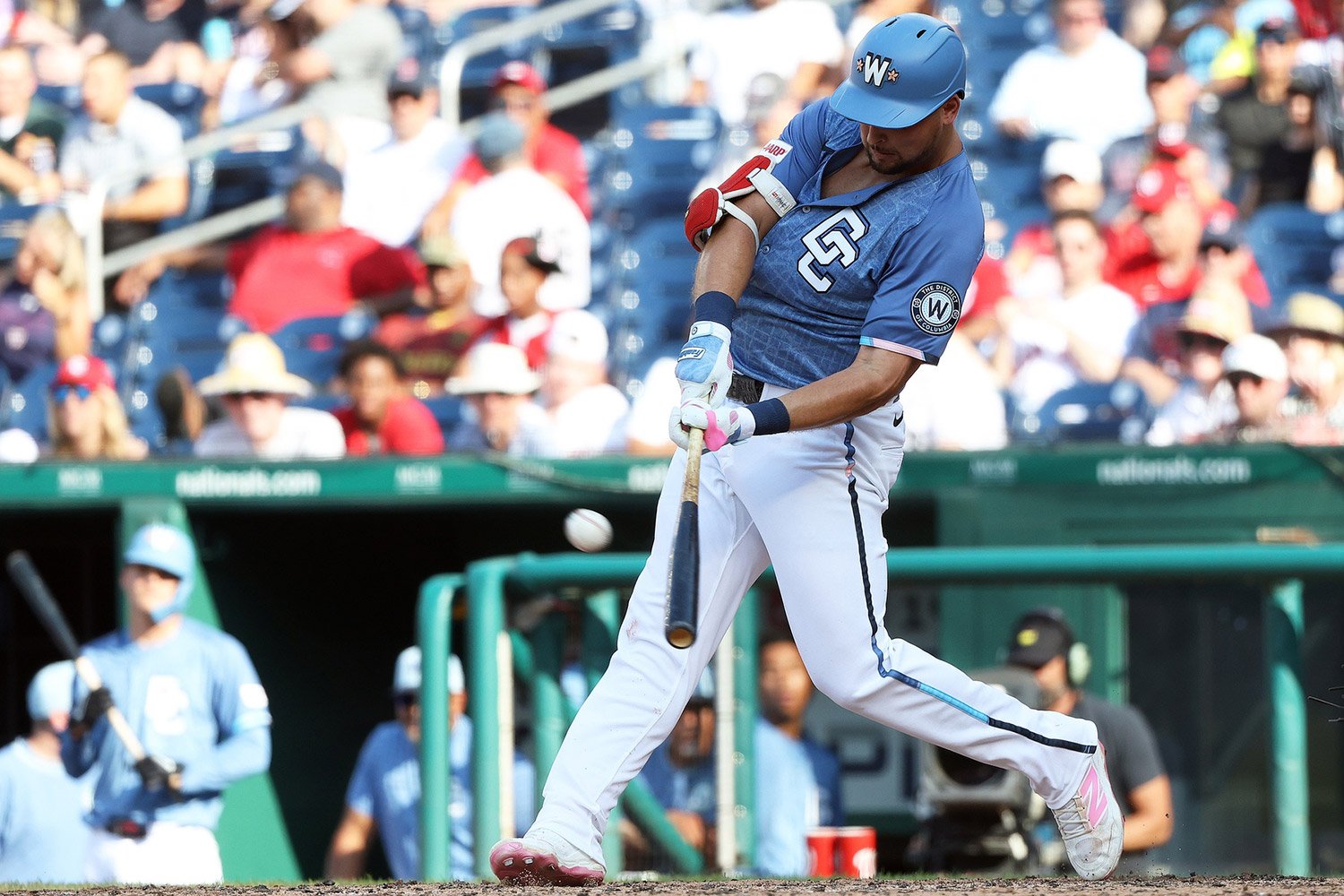 We’ve already tried to sit in the GM seat for the Milwaukee Brewers during the offseason. But what would we do if we sat in the GM seat as the trade deadline creeps closer and closer? There are many areas in which the Brewers could use improvement. Where Caleb Durbin has been a nice addition to the hot corner both offensively and defensively, Joey Ortiz has been struggling at the plate. Rhys Hoskins is likely on the injured list until mid-August, and Sal Frelick has landed on the injured list with his grade one hamstring injury. What type of wheeling and dealing could we see from the Brewers? Let me give it a shot as the GM. Trade #1: Brewers Acquire UTIL Willi Castro from the Twins Where every team seems to be looking for a rental third baseman, the same cannot be said for the shortstop position. Enter Willi Castro from the Twins, who is more of a utility player. Throughout the season, Castro has played both the outfield and the infield except for first base. I must give credit to fellow writer Harold Hutchinson, who put the idea out there that Castro could be the right piece to pick up at the deadline. So, I gave him a look and now agree with this idea. With a .254/.342/.423 line along with 10 home runs and 27 RBI, Castro seems like the perfect answer for any spot on the field. Not only that, but he also has a .304 batting average and a .908 OPS with runners in scoring position. He might not be a power bat, but he at least provides another reliable bat in the lineup that will get on base. As for his defense, his -6 outs above average (OAA) might be a little concerning. But keep in mind, most of his fielding this year has been in the outfield. Plus, he had a combined 4 OAA in the infield last season and was a finalist for the American League Gold Glove for a utility player. Castro, who is on an expiring contract and entering free agency, won’t break the bank on any of the Brewers' top prospects. Perhaps one of Jadher Areinamo, Juan Baez, or Freddy Zamora could be enough to add him to the roster. In this hypothetical move, the Brewers would likely option down Anthony Seigler and DFA Oliver Dunn. Trade #2: Brewers Acquire RHP Kevin Ginkel from the D-Backs Every year, even though they don’t need it, the Brewers add a pitcher or two to their already elite bullpen. Even crazier, these pitchers are players that nobody expects to be traded. An example of this is Nick Mears' last season. The Diamondbacks have a lot of different names they could potentially trade. This includes Merrill Kelly, Zac Gallen, and Eugenio Suarez, who are sure to receive a ton of offers. The Brewers could get outbid for these big names, but I doubt there is much of a market for relief pitcher Kevin Ginkel. Ginkel has been utilized as a late-inning bullpen arm that can hold the lead for the closer to finish the job. He wasn’t exactly the set-up man, but he was mainly used in the seventh inning. He probably won’t be a closer any time soon, but he is an effective arm down the stretch. At a glance, his 7.66 ERA with a 1.66 WHIP is scary and not worth trading for. But after his last eight outings, he has allowed only two run across 7 2/3 innings, including six strikeouts and a couple of saves. He only has club control through the 2026 season. It would be a nice addition to a bullpen that has been worked in the first half of the season. Perhaps the Brewers can trade a controllable pitcher on the 40-man roster like Elvis Peguero, along with a pitching prospect like KC Hunt (Brewers #25 Prospect according to MLB Pipeline). Trade #3 Brewers Acquire 1B Nathaniel Lowe from the Nationals With Hoskins hurt and now Jake Bauers landing on the injured list with no timetable to return, the Brewers should probably add a power left-handed bat to their lineup. The Brewers have the pieces to add a big bat at the deadline. However, I also see them getting outbid by more desperate teams. Let’s take a slightly cheaper option, such as Nathaniel Lowe. Hoping to compete in the NL East, the Nationals traded for Nathaniel Lowe from the Rangers. It’s panning out as they hope, as they are currently in dead last in their division. Unfortunately, the same can be said for the slugging first baseman. His .224 batting average and .681 OPS are the worst he's had in a season for his career. However, with 15 home runs and 62 RBIs, he’s on pace to hit career bests in those categories. If you aren't sold on that, how about his .308 batting average with RISP? Lowe would be a nice platoon with Andrew Vaughn for the rest of the season and even in 2026. Lowe has one more year of club control. He is owed $10.3 million for the 2025 season, but the Brewers will pay only a fraction of that. amount If the Brewers think he’s too expensive for next year, they can flip them for a prospect or two during the offseason. Think of Mark Canha when he was traded to the Tigers in the 2023-24 offseason. What happens to Hoskins or Bauers when they get healthy all depends on the Vaughn/Lowe platoon. Best case, Hoskins gets activated in September and Bowers gets DFA. Worst case, Hoskins gets activated, Vaughn gets optioned to Triple A, and Bauers stays on the team. Lowe shouldn’t cost much to acquire. However, because trades are unpredictable, I believe it could cost as much as Tyler Black to acquire him. Perhaps Black could get more playing time in the big leagues with the Nationals. Then again, it wouldn’t be surprising if the Brewers trade a prospect outside the top 30 for Lowe. What would you like to see the Brewers do at the deadline? Do you agree with any of the trades in this story? Should the Brewers make any trades at this year’s trade deadline? Let us know in the comments.
 -
Image courtesy of © Daniel Kucin Jr.-Imagn Images We’ve already tried to sit in the GM seat for the Milwaukee Brewers during the offseason. But what would we do if we sat in the GM seat as the trade deadline creeps closer and closer? There are many areas in which the Brewers could use improvement. Where Caleb Durbin has been a nice addition to the hot corner both offensively and defensively, Joey Ortiz has been struggling at the plate. Rhys Hoskins is likely on the injured list until mid-August, and Sal Frelick has landed on the injured list with his grade one hamstring injury. What type of wheeling and dealing could we see from the Brewers? Let me give it a shot as the GM. Trade #1: Brewers Acquire UTIL Willi Castro from the Twins Where every team seems to be looking for a rental third baseman, the same cannot be said for the shortstop position. Enter Willi Castro from the Twins, who is more of a utility player. Throughout the season, Castro has played both the outfield and the infield except for first base. I must give credit to fellow writer Harold Hutchinson, who put the idea out there that Castro could be the right piece to pick up at the deadline. So, I gave him a look and now agree with this idea. With a .254/.342/.423 line along with 10 home runs and 27 RBI, Castro seems like the perfect answer for any spot on the field. Not only that, but he also has a .304 batting average and a .908 OPS with runners in scoring position. He might not be a power bat, but he at least provides another reliable bat in the lineup that will get on base. As for his defense, his -6 outs above average (OAA) might be a little concerning. But keep in mind, most of his fielding this year has been in the outfield. Plus, he had a combined 4 OAA in the infield last season and was a finalist for the American League Gold Glove for a utility player. Castro, who is on an expiring contract and entering free agency, won’t break the bank on any of the Brewers' top prospects. Perhaps one of Jadher Areinamo, Juan Baez, or Freddy Zamora could be enough to add him to the roster. In this hypothetical move, the Brewers would likely option down Anthony Seigler and DFA Oliver Dunn. Trade #2: Brewers Acquire RHP Kevin Ginkel from the D-Backs Every year, even though they don’t need it, the Brewers add a pitcher or two to their already elite bullpen. Even crazier, these pitchers are players that nobody expects to be traded. An example of this is Nick Mears' last season. The Diamondbacks have a lot of different names they could potentially trade. This includes Merrill Kelly, Zac Gallen, and Eugenio Suarez, who are sure to receive a ton of offers. The Brewers could get outbid for these big names, but I doubt there is much of a market for relief pitcher Kevin Ginkel. Ginkel has been utilized as a late-inning bullpen arm that can hold the lead for the closer to finish the job. He wasn’t exactly the set-up man, but he was mainly used in the seventh inning. He probably won’t be a closer any time soon, but he is an effective arm down the stretch. At a glance, his 7.66 ERA with a 1.66 WHIP is scary and not worth trading for. But after his last eight outings, he has allowed only two run across 7 2/3 innings, including six strikeouts and a couple of saves. He only has club control through the 2026 season. It would be a nice addition to a bullpen that has been worked in the first half of the season. Perhaps the Brewers can trade a controllable pitcher on the 40-man roster like Elvis Peguero, along with a pitching prospect like KC Hunt (Brewers #25 Prospect according to MLB Pipeline). Trade #3 Brewers Acquire 1B Nathaniel Lowe from the Nationals With Hoskins hurt and now Jake Bauers landing on the injured list with no timetable to return, the Brewers should probably add a power left-handed bat to their lineup. The Brewers have the pieces to add a big bat at the deadline. However, I also see them getting outbid by more desperate teams. Let’s take a slightly cheaper option, such as Nathaniel Lowe. Hoping to compete in the NL East, the Nationals traded for Nathaniel Lowe from the Rangers. It’s panning out as they hope, as they are currently in dead last in their division. Unfortunately, the same can be said for the slugging first baseman. His .224 batting average and .681 OPS are the worst he's had in a season for his career. However, with 15 home runs and 62 RBIs, he’s on pace to hit career bests in those categories. If you aren't sold on that, how about his .308 batting average with RISP? Lowe would be a nice platoon with Andrew Vaughn for the rest of the season and even in 2026. Lowe has one more year of club control. He is owed $10.3 million for the 2025 season, but the Brewers will pay only a fraction of that. amount If the Brewers think he’s too expensive for next year, they can flip them for a prospect or two during the offseason. Think of Mark Canha when he was traded to the Tigers in the 2023-24 offseason. What happens to Hoskins or Bauers when they get healthy all depends on the Vaughn/Lowe platoon. Best case, Hoskins gets activated in September and Bowers gets DFA. Worst case, Hoskins gets activated, Vaughn gets optioned to Triple A, and Bauers stays on the team. Lowe shouldn’t cost much to acquire. However, because trades are unpredictable, I believe it could cost as much as Tyler Black to acquire him. Perhaps Black could get more playing time in the big leagues with the Nationals. Then again, it wouldn’t be surprising if the Brewers trade a prospect outside the top 30 for Lowe. What would you like to see the Brewers do at the deadline? Do you agree with any of the trades in this story? Should the Brewers make any trades at this year’s trade deadline? Let us know in the comments. View full article
-
Image courtesy of © Wm. Glasheen/USA TODAY NETWORK-Wisconsin / USA TODAY NETWORK via Imagn Images The Brewers have quite the set of arms for the rotation heading into the 2025 All-Star break. But with other areas on the field looking to need some sort of upgrade in the last half of the season, do the Brewers consider trading away any of their starting pitching? The Brewers already parted ways with right-hander Aaron Civale, trading him to the White Sox. However, with Jacob Misiorowski thriving since his MLB debut and Brandon Woodruff having triumphantly returned to the mound, it’s still looking like quite the logjam. All-Star Freddy Peralta, Jose Quintana, and Quinn Priester round out the rotation. Not only that, but Nestor Cortes is expected to return shortly after the break, and Robert Gasser will be ready to chip in some innings down the stretch. Last year’s breakout pitcher Tobias Myers and promising rookies Chad Patrick and Logan Henderson are all sitting in Triple-A Nashville, waiting for their number to be called to return to the big leagues. With all these extra arms, should the Brewers consider including one of them in a trade? Here are some reasons why they will consider trading a starting pitcher—and a few reasons why they shouldn’t. As in the past, we will treat this like a point-counterpoint. Trade Them: We Need to Upgrade the Infield Losing Willy Adames in free agency meant the Brewers needed to find their new shortstop for the 2025 season and beyond. Instead of signing a replacement infielder in free agency like Ha-Seong Kim, Yoán Moncada, or Amed Rosario, the Brewers opted to go with in-house options, moving Joey Ortiz to short and keeping the likes of Vinny Capra and Andruw Monasterio as options at third base. They did get Caleb Durbin in the Devin Williams trade, but at the time, he had yet to make his MLB debut. Thus far, they haven’t made up for their losses. Capra has a .074 batting average on the season and couldn't even stick on the White Sox roster. Monasterio has taken more of a high-energy bench role. Durbin has done well at third base both defensively and offensively, hitting a sturdy .261/.348/.363 across 72 games. However, Ortiz has taken a step back, hovering around the dreaded Mendoza Line. Granted, Ortiz had an incredible month of June, but has only had three hits in 22 plate appearances thus far this month and was benched at the start of this week for taking a poor approach at the plate. First baseman Rhys Hoskins sustained a thumb injury that will probably keep him out of action until mid-August. Unless they look to add any first basemen at the deadline, the Brewers will have to rely on the likes of Jake Bauers and Andrew Vaughn to fill the void in the lineup. There are, then, multiple possible places where the team could use an offensive boost. When it comes to shortstops, the options on the trade market are bare. The most likely to be on the move is Isiah Kiner-Falefa of the Pittsburgh Pirates, but he probably won’t cost one of the pitchers on the roster. Maikel García is an appealing target who would definitely command some young pitching in a package, but he's less likely to be dealt. First base has a better market. The biggest name that will likely be on the move is All-Star Ryan O’Hearn. Josh Naylor has also become a hot name, as the Diamondbackis have sputtered. While there isn’t much noise, Nathaniel Lowe can also be a name to watch out for amid the Nationals' likely makeover. The third base market, however, is going to be the position to look out for. We have already heard potential trade rumors about power-hitting third basemen such as Eugenio Suárez, Ryan McMahon, Nolan Arenado and even Alex Bregman. There is already a ton of interest from teams like the Detroit Tigers, Seattle Mariners, and New York Yankees—not to mention the Brewers' chief rivals, the division-leading Cubs. If the Brewers want to outbid these other teams, then perhaps they need to throw in one of the young pitchers who are major league-ready, to entice the selling club. Keep Them: The Kids Are Alright One of the better ways for players to get through their slumps is to take days off and play through them. Why would you replace the young gun in the lineup with a veteran rental? Last year, Jackson Chourio wasn’t performing well in the first two months of the season. Rather than sending him down to the minor leagues and replacing him, the Brewers continued to play it out with him and let him figure it out. Not only did he figure it out, but he became a Rookie of the Year candidate. This year, Durbin also rose to the occasion after having quite the slump. At one point, he was hitting .169/.265/.236 in the middle of May. The Crew's patience with him has paid off wonderfully. Getting a rental piece for the infield is fine, but you don’t have to sell out to get a veteran. As mentioned earlier, the Brewers may not have to give up a pitcher to get their upgrade. Buying a low-risk, high-reward player at the deadline might give just enough time for Ortiz to figure out his swing decisions, and for other young infielders to get big-league experience. Along with Kiner-Falefa, Moncada, Luis Urías, and Ramon Urías could be great depth for a team that may need it. It’s not a huge acquisition, but it could be enough to leapfrog the Cubs and win the division. As for first base, the Vaughn/Bauers platoon doesn’t have to be amazing for the team to do well. Hoskins is only gone for a month and will return by the final month of the season. Besides, Vaughn himself is a trade acquisition already made, and he's hitting .429 with a 1.4 Win Probability Added in his first handful of games with the Brewers. This is his trial run for next season, assuming Hoskins won’t be back for 2026. The Brewers are fine and don’t need to sell even depth pieces for two-month rentals. The kids are alright, ready to develop, and want to play now. Trade Them: The Young Guns Are Waiting Some of the young starters stashed in Nashville need chances to pitch in the big leagues. While it makes sense Patrick was sent down, Myers was just named International League Pitcher of the Week. Henderson had a 1.71 ERA as part of the Brewers rotation, and was still sent down. He’s not really struggling, either, as he has a 3.01 ERA in 68 2/3 innings in Triple A. Neither is Carlos Rodriguez, who has a 2.64 ERA with a 1.26 WHIP in Nashville. What exactly are they waiting for? An opening. An opportunity to perform in MLB and compete for a ring with a big-league team. They have proven, time and time again, that they are major league-ready. So how can they get that chance? There are two ways: trade a veteran, or trade one of those youngsters. The Brewers have already traded Civale to the White Sox, giving him a chance to start in the major leagues while giving Misiorowski his chance to shine for the Brewers. A similar deal might be required with either Cortes or Quintana, to keep space open for Priester and/or Patrick down the stretch. Keep Them: They Can Wait Until Next Season The performance of the arms in Triple A has been nothing but sensational. It can get very frustrating that they aren’t utilizing their talents and “wasting away” in the minors. This is especially true when all four of the guys performing well in Nashville are on the 40-man roster and have pitched at some point for Milwaukee this year. However, they will have plenty of opportunities to thrive in the 2026 season. I know it’s hard not to be a major part of a playoff team’s success, but the players blocking Patrick, Henderson and Myers are aging veterans who might not be with the team next season. Of the starting pitchers that are on the roster, Quintana, Cortes, and very likely Woodruff are going to be free agents after this season. This will open opportunities for not only the boys in Triple A, but those like DL Hall and Aaron Ashby who can get another chance in the starting rotation come 2026. This young wave of pitching will have four, five, and maybe six years of club control that will keep the team competitive for years to come. How the Sounds and Shuckers will look after those promotions will be determined. Otherwise, they can add arms to the farm system through the draft. There are other ways to improve the team at the trade deadline. The Brewers have a deep farm system and could part ways with other prospects in hopes of succeeding both now and in this franchise’s future. Trade Them: Veteran Contracts Are Expiring Sure, the guys in the minors can wait a year, but what about the veteran arms? Sure, they give a team veteran leadership that can help groom the younger players for their careers. Ultimately, though, they're on the way out the door. Why not extract some value from them via trade? Unlike Adames, keeping these veteran arms and letting them walk next year isn’t going to give them a draft pick. The only one who can be offered a qualifying offer is Cortes, and he hasn’t been healthy enough to earn a contract worth more than $20 million. Isn’t this what small-market teams do: sell expensive contracts for something that’ll help their future? No one in the group will net them a huge haul, but they can shift resources to optimize their future. Keep Them: They Are in the Playoff Hunt Trading during contracts is always enticing for a small-market team. However, you can throw that out the window when they are in a playoff push. The Brewers currently hold the second Wild Card spot and are only one game behind the Cubs in the NL Central. Their starting pitchers have a 3.39 ERA and a 1.24 WHIP. As of now, the worst starting pitcher on the team is technically Cortes (9.00 ERA, 1.75 WHIP), and that’s because he's only had two starts. Even if the Brewers sell off those aging veterans, they are only going to get lottery-ticket prospects or fungible depth pieces. It's probably not worth even risking another 2022 situation, when a trade that sent a good player away from a contending team seemed to ripple negatively through the clubhouse. Trading a fan favorite like Hader in 2022 confused the team, and the fan base turned on the front office. It pretty much set the tone for the rest of the season. Trading someone like Peralta (one of the few in this discussion who would bring back a major return) is a non-starter, for this and other reasons. That doesn’t mean the Brewers aren’t going to trade Peralta next year. But with an $8 million club option, that is a bargain price compared to anything else in free agency. Conclusion: The Brewers don’t need to trade any of their starting pitchers to improve their batting order. However, they might have to use them in a trade package if they want a big bat. We'll see how willing they are to take some of the risks involved in compromising depth in one area to improve it in another. Will the Brewers trade one of their starting pitchers? What do you think the Brewers could get in return? What player would you like to see get traded to the Brewers? Let us know in the comments. View full article
-
Will the Brewers Trade a Starting Pitcher Before MLB Trade Deadline?
Ryan Pollak posted an article in Brewers
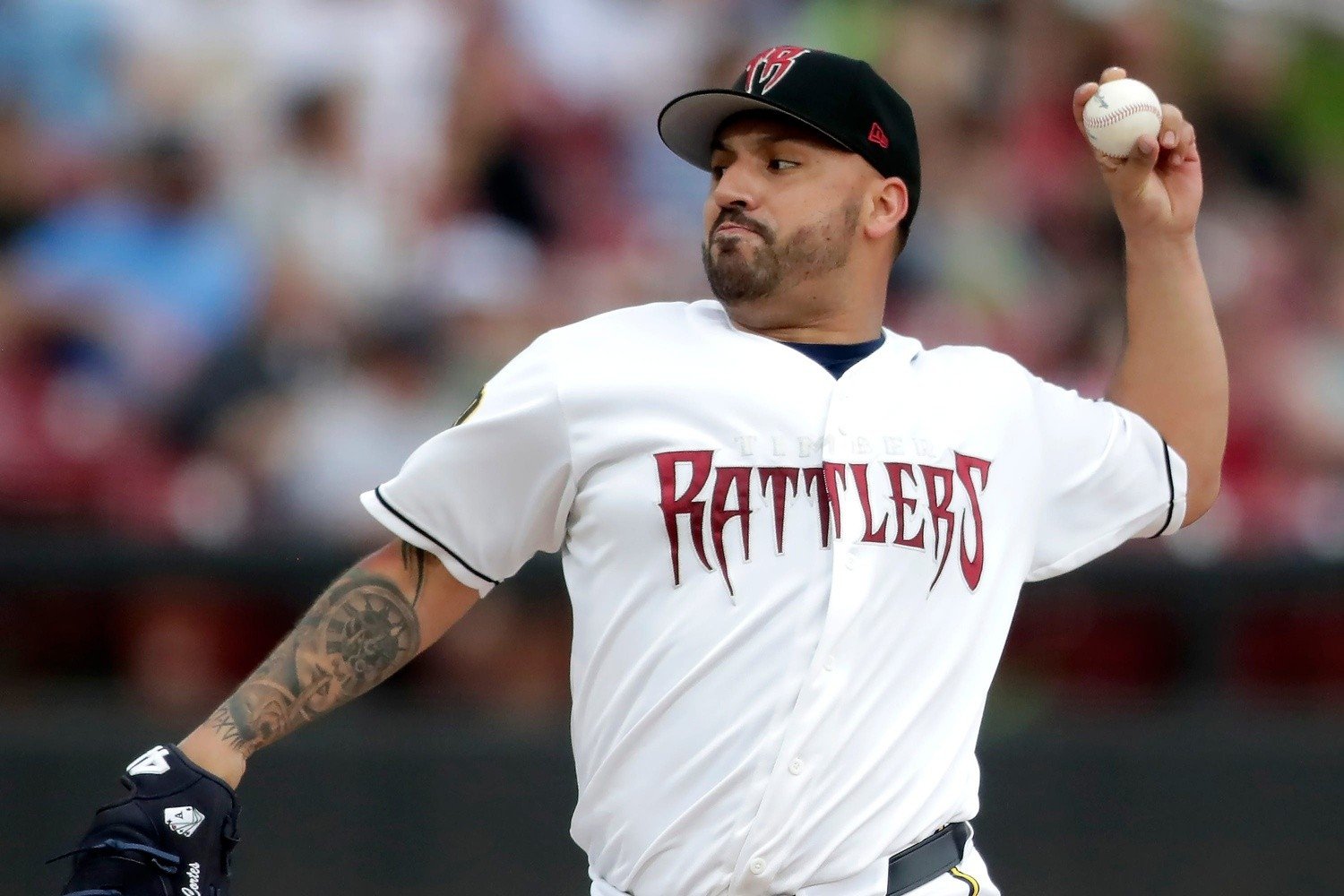 The Brewers have quite the set of arms for the rotation heading into the 2025 All-Star break. But with other areas on the field looking to need some sort of upgrade in the last half of the season, do the Brewers consider trading away any of their starting pitching? The Brewers already parted ways with right-hander Aaron Civale, trading him to the White Sox. However, with Jacob Misiorowski thriving since his MLB debut and Brandon Woodruff having triumphantly returned to the mound, it’s still looking like quite the logjam. All-Star Freddy Peralta, Jose Quintana, and Quinn Priester round out the rotation. Not only that, but Nestor Cortes is expected to return shortly after the break, and Robert Gasser will be ready to chip in some innings down the stretch. Last year’s breakout pitcher Tobias Myers and promising rookies Chad Patrick and Logan Henderson are all sitting in Triple-A Nashville, waiting for their number to be called to return to the big leagues. With all these extra arms, should the Brewers consider including one of them in a trade? Here are some reasons why they will consider trading a starting pitcher—and a few reasons why they shouldn’t. As in the past, we will treat this like a point-counterpoint. Trade Them: We Need to Upgrade the Infield Losing Willy Adames in free agency meant the Brewers needed to find their new shortstop for the 2025 season and beyond. Instead of signing a replacement infielder in free agency like Ha-Seong Kim, Yoán Moncada, or Amed Rosario, the Brewers opted to go with in-house options, moving Joey Ortiz to short and keeping the likes of Vinny Capra and Andruw Monasterio as options at third base. They did get Caleb Durbin in the Devin Williams trade, but at the time, he had yet to make his MLB debut. Thus far, they haven’t made up for their losses. Capra has a .074 batting average on the season and couldn't even stick on the White Sox roster. Monasterio has taken more of a high-energy bench role. Durbin has done well at third base both defensively and offensively, hitting a sturdy .261/.348/.363 across 72 games. However, Ortiz has taken a step back, hovering around the dreaded Mendoza Line. Granted, Ortiz had an incredible month of June, but has only had three hits in 22 plate appearances thus far this month and was benched at the start of this week for taking a poor approach at the plate. First baseman Rhys Hoskins sustained a thumb injury that will probably keep him out of action until mid-August. Unless they look to add any first basemen at the deadline, the Brewers will have to rely on the likes of Jake Bauers and Andrew Vaughn to fill the void in the lineup. There are, then, multiple possible places where the team could use an offensive boost. When it comes to shortstops, the options on the trade market are bare. The most likely to be on the move is Isiah Kiner-Falefa of the Pittsburgh Pirates, but he probably won’t cost one of the pitchers on the roster. Maikel García is an appealing target who would definitely command some young pitching in a package, but he's less likely to be dealt. First base has a better market. The biggest name that will likely be on the move is All-Star Ryan O’Hearn. Josh Naylor has also become a hot name, as the Diamondbackis have sputtered. While there isn’t much noise, Nathaniel Lowe can also be a name to watch out for amid the Nationals' likely makeover. The third base market, however, is going to be the position to look out for. We have already heard potential trade rumors about power-hitting third basemen such as Eugenio Suárez, Ryan McMahon, Nolan Arenado and even Alex Bregman. There is already a ton of interest from teams like the Detroit Tigers, Seattle Mariners, and New York Yankees—not to mention the Brewers' chief rivals, the division-leading Cubs. If the Brewers want to outbid these other teams, then perhaps they need to throw in one of the young pitchers who are major league-ready, to entice the selling club. Keep Them: The Kids Are Alright One of the better ways for players to get through their slumps is to take days off and play through them. Why would you replace the young gun in the lineup with a veteran rental? Last year, Jackson Chourio wasn’t performing well in the first two months of the season. Rather than sending him down to the minor leagues and replacing him, the Brewers continued to play it out with him and let him figure it out. Not only did he figure it out, but he became a Rookie of the Year candidate. This year, Durbin also rose to the occasion after having quite the slump. At one point, he was hitting .169/.265/.236 in the middle of May. The Crew's patience with him has paid off wonderfully. Getting a rental piece for the infield is fine, but you don’t have to sell out to get a veteran. As mentioned earlier, the Brewers may not have to give up a pitcher to get their upgrade. Buying a low-risk, high-reward player at the deadline might give just enough time for Ortiz to figure out his swing decisions, and for other young infielders to get big-league experience. Along with Kiner-Falefa, Moncada, Luis Urías, and Ramon Urías could be great depth for a team that may need it. It’s not a huge acquisition, but it could be enough to leapfrog the Cubs and win the division. As for first base, the Vaughn/Bauers platoon doesn’t have to be amazing for the team to do well. Hoskins is only gone for a month and will return by the final month of the season. Besides, Vaughn himself is a trade acquisition already made, and he's hitting .429 with a 1.4 Win Probability Added in his first handful of games with the Brewers. This is his trial run for next season, assuming Hoskins won’t be back for 2026. The Brewers are fine and don’t need to sell even depth pieces for two-month rentals. The kids are alright, ready to develop, and want to play now. Trade Them: The Young Guns Are Waiting Some of the young starters stashed in Nashville need chances to pitch in the big leagues. While it makes sense Patrick was sent down, Myers was just named International League Pitcher of the Week. Henderson had a 1.71 ERA as part of the Brewers rotation, and was still sent down. He’s not really struggling, either, as he has a 3.01 ERA in 68 2/3 innings in Triple A. Neither is Carlos Rodriguez, who has a 2.64 ERA with a 1.26 WHIP in Nashville. What exactly are they waiting for? An opening. An opportunity to perform in MLB and compete for a ring with a big-league team. They have proven, time and time again, that they are major league-ready. So how can they get that chance? There are two ways: trade a veteran, or trade one of those youngsters. The Brewers have already traded Civale to the White Sox, giving him a chance to start in the major leagues while giving Misiorowski his chance to shine for the Brewers. A similar deal might be required with either Cortes or Quintana, to keep space open for Priester and/or Patrick down the stretch. Keep Them: They Can Wait Until Next Season The performance of the arms in Triple A has been nothing but sensational. It can get very frustrating that they aren’t utilizing their talents and “wasting away” in the minors. This is especially true when all four of the guys performing well in Nashville are on the 40-man roster and have pitched at some point for Milwaukee this year. However, they will have plenty of opportunities to thrive in the 2026 season. I know it’s hard not to be a major part of a playoff team’s success, but the players blocking Patrick, Henderson and Myers are aging veterans who might not be with the team next season. Of the starting pitchers that are on the roster, Quintana, Cortes, and very likely Woodruff are going to be free agents after this season. This will open opportunities for not only the boys in Triple A, but those like DL Hall and Aaron Ashby who can get another chance in the starting rotation come 2026. This young wave of pitching will have four, five, and maybe six years of club control that will keep the team competitive for years to come. How the Sounds and Shuckers will look after those promotions will be determined. Otherwise, they can add arms to the farm system through the draft. There are other ways to improve the team at the trade deadline. The Brewers have a deep farm system and could part ways with other prospects in hopes of succeeding both now and in this franchise’s future. Trade Them: Veteran Contracts Are Expiring Sure, the guys in the minors can wait a year, but what about the veteran arms? Sure, they give a team veteran leadership that can help groom the younger players for their careers. Ultimately, though, they're on the way out the door. Why not extract some value from them via trade? Unlike Adames, keeping these veteran arms and letting them walk next year isn’t going to give them a draft pick. The only one who can be offered a qualifying offer is Cortes, and he hasn’t been healthy enough to earn a contract worth more than $20 million. Isn’t this what small-market teams do: sell expensive contracts for something that’ll help their future? No one in the group will net them a huge haul, but they can shift resources to optimize their future. Keep Them: They Are in the Playoff Hunt Trading during contracts is always enticing for a small-market team. However, you can throw that out the window when they are in a playoff push. The Brewers currently hold the second Wild Card spot and are only one game behind the Cubs in the NL Central. Their starting pitchers have a 3.39 ERA and a 1.24 WHIP. As of now, the worst starting pitcher on the team is technically Cortes (9.00 ERA, 1.75 WHIP), and that’s because he's only had two starts. Even if the Brewers sell off those aging veterans, they are only going to get lottery-ticket prospects or fungible depth pieces. It's probably not worth even risking another 2022 situation, when a trade that sent a good player away from a contending team seemed to ripple negatively through the clubhouse. Trading a fan favorite like Hader in 2022 confused the team, and the fan base turned on the front office. It pretty much set the tone for the rest of the season. Trading someone like Peralta (one of the few in this discussion who would bring back a major return) is a non-starter, for this and other reasons. That doesn’t mean the Brewers aren’t going to trade Peralta next year. But with an $8 million club option, that is a bargain price compared to anything else in free agency. Conclusion: The Brewers don’t need to trade any of their starting pitchers to improve their batting order. However, they might have to use them in a trade package if they want a big bat. We'll see how willing they are to take some of the risks involved in compromising depth in one area to improve it in another. Will the Brewers trade one of their starting pitchers? What do you think the Brewers could get in return? What player would you like to see get traded to the Brewers? Let us know in the comments.
- 3 comments
-
- 1
-

-
- freddy peralta
- nestor cortes
- (and 1 more)
-
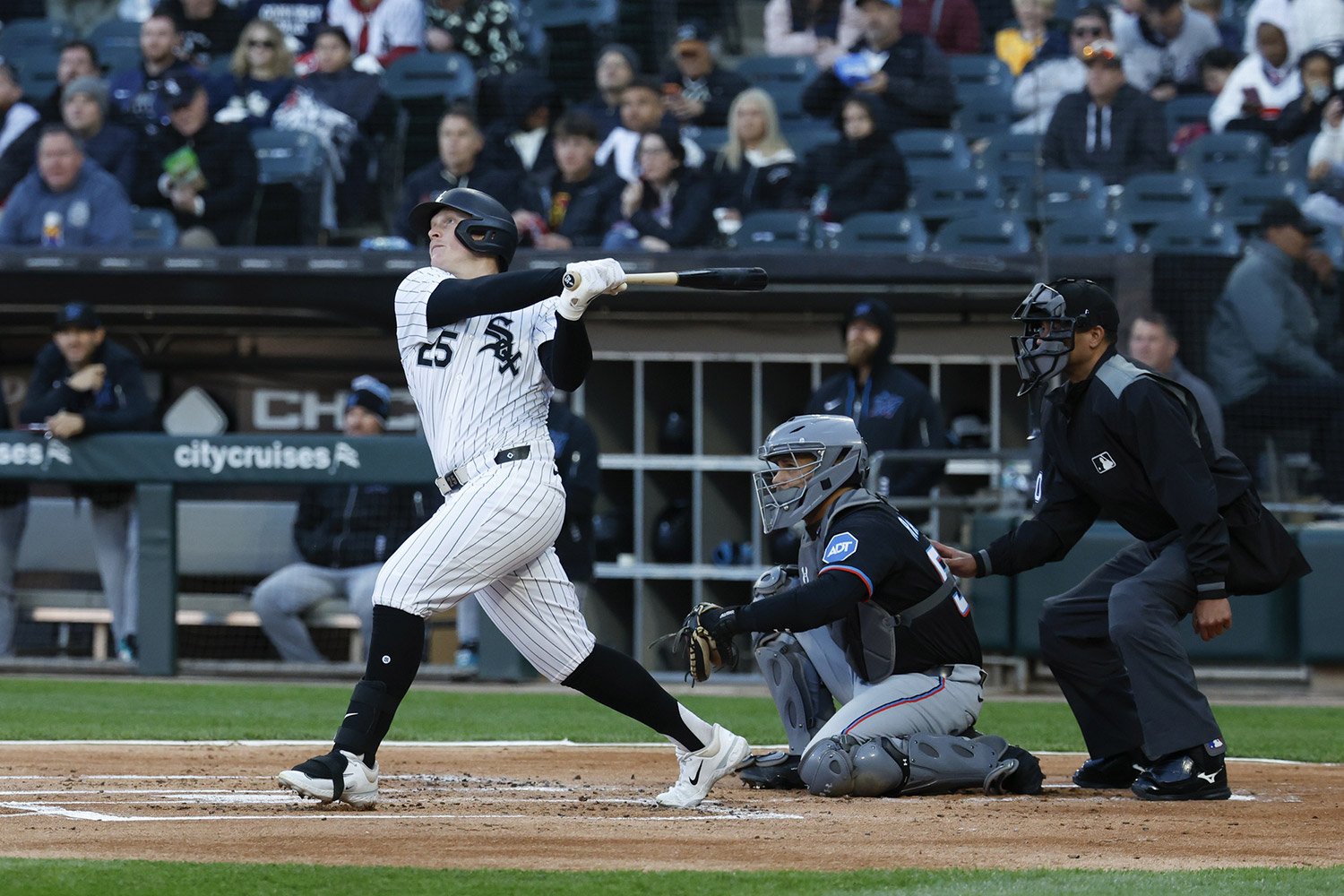 Less than 24 hours after requesting a trade, the Milwaukee Brewers have traded starting pitcher Aaron Civale to the Chicago White Sox, according to Jon Heyman. In return, the Brewers acquired the No. 3 overall pick in the 2019 MLB Draft, Andrew Vaughn. Civale requested a trade after the Brewers moved the veteran right-hander to the bullpen for a debuting Jacob Misiorowski. Civale wanted to continue his career as a starter, even if it resulted in playing for another team. There was nothing against the organization, coaches, or teammates. Civale simply wanted to pursue what is best for his career. While he will go to a less competitive team in the White Sox, Civale will find plenty of opportunities for the start for the club and could even be traded again prior to the trade deadline. The White Sox send over Andrew Vaughn, a first baseman with little experience at third base, second base, and the corner outfield positions, who has struggled to begin his 2025 campaign. I mentioned Vaughn as a potential trade candidate back in the 2023-2024 offseason and he been clamoring about him ever since. You can find this story here. As part of the White Sox, Vaughn is hitting a career .248/.303/.407 line hitting 77 home runs in the process. However, his .189 batting average along with his 49 OPS+ this season resulted in his option down to Triple-A. While it is yet to be determined whether he will be on the Brewers 26-man roster, it will be a nice change of scenery move going from a team at the bottom of the American League to a team with playoff aspirations. Vaughn has one more year of club control, possibly two depending on how much time he spends in the minor leagues this year. He could be an option the Brewers look at first base after the 2025 season. Special thanks to @wibadgers23 for starting the forum thread that this article is based upon. What are your thoughts on the trade? Do you think the Brewers could’ve gotten a better return? Let us know in the comments.
 -
Brewers Pitcher Aaron Civale Requests Trade, Seeks Starting Job
Ryan Pollak posted an article in Brewers
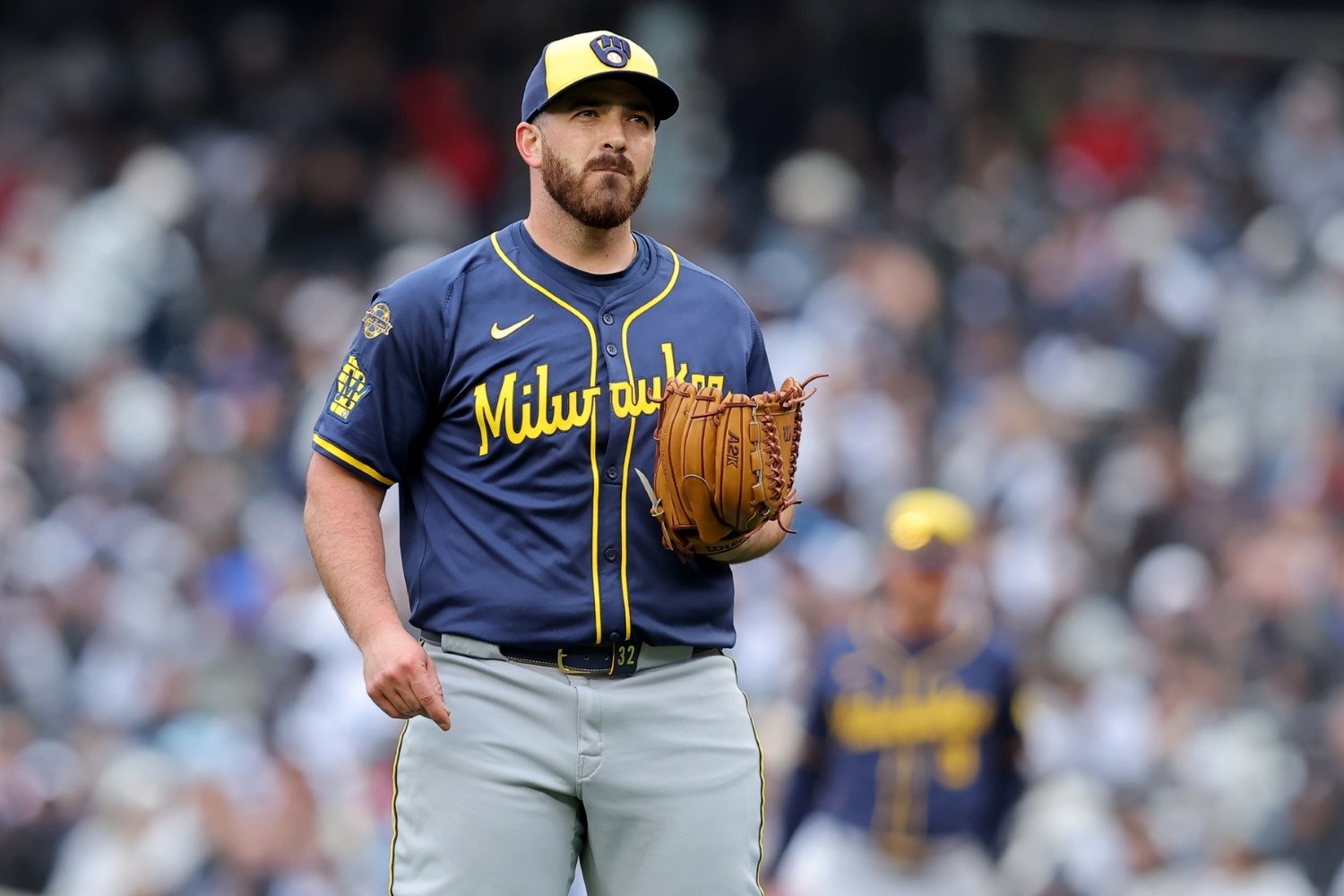 After being moved to the bullpen upon Jacob Misiorowski’s call up to the big leagues, Aaron Civale has requested a trade, according to Ken Rosenthal and Will Sammon of The Athletic. When the team was in dire need of starters (thanks to injuries) last summer, Civale joined the Brewers in early July via a trade with the Tampa Bay Rays, in exchange for minor leaguer Gregory Barrios. In 14 starts with the 2024 Brewers, he recorded a 3.53 ERA and a 1.22 WHIP with 65 strikeouts and 25 walks. As the Brewers’ nominal third starter when camp opened, Civale hoped to continue his success in his contract year. However, he had an early exit on his first start due to a left hamstring strain. He was placed on the 15-day injured list and didn’t return until late May. Since his return, Civale has allowed seven runs in 19 innings, across four starts (3.32 ERA). Along the way, the March free-agent signing of Jose Quintana and the April trade that brought in Quinn Priester crowded Civale into the back end of the rotation. Although the veteran hasn’t struggled in his starting role, the Brewers decided to call up their best pitching prospect in Misiorowski. With Freddy Peralta, Quintana, Chad Patrick, and the duo of Priester and DL Hall all showing similar kinds of success, Civale seemed like the odd man out. While Misiorowski is expected to make his debut Thursday night, Civale is going to be in the bullpen for the time being. Whether this can result in Civale taking over after Misiorowski's outing tonight will remain a mystery. Civale has yet to make a relief appearance in his career—that is, in the regular season. He did come in in relief in last year’s Wild Card matchup against the Mets, in Game 3. According to Civale’s agent, Jack Toffey, Civale wants to continue his career as a starter. But the Brewers already have a huge surplus in starting arms for the rotation, limiting his options. Hence the request to explore his chances elsewhere. Aside from the names listed above, Brandon Woodruff and Nestor Cortes are expected to make their return to the roster at some point this season. Not only that, the Brewers have pitchers in the minor leagues who are more than ready to make starts for the big-league club. Among those are rookie Logan Henderson, who has a 1.71 ERA after winning three of his four big-league starts; and Tobias Myers, who was one of the best starters in the rotation last season. As stated earlier, Civale is in his contract year and will be a free agent at the end of the season. He is owed about $5 million for the balance of this season and turns 30 on Thursday. Presumably, the Brewers will try to honor his request, since they have more than enough depth, but they now lack leverage in any discussion and are unlikely to get much for him. What do you think of Civale’s tenure as a Brewer? What type of return do you think the Brewers can get for Civale? What other pitchers can be on the trade block this deadline? Let us know in the comments.
 -
Image courtesy of © Brad Penner-Imagn Images After being moved to the bullpen upon Jacob Misiorowski’s call up to the big leagues, Aaron Civale has requested a trade, according to Ken Rosenthal and Will Sammon of The Athletic. When the team was in dire need of starters (thanks to injuries) last summer, Civale joined the Brewers in early July via a trade with the Tampa Bay Rays, in exchange for minor leaguer Gregory Barrios. In 14 starts with the 2024 Brewers, he recorded a 3.53 ERA and a 1.22 WHIP with 65 strikeouts and 25 walks. As the Brewers’ nominal third starter when camp opened, Civale hoped to continue his success in his contract year. However, he had an early exit on his first start due to a left hamstring strain. He was placed on the 15-day injured list and didn’t return until late May. Since his return, Civale has allowed seven runs in 19 innings, across four starts (3.32 ERA). Along the way, the March free-agent signing of Jose Quintana and the April trade that brought in Quinn Priester crowded Civale into the back end of the rotation. Although the veteran hasn’t struggled in his starting role, the Brewers decided to call up their best pitching prospect in Misiorowski. With Freddy Peralta, Quintana, Chad Patrick, and the duo of Priester and DL Hall all showing similar kinds of success, Civale seemed like the odd man out. While Misiorowski is expected to make his debut Thursday night, Civale is going to be in the bullpen for the time being. Whether this can result in Civale taking over after Misiorowski's outing tonight will remain a mystery. Civale has yet to make a relief appearance in his career—that is, in the regular season. He did come in in relief in last year’s Wild Card matchup against the Mets, in Game 3. According to Civale’s agent, Jack Toffey, Civale wants to continue his career as a starter. But the Brewers already have a huge surplus in starting arms for the rotation, limiting his options. Hence the request to explore his chances elsewhere. Aside from the names listed above, Brandon Woodruff and Nestor Cortes are expected to make their return to the roster at some point this season. Not only that, the Brewers have pitchers in the minor leagues who are more than ready to make starts for the big-league club. Among those are rookie Logan Henderson, who has a 1.71 ERA after winning three of his four big-league starts; and Tobias Myers, who was one of the best starters in the rotation last season. As stated earlier, Civale is in his contract year and will be a free agent at the end of the season. He is owed about $5 million for the balance of this season and turns 30 on Thursday. Presumably, the Brewers will try to honor his request, since they have more than enough depth, but they now lack leverage in any discussion and are unlikely to get much for him. What do you think of Civale’s tenure as a Brewer? What type of return do you think the Brewers can get for Civale? What other pitchers can be on the trade block this deadline? Let us know in the comments. View full article
-
All the Little Changes Adding Up to Big Things for Brewers' Brice Turang
Ryan Pollak posted an article in Brewers
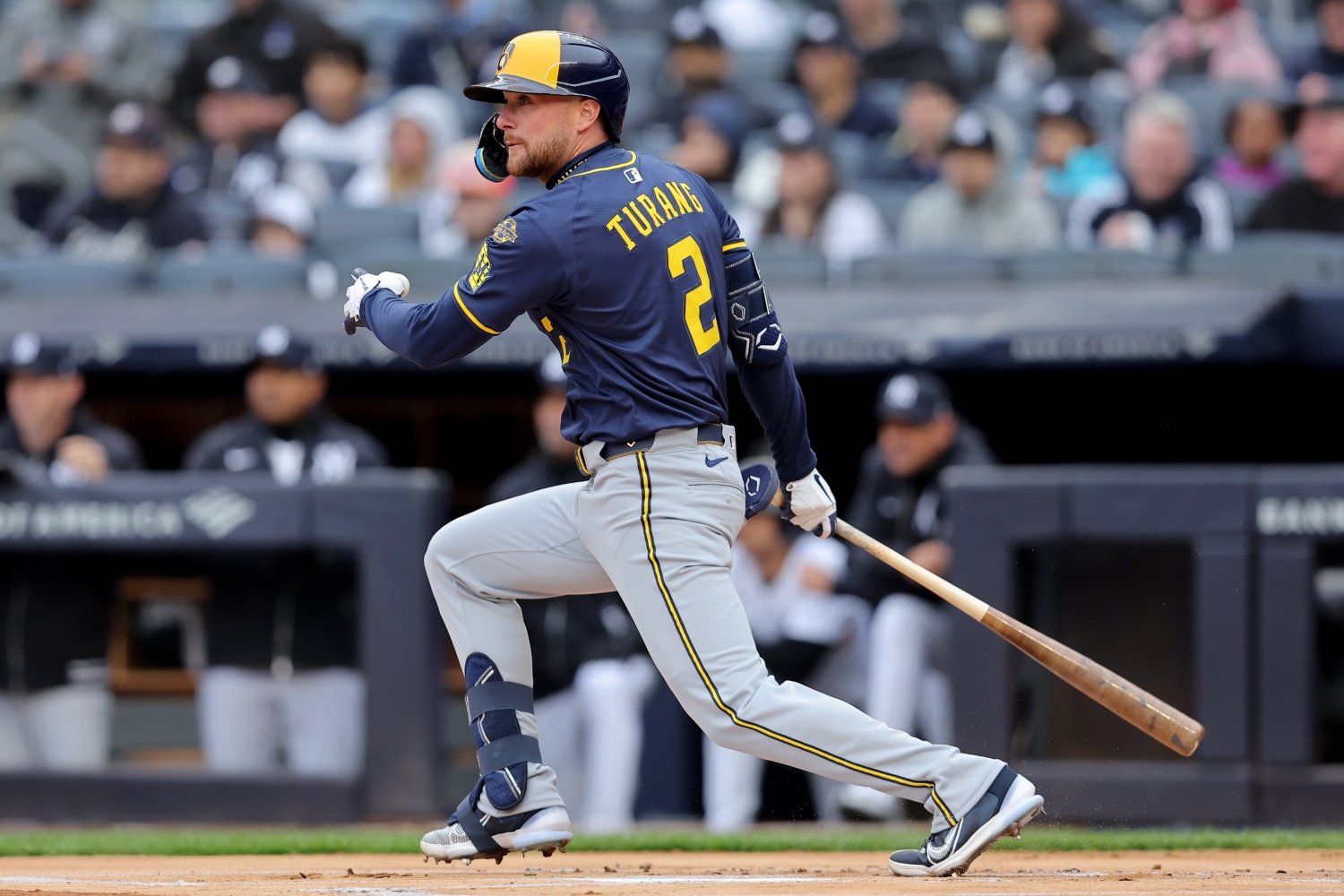 The Brewers are off to a 5-5 start this season. That sounds tame, but it’s fair to say it has been a rollercoaster already, thanks to injuries, shutouts, and being on the wrong side of blowouts. Despite all this, there has been one batter who has been constantly producing: Brice Turang. Where we have seen .500 baseball from the Crew in the first three series of the season, Turang has gotten a hit in every single game. In 43 plate appearances, Turang is hitting .325/.349/.500, with two home runs and six RBIs. Sure, it’s a small sample, but it’s an interesting uptick in numbers from his .254 batting average from last season. Turang is entering his third season in the league, and as he has gotten more experience in the bigs, he’s shown slight improvements in his swings and approach. Firstly, he's setting up differently in the batter's box: deeper (relative to home plate), farther off the inside edge, and more open, ready to attack the ball and extend his arms more at contact. Bat speed has been an issue since his rookie season. A lack of swing speed doesn’t bode well for hitters who are trying to get ahead of a mid-90s fastball—not because they can't catch up to that heat itself, but because the slower one's swing, the more one has to time to the fastball and start early, compromising the ability to adjust to other offerings. The bat speed is up significantly this spring, and Turang has used that to his advantage, catching the ball deeper but still making solid contact. Still, this is far from merely a bat-speed thing. He's still below-average in that regard. The stance adjustments have also made Turang a little more versatile in terms of where he directs his hard contact. In 2024, he was driving the ball almost solely toward the right side of the field. So far this year, he's been hitting it up the middle. These aren’t just bloopers and lucky hits, either. Turang has been pounding the ball at an average 94 MPH exit velocity. In comparison, he only averaged 87 MPH last year, and the big-league average sits at around 88 MPH. So, what exactly has changed about Turang and his swing? Moving back in the batter’s box doesn’t exactly change bat speed, and it shouldn’t change exit velocity either. Is he doing anything different at the plate? In 2024, he was patient at the plate striking out at a 17% rate. He wasn’t walking much, but he wasn’t striking out as much either. His whiff rate was well below average (13.8%), and he laid off the ball down below the zone. He was successful with pitches in the top of the zone, and would swing at those regularly. In 2025, he's taking a new tack. Turang has been swinging a lot more, making contact with pitches on the inside part of the plate. He has been swinging and missing a lot more often, especially on the low outside part of the plate. Again, this is only based off the first 10 games of a 162-game season. so expect some stats to regress. So far, though, it looks like he's going after pitches he believes he can blast—not just swinging faster and trading some contact for that bat speed, but attacking when he sees something he can put the barrel on. 2024: 2025: These are all small changes that have helped Turang to start the 2025 season. However, he swore repeatedly during spring training that he wasn't doing anything differently, so much of this could be mental. It might be as much about comfort as about conscious approach or mechanical work. Turang is in his third season with the parent club. He's now seen a thing or two, he’s gaining muscle, and he’s entering his prime years as a baseball player. At 25 years old, believe it or not, he is the longest-tenured Brewers infielder and he still has four more seasons of club control. It’s crazy to think that I was calling him potential trade bait entering the 2024 season—someone who might be on the bubble of making the roster. Now, he looks like the player the Brewers were hoping to see back in 2018 when they drafted him with the 21st overall selection. If he can keep up with this newfound confidence and his improved approach at the plate, then we might just see a dynamic middle infield for years to come.
 -
Ten games in, the Brewers' young second baseman is raking. What kind of changes has he made to improve his swing? Image courtesy of © Brad Penner-Imagn Images The Brewers are off to a 5-5 start this season. That sounds tame, but it’s fair to say it has been a rollercoaster already, thanks to injuries, shutouts, and being on the wrong side of blowouts. Despite all this, there has been one batter who has been constantly producing: Brice Turang. Where we have seen .500 baseball from the Crew in the first three series of the season, Turang has gotten a hit in every single game. In 43 plate appearances, Turang is hitting .325/.349/.500, with two home runs and six RBIs. Sure, it’s a small sample, but it’s an interesting uptick in numbers from his .254 batting average from last season. Turang is entering his third season in the league, and as he has gotten more experience in the bigs, he’s shown slight improvements in his swings and approach. Firstly, he's setting up differently in the batter's box: deeper (relative to home plate), farther off the inside edge, and more open, ready to attack the ball and extend his arms more at contact. Bat speed has been an issue since his rookie season. A lack of swing speed doesn’t bode well for hitters who are trying to get ahead of a mid-90s fastball—not because they can't catch up to that heat itself, but because the slower one's swing, the more one has to time to the fastball and start early, compromising the ability to adjust to other offerings. The bat speed is up significantly this spring, and Turang has used that to his advantage, catching the ball deeper but still making solid contact. Still, this is far from merely a bat-speed thing. He's still below-average in that regard. The stance adjustments have also made Turang a little more versatile in terms of where he directs his hard contact. In 2024, he was driving the ball almost solely toward the right side of the field. So far this year, he's been hitting it up the middle. These aren’t just bloopers and lucky hits, either. Turang has been pounding the ball at an average 94 MPH exit velocity. In comparison, he only averaged 87 MPH last year, and the big-league average sits at around 88 MPH. So, what exactly has changed about Turang and his swing? Moving back in the batter’s box doesn’t exactly change bat speed, and it shouldn’t change exit velocity either. Is he doing anything different at the plate? In 2024, he was patient at the plate striking out at a 17% rate. He wasn’t walking much, but he wasn’t striking out as much either. His whiff rate was well below average (13.8%), and he laid off the ball down below the zone. He was successful with pitches in the top of the zone, and would swing at those regularly. In 2025, he's taking a new tack. Turang has been swinging a lot more, making contact with pitches on the inside part of the plate. He has been swinging and missing a lot more often, especially on the low outside part of the plate. Again, this is only based off the first 10 games of a 162-game season. so expect some stats to regress. So far, though, it looks like he's going after pitches he believes he can blast—not just swinging faster and trading some contact for that bat speed, but attacking when he sees something he can put the barrel on. 2024: 2025: These are all small changes that have helped Turang to start the 2025 season. However, he swore repeatedly during spring training that he wasn't doing anything differently, so much of this could be mental. It might be as much about comfort as about conscious approach or mechanical work. Turang is in his third season with the parent club. He's now seen a thing or two, he’s gaining muscle, and he’s entering his prime years as a baseball player. At 25 years old, believe it or not, he is the longest-tenured Brewers infielder and he still has four more seasons of club control. It’s crazy to think that I was calling him potential trade bait entering the 2024 season—someone who might be on the bubble of making the roster. Now, he looks like the player the Brewers were hoping to see back in 2018 when they drafted him with the 21st overall selection. If he can keep up with this newfound confidence and his improved approach at the plate, then we might just see a dynamic middle infield for years to come. View full article
-
With Blake Perkins out until mid-May, a spot has opened up on the Opening Day roster. Should the Brewers consider a fifth outfielder for the sake of depth? Image courtesy of Matt Marton/USA TODAY Sports Entering Spring Training, the Brewers had five strong contenders for the three outfielders position leading us to one question: Who is going to be the fourth outfielder? In what seemed like a competition between Garrett Mitchell and Blake Perkins, it was settled before games really got going as the latter injured his shin, keeping him out until mid-May. Now the question becomes: Is four outfielders going to be enough? Do the Brewers need to have a fifth outfielder entering the season while they wait on Perkins to get healthy? Christian Yelich could be a regular DH while Jackson Chourio, Mitchell, and Sal Frelick round out the three positions in the outfield. Then every once in a while, Yelich can play an outfield position (he's likely limited to the corners at this point) while the others have breaks or platoon with each other. If they do opt to keep another outfielder on the Opening Day roster, which option currently in camp is best? Manuel Margot Before the Brewers announced Perkins' injury, Todd Rosiak noted Manuel Margot was in the Brewers clubhouse and eventually signed a minor league contract with the club. Margot is coming off a down year with the Twins with a .238/.289/.337 line in 343 plate appearances. His career norms suggest he will at least have better success against left-handed pitching; a .269 batting average and a .713 OPS against southpaws last season confirms he has that potential. As a right-handed bat, Margot would be a great platoon with projected center fielder Mitchell or even Frelick, who hasn’t found as much success against the lefties thus far. In order for Margot to make the Opening Day roster, the Brewers will have to remove someone from the 40-man roster, whether it be by DFA or adding a player to the 60-Day Injured List. Depending on how well Margot does for the Brewers, the club could DFA him upon Perkins' return or attempt to trade him for another asset with minor league options remaining. Brewer Hicklen and Isaac Collins Both Hicklen and Collins had similar paths to the big leagues. Hicklen was signed to a minor league contract back in November 2023. He didn’t make the Opening Day roster, but he battled his way through Nashville to finally get selected to the 40-man roster in July. Hicklen didn’t get called up until September, but hitting 21 home runs with the Sounds seemed too good to pass up. Unfortunately, he has yet to get his first hit in MLB. He’s only had nine career plate appearances, so his potential still vastly outweighs what we know about him from that small sample. As for Collins, he was claimed off waivers back in December 2022 and has tried to fight his way to the major league roster since. Sure enough by September last year, he too got the call. When called up, Collins was batting .273 in Nashville with 14 home runs and 76 RBI. He did get a single on his first career at-bat, but he hasn’t gotten one since. Both these bats could be a nice temporary replacement for Perkins. They both have minor league options left and are ready for major league pitching. The only real difference is Collins can also play the infield if the Brewers need it (not that they do, but having the flexibility is nice). So it’s a three man race for a fifth outfield spot, right? Well, not exactly, as a fourth option has emerged in recent weeks, and this one is quite a familiar face to Brewers fans. Mark Canha Just a few days after the Perkins injury, the Brewers signed first baseman and outfielder Mark Canha to a minor league contract. Whereas fans initially thought this would be another temporary solution in the outfield, skipper Pat Murphy seems to have other plans. Canha was originally acquired by the Brewers at the 2023 trade deadline in a deal with the Mets. During his tenure, he hit five home runs and 33 RBI with a .287 batting average and an .800 OPS. At the time, he was utilized as a corner outfielder, first baseman, and designated hitter. To give the team more payroll flexibility, the Brewers traded Canha to the Tigers. His numbers slipped a little in Detroit, but they picked back up when he joined the Giants later in the season. With Canha becoming an option at DH, this could allow (force?) Yelich to play more in the field, allowing the outfielders to rotate in and out as needed, avoiding potential fatigue and burnout. This can also provide a bigger competition at third base as Tyler Black might have to find more playing time at other positions. With Murphy speaking highly of this new signing, he is a strong candidate to be on the Opening Day roster. Like Margot’s situation, adding Canha would mean a player will have to be removed from the 40-man roster. So, what’s the solution here? Do the Brewers add a fifth outfielder? Is Canha being relegated to first base and DH better than another outfielder? Is there a scenario where Canha and another outfielder make the Opening Day roster? There are only 13 position player spots up for grabs, so whatever decision the front office makes will be a tough one. Prediction: Mark Canha and Isaac Collins make the Opening Day roster; Blake Perkins added to 60-day IL. Follow Ryan Pollak on X: @Ryeandfish View full article
-
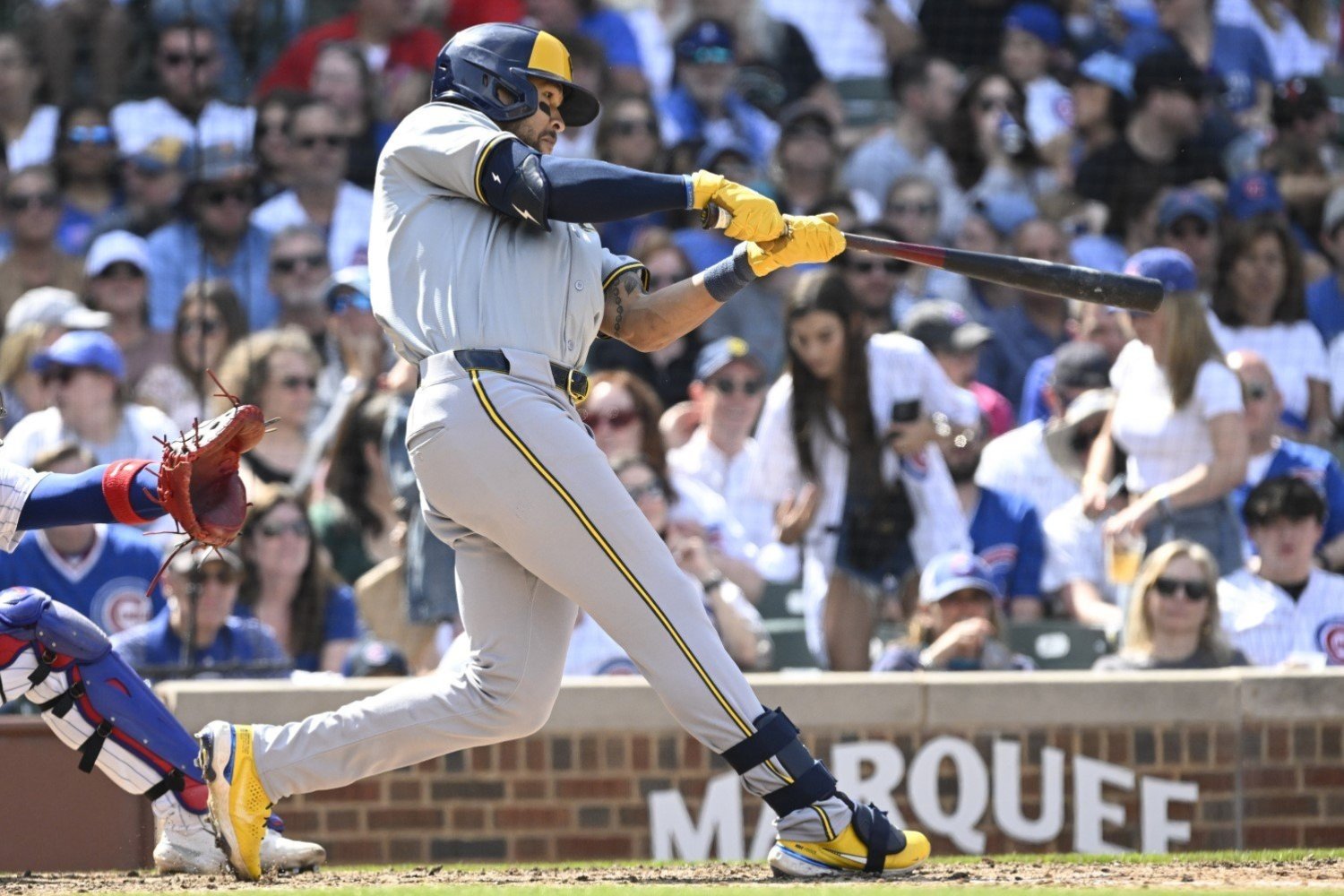 Entering Spring Training, the Brewers had five strong contenders for the three outfielders position leading us to one question: Who is going to be the fourth outfielder? In what seemed like a competition between Garrett Mitchell and Blake Perkins, it was settled before games really got going as the latter injured his shin, keeping him out until mid-May. Now the question becomes: Is four outfielders going to be enough? Do the Brewers need to have a fifth outfielder entering the season while they wait on Perkins to get healthy? Christian Yelich could be a regular DH while Jackson Chourio, Mitchell, and Sal Frelick round out the three positions in the outfield. Then every once in a while, Yelich can play an outfield position (he's likely limited to the corners at this point) while the others have breaks or platoon with each other. If they do opt to keep another outfielder on the Opening Day roster, which option currently in camp is best? Manuel Margot Before the Brewers announced Perkins' injury, Todd Rosiak noted Manuel Margot was in the Brewers clubhouse and eventually signed a minor league contract with the club. Margot is coming off a down year with the Twins with a .238/.289/.337 line in 343 plate appearances. His career norms suggest he will at least have better success against left-handed pitching; a .269 batting average and a .713 OPS against southpaws last season confirms he has that potential. As a right-handed bat, Margot would be a great platoon with projected center fielder Mitchell or even Frelick, who hasn’t found as much success against the lefties thus far. In order for Margot to make the Opening Day roster, the Brewers will have to remove someone from the 40-man roster, whether it be by DFA or adding a player to the 60-Day Injured List. Depending on how well Margot does for the Brewers, the club could DFA him upon Perkins' return or attempt to trade him for another asset with minor league options remaining. Brewer Hicklen and Isaac Collins Both Hicklen and Collins had similar paths to the big leagues. Hicklen was signed to a minor league contract back in November 2023. He didn’t make the Opening Day roster, but he battled his way through Nashville to finally get selected to the 40-man roster in July. Hicklen didn’t get called up until September, but hitting 21 home runs with the Sounds seemed too good to pass up. Unfortunately, he has yet to get his first hit in MLB. He’s only had nine career plate appearances, so his potential still vastly outweighs what we know about him from that small sample. As for Collins, he was claimed off waivers back in December 2022 and has tried to fight his way to the major league roster since. Sure enough by September last year, he too got the call. When called up, Collins was batting .273 in Nashville with 14 home runs and 76 RBI. He did get a single on his first career at-bat, but he hasn’t gotten one since. Both these bats could be a nice temporary replacement for Perkins. They both have minor league options left and are ready for major league pitching. The only real difference is Collins can also play the infield if the Brewers need it (not that they do, but having the flexibility is nice). So it’s a three man race for a fifth outfield spot, right? Well, not exactly, as a fourth option has emerged in recent weeks, and this one is quite a familiar face to Brewers fans. Mark Canha Just a few days after the Perkins injury, the Brewers signed first baseman and outfielder Mark Canha to a minor league contract. Whereas fans initially thought this would be another temporary solution in the outfield, skipper Pat Murphy seems to have other plans. Canha was originally acquired by the Brewers at the 2023 trade deadline in a deal with the Mets. During his tenure, he hit five home runs and 33 RBI with a .287 batting average and an .800 OPS. At the time, he was utilized as a corner outfielder, first baseman, and designated hitter. To give the team more payroll flexibility, the Brewers traded Canha to the Tigers. His numbers slipped a little in Detroit, but they picked back up when he joined the Giants later in the season. With Canha becoming an option at DH, this could allow (force?) Yelich to play more in the field, allowing the outfielders to rotate in and out as needed, avoiding potential fatigue and burnout. This can also provide a bigger competition at third base as Tyler Black might have to find more playing time at other positions. With Murphy speaking highly of this new signing, he is a strong candidate to be on the Opening Day roster. Like Margot’s situation, adding Canha would mean a player will have to be removed from the 40-man roster. So, what’s the solution here? Do the Brewers add a fifth outfielder? Is Canha being relegated to first base and DH better than another outfielder? Is there a scenario where Canha and another outfielder make the Opening Day roster? There are only 13 position player spots up for grabs, so whatever decision the front office makes will be a tough one. Prediction: Mark Canha and Isaac Collins make the Opening Day roster; Blake Perkins added to 60-day IL. Follow Ryan Pollak on X: @Ryeandfish
- 4 comments
-
- 1
-
-
- blake perkins
- mark canha
- (and 3 more)
-
The Brewers' big external addition of the 2023-24 offseason didn't turn out well in Year One. After a rough first season, the worst of his career, can the Crew's slugging first baseman recapture his former glory? Image courtesy of © Benny Sieu-Imagn Images / © Benny Sieu-Imagn Images Last winter, the Brewers signed Rhys Hoskins to a two-year, $34-million deal with a mutual option for the 2026 season. WIth a career .242/.353/.492 slash line, Hoskins was expected to be a solid bat in the lineup while manning first base. While he did crack 26 home runs, he didn't play quite to the level of his $17-million AAV. After he passed on his opt-out, the 2025 campaign is important for both him and the Brewers organization, as it will determine how good of a decision it was to bring him in. What Went Wrong In 2024? Let’s state the obvious: Before the 2023 season, Hoskins tore his ACL, keeping him out the entire year. The organization probably knew the chance of having a down year. Sure enough, it was quite a step down. He ended the season with a .214 batting average. His 98 OPS+ and 100 wRC+ were the lowest numbers recorded in his career. The homers were nice, but his drop off from his career numbers is concerning. Hoskins was actually going quite well early, though. By mid-May, he had an .814 OPS, along with eight home runs and 24 RBI. Then a hamstring strain in his right leg landed him on the injured list. Upon his return, he had a rough few summer months, dropping his batting average to as low as .206 at one point. He'd recovered from that major injury, but the seemingly innocuous hamstring issue set him back for the balance of 2024. His bat speed went down; his average exit velocity went down. You name the stat, it probably dropped once Hoskins came back from that hamstring problem. Alas, his strikeout rate which was the highest it’s ever been, creeping up to 28.8%. That, along with his whiff rate (26.3%) and chase percentage (25.4%), are also heading in the wrong direction. Even worse, he went 0-for-9 against his nemeses the Mets in the Wild Card Series. While it's only fair to offer Hoskins a mulligan on that campaign, he can't afford to have another year like it. The Brewers need him to turn things around, and if he wants to earn another free-agent payday after this, he needs that, too. What Can Go Right In 2025? The best thing for Hoskins is to just be available. While he did play a majority of the games last year, only 92 of them were at first base, as opposed to 37 of them at DH. Jake Bauers is back on a minor-league deal. Barring a late signing, Caleb Durbin or Tyler Black having a bad spring, or a severe injury, Hoskins will be the only pure first baseman on the team. Christian Yelich will likely take the bulk of the playing time at DH, thanks to the current depth in the outfield. Expect Hoskins to get more opportunities at first. Now that Hoskins is familiar with the Milwaukee community and fan base (and now that he's a year further removed from that knee injury), he can be more comfortable and more productive. There are no more excuses. As stated earlier, the power is always going to be there. We learned that last year. If he gets back to even his 2019 Phillies form (wherein he saw the ball better, struck out less often, and drove the ball in the air more), he would be a nice improvement on his last year. We aren't asking for an Aaron Judge-like season; we are just asking for better health and the better plate discipline he had in Philadelphia. Hoskins went 12-41 (.293) in his last 14 regular-season games. He still can be a streaky hitter. He just has to stop chasing on the high outside pitches; he hasn’t found much success out there. How Will This Impact The 2025 Brewers? Should Hoskins find that success, he could become the reliable cleanup hitter the Brewers were hoping for when they signed him last January. Hoskins spent much of his time further down in the batting order in 2024, while Willy Adames became the power bat in the middle of things. With Adames gone, the Brewers are going to rely on speed and defensive players in even greater degree. We’ll likely see more Black, Durbin, and Oliver Dunn, among others, fighting for playing time. A strong Hoskins is vital. Yelich, William Contreras, and Jackson Chourio can all be strong 20-plus home run candidates. If everyone is on, this offense can still be a well-oiled machine. Still, it's Hoskins who could round out the heart of the lineup. Too many great bats and not enough positions on the field is a good problem to have. Hoskins has the potential to hit 30 home runs every year. FanGraphs are projecting him to have a slightly better season than last year, but not to play at an All-Star level. While the Crew don’t necessarily need an All-Star, anywhere around Hoskins's projection could benefit the club’s playoff push. Who knows? If Hoskins performs at a higher level, maybe he and the Brewers can come to an agreement to keep him around beyond this season. But that’s in 2026, so let’s not get ahead of ourselves. View full article
-
Make-or-Break Players on the 2025 Milwaukee Brewers: Rhys Hoskins
Ryan Pollak posted an article in Brewers
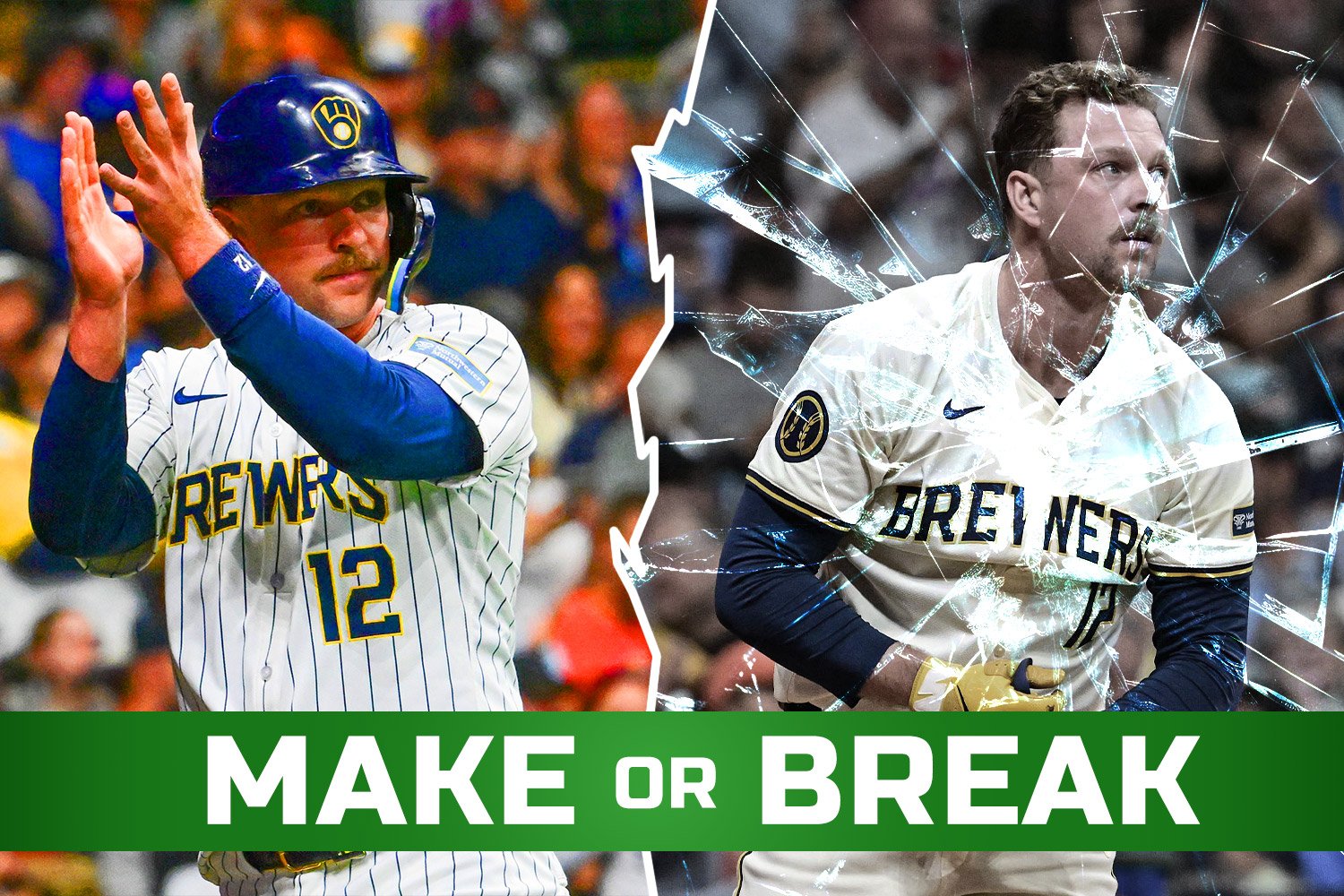 Last winter, the Brewers signed Rhys Hoskins to a two-year, $34-million deal with a mutual option for the 2026 season. WIth a career .242/.353/.492 slash line, Hoskins was expected to be a solid bat in the lineup while manning first base. While he did crack 26 home runs, he didn't play quite to the level of his $17-million AAV. After he passed on his opt-out, the 2025 campaign is important for both him and the Brewers organization, as it will determine how good of a decision it was to bring him in. What Went Wrong In 2024? Let’s state the obvious: Before the 2023 season, Hoskins tore his ACL, keeping him out the entire year. The organization probably knew the chance of having a down year. Sure enough, it was quite a step down. He ended the season with a .214 batting average. His 98 OPS+ and 100 wRC+ were the lowest numbers recorded in his career. The homers were nice, but his drop off from his career numbers is concerning. Hoskins was actually going quite well early, though. By mid-May, he had an .814 OPS, along with eight home runs and 24 RBI. Then a hamstring strain in his right leg landed him on the injured list. Upon his return, he had a rough few summer months, dropping his batting average to as low as .206 at one point. He'd recovered from that major injury, but the seemingly innocuous hamstring issue set him back for the balance of 2024. His bat speed went down; his average exit velocity went down. You name the stat, it probably dropped once Hoskins came back from that hamstring problem. Alas, his strikeout rate which was the highest it’s ever been, creeping up to 28.8%. That, along with his whiff rate (26.3%) and chase percentage (25.4%), are also heading in the wrong direction. Even worse, he went 0-for-9 against his nemeses the Mets in the Wild Card Series. While it's only fair to offer Hoskins a mulligan on that campaign, he can't afford to have another year like it. The Brewers need him to turn things around, and if he wants to earn another free-agent payday after this, he needs that, too. What Can Go Right In 2025? The best thing for Hoskins is to just be available. While he did play a majority of the games last year, only 92 of them were at first base, as opposed to 37 of them at DH. Jake Bauers is back on a minor-league deal. Barring a late signing, Caleb Durbin or Tyler Black having a bad spring, or a severe injury, Hoskins will be the only pure first baseman on the team. Christian Yelich will likely take the bulk of the playing time at DH, thanks to the current depth in the outfield. Expect Hoskins to get more opportunities at first. Now that Hoskins is familiar with the Milwaukee community and fan base (and now that he's a year further removed from that knee injury), he can be more comfortable and more productive. There are no more excuses. As stated earlier, the power is always going to be there. We learned that last year. If he gets back to even his 2019 Phillies form (wherein he saw the ball better, struck out less often, and drove the ball in the air more), he would be a nice improvement on his last year. We aren't asking for an Aaron Judge-like season; we are just asking for better health and the better plate discipline he had in Philadelphia. Hoskins went 12-41 (.293) in his last 14 regular-season games. He still can be a streaky hitter. He just has to stop chasing on the high outside pitches; he hasn’t found much success out there. How Will This Impact The 2025 Brewers? Should Hoskins find that success, he could become the reliable cleanup hitter the Brewers were hoping for when they signed him last January. Hoskins spent much of his time further down in the batting order in 2024, while Willy Adames became the power bat in the middle of things. With Adames gone, the Brewers are going to rely on speed and defensive players in even greater degree. We’ll likely see more Black, Durbin, and Oliver Dunn, among others, fighting for playing time. A strong Hoskins is vital. Yelich, William Contreras, and Jackson Chourio can all be strong 20-plus home run candidates. If everyone is on, this offense can still be a well-oiled machine. Still, it's Hoskins who could round out the heart of the lineup. Too many great bats and not enough positions on the field is a good problem to have. Hoskins has the potential to hit 30 home runs every year. FanGraphs are projecting him to have a slightly better season than last year, but not to play at an All-Star level. While the Crew don’t necessarily need an All-Star, anywhere around Hoskins's projection could benefit the club’s playoff push. Who knows? If Hoskins performs at a higher level, maybe he and the Brewers can come to an agreement to keep him around beyond this season. But that’s in 2026, so let’s not get ahead of ourselves.
 -
5 Sneaky Free Agents the Milwaukee Brewers Could Sign to One Year Deals
Ryan Pollak posted an article in Brewers
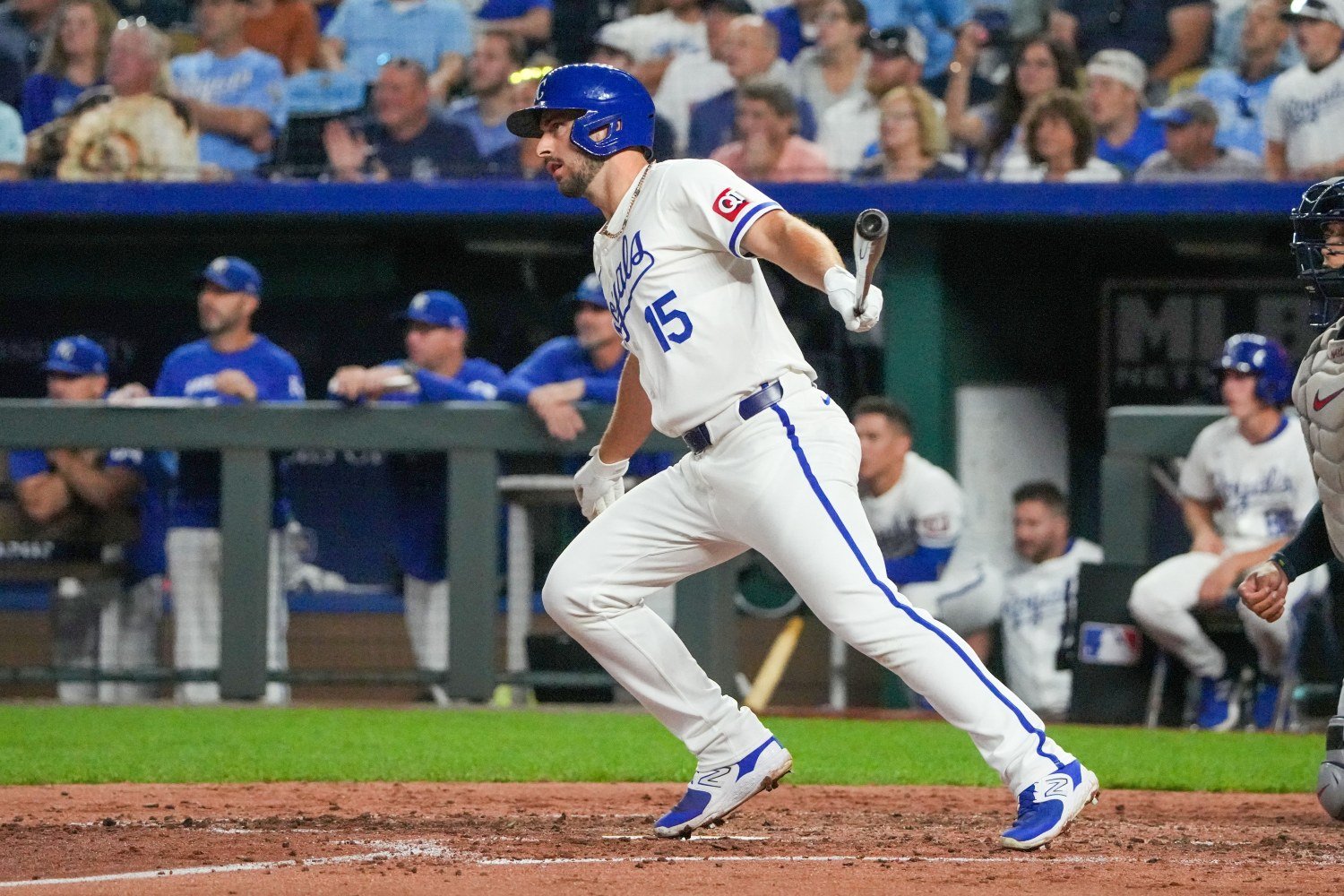 We have entered that part of the offseason where small-market teams strike deals with some of the available free agents who didn’t get signed in the first wave. The Brewers are very notorious for this. In previous offseasons, they have landed players like Lorenzo Cain, Yasmani Grandal, Christian Yelich, and most recently Rhys Hoskins in the second half of January. With the limited amount of budgetary flexibility for the offseason, you can probably rule out the Brewers signing Pete Alonso, Anthony Santander, or Alex Bregman. But that doesn’t mean the Brewers can’t sign a sneaky, impact signing to a one-year deal. Who could fall into the Brewers' lap this offseason? Here are five players that just might get the job done. Yoan Moncada While adding Caleb Durbin to the roster has helped the club with their infield depth, he doesn’t exactly provide veteran experience in the infield—nor power. With Willy Adames’s departure, the Brewers could definitely use some of each, even if it’s for one season. Though not exactly a power hitter recently, Moncada is a name that has repeatedly come up as a rumored fit for the Brewers. After another injury-marred season, the switch-hitting third baseman could use a one-year deal, in hopes of bouncing back and getting a better payday for 2026. In 2023, Moncada hit .260/.305/.425 with 11 home runs and 40 RBIs in 357 plate appearances with the White Sox. He was, that year and in earlier ones, a fairly ferocious line-drive hitter. We are well removed from his 2019 season, when he had a .315 batting average and a 140 OPS+ with 25 home runs and 79 RBIs. But he can still be a threat to hit 15-20 home runs, assuming he plays more than 100 games. Alas, injuries have kept him off the field throughout his career. Since his first full season with the White Sox in 2018, Moncada has played 685 games, out of a possible 1,032 (66.4%). As so often happens, after a few serious injuries, he also seems diminished even when he's on the field. The Brewers would use the Cuban third baseman at the hot corner and move Joey Ortiz over to shortstop, keeping their Platinum Glove winner Brice Turang at second base. Moncada isn’t a defensive standout, but his 8 Outs Above Average (OAA) at third over 4,400 innings in his career gives us confidence that he's about average. The club could also use Moncada as a DH on occasion, to keep him off the field and try to prevent serious injuries. That way, players like Durbin, Andruw Monasterio, or even Sal Frelick can have opportunities at third base. Because of his injuries, there is a good chance he won’t cost as much as he was being paid even last season. Based on how the offseason spending is going, somewhere around $6-8 million could be enough to sign Moncada. Paul Dejong If the Brewers want to have a perfect replacement for the departed Adames, then Paul Dejong is a (very) poor man’s version of him. This is another name that has been tossed around the Brewers faithful, and rightfully so. Between his time with the White Sox and Royals, Dejong hit 24 home runs, driving in 56 runs in 482 plate appearances. If he maintains that same hitting ability, he will provide another right-handed bat that can hit for power. But that’s really all he is: a power bat. While he may have been an All-Star with the Cardinals back in 2019, he has a career .229 batting average, along with a 27.5% strikeout rate that has been rising over recent seasons. Perhaps re-joining a competitive NL Central with a team looking to win their division for a third straight season could help figure some stuff out, but it would be a bad idea to bet heavily on any more than average, power-led production. He does fit the Brewers' mold on defense. In 2023, Dejong recorded a 9 OAA as a shortstop. While he did take a step down in fielding in 2024, he was better at third base, recording 5 OAA in 41 games. This will give the Brewers more options on the infield, as they can find the alignment that works best for them and change it up as needed. Somewhat like Moncada, Dejong will command something in the $5-7 million range. Cal Quantrill At first glance, you would think the starting rotation is set. On paper, Freddy Peralta, Tobias Myers, Brandon Woodruff, Aaron Civale, and Nestor Cortes sounds like a solid rotation. But it doesn’t hurt to have a little more depth. Woodruff is coming off a serious shoulder injury which kept him out the entire 2024 season. Nearly every pitcher who has had the same injury wasn’t the same as they were before. Cortes suffered from a left elbow flexor strain late in the season, and didn't look good when he rushed back for the World Series. The Brewers do have other options for the rotation in Aaron Ashby, Carlos Rodriguez, and DL Hall, who could receive some looks. But based on their past numbers as starters, the club could be reluctant to put them out in that spot. So, the Brewers might need to look for more reliable depth. Whereas they would love a Max Scherzer or a Jack Flaherty, it might be too pricey. Enter a player like Cal Quantrill, who has had great success in the past and won’t break the bank. The former Cleveland Guardian was traded to the Rockies after being designated for assignment after the 2023 season. In his one season with the Rockies, He was off to a strong start, recording a 3.30 ERA in his first 14 starts with the organization. Then the struggles started. Quantrill ended the season with an 8-11 record with a 93 ERA+ and a 1.6 WAR. He also led the National League in walks (69), having a 1.52 WHIP. If there is any organization that can switch Quantrill back to his good form, it would be the Brewers. Quantrill isn’t that far removed from his 2022 season, where he recorded a 3.38 ERA, 128 strikeouts and a 1.21 WHIP. These aren’t ace numbers, but they're what a club can hope for in a spot starter or for the sixth man in a rotation. Think about what Bryse Wilson was for the Brewers the last couple of seasons. While mainly a bullpen guy, he was an arm who could fill the role here and there in the rotation when injuries arose. Quantrill was non-tendered by the Rockies as he was entering his final season of arbitration. Last season, he signed a $6.55-million contract to avoid arbitration. Quantrill was projected to make around $9 million in arbitration this season. He will likely sign for less, as we get closer to pitchers and catchers reporting to spring training. At a minimum, Quantrill could sign a deal similar to Colin Rea’s with the Cubs this offseason ($4.25 million in ’25, $6-million option for ’26 with a $750,000 buyout). I'd say a $6-million deal will be roughly what he signs for. Harrison Bader I know what the immediate reaction is: why would the Brewers add another outfielder, when they have Frelick, Yelich, Jackson Chourio, Garrett Mitchell, and Blake Perkins? Aren’t there other needs that are more important than the outfield? In a way, signing another outfielder like Harrison Bader does fill some needs. Arguably, the direst need is the hot corner. While Ortiz could stay at third, it’s very easy to move him over to shortstop and find another third baseman. Where the newly acquired Durbin and Oliver Dunn could be solutions, I believe Frelick should be given a good look in the infield. Last offseason, he got to work out alongside one of his idols and former Red Sox second baseman Dustin Pedroia. He even had some reps at third base during last year’s spring training. Pat Murphy suggested the Frelick to third base experiment could be back on during his end-of-season press conference. Moving Frelick to the infield does open up a spot which could easily be filled by Mitchell or Perkins. But moving the reigning Gold Glove right fielder would take the outfield down a notch. Not to mention, Mitchell has yet to stay healthy for an entire season, and Yelich is coming off back surgery and isn’t getting any younger. The 2021 Gold Glove winner is exactly the type of player the Brewers love to use to win through great execution: good defense and speed. He had 17 stolen bases, 10 OAA, and a 28.1-MPH sprint speed, all great traits to have for this team. As for his bat, it does leave a little to be desired. Bader has a career .242/.306/.392 slash line, a career 91 OPS+, and a career .250 batting average with runners in scoring position. With 71 career home runs in eight seasons, he isn’t going to be a heavy hitter. But he could be a solid platoon for the outfield. Should the Brewers add Bader, they can comfortably move Yelich to a more regular DH role; continue their Frelick infield experiment; and work around a strong defensive outfield with Chourio, Perkins, Mitchell and Bader. He signed a one-year, $10.5 million contract with the Mets last year. He will likely need to sign a contract below that number to re-join the NL Central. J.D. Martinez Well, this sounds familiar. If the Brewers would love to add a veteran bat with proven power to bolster their lineup, then why not add six-time All-Star and three-time Silver Slugger J.D. Martinez. Isn’t he 37 years old? Isn’t he coming off a lackluster campaign with the Mets? While these are both true, you have to remember he was one of the Boras clients who held all the way out until the end of spring training last year. Furthermore, Citi Field is not really a hitter-friendly ballpark, per Baseball Savant park factors. What we can say positively about his year with the Mets is he was still able to slug 16 home runs with a 106 OPS+. Against NL Central opponents (not including the Brewers), He went .266/.309/.391 with one home run and 10 RBIs. He had a .296 batting average and a .955 OPS with runners in scoring position. He was also more successful against left-handed pitchers, hitting .263 with a .836 OPS. Turning 38 in August, it looks like the DH still has something left in the tank. He can still hit 20-plus home runs, and has consistently gotten on base. Martinez signed an interesting contract with the Mets last season. Worth $12 million, Martinez was owed $2 million last season, $2.5 million as a signing bonus, and will be owed $7.5 million in deferred money ($1.5 million a year) starting in 2034. Should a team sign him prior to the start of spring training, he probably won’t get that complicated of a contract. If the Brewers offer him in the ballpark of $8 million, it should be enough to bring him in. It's getting late in the offseason, and Matt Arnold might have some tricks up his sleeve. Let’s hope it happens soon, as we are in the heat of Brewers Month. Is there any player you’d like to see the Brewers sign? What is the clubs biggest need as we get closer to spring training? Let us know in the comments.
-
- 1
-
-
- yoan moncada
- paul dejong
- (and 1 more)
-
With big-name free agents still looking for new homes, which players could the Brewers bring in to sign on one-year prove-it deals? Image courtesy of © Denny Medley-Imagn Images We have entered that part of the offseason where small-market teams strike deals with some of the available free agents who didn’t get signed in the first wave. The Brewers are very notorious for this. In previous offseasons, they have landed players like Lorenzo Cain, Yasmani Grandal, Christian Yelich, and most recently Rhys Hoskins in the second half of January. With the limited amount of budgetary flexibility for the offseason, you can probably rule out the Brewers signing Pete Alonso, Anthony Santander, or Alex Bregman. But that doesn’t mean the Brewers can’t sign a sneaky, impact signing to a one-year deal. Who could fall into the Brewers' lap this offseason? Here are five players that just might get the job done. Yoan Moncada While adding Caleb Durbin to the roster has helped the club with their infield depth, he doesn’t exactly provide veteran experience in the infield—nor power. With Willy Adames’s departure, the Brewers could definitely use some of each, even if it’s for one season. Though not exactly a power hitter recently, Moncada is a name that has repeatedly come up as a rumored fit for the Brewers. After another injury-marred season, the switch-hitting third baseman could use a one-year deal, in hopes of bouncing back and getting a better payday for 2026. In 2023, Moncada hit .260/.305/.425 with 11 home runs and 40 RBIs in 357 plate appearances with the White Sox. He was, that year and in earlier ones, a fairly ferocious line-drive hitter. We are well removed from his 2019 season, when he had a .315 batting average and a 140 OPS+ with 25 home runs and 79 RBIs. But he can still be a threat to hit 15-20 home runs, assuming he plays more than 100 games. Alas, injuries have kept him off the field throughout his career. Since his first full season with the White Sox in 2018, Moncada has played 685 games, out of a possible 1,032 (66.4%). As so often happens, after a few serious injuries, he also seems diminished even when he's on the field. The Brewers would use the Cuban third baseman at the hot corner and move Joey Ortiz over to shortstop, keeping their Platinum Glove winner Brice Turang at second base. Moncada isn’t a defensive standout, but his 8 Outs Above Average (OAA) at third over 4,400 innings in his career gives us confidence that he's about average. The club could also use Moncada as a DH on occasion, to keep him off the field and try to prevent serious injuries. That way, players like Durbin, Andruw Monasterio, or even Sal Frelick can have opportunities at third base. Because of his injuries, there is a good chance he won’t cost as much as he was being paid even last season. Based on how the offseason spending is going, somewhere around $6-8 million could be enough to sign Moncada. Paul Dejong If the Brewers want to have a perfect replacement for the departed Adames, then Paul Dejong is a (very) poor man’s version of him. This is another name that has been tossed around the Brewers faithful, and rightfully so. Between his time with the White Sox and Royals, Dejong hit 24 home runs, driving in 56 runs in 482 plate appearances. If he maintains that same hitting ability, he will provide another right-handed bat that can hit for power. But that’s really all he is: a power bat. While he may have been an All-Star with the Cardinals back in 2019, he has a career .229 batting average, along with a 27.5% strikeout rate that has been rising over recent seasons. Perhaps re-joining a competitive NL Central with a team looking to win their division for a third straight season could help figure some stuff out, but it would be a bad idea to bet heavily on any more than average, power-led production. He does fit the Brewers' mold on defense. In 2023, Dejong recorded a 9 OAA as a shortstop. While he did take a step down in fielding in 2024, he was better at third base, recording 5 OAA in 41 games. This will give the Brewers more options on the infield, as they can find the alignment that works best for them and change it up as needed. Somewhat like Moncada, Dejong will command something in the $5-7 million range. Cal Quantrill At first glance, you would think the starting rotation is set. On paper, Freddy Peralta, Tobias Myers, Brandon Woodruff, Aaron Civale, and Nestor Cortes sounds like a solid rotation. But it doesn’t hurt to have a little more depth. Woodruff is coming off a serious shoulder injury which kept him out the entire 2024 season. Nearly every pitcher who has had the same injury wasn’t the same as they were before. Cortes suffered from a left elbow flexor strain late in the season, and didn't look good when he rushed back for the World Series. The Brewers do have other options for the rotation in Aaron Ashby, Carlos Rodriguez, and DL Hall, who could receive some looks. But based on their past numbers as starters, the club could be reluctant to put them out in that spot. So, the Brewers might need to look for more reliable depth. Whereas they would love a Max Scherzer or a Jack Flaherty, it might be too pricey. Enter a player like Cal Quantrill, who has had great success in the past and won’t break the bank. The former Cleveland Guardian was traded to the Rockies after being designated for assignment after the 2023 season. In his one season with the Rockies, He was off to a strong start, recording a 3.30 ERA in his first 14 starts with the organization. Then the struggles started. Quantrill ended the season with an 8-11 record with a 93 ERA+ and a 1.6 WAR. He also led the National League in walks (69), having a 1.52 WHIP. If there is any organization that can switch Quantrill back to his good form, it would be the Brewers. Quantrill isn’t that far removed from his 2022 season, where he recorded a 3.38 ERA, 128 strikeouts and a 1.21 WHIP. These aren’t ace numbers, but they're what a club can hope for in a spot starter or for the sixth man in a rotation. Think about what Bryse Wilson was for the Brewers the last couple of seasons. While mainly a bullpen guy, he was an arm who could fill the role here and there in the rotation when injuries arose. Quantrill was non-tendered by the Rockies as he was entering his final season of arbitration. Last season, he signed a $6.55-million contract to avoid arbitration. Quantrill was projected to make around $9 million in arbitration this season. He will likely sign for less, as we get closer to pitchers and catchers reporting to spring training. At a minimum, Quantrill could sign a deal similar to Colin Rea’s with the Cubs this offseason ($4.25 million in ’25, $6-million option for ’26 with a $750,000 buyout). I'd say a $6-million deal will be roughly what he signs for. Harrison Bader I know what the immediate reaction is: why would the Brewers add another outfielder, when they have Frelick, Yelich, Jackson Chourio, Garrett Mitchell, and Blake Perkins? Aren’t there other needs that are more important than the outfield? In a way, signing another outfielder like Harrison Bader does fill some needs. Arguably, the direst need is the hot corner. While Ortiz could stay at third, it’s very easy to move him over to shortstop and find another third baseman. Where the newly acquired Durbin and Oliver Dunn could be solutions, I believe Frelick should be given a good look in the infield. Last offseason, he got to work out alongside one of his idols and former Red Sox second baseman Dustin Pedroia. He even had some reps at third base during last year’s spring training. Pat Murphy suggested the Frelick to third base experiment could be back on during his end-of-season press conference. Moving Frelick to the infield does open up a spot which could easily be filled by Mitchell or Perkins. But moving the reigning Gold Glove right fielder would take the outfield down a notch. Not to mention, Mitchell has yet to stay healthy for an entire season, and Yelich is coming off back surgery and isn’t getting any younger. The 2021 Gold Glove winner is exactly the type of player the Brewers love to use to win through great execution: good defense and speed. He had 17 stolen bases, 10 OAA, and a 28.1-MPH sprint speed, all great traits to have for this team. As for his bat, it does leave a little to be desired. Bader has a career .242/.306/.392 slash line, a career 91 OPS+, and a career .250 batting average with runners in scoring position. With 71 career home runs in eight seasons, he isn’t going to be a heavy hitter. But he could be a solid platoon for the outfield. Should the Brewers add Bader, they can comfortably move Yelich to a more regular DH role; continue their Frelick infield experiment; and work around a strong defensive outfield with Chourio, Perkins, Mitchell and Bader. He signed a one-year, $10.5 million contract with the Mets last year. He will likely need to sign a contract below that number to re-join the NL Central. J.D. Martinez Well, this sounds familiar. If the Brewers would love to add a veteran bat with proven power to bolster their lineup, then why not add six-time All-Star and three-time Silver Slugger J.D. Martinez. Isn’t he 37 years old? Isn’t he coming off a lackluster campaign with the Mets? While these are both true, you have to remember he was one of the Boras clients who held all the way out until the end of spring training last year. Furthermore, Citi Field is not really a hitter-friendly ballpark, per Baseball Savant park factors. What we can say positively about his year with the Mets is he was still able to slug 16 home runs with a 106 OPS+. Against NL Central opponents (not including the Brewers), He went .266/.309/.391 with one home run and 10 RBIs. He had a .296 batting average and a .955 OPS with runners in scoring position. He was also more successful against left-handed pitchers, hitting .263 with a .836 OPS. Turning 38 in August, it looks like the DH still has something left in the tank. He can still hit 20-plus home runs, and has consistently gotten on base. Martinez signed an interesting contract with the Mets last season. Worth $12 million, Martinez was owed $2 million last season, $2.5 million as a signing bonus, and will be owed $7.5 million in deferred money ($1.5 million a year) starting in 2034. Should a team sign him prior to the start of spring training, he probably won’t get that complicated of a contract. If the Brewers offer him in the ballpark of $8 million, it should be enough to bring him in. It's getting late in the offseason, and Matt Arnold might have some tricks up his sleeve. Let’s hope it happens soon, as we are in the heat of Brewers Month. Is there any player you’d like to see the Brewers sign? What is the clubs biggest need as we get closer to spring training? Let us know in the comments. View full article
-
I appreciate the comment and like that you asked this question. Where trading Civale and signing Quintana was a wash in the payroll, there are some statistics that Quintana beats out. His career HR% is lower than Civale while his GB% is higher. Great sign for a hitter friendly park. Not only that but Quintana's career FIP is lower over his 13 seasons in the league. Also, the Brewers don't have a proven lefty starter for the rotation for a good chunk of the season. While it's not a necessity, I like the idea of having that option. In this certain scenario, the only other starting lefties are Ashby and Ogasawara. Ashby is still a little shaky and Ogasawara would still need to get used to MLB playing time. Gasser exists but TJ surgery is no joke and I wouldn't be surprised if he misses all of 2025.
- 5 replies
-
- 1
-
-
- ty madden
- max anderson
- (and 3 more)
-
Can the Milwaukee Brewers compete for another NL Central title while on a budget? How would I fair as the GM? Here is my chance to wheel and deal as I put myself in Matt Arnold's shoes for the 2024-25 offseason. This series of articles is a primer for the release of our new "You're The Brewers GM!" tool, where you play the role of Matt Arnold and build your own Brewers offseason. Please visit the tool here and join in on the fun! This is an interesting puzzle for the Brewers to put together. The club is already at a projected $122 million and won’t be big spenders this season. They still need to figure out an answer for the left side of the infield with Willy Adames, now a free agent. Not only that, but the starting rotation has also taken a hit, with Robert Gasser still recovering from Tommy John, Colin Rea, Wade Miley, and Frankie Montas, who are all free agents. If the Brewers are going to compete and keep the payroll below $130 million, they will do a ton of wheeling and dealing while also dipping their toes in the free-agent market. What is that going to look like for this off-season? Let me have a go. Non-Tenders: LHP DL Hall, LHP Hoby Milner, RHP J.B. Bukauskas, INF Vinny Capra Let’s start with the shocking move of non-tendering a potential arm in the rotation in DL Hall. I could see the Brewers keeping Hall through spring training as he was considered a good arm for the rotation or even long relief. However, after a season of struggles and injuries, it might be time to cut ties with him. Hall must earn his spot on the 26-man roster with no minor league options left. With the depth coming up from the minor league roster, there is a solid chance Hall could be pushed off the roster by the time the regular season starts. The same goes for J.B. Bukauskas, who has also run out of minor-league options. He never really had an opportunity to prove himself in the big leagues. Hoby Milner is more of a “cap casualty” per se because he is expected to make $2.8 million in his final year of arbitration. Even though Miner had one minor league option left, Milner has accumulated more than five years of service, meaning he must approve a potential option for the minor leagues. It just seems like an inconvenience for the money he’s worth. With these designations, the 40-man roster is back down to 34, and before we start adding to this roster, we must continue dropping the payroll. It begins with a trade that everybody has been projecting to happen during this series. TRADE: Brewers Trade RHP Devin Williams to the Tigers for RHP Ty Madden and 2B Max Anderson If it weren’t for how well the Brewers performed without Devin Williams in the first half of the season, I would’ve thought the Crew would’ve ridden out his contract. Instead, $7.7 million is a relatively good price for a former Trevor Hoffman Reliever of the Year, and the Crew should take advantage of that. Earlier this week, Jason Wang explored the Detroit Tigers as a potential trade partner for the Airbender. It’s fair to say I was inspired. Ty Madden made his debut last season, allowing one run in five innings of work and getting his first career win. Madden could be a great long-relief or starting rotation option for the club. More importantly, he has all of his minor-league options remaining. On the other hand, Max Anderson has a bit of work to do before making his debut. Anderson is just scratching the Double-A level and can be a hit-first infielder for the Brewers in a few years. The former second-round pick has comparisons to Ty France and Max Muncy, which means if he hits the ball, he will find a way on base. Before the Brewers spend some cash, there’s one more player I’d like to part ways with to save money. Trade: Brewers trade RHP Aaron Civale to the Braves for RHP Jhancarlos Lara Aaron Civale was a nice addition at the deadline when we needed starting pitching depth last summer. But with an $8 million price tag and only one year of club control remaining, now might be the time to find a trade partner in need of pitching. With Max Fried and Charlie Morton becoming free agents and Spencer Strider recovering from his injury, they might need to look at a short-term arm in the rotation. If they can’t bring back Fried, maybe Civale could be a cheap option. Parting ways with their #14 prospect is enough of a deal to get a reliable option. This is all great for payroll, but what about the woes at third base? We have another trade that would help, but the fanbase might not be too fond of it. Trade: Brewers acquire 3B Jake Burger from the Marlins for 1B Tyler Black and #29 Prospect RHP K.C. Hunt The Marlins made it seem like any player was available at the last trade deadline. I’m not saying a fire sale is coming, but this team might be in rebuild mode. Even though Jake Burger has four more seasons of club control, the Marlins might be able to part ways with the slugger if the price is right. The Marlins have Connor Norby and recently added prospect Deyvison De Los Santos, who can play third base. However, De Los Santos could ease into a first-base role. This sounds familiar to Tyler Black, but Black would likely get more opportunities in Miami. Black has a background in plenty of positions, including the outfield, third base, and second base, all before moving to first base. If that isn’t enough for the Marlins, adding a pitching prospect that could debut as soon as late 2025 might be enough to get the deal done. Even better, Burger can also slide over to first base if/when the Brewers get out of Hoskin’s contract for the 2026 season. Until then, the Brewers need a new Jake Bauers. Trade: Brewers acquire 1B/OF Gavin Sheets from the White Sox for cash or PTBNL In the final trade of this offseason, the Brewers find a steady replacement as a backup first baseman/DH in Gavin Sheets, who may have been one of the bright spots from the worst team in baseball. While Sheets is considered a wash from Bauers's projected salary arbitration ($2.6 million), he has a better career batting average (.230), a lower strikeout percentage (20.8%), and OPS (.680). He’ll be a nice backup option should something happen to Hoskins. Let's get to spending that cash with every hole but the rotation filled. Brewers sign LHP Jose Quintana to a two-year, $20 million with a $3 million buyout after 2025 With Brandon Woodruff's return to form uncertain, Aaron Ashby's lingering questions about becoming a starter, and Logan Henderson, Jacob Misiorowski, and Carlos Rodriguez still developing for a starter role, the Brewers might need a reliable starter for the rotation. The Brewers once spent a lot of money on aging veteran Wade Miley. Why not give one to soon-to-be 36-year-old Jose Quintana? The structure of the deal looks like this. Quintana will be paid $8 million for the 2025 season. 2026, he will be set to make $12 million should he opt into the second year. If he elects free agency, the Brewers will only be charged $3 million for that season. Essentially, the deal, at a minimum, will be a one-year contract worth $11 million. With 170.1 innings of work and a 3.75 ERA, he will be an inning-eating pitcher for the rotation. He’s long passed his days as an All-Star with the White Sox, but he can still be an effective arm for a team that needs help now. But I think the Brewers might need one more arm. While it is more international, it’s not the arm fans would have been hearing about. Brewers sign LHP Shinnosuke Ogasawara to a three-year, $20 million deal The last time the Brewers had a Japanese-born player on their team was outfielder Norichika “Nori” Aoki. Shinnosuke Ogasawara, 27, could be the next one and may turn into a nice rotational arm. But as described by MLBTR, he is a little bit of a wildcard. A 3.12 ERA is nothing to sneeze at. But his drop in strikeout percentage from last year is substantial. If there were an organization that could fix that bit of production and more, it would be the Brewers. In this deal, Ogasawara will be paid $5 million in 2025, $6.5 million in 2026, and $8.5 million in 2027. There will be no buyouts in this deal. The club missed out on signing Shota Imanaga and Erick Fedde last season, so this might be the time to sign someone from overseas this year. The last time they tried this was Josh Lindblom, who is now no longer in the league. There are never enough pitchers when it comes to organizations in MLB, and with the Brewers having room on the roster, why not add another one? Other Moves If you're keeping track, the Brewers 40-man roster would now stand at 36. This number will likely drop to 35 once Gasser is placed on the 60-day injured list. This gives the club more flexibility to add prospects like Misiorowski, Craig Yoho, and even Brock Wilken in due time. Until then, the club could look at a utility player upgrade. The cheapest option that could probably provide the highest reward is Whit Merrifield. He showed signs of aging, and he would probably take a deal near $2 million for one year—maybe a mutual option. There might be an addition or two from minor league deals like the Deivi Garcia deal earlier this week. RHP Josh Winder could be another solid option for a minor-league deal. Even so, we can leave the 40 roster a little more open if players perform well in spring training. As for the outfield, I can see the club is willing to keep all five outfielders if one is injured. With that upgrade at the utility position, the Brewers could be fine with two outfield injuries. But let’s hope we don’t get to that point. Projected 26-man Opening Day Roster: Lineup: LF: Jackson Chourio C: William Contreras DH: Christian Yelich 3B: Jake Burger CF: Garrett Mitchell 1B: Rhys Hoskins RF: Sal Frelick SS: Joey Ortiz 2B: Brice Turang Bench: C: Eric Haase UTIL: Whit Merrifield 1B/OF: Gavin Sheets OF: Blake Perkins Rotation: RHP Freddy Peralta RHP Tobias Myers LHP Jose Quintana LHP Shinnosuke Ogasawara RHP Logan Henderson Bullpen: RHP Trevor Megill RHP Joel Payamps LHP Bryan Hudson LHP Jared Koenig RHP Abner Uribe RHP Elvis Peguero RHP Nick Mears LHP Aaron Ashby 15-Day Injured List: RHP Brandon Woodruff 60-Day Injured List: LHP Robert Gasser What do you think of this offseason plan? Do you think you can do better? Then build your own Brewers roster and hit the button below! Start Your Payroll Blueprint Now View full article
-
You're The Brewers GM! Wheeling & Dealing While On A Budget
Ryan Pollak posted an article in Brewers
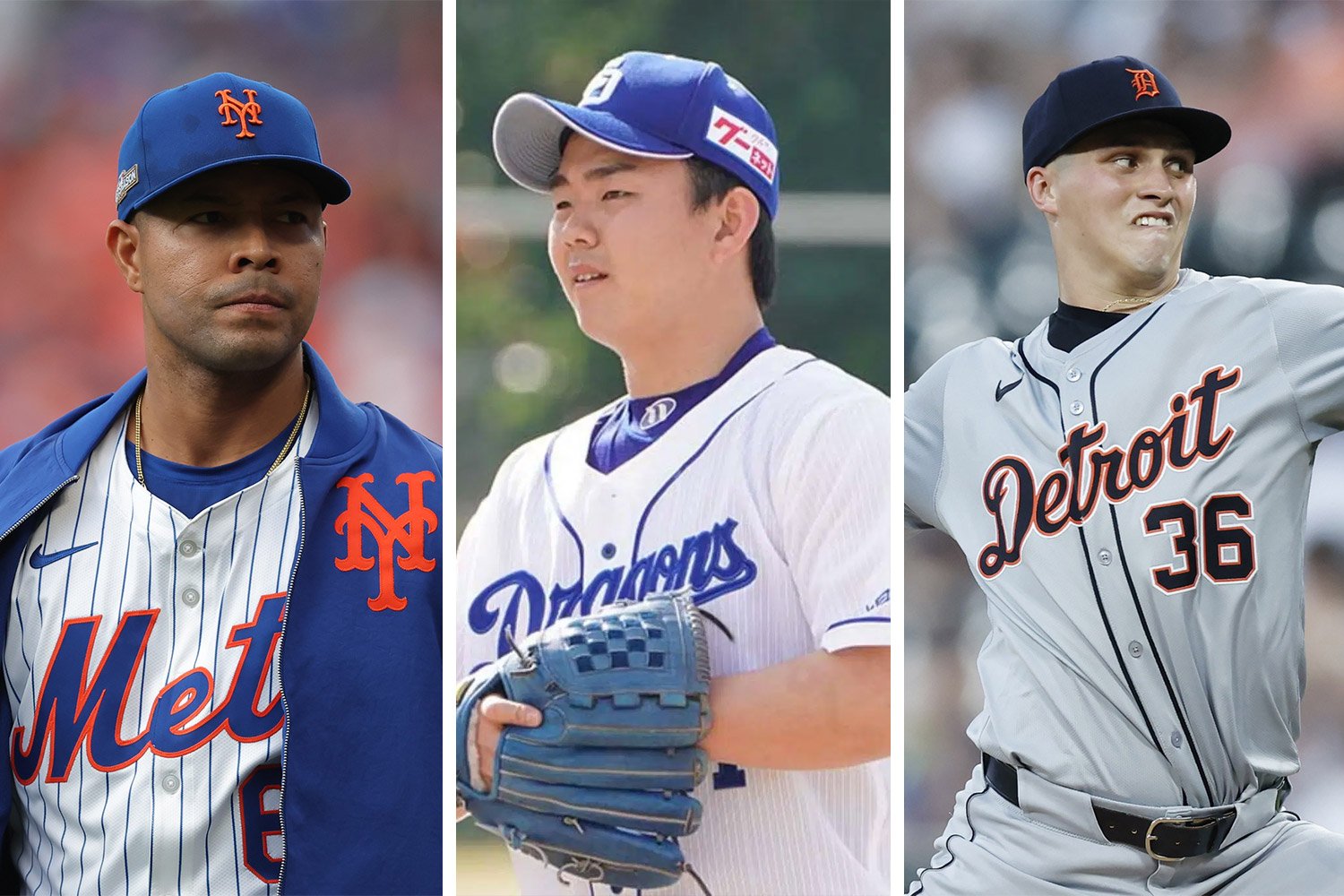 This series of articles is a primer for the release of our new "You're The Brewers GM!" tool, where you play the role of Matt Arnold and build your own Brewers offseason. Please visit the tool here and join in on the fun! This is an interesting puzzle for the Brewers to put together. The club is already at a projected $122 million and won’t be big spenders this season. They still need to figure out an answer for the left side of the infield with Willy Adames, now a free agent. Not only that, but the starting rotation has also taken a hit, with Robert Gasser still recovering from Tommy John, Colin Rea, Wade Miley, and Frankie Montas, who are all free agents. If the Brewers are going to compete and keep the payroll below $130 million, they will do a ton of wheeling and dealing while also dipping their toes in the free-agent market. What is that going to look like for this off-season? Let me have a go. Non-Tenders: LHP DL Hall, LHP Hoby Milner, RHP J.B. Bukauskas, INF Vinny Capra Let’s start with the shocking move of non-tendering a potential arm in the rotation in DL Hall. I could see the Brewers keeping Hall through spring training as he was considered a good arm for the rotation or even long relief. However, after a season of struggles and injuries, it might be time to cut ties with him. Hall must earn his spot on the 26-man roster with no minor league options left. With the depth coming up from the minor league roster, there is a solid chance Hall could be pushed off the roster by the time the regular season starts. The same goes for J.B. Bukauskas, who has also run out of minor-league options. He never really had an opportunity to prove himself in the big leagues. Hoby Milner is more of a “cap casualty” per se because he is expected to make $2.8 million in his final year of arbitration. Even though Miner had one minor league option left, Milner has accumulated more than five years of service, meaning he must approve a potential option for the minor leagues. It just seems like an inconvenience for the money he’s worth. With these designations, the 40-man roster is back down to 34, and before we start adding to this roster, we must continue dropping the payroll. It begins with a trade that everybody has been projecting to happen during this series. TRADE: Brewers Trade RHP Devin Williams to the Tigers for RHP Ty Madden and 2B Max Anderson If it weren’t for how well the Brewers performed without Devin Williams in the first half of the season, I would’ve thought the Crew would’ve ridden out his contract. Instead, $7.7 million is a relatively good price for a former Trevor Hoffman Reliever of the Year, and the Crew should take advantage of that. Earlier this week, Jason Wang explored the Detroit Tigers as a potential trade partner for the Airbender. It’s fair to say I was inspired. Ty Madden made his debut last season, allowing one run in five innings of work and getting his first career win. Madden could be a great long-relief or starting rotation option for the club. More importantly, he has all of his minor-league options remaining. On the other hand, Max Anderson has a bit of work to do before making his debut. Anderson is just scratching the Double-A level and can be a hit-first infielder for the Brewers in a few years. The former second-round pick has comparisons to Ty France and Max Muncy, which means if he hits the ball, he will find a way on base. Before the Brewers spend some cash, there’s one more player I’d like to part ways with to save money. Trade: Brewers trade RHP Aaron Civale to the Braves for RHP Jhancarlos Lara Aaron Civale was a nice addition at the deadline when we needed starting pitching depth last summer. But with an $8 million price tag and only one year of club control remaining, now might be the time to find a trade partner in need of pitching. With Max Fried and Charlie Morton becoming free agents and Spencer Strider recovering from his injury, they might need to look at a short-term arm in the rotation. If they can’t bring back Fried, maybe Civale could be a cheap option. Parting ways with their #14 prospect is enough of a deal to get a reliable option. This is all great for payroll, but what about the woes at third base? We have another trade that would help, but the fanbase might not be too fond of it. Trade: Brewers acquire 3B Jake Burger from the Marlins for 1B Tyler Black and #29 Prospect RHP K.C. Hunt The Marlins made it seem like any player was available at the last trade deadline. I’m not saying a fire sale is coming, but this team might be in rebuild mode. Even though Jake Burger has four more seasons of club control, the Marlins might be able to part ways with the slugger if the price is right. The Marlins have Connor Norby and recently added prospect Deyvison De Los Santos, who can play third base. However, De Los Santos could ease into a first-base role. This sounds familiar to Tyler Black, but Black would likely get more opportunities in Miami. Black has a background in plenty of positions, including the outfield, third base, and second base, all before moving to first base. If that isn’t enough for the Marlins, adding a pitching prospect that could debut as soon as late 2025 might be enough to get the deal done. Even better, Burger can also slide over to first base if/when the Brewers get out of Hoskin’s contract for the 2026 season. Until then, the Brewers need a new Jake Bauers. Trade: Brewers acquire 1B/OF Gavin Sheets from the White Sox for cash or PTBNL In the final trade of this offseason, the Brewers find a steady replacement as a backup first baseman/DH in Gavin Sheets, who may have been one of the bright spots from the worst team in baseball. While Sheets is considered a wash from Bauers's projected salary arbitration ($2.6 million), he has a better career batting average (.230), a lower strikeout percentage (20.8%), and OPS (.680). He’ll be a nice backup option should something happen to Hoskins. Let's get to spending that cash with every hole but the rotation filled. Brewers sign LHP Jose Quintana to a two-year, $20 million with a $3 million buyout after 2025 With Brandon Woodruff's return to form uncertain, Aaron Ashby's lingering questions about becoming a starter, and Logan Henderson, Jacob Misiorowski, and Carlos Rodriguez still developing for a starter role, the Brewers might need a reliable starter for the rotation. The Brewers once spent a lot of money on aging veteran Wade Miley. Why not give one to soon-to-be 36-year-old Jose Quintana? The structure of the deal looks like this. Quintana will be paid $8 million for the 2025 season. 2026, he will be set to make $12 million should he opt into the second year. If he elects free agency, the Brewers will only be charged $3 million for that season. Essentially, the deal, at a minimum, will be a one-year contract worth $11 million. With 170.1 innings of work and a 3.75 ERA, he will be an inning-eating pitcher for the rotation. He’s long passed his days as an All-Star with the White Sox, but he can still be an effective arm for a team that needs help now. But I think the Brewers might need one more arm. While it is more international, it’s not the arm fans would have been hearing about. Brewers sign LHP Shinnosuke Ogasawara to a three-year, $20 million deal The last time the Brewers had a Japanese-born player on their team was outfielder Norichika “Nori” Aoki. Shinnosuke Ogasawara, 27, could be the next one and may turn into a nice rotational arm. But as described by MLBTR, he is a little bit of a wildcard. A 3.12 ERA is nothing to sneeze at. But his drop in strikeout percentage from last year is substantial. If there were an organization that could fix that bit of production and more, it would be the Brewers. In this deal, Ogasawara will be paid $5 million in 2025, $6.5 million in 2026, and $8.5 million in 2027. There will be no buyouts in this deal. The club missed out on signing Shota Imanaga and Erick Fedde last season, so this might be the time to sign someone from overseas this year. The last time they tried this was Josh Lindblom, who is now no longer in the league. There are never enough pitchers when it comes to organizations in MLB, and with the Brewers having room on the roster, why not add another one? Other Moves If you're keeping track, the Brewers 40-man roster would now stand at 36. This number will likely drop to 35 once Gasser is placed on the 60-day injured list. This gives the club more flexibility to add prospects like Misiorowski, Craig Yoho, and even Brock Wilken in due time. Until then, the club could look at a utility player upgrade. The cheapest option that could probably provide the highest reward is Whit Merrifield. He showed signs of aging, and he would probably take a deal near $2 million for one year—maybe a mutual option. There might be an addition or two from minor league deals like the Deivi Garcia deal earlier this week. RHP Josh Winder could be another solid option for a minor-league deal. Even so, we can leave the 40 roster a little more open if players perform well in spring training. As for the outfield, I can see the club is willing to keep all five outfielders if one is injured. With that upgrade at the utility position, the Brewers could be fine with two outfield injuries. But let’s hope we don’t get to that point. Projected 26-man Opening Day Roster: Lineup: LF: Jackson Chourio C: William Contreras DH: Christian Yelich 3B: Jake Burger CF: Garrett Mitchell 1B: Rhys Hoskins RF: Sal Frelick SS: Joey Ortiz 2B: Brice Turang Bench: C: Eric Haase UTIL: Whit Merrifield 1B/OF: Gavin Sheets OF: Blake Perkins Rotation: RHP Freddy Peralta RHP Tobias Myers LHP Jose Quintana LHP Shinnosuke Ogasawara RHP Logan Henderson Bullpen: RHP Trevor Megill RHP Joel Payamps LHP Bryan Hudson LHP Jared Koenig RHP Abner Uribe RHP Elvis Peguero RHP Nick Mears LHP Aaron Ashby 15-Day Injured List: RHP Brandon Woodruff 60-Day Injured List: LHP Robert Gasser What do you think of this offseason plan? Do you think you can do better? Then build your own Brewers roster and hit the button below! Start Your Payroll Blueprint Now
 -
It's time to rank the top five players in the Brewers organization, according to their likelihood of being traded and the value the team can realize in so doing. Image courtesy of © Michael McLoone-Imagn Images We are on the final stretch of this list, and it has been a ride. While the list is limited to 20 players, I could see others on the move. There are plenty of prospects the club can use for trades. Although each has at least some warts, I’m sure Luke Adams, Eric Bitonti, Wes Clarke, and Blake Burke could command a modicum of value if the team shopped them smartly. If we’re talking about the players with the most value, regardless of the situation, we probably would be talking about Jackson Chourio. However, the extension he signed last offseason makes certain what was already a good bet: he's not going anywhere any time soon. We've eliminated Chourio and a few others, for various reasons, to focus on truly plausible trade candidates. These last five are names who could garner the most in return, should the team decide to move them. I could see the top two being almost untouchable; the price would have to be big to consider moving them. If you missed this list's first three articles, they are just to refresh your memory. 16-20 11-15 6-10 Enough with the rambling, on to the list. As a final reminder, this list is created based on value, durability, statistics in all levels of MLB, club control, age, salaries, and the likelihood of being traded. 5. Brock Wilken 3B: 2024 Minor League Stats: 109 G, .200/.316/.365, 81 H, 33 XBH, 17 HR, 51 RBI, 58 R, 63 BB, 133 SO, 1 SB, Free Agent: TBD Ever since the likes of Prince Fielder and Ryan Braun emerged from the system, it’s felt like the Brewers haven’t focused on getting players from the corner infield positions with their early draft picks. Breaking that pattern, though, they drafted the third baseman from Wake Forest, Brock Wilken, 18th overall in the 2023 draft. The Brewers typically choose a middle infielder or an outfielder, as they can become versatile over time. Often, because of their broad offensive philosophy, they also chose a contact hitter with a lot of speed. Wilken is almost the exact opposite. The former Cape Cod League MVP launched 71 home runs across his three years at the collegiate level, the most for a player in that university’s history. According to MLB Pipeline, he also has 30-grade speed, so don't expect him to be dynamic on the bases. The early returns were great, but Wilken quickly found trouble in Double-A. He hit .200/.311/.374, striking out 28.6% of the time. While he has always struggled to put the bat to the ball, the organization still has time to work on that. However, getting hit in the face with a 95 MPH fastball early in the season (resulting in multiple facial fractures) probably didn’t help. Wilken will likely return to Biloxi to start the 2025 season, but he did get heads to turn in the Arizona Fall League Home Run Derby. Although he finished in second place, he set two records by hitting 14 of his 33 home runs in the derby in the first round. That is the most by any player in a single round and the most cumulative by any player. Wilken is a good option for the Brewers’ future, as they could use another power bat in the lineup. However, with Mike Boeve and Eric Bitonti's other future options for the Crew, does a log jam start to form? Boeve is closer to what the Brewers have looked at in recent years for their big-league team. But maybe adding a different type of player could help solidify their future. Wilken does have the value of a bat that other organizations could want. He will turn 23 in June and is projected to make his debut within the next year or so. This could be a great investment for any team that needs corner infield help (hey, like the Brewers). 4. Tyler Black INF: 0.031 Years, Career Stats: 18 G, .204/.316/.245, 10 H, 2 XBH, 0 HR, 2 RBI, 4 R, 7 BB, 17 SO, 3 SB, Free Agent: 2031+ Alright, I’m sure most of you saw this name coming. But right now, it seems the Brewers are still trying to find a way to incorporate Black into this organization. While he has played mainly third base, he has been placed in many different positions, including all areas of the outfield and first base. Even when he was called up for his major-league debut, they were still experimenting with him, putting him at the DH spot and first base. Black found no success in his 18 games for the 2024 Brewers, batting .204/.316/.245. Granted, it is only a tiny sample size. He hasn’t gotten his footing at the MLB level. But he’s turning 25 in July, and he still has the likes of Andruw Monasterio and Rhys Hoskins in front of him. If Boeve continues to thrive in the minors, and Wilken is ready to debut, why not consider trading Black? Black is still under a year of MLB service time and has six years of club control. He can be an on-base guy, although seemingly without much power or defensive value. But do the Brewers need another Brice Turang-like bat in their lineup? If the Brewers can’t find a role for Black, I’m sure another team will. For all we know, he could be the 2025 edition of Turang. But his production in the minor leagues over the years and his versatility and club control put him at a very high value, and he could get a nice player back. It might be time for the Brewers to take advantage of that and find a player to help this team now. 3. Devin Williams RHP: 5.046 Years, Career Stats: 241 G, 1.83 ERA, 1.02 WHIP, 235.1 IP, 68 SV, 375 K, 112 BB, Free Agent: 2026 If there were any player in the Brewers organization I could predict would be traded before the start of the 2025 season, Devin Williams would be the one I’d place my bet on. Williams has been a staple for the Brewers’ bullpen, whether he was a setup for Josh Hader or the closer. While he had to miss the first half of the 2024 season, his numbers were ridiculous after he was activated. In 2024, Williams recorded 14 saves, with a 1.25 ERA, a 0.97 WHIP, and a .133 opponent batting average. His Airbender changeup continues to be a devastating pitch, getting a 48.8% whiff rate. Unfortunately, his season ended in one of the worst ways possible: He allowed four runs in the ninth inning, resulting in a blown save and an early exit from the playoffs. Despite a decent season, the Brewers lost in the Wild Card Series again. Williams is now in a similar situation to the one Corbin Burnes was in last year. He's in his last year of arbitration and is expected to make nearly $8 million. Williams is still considered one of the best closers in the league, never mind his numbers in the postseason. He'll be in high demand, if and when the Brewers go to move him. If you’re expecting a Hader-type return, you might want to think again, because the Padres were able to use him for one and a half seasons. So, is he going to get a Burnes-type return? Not exactly. Burnes was more expensive, but it was much easier to project him for a lot of value, based on his role and track record, especially with regard to health. The best time to trade Devin Williams is most likely to be this offseason. The organization had a ton of backlash after trading their closer midseason in 2022. They might not want to do that again, especially if they are well into the playoff race. His price tag isn’t scary, compared to what pitchers are paid nowadays. But I still expect a small package in a trade, as he is the most likely to be traded within the next year, which is why he is so high on this list. This brings us to our next two players. They have the most value of anyone the team would entertain trading, but unless they get an insane return, they won’t be traded anytime soon. 2. Cooper Pratt SS: 2024 Minor League Stats: 96 G, .277/.362/.406, 96 H, 26 XBH, 8 HR, 45 RBI, 56 R, 42 BB, 81 SO, 27 SB, Free Agent: TBD Honestly, I am still shocked that the Brewers convinced Pratt to sign with the organization over his commitment to Ole Miss. It’s one of the main reasons teams continued to pass up on him. After a very strong pro debut in 2023, Pratt sustained his progress. He remained in Single-A Carolina for a decent chunk of the 2024 season before being called to the High-A Wisconsin Timber Rattlers. At age 20, there is no need to rush the 6-foot-4 prospect, who is still trying to develop his strength. MLB Pipeline projects his debut around 2027, but it could be earlier, based on how he performs next season. He struggled a bit as part of the Timber Rattlers, with a .258 OBP in 95 plate appearances. He could see some time in Double-A Biloxi during the 2025 season. Drawing comparisons to Orioles shortstop Gunnar Henderson, Pratt could be a five-tool player. The organization has already experimented with him at second, but with his size, he could be an interesting option at third base. Time will tell with this one, as he should be a player to look out for in a Brewers uniform down the line. Pratt is currently ranked 57th on MLB Pipeline’s Top 100 prospects. He has the ability to climb even higher. If, for some reason, the club would prefer Joey Ortiz to play shortstop once Pratt is big-league-ready, then the club might consider parting ways with the youngster. But for now, he should be untouchable. The same might go for this next guy we might see a lot more often in 2025. 1. Jacob Misiorowski RHP: 2024 Minor League Stats: 33 G, 21 GS, 3.79 ERA, 1.20 WHIP, 97.1 IP, 127 K, 60 BB, Free Agent: TBD Misiorowski, a 6-foot-7 drink of water, took the minor-league world by storm in 2023, striking out 110 batters in 71.1 innings. His appearance in the 2023 Futures Game was eye-popping. What is concerning is the early end of 2023 with a dead arm. It's not exactly great to hear from a guy with three effective pitches who is starting every five days. The Brewers found an interesting solution by placing him in the bullpen for the final six weeks of 2024, after a couple of starts in Triple-A. It remains to be seen if he will start games for the Brewers or be relegated to a closer role in a similar Hader path, as MLB Pipeline suggests. Hopefully, he could also control his walk rate, which was starting to creep toward 15% during his time with the Biloxi Shuckers. The organization will continue to help him work on that over the winter and spring, but he might be in Milwaukee sooner than you think. With Colin Rea, Wade Miley, and Frankie Montas all out of the picture, there is a decent chance Miz could slide into the back half of the starting rotation. Battling the likes of Aaron Ashby and DL Hall will be something, but at least all of these pitchers could comfortably work from the bullpen, as each has come out of there at least once. With Misiorowski on the brink of making his MLB debut and throwing flamethrower fastballs, sliders, and curves, he would be perfect for any pitcher-needy team. Unless the Brewers get an offer that includes a great player on a cheap contract, however, I just don’t see the Brewers trading away their lone potential ace. That's our list! What players did we miss? Should there have been others in these top spots? Who will the Brewers likely trade before the start of the season? Let us know in the comments below. View full article
-
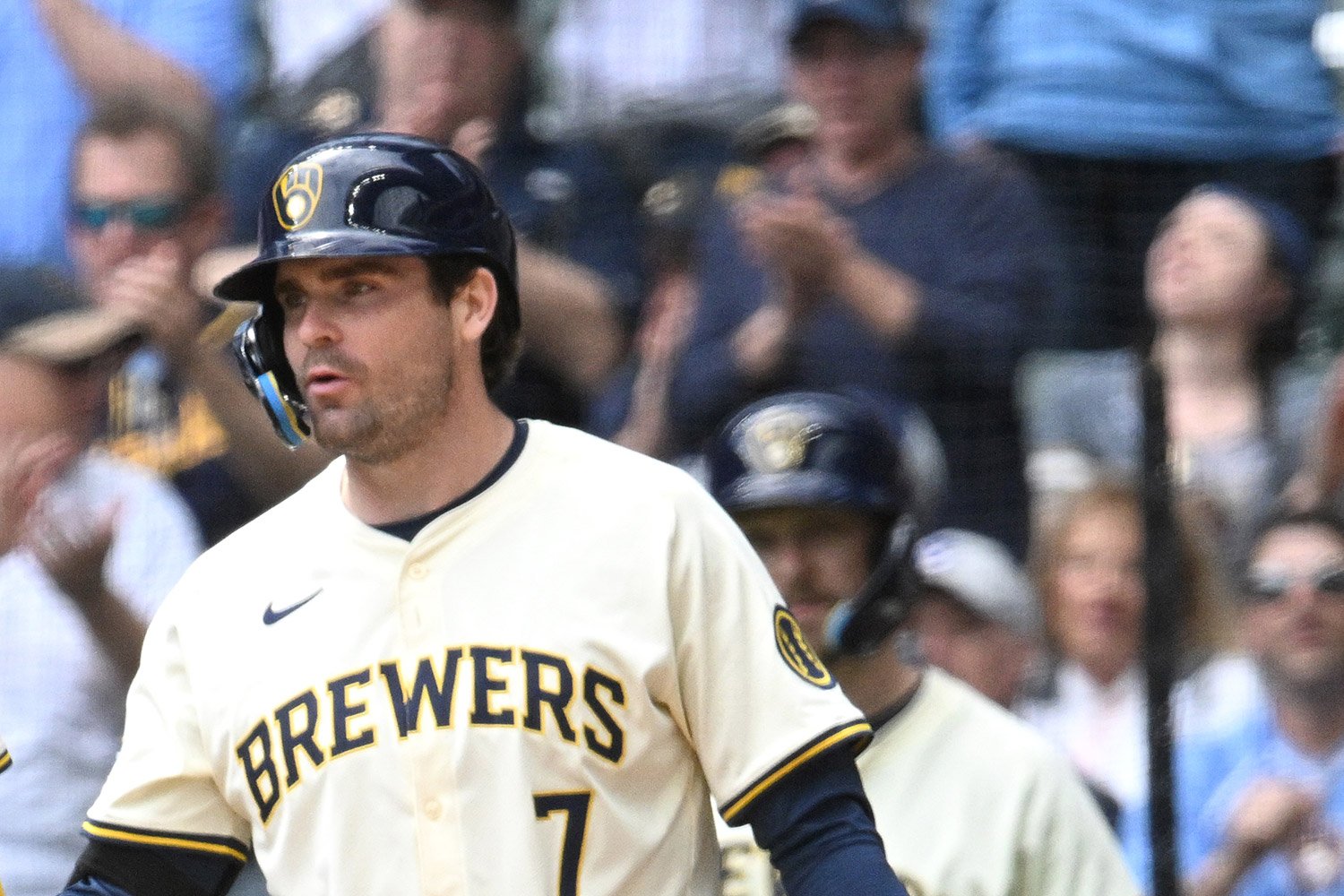 We are on the final stretch of this list, and it has been a ride. While the list is limited to 20 players, I could see others on the move. There are plenty of prospects the club can use for trades. Although each has at least some warts, I’m sure Luke Adams, Eric Bitonti, Wes Clarke, and Blake Burke could command a modicum of value if the team shopped them smartly. If we’re talking about the players with the most value, regardless of the situation, we probably would be talking about Jackson Chourio. However, the extension he signed last offseason makes certain what was already a good bet: he's not going anywhere any time soon. We've eliminated Chourio and a few others, for various reasons, to focus on truly plausible trade candidates. These last five are names who could garner the most in return, should the team decide to move them. I could see the top two being almost untouchable; the price would have to be big to consider moving them. If you missed this list's first three articles, they are just to refresh your memory. 16-20 11-15 6-10 Enough with the rambling, on to the list. As a final reminder, this list is created based on value, durability, statistics in all levels of MLB, club control, age, salaries, and the likelihood of being traded. 5. Brock Wilken 3B: 2024 Minor League Stats: 109 G, .200/.316/.365, 81 H, 33 XBH, 17 HR, 51 RBI, 58 R, 63 BB, 133 SO, 1 SB, Free Agent: TBD Ever since the likes of Prince Fielder and Ryan Braun emerged from the system, it’s felt like the Brewers haven’t focused on getting players from the corner infield positions with their early draft picks. Breaking that pattern, though, they drafted the third baseman from Wake Forest, Brock Wilken, 18th overall in the 2023 draft. The Brewers typically choose a middle infielder or an outfielder, as they can become versatile over time. Often, because of their broad offensive philosophy, they also chose a contact hitter with a lot of speed. Wilken is almost the exact opposite. The former Cape Cod League MVP launched 71 home runs across his three years at the collegiate level, the most for a player in that university’s history. According to MLB Pipeline, he also has 30-grade speed, so don't expect him to be dynamic on the bases. The early returns were great, but Wilken quickly found trouble in Double-A. He hit .200/.311/.374, striking out 28.6% of the time. While he has always struggled to put the bat to the ball, the organization still has time to work on that. However, getting hit in the face with a 95 MPH fastball early in the season (resulting in multiple facial fractures) probably didn’t help. Wilken will likely return to Biloxi to start the 2025 season, but he did get heads to turn in the Arizona Fall League Home Run Derby. Although he finished in second place, he set two records by hitting 14 of his 33 home runs in the derby in the first round. That is the most by any player in a single round and the most cumulative by any player. Wilken is a good option for the Brewers’ future, as they could use another power bat in the lineup. However, with Mike Boeve and Eric Bitonti's other future options for the Crew, does a log jam start to form? Boeve is closer to what the Brewers have looked at in recent years for their big-league team. But maybe adding a different type of player could help solidify their future. Wilken does have the value of a bat that other organizations could want. He will turn 23 in June and is projected to make his debut within the next year or so. This could be a great investment for any team that needs corner infield help (hey, like the Brewers). 4. Tyler Black INF: 0.031 Years, Career Stats: 18 G, .204/.316/.245, 10 H, 2 XBH, 0 HR, 2 RBI, 4 R, 7 BB, 17 SO, 3 SB, Free Agent: 2031+ Alright, I’m sure most of you saw this name coming. But right now, it seems the Brewers are still trying to find a way to incorporate Black into this organization. While he has played mainly third base, he has been placed in many different positions, including all areas of the outfield and first base. Even when he was called up for his major-league debut, they were still experimenting with him, putting him at the DH spot and first base. Black found no success in his 18 games for the 2024 Brewers, batting .204/.316/.245. Granted, it is only a tiny sample size. He hasn’t gotten his footing at the MLB level. But he’s turning 25 in July, and he still has the likes of Andruw Monasterio and Rhys Hoskins in front of him. If Boeve continues to thrive in the minors, and Wilken is ready to debut, why not consider trading Black? Black is still under a year of MLB service time and has six years of club control. He can be an on-base guy, although seemingly without much power or defensive value. But do the Brewers need another Brice Turang-like bat in their lineup? If the Brewers can’t find a role for Black, I’m sure another team will. For all we know, he could be the 2025 edition of Turang. But his production in the minor leagues over the years and his versatility and club control put him at a very high value, and he could get a nice player back. It might be time for the Brewers to take advantage of that and find a player to help this team now. 3. Devin Williams RHP: 5.046 Years, Career Stats: 241 G, 1.83 ERA, 1.02 WHIP, 235.1 IP, 68 SV, 375 K, 112 BB, Free Agent: 2026 If there were any player in the Brewers organization I could predict would be traded before the start of the 2025 season, Devin Williams would be the one I’d place my bet on. Williams has been a staple for the Brewers’ bullpen, whether he was a setup for Josh Hader or the closer. While he had to miss the first half of the 2024 season, his numbers were ridiculous after he was activated. In 2024, Williams recorded 14 saves, with a 1.25 ERA, a 0.97 WHIP, and a .133 opponent batting average. His Airbender changeup continues to be a devastating pitch, getting a 48.8% whiff rate. Unfortunately, his season ended in one of the worst ways possible: He allowed four runs in the ninth inning, resulting in a blown save and an early exit from the playoffs. Despite a decent season, the Brewers lost in the Wild Card Series again. Williams is now in a similar situation to the one Corbin Burnes was in last year. He's in his last year of arbitration and is expected to make nearly $8 million. Williams is still considered one of the best closers in the league, never mind his numbers in the postseason. He'll be in high demand, if and when the Brewers go to move him. If you’re expecting a Hader-type return, you might want to think again, because the Padres were able to use him for one and a half seasons. So, is he going to get a Burnes-type return? Not exactly. Burnes was more expensive, but it was much easier to project him for a lot of value, based on his role and track record, especially with regard to health. The best time to trade Devin Williams is most likely to be this offseason. The organization had a ton of backlash after trading their closer midseason in 2022. They might not want to do that again, especially if they are well into the playoff race. His price tag isn’t scary, compared to what pitchers are paid nowadays. But I still expect a small package in a trade, as he is the most likely to be traded within the next year, which is why he is so high on this list. This brings us to our next two players. They have the most value of anyone the team would entertain trading, but unless they get an insane return, they won’t be traded anytime soon. 2. Cooper Pratt SS: 2024 Minor League Stats: 96 G, .277/.362/.406, 96 H, 26 XBH, 8 HR, 45 RBI, 56 R, 42 BB, 81 SO, 27 SB, Free Agent: TBD Honestly, I am still shocked that the Brewers convinced Pratt to sign with the organization over his commitment to Ole Miss. It’s one of the main reasons teams continued to pass up on him. After a very strong pro debut in 2023, Pratt sustained his progress. He remained in Single-A Carolina for a decent chunk of the 2024 season before being called to the High-A Wisconsin Timber Rattlers. At age 20, there is no need to rush the 6-foot-4 prospect, who is still trying to develop his strength. MLB Pipeline projects his debut around 2027, but it could be earlier, based on how he performs next season. He struggled a bit as part of the Timber Rattlers, with a .258 OBP in 95 plate appearances. He could see some time in Double-A Biloxi during the 2025 season. Drawing comparisons to Orioles shortstop Gunnar Henderson, Pratt could be a five-tool player. The organization has already experimented with him at second, but with his size, he could be an interesting option at third base. Time will tell with this one, as he should be a player to look out for in a Brewers uniform down the line. Pratt is currently ranked 57th on MLB Pipeline’s Top 100 prospects. He has the ability to climb even higher. If, for some reason, the club would prefer Joey Ortiz to play shortstop once Pratt is big-league-ready, then the club might consider parting ways with the youngster. But for now, he should be untouchable. The same might go for this next guy we might see a lot more often in 2025. 1. Jacob Misiorowski RHP: 2024 Minor League Stats: 33 G, 21 GS, 3.79 ERA, 1.20 WHIP, 97.1 IP, 127 K, 60 BB, Free Agent: TBD Misiorowski, a 6-foot-7 drink of water, took the minor-league world by storm in 2023, striking out 110 batters in 71.1 innings. His appearance in the 2023 Futures Game was eye-popping. What is concerning is the early end of 2023 with a dead arm. It's not exactly great to hear from a guy with three effective pitches who is starting every five days. The Brewers found an interesting solution by placing him in the bullpen for the final six weeks of 2024, after a couple of starts in Triple-A. It remains to be seen if he will start games for the Brewers or be relegated to a closer role in a similar Hader path, as MLB Pipeline suggests. Hopefully, he could also control his walk rate, which was starting to creep toward 15% during his time with the Biloxi Shuckers. The organization will continue to help him work on that over the winter and spring, but he might be in Milwaukee sooner than you think. With Colin Rea, Wade Miley, and Frankie Montas all out of the picture, there is a decent chance Miz could slide into the back half of the starting rotation. Battling the likes of Aaron Ashby and DL Hall will be something, but at least all of these pitchers could comfortably work from the bullpen, as each has come out of there at least once. With Misiorowski on the brink of making his MLB debut and throwing flamethrower fastballs, sliders, and curves, he would be perfect for any pitcher-needy team. Unless the Brewers get an offer that includes a great player on a cheap contract, however, I just don’t see the Brewers trading away their lone potential ace. That's our list! What players did we miss? Should there have been others in these top spots? Who will the Brewers likely trade before the start of the season? Let us know in the comments below.
 -
How much value do MLB-ready players and fast-rising prospects have in the Brewers future? Here's another look at the trade value of some of the young, up-and-coming Brewers. Image courtesy of © Benny Sieu-Imagn Images Well, we are halfway through our list of Milwaukee's top 20 trade pieces. It’s fair to say the Brewers already have plenty of options. Sure, they can sell off players with expensive contracts like Rhys Hoskins (although you won’t get much for him), but they can also part ways with the younger players with hopes of building their team. Expendable pieces like Garrett Mitchell can be moved to build on a position they really need help at. (I’m looking at you, hot corner.) Before we get started, if you haven’t read the first two parts, you can review them here: 20-16 15-11 Now that you're up to speed, let us look at higher-value trade pieces—these being between 10 and 6 on our list. As always, remember, the ranks are based off club control, the likelihood of trading the player, the durability, the salary, age, and the statistics. Today, we’re going to start with a top prospect in the farm system who’s probably itching to get back on the field. 10: Jeferson Quero C: 2023 Minor League Stats: 90 G, .262/.339/.441, 88 H, 28 XBH, 16 HR, 49 RBI, 47 R, 38 BB, 68 SO, 5 SB, Free Agent: TBD How is the Brewers' top prospect (according to MLB Pipeline) only 10th on this Top 20 list? Well, Jeferson Quero has had a ton of ups and downs in his career. Let’s start with the good, as he was awarded the Minor League Gold Glove at catcher in 2023. With plus-plus defensive upside at the most valuable position on the diamond, Quero has developed into one of the best minor-league catchers and could easily be a starting catcher in any organization. To top that off, he threw out a little over a third of base stealers during the 2023 season. His bat really emerged and made him a hot commodity in 2023, too. He has a chance to be a dangerous two-way catcher, one of the rarest commodities in baseball. However, with the signing of Gary Sánchez, the resurgence of Eric Haase, and William Contreras simply existing on this roster, Quero would probably have spent considerable time with Nashville in 2024. But his season was cut short, thanks to a torn labrum in his throwing arm during his Triple-A debut that required surgery. He is expected to be back to full strength by Opening Day, but there’s no telling how that injury could affect him in the long-term, diminishing his value. The Brewers already used one of his minor-league options, but age is on Quero’s side: he's just 22. He could compete with Haase for backup catcher duties, giving him the keys to eventually take over for Contreras should the team move on from the All-Star slugger. However, Contreras has three years of club control remaining. While he could be a great trade piece for catcher-needy teams, it’s going to be hard to part ways with Quero due to his injury uncertainty. Contreras is expected to make around $7.6 million in arbitration this year and he’s not going to get any cheaper. If there is no long-term extension soon, the Brewers will want to have this prospect as a much cheaper, hopefully similarly valuable alternative. 9: Blake Perkins OF: 1.133 Years, Career Stats: 188 G, .234/.318/.337, 123 H, 32 XBH, 10 HR, 63 RBI, 82 R, 65 BB, 154 SO, 28 BB, Free Agent: 2030 Not long after the Brewers announced they were trading Hunter Renfroe to the Angels, Perkins was signed to a one-year, major-league contract during the 2022-23 offseason. They were already his third professional organization; he'd failed to crack the majors during his time in the Washington and Yankee systems. He seems to have found a home, though, thanks to his stellar defense and usable (if below-average) bat. He played only a small role in 2023, but it blossomed into a semi-regular one in 2024. We saw a little bit of improvement in his bat last season, as he hit six home runs and drove in 43 runs, with a .240 batting average and a .647 OPS. He might be the best defensive outfielder even on a roster loaded with great ones. But he’s going to have to battle for at-bats with Christian Yelich, Garrett Mitchell, Jackson Chourio and Sal Frelick. Likely, if Mitchell remains healthy and productive during the 2025 season, Perkins will get lost in the shuffle. Right now, he’s at the highest value it’s ever been. With five years of club control, this could be the right time to sell the switch-hitting outfielder. He’s an expendable option from the outfield and could be part of a nice package for another position of need. 8: Abner Uribe RHP: 0.121 Years, Career Stats: 46 G, 3.40 ERA, 1.40 WHIP, 45.0 IP, 53 K, 32 BB, Free Agent: 2031 It's been a while since we talked about the young flamethrowing right-hander. Nonetheless, this guy could be a great back of the bullpen arm for any organization. Uribe has an extraordinary fastball, capable of reaching speeds well into triple digits. He went sinker-heavy during his truncated 2024, rather than evenly mixing in his four-seamer, but it was reasonably effective. The opposing batters had a 24% whiff rate and a .179 batting average. His sweeper is his out pitch, though, with the heaters meant mostly to set it up, In 32 appearances in 2023, he struck out 39 batters allowing only six runs and 16 hits in 30.2 innings. He carried a 247 ERA+ while having a 1.17 WHIP. He was looking to continue his success in 2024, but that didn’t exactly happen. The last we saw of Uribe in Milwaukee, he had an altercation with Jose Siri of the Rays in early May. Uribe was suspended by MLB for six games while Siri was given a three-game suspension. Instead of having him serve the suspension, the Brewers optioned Uribe to Nashville. There, not long afterward, he injured his knee and needed season-ending surgery to repair a torn meniscus. Uribe will be ready to go for the 2025 season. However, he will have to serve that suspension before pitching in the regular season. The good news is the suspension has been reduced to four games, which doesn’t seem like a lot for a relief arm, but that would still be one less arm from a bullpen for some time. Because he was optioned down last season, Uribe has one minor-league option left. Because he is under a year of service time, the Brewers have six years of club control. He is also only 24, so he would be a nice youthful arm for any bullpen. He could be a great change-of-scenery candidate, but the Brewers would go into any negotiation knowing they were selling low on a talented arm. 7: Sal Frelick OF: 1.072 Years, Career Stats: 202 G, .255/.326/.339, 170 H, 41 XBH, 5 HR, 56 RBI, 95 R, 67 BB, 115 SO, 25 SB, Free Agent: 2030 Of the non-Chourio outfielders, if the Brewers purely wanted to maximize the return they could get by dealing someone, it would probably be Frelick. His glove and his years of team control make him a great little piece. Frelick isn’t meant to be a home run-hitting, power bat, but he's improved already since reaching the big leagues, and there seems to be room left for more. A .259 batting average, a .655 OPS, and a .306 BABIP are alright for a guy who hit two home runs all season. The 14.9% strikeout rate, along with a 7.4% walk rate, also helps the on base percentage. Defense rapidly became his calling card, of course. Climbing walls, laying out for balls in the gap, and throwing himself into barriers when needed, Frelick played fearless, excellent ball in both right and center field this year, en route to a runner-up finish for the Fielding Bible Award in right. The Brewers can continue to use that glove in the outfield, or they can attempt to move Frelick back into the dirt, where he flirted with a conversion to third base last offseason. With versatility on the field, great defense, and the ability to get on base, he has a ton of value. Because of his significance to the team, any trade would have to be for the right price that can benefit the team immediately. 6: Mike Boeve INF: 2024 Minor League Stats: 79 G, .338/.415/.471, 99 H, 24 XBH, 6 HR, 36 RBI, 44 R, 40 BB, 54 SO, 2 SB, Free Agent: TBD During the 2024 season, a ton of prospects started soaring through the system. Logan Henderson, Eric Bitonti, Craig Yoho, and Brett Wichrowski all had great seasons. But 2023 second-round pick Mike Boeve was impressive with the Timber Rattlers and Shuckers last year, in a way that stood out even relative to those. After he was drafted in June, he flew through the Arizona Complex League and was placed on the High-A team. Boeve was hitting .553/.642/.632 in 13 games to start the 2024 season before being called up to Double-A. He continued his success with the Shuckers, hitting six home runs and notching 28 RBIs with a .306 batting average and a .821 OPS. He only played 66 games with the team as he was battling injuries throughout the summer. He was placed on the 7-day injured list in early July and was activated about a month later. Not too long after that, he was placed on the injured list again and was eventually transferred to the 60-day list. Boeve rose through the system as impressively as anyone last year, and could be a cornerstone of the team's future infield. But with Brice Turang, Joey Ortiz, and Tyler Black already making their debuts, there’s a logjam starting to form. That’s not even mentioning Boeve’s teammates Brock Wilken and Cooper Pratt, who are looking to make their debuts in Triple-A soon. He doesn’t swing a power bat, nor does he have lightning-fast speed, but any team could use a contact hitting bat like his. The former Omaha Maverick is only 22 years old and isn’t Rule 5 eligible yet, so there is no reason to rush him through the system. But the way he’s performing could be attractive for teams who need that infield depth for the future. According to MLB Pipeline, Boeve could debut as soon as 2025, so time could be of the essence. It might come down between trading him or Black. But that’s a story for another day. Tune in tomorrow for the final iteration of this series. Do you think anyone should be higher or lower on this list? What other players do you think the Brewers could put on the trade block? Who do you think could bring the most value back? Let us know in the comments. View full article
