



Ryan Pollak
-
Posts
144 -
Joined
-
Last visited
Content Type
Profiles
Forums
Blogs
Events
News
2026 Milwaukee Brewers Top Prospects Ranking
Milwaukee Brewers Videos
2022 Milwaukee Brewers Draft Picks
Milwaukee Brewers Free Agent & Trade Rumors, Notes, & Tidbits
Guides & Resources
2023 Milwaukee Brewers Draft Picks
2024 Milwaukee Brewers Draft Picks
The Milwaukee Brewers Players Project
2025 Milwaukee Brewers Draft Pick Tracker
2026 Milwaukee Brewers Draft Tracker: Picks & Bonuses
Store
Downloads
Gallery
Everything posted by Ryan Pollak
-

Shoot the Moon: A Last Chance to Replicate the Cain-Yelich Gambit
Ryan Pollak posted an article in Brewers
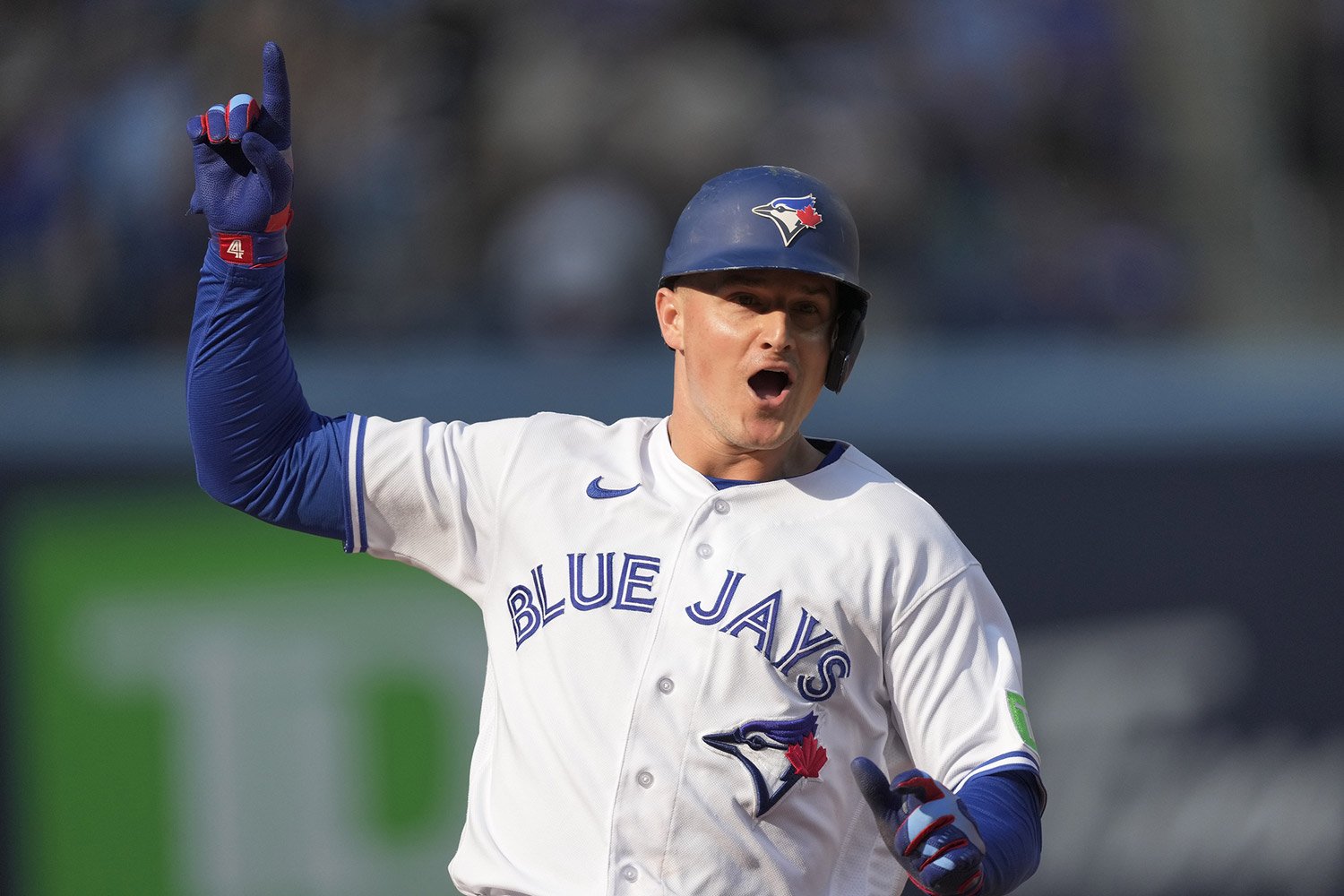 Six years ago, the Brewers traded for Christian Yelich and signed Lorenzo Cain; not in the same month or week, but on the same day. It was a momentous twin assault on the division, and it worked. Let's take one more crack at doing it again. You can read either of the two previous pieces musing on other possibilities, but this could have the most significant long-term impact. Trade for Ty France and Sign Matt Chapman Okay, this is a little crazy. Though, the Brewers landing Yelich and Cain on the same day was right at these crazy levels, so cut me some slack. The biggest needs within the Brewers roster are at the corner infield positions. Andruw Monasterio and Jake Bauers are acceptable options for a team who are still determining their position in the league. If Mark Attanasio and Matt Arnold are still looking to compete, maybe it’s time to put all the chips in the center and push the envelope. Ty France, from the Seattle Mariners, might be their ticket for one of those corner positions. France is coming off a down year, having an OPS+ lower than 100 for the first time since 2019. A 100 OPS+ is considered the average player in baseball; France’s stood at 99 in the 2023 season. T-Mobile Park in Seattle is pitcher-friendly. That could be putting it mildly. In 2023, it had the lowest overall Park Factor and yielded the lowest weighted on-base average (wOBA) on contact of any park in MLB, according to Statcast. France didn’t seem to have a problem with hitting there, though, knocking 48 percent of his home runs at his home park. Imagine what he could do in a hitter's park like American Family Field. The Brewers can occasionally use France as a regular first baseman or slide him to third base. His low strikeout rate (17.6%) and whiff rate (21.9%) are each considerably better than average, and he finds the sweet spot on the bat as consistently as almost anyone in baseball. France will make just under $6.8 million this season and will be under club control for 2025. The Mariners listened to offers for the 2022 All-Star when the team seemed out of the playoff race. If the Mariners are still fielding offers, the organization could fill a hole left behind by Kolton Wong last season. TRADE Brewers receive Ty France for INF Brice Turang and 3B/1B Luke Adams (#21 prospect) First, it was signing Mitch Garver to fill the DH role. Then, it was trading for Luke Raley when the club parted ways with Waukesha native Jarred Kelenic. Now the team saves some more money by adding an infielder who played second base nearly all season last year. Last season, the second baseman for Seattle had a batting average of .205. Along with OPS (.607), home runs (11), and RBI (57), these numbers were the lowest among all positions on the field. But at least they were the lowest in strikeouts. While Brice Turang was a rookie last season, he has gotten experience against MLB pitchers while remaining under a full year of service time. That will mean whatever team has him will have six seasons of club control but will more than likely be deemed a Super Two player. While a .218/.285/.300 slash line doesn’t sound like an improvement at second; Turang has grown, hitting a .256 batting average with a .652 OPS in August. Turang is more of a defensive player, not recording a fielding error until July. While shortstop is his primary position, he has made his tenure at second base work while Willy Adames covers short. If Adames elects to sign with a different team next season, Turang will take over the shortstop position. But what if Turang is no longer here? Andruw Monasterio and Vinny Capra are both on the 40-man roster and are capable of playing shortstop. Not to mention, prospects Eric Brown Jr. and Freddy Zamora are ready to see some time in AAA and could debut this season should the worst-case scenario happen to our starters. As for second base, prospect Oliver Dunn, who the Brewers acquired from the Phillies in November, could see some playing time in his place. If Dunn needs more time, let’s not forget hometown hero Owen Miller can also slide into second base. We remember Owen Miller’s hot bat in May last season, right? While not on the 40-man roster, Tyler Black is also primed to make his debut at some point this season. Black was initially drafted as a second baseman but has been trying to fill the role at any infield position. With his lack of arm strength, he might be better off on the right side of the field. Turang won’t have to be rushed to play second base as Sam Haggerty, Josh Rojas, and newly acquired Luis Urias can all play the position if necessary. Turang has two minor league options left to use so that he won’t be a lock on the starting lineup. Moving on from France for the Mariners allows corner infield prospect Tyler Locklear to play in the big leagues at some point next season. Prospect Luke Adams can fill the slot left behind in the minors by Locklear as a next-man-up mentality. Even so, there are plenty of options on the free agent market that can play first base. They saved $6 million by trading away France to use that money on a player like Rhys Hoskins, Carlos Santana, or CJ Cron. Come to think of it, those guys would look good in a Brewers uniform two, but that’s a different story. The Brewers then can rely on France to take most of the reps at first, while Bauers can step in should injuries occur. Spring Training non-roster invitee Wes Clarke could debut by supplying a young power presence in the lineup if worse comes to worse. Trading away Turang will keep the 40-man roster at 39. The Crew has room to add one more player to the roster. Adding France didn’t take much off the payroll, so the Brewers could try adding a major player. Other than rumors, the Matt Chapman sweepstakes has been quiet. We always hear teams like the Giants and the Yankees in on the Gold Glove third baseman, but something has yet to pick up momentum. With Spring Training a month away, teams should start making offers for the remaining free agents. The Brewers rarely spend money on a free agent. The franchise's highest free agent contract signed was the Cain deal in 2018. While the average salary was around $16 million, the Brewers have spent more per season on a player in the past (see Yasmani Grandal in 2019). Chapman would be the dream signing at third base for the Brewers. While his career .240 career batting average isn’t pretty, his hard-hit percentage (56.4), barrel rate (17.1), and average exit velocity (93.4) suggest Chapman would be able to crush the ball at an alarming rate. Because Chapman was offered a qualifying offer this offseason, signing him will cost the Brewers a draft pick in the upcoming MLB draft. With the qualifying offer worth $20.325 million, teams will probably need to offer an annual salary above that. Assuming the Brewers see Brock Wilkin or Tyler Black as potential future third basemen, the team won’t need Chapman for incredibly long. If Chapman is willing to take a shorter-term deal like a three-year, $72 million deal, the Brewers will have the hot corner set for a reasonable amount of time. If you didn’t think the team was competing before, the additions of Chapman and France say a lot. While replicating anything that happened on January 25, 2018, is likely not to happen again, this would be the team’s best chance to add any player of these guys’ caliber. Anybody can dream, but these moves can still be done if the Brewers are willing to pay. Will the Brewers make any significant moves this month? Are there other players not mentioned in this series you’d like to see the team do? Let us know.
 -
I believe it's a combination of him not having any minor league options, having only two years of club control, and the role he has had on all the teams he's been a part of. Ramirez is listed as an outfielder on the website I use so they are judging him as such. Similar to Yelich, his arm strength isn't that strong. He's more of a contact hitter as well. Prior to his time in Tampa, he was hitting around .270 with little homers to show for it. No matter what site is used, it will never be able to predict the value of the player to the organization.
- 6 replies
-
- 1
-

-
- christian yelich
- lorenzo cain
- (and 2 more)
-
It's not quite one-stop shopping that has served the Brewers best, in the recent past. They've gotten huge value from making multiple, distinct moves, in a short period of time. Let's look at one way they could do so again. Image courtesy of © Scott Taetsch-USA TODAY Sports Yesterday, I wrote about the day (very near this same date on the calendar) back in 2018, when the Brewers permanently changed the direction of their franchise by trading for Christian Yelich and signing Lorenzo Cain within several hours of each other. Then I proposed one avenue by which they could try to repeat that feat. Today, let's tackle another. Trade for Harold Ramirez and Sign Jorge Soler Prior to the arbitration deadline, it was rumored the Rays were willing to shop around their designated hitter Harold Ramirez. Judging by his numbers with the Rays and his ability to play first, that's a choice rooted in penny-pinching. In two seasons with the Rays, Ramirez has a .306 batting average, a .432 slugging percentage and a 121 OPS+. He hasn’t provided a lot of power, only hitting 36 home runs in five seasons, but his 41.6-percent hard hit rate is slightly above the MLB average. His strikeout rate is well below the average, at 17.8 percent. At 28, Ramirez is under club control for two more seasons. The Rays must have made him available to cut some salary. While the two sides haven’t come to an agreement on a salary, both have submitted their figures for an arbitration hearing. Ramirez is set to make either $3.8 million or $4.3 million this season. At that price, the Rays can afford to hold onto their DH. That means the Brewers will have to put up an offer the Rays can’t refuse. Outside of Josh Lowe, the Rays don’t have a reliable left handed hitting outfielder. They already acquired Richie Palacios in a trade with the Cardinals earlier this month, so they are still looking for outfielders. The Brewers who most obviously fit the bill would be either Sal Frelick or Garrett Mitchell. For this trade, losing either of the two will hurt the farm, but remember, the Brewers had to part ways with top prospect Lewis Brinson in the Yelich deal. Ramirez is a step down from a 2017-2018 Yelich, so the package won’t cost as much. Mitchell would make the most sense for both sides. While both outfielders have around the same experience, the Brewers likely value Frelick more. Mitchell has played 47 games and has already used up one of his six years of service time, en route to free agency. His .278/.343/.452 slash line looks promising, even with an injury that took him out for the bulk of the 2023 season. The Crew could throw in pitching prospect Logan Henderson to sweeten the deal. Henderson will more than likely see time in Double A this year, and could make his MLB debut as soon as 2025 if all goes according to plan. After securing their potential first base platoon with Ramirez and Jake Bauers, the team could pivot and sign a regular DH. Look no further than former World Series MVP, Jorge Soler. Coming off his first All-Star season, Soler is looking for his third World Series ring and hoping to get paid in the process. His 36 homers, .250 batting average, and .512 slugging percentage will earn him a nice payday. That's why he opted out of a deal with the Marlins that would have paid him $13 million in 2024. According to MLB Trade Rumors back in November, Soler could be paid in the range of a three-year, $45-million type of deal. Seeing as plenty of teams are interested in the player, there will probably be a bidding war, though it's hard to see the market going much further than those numbers now that we've passed the midpoint of January. If the Brewers want to shore up their designated hitter spot (something they haven’t figured out since the National League adopted the rule), then signing Soler could be the right path. He would lock up that spot for the next few years. The Ramirez and Soler deals only add around $20 million to the payroll, pushing it to roughly $116 million. That's still $10 million less than they spent last year, which gives the Crew wiggle room to add players at the deadline should they desire. With Ramirez and Soler in the fold, the team might deploy a regular lineup of: Christian Yelich - LF William Contreras - C Sal Frelick - RF Jorge Soler - DH Willy Adames - SS Harold Ramirez - 1B Jackson Chourio - CF Brice Turang - 2B Andruw Monasterio - 3B These additions would come at a much lesser cost than the previous pair of moves I proposed, too, leaving more room to supplement the pitching staff and preserving Tyler Black as a candidate to join the lineup midstream. How would you feel about this pair of moves for the Crew? Would it make them sufficiently formidable, offensively? Join the conversation below. We'll discuss one more path to major improvement this weekend. View full article
-
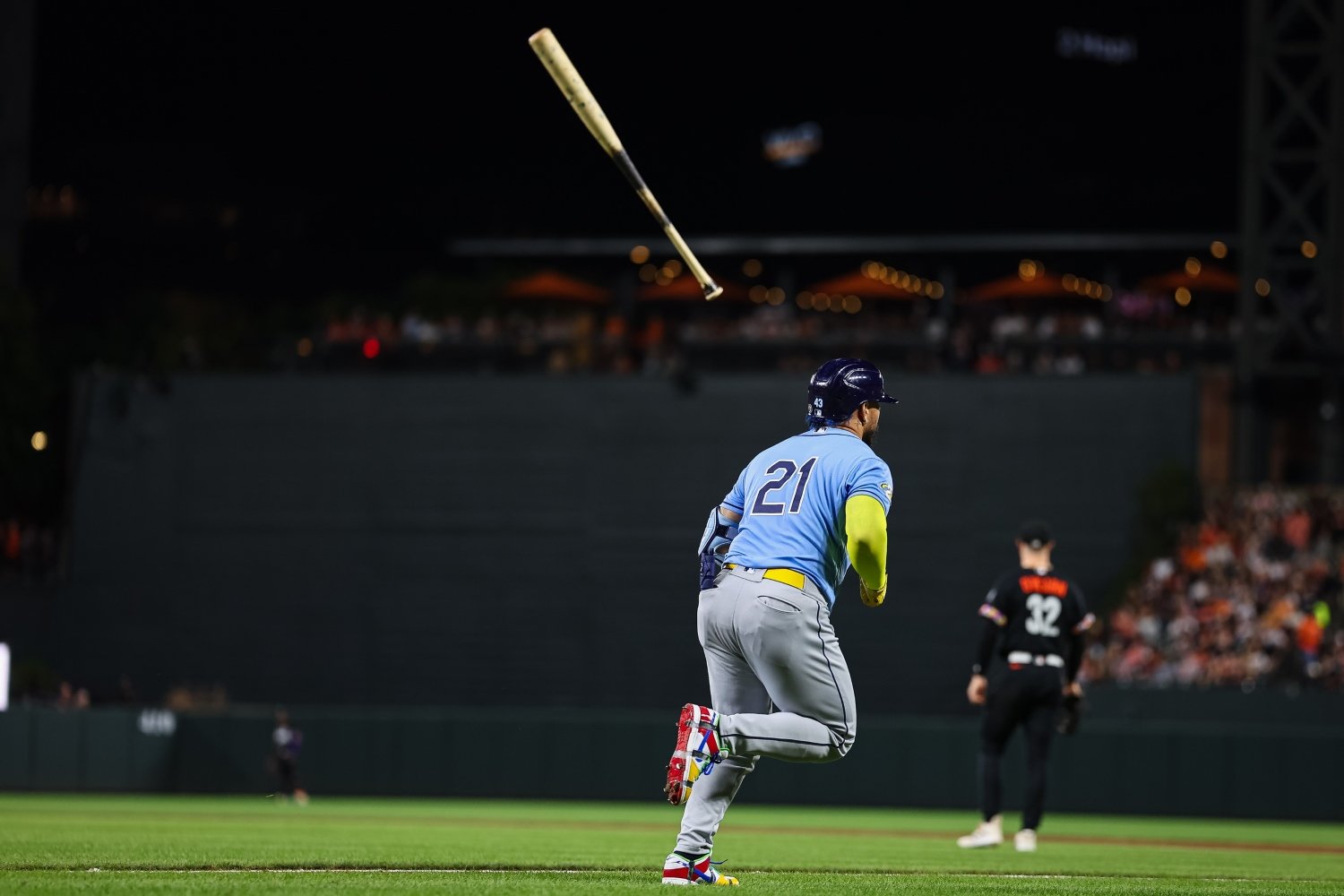 Yesterday, I wrote about the day (very near this same date on the calendar) back in 2018, when the Brewers permanently changed the direction of their franchise by trading for Christian Yelich and signing Lorenzo Cain within several hours of each other. Then I proposed one avenue by which they could try to repeat that feat. Today, let's tackle another. Trade for Harold Ramirez and Sign Jorge Soler Prior to the arbitration deadline, it was rumored the Rays were willing to shop around their designated hitter Harold Ramirez. Judging by his numbers with the Rays and his ability to play first, that's a choice rooted in penny-pinching. In two seasons with the Rays, Ramirez has a .306 batting average, a .432 slugging percentage and a 121 OPS+. He hasn’t provided a lot of power, only hitting 36 home runs in five seasons, but his 41.6-percent hard hit rate is slightly above the MLB average. His strikeout rate is well below the average, at 17.8 percent. At 28, Ramirez is under club control for two more seasons. The Rays must have made him available to cut some salary. While the two sides haven’t come to an agreement on a salary, both have submitted their figures for an arbitration hearing. Ramirez is set to make either $3.8 million or $4.3 million this season. At that price, the Rays can afford to hold onto their DH. That means the Brewers will have to put up an offer the Rays can’t refuse. Outside of Josh Lowe, the Rays don’t have a reliable left handed hitting outfielder. They already acquired Richie Palacios in a trade with the Cardinals earlier this month, so they are still looking for outfielders. The Brewers who most obviously fit the bill would be either Sal Frelick or Garrett Mitchell. For this trade, losing either of the two will hurt the farm, but remember, the Brewers had to part ways with top prospect Lewis Brinson in the Yelich deal. Ramirez is a step down from a 2017-2018 Yelich, so the package won’t cost as much. Mitchell would make the most sense for both sides. While both outfielders have around the same experience, the Brewers likely value Frelick more. Mitchell has played 47 games and has already used up one of his six years of service time, en route to free agency. His .278/.343/.452 slash line looks promising, even with an injury that took him out for the bulk of the 2023 season. The Crew could throw in pitching prospect Logan Henderson to sweeten the deal. Henderson will more than likely see time in Double A this year, and could make his MLB debut as soon as 2025 if all goes according to plan. After securing their potential first base platoon with Ramirez and Jake Bauers, the team could pivot and sign a regular DH. Look no further than former World Series MVP, Jorge Soler. Coming off his first All-Star season, Soler is looking for his third World Series ring and hoping to get paid in the process. His 36 homers, .250 batting average, and .512 slugging percentage will earn him a nice payday. That's why he opted out of a deal with the Marlins that would have paid him $13 million in 2024. According to MLB Trade Rumors back in November, Soler could be paid in the range of a three-year, $45-million type of deal. Seeing as plenty of teams are interested in the player, there will probably be a bidding war, though it's hard to see the market going much further than those numbers now that we've passed the midpoint of January. If the Brewers want to shore up their designated hitter spot (something they haven’t figured out since the National League adopted the rule), then signing Soler could be the right path. He would lock up that spot for the next few years. The Ramirez and Soler deals only add around $20 million to the payroll, pushing it to roughly $116 million. That's still $10 million less than they spent last year, which gives the Crew wiggle room to add players at the deadline should they desire. With Ramirez and Soler in the fold, the team might deploy a regular lineup of: Christian Yelich - LF William Contreras - C Sal Frelick - RF Jorge Soler - DH Willy Adames - SS Harold Ramirez - 1B Jackson Chourio - CF Brice Turang - 2B Andruw Monasterio - 3B These additions would come at a much lesser cost than the previous pair of moves I proposed, too, leaving more room to supplement the pitching staff and preserving Tyler Black as a candidate to join the lineup midstream. How would you feel about this pair of moves for the Crew? Would it make them sufficiently formidable, offensively? Join the conversation below. We'll discuss one more path to major improvement this weekend.
- 6 comments
-
- 1
-
-
- christian yelich
- lorenzo cain
- (and 2 more)
-
Six years ago, the Brewers made two of the biggest acquisitions in team history within hours of each other. As it turned out, they turned the corner from hopeful challengers to NL Central champions that day. Can Matt Arnold repeat that miracle? Image courtesy of © Eric Hartline-USA TODAY Sports Let’s look back at one of the greatest days of Brewers franchise history: January 25, 2018. After a 2017 season wherein they ended one game shy of the second Wild Card spot, the Brewers looked ready to compete with their young crop of players. Travis Shaw, Orlando Arcia, Jonathan Villar and Eric Thames filled out the infield nicely. Manny Piña and Jett Bandy at catcher seemed decent for the immediate future. With Hernán Pérez and Jesús Aguilar set as reserves, it seemed the lineup was all but set--that is, except for the outfield. Besides Ryan Braun, the other outfielders on the roster were all under the age of 25. Domingo Santana had been called up and down for the last few seasons. Keon Broxton was great defensively, though boom-or-bust at bat. Lewis Brinson and Brett Phillips were just getting their feet wet against MLB pitching. That’s pretty much it. Then, on a random Thursday in January, the Brewers changed their franchise forever by adding Christian Yelich from the Marlins and Lorenzo Cain via free agency. Just like that, the Brewers had a roster craving their first World Series appearance since 1982. They didn’t get there, but they were one win away. But for the dual heroics of Chris Taylor and Yasiel Puig, they'd have gotten over the hump. We are coming up on six years since that team-altering day. Surely, there is no way of replicating that feat, right? Well, what if they can? The Brewers' projected 2024 payroll is only around $96.5 million which is $30 million less than what it was at the end of the 2023 season. With the second-best overall farm system (according to the Baseball America Prospect Handbook) and money to spend, they have the potential to do something huge again. This will be a series, fleshing out three different scenarios in which the Brewers could try to recapture the magic of that one day in January 2018. Today, it's this one. Trade for Luis Arráez and Sign Rhys Hoskins With the recent news that the Miami Marlins are listening to offers on anybody on their roster, it could intrigue the Brewers to trade for the player who won batting titles for each of the last two seasons. The two-time All-Star and Silver Slugger Award winner is coming off his first year with Miami, providing a .354/.393/.469 line fueled by a 5.5 percent strike out rate. He would not provide much pop in the lineup, as he only has 24 career home runs over five seasons. However, loanDepot Park is considered a pitcher-friendly ballpark, whereas American Family Field is the opposite. The best example is Yelich himself; he was averaging around 15 home runs a season before coming to Milwaukee. I’m not saying Arraez will start mashing the ball as a Brewer, but we might see some sort of jump in raw power numbers. The Brewers could use Arráez as the leadoff hitter and play him at second base. If they want to see current second baseman Brice Turang step up this season, then Arraez can slide to first, where he has played 619 innings in MLB and rates as an average-plus defender. Arráez, 26, has two years of club control remaining and hasn’t settled on a deal with the Marlins this season. Those parties (or Arráez and his new team) are headed toward an arbitration hearing in February. According to Mark Feinsand of MLB.com, he will make either $10.8 million or $12 million if the two sides don’t come to an agreement. The deal that would make most sense to me is one of the young outfielders (in this case, Joey Wiemer) and a prospect set to make his MLB debut this season, Tyler Black. As the roster stands, Wiemer is one of two outfielders who are right-handed hitters. If Jackson Chourio is going to get the lion's share of the playing time in center field in 2024, Wiemer will have to try to find at-bats on the short side of a platoon with Sal Frelick and as a defensive-minded stopgap for Yelich. Black was drafted as a second baseman back in 2021, but could play third, first and/or the outfield if the team desires. His arm strength isn’t the greatest, and he's still trying to find a role within the organization. He would fill the role that Arráez had in Miami, with four or five extra years of team control. In 39 games with Nashville, Black hit .310/.428/.514, with four homers and eight walks. Yes, it would suck to lose a player of his caliber, but it must hurt a little bit to acquire an All-Star. Given the legitimate questions about Black's power projection, Arráez offers a balance of certainty and upside that Black can't match, despite his promise. However, the Brewers still could use an upgrade at first base. The revolving door could come to a stop in its frame, if the Crew sign former Philadelphia Phillies first baseman, Rhys Hoskins. Hoskins was out for the entirety of the 2023 regular season and the playoffs, due to a torn ACL he suffered in spring training. With Bryce Harper becoming the regular first baseman for the Phillies, Hoskins is now looking for a new club that needs one. Hoskins has hit 148 home runs in six seasons, and has an OPS+ of 125. He would provide pop in a lineup that could use some, with Rowdy Tellez, Mark Canha and Carlos Santana no longer part of the club. Hoskins is projected to make $16-18 million a year in free agency. Maybe the Brewers can offer him a three-year deal worth $52 million, with a club option for the third season. Like the Kolton Wong deal in 2021, the Brewers can defer some money for future seasons, or backload the deal to alleviate the payroll impact for the 2024 season. If the Brewers can pull this off, they could add $25-30 million to the payroll and stay at roughly the same amount as they paid out last season. At the same time, they would add two important pieces to the lineup, without destroying an incredible minor-league system. Would you be in favor of this bold move, aimed at keeping the Brewers atop the NL Central heap in the medium term but potentially applying pressure for the team to bolster its pitching staff when Corbin Burnes departs next winter? Would a lineup with Arráez and Hoskins intermingled with Yelich, William Contreras, Willy Adames, and the team's less certain young players be good enough to get them past any of the National League's titans come October? Jump into the comments to discuss it, and come back tomorrow for another vision of how Arnold could pull this off. View full article
-
Could the Brewers Replicate Their Legendary 2018 Double Move?
Ryan Pollak posted an article in Brewers
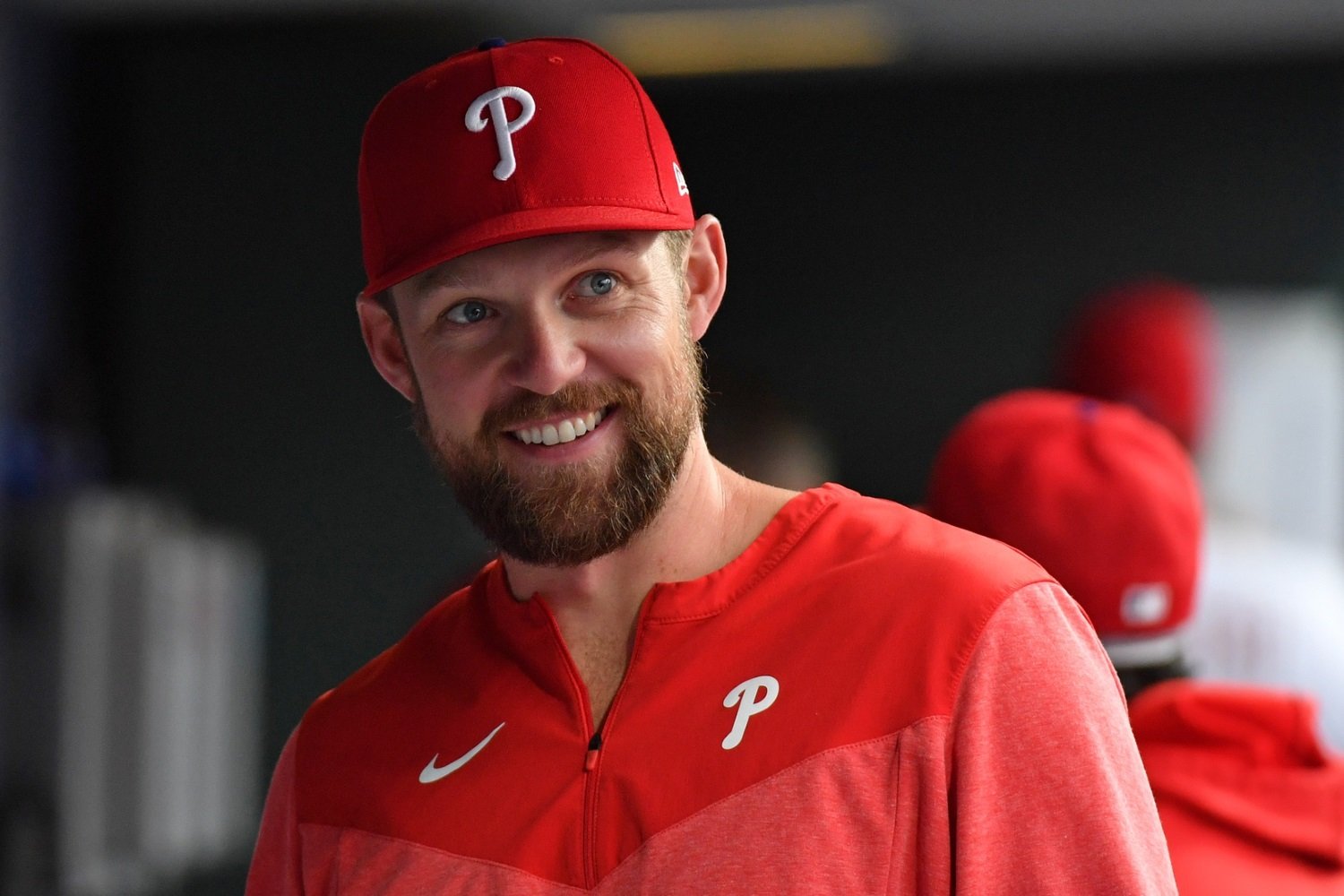 Let’s look back at one of the greatest days of Brewers franchise history: January 25, 2018. After a 2017 season wherein they ended one game shy of the second Wild Card spot, the Brewers looked ready to compete with their young crop of players. Travis Shaw, Orlando Arcia, Jonathan Villar and Eric Thames filled out the infield nicely. Manny Piña and Jett Bandy at catcher seemed decent for the immediate future. With Hernán Pérez and Jesús Aguilar set as reserves, it seemed the lineup was all but set--that is, except for the outfield. Besides Ryan Braun, the other outfielders on the roster were all under the age of 25. Domingo Santana had been called up and down for the last few seasons. Keon Broxton was great defensively, though boom-or-bust at bat. Lewis Brinson and Brett Phillips were just getting their feet wet against MLB pitching. That’s pretty much it. Then, on a random Thursday in January, the Brewers changed their franchise forever by adding Christian Yelich from the Marlins and Lorenzo Cain via free agency. Just like that, the Brewers had a roster craving their first World Series appearance since 1982. They didn’t get there, but they were one win away. But for the dual heroics of Chris Taylor and Yasiel Puig, they'd have gotten over the hump. We are coming up on six years since that team-altering day. Surely, there is no way of replicating that feat, right? Well, what if they can? The Brewers' projected 2024 payroll is only around $96.5 million which is $30 million less than what it was at the end of the 2023 season. With the second-best overall farm system (according to the Baseball America Prospect Handbook) and money to spend, they have the potential to do something huge again. This will be a series, fleshing out three different scenarios in which the Brewers could try to recapture the magic of that one day in January 2018. Today, it's this one. Trade for Luis Arráez and Sign Rhys Hoskins With the recent news that the Miami Marlins are listening to offers on anybody on their roster, it could intrigue the Brewers to trade for the player who won batting titles for each of the last two seasons. The two-time All-Star and Silver Slugger Award winner is coming off his first year with Miami, providing a .354/.393/.469 line fueled by a 5.5 percent strike out rate. He would not provide much pop in the lineup, as he only has 24 career home runs over five seasons. However, loanDepot Park is considered a pitcher-friendly ballpark, whereas American Family Field is the opposite. The best example is Yelich himself; he was averaging around 15 home runs a season before coming to Milwaukee. I’m not saying Arraez will start mashing the ball as a Brewer, but we might see some sort of jump in raw power numbers. The Brewers could use Arráez as the leadoff hitter and play him at second base. If they want to see current second baseman Brice Turang step up this season, then Arraez can slide to first, where he has played 619 innings in MLB and rates as an average-plus defender. Arráez, 26, has two years of club control remaining and hasn’t settled on a deal with the Marlins this season. Those parties (or Arráez and his new team) are headed toward an arbitration hearing in February. According to Mark Feinsand of MLB.com, he will make either $10.8 million or $12 million if the two sides don’t come to an agreement. The deal that would make most sense to me is one of the young outfielders (in this case, Joey Wiemer) and a prospect set to make his MLB debut this season, Tyler Black. As the roster stands, Wiemer is one of two outfielders who are right-handed hitters. If Jackson Chourio is going to get the lion's share of the playing time in center field in 2024, Wiemer will have to try to find at-bats on the short side of a platoon with Sal Frelick and as a defensive-minded stopgap for Yelich. Black was drafted as a second baseman back in 2021, but could play third, first and/or the outfield if the team desires. His arm strength isn’t the greatest, and he's still trying to find a role within the organization. He would fill the role that Arráez had in Miami, with four or five extra years of team control. In 39 games with Nashville, Black hit .310/.428/.514, with four homers and eight walks. Yes, it would suck to lose a player of his caliber, but it must hurt a little bit to acquire an All-Star. Given the legitimate questions about Black's power projection, Arráez offers a balance of certainty and upside that Black can't match, despite his promise. However, the Brewers still could use an upgrade at first base. The revolving door could come to a stop in its frame, if the Crew sign former Philadelphia Phillies first baseman, Rhys Hoskins. Hoskins was out for the entirety of the 2023 regular season and the playoffs, due to a torn ACL he suffered in spring training. With Bryce Harper becoming the regular first baseman for the Phillies, Hoskins is now looking for a new club that needs one. Hoskins has hit 148 home runs in six seasons, and has an OPS+ of 125. He would provide pop in a lineup that could use some, with Rowdy Tellez, Mark Canha and Carlos Santana no longer part of the club. Hoskins is projected to make $16-18 million a year in free agency. Maybe the Brewers can offer him a three-year deal worth $52 million, with a club option for the third season. Like the Kolton Wong deal in 2021, the Brewers can defer some money for future seasons, or backload the deal to alleviate the payroll impact for the 2024 season. If the Brewers can pull this off, they could add $25-30 million to the payroll and stay at roughly the same amount as they paid out last season. At the same time, they would add two important pieces to the lineup, without destroying an incredible minor-league system. Would you be in favor of this bold move, aimed at keeping the Brewers atop the NL Central heap in the medium term but potentially applying pressure for the team to bolster its pitching staff when Corbin Burnes departs next winter? Would a lineup with Arráez and Hoskins intermingled with Yelich, William Contreras, Willy Adames, and the team's less certain young players be good enough to get them past any of the National League's titans come October? Jump into the comments to discuss it, and come back tomorrow for another vision of how Arnold could pull this off.
- 6 comments
-
- 3
-
-
- christian yelich
- lorenzo cain
- (and 2 more)
-
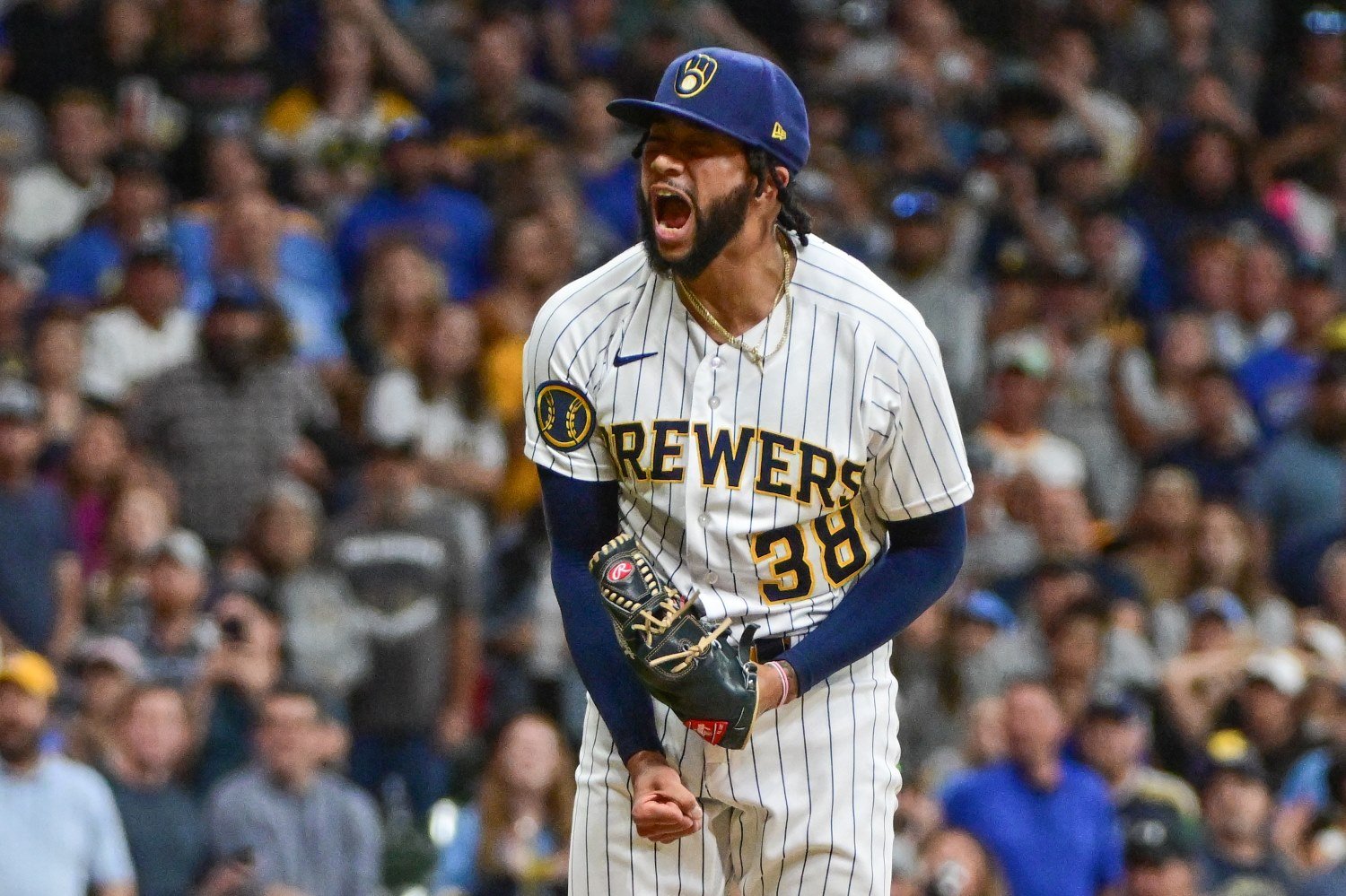 The deadline for exchanging arbitration figures has passed. By 7 P.M. Thursday, the Brewers had to make a decision with six players who were eligible for an arbitration hearing. Would the organization come to an agreement with the player on a salary to avoid a hearing, or would they have to exchange arbitration figures and settle for a deal in February? Turns out, the Brewers were able to sign all players involved to a deal. Each was a one-year deal, with the exception of one. With that in mind, here are the six players who struck a deal Thursday night and what they are expected to make this season. Corbin Burnes: $15,637,500 (est. $15,100,000) The Brewers didn’t want to repeat what happened last year with Burnes. Last year at this time, the Crew elected to go to an arbitration hearing when the parties were separated by $740,000. This year, he signed an interesting deal worth around $15.6 million. He got the third-richest deal signed amongst those who avoided arbitration, behind Juan Soto ($31 million) and Pete Alonso ($20.5 million). At this point, what did the Brewers have to lose. Burnes will more than likely sign elsewhere in free agency following the 2024 season. The team already dented their relationship with the ace with what was discussed during the last arbitration hearing. Whether the Brewers planned to trade Burnes before spring training or at the deadline, it in everyone's best interests for the team to agree with whatever number he comes up with this time around. We've reached the point where it's not worth fighting. Next season, he could be paid more than double what he is making this year. MLB Network has rated Burnes the second-best pitcher in the league. If teams see him that way, then he will be in line for a deal near $300 million in guaranteed money. Willy Adames: $12,250,000 (est. $12,400,000) Like Burnes, Adames is set to be a free agent after the 2024 season. His was one of the first deals the Brewers agreed to Thursday, as it was announced by Robert Murray at around noon. He did sign a deal for less than the projected amount, but is still the 14th-highest-paid shortstop entering the 2024 season. It’s a decent pay raise from his $8.7 million last season, but it was well-deserved. Adames is coming off three straight seasons of 20 or more home runs and is seen as MLB Network’s eighth-best shortstop in baseball. If he replicates his 2021 numbers with the Brewers, he will easily remain among the top 10 highest-paid shortstops in MLB. To give you an idea how much he would get paid, Javier Baez is tied for the nineth-highest-paid with an annual value of $23.3 million. Time and time again, the Brewers have said they are willing to compete this season. Adames is the second-biggest name in trade rumors for the Crew. At this point, selling the star would be seen as a rebuilding strategy. There’s no saying the organization won’t try to extend him before the end of the season, though. As of now, he will continue to be a spark plug in the lineup and the dugout for the 2024 season. Devin Williams: $7,250,000 with 2025 Club Option (est. $6,500,000) There was a point where the Brewers and Williams exchanged arbitration numbers for a hearing in February. According to Brewers beat writer Curt Hogg, the two parties were quite a bit apart on a deal. By the deadline, Williams filed for a $7.3-million contract, whereas the Brewers went for $6.65 million, according to Mark Feinsand of MLB.com After the figures were announced, the two sides came together and made a deal after all, with a club option for the 2025 season and a $250,000 buyout. Williams’s base salary is set at $7 million, and the option the Brewers hold for the second year is worth $10.5 million. There are other bonuses and incentives that can raise the salary for the 2025 season, but more importantly, this locks Williams into a contract for his final years of arbitration eligibility. This gives the team the option to avoid an arbitration hearing for next season at a set salary, rather than doing the same negotiation process that has occurred the last three seasons. So, what made the Brewers come up to Williams's suggested salary? That club option plays a key factor in this deal. Depending on how the closer would’ve performed this season, there is an argument the pitcher could be paid significantly more than $10.5 million. The Crew can afford to throw an extra few hundred thousand dollars at hime for 2024, if it results in saving a million for the following season. It’s a good deal for both sides, as Williams gets paid while the Brewers keep their closer for the next two seasons at an affordable price. Beyond 2025 will be a mystery, but at least they got some cost certainty until then. Joel Payamps: $1,650,000 (est. 1,700,000) For a pitcher who has no minor-league options remaining and three years of club control left, this is a reasonable price for an eighth-inning arm. With a 2.69 ERA and a .216 opponent batting average between the seventh and ninth innings last season, Payamps will be a decent arm out of the pen in late innings. If he continues to thrive in that role, he could receive an even higher pay raise. For now, an increase of more than $900,000 in pay is a good start for a pitcher who has bounced between teams throughout his entire career. Jake Bauers: $1,350,000 (est. $1,300,000) At around lunchtime in the Midwest, Hogg announced that the Brewers had settled for $1.35 million with potential starting first baseman, Bauers. Although more than the projected amount from MLB Trade Rumors, you have to remember Bauers is coming off a season with the highest recorded slugging percentage in his entire career. He is 28 years old, and could still show signs of improvement with a change of scenery to a smaller market. If the coaching staff can find a way to adjust Bauers's swing, he could be a cheaper option at the corner outfield for the next couple of years. Bauers is on this team without any minor-league options remaining. Should he struggle, the team will have to remove him from the 40-man, leaving an opening at first. It is a low risk that can lead to a high reward if done correctly. Even if he is removed from the roster, he could clear waivers and play for the Nashville Sounds for the season. It’s not like they haven't done something like this before. Do you remember Keston Hiura last year? Last season, the Brewers paid Hiura $2.2 million to avoid arbitration. He never saw a single pitch in the major leagues. He was removed from the roster and played with Nashville the whole year. Hiura did show signs of improvement, but was never called back up to see if it would translate to MLB pitchers. For now, the team has their “Rowdy Tellez” for the season. We’ll have to see if it works out for the team in the end. Bryse Wilson $1,000,025 (est. 1,300,000) I kid you not; this is not a typo. Wilson and the Brewers agreed to a deal that looks like it was charged tax on a purchase at the team store. Brewers beat writer Adam McCalvy first announced the deal at around noon Thursday. An unsung hero for the Brewers indeed. For his first year as a regular bullpen arm, he was the most effective middle relief arm for the Crew. A 2.58 ERA and a perfect 6-0 win-loss record looks beautiful on paper for any team. So why is it lower than projected? Perhaps it’s because Wilson had a career season in 2023. This is the first time in his six years that he put up the numbers he did. The Brewers finally found a role he could thrive in. Should he continue to put up these numbers, he will have a steady increase in pay. I believe he can do it; he just has to prove it. Did I mention he has no minor-league options left? Like Bauers, the club will have to send Wilson through waivers and remove him from the 40 man should they need to send him down. This shouldn’t be a problem for Wilson. At only 26, he has found a home in Milwaukee. With all of their arbitration cases settled, the Brewers' current active payroll. according to Spotrac, sits at around $96.5 million. The team can now focus on adding some free agents if they desire. We are about five weeks away from the pitchers and catchers reporting for Spring Training. It’s time to get ready for baseball season. What do you think of the finalized arbitration deals? Were any of the players overpaid? Underpaid? Let us know in the comments.
-
- 1
-
-
- devin williams
- bryse wilson
- (and 3 more)
-
After a busy day of settling arbitration cases, the Brewers have managed to strike enough deals to avoid another hearing in February. How much did each of these players sign for? Image courtesy of © Benny Sieu-USA TODAY Sports The deadline for exchanging arbitration figures has passed. By 7 P.M. Thursday, the Brewers had to make a decision with six players who were eligible for an arbitration hearing. Would the organization come to an agreement with the player on a salary to avoid a hearing, or would they have to exchange arbitration figures and settle for a deal in February? Turns out, the Brewers were able to sign all players involved to a deal. Each was a one-year deal, with the exception of one. With that in mind, here are the six players who struck a deal Thursday night and what they are expected to make this season. Corbin Burnes: $15,637,500 (est. $15,100,000) The Brewers didn’t want to repeat what happened last year with Burnes. Last year at this time, the Crew elected to go to an arbitration hearing when the parties were separated by $740,000. This year, he signed an interesting deal worth around $15.6 million. He got the third-richest deal signed amongst those who avoided arbitration, behind Juan Soto ($31 million) and Pete Alonso ($20.5 million). At this point, what did the Brewers have to lose. Burnes will more than likely sign elsewhere in free agency following the 2024 season. The team already dented their relationship with the ace with what was discussed during the last arbitration hearing. Whether the Brewers planned to trade Burnes before spring training or at the deadline, it in everyone's best interests for the team to agree with whatever number he comes up with this time around. We've reached the point where it's not worth fighting. Next season, he could be paid more than double what he is making this year. MLB Network has rated Burnes the second-best pitcher in the league. If teams see him that way, then he will be in line for a deal near $300 million in guaranteed money. Willy Adames: $12,250,000 (est. $12,400,000) Like Burnes, Adames is set to be a free agent after the 2024 season. His was one of the first deals the Brewers agreed to Thursday, as it was announced by Robert Murray at around noon. He did sign a deal for less than the projected amount, but is still the 14th-highest-paid shortstop entering the 2024 season. It’s a decent pay raise from his $8.7 million last season, but it was well-deserved. Adames is coming off three straight seasons of 20 or more home runs and is seen as MLB Network’s eighth-best shortstop in baseball. If he replicates his 2021 numbers with the Brewers, he will easily remain among the top 10 highest-paid shortstops in MLB. To give you an idea how much he would get paid, Javier Baez is tied for the nineth-highest-paid with an annual value of $23.3 million. Time and time again, the Brewers have said they are willing to compete this season. Adames is the second-biggest name in trade rumors for the Crew. At this point, selling the star would be seen as a rebuilding strategy. There’s no saying the organization won’t try to extend him before the end of the season, though. As of now, he will continue to be a spark plug in the lineup and the dugout for the 2024 season. Devin Williams: $7,250,000 with 2025 Club Option (est. $6,500,000) There was a point where the Brewers and Williams exchanged arbitration numbers for a hearing in February. According to Brewers beat writer Curt Hogg, the two parties were quite a bit apart on a deal. By the deadline, Williams filed for a $7.3-million contract, whereas the Brewers went for $6.65 million, according to Mark Feinsand of MLB.com After the figures were announced, the two sides came together and made a deal after all, with a club option for the 2025 season and a $250,000 buyout. Williams’s base salary is set at $7 million, and the option the Brewers hold for the second year is worth $10.5 million. There are other bonuses and incentives that can raise the salary for the 2025 season, but more importantly, this locks Williams into a contract for his final years of arbitration eligibility. This gives the team the option to avoid an arbitration hearing for next season at a set salary, rather than doing the same negotiation process that has occurred the last three seasons. So, what made the Brewers come up to Williams's suggested salary? That club option plays a key factor in this deal. Depending on how the closer would’ve performed this season, there is an argument the pitcher could be paid significantly more than $10.5 million. The Crew can afford to throw an extra few hundred thousand dollars at hime for 2024, if it results in saving a million for the following season. It’s a good deal for both sides, as Williams gets paid while the Brewers keep their closer for the next two seasons at an affordable price. Beyond 2025 will be a mystery, but at least they got some cost certainty until then. Joel Payamps: $1,650,000 (est. 1,700,000) For a pitcher who has no minor-league options remaining and three years of club control left, this is a reasonable price for an eighth-inning arm. With a 2.69 ERA and a .216 opponent batting average between the seventh and ninth innings last season, Payamps will be a decent arm out of the pen in late innings. If he continues to thrive in that role, he could receive an even higher pay raise. For now, an increase of more than $900,000 in pay is a good start for a pitcher who has bounced between teams throughout his entire career. Jake Bauers: $1,350,000 (est. $1,300,000) At around lunchtime in the Midwest, Hogg announced that the Brewers had settled for $1.35 million with potential starting first baseman, Bauers. Although more than the projected amount from MLB Trade Rumors, you have to remember Bauers is coming off a season with the highest recorded slugging percentage in his entire career. He is 28 years old, and could still show signs of improvement with a change of scenery to a smaller market. If the coaching staff can find a way to adjust Bauers's swing, he could be a cheaper option at the corner outfield for the next couple of years. Bauers is on this team without any minor-league options remaining. Should he struggle, the team will have to remove him from the 40-man, leaving an opening at first. It is a low risk that can lead to a high reward if done correctly. Even if he is removed from the roster, he could clear waivers and play for the Nashville Sounds for the season. It’s not like they haven't done something like this before. Do you remember Keston Hiura last year? Last season, the Brewers paid Hiura $2.2 million to avoid arbitration. He never saw a single pitch in the major leagues. He was removed from the roster and played with Nashville the whole year. Hiura did show signs of improvement, but was never called back up to see if it would translate to MLB pitchers. For now, the team has their “Rowdy Tellez” for the season. We’ll have to see if it works out for the team in the end. Bryse Wilson $1,000,025 (est. 1,300,000) I kid you not; this is not a typo. Wilson and the Brewers agreed to a deal that looks like it was charged tax on a purchase at the team store. Brewers beat writer Adam McCalvy first announced the deal at around noon Thursday. An unsung hero for the Brewers indeed. For his first year as a regular bullpen arm, he was the most effective middle relief arm for the Crew. A 2.58 ERA and a perfect 6-0 win-loss record looks beautiful on paper for any team. So why is it lower than projected? Perhaps it’s because Wilson had a career season in 2023. This is the first time in his six years that he put up the numbers he did. The Brewers finally found a role he could thrive in. Should he continue to put up these numbers, he will have a steady increase in pay. I believe he can do it; he just has to prove it. Did I mention he has no minor-league options left? Like Bauers, the club will have to send Wilson through waivers and remove him from the 40 man should they need to send him down. This shouldn’t be a problem for Wilson. At only 26, he has found a home in Milwaukee. With all of their arbitration cases settled, the Brewers' current active payroll. according to Spotrac, sits at around $96.5 million. The team can now focus on adding some free agents if they desire. We are about five weeks away from the pitchers and catchers reporting for Spring Training. It’s time to get ready for baseball season. What do you think of the finalized arbitration deals? Were any of the players overpaid? Underpaid? Let us know in the comments. View full article
-
By the end of the day Thursday, the Brewers have to sign these players, or else exchange figures with them for an eventual arbitration hearing. Which players bear watching especially closely today? Image courtesy of © Michael McLoone-USA TODAY Sports We’ve come to that point in the offseason at which teams must set their arbitration figures for players who qualify. For those who are unaware, arbitration is a way for players to get a modest, scheduled raise, while still being affordable for the organization with club control. Players are arbitration-eligible after three years of MLB service time. There are ways to get arbitration a year earlier via the Super Two designation, but the majority of players have to accrue the three years. If the player and the team can’t come to an agreement on a contract by a certain deadline, both sides will have to submit a salary figure and will be scheduled to an arbitration hearing at some point prior to Opening Day. If it comes to that, a panel of three arbitrators will make the final decision and choose one of the submitted proposals for the player's salary for the season. This year, the deadline for pre-exchange of figures deals to avoid arbitration comes at noon Central time Thursday. If no deal is struck by then, the sides must submit figures by 7 PM. The most recent example of this was Corbin Burnes last season, when the Brewers won the hearing, locking in a $10.01-million salary for their ace instead of the $10.75-million proposal Burnes requested. This may have backfired, though, as Burnes was so frustrated by what was said about him in the hearing that he vented to the media when he got back to spring camp in Arizona. If the Brewers want to avoid having another arbitration hearing this season, they will have to make a flurry of deals today. There are seven players who are arbitration-eligible this season, but the team already settled on a one-year deal with Hoby Milner. Let’s take a look at the other half-dozen candidates and how much they are projected to make this season (per MLB Trade Rumors), from least to most expensive. Bryse Wilson (3.036 years) $1.3 million Once a fourth-round pick in the 2016 MLB draft, right-handed pitcher Bryse Wilson made his debut with the Atlanta Braves in August 2018. The pitcher was originally stretched out to be a starter for the club, pitching five innings of shutout baseball in his major-league debut. After a few years of struggling in the rotation with the Braves, Wilson was packaged with prospect Rickey DeVito in a trade to acquire Pittsburgh Pirates setup man/closer Richard Rodriguez at the 2021 trade deadline. He made 28 starts for the Pirates with a 4-13 record, striking out less than 6 batters per nine innings. With a career 5.54 ERA and a 1.50 WHIP after the 2022 season, the Pirates designated Wilson for assignment in late December. The Brewers traded for the pitcher in exchange for cash on Jan. 4, 2023. The Brewers never used Wilson as a starter. Instead, he made 53 appearances out of the bullpen. His entire career was turned around, having a 6-0 record with a 2.58 ERA, a 167 ERA+, and a 1.07 WHIP. Barring a trade, Wilson should be seeing plenty of time in the bullpen for the Brewers this season, hoping to repeat his success in 2023. At 26, Wilson is entering his first year of arbitration, expected to make somewhere near $1.3 million. That almost doubles his $732,600 salary from last season, and is decent pay for a middle-relief arm. It wouldn’t surprise me if the Brewers gave him more than projected, as he played a key role for the bullpen. He also doesn’t have any minor-league options left, but he won’t need them if he replicates his last season. His price tag is low enough, too, to make it relatively easy to swallow waiving him if he's unable to recapture last year's magic. Joel Payamps (3.027 years) $1.7 million Payamps seemed like a small addition in the William Contreras trade, but over the course of 2023, he became the setup man for closer Devin Williams. Prior to his 2023 season, Payamps never spent an entire season with a major-league team. Unless you count his four appearances across two seasons with the Arizona Diamondbacks, he has bounced around from team to team since 2021. Payamps was claimed by the Boston Red Sox, then hot-potato'd between Boston and the Toronto Blue Jays a couple of times before settling down in Toronto. After pitching in 22 games with a 2.70 ERA, he was traded to the Kansas City Royals for cash. He spent the remainder of the 2021 season there. In 2022, he spent a good chunk of the season with the Royals before being designated for assignment and claimed by the Oakland Athletics in August. But now we are back to the present day, where the Brewers needed to find an eighth-inning pitcher after trading Josh Hader and installing Williams as the new closer. With a 3.34 ERA and a 1.29 WHIP entering the 2023 season, Payamps didn’t seem like a bad option. He promptly became yet another Brewers pitcher with a career year. His 2.55 ERA, 1.05 WHIP, 27 holds and 9.8 strikeouts per nine innings were all his best. Payamps is set to make a projected $1.7 million in his first year of arbitration. If he continues to be the setup man, his pay (like Williams's) will start to climb at a faster rate. Jake Bauers (3.084 years) $1.7 million One of the biggest weaknesses on the Brewers roster last season was at first base. A .231/.292/.389 team slash line at the position made it clear that a change had to be made to make some sort of improvement. The Brewers decided to add Bauers in a low-level trade with the New York Yankees, and non-tendered Rowdy Tellez. Although he hasn’t played for the Brewers yet, Bauers is entering his first year of arbitration. His numbers don’t exactly jump off a page, but he hasn’t played in American Family Field yet, so anything can happen. Over the last six years, Bauers played in the majors with four different teams. The Yankees tried to change his swing over the 2022 season while he was part of their minor league system. After a hot start in Triple A in 2023, Bauers was added to the 40-man roster on Apr. 29. His success didn’t sustain itself in MLB, as his .202/.279/.413 wasn’t really stellar. However, his slugging percentage was the best he’s had in a stint at the highest level. If the Brewers can get him even halfway from those numbers to the .304/.488/.797 line he put up in Triple A last season, they'll have their replacement at first. He’s out of minor-league options, though, and is set to make $1.7 million or so. It wouldn’t surprise me if he signed for the projected value, or even less, rather than go as far as exchanging figures. Devin Williams (4.056 years) $6.5 million Now we are on to the heavy hitters. The 2020 Rookie of the Year was drafted 54th overall in the 2013 MLB Draft, electing to sign with the team rather than go to college. After going through Tommy John surgery and participating in the 2019 All-Star Futures Game, Williams was called up in August and made his major-league debut. During the shortened 2020 season, he earned Reliever of the Year honors in the NL, with a 0.33 ERA, 0.63 WHIP and 17.7 strikeouts per nine innings. He received votes for both the Cy Young Award and MVP. After a few years as the setup man, Williams took over the closer role when the Brewers traded Hader to the Padres. He had a few bumps in the road toward the end of the 2022 season, but he has not missed a step ever since. Entering the 2024 season, Williams is in the same situation as Hader was in when the Crew traded him. However, Hader’s salary was almost two times more than what Williams is projected to make this year. At $6.5 million, it is decent pay for a closer of his caliber. Once he is a free agent after the 2025 season, he’ll be one of the highest-paid relievers in the league. The Crew will probably strike a deal by the Thursday deadline, but it remains to be seen if they plan to keep the pitcher beyond the 2024 season. Willy Adames (5.105 years): $12.4 million After the Brewers traded Orlando Arcia to the Braves in 2021, they were expecting to ride with what they had in the infield. After a month with a combo of Keston Hiura, Pablo Reyes and Jace Peterson working the infield, though, the team traded for Adames (along with Trevor Richards) in exchange for J.P. Feyereisen and Drew Rasmussen. Adames, who was an international signing in 2012, was one of the three players who were acquired by the Tampa Bay Rays in the David Price trade in 2014. The shortstop was a steady hitter for the Rays, hitting a respectable .254/.320/.420 with 43 home runs in three-plus years with the team. Before he was traded to the Brewers, he was hitting .197/.254/.371 in 2021. Adames had an immediate impact on the team, hitting 20 home runs with an .886 OPS and a 137 OPS+ for the balance of the campaign. In the span of a few months, Adames became a fan favorite, and has earned his role at short. His impact was so big, he even received a few MVP votes. In 2022, Adames led all of shortstops in the National League with 31 home runs. Although his batting average has been declining over the last two seasons, he has been seeing the ball a bit better, increasing his walk rate to 11.1 percent in 2023. Adames is now in his final year of club control and is expected to get roughly $12.4 million through arbitration this season. If the Brewers want to keep morale high, they should come to a deal by noon. If this has to go to an arbitration hearing, there’s a chance it could result in the same outcome as Burnes’s case last season. Speaking of which, we have one last player to talk about. Corbin Burnes (5.049 years): $15.1 million Well, here we are again. Burnes is now in his final year of arbitration and the last year the Brewers can keep him before he goes into free agency. Burnes was another home-grown talent in the Brewers organization. Drafted in the fourth round of the 2016 draft, Burnes made his debut in 2018. He was utilized as a sixth- or seventh-inning pitcher, depending on how available Hader was. He stretched back out as a starter in 2019, but that was when he and the Crew tried a set of adjustments that utterly backfired. His career was sidetracked, but the sides worked together to ensure it wasn't derailed. In 2020, he found his new, cutter-centric arsenal and his groove, with a 4-1 record and a 1.72 ERA in nine starts. Since then, Burnes has been a part of the Cy Young Award conversation every year. He won the award back in 2021. I can go on forever about Burnes's accolades and why he deserves the money that is getting paid to him, but it would all be things that you’ve heard before. He’s expected to make $15.1 million this season. There was only the faintest hope of an extension before last year's hearing. After it, there was none. There is a good chance the sides could go to another one this year. However, coming to an agreement may be the best for both Burnes and the Brewers organization. The team is still listening to trade offers for the burly righty, too, so last year's victory in the hearing (which set the salary for 2023 and creates the platform for 2024) was important, and the salary (or the range set by the exchange of figures) he gets for this season will be, too. Over the last couple of years, fans like me believed the Crew had the potential to keep one of Woodruff, Adames, or Burnes. However, with Woodruff gone and now these two on their final year of arbitration, there is a good chance the team will lose all three. The best person to get a small extension is Adames but we will have to wait and see. By the end of the week the team will still be on a projected $95-100 million payroll. Whether the Brewers are willing to add more is a mystery, but it is expected that all these arbitration-eligible players will play a key role for the Brewers this season. Do you think the Brewers sign all these players by the deadline? Will there be an arbitration hearing for one of them? Let us know. View full article
-
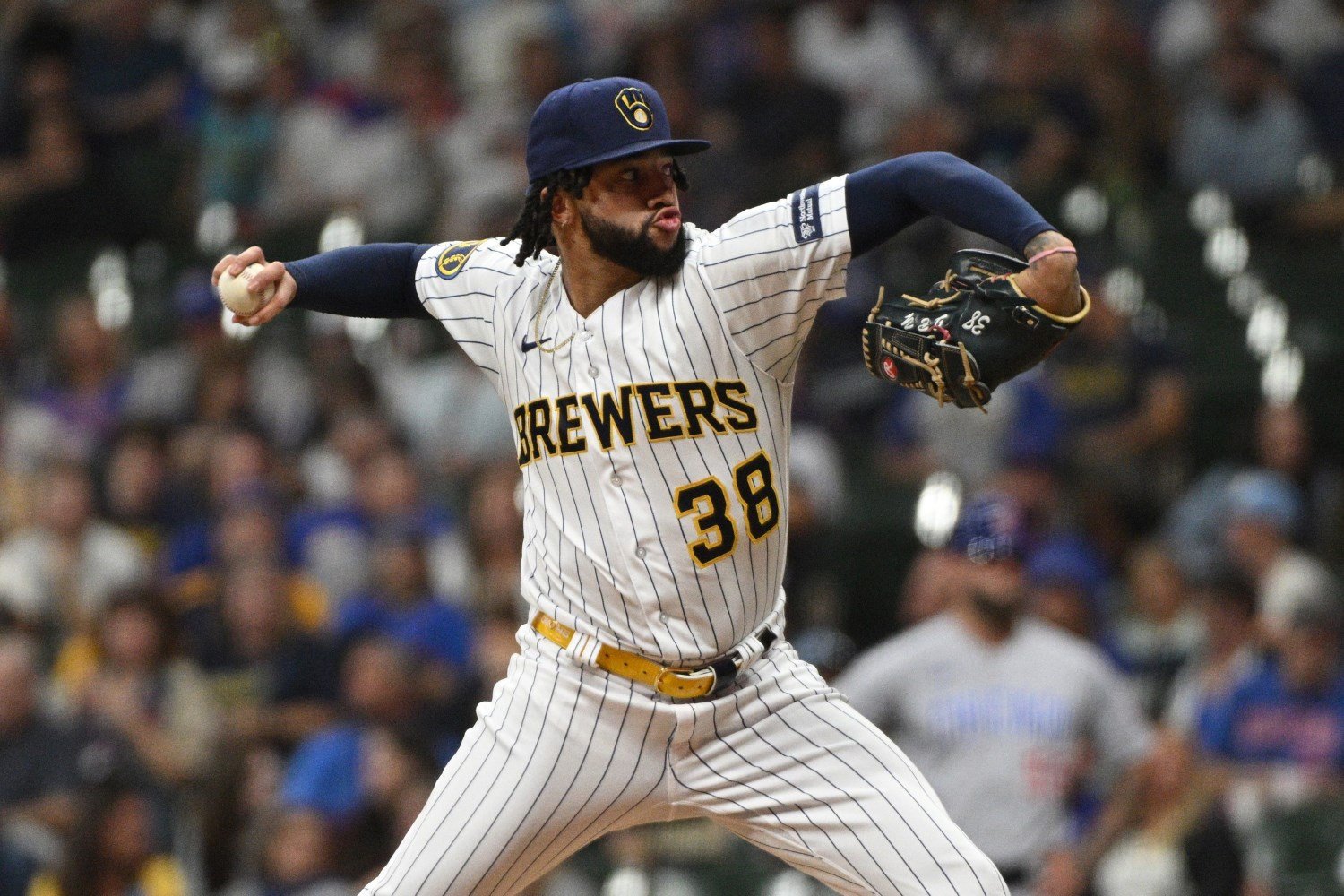 We’ve come to that point in the offseason at which teams must set their arbitration figures for players who qualify. For those who are unaware, arbitration is a way for players to get a modest, scheduled raise, while still being affordable for the organization with club control. Players are arbitration-eligible after three years of MLB service time. There are ways to get arbitration a year earlier via the Super Two designation, but the majority of players have to accrue the three years. If the player and the team can’t come to an agreement on a contract by a certain deadline, both sides will have to submit a salary figure and will be scheduled to an arbitration hearing at some point prior to Opening Day. If it comes to that, a panel of three arbitrators will make the final decision and choose one of the submitted proposals for the player's salary for the season. This year, the deadline for pre-exchange of figures deals to avoid arbitration comes at noon Central time Thursday. If no deal is struck by then, the sides must submit figures by 7 PM. The most recent example of this was Corbin Burnes last season, when the Brewers won the hearing, locking in a $10.01-million salary for their ace instead of the $10.75-million proposal Burnes requested. This may have backfired, though, as Burnes was so frustrated by what was said about him in the hearing that he vented to the media when he got back to spring camp in Arizona. If the Brewers want to avoid having another arbitration hearing this season, they will have to make a flurry of deals today. There are seven players who are arbitration-eligible this season, but the team already settled on a one-year deal with Hoby Milner. Let’s take a look at the other half-dozen candidates and how much they are projected to make this season (per MLB Trade Rumors), from least to most expensive. Bryse Wilson (3.036 years) $1.3 million Once a fourth-round pick in the 2016 MLB draft, right-handed pitcher Bryse Wilson made his debut with the Atlanta Braves in August 2018. The pitcher was originally stretched out to be a starter for the club, pitching five innings of shutout baseball in his major-league debut. After a few years of struggling in the rotation with the Braves, Wilson was packaged with prospect Rickey DeVito in a trade to acquire Pittsburgh Pirates setup man/closer Richard Rodriguez at the 2021 trade deadline. He made 28 starts for the Pirates with a 4-13 record, striking out less than 6 batters per nine innings. With a career 5.54 ERA and a 1.50 WHIP after the 2022 season, the Pirates designated Wilson for assignment in late December. The Brewers traded for the pitcher in exchange for cash on Jan. 4, 2023. The Brewers never used Wilson as a starter. Instead, he made 53 appearances out of the bullpen. His entire career was turned around, having a 6-0 record with a 2.58 ERA, a 167 ERA+, and a 1.07 WHIP. Barring a trade, Wilson should be seeing plenty of time in the bullpen for the Brewers this season, hoping to repeat his success in 2023. At 26, Wilson is entering his first year of arbitration, expected to make somewhere near $1.3 million. That almost doubles his $732,600 salary from last season, and is decent pay for a middle-relief arm. It wouldn’t surprise me if the Brewers gave him more than projected, as he played a key role for the bullpen. He also doesn’t have any minor-league options left, but he won’t need them if he replicates his last season. His price tag is low enough, too, to make it relatively easy to swallow waiving him if he's unable to recapture last year's magic. Joel Payamps (3.027 years) $1.7 million Payamps seemed like a small addition in the William Contreras trade, but over the course of 2023, he became the setup man for closer Devin Williams. Prior to his 2023 season, Payamps never spent an entire season with a major-league team. Unless you count his four appearances across two seasons with the Arizona Diamondbacks, he has bounced around from team to team since 2021. Payamps was claimed by the Boston Red Sox, then hot-potato'd between Boston and the Toronto Blue Jays a couple of times before settling down in Toronto. After pitching in 22 games with a 2.70 ERA, he was traded to the Kansas City Royals for cash. He spent the remainder of the 2021 season there. In 2022, he spent a good chunk of the season with the Royals before being designated for assignment and claimed by the Oakland Athletics in August. But now we are back to the present day, where the Brewers needed to find an eighth-inning pitcher after trading Josh Hader and installing Williams as the new closer. With a 3.34 ERA and a 1.29 WHIP entering the 2023 season, Payamps didn’t seem like a bad option. He promptly became yet another Brewers pitcher with a career year. His 2.55 ERA, 1.05 WHIP, 27 holds and 9.8 strikeouts per nine innings were all his best. Payamps is set to make a projected $1.7 million in his first year of arbitration. If he continues to be the setup man, his pay (like Williams's) will start to climb at a faster rate. Jake Bauers (3.084 years) $1.7 million One of the biggest weaknesses on the Brewers roster last season was at first base. A .231/.292/.389 team slash line at the position made it clear that a change had to be made to make some sort of improvement. The Brewers decided to add Bauers in a low-level trade with the New York Yankees, and non-tendered Rowdy Tellez. Although he hasn’t played for the Brewers yet, Bauers is entering his first year of arbitration. His numbers don’t exactly jump off a page, but he hasn’t played in American Family Field yet, so anything can happen. Over the last six years, Bauers played in the majors with four different teams. The Yankees tried to change his swing over the 2022 season while he was part of their minor league system. After a hot start in Triple A in 2023, Bauers was added to the 40-man roster on Apr. 29. His success didn’t sustain itself in MLB, as his .202/.279/.413 wasn’t really stellar. However, his slugging percentage was the best he’s had in a stint at the highest level. If the Brewers can get him even halfway from those numbers to the .304/.488/.797 line he put up in Triple A last season, they'll have their replacement at first. He’s out of minor-league options, though, and is set to make $1.7 million or so. It wouldn’t surprise me if he signed for the projected value, or even less, rather than go as far as exchanging figures. Devin Williams (4.056 years) $6.5 million Now we are on to the heavy hitters. The 2020 Rookie of the Year was drafted 54th overall in the 2013 MLB Draft, electing to sign with the team rather than go to college. After going through Tommy John surgery and participating in the 2019 All-Star Futures Game, Williams was called up in August and made his major-league debut. During the shortened 2020 season, he earned Reliever of the Year honors in the NL, with a 0.33 ERA, 0.63 WHIP and 17.7 strikeouts per nine innings. He received votes for both the Cy Young Award and MVP. After a few years as the setup man, Williams took over the closer role when the Brewers traded Hader to the Padres. He had a few bumps in the road toward the end of the 2022 season, but he has not missed a step ever since. Entering the 2024 season, Williams is in the same situation as Hader was in when the Crew traded him. However, Hader’s salary was almost two times more than what Williams is projected to make this year. At $6.5 million, it is decent pay for a closer of his caliber. Once he is a free agent after the 2025 season, he’ll be one of the highest-paid relievers in the league. The Crew will probably strike a deal by the Thursday deadline, but it remains to be seen if they plan to keep the pitcher beyond the 2024 season. Willy Adames (5.105 years): $12.4 million After the Brewers traded Orlando Arcia to the Braves in 2021, they were expecting to ride with what they had in the infield. After a month with a combo of Keston Hiura, Pablo Reyes and Jace Peterson working the infield, though, the team traded for Adames (along with Trevor Richards) in exchange for J.P. Feyereisen and Drew Rasmussen. Adames, who was an international signing in 2012, was one of the three players who were acquired by the Tampa Bay Rays in the David Price trade in 2014. The shortstop was a steady hitter for the Rays, hitting a respectable .254/.320/.420 with 43 home runs in three-plus years with the team. Before he was traded to the Brewers, he was hitting .197/.254/.371 in 2021. Adames had an immediate impact on the team, hitting 20 home runs with an .886 OPS and a 137 OPS+ for the balance of the campaign. In the span of a few months, Adames became a fan favorite, and has earned his role at short. His impact was so big, he even received a few MVP votes. In 2022, Adames led all of shortstops in the National League with 31 home runs. Although his batting average has been declining over the last two seasons, he has been seeing the ball a bit better, increasing his walk rate to 11.1 percent in 2023. Adames is now in his final year of club control and is expected to get roughly $12.4 million through arbitration this season. If the Brewers want to keep morale high, they should come to a deal by noon. If this has to go to an arbitration hearing, there’s a chance it could result in the same outcome as Burnes’s case last season. Speaking of which, we have one last player to talk about. Corbin Burnes (5.049 years): $15.1 million Well, here we are again. Burnes is now in his final year of arbitration and the last year the Brewers can keep him before he goes into free agency. Burnes was another home-grown talent in the Brewers organization. Drafted in the fourth round of the 2016 draft, Burnes made his debut in 2018. He was utilized as a sixth- or seventh-inning pitcher, depending on how available Hader was. He stretched back out as a starter in 2019, but that was when he and the Crew tried a set of adjustments that utterly backfired. His career was sidetracked, but the sides worked together to ensure it wasn't derailed. In 2020, he found his new, cutter-centric arsenal and his groove, with a 4-1 record and a 1.72 ERA in nine starts. Since then, Burnes has been a part of the Cy Young Award conversation every year. He won the award back in 2021. I can go on forever about Burnes's accolades and why he deserves the money that is getting paid to him, but it would all be things that you’ve heard before. He’s expected to make $15.1 million this season. There was only the faintest hope of an extension before last year's hearing. After it, there was none. There is a good chance the sides could go to another one this year. However, coming to an agreement may be the best for both Burnes and the Brewers organization. The team is still listening to trade offers for the burly righty, too, so last year's victory in the hearing (which set the salary for 2023 and creates the platform for 2024) was important, and the salary (or the range set by the exchange of figures) he gets for this season will be, too. Over the last couple of years, fans like me believed the Crew had the potential to keep one of Woodruff, Adames, or Burnes. However, with Woodruff gone and now these two on their final year of arbitration, there is a good chance the team will lose all three. The best person to get a small extension is Adames but we will have to wait and see. By the end of the week the team will still be on a projected $95-100 million payroll. Whether the Brewers are willing to add more is a mystery, but it is expected that all these arbitration-eligible players will play a key role for the Brewers this season. Do you think the Brewers sign all these players by the deadline? Will there be an arbitration hearing for one of them? Let us know.
- 3 comments
-
- 1
-
-
- jake bauers
- corbin burnes
- (and 4 more)
-
The Brewers have been late to the party but have made impactful moves over the last decade. Here are some of the best. Image courtesy of © Benny Sieu-USA TODAY Sports Happy New Year, Brewers fans! While most go through with or lose interest in our New Year’s resolutions, deep down, those Brewers fans anxiously wait for their favorite team to do something during the offseason. In the past, the start of the year was when the Brewers started making signings and trades that would impact the organization for at least the following year. Whether those moves work out won’t be known until the end of their deal. However, since 2014, most of these moves have ended quite positively. We aren’t talking about the Neftali Feliz signing of 2017 or the edition of Jedd Gyorko in 2021; we are talking about the ones that paid off wonderfully for the Brewers. Here are Milwaukee’s best late off-season transactions entering the new year. Honorable Mention: January 15, 2021 – Jackson Chourio Joins the Brewers It’s a little early to assume this move will be among the best for the Brewers in January. However, it is off to a fantastic start. After signing him as a shortstop for $1.8 million, Chourio immediately went to work as part of the Dominican Summer League. Within that time, he was hitting a .296/.386/.447 slash line at 17. Seeking better competition in 2022, Chourio skipped the domestic complex league and went straight to Single A to play for the Carolina Mudcats. Now, as a regular center fielder, he ended up in Double-A Biloxi to end the season. He finished with an .880 OPS with 20 home runs and 75 RBI. He continued his success in 2023, hitting .280/.336/.467 with 22 home runs and 89 RBIs before being called to Triple A at the end of the year. Now the second-rated prospect in all of baseball, the Brewers see Chourio as a bright spot in the team’s future. Earlier in the offseason, he signed an eight-year, $82 million extension with two club options to make it a 10-year, $140 million deal. This adds Chourio to the 40-man roster, giving him the chance to be on the Opening Day roster. His MLB career is just starting, so we won’t know how big of a deal it was to add this international talent. But we can look forward to seeing the 20-year-old in a Brewers uniform in the 2024 season. 5: January 19, 2015 - Brewers Trade Yovani Gallardo for Corey Knebel and Prospects Heading into 2015, we knew as a fan base the window for a World Series championship may have come to a close. After a third place, 82-80 record, we knew this wasn’t the same team as the 2011 team that advanced to the NLCS. During the 2015 season, the Brewers traded Carlos Gomez and Mike Fiers to the Astros, Aramis Ramirez was traded to the Pirates, and Ron Roenicke was fired. But the beginning of the end started when the Brewers traded Yovani Gallardo to the Texas Rangers. In this trade, the Brewers received RHP Marcos Diplan, INF Luis Sardinas, and RHP Corey Knebel. While Diplan never saw playing time in Milwaukee and Sardinas played 36 games with the Brewers in 2015, Knebel became a key acquisition in the bullpen. In five seasons with the Brewers, Knebel has a 3.20 ERA with a 1.23 WHIP and 57 saves. Thirty-seven saves were in his All-Star 2017 season when he replaced Neftali Feliz, who was struggling to finish games. He suffered an injury in early 2018, leaving the door open for Jeremy Jeffress and his eventual successor, Josh Hader, to take over as closer. When Knebel returned, he struggled against hitters being sent to Triple A. He returned in September to help the Brewers make it to the NLCS. As for Gallardo, he had a successful 2016 season with a 13-11 record and a 3.42 ERA in 33 starts. After that, he bounced around from team to team, losing his footing from Baltimore to Seattle to Cincinnati, and even signed a minor league deal with the Brewers in 2018. Knebel wasn’t the same after his Tommy John surgery, which led to him being non-tendered after the shortened 2020 season. Even so, it’s fair to say the Brewers won the trade in January 2015, leading to multiple years of success in their bullpen. 4: February 5, 2021 – Brewers sign Kolten Wong After coming off a shortened year where the Brewers were one of two teams to make it to the postseason with a below .500 record, there needed to be change. Eric Sogard and Keston Hiura struggled to get on base and weren’t great defensively. With a few weeks left of spring training, the fans expected Luis Urias to spend most of the time at second. That all changed when the Brewers grabbed Kolten Wong from free agency on a two-year $18 million deal with a $10 million club option for 2023. Wong, a two-time gold glove winner and long-time Cardinal, opted out of his $12.5 option, making him a free agent. He joined the Brewers in early February, making him their starting second baseman. Better late than never. Wong was hitting his stride with the Brewers as he recorded career highs in his first year with them. In 2021, he hit 14 home runs, a .447 slugging percentage, and a 110 OPS+. His batting average was second-best amongst regular starters (.272), only below the recently acquired Willy Adames (.288). Wong did take a step down in 2022, hitting .251/.339/.430 with a 116 OPS+ and belting 15 homers. Despite missing out on the playoffs, Wong was still one of the most consistent hitters within the organization. After trading Renfroe to the Angels and Andrew McCutchen signing with the Pirates, the Brewers grew concerned about finding a regular DH or outfielder. With confidence in Luis Urias and prospect Brice Turang, the Brewers accepted Wong's club option and traded him to the Mariners for Jesse Winker and Abraham Toro. I wonder how those players are doing. Wong was one of the better lead-off hitters in recent history and provided great defense when we needed it most. We are thankful for Wong’s time in Milwaukee as the Brewers struck again with another great late signing. 3: January 14, 2019 – Brewers sign Yasmani Grandal Grandal may have only been here for one season. However, it gave a much-needed jolt to the Brewers' offense and left a stamp on the franchise. I mean, look, he got his bobblehead giveaway in late August of that season, and it was announced before he stepped foot in American Family Field wearing a Brewers uniform. The Brewers needed to fill a hole that Erik Kratz left behind after their magical 2018 postseason run. Manny Pina could fill that role, but in 98 games, nine home runs and an 87 OPS+ don’t scream starting catcher. The Brewers signed the former Dodgers catcher to a one-year, 18.25 million contract with a mutual option for the 2020 season. What he did for the Brewers would be hard to replicate. In his one year with the Brewers, Grandal hit 28 home runs, 77 RBI, and walked 109 times. All of these numbers were the best in his career. His 240 total bases, 119 OPS+ and .246/.380/.468 slash line is nothing to sneeze at either. MLB agreed as Grandal was selected for the 2019 All-Star game, the first time he’s been an All-Star since his 2015 season, and even received MVP votes. Unsurprisingly, Grandal elected free agency and signed a four-year, $73 million deal with the White Sox in 2020. Grandal is the perfect example of a player who took advantage of a prove-it deal. He signed with the Crew for what the qualifying offer was for, then earned a lengthy deal. Wherever he signs this offseason, the Brewers will remember him as one of the best catchers to wear a Brewers Jersey. 2: February 7, 2014 – Brewers sign Francisco Rodriguez In an offseason where the Brewers traded outfielder Nori Aoki for pitcher Will Smith signed Matt Garza to a four-year deal and brought in Lyle Overbay and Mark Reynolds on minor league contracts, the Crew ended their offseason by bringing back former Angels closer Francisco Rodriguez. As most people called him, K-Rod was already familiar with the organization after the Brewers traded for the reliever from the Mets following the 2011 All-Star game. He was utilized as the setup man for then-closer John Axford. Though displeased with his role, he had a 4-0 record with a 1.86 ERA for the Brewers that season. The pitcher stuck around for a few years before being traded to the Orioles for prospect Nicky Delmonico in 2013. Just when you thought he was gone, the Brewers brought K-Rod back on a one-year deal, but this time to be the closer. K-Rod led the league in games finished (66) with 44 saves, a 3.04 ERA, and a 0.98 WHIP. He returned for another season, where he recorded his career-best WHIP (0.86) while collecting 38 saves. Rodriguez also had a 2.21 ERA and a 2.91 FIP. These are the lowest they’ve been since his tenure with the Mets. Both of those seasons, K-Rod represented the Brewers in the All-Star Game; they ended up being the last two appearances in his baseball career. Just like before, the Brewers traded K-Rod. This time, it was to the Detroit Tigers for Javier Betancourt and Manny Pina. It's hard to judge how impactful a move can be in a year when the Brewers were unsure what they were doing. However, K-Rod's efforts made the final decision to rebuild a lot more complicated than it needed to be. 1: January 25, 2018 – Brewers trade for Christian Yelich and sign Lorenzo Cain Were you expecting anything else to be number one on this list? After finishing an 86-76 record and missing the 2017 playoffs by one game, the Brewers looked poised to compete for the playoffs and maybe even a World Series in 2018. They already looked set in the outfield with Ryan Braun, Domingo Santana, Keon Broxton, Brett Phillips, and baseball’s 13th prospect Lewis Brinson on the roster. But that didn’t stop the Crew from solidifying their outfield for the future. What was a quiet offseason got loud when the Brewers traded for Marlins outfielder Christian Yelich in exchange for Brinson, Jordan Yamamoto, Isan Diaz, and Monte Harrison. Suppose you're curious to know where those four prospects went. Brinson last played for the Giants in 2022. The Dodgers released Yamamoto before the 2023 season. Diaz stuck with the Marlins until he got traded to the Tigers and was claimed by the Giants before he was released. As for Harrison, he signed back with the Brewers on a minor league deal before being released back in September. It’s fair to say the Brewers won that blockbuster trade. When the trade went down, I got excited but was disappointed the Brewers would probably be out of the Lorenzo Cain sweepstakes. To my surprise, the Brewers signed Cain to a five-year, $80 million deal just a few hours later. For the Brewers, Yelich won an MVP, back-to-back batting titles, and received a seven-year, $188 million extension. Cain became the leadoff hitter, winning his first gold glove at centerfield in 2019. The rest, as everyone says, is history. It will be tough to replicate any of these transactions for the Crew. But January is genuinely the Brewers' month to watch. Do you know of any other signings the Brewers made to start the new year? Do you think the Brewers will pull off another move this year? Let us know in the comments. View full article
-
The Best 5 Late-Offseason Brewers Acquisitions Of The Past Decade
Ryan Pollak posted an article in Brewers
 Happy New Year, Brewers fans! While most go through with or lose interest in our New Year’s resolutions, deep down, those Brewers fans anxiously wait for their favorite team to do something during the offseason. In the past, the start of the year was when the Brewers started making signings and trades that would impact the organization for at least the following year. Whether those moves work out won’t be known until the end of their deal. However, since 2014, most of these moves have ended quite positively. We aren’t talking about the Neftali Feliz signing of 2017 or the edition of Jedd Gyorko in 2021; we are talking about the ones that paid off wonderfully for the Brewers. Here are Milwaukee’s best late off-season transactions entering the new year. Honorable Mention: January 15, 2021 – Jackson Chourio Joins the Brewers It’s a little early to assume this move will be among the best for the Brewers in January. However, it is off to a fantastic start. After signing him as a shortstop for $1.8 million, Chourio immediately went to work as part of the Dominican Summer League. Within that time, he was hitting a .296/.386/.447 slash line at 17. Seeking better competition in 2022, Chourio skipped the domestic complex league and went straight to Single A to play for the Carolina Mudcats. Now, as a regular center fielder, he ended up in Double-A Biloxi to end the season. He finished with an .880 OPS with 20 home runs and 75 RBI. He continued his success in 2023, hitting .280/.336/.467 with 22 home runs and 89 RBIs before being called to Triple A at the end of the year. Now the second-rated prospect in all of baseball, the Brewers see Chourio as a bright spot in the team’s future. Earlier in the offseason, he signed an eight-year, $82 million extension with two club options to make it a 10-year, $140 million deal. This adds Chourio to the 40-man roster, giving him the chance to be on the Opening Day roster. His MLB career is just starting, so we won’t know how big of a deal it was to add this international talent. But we can look forward to seeing the 20-year-old in a Brewers uniform in the 2024 season. 5: January 19, 2015 - Brewers Trade Yovani Gallardo for Corey Knebel and Prospects Heading into 2015, we knew as a fan base the window for a World Series championship may have come to a close. After a third place, 82-80 record, we knew this wasn’t the same team as the 2011 team that advanced to the NLCS. During the 2015 season, the Brewers traded Carlos Gomez and Mike Fiers to the Astros, Aramis Ramirez was traded to the Pirates, and Ron Roenicke was fired. But the beginning of the end started when the Brewers traded Yovani Gallardo to the Texas Rangers. In this trade, the Brewers received RHP Marcos Diplan, INF Luis Sardinas, and RHP Corey Knebel. While Diplan never saw playing time in Milwaukee and Sardinas played 36 games with the Brewers in 2015, Knebel became a key acquisition in the bullpen. In five seasons with the Brewers, Knebel has a 3.20 ERA with a 1.23 WHIP and 57 saves. Thirty-seven saves were in his All-Star 2017 season when he replaced Neftali Feliz, who was struggling to finish games. He suffered an injury in early 2018, leaving the door open for Jeremy Jeffress and his eventual successor, Josh Hader, to take over as closer. When Knebel returned, he struggled against hitters being sent to Triple A. He returned in September to help the Brewers make it to the NLCS. As for Gallardo, he had a successful 2016 season with a 13-11 record and a 3.42 ERA in 33 starts. After that, he bounced around from team to team, losing his footing from Baltimore to Seattle to Cincinnati, and even signed a minor league deal with the Brewers in 2018. Knebel wasn’t the same after his Tommy John surgery, which led to him being non-tendered after the shortened 2020 season. Even so, it’s fair to say the Brewers won the trade in January 2015, leading to multiple years of success in their bullpen. 4: February 5, 2021 – Brewers sign Kolten Wong After coming off a shortened year where the Brewers were one of two teams to make it to the postseason with a below .500 record, there needed to be change. Eric Sogard and Keston Hiura struggled to get on base and weren’t great defensively. With a few weeks left of spring training, the fans expected Luis Urias to spend most of the time at second. That all changed when the Brewers grabbed Kolten Wong from free agency on a two-year $18 million deal with a $10 million club option for 2023. Wong, a two-time gold glove winner and long-time Cardinal, opted out of his $12.5 option, making him a free agent. He joined the Brewers in early February, making him their starting second baseman. Better late than never. Wong was hitting his stride with the Brewers as he recorded career highs in his first year with them. In 2021, he hit 14 home runs, a .447 slugging percentage, and a 110 OPS+. His batting average was second-best amongst regular starters (.272), only below the recently acquired Willy Adames (.288). Wong did take a step down in 2022, hitting .251/.339/.430 with a 116 OPS+ and belting 15 homers. Despite missing out on the playoffs, Wong was still one of the most consistent hitters within the organization. After trading Renfroe to the Angels and Andrew McCutchen signing with the Pirates, the Brewers grew concerned about finding a regular DH or outfielder. With confidence in Luis Urias and prospect Brice Turang, the Brewers accepted Wong's club option and traded him to the Mariners for Jesse Winker and Abraham Toro. I wonder how those players are doing. Wong was one of the better lead-off hitters in recent history and provided great defense when we needed it most. We are thankful for Wong’s time in Milwaukee as the Brewers struck again with another great late signing. 3: January 14, 2019 – Brewers sign Yasmani Grandal Grandal may have only been here for one season. However, it gave a much-needed jolt to the Brewers' offense and left a stamp on the franchise. I mean, look, he got his bobblehead giveaway in late August of that season, and it was announced before he stepped foot in American Family Field wearing a Brewers uniform. The Brewers needed to fill a hole that Erik Kratz left behind after their magical 2018 postseason run. Manny Pina could fill that role, but in 98 games, nine home runs and an 87 OPS+ don’t scream starting catcher. The Brewers signed the former Dodgers catcher to a one-year, 18.25 million contract with a mutual option for the 2020 season. What he did for the Brewers would be hard to replicate. In his one year with the Brewers, Grandal hit 28 home runs, 77 RBI, and walked 109 times. All of these numbers were the best in his career. His 240 total bases, 119 OPS+ and .246/.380/.468 slash line is nothing to sneeze at either. MLB agreed as Grandal was selected for the 2019 All-Star game, the first time he’s been an All-Star since his 2015 season, and even received MVP votes. Unsurprisingly, Grandal elected free agency and signed a four-year, $73 million deal with the White Sox in 2020. Grandal is the perfect example of a player who took advantage of a prove-it deal. He signed with the Crew for what the qualifying offer was for, then earned a lengthy deal. Wherever he signs this offseason, the Brewers will remember him as one of the best catchers to wear a Brewers Jersey. 2: February 7, 2014 – Brewers sign Francisco Rodriguez In an offseason where the Brewers traded outfielder Nori Aoki for pitcher Will Smith signed Matt Garza to a four-year deal and brought in Lyle Overbay and Mark Reynolds on minor league contracts, the Crew ended their offseason by bringing back former Angels closer Francisco Rodriguez. As most people called him, K-Rod was already familiar with the organization after the Brewers traded for the reliever from the Mets following the 2011 All-Star game. He was utilized as the setup man for then-closer John Axford. Though displeased with his role, he had a 4-0 record with a 1.86 ERA for the Brewers that season. The pitcher stuck around for a few years before being traded to the Orioles for prospect Nicky Delmonico in 2013. Just when you thought he was gone, the Brewers brought K-Rod back on a one-year deal, but this time to be the closer. K-Rod led the league in games finished (66) with 44 saves, a 3.04 ERA, and a 0.98 WHIP. He returned for another season, where he recorded his career-best WHIP (0.86) while collecting 38 saves. Rodriguez also had a 2.21 ERA and a 2.91 FIP. These are the lowest they’ve been since his tenure with the Mets. Both of those seasons, K-Rod represented the Brewers in the All-Star Game; they ended up being the last two appearances in his baseball career. Just like before, the Brewers traded K-Rod. This time, it was to the Detroit Tigers for Javier Betancourt and Manny Pina. It's hard to judge how impactful a move can be in a year when the Brewers were unsure what they were doing. However, K-Rod's efforts made the final decision to rebuild a lot more complicated than it needed to be. 1: January 25, 2018 – Brewers trade for Christian Yelich and sign Lorenzo Cain Were you expecting anything else to be number one on this list? After finishing an 86-76 record and missing the 2017 playoffs by one game, the Brewers looked poised to compete for the playoffs and maybe even a World Series in 2018. They already looked set in the outfield with Ryan Braun, Domingo Santana, Keon Broxton, Brett Phillips, and baseball’s 13th prospect Lewis Brinson on the roster. But that didn’t stop the Crew from solidifying their outfield for the future. What was a quiet offseason got loud when the Brewers traded for Marlins outfielder Christian Yelich in exchange for Brinson, Jordan Yamamoto, Isan Diaz, and Monte Harrison. Suppose you're curious to know where those four prospects went. Brinson last played for the Giants in 2022. The Dodgers released Yamamoto before the 2023 season. Diaz stuck with the Marlins until he got traded to the Tigers and was claimed by the Giants before he was released. As for Harrison, he signed back with the Brewers on a minor league deal before being released back in September. It’s fair to say the Brewers won that blockbuster trade. When the trade went down, I got excited but was disappointed the Brewers would probably be out of the Lorenzo Cain sweepstakes. To my surprise, the Brewers signed Cain to a five-year, $80 million deal just a few hours later. For the Brewers, Yelich won an MVP, back-to-back batting titles, and received a seven-year, $188 million extension. Cain became the leadoff hitter, winning his first gold glove at centerfield in 2019. The rest, as everyone says, is history. It will be tough to replicate any of these transactions for the Crew. But January is genuinely the Brewers' month to watch. Do you know of any other signings the Brewers made to start the new year? Do you think the Brewers will pull off another move this year? Let us know in the comments.
 -
 It looks like the Brewers aren’t done looking for a replacement for Victor Caratini. The Brewers signed catcher Austin Nola to a minor league contract with an invitation to spring training, per Adam McCalvy, Friday afternoon. Nola, entering his age 34 season, was last seen on the San Diego Padres roster trying to recover from getting hit in the face during Spring Training. After noticing some struggles at the plate, Nola was optioned to AAA and continued not to see the ball well. It was then determined the catcher was suffering from an oculomotor dysfunction, meaning issues with eye movement. What made Nola a prime candidate for the Brewers is his hitting ability against lefties. He has hit nine of his 23 career home runs vs. southpaws with a .267/.331/.408 slash line and a 112 tOPS+. It’s a risk to bring him in, but if he hits anywhere close to his career numbers (.249/.326/.370), then it would be a nice backup for William Contreras and a decent replacement for Eric Haase should he get injured or struggle at some point during the season. Adding Nola brings more depth to their catcher room. Perhaps now the Brewers can be a little more patient with top-catching prospect Jeferson Quero, as he hasn’t had any experience in AAA. Given Nola was signed to a minor league deal, he would have to be added to the 40-man roster before playing with the Brewers. With Contreras, Haase, and Quero all on the 40-man already, Nola will likely start in AAA-Nashville to open the season but will have potential getting called up should he start coming to his 2021 form. What do you think of the Nola signing? Let us know in the comments.
 -
The Brewers added 34-year-old catcher Austin Nola early Friday afternoon on a minor league deal. Will we see the veteran play in MLB this season? Image courtesy of © Stan Szeto-USA TODAY Sports It looks like the Brewers aren’t done looking for a replacement for Victor Caratini. The Brewers signed catcher Austin Nola to a minor league contract with an invitation to spring training, per Adam McCalvy, Friday afternoon. Nola, entering his age 34 season, was last seen on the San Diego Padres roster trying to recover from getting hit in the face during Spring Training. After noticing some struggles at the plate, Nola was optioned to AAA and continued not to see the ball well. It was then determined the catcher was suffering from an oculomotor dysfunction, meaning issues with eye movement. What made Nola a prime candidate for the Brewers is his hitting ability against lefties. He has hit nine of his 23 career home runs vs. southpaws with a .267/.331/.408 slash line and a 112 tOPS+. It’s a risk to bring him in, but if he hits anywhere close to his career numbers (.249/.326/.370), then it would be a nice backup for William Contreras and a decent replacement for Eric Haase should he get injured or struggle at some point during the season. Adding Nola brings more depth to their catcher room. Perhaps now the Brewers can be a little more patient with top-catching prospect Jeferson Quero, as he hasn’t had any experience in AAA. Given Nola was signed to a minor league deal, he would have to be added to the 40-man roster before playing with the Brewers. With Contreras, Haase, and Quero all on the 40-man already, Nola will likely start in AAA-Nashville to open the season but will have potential getting called up should he start coming to his 2021 form. What do you think of the Nola signing? Let us know in the comments. View full article
-
What on Earth Are the Brewers Doing This Winter?
Ryan Pollak replied to Jason Wang's topic in Brewer Fanatic Front Page News
Are the moves underwhelming? Sure. But with what they got already, it will still put us in the conversation for the division. Let's see what the young guys can do. Maybe they trump whatever signing they could get on the market. Don't want to compare beer to cheese but the Packers ran with their young guys and look how that's turning out. All these guys are ready to break out, they just need a chance in the spotlight.- 18 replies
-
- 1
-
-
- adrian houser
- tyrone taylor
- (and 1 more)
-
The Brewers have added several players to their roster this winter. However, none of them have been splashes that have obviously shaped the immediate future for the team. What is the vision here, exactly? Image courtesy of © MARK HOFFMAN/MILWAUKEE JOURNAL SENTINEL / USA TODAY NETWORK Ok, now things are starting to get really confusing. What are Matt Arnold and his lieutenants thinking? When we entered this offseason, the Brewers had a lot of questions, starting with who would be the manager. Once Pat Murphy was announced, we all had our assumptions about what the Brewers were going to do. But with every transaction, things get more complicated. They non-tendered both Rowdy Tellez and Brandon Woodruff, rather than issuing them contracts. They brought back Colin Rea and Wade Miley on one-year deals with options for the following season, and they signed top prospect Jackson Chourio to an eight-year, $82-million extension with club options for 2032 and 2033. Seven trades later, the Brewers haven’t brought any real clarity to what the 2024 season is going to look like. With six weeks until catchers and pitchers report to Spring Training, should fans be worried about what the front office is doing? Perhaps there is a light at the end of this tunnel, and the best moves are yet to come. Here’s why fans shouldn’t put too much thought into the winter transactions. They Are Preparing for Every Scenario At first glance, you think the organization is bringing in a bunch of "misfit toys," trying to fix them and make them better than what their stats have shown. But what if these players are meant for impact beyond the 2024 season? The Brewers added infielders Jake Bauers, Vinny Capra and Oliver Dunn. The team also added Taylor Clarke and Bryan Hudson to help round out a bullpen that needs long relief and left handers. What all these players have in common are the multiple minor-league options they can use. All of these guys with little experience have more club control than those that are players to look at for the trade deadline. Clarke has two years left. Bauers has three years left. The remaining additions have five or more years of club control. These moves are low-risk, with the potential for a high reward. If they are not ready now, they have minor-league options to correct themselves for later. As soon as the likes of Corbin Burnes, Willy Adames, and Devin Williams become free agents, they will have new blood ready to take over for them. If they are traded this offseason or at the trade deadline, players will already be on the 40-man to replace them. This would give time for new prospects to adjust to their changing roles, while those who have been here the whole season play meaningful innings for a rebuilding team. They also will be prepared for those who may retire. Miley is 37, Rea is 34, and reliever Hoby Milner is 32. It’ll only be a matter of time before those guys’ careers will be over. So, what about now? How are they competing for the 2024 season? Honestly, the Brewers already have done the minimum to show they are competing. The Holes Are (Technically) Filled Fans are concerned that the additions aren’t flashy enough and aren’t showing a commitment to competitiveness for the 2024 season. However, looking at what they’ve done already, they have covered the necessities to fill the holes that were left behind by the departing players on their roster. Along with Woodruff and Tellez, the Brewers lost Josh Donaldson, Victor Caratini, Carlos Santana, Mark Canha, Andrew Chafin, Jesse Winker, Adrian Houser, and Tyrone Taylor. You could argue the Brewers needed a first baseman, a reliable DH option, a backup catcher, a third baseman and starting pitching. They let Woodruff walk, so let’s bring back Rea, who did such a nice job in his absence last season. Need a backup catcher to replace Caratini? Let’s add Eric Haase, who is under club control beyond 2024 if the team still wants him. We just traded Houser and need rotation arms. Wait a minute, we have Aaron Ashby already. Let’s just add Joe Ross, in case Robert Gasser or Carlos F. Rodriguez aren’t ready for MLB. What about third and first? Well, we have Andruw Monasterio, who did fine last year. Why not add Capra and Dunn to take on the utility role? As for first, what if we can get a first baseman like Tellez and save money in the process? Bauers will do just fine. Then what about DH? The National League has only had the DH for four seasons. The Brewers haven’t really figured out how to use it. But in this case, we have a ton of young outfielders. We can use those prospects in the field and make Yelich the regular DH. The Brewers did what they needed to do to put bodies on the field. At the same time, they added to the depth in the bullpen. Of the 39 players on the 40-roster, 21 are pitchers. You can expect five of them in the rotation and eight in the bullpen, leaving eight of the arms in Triple-A Nashville, ready to be called up when a player is injured or when another is struggling during the season. The Brewers did what they needed to do to fill a roster. Now they can spend money on luxuries that make the team better. With 39 men on the roster, the Brewers can add one more player before they must worry about designating people for assignment. It doesn’t mean the Brewers will be done making moves. There are six weeks to go until the pitchers and catchers must report for spring training. There are a lot of decent players left on the market who can interest the team. If historical patterns hold, then this month is the perfect time for the Brewers to start spending. January is Brewers Month It’s hard to just declare a month for a team to make moves. But historically, the Brewers have made some huge, impactful moves once the ball drops and we all get out the new calendars we got from distant relatives for Christmas. Who can forget that the Brewers signed Lorenzo Cain to a record-breaking free agent deal the same day they traded for Christian Yelich, back in 2018? What about when the Brewers signed Yasmani Grandal to fill the hole at the catcher position in 2019? Why not go back to 2014, when the Brewers signed Matt Garza to a four-year deal? The Brewers have an interesting history with the first month of the year. When you think about it, the 2022-2023 offseason was a strange one for the Brewers. In November, it started with a trade sending Hunter Renfroe to the Angels for pitchers Janson Junk, Elvis Peguero and Adam Seminaris. The same day, the Brewers signed Blake Perkins to a major-league contract. December was very busy for the Brewers. They traded Kolten Wong to Seattle for DH Jesse Winker and Toro. That move set the stage for the wild William Contreras, Joel Payamps and Justin Yeager trade with the Braves and the A’s. Finally, they traded for Guardians infielder Owen Miller in exchange for cash. With these moves prior to the new year, it left us wondering if Miller would be the regular second baseman, whether Winker would bounce back from his career-worst season with Seattle, and what the team would do with these incoming arms. Speculation continued to intensify as the Brewers added Miley and Rea, and made the trade for Bryse Wilson in the month of January. We didn’t know it at the time, but the moves that were made in January turned out to be very impactful. Despite having a career ERA over 5.00, Wilson had a superb season, with a 2.58 ERA, 1.07 WHIP and seven hits allowed per nine innings in 53 appearances. All these stats were his best in his entire career. Rea didn’t exactly have a breakout year, but he was originally brought in on a minor-league deal. He was added to the 40-man roster after Woodruff went on the injured list in April. Rea didn’t exactly put up Woodruff-like numbers, but he was still effective. He ended up with four quality starts, with a 4.55 ERA, a 1.19 WHIP and a career-best .235 opponent batting average. In September alone, he had a 2.22 ERA, a 0.86 WHIP and 9.2 strikeouts per nine. As for Miley, the best seasons of his career came in Milwaukee. He had a career-best WHIP in 2023 (1.14) and the best ERA amongst all Brewers starters with at least 20 starts (3.14). If everyone had been healthy, the Crew would’ve had a four-headed monster in the rotation. The Brewers will now have all three of those players on the roster in 2024. If they put up numbers like the 2023 season, then the team may remain competitive. That’s not to say the December additions weren’t impactful, but the production given from the new year additions made a lot of noise. January has just started, so there is plenty of time to take a dive into the free-agent market or to make another trade. It may be small moves now, but who knows what big things might come of them? It may be already starting as MLB Insider Robert Murray has confirmed the Brewers have had contract discussions with DH/1B Carlos Santana. It’s hard to believe this team is competing, but it looks like Matt Arnold doesn’t want to show his cards. Time will tell what the Brewers are doing with their franchise, but it is way too early to hit that panic button. If you're inclined to do so, though, Jason Wang has you covered elsewhere on the site this morning. What do you make of the organization’s recent transactions? Do you believe there’s more to come for this team? Will the Brewers start buying or selling within the next few months? Let us know how you're feeling in the comments. View full article
-
 Ok, now things are starting to get really confusing. What are Matt Arnold and his lieutenants thinking? When we entered this offseason, the Brewers had a lot of questions, starting with who would be the manager. Once Pat Murphy was announced, we all had our assumptions about what the Brewers were going to do. But with every transaction, things get more complicated. They non-tendered both Rowdy Tellez and Brandon Woodruff, rather than issuing them contracts. They brought back Colin Rea and Wade Miley on one-year deals with options for the following season, and they signed top prospect Jackson Chourio to an eight-year, $82-million extension with club options for 2032 and 2033. Seven trades later, the Brewers haven’t brought any real clarity to what the 2024 season is going to look like. With six weeks until catchers and pitchers report to Spring Training, should fans be worried about what the front office is doing? Perhaps there is a light at the end of this tunnel, and the best moves are yet to come. Here’s why fans shouldn’t put too much thought into the winter transactions. They Are Preparing for Every Scenario At first glance, you think the organization is bringing in a bunch of "misfit toys," trying to fix them and make them better than what their stats have shown. But what if these players are meant for impact beyond the 2024 season? The Brewers added infielders Jake Bauers, Vinny Capra and Oliver Dunn. The team also added Taylor Clarke and Bryan Hudson to help round out a bullpen that needs long relief and left handers. What all these players have in common are the multiple minor-league options they can use. All of these guys with little experience have more club control than those that are players to look at for the trade deadline. Clarke has two years left. Bauers has three years left. The remaining additions have five or more years of club control. These moves are low-risk, with the potential for a high reward. If they are not ready now, they have minor-league options to correct themselves for later. As soon as the likes of Corbin Burnes, Willy Adames, and Devin Williams become free agents, they will have new blood ready to take over for them. If they are traded this offseason or at the trade deadline, players will already be on the 40-man to replace them. This would give time for new prospects to adjust to their changing roles, while those who have been here the whole season play meaningful innings for a rebuilding team. They also will be prepared for those who may retire. Miley is 37, Rea is 34, and reliever Hoby Milner is 32. It’ll only be a matter of time before those guys’ careers will be over. So, what about now? How are they competing for the 2024 season? Honestly, the Brewers already have done the minimum to show they are competing. The Holes Are (Technically) Filled Fans are concerned that the additions aren’t flashy enough and aren’t showing a commitment to competitiveness for the 2024 season. However, looking at what they’ve done already, they have covered the necessities to fill the holes that were left behind by the departing players on their roster. Along with Woodruff and Tellez, the Brewers lost Josh Donaldson, Victor Caratini, Carlos Santana, Mark Canha, Andrew Chafin, Jesse Winker, Adrian Houser, and Tyrone Taylor. You could argue the Brewers needed a first baseman, a reliable DH option, a backup catcher, a third baseman and starting pitching. They let Woodruff walk, so let’s bring back Rea, who did such a nice job in his absence last season. Need a backup catcher to replace Caratini? Let’s add Eric Haase, who is under club control beyond 2024 if the team still wants him. We just traded Houser and need rotation arms. Wait a minute, we have Aaron Ashby already. Let’s just add Joe Ross, in case Robert Gasser or Carlos F. Rodriguez aren’t ready for MLB. What about third and first? Well, we have Andruw Monasterio, who did fine last year. Why not add Capra and Dunn to take on the utility role? As for first, what if we can get a first baseman like Tellez and save money in the process? Bauers will do just fine. Then what about DH? The National League has only had the DH for four seasons. The Brewers haven’t really figured out how to use it. But in this case, we have a ton of young outfielders. We can use those prospects in the field and make Yelich the regular DH. The Brewers did what they needed to do to put bodies on the field. At the same time, they added to the depth in the bullpen. Of the 39 players on the 40-roster, 21 are pitchers. You can expect five of them in the rotation and eight in the bullpen, leaving eight of the arms in Triple-A Nashville, ready to be called up when a player is injured or when another is struggling during the season. The Brewers did what they needed to do to fill a roster. Now they can spend money on luxuries that make the team better. With 39 men on the roster, the Brewers can add one more player before they must worry about designating people for assignment. It doesn’t mean the Brewers will be done making moves. There are six weeks to go until the pitchers and catchers must report for spring training. There are a lot of decent players left on the market who can interest the team. If historical patterns hold, then this month is the perfect time for the Brewers to start spending. January is Brewers Month It’s hard to just declare a month for a team to make moves. But historically, the Brewers have made some huge, impactful moves once the ball drops and we all get out the new calendars we got from distant relatives for Christmas. Who can forget that the Brewers signed Lorenzo Cain to a record-breaking free agent deal the same day they traded for Christian Yelich, back in 2018? What about when the Brewers signed Yasmani Grandal to fill the hole at the catcher position in 2019? Why not go back to 2014, when the Brewers signed Matt Garza to a four-year deal? The Brewers have an interesting history with the first month of the year. When you think about it, the 2022-2023 offseason was a strange one for the Brewers. In November, it started with a trade sending Hunter Renfroe to the Angels for pitchers Janson Junk, Elvis Peguero and Adam Seminaris. The same day, the Brewers signed Blake Perkins to a major-league contract. December was very busy for the Brewers. They traded Kolten Wong to Seattle for DH Jesse Winker and Toro. That move set the stage for the wild William Contreras, Joel Payamps and Justin Yeager trade with the Braves and the A’s. Finally, they traded for Guardians infielder Owen Miller in exchange for cash. With these moves prior to the new year, it left us wondering if Miller would be the regular second baseman, whether Winker would bounce back from his career-worst season with Seattle, and what the team would do with these incoming arms. Speculation continued to intensify as the Brewers added Miley and Rea, and made the trade for Bryse Wilson in the month of January. We didn’t know it at the time, but the moves that were made in January turned out to be very impactful. Despite having a career ERA over 5.00, Wilson had a superb season, with a 2.58 ERA, 1.07 WHIP and seven hits allowed per nine innings in 53 appearances. All these stats were his best in his entire career. Rea didn’t exactly have a breakout year, but he was originally brought in on a minor-league deal. He was added to the 40-man roster after Woodruff went on the injured list in April. Rea didn’t exactly put up Woodruff-like numbers, but he was still effective. He ended up with four quality starts, with a 4.55 ERA, a 1.19 WHIP and a career-best .235 opponent batting average. In September alone, he had a 2.22 ERA, a 0.86 WHIP and 9.2 strikeouts per nine. As for Miley, the best seasons of his career came in Milwaukee. He had a career-best WHIP in 2023 (1.14) and the best ERA amongst all Brewers starters with at least 20 starts (3.14). If everyone had been healthy, the Crew would’ve had a four-headed monster in the rotation. The Brewers will now have all three of those players on the roster in 2024. If they put up numbers like the 2023 season, then the team may remain competitive. That’s not to say the December additions weren’t impactful, but the production given from the new year additions made a lot of noise. January has just started, so there is plenty of time to take a dive into the free-agent market or to make another trade. It may be small moves now, but who knows what big things might come of them? It may be already starting as MLB Insider Robert Murray has confirmed the Brewers have had contract discussions with DH/1B Carlos Santana. It’s hard to believe this team is competing, but it looks like Matt Arnold doesn’t want to show his cards. Time will tell what the Brewers are doing with their franchise, but it is way too early to hit that panic button. If you're inclined to do so, though, Jason Wang has you covered elsewhere on the site this morning. What do you make of the organization’s recent transactions? Do you believe there’s more to come for this team? Will the Brewers start buying or selling within the next few months? Let us know how you're feeling in the comments.
 -
Gleyber Torres has been subject to trade rumors for a couple of years. The Yankees are looking for a starting pitcher. Will the Brewers swoop in and trade for the infielder and prospects for the cost of Corbin Burnes? Image courtesy of © Eric Canha-USA TODAY Sports If the Milwaukee Brewers want to keep their title at the top of the NL Central, the team will have to make some moves and pretty quickly, too. As players start flying off the free agent market, the Brewers have acquired most of their talent from trades. They’ve already added Jake Bauers, Taylor Clarke, and Oliver Dunn in trades this offseason, so why not keep delving into it? While we are still determining what to make of the Brewers' situation with their starting pitcher Corbin Burnes, the most likely outcome will be Burnes walking in free agency after the 2024 season. It may be time to part ways with him to get something back in return. But it doesn’t have to look like a sell rather than a retooling for the future. Gleyber Torres of the New York Yankees might be a piece the team needs to provide a pop in the lineup. Let’s examine why a Burnes for Torres trade might work for both the Brewers and the Yankees. Torres to Milwaukee? Let’s get this out of the way: the Brewers don’t exactly need a middle infielder, nor do they necessarily need another expiring contract on their roster. However, the Crew will need a constant power bat in their lineup. What makes matters worse is that the fan base has been against the idea of trading their second baseman. But according to Jim Bowden of The Athletic, the Yankees have been fielding offers for Torres for the last year and may trade him for a pitcher they want “without hesitation.” A two-time All-Star, Torres has a career .267 batting average, a .789 OPS, and a 115 OPS+. His strikeout percentage was 14.6 percent last year, the lowest in his career. His hitting ability against the starting LHP from last season (.347/.442/.584) suggests Torres can be used in a platoon role with Brice Turang. That doesn’t mean he can’t be a regular DH when facing right-handers. Last season, Torres had 544 plate appearances against RHP, resulting in 17 homers, 53 RBI, and a .273/.340/.432 line. He has remained healthy for most of his career, appearing in 158 games last season. Torres is in his last year of arbitration, expecting around $15 million this season. With Burnes expected to make around the same amount and both he and Torres eligible for a qualifying offer next season, it would be considered a wash on the payroll. The Crew can also look at some remaining arms in free agency should they want to fill the rotation. Michael Lorenzen, Alex Wood, and Brandon Woodruff are all affordable options available. Burnes to New York? The Yankees were in a very competitive AL East division, only the Red Sox ended the 2023 season below .500. New York, however, finished in fourth in the division, 19 games behind the division-winning Baltimore Orioles and seven games behind the third Wild Card spot. That's not to say their pitching was bad. The Yankees had the third-best opponent batting average (.234), the sixth-lowest WHIP (1.24), and were in the top ten in ERA (3.97). However, most of that could result in Gerrit Cole having a Cy Young Award-winning season. Putting all the starting pitchers' numbers together (including the spot starts) minus Cole, you get a 32-46 record, a 5.06 ERA, and a 1.33 WHIP. They may need to invest in the rotation. It was reported the Yankees were in on the star pitcher from overseas, Yoshinobu Yamamoto. They even made a significant offer. In the end, Yamamoto signed with the Dodgers on a 12-year, $325 million deal. If the Yankees want to add a top-of-the-line pitcher, seeking a package for Burnes would improve the rotation for at least one season. As previously mentioned, Burnes is in his final year of arbitration. Since Burnes is a Scott Boras client, he’ll likely wait until the end of the season to get his bag. Because the Yankees are a larger market team, they would have a better chance of resigning him should he be interested in returning. Not only that, if Gleyber Torres is included in the trade, they won’t add much, if anything, to their payroll, leaving the door open to add players on the market. Whether that be more arms for the rotation or a bigger bat to replace Torres, they have the same amount of money they had before. Potential Trade: Corbin Burnes to the Yankees for INF Gleyber Torres, RHP Chase Hampton (#4 prospect, 98th overall), 3B Tyler Hardman (#15 prospect), and RHP Carlos Lagrange (#25 prospect) The value of a particular player can vary between other organizations depending on their contracts and accolades. For this trade, we used Baseball Trade Values to help get a more accurate look at what a Burnes-Torres trade will look like. Burnes probably beats out Torres regarding their values, so it will take a few prospects to entice GM Matt Arnold and the Brewers organization. They might take the bait with MLB Pipeline Top 100 prospect Chase Hampton. Drafted in the sixth round of the 2022 draft, Hampton has already made his AA debut after one full season in professional baseball. In nine starts in High A-Hudson Valley, he had a 2.68 ERA, 14.7 strikeouts per nine, and a 1.00 WHIP in 47 innings. He wasn’t the same in AA but only had half the season to work. According to an article from The Trentonian by Greg Johnson, Hampton has said he has grown confident in his body and has to keep putting in the work. Hampton's fastball is up in the mid-90s and has some movement. He also has a strong slider and a curveball in the upper 70s. He even has a changeup but will need some work. MLB Pipeline suggests he’ll debut in 2025, which is fine. With Robert Gasser, Carlos F Rodriguez, and Jacob Misiorowski all getting ready in Nashville, the Brewers don’t need to rush Hampton through the system. The Yankees could add Carlos Lagrange and Tyler Hardman to make the deal attractive. Baseball Trade Values suggests both, but one can be good enough. Lagrange signed a deal out of the Dominican Republic and is still in rookie ball. However, his fastball has caught a lot of attention. Averaging the high 90s and topping off at 100 MPH, Lagrange is a work in progress with a great arm. He’s only 20 and has a reasonable amount of time to work on his other pitches, but striking out 106 batters in 74 2/3 innings and a .166 opponent batting average over two seasons is a good start. Hardman, once a first baseman for Oklahoma, adjusted to third base in 2023. He doesn’t have a cannon of an arm but has impressed scouts with his defense. Hardman would be the perfect guy if the Brewers want an infielder who can provide some pop with the bat. In 2023, he played the entire season in AA, hitting 26 home runs and had a .891 OPS. He likes to swing for the fences, which has led to strikeouts, especially in longer at-bats, striking out 33.2 percent of the time. Hardman could grow patience over time with his ability to spread the ball. Should the Brewers add him, they might consider using him at third and first base to help get a regular corner infielder for the future. He probably wouldn’t be in Milwaukee until the 2025 season at the earliest. If all goes well, he and Brewer's 2023 first-rounder, Brock Wilken, could be manning the corners for the Brewers within a few years. It may not be the move neither the Brew Crew nor the Bleacher Creatures would exactly want, but it’s a trade both teams can benefit from. This trade keeps both teams competitive for the 2024 season without burning a farm system or destroying a payroll. Whatever lies ahead is still uncertain, but with this trade, the Brewers are getting a head start on a new future. Should the Brewers be interested in Gleyber Torres? Will the Crew move on from Corbin Burnes before Opening Day? What are some other options the team should consider? Let us know in the comments. View full article
-
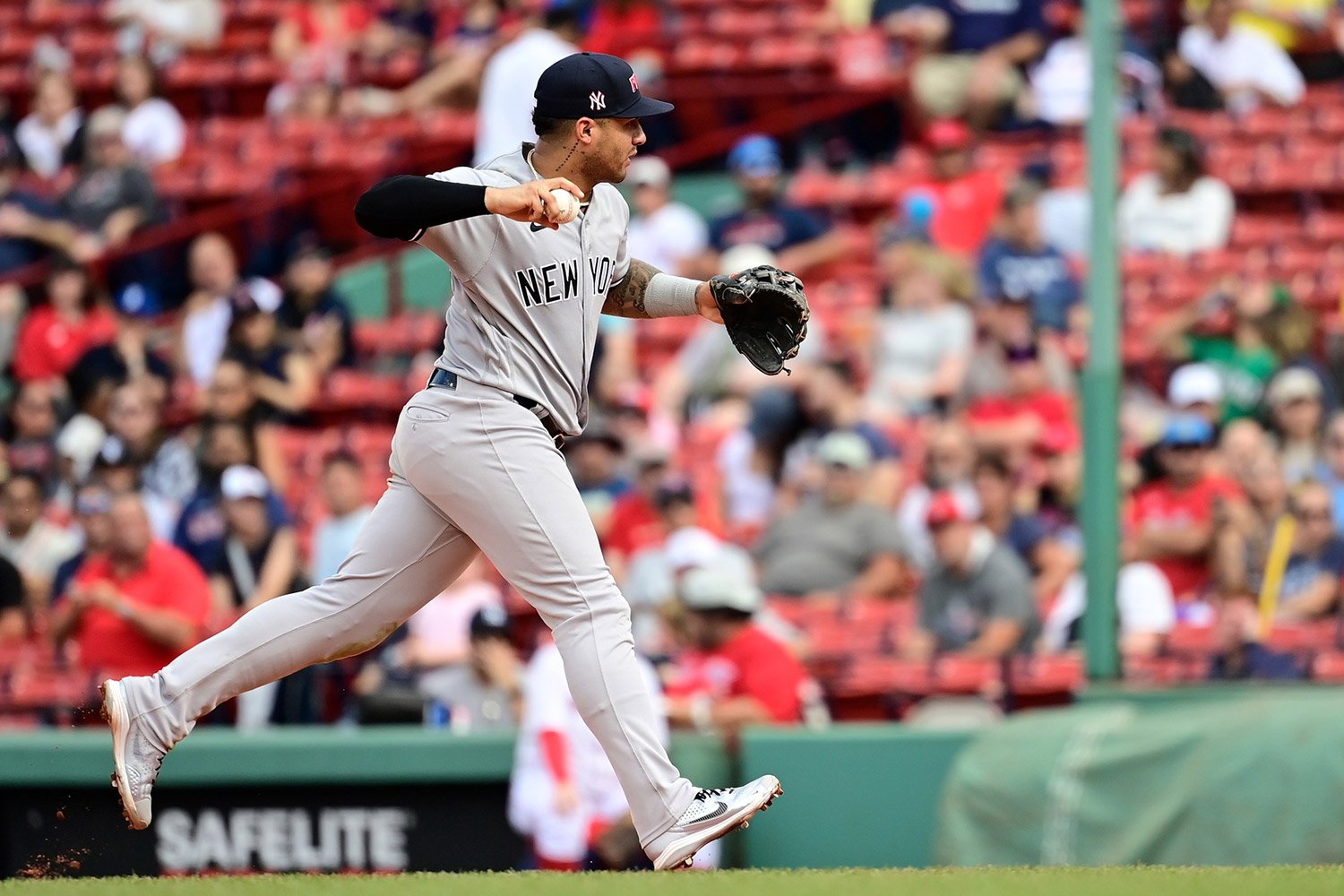 If the Milwaukee Brewers want to keep their title at the top of the NL Central, the team will have to make some moves and pretty quickly, too. As players start flying off the free agent market, the Brewers have acquired most of their talent from trades. They’ve already added Jake Bauers, Taylor Clarke, and Oliver Dunn in trades this offseason, so why not keep delving into it? While we are still determining what to make of the Brewers' situation with their starting pitcher Corbin Burnes, the most likely outcome will be Burnes walking in free agency after the 2024 season. It may be time to part ways with him to get something back in return. But it doesn’t have to look like a sell rather than a retooling for the future. Gleyber Torres of the New York Yankees might be a piece the team needs to provide a pop in the lineup. Let’s examine why a Burnes for Torres trade might work for both the Brewers and the Yankees. Torres to Milwaukee? Let’s get this out of the way: the Brewers don’t exactly need a middle infielder, nor do they necessarily need another expiring contract on their roster. However, the Crew will need a constant power bat in their lineup. What makes matters worse is that the fan base has been against the idea of trading their second baseman. But according to Jim Bowden of The Athletic, the Yankees have been fielding offers for Torres for the last year and may trade him for a pitcher they want “without hesitation.” A two-time All-Star, Torres has a career .267 batting average, a .789 OPS, and a 115 OPS+. His strikeout percentage was 14.6 percent last year, the lowest in his career. His hitting ability against the starting LHP from last season (.347/.442/.584) suggests Torres can be used in a platoon role with Brice Turang. That doesn’t mean he can’t be a regular DH when facing right-handers. Last season, Torres had 544 plate appearances against RHP, resulting in 17 homers, 53 RBI, and a .273/.340/.432 line. He has remained healthy for most of his career, appearing in 158 games last season. Torres is in his last year of arbitration, expecting around $15 million this season. With Burnes expected to make around the same amount and both he and Torres eligible for a qualifying offer next season, it would be considered a wash on the payroll. The Crew can also look at some remaining arms in free agency should they want to fill the rotation. Michael Lorenzen, Alex Wood, and Brandon Woodruff are all affordable options available. Burnes to New York? The Yankees were in a very competitive AL East division, only the Red Sox ended the 2023 season below .500. New York, however, finished in fourth in the division, 19 games behind the division-winning Baltimore Orioles and seven games behind the third Wild Card spot. That's not to say their pitching was bad. The Yankees had the third-best opponent batting average (.234), the sixth-lowest WHIP (1.24), and were in the top ten in ERA (3.97). However, most of that could result in Gerrit Cole having a Cy Young Award-winning season. Putting all the starting pitchers' numbers together (including the spot starts) minus Cole, you get a 32-46 record, a 5.06 ERA, and a 1.33 WHIP. They may need to invest in the rotation. It was reported the Yankees were in on the star pitcher from overseas, Yoshinobu Yamamoto. They even made a significant offer. In the end, Yamamoto signed with the Dodgers on a 12-year, $325 million deal. If the Yankees want to add a top-of-the-line pitcher, seeking a package for Burnes would improve the rotation for at least one season. As previously mentioned, Burnes is in his final year of arbitration. Since Burnes is a Scott Boras client, he’ll likely wait until the end of the season to get his bag. Because the Yankees are a larger market team, they would have a better chance of resigning him should he be interested in returning. Not only that, if Gleyber Torres is included in the trade, they won’t add much, if anything, to their payroll, leaving the door open to add players on the market. Whether that be more arms for the rotation or a bigger bat to replace Torres, they have the same amount of money they had before. Potential Trade: Corbin Burnes to the Yankees for INF Gleyber Torres, RHP Chase Hampton (#4 prospect, 98th overall), 3B Tyler Hardman (#15 prospect), and RHP Carlos Lagrange (#25 prospect) The value of a particular player can vary between other organizations depending on their contracts and accolades. For this trade, we used Baseball Trade Values to help get a more accurate look at what a Burnes-Torres trade will look like. Burnes probably beats out Torres regarding their values, so it will take a few prospects to entice GM Matt Arnold and the Brewers organization. They might take the bait with MLB Pipeline Top 100 prospect Chase Hampton. Drafted in the sixth round of the 2022 draft, Hampton has already made his AA debut after one full season in professional baseball. In nine starts in High A-Hudson Valley, he had a 2.68 ERA, 14.7 strikeouts per nine, and a 1.00 WHIP in 47 innings. He wasn’t the same in AA but only had half the season to work. According to an article from The Trentonian by Greg Johnson, Hampton has said he has grown confident in his body and has to keep putting in the work. Hampton's fastball is up in the mid-90s and has some movement. He also has a strong slider and a curveball in the upper 70s. He even has a changeup but will need some work. MLB Pipeline suggests he’ll debut in 2025, which is fine. With Robert Gasser, Carlos F Rodriguez, and Jacob Misiorowski all getting ready in Nashville, the Brewers don’t need to rush Hampton through the system. The Yankees could add Carlos Lagrange and Tyler Hardman to make the deal attractive. Baseball Trade Values suggests both, but one can be good enough. Lagrange signed a deal out of the Dominican Republic and is still in rookie ball. However, his fastball has caught a lot of attention. Averaging the high 90s and topping off at 100 MPH, Lagrange is a work in progress with a great arm. He’s only 20 and has a reasonable amount of time to work on his other pitches, but striking out 106 batters in 74 2/3 innings and a .166 opponent batting average over two seasons is a good start. Hardman, once a first baseman for Oklahoma, adjusted to third base in 2023. He doesn’t have a cannon of an arm but has impressed scouts with his defense. Hardman would be the perfect guy if the Brewers want an infielder who can provide some pop with the bat. In 2023, he played the entire season in AA, hitting 26 home runs and had a .891 OPS. He likes to swing for the fences, which has led to strikeouts, especially in longer at-bats, striking out 33.2 percent of the time. Hardman could grow patience over time with his ability to spread the ball. Should the Brewers add him, they might consider using him at third and first base to help get a regular corner infielder for the future. He probably wouldn’t be in Milwaukee until the 2025 season at the earliest. If all goes well, he and Brewer's 2023 first-rounder, Brock Wilken, could be manning the corners for the Brewers within a few years. It may not be the move neither the Brew Crew nor the Bleacher Creatures would exactly want, but it’s a trade both teams can benefit from. This trade keeps both teams competitive for the 2024 season without burning a farm system or destroying a payroll. Whatever lies ahead is still uncertain, but with this trade, the Brewers are getting a head start on a new future. Should the Brewers be interested in Gleyber Torres? Will the Crew move on from Corbin Burnes before Opening Day? What are some other options the team should consider? Let us know in the comments.
 -
As much as that makes sense, Yelich has already been ruled out by Matt Arnold as a first base option. It's going to have to be a contract the Brewers live with until it eventually expires
-
Jake Bauers is currently the projected starter at first. The Brewers might need to upgrade the position. Could they look at these guys for help? Image courtesy of © Steven Bisig-USA TODAY Sports Since Prince Fielder left for Detroit in 2012, the Milwaukee Brewers have been going on the carousel of trying to find a long-time first baseman. Mat Gamel, Corey Hart, Juan Francisco, Mark Reynolds, Adam Lind, and Chris Carter had stints at first before the Brewers brought in Eric Thames on a three-year deal. However, the ride never ends as Jesus Aguilar, Justin Smoak, Jedd Gyorko, Daniel Vogelbach, and Rowdy Tellez were all brought in to play the position after the departure of Thames. There were once rumors that former MVP Christian Yelich could get some time initially. However, according to Brewers beat writer Adam McCalvy, GM Matt Arnold debunked this rumor during the Winter Meetings. Entering the 2024 season, the Brewers projected starting first baseman will be Jake Bauers, who was acquired in a trade with the Yankees in mid-November. However, with Bauers out of minor-league options and no potential backup in case of an injury, it's probably necessary to find an upgrade on the free-agent market. We already discussed third-base options last week; now, let’s look into the other side of the diamond. We will rank five options from most likely to least likely. Here are five options the Brewers can sign to bolster first base. Carlos Santana (Most Likely) Santana, not to be mistaken as the musician, has been a part of six teams, including the Brewers, for their 2023 postseason push. During that tenure, he hit a .249/.314/.459 line with 11 home runs in just 52 games. With Santana’s switching hitting abilities, he was well-utilized in Craig Counsell’s lineups. At 37 years old, the first baseman looks to get a payday similar to the $6.5 million salary he earned last year. He won’t be a long-term solution for the Brewers, but will signify the team's intent on competing in the upcoming season. Should they go in this direction, prospects Tyler Black, Wes Clarke, and even Brock Wilken will have another year to develop at first base. According to Seth Cummings, an independent writer for the Nationals, the Nats and the Brewers are interested in Santana. It is believed the Brewers are the favorite to land him. Garrett Cooper (Likely) When you think of reunions within the Brewers organization you probably think of Lyle Overbay or Travis Shaw when they returned for one season. How about we add to that list with former Padre, Garrett Cooper? Believe it or not, Cooper was drafted by the Brewers in the sixth round of the 2013 draft. He was eventually traded to the Yankees for RHP Tyler Webb in 2017. Fast forward to 2022, and he was one of the three Marlins players represented in the All-Star game. The 2023 season, however, didn’t do him any favors as Cooper had a down year, posting a .251/.304/.419 slash line. His strikeout percentage, at 28.9 percent last season, is a little concerning. But he did show some improvement as part of the Padres last year. What makes Cooper an attractive signing for the Brewers is his ability to hit against left-handed pitching. Last year, The Crew struggled facing left-handed starters with a .229 batting average while Cooper posted a .289 average against southpaws. Cooper would be a nice platoon option at first with Bauers. If Bauers doesn’t work out, Cooper can slot in a first as the everyday starter. Though he sees the ball better against left-handers, his career is .269/.343/.424 line is nothing to sneeze at. This is Cooper's first year on the open market, and he will probably see a steady increase from his $4.2 million salary last year. A one-year, $7.5 million with an option for 2025 could reel in the former fish. Brandon Belt (Possible) Sometimes, you just need to upgrade a position. Adding Belt to the roster does exactly that. The former two-time World Series champion is coming off his first 100+ game season since 2019. In 2023, he hit 19 home runs, 43 RBI, and a .858 OPS with an incredible 136 OPS+ with the Blue Jays. Belt brought a veteran presence to a young team trying one last run at the playoffs before veteran players entered free agency. He could do the same thing for the Brewers. Whether Milwaukee slots him in at DH or puts him at first, Belt can charge up the lineup, providing power for a young group of players ready to make a run in the postseason in Milwaukee. The only thing that may keep the Brewers from signing the long-time Giant is Belt himself. According to Keegan Matheson of MLB.com, Belt is considering retirement after 13 seasons. Belt has been experiencing issues with his back the last few years, which resulted in time on the Injured List. He has already done quite a bit for a player in the league for 13 years. Belt has two rings and made an All-Star appearance back in 2016. What more could you ask for in a baseball career? Retirement or not, he’s had a memorable career. The man can still put up numbers that will intrigue any contending team. A Giants reunion isn’t out of the question if he's good to go for one more season. If the Crew wants him enough, they can offer a $5-6 million contract. C.J. Cron (unlikely) Within the last year or so, some of the Brewers' fanbase hoped the Brewers would add former Angels' first baseman C.J. Cron. However, this did not happen, as he signed an extension to stay with the Rockies on a two-year deal in late 2021. Coming off an All-Star 2022 season, Cron had spent a good chunk of the season on the Injured List. While he was with the Rockies, he hit 11 home runs with a .260/.304./.476 line in 56 games. The Los Angeles Angels were interested in the first baseman, trading for him and Randal Grichuk in a last-ditch effort to stay competitive in the AL West. Cron played 15 games with his new team with hitting stats near the Mendoza Line and only one home run. It’s also worth mentioning he hit balls on the ground 43.1 percent of the time. That's not to say he didn’t hit the ball hard, as his hard-hit rate was around 40 percent last year. If he could find any magic from his 2021 season, where he hit 31 home runs, had a .280 batting average, and an OPS of .905, the Brewers would find their first baseman for the next year or two. The two-year, $14.5 million deal he signed a few years ago is the most he takes at his age (34). However, there are quite a few things to be concerned about. Cron's hitting ability outside the hitter-friendly Coors field in 2022 isn’t encouraging. In his 77 games away from home, he hit .214/.279/.340, striking out 27.8 percent of the time. If we dive even deeper into his career stats, American Family Field isn’t friendly to his stats. Of the 30 active baseball stadiums in the league, Cron has a .118 batting average in Milwaukee. That is the second worst out of all stadiums, with only Busch Stadium in St. Louis being lower. That may not indicate much. Take the case of Jesse Winker, who was traded to the Brewers last offseason. In a 2022 article by Adam McCalvy, Winker joined the Brewers as a career .344/.440/.591 hitter in Milwaukee. Now Winker is hitting a career .243/.364/.395 line at American Family Field. Where it would be nice to see a player of Cron’s caliber in a Brewers uniform, there are a lot of signs saying he won’t be successful. But who to say that can’t change? Cron has only played 12 games in Milwaukee, and like many stats lines at the beginning of the season, those can all change in a matter of a couple of months. Cron is still a consistent hitter at first base. If they want a right-handed hitter at first base against left-handed pitching, then platooning him with Bauers might be the best solution and could come cheaply should they be interested. Rhys Hoskins (Highly Unlikely) This would be the best-case scenario for the Brewers, but also the least likely. Entering 2024, he is currently the best free-agent first baseman on the market. He is a career .242/.353/.492 hitter, has a career 125 OPS+, and tons of power. Since his first full season, he has hit more than 25 home runs every season he has played, not including the shortened 2020 season. So what’s the catch? Hoskins is coming off a torn ACL in his left knee that kept him out the entire 2023 season. He’s expected to recover fully, but after a year of rehab, we might not see the same numbers he’s been putting up. It’s the risks that teams interested in him will have to take. With that in mind, Hoskins will probably look for a short-term deal that could help him get a more significant contract in the following offseason. MLB Trade Rumors projected the first basemen to get a two-year deal at $32 million. That is definitely on the high side of things, but not too long ago, in December 2018, the Brewers signed a one-year deal to catcher Yasmani Grandal, who was guaranteed $18.25 million. With the current projected payroll at $94.5 million, the Brewers have the room to bring Hoskins. Signing Hoskins can fill up two roles in the lineup, being the regular DH against right-handers and playing first base against left-handers. With William Contreras, Willy Adames, and Christian Yelich already in the lineup, Hoskins would be the clean-up hitter in a lineup that needs pop at a home run-friendly ballpark. A two-year deal worth $36 million with a mutual option for 2025 should be enough for the 30-year-old. There is a chance the Brewers roll with what they have and give Bauers or even Tyler Black a chance at first. But it wouldn’t hurt to add a player at arguably one of the struggling positions on the field. Do you think the Brewers will add a first baseman? What players would you like to see the Crew add to their team? Let us know in the comments. View full article
-
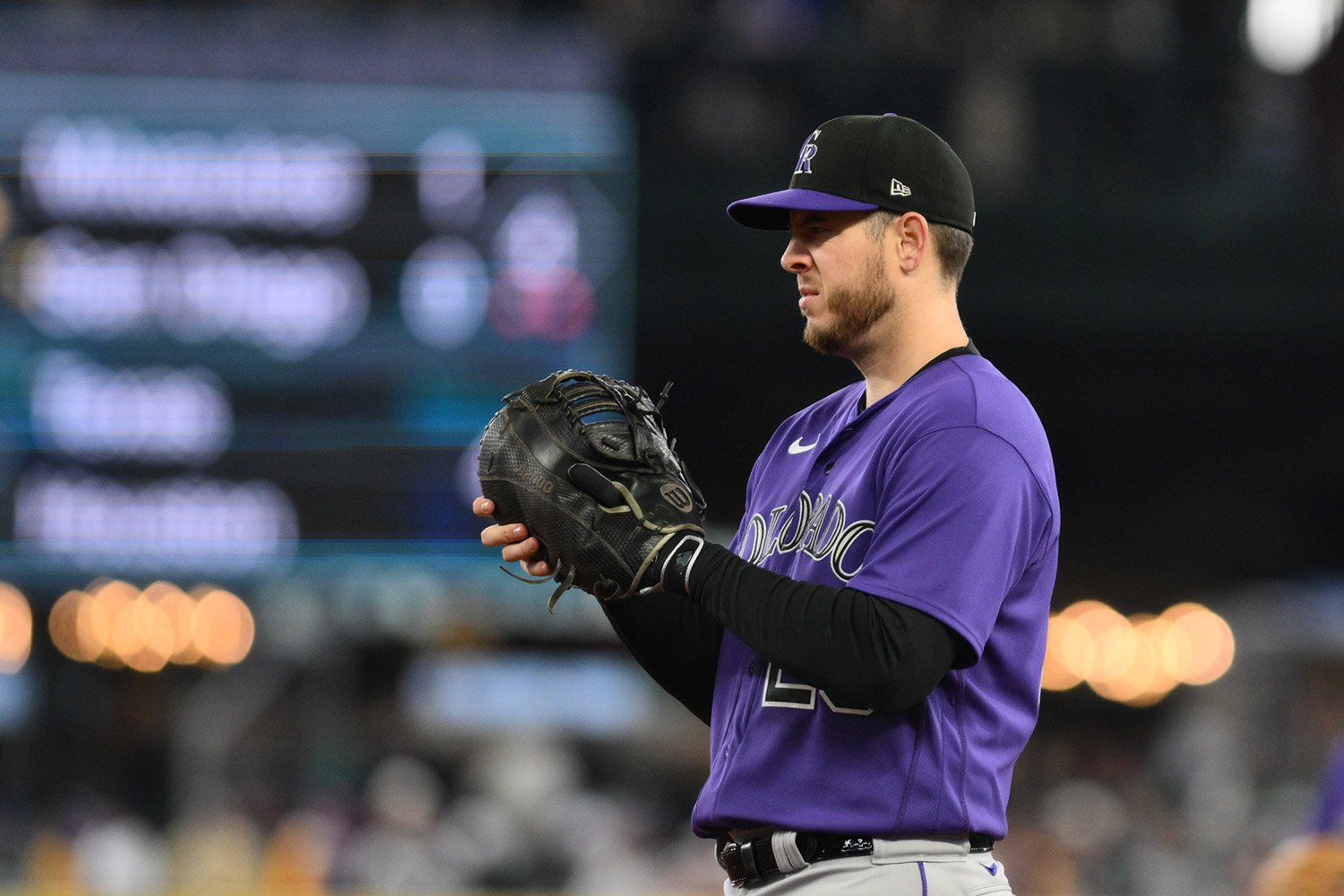 Since Prince Fielder left for Detroit in 2012, the Milwaukee Brewers have been going on the carousel of trying to find a long-time first baseman. Mat Gamel, Corey Hart, Juan Francisco, Mark Reynolds, Adam Lind, and Chris Carter had stints at first before the Brewers brought in Eric Thames on a three-year deal. However, the ride never ends as Jesus Aguilar, Justin Smoak, Jedd Gyorko, Daniel Vogelbach, and Rowdy Tellez were all brought in to play the position after the departure of Thames. There were once rumors that former MVP Christian Yelich could get some time initially. However, according to Brewers beat writer Adam McCalvy, GM Matt Arnold debunked this rumor during the Winter Meetings. Entering the 2024 season, the Brewers projected starting first baseman will be Jake Bauers, who was acquired in a trade with the Yankees in mid-November. However, with Bauers out of minor-league options and no potential backup in case of an injury, it's probably necessary to find an upgrade on the free-agent market. We already discussed third-base options last week; now, let’s look into the other side of the diamond. We will rank five options from most likely to least likely. Here are five options the Brewers can sign to bolster first base. Carlos Santana (Most Likely) Santana, not to be mistaken as the musician, has been a part of six teams, including the Brewers, for their 2023 postseason push. During that tenure, he hit a .249/.314/.459 line with 11 home runs in just 52 games. With Santana’s switching hitting abilities, he was well-utilized in Craig Counsell’s lineups. At 37 years old, the first baseman looks to get a payday similar to the $6.5 million salary he earned last year. He won’t be a long-term solution for the Brewers, but will signify the team's intent on competing in the upcoming season. Should they go in this direction, prospects Tyler Black, Wes Clarke, and even Brock Wilken will have another year to develop at first base. According to Seth Cummings, an independent writer for the Nationals, the Nats and the Brewers are interested in Santana. It is believed the Brewers are the favorite to land him. Garrett Cooper (Likely) When you think of reunions within the Brewers organization you probably think of Lyle Overbay or Travis Shaw when they returned for one season. How about we add to that list with former Padre, Garrett Cooper? Believe it or not, Cooper was drafted by the Brewers in the sixth round of the 2013 draft. He was eventually traded to the Yankees for RHP Tyler Webb in 2017. Fast forward to 2022, and he was one of the three Marlins players represented in the All-Star game. The 2023 season, however, didn’t do him any favors as Cooper had a down year, posting a .251/.304/.419 slash line. His strikeout percentage, at 28.9 percent last season, is a little concerning. But he did show some improvement as part of the Padres last year. What makes Cooper an attractive signing for the Brewers is his ability to hit against left-handed pitching. Last year, The Crew struggled facing left-handed starters with a .229 batting average while Cooper posted a .289 average against southpaws. Cooper would be a nice platoon option at first with Bauers. If Bauers doesn’t work out, Cooper can slot in a first as the everyday starter. Though he sees the ball better against left-handers, his career is .269/.343/.424 line is nothing to sneeze at. This is Cooper's first year on the open market, and he will probably see a steady increase from his $4.2 million salary last year. A one-year, $7.5 million with an option for 2025 could reel in the former fish. Brandon Belt (Possible) Sometimes, you just need to upgrade a position. Adding Belt to the roster does exactly that. The former two-time World Series champion is coming off his first 100+ game season since 2019. In 2023, he hit 19 home runs, 43 RBI, and a .858 OPS with an incredible 136 OPS+ with the Blue Jays. Belt brought a veteran presence to a young team trying one last run at the playoffs before veteran players entered free agency. He could do the same thing for the Brewers. Whether Milwaukee slots him in at DH or puts him at first, Belt can charge up the lineup, providing power for a young group of players ready to make a run in the postseason in Milwaukee. The only thing that may keep the Brewers from signing the long-time Giant is Belt himself. According to Keegan Matheson of MLB.com, Belt is considering retirement after 13 seasons. Belt has been experiencing issues with his back the last few years, which resulted in time on the Injured List. He has already done quite a bit for a player in the league for 13 years. Belt has two rings and made an All-Star appearance back in 2016. What more could you ask for in a baseball career? Retirement or not, he’s had a memorable career. The man can still put up numbers that will intrigue any contending team. A Giants reunion isn’t out of the question if he's good to go for one more season. If the Crew wants him enough, they can offer a $5-6 million contract. C.J. Cron (unlikely) Within the last year or so, some of the Brewers' fanbase hoped the Brewers would add former Angels' first baseman C.J. Cron. However, this did not happen, as he signed an extension to stay with the Rockies on a two-year deal in late 2021. Coming off an All-Star 2022 season, Cron had spent a good chunk of the season on the Injured List. While he was with the Rockies, he hit 11 home runs with a .260/.304./.476 line in 56 games. The Los Angeles Angels were interested in the first baseman, trading for him and Randal Grichuk in a last-ditch effort to stay competitive in the AL West. Cron played 15 games with his new team with hitting stats near the Mendoza Line and only one home run. It’s also worth mentioning he hit balls on the ground 43.1 percent of the time. That's not to say he didn’t hit the ball hard, as his hard-hit rate was around 40 percent last year. If he could find any magic from his 2021 season, where he hit 31 home runs, had a .280 batting average, and an OPS of .905, the Brewers would find their first baseman for the next year or two. The two-year, $14.5 million deal he signed a few years ago is the most he takes at his age (34). However, there are quite a few things to be concerned about. Cron's hitting ability outside the hitter-friendly Coors field in 2022 isn’t encouraging. In his 77 games away from home, he hit .214/.279/.340, striking out 27.8 percent of the time. If we dive even deeper into his career stats, American Family Field isn’t friendly to his stats. Of the 30 active baseball stadiums in the league, Cron has a .118 batting average in Milwaukee. That is the second worst out of all stadiums, with only Busch Stadium in St. Louis being lower. That may not indicate much. Take the case of Jesse Winker, who was traded to the Brewers last offseason. In a 2022 article by Adam McCalvy, Winker joined the Brewers as a career .344/.440/.591 hitter in Milwaukee. Now Winker is hitting a career .243/.364/.395 line at American Family Field. Where it would be nice to see a player of Cron’s caliber in a Brewers uniform, there are a lot of signs saying he won’t be successful. But who to say that can’t change? Cron has only played 12 games in Milwaukee, and like many stats lines at the beginning of the season, those can all change in a matter of a couple of months. Cron is still a consistent hitter at first base. If they want a right-handed hitter at first base against left-handed pitching, then platooning him with Bauers might be the best solution and could come cheaply should they be interested. Rhys Hoskins (Highly Unlikely) This would be the best-case scenario for the Brewers, but also the least likely. Entering 2024, he is currently the best free-agent first baseman on the market. He is a career .242/.353/.492 hitter, has a career 125 OPS+, and tons of power. Since his first full season, he has hit more than 25 home runs every season he has played, not including the shortened 2020 season. So what’s the catch? Hoskins is coming off a torn ACL in his left knee that kept him out the entire 2023 season. He’s expected to recover fully, but after a year of rehab, we might not see the same numbers he’s been putting up. It’s the risks that teams interested in him will have to take. With that in mind, Hoskins will probably look for a short-term deal that could help him get a more significant contract in the following offseason. MLB Trade Rumors projected the first basemen to get a two-year deal at $32 million. That is definitely on the high side of things, but not too long ago, in December 2018, the Brewers signed a one-year deal to catcher Yasmani Grandal, who was guaranteed $18.25 million. With the current projected payroll at $94.5 million, the Brewers have the room to bring Hoskins. Signing Hoskins can fill up two roles in the lineup, being the regular DH against right-handers and playing first base against left-handers. With William Contreras, Willy Adames, and Christian Yelich already in the lineup, Hoskins would be the clean-up hitter in a lineup that needs pop at a home run-friendly ballpark. A two-year deal worth $36 million with a mutual option for 2025 should be enough for the 30-year-old. There is a chance the Brewers roll with what they have and give Bauers or even Tyler Black a chance at first. But it wouldn’t hurt to add a player at arguably one of the struggling positions on the field. Do you think the Brewers will add a first baseman? What players would you like to see the Crew add to their team? Let us know in the comments.
 -
Can Corbin Burnes Be Traded for Jorge Polanco?
Ryan Pollak replied to Ryan Pollak's topic in Brewer Fanatic Front Page News
I did write this piece and have been a Brewers fan my whole life. The idea of this trade was to put an offer out there where the Twins would receive a star pitcher for one year without giving up the entire farm system. In the Brewers shoes, I do believe the deal isn't going to be as big as everyone says. However, I think this deal is a good start for the Twins to offer the Brewers IF they are interested in Burnes. The Brewers have been known to help develop pitchers and would hope they can help these arms develop. Polanco is interesting for the Brewers and could be flipped if they truly don't want him. Realistically though, I think other teams would have something better to offer than the Twins. But I've seen crazier things happen- 27 replies
-
- 2
-
-
- corbin burnes
- jorge polanco
- (and 4 more)
-
Can Corbin Burnes Be Traded for Jorge Polanco?
Ryan Pollak replied to Ryan Pollak's topic in Brewer Fanatic Front Page News
Honestly, all good points. I would personally love the Brewers to get a top 100 prospect in a deal for Burnes. But I don't think the Twins would part ways with Brooks Lee for a guy that will probably be on the team for one year. The Twins are a hard nut to crack when it comes to how this offseason will go. The Brewers, on the otherhand, look like they are trying to compete while also shedding payroll. If this trade goes through, I can see the Brewers flip Polanco for more prospects at some point. The Brewers already have one of the best farm system this season and they are protective of it. We'll see what they do but I believe the Brewers fanbase will be shocked with what the return will be.- 27 replies
-
- 1
-
-
- corbin burnes
- jorge polanco
- (and 4 more)
-
The Brewers are listening to offers for Corbin Burnes. The Twins are listening to offers for Jorge Polanco. Are these two teams the perfect pair for a trade? Image courtesy of © Scott Galvin-USA TODAY Sports With every passing day, the speculation about Corbin Burnes's future in the city of Milwaukee grows. According to Ken Rosenthal of The Athletic, there is a belief the Brewers might keep the starting pitcher to avoid any potential backlash from the Brewers fanbase. However, this could be merely a negotiation tactic, to get teams to start asking about Burnes. The Dodgers could still be in play for Burnes, even with Tyler Glasnow on the roster. The Giants inquired about Burnes earlier this offseason, and many other teams could use a starting pitcher of his caliber. But one intriguing team that could throw their hat in the ring is the Minnesota Twins. It’s hard to believe that a team who has been trying to trim their payroll would bring in a pitcher who is expected to make around $15 million in their final year of arbitration eligibility. But the Twins might have something the Brewers could use: Jorge Polanco. Let’s investigate why a Burnes for Polanco trade makes sense for both organizations. Polanco to Milwaukee? At first glance, adding a player like Polanco to the Brewers does not really make a ton of sense. The Brewers have Brice Turang at second, Willy Adames at shortstop and Andruw Monasterio at third base. With Owen Miller, Vinny Capra, and Oliver Dunn all on the 40-man roster, why would the Crew need another middle infielder? Well, for starters, Polanco is a career .269/.334/.446 hitter. He is also a switch-hitter, making him easy to play without concern about pitching matchups. Polanco has the exact same batting average against southpaws as he does against right-handed pitching. Stats are great and all, but his primary position is second base. What, then, happens with Turang? Nothing. Polanco played 14 games at third base last season. If he is comfortable with playing third on a regular basis, then he can platoon with both Monasterio and Turang, playing third base against right-handed starters and second base against lefty ones. Polanco is set to make $10.5 million this season, and has a club option for 2025 worth $12 million, with a $750,000 buyout. If the Twins were to acquire Burnes, the Brewers would save around $5 million for the 2024 season. The Brewers could use that money toward upgrades at either first base, designated hitter, or even a starting pitcher through free agency. Burnes to Minnesota? The Twins have had an interesting offseason already--in the worst possible way. They've made no significant additions, all but announced a payroll reduction, and are in limbo with regard to their TV deal for 2024 and beyond. There have also been a number of important losses throughout the roster. Kenta Maeda signed a two-year, $24-million deal with the Tigers, Sonny Gray signed a three-year, $75-million pact with the Cardinals, Tyler Mahle signed a two-year, $22-million deal with the Rangers, and Emilio Pagan signed a two-year, $16-million one with the Reds. All these arms have been important parts of the Twins organization over the last few seasons. This doesn’t include the likes of Dallas Keuchel, Donovan Solano, Joey Gallo, and Michael A. Taylor, who are all free agents this offseason. If the Twins were to enter the 2024 season with this roster, the starting rotation would probably include Pablo Lopez, Joe Ryan, Bailey Ober, Louie Varland and Chris Paddack. With the American League Central wide open, the Twins still have the chance to compete. However, the team's owners are expected to cut down on payroll. The payroll currently is projected at $119 million, which is $35 million less than the 2023 payroll. They may look to continue selling players off the roster, with either Polanco or Max Kepler (on whom the Twins exercised a $10-million club option in early November). If the Twins want to improve their depleted starting rotation, they can always sign someone from the free-agent market, but spending money on a veteran starting pitcher can be a lot more expensive than trying to trade for one. If they can find a trade partner, the team could add a starter while giving away one of their more expensive contracts, only adding a small amount to their payroll. Enter Burnes who is on his final year of club control. Adding him to the rotation makes the starting rotation feared in the AL Central and gives Minnesota a shot to make a run for a World Series title. Regardless of where they finish, Burnes could then be offered a qualifying offer before entering free agency, giving the Twins a compensatory pick in the 2025 MLB draft. It would take more than Polanco to do it, but if the organization is willing to keep a lower payroll while still competing, then making a move for the former Cy Young Award-winning starter could help. Predicted Trade: Twins get RHP Corbin Burnes and LHP Ethan Small for INF Jorge Polanco, RHP David Festa (#9 prospect), RHP Simeon Woods Richardson (#16 prospect), and RHP Zebby Matthews (#24 prospect) It’s hard to predict what a potential trade could look like. Baseball Trade Values has some systematic, patterned errors in its value estimates. Twitter opinions vary as widely as ever. Much of the Brewers fanbase thought young Dodgers pitcher Ryan Pepiot was functionally untouchable for the Dodgers. Yet, the Dodgers traded him to the Rays in the Tyler Glasnow deal. The Twins will have to give up a couple of prospects (along with Polanco) for the Brewers to part with Burnes. However, there's a ceiling here, as Burnes more than likely won’t sign an extension before he enters free agency. With the trade of Adrian Houser Wednesday, the Crew could rely on what they have in the starting rotation or try to build the farm in hopes of having solid replacements for the future rotation. If the Brewers are going to add some prospects, why not add a player who has some big-league experience? If the Brewers want a little more, they could afford trading away Ethan Small, a former first-round pick. Small was once a top prospect for the organization, and made his first start back in 2022. He has since struggled with walks, giving up eight of them in just 6 1/3 innings pitched in his MLB career. As a two-pitch weapon, the Twins could use Small as a relief arm, and/or try to develop another pitch in which he can be confident. With one minor-league option left and now 26 years old, Small offers six years of club control and some flexibility. Simeon Woods Richardson has bounced around since being drafted in 2018 by the Mets. After being traded to the Blue Jays in the Marcus Stroman trade, he was shipped off to Minnesota in the Jose Berrios deal in 2021. He made his MLB debut in 2022, when he threw five innings, struck out three batters while giving up three runs, two walks and a home run. Like Small for the Brewers, Woods Richardson was once a high-end prospect the Twins were hoping to use in their rotation for years to come. However, as time went on, the Twinsosphere has lost a little hope with him. He spent most of 2023 in St Paul, with a 7-6 record, a 4.91 ERA, and a WHIP at 1.49. He only struck out 7.6 per nine innings and walked 4.8 batters per nine. While he may have struggled in Triple A last season, Woods Richardson used his time in the minors in 2023 to adjust his delivery. He has multiple pitches with which to work, including a slider, a curveball and a changeup which is one of his most effective secondary pitches. He won’t be a free agent until after the 2029 campaign, and is entering his age-23 season. The Brewers can utilize Woods Richardson as a long relief pitcher and could stretch him out to be a back-end rotation arm for years to come. He also has two minor league options the team could use if he struggles in the bigs. With Small and Woods Richardson basically canceling each other out, the Twins may have to throw in another pitching prospect or two in this trade to entice the Brewers to trade Burnes to their Border Battle rival. One that the Brewers should love is David Festa. Selected out of college ball at Seton Hall, Festa has become a great late-round find for the Twins. His fastball is one of his best weapons in their system, averaging mid-90s velocity and touching 99. Along with his fastball, Festa has developed a curveball, a slider, and a changeup, the latter of which had a 41% whiff rate in High A, according to MLB.com. His 11.6 strikeouts per nine innings last season came thanks to his burgeoning arsenal. He made his way to Triple A, posting a 2.93 ERA with 12 1/3 innings of work in three starts. He will need to see a little more time in Nashville before making his debut, if he's traded to the Brewers. If Festa is part of the deal, the Brewers would have a great rotation of the future, with him sliding in alongside Peralta, Robert Gasser, Carlos F. Rodriguez and Jacob Misiorowski. However, with the Twins only ranked the 17th best farm system in MLB at the midseason rankings, the Brewers could could look for ways to get an even better prospect haul. Perhaps righty Zebby Matthews would be a great addition to this package, to sweeten the deal and entice the Crew. Matthews is just starting his baseball career, pitching at both levels of Single-A baseball throughout the 2023 season. His fastball averaged 94 MPH, while his secondary pitches have started to catch batters swinging and missing. He was used as a starter in both leagues. In Low A, he struck out 53 batters in 38 2/3 innings. After being called up to High A, Matthews had some struggles, with a 4.59 ERA in 14 appearances. His walk rate was only 1.2 per nine innings, though, and he struck out 12.3 batters per nine frames. He’s still a young prospect, with some development in front of him. He probably won’t make it onto an MLB roster for another year or two, but he has the potential to be a big-league starter. The Brewers don’t necessarily have to trade Burnes, let alone send him to one of their annual rivals. The Twins, on the other hand, need to build a roster that cuts costs but remain competitive. However, if the price is right, the Crew can part ways with the ace, building a plan to keep Milwaukee competitive over the next few years, while the Twins can remain a threat in the race for the AL Central title. Do you think the Brewers and the Twins can strike a deal this winter? Are there better trade partners for Burnes or Polanco? Will any of these players be on the move before Opening Day? Let us know in the comments. View full article
