



Ryan Pollak
-
Posts
144 -
Joined
-
Last visited
Content Type
Profiles
Forums
Blogs
Events
News
2026 Milwaukee Brewers Top Prospects Ranking
Milwaukee Brewers Videos
2022 Milwaukee Brewers Draft Picks
Milwaukee Brewers Free Agent & Trade Rumors, Notes, & Tidbits
Guides & Resources
2023 Milwaukee Brewers Draft Picks
2024 Milwaukee Brewers Draft Picks
The Milwaukee Brewers Players Project
2025 Milwaukee Brewers Draft Pick Tracker
2026 Milwaukee Brewers Draft Tracker: Picks & Bonuses
Store
Downloads
Gallery
Everything posted by Ryan Pollak
-
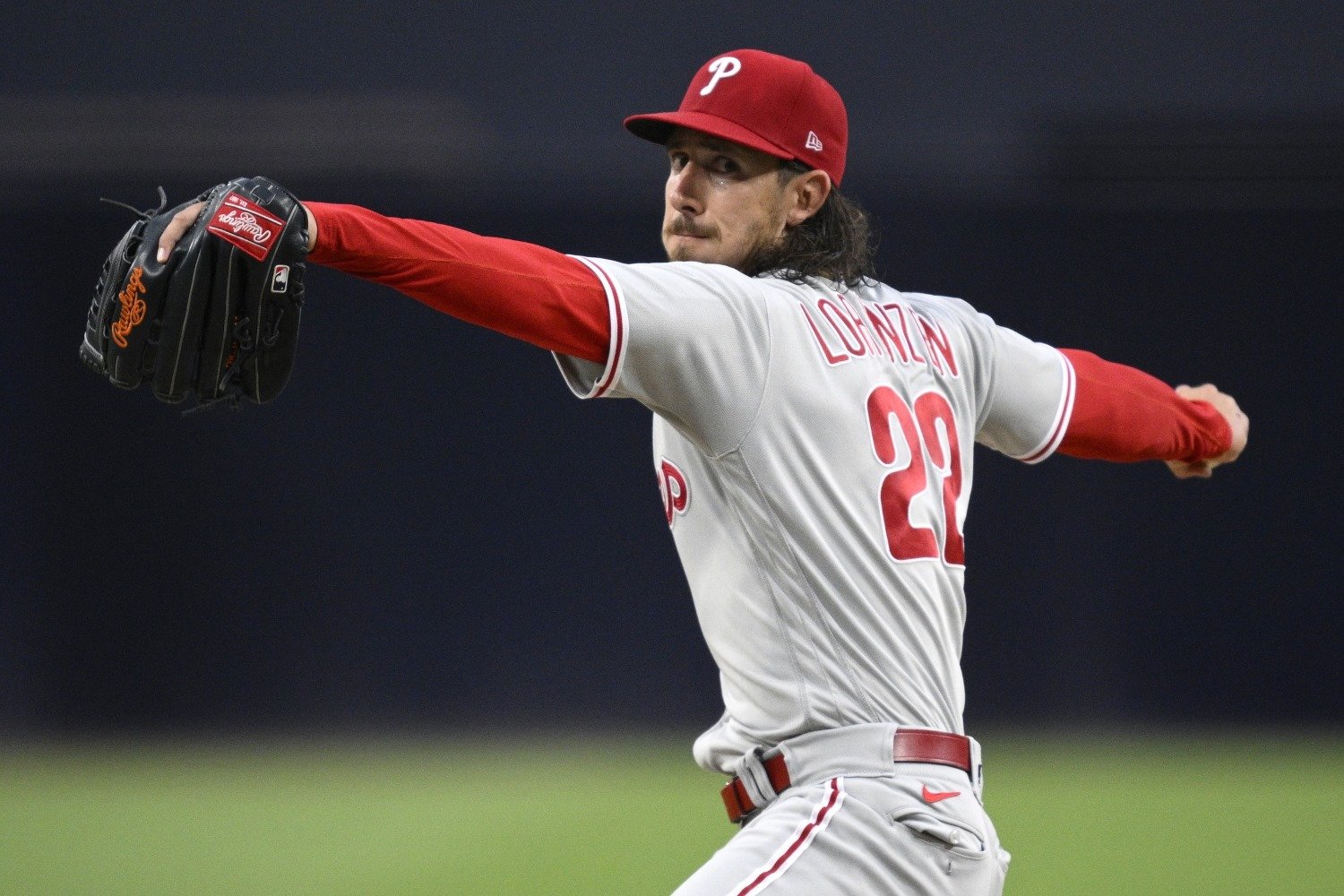 Well, here we are again, talking about the remaining starting pitching candidates. Since the 5 mid-tier starting pitchers’ article that went live last week, not much has changed. Brad Keller has now joined the White Sox, and former Brewer Eric Lauer signed with the Pirates. That’s pretty much it. That means the likes of Michael Lorenzen, Mike Clevinger, Noah Syndergaard, and Jake Odorizzi are still hoping to sign with a team before the season starts. While most of these guys are past their prime seasons, they can still be great additions to a starting rotation. Are the Brewers going to make the call? We’ve already acknowledged why the Brewers should be against adding one of these guys. But is it really the right decision? Here are the reasons why the Brewers should add one of these starting pitchers before the start of the season. Uncertain Rotation Whether you see it in the comments of these stories or on social media, this reason for signing a pitcher is everywhere. Entering spring training, the Brewers had two pitchers who were considered locks for the rotation: Freddy Peralta and Wade Miley. The rest is a little hazy. After Carlos Rodriguez was reassigned to minor-league camp (assuming it was the pitcher, not the outfielder (we're pretty sure)), the team was left with six pitchers who could potentially take the remaining three spots in the rotation. Those guys are Jakob Junis, Colin Rea, Aaron Ashby, Joe Ross, DL Hall and Robert Gasser. While it is a small sample size, it's concerning that the pitchers listed above have given up 20 runs in 28 innings pitched (6.43 ERA). This doesn’t include Peralta’s eight runs in 5 2/3 innings pitched. It’s also worth noting that Miley has yet to throw a pitch in a spring training game at the time of this writing. On Sunday afternoon, Pat Murphy didn’t exactly confirm Junis would be part of the rotation after a strong outing. But according to our very own Jack Stern, Ross and Bryse Wilson were names mentioned as players who could be in “bulk roles” like Junis during the season. There is great potential with these players, and multiple roles for players are a good thing. But the stats and the variety of roles could also mean they don’t know what they want to do. If they add a player like Lorenzen to the two-year deal for which he's been hoping, the organization will have a player they can be certain about in the rotation. Young, Expendable Roster There are a lot of benefits of having a young roster. The biggest reason is the minor-league options. There are more players on this roster who have options than players who don't. On top of that, most of these guys have multiple options left. There are also up-and-coming prospects, like Gasser, who are ready for the show and who aren’t even on the 40-man roster. The organization doesn’t have to decide on these guys just yet. Adding another player should concern these players, but it could scare those with no minor league options. If the Brewers are to sign a player to a major-league contract, they will have to remove someone from the 40-man roster. Likely, it would be a player lower on the pecking order, and not one who would create a major financial deadweight. There is always a player or two who will be on the bubble. If I had to guess, the players could be Thyago Vieira and Vinny Capra. As of late, the pitchers that have come off the board have signed minor-league deals. It’s a good way to warm up a late signing in the minors while giving more time for the organization to loosen up the roster. Unless they want a multiyear deal, this could be the way to go for the Brewers. A player like Syndergaard would take a deal like this. He could pitch a few games in what’s left of spring training, then have an outing or two in Nashville before getting selected. With the uncertainties there and multiple roles to assign, it might be the best route for the Crew. It’s Still Affordable One of the biggest concerns about the Brewers making offseason transactions is the amount of money on the payroll. Heck, some people to this day think they don’t have this type of money right now because of their small market. Those people aren’t exactly wrong, but the team could have more money than people think. According to FanGraphs, the Brewers have around a $110-million projected payroll, which is $15 million less than their 2023 payroll. I’m not saying the Brewers are willing to shell out a full $15 million to a pitcher. That's not far shy of Jordan Montgomery money, at this point. But they can spend a fraction of it on a mid-tier pitcher. With it being late in spring training, fringy starting pitchers are unlikely to require even $10 million in annual salary. Even at the high end, the Brewers could work with that and still have room to make midseason moves. However, the more money, the more confidence they have in that pitcher. None of the new additions will have minor league options, so they’ll have to be darn sure they will benefit the team. Déjà Vu This isn’t really a reason why they should add a pitcher, but rather a reminder that the team could add a veteran arm late in the offseason process, and why we know that for certain. Oddly enough, it wouldn’t be the first time the organization opted to sign a veteran pitcher to their starting rotation in March. Back in 2013, the Brewers were in the middle ground. Two years removed from a deep playoff run and uncertain how the year would go, they still had Yovani Gallardo and a couple of pitchers who showed promise but hadn’t had a lot of time to prove themselves. Among these pitchers were Wily Peralta, Chris Narveson, Marco Estrada and Mike Fiers. We all know how well these arms turned out, but the Brewers didn’t have the power of hindsight like we do now. Just when you thought the rotation was set, the Crew added a veteran arm toward the end of spring training: Kyle Lohse. He was a 34-year-old who rejected the $13.3-million qualifying offer, coming off his best season at the time. Lohse accepted a three-year, $33-million deal a week prior to Opening Day. Who was his agent at the time? Scott Boras. Now it’s 2024, and we might be witnessing the same thing. If this history repeats itself, then the Brewers would sign Montgomery to a three-year, $54-million deal in a couple of weeks. With Montgomery wanting to play with a small market team, there might be a sliver of hope, although the price would surely be higher, or there would be opt-outs involved to make the deal more player-friendly. It doesn’t have to be the hottest arm on the market. It just needs to be a proven arm that can give the rotation a security blanket. Any of the names mentioned at the top of this story are worthy of a contract with an organization. Maybe the Brewers are that team. Where do you stand on this argument? Do you think the Brewers will add another arm to the rotation? Are there other pitchers you’d like to see mentioned? Let us know in the comments.
- 5 comments
-
- 1
-

-
- michael lorenzen
- noah syndergaard
- (and 1 more)
-
 The Milwaukee Brewers are a different team than they were a year ago. With a lot of questions for the rotation, it might be time to add one of the remaining free-agent starters. Image courtesy of © Orlando Ramirez-USA TODAY Sports Well, here we are again, talking about the remaining starting pitching candidates. Since the 5 mid-tier starting pitchers’ article that went live last week, not much has changed. Brad Keller has now joined the White Sox, and former Brewer Eric Lauer signed with the Pirates. That’s pretty much it. That means the likes of Michael Lorenzen, Mike Clevinger, Noah Syndergaard, and Jake Odorizzi are still hoping to sign with a team before the season starts. While most of these guys are past their prime seasons, they can still be great additions to a starting rotation. Are the Brewers going to make the call? We’ve already acknowledged why the Brewers should be against adding one of these guys. But is it really the right decision? Here are the reasons why the Brewers should add one of these starting pitchers before the start of the season. Uncertain Rotation Whether you see it in the comments of these stories or on social media, this reason for signing a pitcher is everywhere. Entering spring training, the Brewers had two pitchers who were considered locks for the rotation: Freddy Peralta and Wade Miley. The rest is a little hazy. After Carlos Rodriguez was reassigned to minor-league camp (assuming it was the pitcher, not the outfielder (we're pretty sure)), the team was left with six pitchers who could potentially take the remaining three spots in the rotation. Those guys are Jakob Junis, Colin Rea, Aaron Ashby, Joe Ross, DL Hall and Robert Gasser. While it is a small sample size, it's concerning that the pitchers listed above have given up 20 runs in 28 innings pitched (6.43 ERA). This doesn’t include Peralta’s eight runs in 5 2/3 innings pitched. It’s also worth noting that Miley has yet to throw a pitch in a spring training game at the time of this writing. On Sunday afternoon, Pat Murphy didn’t exactly confirm Junis would be part of the rotation after a strong outing. But according to our very own Jack Stern, Ross and Bryse Wilson were names mentioned as players who could be in “bulk roles” like Junis during the season. There is great potential with these players, and multiple roles for players are a good thing. But the stats and the variety of roles could also mean they don’t know what they want to do. If they add a player like Lorenzen to the two-year deal for which he's been hoping, the organization will have a player they can be certain about in the rotation. Young, Expendable Roster There are a lot of benefits of having a young roster. The biggest reason is the minor-league options. There are more players on this roster who have options than players who don't. On top of that, most of these guys have multiple options left. There are also up-and-coming prospects, like Gasser, who are ready for the show and who aren’t even on the 40-man roster. The organization doesn’t have to decide on these guys just yet. Adding another player should concern these players, but it could scare those with no minor league options. If the Brewers are to sign a player to a major-league contract, they will have to remove someone from the 40-man roster. Likely, it would be a player lower on the pecking order, and not one who would create a major financial deadweight. There is always a player or two who will be on the bubble. If I had to guess, the players could be Thyago Vieira and Vinny Capra. As of late, the pitchers that have come off the board have signed minor-league deals. It’s a good way to warm up a late signing in the minors while giving more time for the organization to loosen up the roster. Unless they want a multiyear deal, this could be the way to go for the Brewers. A player like Syndergaard would take a deal like this. He could pitch a few games in what’s left of spring training, then have an outing or two in Nashville before getting selected. With the uncertainties there and multiple roles to assign, it might be the best route for the Crew. It’s Still Affordable One of the biggest concerns about the Brewers making offseason transactions is the amount of money on the payroll. Heck, some people to this day think they don’t have this type of money right now because of their small market. Those people aren’t exactly wrong, but the team could have more money than people think. According to FanGraphs, the Brewers have around a $110-million projected payroll, which is $15 million less than their 2023 payroll. I’m not saying the Brewers are willing to shell out a full $15 million to a pitcher. That's not far shy of Jordan Montgomery money, at this point. But they can spend a fraction of it on a mid-tier pitcher. With it being late in spring training, fringy starting pitchers are unlikely to require even $10 million in annual salary. Even at the high end, the Brewers could work with that and still have room to make midseason moves. However, the more money, the more confidence they have in that pitcher. None of the new additions will have minor league options, so they’ll have to be darn sure they will benefit the team. Déjà Vu This isn’t really a reason why they should add a pitcher, but rather a reminder that the team could add a veteran arm late in the offseason process, and why we know that for certain. Oddly enough, it wouldn’t be the first time the organization opted to sign a veteran pitcher to their starting rotation in March. Back in 2013, the Brewers were in the middle ground. Two years removed from a deep playoff run and uncertain how the year would go, they still had Yovani Gallardo and a couple of pitchers who showed promise but hadn’t had a lot of time to prove themselves. Among these pitchers were Wily Peralta, Chris Narveson, Marco Estrada and Mike Fiers. We all know how well these arms turned out, but the Brewers didn’t have the power of hindsight like we do now. Just when you thought the rotation was set, the Crew added a veteran arm toward the end of spring training: Kyle Lohse. He was a 34-year-old who rejected the $13.3-million qualifying offer, coming off his best season at the time. Lohse accepted a three-year, $33-million deal a week prior to Opening Day. Who was his agent at the time? Scott Boras. Now it’s 2024, and we might be witnessing the same thing. If this history repeats itself, then the Brewers would sign Montgomery to a three-year, $54-million deal in a couple of weeks. With Montgomery wanting to play with a small market team, there might be a sliver of hope, although the price would surely be higher, or there would be opt-outs involved to make the deal more player-friendly. It doesn’t have to be the hottest arm on the market. It just needs to be a proven arm that can give the rotation a security blanket. Any of the names mentioned at the top of this story are worthy of a contract with an organization. Maybe the Brewers are that team. Where do you stand on this argument? Do you think the Brewers will add another arm to the rotation? Are there other pitchers you’d like to see mentioned? Let us know in the comments. View full article
 -
After covering all the positions, it's time to cover the one bat in the lineup that doesn't have a defensive position. How can the Brewers use their ninth bat in their batting order? Image courtesy of © Mark J. Rebilas-USA TODAY Sports With Carlos Santana and Mark Canha gone, the Brewers are trying to figure out how to use their designated hitter throughout the season. Just about anyone can fill that role on the Brewers roster. After a long offseason of searching for power bats, one late edition, though it took a long while for it to be made official, can provide a pop to a lineup that can use one. The Starter: Gary Sanchez 2023 Stats: 75 G, 267 PA, .217/.288/.492, 19 HR, 113 OPS+ 1.7 WAR, 111 wRC+, 7.9% BB, 25.1% K 2024 Projections: ZiPS 105 G, 393 PA, .214/.305/.432 20 HR, 1.6 WAR, 98 wRC+, 9.9% BB, 28.5% K. Baseball-Reference: 381 PA, .216/.297/.429 18 HR 9.1% BB, 26.2% K After a two-week saga of wondering if the potential deal fell out, the Brewers signed one of the better-hitting catchers of the free agent market, Gary Sanchez. The hold-up in finalizing the deal was a wrist injury he suffered last season when he was hit by a pitch. As far as we know, the injury has completely healed but has since re-aggravated while working out. The Brewers will take one small step at a time with Sanchez, and we may see his first spring appearance later in the month. Sanchez is the definition of a designated hitter. If given the chance, he can hit 20+ home runs. He has done so four times in nine seasons, the most recent being in 2021. Last season, he came up short of that mark by one, but he only played in 72 games. Sanchez is a man who can provide power to the lineup. Sanchez’s barrel percentage (15.5%) and hard-hit percentage (44.6%) he recorded last season suggest he knows how to launch the ball. He has found some success in the middle but tends to swing at pitches on the low outside corner. Remember, the designated hitter is supposed to be an additional bat in the lineup that would bat instead of a pitcher. I would take Sanchez over a pitcher. With William Contreras getting most of the reps at catcher, Sanchez will have to play the role of DH to get his opportunities. If the Brewers want to take advantage of his power, he’ll need to be the designated hitter. That may open the opportunity to get Eric Haase on the opening-day roster, but that is an article for another day. Other Options We all knew the Brewers had a plethora of decorated outfielder prospects cooking in their farm system. Well, now all of those prospects are MLB-ready, causing a decent roster jam. So, how does Christian Yelich fit? To max out efforts from all outfield, Yelich could fit in as a designated hitter, allowing Jackson Chourio, Joey Wiemer, Sal Frelick, and Garrett Mitchell to get at-bats and play the field. With Frelick getting reps at second and third base, there is a possibility that all five of the outfielders are in the same lineup. Yelich was a former Gold Glove winner in 2014 and was recently nominated for another in 2022. However, he isn’t getting any younger, and his arm could be argued as one of his weaknesses on the field. Keeping him off the field could prevent him from getting injured or sitting out a few games. The younger outfielders are more than capable of winning a Gold Glove of their own in the near future, so good defense won’t be lost on the field. Rookies and one-year veterans can learn from more experience, and sending these players down because there’s “not enough room” won’t exactly help them develop. If Chourio plays as advertised (.282/.338/.467 in MiLB in 2023), Frelick continues his hot start to his career, and Mitchell fully bounces back to his form (.278/.343/.452), then it will be hard to keep any of these guys out of the lineup. Yelich at DH gives the Brewers a chance to include all of them. Jake Bauers is an interesting choice for the Brewers, as he’s out of minor-league options. He can play the corner outfield and first base positions. His bat, on the other hand, seems a little suspect. His best season was back in 2018, when he made his MLB debut with the Rays. Even still, his .201 batting average, .700 OPS, 94 OPS+, and 97 wRC+ don’t scream power-hitting DH. But how else will he get reps and prove to the team he belongs here? With Rhys Hoskins being the regular first baseman and three left-handed outfielders ahead of him in the depth chart, he would seem like a back end of the bench player. If Hoskins opts out of his contract next season, Bauers is the frontrunner for the first baseman job. Sure, Tyler Black and Wes Clarke should be on his heels next season, but Bauers has now become the veteran presence. The Brewers found something in Bauers. They'll have to give him more opportunities to bring out the potential they see in him, like in the DH spot. The Big Questions The biggest question is how good Sanchez's wrist is. While he did sign a more incentivized deal with the Brewers, the team seems high on the former Yankee. While he can provide power, he still has a career .225 batting average, which doesn’t exactly sound like a consistent bat in the lineup. While he may be healthy, we are not sure if there will be lingering effects on his hitting. They may use Sanchez as a regular DH if they go as planned to have three catchers on the 26-man roster. Giving him the role of DH does mean less time on the field and more time to focus on his hitting. However, the team can’t afford to have a bat near the Mendoza line like they had in Jesse Winker last season. Should Sanchez show signs of regression and the team still wants to use a regular DH, there are other affordable options on the free agent market the team can pursue. Adam Duvall, J.D. Martinez, and Evan Longoria are all options with career batting averages similar to Sanchez's. Maybe the team should go back to how they’ve used the DH. As Pat Murphy takes over this team, it makes you wonder how he will utilize the designated hitter role in the lineup. Over the last few years, the Brewers have used the role to give players a day off on the field. Yelich, Contreras, Santana, and Canha had their reps at the DH spot. It’s a good way to keep a hot bat in the lineup while not having to go out on the field and take a toll on their bodies. It also helps showcase all of the young talent the team could have off the bench. A rotational DH gives players like Bauers, Sanchez, Weimer, and others who may ride the bench throughout the season more chances to play the field, while hotter bats need a day off. There are advantages to having a regular DH as that one individual can focus on just hitting rather than taking the field. But even those regulars must be ready to play should somebody go down with an injury. The team has many minor league players who could be ready to make their debuts this season. The aforementioned prospects Black and Clarke could find themselves on the 26-man at some point. I’m not saying Brock Wilken and Luis Lara are going to have astronomical rises to the big leagues this season. But this team has enough depth that a different DH can work every day. It’s hard to judge what Murphy will do with this lineup. But if it isn’t broken, why try to fix it? How would you like to see the Brewers use the DH role? Do you think Sanchez will have a decent chunk of time at the DH? What other players could you see play DH this season? Let us know in the comments. View full article
-
2024 Milwaukee Brewers Positional Preview: Designated Hitter
Ryan Pollak posted an article in Brewers
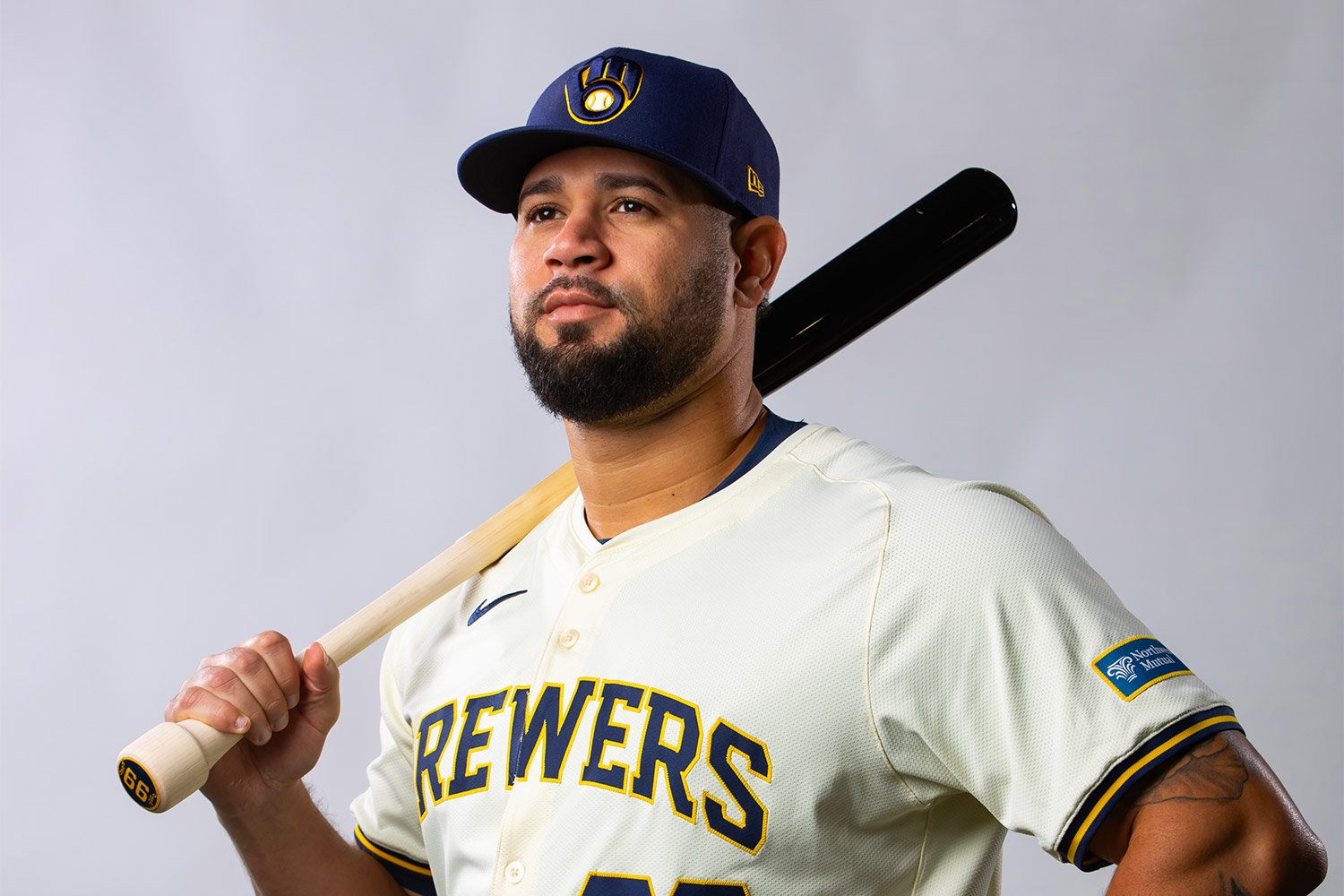 With Carlos Santana and Mark Canha gone, the Brewers are trying to figure out how to use their designated hitter throughout the season. Just about anyone can fill that role on the Brewers roster. After a long offseason of searching for power bats, one late edition, though it took a long while for it to be made official, can provide a pop to a lineup that can use one. The Starter: Gary Sanchez 2023 Stats: 75 G, 267 PA, .217/.288/.492, 19 HR, 113 OPS+ 1.7 WAR, 111 wRC+, 7.9% BB, 25.1% K 2024 Projections: ZiPS 105 G, 393 PA, .214/.305/.432 20 HR, 1.6 WAR, 98 wRC+, 9.9% BB, 28.5% K. Baseball-Reference: 381 PA, .216/.297/.429 18 HR 9.1% BB, 26.2% K After a two-week saga of wondering if the potential deal fell out, the Brewers signed one of the better-hitting catchers of the free agent market, Gary Sanchez. The hold-up in finalizing the deal was a wrist injury he suffered last season when he was hit by a pitch. As far as we know, the injury has completely healed but has since re-aggravated while working out. The Brewers will take one small step at a time with Sanchez, and we may see his first spring appearance later in the month. Sanchez is the definition of a designated hitter. If given the chance, he can hit 20+ home runs. He has done so four times in nine seasons, the most recent being in 2021. Last season, he came up short of that mark by one, but he only played in 72 games. Sanchez is a man who can provide power to the lineup. Sanchez’s barrel percentage (15.5%) and hard-hit percentage (44.6%) he recorded last season suggest he knows how to launch the ball. He has found some success in the middle but tends to swing at pitches on the low outside corner. Remember, the designated hitter is supposed to be an additional bat in the lineup that would bat instead of a pitcher. I would take Sanchez over a pitcher. With William Contreras getting most of the reps at catcher, Sanchez will have to play the role of DH to get his opportunities. If the Brewers want to take advantage of his power, he’ll need to be the designated hitter. That may open the opportunity to get Eric Haase on the opening-day roster, but that is an article for another day. Other Options We all knew the Brewers had a plethora of decorated outfielder prospects cooking in their farm system. Well, now all of those prospects are MLB-ready, causing a decent roster jam. So, how does Christian Yelich fit? To max out efforts from all outfield, Yelich could fit in as a designated hitter, allowing Jackson Chourio, Joey Wiemer, Sal Frelick, and Garrett Mitchell to get at-bats and play the field. With Frelick getting reps at second and third base, there is a possibility that all five of the outfielders are in the same lineup. Yelich was a former Gold Glove winner in 2014 and was recently nominated for another in 2022. However, he isn’t getting any younger, and his arm could be argued as one of his weaknesses on the field. Keeping him off the field could prevent him from getting injured or sitting out a few games. The younger outfielders are more than capable of winning a Gold Glove of their own in the near future, so good defense won’t be lost on the field. Rookies and one-year veterans can learn from more experience, and sending these players down because there’s “not enough room” won’t exactly help them develop. If Chourio plays as advertised (.282/.338/.467 in MiLB in 2023), Frelick continues his hot start to his career, and Mitchell fully bounces back to his form (.278/.343/.452), then it will be hard to keep any of these guys out of the lineup. Yelich at DH gives the Brewers a chance to include all of them. Jake Bauers is an interesting choice for the Brewers, as he’s out of minor-league options. He can play the corner outfield and first base positions. His bat, on the other hand, seems a little suspect. His best season was back in 2018, when he made his MLB debut with the Rays. Even still, his .201 batting average, .700 OPS, 94 OPS+, and 97 wRC+ don’t scream power-hitting DH. But how else will he get reps and prove to the team he belongs here? With Rhys Hoskins being the regular first baseman and three left-handed outfielders ahead of him in the depth chart, he would seem like a back end of the bench player. If Hoskins opts out of his contract next season, Bauers is the frontrunner for the first baseman job. Sure, Tyler Black and Wes Clarke should be on his heels next season, but Bauers has now become the veteran presence. The Brewers found something in Bauers. They'll have to give him more opportunities to bring out the potential they see in him, like in the DH spot. The Big Questions The biggest question is how good Sanchez's wrist is. While he did sign a more incentivized deal with the Brewers, the team seems high on the former Yankee. While he can provide power, he still has a career .225 batting average, which doesn’t exactly sound like a consistent bat in the lineup. While he may be healthy, we are not sure if there will be lingering effects on his hitting. They may use Sanchez as a regular DH if they go as planned to have three catchers on the 26-man roster. Giving him the role of DH does mean less time on the field and more time to focus on his hitting. However, the team can’t afford to have a bat near the Mendoza line like they had in Jesse Winker last season. Should Sanchez show signs of regression and the team still wants to use a regular DH, there are other affordable options on the free agent market the team can pursue. Adam Duvall, J.D. Martinez, and Evan Longoria are all options with career batting averages similar to Sanchez's. Maybe the team should go back to how they’ve used the DH. As Pat Murphy takes over this team, it makes you wonder how he will utilize the designated hitter role in the lineup. Over the last few years, the Brewers have used the role to give players a day off on the field. Yelich, Contreras, Santana, and Canha had their reps at the DH spot. It’s a good way to keep a hot bat in the lineup while not having to go out on the field and take a toll on their bodies. It also helps showcase all of the young talent the team could have off the bench. A rotational DH gives players like Bauers, Sanchez, Weimer, and others who may ride the bench throughout the season more chances to play the field, while hotter bats need a day off. There are advantages to having a regular DH as that one individual can focus on just hitting rather than taking the field. But even those regulars must be ready to play should somebody go down with an injury. The team has many minor league players who could be ready to make their debuts this season. The aforementioned prospects Black and Clarke could find themselves on the 26-man at some point. I’m not saying Brock Wilken and Luis Lara are going to have astronomical rises to the big leagues this season. But this team has enough depth that a different DH can work every day. It’s hard to judge what Murphy will do with this lineup. But if it isn’t broken, why try to fix it? How would you like to see the Brewers use the DH role? Do you think Sanchez will have a decent chunk of time at the DH? What other players could you see play DH this season? Let us know in the comments.
 -
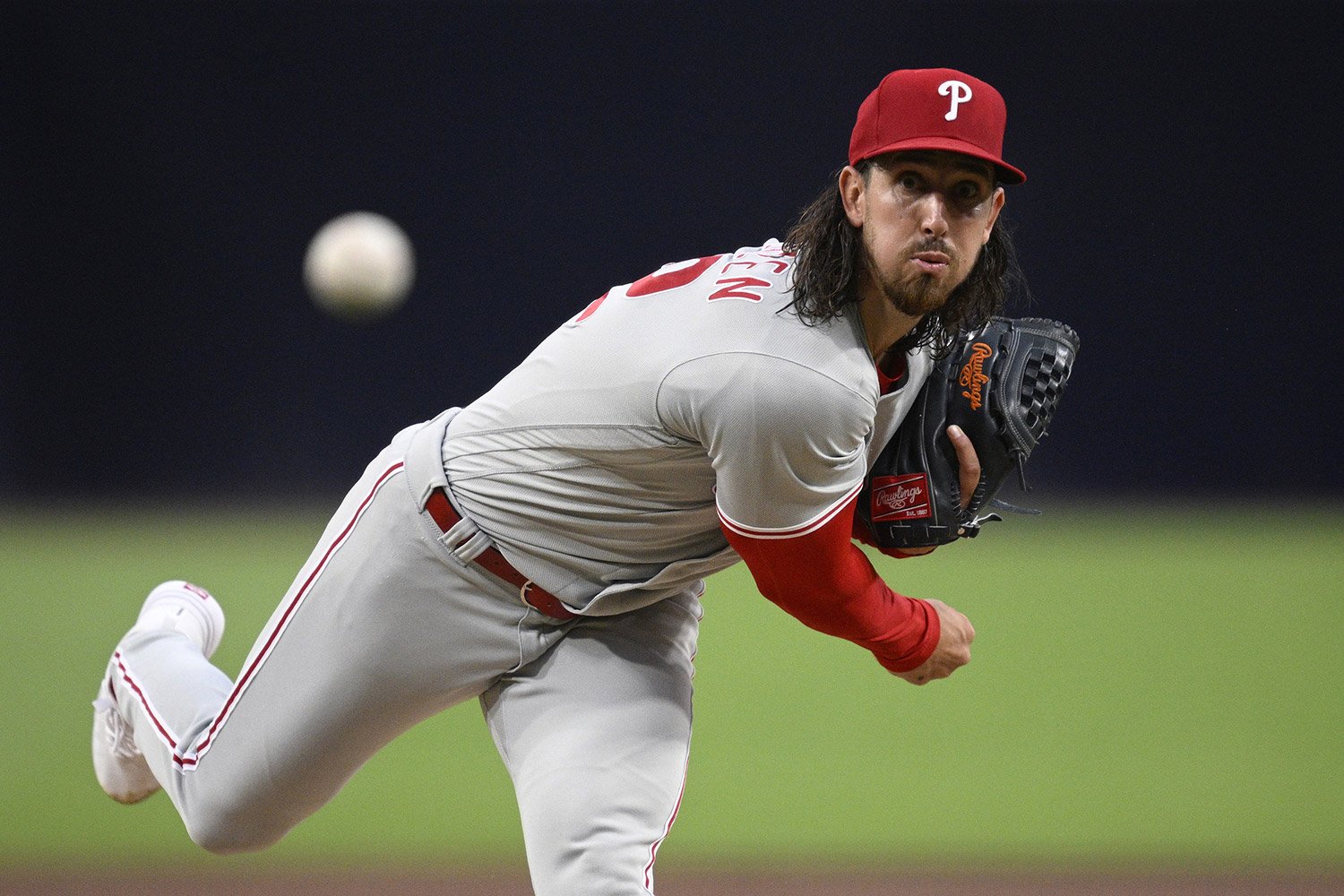 We are just a few short weeks away from opening day, and the 26-man roster is becoming more apparent by the day. Yet we’ve learned the Brewers are monitoring the starting pitcher market. The other day, we looked at a few players that fit the bill Robert Murray suggested on his Baseball Insider Monday livestream. But is it necessary for the Crew to sign any of these guys? The team looks a lot different after the Corbin Burnes move to Baltimore. But even the greatest diehard Burnes fans knew there was a high chance the Brewers would trade him. The organization was probably preparing for his departure. They had all winter to make a move, so why try to add players now? Today, we will examine why the Brewers shouldn’t grab another arm for the rotation. Here are a few reasons why the team should stand pat. The Rotational Depth The Brewers have been quite active this offseason already, with a ton of those moves being additional arms to the rotation and the bullpen. Before the Burnes trade, the following was a projected rotation for the Brewers in 2024. 1. Corbin Burnes 2. Wade Miley 3. Freddy Peralta 4. Joe Ross 5. Colin Rea/Aaron Ashby They have since swapped out Burnes for DL Hall and added Jakob Junis on a one-year deal. If you add the potential debuts of Carlos F Rodriguez and Robert Gasser to the mix, ten players are fighting for spots in the starting rotation. That doesn’t include Brandon Woodruff, who may be ready at the end of the season, nor Bryse Wilson, who has experience as a starter. In 2023, the Brewers used ten different pitchers to start a game. This list includes spot starts by Trevor MeGill, Julio Teheran, who signed mid-season, one start from Janson Junk towards the end of the season, and Rea, who was on a minor league contract entering the season. While the 2024 lineup isn’t an incredible improvement, it still has more depth for the starting rotation than at the start of the year. If Miley isn’t ready by the start of the season or if anybody goes down with an injury, the team can slot in one of the other arms in the organization. If one of the reasons for scouting the remaining free agents is for organizational depth, they shouldn’t worry about it now. Too Many Pitchers The Brewers currently have 20 pitchers on their 40-man roster. While it may not sound like a lot, teams can only have 13 pitchers on the 26-man roster. Once again, not a bad thing to have too many pitchers. However, not everyone can be sent down. Players can be sent down to the Triple A up to five times without any repercussions so long as they have minor league options. According to FanGraphs, here is a list of pitchers who don’t have any options. Jakob Junis Wade Miley Joel Payamps Freddy Peralta Colin Rea Joe Ross Thyago Viera Bryse Wilson If players aren’t performing up to par, the team must remove them from the 40-man roster and put them on revocable waivers. If they clear waivers, the team can release them or send them to Triple A. However, all these players have more control over their destiny. According to MLB.com, any player with more than three years of service time or who has cleared revocable waivers in the past can reject the outright to the minors and elect free agency. The only player on the list above with less than three full years is Viera, and he’s been designated for assignment before. While the number of players with options outweighs the ones without, some big names deserve to make the roster. Hoby Miner is coming off the best season of his career. The same can be said for Elvis Peguero and Trevor Megill. Even some of the non-roster invitees are having an excellent spring, giving them a shot at making the 26-man. It’s fair to say the organization will have a tough decision ahead of it. Adding another pitcher, starter, or reliever can further complicate things. “Mid-Tier” Isn’t Enough One of the first comments on the mid-tier story is that the Brewers arguably have these types of pitchers on the roster. In that defense, there may be a point to that, although the word that could also be described is “unproven.” Look at last season’s Cy Young Award winners. Blake Snell has a career of 3.20 ERA, 1.24 WHIP, and 3.44 FIP. Gerrit Cole has a career 3.17 ERA, 1.09 WHIP, and 3.14 FIP. Because these guys are the best of the best, anything around these numbers can be proven veteran starting pitchers. Peralta, who will step up as the team’s ace, has a career 3.83 ERA, a 1.13 WHIP, and a 3.52 FIP. While these numbers are still pretty good in their own right and are somewhat even with the award winners, the next closest pitcher on the roster is Miley, and he has a 4.03 ERA, a 1.36 WHIP, a 4.14 FIP, and a 104 ERA+. There isn’t a problem with these numbers, but these guys are their first two in the rotation. While we are excited to see Hall perform, Robert Gasser is on the brink of making his debut, and Ashby is back to full health; they haven’t had enough of a track record in the big leagues. Based on their current statistics and the unpredictability of the young player's development, there is an argument the team already has a bunch of pitchers of the same caliber as the available free agents. If the Brewers want a pitcher, why not add a more effective player? Adding another pitcher in the same breath as Michael Lorenzen or Mike Clevinger initially sounds excellent. But then, if you look at this team’s roster now, Jakob Junis is in that category. As we are reminded repeatedly every offseason, the Brewers are a small market team. The organization can spend less than teams like the Yankees or the Dodgers with big media deals. However, in recent history, the Brewers have made a high-paying deal so long as it makes the team better and is within their budget. The Brewers' current payroll stands at around $110 million. While that does seem like a lot of money, the team's payroll was around $125 million at the end of last season. That doesn’t necessarily mean the team will spend the same amount. Somehow, Snell and Jordan Montgomery are still free agents and could “move the needle” for this Brewers team. This is where I remind you that Snell declined a $20 million qualifying offer and will cost whatever team a draft pick should he sign elsewhere. It will be an expensive penny, but it just might be worth it if they want to improve their rotation. If they can’t reach that price tag, maybe staying pat is the way to go. Adding another player means the loss of another person’s job on the roster. Speaking of lost opportunities: The Kids Need to Play The Brewers are in an awkward situation right now. They do plan to compete this year but are also planning for the future. Hall, Gasser, Ashby, and eventually Jacob Misiorowski are all in their pre-arbitration years or have yet to make their debut. They need to have time in the bigs to get a good assessment of the players they hope to hold down the fort for the next few seasons. Hall and Ashby have already started their career but haven’t had time to make an impact. Adding another pitcher might result in the pitcher being sent down or becoming a bullpen arm. The opportunities can open up a season, especially if Miley chooses to retire, Rea and Junis elect free agency, and Williams gets traded to another team. But why wait around when they are ready to play in the majors? We hear time and time again that prospects can be considered lottery tickets. For me, however, the progression of a prospect is like cooking a turkey. Taking it out too early doesn’t taste right, and you throw it back into the oven. Taking it out too late results in it being burnt, which may be ruined. It works the same for players. If you call them up too early, they look bad, and you might want to send them back down to work on their problems. Calling them up too late doesn’t give them the time to learn and grow, and it might be too late to bring out their full potential. However, if you test them now, you can see how effective they are. Remember, meat still cooks after you take it out of the oven. It’s time to give these guys a stage to perform on. If you don’t know what you have now, you won’t know what you need to work on to stay competitive. Let’s not bring in another player as a stopgap for these ready players. There are still great pitchers out there, but will signing a mid-tier pitcher make this team much better? Is it better for the team to let the others play now in the long run? Or do the potential uncertainties in the rotation and bullpen show signs of concern? Come back for part three of the miniseries, as we will talk about the benefits of signing a mid-level player. Are there other reasons why the Brewers shouldn’t sign another arm? What side of the debate are you on? Let us know in the comments.
 -
While there are many great arms still left on the market, do the Brewers really need another one for their starting rotation? Image courtesy of © Orlando Ramirez-USA TODAY Sports We are just a few short weeks away from opening day, and the 26-man roster is becoming more apparent by the day. Yet we’ve learned the Brewers are monitoring the starting pitcher market. The other day, we looked at a few players that fit the bill Robert Murray suggested on his Baseball Insider Monday livestream. But is it necessary for the Crew to sign any of these guys? The team looks a lot different after the Corbin Burnes move to Baltimore. But even the greatest diehard Burnes fans knew there was a high chance the Brewers would trade him. The organization was probably preparing for his departure. They had all winter to make a move, so why try to add players now? Today, we will examine why the Brewers shouldn’t grab another arm for the rotation. Here are a few reasons why the team should stand pat. The Rotational Depth The Brewers have been quite active this offseason already, with a ton of those moves being additional arms to the rotation and the bullpen. Before the Burnes trade, the following was a projected rotation for the Brewers in 2024. 1. Corbin Burnes 2. Wade Miley 3. Freddy Peralta 4. Joe Ross 5. Colin Rea/Aaron Ashby They have since swapped out Burnes for DL Hall and added Jakob Junis on a one-year deal. If you add the potential debuts of Carlos F Rodriguez and Robert Gasser to the mix, ten players are fighting for spots in the starting rotation. That doesn’t include Brandon Woodruff, who may be ready at the end of the season, nor Bryse Wilson, who has experience as a starter. In 2023, the Brewers used ten different pitchers to start a game. This list includes spot starts by Trevor MeGill, Julio Teheran, who signed mid-season, one start from Janson Junk towards the end of the season, and Rea, who was on a minor league contract entering the season. While the 2024 lineup isn’t an incredible improvement, it still has more depth for the starting rotation than at the start of the year. If Miley isn’t ready by the start of the season or if anybody goes down with an injury, the team can slot in one of the other arms in the organization. If one of the reasons for scouting the remaining free agents is for organizational depth, they shouldn’t worry about it now. Too Many Pitchers The Brewers currently have 20 pitchers on their 40-man roster. While it may not sound like a lot, teams can only have 13 pitchers on the 26-man roster. Once again, not a bad thing to have too many pitchers. However, not everyone can be sent down. Players can be sent down to the Triple A up to five times without any repercussions so long as they have minor league options. According to FanGraphs, here is a list of pitchers who don’t have any options. Jakob Junis Wade Miley Joel Payamps Freddy Peralta Colin Rea Joe Ross Thyago Viera Bryse Wilson If players aren’t performing up to par, the team must remove them from the 40-man roster and put them on revocable waivers. If they clear waivers, the team can release them or send them to Triple A. However, all these players have more control over their destiny. According to MLB.com, any player with more than three years of service time or who has cleared revocable waivers in the past can reject the outright to the minors and elect free agency. The only player on the list above with less than three full years is Viera, and he’s been designated for assignment before. While the number of players with options outweighs the ones without, some big names deserve to make the roster. Hoby Miner is coming off the best season of his career. The same can be said for Elvis Peguero and Trevor Megill. Even some of the non-roster invitees are having an excellent spring, giving them a shot at making the 26-man. It’s fair to say the organization will have a tough decision ahead of it. Adding another pitcher, starter, or reliever can further complicate things. “Mid-Tier” Isn’t Enough One of the first comments on the mid-tier story is that the Brewers arguably have these types of pitchers on the roster. In that defense, there may be a point to that, although the word that could also be described is “unproven.” Look at last season’s Cy Young Award winners. Blake Snell has a career of 3.20 ERA, 1.24 WHIP, and 3.44 FIP. Gerrit Cole has a career 3.17 ERA, 1.09 WHIP, and 3.14 FIP. Because these guys are the best of the best, anything around these numbers can be proven veteran starting pitchers. Peralta, who will step up as the team’s ace, has a career 3.83 ERA, a 1.13 WHIP, and a 3.52 FIP. While these numbers are still pretty good in their own right and are somewhat even with the award winners, the next closest pitcher on the roster is Miley, and he has a 4.03 ERA, a 1.36 WHIP, a 4.14 FIP, and a 104 ERA+. There isn’t a problem with these numbers, but these guys are their first two in the rotation. While we are excited to see Hall perform, Robert Gasser is on the brink of making his debut, and Ashby is back to full health; they haven’t had enough of a track record in the big leagues. Based on their current statistics and the unpredictability of the young player's development, there is an argument the team already has a bunch of pitchers of the same caliber as the available free agents. If the Brewers want a pitcher, why not add a more effective player? Adding another pitcher in the same breath as Michael Lorenzen or Mike Clevinger initially sounds excellent. But then, if you look at this team’s roster now, Jakob Junis is in that category. As we are reminded repeatedly every offseason, the Brewers are a small market team. The organization can spend less than teams like the Yankees or the Dodgers with big media deals. However, in recent history, the Brewers have made a high-paying deal so long as it makes the team better and is within their budget. The Brewers' current payroll stands at around $110 million. While that does seem like a lot of money, the team's payroll was around $125 million at the end of last season. That doesn’t necessarily mean the team will spend the same amount. Somehow, Snell and Jordan Montgomery are still free agents and could “move the needle” for this Brewers team. This is where I remind you that Snell declined a $20 million qualifying offer and will cost whatever team a draft pick should he sign elsewhere. It will be an expensive penny, but it just might be worth it if they want to improve their rotation. If they can’t reach that price tag, maybe staying pat is the way to go. Adding another player means the loss of another person’s job on the roster. Speaking of lost opportunities: The Kids Need to Play The Brewers are in an awkward situation right now. They do plan to compete this year but are also planning for the future. Hall, Gasser, Ashby, and eventually Jacob Misiorowski are all in their pre-arbitration years or have yet to make their debut. They need to have time in the bigs to get a good assessment of the players they hope to hold down the fort for the next few seasons. Hall and Ashby have already started their career but haven’t had time to make an impact. Adding another pitcher might result in the pitcher being sent down or becoming a bullpen arm. The opportunities can open up a season, especially if Miley chooses to retire, Rea and Junis elect free agency, and Williams gets traded to another team. But why wait around when they are ready to play in the majors? We hear time and time again that prospects can be considered lottery tickets. For me, however, the progression of a prospect is like cooking a turkey. Taking it out too early doesn’t taste right, and you throw it back into the oven. Taking it out too late results in it being burnt, which may be ruined. It works the same for players. If you call them up too early, they look bad, and you might want to send them back down to work on their problems. Calling them up too late doesn’t give them the time to learn and grow, and it might be too late to bring out their full potential. However, if you test them now, you can see how effective they are. Remember, meat still cooks after you take it out of the oven. It’s time to give these guys a stage to perform on. If you don’t know what you have now, you won’t know what you need to work on to stay competitive. Let’s not bring in another player as a stopgap for these ready players. There are still great pitchers out there, but will signing a mid-tier pitcher make this team much better? Is it better for the team to let the others play now in the long run? Or do the potential uncertainties in the rotation and bullpen show signs of concern? Come back for part three of the miniseries, as we will talk about the benefits of signing a mid-level player. Are there other reasons why the Brewers shouldn’t sign another arm? What side of the debate are you on? Let us know in the comments. View full article
-
Jake Odorizzi is worth considering. However, we have to keep in mind he too is coming off a shoulder injury that kept him out the entire season. Didn't look entirely great with the Braves in 2022 but he's still in that 4.00 ERA. As for Bauer. We know he's a great pitcher, but with all do respect. He did something that is hard to forgive. For the amount of games he's been suspended and for the allegations he had, MLB has probably put an unofficial ban on the guy from coming back.
- 8 replies
-
- 1
-

-
- michael lorenzen
- mike clevinger
- (and 3 more)
-
Matt Arnold suggested they are monitoring the starting pitching free-agent market. Could the Brewers add one of these five arms before the start of the season? Image courtesy of © Kyle Ross-USA TODAY Sports Just when you thought the Brewers could be done this offseason, another rumor rose to the surface. After a busy offseason, the Brewers' rotation will have a new look. Corbin Burnes is out, and DL Hall is in. Even after bringing back Wade Miley, Colin Rea, and Brandon Woodruff, adding Jakob Junis and Joe Ross, and even after Aaron Ashby returns from injury, they may still need to be done. According to Robert Murray on the Baseball Insider livestream Monday, the Brewers are looking at the mid-tier starters that remain on the free agent market. While it may not be Blake Snell or Jordan Montgomery, it's still action worth noting. So, for what kind of players could the Brewers be in play? Here are five players worth monitoring they should consider signing. Michael Lorenzen Let’s start with the two names mentioned on the livestream by Murray. If Miley isn’t ready by the start of the season, Lorenzen would be the perfect veteran addition to the rotation. Lorenzen was one of the five men I mentioned as a player to retool the rotation in my first story on this site in November. While he struggled a bit in the later half of the 2023 season as part of the Phillies, he still pitched a no-hitter in his first home appearance. Lorenzen had a 9-9 record for the season with a 4.18 ERA, a 1.21 WHIP, and a 1.7 WAR. He represented the Tigers in the 2023 All-Star game and was relegated to the bullpen towards the end of the season and collected his first save. Remember that one pitcher from the Reds that gave the Brewers trouble in June 2018? That pitcher hit a solo home run one day and a game-changing grand slam the next. His name was Michael Lorenzen. Though he hasn’t had a plate appearance since 2021, so don't expect him to step into the heart of Milwaukee's lineup any time soon. Lorenzen is a great back of the rotation arm. Since the Crew has decent depth, they can take their time while Lorenzen stretches out for the season. Since he has more experience in the bullpen, he could be used as a long relief arm. He held pitching sessions alongside another pitcher who may or may not be mentioned in late January. The Brewers could’ve been among the 16 teams scouting the 32-year-old pitcher. The Brewers can afford to pay the starter a deal around $8-10 million but can probably get him at a lower price now that it’s March and games have started. Mike Clevinger Clevinger was the second name mentioned in the livestream. Once one of the best pitchers in the Cleveland organization, he had a 3.20 ERA in five seasons, averaging ten strikeouts per nine and maintaining a 1.20 WHIP. Clevinger was traded to the Padres along with others during the shortened 2020 season, during which eight players (including Owen Miller) were involved. His success continued in San Diego, and he was eventually offered a two-year extension. In 2021, however, he missed the entire season while he recovered from Tommy John surgery. Last season, he had a 9-9 record in 24 starts with a 3.77 ERA and a 1.23 WHIP as part of the White Sox organization. Clevinger was the most consistent pitcher in the team’s rotation. He even recorded two complete games. There was a bit of concern when MLB had to step in putting Clevinger under investigation due to an alleged domestic violence and child abuse case. The league made no disciplinary action against the pitcher. Besides the alleged actions outside of baseball, Clevinger has been a solid pitcher since his surgery. While Clevinger has been a fly ball pitcher, he still only had a below-average home run percentage (2.9%) with a home ballpark that had the sixth-highest Park Factor from 2010-2016, according to parkfactor.com. In other words, he gives up fewer home runs while regularly pitching in a hitter-friendly ballpark. The Brewers don’t need a prime Clevinger to have solid production in the rotation. Even a White Sox version of Clevinger would impact this team. After rejecting a $12 million mutual option with Chicago, he may settle for around $8 million salary or less this season as part of a competitive team. Brad Keller Brad Keller is the definition of a low risk/high reward type player. That might sound sketchy at first, but he still has the promise to be a decent pitcher for an organization. The former Royal’s best season came in 2020, when, in nine starts, he threw a 2.47 ERA with a 1.02 WHIP, a 3.43 FIP, and 6.4 hits per nine innings. He was one of the few players who had a complete-game shutout that season. Since that one season, Keller hasn’t had an ERA below 4.00 or a WHIP below 1.50. It is worth noting that Keller is a ground ball pitcher. He has a career 2.1 home run percentage and a below-average opponent slugging percentage (.386). Keller will have to work on his walk rate, which exploded to 8.9 walks per nine innings last season. Keller is only 28 years old and has the tools to be a back-of-the-rotation arm. While the Brewers have plenty of those types of arms already, they have turned many pitchers' careers around. The most recent examples are Hoby Milner, Bryse Wilson, and Colin Rea. Who’s to say they can’t do it again? Sure, Keller could be a young free agent again next year, but one good year in Milwaukee can up his pay. If it goes well, the Brewers have a decent one-year stopgap for the prospects on their way to the big league. Worse case, they spend at most $3 million on a pitcher that is either designated for assignment or becomes a long relief arm similar to Janson Junk. Noah Syndergaard What a fall from grace. Noah Syndergaard was once part of an elite set of arms in the New York Mets rotation. Back in 2015, the man known as Thor managed to strike out over 100 batters in just his first 15 career starts. He took fourth place in the Rookie of the Year voting, while Chicago Cub Kris Bryant ultimately went home with the trophy. The next season, Syndergaard was selected to his first and only All-Star game. In that season, Thor collected a 14-9 record with a 2.60 ERA in 30 starts, striking out 218 batters. He also recorded the best FIP in MLB (2.29) and the lowest home runs per nine innings (0.5). While his numbers didn’t falter, Syndergaard started piling up injuries. He had a torn latissimus dorsi, strained ligaments in his throwing hand in 2017, followed by hand, foot, and mouth disease in 2018, all before receiving Tommy John surgery prior to the 2020 season. He may not have been the same pitcher as in 2016, but he was still productive for a few years. That was until the 2023 season when he joined the Dodgers. After a 1-4 start to the season with a 7.16 ERA in 12 starts, the Cleveland Guardians acquired the pitcher before the deadline. Thor ended his season with a 6.50 ERA with a 1.39 WHIP, striking out 59 batters in 88 2/3 innings. So why would the Brewers want him? Well, for starters, he is still 31 and was last seen throwing with Lorenzen in a session where he was throwing in the 93-95 range. He’s still searching for a job and hasn’t lost much of a step. Don’t look too much into the 2023 season, as that was his worst recorded season since his 2019 campaign, which happened prior to the Tommy John surgery. That season, he had a 4.28 ERA, giving up a National League-leading 94 earned runs while also striking out 202 batters. While the home runs have gone up and the strikeouts have gone down, the opponent batting average last year stood at .252 with a BAbip (batting average on balls in play) is a .223. If he can find a way to give up fewer home runs, Thor has a chance to find his hammer and be a solid pitcher once again. Domingo German Outside of the reigning Cy Young Award-winning pitcher Gerrit Cole, the Yankee’s starting rotation hasn’t been too exciting. However, one pitcher in the rotation threw the first perfect game since Felix Hernandez in 2012. That pitcher was Domingo German. During his perfect game, he only threw 99 pitches, striking out nine Oakland Athletics en route to an 11-0 victory. His performance was the 24th perfect game in MLB history and the fourth for the Yankees' organization. Other than the perfect game, German recorded a 4.56 ERA with career lows in opponent batting average (.207), on-base percentage (.277), and WHIP (1.08). It may not have been his best-recorded season, but it will have a few highlights. Unfortunately, he didn’t finish the season after stepping away from baseball to get treatment for alcohol abuse. It was reported German got into an altercation with manager Aaron Boone while under the influence. He was removed from the 40-man roster a few months later and cleared waivers. This wasn’t his first issue with alcohol, as he was suspended 81 games for domestic violence back in 2019. He was intoxicated at a charity gala when he slapped his girlfriend at the event and became physically violent afterward. While he doesn’t sound like a clubhouse guy, especially for the Milwaukee clubhouse, he may have worked on himself to get better. As of last month, multiple teams have offers out for German. Perhaps a change of scenery and the fun energy the Brewers provide could be a step in the right direction for personal reasons. As for what goes on the field, German can be the fourth or fifth option in the rotation and could continue his success in the NL Central. If they want to use a pitcher like him right away, they might consider signing him to a minor league contract since he won’t be able to get sent down without going through revocable waivers. While the speculation is still out there, the Brewers might still need to be done adding players. Will the Brewers add any of the players listed above? What other players would you like to see the Brewers add? Come back tomorrow when we look at why the Brewers could add one of the pitchers. View full article
-
5 Mid-Tier Starting Pitchers the Brewers Can Add Before Opening Day
Ryan Pollak posted an article in Brewers
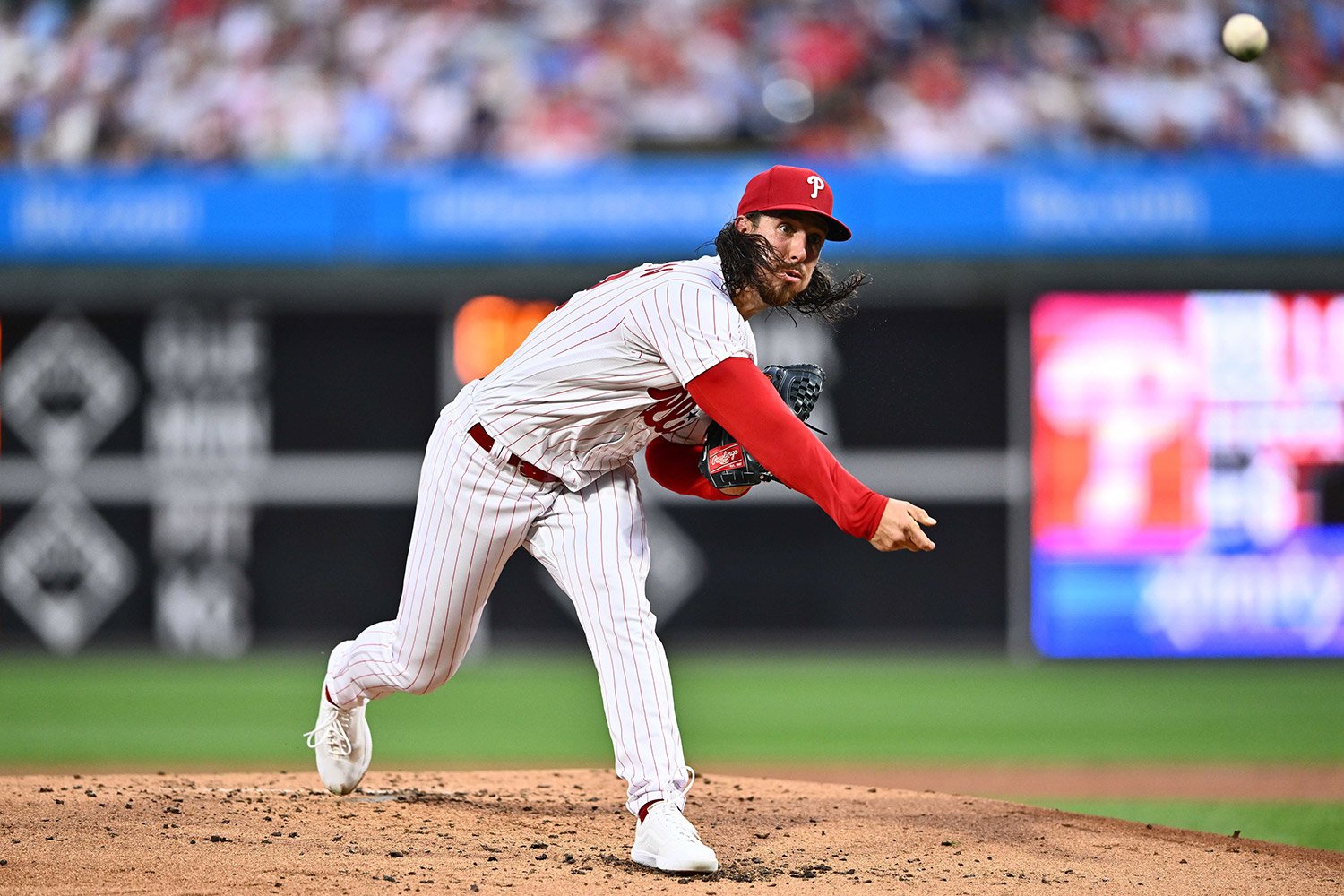 Just when you thought the Brewers could be done this offseason, another rumor rose to the surface. After a busy offseason, the Brewers' rotation will have a new look. Corbin Burnes is out, and DL Hall is in. Even after bringing back Wade Miley, Colin Rea, and Brandon Woodruff, adding Jakob Junis and Joe Ross, and even after Aaron Ashby returns from injury, they may still need to be done. According to Robert Murray on the Baseball Insider livestream Monday, the Brewers are looking at the mid-tier starters that remain on the free agent market. While it may not be Blake Snell or Jordan Montgomery, it's still action worth noting. So, for what kind of players could the Brewers be in play? Here are five players worth monitoring they should consider signing. Michael Lorenzen Let’s start with the two names mentioned on the livestream by Murray. If Miley isn’t ready by the start of the season, Lorenzen would be the perfect veteran addition to the rotation. Lorenzen was one of the five men I mentioned as a player to retool the rotation in my first story on this site in November. While he struggled a bit in the later half of the 2023 season as part of the Phillies, he still pitched a no-hitter in his first home appearance. Lorenzen had a 9-9 record for the season with a 4.18 ERA, a 1.21 WHIP, and a 1.7 WAR. He represented the Tigers in the 2023 All-Star game and was relegated to the bullpen towards the end of the season and collected his first save. Remember that one pitcher from the Reds that gave the Brewers trouble in June 2018? That pitcher hit a solo home run one day and a game-changing grand slam the next. His name was Michael Lorenzen. Though he hasn’t had a plate appearance since 2021, so don't expect him to step into the heart of Milwaukee's lineup any time soon. Lorenzen is a great back of the rotation arm. Since the Crew has decent depth, they can take their time while Lorenzen stretches out for the season. Since he has more experience in the bullpen, he could be used as a long relief arm. He held pitching sessions alongside another pitcher who may or may not be mentioned in late January. The Brewers could’ve been among the 16 teams scouting the 32-year-old pitcher. The Brewers can afford to pay the starter a deal around $8-10 million but can probably get him at a lower price now that it’s March and games have started. Mike Clevinger Clevinger was the second name mentioned in the livestream. Once one of the best pitchers in the Cleveland organization, he had a 3.20 ERA in five seasons, averaging ten strikeouts per nine and maintaining a 1.20 WHIP. Clevinger was traded to the Padres along with others during the shortened 2020 season, during which eight players (including Owen Miller) were involved. His success continued in San Diego, and he was eventually offered a two-year extension. In 2021, however, he missed the entire season while he recovered from Tommy John surgery. Last season, he had a 9-9 record in 24 starts with a 3.77 ERA and a 1.23 WHIP as part of the White Sox organization. Clevinger was the most consistent pitcher in the team’s rotation. He even recorded two complete games. There was a bit of concern when MLB had to step in putting Clevinger under investigation due to an alleged domestic violence and child abuse case. The league made no disciplinary action against the pitcher. Besides the alleged actions outside of baseball, Clevinger has been a solid pitcher since his surgery. While Clevinger has been a fly ball pitcher, he still only had a below-average home run percentage (2.9%) with a home ballpark that had the sixth-highest Park Factor from 2010-2016, according to parkfactor.com. In other words, he gives up fewer home runs while regularly pitching in a hitter-friendly ballpark. The Brewers don’t need a prime Clevinger to have solid production in the rotation. Even a White Sox version of Clevinger would impact this team. After rejecting a $12 million mutual option with Chicago, he may settle for around $8 million salary or less this season as part of a competitive team. Brad Keller Brad Keller is the definition of a low risk/high reward type player. That might sound sketchy at first, but he still has the promise to be a decent pitcher for an organization. The former Royal’s best season came in 2020, when, in nine starts, he threw a 2.47 ERA with a 1.02 WHIP, a 3.43 FIP, and 6.4 hits per nine innings. He was one of the few players who had a complete-game shutout that season. Since that one season, Keller hasn’t had an ERA below 4.00 or a WHIP below 1.50. It is worth noting that Keller is a ground ball pitcher. He has a career 2.1 home run percentage and a below-average opponent slugging percentage (.386). Keller will have to work on his walk rate, which exploded to 8.9 walks per nine innings last season. Keller is only 28 years old and has the tools to be a back-of-the-rotation arm. While the Brewers have plenty of those types of arms already, they have turned many pitchers' careers around. The most recent examples are Hoby Milner, Bryse Wilson, and Colin Rea. Who’s to say they can’t do it again? Sure, Keller could be a young free agent again next year, but one good year in Milwaukee can up his pay. If it goes well, the Brewers have a decent one-year stopgap for the prospects on their way to the big league. Worse case, they spend at most $3 million on a pitcher that is either designated for assignment or becomes a long relief arm similar to Janson Junk. Noah Syndergaard What a fall from grace. Noah Syndergaard was once part of an elite set of arms in the New York Mets rotation. Back in 2015, the man known as Thor managed to strike out over 100 batters in just his first 15 career starts. He took fourth place in the Rookie of the Year voting, while Chicago Cub Kris Bryant ultimately went home with the trophy. The next season, Syndergaard was selected to his first and only All-Star game. In that season, Thor collected a 14-9 record with a 2.60 ERA in 30 starts, striking out 218 batters. He also recorded the best FIP in MLB (2.29) and the lowest home runs per nine innings (0.5). While his numbers didn’t falter, Syndergaard started piling up injuries. He had a torn latissimus dorsi, strained ligaments in his throwing hand in 2017, followed by hand, foot, and mouth disease in 2018, all before receiving Tommy John surgery prior to the 2020 season. He may not have been the same pitcher as in 2016, but he was still productive for a few years. That was until the 2023 season when he joined the Dodgers. After a 1-4 start to the season with a 7.16 ERA in 12 starts, the Cleveland Guardians acquired the pitcher before the deadline. Thor ended his season with a 6.50 ERA with a 1.39 WHIP, striking out 59 batters in 88 2/3 innings. So why would the Brewers want him? Well, for starters, he is still 31 and was last seen throwing with Lorenzen in a session where he was throwing in the 93-95 range. He’s still searching for a job and hasn’t lost much of a step. Don’t look too much into the 2023 season, as that was his worst recorded season since his 2019 campaign, which happened prior to the Tommy John surgery. That season, he had a 4.28 ERA, giving up a National League-leading 94 earned runs while also striking out 202 batters. While the home runs have gone up and the strikeouts have gone down, the opponent batting average last year stood at .252 with a BAbip (batting average on balls in play) is a .223. If he can find a way to give up fewer home runs, Thor has a chance to find his hammer and be a solid pitcher once again. Domingo German Outside of the reigning Cy Young Award-winning pitcher Gerrit Cole, the Yankee’s starting rotation hasn’t been too exciting. However, one pitcher in the rotation threw the first perfect game since Felix Hernandez in 2012. That pitcher was Domingo German. During his perfect game, he only threw 99 pitches, striking out nine Oakland Athletics en route to an 11-0 victory. His performance was the 24th perfect game in MLB history and the fourth for the Yankees' organization. Other than the perfect game, German recorded a 4.56 ERA with career lows in opponent batting average (.207), on-base percentage (.277), and WHIP (1.08). It may not have been his best-recorded season, but it will have a few highlights. Unfortunately, he didn’t finish the season after stepping away from baseball to get treatment for alcohol abuse. It was reported German got into an altercation with manager Aaron Boone while under the influence. He was removed from the 40-man roster a few months later and cleared waivers. This wasn’t his first issue with alcohol, as he was suspended 81 games for domestic violence back in 2019. He was intoxicated at a charity gala when he slapped his girlfriend at the event and became physically violent afterward. While he doesn’t sound like a clubhouse guy, especially for the Milwaukee clubhouse, he may have worked on himself to get better. As of last month, multiple teams have offers out for German. Perhaps a change of scenery and the fun energy the Brewers provide could be a step in the right direction for personal reasons. As for what goes on the field, German can be the fourth or fifth option in the rotation and could continue his success in the NL Central. If they want to use a pitcher like him right away, they might consider signing him to a minor league contract since he won’t be able to get sent down without going through revocable waivers. While the speculation is still out there, the Brewers might still need to be done adding players. Will the Brewers add any of the players listed above? What other players would you like to see the Brewers add? Come back tomorrow when we look at why the Brewers could add one of the pitchers.
- 8 comments
-
- 1
-
-
- michael lorenzen
- mike clevinger
- (and 3 more)
-
As Spring Training games begin, what players need to really perform to earn a spot on the roster? Here are six players that are on the outside looking in. Image courtesy of © Charles LeClaire-USA TODAY Sports Spring training can be a great place to showcase a team's potential now and in the future. For seasoned veterans, they try to shake the rust off after four months away from the baseball diamond. For non-roster invitees, while their spot on the 26-man roster is unlikely, they try to make an impact as it’s their first taste of big-league baseball. But more importantly, it’s for those with uncertainties to show that they belong to the team. The Brewers have made many additions in probably one of the busiest offseason in franchise history. But now it’s time to put their team to the test. Many players are fighting for their right to join the opening-day roster. With that in mind, here are six players who must have great springs to make that roster. Brice Turang Why don’t we start with the man who easily has the most competition this spring? It’s strange to say that a young rookie like Brice Turang, who made the Opening Day roster, has stiff competition for the spot at second base. While he did make the roster and started his career with an infield single, there were struggles with getting on base. While we may remember his first home run being a grand slam off Tommy Hunter on April 3, that may have been his greatest highlight in the first half of his rookie season. Before the All-Star break, he was hitting a .207/.265/.315 line and struck out 52 times over 219 plate appearances. After spending time in Nashville, he was called up in late June and showed progress. The best month of his career was in August when he hit a .256/.326/.326 slash and hit two of his six home runs and drove in nine runs. While Turang was their primary second baseman last season, this year might be different. With the new additions of Oliver Dunn, Vinny Capra, and Christian Arroyo, Turang has his work cut out for him. To make matters worse, prospect Tyler Black is on the brink of breaking MLB levels, and Sal Frelick has been seeing time at second base getting lessons with Red Sox great Dustin Pedroia. Turang doesn’t need to be a power hitter to succeed at the big-league level. Christian Yelich, Willy Adames, Rhys Hoskins, and William Contreras can provide 20+ home runs a season. If he can find a way to raise his average exit velocity (85.5 MPH) and perhaps hits anywhere in the .260 range, then he can easily break into the roster. With two minor league options left, optioning him to Triple-A Nashville isn’t the end of the world. However, there isn’t much left to prove in the minors, and he is ready for MLB service time. It's time to let the kid play some games. Jake Bauers It’s no mystery the Brewers needed a first baseman entering the offseason. While Rowdy Tellez was a decent option, he struggled with the Brewers in the end, and in the end, they non-tendered him. Before letting Tellez walk, the Brewers traded for outfielder and first baseman Jake Bauers from the Yankees. Struggling to land with a team, Bauers was traded to the Yankees on a minor league contract in 2022. He was re-signed to a minor league contract and invited to camp in 2023. He was selected to the active roster after hitting a .304/.488/.797 with nine home runs and 20 RBI. In his first 49 games with the club, he hit a .224 batting average and a .782 OPS. Bauers was placed on the injured list with a left shoulder cuff contusion in July and was activated later that month. Since the injury, he has struggled to hit above the Mendoza line. While Hoskins seems like the starting option at first base, Bauers must be available as a reserve when Hoskins needs a break. Depending on the situation, he may see some time as an outfielder or designated hitter. The Brewers must’ve seen something that can correct his ability to hit the ball. His 34.9 strikeout percentage is very concerning, but his 48.7 hard hit percentage is ten percent more than the average MLB player. He may be a decent hitter off the bench if the Crew can find something to help him get on base. While he has three years of club control left, Bauers has no more minor league options. Sending Bauers down will require the team to designate him for assignment, opening a spot on the 40-man roster. If the Brewers aren’t satisfied with Bauers's progress, Owen Miller and Tyler Black have some experience playing first base. This is Bauers's only chance to make the Brewers roster. Even a batting average over .230 may be enough to make the roster. Garrett Mitchell After missing nearly the entire season due to a shoulder injury sliding into a base back in April, Garrett Mitchell is back and ready to compete for a roster spot. While it sounds silly to think he is on the bubble for the last few spots on the roster, there is a little more competition than last year. Christian Yelich, Blake Perkins, Joey Weimer, Sal Frelick, Chris Roller, and top prospect Jackson Chourio are all competing for at most five outfield roster spots. We know Frelick is getting playing time at third and second this spring, but it seems more like an emergency option if Turang or an infielder we mention later gets into a slump. Mitchell is currently hitting a .278 batting average with a .795 OPS, a 120 OPS+, and a 119 wRC+. However, that is from a sample size of 141 plate appearances. We could see that number remain the same, but it could come down because of his prior injury. There is a real chance Mitchell will be seen as the fourth or fifth outfielder. He could platoon with Weimer in the outfield if all goes well in spring. However, if Mitchell struggles and Chourio, Turang Wiemer, and Perkins start producing, Mitchell could start in Nashville. He does have all three of his minor league options, but it would be rough to see the former first-rounder be downgraded on his comeback season. Eric Haase When the Brewers initially signed Eric Haase, we thought he was the bona fide front-runner for the backup catcher position. Fast forward to today, and he’s got two other catchers in his way. While Austin Nola may have just been released, Jeferson Quero and Gary Sanchez compete for time behind the plate. Quero was added to the 40-man to prevent the Crew from losing him in the Rule 5 Draft. Quero could benefit from spending time in Nashville as he hasn’t seen a single at-bat in triple-A. Then again, tell Derek Jeter, who skipped triple-A together, As for Sanchez, he was signed to a one-year $3 million deal with incentives that can make it $7 million. The organization is worried about Sanchez’s wrist, which he injured in September on a hit by a pitch. While it seems better, he may have re-aggravated it during workouts. According to Ken Rosenthal of The Athletic, the Brewers planned to keep three catchers on the Opening Day roster. This could mean this is a two-horse race. Hasse has had two successful seasons with the Tigers in 2021 and 2022. Combining those seasons, he had a .248/.295/.451 with 36 home runs and 105 RBI. If Sanchez is seen as the DH for the team and Haase can find that magic again, he’d be a shoo-in for the backup role. He is signed on a split deal but is currently out of minor-league options. If, for some reason, he fails to have a good spring, he would then be removed from the 40-man and will have to clear waivers to stay with the organization. Let’s hope it doesn’t get to that point. Andruw Monasterio Remember that infielder I mentioned earlier who could lose the starting job to Frelick? Well, say hello to the forgotten man on the team, Andruw Monasterio. Monasterio was called up after Adames got hit in the face with a foul ball. He became the regular third baseman in an odd and unexpected turn until Josh Donaldson took over in September. Monasterio now has a chance to earn that position back, but he will have a bit of competition. Barring any last-second additions to the roster, Monasterio, Dunn, Ortiz, Black, and now Frelick could be a regular third baseman. A good spring similar to last year’s regular season (.259/.330/.348) might be enough to get plenty of time at third. A bad one, however, could result in an option down to Triple A-Nashville or an infield platoon at best. Joe Ross While Joe Ross and Aaron Ashby are similar and could’ve made this list, Ashby has already been signed for multiple years and has a few minor-league options. As for Ross, there is a little more pressure. The last time we saw Ross in MLB was when he was with the Nationals. He suffered an elbow injury in August of 2021, ending his season and eventually leading to Tommy John surgery in May. As part of the Giants minor league system, he made seven starts with a 5.14 ERA, giving up 18 hits in 14 innings. While his numbers are signs for concern, you have to remember the Brewers have a very talented pitching staff and have a reputation for turning a pitchers career around. Just look at Bryse Wilson. Elvis Peguero and Hoby Milner who all had a 4.00+ ERA prior to joining the Brewers. Even Wade Miley’s best numbers in his entire career arguably came as a Brewer. Ross doesn’t have any more minor league options left and signed to a major league contract meaning this may be his last chance to break onto a big league team. He could be used in long relief like Wilson but he could easily be seen as a starter. Along with Ross and Ashby, Jakob Junis, Colin Rea, DL Hall, Robert Gasser and Jacob Misiorowski are all competing for the last few spots in the starting rotation. The latter two are roster invites so there is no consequences for not making the 26 man roster. But if any or all of these players outperform Ross, then he could be removed from the 40 man. A lot of pressure will be on Ross. However, if he can be even close to his 2016 form where he had a 3.43 ERA with a 3.49 FIP and 1.305 WHIP, he could make the roster as the fifth man in the rotation. Do you believe any or all of these guys will be on the roster come April Know of any other players who need that a good showing in spring? Let us know in the comments below. View full article
-
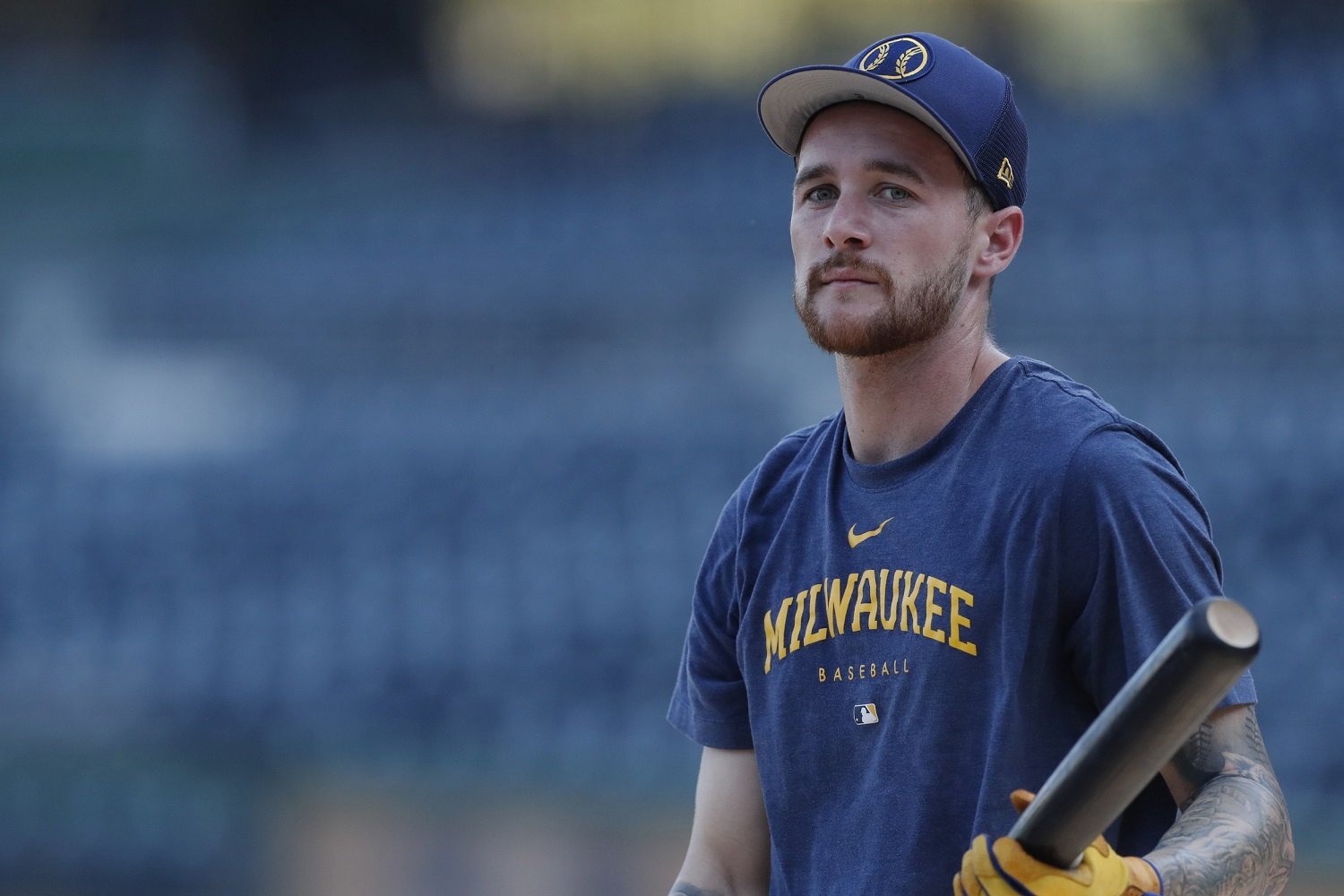 Spring training can be a great place to showcase a team's potential now and in the future. For seasoned veterans, they try to shake the rust off after four months away from the baseball diamond. For non-roster invitees, while their spot on the 26-man roster is unlikely, they try to make an impact as it’s their first taste of big-league baseball. But more importantly, it’s for those with uncertainties to show that they belong to the team. The Brewers have made many additions in probably one of the busiest offseason in franchise history. But now it’s time to put their team to the test. Many players are fighting for their right to join the opening-day roster. With that in mind, here are six players who must have great springs to make that roster. Brice Turang Why don’t we start with the man who easily has the most competition this spring? It’s strange to say that a young rookie like Brice Turang, who made the Opening Day roster, has stiff competition for the spot at second base. While he did make the roster and started his career with an infield single, there were struggles with getting on base. While we may remember his first home run being a grand slam off Tommy Hunter on April 3, that may have been his greatest highlight in the first half of his rookie season. Before the All-Star break, he was hitting a .207/.265/.315 line and struck out 52 times over 219 plate appearances. After spending time in Nashville, he was called up in late June and showed progress. The best month of his career was in August when he hit a .256/.326/.326 slash and hit two of his six home runs and drove in nine runs. While Turang was their primary second baseman last season, this year might be different. With the new additions of Oliver Dunn, Vinny Capra, and Christian Arroyo, Turang has his work cut out for him. To make matters worse, prospect Tyler Black is on the brink of breaking MLB levels, and Sal Frelick has been seeing time at second base getting lessons with Red Sox great Dustin Pedroia. Turang doesn’t need to be a power hitter to succeed at the big-league level. Christian Yelich, Willy Adames, Rhys Hoskins, and William Contreras can provide 20+ home runs a season. If he can find a way to raise his average exit velocity (85.5 MPH) and perhaps hits anywhere in the .260 range, then he can easily break into the roster. With two minor league options left, optioning him to Triple-A Nashville isn’t the end of the world. However, there isn’t much left to prove in the minors, and he is ready for MLB service time. It's time to let the kid play some games. Jake Bauers It’s no mystery the Brewers needed a first baseman entering the offseason. While Rowdy Tellez was a decent option, he struggled with the Brewers in the end, and in the end, they non-tendered him. Before letting Tellez walk, the Brewers traded for outfielder and first baseman Jake Bauers from the Yankees. Struggling to land with a team, Bauers was traded to the Yankees on a minor league contract in 2022. He was re-signed to a minor league contract and invited to camp in 2023. He was selected to the active roster after hitting a .304/.488/.797 with nine home runs and 20 RBI. In his first 49 games with the club, he hit a .224 batting average and a .782 OPS. Bauers was placed on the injured list with a left shoulder cuff contusion in July and was activated later that month. Since the injury, he has struggled to hit above the Mendoza line. While Hoskins seems like the starting option at first base, Bauers must be available as a reserve when Hoskins needs a break. Depending on the situation, he may see some time as an outfielder or designated hitter. The Brewers must’ve seen something that can correct his ability to hit the ball. His 34.9 strikeout percentage is very concerning, but his 48.7 hard hit percentage is ten percent more than the average MLB player. He may be a decent hitter off the bench if the Crew can find something to help him get on base. While he has three years of club control left, Bauers has no more minor league options. Sending Bauers down will require the team to designate him for assignment, opening a spot on the 40-man roster. If the Brewers aren’t satisfied with Bauers's progress, Owen Miller and Tyler Black have some experience playing first base. This is Bauers's only chance to make the Brewers roster. Even a batting average over .230 may be enough to make the roster. Garrett Mitchell After missing nearly the entire season due to a shoulder injury sliding into a base back in April, Garrett Mitchell is back and ready to compete for a roster spot. While it sounds silly to think he is on the bubble for the last few spots on the roster, there is a little more competition than last year. Christian Yelich, Blake Perkins, Joey Weimer, Sal Frelick, Chris Roller, and top prospect Jackson Chourio are all competing for at most five outfield roster spots. We know Frelick is getting playing time at third and second this spring, but it seems more like an emergency option if Turang or an infielder we mention later gets into a slump. Mitchell is currently hitting a .278 batting average with a .795 OPS, a 120 OPS+, and a 119 wRC+. However, that is from a sample size of 141 plate appearances. We could see that number remain the same, but it could come down because of his prior injury. There is a real chance Mitchell will be seen as the fourth or fifth outfielder. He could platoon with Weimer in the outfield if all goes well in spring. However, if Mitchell struggles and Chourio, Turang Wiemer, and Perkins start producing, Mitchell could start in Nashville. He does have all three of his minor league options, but it would be rough to see the former first-rounder be downgraded on his comeback season. Eric Haase When the Brewers initially signed Eric Haase, we thought he was the bona fide front-runner for the backup catcher position. Fast forward to today, and he’s got two other catchers in his way. While Austin Nola may have just been released, Jeferson Quero and Gary Sanchez compete for time behind the plate. Quero was added to the 40-man to prevent the Crew from losing him in the Rule 5 Draft. Quero could benefit from spending time in Nashville as he hasn’t seen a single at-bat in triple-A. Then again, tell Derek Jeter, who skipped triple-A together, As for Sanchez, he was signed to a one-year $3 million deal with incentives that can make it $7 million. The organization is worried about Sanchez’s wrist, which he injured in September on a hit by a pitch. While it seems better, he may have re-aggravated it during workouts. According to Ken Rosenthal of The Athletic, the Brewers planned to keep three catchers on the Opening Day roster. This could mean this is a two-horse race. Hasse has had two successful seasons with the Tigers in 2021 and 2022. Combining those seasons, he had a .248/.295/.451 with 36 home runs and 105 RBI. If Sanchez is seen as the DH for the team and Haase can find that magic again, he’d be a shoo-in for the backup role. He is signed on a split deal but is currently out of minor-league options. If, for some reason, he fails to have a good spring, he would then be removed from the 40-man and will have to clear waivers to stay with the organization. Let’s hope it doesn’t get to that point. Andruw Monasterio Remember that infielder I mentioned earlier who could lose the starting job to Frelick? Well, say hello to the forgotten man on the team, Andruw Monasterio. Monasterio was called up after Adames got hit in the face with a foul ball. He became the regular third baseman in an odd and unexpected turn until Josh Donaldson took over in September. Monasterio now has a chance to earn that position back, but he will have a bit of competition. Barring any last-second additions to the roster, Monasterio, Dunn, Ortiz, Black, and now Frelick could be a regular third baseman. A good spring similar to last year’s regular season (.259/.330/.348) might be enough to get plenty of time at third. A bad one, however, could result in an option down to Triple A-Nashville or an infield platoon at best. Joe Ross While Joe Ross and Aaron Ashby are similar and could’ve made this list, Ashby has already been signed for multiple years and has a few minor-league options. As for Ross, there is a little more pressure. The last time we saw Ross in MLB was when he was with the Nationals. He suffered an elbow injury in August of 2021, ending his season and eventually leading to Tommy John surgery in May. As part of the Giants minor league system, he made seven starts with a 5.14 ERA, giving up 18 hits in 14 innings. While his numbers are signs for concern, you have to remember the Brewers have a very talented pitching staff and have a reputation for turning a pitchers career around. Just look at Bryse Wilson. Elvis Peguero and Hoby Milner who all had a 4.00+ ERA prior to joining the Brewers. Even Wade Miley’s best numbers in his entire career arguably came as a Brewer. Ross doesn’t have any more minor league options left and signed to a major league contract meaning this may be his last chance to break onto a big league team. He could be used in long relief like Wilson but he could easily be seen as a starter. Along with Ross and Ashby, Jakob Junis, Colin Rea, DL Hall, Robert Gasser and Jacob Misiorowski are all competing for the last few spots in the starting rotation. The latter two are roster invites so there is no consequences for not making the 26 man roster. But if any or all of these players outperform Ross, then he could be removed from the 40 man. A lot of pressure will be on Ross. However, if he can be even close to his 2016 form where he had a 3.43 ERA with a 3.49 FIP and 1.305 WHIP, he could make the roster as the fifth man in the rotation. Do you believe any or all of these guys will be on the roster come April Know of any other players who need that a good showing in spring? Let us know in the comments below.
 -
Due to a slow-moving market, MLB Commissioner Rob Manfred suggested a free agent deadline to speed up the process. Could that have a lasting effect on future Milwaukee Brewers offseasons? Image courtesy of © Kim Klement Neitzel-USA TODAY Sports Man, is it taking forever for some free agents players to find new teams. Spring Training has begun, and players like the reigning NL Cy Young Award winner Blake Snell still are free agents. What if there was a way to ensure players sign sooner? When Rob Manfred announced he was going to step down from his role as commissioner after his current term, he also suggested a potential deadline for free agents. While nothing is official, the fact that it is being talked about at that level makes it worth further exploration. While agents like Scott Boras might not like the idea, it does help speed the process along and gives that hot stove feel fans are looking for during the offseason. But what could that mean for teams like the Milwaukee Brewers? The Brewers are a small-market team. While they could afford virtually every contract paid out in MLB history, the fact that other teams have much wider and deeper revenue streams will always make it easier for them to offer such deals. While there have been times when the Brewers spent some cash to add players (see: Lorenzo Cain), it’s still rare to see small-market teams make a big splash on the market. There is a chance a deadline could have a major impact on the way the Brewers and other small-market teams make their signings. Here’s why a potential free agent deadline will change the Brewers offseason plans going forward. Goodbye Brewers Month Many fans look forward to what players their favorite teams add from the market. While the Brewers can’t buy top-of-the-line talent like Shohei Ohtani and Aaron Judge, they still have spent a good chunk of money to bring in effective talent. In the last seven offseasons, the Brewers have made several splashes. There’s the aforementioned Cain deal, where the Brewers got the center fielder on a five-year, $80-million contract. In 2021, the Brewers added Kolton Wong on a two-year, $18-million pact with an option for a third year. In 2019, Yasmani Grandal was signed to a one-year deal eventually worth $18.25 million. Most recently, the team added Rhys Hoskins on a two-year, $34-million deal. There is one common trend with all of these deals: they all occurred with less than two months prior to catchers and pitchers reporting to camp. Each occurred after the New Year. There’s a good reason why it is unofficially Brewers Month, once our calendars read January. If we are to believe what the commissioner has suggested, the free agent deadline could be set as soon as the end of December. If this deadline had been added in an earlier collective bargaining agreement (CBA), none of these deals would have happened, and these players may not have landed with the Brewers. Should MLB go through with (presumably) a December deadline, organizations will have to sign their players as soon as possible. While the Crew have made substantial additions in December during prior offseasons, those were mainly through avenues of trade, rather than the free agent market. I’m sure if the league were to issue a deadline, it would be for offering multiyear deals to free agents. But that still will take away the teams’ odd of keeping a veteran player beyond one season. Regardless, Brewers Month will cease to exist and big players could sign with other organizations for multiple seasons elsewhere. More Bidding Wars When you are a small-market team, you can only spend so much money before you start burning holes in your pockets and working into the red for the season. Sure, marking up prices can result in more profits but it can also become less affordable for the average fan, leaving more empty seats in the stands. That’s why most small-market teams rely on acquiring young prospects in the draft and trades in hopes to develop them and have them become a regular in the organization for at least six seasons. Recently, small-market teams have signed multi-year extensions beyond their arbitration years and backloaded the money. For example, Bobby Witt Jr.signed an 11-year, $288 million extension but is only has a $2-million base salary in 2024. What does this have to do with a deadline? Let’s assume this deadline is on December 31 and will be the last day for players to sign multi-year deals. That means if players want to get that big-money deal they are searching for, they’ll have to accept something prior to December 31. Since there will be added pressure to get that long-term contract, teams have the leverage and could offer deals with lower average annual salaries. That doesn’t mean it won’t get expensive, as there might be teams trying to outbid each other to get a player long term. But once that deadline passes, the pressure shifts another direction. With players only allowed to sign one-year deals, they can now wait for the best offer. There will be tons of bidding wars amongst teams. No matter how the deadline works, teams will have to make their best moves earlier in the winter than in the past. The Brewers' highest-paid free agent was Cain, on that 2018 deal. Like other small-market teams, the Crew can’t afford getting into a bidding war, especially against the other big-market clubs out there. Players now like Matt Chapman, Blake Snell and Cody Bellinger, who all declined the qualifying offer, are looking for long-term deals around $20-25 million annually. It’s not like the small-market teams have a high chance of landing these guys, but their odds could spiral downward when it gets later into the offseason. Additional Deadlines & Midseason Additions Injuries, releases, and DFAs happen all throughout the season. In the past, organizations would fill holes with other players using either the next man up, waiver claims or free agents. However, we don’t know the exact details that would come with a deadline. For now, let’s continue using a late December multi-year deadline. Even if the market picks up in December, it could slow back down in January. This leaves an opening for a potential free agent hard deadline. If it gets to that point, then deals like the Jackie Bradley Jr. signing in March 2021 and the details of Julio Teherán’s deal midseason would have been different. We won’t know how the league plans to use the deadline until they adopt one, should they manage to actually do so. Until then, we have to cover all different scenarios. While it may speed up the process of free agency and excite baseball fans, it can also affect the way small-market teams like the Brewers have to use their spending money. Do you want to see a free agent deadline? Are there other solutions to getting the best free agents off the market faster? Let us know. View full article
-
How a Free Agent Deadline Could Affect the Brewers Future Offseasons
Ryan Pollak posted an article in Brewers
 Man, is it taking forever for some free agents players to find new teams. Spring Training has begun, and players like the reigning NL Cy Young Award winner Blake Snell still are free agents. What if there was a way to ensure players sign sooner? When Rob Manfred announced he was going to step down from his role as commissioner after his current term, he also suggested a potential deadline for free agents. While nothing is official, the fact that it is being talked about at that level makes it worth further exploration. While agents like Scott Boras might not like the idea, it does help speed the process along and gives that hot stove feel fans are looking for during the offseason. But what could that mean for teams like the Milwaukee Brewers? The Brewers are a small-market team. While they could afford virtually every contract paid out in MLB history, the fact that other teams have much wider and deeper revenue streams will always make it easier for them to offer such deals. While there have been times when the Brewers spent some cash to add players (see: Lorenzo Cain), it’s still rare to see small-market teams make a big splash on the market. There is a chance a deadline could have a major impact on the way the Brewers and other small-market teams make their signings. Here’s why a potential free agent deadline will change the Brewers offseason plans going forward. Goodbye Brewers Month Many fans look forward to what players their favorite teams add from the market. While the Brewers can’t buy top-of-the-line talent like Shohei Ohtani and Aaron Judge, they still have spent a good chunk of money to bring in effective talent. In the last seven offseasons, the Brewers have made several splashes. There’s the aforementioned Cain deal, where the Brewers got the center fielder on a five-year, $80-million contract. In 2021, the Brewers added Kolton Wong on a two-year, $18-million pact with an option for a third year. In 2019, Yasmani Grandal was signed to a one-year deal eventually worth $18.25 million. Most recently, the team added Rhys Hoskins on a two-year, $34-million deal. There is one common trend with all of these deals: they all occurred with less than two months prior to catchers and pitchers reporting to camp. Each occurred after the New Year. There’s a good reason why it is unofficially Brewers Month, once our calendars read January. If we are to believe what the commissioner has suggested, the free agent deadline could be set as soon as the end of December. If this deadline had been added in an earlier collective bargaining agreement (CBA), none of these deals would have happened, and these players may not have landed with the Brewers. Should MLB go through with (presumably) a December deadline, organizations will have to sign their players as soon as possible. While the Crew have made substantial additions in December during prior offseasons, those were mainly through avenues of trade, rather than the free agent market. I’m sure if the league were to issue a deadline, it would be for offering multiyear deals to free agents. But that still will take away the teams’ odd of keeping a veteran player beyond one season. Regardless, Brewers Month will cease to exist and big players could sign with other organizations for multiple seasons elsewhere. More Bidding Wars When you are a small-market team, you can only spend so much money before you start burning holes in your pockets and working into the red for the season. Sure, marking up prices can result in more profits but it can also become less affordable for the average fan, leaving more empty seats in the stands. That’s why most small-market teams rely on acquiring young prospects in the draft and trades in hopes to develop them and have them become a regular in the organization for at least six seasons. Recently, small-market teams have signed multi-year extensions beyond their arbitration years and backloaded the money. For example, Bobby Witt Jr.signed an 11-year, $288 million extension but is only has a $2-million base salary in 2024. What does this have to do with a deadline? Let’s assume this deadline is on December 31 and will be the last day for players to sign multi-year deals. That means if players want to get that big-money deal they are searching for, they’ll have to accept something prior to December 31. Since there will be added pressure to get that long-term contract, teams have the leverage and could offer deals with lower average annual salaries. That doesn’t mean it won’t get expensive, as there might be teams trying to outbid each other to get a player long term. But once that deadline passes, the pressure shifts another direction. With players only allowed to sign one-year deals, they can now wait for the best offer. There will be tons of bidding wars amongst teams. No matter how the deadline works, teams will have to make their best moves earlier in the winter than in the past. The Brewers' highest-paid free agent was Cain, on that 2018 deal. Like other small-market teams, the Crew can’t afford getting into a bidding war, especially against the other big-market clubs out there. Players now like Matt Chapman, Blake Snell and Cody Bellinger, who all declined the qualifying offer, are looking for long-term deals around $20-25 million annually. It’s not like the small-market teams have a high chance of landing these guys, but their odds could spiral downward when it gets later into the offseason. Additional Deadlines & Midseason Additions Injuries, releases, and DFAs happen all throughout the season. In the past, organizations would fill holes with other players using either the next man up, waiver claims or free agents. However, we don’t know the exact details that would come with a deadline. For now, let’s continue using a late December multi-year deadline. Even if the market picks up in December, it could slow back down in January. This leaves an opening for a potential free agent hard deadline. If it gets to that point, then deals like the Jackie Bradley Jr. signing in March 2021 and the details of Julio Teherán’s deal midseason would have been different. We won’t know how the league plans to use the deadline until they adopt one, should they manage to actually do so. Until then, we have to cover all different scenarios. While it may speed up the process of free agency and excite baseball fans, it can also affect the way small-market teams like the Brewers have to use their spending money. Do you want to see a free agent deadline? Are there other solutions to getting the best free agents off the market faster? Let us know.
 -
Let me explain. With the team trying to compete now, the Brewers find more value keeping Adames for the playoffs than keeping Turang. Turang and Adames have varying values depending on the team. A team that is rebuilding, let's say the Athletics, find Turang more valuable because they could use him to rebuild for the future. In that same breathe the Dodgers would value Adames more because they need a shortstop for just the season maybe more. If the Brewers are trying to make one last run (signs point yes) then buying a player in a trade with Turang IMO makes the most sense.
-
3 Brice Turang Trade Packages to Make the 2024 Brewers Better
Ryan Pollak posted an article in Brewers
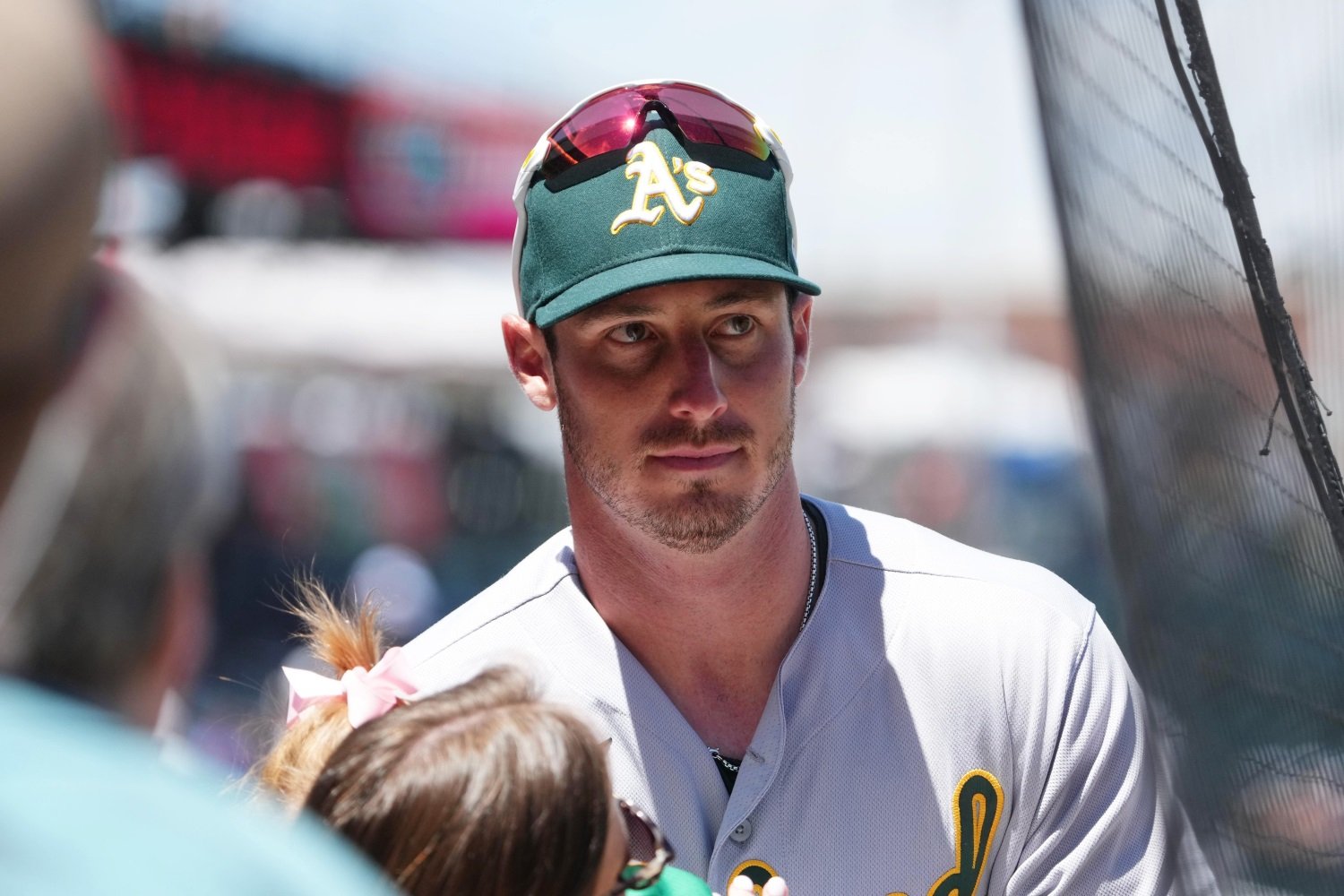 There’s an argument out there that the Brewers are likely to trade Willy Adames at some point this year. However, does it make more sense to trade away Brice Turang? Yesterday, I argued it does, because it's Turang who might fetch more and Adames who will help the 2024 team more. Today we will be looking at potential fits and trades for the Brewers that could involve Turang. While Adames may be the better player now, Turang’s youth and six years of club control makes him valuable on the market for teams that may want to sell players of their own. There is no need or rush to make a trade, but here are a few trade partners who could be interested. Miami Marlins: Edward Cabrera, RHP Let’s start with the inspiration for this miniseries of articles. On Friday, our partner site Fish On First posted an article on the potential for the Marlins to trade for Adames. When we shared it on our forum page, it became an unpopular opinion to sell him there. However, one user suggested trading away Turang and maybe a prospect for one of the starting pitchers they are willing to sell. The Marlins have reportedly been open to trading virtually anyone on their roster. At first the Brewers may seem like a fit for Luis Arráez or Jake Burger. But after the Corbin Burnes trade, their starting rotation has a lot of questions. While Freddy Peralta and Wade Miley have clear roles, the other three spots are up for grabs. Aaron Ashby, Joe Ross, Colin Rea, DL Hall, Robert Gasser and recently-signed Jakob Junis are all vying for regular spots, though Rea and Junis certainly have the inside track on two of the three vacancies. To make things a little more certain, the Brewers could try to add a young pitcher from the Marlins organization. While Jesús Luzardo has the most experience, the Brewers don’t need another left-handed pitcher in the mix, especially if they are confident in Hall or Ashby. With injury-ruined Sixto Sánchez and neonate Eury Pérez only having one season of experience, there is only one other option for the Brewers to look at: Edward Cabrera. In three seasons with the Marlins, Cabrera has a 4.01 ERA, with a 1.34 WHIP and 10.1 strikeouts per nine innings. His best season was in 2022, when he had a 6-4 record with a 3.01 ERA, a 1.04 WHIP, and a 137 ERA+ in 14 starts. He hasn’t been on the 26-man roster for a whole season, but will have five seasons of club control. The Marlins already have a young shortstop in Xavier Edwards, but he's had his own struggles in matriculating to the big leagues, and fellow middle infielder Jon Berti isn’t getting younger. Adding Turang would give them another option. With Turang having experience at second base all last season, it makes it easier to part ways with the All-Star Arráez in some later trade. While Turang alone could be good enough, adding an arm who can eventually be a part of the rotation for the Fish in the future should get the deal done. Logan Henderson could be an ascending prospect, capable of helping in Miami as early as 2025. At 21 years old, Henderson came off a full season of Single-A baseball with a 2.75 ERA, a 0.97 WHIP, and 106 strikeouts in 78 2/3 innings. He should be able to leap into Double A at some point this season. He had elbow surgery on his throwing arm a few years ago, but he still has a fastball touching the mid-90s and a plus changeup. This deal makes the Brewers' rotation stronger. Cabrera would be third in the rotation, and Rea earned his start in the rotation based on last year, leaving the final spot up for grabs. Junis and Hall both have a legitimate shot at starting, but while the Crew seemed high on the pitcher they got for Burnes as a starter, the price for which they signed Junis tells us he would get the next shot. Oakland Athletics: Brent Rooker, OF/DH Well, wasn’t this a surprise for the A’s. After having stints in Minnesota, San Diego, and Kansas City, the A’s claimed the outfielder over the 2022-23 offseason. What happened next was an All-Star-type season. He launched 30 home runs with a .246 batting average, a .817 OPS and a 130 OPS+. He knows how to hit the ball having a 49.5% hard-hit rate, a 15.6% barrel rate and a 37.3% sweet spot percentage. His average velocity off the bat sits at 91.6 MPH. His best comes against left-handed pitchers. In 175 plate appearances, he had a .279/.354/.520 line, hitting 10 of his homers against southpaws. The only big concern with him is his high strikeout rate (32.7%), which was the highest among qualifying AL hitters. While the Brewers have a ton of outfield depth, they can still add a regular DH. Rooker can fulfill that role and try to work on making contact with the ball. He would be in a more hitter-friendly park, though, so we could see better numbers than what he recorded in Oakland. The biggest thing to note is that the Athletics aren’t going to be competitive for the 2024 season. Rooker is also 29 years old and has four years of club control. The team could inject some youth by acquiring Turang. The Athletics lost Tony Kemp in free agency. Their starting shortstop, Aledmys Díaz, is 33 years old and has one year left on his contract. (He's also not really a shortstop, except in the loosest sense of the word.) With a lot of young players already on their 40-man roster, Turang could be a decent platoon option at second or shortstop. The Athletics already have a former Brewers outfielder in Esteury Ruiz. Why not add another one, in switch-hitting Blake Perkins? Perkins is going to have a hard time finding at-bats with the Brewers this season. Yelich, Jackson Chourio, Sal Frelick, Garrett Mitchell, and Joey Wiemer are all ahead of him on the depth chart. With the loss of Rooker, the A’s could move Miguel Andújar or Seth Brown into the DH spot. This would give Perkins more opportunities to play the outfield. He’d play more of a platoon role, but at least he’d be given more opportunities in green and yellow. Both Perkins and Turang have six years of club control left and are cheap options who can help the anemic A's for years to come. It won’t put them back on track, but maybe it helps them develop a young core for their MLB roster. Los Angeles Angels: Luis Rengifo, INF Now this one seems like a head scratcher. Trading a prospect Infielder who has club control for six years for a veteran player that will be gone by 2026? Adames will be gone by next season and doesn’t fix the logjam in the infield. Why are we getting older? What's the point? Hear me out on this one. I understand that Turang is only 24, and can play second base at a high level. I know the likes of J.J. Hardy and Rickie Weeks had rough first years, then exploded on the scene a year or two later. But lucky for the Brewers, they have lots of infield depth in the farm system. I’ve mentioned Oliver Dunn, Tyler Black, Brock Wilken, and Vinny Capra in the past. But I haven’t mentioned future players like Eric Brown Jr., Cooper Pratt, Eric Bitonti and Luke Adams. All these guys could be ready for the big leagues by the 2025 or 2026 seasons. The Brewers are one of the top farm systems in the game for a reason. The Angels are in the exact opposite situation. When it seemed like they were already out of the running for the playoffs, the team still tried to compete, buying a ton of veteran players with their prospects at the deadline. A month later, they placed almost every player for whom they had traded on waivers, ending their season with a thud. With Shohei Ohtani gone, the team has to start from scratch. Dark days may be ahead in Anaheim, but the turnaround can start by selling middle infielder Luis Rengifo. The soon-to-be 27-year-old switch-hitter hit .264/.339/.444 with 16 home runs last season. His best hitting comes against left-handed pitchers, but he consistently gets on base no matter what side of the plate he’s on. The Angels front office doesn’t want to admit it, but the team is in for a rebuild. Why not get it started with a nice, solid package of young players? The Brewers traded Hunter Renfroe to Anaheim in late 2022. Why not rekindle that relationship and make another trade? The Angels will start by adding to their young core with Turang. He could move to his natural shortstop position. As for Zach Neto, he could slide over to second to fill the hole left behind by Rengifo. Justin Yeager and Nick Bennett are decent arms who can, eventually, round out a bullpen. Bennett has made a couple of outings in Triple-A and is one call away from the majors. Even though Yeager spent most of the 2023 campaign on the injured list, his numbers in 2022 suggest he could be a great closer within the next few years. As for the Crew, the infield will look more like Ortiz, Adames, Rengifo and Hoskins from left to right. In 2025, Ortiz can slide to shortstop and Black could see more reps at third. Then, in 2026, Black could move to second or to the outfield, and maybe Wilken could be ready by then. If not, maybe the team has something else in mind at third. Turang can be the centerpiece of a prospect package to land a key player for this roster. He does have two minor-league options and six years of control left, so there is time to consider if he really is the everyday second baseman this season. This front office has proved themselves to be opportunistic with players who have substantial trade value, though, and Turang might quietly fit that mold. Will the Brewers deal Brice Turang? Is Turang the future for the Brewers infield? Are there other players you can see the Brewers can trade or add prior to the start of the season? Let us know.
- 3 comments
-
- 1
-
-
- edward cabrera
- brent rooker
- (and 2 more)
-
Would the Brewers be better off dealing Brice Turang? Here are a few trade packages that could boost the lineup for 2024 and beyond. Image courtesy of © Ron Chenoy-USA TODAY Sports There’s an argument out there that the Brewers are likely to trade Willy Adames at some point this year. However, does it make more sense to trade away Brice Turang? Yesterday, I argued it does, because it's Turang who might fetch more and Adames who will help the 2024 team more. Today we will be looking at potential fits and trades for the Brewers that could involve Turang. While Adames may be the better player now, Turang’s youth and six years of club control makes him valuable on the market for teams that may want to sell players of their own. There is no need or rush to make a trade, but here are a few trade partners who could be interested. Miami Marlins: Edward Cabrera, RHP Let’s start with the inspiration for this miniseries of articles. On Friday, our partner site Fish On First posted an article on the potential for the Marlins to trade for Adames. When we shared it on our forum page, it became an unpopular opinion to sell him there. However, one user suggested trading away Turang and maybe a prospect for one of the starting pitchers they are willing to sell. The Marlins have reportedly been open to trading virtually anyone on their roster. At first the Brewers may seem like a fit for Luis Arráez or Jake Burger. But after the Corbin Burnes trade, their starting rotation has a lot of questions. While Freddy Peralta and Wade Miley have clear roles, the other three spots are up for grabs. Aaron Ashby, Joe Ross, Colin Rea, DL Hall, Robert Gasser and recently-signed Jakob Junis are all vying for regular spots, though Rea and Junis certainly have the inside track on two of the three vacancies. To make things a little more certain, the Brewers could try to add a young pitcher from the Marlins organization. While Jesús Luzardo has the most experience, the Brewers don’t need another left-handed pitcher in the mix, especially if they are confident in Hall or Ashby. With injury-ruined Sixto Sánchez and neonate Eury Pérez only having one season of experience, there is only one other option for the Brewers to look at: Edward Cabrera. In three seasons with the Marlins, Cabrera has a 4.01 ERA, with a 1.34 WHIP and 10.1 strikeouts per nine innings. His best season was in 2022, when he had a 6-4 record with a 3.01 ERA, a 1.04 WHIP, and a 137 ERA+ in 14 starts. He hasn’t been on the 26-man roster for a whole season, but will have five seasons of club control. The Marlins already have a young shortstop in Xavier Edwards, but he's had his own struggles in matriculating to the big leagues, and fellow middle infielder Jon Berti isn’t getting younger. Adding Turang would give them another option. With Turang having experience at second base all last season, it makes it easier to part ways with the All-Star Arráez in some later trade. While Turang alone could be good enough, adding an arm who can eventually be a part of the rotation for the Fish in the future should get the deal done. Logan Henderson could be an ascending prospect, capable of helping in Miami as early as 2025. At 21 years old, Henderson came off a full season of Single-A baseball with a 2.75 ERA, a 0.97 WHIP, and 106 strikeouts in 78 2/3 innings. He should be able to leap into Double A at some point this season. He had elbow surgery on his throwing arm a few years ago, but he still has a fastball touching the mid-90s and a plus changeup. This deal makes the Brewers' rotation stronger. Cabrera would be third in the rotation, and Rea earned his start in the rotation based on last year, leaving the final spot up for grabs. Junis and Hall both have a legitimate shot at starting, but while the Crew seemed high on the pitcher they got for Burnes as a starter, the price for which they signed Junis tells us he would get the next shot. Oakland Athletics: Brent Rooker, OF/DH Well, wasn’t this a surprise for the A’s. After having stints in Minnesota, San Diego, and Kansas City, the A’s claimed the outfielder over the 2022-23 offseason. What happened next was an All-Star-type season. He launched 30 home runs with a .246 batting average, a .817 OPS and a 130 OPS+. He knows how to hit the ball having a 49.5% hard-hit rate, a 15.6% barrel rate and a 37.3% sweet spot percentage. His average velocity off the bat sits at 91.6 MPH. His best comes against left-handed pitchers. In 175 plate appearances, he had a .279/.354/.520 line, hitting 10 of his homers against southpaws. The only big concern with him is his high strikeout rate (32.7%), which was the highest among qualifying AL hitters. While the Brewers have a ton of outfield depth, they can still add a regular DH. Rooker can fulfill that role and try to work on making contact with the ball. He would be in a more hitter-friendly park, though, so we could see better numbers than what he recorded in Oakland. The biggest thing to note is that the Athletics aren’t going to be competitive for the 2024 season. Rooker is also 29 years old and has four years of club control. The team could inject some youth by acquiring Turang. The Athletics lost Tony Kemp in free agency. Their starting shortstop, Aledmys Díaz, is 33 years old and has one year left on his contract. (He's also not really a shortstop, except in the loosest sense of the word.) With a lot of young players already on their 40-man roster, Turang could be a decent platoon option at second or shortstop. The Athletics already have a former Brewers outfielder in Esteury Ruiz. Why not add another one, in switch-hitting Blake Perkins? Perkins is going to have a hard time finding at-bats with the Brewers this season. Yelich, Jackson Chourio, Sal Frelick, Garrett Mitchell, and Joey Wiemer are all ahead of him on the depth chart. With the loss of Rooker, the A’s could move Miguel Andújar or Seth Brown into the DH spot. This would give Perkins more opportunities to play the outfield. He’d play more of a platoon role, but at least he’d be given more opportunities in green and yellow. Both Perkins and Turang have six years of club control left and are cheap options who can help the anemic A's for years to come. It won’t put them back on track, but maybe it helps them develop a young core for their MLB roster. Los Angeles Angels: Luis Rengifo, INF Now this one seems like a head scratcher. Trading a prospect Infielder who has club control for six years for a veteran player that will be gone by 2026? Adames will be gone by next season and doesn’t fix the logjam in the infield. Why are we getting older? What's the point? Hear me out on this one. I understand that Turang is only 24, and can play second base at a high level. I know the likes of J.J. Hardy and Rickie Weeks had rough first years, then exploded on the scene a year or two later. But lucky for the Brewers, they have lots of infield depth in the farm system. I’ve mentioned Oliver Dunn, Tyler Black, Brock Wilken, and Vinny Capra in the past. But I haven’t mentioned future players like Eric Brown Jr., Cooper Pratt, Eric Bitonti and Luke Adams. All these guys could be ready for the big leagues by the 2025 or 2026 seasons. The Brewers are one of the top farm systems in the game for a reason. The Angels are in the exact opposite situation. When it seemed like they were already out of the running for the playoffs, the team still tried to compete, buying a ton of veteran players with their prospects at the deadline. A month later, they placed almost every player for whom they had traded on waivers, ending their season with a thud. With Shohei Ohtani gone, the team has to start from scratch. Dark days may be ahead in Anaheim, but the turnaround can start by selling middle infielder Luis Rengifo. The soon-to-be 27-year-old switch-hitter hit .264/.339/.444 with 16 home runs last season. His best hitting comes against left-handed pitchers, but he consistently gets on base no matter what side of the plate he’s on. The Angels front office doesn’t want to admit it, but the team is in for a rebuild. Why not get it started with a nice, solid package of young players? The Brewers traded Hunter Renfroe to Anaheim in late 2022. Why not rekindle that relationship and make another trade? The Angels will start by adding to their young core with Turang. He could move to his natural shortstop position. As for Zach Neto, he could slide over to second to fill the hole left behind by Rengifo. Justin Yeager and Nick Bennett are decent arms who can, eventually, round out a bullpen. Bennett has made a couple of outings in Triple-A and is one call away from the majors. Even though Yeager spent most of the 2023 campaign on the injured list, his numbers in 2022 suggest he could be a great closer within the next few years. As for the Crew, the infield will look more like Ortiz, Adames, Rengifo and Hoskins from left to right. In 2025, Ortiz can slide to shortstop and Black could see more reps at third. Then, in 2026, Black could move to second or to the outfield, and maybe Wilken could be ready by then. If not, maybe the team has something else in mind at third. Turang can be the centerpiece of a prospect package to land a key player for this roster. He does have two minor-league options and six years of control left, so there is time to consider if he really is the everyday second baseman this season. This front office has proved themselves to be opportunistic with players who have substantial trade value, though, and Turang might quietly fit that mold. Will the Brewers deal Brice Turang? Is Turang the future for the Brewers infield? Are there other players you can see the Brewers can trade or add prior to the start of the season? Let us know. View full article
-
After Corbin Burnes was traded, some fans believe Willy Adames might be the next to go. But does it make more sense to trade young shortstop Brice Turang? Image courtesy of © David Banks-USA TODAY Sports We're all still processing the idea of Corbin Burnes in an Orioles jersey. The move has already made fans wonder what is next for the Brewers. They just signed Rhys Hoskins, but they sold Burnes for prospects--albeit ones who barely still hold that designation, and who should help the team this year in their own right. We're hearing the Brewers are open to trading Devin Williams. So', then, where does that leave Willy Adames? This winter, the Brewers have added Oliver Dunn from the Phillies; claimed Vinny Capra off waivers from the Pirates; and acquired Joey Ortiz from the Orioles. With seven middle infielders on the 40-man roster, there’s a logjam forming. It seems like the writing is on the wall and that the Brewers are ready to move on from their shortstop. Or a shortstop, anyway. For a team that plans to compete, they are putting a lot of their fate in the hands of rookie and sophomore infielders. Adames is the only veteran infielder on the roster. While his time as a Brewer could be coming to an end, it may have to wait a little longer. Trading Adames leaves more uncertainty in a lineup that can already be highly modular. Keeping Adames locks up one of the positions on the field, leaving third and second open for the taking. There is one other candidate who could be traded--who can be used to build the team for 2024 and the future: Brice Turang. Yes, his career is just beginning, and he seems primed to take over for Adames if they let him walk. But that could be also be said for the newly acquired Ortiz. Here’s why it makes more sense to trade Turang over Adames. The Similarities The Brewers have multiple players who can play multiple positions on the infield, but that’s not enough to take eyes off Adames as the player who needs to be traded. What can, however, is the type of player Adames is compared to the field. Looking at Adames's stats, he has a .242/.319/.454 slash line with 75 home runs and a 111 OPS+ since joining the Brewers in May 2021. Last season, his Barrel rate (12.4%) only trailed Corey Seager among shortstops, and he was among the top 50 of all players. While his whiff rate and strikeout rate are concerning, these stats show Adames is a power hitter at heart. You didn’t even need to see these stats to come to that conclusion. There is no other player in the infield who can supply the role Adames has. Turang is a different story. In Turang’s three seasons in Triple-A Nashville, Turang hit .279/.365/.404 with 17 home runs and 107 RBI. He walked 103 times against 163 strikeouts, making him a patient hitter who focuses on getting on base. He made his MLB debut in 2023, where he struggled to get on base and was sent down. However, he was called up later in the season, where he showed signs of improvement. Ortiz, though a year older, has had a similar path to the start of his career. He was drafted back in 2019, in the fourth round. Though shortstop is his natural position, Ortiz has the ability to play either second or third base and provide plus defense. According to MLB Pipeline, Ortiz’s fielding graded a 65 out of a possible 80. He did suffer a torn labrum in his non-throwing arm, but has bounced back well since then. In his two seasons of experience in Triple-A Norfolk, Ortiz has hit 327/.383/.521 with 13 home runs and 72 RBI. While his ability to hit is there, it hasn’t exactly translated to the majors yet. He really hasn’t had a fair chance, only playing in 15 games and being optioned back down on a few occasions. Turang and Ortiz are virtually the same player, in the same situation. Both could eventually take over for Adames at short. They each have six years of club control remaining, and have struggled to get things going in their brief time in MLB. These two were right next to each other on FanGraphs's top 100 prospects entering 2023, with Turang ranked one spot ahead of Ortiz at 65. However Turang never made MLB Pipeline’s Top 100 prior to his debut last season. No matter how you grade them, these guys are not so different from each other. While having two of the same player is great, both of them are MLB ready and are fighting for one roster spot. The Money and Value One of the many benefits of young players just getting their career started is how little of the payroll they take up. One of the drawbacks is that they tend to be in need of further development; they're often fairly raw. Most of these players get paid the minimum based off of their service time. In this case, for Turang, he will make around $740,000 this season. Then, he'll likely gain Super Two status in a couple of years. Adames, on the other hand, is nearly gone already. Any team that trades for the shortstop knows that there is a possibility he walks away in free agency next season. To top it off, teams that want him will also have to add the $12.2 million he is owed this season to their books. Where teams like the Dodgers might not balk at the opportunity to add Adames, others like the Marlins, Rays and Guardians might need to think twice about taking on that much money. To give away prospects for a rental is one thing. But to add millions of dollars to your payroll when you are not sure where you stand in the division is another thing. Not to mention the TV deals with Bally Sports have already been a cause of dropped payrolls this season. In short, Adames's trade value is unlikely to far outstrip Turang's. The Logjams/Needs Owen Miller, Andruw Monasterio, Tyler Black, Christian Arroyo, Dunn, Capra, Turang and Ortiz are all battling for (at most) four spots on the 26-man roster. The others will be assigned to the minor leagues. Each of these players are ready for the majors, and sending them down is not doing them favors. Sure, the Brewers could sell off Adames, but that doesn’t sound like it fulfills the one promise Matt Arnold made to the fan base: competing for the division. Adames is the heart and soul of this team. Whether on or off the field, he always seems to have something to say. He’s also been a major player the last few years in their playoff clinching seasons. So, then, what do the Brewers do to help the pile-up in the infield? They should show a sign of competing by selling one of their fluid surfeit of young infielders to fill a need on the roster. They could still use a power bat at third or in the DH spot. The organization has time to make a splash if they would like to. While they don’t necessarily have to, another strong, veteran presence in the lineup or the starting rotation could revitalize some of the hope in the fanbase. This team is ready to compete, regardless what they do next. The Burnes trade and the resulting uncertainty may have panicked Brewers fans expecting that a veteran player like Adames will be next to go. Let’s not get too ahead of ourselves, as there are other potential players who could be on the move like Turang. Come back tomorrow, when we will look at three potential trades involving Turang. Will the Brewers make another trade? Are the Brewers going to trade away Adames or Turang? Will they remain competitive without either of these players? Let us know. View full article
-
Why A Brice Turang Trade Makes More Sense than Trading Willy Adames
Ryan Pollak posted an article in Brewers
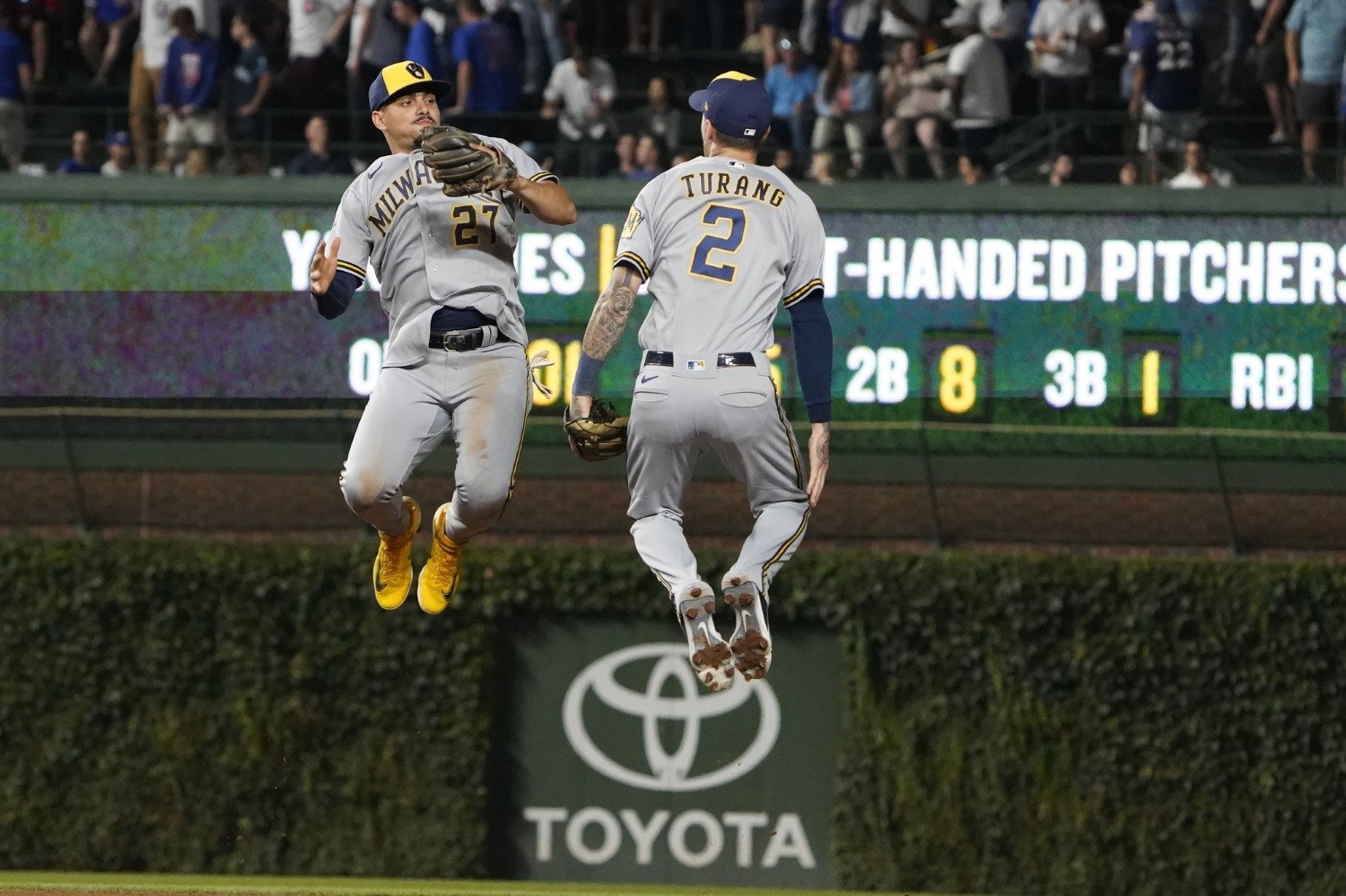 We're all still processing the idea of Corbin Burnes in an Orioles jersey. The move has already made fans wonder what is next for the Brewers. They just signed Rhys Hoskins, but they sold Burnes for prospects--albeit ones who barely still hold that designation, and who should help the team this year in their own right. We're hearing the Brewers are open to trading Devin Williams. So', then, where does that leave Willy Adames? This winter, the Brewers have added Oliver Dunn from the Phillies; claimed Vinny Capra off waivers from the Pirates; and acquired Joey Ortiz from the Orioles. With seven middle infielders on the 40-man roster, there’s a logjam forming. It seems like the writing is on the wall and that the Brewers are ready to move on from their shortstop. Or a shortstop, anyway. For a team that plans to compete, they are putting a lot of their fate in the hands of rookie and sophomore infielders. Adames is the only veteran infielder on the roster. While his time as a Brewer could be coming to an end, it may have to wait a little longer. Trading Adames leaves more uncertainty in a lineup that can already be highly modular. Keeping Adames locks up one of the positions on the field, leaving third and second open for the taking. There is one other candidate who could be traded--who can be used to build the team for 2024 and the future: Brice Turang. Yes, his career is just beginning, and he seems primed to take over for Adames if they let him walk. But that could be also be said for the newly acquired Ortiz. Here’s why it makes more sense to trade Turang over Adames. The Similarities The Brewers have multiple players who can play multiple positions on the infield, but that’s not enough to take eyes off Adames as the player who needs to be traded. What can, however, is the type of player Adames is compared to the field. Looking at Adames's stats, he has a .242/.319/.454 slash line with 75 home runs and a 111 OPS+ since joining the Brewers in May 2021. Last season, his Barrel rate (12.4%) only trailed Corey Seager among shortstops, and he was among the top 50 of all players. While his whiff rate and strikeout rate are concerning, these stats show Adames is a power hitter at heart. You didn’t even need to see these stats to come to that conclusion. There is no other player in the infield who can supply the role Adames has. Turang is a different story. In Turang’s three seasons in Triple-A Nashville, Turang hit .279/.365/.404 with 17 home runs and 107 RBI. He walked 103 times against 163 strikeouts, making him a patient hitter who focuses on getting on base. He made his MLB debut in 2023, where he struggled to get on base and was sent down. However, he was called up later in the season, where he showed signs of improvement. Ortiz, though a year older, has had a similar path to the start of his career. He was drafted back in 2019, in the fourth round. Though shortstop is his natural position, Ortiz has the ability to play either second or third base and provide plus defense. According to MLB Pipeline, Ortiz’s fielding graded a 65 out of a possible 80. He did suffer a torn labrum in his non-throwing arm, but has bounced back well since then. In his two seasons of experience in Triple-A Norfolk, Ortiz has hit 327/.383/.521 with 13 home runs and 72 RBI. While his ability to hit is there, it hasn’t exactly translated to the majors yet. He really hasn’t had a fair chance, only playing in 15 games and being optioned back down on a few occasions. Turang and Ortiz are virtually the same player, in the same situation. Both could eventually take over for Adames at short. They each have six years of club control remaining, and have struggled to get things going in their brief time in MLB. These two were right next to each other on FanGraphs's top 100 prospects entering 2023, with Turang ranked one spot ahead of Ortiz at 65. However Turang never made MLB Pipeline’s Top 100 prior to his debut last season. No matter how you grade them, these guys are not so different from each other. While having two of the same player is great, both of them are MLB ready and are fighting for one roster spot. The Money and Value One of the many benefits of young players just getting their career started is how little of the payroll they take up. One of the drawbacks is that they tend to be in need of further development; they're often fairly raw. Most of these players get paid the minimum based off of their service time. In this case, for Turang, he will make around $740,000 this season. Then, he'll likely gain Super Two status in a couple of years. Adames, on the other hand, is nearly gone already. Any team that trades for the shortstop knows that there is a possibility he walks away in free agency next season. To top it off, teams that want him will also have to add the $12.2 million he is owed this season to their books. Where teams like the Dodgers might not balk at the opportunity to add Adames, others like the Marlins, Rays and Guardians might need to think twice about taking on that much money. To give away prospects for a rental is one thing. But to add millions of dollars to your payroll when you are not sure where you stand in the division is another thing. Not to mention the TV deals with Bally Sports have already been a cause of dropped payrolls this season. In short, Adames's trade value is unlikely to far outstrip Turang's. The Logjams/Needs Owen Miller, Andruw Monasterio, Tyler Black, Christian Arroyo, Dunn, Capra, Turang and Ortiz are all battling for (at most) four spots on the 26-man roster. The others will be assigned to the minor leagues. Each of these players are ready for the majors, and sending them down is not doing them favors. Sure, the Brewers could sell off Adames, but that doesn’t sound like it fulfills the one promise Matt Arnold made to the fan base: competing for the division. Adames is the heart and soul of this team. Whether on or off the field, he always seems to have something to say. He’s also been a major player the last few years in their playoff clinching seasons. So, then, what do the Brewers do to help the pile-up in the infield? They should show a sign of competing by selling one of their fluid surfeit of young infielders to fill a need on the roster. They could still use a power bat at third or in the DH spot. The organization has time to make a splash if they would like to. While they don’t necessarily have to, another strong, veteran presence in the lineup or the starting rotation could revitalize some of the hope in the fanbase. This team is ready to compete, regardless what they do next. The Burnes trade and the resulting uncertainty may have panicked Brewers fans expecting that a veteran player like Adames will be next to go. Let’s not get too ahead of ourselves, as there are other potential players who could be on the move like Turang. Come back tomorrow, when we will look at three potential trades involving Turang. Will the Brewers make another trade? Are the Brewers going to trade away Adames or Turang? Will they remain competitive without either of these players? Let us know.
 -
 Well, it finally happened. When the Brewers were bounced from the playoffs, speculation started amongst fans about whether the Brewers were going to trade their former Cy Young Award-winning pitcher, Corbin Burnes. As the months passed, the rumors kept swirling, between: what is he worth? what teams would be interested? and when will it happen? When the front office signed Rhys Hoskins last week, fans started believing the Brewers were going to run it back with their stars on expiring contracts. It’s fair to say the narrative has changed, yet again. Thursday night, the Brewers traded Burnes to the Orioles, and got a decent haul for him. The gut reaction from the fanbase seems to be, “The Crew are going to rebuild. Looks like they are selling off everyone. Our run at a World Series is over.” Not so fast, everyone. Personally, I’ve accepted Burnes could soon be gone since the middle of the 2023 season. However, I believe this team can still compete, and trading Burnes is not the end of the world. Don’t believe me? Let’s dive into this trade and what this move could mean. Why Trade Burnes Now? This trade was somewhat inevitable, and it’s important for the long-term health of the team. This team is set to compete for the division title. So why trade away their best asset? For starters, Burnes was in his last year of club control. Like most of the fan base, the Brewers knew it would be hard to keep their ace beyond the 2024 season. At the very least, the Crew could’ve kept Burnes for the season, offered him a qualifying offer, and received a second-round compensatory pick from the team that signed him. The team wasn’t going to trade away Burnes unless they get back value like that pick. Had the Brewers decided to wait until the trade deadline to make a move, they'd have assumed a good deal of risk. Burnes could get injured in the middle of the season, providing no value in a trade. In addition, the team acquiring him wouldn’t be able to offer the qualifying offer to Burnes, dinging his value. By trading for Burnes now, the Orioles still can get a compensatory pick at the end of the season when they lose him in free agency next year. The Brewers felt they got the best value they could get in a trade, and it was probably the best offer they got from the other teams this offseason. But did they actually get enough for the star pitcher, and why are some fans against this package? What Did They Get? The Brewers received left-handed pitcher DL Hall and infielder Joey Ortiz (MLB Pipeline's No. 63 prospect) for Burnes. In addition, they got the 34th overall pick in the 2024 MLB draft, a competitive-balance pick (the only kind allowed to be traded). The Brewers essentially traded a second-round pick in 2025 for a first-round pick in 2024, plus prospects who can be on the team for up to six full seasons. Sure, Burnes may be worth more than Brewers fans believe. But with Burnes not willing to sign an extension until he hits free agency, teams don’t feel his one year of service will be enough to give away value commensurate with his name. Hall has been part of the Orioles organization since being drafted 21st overall in the 2017 MLB Draft. He was called up in August 2022 to make his debut as a starter. After a rough debut, he was shuttled back down to Triple A to develop as a bullpen arm. In 2023, Hall recorded a 3-0 record with a 3.26 ERA and a 1.19 WHIP in 18 appearances. Ortiz was a fourth-round pick in the 2019 Draft, and was the sixth-ranked prospect in their farm system. He is considered a plus defender and can play any position on the infield. Last year in Triple-A Norfolk, he hit .321/.378/.507, with nine home runs and 58 RBI in 88 games. Ortiz has tested the waters in the big leagues, but has been sent down on three separate occasions. For more details on Ortiz and Hall, check back later today and this weekend, as we'll have breakdowns of each from Jamie Cameron and Spencer Michaelis. To complete this trade, Ethan Small was designated for assignment. What Happens Now? Trading away Burnes makes the starting rotation a little more interesting. Without Burnes, the rotation is projected to be a combination of Freddy Peralta, Wade Miley, Colin Rea, Aaron Ashby, Joe Ross and/or Hall. That still doesn’t seem too bad for a team that traded away its best starting pitcher. If Peralta and Miley put up similar numbers as the ones they recorded last year, the Crew will still have a two-headed monster in the rotation. If Ashby or Ross don’t cut it, the team can stretch out Hall or even add Robert Gasser to the rotation. As for the infield, Ortiz is just more competition for Brice Turang and Andruw Monasterio. While none of these guys’ names jump off a paper, they are all still young players with six years of club control and multiple minor league options left. Give them time to develop, and they might be a young force to be reckoned with. If they play their cards right, all these players can make the Opening Day roster. The Brewers could also still add players from the free-agent market. Burnes agreed to a $15.637-million salary this season. After the trade made Thursday, the Brewers' payroll has dropped to $101.7 million, according to FanGraphs. Around this time last year, the team was at around $120 million. The team has some wiggle room to sign another player or two at the last second. It could be another starting pitcher, or an infielder if they don’t feel the prospects are ready. What About Beyond 2024? Despite trading Burnes, this team is still in the playoff hunt. But does a trade move like this foreshadow what could happen to the likes of Willy Adames and Devin Williams? Like Burnes, Adames is set to be a free agent after this season. When we last heard of a potential Adames trade, Jon Morosi of MLB Network stated talks were quiet. With Turang, Monasterio, Oliver Dunn, Vinny Capra and now Ortiz all on the roster, the team could be ready to move on from their star shortstop. But it isn’t exactly inevitable. All offseason, the front office has maintained that the team is planning to compete this season. As it currently stands, it seems Adames is part of the picture. Same goes for Williams, who is in the same position Josh Hader was in when the Brewers traded him in 2022. While there are plenty of pitchers who can take over for the closer role, Williams is another cog that makes this team elite enough to win the division. Abner Uribe and Joel Payamps are great players who can finish games for this team. It seems the team is ready for all avenues. If it doesn’t look promising this season, the team can start a teardown mid-season. As it stands, the Brewers could still be a favorite to win the division. William Contreras, Sal Frelick, Christian Yelich and Jackson Chourio are a promising core, here for the long haul. Adding Hoskins and promising young prospects, and you are a threat for years to come. While Burnes is now gone, there is still a lot of potential left with this team. It just had to be done, to get the best value possible and to give the prospects a chance to showcase their skills. We are going to be looking at a different Milwaukee Brewers, and the new iteration hasn’t even reached its final form. What do you think of the Corbin Burnes trade? What do you think the Brewers are going to do next? Will the Brewers start rebuilding? Will the Brewers make one last push? Let us know in the comments.
- 19 comments
-
- 2
-
-
- corbin burnes
- dl hall
- (and 1 more)
-
Is it really time to start panicking? While Corbin Burnes may be gone, this Brewers team is still ready to compete this season. Image courtesy of © Kamil Krzaczynski-USA TODAY Sports Well, it finally happened. When the Brewers were bounced from the playoffs, speculation started amongst fans about whether the Brewers were going to trade their former Cy Young Award-winning pitcher, Corbin Burnes. As the months passed, the rumors kept swirling, between: what is he worth? what teams would be interested? and when will it happen? When the front office signed Rhys Hoskins last week, fans started believing the Brewers were going to run it back with their stars on expiring contracts. It’s fair to say the narrative has changed, yet again. Thursday night, the Brewers traded Burnes to the Orioles, and got a decent haul for him. The gut reaction from the fanbase seems to be, “The Crew are going to rebuild. Looks like they are selling off everyone. Our run at a World Series is over.” Not so fast, everyone. Personally, I’ve accepted Burnes could soon be gone since the middle of the 2023 season. However, I believe this team can still compete, and trading Burnes is not the end of the world. Don’t believe me? Let’s dive into this trade and what this move could mean. Why Trade Burnes Now? This trade was somewhat inevitable, and it’s important for the long-term health of the team. This team is set to compete for the division title. So why trade away their best asset? For starters, Burnes was in his last year of club control. Like most of the fan base, the Brewers knew it would be hard to keep their ace beyond the 2024 season. At the very least, the Crew could’ve kept Burnes for the season, offered him a qualifying offer, and received a second-round compensatory pick from the team that signed him. The team wasn’t going to trade away Burnes unless they get back value like that pick. Had the Brewers decided to wait until the trade deadline to make a move, they'd have assumed a good deal of risk. Burnes could get injured in the middle of the season, providing no value in a trade. In addition, the team acquiring him wouldn’t be able to offer the qualifying offer to Burnes, dinging his value. By trading for Burnes now, the Orioles still can get a compensatory pick at the end of the season when they lose him in free agency next year. The Brewers felt they got the best value they could get in a trade, and it was probably the best offer they got from the other teams this offseason. But did they actually get enough for the star pitcher, and why are some fans against this package? What Did They Get? The Brewers received left-handed pitcher DL Hall and infielder Joey Ortiz (MLB Pipeline's No. 63 prospect) for Burnes. In addition, they got the 34th overall pick in the 2024 MLB draft, a competitive-balance pick (the only kind allowed to be traded). The Brewers essentially traded a second-round pick in 2025 for a first-round pick in 2024, plus prospects who can be on the team for up to six full seasons. Sure, Burnes may be worth more than Brewers fans believe. But with Burnes not willing to sign an extension until he hits free agency, teams don’t feel his one year of service will be enough to give away value commensurate with his name. Hall has been part of the Orioles organization since being drafted 21st overall in the 2017 MLB Draft. He was called up in August 2022 to make his debut as a starter. After a rough debut, he was shuttled back down to Triple A to develop as a bullpen arm. In 2023, Hall recorded a 3-0 record with a 3.26 ERA and a 1.19 WHIP in 18 appearances. Ortiz was a fourth-round pick in the 2019 Draft, and was the sixth-ranked prospect in their farm system. He is considered a plus defender and can play any position on the infield. Last year in Triple-A Norfolk, he hit .321/.378/.507, with nine home runs and 58 RBI in 88 games. Ortiz has tested the waters in the big leagues, but has been sent down on three separate occasions. For more details on Ortiz and Hall, check back later today and this weekend, as we'll have breakdowns of each from Jamie Cameron and Spencer Michaelis. To complete this trade, Ethan Small was designated for assignment. What Happens Now? Trading away Burnes makes the starting rotation a little more interesting. Without Burnes, the rotation is projected to be a combination of Freddy Peralta, Wade Miley, Colin Rea, Aaron Ashby, Joe Ross and/or Hall. That still doesn’t seem too bad for a team that traded away its best starting pitcher. If Peralta and Miley put up similar numbers as the ones they recorded last year, the Crew will still have a two-headed monster in the rotation. If Ashby or Ross don’t cut it, the team can stretch out Hall or even add Robert Gasser to the rotation. As for the infield, Ortiz is just more competition for Brice Turang and Andruw Monasterio. While none of these guys’ names jump off a paper, they are all still young players with six years of club control and multiple minor league options left. Give them time to develop, and they might be a young force to be reckoned with. If they play their cards right, all these players can make the Opening Day roster. The Brewers could also still add players from the free-agent market. Burnes agreed to a $15.637-million salary this season. After the trade made Thursday, the Brewers' payroll has dropped to $101.7 million, according to FanGraphs. Around this time last year, the team was at around $120 million. The team has some wiggle room to sign another player or two at the last second. It could be another starting pitcher, or an infielder if they don’t feel the prospects are ready. What About Beyond 2024? Despite trading Burnes, this team is still in the playoff hunt. But does a trade move like this foreshadow what could happen to the likes of Willy Adames and Devin Williams? Like Burnes, Adames is set to be a free agent after this season. When we last heard of a potential Adames trade, Jon Morosi of MLB Network stated talks were quiet. With Turang, Monasterio, Oliver Dunn, Vinny Capra and now Ortiz all on the roster, the team could be ready to move on from their star shortstop. But it isn’t exactly inevitable. All offseason, the front office has maintained that the team is planning to compete this season. As it currently stands, it seems Adames is part of the picture. Same goes for Williams, who is in the same position Josh Hader was in when the Brewers traded him in 2022. While there are plenty of pitchers who can take over for the closer role, Williams is another cog that makes this team elite enough to win the division. Abner Uribe and Joel Payamps are great players who can finish games for this team. It seems the team is ready for all avenues. If it doesn’t look promising this season, the team can start a teardown mid-season. As it stands, the Brewers could still be a favorite to win the division. William Contreras, Sal Frelick, Christian Yelich and Jackson Chourio are a promising core, here for the long haul. Adding Hoskins and promising young prospects, and you are a threat for years to come. While Burnes is now gone, there is still a lot of potential left with this team. It just had to be done, to get the best value possible and to give the prospects a chance to showcase their skills. We are going to be looking at a different Milwaukee Brewers, and the new iteration hasn’t even reached its final form. What do you think of the Corbin Burnes trade? What do you think the Brewers are going to do next? Will the Brewers start rebuilding? Will the Brewers make one last push? Let us know in the comments. View full article
-
5 Last-Second Deals the Brewers Can Make Before Spring Training
Ryan Pollak posted an article in Brewers
 Well, January is all but gone. Baseball is finally here! But there are still a lot of big names available in free agency. There’s no question the Brewers have made their best moves in the month of January. The recent signing of Rhys Hoskins is proof of that. However, we can’t sleep on February. While we were still talking about the Christian Yelich and Lorenzo Cain signings in 2018, the Brewers added Wade Miley on a minor-league deal a month later. We were thinking Hernán Pérez would be the starting third baseman in 2019, until the Brewers brought back Mike Moustakas on a one-year deal. We were also thinking Keston Hiura would play second base often in 2021, until Kolton Wong was signed to a three-year deal. With a number of solid players still waiting to be signed, the Brewers can make one more addition to a team that could use an upgrade at certain positions on the field. We aren’t going to look at the big fish like Matt Chapman or Blake Snell. Here are five under-the-radar players the Crew can target at the last second. 5. Tim Anderson, INF If there is any candidate in need of a resilient season, look no further than former White Sox shortstop Tim Anderson. Prior to his lackluster 2023 campaign, the two-time All-Star had a batting average over .300 and an OPS+ over 100 for four straight seasons. In 2019, he led all of baseball with a .335 batting average, with 18 homers and an .865 OPS. In 2023, however, he had a .245/.286/.296 batting line, a -2.0 WAR, and a 23.3-percent strikeout rate. While his numbers weren’t nearly as great as his 2020 Silver Slugger-winning year, he would still have had a top batting average among Brewers hitters in 2023. While he was at the center of a brawl last season against Cleveland Guardians' José Ramírez, that felt like the culmination of months of frustration at both an individual and a team level. It didn’t help that the White Sox were planning to rebuild beyond 2023, either. Anderson was set to make $14 million this season if Chicago had exercised their club option on him in November, so instead, they cast him out into free agency. While the Brewers already have a shortstop in Willy Adames, they could use Anderson at second base or even third base, should he be open to a position change. He has played two games at the keystone and could smoothly transition to the position. This would give competition and/or a platoon partner for Brice Turang. With the additions of Vinny Capra, Oliver Dunn and Christian Arroyo, it doesn’t seem the team is sold on their young second baseman just yet. Should the Brewers add Anderson, it would put even more pressure on Turang. Anderson to the Brewers could give this team a contact hitter. Even if Anderson doesn’t bounce back fully, it would still be seen as a success if he hits above .270. The biggest question might be one of fit into the clubhouse, given how ugly things got in Chicago. 4. Brad Keller, RHP If tomorrow was the start of the season, Corbin Burnes, Freddy Peralta, Wade Miley, Colin Rea, and Aaron Ashby would probably comprise the starting rotation. Granted, we don’t know how big of an impact Joe Ross, Janson Junk or Robert Gasser could make. However, the last two spots in the rotation could be up for grabs. While it would be nice to add Jordan Montgomery to the rotation, he is just too expensive for the organization. The same might go for Micheal Lorenzen, who would be decent in whatever role a team could use him in. But what about Brad Keller? The long-time Royals starter was once considered the future for the Kansas City rotation, having a 9-6 record and a 3.08 ERA in 2018. He even threw a complete game that season. In 2020, he continued his success with a 2.67 ERA, a 1.02 WHIP, and a .202 opponent batting average. However, no other season of his career has helped his cause. After six seasons with the Royals, he threw two complete games, with one being a shutout. He has a 4.21 ERA, a 1.44 WHIP, and a 37-51 record over 114 starts. It doesn’t scream All-Star pitcher, but at 28, he still has the tools to become one. Keller doesn’t strike out a lot of batters, but he does get a ton of ground balls, which is great for a hitter-friendly park in American Family Field. With a 57.6% ground-ball rate and a fly ball rate under 20 percent, he would be the perfect pitcher for the Brewers. Keller made $5.775 million last season in his final year of arbitration. If the Crew want to take a chance on him, it should be possible to sign him to a one-year deal for less than last year's salary. Even a minor-league deal with an invite to spring training could lock in a back of the rotation starter. It’s good insurance to have should Rea or Ashby show signs of regression. 3. Eduardo Escobar, 3B There were a lot of reunion options for the Brewers at third base. Among them were Mike Moustakas and Jean Segura, who both would be sneaky under-the-radar possibilities. In the end, we went with the one that was only on the team for two months. When we last saw Eduardo Escobar in a Brewers uniform, he put up a .268/.342/.458 line in 48 games with the 2021 Brewers. A two-year contract with the Mets later, he is a free agent no one is really talking about. Last season, Escobar had a forgettable season, posting a .613 OPS with six long balls and 31 RBI. His strikeout percentage (25.2) and ground-ball percentage (43.2) were the highest they have been since rookie days with the White Sox. Escobar's numbers were better prior to the trade to the Angels at the deadline. He was striking out less, hitting the ball harder, hitting more line drives, and drawing more walks. While the AL West was rather competitive, the NL East seemed to be the Atlanta Braves' division to lose. Both the Mets and the Angels ended with a record below .500 in two powerhouse divisions. The NL Central certainly is no slouch. But if he’s on a team he’s familiar with, in a winning environment on top of it, then maybe Escobar's numbers can jump back up to his career levels. After losing Victor Caratini, the Brewers don’t have a regular switch hitter at their disposal. Andruw Monasterio could be used in a utility role, while Escobar could be seen as a semi-regular. He is a low-risk, high-reward player with a cheap price tag. It’s all a matter of if the Brewers pull the trigger. 2. Brett Martin, LHP What do Dan Jennings, Alex Claudio and Neal Cotts all have in common? Yes, they all pitched for the Brewers. But they also were left-handed pitchers signed late in the offseason. Each of these players made a big impact on the team's bullpen for that season. Besides the Bryan Hudson trade, the Brewers have yet to add a reliable left-handed pitcher to their bullpen. They were interested in Aroldis Chapman, but that didn’t lead to a deal. Perhaps Brett Martin could be that pitcher to aid the pen. In his first four seasons with the Rangers, Martin lodged a 3.85 ERA, a 3.77 FIP and a 1.35 WHIP. He was best utilized as a seventh- or eighth-inning set-up man. The Brewers could always use a late-inning left-hander to give players like Elvis Peguero and Joel Payamps occasional breaks when needed, and to complement Hoby Milner. The only issue is that Martin missed the entire 2023 season after having shoulder surgery last January. Before non-tendering the pitcher in the fall, the Rangers gave him a $1.275-million salary during his second of four potential years of arbitration. Whichever team signs Martin will have club control of the player until 2026. Martin will also have one minor-league option remaining, which helps the organization manage and massage the bullpen roster spots. You can never have enough pitching depth and this arm could reward the Brewers handsomely 1. Gio Urshela, 3B With the infield free agents coming off the market in the most recent weeks, Gio Urshela is probably the best third baseman not named Matt Chapman left on the market. Similar to our last entry on this list, Urshela is coming off an injury that ended his 2023 season. However, prior to his hip trouble, he was still able to hit .299/.329/.374 in 62 games. This isn’t a fluke season, either, as he’s been hovering near the .300 batting average line each year since 2019. The fact that Urshela has been playing winter baseball in Colombia is a positive sign; he’ll be ready to go for spring training. While third base is his primary position, he has played every spot in the infield throughout his career. The Brewers can use that to their advantage by playing Urshela in other positions, should players need rest or shielding from bad matchups. If they don’t have enough confidence in Monasterio, Urshela is the best player to learn from, as he’s basically the same guy with more experience and slightly more pop. If this guy can be had as cheaply as it seems, they have to jump on it quick. As soon as Chapman comes off the board, interested teams who miss out will start making offers to Urshela. Teams like the Giants, Mets and Yankees all could use a defensive-minded third baseman like Urshela. He was making $8.4 million last season and will be even more affordable in 2024. The Brewers could walk into this season with the roster they have now. But why stop upgrading if the price is right? The Crew have a couple weeks left before pitchers and catchers report. Let the madness begin. Will the Brewers add another player to their arsenal? What player would you like to see don the blue and gold? Let us know in the comments.
- 3 comments
-
- 1
-
-
- tim anderson
- brad keller
- (and 3 more)
-
Baseball is just a few weeks away. After the Rhys Hoskins deal, could the Brewers add an under-the-radar player at the last second before spring training arrives? Image courtesy of © Gary A. Vasquez-USA TODAY Sports Well, January is all but gone. Baseball is finally here! But there are still a lot of big names available in free agency. There’s no question the Brewers have made their best moves in the month of January. The recent signing of Rhys Hoskins is proof of that. However, we can’t sleep on February. While we were still talking about the Christian Yelich and Lorenzo Cain signings in 2018, the Brewers added Wade Miley on a minor-league deal a month later. We were thinking Hernán Pérez would be the starting third baseman in 2019, until the Brewers brought back Mike Moustakas on a one-year deal. We were also thinking Keston Hiura would play second base often in 2021, until Kolton Wong was signed to a three-year deal. With a number of solid players still waiting to be signed, the Brewers can make one more addition to a team that could use an upgrade at certain positions on the field. We aren’t going to look at the big fish like Matt Chapman or Blake Snell. Here are five under-the-radar players the Crew can target at the last second. 5. Tim Anderson, INF If there is any candidate in need of a resilient season, look no further than former White Sox shortstop Tim Anderson. Prior to his lackluster 2023 campaign, the two-time All-Star had a batting average over .300 and an OPS+ over 100 for four straight seasons. In 2019, he led all of baseball with a .335 batting average, with 18 homers and an .865 OPS. In 2023, however, he had a .245/.286/.296 batting line, a -2.0 WAR, and a 23.3-percent strikeout rate. While his numbers weren’t nearly as great as his 2020 Silver Slugger-winning year, he would still have had a top batting average among Brewers hitters in 2023. While he was at the center of a brawl last season against Cleveland Guardians' José Ramírez, that felt like the culmination of months of frustration at both an individual and a team level. It didn’t help that the White Sox were planning to rebuild beyond 2023, either. Anderson was set to make $14 million this season if Chicago had exercised their club option on him in November, so instead, they cast him out into free agency. While the Brewers already have a shortstop in Willy Adames, they could use Anderson at second base or even third base, should he be open to a position change. He has played two games at the keystone and could smoothly transition to the position. This would give competition and/or a platoon partner for Brice Turang. With the additions of Vinny Capra, Oliver Dunn and Christian Arroyo, it doesn’t seem the team is sold on their young second baseman just yet. Should the Brewers add Anderson, it would put even more pressure on Turang. Anderson to the Brewers could give this team a contact hitter. Even if Anderson doesn’t bounce back fully, it would still be seen as a success if he hits above .270. The biggest question might be one of fit into the clubhouse, given how ugly things got in Chicago. 4. Brad Keller, RHP If tomorrow was the start of the season, Corbin Burnes, Freddy Peralta, Wade Miley, Colin Rea, and Aaron Ashby would probably comprise the starting rotation. Granted, we don’t know how big of an impact Joe Ross, Janson Junk or Robert Gasser could make. However, the last two spots in the rotation could be up for grabs. While it would be nice to add Jordan Montgomery to the rotation, he is just too expensive for the organization. The same might go for Micheal Lorenzen, who would be decent in whatever role a team could use him in. But what about Brad Keller? The long-time Royals starter was once considered the future for the Kansas City rotation, having a 9-6 record and a 3.08 ERA in 2018. He even threw a complete game that season. In 2020, he continued his success with a 2.67 ERA, a 1.02 WHIP, and a .202 opponent batting average. However, no other season of his career has helped his cause. After six seasons with the Royals, he threw two complete games, with one being a shutout. He has a 4.21 ERA, a 1.44 WHIP, and a 37-51 record over 114 starts. It doesn’t scream All-Star pitcher, but at 28, he still has the tools to become one. Keller doesn’t strike out a lot of batters, but he does get a ton of ground balls, which is great for a hitter-friendly park in American Family Field. With a 57.6% ground-ball rate and a fly ball rate under 20 percent, he would be the perfect pitcher for the Brewers. Keller made $5.775 million last season in his final year of arbitration. If the Crew want to take a chance on him, it should be possible to sign him to a one-year deal for less than last year's salary. Even a minor-league deal with an invite to spring training could lock in a back of the rotation starter. It’s good insurance to have should Rea or Ashby show signs of regression. 3. Eduardo Escobar, 3B There were a lot of reunion options for the Brewers at third base. Among them were Mike Moustakas and Jean Segura, who both would be sneaky under-the-radar possibilities. In the end, we went with the one that was only on the team for two months. When we last saw Eduardo Escobar in a Brewers uniform, he put up a .268/.342/.458 line in 48 games with the 2021 Brewers. A two-year contract with the Mets later, he is a free agent no one is really talking about. Last season, Escobar had a forgettable season, posting a .613 OPS with six long balls and 31 RBI. His strikeout percentage (25.2) and ground-ball percentage (43.2) were the highest they have been since rookie days with the White Sox. Escobar's numbers were better prior to the trade to the Angels at the deadline. He was striking out less, hitting the ball harder, hitting more line drives, and drawing more walks. While the AL West was rather competitive, the NL East seemed to be the Atlanta Braves' division to lose. Both the Mets and the Angels ended with a record below .500 in two powerhouse divisions. The NL Central certainly is no slouch. But if he’s on a team he’s familiar with, in a winning environment on top of it, then maybe Escobar's numbers can jump back up to his career levels. After losing Victor Caratini, the Brewers don’t have a regular switch hitter at their disposal. Andruw Monasterio could be used in a utility role, while Escobar could be seen as a semi-regular. He is a low-risk, high-reward player with a cheap price tag. It’s all a matter of if the Brewers pull the trigger. 2. Brett Martin, LHP What do Dan Jennings, Alex Claudio and Neal Cotts all have in common? Yes, they all pitched for the Brewers. But they also were left-handed pitchers signed late in the offseason. Each of these players made a big impact on the team's bullpen for that season. Besides the Bryan Hudson trade, the Brewers have yet to add a reliable left-handed pitcher to their bullpen. They were interested in Aroldis Chapman, but that didn’t lead to a deal. Perhaps Brett Martin could be that pitcher to aid the pen. In his first four seasons with the Rangers, Martin lodged a 3.85 ERA, a 3.77 FIP and a 1.35 WHIP. He was best utilized as a seventh- or eighth-inning set-up man. The Brewers could always use a late-inning left-hander to give players like Elvis Peguero and Joel Payamps occasional breaks when needed, and to complement Hoby Milner. The only issue is that Martin missed the entire 2023 season after having shoulder surgery last January. Before non-tendering the pitcher in the fall, the Rangers gave him a $1.275-million salary during his second of four potential years of arbitration. Whichever team signs Martin will have club control of the player until 2026. Martin will also have one minor-league option remaining, which helps the organization manage and massage the bullpen roster spots. You can never have enough pitching depth and this arm could reward the Brewers handsomely 1. Gio Urshela, 3B With the infield free agents coming off the market in the most recent weeks, Gio Urshela is probably the best third baseman not named Matt Chapman left on the market. Similar to our last entry on this list, Urshela is coming off an injury that ended his 2023 season. However, prior to his hip trouble, he was still able to hit .299/.329/.374 in 62 games. This isn’t a fluke season, either, as he’s been hovering near the .300 batting average line each year since 2019. The fact that Urshela has been playing winter baseball in Colombia is a positive sign; he’ll be ready to go for spring training. While third base is his primary position, he has played every spot in the infield throughout his career. The Brewers can use that to their advantage by playing Urshela in other positions, should players need rest or shielding from bad matchups. If they don’t have enough confidence in Monasterio, Urshela is the best player to learn from, as he’s basically the same guy with more experience and slightly more pop. If this guy can be had as cheaply as it seems, they have to jump on it quick. As soon as Chapman comes off the board, interested teams who miss out will start making offers to Urshela. Teams like the Giants, Mets and Yankees all could use a defensive-minded third baseman like Urshela. He was making $8.4 million last season and will be even more affordable in 2024. The Brewers could walk into this season with the roster they have now. But why stop upgrading if the price is right? The Crew have a couple weeks left before pitchers and catchers report. Let the madness begin. Will the Brewers add another player to their arsenal? What player would you like to see don the blue and gold? Let us know in the comments. View full article
-
This week, the Brewers signed Rhys Hoskins and had serious interest in pitcher Arodis Chapman. What does that tell us about their thought processes? What could the team have in store for the rest of the offseason? Image courtesy of © Bill Streicher-USA TODAY Sports We are a week away from being able to say, “The Brewers play this month,” and like most teams' fan bases, we’ve waited and wondered why the hot stove wasn’t hot. It seemed like ages ago that the Brewers made a significant addition. The last player added to the roster was Bryan Hudson, in a trade with the Dodgers, and that happened earlier this month. Then, in a report seemingly from out of nowhere, Robert Murray reported the Brewers were “seriously interested” in left-handed hurler and former closer Aroldis Chapman. Monday night, we found out he was signing with the Pirates, instead. Before we knew what the Brewers were doing, the team pulled that January magic out of their pocket and signed a big-name free agent Tuesday night. Jeff Passan broke the news of the Crew signing first baseman Rhys Hoskins to a two-year, $34-million deal, with an opt-out after this season. The Brewers may have not landed a seven-time All-Star closer to their pen, but they did upgrade at first base with a former Philadelphia Phillie. For the first time this offseason, the Crew has shown their cards for what they plan on doing for the 2024 season. What do these recent interests and signings mean? Let’s dive in and assess the damage. The Brewers Mean Business For many months, in article after article, we speculated about what the Brewers were going to look like at the start of the season. The Corbin Burnes and Willy Adames trade rumors were louder than ever, the Brewers parted ways with Brandon Woodruff, and Craig Counsell left for the Chicago Cubs. Will the Brewers rebuild? Will the Brewers retool? Will the Brewers compete? Mark Attanasio and Matt Arnold both stated the team were going to stay competitive this year. After the Hoskins signing, it’s safe to say they lived up to their promise. In the past, Attanasio has assured the fan base the team is willing to spend money (within reason) if the player will make the team better. Examples of these efforts include Yasmani Grandal, Andrew McCutchen, Aramis Ramírez, and Lorenzo Cain. They did it again with yesterday’s transaction. It’s still a mystery how much the team is willing to spend this year. It is worth noting, though, that prior to yesterday, the active payroll was projected at $105 million, according to FanGraphs. That is $20 million less than the 2023 payroll ($125.3 million). While the details of Hoskins’s contract are still not fully clear, his average salary is $17 million and he should get no more than that for the first year. Hoskins will more than likely be the regular first baseman for the 2024 season. With his addition, the 40-man roster is filled. Jake Bauers, who was originally slated for the position, will try to compete for a roster spot this spring as a potential backup option at first. Left-Handed Pitching Of the 21 pitchers on the 40 man roster, only six of them are lefties. Wade Miley slots in as the team's likely third starter. Hoby Milner will return to the bullpen. But what about the other four? Ethan Small and Clayton Andrews had their opportunities to break onto the roster, but have struggled in every outing. Newly acquired Hudson just broke into the big leagues last year, only pitching in six games. Then there’s Aaron Ashby, who missed all of 2023 with a shoulder injury. While his role with the organization is still to be determined, there is still a lack of experience in bullpen southpaws. This is probably the logical reason Chapman was on the Brewers radar: to add surety from the left side to an elite bullpen. The Brewers already led baseball with a 3.71 ERA from their relievers. Bryse Wilson, Elvis Peguero and Joel Payamps were all bright spots in last year’s group, in addition to relief ace Devin Williams. We can only imagine how dominant that unit would’ve been with Chapman as the eighth-inning set-up man. There are still plenty of southpaws on the open market to make the pen better. Wandy Peralta, Brad Hand, and Scott Alexander all are still looking for jobs. With three weeks left until pitchers and catchers report, the Brewers are running out of time to add an arm. The team will have to make room on their 40-man roster should they add any more players, anyway. Now What? It’s pretty clear, for now, that the Brewers will keep the expiring contracts of Adames and Burnes, at least for the start of the season. We can reassess the situation in July, near the trade deadline. As previously stated, the payroll will stand somewhere in the $120 million range. If you were looking for a third-base upgrade, you can probably rule out the potential addition of Matt Chapman. You could also probably rule out Justin Turner. Gio Urshela or a Mike Moustakas reunion could still happen, and would be affordable options for the team. There aren't a lot of options on the trade market for the hot corner. They could try for Issac Paredes from the Rays, but the asking price could be pretty steep. The Crew might be fine with Andruw Monasterio at third, with Tyler Black looking to make his debut at some point in 2024. The two would be a decent platoon, should they decide to go in that direction. However, Black doesn’t have a strong arm for a third baseman, so a switch to second base may be what the Brewers look at. Don’t rule out the additions of either Carlos Santana or Garrett Cooper. The team has had discussions with both of these players on a potential contract at some point this month. While the Brewers may have found a first baseman, Hoskins defense isn’t exactly the greatest. He added 3 Defensive Runs Saved (DRS) at first base back in 2022, but over the two previous campaigns, that figure was -12 DRS. The Crew could bring back Santana, who was a Gold Glove vote-getter last season, and use Hoskins as a DH in some lineups. Whatever they decide to do moving forward, there is one thing for certain: The Brewers are ready to compete for a division title and are looking to build a team for the 2024 season that can build on that goal. Beyond 2024, there will be plenty of questions that need to be answered. But for now, it is a great time to be a Wisconsin sports fan. What are your thoughts on the Hoskins signing? Will the team add anyone else prior to Spring Training? What free agents would you like to see in Milwaukee? Let us know in the comments. View full article
-
What Rhys Hoskins and Rumored Moves Could Mean for the Brewers
Ryan Pollak posted an article in Brewers
 We are a week away from being able to say, “The Brewers play this month,” and like most teams' fan bases, we’ve waited and wondered why the hot stove wasn’t hot. It seemed like ages ago that the Brewers made a significant addition. The last player added to the roster was Bryan Hudson, in a trade with the Dodgers, and that happened earlier this month. Then, in a report seemingly from out of nowhere, Robert Murray reported the Brewers were “seriously interested” in left-handed hurler and former closer Aroldis Chapman. Monday night, we found out he was signing with the Pirates, instead. Before we knew what the Brewers were doing, the team pulled that January magic out of their pocket and signed a big-name free agent Tuesday night. Jeff Passan broke the news of the Crew signing first baseman Rhys Hoskins to a two-year, $34-million deal, with an opt-out after this season. The Brewers may have not landed a seven-time All-Star closer to their pen, but they did upgrade at first base with a former Philadelphia Phillie. For the first time this offseason, the Crew has shown their cards for what they plan on doing for the 2024 season. What do these recent interests and signings mean? Let’s dive in and assess the damage. The Brewers Mean Business For many months, in article after article, we speculated about what the Brewers were going to look like at the start of the season. The Corbin Burnes and Willy Adames trade rumors were louder than ever, the Brewers parted ways with Brandon Woodruff, and Craig Counsell left for the Chicago Cubs. Will the Brewers rebuild? Will the Brewers retool? Will the Brewers compete? Mark Attanasio and Matt Arnold both stated the team were going to stay competitive this year. After the Hoskins signing, it’s safe to say they lived up to their promise. In the past, Attanasio has assured the fan base the team is willing to spend money (within reason) if the player will make the team better. Examples of these efforts include Yasmani Grandal, Andrew McCutchen, Aramis Ramírez, and Lorenzo Cain. They did it again with yesterday’s transaction. It’s still a mystery how much the team is willing to spend this year. It is worth noting, though, that prior to yesterday, the active payroll was projected at $105 million, according to FanGraphs. That is $20 million less than the 2023 payroll ($125.3 million). While the details of Hoskins’s contract are still not fully clear, his average salary is $17 million and he should get no more than that for the first year. Hoskins will more than likely be the regular first baseman for the 2024 season. With his addition, the 40-man roster is filled. Jake Bauers, who was originally slated for the position, will try to compete for a roster spot this spring as a potential backup option at first. Left-Handed Pitching Of the 21 pitchers on the 40 man roster, only six of them are lefties. Wade Miley slots in as the team's likely third starter. Hoby Milner will return to the bullpen. But what about the other four? Ethan Small and Clayton Andrews had their opportunities to break onto the roster, but have struggled in every outing. Newly acquired Hudson just broke into the big leagues last year, only pitching in six games. Then there’s Aaron Ashby, who missed all of 2023 with a shoulder injury. While his role with the organization is still to be determined, there is still a lack of experience in bullpen southpaws. This is probably the logical reason Chapman was on the Brewers radar: to add surety from the left side to an elite bullpen. The Brewers already led baseball with a 3.71 ERA from their relievers. Bryse Wilson, Elvis Peguero and Joel Payamps were all bright spots in last year’s group, in addition to relief ace Devin Williams. We can only imagine how dominant that unit would’ve been with Chapman as the eighth-inning set-up man. There are still plenty of southpaws on the open market to make the pen better. Wandy Peralta, Brad Hand, and Scott Alexander all are still looking for jobs. With three weeks left until pitchers and catchers report, the Brewers are running out of time to add an arm. The team will have to make room on their 40-man roster should they add any more players, anyway. Now What? It’s pretty clear, for now, that the Brewers will keep the expiring contracts of Adames and Burnes, at least for the start of the season. We can reassess the situation in July, near the trade deadline. As previously stated, the payroll will stand somewhere in the $120 million range. If you were looking for a third-base upgrade, you can probably rule out the potential addition of Matt Chapman. You could also probably rule out Justin Turner. Gio Urshela or a Mike Moustakas reunion could still happen, and would be affordable options for the team. There aren't a lot of options on the trade market for the hot corner. They could try for Issac Paredes from the Rays, but the asking price could be pretty steep. The Crew might be fine with Andruw Monasterio at third, with Tyler Black looking to make his debut at some point in 2024. The two would be a decent platoon, should they decide to go in that direction. However, Black doesn’t have a strong arm for a third baseman, so a switch to second base may be what the Brewers look at. Don’t rule out the additions of either Carlos Santana or Garrett Cooper. The team has had discussions with both of these players on a potential contract at some point this month. While the Brewers may have found a first baseman, Hoskins defense isn’t exactly the greatest. He added 3 Defensive Runs Saved (DRS) at first base back in 2022, but over the two previous campaigns, that figure was -12 DRS. The Crew could bring back Santana, who was a Gold Glove vote-getter last season, and use Hoskins as a DH in some lineups. Whatever they decide to do moving forward, there is one thing for certain: The Brewers are ready to compete for a division title and are looking to build a team for the 2024 season that can build on that goal. Beyond 2024, there will be plenty of questions that need to be answered. But for now, it is a great time to be a Wisconsin sports fan. What are your thoughts on the Hoskins signing? Will the team add anyone else prior to Spring Training? What free agents would you like to see in Milwaukee? Let us know in the comments.
 -
The Brewers have fewer than four weeks left until pitchers and catchers report, and multiple holes remain in their lineup. As the team has had success doing in the past, let's try to fill more than one of them in quick succession. Image courtesy of © John E. Sokolowski-USA TODAY Sports Six years ago, the Brewers traded for Christian Yelich and signed Lorenzo Cain; not in the same month or week, but on the same day. It was a momentous twin assault on the division, and it worked. Let's take one more crack at doing it again. You can read either of the two previous pieces musing on other possibilities, but this could have the most significant long-term impact. Trade for Ty France and Sign Matt Chapman Okay, this is a little crazy. Though, the Brewers landing Yelich and Cain on the same day was right at these crazy levels, so cut me some slack. The biggest needs within the Brewers roster are at the corner infield positions. Andruw Monasterio and Jake Bauers are acceptable options for a team who are still determining their position in the league. If Mark Attanasio and Matt Arnold are still looking to compete, maybe it’s time to put all the chips in the center and push the envelope. Ty France, from the Seattle Mariners, might be their ticket for one of those corner positions. France is coming off a down year, having an OPS+ lower than 100 for the first time since 2019. A 100 OPS+ is considered the average player in baseball; France’s stood at 99 in the 2023 season. T-Mobile Park in Seattle is pitcher-friendly. That could be putting it mildly. In 2023, it had the lowest overall Park Factor and yielded the lowest weighted on-base average (wOBA) on contact of any park in MLB, according to Statcast. France didn’t seem to have a problem with hitting there, though, knocking 48 percent of his home runs at his home park. Imagine what he could do in a hitter's park like American Family Field. The Brewers can occasionally use France as a regular first baseman or slide him to third base. His low strikeout rate (17.6%) and whiff rate (21.9%) are each considerably better than average, and he finds the sweet spot on the bat as consistently as almost anyone in baseball. France will make just under $6.8 million this season and will be under club control for 2025. The Mariners listened to offers for the 2022 All-Star when the team seemed out of the playoff race. If the Mariners are still fielding offers, the organization could fill a hole left behind by Kolton Wong last season. TRADE Brewers receive Ty France for INF Brice Turang and 3B/1B Luke Adams (#21 prospect) First, it was signing Mitch Garver to fill the DH role. Then, it was trading for Luke Raley when the club parted ways with Waukesha native Jarred Kelenic. Now the team saves some more money by adding an infielder who played second base nearly all season last year. Last season, the second baseman for Seattle had a batting average of .205. Along with OPS (.607), home runs (11), and RBI (57), these numbers were the lowest among all positions on the field. But at least they were the lowest in strikeouts. While Brice Turang was a rookie last season, he has gotten experience against MLB pitchers while remaining under a full year of service time. That will mean whatever team has him will have six seasons of club control but will more than likely be deemed a Super Two player. While a .218/.285/.300 slash line doesn’t sound like an improvement at second; Turang has grown, hitting a .256 batting average with a .652 OPS in August. Turang is more of a defensive player, not recording a fielding error until July. While shortstop is his primary position, he has made his tenure at second base work while Willy Adames covers short. If Adames elects to sign with a different team next season, Turang will take over the shortstop position. But what if Turang is no longer here? Andruw Monasterio and Vinny Capra are both on the 40-man roster and are capable of playing shortstop. Not to mention, prospects Eric Brown Jr. and Freddy Zamora are ready to see some time in AAA and could debut this season should the worst-case scenario happen to our starters. As for second base, prospect Oliver Dunn, who the Brewers acquired from the Phillies in November, could see some playing time in his place. If Dunn needs more time, let’s not forget hometown hero Owen Miller can also slide into second base. We remember Owen Miller’s hot bat in May last season, right? While not on the 40-man roster, Tyler Black is also primed to make his debut at some point this season. Black was initially drafted as a second baseman but has been trying to fill the role at any infield position. With his lack of arm strength, he might be better off on the right side of the field. Turang won’t have to be rushed to play second base as Sam Haggerty, Josh Rojas, and newly acquired Luis Urias can all play the position if necessary. Turang has two minor league options left to use so that he won’t be a lock on the starting lineup. Moving on from France for the Mariners allows corner infield prospect Tyler Locklear to play in the big leagues at some point next season. Prospect Luke Adams can fill the slot left behind in the minors by Locklear as a next-man-up mentality. Even so, there are plenty of options on the free agent market that can play first base. They saved $6 million by trading away France to use that money on a player like Rhys Hoskins, Carlos Santana, or CJ Cron. Come to think of it, those guys would look good in a Brewers uniform two, but that’s a different story. The Brewers then can rely on France to take most of the reps at first, while Bauers can step in should injuries occur. Spring Training non-roster invitee Wes Clarke could debut by supplying a young power presence in the lineup if worse comes to worse. Trading away Turang will keep the 40-man roster at 39. The Crew has room to add one more player to the roster. Adding France didn’t take much off the payroll, so the Brewers could try adding a major player. Other than rumors, the Matt Chapman sweepstakes has been quiet. We always hear teams like the Giants and the Yankees in on the Gold Glove third baseman, but something has yet to pick up momentum. With Spring Training a month away, teams should start making offers for the remaining free agents. The Brewers rarely spend money on a free agent. The franchise's highest free agent contract signed was the Cain deal in 2018. While the average salary was around $16 million, the Brewers have spent more per season on a player in the past (see Yasmani Grandal in 2019). Chapman would be the dream signing at third base for the Brewers. While his career .240 career batting average isn’t pretty, his hard-hit percentage (56.4), barrel rate (17.1), and average exit velocity (93.4) suggest Chapman would be able to crush the ball at an alarming rate. Because Chapman was offered a qualifying offer this offseason, signing him will cost the Brewers a draft pick in the upcoming MLB draft. With the qualifying offer worth $20.325 million, teams will probably need to offer an annual salary above that. Assuming the Brewers see Brock Wilkin or Tyler Black as potential future third basemen, the team won’t need Chapman for incredibly long. If Chapman is willing to take a shorter-term deal like a three-year, $72 million deal, the Brewers will have the hot corner set for a reasonable amount of time. If you didn’t think the team was competing before, the additions of Chapman and France say a lot. While replicating anything that happened on January 25, 2018, is likely not to happen again, this would be the team’s best chance to add any player of these guys’ caliber. Anybody can dream, but these moves can still be done if the Brewers are willing to pay. Will the Brewers make any significant moves this month? Are there other players not mentioned in this series you’d like to see the team do? Let us know. View full article

