



Brayden Van Teeling
-
Posts
8 -
Joined
-
Last visited
1 Follower

Brayden Van Teeling's Achievements



-
The Brewers' big-money signee at first base had a scorching spring training, then a sluggish first fortnight of the season. He's making up for lost time lately, and his raw numbers look just like his classic self. Does the process look as good as the outcomes do? Image courtesy of © Patrick Gorski-Imagn Images Rhys Hoskins is finally producing when it matters. The early-season hype is now translating into real production, and by almost every traditional metric, he's having his best season since 2022. The power is coming back, he's getting on base at a great clip, and he's giving Milwaukee the middle-of-the-order presence they hoped for when signing him in 2024. But if you open his Baseball Savant page, his percentile rankings paint a different picture. Compare Hoskins's early 2025 results to his 2024 campaign, and the improvement is clear: he's walking more, striking out less, hitting for a higher average, and getting on base more often. While his slugging is still climbing after the team's poor three-game start in March, his April slug is already 20 points higher than his 2022 season total—and he was plenty good that year, his last before the ACL tear that altered his career early in 2023. By any traditional offensive metric, he looks like the same person bashing homers in Citizens Bank Park just three years ago. However, not all the underlying numbers support the topline ones. Of the 11 Statcast batting metrics consistently recorded since 2022, Hoskins's 2025 percentile rankings have improved in only 4: expected batting average (xBA), launch angle sweet-spot percentage, whiff rate, and strikeout rate. Some of his other metrics are nearly at his 2022 benchmarks, but several key indicators are still down, both in percentile ranking and raw value. So what's going on? The League Is Getting Better, But That Is Only Part of It There is no denying that big-league hitters are improving. Development labs, mechanical optimization, and better strength and conditioning programs have raised the floor across the league. In short, the crowd is catching up. Broadly, we see young players supplanting older ones faster than ever. However, that's only part of the equation. Two other factors are essential to explain what is happening: first, the gap between "average" and "elite" is now razor-thin. Second, there is a difference between traditional stats and Statcast data. In today's game, a hitter can add a couple of hard-hit balls, increase their average exit velocity by a tick, and still drop in percentile rankings. Why? Because the distribution of talent has become more condensed. The difference between the 60th percentile and the 85th might come down to five or six swings over a month. The elite tier hasn't necessarily become unreachable; it's more crowded, less forgiving, and more competitive than ever. With so many players capable of quality hitting, slight differences can significantly impact percentile rankings. Take average exit velocity, for example. As the leaderboard stands today, the difference between the 60th and 80th percentiles is 1.4 mph, with single percentile values being differentiated by as little as 0.1 mph. Walk rates, especially, tell a similar story. Even though Hoskins improved his walk rate from 2022, his percentile ranking dropped from the 80th percentile to the 69th percentile. In the early portion of the 2025 season, the league average walk rate is 3.39 per game, the highest mark in a full 162-game season since 2009. And for players like Hoskins, that means you can be performing well, even improving, and still not see that reflected in the bright red circles of a Savant page. To put the shift in further context, Hoskins' 72nd percentile 90.1 mph average exit velocity in 2022 would land him in the 53rd percentile today, barely above league average. The Results Are There, Even If Statcast Isn't Sold Yet Rhys Hoskins is doing many of the same things he did in 2022. The traditional metrics look great, and from a raw numbers standpoint, the statcast profile is slowly starting to look familiar again. But even with clear improvements from last year, the underlying figures remain lower than three seasons ago. These aren't glaring red flags, especially considering where he was in 2024. But still, in today's league, even if Hoskins can replicate his 2022 season from a numbers standpoint, the savant page will look considerably more blue. And that leads us to the final question: What matters more, the process or the results? Traditional stats, such as BA, OBP, and WRC+, tell us what happened. Statcast tries to tell us why it happened and whether it's sustainable. Hoskins' surface-level numbers suggest he's producing like it's 2022 again. But the underlying metrics indicate he's doing it with weaker contact, fewer frequent barrels, and reduced contact quality. We're still dealing with a small sample one month into the season. There's time for things to shift. Maybe Hoskins' Statcast profile will catch up to the box scores, but more likely, the slugging won't stay at 2022 levels, given the dip in barrel rate and exit velocity. While hovering around league average, his expected weighted on-base average isn't as high as expected from a top middle-of-the-order bat. Compared to last year, though, his 73rd-percentile Batting run value represents a clear upgrade for Milwaukee. While the early results may be louder than the underlying process suggests, this isn't entirely a fluke. But if these trends continue, Hoskins' profile might not reach its full potential, and the Brewers could face more regression than they'd hoped. View full article
-
Statcast Isn’t Impressed with Rhys Hoskins. Should We Be?
Brayden Van Teeling posted an article in Brewers
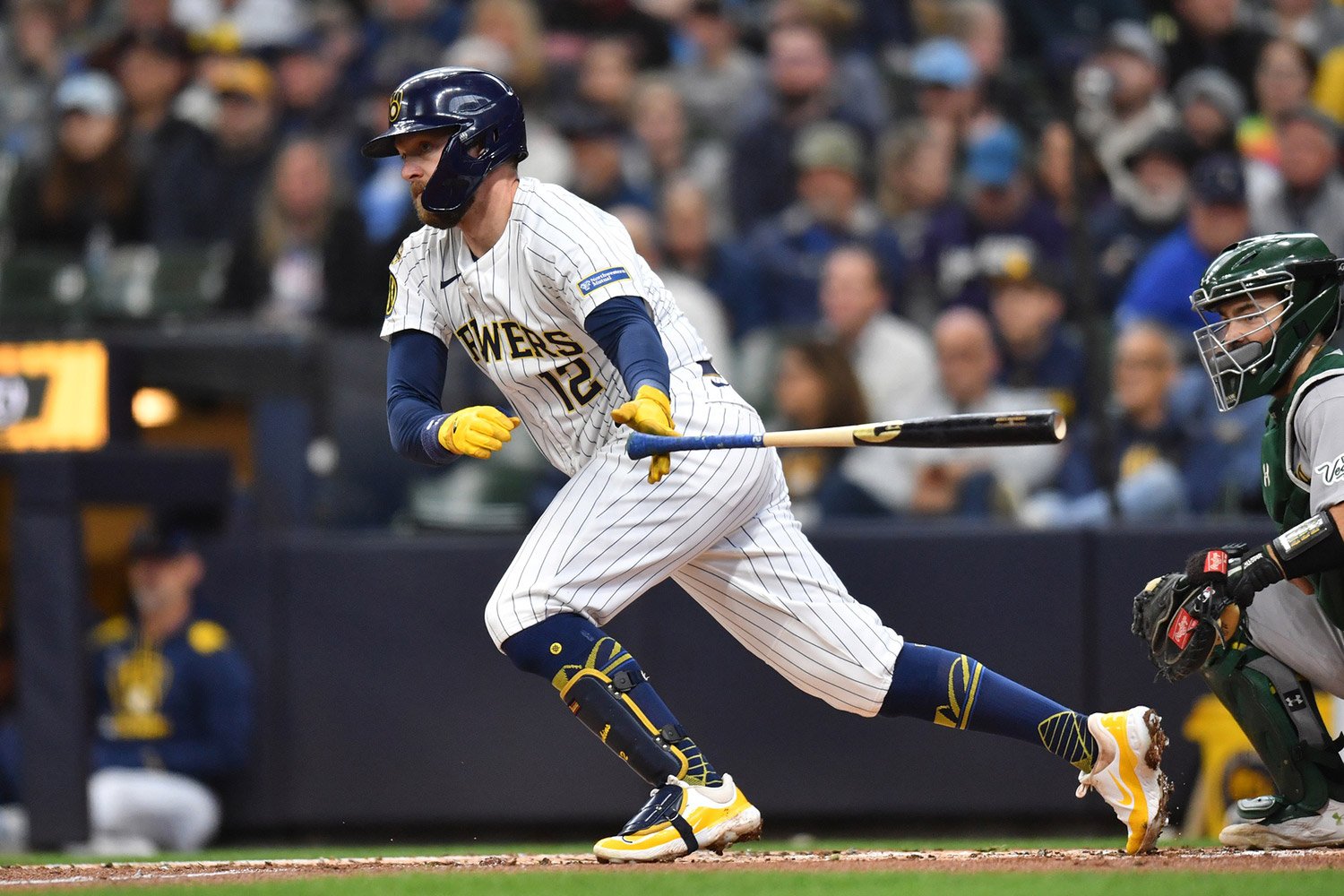 Rhys Hoskins is finally producing when it matters. The early-season hype is now translating into real production, and by almost every traditional metric, he's having his best season since 2022. The power is coming back, he's getting on base at a great clip, and he's giving Milwaukee the middle-of-the-order presence they hoped for when signing him in 2024. But if you open his Baseball Savant page, his percentile rankings paint a different picture. Compare Hoskins's early 2025 results to his 2024 campaign, and the improvement is clear: he's walking more, striking out less, hitting for a higher average, and getting on base more often. While his slugging is still climbing after the team's poor three-game start in March, his April slug is already 20 points higher than his 2022 season total—and he was plenty good that year, his last before the ACL tear that altered his career early in 2023. By any traditional offensive metric, he looks like the same person bashing homers in Citizens Bank Park just three years ago. However, not all the underlying numbers support the topline ones. Of the 11 Statcast batting metrics consistently recorded since 2022, Hoskins's 2025 percentile rankings have improved in only 4: expected batting average (xBA), launch angle sweet-spot percentage, whiff rate, and strikeout rate. Some of his other metrics are nearly at his 2022 benchmarks, but several key indicators are still down, both in percentile ranking and raw value. So what's going on? The League Is Getting Better, But That Is Only Part of It There is no denying that big-league hitters are improving. Development labs, mechanical optimization, and better strength and conditioning programs have raised the floor across the league. In short, the crowd is catching up. Broadly, we see young players supplanting older ones faster than ever. However, that's only part of the equation. Two other factors are essential to explain what is happening: first, the gap between "average" and "elite" is now razor-thin. Second, there is a difference between traditional stats and Statcast data. In today's game, a hitter can add a couple of hard-hit balls, increase their average exit velocity by a tick, and still drop in percentile rankings. Why? Because the distribution of talent has become more condensed. The difference between the 60th percentile and the 85th might come down to five or six swings over a month. The elite tier hasn't necessarily become unreachable; it's more crowded, less forgiving, and more competitive than ever. With so many players capable of quality hitting, slight differences can significantly impact percentile rankings. Take average exit velocity, for example. As the leaderboard stands today, the difference between the 60th and 80th percentiles is 1.4 mph, with single percentile values being differentiated by as little as 0.1 mph. Walk rates, especially, tell a similar story. Even though Hoskins improved his walk rate from 2022, his percentile ranking dropped from the 80th percentile to the 69th percentile. In the early portion of the 2025 season, the league average walk rate is 3.39 per game, the highest mark in a full 162-game season since 2009. And for players like Hoskins, that means you can be performing well, even improving, and still not see that reflected in the bright red circles of a Savant page. To put the shift in further context, Hoskins' 72nd percentile 90.1 mph average exit velocity in 2022 would land him in the 53rd percentile today, barely above league average. The Results Are There, Even If Statcast Isn't Sold Yet Rhys Hoskins is doing many of the same things he did in 2022. The traditional metrics look great, and from a raw numbers standpoint, the statcast profile is slowly starting to look familiar again. But even with clear improvements from last year, the underlying figures remain lower than three seasons ago. These aren't glaring red flags, especially considering where he was in 2024. But still, in today's league, even if Hoskins can replicate his 2022 season from a numbers standpoint, the savant page will look considerably more blue. And that leads us to the final question: What matters more, the process or the results? Traditional stats, such as BA, OBP, and WRC+, tell us what happened. Statcast tries to tell us why it happened and whether it's sustainable. Hoskins' surface-level numbers suggest he's producing like it's 2022 again. But the underlying metrics indicate he's doing it with weaker contact, fewer frequent barrels, and reduced contact quality. We're still dealing with a small sample one month into the season. There's time for things to shift. Maybe Hoskins' Statcast profile will catch up to the box scores, but more likely, the slugging won't stay at 2022 levels, given the dip in barrel rate and exit velocity. While hovering around league average, his expected weighted on-base average isn't as high as expected from a top middle-of-the-order bat. Compared to last year, though, his 73rd-percentile Batting run value represents a clear upgrade for Milwaukee. While the early results may be louder than the underlying process suggests, this isn't entirely a fluke. But if these trends continue, Hoskins' profile might not reach its full potential, and the Brewers could face more regression than they'd hoped.
 -
Are the Brewers Rethinking Their Catching Philosophy?
Brayden Van Teeling posted an article in Brewers
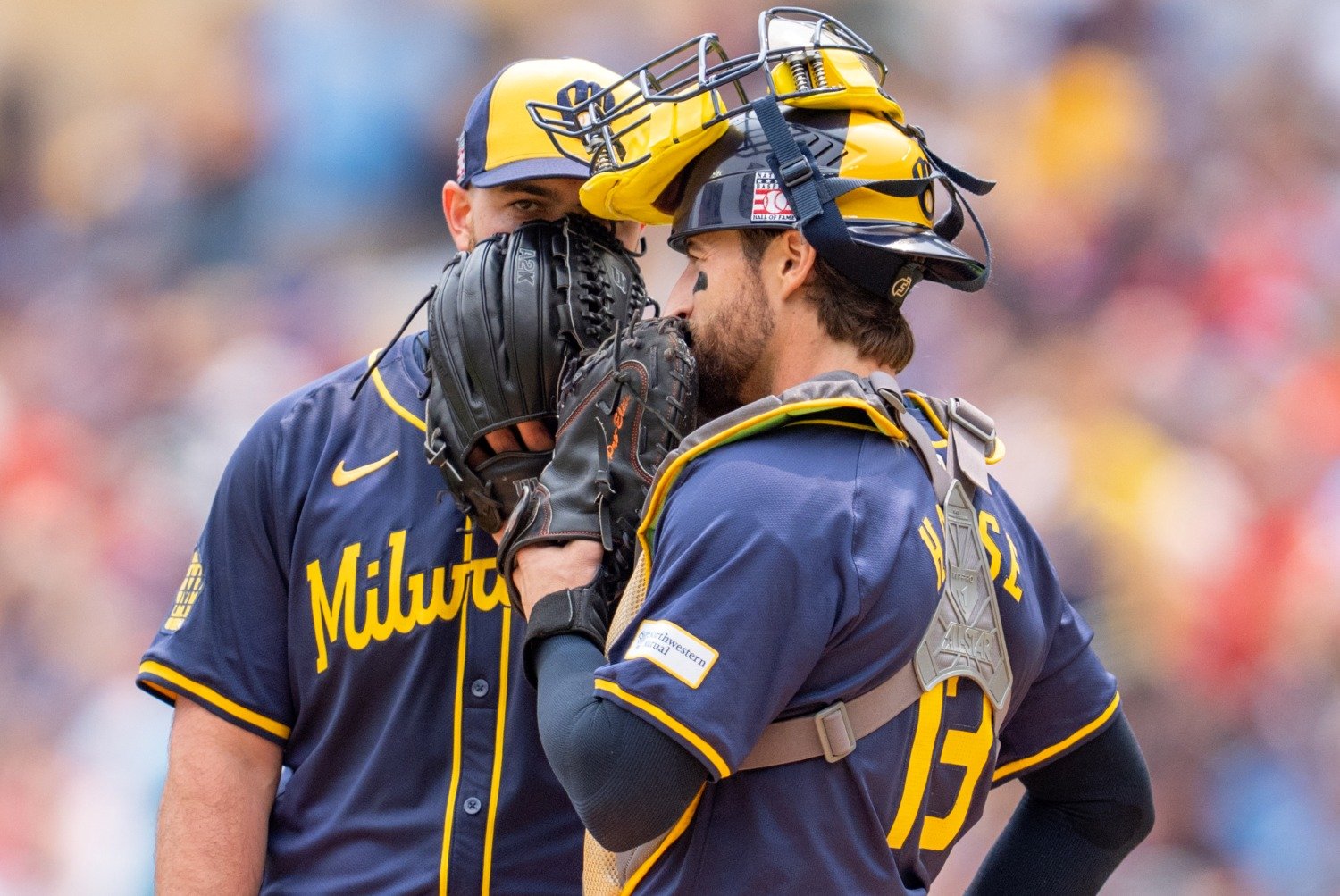 Over more than a decade, Milwaukee's success was primarily driven by the revolving door of strong framing catchers: Jonathan Lucroy's pioneering brilliance; Manny Piña's elite defensive profile during his prime; Omar Narváez, the project built from the ground up after a woeful defensive reputation pushed him out of Chicago, who posted 100th-percentile framing for his first two seasons; and Victor Caratini, who ranked 89th-percentile in 2023. The coaching staff deserves a lot of credit for this. However, in 2024, that skill took a noticeable step back, largely due to a significant defensive regression for William Contreras. Unlike framing, other catcher-specific defensive metrics like blocking and throwing out runners have fluctuated year-to-year without a clear trend. The Brewers have had some dominant seasons of late in these categories, but they're not consistently excellent in that regard. But in 2024, it wasn't just the framing that took a hit. The team framing ranking in 2024 slipped eight spots from the year before, to 13th—its lowest ranking since 2018. The 2024 Brewers tied their worst placement league-wide in Blocks Above Average since Statcast started recording the metric in 2018, finishing 21st. While their Caught Stealing Above Average ranking improved by six spots from 2023 to 2024, 21st is underwhelming for a team so heavily focused on run prevention. The overall defense from the position, while still very good (at 10th, by Defensive Runs Saved), fails to live up to the standard set by the other position groups like second base (1st by DRS), third base (5th), and the outfield (3rd). So, what does this decline signify? One possibility is that, given the current construction of the roster, the Brewers are re-evaluating how they value catchers. The team has leaned into a defense-first identity for years, and by October, it always feels like the team is one impact bat away. Given the team's defensive abilities, they may have identified catcher as a position in which they are willing to trade defense for offense, as long as they can call a good game. Rather than targeting elite framers and good defense, they may embrace and coach a more offense-first catching corps to fill out the lineup. That shift in ideology becomes apparent when looking at the catching tandem for 2025: Contreras and Eric Haase. William Contreras: Trading Defense for Offense When the Brewers acquired Contreras from the former Milwaukee club that now plays in Cobb County, Ga. before the 2023 season, he was primarily seen as an offense-first catcher. In his final year with his former club, he spent a fair portion of his starts in the DH role, deferring the catching duties to the superior defensive catcher, Travis d'Arnaud. But in one offseason, Contreras and the Brewers made incredible strides in turning around his poor fielding. His framing jumped from the 20th percentile to the 93rd percentile. His blocking of errant pitches jumped from the 22nd percentile to the 84th. As a result, Contreras saw his Fielding Run Value jump from -7 (7th percentile) to 8 (90th percentile). However, his increased hitting ability in 2024 might have cost him some of the defensive strides he made in 2023. Slashing .281/.365/.466, Contreras had a career year in 2024, leading all catchers in FanGraphs WAR (5.4) and placing 5th in MVP voting for his efforts. His offensive output made him one of the most productive at his position. His offensive run value increased by 9 points, but was offset by a matching 9-point decrease in his FRV. His previously elite framing metrics decreased to league average, while his blocking slipped below the league average mark. Additionally, Contreras struggled mightily to control the run game last year, grading out to be one of the least accurate throwing catchers in the game. Matthew Trueblood did a deep dive on the topic. You can check it out here. Eric Haase: A Cost-Effective Bat with Upside With Gary Sánchez heading to Baltimore, Eric Haase is set to get a run as the backup in 2025. On the surface, Haase may be an unconventional choice, far from the strong defensive catchers we have seen in the past. He has never been known for his glove. While athletic enough for the position, he grades out as average at best behind the plate. In his first year with the Brewers, Haase improved his framing, which is the Brewers' forte in developing catchers. For a deeper profile of his framing abilities, you can check out this article by Jack Stern, but despite the improvements, he still grades out around league average in that category. Blocking has been an issue for him throughout his career. And like Contreras, he struggled to control the run game last year. Offensively, there is some intriguing upside for Haase. Although he is not historically an offensive threat, he had a strong showing in a small sample with the big-league club in 2024. Only appearing in 30 games, Haase put together an impressive 125 wRC+ in that span. Expecting this success to translate through an entire season's workload is optimistic. However, he could be more productive than a typical backup. As a hitter, Haase grades out similarly to last year's backup, Sánchez: An aggressive hitter with good power and a swing-and-miss problem. In 2024, Haase struck out at a 40.6% clip, up from his career average of 30.1%, which, combined with his 4.3% walk rate (6.5% career average), raises some red flags about his offensive sustainability. Still, the Brewers see upside. The 2024-25 free-agent catcher market had a couple of superior defensive options, but the front office decided to tender a contract to Haase. The most significant reason for this is likely the price point. You get Haase for at least $2 million less than any other name on the market, but you also get some offensive upside the Brewers hope to tap into. If Haase can hover around his career wRC+ of 85, he will provide adequate offensive production for a backup, especially considering the starter he is playing behind. But two years removed from a very good offensive season in Detroit (111 wRC+) and some early success with the Brewers between spring training, Triple A, and the big leagues, there might be some more offense on the table for Haase. He already has the power tool; if he can cut down on the swing and miss, he could be an important piece for the Brewers in 2025. Where Things Stand The Brewers' catching philosophy has long been centered around fielding, particularly pitch framing. Last year, the front office was looking to add a more productive bat to the lineup when they signed Sánchez; that didn't necessarily work out as the front office planned. The goal remains the same this year, but (in true Brewers fashion) with a name you wouldn't expect. With Contreras emerging as one of the game's best offensive catchers and the potential power that Haase brings to the table, their defensive metrics behind the plate may no longer be elite, but if the tradeoff is a more potent offensive lineup, it's a shift that could pay dividends in 2025. Since it's also possible that they've sacrificed some framing to set more strike-throwing-friendly targets for their pitchers, maybe catcher stats aren't quite equipped to capture all the ways the Crew's backstops are helping the team prevent runs.
 -
For years, the Brewers' catching corps was defined by elite pitch framing. From 2019-2023, they consistently ranked as one of the top five teams in framing, maximizing their pitchers' effectiveness by stealing extra strikes. However, in 2024, that skill took a noticeable step back. The Brewers may have re-evaluated how they value catchers. Image courtesy of © Matt Blewett-Imagn Images Over more than a decade, Milwaukee's success was primarily driven by the revolving door of strong framing catchers: Jonathan Lucroy's pioneering brilliance; Manny Piña's elite defensive profile during his prime; Omar Narváez, the project built from the ground up after a woeful defensive reputation pushed him out of Chicago, who posted 100th-percentile framing for his first two seasons; and Victor Caratini, who ranked 89th-percentile in 2023. The coaching staff deserves a lot of credit for this. However, in 2024, that skill took a noticeable step back, largely due to a significant defensive regression for William Contreras. Unlike framing, other catcher-specific defensive metrics like blocking and throwing out runners have fluctuated year-to-year without a clear trend. The Brewers have had some dominant seasons of late in these categories, but they're not consistently excellent in that regard. But in 2024, it wasn't just the framing that took a hit. The team framing ranking in 2024 slipped eight spots from the year before, to 13th—its lowest ranking since 2018. The 2024 Brewers tied their worst placement league-wide in Blocks Above Average since Statcast started recording the metric in 2018, finishing 21st. While their Caught Stealing Above Average ranking improved by six spots from 2023 to 2024, 21st is underwhelming for a team so heavily focused on run prevention. The overall defense from the position, while still very good (at 10th, by Defensive Runs Saved), fails to live up to the standard set by the other position groups like second base (1st by DRS), third base (5th), and the outfield (3rd). So, what does this decline signify? One possibility is that, given the current construction of the roster, the Brewers are re-evaluating how they value catchers. The team has leaned into a defense-first identity for years, and by October, it always feels like the team is one impact bat away. Given the team's defensive abilities, they may have identified catcher as a position in which they are willing to trade defense for offense, as long as they can call a good game. Rather than targeting elite framers and good defense, they may embrace and coach a more offense-first catching corps to fill out the lineup. That shift in ideology becomes apparent when looking at the catching tandem for 2025: Contreras and Eric Haase. William Contreras: Trading Defense for Offense When the Brewers acquired Contreras from the former Milwaukee club that now plays in Cobb County, Ga. before the 2023 season, he was primarily seen as an offense-first catcher. In his final year with his former club, he spent a fair portion of his starts in the DH role, deferring the catching duties to the superior defensive catcher, Travis d'Arnaud. But in one offseason, Contreras and the Brewers made incredible strides in turning around his poor fielding. His framing jumped from the 20th percentile to the 93rd percentile. His blocking of errant pitches jumped from the 22nd percentile to the 84th. As a result, Contreras saw his Fielding Run Value jump from -7 (7th percentile) to 8 (90th percentile). However, his increased hitting ability in 2024 might have cost him some of the defensive strides he made in 2023. Slashing .281/.365/.466, Contreras had a career year in 2024, leading all catchers in FanGraphs WAR (5.4) and placing 5th in MVP voting for his efforts. His offensive output made him one of the most productive at his position. His offensive run value increased by 9 points, but was offset by a matching 9-point decrease in his FRV. His previously elite framing metrics decreased to league average, while his blocking slipped below the league average mark. Additionally, Contreras struggled mightily to control the run game last year, grading out to be one of the least accurate throwing catchers in the game. Matthew Trueblood did a deep dive on the topic. You can check it out here. Eric Haase: A Cost-Effective Bat with Upside With Gary Sánchez heading to Baltimore, Eric Haase is set to get a run as the backup in 2025. On the surface, Haase may be an unconventional choice, far from the strong defensive catchers we have seen in the past. He has never been known for his glove. While athletic enough for the position, he grades out as average at best behind the plate. In his first year with the Brewers, Haase improved his framing, which is the Brewers' forte in developing catchers. For a deeper profile of his framing abilities, you can check out this article by Jack Stern, but despite the improvements, he still grades out around league average in that category. Blocking has been an issue for him throughout his career. And like Contreras, he struggled to control the run game last year. Offensively, there is some intriguing upside for Haase. Although he is not historically an offensive threat, he had a strong showing in a small sample with the big-league club in 2024. Only appearing in 30 games, Haase put together an impressive 125 wRC+ in that span. Expecting this success to translate through an entire season's workload is optimistic. However, he could be more productive than a typical backup. As a hitter, Haase grades out similarly to last year's backup, Sánchez: An aggressive hitter with good power and a swing-and-miss problem. In 2024, Haase struck out at a 40.6% clip, up from his career average of 30.1%, which, combined with his 4.3% walk rate (6.5% career average), raises some red flags about his offensive sustainability. Still, the Brewers see upside. The 2024-25 free-agent catcher market had a couple of superior defensive options, but the front office decided to tender a contract to Haase. The most significant reason for this is likely the price point. You get Haase for at least $2 million less than any other name on the market, but you also get some offensive upside the Brewers hope to tap into. If Haase can hover around his career wRC+ of 85, he will provide adequate offensive production for a backup, especially considering the starter he is playing behind. But two years removed from a very good offensive season in Detroit (111 wRC+) and some early success with the Brewers between spring training, Triple A, and the big leagues, there might be some more offense on the table for Haase. He already has the power tool; if he can cut down on the swing and miss, he could be an important piece for the Brewers in 2025. Where Things Stand The Brewers' catching philosophy has long been centered around fielding, particularly pitch framing. Last year, the front office was looking to add a more productive bat to the lineup when they signed Sánchez; that didn't necessarily work out as the front office planned. The goal remains the same this year, but (in true Brewers fashion) with a name you wouldn't expect. With Contreras emerging as one of the game's best offensive catchers and the potential power that Haase brings to the table, their defensive metrics behind the plate may no longer be elite, but if the tradeoff is a more potent offensive lineup, it's a shift that could pay dividends in 2025. Since it's also possible that they've sacrificed some framing to set more strike-throwing-friendly targets for their pitchers, maybe catcher stats aren't quite equipped to capture all the ways the Crew's backstops are helping the team prevent runs. View full article
-
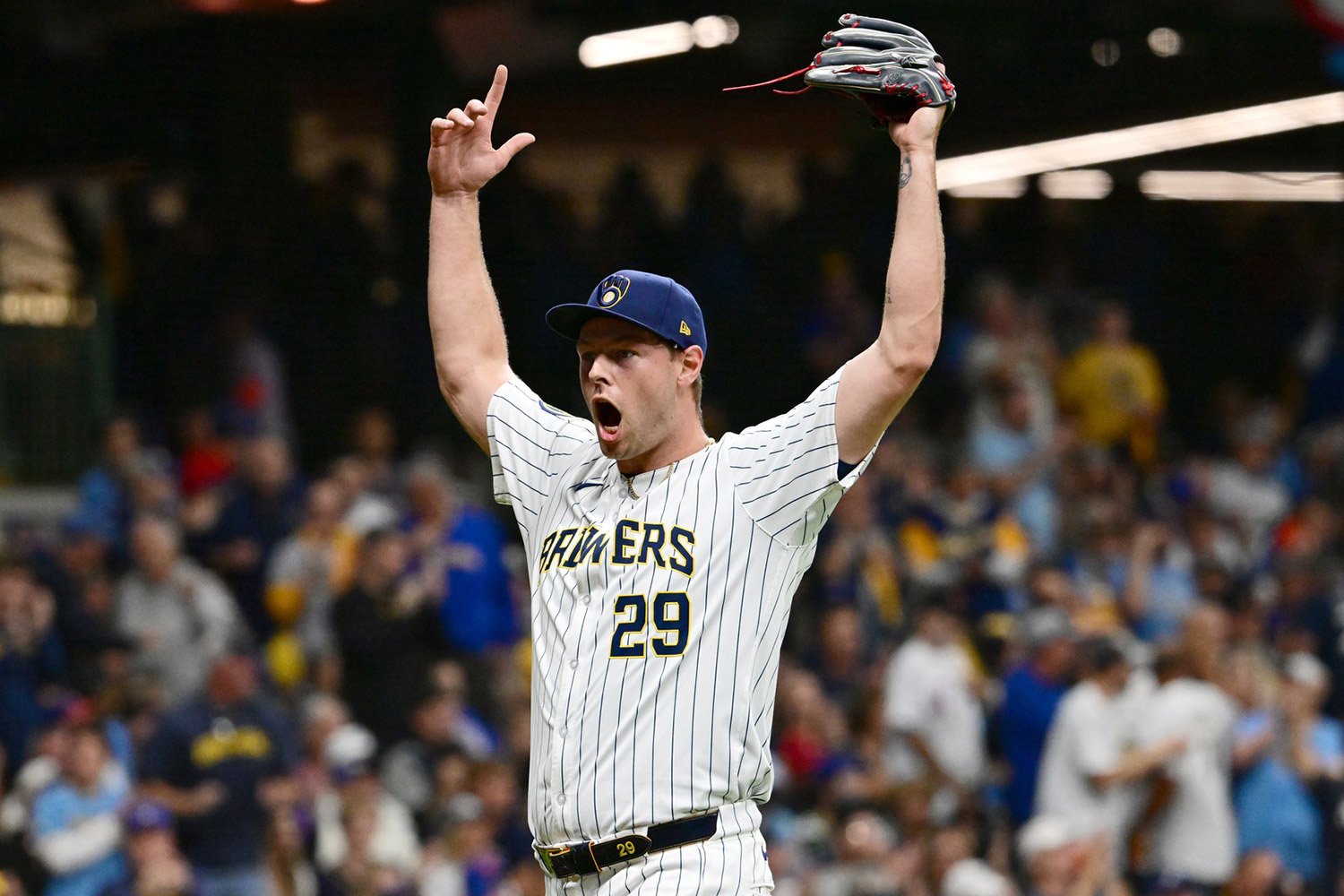 Mariano Rivera, Trevor Hoffman, and Craig Kimbrel had some of their most dominant years with a simple two-pitch mix. Sometimes, Rivera and Kenley Jansen only needed one offering: their uniquely brilliant cutters. However, today, high-leverage pitching is dominated by guys with a deeper bag of tricks. Even if a pitch is thrown less than 5% of the time, its presence in a pitcher's arsenal can create uncertainty and prevent hitters from sitting on primary pitches. Today, only a handful of high-leverage relievers rely solely on two pitches, with the most notable names being Edwin Díaz, Tanner Scott, and Ryan Walker. Now, with Devin Williams out the door, two-pitch pitcher Trevor Megill will likely be handed the keys to the closer role in 2025. He proved he could do it in 2024, successfully converting 21 saves in 24 opportunities, stepping into high-leverage situations on a consistent basis for the first time. However, as Megill enters his sophomore season as some form of relief ace, can he sustain his success, or will the limitations of a two-pitch arsenal catch up with him? In 2024, Megill had the best season of his career, throwing a four-seam fastball (71.6% usage) and a knuckle curve (28.4% usage). While his fastball movement is more good than great (he has a couple inches of carry more than hitters would expect, but the pitch is quite straight, horizontally), his elite velocity and imposing 6-foot-8 frame compensate for any shortcomings. Megill's fastball is his most effective pitch, averaging 98.8 MPH and topping out at 101.4 MPH. If his raw velocity wasn't enough, his frame permits above-average extension, increasing his perceived velocity. According to Baseball Savant, in 2024, among pitchers with a minimum of 100 plate appearances featuring fastballs, Megill had the 18th-best 4-seam fastball by run value (12). However, his knuckle curve provided a run value of 0, ranking 83rd among pitchers who threw a curveball in at least 25 plate appearances. Technically, the movement on his curveball is average or below, but it benefits from tight spin and the third-highest velocity among major-league curves. Together, these traits create a viable secondary pitch, but the fastball will be critical to his success in 2025. Against a two-pitch pitcher, the common hitting approach is to try to identify the pitch early, sit on the fastball, and adjust to the secondary pitch when necessary. Finding success with a two-pitch mix usually depends on more than elite stuff, although thanks to his fastball, Megill has that covered, having a FanGraphs Stuff+ of 141 in 2024. Without the advantage of extra pitches to keep the hitter guessing, a pitcher needs to deceive the batter. The best way to do this is by making both pitches look the same for as long as possible, which starts with the release point. Some of the best two-pitch relievers in the game show how minor variations in release points can improve effectiveness. Edwin Diaz releases his fastball 4.8 feet above the ground, but his slider comes out higher at 5 feet for a 0.2-foot variation. Tanner Scott's variance is marginally better, with his four-seam coming out of his hand at 5.3 feet above the ground, nearly identical to his slider at 5.2 feet. In comparison, this is an area in which Trevor Megill excels, on average, releasing his four-seam fastball and his knuckle curve at an identical 6.6 feet above the ground. His identical release point minimizes any visual cues the hitter may pick up to distinguish which pitch is coming early in the pitch's trajectory. That he comes straight over the top with both pitches also helps. Last spring, Matt Trueblood detailed how Megill's negative vertical release angle on the curve (that is, the downward angle of the pitch, matching the fastball and eliminating any risk of the telltale hump hitters spot in some curveballs) helps generate whiffs by fooling hitters. For the same reason, Megill had one of the highest opponent chase rates in baseball last year; it's viciously difficult to distinguish his pitches from one another. However, deception alone is not enough against major-league hitters, especially if you can't throw strikes. Command is equally important. It's indispensable for any pitcher, regardless of pitch mix, but it becomes crucial for those with a limited repertoire. Additional pitches provide the flexibility to pivot away from those they're struggling to execute and rely on other options. Losing your secondary pitch can be detrimental when limited to two pitches, as beating major-league hitters while relying only on a fastball is nearly impossible. Good command can neutralize predictability, enhance the effectiveness of the secondary pitch, and create more swings and misses. In addition to an above-average walk rate, Megill excels at getting ahead early with a strong first-pitch strike percentage of 65%. According to Pitch Profiler, Megill has 88th-percentile Location+, a metric that measures a pitcher's ability to locate pitches in the "right spot" given the count and the pitch type. Thanks to that capacity to induce chases, even when Megill was missing the zone, he remained effective. Command can also limit hard contact by keeping pitches away from the heart of the plate. Pitchers who consistently hit their spots are more likely to induce weak contact or swing-and-miss. While Megill's command metrics highlight a strength, his biggest weakness as a pitcher is average exit velocity, suggesting hitters still make solid contact even when his pitches are well-located. Megill's opposing batters had an average exit velocity of 91.4 MPH in 2024, the 17th-highest among major-league pitchers with a minimum of 100 batted ball events. He's a fly-ball guy, so ordinarily, you'd expect anything with a good exit velocity on it to be trouble. However, as seen by Megill's 2.72 ERA and 1.01 WHIP, he found a way to remain effective. While high exit velocity correlates with increased slugging, Megill's velocity "problem" isn't necessarily one, considering the strong defense behind him and his strikeout rate. Megill benefited by playing in front of the Brewers' elite defense, putting up a 3.10 FIP compared to his 2.72 ERA. Since that defense isn't going anywhere, though, those numbers need not worry Brewers fans. Because a hitter who only has two pitches to hunt can more reliably meet the ball squarely when they guess right, a slightly higher Squared Up rate (based on bat-tracking data) and that relatively high exit velocity are to be expected for a two-pitch pitcher. Thanks to Megill's incredibly intense stuff, though, he's in the 90th percentile for slowing down hitters' bats (that is, he induced slower average swings than 90% of the rest of the league) and in the 89th percentile for preventing Fast Swings, Baseball Savant's count of swings at over 75 MPH and a good estimate of the number of 'A' swings a hitter is getting off against a given hurler. Megill's success in 2024 significantly influenced the Brewers' willingness to deal Willams this winter. His ability to maintain the same release point for his two-pitch mix helps keep hitters guessing, allowing his curveball to play so well off his dominant fastball. Despite his high average exit velocity, pairing his deception and velocity with his solid command, Megill avoids barrels and plays well to his team's elite defense. If Megill can remain effective with his fastball, he should put up a monster year in 2025 while closing games for the Brewers.
 -
Throughout history, some of the game's best closers have found success sporting a limited pitch arsenal. Can Trevor Megill continue to thrive that way? Image courtesy of © Benny Sieu-Imagn Images Mariano Rivera, Trevor Hoffman, and Craig Kimbrel had some of their most dominant years with a simple two-pitch mix. Sometimes, Rivera and Kenley Jansen only needed one offering: their uniquely brilliant cutters. However, today, high-leverage pitching is dominated by guys with a deeper bag of tricks. Even if a pitch is thrown less than 5% of the time, its presence in a pitcher's arsenal can create uncertainty and prevent hitters from sitting on primary pitches. Today, only a handful of high-leverage relievers rely solely on two pitches, with the most notable names being Edwin Díaz, Tanner Scott, and Ryan Walker. Now, with Devin Williams out the door, two-pitch pitcher Trevor Megill will likely be handed the keys to the closer role in 2025. He proved he could do it in 2024, successfully converting 21 saves in 24 opportunities, stepping into high-leverage situations on a consistent basis for the first time. However, as Megill enters his sophomore season as some form of relief ace, can he sustain his success, or will the limitations of a two-pitch arsenal catch up with him? In 2024, Megill had the best season of his career, throwing a four-seam fastball (71.6% usage) and a knuckle curve (28.4% usage). While his fastball movement is more good than great (he has a couple inches of carry more than hitters would expect, but the pitch is quite straight, horizontally), his elite velocity and imposing 6-foot-8 frame compensate for any shortcomings. Megill's fastball is his most effective pitch, averaging 98.8 MPH and topping out at 101.4 MPH. If his raw velocity wasn't enough, his frame permits above-average extension, increasing his perceived velocity. According to Baseball Savant, in 2024, among pitchers with a minimum of 100 plate appearances featuring fastballs, Megill had the 18th-best 4-seam fastball by run value (12). However, his knuckle curve provided a run value of 0, ranking 83rd among pitchers who threw a curveball in at least 25 plate appearances. Technically, the movement on his curveball is average or below, but it benefits from tight spin and the third-highest velocity among major-league curves. Together, these traits create a viable secondary pitch, but the fastball will be critical to his success in 2025. Against a two-pitch pitcher, the common hitting approach is to try to identify the pitch early, sit on the fastball, and adjust to the secondary pitch when necessary. Finding success with a two-pitch mix usually depends on more than elite stuff, although thanks to his fastball, Megill has that covered, having a FanGraphs Stuff+ of 141 in 2024. Without the advantage of extra pitches to keep the hitter guessing, a pitcher needs to deceive the batter. The best way to do this is by making both pitches look the same for as long as possible, which starts with the release point. Some of the best two-pitch relievers in the game show how minor variations in release points can improve effectiveness. Edwin Diaz releases his fastball 4.8 feet above the ground, but his slider comes out higher at 5 feet for a 0.2-foot variation. Tanner Scott's variance is marginally better, with his four-seam coming out of his hand at 5.3 feet above the ground, nearly identical to his slider at 5.2 feet. In comparison, this is an area in which Trevor Megill excels, on average, releasing his four-seam fastball and his knuckle curve at an identical 6.6 feet above the ground. His identical release point minimizes any visual cues the hitter may pick up to distinguish which pitch is coming early in the pitch's trajectory. That he comes straight over the top with both pitches also helps. Last spring, Matt Trueblood detailed how Megill's negative vertical release angle on the curve (that is, the downward angle of the pitch, matching the fastball and eliminating any risk of the telltale hump hitters spot in some curveballs) helps generate whiffs by fooling hitters. For the same reason, Megill had one of the highest opponent chase rates in baseball last year; it's viciously difficult to distinguish his pitches from one another. However, deception alone is not enough against major-league hitters, especially if you can't throw strikes. Command is equally important. It's indispensable for any pitcher, regardless of pitch mix, but it becomes crucial for those with a limited repertoire. Additional pitches provide the flexibility to pivot away from those they're struggling to execute and rely on other options. Losing your secondary pitch can be detrimental when limited to two pitches, as beating major-league hitters while relying only on a fastball is nearly impossible. Good command can neutralize predictability, enhance the effectiveness of the secondary pitch, and create more swings and misses. In addition to an above-average walk rate, Megill excels at getting ahead early with a strong first-pitch strike percentage of 65%. According to Pitch Profiler, Megill has 88th-percentile Location+, a metric that measures a pitcher's ability to locate pitches in the "right spot" given the count and the pitch type. Thanks to that capacity to induce chases, even when Megill was missing the zone, he remained effective. Command can also limit hard contact by keeping pitches away from the heart of the plate. Pitchers who consistently hit their spots are more likely to induce weak contact or swing-and-miss. While Megill's command metrics highlight a strength, his biggest weakness as a pitcher is average exit velocity, suggesting hitters still make solid contact even when his pitches are well-located. Megill's opposing batters had an average exit velocity of 91.4 MPH in 2024, the 17th-highest among major-league pitchers with a minimum of 100 batted ball events. He's a fly-ball guy, so ordinarily, you'd expect anything with a good exit velocity on it to be trouble. However, as seen by Megill's 2.72 ERA and 1.01 WHIP, he found a way to remain effective. While high exit velocity correlates with increased slugging, Megill's velocity "problem" isn't necessarily one, considering the strong defense behind him and his strikeout rate. Megill benefited by playing in front of the Brewers' elite defense, putting up a 3.10 FIP compared to his 2.72 ERA. Since that defense isn't going anywhere, though, those numbers need not worry Brewers fans. Because a hitter who only has two pitches to hunt can more reliably meet the ball squarely when they guess right, a slightly higher Squared Up rate (based on bat-tracking data) and that relatively high exit velocity are to be expected for a two-pitch pitcher. Thanks to Megill's incredibly intense stuff, though, he's in the 90th percentile for slowing down hitters' bats (that is, he induced slower average swings than 90% of the rest of the league) and in the 89th percentile for preventing Fast Swings, Baseball Savant's count of swings at over 75 MPH and a good estimate of the number of 'A' swings a hitter is getting off against a given hurler. Megill's success in 2024 significantly influenced the Brewers' willingness to deal Willams this winter. His ability to maintain the same release point for his two-pitch mix helps keep hitters guessing, allowing his curveball to play so well off his dominant fastball. Despite his high average exit velocity, pairing his deception and velocity with his solid command, Megill avoids barrels and plays well to his team's elite defense. If Megill can remain effective with his fastball, he should put up a monster year in 2025 while closing games for the Brewers. View full article
-
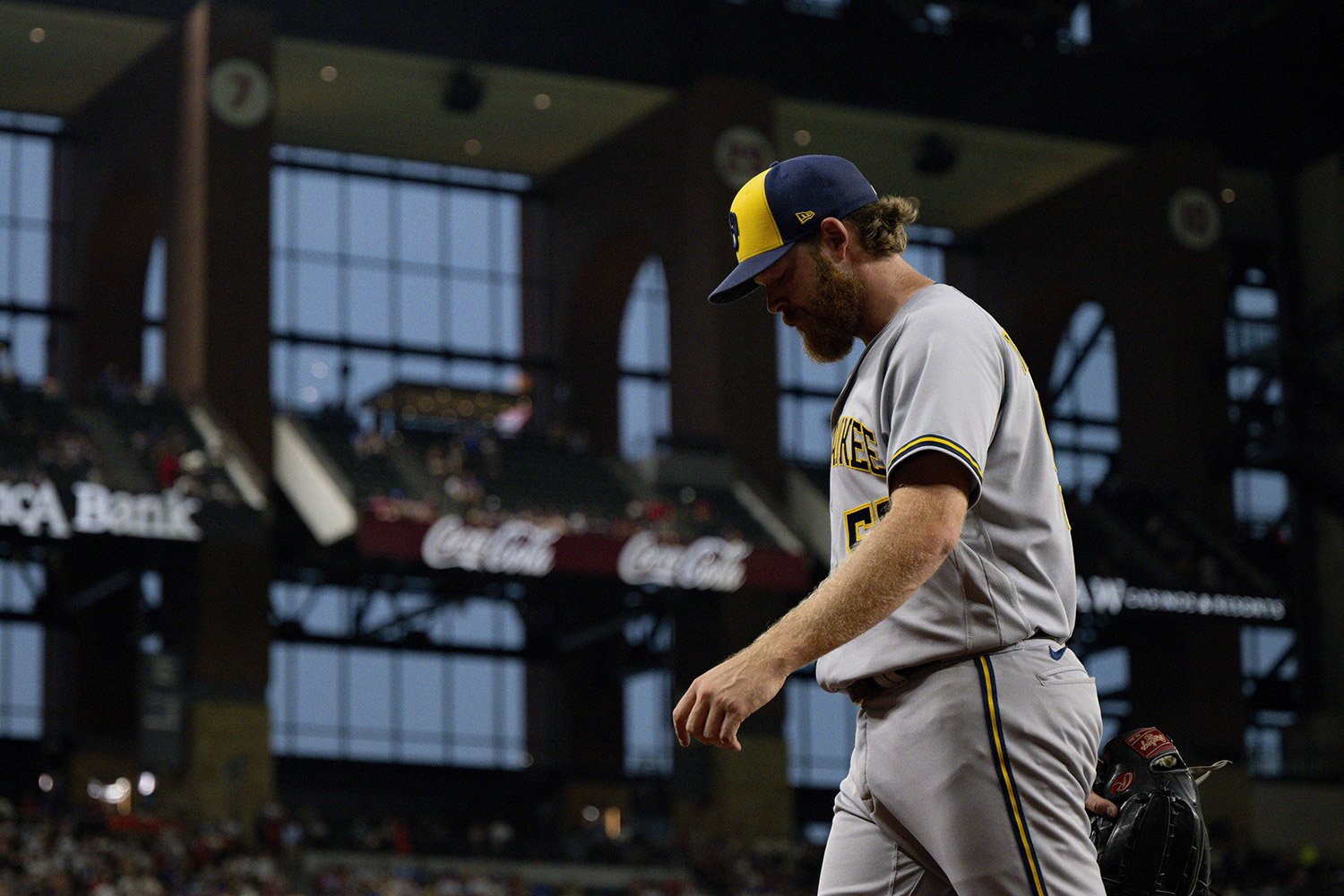 Brewers Owner Mark Attanasio likes to keep the payroll light, which means the front office staff needs to find the pieces of a World Series contender on a budget. This time last year, this philosophy resulted in elite starter Corbin Burnes wearing another team's uniform for the first time in his MLB career. Burnes' departure, alongside an abundance of injuries to their pitching staff, meant many meaningful innings needed to be covered by guys at the bottom of the depth chart. Things got so bad that Dallas Keuchel was starting games at one point (no disrespect, but come on, it's 2024). Although it was ugly for most of the year, the rotation ended in a good spot, thanks to breakout seasons from Colin Rae and Tobias Myers and decent deadline acquisitions in Frankie Montas and Aaron Civale. As we sit here today in the middle of the 2024 offseason, the Brewers have declined their club option on Colin Rea, and Frankie Montas has declined his half of the mutual option on his contract, signing with the New York Mets. Now, down two rotation mainstays, it may seem the Brewers have holes they need to fill in their rotation. However, the somewhat underwhelming sum of money Brewers general manager Matt Arnold will dish out this offseason probably won't go toward a top-end arm for the rotation. Why? Well, other than the whole ownership thing, Brandon Woodruff. The two-time All-Star is one of the names associated with the modern "golden era" of Brewers baseball. Since his permanent move to the starting rotation in 2019, Woodruff has shown he has the makings of a true number one. However, in early April 2023, Woodruff hit the 15-day injured list with right shoulder inflammation. Later, when transferred to the 60-day injured list, the right-hander didn't return to Brewer's rotation until August. Before the regular season could close, Woodruff was back on the injured list and ruled out for 2024 to undergo an anterior capsular repair in his throwing shoulder. Expecting to be at full strength for the 2025 season, the Brewers are hoping Woodruff can come back and, at a minimum, compete with Freddy Peralta to be the team's one starter. Although capable of being a number one, having one of DL Hall or Aaron Ashby as the fifth starter, the Brewers need to be confident that Woodruff can return to form and solidify the top end of the rotation, given the unproven youth at the bottom. Well, how confident can we be? First, what is a shoulder capsule? And what can we expect from Woodruff returning from a significant shoulder surgery? Let's take a look. Unlike Tommy John or an MCL repair, an anterior capsular repair is a rare but significant surgery for a pitcher, with few modern examples of players undergoing the operation. Keeping it simple, the capsule of the shoulder provides restraint and stabilization to the shoulder joint while allowing a wide range of motion. In 2007, Oakland Athletics pitcher Rich Harden tore his right shoulder capsule and pitched with the injury for four years until he decided to get it surgically repaired in 2011. Harden avoided surgery because it had and has been a historically difficult injury to return from. A list of pitchers who have had some variation of the surgery includes Dallas Braden, Mark Prior, John Danks, Chien-Ming Wang, and Chris Young, all of whom failed to return to their previous form. After four seasons of a significant velocity drop and other injuries resulting from pitching with an unstable shoulder, Harden believed he could repair his shoulder and return to his pre-capsule tear form. After the year-long rehab process, Harden signed a minor-league deal with the Minnesota Twins but never pitched another major-league inning before his release and retirement in 2013. In 2010, New York Mets All-Star pitcher Johan Santana tore his anterior capsule. Upon his return to the major leagues in 2012, Santana hadn't lost a step and was looking to end the idea that an anterior capsule injury was challenging to rehab from. By the end of April 2012, Sanata pitched to a 2.25 ERA and finished May with a complete game shutout. The next game, Mets manager Terry Collins let Santana ride out a 134-pitch no-hitter against the St Louis Cardinals. However, Santana's season started falling apart after the no-hit bid, putting together an ERA over eight in his next ten starts. Santana was ruled out for the year by August with another tear in his shoulder capsule. Santana never pitched again, ending his major league career in 2012. I bring Santana into the equation to say that although historically, returns after a capsular repair are often underwhelming, return to previous form is possible, as seen in the very small sample from Santana. Although his re-injury may be a concern, it had much more to do with volume than vulnerability due to the repair. Even newly crowned manager of the year, Pat Murphy, would be fired if he let one of his guys throw 134 bullets, let alone after major shoulder surgery. A modern example that bodes well for Woodruff is that of Julio Urias. Before Urias was in the news for, well, you probably know what, he was in the news for his absolute dominance on the mound, making his debut at 19 years of age, a feat you rarely see in today's game. Most of these dominant years came after his anterior capsular repair in 2017. Woodruff and Urias are slightly different pitchers, but we can still draw a few conclusions from his case. During Urias's first entire season back from surgery in 2019, the average velocity on his pitches showed insignificant changes, unlike most historical cases. His fastball increased by two mph, and his secondary pitches fluctuated plus or minus two mph, an excellent sign for Woodruff, who, in his last full year, 2022, had above-average velocity among right-handed pitchers on all of his pitches. Urias's ability to induce spin remained relatively unharmed by his surgically repaired shoulder, adding around 100 rpm to most of his pitches. Urias had a few trips to the injured list in the following five major league seasons. Still, none were due to problems with his repaired shoulder, indicating that re-injury risk is relatively low and further justifies that Santana's re-injury was a response to his workload. With contrasting results between most historical cases and guys like Santana or Urias, it's hard to say what outcome would be most likely. Studies say the odds of return are high. A 2024 paper published by the Orthopaedic Journal of Sports Medicine studying returns to sport after arthroscopic capsular repair in elite baseball players sampled 11 unnamed players at different levels, eight of which were major leaguers. Nine of the 11 returned to play at their previous level. One major leaguer returned to professional baseball in Mexico, and the oldest in the sample, at age 34, retired post-surgery. The study doesn't specify statistical outcomes upon return. However, the study stated, "Surveyed players were unanimously pleased with their outcome... They would readily recommend the procedure to a colleague and would have the procedure again if needed in the future." I could be missing the bigger picture, but it seems unlikely that anyone physically unable to throw how they used to would share this opinion. The study sampled pitchers aged 20-34, with the two unsuccessful cases coming from players above 30. In the case of Urias, age was still on his side, as he was repairing his shoulder at 20 years old. However, Woodruff is facing his age 31 season. Can we be confident that age won't influence his return to play? A 2014 study published by the Journal of Shoulder and Elbow Surgery analyzed capsular repairs in baseball players. The study sampled five unnamed professional baseball players with an average age of 33.5 (ages 31-37) and found that 80% of cases returned to the pre-injury level. It's also worth noting Santana returned from surgery at age 33. Age is a prominent factor in rehab from any surgery, but it's fair to say age will not be a deciding predictor in Woodruff's return to play. The return-to-play outcomes after anterior capsular repair vary, with historical cases showing mixed results. However, examples like Julio Urías or Johan Santana offer hope for Woodruff's return to form. It's worth noting at no point in the process have the Brewers or Woodruff ever voiced concern in the rehab process, Woodruff going far enough to say, "I'm going [to] be the strongest I'll ever be at any point in my career because I'm going [to] have a year and just basically get my body ready for pitching." History says it can be done, but whether or not the optimism is a front for the media, we will see Woodruff pitch in 2025. As the season gets underway, we will all be closely monitoring Woodruff. If he can combine his established velocity and spin with a successful recovery, he may anchor a rotation capable of making a run in 2025.
 -
The history of anterior capsular repair is volatile, but success stories are mixed in with the early retirements. Image courtesy of © Jerome Miron-Imagn Images Brewers Owner Mark Attanasio likes to keep the payroll light, which means the front office staff needs to find the pieces of a World Series contender on a budget. This time last year, this philosophy resulted in elite starter Corbin Burnes wearing another team's uniform for the first time in his MLB career. Burnes' departure, alongside an abundance of injuries to their pitching staff, meant many meaningful innings needed to be covered by guys at the bottom of the depth chart. Things got so bad that Dallas Keuchel was starting games at one point (no disrespect, but come on, it's 2024). Although it was ugly for most of the year, the rotation ended in a good spot, thanks to breakout seasons from Colin Rae and Tobias Myers and decent deadline acquisitions in Frankie Montas and Aaron Civale. As we sit here today in the middle of the 2024 offseason, the Brewers have declined their club option on Colin Rea, and Frankie Montas has declined his half of the mutual option on his contract, signing with the New York Mets. Now, down two rotation mainstays, it may seem the Brewers have holes they need to fill in their rotation. However, the somewhat underwhelming sum of money Brewers general manager Matt Arnold will dish out this offseason probably won't go toward a top-end arm for the rotation. Why? Well, other than the whole ownership thing, Brandon Woodruff. The two-time All-Star is one of the names associated with the modern "golden era" of Brewers baseball. Since his permanent move to the starting rotation in 2019, Woodruff has shown he has the makings of a true number one. However, in early April 2023, Woodruff hit the 15-day injured list with right shoulder inflammation. Later, when transferred to the 60-day injured list, the right-hander didn't return to Brewer's rotation until August. Before the regular season could close, Woodruff was back on the injured list and ruled out for 2024 to undergo an anterior capsular repair in his throwing shoulder. Expecting to be at full strength for the 2025 season, the Brewers are hoping Woodruff can come back and, at a minimum, compete with Freddy Peralta to be the team's one starter. Although capable of being a number one, having one of DL Hall or Aaron Ashby as the fifth starter, the Brewers need to be confident that Woodruff can return to form and solidify the top end of the rotation, given the unproven youth at the bottom. Well, how confident can we be? First, what is a shoulder capsule? And what can we expect from Woodruff returning from a significant shoulder surgery? Let's take a look. Unlike Tommy John or an MCL repair, an anterior capsular repair is a rare but significant surgery for a pitcher, with few modern examples of players undergoing the operation. Keeping it simple, the capsule of the shoulder provides restraint and stabilization to the shoulder joint while allowing a wide range of motion. In 2007, Oakland Athletics pitcher Rich Harden tore his right shoulder capsule and pitched with the injury for four years until he decided to get it surgically repaired in 2011. Harden avoided surgery because it had and has been a historically difficult injury to return from. A list of pitchers who have had some variation of the surgery includes Dallas Braden, Mark Prior, John Danks, Chien-Ming Wang, and Chris Young, all of whom failed to return to their previous form. After four seasons of a significant velocity drop and other injuries resulting from pitching with an unstable shoulder, Harden believed he could repair his shoulder and return to his pre-capsule tear form. After the year-long rehab process, Harden signed a minor-league deal with the Minnesota Twins but never pitched another major-league inning before his release and retirement in 2013. In 2010, New York Mets All-Star pitcher Johan Santana tore his anterior capsule. Upon his return to the major leagues in 2012, Santana hadn't lost a step and was looking to end the idea that an anterior capsule injury was challenging to rehab from. By the end of April 2012, Sanata pitched to a 2.25 ERA and finished May with a complete game shutout. The next game, Mets manager Terry Collins let Santana ride out a 134-pitch no-hitter against the St Louis Cardinals. However, Santana's season started falling apart after the no-hit bid, putting together an ERA over eight in his next ten starts. Santana was ruled out for the year by August with another tear in his shoulder capsule. Santana never pitched again, ending his major league career in 2012. I bring Santana into the equation to say that although historically, returns after a capsular repair are often underwhelming, return to previous form is possible, as seen in the very small sample from Santana. Although his re-injury may be a concern, it had much more to do with volume than vulnerability due to the repair. Even newly crowned manager of the year, Pat Murphy, would be fired if he let one of his guys throw 134 bullets, let alone after major shoulder surgery. A modern example that bodes well for Woodruff is that of Julio Urias. Before Urias was in the news for, well, you probably know what, he was in the news for his absolute dominance on the mound, making his debut at 19 years of age, a feat you rarely see in today's game. Most of these dominant years came after his anterior capsular repair in 2017. Woodruff and Urias are slightly different pitchers, but we can still draw a few conclusions from his case. During Urias's first entire season back from surgery in 2019, the average velocity on his pitches showed insignificant changes, unlike most historical cases. His fastball increased by two mph, and his secondary pitches fluctuated plus or minus two mph, an excellent sign for Woodruff, who, in his last full year, 2022, had above-average velocity among right-handed pitchers on all of his pitches. Urias's ability to induce spin remained relatively unharmed by his surgically repaired shoulder, adding around 100 rpm to most of his pitches. Urias had a few trips to the injured list in the following five major league seasons. Still, none were due to problems with his repaired shoulder, indicating that re-injury risk is relatively low and further justifies that Santana's re-injury was a response to his workload. With contrasting results between most historical cases and guys like Santana or Urias, it's hard to say what outcome would be most likely. Studies say the odds of return are high. A 2024 paper published by the Orthopaedic Journal of Sports Medicine studying returns to sport after arthroscopic capsular repair in elite baseball players sampled 11 unnamed players at different levels, eight of which were major leaguers. Nine of the 11 returned to play at their previous level. One major leaguer returned to professional baseball in Mexico, and the oldest in the sample, at age 34, retired post-surgery. The study doesn't specify statistical outcomes upon return. However, the study stated, "Surveyed players were unanimously pleased with their outcome... They would readily recommend the procedure to a colleague and would have the procedure again if needed in the future." I could be missing the bigger picture, but it seems unlikely that anyone physically unable to throw how they used to would share this opinion. The study sampled pitchers aged 20-34, with the two unsuccessful cases coming from players above 30. In the case of Urias, age was still on his side, as he was repairing his shoulder at 20 years old. However, Woodruff is facing his age 31 season. Can we be confident that age won't influence his return to play? A 2014 study published by the Journal of Shoulder and Elbow Surgery analyzed capsular repairs in baseball players. The study sampled five unnamed professional baseball players with an average age of 33.5 (ages 31-37) and found that 80% of cases returned to the pre-injury level. It's also worth noting Santana returned from surgery at age 33. Age is a prominent factor in rehab from any surgery, but it's fair to say age will not be a deciding predictor in Woodruff's return to play. The return-to-play outcomes after anterior capsular repair vary, with historical cases showing mixed results. However, examples like Julio Urías or Johan Santana offer hope for Woodruff's return to form. It's worth noting at no point in the process have the Brewers or Woodruff ever voiced concern in the rehab process, Woodruff going far enough to say, "I'm going [to] be the strongest I'll ever be at any point in my career because I'm going [to] have a year and just basically get my body ready for pitching." History says it can be done, but whether or not the optimism is a front for the media, we will see Woodruff pitch in 2025. As the season gets underway, we will all be closely monitoring Woodruff. If he can combine his established velocity and spin with a successful recovery, he may anchor a rotation capable of making a run in 2025. View full article


