



adamzimmer
-
Posts
14 -
Joined
Content Type
Profiles
Forums
Blogs
Events
News
2026 Milwaukee Brewers Top Prospects Ranking
Milwaukee Brewers Videos
2022 Milwaukee Brewers Draft Picks
Milwaukee Brewers Free Agent & Trade Rumors, Notes, & Tidbits
Guides & Resources
2023 Milwaukee Brewers Draft Picks
2024 Milwaukee Brewers Draft Picks
The Milwaukee Brewers Players Project
2025 Milwaukee Brewers Draft Pick Tracker
2026 Milwaukee Brewers Draft Tracker: Picks & Bonuses
Store
Downloads
Gallery
Everything posted by adamzimmer
-
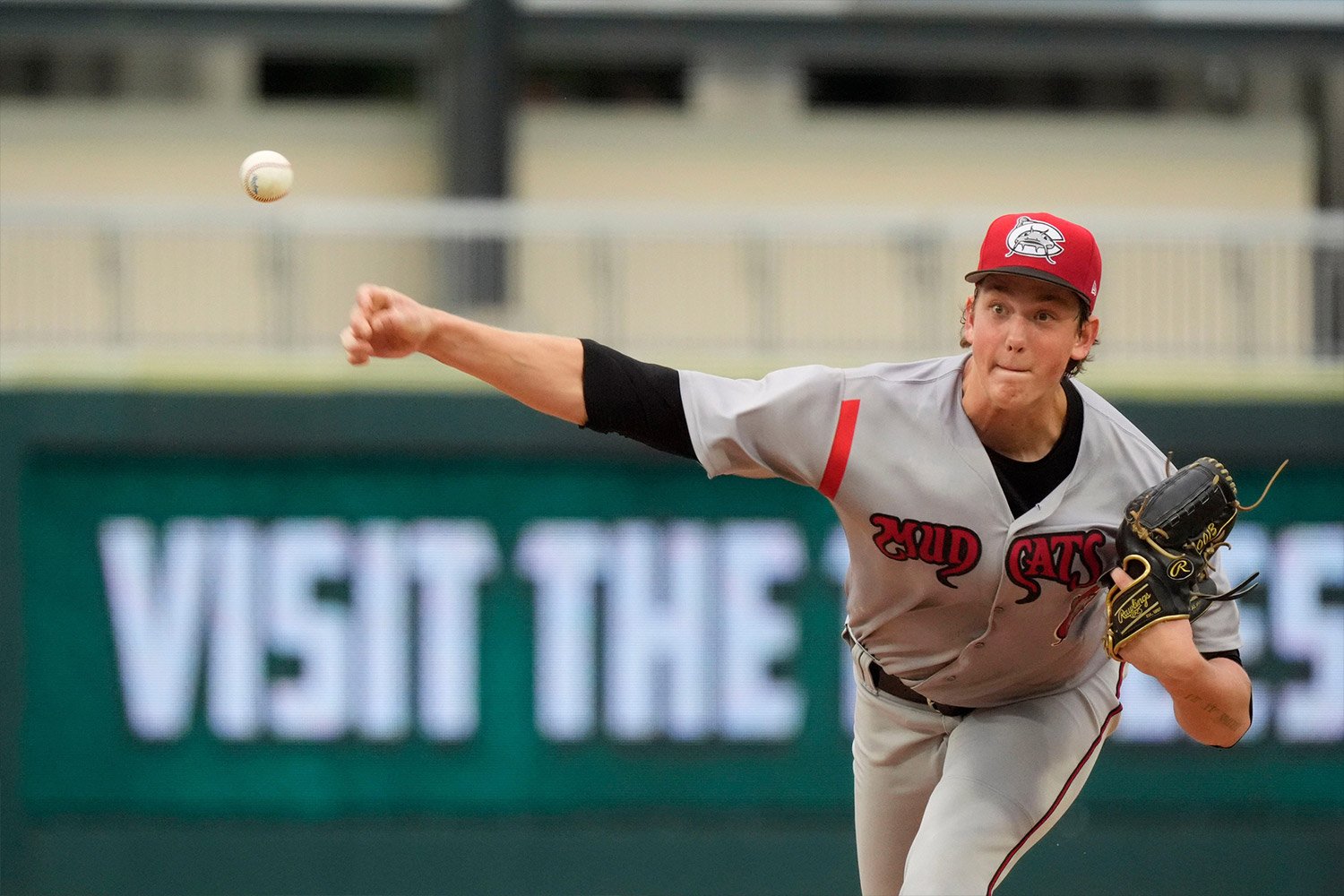 To be eligible for the Pitcher of the Month award, a pitcher must have completed fifteen innings and started at least two games. Pitchers to pitch at least fifteen innings and record an ERA under 3.50: Garrett Stallings, Chad Patrick, Bruce Zimmermann, Tate Kuehner, Travis Smith, Manuel Rodriguez, Jayden Dubanewicz, Bryce Meccage, Melvin Hernandez Honorable Mention: Tate Kuehner Kuehner lost the Pitcher of the Month award today after allowing six hits and eight runs (3 ER) in just 2 1/3 innings pitched. To be fair, it wasn’t necessarily all his fault. Kuehner allowed a leadoff home run in the bottom of the second, but the inning snowballed into a six-run frame due to a bad misplay by first baseman Eric Martinez, a fielding error by shortstop Cooper Pratt, a passed ball by catcher Darrien Miller, and a throwing error by Kuehner himself. Still, the outing inflated his numbers enough to keep him from earning the award for the second time this year. Kuehner, a crafty left-handed pitching prospect, has been lights-out for the Shuckers pretty much all season. This year, Kuehner has had an ERA under 2.50 in every month save for April, but his July ERA before today’s start – 1.59 ERA – was his best mark by nearly half a run. The 2023 seventh-round pick also notched 27 strikeouts in 25 innings, good for 9.7 K/9. Honorable Mention: Manuel Rodriguez Rodriguez, signed out of Minatitlan, Mexico in 2022, has had the best season of his career this year. While his numbers with the Single-A Carolina Mudcats weren’t half bad (3.23 ERA), he’s taken his game to a whole new level this summer. Rodriguez currently sports a 1.73 ERA this season with the High-A Timber Rattlers, and his numbers this month are even better – 1.59 ERA, 24% K%, 41 ERA- through seventeen innings. Rodriguez earned a spot on MLB Pipeline’s updated list of the top thirty Brewers prospects earlier this month. His best attribute is his control; the nineteen-year-old right-hander had a BB/9 under one last year, and it’s only 1.76 so far since being promoted to High-A. Rodriguez doesn’t throw super hard, topping out at only about 92 mph, but he gets impressive spin on all of his pitches – including a slider that has serious potential. Honorable Mention: Ethan Dorchies I’m cheating a little bit – Dorchies only pitched 14 2/3 innings in July, so he’s technically not eligible for the award. With that being said, I still want to highlight his performance since his midseason promotion to Carolina. In those 14 2/3 innings, Dorchies allowed only seven hits, one run (none earned), and struck out thirteen batters. He does need to improve his control a bit; Dorchies walked eight hitters this month, which works out to roughly 5 BB/9. Still, July was his first full month in Single-A after being called up from the Arizona Complex League. The promising right-hander has a lot of time to work out the kinks. July Pitcher of the Month: Travis Smith Smith, drafted in the 15th round last year, started the season off hot but hit a rough patch in May (4.76 ERA) and June (5.57). July, however, has been a different story. The twenty-two year old Smith has been absolutely shoving, with a 0.69 ERA (2.49 FIP) through 26 innings. He allowed sixteen hits and just two earned runs all month, with an impressive K:BB ratio (24:7) to boot. Wins aren’t really a pitcher stat, but Smith picked up the win in four of his five starts, proving that he's been putting the Mudcats in a position to win games. Smith does a really good job of limiting fly balls, as indicated by his 52.9% ground-ball rate, and walks (2.42 BB/9 this month). The 6’4” right-hander has always had loud stuff, but it’s played less impressively in a game setting. In his final year at Kentucky, Smith put up a 6.21 ERA despite a fastball that tops out around 97 and a solid slider. The fastball has been more of a ground ball pitch than a strikeout pitch, even with its impressive velocity. One of the most encouraging signs of growth from Smith this month has been the jump in his strikeout rate. Up until June 31st, Smith was striking out an unimpressive 5.94 batters per nine innings. In July, that number jumped up to 8.31. Smith is also in his third season removed from undergoing Tommy John surgery and his first full season in professional baseball; it’s possible this is the start of a breakout for the twenty-two year old prospect. Milwaukee certainly thinks Smith’s improvement is sustainable, as the organization recently promoted him to High-A Wisconsin.
-
- 3
-

-

-
- tate kuehner
- manuel rodriguez
- (and 2 more)
-
To be eligible for the Pitcher of the Month award, a pitcher must have completed fifteen innings and started at least two games. Pitchers to pitch at least fifteen innings and record an ERA under 3.50: Garrett Stallings, Chad Patrick, Bruce Zimmermann, Tate Kuehner, Travis Smith, Manuel Rodriguez, Jayden Dubanewicz, Bryce Meccage, Melvin Hernandez Honorable Mention: Tate Kuehner Kuehner lost the Pitcher of the Month award today after allowing 6 H and 8 R (3 ER) in just 2.1 IP. To be fair, it wasn’t necessarily all his fault. Kuehner allowed a leadoff home run in the bottom of the second, but the inning snowballed into a six run frame due to a bad misplay by 1B Eric Martinez, a fielding error by SS Cooper Pratt, a passed ball by C Darrien Miller, and a throwing error by Kuehner himself. Still, the outing inflated his numbers enough to keep him from earning the award for the second time this year. Kuehner, a crafty left-handed pitching prospect, has been lights-out for the Shuckers pretty much all season. This year, Kuehner has had an ERA under 2.50 in every month save for April, but his July ERA before today’s start – 1.59 ERA – was his best mark by nearly half a run. The 2023 seventh-round pick also notched 27 strikeouts in 25 innings, good for 9.7 K/9. Honorable Mention: Manuel Rodriguez Rodriguez, signed out of Minatitlan, Mexico in 2022, has had the best season of his career this year. While his numbers with the Single-A Carolina Mudcats weren’t half bad (3.23 ERA), he’s taken his game to a whole new level this summer. Rodriguez currently sports a 1.73 ERA this season with the High-A Timber Rattlers, and his numbers this month are even better – 1.59 ERA, 24% K%, 41 ERA- through seventeen innings. Rodriguez earned a spot on MLB Pipeline’s updated list of the top thirty Brewers prospects earlier this month. His best attribute is his control; the nineteen-year-old right-hander had a BB/9 under 1 last year, and it’s only 1.76 so far since being promoted to High-A. Rodriguez doesn’t throw super hard, topping out at only about 92 mph, but he gets impressive spin on all of his pitches – including a slider that has serious potential. Honorable Mention: Ethan Dorchies I’m cheating a little bit – Dorchies only pitched 14.2 innings in July, so he’s technically not eligible for the award. With that being said, I still want to highlight his performance since his midseason promotion to Carolina. In those 14.2 innings, Dorchies allowed only seven hits, one run (none earned), and struck out thirteen batters. He does need to improve his control a bit; Dorchies walked eight hitters this month, which works out to roughly 5 BB/9. Still, July was his first full month in Single-A after being called up from the Arizona Complex League. The promising right-hander has a lot of time to work out the kinks. July Pitcher of the Month: Travis Smith Smith, drafted in the fifteenth round last year, started the season off hot but hit a rough patch in May (4.76 ERA) and June (5.57). July, however, has been a different story. The twenty-two year old Smith has been absolutely shoving, with a 0.69 ERA (2.49 FIP) through 26 innings. He allowed sixteen hits and just two earned runs all month, with an impressive K/BB ratio (24/7) to boot. Wins aren’t really a pitcher stat, but Smith picked up the win in four of his five starts, proving that he's been putting the Mudcats in a position to win games. Smith does a really good job of limiting fly balls, as indicated by his 52.9% ground-ball rate, and walks (2.42 BB/9 this month). The 6’4” right-hander has always had loud stuff, but it’s played less impressively in a game setting. In his final year at Kentucky, Smith put up a 6.21 ERA despite a fastball that tops out around 97 and a solid slider. The fastball has been more of a ground ball pitch than a strikeout pitch, even with its impressive velocity. One of the most encouraging signs of growth from Smith this month has been the jump in his strikeout rate. Up until June 31st, Smith was striking out a fairly unimpressive 5.94 batters per nine innings. In July, that number jumped up all the way to 8.31. Smith is also in his third season removed from undergoing Tommy John surgery and his first full season in professional baseball; it’s possible this is the start of a breakout for the twenty-two year old prospect. Milwaukee certainly thinks Smith’s improvement is sustainable, as the organization promoted him to High-A Wisconsin yesterday afternoon. View full article
-
- 1
-
-
Image courtesy of © Jonathan Hui-Imagn Images If I told you before the season that the Brewers' third baseman had one of the lowest average exit velocities and hard-hit rates in the entire league and recorded a Statcast-qualifying Barrel less often than 90 percent of other batters, would you consider third base a positional weakness? Probably, right? What if I told you that same guy had a mediocre expected weighted on-base average (xwOBA, which estimates what a player should have expected to produce on a holistic basis, given the quality of their batted balls and their strikeout and walk rates) of .309, an expected slugging percentage among the lowest in the league, and a very modest walk rate? You'd probably be begging the Brewers to make a splash at the trade deadline. Caleb Durbin, though, refuses to be boxed in by expectations, statistical or otherwise. The above stats are all true. Yet, Durbin is hitting .265 with a .733 OPS, 107 OPS+, and a 112 wRC+. He’s already provided 2.1 WAR, less than 100 games into the season—even though he spent the first four weeks of the year at Triple-A Nashville. Durbin is also clutch: he’s walked off three different games and has a .313 batting average (.834 OPS) with runners in scoring position. All of these stats lead me to one simple question: How can somebody who’s really bad at hitting the ball hard also be a statistically above-average hitter? Guys like Luis Arraez, Steven Kwan, and Jeff McNeil have been relatively successful with low exit velocities and hard-hit percentages, but all of those guys have significantly above-average expected batting averages (xBA). That metric estimates how often comparable balls (in terms of exit velocity, launch angle and, on certain types of batted balls, Sprint Speed) have become hits since Statcast was implemented. Unlike those of his fellow light-hitting performers, Durbin’s xBA is also below-average, meaning that the balls he’s hit have been significantly less likely to become hits than Arraez, Kwan, and McNeil. All of those guys hit lots of line drives and cluster their batted balls in the most productive band of launch angles, which is normally a huge part of success for contact hitters. Durbin’s launch-angle sweet spot percentage? 26.6%, one of the worst in all of baseball. By all metrics, he’s about as bad as it gets at squaring the ball up and hitting it hard. Many contact hitters excel by using the whole field, something Durbin (an extreme pull hitter) also doesn't do. However, Durbin is really good at a couple of important things. The first is bunting, as detailed in Matthew Trueblood’s article from last month. Durbin is pretty fast, so opposing third basemen have to respect him as a threat to bunt for a hit. How many times this year have you seen Durbin hit a ground ball down the third-base line for a double? (Three, is the answer, which is a solid number in such a limited sample of playing time.) That’s because the third baseman is playing in to prevent Durbin from bunting for a hit. Same thing goes for his hits up the middle. When the first baseman is playing in to protect against the bunt, the second baseman can’t cheat toward the middle, because he has to be prepared to cover first base. He pulls the defense out of shape, then exploits that fact. V0FkOW9fWGw0TUFRPT1fRGxSUVZsTUFBd2NBRFFCWFVnQUhCQTlYQUZnRlVBVUFVd2NCQWdFQ0NRRlJDRkJm.mp4 Durbin’s second skill, and the reason he’s able to take advantage of the way that defenses are forced to play him, is his contact ability. Caleb Durbin straight-up does not strike out. His strikeout percentage is just 9.1%. Of the 262 players with at least 200 plate appearances this year, only five (Arraez, Kwan, Nico Hoerner, Jacob Wilson, and Chandler Simpson) have fanned less often. When the ball is always in play, you give yourself a huge number of opportunities to find hits. Durbin’s BABIP (.275) is just .011 higher than his batting average. Most hitters have a significantly higher BABIP than their batting average, because they strike out at a normal rate. They have to hit for a higher average on balls in play, because they don’t put the ball in play every at-bat. Durbin, however, puts the ball in play nine out of every 10 at-bats. He doesn’t have to be all that successful at creating quality contact (hence the low xBA), because he’s making contact almost every time. It’s an old-school philosophy based around sheer volume. If you get the ball in play almost every plate appearance, some of those are bound to find holes, even if they are individually less likely to become a hit. Durbin would have the third-highest batting average on the Brewers (after Sal Frelick and Brice Turang) if he had enough plate appearances to qualify. Look at this hit against the Mets. It's not good contact, but he's making contact. Or this two-out RBI single. Durbin basically hits it off his hands, but he's getting the ball in play. If you strike out 9% of the time, as opposed to 25% of the time, you'll have more chances to find the gaps. Durbin obviously doesn't square the ball up a lot, but putting the bat on the ball so often also increases the number of times he hits it hard. That leads us to another thing important to consider regarding Durbin's contact numbers: they dilute his batted-ball stats. Hard-hit percentage, barrel percentage, and sweet spot percentage are all calculated by dividing the relevant stat by the number of batted balls. In short, his percentages are slightly diluted by the high contact rate. He's able to hit the ball more than your average hitter, which means he records more batted balls per plate appearance than your average hitter. If Durbin were striking out two times for every 10 plate appearances, as an average batter does, his hard-hit, sweet spot, and barrel percentages would all (probably) be higher, because he'd record fewer batted balls and the ones that would disappear would (likely) be the weakest ones he's generating in this version of reality. The average exit velocity and hard-hit rates still wouldn't be high, but they would be higher. I'd prefer weak contact to a strikeout any day of the week, unless there's a runner on first and less than two outs, and you have a ground-ball hitter at bat. Durbin is not a ground-ball hitter—and he doesn't only make weak contact. His contact abilities are also the reason he's so clutch. Durbin almost always puts the ball in play, so in late-game situations (for example, when the infield is playing in to try and prevent the runner on third base from scoring), he's more likely to make something happen. Take, for example, his walk-off single on June 12. There are runners on second and third with only one out in a tie game, so the first baseman is playing in. This ball is probably caught for an out if there was nobody on base, but instead, this happened: Even this walk-off sacrifice fly is a great example of why Durbin has become a valuable contributor in the clutch. When you need someone to get the ball in play, call Caleb Durbin. A flyout isn't just a flyout when there's a runner on third in a tie game: He's the opposite of most modern hitters, in a game leaning increasingly toward power and embracing the strikeout to get to it. Durbin does enough things well, though, to keep the line (and the ball, and then himself) moving. That's made him a very solid contributor for the surging Crew. View full article
-
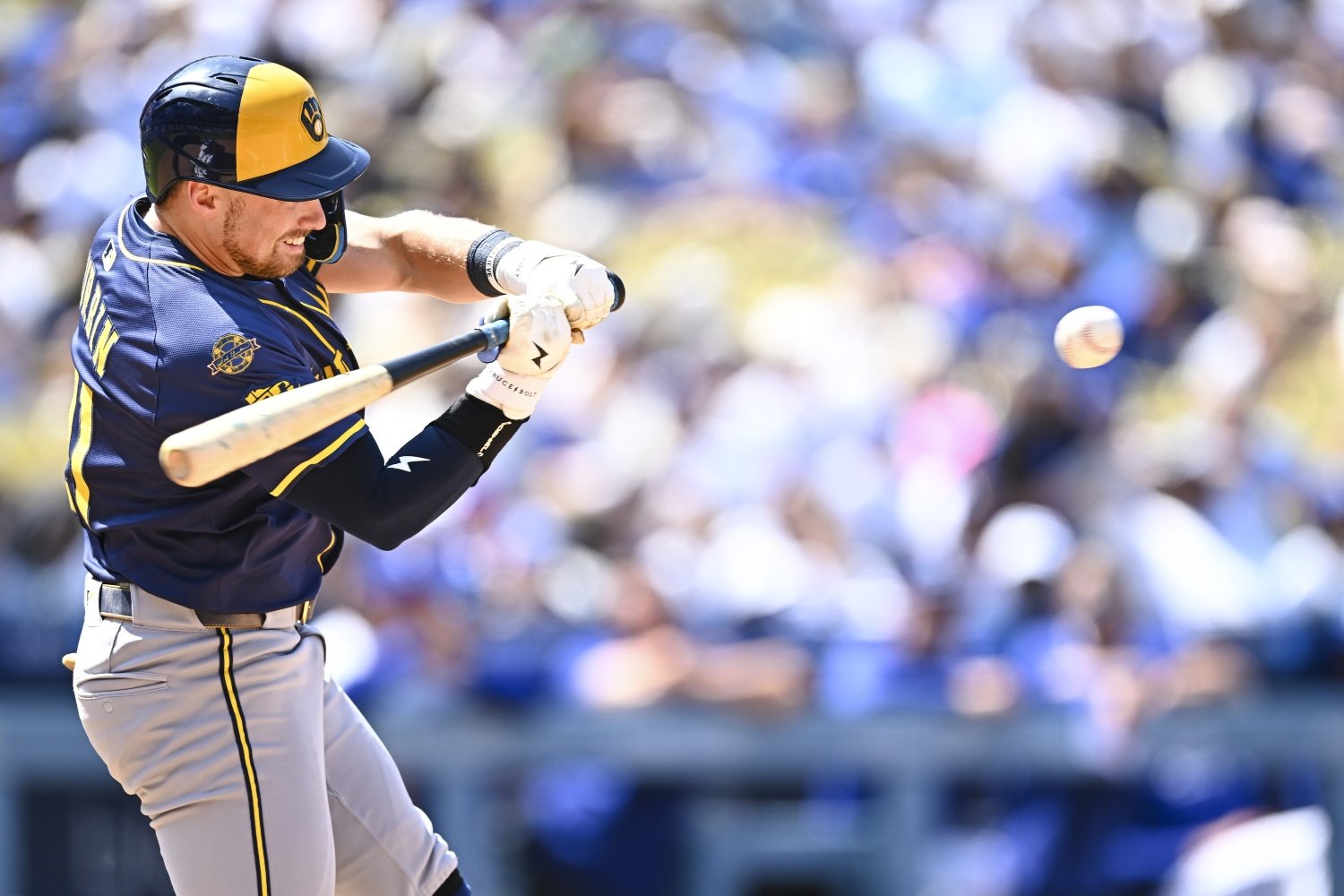 If I told you before the season that the Brewers' third baseman had one of the lowest average exit velocities and hard-hit rates in the entire league and recorded a Statcast-qualifying Barrel less often than 90 percent of other batters, would you consider third base a positional weakness? Probably, right? What if I told you that same guy had a mediocre expected weighted on-base average (xwOBA, which estimates what a player should have expected to produce on a holistic basis, given the quality of their batted balls and their strikeout and walk rates) of .309, an expected slugging percentage among the lowest in the league, and a very modest walk rate? You'd probably be begging the Brewers to make a splash at the trade deadline. Caleb Durbin, though, refuses to be boxed in by expectations, statistical or otherwise. The above stats are all true. Yet, Durbin is hitting .265 with a .733 OPS, 107 OPS+, and a 112 wRC+. He’s already provided 2.1 WAR, less than 100 games into the season—even though he spent the first four weeks of the year at Triple-A Nashville. Durbin is also clutch: he’s walked off three different games and has a .313 batting average (.834 OPS) with runners in scoring position. All of these stats lead me to one simple question: How can somebody who’s really bad at hitting the ball hard also be a statistically above-average hitter? Guys like Luis Arraez, Steven Kwan, and Jeff McNeil have been relatively successful with low exit velocities and hard-hit percentages, but all of those guys have significantly above-average expected batting averages (xBA). That metric estimates how often comparable balls (in terms of exit velocity, launch angle and, on certain types of batted balls, Sprint Speed) have become hits since Statcast was implemented. Unlike those of his fellow light-hitting performers, Durbin’s xBA is also below-average, meaning that the balls he’s hit have been significantly less likely to become hits than Arraez, Kwan, and McNeil. All of those guys hit lots of line drives and cluster their batted balls in the most productive band of launch angles, which is normally a huge part of success for contact hitters. Durbin’s launch-angle sweet spot percentage? 26.6%, one of the worst in all of baseball. By all metrics, he’s about as bad as it gets at squaring the ball up and hitting it hard. Many contact hitters excel by using the whole field, something Durbin (an extreme pull hitter) also doesn't do. However, Durbin is really good at a couple of important things. The first is bunting, as detailed in Matthew Trueblood’s article from last month. Durbin is pretty fast, so opposing third basemen have to respect him as a threat to bunt for a hit. How many times this year have you seen Durbin hit a ground ball down the third-base line for a double? (Three, is the answer, which is a solid number in such a limited sample of playing time.) That’s because the third baseman is playing in to prevent Durbin from bunting for a hit. Same thing goes for his hits up the middle. When the first baseman is playing in to protect against the bunt, the second baseman can’t cheat toward the middle, because he has to be prepared to cover first base. He pulls the defense out of shape, then exploits that fact. V0FkOW9fWGw0TUFRPT1fRGxSUVZsTUFBd2NBRFFCWFVnQUhCQTlYQUZnRlVBVUFVd2NCQWdFQ0NRRlJDRkJm.mp4 Durbin’s second skill, and the reason he’s able to take advantage of the way that defenses are forced to play him, is his contact ability. Caleb Durbin straight-up does not strike out. His strikeout percentage is just 9.1%. Of the 262 players with at least 200 plate appearances this year, only five (Arraez, Kwan, Nico Hoerner, Jacob Wilson, and Chandler Simpson) have fanned less often. When the ball is always in play, you give yourself a huge number of opportunities to find hits. Durbin’s BABIP (.275) is just .011 higher than his batting average. Most hitters have a significantly higher BABIP than their batting average, because they strike out at a normal rate. They have to hit for a higher average on balls in play, because they don’t put the ball in play every at-bat. Durbin, however, puts the ball in play nine out of every 10 at-bats. He doesn’t have to be all that successful at creating quality contact (hence the low xBA), because he’s making contact almost every time. It’s an old-school philosophy based around sheer volume. If you get the ball in play almost every plate appearance, some of those are bound to find holes, even if they are individually less likely to become a hit. Durbin would have the third-highest batting average on the Brewers (after Sal Frelick and Brice Turang) if he had enough plate appearances to qualify. Look at this hit against the Mets. It's not good contact, but he's making contact. Or this two-out RBI single. Durbin basically hits it off his hands, but he's getting the ball in play. If you strike out 9% of the time, as opposed to 25% of the time, you'll have more chances to find the gaps. Durbin obviously doesn't square the ball up a lot, but putting the bat on the ball so often also increases the number of times he hits it hard. That leads us to another thing important to consider regarding Durbin's contact numbers: they dilute his batted-ball stats. Hard-hit percentage, barrel percentage, and sweet spot percentage are all calculated by dividing the relevant stat by the number of batted balls. In short, his percentages are slightly diluted by the high contact rate. He's able to hit the ball more than your average hitter, which means he records more batted balls per plate appearance than your average hitter. If Durbin were striking out two times for every 10 plate appearances, as an average batter does, his hard-hit, sweet spot, and barrel percentages would all (probably) be higher, because he'd record fewer batted balls and the ones that would disappear would (likely) be the weakest ones he's generating in this version of reality. The average exit velocity and hard-hit rates still wouldn't be high, but they would be higher. I'd prefer weak contact to a strikeout any day of the week, unless there's a runner on first and less than two outs, and you have a ground-ball hitter at bat. Durbin is not a ground-ball hitter—and he doesn't only make weak contact. His contact abilities are also the reason he's so clutch. Durbin almost always puts the ball in play, so in late-game situations (for example, when the infield is playing in to try and prevent the runner on third base from scoring), he's more likely to make something happen. Take, for example, his walk-off single on June 12. There are runners on second and third with only one out in a tie game, so the first baseman is playing in. This ball is probably caught for an out if there was nobody on base, but instead, this happened: Even this walk-off sacrifice fly is a great example of why Durbin has become a valuable contributor in the clutch. When you need someone to get the ball in play, call Caleb Durbin. A flyout isn't just a flyout when there's a runner on third in a tie game: He's the opposite of most modern hitters, in a game leaning increasingly toward power and embracing the strikeout to get to it. Durbin does enough things well, though, to keep the line (and the ball, and then himself) moving. That's made him a very solid contributor for the surging Crew.
 -
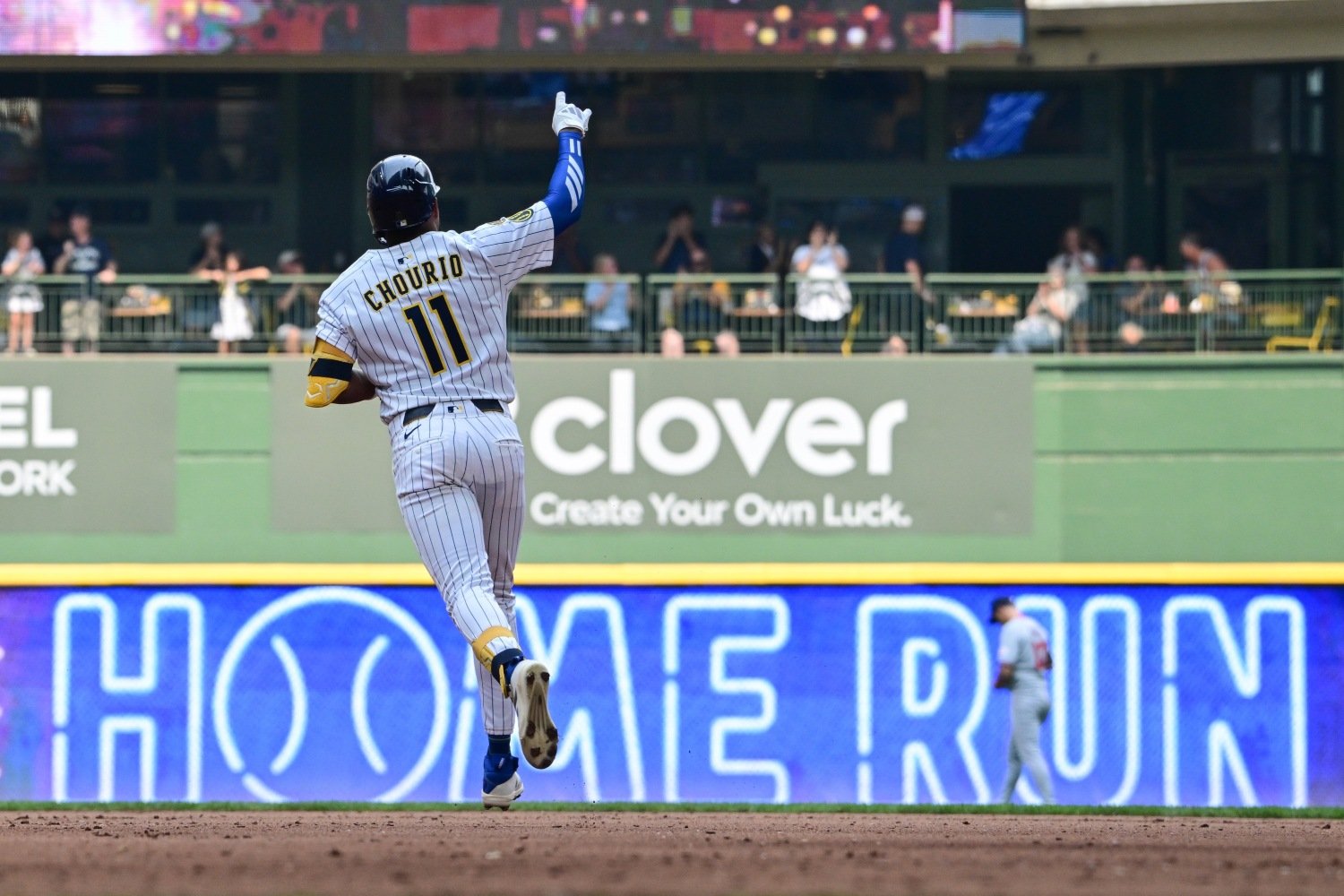 The Milwaukee Brewers currently boast the third-best record in the National League, at 56-40. According to FanGraphs, they have an 83.4% chance to make the playoffs and a 32.6% chance to win the division. Those are good odds, but there are no certainties in baseball. Here’s everything you need to know about where the Brewers currently stand in the playoff picture: Strength of Schedule As you can see, per FanGraphs, the Brewers have the 10th-hardest remaining strength of schedule. Tankathon, another commonly cited website, has the Brewers' schedule third-hardest. Milwaukee starts their second half with a three-game series against the Los Angeles Dodgers (58-39), who currently sport the best record in the National League. Milwaukee will also play two series (eight games) against the Chicago Cubs (57-39), who have the second-best record. The Brewers will face every team in the National League after the All-Star break except for the worst, the Colorado Rockies. In addition to the Dodgers and Cubs, the Brewers will play a total of nine games against the Phillies, Mets, and Padres—currently the fourth-, fifth-, and sixth-best teams in the National League. Some 62% of Milwaukee’s remaining games (41 of 66) are against opponents who are currently over .500. Of the 25 games against opponents currently under .500, 10 of them are against opponents who are currently within three games of .500. While every game counts, the most important games in the second half of the season are against the Dodgers and Cubs. Milwaukee is only a game behind Chicago in the NL Central, so those eight games provide an invaluable opportunity to make up ground in the division race—especially because, per FanGraphs, the Cubs have the easiest strength of schedule in the league the rest of the way. The Dodgers series is both an opportunity to build confidence against maybe the most stacked team in the league, and an opportunity to improve playoff seeding. Ending with a winning record against the Cubs and Dodgers will matter even more if the Cubs and Brewers are still the second- and third-best teams in the National League come September. Winning the NL Central as the second seed, therefore avoiding the Wild Card round, might be a boon to the Brewers’ chances of playing deep into October. Anything can happen in the Wild Card, as we saw last year when the sixth-seeded Mets upset the third-seeded Brewers. Note: FanGraphs doesn’t actually have a strength of schedule tool, but what they do have is a handy little guide – found here – on how to calculate it yourself using their “Team Projections” and “Playoff Odds” pages. Potential Playoff Opponents There are still two and a half months left to play, so the playoff picture can (and will) change between now and October. If the season ended today, the Brewers would be the fourth seed, as the best Wild Card team in the National League. The top three seeds would be the division-leading Dodgers (NL West), Cubs (NL Central), and Phillies (NL East). Despite the stark difference in strength of scbedule, FanGraphs projects the Brewers to finish at 90-72, one game behind the 91-71 Cubs. Baseball Reference also has the Brewers finishing second in the division, at 92-70. Notably, this model has the Brewers finishing three games ahead of the Mets, which would put them as the fourth seed going into the playoffs. If the season ended today, the Brewers would play a best-of-three series against the fifth seed, which will probably be the second-best NL East team (right now, the Mets). If the Brewers end up as the fifth seed, they’ll probably still play whichever of the Phillies or Mets has a worse record. For what it’s worth, both Baseball Reference and FanGraphs have the Brewers facing the Mets in a Wild Card Series, with the winner moving on to face the Los Angeles Dodgers. If Milwaukee falls all the way down to the sixth seed, they’ll play the division winner with the worst record—most likely the winner of the NL East. With all that being said, the Brewers are only a game back in the division. If Milwaukee manages to win the NL Central, they might also be the second seed, giving them a bye for the Wild Card round. They would play the winner of the third and sixth seed game, which would probably be Mets/Phillies vs. Padres/Giants. The most unlikely scenario is that the Brewers win the division, but finish with a worse record than the other division winners, making them the third seed. In that case, they’d play the sixth seed, which is currently the Padres. The San Francisco Giants are only a half-game back of the Padres, and the Cardinals are only a game behind the Giants, so it’s highly feasible any of those three teams could be the Brewers’ opponent if they end up here. Don’t count out the Reds, either; Cincinnati is suddenly just a game back of St. Louis. Division Record The NL Central is, as always, hotly contested. The fourth-place Reds are three games over .500 and just 7.5 games back of the Cubs for the division lead. Every team except the Pittsburgh Pirates had at least 50 wins heading into the All-Star break. The Brewers’ main competition in the NL Central is still clearly the Cubs, who have the best run differential (+119) in all of baseball. At the All-Star break, Milwaukee is 1 game behind the Cubs and 5.5 games ahead of the third-place Cardinals. Chicago started the season really hot, but has cooled off somewhat over the last month and a half. The opposite has been true of the Brewers, who were beset with injuries to their pitching staff in the early part of the season. Milwaukee (25-12) actually has a better record than the Cubs (21-17) since June 1. The Brewers’ record this season against the NL Central is 15-11 (.577). Although the Brewers have a winning record against every other team in the division, they’ve won just two of five games against the Cubs. Milwaukee’s chances at winning the division will be greatly improved if they can take five or six of the eight upcoming games against Chicago..
 -
Image courtesy of © Benny Sieu-Imagn Images The Milwaukee Brewers currently boast the third-best record in the National League, at 56-40. According to FanGraphs, they have an 83.4% chance to make the playoffs and a 32.6% chance to win the division. Those are good odds, but there are no certainties in baseball. Here’s everything you need to know about where the Brewers currently stand in the playoff picture: Strength of Schedule As you can see, per FanGraphs, the Brewers have the 10th-hardest remaining strength of schedule. Tankathon, another commonly cited website, has the Brewers' schedule third-hardest. Milwaukee starts their second half with a three-game series against the Los Angeles Dodgers (58-39), who currently sport the best record in the National League. Milwaukee will also play two series (eight games) against the Chicago Cubs (57-39), who have the second-best record. The Brewers will face every team in the National League after the All-Star break except for the worst, the Colorado Rockies. In addition to the Dodgers and Cubs, the Brewers will play a total of nine games against the Phillies, Mets, and Padres—currently the fourth-, fifth-, and sixth-best teams in the National League. Some 62% of Milwaukee’s remaining games (41 of 66) are against opponents who are currently over .500. Of the 25 games against opponents currently under .500, 10 of them are against opponents who are currently within three games of .500. While every game counts, the most important games in the second half of the season are against the Dodgers and Cubs. Milwaukee is only a game behind Chicago in the NL Central, so those eight games provide an invaluable opportunity to make up ground in the division race—especially because, per FanGraphs, the Cubs have the easiest strength of schedule in the league the rest of the way. The Dodgers series is both an opportunity to build confidence against maybe the most stacked team in the league, and an opportunity to improve playoff seeding. Ending with a winning record against the Cubs and Dodgers will matter even more if the Cubs and Brewers are still the second- and third-best teams in the National League come September. Winning the NL Central as the second seed, therefore avoiding the Wild Card round, might be a boon to the Brewers’ chances of playing deep into October. Anything can happen in the Wild Card, as we saw last year when the sixth-seeded Mets upset the third-seeded Brewers. Note: FanGraphs doesn’t actually have a strength of schedule tool, but what they do have is a handy little guide – found here – on how to calculate it yourself using their “Team Projections” and “Playoff Odds” pages. Potential Playoff Opponents There are still two and a half months left to play, so the playoff picture can (and will) change between now and October. If the season ended today, the Brewers would be the fourth seed, as the best Wild Card team in the National League. The top three seeds would be the division-leading Dodgers (NL West), Cubs (NL Central), and Phillies (NL East). Despite the stark difference in strength of scbedule, FanGraphs projects the Brewers to finish at 90-72, one game behind the 91-71 Cubs. Baseball Reference also has the Brewers finishing second in the division, at 92-70. Notably, this model has the Brewers finishing three games ahead of the Mets, which would put them as the fourth seed going into the playoffs. If the season ended today, the Brewers would play a best-of-three series against the fifth seed, which will probably be the second-best NL East team (right now, the Mets). If the Brewers end up as the fifth seed, they’ll probably still play whichever of the Phillies or Mets has a worse record. For what it’s worth, both Baseball Reference and FanGraphs have the Brewers facing the Mets in a Wild Card Series, with the winner moving on to face the Los Angeles Dodgers. If Milwaukee falls all the way down to the sixth seed, they’ll play the division winner with the worst record—most likely the winner of the NL East. With all that being said, the Brewers are only a game back in the division. If Milwaukee manages to win the NL Central, they might also be the second seed, giving them a bye for the Wild Card round. They would play the winner of the third and sixth seed game, which would probably be Mets/Phillies vs. Padres/Giants. The most unlikely scenario is that the Brewers win the division, but finish with a worse record than the other division winners, making them the third seed. In that case, they’d play the sixth seed, which is currently the Padres. The San Francisco Giants are only a half-game back of the Padres, and the Cardinals are only a game behind the Giants, so it’s highly feasible any of those three teams could be the Brewers’ opponent if they end up here. Don’t count out the Reds, either; Cincinnati is suddenly just a game back of St. Louis. Division Record The NL Central is, as always, hotly contested. The fourth-place Reds are three games over .500 and just 7.5 games back of the Cubs for the division lead. Every team except the Pittsburgh Pirates had at least 50 wins heading into the All-Star break. The Brewers’ main competition in the NL Central is still clearly the Cubs, who have the best run differential (+119) in all of baseball. At the All-Star break, Milwaukee is 1 game behind the Cubs and 5.5 games ahead of the third-place Cardinals. Chicago started the season really hot, but has cooled off somewhat over the last month and a half. The opposite has been true of the Brewers, who were beset with injuries to their pitching staff in the early part of the season. Milwaukee (25-12) actually has a better record than the Cubs (21-17) since June 1. The Brewers’ record this season against the NL Central is 15-11 (.577). Although the Brewers have a winning record against every other team in the division, they’ve won just two of five games against the Cubs. Milwaukee’s chances at winning the division will be greatly improved if they can take five or six of the eight upcoming games against Chicago.. View full article
-
Ortiz and Durbin have both proven they are viable options for a team that figures to contend for the division title. Despite that, the Brewers would still benefit from a third player that they can plug into the left side of the infield, for two reasons. Firstly, Ortiz and Durbin are both hitting for a high average, but their power numbers are somewhat lacking. Durbin has just four home runs all season and is slugging .361, significantly below this year’s league average of .398. Ortiz has six home runs, although four have come in the last week. He's now on pace to end the season somewhere around last year's total (11). The reality is that neither player will probably ever hit home runs at an above-average clip. Ortiz and Durbin both rank in the bottom 20% at their respective positions, unless we limit our scope to the six weeks or so since they each heated up. Ortiz still sports the third-worst OPS in the entire league, even after his recent hot streak. It would be one thing if Milwaukee could make up for a lack of home runs throughout the rest of the lineup, but this year’s team doesn’t have a lot of players who hit the long ball. As a team, Milwaukee ranks 22nd in home runs. Christian Yelich leads the Crew in homers, with 16, tied for 26th in the league. Other than Yelich, Jackson Chourio (13), and Rhys Hoskins (12), no other Brewer has more than six home runs this season. The main appeal of a trade candidate such as Eugenio Suárez (26 home runs on the season) would be adding a home-run threat to an offense that often lacks that dimension. Second, both Ortiz and Durbin have been pretty bad all season against right-handed pitchers. Durbin’s OPS against righties (.632) is over 200 points lower than his OPS against lefties (.867). Ortiz’s splits are less drastic, but his OPS is still over 100 points lower (.534, compared to .644 against lefties). Since Ortiz’s splits are less severe, and he’s more valuable on defense, platooning him might not make a ton of sense for Milwaukee. However, platooning Durbin with another third base option—one who could hit righties as well as Durbin hits leftie— might get the best out of both players, and therefore the left side of the infield. Durbin’s .867 OPS against left-handers would rank 20th in the entire league. Apart from external trade candidates, one potential internal option for the Brewers is new call-up Anthony Seigler, who made his major-league debut at third base in the first game of Wednesday’s doubleheader against the New York Mets. His splits at Triple-A Nashville are hilarious, to put it frankly. Seigler’s OPS (.960) against righties is over double his OPS against lefties (.445). He’s hit each of his seven home runs this season off right-handed pitchers. To paraphrase Moneyball, why trade for Suárez (.888 OPS) when you can recreate him in the aggregate? Seigler’s been a switch-hitter his entire career, but recently started hitting lefty against left-handers, as well as righties. It’s possible that the change will allow him to hit lefties better, allowing him to occasionally spell William Contreras at catcher as the veteran continues to play through a broken finger. At third base, though, why even bother with Seigler against lefties? Durbin’s been hitting left-handers extremely well; there’s no point in benching him against a lefty for Seigler. A platoon very well could be the way to get the best out of both players. A trade is certainly possible, but not urgently necessary, thanks to the trends from each incumbent and an intriguing in-house complementary option. View full article
-
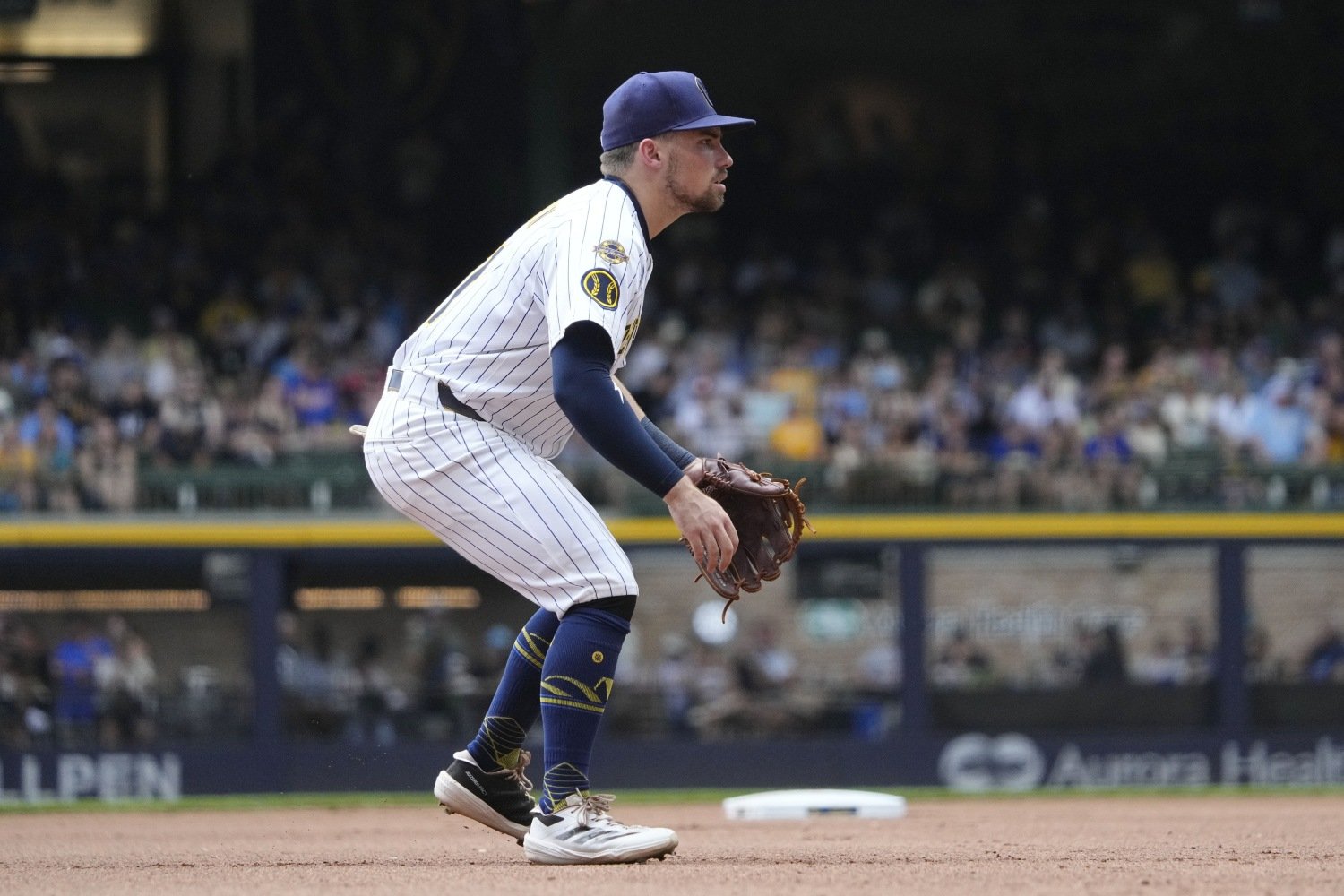 The left side of the Brewers infield was their greatest offensive weakness over the first two months of the season. Third baseman Caleb Durbin and shortstop Joey Ortiz were both well below the league average in pretty much every major statistical category. Ortiz (.489) had the worst OPS in the majors in the month of May. Durbin’s OPS (.561) wasn’t much better. The two positions combined for a whopping two home runs all month, both courtesy of Ortiz. Don’t look now, though: both players have picked up the pace drastically. Since June 1, Ortiz (.748) and Durbin (.795) each have an above-average OPS. Ortiz has completely revamped his approach and looks reborn at the plate. For more on him, check out Matthew Trueblood’s article here. Durbin is hitting .296 since June 1, providing a consistent spark from the bottom third of the order. He started out pretty hot after being called up from Triple-A Nashville in mid-April, hitting .263 with eight RBIs in twelve games. May was rough, but—as detailed here—Durbin also seems to have figured out an approach that works for him. Ortiz and Durbin have both proven they are viable options for a team that figures to contend for the division title. Despite that, the Brewers would still benefit from a third player that they can plug into the left side of the infield, for two reasons. Firstly, Ortiz and Durbin are both hitting for a high average, but their power numbers are somewhat lacking. Durbin has just four home runs all season and is slugging .361, significantly below this year’s league average of .398. Ortiz has six home runs, although four have come in the last week. He's now on pace to end the season somewhere around last year's total (11). The reality is that neither player will probably ever hit home runs at an above-average clip. Ortiz and Durbin both rank in the bottom 20% at their respective positions, unless we limit our scope to the six weeks or so since they each heated up. Ortiz still sports the third-worst OPS in the entire league, even after his recent hot streak. It would be one thing if Milwaukee could make up for a lack of home runs throughout the rest of the lineup, but this year’s team doesn’t have a lot of players who hit the long ball. As a team, Milwaukee ranks 22nd in home runs. Christian Yelich leads the Crew in homers, with 16, tied for 26th in the league. Other than Yelich, Jackson Chourio (13), and Rhys Hoskins (12), no other Brewer has more than six home runs this season. The main appeal of a trade candidate such as Eugenio Suárez (26 home runs on the season) would be adding a home-run threat to an offense that often lacks that dimension. Second, both Ortiz and Durbin have been pretty bad all season against right-handed pitchers. Durbin’s OPS against righties (.632) is over 200 points lower than his OPS against lefties (.867). Ortiz’s splits are less drastic, but his OPS is still over 100 points lower (.534, compared to .644 against lefties). Since Ortiz’s splits are less severe, and he’s more valuable on defense, platooning him might not make a ton of sense for Milwaukee. However, platooning Durbin with another third base option—one who could hit righties as well as Durbin hits leftie— might get the best out of both players, and therefore the left side of the infield. Durbin’s .867 OPS against left-handers would rank 20th in the entire league. Apart from external trade candidates, one potential internal option for the Brewers is new call-up Anthony Seigler, who made his major-league debut at third base in the first game of Wednesday’s doubleheader against the New York Mets. His splits at Triple-A Nashville are hilarious, to put it frankly. Seigler’s OPS (.960) against righties is over double his OPS against lefties (.445). He’s hit each of his seven home runs this season off right-handed pitchers. To paraphrase Moneyball, why trade for Suárez (.888 OPS) when you can recreate him in the aggregate? Seigler’s been a switch-hitter his entire career, but recently started hitting lefty against left-handers, as well as righties. It’s possible that the change will allow him to hit lefties better, allowing him to occasionally spell William Contreras at catcher as the veteran continues to play through a broken finger. At third base, though, why even bother with Seigler against lefties? Durbin’s been hitting left-handers extremely well; there’s no point in benching him against a lefty for Seigler. A platoon very well could be the way to get the best out of both players. A trade is certainly possible, but not urgently necessary, thanks to the trends from each incumbent and an intriguing in-house complementary option.
- 4 comments
-
- 2
-
-
- caleb durbin
- eugenio suarez
- (and 2 more)
-
Image courtesy of Coleman Crow On Wednesday, Milwaukee promoted RHP Coleman Crow from Double-A Biloxi to Triple-A Nashville. Crow was acquired from the Mets back in December 2023 as the return for two major leaguers – Adrian Houser and Tyrone Taylor. Crow, who at the time ranked as the Mets’ No. 29 prospect, blew out his elbow after just four starts that year. He didn’t undergo Tommy John surgery until July of 2023, which caused him to end up missing the entire 2024 regular season while rehabbing. Simply put, it’s been a long wait to finally get Crow on the mound. The twenty-four-year-old right-hander didn’t end up making his debut with the Brewers’ organization until April of this year. Crow had previously posted pretty underwhelming stats in the minors. In 2022, his only full season above Single-A, Crow posted the worst ERA (4.85) of his career. Some of his the underlying peripherals actually looked pretty good -- 2.46 BB/9, 9.00 K/9. His FIP (4.64) and WHIP (1.31) weren't great, yet both marked significant improvements from the previous year (5.29, 1.56). A major reason for his lack of success in 2022 was his HR/9 of 1.41. For context, the average major league HR/9 has been somewhere between 1.1 and 1.2 each of the last four years. Crow himself has never posted a HR/9 higher than 1.13 in any season apart from that 2022 campaign. The Brewers clearly saw something in Crow, even after a less-than-stellar season. The two most appealing things about his profile were -- and still are -- his plus curveball and extremely flat vertical approach angle (VAA). The success of his curveball is due to generating a crazy amount of spin. Javik Blake, the broadcaster for Double-A Biloxi, helps provide some context as to just how unique Crow's ability to spin the ball is: Stats only tell half of the story: look at what that amount of spin does to a pitch! It looks like a video game curveball: According to Curt Hogg, Crow regularly gets around 19" of vertical break on his curveball. Only one pitcher in the entire major leagues (the Cardinals' Phil Maton) averages 19" of vertical break on his curve. Now, you might ask: can batters still hit it? What's the whiff rate on a Crow curveball? An astounding 41%. Crow's secondary pitches are less impressive, although the bar is high given how effective his curveball is. His four seamer carries a pretty respectable whiff rate of 20%. Crow doesn't throw hard, with the four-seamer normally sitting between 91-93 mph. His fastball had previously gotten outs due to its low release slot. Spencer Michaelis wrote an article on Crow after the Houser trade detailing Crow's vertical approach angle. His fastball comes in at a significantly flatter angle than most, similar to Freddy Peralta. As a result, hitters will often swing under the pitch. Sometimes, that can lead to more home runs -- such as in the case of 2022. If combined with deceptive off-speed pitches and good command, it can also get batters to pop out on pitches they would otherwise be able to square up. Crow's stats this year are interesting given this background. His line drive percentage and infield fly percentage are both about 10% lower than in previous years. Batters are hitting more ground balls and more line drives against him. Yet, his stats are the best they've ever been -- 2.51 ERA, 2.07 FIP, 0.42 HR/9, 1.6 BB/9. When Crow has been hit around this year, it's almost exclusively on fastballs that stayed in the hitting zone. Per Hogg, Crow's fastball needs to be elevated more than your standard four-seamer to get outs. The problem with this -- as mentioned above -- is that pitches up in the zone are generally easier to hit for extra bases. A slow, high fastball, if timed right, is the perfect pitch to hit for a home run. If hitters can adjust to the flatter angle, they can drive Crow's fastball. This year, Crow has been relying more on his off-speed pitches to challenge hitters. Basically, he's figured out how to keep hitters off balance in a way he didn't in 2022 -- his last full season. The below video, from a start on June 1st, shows strike three of each of Crow's nine strikeouts. Only two of the nine pitches were fastballs up in the zone. He's mixing locations, speeds, and pitches consistently -- keeping hitters off balance and making it harder to sit on a fastball up. The other reason that Crow has been getting more ground balls this season? He's throwing his cutter -- a pitch that plays well down in the zone -- a lot more. In the month of June (17 IP), Crow has allowed two earned runs while utilizing the cutter heavily. More than that, he's been using it to attack the zone -- as seen in the clip of his nine strikeouts. His cutter seems to be more effective in getting ground balls -- and outs -- than the four seamer. Crow has also featured a slider and, more recently, a changeup with arm-side run. A consistent changeup would be huge for Crow, as he currently doesn't have a pitch that moves in the opposite direction of his cutter and curveball (which both break to the glove side). The final minor league test for Crow lies ahead in Nashville. He's currently on the 7-day IL with hip pain, but is only expected to miss one start. Crow has clearly figured out how to use his four, soon to be five, pitch arsenal to keep Double-A hitters off balance and get outs. He will undoubtedly face better competition in Triple-A, and it remains to be seen to what extent this breakout will translate. Milwaukee certainly thinks Crow will hold his own, or they wouldn't have promoted him. When Crow makes his Triple-A debut next week, keep an eye on him. His curveball is easily one of the most impressive pitches in the Brewers' farm system. If he can develop a second reliable pitch -- whether it be a cutter, four-seam, or changeup -- he could very well develop into a legitimate mid-rotation guy someday. View full article
-
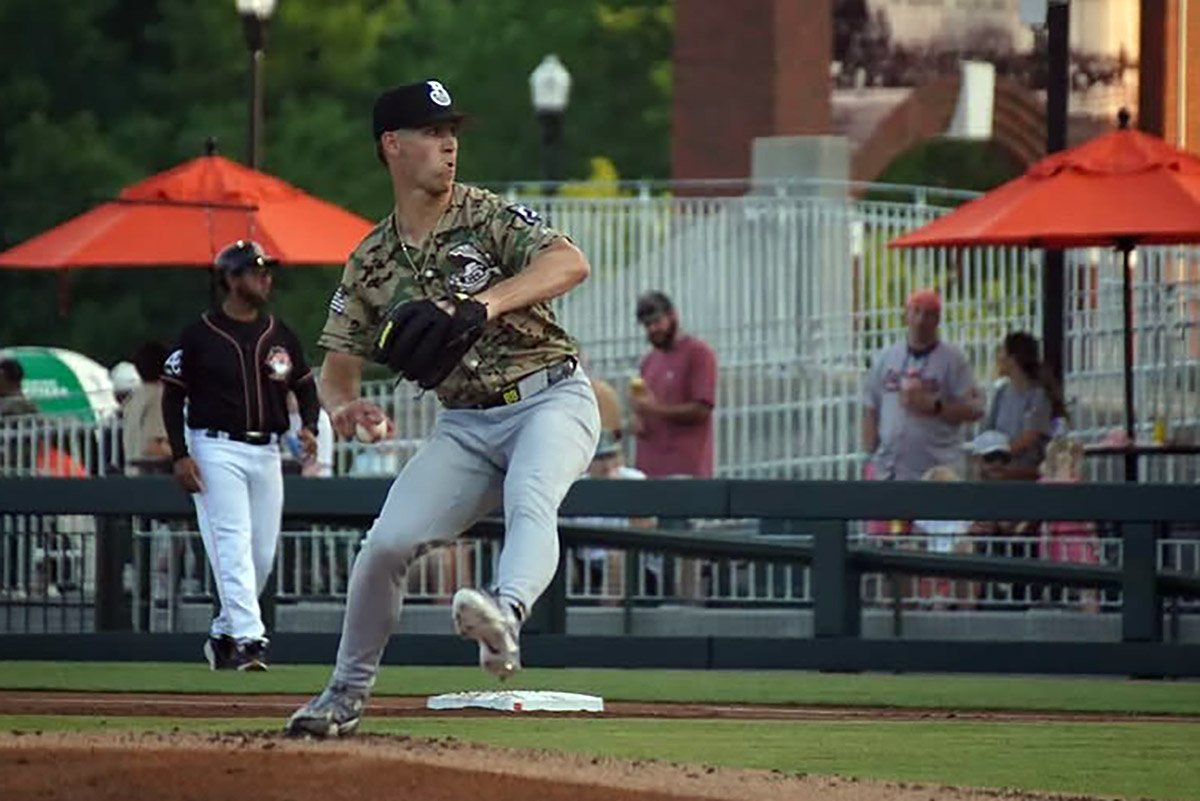 On Wednesday, Milwaukee promoted RHP Coleman Crow from Double-A Biloxi to Triple-A Nashville. Crow was acquired from the Mets back in December 2023 as the return for two major leaguers – Adrian Houser and Tyrone Taylor. Crow, who at the time ranked as the Mets’ No. 29 prospect, blew out his elbow after just four starts that year. He didn’t undergo Tommy John surgery until July of 2023, which caused him to end up missing the entire 2024 regular season while rehabbing. Simply put, it’s been a long wait to finally get Crow on the mound. The twenty-four-year-old right-hander didn’t end up making his debut with the Brewers’ organization until April of this year. Crow had previously posted pretty underwhelming stats in the minors. In 2022, his only full season above Single-A, Crow posted the worst ERA (4.85) of his career. Some of his the underlying peripherals actually looked pretty good -- 2.46 BB/9, 9.00 K/9. His FIP (4.64) and WHIP (1.31) weren't great, yet both marked significant improvements from the previous year (5.29, 1.56). A major reason for his lack of success in 2022 was his HR/9 of 1.41. For context, the average major league HR/9 has been somewhere between 1.1 and 1.2 each of the last four years. Crow himself has never posted a HR/9 higher than 1.13 in any season apart from that 2022 campaign. The Brewers clearly saw something in Crow, even after a less-than-stellar season. The two most appealing things about his profile were -- and still are -- his plus curveball and extremely flat vertical approach angle (VAA). The success of his curveball is due to generating a crazy amount of spin. Javik Blake, the broadcaster for Double-A Biloxi, helps provide some context as to just how unique Crow's ability to spin the ball is: Stats only tell half of the story: look at what that amount of spin does to a pitch! It looks like a video game curveball: According to Curt Hogg, Crow regularly gets around 19" of vertical break on his curveball. Only one pitcher in the entire major leagues (the Cardinals' Phil Maton) averages 19" of vertical break on his curve. Now, you might ask: can batters still hit it? What's the whiff rate on a Crow curveball? An astounding 41%. Crow's secondary pitches are less impressive, although the bar is high given how effective his curveball is. His four seamer carries a pretty respectable whiff rate of 20%. Crow doesn't throw hard, with the four-seamer normally sitting between 91-93 mph. His fastball had previously gotten outs due to its low release slot. Spencer Michaelis wrote an article on Crow after the Houser trade detailing Crow's vertical approach angle. His fastball comes in at a significantly flatter angle than most, similar to Freddy Peralta. As a result, hitters will often swing under the pitch. Sometimes, that can lead to more home runs -- such as in the case of 2022. If combined with deceptive off-speed pitches and good command, it can also get batters to pop out on pitches they would otherwise be able to square up. Crow's stats this year are interesting given this background. His line drive percentage and infield fly percentage are both about 10% lower than in previous years. Batters are hitting more ground balls and more line drives against him. Yet, his stats are the best they've ever been -- 2.51 ERA, 2.07 FIP, 0.42 HR/9, 1.6 BB/9. When Crow has been hit around this year, it's almost exclusively on fastballs that stayed in the hitting zone. Per Hogg, Crow's fastball needs to be elevated more than your standard four-seamer to get outs. The problem with this -- as mentioned above -- is that pitches up in the zone are generally easier to hit for extra bases. A slow, high fastball, if timed right, is the perfect pitch to hit for a home run. If hitters can adjust to the flatter angle, they can drive Crow's fastball. This year, Crow has been relying more on his off-speed pitches to challenge hitters. Basically, he's figured out how to keep hitters off balance in a way he didn't in 2022 -- his last full season. The below video, from a start on June 1st, shows strike three of each of Crow's nine strikeouts. Only two of the nine pitches were fastballs up in the zone. He's mixing locations, speeds, and pitches consistently -- keeping hitters off balance and making it harder to sit on a fastball up. The other reason that Crow has been getting more ground balls this season? He's throwing his cutter -- a pitch that plays well down in the zone -- a lot more. In the month of June (17 IP), Crow has allowed two earned runs while utilizing the cutter heavily. More than that, he's been using it to attack the zone -- as seen in the clip of his nine strikeouts. His cutter seems to be more effective in getting ground balls -- and outs -- than the four seamer. Crow has also featured a slider and, more recently, a changeup with arm-side run. A consistent changeup would be huge for Crow, as he currently doesn't have a pitch that moves in the opposite direction of his cutter and curveball (which both break to the glove side). The final minor league test for Crow lies ahead in Nashville. He's currently on the 7-day IL with hip pain, but is only expected to miss one start. Crow has clearly figured out how to use his four, soon to be five, pitch arsenal to keep Double-A hitters off balance and get outs. He will undoubtedly face better competition in Triple-A, and it remains to be seen to what extent this breakout will translate. Milwaukee certainly thinks Crow will hold his own, or they wouldn't have promoted him. When Crow makes his Triple-A debut next week, keep an eye on him. His curveball is easily one of the most impressive pitches in the Brewers' farm system. If he can develop a second reliable pitch -- whether it be a cutter, four-seam, or changeup -- he could very well develop into a legitimate mid-rotation guy someday.
 -
Jesus MadeJacob MisiorowskiLuis PenaCooper PrattJeferson QueroLogan HendersonBishop LetsonMarco DingesRobert GasserBrock WilkenTyson HardinJosh AdamczewskiBlake BurkeLuke AdamsMike BoeveColeman CrowEric BitontiCraig YohoLuis Lara https://brewerfanatic.com/milwaukee-brewers-top-prospect-rankings/luis-lara-r30/Braylon Payne
-
What are Brewers' Plans for New Trade Acquisition Andrew Vaughn?
adamzimmer posted an article in Brewers
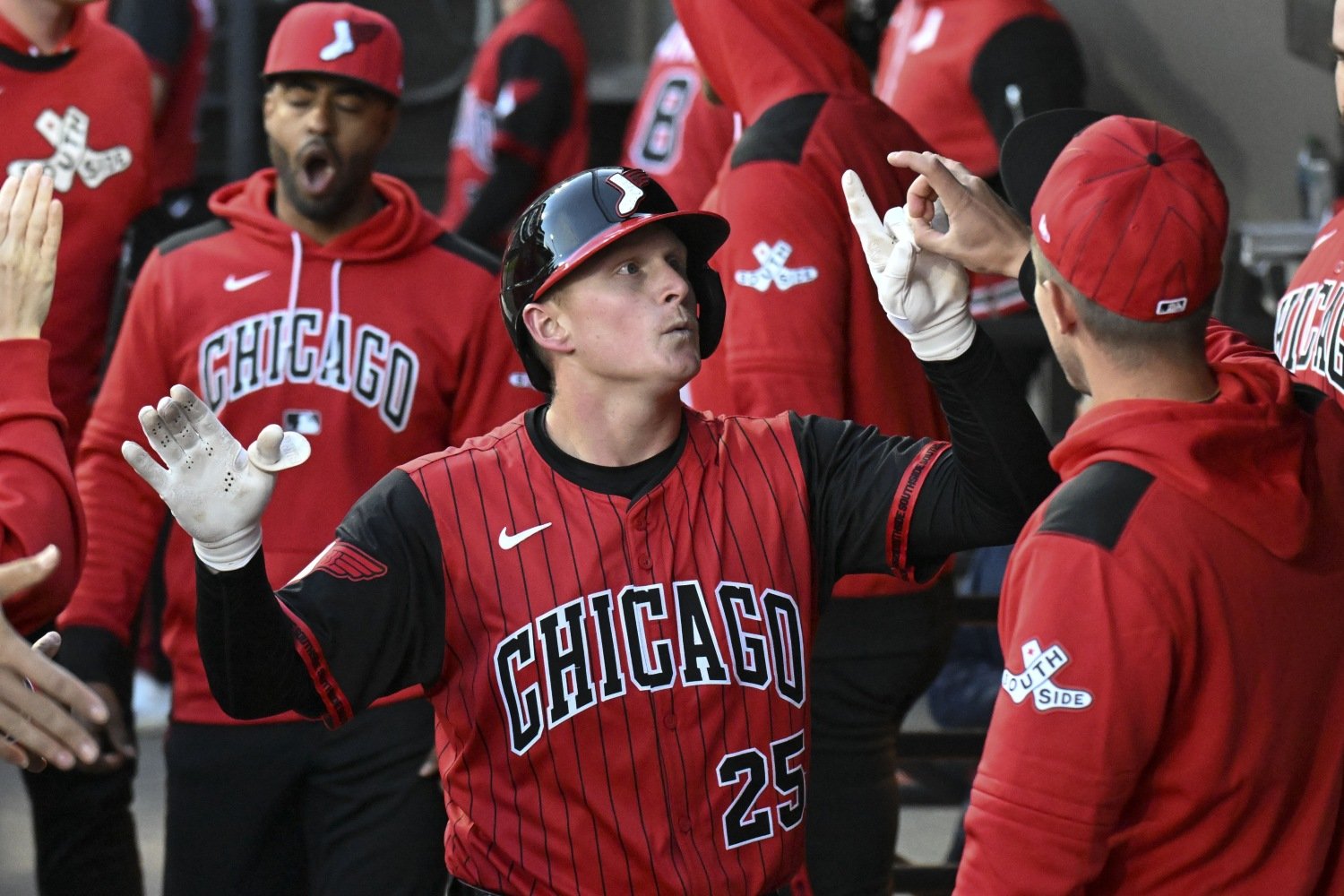 A day after publicly requesting a trade, Aaron Civale got his wish. Milwaukee traded the veteran righty to the Chicago White Sox. Civale, acquired for shortstop prospect Gregory Barrios in July 2024, became an integral part of the rotation down the stretch last season. This season was a different story, though, as Civale ended up the odd man out in the Brewers’ rotation. Milwaukee has prioritized starting pitching depth in recent years, and now has more starting pitchers than they know what to do with. Logan Henderson, who sports a 1.71 ERA through four starts with the Crew, is back in Triple-A, because there’s no room in the big-league rotation. The same goes for 2024 Brewers Most Valuable Pitcher Tobias Myers. DL Hall and Aaron Ashby, both of whom could also reasonably start, are coming out of the bullpen as long relievers. With the call-up of top pitching prospect Jacob Misiorowski, there wasn’t a spot for Civale in the rotation. The return for Civale was former White Sox top prospect Andrew Vaughn, who was immediately assigned to Triple-A Nashville. Vaughn, a slow, defensively unimpressive first baseman, has recorded an OPS+ between 98 and 111 each of the last three seasons. This season has been a different story. Vaughn’s slash line is just .189/.218/.314 through 193 plate appearances. His OPS+ is an abysmal 49. Despite his stats this season, Vaughn could present an appealing buy-low option. Once upon a time, the 27-year-old was the third overall pick in the MLB Draft. His OPS+ (97) and batting average (career .248) are both pretty average, even after an abysmal season. Per Vaughn’s Baseball Savant page, he ranks around the 80th percentile in hard-hit rate, barrel rate, and exit velocity. Vaughn has spent the last few weeks in Triple-A, but prior to his demotion, he actually ranked as the second-most unlucky hitter in the entire league. All of that suggests he’s certainly capable of playing better than he has this season. The first question with Vaughn is, simply, how to get a career-best season out of him. Lucky for the Brewers, then, that a couple of the red flags in Vaughn’s profile are fairly easy to identify. His peripherals at the plate include a 3.6% walk rate, a 34.2% chase rate, and a bat speed of just 70.0 mph. Bat speed is possible to improve through strength training and mechanics. One of Vaughn's former teammates, Tyler Osik, described his workout routine as "showing up [twice] a week and dumbbell pressing 40 pounds." If Osik is right, and Vaughn didn't work out as much as he should have with the White Sox, that's an easy explanation for why his bat speed is slower than average, despite good hard-hit numbers. It would also be an easy fix for the Brewers. Plate discipline is a little harder to teach, but the Brewers have had success in past years in improving hitters’ walk rate. Eric Thames, for example, went from a sub-6% walk rate with the Blue Jays to a 13.6% walk rate in his first season with the Brewers. The second question is: assuming Vaughn can match (or even improve upon) his production from previous years, does he even fit into the Brewers’ long-term plans? Milwaukee already has Rhys Hoskins (118 OPS+ this season) and Jake Bauers (114 OPS+), although both are free agents after the season. The Brewers’ Triple-A affiliate, the Nashville Sounds, features first-base prospect Ernesto Martinez Jr. (.260/.396/.425). Bobby Dalbec and Anthony Seigler (.301/.440/.520) could man first in a pinch. Milwaukee also has a number of slugging prospects in the lower minors, including Mike Boeve (Brewers No. 6), Tyler Black (No. 7), Eric Bitonti (No. 8), and Luke Adams (No. 9). Brock Wilken (No. 18) leads all of Double-A in home runs, with 17. If Vaughn plays well enough in Triple-A to force the Brewers’ hand, the Crew might have some hard decisions to make. Where would Vaughn fit into MIlwaukee’s long-term plans? Option 1: 2026 Starting First Baseman Rhys Hoskins and Jake Bauers are both playing well, but it’s highly possible neither of them is on the roster next year. Milwaukee’s four top-10 first base prospects won’t be ready next year, with the possible exception of Black (in whom confidence is plunging, both within the organization and throughout pro baseball). Vaughn is only a year older than Martinez, and two years older than Black. Furthermore, unlike those two, Vaughn has already produced at the major-league level. It’s possible the Brewers see him as a potential replacement for Bauers. Vaughn’s career OPS+ (97) is slightly better than Bauers’s OPS+ as a Brewer (92), and significantly higher than his career OPS+ (83). Vaughn (.696) also has a slightly higher OPS against right-handers than Bauers (.683) and a way higher OPS (.750 to .617) against lefties. The Brewers organization has had success in finding major-league talent and helping them turn the corner. Christian Yelich, Willy Adames, and Jesús Aguilar are among the players who started (and often struggled) elsewhere, but turned in career-best seasons with Milwaukee. It’s far from a sure thing that Vaughn improves as a Brewer. However, as I mentioned above, some of the underlying numbers suggest he could put up better numbers than he’s shown so far in his career. If the Brewers can get even minor improvement from Vaughn, his OPS will be closer to Rhys Hoskins territory than to Bauers. That’s starting-level production. Vaughn is also a righty, so the Brewers could try him in a platoon with Black and/or Martinez—both of whom are left-handed hitters—or even with a returning Bauers. Option 2: Trade Candidate Milwaukee’s most pressing need lies with the left side of the infield. Shortstop Joey Ortiz currently has an OPS of .506, by far the lowest OPS in the majors among qualifying players. Third baseman Caleb Durbin is hitting better than Ortiz, but his .633 OPS is still about 80 points below average. Vaughn has a career OPS of .709, but he can’t play third base or shortstop. A couple of names, such as Arizona’s Eugenio Suárez, have been thrown around as possible trade targets for Milwaukee. Civale is a good pitcher, but his numbers this season (4.91 ERA, 1.36 WHIP) aren’t incredible. He is what he is: a solid fourth starter. Arizona, for example, probably wouldn’t trade a guy like Suárez for Civale. Vaughn, on the other hand, is still seen as having untapped potential. He’s a bust, but his status as a former first-round pick hasn’t left him altogether. If he starts playing well, the narrative around him will center around whether or not he’s “finally putting it all together.” Vaughn was rushed to the majors after hitting .255 with five home runs in High-A. He wasn’t ready, and he still put up average numbers. He’s spent the last year and a half laboring for one of the worst teams in the league. He’s now in an organization that has a proven developmental track record with reclamation projects and has legitimate playoff aspirations. If anyone can get the best out of Vaughn, it’s Milwaukee. He wouldn’t be the only former top prospect to struggle with his first team before being traded and breaking out. Tyler Glasnow is one example, as was José Bautista. Carlos Gómez (Baseball America’s #52 overall prospect in 2007) underwhelmed with the Twins before truly breaking out as a Brewer. J.D. Martinez was more of a fringe top-100 prospect, but exploded after joining the Tigers and revamping his swing. With a talented player, which Vaughn certainly is, sometimes all it takes is a small adjustment for things to finally click. Once that happens, their trade value skyrockets. Martinez and Glasnow were traded for a couple top prospects. Gomez was traded, along with Mike Fiers, for a package that included Brett Phillips (later traded for Mike Moustakas) and Josh Hader. Aaron Civale isn’t going to net you multiple top prospects. He probably isn’t going to turn into a frontline starter at 30 years old with his fourth team. Vaughn, if he looks like he’s “putting it all together”, might be able to get the Brewers an upgrade at shortstop or third base, albeit as one piece in a deal, rather than as a headliner.
 -
Image courtesy of © Matt Marton-Imagn Images A day after publicly requesting a trade, Aaron Civale got his wish. Milwaukee traded the veteran righty to the Chicago White Sox. Civale, acquired for shortstop prospect Gregory Barrios in July 2024, became an integral part of the rotation down the stretch last season. This season was a different story, though, as Civale ended up the odd man out in the Brewers’ rotation. Milwaukee has prioritized starting pitching depth in recent years, and now has more starting pitchers than they know what to do with. Logan Henderson, who sports a 1.71 ERA through four starts with the Crew, is back in Triple-A, because there’s no room in the big-league rotation. The same goes for 2024 Brewers Most Valuable Pitcher Tobias Myers. DL Hall and Aaron Ashby, both of whom could also reasonably start, are coming out of the bullpen as long relievers. With the call-up of top pitching prospect Jacob Misiorowski, there wasn’t a spot for Civale in the rotation. The return for Civale was former White Sox top prospect Andrew Vaughn, who was immediately assigned to Triple-A Nashville. Vaughn, a slow, defensively unimpressive first baseman, has recorded an OPS+ between 98 and 111 each of the last three seasons. This season has been a different story. Vaughn’s slash line is just .189/.218/.314 through 193 plate appearances. His OPS+ is an abysmal 49. Despite his stats this season, Vaughn could present an appealing buy-low option. Once upon a time, the 27-year-old was the third overall pick in the MLB Draft. His OPS+ (97) and batting average (career .248) are both pretty average, even after an abysmal season. Per Vaughn’s Baseball Savant page, he ranks around the 80th percentile in hard-hit rate, barrel rate, and exit velocity. Vaughn has spent the last few weeks in Triple-A, but prior to his demotion, he actually ranked as the second-most unlucky hitter in the entire league. All of that suggests he’s certainly capable of playing better than he has this season. The first question with Vaughn is, simply, how to get a career-best season out of him. Lucky for the Brewers, then, that a couple of the red flags in Vaughn’s profile are fairly easy to identify. His peripherals at the plate include a 3.6% walk rate, a 34.2% chase rate, and a bat speed of just 70.0 mph. Bat speed is possible to improve through strength training and mechanics. One of Vaughn's former teammates, Tyler Osik, described his workout routine as "showing up [twice] a week and dumbbell pressing 40 pounds." If Osik is right, and Vaughn didn't work out as much as he should have with the White Sox, that's an easy explanation for why his bat speed is slower than average, despite good hard-hit numbers. It would also be an easy fix for the Brewers. Plate discipline is a little harder to teach, but the Brewers have had success in past years in improving hitters’ walk rate. Eric Thames, for example, went from a sub-6% walk rate with the Blue Jays to a 13.6% walk rate in his first season with the Brewers. The second question is: assuming Vaughn can match (or even improve upon) his production from previous years, does he even fit into the Brewers’ long-term plans? Milwaukee already has Rhys Hoskins (118 OPS+ this season) and Jake Bauers (114 OPS+), although both are free agents after the season. The Brewers’ Triple-A affiliate, the Nashville Sounds, features first-base prospect Ernesto Martinez Jr. (.260/.396/.425). Bobby Dalbec and Anthony Seigler (.301/.440/.520) could man first in a pinch. Milwaukee also has a number of slugging prospects in the lower minors, including Mike Boeve (Brewers No. 6), Tyler Black (No. 7), Eric Bitonti (No. 8), and Luke Adams (No. 9). Brock Wilken (No. 18) leads all of Double-A in home runs, with 17. If Vaughn plays well enough in Triple-A to force the Brewers’ hand, the Crew might have some hard decisions to make. Where would Vaughn fit into MIlwaukee’s long-term plans? Option 1: 2026 Starting First Baseman Rhys Hoskins and Jake Bauers are both playing well, but it’s highly possible neither of them is on the roster next year. Milwaukee’s four top-10 first base prospects won’t be ready next year, with the possible exception of Black (in whom confidence is plunging, both within the organization and throughout pro baseball). Vaughn is only a year older than Martinez, and two years older than Black. Furthermore, unlike those two, Vaughn has already produced at the major-league level. It’s possible the Brewers see him as a potential replacement for Bauers. Vaughn’s career OPS+ (97) is slightly better than Bauers’s OPS+ as a Brewer (92), and significantly higher than his career OPS+ (83). Vaughn (.696) also has a slightly higher OPS against right-handers than Bauers (.683) and a way higher OPS (.750 to .617) against lefties. The Brewers organization has had success in finding major-league talent and helping them turn the corner. Christian Yelich, Willy Adames, and Jesús Aguilar are among the players who started (and often struggled) elsewhere, but turned in career-best seasons with Milwaukee. It’s far from a sure thing that Vaughn improves as a Brewer. However, as I mentioned above, some of the underlying numbers suggest he could put up better numbers than he’s shown so far in his career. If the Brewers can get even minor improvement from Vaughn, his OPS will be closer to Rhys Hoskins territory than to Bauers. That’s starting-level production. Vaughn is also a righty, so the Brewers could try him in a platoon with Black and/or Martinez—both of whom are left-handed hitters—or even with a returning Bauers. Option 2: Trade Candidate Milwaukee’s most pressing need lies with the left side of the infield. Shortstop Joey Ortiz currently has an OPS of .506, by far the lowest OPS in the majors among qualifying players. Third baseman Caleb Durbin is hitting better than Ortiz, but his .633 OPS is still about 80 points below average. Vaughn has a career OPS of .709, but he can’t play third base or shortstop. A couple of names, such as Arizona’s Eugenio Suárez, have been thrown around as possible trade targets for Milwaukee. Civale is a good pitcher, but his numbers this season (4.91 ERA, 1.36 WHIP) aren’t incredible. He is what he is: a solid fourth starter. Arizona, for example, probably wouldn’t trade a guy like Suárez for Civale. Vaughn, on the other hand, is still seen as having untapped potential. He’s a bust, but his status as a former first-round pick hasn’t left him altogether. If he starts playing well, the narrative around him will center around whether or not he’s “finally putting it all together.” Vaughn was rushed to the majors after hitting .255 with five home runs in High-A. He wasn’t ready, and he still put up average numbers. He’s spent the last year and a half laboring for one of the worst teams in the league. He’s now in an organization that has a proven developmental track record with reclamation projects and has legitimate playoff aspirations. If anyone can get the best out of Vaughn, it’s Milwaukee. He wouldn’t be the only former top prospect to struggle with his first team before being traded and breaking out. Tyler Glasnow is one example, as was José Bautista. Carlos Gómez (Baseball America’s #52 overall prospect in 2007) underwhelmed with the Twins before truly breaking out as a Brewer. J.D. Martinez was more of a fringe top-100 prospect, but exploded after joining the Tigers and revamping his swing. With a talented player, which Vaughn certainly is, sometimes all it takes is a small adjustment for things to finally click. Once that happens, their trade value skyrockets. Martinez and Glasnow were traded for a couple top prospects. Gomez was traded, along with Mike Fiers, for a package that included Brett Phillips (later traded for Mike Moustakas) and Josh Hader. Aaron Civale isn’t going to net you multiple top prospects. He probably isn’t going to turn into a frontline starter at 30 years old with his fourth team. Vaughn, if he looks like he’s “putting it all together”, might be able to get the Brewers an upgrade at shortstop or third base, albeit as one piece in a deal, rather than as a headliner. View full article

