


Brewers Video
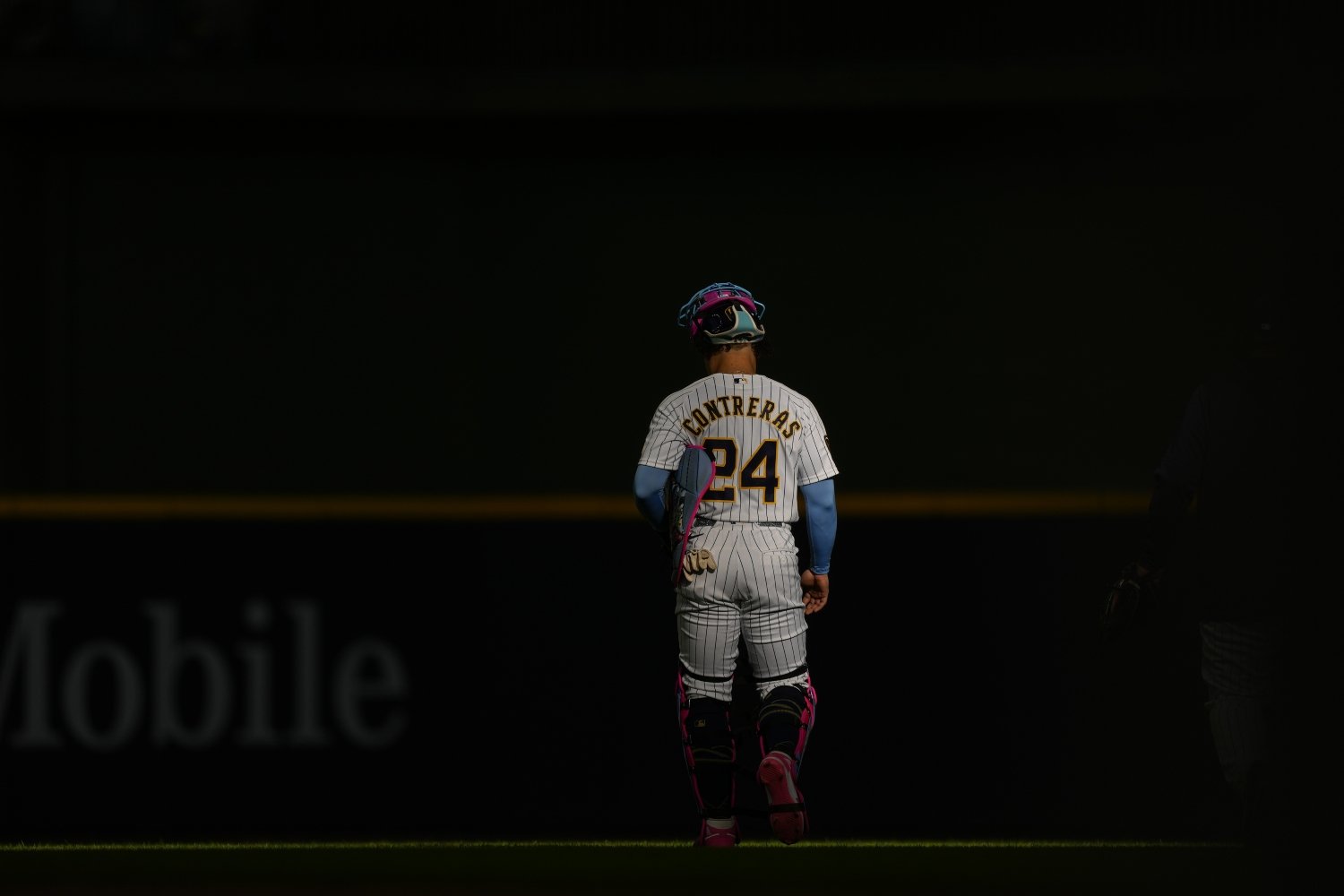
When Shohei Ohtani took off for second base Friday night, it was hard to like William Contreras's chances. Ohtani has proved to be a very efficient basestealer, and he's very fast. On the mound, rookie Logan Henderson was focused on executing a good pitch, and wasn't very quick to the plate. Given Ohtani's speed and his jump by the time Contreras caught the ball, Statcast estimated that the Brewers' catcher had just an 18% chance to gun down the reigning two-time National League MVP.
Then he did it.
Contreras's throw was slightly high, but Ohtani saw the reach of Joey Ortiz's glove and pulled his own hand down to protect it from the ball, slowing him down a bit as he slid into second. Ortiz had time to snatch the throw and sweep the tag downward, and although Ohtani was initially called safe, that call would be overturned on review.
This has become a common sight this season: a runner goes, and they seem to have a good jump and an easy steal before them. Contreras flips the script. For a player who's always been known as a dynamic athlete for a catcher, this aspect of his game took a long time to develop. It's in full bloom now, though. In fact, it's the best in baseball.
When Contreras first came to Milwaukee, he had a strong arm, but no good ideas about how to use it. His footwork was too slow. Relatively quickly, under the guidance of the Brewers' vaunted corps of catching instructors, he improved in that regard, but two years ago, his accuracy consistently did him in. He was getting rid of the ball pretty fast, but not putting his throws where they needed to be. That, too, has now been fixed.
As manager Pat Murphy loves to remind folks, this is the very model of a modern throw to second base. The way it requires Ortiz to move as he receives it almost makes the ball look off-target, but in reality, this is where every team wants their catchers throwing on steal attempts. The infielder should set up right above the bag, to give the catcher a good target, but the throw should take them to the first-base side of second. That optimizes the chances of a tag before the runner slides into the base. Contreras has gotten very good at that.
In fact, though, he's simply gotten good at everything involved in the throws to nail runners from behind home. His exchange from glove to hand is much smoother than in the past; he doesn't pause or hitch to reorient the seams as he gets into a throwing position. Two years ago, I wrote about Contreras needing the pitch to come to the first-base side of the plate in order to get set well and make a strong throw; it was part of his broader accuracy issues. By last season, he had fixed that problem, and now he thrives on throws from that side of the plate.
This year, the improvement has come from slightly better awareness—he always seems ready, and isn't geting caught unprepared or poorly positioned on any steal attempts—and from that quicker exchange. It helps that his hands work better than they did a year ago. Here's a side-by-side look at one play from 2025 and one from this month, right as Contreras's front foot (the left) touches the dirt for the first time as he sets to throw. Look how much more in position to fire he is this year.

However, he's also doing something important with his lower half. Here are two fastballs up, on which the runner tried to steal. This is the last frame before Contreras caught each pitch.

He's geting up out of his crouch well as he receives the ball, whenever he's able. He was doing that last year, too, though. In fact, though this wasn't one of those times, last year, Contreras often used what catchers call the "cheat stance," whereby he would pop up from one knee down to a standard crouch as the pitcher began his delivery, getting into throwing motion before the ball even got on its way to him.
The key difference in the images above is that, this year, Contreras is turning his body better. As he comes out of his kneeling stance, he's not squaring up to the ball, which he often did last year and which forced him to turn his shoulders more as he made the transfer from glove to hand. Now, by changing the set of his hips and the angle at which he pushes upward with his legs, he's getting his chest facing toward first base earlier, setting him up for an easier transfer and throw.
Officially, runners are 12-for-26 stealing bases against Contreras, according to Baseball Reference. That gives him credit for a few times caught stealing that were actually pickoffs by the pitchers and infielders, but it also gives runners credit for a couple of steals that were utterly indefensible from Contreras's perspective. When he's had any kind of chance at all, he's been phenomenal. According to Baseball Savant, he's already been worth 4 Catcher Stealing Runs this year. If he keeps up at this pace, he'll become the new record holder in that stat—though, admittedly, it's only been tracked since 2016.
No catcher with at least 10 attempts against them has ever dealt with faster average runners in a season than Contreras has had to deal with so far, at 29.2 feet per second. Runners are getting better jumps against Brewers pitchers this year than at any time in Contreras's tenure with the team. None of it matters. He's become the best possible form of himself as a thrower and running-game stopper, and arguably the best catcher in the sport at that skill. For the Brewers, it's just one more developmental win involving a player whom they've systematically unlocked over almost half a decade, now.
Do you approve of the job the Brewers' front office is doing?

Follow Brewer Fanatic For Milwaukee Brewers News & Analysis



-
 1
1


Recommended Comments
Create an account or sign in to comment
You need to be a member in order to leave a comment
Create an account
Sign up for a new account in our community. It's easy!
Register a new accountSign in
Already have an account? Sign in here.
Sign In Now