LouisEly
-
Posts
11,844 -
Joined
-
Last visited
-
Days Won
14
Content Type
Profiles
Forums
Blogs
Events
News
2026 Milwaukee Brewers Top Prospects Ranking
Milwaukee Brewers Videos
2022 Milwaukee Brewers Draft Picks
Milwaukee Brewers Free Agent & Trade Rumors, Notes, & Tidbits
Guides & Resources
2023 Milwaukee Brewers Draft Picks
2024 Milwaukee Brewers Draft Picks
The Milwaukee Brewers Players Project
2025 Milwaukee Brewers Draft Pick Tracker
2026 Milwaukee Brewers Draft Tracker: Picks & Bonuses
Store
Downloads
Gallery
Everything posted by LouisEly
-
Seven minutes and three timeouts left. Plenty of time to get two FGs, and Carlson has shown the leg to easily hit from 55+ if they can't get near the end zone.
-
Holy crap!!
-
Aaaannnd ND only had 10 defenders on the field for the final two plays.
-
ND up four with two minutes left and let OSU go 65 yards for the TD.
-
OSU about to lose to Notre Dame with only 10 points on the board. OSU also only scored 35 on Youngstown State and 23 on Indiana. Meanwhile, Washington State (currently ranked #21) about to beat #14 Oregon State.
-
2023 Minor League Transaction Thread
LouisEly replied to Jim Goulart's topic in Brewers Minor League Talk
Got to be a major leaguer for one day. And got paid $4,000 for that one day. -
I understand the pre-snap penalties because most of their players have never played in a tempo style offense. They've spent years playing in a huddle offense and they have a new QB. That's going to take an adjustment. It's clear they don't have the talent on defense that they've had in the past. It think they have some talent in the secondary (Wohler, Smith, Hallman), but the lack of pass rush will make any secondary look bad. But they're 3-1 with the lone loss being on the road to a ranked team that, arguably, was taken away by the refs. They're in a good - not great, but good - spot.
-
-
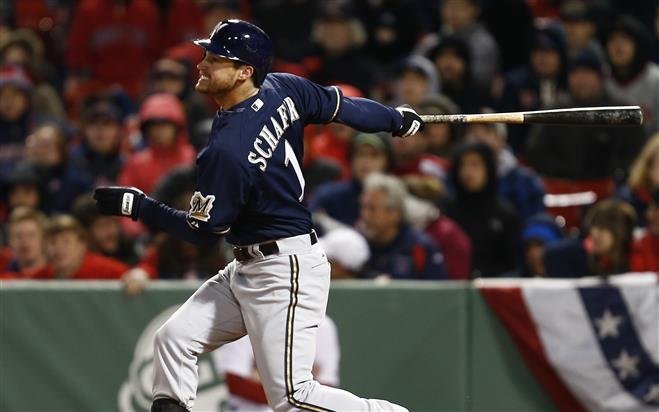
Waiting for Ryne Sandberg to say in an interview that the Cubs have skidmarks in their britches.
-
Brewers (Miley) vs Cardinals (Mikolas): 9/21/23, 12:15pm
LouisEly replied to Brock Beauchamp's topic in Archived Game Threads
Mikolas can draw an "X" next to that mustache and that'll be his ass. (Name the movie reference) -
Fun fact, Koufax had a tryout with the Milwaukee Braves that he had committed to prior to committing to signing with the Dodgers. He still went to the tryout, and the Braves offered him $10K more than the Dodgers offered him. But he chose the Dodgers because he had already told the Dodgers that he would sign with them. Being from Brooklyn likely influenced his decision to sign with the hometown Dodgers. If the Dodgers had already moved, or he knew that they were moving to LA, I wonder if he would have been a Milwaukee Brave.
-
Is there any other city/state that has had three better players wear the same number?
-
They had two pitchers but they thought they needed another bat so they traded them for that putz Ozuna.
-
Houser has shut down the Cardinals before - 9 IP, 3 H, 0 ER on 9/4/21. Career ERA of 3.19 vs STL.
-
Brewers (Megill) vs Cardinals (Rom): 9/19/23, 6:45pm
LouisEly replied to Brock Beauchamp's topic in Archived Game Threads
Because it's a long season, and you can't go to the same 4-5 relievers every game. Ask the 2018 and 2019 Cubs. -
The networks need more content because of the writers/actors strike.
-
Bakh did have swelling in his knee leading up to the game which is why he didn't play, not because he was afraid of artificial turf.
-
Skip the meal. Soda and fries double the cost; Whopper on its own is $5.69. If you need a soda, go to a nearby Speedway/Quik Trip and get a 30-oz soda for $1.29 or bring one with you. Went to Five Guys earlier this year and it was $20. Now, THAT is a rip-off.
-
Had Brown, Clarke, Seminaris, and Smith on my mental list. Wondering if Clarke's upside is a poor-man's Christian Walker. Both short-ish, stocky RHH 1B. Both went to the University of South Carolina. Both walk a ton and walked 50+ times their junior year at South Carolina. Difference is that Walker strikes out a lot less, but Clarke put up a lot more power earlier in his career. In AA Walker struck out 19% of the time, BB 9.2%, and HR 4.2%. Clarke struck out 29%, BB 16.8%, and HR 5.4%. Walker didn't break out until his age 28 season.
-
Perkins reinstated..... Weimer optioned....
LouisEly replied to Jastro's topic in Milwaukee Brewers Talk
That's on only 130 PA's, so it's still a small sample. You're correct in that no one knows yet. His K rate in the minors is 26% and he was pushed fairly aggressively (AA in his first full season, majors in his second full season). He was only drafted three years ago, and no minor league season and minimal college season in 2020. But that's why you have Wiemer and Chourio at AAA next year. -
Perkins reinstated..... Weimer optioned....
LouisEly replied to Jastro's topic in Milwaukee Brewers Talk
That Wiemer had by far the second most plate appearances speaks volumes about the patchwork job and little that Counsell had to work with in the OF this year, primarily due to injury. Yelich, (hopefully a healthy) Mitchell, and Frelick should be the OF next year with Taylor and either Perkins or Canha as the backups with Wiemer, Chourio at AAA. My guess is that Canha is back as the primary 1B next year. -
That's a big issue - the offense couldn't keep the defense off the field and give them a rest.
-
Add the starting LG to that list
-
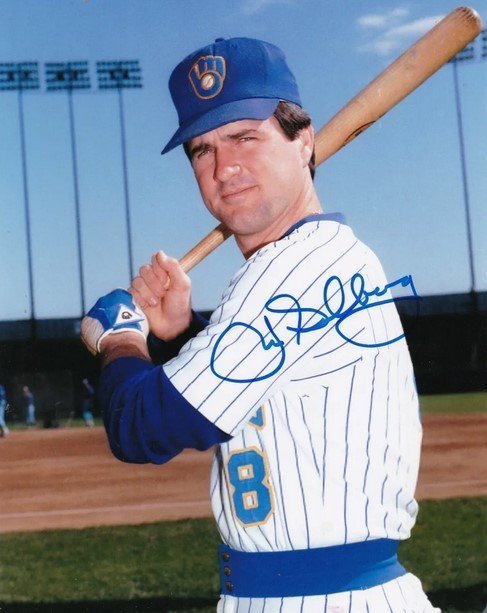
80's too...
-
Some freezing cold takes the first couple of pages in this thread...