



Harold Hutchison
-
Posts
6,909 -
Joined
-
Last visited
Content Type
Profiles
Forums
Blogs
Events
News
2026 Milwaukee Brewers Top Prospects Ranking
Milwaukee Brewers Videos
2022 Milwaukee Brewers Draft Picks
Milwaukee Brewers Free Agent & Trade Rumors, Notes, & Tidbits
Guides & Resources
2023 Milwaukee Brewers Draft Picks
2024 Milwaukee Brewers Draft Picks
The Milwaukee Brewers Players Project
2025 Milwaukee Brewers Draft Pick Tracker
2026 Milwaukee Brewers Draft Tracker: Picks & Bonuses
Store
Downloads
Gallery
Everything posted by Harold Hutchison
-
Best and Worst Case Scenarios for the Brewers at Second Base in 2025
Harold Hutchison posted an article in Brewers
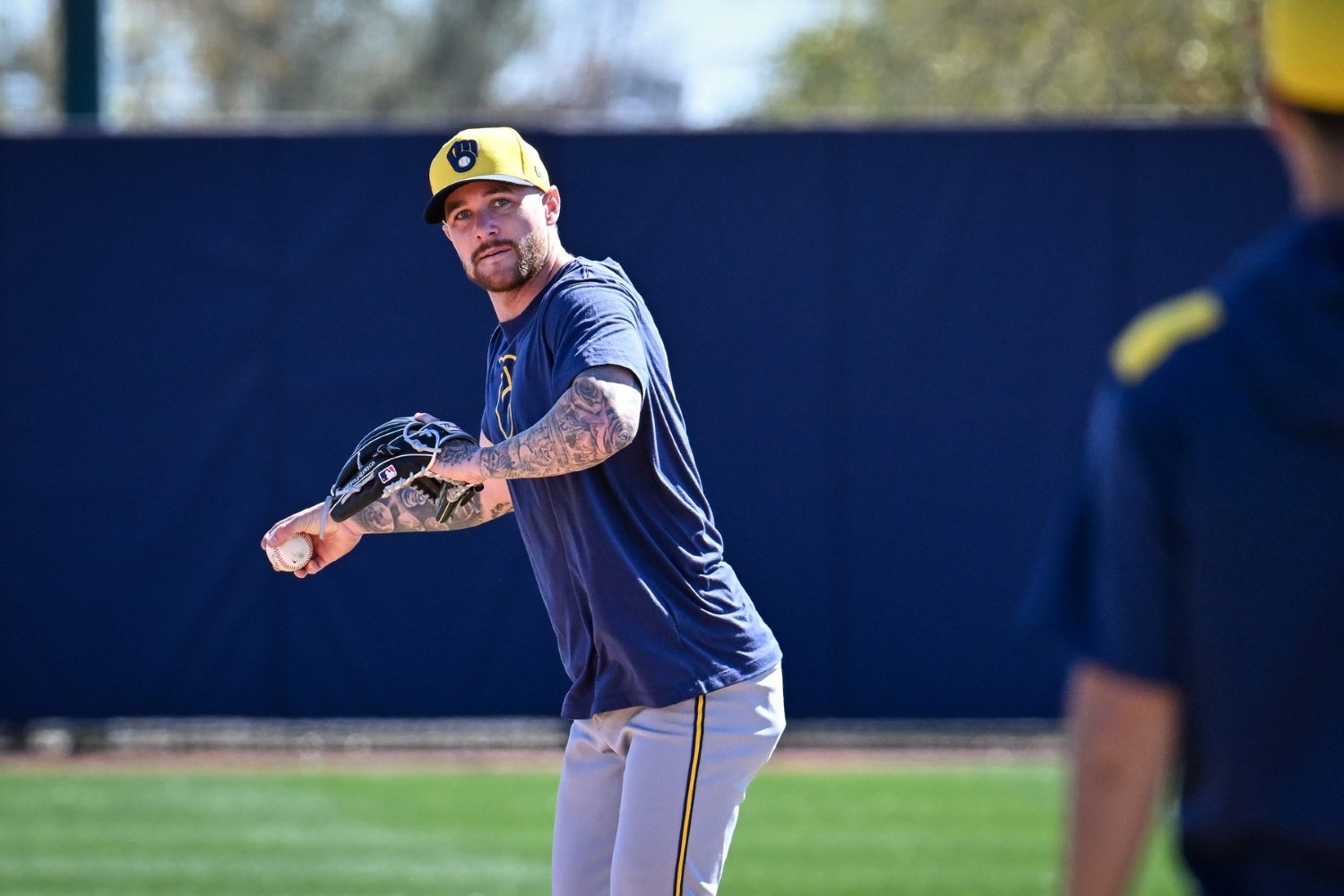 The Roster Situation Milwaukee's second base picture begins with Turang, who not only provided superb defense, but made a huge leap in his offensive performance as the Brewers’ primary leadoff hitter. He was a terror on the basepaths, stealing 50 bases in 56 tries and drawing 50 walks in 142 starts at second base. The only other players to get starts at second during the 2024 season were Andruw Monasterio (16 starts) and Joey Ortiz (four starts). Tyler Black, Caleb Durbin, Oliver Dunn, and Vinny Capra all have professional experience at the position. Anthony Seigler and Raynel Delgado are non-roster invitees with professional experience at second base. The Best Case Scenario – Turang Plays Over 140 Games At Second This scenario not only would reflect Turang staying healthy and producing at least on par with 2024 at the plate (if not improving) and in the field, but also stability at third base and shortstop for the Brewers. Turang won the Platinum Glove last year as the best of the National League Gold Glove winners. He would lock that position down for the next three or four years—maybe longer, if he signs an extension. But Turang sticking at second would also mean that Joey Ortiz has locked down shortstop, and that the Brewers have also locked down third base with one (or some combination) of Caleb Durbin, Oliver Dunn, and Andruw Monasterio. That would mean the Brewers' offense is humming along, and the team is avoiding a lengthy injured list absence from a key contributor—something that has plagued the team in recent seasons, often involving key players. The Worst Case Scenario – Andruw Monasterio or Vinny Capra Have More Than 15 Starts At Second Let’s lead this off by noting that an injury to Turang may not be the reason for this scenario (although such an injury would be devastating for the Brewers). It could be the case if Turang slides to shortstop and Ortiz plays third, should Durbin or Dunn end up injured, ineffective, or otherwise unavailable or unused. Dunn and Durbin each have different top-tier tools. Dunn’s calling card is power. Durbin’s a right-handed speedster, with a bit more pop (at least in the minors) than Turang. Dunn's glove is the best argument for him getting the job at the hot corner, whereas Durbin has been far from smooth afield in early Cactus League play. It won’t necessarily be one of these things, more like a combination of injuries and ineffectiveness that will cause this. Overview The Brewers are likely to be much closer to their best-case scenario than the worst-case scenario, largely because of the multiple options at the hot corner. It's over at third that things are most likely to go south for the Brewers. There are, of course, some middle-tier scenarios, which involve other players at second base. The Brewers could put Durbin at second base, keeping Ortiz at third base and sliding Turang to shortstop. Tyler Black could also see action at second, although he last played second base in 2022. Oliver Dunn also has seen time at second in his professional career. Sal Frelick could also be an emergency option, especially if Black ends up in the outfield. Seigler and Delgado could break out, as Monasterio did in 2023. For whatever it's worth, Delgado has hit the ball exceptionally well in a fistful of early spring plate appearances. But for the Brewers, if Turang is once again holding down second base, they will be doing very well, indeed.
 -
The roaming lefty bat has yet to find a real home or get a prolonged shot with the Brewers. Is that an error on the part of the organization? Image courtesy of © David Banks-Imagn Images Tyler Black has been a solid prospect for the Brewers since being selected with the Crew’s Competitive Balance A pick in 2021, the same year the Brewers drafted Gold Glove outfielder Sal Frelick. However, even though there are few questions left about Black’s bat, he hasn't established himself in Milwaukee as Frelick has. Could the Brewers be blowing it with another top prospect? The Toolset Let’s look at the tools first. Black is a pure hitter. His lowest full-season average in professional baseball was .258 in Triple-A Nashville, where he was on the shuttle to Milwaukee a couple of times in 2024. He features superb OBP skills, drawing 220 walks in 1,155 at-bats throughout the minors, and adding seven more in 49 at-bats at the MLB level. His bat shows some pop, too, with 114 of his 314 hits in the minors going for extra bases. He can wreak havoc on the basepaths, stealing 93 bases in 116 attempts in the minors, and adding three more in the majors. It’s an offensive skillset that doesn’t hurt the team anywhere on the field. Even at first base or designated hitter, Black has the potential to be productive (albeit unconventionally, for those positions). Black’s bat might yet develope into a dynamic threat. His power totals in 2023 (25 doubles, 12 triples, and 18 homers between Biloxi and Nashville), his last full season in the minor leagues, were higher than those of Frelick (28, 6, and 11) and Turang (24, 2, and 13) in 2022 (their last full minor-league season), and he was more of a threat on the basepaths, posting 55 steals—compared to 34 for Turang and 24 for Frelick in their last full minor-league season. Admittedly, Black was older than they were at the same levels, and he took a step backward from them in 2024, but that production carries promise. Delayed By Injuries And Lack Of A Home Black’s earlier professional career was marred by injuries—most notably in 2022, when he missed significant time both with the High-A Wisconsin Timber Rattlers and with the Arizona Fall League’s Glendale Desert Dogs. But he broke out in 2023 as the regular third baseman for the Double-A Biloxi Shuckers, earning a late-season promotion to Nashville. Arguably, he had earned the inside track to be Milwaukee’s third baseman, but the acquisitions of Joey Ortiz and Oliver Dunn (combined with concern about his defense) resulted in a return to Nashville. Black mostly played first base with the Sounds, but saw action in left field, center field, and at third base in 2024. Earlier in his professional career, he also played second base. At third base in Triple-A Nashville, he’s posted a .945 fielding percentage, with a career fielding percentage of .931 at the hot corner between Nashville, Biloxi, and the Timber Rattlers. His career fielding percentage at second base is .948. Errors and fielding percentage are not the truest measures of infield defense, of course, but there's at least some evidence that Black can feel his way to proficiency at one of those two spots. Unfortunately for Black, that evidence hasn't yet convinced anyone in the Brewers front office, or on the coaching staff. The Brewers Roster Situation Black has demonstrated some positional versatility in his career, but he primarily handled first base and DH in 2024. In 2025, those are positions where he is likely to be blocked by Rhys Hoskins, Christian Yelich, and (more than a handful of times, when he's not catching but the team still wants his bat in the lineup) William Contreras. Black could spell any of them in turns, but has to prove that he can hit big-league pitching and/or acquit himself with the glove at the cold corner. He is also facing competition at the position from non-roster invitees Jake Bauers and Ernesto Martinez Jr. Additionally, the Brewers’ outfield is already crowded, with Frelick, Chourio, Yelich, and Garrett Mitchell as the top four players, and the rehabbing Blake Perkins hoping to be back in the mix by May. If Black is seeing time in the outfield, the Brewers may be in a world of hurt injury-wise, with Perkins already out after he fouled a ball off his shin. Ortiz ended up handling most of the duties at the hot corner for the Brewers in 2024, after Oliver Dunn slumped and was injured. He is the favorite to replace Willy Adames at short in 2025, where his glove is likely to be very solid and will pair well with Platinum Glove Award recipient Brice Turang up the middle. Current And Minor-League Hot Corner Options On the 40-man roster, the Brewer have some options at third base. Caleb Durbin, acquired in the Devin Williams trade, provides speed, some pop, and excellent OBP skills. Andrew Monasterio held down the job in the second half of 2023 and was solid. Dunn is a left-handed power bat, although one with a big hole in his swing. Vinny Capra is a natural shortstop who could slide over to the hot corner based on a hot start to spring training. In the minors, the Brewers have prospect Brock Wilken, who struggled at Double-A Biloxi; Mike Boeve, a pure hitter in the mold of Jeff Cirillo who hit well in Biloxi; and Cooper Pratt, a shortstop who could slide over to the hot corner, who split time between Low-A Carolina and High-A Wisconsin in 2024. How To Use Tyler Black? Black would likely be an upgrade over Brice Turang in the leadoff spot, if Pat Murphy and company were to give him a shot at making the adjustments to MLB pitching and umpires. Of course, there's some evidence that Turang has already been displaced from the leadoff spot, but Black could be this year's version of the "stretch" leadoff man Murphy recently described. The best approach would be to have him start three games a week at third, while having a start a week at first base and another at DH to keep Hoskins and Yelich rested. Black could also spell some of the Brewers outfielders by picking up a game in left field each week. Murphy told reporters Sunday that Black will get at least some reps at third base during Cactus League play, so the door to that plan is open for now. At the moment, whether he's earned one or not, Black does not have an easy path to a major role with the Brewers. It's more likely that he'll begin the season in Nashville, trying again to prove to the team that he can handle one of his not-quite-homes on defense. If the team doesn't at least clear a road to some kind of meaningful audition, though, they might live to regret it. View full article
-
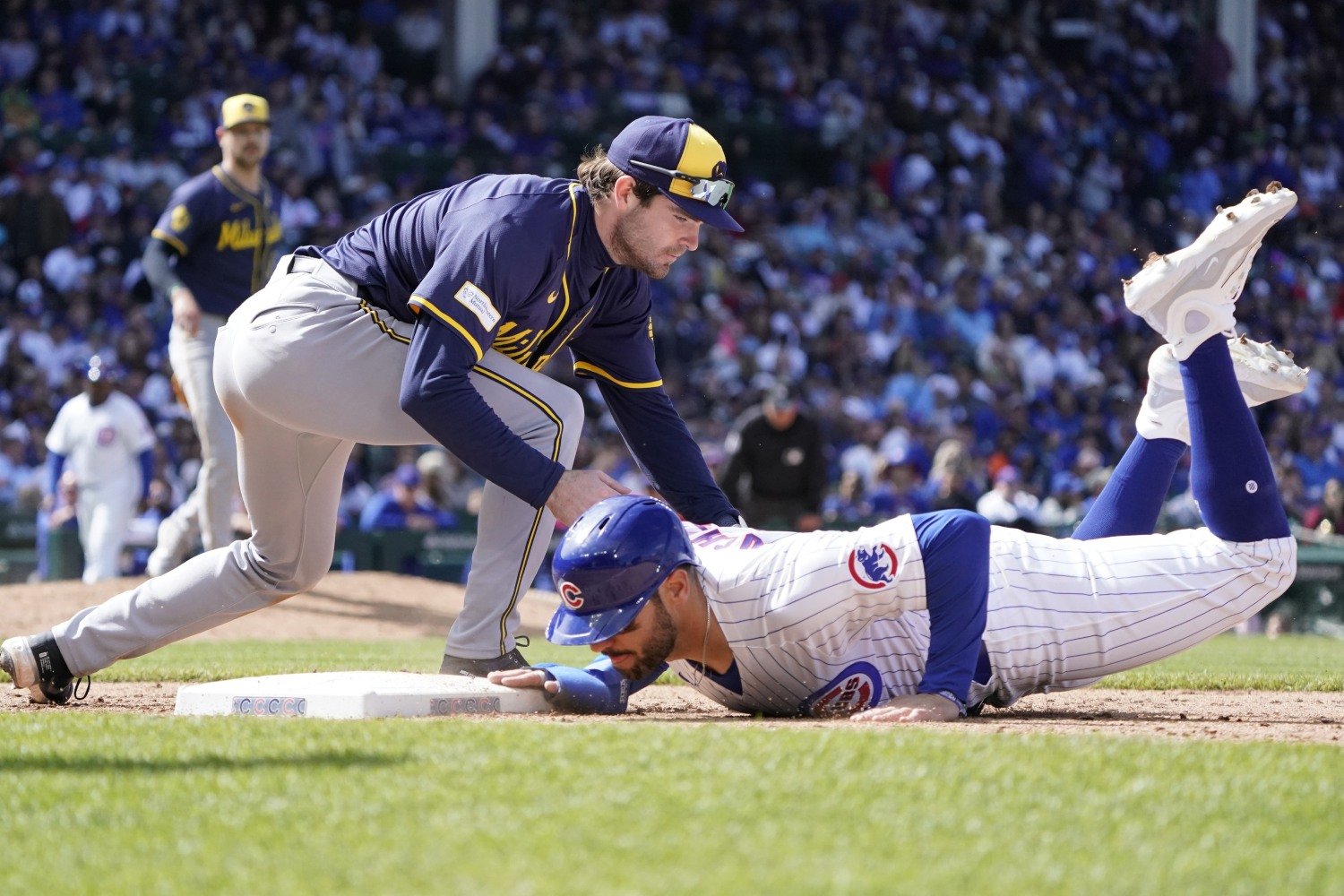 Tyler Black has been a solid prospect for the Brewers since being selected with the Crew’s Competitive Balance A pick in 2021, the same year the Brewers drafted Gold Glove outfielder Sal Frelick. However, even though there are few questions left about Black’s bat, he hasn't established himself in Milwaukee as Frelick has. Could the Brewers be blowing it with another top prospect? The Toolset Let’s look at the tools first. Black is a pure hitter. His lowest full-season average in professional baseball was .258 in Triple-A Nashville, where he was on the shuttle to Milwaukee a couple of times in 2024. He features superb OBP skills, drawing 220 walks in 1,155 at-bats throughout the minors, and adding seven more in 49 at-bats at the MLB level. His bat shows some pop, too, with 114 of his 314 hits in the minors going for extra bases. He can wreak havoc on the basepaths, stealing 93 bases in 116 attempts in the minors, and adding three more in the majors. It’s an offensive skillset that doesn’t hurt the team anywhere on the field. Even at first base or designated hitter, Black has the potential to be productive (albeit unconventionally, for those positions). Black’s bat might yet develope into a dynamic threat. His power totals in 2023 (25 doubles, 12 triples, and 18 homers between Biloxi and Nashville), his last full season in the minor leagues, were higher than those of Frelick (28, 6, and 11) and Turang (24, 2, and 13) in 2022 (their last full minor-league season), and he was more of a threat on the basepaths, posting 55 steals—compared to 34 for Turang and 24 for Frelick in their last full minor-league season. Admittedly, Black was older than they were at the same levels, and he took a step backward from them in 2024, but that production carries promise. Delayed By Injuries And Lack Of A Home Black’s earlier professional career was marred by injuries—most notably in 2022, when he missed significant time both with the High-A Wisconsin Timber Rattlers and with the Arizona Fall League’s Glendale Desert Dogs. But he broke out in 2023 as the regular third baseman for the Double-A Biloxi Shuckers, earning a late-season promotion to Nashville. Arguably, he had earned the inside track to be Milwaukee’s third baseman, but the acquisitions of Joey Ortiz and Oliver Dunn (combined with concern about his defense) resulted in a return to Nashville. Black mostly played first base with the Sounds, but saw action in left field, center field, and at third base in 2024. Earlier in his professional career, he also played second base. At third base in Triple-A Nashville, he’s posted a .945 fielding percentage, with a career fielding percentage of .931 at the hot corner between Nashville, Biloxi, and the Timber Rattlers. His career fielding percentage at second base is .948. Errors and fielding percentage are not the truest measures of infield defense, of course, but there's at least some evidence that Black can feel his way to proficiency at one of those two spots. Unfortunately for Black, that evidence hasn't yet convinced anyone in the Brewers front office, or on the coaching staff. The Brewers Roster Situation Black has demonstrated some positional versatility in his career, but he primarily handled first base and DH in 2024. In 2025, those are positions where he is likely to be blocked by Rhys Hoskins, Christian Yelich, and (more than a handful of times, when he's not catching but the team still wants his bat in the lineup) William Contreras. Black could spell any of them in turns, but has to prove that he can hit big-league pitching and/or acquit himself with the glove at the cold corner. He is also facing competition at the position from non-roster invitees Jake Bauers and Ernesto Martinez Jr. Additionally, the Brewers’ outfield is already crowded, with Frelick, Chourio, Yelich, and Garrett Mitchell as the top four players, and the rehabbing Blake Perkins hoping to be back in the mix by May. If Black is seeing time in the outfield, the Brewers may be in a world of hurt injury-wise, with Perkins already out after he fouled a ball off his shin. Ortiz ended up handling most of the duties at the hot corner for the Brewers in 2024, after Oliver Dunn slumped and was injured. He is the favorite to replace Willy Adames at short in 2025, where his glove is likely to be very solid and will pair well with Platinum Glove Award recipient Brice Turang up the middle. Current And Minor-League Hot Corner Options On the 40-man roster, the Brewer have some options at third base. Caleb Durbin, acquired in the Devin Williams trade, provides speed, some pop, and excellent OBP skills. Andrew Monasterio held down the job in the second half of 2023 and was solid. Dunn is a left-handed power bat, although one with a big hole in his swing. Vinny Capra is a natural shortstop who could slide over to the hot corner based on a hot start to spring training. In the minors, the Brewers have prospect Brock Wilken, who struggled at Double-A Biloxi; Mike Boeve, a pure hitter in the mold of Jeff Cirillo who hit well in Biloxi; and Cooper Pratt, a shortstop who could slide over to the hot corner, who split time between Low-A Carolina and High-A Wisconsin in 2024. How To Use Tyler Black? Black would likely be an upgrade over Brice Turang in the leadoff spot, if Pat Murphy and company were to give him a shot at making the adjustments to MLB pitching and umpires. Of course, there's some evidence that Turang has already been displaced from the leadoff spot, but Black could be this year's version of the "stretch" leadoff man Murphy recently described. The best approach would be to have him start three games a week at third, while having a start a week at first base and another at DH to keep Hoskins and Yelich rested. Black could also spell some of the Brewers outfielders by picking up a game in left field each week. Murphy told reporters Sunday that Black will get at least some reps at third base during Cactus League play, so the door to that plan is open for now. At the moment, whether he's earned one or not, Black does not have an easy path to a major role with the Brewers. It's more likely that he'll begin the season in Nashville, trying again to prove to the team that he can handle one of his not-quite-homes on defense. If the team doesn't at least clear a road to some kind of meaningful audition, though, they might live to regret it.
 -
With Black, we have a left-handed version of the 1987-1996 Paul Molitor. Not a slugger by any means, but a very good leadoff hitter whose bat plays in left or at third base, first base, even DH. Clear upgrade over Turang in the leadoff hole, and you can get him five starts a week between 3B, 1B, and DH.
-
Some of the Brewers’ best players of all-time have handled first base — Cecil Cooper, Richie Sexson, and Prince Fielder being perhaps the most notable throughout the team’s history. How can this position help (or hurt) the Brewers in 2025? Let’s take a look. Image courtesy of Gary A. Vasquez/USA TODAY Sports The Roster Situation The primary first baseman will likely be Rhys Hoskins, who was the team’s top first baseman in 2024 with 94 games at the position. A hamstring injury cost him some time, and he spent 37 games at designated hitter. The other player who is labeled as a first baseman on the 40-man roster is Tyler Black, whose bat has never been in question, but who has struggled to find a defensive home. Two of the non-roster invitees also bear a close look. Jake Bauers was Hoskins’ backup in 2024, and provided power, defense, and a batting average below the Mendoza line. He returns after being non-tendered. The other is Ernesto Martinez, a below-the-radar prospect who could be similar to Eric Thames as a threat who can steal 30 bases and provide excellent defense at first base and the outfield. The Brewers also brought back Mark Canha on a minor-league deal with an invitation to the big-league spring training camp. The Best-Case Situation – Hoskins Starts Five Games A Week At First Through July For 2025, the best case situation is for Rhys Hoskins to be an every day player at least through July. In 2022, he played 156 games. If he is able to play every day with the durability of William Contreras, then it helps Milwaukee replace some of the right-handed power lost when Willy Adames departed for the Bay Area. It also means that Tyler Black would get a game at first a week, which could help Hoskins get some rest, while Martinez gets a full season of seasoning in Triple-A Nashville. But if Hoskins is healthy, he could hit close to the 125 OPS+ he posted over his career with the Phillies. That could make him a valuable marker to an AL team in need of help at DH, and net Milwaukee some help from the minors. The Brewers could choose to move Hoskins and get that help, or keep him for a playoff run and pick up an extra draft pick for 2026 via the qualifying offer. Exactly which of those scenarios would depend on how things shake out with rookies Black and Ernesto Martinez. The former could be filling in at multiple positions on the baseball diamond, while the latter will face a test to see if his 2024 breakout in Double-A Biloxi is for real. If one or both are red-hot with the bat, they could make it easy for the Crew to move Hoskins at the trade deadline. The Worst Case Situation – Jake Bauers And Mark Canha Get Playing Time In Milwaukee Jake Bauers had some big moments for the Brewers in 2024, but ultimately, he delivered -0.4 Wins Above Replacement for the Brewers per Baseball Reference. Much of that was due to him having 118 strikeouts in 346 at-bats, leading to a batting average of .199 and a .662 OPS. Canha’s power has declined since he was in Milwaukee in 2023, but he is a very reliable on-base machine and can also cover the corner outfield spots. For one or both of them to be getting serious playing time in Milwaukee, it will mean that because of injury and/or ineffectiveness, Hoskins, Black, and Martinez are not soaking up the at-bats for the Brewers at first base. This is a distinct possibility for the Brewers: All three have missed significant time due to injuries at various points of their professional careers, and there is also an open question of just how long it will take Martinez and Black to adjust to MLB pitching. The other factor is that both Black and Martinez have positional versatility that may free them up to see playing time elsewhere on the field, so the injuries may not necessarily be at first base to force this scenario into play. But if Bauers and/or Canha are in Milwaukee on a regular basis, things will have definitely gone sideways. Overview The most likely outcome could very well be any form of a middle-case scenario that sees one (or both) of Black or Martinez getting significant playing time at first base between injuries at the MLB level. Whether it is closer to the best-case scenario as opposed to the worst-case scenario would depend on the specific injuries (and those prospects' respective performance), but the Brewers have some real talent at first base in 2025, even if it comes with questions and caveats. View full article
-
Best And Worst Case Scenarios For 2025 Brewers: First Base
Harold Hutchison posted an article in Brewers
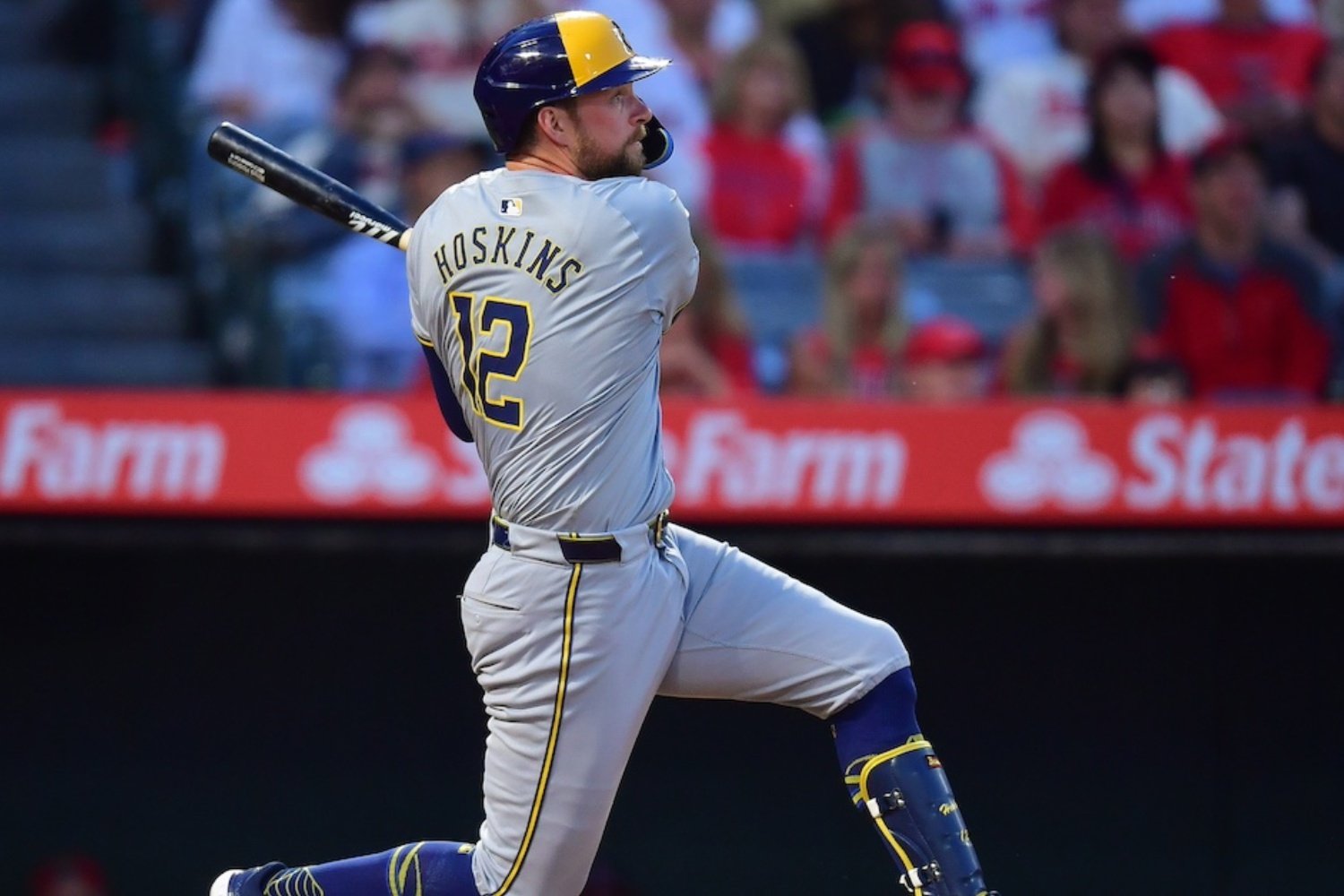 The Roster Situation The primary first baseman will likely be Rhys Hoskins, who was the team’s top first baseman in 2024 with 94 games at the position. A hamstring injury cost him some time, and he spent 37 games at designated hitter. The other player who is labeled as a first baseman on the 40-man roster is Tyler Black, whose bat has never been in question, but who has struggled to find a defensive home. Two of the non-roster invitees also bear a close look. Jake Bauers was Hoskins’ backup in 2024, and provided power, defense, and a batting average below the Mendoza line. He returns after being non-tendered. The other is Ernesto Martinez, a below-the-radar prospect who could be similar to Eric Thames as a threat who can steal 30 bases and provide excellent defense at first base and the outfield. The Brewers also brought back Mark Canha on a minor-league deal with an invitation to the big-league spring training camp. The Best-Case Situation – Hoskins Starts Five Games A Week At First Through July For 2025, the best case situation is for Rhys Hoskins to be an every day player at least through July. In 2022, he played 156 games. If he is able to play every day with the durability of William Contreras, then it helps Milwaukee replace some of the right-handed power lost when Willy Adames departed for the Bay Area. It also means that Tyler Black would get a game at first a week, which could help Hoskins get some rest, while Martinez gets a full season of seasoning in Triple-A Nashville. But if Hoskins is healthy, he could hit close to the 125 OPS+ he posted over his career with the Phillies. That could make him a valuable marker to an AL team in need of help at DH, and net Milwaukee some help from the minors. The Brewers could choose to move Hoskins and get that help, or keep him for a playoff run and pick up an extra draft pick for 2026 via the qualifying offer. Exactly which of those scenarios would depend on how things shake out with rookies Black and Ernesto Martinez. The former could be filling in at multiple positions on the baseball diamond, while the latter will face a test to see if his 2024 breakout in Double-A Biloxi is for real. If one or both are red-hot with the bat, they could make it easy for the Crew to move Hoskins at the trade deadline. The Worst Case Situation – Jake Bauers And Mark Canha Get Playing Time In Milwaukee Jake Bauers had some big moments for the Brewers in 2024, but ultimately, he delivered -0.4 Wins Above Replacement for the Brewers per Baseball Reference. Much of that was due to him having 118 strikeouts in 346 at-bats, leading to a batting average of .199 and a .662 OPS. Canha’s power has declined since he was in Milwaukee in 2023, but he is a very reliable on-base machine and can also cover the corner outfield spots. For one or both of them to be getting serious playing time in Milwaukee, it will mean that because of injury and/or ineffectiveness, Hoskins, Black, and Martinez are not soaking up the at-bats for the Brewers at first base. This is a distinct possibility for the Brewers: All three have missed significant time due to injuries at various points of their professional careers, and there is also an open question of just how long it will take Martinez and Black to adjust to MLB pitching. The other factor is that both Black and Martinez have positional versatility that may free them up to see playing time elsewhere on the field, so the injuries may not necessarily be at first base to force this scenario into play. But if Bauers and/or Canha are in Milwaukee on a regular basis, things will have definitely gone sideways. Overview The most likely outcome could very well be any form of a middle-case scenario that sees one (or both) of Black or Martinez getting significant playing time at first base between injuries at the MLB level. Whether it is closer to the best-case scenario as opposed to the worst-case scenario would depend on the specific injuries (and those prospects' respective performance), but the Brewers have some real talent at first base in 2025, even if it comes with questions and caveats.
 -
The 2025 Brewers are looking to, at the very least, pull off a three-peat for the National League Central title. But what would a successful season entail? We’ll look through all of the position groups and outline best-case and worse-case scenarios for the Brewers, starting with catcher. Image courtesy of AP Photo/Aaron Gash The Roster Situation Catcher is a position where the Brewers look loaded on paper with their 40-man roster. It is also arguably the most straightforward of the position player group. William Contreras was an All-Star and one of three Brewers to be in the top-25 of 2024 National League Most Valuable Player voting (free agent defect Willy Adames and rookie Jackson Chourio were the other two). Contreras played 155 games, 120 of them behind the plate, and still was a huge threat in the heart of the order for the Crew. Backing him up is Eric Haase, who came back from injury to post an .819 OPS across 66 at-bats with Milwaukee. He’s a solid defensive catcher, who could handle a game or two a week to give Contreras a break, even with a red flag in his offensive profile (28 strikeouts and only three walks in those 66 at-bats). Jeferson Quero is only 22 and coming off a lost 2024 season due to a shoulder injury. How well his recovery has gone will be determined this year as he is playing at Triple-A Nashville. Darrien Miller, Jorge Alfaro, David Garcia, and Ramon Rodriguez are non-roster invitees to spring training. Best-Case Scenario – Quero Arrives In Late July For the Brewers, their best-case scenario at catcher is very straightforward: Contreras catches six games a week, with Haase providing one day off for the All-Star to rest. Then, just before the deadline, the Crew deals Haase for a couple of rookie-level prospects, and Quero comes up to back up Contreras for the rest of the year. TLDR: Contreras continues showing the durability and offensive prowess that makes him a star while Haase give him the occasional breather to keep him sharp. Contreras may not get as many games at DH due to Christian Yelich taking the bulk of the at-bats there (with Tyler Black being his primary backup in that spot), so he will actually get rest and hopefully be at full strength longer. That scenario also means that by late July, Quero will have shown that he’s fully recovered from the shoulder injury that cost him all of 2024 and that between his defense and offense, he is knocking on the door of serious MLB playing time. Once up, he would hopefully take about two starts a week, with Contreras getting more rest as the season progresses, perhaps even getting a start a week at DH to help rest Yelich. Worst-Case Scenario – Darrien Miller Sees Playing Time In Milwaukee If Darrien Miller is in Milwaukee getting regular-season at-bats in 2025, then things have gone sideways behind the plate for the Brewers. It will mean that, due to come combination of injuries or ineffectiveness among Contreras, Haase, and Quero, among others, catcher is a revolving door. It’s not that Miller is a bad catching prospect in and of himself. Since being drafted in 2018, he’s displayed excellent OBP skills at the plate, some pop from the left side for most of his career, and he's held his own behind the plate. He also is familiar with many of the Brewers’ young pitching prospects, having been teammates with them over his career. But if the Brewers need him to back up Contreras, it is bad news because it means Quero and Haase have faltered. If he’s spelling Haase or Quero, then it means that the fifth-place vote-getter for National League MVP is unavailable for an extended period, along with either his primary backup or Milwaukee’s top catching prospect. That would not be a good sign for the Brewers Overview It is far more likely that the Brewers will be in a best-case scenario at catcher. Contreras has shown incredible durability so far, and the Brewers may have wished they had worked out an extension prior to 2024. Haase and Quero are solid number two options for 2025, provided they stay healthy and effective — the former being a huge question mark for both. Still, the worst can happen, and Brewers fans are all too familiar with how injuries can ravage a promising Brewers team. Let's all hope for another brilliant season from Contreras, lest Milwaukee have to deal with yet another problem spot in the lineup. View full article
-
Best And Worst Case Scenarios For The Brewers At Catcher In 2025
Harold Hutchison posted an article in Brewers
 The Roster Situation Catcher is a position where the Brewers look loaded on paper with their 40-man roster. It is also arguably the most straightforward of the position player group. William Contreras was an All-Star and one of three Brewers to be in the top-25 of 2024 National League Most Valuable Player voting (free agent defect Willy Adames and rookie Jackson Chourio were the other two). Contreras played 155 games, 120 of them behind the plate, and still was a huge threat in the heart of the order for the Crew. Backing him up is Eric Haase, who came back from injury to post an .819 OPS across 66 at-bats with Milwaukee. He’s a solid defensive catcher, who could handle a game or two a week to give Contreras a break, even with a red flag in his offensive profile (28 strikeouts and only three walks in those 66 at-bats). Jeferson Quero is only 22 and coming off a lost 2024 season due to a shoulder injury. How well his recovery has gone will be determined this year as he is playing at Triple-A Nashville. Darrien Miller, Jorge Alfaro, David Garcia, and Ramon Rodriguez are non-roster invitees to spring training. Best-Case Scenario – Quero Arrives In Late July For the Brewers, their best-case scenario at catcher is very straightforward: Contreras catches six games a week, with Haase providing one day off for the All-Star to rest. Then, just before the deadline, the Crew deals Haase for a couple of rookie-level prospects, and Quero comes up to back up Contreras for the rest of the year. TLDR: Contreras continues showing the durability and offensive prowess that makes him a star while Haase give him the occasional breather to keep him sharp. Contreras may not get as many games at DH due to Christian Yelich taking the bulk of the at-bats there (with Tyler Black being his primary backup in that spot), so he will actually get rest and hopefully be at full strength longer. That scenario also means that by late July, Quero will have shown that he’s fully recovered from the shoulder injury that cost him all of 2024 and that between his defense and offense, he is knocking on the door of serious MLB playing time. Once up, he would hopefully take about two starts a week, with Contreras getting more rest as the season progresses, perhaps even getting a start a week at DH to help rest Yelich. Worst-Case Scenario – Darrien Miller Sees Playing Time In Milwaukee If Darrien Miller is in Milwaukee getting regular-season at-bats in 2025, then things have gone sideways behind the plate for the Brewers. It will mean that, due to come combination of injuries or ineffectiveness among Contreras, Haase, and Quero, among others, catcher is a revolving door. It’s not that Miller is a bad catching prospect in and of himself. Since being drafted in 2018, he’s displayed excellent OBP skills at the plate, some pop from the left side for most of his career, and he's held his own behind the plate. He also is familiar with many of the Brewers’ young pitching prospects, having been teammates with them over his career. But if the Brewers need him to back up Contreras, it is bad news because it means Quero and Haase have faltered. If he’s spelling Haase or Quero, then it means that the fifth-place vote-getter for National League MVP is unavailable for an extended period, along with either his primary backup or Milwaukee’s top catching prospect. That would not be a good sign for the Brewers Overview It is far more likely that the Brewers will be in a best-case scenario at catcher. Contreras has shown incredible durability so far, and the Brewers may have wished they had worked out an extension prior to 2024. Haase and Quero are solid number two options for 2025, provided they stay healthy and effective — the former being a huge question mark for both. Still, the worst can happen, and Brewers fans are all too familiar with how injuries can ravage a promising Brewers team. Let's all hope for another brilliant season from Contreras, lest Milwaukee have to deal with yet another problem spot in the lineup.
 -
Going into spring training in 2024, Tyler Black seemed poised to compete with Jackson Chourio for best rookie on the Brewers, if not National League Rookie of the Year. Yet he only got 49 at-bats in Milwaukee and rode the Milwaukee-Nashville shuttle multiple times. It's not exactly the long leash Jackson Chourio received. Image courtesy of © Michael McLoone-Imagn Images / © Benny Sieu-Imagn Images How did it do wrong for Tyler Black, whose bat has never been a question? Can he still be a major contributor for the Brewers? Let’s take a longer look at the state of Tyler Black as spring training starts for the 2025 Brewers. What Went Wrong In 2024? The short version is that Tyler Black didn’t do anything wrong, per se. He just got caught up in a logjam created by three trades and a free-agent signing. On November 14, 2023, the Brewers acquired Oliver Dunn for Hendry Mendez and Robert Moore. That created some competition for Black, but things got crowded when the Brewers signed Rhys Hoskins on January 26, 2024, then acquired Joey Ortiz in the February Corbin Burnes trade. That effectively blocked both corner infield positions. Ortiz was red-hot in the first half of the season at the hot corner, while Jake Bauers, acquired in a November 17, 2023 trade for Jace Avina and Brian Sanchez, complemented Hoskins. For Black, those moves meant he would be starting 2024 in Nashville, while Chourio was in Milwaukee all season. He would get three cups of coffee with the Brewers but never regularly started, and the Brewers didn’t even call him up when Christian Yelich was lost for the season, depriving him of a chance to adjust to MLB pitching. Part of this is due to a lack of a true defensive home. Black played second base, third base, center field, left field, and first base competently. However, the Brewers’ philosophy has been on run prevention, which gives long leashes to excellent defenders who sometimes struggle at the plate, like Brice Turang or Blake Perkins. With Yelich likely at designated hitter due to the “fantastic four” young outfielders (Chourio, Perkins, Garrett Mitchell, and Sal Frelick), Black’s bat can’t get into the lineup barring a trade or injury. What Can Go Right In 2025? For Black, it starts with hitting. If his bat is hot enough, he can bypass Bauers and fellow NRI Ernesto Martinez as the left-handed complement to Hoskins. He also offers more positional versatility than both since he can play second and third bases in addition to the outfield and first base. Once Black gets regular at-bats, he can put up an OPS similar to what Chourio did in 2024 – albeit weighted more towards on-base than slugging percentage, and he will add excellent baserunning to the mix (78-for-93 in stolen bases across the past two seasons). His week could easily be along the lines of five to six starts a week (two to three at third, one or two at first base, one at DH, occasional starts in left field). Once Black completes his adjustment to MLB pitching, it would not be hard to imagine him posting a .380 on-base and .410 slugging percentage, roughly a 115 OPS+ based on 2024 numbers. And he should get better as he gets more familiar with MLB pitching. How Will This Impact The 2025 Brewers? For starters, if Black can get almost every day playing time, he gives the Brewers an upgrade over Brice Turang at the leadoff spot in the lineup. Turang led off for the Crew 86 times in 2024. He’s a great leadoff option when he's hot, but when his bat gets colder, it may behoove the Brewers to bat him ninth. Black offers a much higher offensive floor, and his ceiling would be akin to the 1987-1992 version of Paul Molitor. This would allow Milwaukee to keep Turang in the ninth spot of the lineup, where his speed and baserunning can still do a lot of damage but where his hot-and-cold bat won’t have such high stakes early in a game. In addition, he could allow Yelich and Hoskins to get rest regularly, which might keep them healthy and rested for not only trying to secure a playoff spot but also making a deep playoff run. The 2024 Brewers got 3.1 wins above average from Willy Adames. It’s not hard to imagine Black posting at least three wins above replacement for the 2025 Brewers if things go right (which is defined by at least two starts a week at third base, in addition to resting Yelich and Hoskins). That would make up a lot of the offense Adames posted, even if it might not be 32 homers. View full article
-
Make Or Break Players On The 2025 Brewers: Tyler Black
Harold Hutchison posted an article in Brewers
 How did it do wrong for Tyler Black, whose bat has never been a question? Can he still be a major contributor for the Brewers? Let’s take a longer look at the state of Tyler Black as spring training starts for the 2025 Brewers. What Went Wrong In 2024? The short version is that Tyler Black didn’t do anything wrong, per se. He just got caught up in a logjam created by three trades and a free-agent signing. On November 14, 2023, the Brewers acquired Oliver Dunn for Hendry Mendez and Robert Moore. That created some competition for Black, but things got crowded when the Brewers signed Rhys Hoskins on January 26, 2024, then acquired Joey Ortiz in the February Corbin Burnes trade. That effectively blocked both corner infield positions. Ortiz was red-hot in the first half of the season at the hot corner, while Jake Bauers, acquired in a November 17, 2023 trade for Jace Avina and Brian Sanchez, complemented Hoskins. For Black, those moves meant he would be starting 2024 in Nashville, while Chourio was in Milwaukee all season. He would get three cups of coffee with the Brewers but never regularly started, and the Brewers didn’t even call him up when Christian Yelich was lost for the season, depriving him of a chance to adjust to MLB pitching. Part of this is due to a lack of a true defensive home. Black played second base, third base, center field, left field, and first base competently. However, the Brewers’ philosophy has been on run prevention, which gives long leashes to excellent defenders who sometimes struggle at the plate, like Brice Turang or Blake Perkins. With Yelich likely at designated hitter due to the “fantastic four” young outfielders (Chourio, Perkins, Garrett Mitchell, and Sal Frelick), Black’s bat can’t get into the lineup barring a trade or injury. What Can Go Right In 2025? For Black, it starts with hitting. If his bat is hot enough, he can bypass Bauers and fellow NRI Ernesto Martinez as the left-handed complement to Hoskins. He also offers more positional versatility than both since he can play second and third bases in addition to the outfield and first base. Once Black gets regular at-bats, he can put up an OPS similar to what Chourio did in 2024 – albeit weighted more towards on-base than slugging percentage, and he will add excellent baserunning to the mix (78-for-93 in stolen bases across the past two seasons). His week could easily be along the lines of five to six starts a week (two to three at third, one or two at first base, one at DH, occasional starts in left field). Once Black completes his adjustment to MLB pitching, it would not be hard to imagine him posting a .380 on-base and .410 slugging percentage, roughly a 115 OPS+ based on 2024 numbers. And he should get better as he gets more familiar with MLB pitching. How Will This Impact The 2025 Brewers? For starters, if Black can get almost every day playing time, he gives the Brewers an upgrade over Brice Turang at the leadoff spot in the lineup. Turang led off for the Crew 86 times in 2024. He’s a great leadoff option when he's hot, but when his bat gets colder, it may behoove the Brewers to bat him ninth. Black offers a much higher offensive floor, and his ceiling would be akin to the 1987-1992 version of Paul Molitor. This would allow Milwaukee to keep Turang in the ninth spot of the lineup, where his speed and baserunning can still do a lot of damage but where his hot-and-cold bat won’t have such high stakes early in a game. In addition, he could allow Yelich and Hoskins to get rest regularly, which might keep them healthy and rested for not only trying to secure a playoff spot but also making a deep playoff run. The 2024 Brewers got 3.1 wins above average from Willy Adames. It’s not hard to imagine Black posting at least three wins above replacement for the 2025 Brewers if things go right (which is defined by at least two starts a week at third base, in addition to resting Yelich and Hoskins). That would make up a lot of the offense Adames posted, even if it might not be 32 homers.
 -
The 2024 Brewers featured two “steals” who became mainstays in their starting rotation in Colin Rea and Tobias Myers. Could Bryan Hudson be the next one? Image courtesy of © Michael McLoone-Imagn Images Colin Rea and Tobias Myers helped propel the 2024 Brewers to their first back-to-back division titles. Myers led the team’s starters in ERA, while Rea led the team with 12 wins. Rea was allowed to leave as a free agent, but the Brewers might have a replacement for him in Hudson if they choose to use him in the rotation. A Minor Transaction with Big Results The Brewers acquired Bryan Hudson from the Dodgers in exchange for 2023 20th-round pick Justin Chambers. He quickly became a bullpen mainstay, getting five outs or more in 20 of his 43 appearances with the Crew. After a rough July, he rebounded in August and September but was sent to Triple-A Nashville on an unofficial rehab assignment late in the season. The interesting thing about Hudson’s August “rebound” was that he did it in a manner that was very different from his first-half success. In the first half, he overpowered hitters with his stuff and insane control (51 strikeouts to eight walks in 44 innings from Opening Day through June). In August, he still went 2-0 with a 2.70 ERA despite only striking out six batters in ten innings, but he only allowed two walks. In other words, in 2024, Hudson was two very different forms of a good pitcher. First-half Hudson succeeded by racking up a lot of strikeouts. Second-half Hudson was a pitcher who got outs through inducing bad contact. In 2024, he increased his weak contact rates from his brief appearances in 2023, but most important for Hudson was cutting his “flare/burner” rate by just under 40%. Hudson’s Arsenal According to Baseball Savant, Hudson uses a four-seam fastball that comes in at 91.3 miles per hour – slightly below average velocity for a lefty. He combines it with an 86-mile-per-hour cutter (also with slightly below-average velocity) and an 81.5-mile-per-hour sweeper that offers slightly above-average velocity compared to other southpaws’ sweepers. The sweeper has been his best when it comes to racking up whiffs (35.2% whiff percentage) and putting hitters away (26.4%) – but much of Hudson’s success has been that when hitters make contact, it’s rarely good. Only 10 of 148 batted balls events were “barreled,” while he tripled his pop-up percentage from 2023 to 2024. Starting in July, though, his sweeper use declined. From March through June, his average sweeper use was 26.2%, but it dropped to 15.8%. Can He Stretch Out? This becomes the big question. With three pitches, Hudson’s arsenal is marginal for a starter. That said, an adjustment to the pitch mix may be the answer. His sweeper induces a lot of whiffs, while his cutter was most likely to get clobbered (four of the seven home runs he allowed came from cutters). That said, in August, he appeared to gain a feel for the cutter, going from allowing a .600 batting average off the cutter in July to a .200 batting average, with the slugging percentage allowed becoming a more drastic drop from 1.800 in July to .500 in August. Could a 40-30-30 mix turn Hudson into a left-handed Colin Rea? Hudson has already been a great acquisition for Matt Arnold. But if he becomes a starter in the mold of Colin Rea, he might just be a big-time steal for the Brewers. View full article
-
Could Bryan Hudson Be The Next Starter Steal For The Brewers?
Harold Hutchison posted an article in Brewers
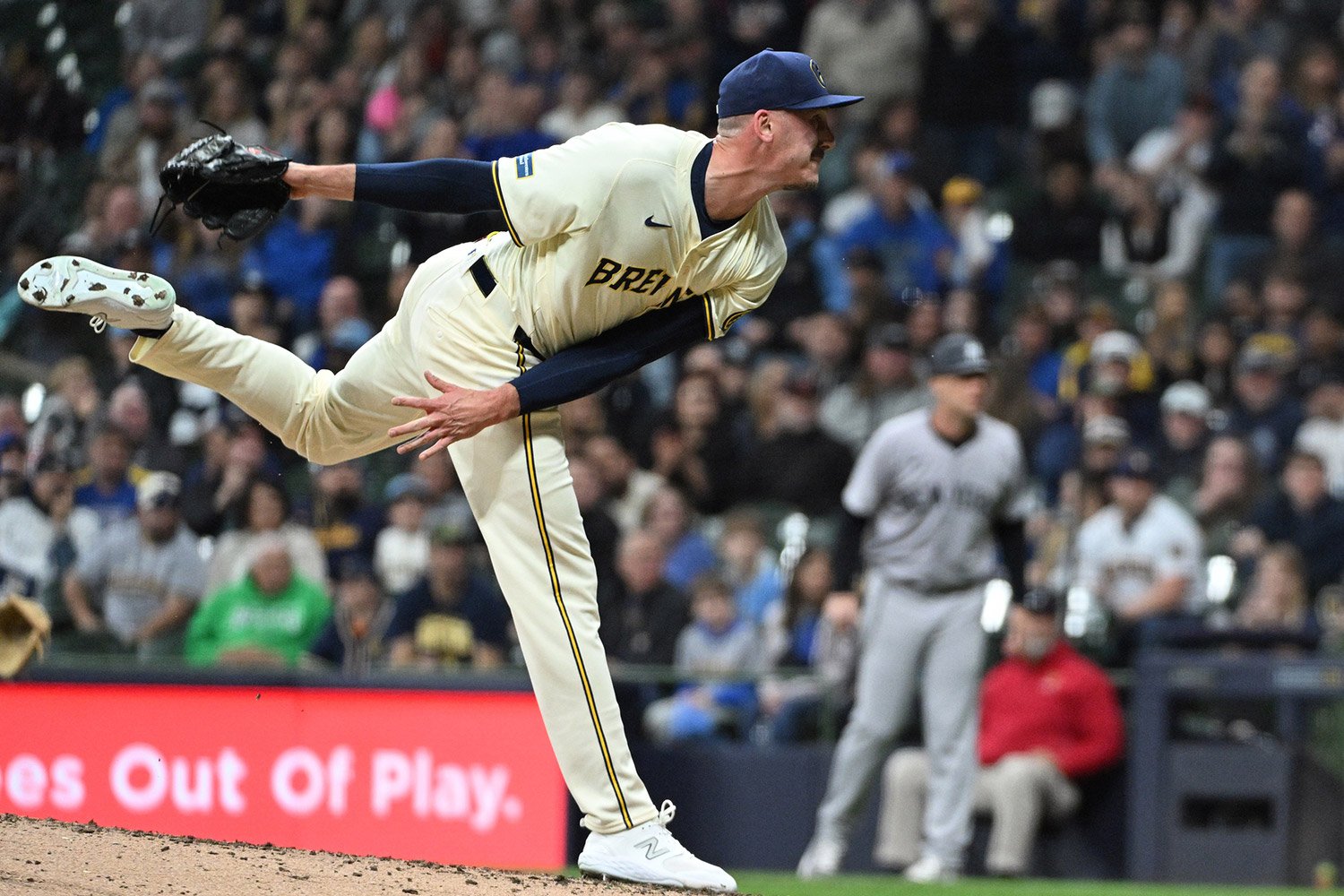 Colin Rea and Tobias Myers helped propel the 2024 Brewers to their first back-to-back division titles. Myers led the team’s starters in ERA, while Rea led the team with 12 wins. Rea was allowed to leave as a free agent, but the Brewers might have a replacement for him in Hudson if they choose to use him in the rotation. A Minor Transaction with Big Results The Brewers acquired Bryan Hudson from the Dodgers in exchange for 2023 20th-round pick Justin Chambers. He quickly became a bullpen mainstay, getting five outs or more in 20 of his 43 appearances with the Crew. After a rough July, he rebounded in August and September but was sent to Triple-A Nashville on an unofficial rehab assignment late in the season. The interesting thing about Hudson’s August “rebound” was that he did it in a manner that was very different from his first-half success. In the first half, he overpowered hitters with his stuff and insane control (51 strikeouts to eight walks in 44 innings from Opening Day through June). In August, he still went 2-0 with a 2.70 ERA despite only striking out six batters in ten innings, but he only allowed two walks. In other words, in 2024, Hudson was two very different forms of a good pitcher. First-half Hudson succeeded by racking up a lot of strikeouts. Second-half Hudson was a pitcher who got outs through inducing bad contact. In 2024, he increased his weak contact rates from his brief appearances in 2023, but most important for Hudson was cutting his “flare/burner” rate by just under 40%. Hudson’s Arsenal According to Baseball Savant, Hudson uses a four-seam fastball that comes in at 91.3 miles per hour – slightly below average velocity for a lefty. He combines it with an 86-mile-per-hour cutter (also with slightly below-average velocity) and an 81.5-mile-per-hour sweeper that offers slightly above-average velocity compared to other southpaws’ sweepers. The sweeper has been his best when it comes to racking up whiffs (35.2% whiff percentage) and putting hitters away (26.4%) – but much of Hudson’s success has been that when hitters make contact, it’s rarely good. Only 10 of 148 batted balls events were “barreled,” while he tripled his pop-up percentage from 2023 to 2024. Starting in July, though, his sweeper use declined. From March through June, his average sweeper use was 26.2%, but it dropped to 15.8%. Can He Stretch Out? This becomes the big question. With three pitches, Hudson’s arsenal is marginal for a starter. That said, an adjustment to the pitch mix may be the answer. His sweeper induces a lot of whiffs, while his cutter was most likely to get clobbered (four of the seven home runs he allowed came from cutters). That said, in August, he appeared to gain a feel for the cutter, going from allowing a .600 batting average off the cutter in July to a .200 batting average, with the slugging percentage allowed becoming a more drastic drop from 1.800 in July to .500 in August. Could a 40-30-30 mix turn Hudson into a left-handed Colin Rea? Hudson has already been a great acquisition for Matt Arnold. But if he becomes a starter in the mold of Colin Rea, he might just be a big-time steal for the Brewers.
- 16 comments
-
- 1
-

-
- bryan hudson
- tobias myers
- (and 1 more)
-
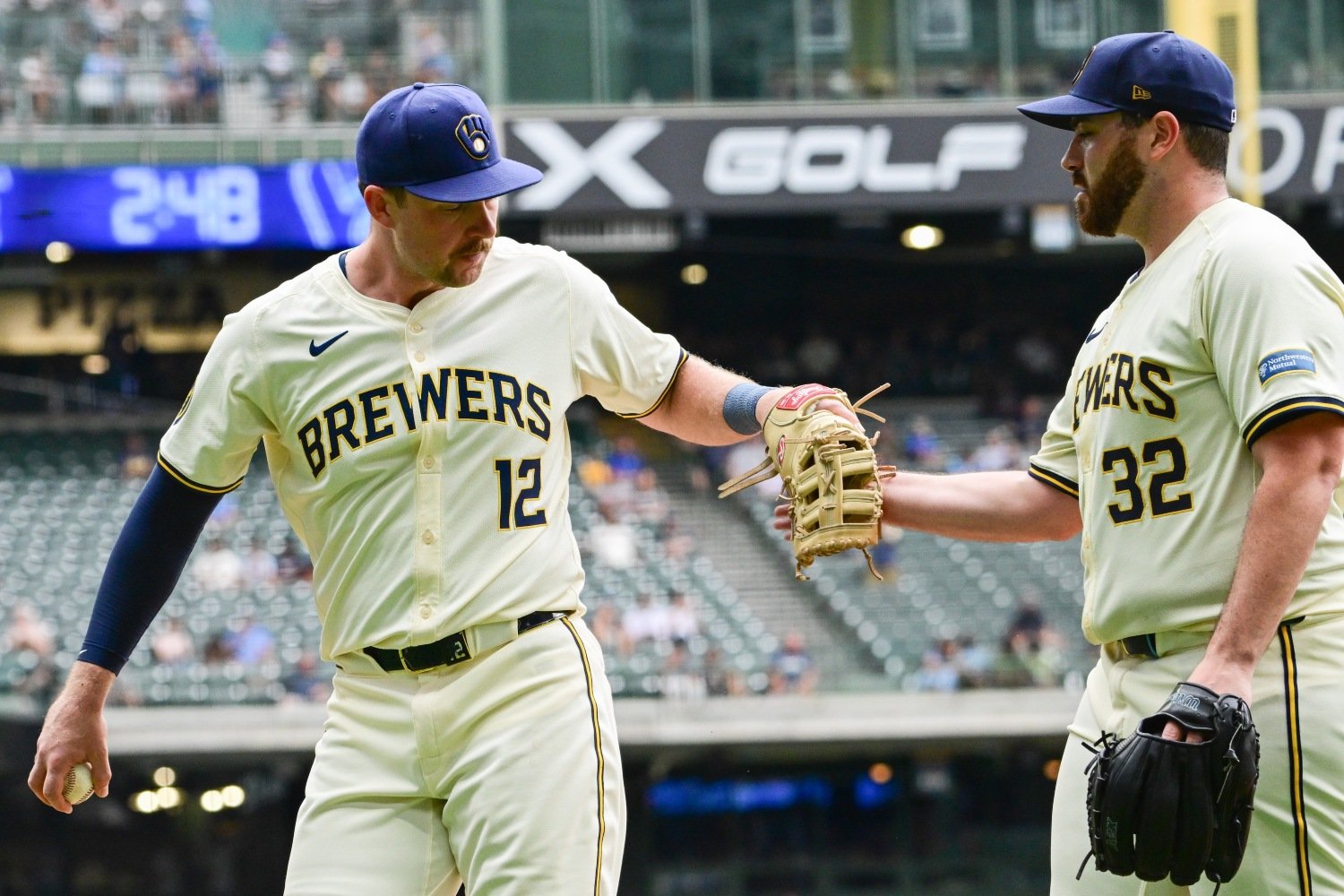 The Brewers are still trying to figure out how to replace the Willy Adames-sized hole in the lineup and the clubhouse, and there are going to be some changes in their pitching staff with the departures of reliable contributors like Colin Rea (to the Cubs) and Hoby Milner (now a Texas Ranger). Still, taking the 40-man roster as it stands, the Brewers could assemble a very good team, likely to contend again for the NL Central crown. Let’s look over the team and what the Opening Day 26-man roster looks like, following Wednesday's signing of Tyler Alexander. Starting Rotation The Brewers had a solid 1-2-3 punch in their rotation late in 2024, between Freddy Peralta, Tobias Myers, and Aaron Civale. The acquisition of Nestor Cortes adds a solid mid-rotation starter whose real value for the Brewers remains twofold: He pushes Brandon Woodruff (when he returns) to the fifth spot for his comeback season after 2023 and 2024 were largely lost due to injury; and He buys time for a well-stocked Triple-A rotation that includes Logan Henderson, Chad Patrick, Jacob Misiorowski, and Carlos F. Rodriguez to gain seasoning in Nashville. The newly-signed Tyler Alexander is another potential option for the fifth spot, especially if Woodruff needs more time to build up. He could also “piggyback” with Woodruff, should the Brewers take that option. Aaron Ashby, DL Hall, and Rule 5 pick Connor Thomas could also be options for the fifth spot if Woodruff isn’t ready to go, though Hall certainly has less chance of that now that he's behind schedule at the outset of camp. Robert Gasser was moved to the 60-day IL due to recovering from Tommy John surgery. Cortes, Alexander and Woodruff are going to determine much of how Milwaukee’s 2025 can go, especially in the early going. If Cortes and Woodruff return to the form that made them top-10 vote recipients for the Cy Young Award in their best seasons, or if Alexander makes the type of quantum leap Rea did while with the Crew, the Brewers could go toe-to-toe with any team in the playoffs. Projected Opening Day Rotation: Freddy Peralta, Tobias Myers, Aaron Civale, Nestor Cortes, Tyler Alexander; Brandon Woodruff to 60-day IL Bullpen The relief corps remains quite deep—so much so that the Devin Williams trade and designating both Tyler Jay and J.B. Buskaukas (both of whom are NRIs to spring training) did little to ease congestion. Trevor Megill will likely take up the closer’s role, which he performed very well in 2024 during Williams’ absence. Who handles the eighth inning, though, remains up for grabs. Will it be Jared Koenig, Nick Mears, Abner Uribe, Joel Payamps, Grant Anderson, or Elvis Peguero? Obviously, it will be some mixture of those names, but someone will get the bulk of the holds in front of hoped-for Megill saves. Could NRI Craig Yoho seize that job? The losers in the scramble for high-leverage setup work will likely end up handling the seventh inning; toiling in Triple-A Nashville for a bit; or being moved to teams looking for help in the bullpen, especially if Yoho forces the issue in the spring. The depth is such that they have a terrific lower-leverage segment of the bullpen, which will feature a number of relievers who can go multiple innings. The top four contenders are all lefties, three of whom could be dominant: Bryan Hudson, along with rotation contenders Hall, Ashby and Thomas. Yoho and Misiorowski could easily wind up in the Brewers’ bullpen, too, especially since the former has nothing left to prove in the minors. Payamps, Mears, and Thomas cannot be optioned to the minors. This could be one area where the Brewers make some trades by Opening Day, as the situation crystallizes. Projected Opening Day Bullpen: Trevor Megill (closer), Craig Yoho, Joel Payamps, Jared Koenig, Bryan Hudson, DL Hall, Aaron Ashby, Connor Thomas Catchers This is a straightforward position for the Brewers. William Contreras will likely be the starter for the third season, having secured a huge payday in his first year of arbitration. Eric Haase will be the backup to start the season, but he will be looking over his shoulder as Jeferson Quero will be in Triple-A Nashville after recovering from a shoulder injury that cost him all of 2024. That said, Darrien Miller, a catching prospect overshadowed by Quero over the years, received a non-roster invitee to spring training and brings familiarity with the young Triple-A starters, making him an intriguing option. Projected Opening Day Catchers: William Contreras (starter), Eric Haase (bench) Infielders Three of the four positions will be set going into Opening Day. First base will be manned by Rhys Hoskins, who opted in with the Brewers for 2025. Joey Ortiz will likely move to shortstop to fill the very big shoes of Adames, who took a seven-year, $182-million deal from the San Francisco Giants. Brice Turang will return at second base, where he earned both the Gold Glove and Platinum Glove. That leaves third base, where the Brewers already had some solid internal options before Caleb Durbin’s acquisition in the Devin Williams trade. Tyler Black did not see much action at third in 2024 (nine games for Triple-A Nashville), but that seems to be the only real way he can carve a place in the big-league lineup. His bat has nothing left to prove in the minors, and he is arguably the team’s best offensive option at the position on the 40-man roster, even with the team’s doubts about his defense. In this case, the Brewers could likely go with a platoonish approach at the hot corner, with Black and Durbin getting the bulk of the starts. Black could find more at-bats by playing some DH, left field, and first base, in addition to the hot corner. Durbin may be helpful in giving Ortiz and Turang days off by handling second base when he isn't at third base. Isaac Collins, a switch-hitter who has seen playing time at third base, second base, and the outfield, Oliver Dunn, and Vinny Capra could also be options in the infield, with Dunn a possible starter at third—if he can actually make contact with the baseball. Projected Opening Day Infielders: Rhys Hoskins (1B), Brice Turang (2B), Joey Ortiz (SS), Tyler Black (3B/platoon), Andruw Monasterio (backup SS/3B/2B), Caleb Durbin (3B-2B/platoon) Outfielders Arguably the deepest position group on the team, all of the likely 26-man roster candidates for the Brewers have significant professional experience in center field, which has been a factor in helping the team’s pitchers look good. Garrett Mitchell will likely start in center, bringing a potent left-handed bat, speed, and excellent defense if he can avoid the injured list. Blake Perkins handled most of the center field duties in 2024 while Mitchell recovered from an injury, and he was a Gold Glove finalist. Sal Frelick earned a Gold Glove primarily playing right field last year, but could see time in the infield in some scenarios. Jackson Chourio finished third in Rookie of the Year voting, and won’t need two months to adjust to MLB pitching in 2025. These developments will likely bump Christian Yelich to being the primary designated hitter, which should make things easier on his surgically repaired back and maybe help him double the 73 games he played in 2024, which could help replace some of Adames's 32 home runs and general offensive dangerousness. Black may also see some time in the outfield, having played both center field and left field in the minors. Brewer Hicklen could be the first callup in case of injury, or he could be a casualty of a roster crunch. Projected Opening Day Outfielders: Christian Yelich (DH), Jackson Chourio (LF), Garrett Mitchell (CF), Sal Frelick (RF), Blake Perkins (bench) Lineup Projection (primary starter/secondary starter) 3B: Tyler Black/Caleb Durbin LF: Jackson Chourio/Tyler Black DH: Christian Yelich/Tyler Black C: William Contreras/Eric Haase CF: Garrett Mitchell/Blake Perkins 1B: Rhys Hoskins/Tyler Black RF: Sal Frelick/Jackson Chourio SS: Joey Ortiz/Brice Turang 2B: Brice Turang/Caleb Durbin Bench Projection C Eric Haase IF Andruw Monasterio IF Caleb Durbin OF Blake Perkins Projected Rotation RHP Freddy Peralta RHP Tobias Myers RHP Aaron Civale LHP Nestor Cortes LHP Tyler Alexander Projected Bullpen RHP Trevor Megill (closer) RHP Craig Yoho (set-up) RHP Joel Payamps (set-up) LHP Jared Koenig (set-up) LHP Bryan Hudson (middle/long relief) LHP DL Hall (long relief) LHP Aaron Ashby (long relief) LHP Connor Thomas (long relief) 60-Day Injured List RHP Brandon Woodruff LHP Robert Gasser
 -
Spring training is upon us, and with that, it is time to again try to predict the Brewers’ 26-man roster for Opening Day. Image courtesy of © Benny Sieu-Imagn Images The Brewers are still trying to figure out how to replace the Willy Adames-sized hole in the lineup and the clubhouse, and there are going to be some changes in their pitching staff with the departures of reliable contributors like Colin Rea (to the Cubs) and Hoby Milner (now a Texas Ranger). Still, taking the 40-man roster as it stands, the Brewers could assemble a very good team, likely to contend again for the NL Central crown. Let’s look over the team and what the Opening Day 26-man roster looks like, following Wednesday's signing of Tyler Alexander. Starting Rotation The Brewers had a solid 1-2-3 punch in their rotation late in 2024, between Freddy Peralta, Tobias Myers, and Aaron Civale. The acquisition of Nestor Cortes adds a solid mid-rotation starter whose real value for the Brewers remains twofold: He pushes Brandon Woodruff (when he returns) to the fifth spot for his comeback season after 2023 and 2024 were largely lost due to injury; and He buys time for a well-stocked Triple-A rotation that includes Logan Henderson, Chad Patrick, Jacob Misiorowski, and Carlos F. Rodriguez to gain seasoning in Nashville. The newly-signed Tyler Alexander is another potential option for the fifth spot, especially if Woodruff needs more time to build up. He could also “piggyback” with Woodruff, should the Brewers take that option. Aaron Ashby, DL Hall, and Rule 5 pick Connor Thomas could also be options for the fifth spot if Woodruff isn’t ready to go, though Hall certainly has less chance of that now that he's behind schedule at the outset of camp. Robert Gasser was moved to the 60-day IL due to recovering from Tommy John surgery. Cortes, Alexander and Woodruff are going to determine much of how Milwaukee’s 2025 can go, especially in the early going. If Cortes and Woodruff return to the form that made them top-10 vote recipients for the Cy Young Award in their best seasons, or if Alexander makes the type of quantum leap Rea did while with the Crew, the Brewers could go toe-to-toe with any team in the playoffs. Projected Opening Day Rotation: Freddy Peralta, Tobias Myers, Aaron Civale, Nestor Cortes, Tyler Alexander; Brandon Woodruff to 60-day IL Bullpen The relief corps remains quite deep—so much so that the Devin Williams trade and designating both Tyler Jay and J.B. Buskaukas (both of whom are NRIs to spring training) did little to ease congestion. Trevor Megill will likely take up the closer’s role, which he performed very well in 2024 during Williams’ absence. Who handles the eighth inning, though, remains up for grabs. Will it be Jared Koenig, Nick Mears, Abner Uribe, Joel Payamps, Grant Anderson, or Elvis Peguero? Obviously, it will be some mixture of those names, but someone will get the bulk of the holds in front of hoped-for Megill saves. Could NRI Craig Yoho seize that job? The losers in the scramble for high-leverage setup work will likely end up handling the seventh inning; toiling in Triple-A Nashville for a bit; or being moved to teams looking for help in the bullpen, especially if Yoho forces the issue in the spring. The depth is such that they have a terrific lower-leverage segment of the bullpen, which will feature a number of relievers who can go multiple innings. The top four contenders are all lefties, three of whom could be dominant: Bryan Hudson, along with rotation contenders Hall, Ashby and Thomas. Yoho and Misiorowski could easily wind up in the Brewers’ bullpen, too, especially since the former has nothing left to prove in the minors. Payamps, Mears, and Thomas cannot be optioned to the minors. This could be one area where the Brewers make some trades by Opening Day, as the situation crystallizes. Projected Opening Day Bullpen: Trevor Megill (closer), Craig Yoho, Joel Payamps, Jared Koenig, Bryan Hudson, DL Hall, Aaron Ashby, Connor Thomas Catchers This is a straightforward position for the Brewers. William Contreras will likely be the starter for the third season, having secured a huge payday in his first year of arbitration. Eric Haase will be the backup to start the season, but he will be looking over his shoulder as Jeferson Quero will be in Triple-A Nashville after recovering from a shoulder injury that cost him all of 2024. That said, Darrien Miller, a catching prospect overshadowed by Quero over the years, received a non-roster invitee to spring training and brings familiarity with the young Triple-A starters, making him an intriguing option. Projected Opening Day Catchers: William Contreras (starter), Eric Haase (bench) Infielders Three of the four positions will be set going into Opening Day. First base will be manned by Rhys Hoskins, who opted in with the Brewers for 2025. Joey Ortiz will likely move to shortstop to fill the very big shoes of Adames, who took a seven-year, $182-million deal from the San Francisco Giants. Brice Turang will return at second base, where he earned both the Gold Glove and Platinum Glove. That leaves third base, where the Brewers already had some solid internal options before Caleb Durbin’s acquisition in the Devin Williams trade. Tyler Black did not see much action at third in 2024 (nine games for Triple-A Nashville), but that seems to be the only real way he can carve a place in the big-league lineup. His bat has nothing left to prove in the minors, and he is arguably the team’s best offensive option at the position on the 40-man roster, even with the team’s doubts about his defense. In this case, the Brewers could likely go with a platoonish approach at the hot corner, with Black and Durbin getting the bulk of the starts. Black could find more at-bats by playing some DH, left field, and first base, in addition to the hot corner. Durbin may be helpful in giving Ortiz and Turang days off by handling second base when he isn't at third base. Isaac Collins, a switch-hitter who has seen playing time at third base, second base, and the outfield, Oliver Dunn, and Vinny Capra could also be options in the infield, with Dunn a possible starter at third—if he can actually make contact with the baseball. Projected Opening Day Infielders: Rhys Hoskins (1B), Brice Turang (2B), Joey Ortiz (SS), Tyler Black (3B/platoon), Andruw Monasterio (backup SS/3B/2B), Caleb Durbin (3B-2B/platoon) Outfielders Arguably the deepest position group on the team, all of the likely 26-man roster candidates for the Brewers have significant professional experience in center field, which has been a factor in helping the team’s pitchers look good. Garrett Mitchell will likely start in center, bringing a potent left-handed bat, speed, and excellent defense if he can avoid the injured list. Blake Perkins handled most of the center field duties in 2024 while Mitchell recovered from an injury, and he was a Gold Glove finalist. Sal Frelick earned a Gold Glove primarily playing right field last year, but could see time in the infield in some scenarios. Jackson Chourio finished third in Rookie of the Year voting, and won’t need two months to adjust to MLB pitching in 2025. These developments will likely bump Christian Yelich to being the primary designated hitter, which should make things easier on his surgically repaired back and maybe help him double the 73 games he played in 2024, which could help replace some of Adames's 32 home runs and general offensive dangerousness. Black may also see some time in the outfield, having played both center field and left field in the minors. Brewer Hicklen could be the first callup in case of injury, or he could be a casualty of a roster crunch. Projected Opening Day Outfielders: Christian Yelich (DH), Jackson Chourio (LF), Garrett Mitchell (CF), Sal Frelick (RF), Blake Perkins (bench) Lineup Projection (primary starter/secondary starter) 3B: Tyler Black/Caleb Durbin LF: Jackson Chourio/Tyler Black DH: Christian Yelich/Tyler Black C: William Contreras/Eric Haase CF: Garrett Mitchell/Blake Perkins 1B: Rhys Hoskins/Tyler Black RF: Sal Frelick/Jackson Chourio SS: Joey Ortiz/Brice Turang 2B: Brice Turang/Caleb Durbin Bench Projection C Eric Haase IF Andruw Monasterio IF Caleb Durbin OF Blake Perkins Projected Rotation RHP Freddy Peralta RHP Tobias Myers RHP Aaron Civale LHP Nestor Cortes LHP Tyler Alexander Projected Bullpen RHP Trevor Megill (closer) RHP Craig Yoho (set-up) RHP Joel Payamps (set-up) LHP Jared Koenig (set-up) LHP Bryan Hudson (middle/long relief) LHP DL Hall (long relief) LHP Aaron Ashby (long relief) LHP Connor Thomas (long relief) 60-Day Injured List RHP Brandon Woodruff LHP Robert Gasser View full article
-
Frelick is a Gold Glove defender in the outfield. Makes no sense to move him from there. If he or Mitchell need a day off, there's Gold Glove finalist Blake Perkins to fill in. If Black's seeing a lot of time in the outfield, then there's been a lot of injuries or the Brewers have dealt someone (in that case, the best option is Perkins). Yelich's full-time DH, maybe a day a week off. Hoskins is at first, with 1-2 days a week off (depending on how hot his bat is). Best way to get Black playing time is the hot corner, splitting some time with Caleb Durbin when Black isn't spelling Yelich/Hoskins at DH/1B.
-
Hudson's August splits were very encouraging for me. Even with his pitches down a few ticks, he put together a solid month after struggling in July. Makes me feel confident about maybe stretching him out as a starter.
-
Really think the Crew's best offensive option at third would be Tyler Black, but the team won't move him there, but the team seems more inclined to see him as a backup 1B/DH behind Hoskins/Yelich, and maybe some playing time in left field to give Chourio time off. I'm not optimistic about Dunn's production at the MLB level in 2025. He needs a full year in Triple-A to deal with his high K rate and to fix his swing, and to be honest, I think Mike Boeve is a better prospect and should get the playing time there.
-
PECOTA’s projections point to trouble for some Brewers pitchers in 2025, but could the real key for the season be something else for three of the Crew’s hurlers? Image courtesy of Justin Berl/Getty Images PECOTA has been particularly down on Aaron Ashby, DL Hall, and Bryan Hudson, leading some to think a late free-agent signing would be a smart move. However, the projections may not be the best predictor for that triumvirate's 2025 performance with the Brewers. Splits may matter more in these three cases. Let’s review each of the pitchers' most notable data points. Aaron Ashby Ashby missed all of 2023 with shoulder surgery and was recovering as the 2024 season started. He was clobbered in an April start and put together a decent start in June where he got no run support whatsoever. That led to what we'll call an "early-season" split of an 0-2 record with a 6.23 ERA and a 1.731 WHIP as a starter. Later in the season, he found his footing as a multi-inning relief specialist – a role Josh Hader performed well in during the 2017 and 2018 campaigns for the Brewers. After being called up in late August, Ashby was dominant in 12 outings, posting a 1.37 ERA, a 0.763 WHIP and a 9.3 K/BB ratio, going as long as three innings out of the pen. If the Brewers keep Ashby in the bullpen for 2025, the splits point to him being almost dominant in the multi-inning role. This would be very helpful when it comes to easing Brandon Woodruff back into the major league rotation, for starters (pun intended). At $3.45 million, his contract won't be an anchor for the Brewers, who could stretch him out for the rotation in 2026 and 2027 before they have to make decisions on team options in 2028 and 2029, which will be for $9 million and $13.5 million, respectively. Still, his 2024 splits as a reliever point to Ashby being much more valuable than PECOTA projects, especially if he aids in keeping Woodruff's workload low as the staff ace eases back into action. DL Hall Hall was intended to be a mainstay of the rotation in 2025. He struggled initially before landing on the injured list with a knee injury, posting a 7.71 ERA in four starts in March and April, with a 2.265 WHIP. But after his return, he was a much different pitcher. In two starts in August, he gave up only one earned run in 11.2 innings, good for a 0.77 ERA. After that, he mostly worked from the bullpen, where he was generally dominant (minus struggles against the Arizona Diamondbacks, who hit him hard in one start and one relief appearance). The Brewers have options with Hall in 2025. He could be used, like Ashby, as a multi-inning fireman, helping rest Woodruff or another Brewers starter coming back from injury (Robert Gasser being one possibility). Or, he could end up in the rotation, where his second-half ERA as a starter was a respectable 3.68, albeit in a small sample. Hall will be cheap in 2025 and 2026 as a pre-arb player, so the Brewers can get plenty of value in this piece from the Corbin Burnes trade before it gets more dicey due to arbitration pay raises. His second-half splits should have Brewers fans expecting a much better performance than PECOTA projects, especially if he's willing to pitch in a swingman role. Bryan Hudson Hudson was acquired in a January 2024 trade for 2023 20th-round pick Justin Chambers, which, in a sense, made the pick a steal for the Crew. During the first three months of the season, he was dominant, posting a 4-0 record along with a 0.82 ERA and a 0.614 WHIP over 44 innings while striking out 10.4 batters per nine innings. He had a rough patch in the first week of July before the All-Star break, suffering his only loss of the season and giving up four of the 12 earned runs he surrendered in all of 2024 in just three appearances. After that, though, he returned to being solid, posting a 2.30 ERA in 15.2 innings over 11 appearances and notching two more wins, logging a WHIP of 0.638 while striking out 5.7 batters per nine innings. He was sent down to Triple-A Nashville in September after being placed on the injured list on July 27. Hudson, a workhorse in the early part of the season, may have simply worn down. The 71 innings he pitched in 2024 between Milwaukee and Nashville were the most he’d posted since 2018, when he was a full-time starter in the Cubs' system before an injury-riddled 2019 campaign. That said, while Hudson’s August numbers point to a pitcher who may not have been as dominant as he was in the first three months of the season, he was still was quite solid and dependable. Like Hall, he is under team control through 2029 and cheap through 2026. And like Hall and Ashby, Hudson is capable of going multiple innings at a time for the Crew, and PECOTA’s projections may be underestimating his ability to induce bad contact, something else the splits seem to show. Do you think the splits of Aaron Ashby, DL Hall, and Bryan Hudson are a better predictor of their performance that PECOTA in 2025? Let us know in the comments below! View full article
-
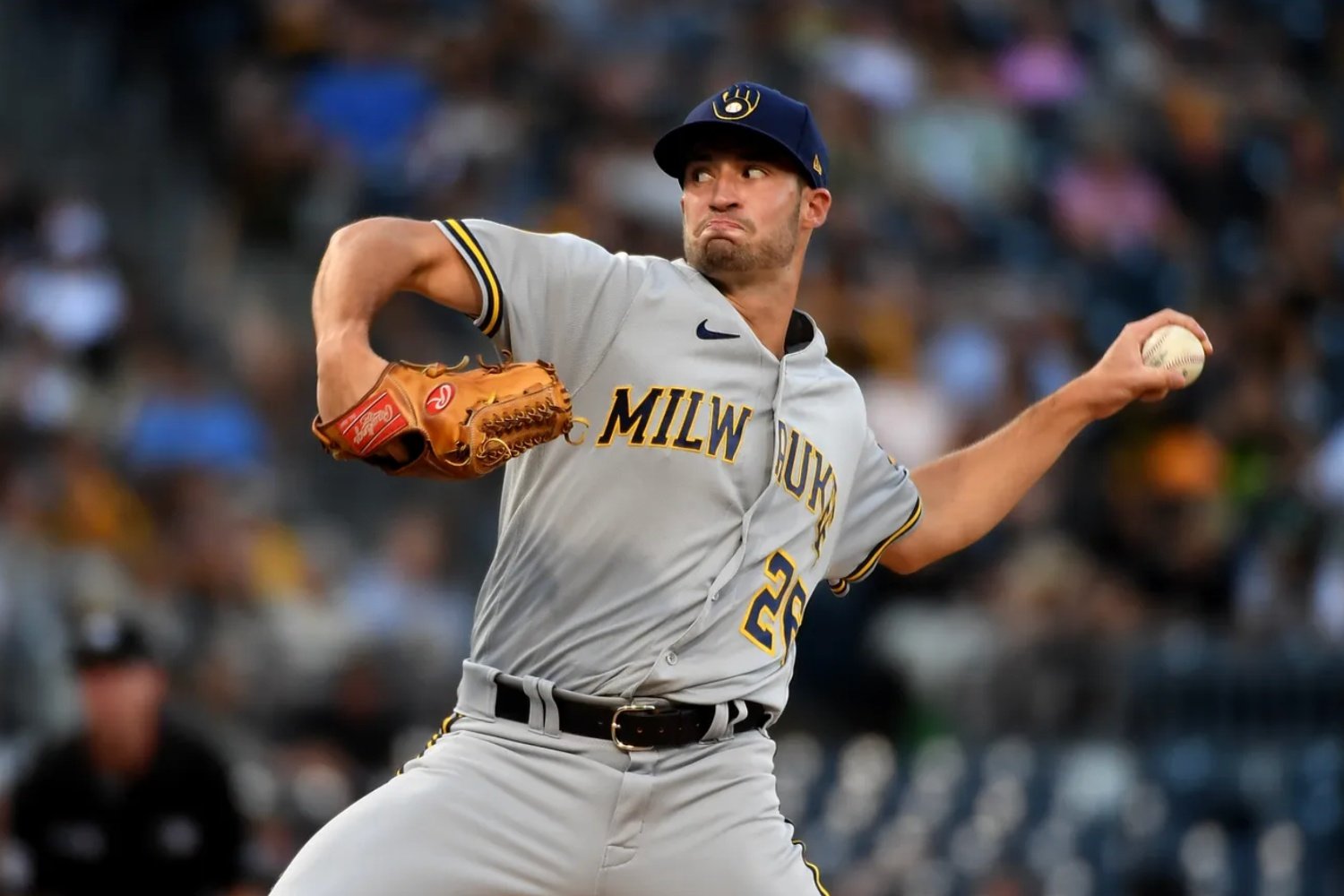 PECOTA has been particularly down on Aaron Ashby, DL Hall, and Bryan Hudson, leading some to think a late free-agent signing would be a smart move. However, the projections may not be the best predictor for that triumvirate's 2025 performance with the Brewers. Splits may matter more in these three cases. Let’s review each of the pitchers' most notable data points. Aaron Ashby Ashby missed all of 2023 with shoulder surgery and was recovering as the 2024 season started. He was clobbered in an April start and put together a decent start in June where he got no run support whatsoever. That led to what we'll call an "early-season" split of an 0-2 record with a 6.23 ERA and a 1.731 WHIP as a starter. Later in the season, he found his footing as a multi-inning relief specialist – a role Josh Hader performed well in during the 2017 and 2018 campaigns for the Brewers. After being called up in late August, Ashby was dominant in 12 outings, posting a 1.37 ERA, a 0.763 WHIP and a 9.3 K/BB ratio, going as long as three innings out of the pen. If the Brewers keep Ashby in the bullpen for 2025, the splits point to him being almost dominant in the multi-inning role. This would be very helpful when it comes to easing Brandon Woodruff back into the major league rotation, for starters (pun intended). At $3.45 million, his contract won't be an anchor for the Brewers, who could stretch him out for the rotation in 2026 and 2027 before they have to make decisions on team options in 2028 and 2029, which will be for $9 million and $13.5 million, respectively. Still, his 2024 splits as a reliever point to Ashby being much more valuable than PECOTA projects, especially if he aids in keeping Woodruff's workload low as the staff ace eases back into action. DL Hall Hall was intended to be a mainstay of the rotation in 2025. He struggled initially before landing on the injured list with a knee injury, posting a 7.71 ERA in four starts in March and April, with a 2.265 WHIP. But after his return, he was a much different pitcher. In two starts in August, he gave up only one earned run in 11.2 innings, good for a 0.77 ERA. After that, he mostly worked from the bullpen, where he was generally dominant (minus struggles against the Arizona Diamondbacks, who hit him hard in one start and one relief appearance). The Brewers have options with Hall in 2025. He could be used, like Ashby, as a multi-inning fireman, helping rest Woodruff or another Brewers starter coming back from injury (Robert Gasser being one possibility). Or, he could end up in the rotation, where his second-half ERA as a starter was a respectable 3.68, albeit in a small sample. Hall will be cheap in 2025 and 2026 as a pre-arb player, so the Brewers can get plenty of value in this piece from the Corbin Burnes trade before it gets more dicey due to arbitration pay raises. His second-half splits should have Brewers fans expecting a much better performance than PECOTA projects, especially if he's willing to pitch in a swingman role. Bryan Hudson Hudson was acquired in a January 2024 trade for 2023 20th-round pick Justin Chambers, which, in a sense, made the pick a steal for the Crew. During the first three months of the season, he was dominant, posting a 4-0 record along with a 0.82 ERA and a 0.614 WHIP over 44 innings while striking out 10.4 batters per nine innings. He had a rough patch in the first week of July before the All-Star break, suffering his only loss of the season and giving up four of the 12 earned runs he surrendered in all of 2024 in just three appearances. After that, though, he returned to being solid, posting a 2.30 ERA in 15.2 innings over 11 appearances and notching two more wins, logging a WHIP of 0.638 while striking out 5.7 batters per nine innings. He was sent down to Triple-A Nashville in September after being placed on the injured list on July 27. Hudson, a workhorse in the early part of the season, may have simply worn down. The 71 innings he pitched in 2024 between Milwaukee and Nashville were the most he’d posted since 2018, when he was a full-time starter in the Cubs' system before an injury-riddled 2019 campaign. That said, while Hudson’s August numbers point to a pitcher who may not have been as dominant as he was in the first three months of the season, he was still was quite solid and dependable. Like Hall, he is under team control through 2029 and cheap through 2026. And like Hall and Ashby, Hudson is capable of going multiple innings at a time for the Crew, and PECOTA’s projections may be underestimating his ability to induce bad contact, something else the splits seem to show. Do you think the splits of Aaron Ashby, DL Hall, and Bryan Hudson are a better predictor of their performance that PECOTA in 2025? Let us know in the comments below!
 -
The Brewers’ Best Option for Their Extra Cash Isn’t a Free Agent
Harold Hutchison posted an article in Brewers
 The Brewers re-upping with the network formerly known as Bally Sports Wisconsin (and some extra cash from the competitive-balance tax) give the Crew about $15 million more to spend on payroll in 2025. There is talk of going for a free agent, but perhaps the Brewers should think more about how to bolster their long-term future with their extra cash. For the short term, the team has some strength in the farm system. The future on the left side of the infield looks brilliant, with MLB Top 100 prospects Jesus Made and Cooper Pratt looking very much like they could anchor those positions within a few years. The Brewers have a wealth of outfield prospects in their system, not to mention some serious depth in the rotation. But the fact is, the hot stove economic realities hit hard this winter. The Dodgers, Mets, Yankees, Giants, Phillies, Red Sox and Blue Jays still have the ability to spend more than twice as much as the Brewers can, without breaking a financial sweat. That's going to be a huge problem in the medium and long term for the franchise, barring a hard salary cap in MLB or greatly expanded revenue sharing—which may not be happening any time soon. The Brewers have done very well of late with amateur free agency in Latin America, where Jackson Chourio, Made, and Yophery Rodriguez have all emerged as top prospects in recent years. The team’s even found a few steals, like Juan Baez, who signed for just $10,000 and might yet become a solid big-leaguer. The Brewers, though, need to cast their eye further afield. If they can’t outbid the Dodgers, they could arguably improve by building up their scouting in Japan, Korea, and Australia, and start building relationships with high school and college baseball players there. In this case, it would take one of two tracks. The first and most obvious track would be to see who the Brewers could sign in the international free agency period. They would be competing with NPB and KBO, but the A’s already have signed a Japanes high schooler and a notable slugging prospect from Japan recently chose to come Stateside and attend Stanford en route to MLB, rather than signing with an NPB club, so it’s not like this path isn’t already being taken. The Brewers would simply be more systemic about it. There is a second track, though. The Brewers would also be planting seeds to try to gain an edge should players be posted for MLB free agency by their teams in instances where they don’t sign with Milwaukee right away. In this case, it’s about having Milwaukee being in the front of those players' minds, as opposed to being an afterthought. Creating authentic relationships might just be a market inefficiency. How would they go about doing this? For starters, the Brewers should consider establishing dedicated scouting offices in Japan, Korea, and Australia with their $15 million in extra cash. By having scouts involved in the local baseball landscapes and cultures, the team can build strong relationships with promising talents and their coaches from an early stage. Last year, the MLB Draft's No. 1 overall pick was Travis Bazzana, an Australian infielder who came to the States to play for Oregon State University. Imagine the value of catching a player like Bazzana (who received an $8.95-million signing bonus) at 16 and selling them on the developmental upside of starting their professional career early, with a team noted for its excellent work with young players. In the international free-agent market, there are hard caps on spending for an entire year south of that bonus Bazzana got, and top-tier individual bonuses tend to be more like $3 million. In addition, by investing in local baseball academies or sponsorships for baseball tournaments, the Brewers can create goodwill and brand recognition. They could also benefit from hiring former NPB, KBO, and ABL players or coaches as scouts or other liaisons, leveraging their connections and insights to identify and attract top-notch prospects. The initial investment could easily come back in the form of more revenue for the Brewers, which could either be re-invested into scouting and player development, or which could even be used to make the team more competitive in the free-agent market. In other words, while Justin Turner or other free agents might be tempting, the Brewers best move with their extra cash may be to dream bigger for the distant future. At the very least, they could use some of their remaining flexibility for those goals, even while spending part of what remains available to them to secure a player like Turner.
 -
Would you rather have a new fourth starter on a one-year deal, or get in good with the next Roki Sasaki? Image courtesy of © Jayne Kamin-Oncea-Imagn Images The Brewers re-upping with the network formerly known as Bally Sports Wisconsin (and some extra cash from the competitive-balance tax) give the Crew about $15 million more to spend on payroll in 2025. There is talk of going for a free agent, but perhaps the Brewers should think more about how to bolster their long-term future with their extra cash. For the short term, the team has some strength in the farm system. The future on the left side of the infield looks brilliant, with MLB Top 100 prospects Jesus Made and Cooper Pratt looking very much like they could anchor those positions within a few years. The Brewers have a wealth of outfield prospects in their system, not to mention some serious depth in the rotation. But the fact is, the hot stove economic realities hit hard this winter. The Dodgers, Mets, Yankees, Giants, Phillies, Red Sox and Blue Jays still have the ability to spend more than twice as much as the Brewers can, without breaking a financial sweat. That's going to be a huge problem in the medium and long term for the franchise, barring a hard salary cap in MLB or greatly expanded revenue sharing—which may not be happening any time soon. The Brewers have done very well of late with amateur free agency in Latin America, where Jackson Chourio, Made, and Yophery Rodriguez have all emerged as top prospects in recent years. The team’s even found a few steals, like Juan Baez, who signed for just $10,000 and might yet become a solid big-leaguer. The Brewers, though, need to cast their eye further afield. If they can’t outbid the Dodgers, they could arguably improve by building up their scouting in Japan, Korea, and Australia, and start building relationships with high school and college baseball players there. In this case, it would take one of two tracks. The first and most obvious track would be to see who the Brewers could sign in the international free agency period. They would be competing with NPB and KBO, but the A’s already have signed a Japanes high schooler and a notable slugging prospect from Japan recently chose to come Stateside and attend Stanford en route to MLB, rather than signing with an NPB club, so it’s not like this path isn’t already being taken. The Brewers would simply be more systemic about it. There is a second track, though. The Brewers would also be planting seeds to try to gain an edge should players be posted for MLB free agency by their teams in instances where they don’t sign with Milwaukee right away. In this case, it’s about having Milwaukee being in the front of those players' minds, as opposed to being an afterthought. Creating authentic relationships might just be a market inefficiency. How would they go about doing this? For starters, the Brewers should consider establishing dedicated scouting offices in Japan, Korea, and Australia with their $15 million in extra cash. By having scouts involved in the local baseball landscapes and cultures, the team can build strong relationships with promising talents and their coaches from an early stage. Last year, the MLB Draft's No. 1 overall pick was Travis Bazzana, an Australian infielder who came to the States to play for Oregon State University. Imagine the value of catching a player like Bazzana (who received an $8.95-million signing bonus) at 16 and selling them on the developmental upside of starting their professional career early, with a team noted for its excellent work with young players. In the international free-agent market, there are hard caps on spending for an entire year south of that bonus Bazzana got, and top-tier individual bonuses tend to be more like $3 million. In addition, by investing in local baseball academies or sponsorships for baseball tournaments, the Brewers can create goodwill and brand recognition. They could also benefit from hiring former NPB, KBO, and ABL players or coaches as scouts or other liaisons, leveraging their connections and insights to identify and attract top-notch prospects. The initial investment could easily come back in the form of more revenue for the Brewers, which could either be re-invested into scouting and player development, or which could even be used to make the team more competitive in the free-agent market. In other words, while Justin Turner or other free agents might be tempting, the Brewers best move with their extra cash may be to dream bigger for the distant future. At the very least, they could use some of their remaining flexibility for those goals, even while spending part of what remains available to them to secure a player like Turner. View full article
-
 One of the biggest NRIs to have an impact on the Brewers was Rob Deer. He came over from the Giants in an unnoticed transaction before the 1986 season, but made the team and hit 33 homers with 86 RBIs, becoming a heart-of-the-order threat for the Brewers for several years in the late 1980s and early 1990s. Obviously, though, that's just one example among a great many. Could the 2025 crop of NRIs have some impact players? Let’s take a look. RHP Jacob Misiorowski Misiorowski’s floor has been as a right-handed version of Josh Hader, circa 2017-2018: a multi-inning fireman who can shut down an opposing lineup's best and hand the ball to a closer, if not get a game’s last five or six outs. The question has been whether he can control his slider well enough to be a top-of-the-rotation starter. Either way, Misiorowski contributes to the Brewers. The real difference could come five years down the road, barring a change in the hot-stove economic realities. What will be intriguing is how Misiorowski fares against big-league hitters. Can he go multiple times through a big-league batting order? RHP Craig Yoho Yoho could be the first 2023 draft pick for the Brewers to see the majors. Selected in the eighth round, he has the funkiest changeup this side of recently traded Devin Williams. The chance to be a future closer is undeniable. Arguably, Yoho has nothing to prove in the minors, where he dominated to the tune of a 0.94 ERA and an identical WHIP, while striking out more than 15 hitters per nine innings. The real intrigue comes from the rest of the bullpen. Trevor Megill is probably safe as Milwaukee’s closer for 2025, given his admirable job of filling in for Williams when the relief ace was sidelined with stress fractures in his back. But the same can’t be said for other pitchers. Could Yoho bump Abner Uribe, Joel Payamps, or Elvis Peguero from the Brewers pen with a hot spring? C Darrien Miller Miller has long been an under-the-radar prospect behind the plate for the Brewers, overshadowed by Jeferson Quero’s rapid rise through the minor-league system. His offense is highlighted by outstanding OBP skills (64 walks in 306 at-bats in Double-A Biloxi) that have been consistent throughout his professional career. The real question in spring training will be what his invite means. Is Miller the long-term No. 2 catcher behind Jeferson Quero, with the Brewers deciding to move William Contreras? The team could do far worse than Miller as a second-string backstop, and he has been teammates with many of the young Triple-A pitchers. 1B Ernesto Martinez Jr. Like Miller, Martinez has been an under-the-radar prospect. He’s a freakish athlete (6’5”, 250 pounds) who provides excellent defense at first base and has even seen limited action in center field, where he’s held his own. Aside from power and defense, he’s also shown speed on the bases (66 steals in 81 attempts over the last three years). The intrigue here is his direct competition with Jake Bauers, who came back to the Crew on a minor-league deal with a big-league invite. While Bauers has spent time in MLB, in 2024, his batting average was below the Uecker line, and he struck out more than twice as much as Christian Yelich did. OF Luis Lara Lara is a fast outfielder with excellent defense in center field. Much of his offensive skill set involves hitting for average, with some excellent base-running skills on top of that (55 steals in 74 attempts between Advanced-A Wisconsin and the Arizona Fall League). He’s arguably a hybrid of Gold Glover Sal Frelick and Gold Glove finalist Blake Perkins. Lara rapidly rose through the Brewers system, playing a full season at Wisconsin at the age of 19. His performance in spring training against big-league pitching could make things interesting, considering the Brewers have Yophery Rodriguez and Braylon Payne in the system, could Lara’s NRI be a way to showcase a potential trade chip, or are they evaluating to see if he can bump Perkins off the roster someday? Which of these NRIs do you find the most intriguing? Are there others that you think could break out and help the Brewers? Let us know in the comments below!
 -
As spring training gets closer, one set of players often gets overlooked amid all the 40-man drama. Yet, these players can often make big contributions to the Brewers. We’re talking about the non-roster invitees (NRIs). Image courtesy of © Curt Hogg / USA TODAY NETWORK One of the biggest NRIs to have an impact on the Brewers was Rob Deer. He came over from the Giants in an unnoticed transaction before the 1986 season, but made the team and hit 33 homers with 86 RBIs, becoming a heart-of-the-order threat for the Brewers for several years in the late 1980s and early 1990s. Obviously, though, that's just one example among a great many. Could the 2025 crop of NRIs have some impact players? Let’s take a look. RHP Jacob Misiorowski Misiorowski’s floor has been as a right-handed version of Josh Hader, circa 2017-2018: a multi-inning fireman who can shut down an opposing lineup's best and hand the ball to a closer, if not get a game’s last five or six outs. The question has been whether he can control his slider well enough to be a top-of-the-rotation starter. Either way, Misiorowski contributes to the Brewers. The real difference could come five years down the road, barring a change in the hot-stove economic realities. What will be intriguing is how Misiorowski fares against big-league hitters. Can he go multiple times through a big-league batting order? RHP Craig Yoho Yoho could be the first 2023 draft pick for the Brewers to see the majors. Selected in the eighth round, he has the funkiest changeup this side of recently traded Devin Williams. The chance to be a future closer is undeniable. Arguably, Yoho has nothing to prove in the minors, where he dominated to the tune of a 0.94 ERA and an identical WHIP, while striking out more than 15 hitters per nine innings. The real intrigue comes from the rest of the bullpen. Trevor Megill is probably safe as Milwaukee’s closer for 2025, given his admirable job of filling in for Williams when the relief ace was sidelined with stress fractures in his back. But the same can’t be said for other pitchers. Could Yoho bump Abner Uribe, Joel Payamps, or Elvis Peguero from the Brewers pen with a hot spring? C Darrien Miller Miller has long been an under-the-radar prospect behind the plate for the Brewers, overshadowed by Jeferson Quero’s rapid rise through the minor-league system. His offense is highlighted by outstanding OBP skills (64 walks in 306 at-bats in Double-A Biloxi) that have been consistent throughout his professional career. The real question in spring training will be what his invite means. Is Miller the long-term No. 2 catcher behind Jeferson Quero, with the Brewers deciding to move William Contreras? The team could do far worse than Miller as a second-string backstop, and he has been teammates with many of the young Triple-A pitchers. 1B Ernesto Martinez Jr. Like Miller, Martinez has been an under-the-radar prospect. He’s a freakish athlete (6’5”, 250 pounds) who provides excellent defense at first base and has even seen limited action in center field, where he’s held his own. Aside from power and defense, he’s also shown speed on the bases (66 steals in 81 attempts over the last three years). The intrigue here is his direct competition with Jake Bauers, who came back to the Crew on a minor-league deal with a big-league invite. While Bauers has spent time in MLB, in 2024, his batting average was below the Uecker line, and he struck out more than twice as much as Christian Yelich did. OF Luis Lara Lara is a fast outfielder with excellent defense in center field. Much of his offensive skill set involves hitting for average, with some excellent base-running skills on top of that (55 steals in 74 attempts between Advanced-A Wisconsin and the Arizona Fall League). He’s arguably a hybrid of Gold Glover Sal Frelick and Gold Glove finalist Blake Perkins. Lara rapidly rose through the Brewers system, playing a full season at Wisconsin at the age of 19. His performance in spring training against big-league pitching could make things interesting, considering the Brewers have Yophery Rodriguez and Braylon Payne in the system, could Lara’s NRI be a way to showcase a potential trade chip, or are they evaluating to see if he can bump Perkins off the roster someday? Which of these NRIs do you find the most intriguing? Are there others that you think could break out and help the Brewers? Let us know in the comments below! View full article
-
Remembering Bob Uecker, and Experiencing Him, From a Distance
Harold Hutchison posted an article in Brewers
 I never really got to hear Uecker call games until the mid-2000s, when MLB GameDay audio became available. I’d heard him in some commercials, and knew he’d been acting some, but he seemed cool. Once I was able to listen to GameDay audio, it was a revelation. I’d heard local play-by-play–but for the announcers, like Jon Miller, even for the home team, it was like a job. For Uecker, though, it was different. He was all-in for his team–and make no mistake, the Brewers were his team. When I finally was able to listen to him call games, you could tell his love for the Brewers was real. Uecker was the one person with Brewers fans during the highs of winning a pennant, multiple division titles, and hitting a new high in terms of regular playoff appearances. He was also there for the team’s hard times, too, between the early struggles before the team made its first rise to the top; the mid-1990s through 2002, when the franchise hit its lowest point; and even when it hit a rough patch in the mid-2010s. Those seasons test the mettle of announcers more than the glory days, and Uecker was as good at bracing the audience during each. Uecker also clearly brought joy to a play-by-play call. When Carlos Lee hit a home run, Uecker would do his best impression of a horse neighing, playing off Lee’s nickname of "El Caballo". He’d describe Derrick Turnbow coming in to close out a game with “D-Bow” to get “D-Save.” It was a glimpse of how he must have called the biggest Brewers’ moments of my early fandom: the Juan Nieves no-hitter, Paul Molitor’s hitting streak, and the time they dropped 18 runs on the Red Sox among them. Some of these were games I heard through local announcers. Others, I just followed in the box scores or brief blurbs in the local paper. Through all of it, Uecker provided Brewers fans hope after the losses, someone who shared in our joy after the wins. No matter what the predictions for the season, Uecker was the person whom we all looked forward to hearing from on Opening Day, no matter whether the heartbreak was losing a game, seeing a season end without the playoffs, exiting the playoffs way too soon, or a beloved player being traded or departing via free agency. Uecker had been scaling back his work for the Brewers, we know now, due to a battle with lung cancer, but this coming Mar. 31 will be the first home opener without Uecker. This will be the first season without Uecker calling Brewers games since 1970. I missed many of those, and so did many fans younger than me. But for all the Bob Uecker calls I missed, and the Bob Uecker calls we won’t get to hear in the future, I’m grateful for the ones I did get to hear.
 -
A lot of my earliest memories as a Brewers fan didn’t come with Bob Uecker providing the description over the radio. In fact, I’ve never even been to Milwaukee, and the only Brewers games I have seen in person were when they were the visiting team. Image courtesy of © Rick Wood/Milwaukee Journal Sentinel / USA TODAY NETWORK I never really got to hear Uecker call games until the mid-2000s, when MLB GameDay audio became available. I’d heard him in some commercials, and knew he’d been acting some, but he seemed cool. Once I was able to listen to GameDay audio, it was a revelation. I’d heard local play-by-play–but for the announcers, like Jon Miller, even for the home team, it was like a job. For Uecker, though, it was different. He was all-in for his team–and make no mistake, the Brewers were his team. When I finally was able to listen to him call games, you could tell his love for the Brewers was real. Uecker was the one person with Brewers fans during the highs of winning a pennant, multiple division titles, and hitting a new high in terms of regular playoff appearances. He was also there for the team’s hard times, too, between the early struggles before the team made its first rise to the top; the mid-1990s through 2002, when the franchise hit its lowest point; and even when it hit a rough patch in the mid-2010s. Those seasons test the mettle of announcers more than the glory days, and Uecker was as good at bracing the audience during each. Uecker also clearly brought joy to a play-by-play call. When Carlos Lee hit a home run, Uecker would do his best impression of a horse neighing, playing off Lee’s nickname of "El Caballo". He’d describe Derrick Turnbow coming in to close out a game with “D-Bow” to get “D-Save.” It was a glimpse of how he must have called the biggest Brewers’ moments of my early fandom: the Juan Nieves no-hitter, Paul Molitor’s hitting streak, and the time they dropped 18 runs on the Red Sox among them. Some of these were games I heard through local announcers. Others, I just followed in the box scores or brief blurbs in the local paper. Through all of it, Uecker provided Brewers fans hope after the losses, someone who shared in our joy after the wins. No matter what the predictions for the season, Uecker was the person whom we all looked forward to hearing from on Opening Day, no matter whether the heartbreak was losing a game, seeing a season end without the playoffs, exiting the playoffs way too soon, or a beloved player being traded or departing via free agency. Uecker had been scaling back his work for the Brewers, we know now, due to a battle with lung cancer, but this coming Mar. 31 will be the first home opener without Uecker. This will be the first season without Uecker calling Brewers games since 1970. I missed many of those, and so did many fans younger than me. But for all the Bob Uecker calls I missed, and the Bob Uecker calls we won’t get to hear in the future, I’m grateful for the ones I did get to hear. View full article


