



Harold Hutchison
-
Posts
6,909 -
Joined
-
Last visited
Content Type
Profiles
Forums
Blogs
Events
News
2026 Milwaukee Brewers Top Prospects Ranking
Milwaukee Brewers Videos
2022 Milwaukee Brewers Draft Picks
Milwaukee Brewers Free Agent & Trade Rumors, Notes, & Tidbits
Guides & Resources
2023 Milwaukee Brewers Draft Picks
2024 Milwaukee Brewers Draft Picks
The Milwaukee Brewers Players Project
2025 Milwaukee Brewers Draft Pick Tracker
2026 Milwaukee Brewers Draft Tracker: Picks & Bonuses
Store
Downloads
Gallery
Everything posted by Harold Hutchison
-
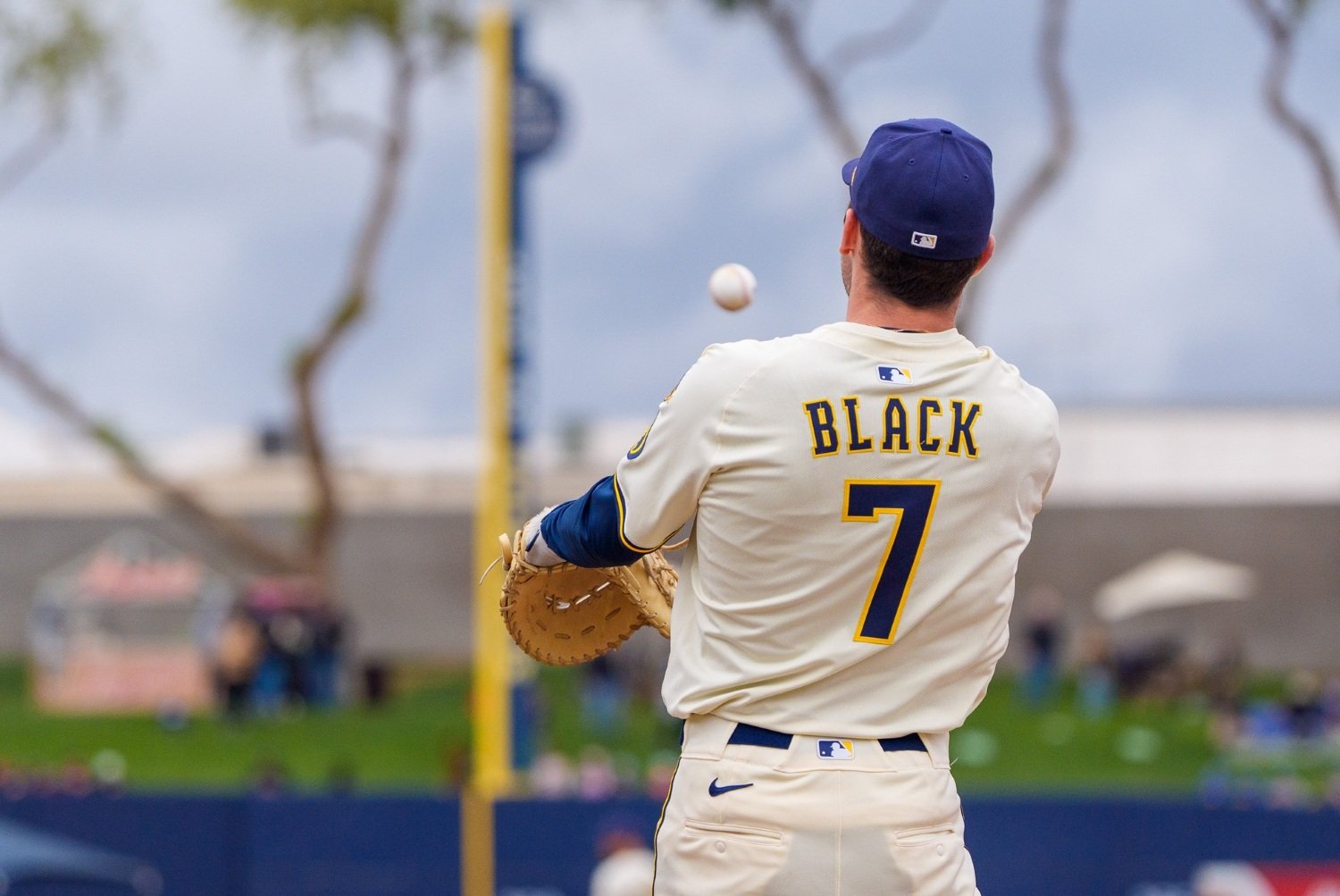 With much less money to spend on star players outside the organization, the Brewers have to think twice any time they consider a trade that would surrender talented players under long-term team control. Yet, they can't afford to miss opportunities to lock up playoff spots by clinging too tightly to prospects. Let’s review some of the prospects on either the MLB.com Pipeline Top 30 or the Brewer Fanatic Top 20 lists whom the Brewers should consider dealing this summer, if the right trade presents itself. 3B Brock Wilken #11 in Brewer Fanatic Top 20, #18 MLB.com Pipeline .230/.392/.550 at Double-A Biloxi Why should the Brewers consider dealing Wilken? For starters, Wilken may be the third-best prospect at third base in the Brewers farm system, behind Luke Adams and Mike Boeve—both of whom are listed among MLB.com Pipeline’s Top 10 prospects at third base. Wilken’s not a bad option, but it is clear he’s also not the top prospect. Wilken’s 74 strikeouts in his 222 at-bats are a red flag. His three-true-outcomes offensive profile is arguably duplicated by Adams, who also is flashing some serious baserunning ability, while Boeve is a pure hitter who is having a rough go repeating at Biloxi. SS Jorge Quintana #19 MLB Pipeline in 2024 .254/.345/.373 at Rookie-Level ACL Brewers Like Wilken, Quintana is not necessarily a bad option at shortstop, but he has been overshadowed by fellow prospects Jesus Made and Luis Pena, both of whom went to Single-A Carolina while Quintana is laboring at the Arizona Complex League. In this case, the performance disparity is also obvious. Quintana’s .718 OPS at the hitter-friendly ACL is substantially below the performances of Made (.803 OPS) and Pena (.868 OPS) in the pitcher-friendly Carolina League, one level higher. A trade might be the best way for the Brewers to cash in on Quintana’s $1.7 million signing bonus. RHP Carlos Rodriguez #22 MLB Pipeline 3-2, 2.64 ERA, 1.26 WHIP at Triple-A Nashville 1-0, 8.10 ERA, 2.70 WHIP with Brewers Like Wilken and Quintana, Rodriguez isn’t a bad prospect; he’s just behind a lot of other young options. In this case, it’s not just fellow prospects Jacob Misiorwoski and Logan Henderson, it’s also Chad Patrick, Quinn Priester, and Tobias Myers. Misiorowski and Henderson have much higher ceilings, while Patrick and Myers have better MLB track records. Rodriguez is likely to be a Colin Rea type: a back-end starter in the majors. The problem is that a back-end starter in Milwaukee tends to be at a much higher level than it is for about 90% of MLB teams. UT/DH Tyler Black #9 MLB Pipeline .097/.282/.194 at Triple-A Nashville .387/.513/.613 at Rookie-Level ACL Brewers Black has arguably been mishandled by the Brewers since his 2023 breakout season. He never was going to put up the eye-popping numbers that Jackson Chourio is capable of, but he did appear to have what it took to be a left-handed matchup infielder, with bat-to-ball skills, plate discipline, and speed. But trades for Joey Ortiz and Oliver Dunn in the 2023-2024 offseason and Black's failure to either hit big-league pitching or make progress as a defender made 2024 a lost season. A hamate injury has thrown a wrench into 2025 for him, and he may not recover. At this point, at third base, Black is behind Caleb Durbin and possibly Anthony Seigler in Nashville. At first base, Ernesto Martinez and Andrew Vaughn are the front-runners to handle first base in Milwaukee in 2026. The Brewers outfield is crowded when everyone is healthy. Black needs a change of scenery. 1B Blake Burke #17 MLB Pipeline, #20 Brewer Fanatic Top 20 .303/.394/.427 at Advanced-A Wisconsin The Brewers thought they were getting a power hitter with iffy defense in Burke. Instead, they seem to have discovered a left-handed Jeff Cirillo, who can play excellent defense. This is not a horrible outcome; Lyle Overbay and Mark Grace (among many others) carved out excellent careers as pure hitters at the cold corner. That said, the Brewers may want to sell high on Burke, who came over as part of the package the Orioles sent Milwaukee to rent Corbin Burnes for the 2024 season. With four options in the upper minors in Adams, Boeve, Martinez, and Vaughn, and potential low-minors options like Eric Bitonti and (eventually) Jaden Fielder, the Brewers may want to consider dealing Burke to clear up potential congestion—just as they dealt Wes Clarke earlier this season. RHP Coleman Crow #19 Brewer Fanatic Top 20 4-0, 2.51 ERA, 0.907 WHIP at Double-A Biloxi Crow came to Milwaukee at a steep cost: outfielder Tyrone Taylor and right-handed starting pitcher Adrian Houser, both of whom were solid contributors on Brewers teams that made four playoff appearances and won two division titles from 2019-2023. With the team looking to clear salary, they were in no position to command much for the fringy contributors Taylor and Houser generally are. Crow dominated at Biloxi after spending 2024 recovering from an arm injury, and recently earned a promotion to Triple-A Nashville, where he has yet to make his debut. Crow’s ceiling appears undeniable, but his arm injury is something to keep in mind. With a plethora of other starting options like K.C. Hunt, Alexander Cornielle, Brett Wichrowski, and Tate Kuehner in Biloxi alone—not to mention the many pitchers in Nashville—the Crew may want to see what Crow could bring in return. Which prospects do you think the Crew should consider dealing? Let us know in the comments below!
 -
Image courtesy of © Allan Henry-Imagn Images With much less money to spend on star players outside the organization, the Brewers have to think twice any time they consider a trade that would surrender talented players under long-term team control. Yet, they can't afford to miss opportunities to lock up playoff spots by clinging too tightly to prospects. Let’s review some of the prospects on either the MLB.com Pipeline Top 30 or the Brewer Fanatic Top 20 lists whom the Brewers should consider dealing this summer, if the right trade presents itself. 3B Brock Wilken #11 in Brewer Fanatic Top 20, #18 MLB.com Pipeline .230/.392/.550 at Double-A Biloxi Why should the Brewers consider dealing Wilken? For starters, Wilken may be the third-best prospect at third base in the Brewers farm system, behind Luke Adams and Mike Boeve—both of whom are listed among MLB.com Pipeline’s Top 10 prospects at third base. Wilken’s not a bad option, but it is clear he’s also not the top prospect. Wilken’s 74 strikeouts in his 222 at-bats are a red flag. His three-true-outcomes offensive profile is arguably duplicated by Adams, who also is flashing some serious baserunning ability, while Boeve is a pure hitter who is having a rough go repeating at Biloxi. SS Jorge Quintana #19 MLB Pipeline in 2024 .254/.345/.373 at Rookie-Level ACL Brewers Like Wilken, Quintana is not necessarily a bad option at shortstop, but he has been overshadowed by fellow prospects Jesus Made and Luis Pena, both of whom went to Single-A Carolina while Quintana is laboring at the Arizona Complex League. In this case, the performance disparity is also obvious. Quintana’s .718 OPS at the hitter-friendly ACL is substantially below the performances of Made (.803 OPS) and Pena (.868 OPS) in the pitcher-friendly Carolina League, one level higher. A trade might be the best way for the Brewers to cash in on Quintana’s $1.7 million signing bonus. RHP Carlos Rodriguez #22 MLB Pipeline 3-2, 2.64 ERA, 1.26 WHIP at Triple-A Nashville 1-0, 8.10 ERA, 2.70 WHIP with Brewers Like Wilken and Quintana, Rodriguez isn’t a bad prospect; he’s just behind a lot of other young options. In this case, it’s not just fellow prospects Jacob Misiorwoski and Logan Henderson, it’s also Chad Patrick, Quinn Priester, and Tobias Myers. Misiorowski and Henderson have much higher ceilings, while Patrick and Myers have better MLB track records. Rodriguez is likely to be a Colin Rea type: a back-end starter in the majors. The problem is that a back-end starter in Milwaukee tends to be at a much higher level than it is for about 90% of MLB teams. UT/DH Tyler Black #9 MLB Pipeline .097/.282/.194 at Triple-A Nashville .387/.513/.613 at Rookie-Level ACL Brewers Black has arguably been mishandled by the Brewers since his 2023 breakout season. He never was going to put up the eye-popping numbers that Jackson Chourio is capable of, but he did appear to have what it took to be a left-handed matchup infielder, with bat-to-ball skills, plate discipline, and speed. But trades for Joey Ortiz and Oliver Dunn in the 2023-2024 offseason and Black's failure to either hit big-league pitching or make progress as a defender made 2024 a lost season. A hamate injury has thrown a wrench into 2025 for him, and he may not recover. At this point, at third base, Black is behind Caleb Durbin and possibly Anthony Seigler in Nashville. At first base, Ernesto Martinez and Andrew Vaughn are the front-runners to handle first base in Milwaukee in 2026. The Brewers outfield is crowded when everyone is healthy. Black needs a change of scenery. 1B Blake Burke #17 MLB Pipeline, #20 Brewer Fanatic Top 20 .303/.394/.427 at Advanced-A Wisconsin The Brewers thought they were getting a power hitter with iffy defense in Burke. Instead, they seem to have discovered a left-handed Jeff Cirillo, who can play excellent defense. This is not a horrible outcome; Lyle Overbay and Mark Grace (among many others) carved out excellent careers as pure hitters at the cold corner. That said, the Brewers may want to sell high on Burke, who came over as part of the package the Orioles sent Milwaukee to rent Corbin Burnes for the 2024 season. With four options in the upper minors in Adams, Boeve, Martinez, and Vaughn, and potential low-minors options like Eric Bitonti and (eventually) Jaden Fielder, the Brewers may want to consider dealing Burke to clear up potential congestion—just as they dealt Wes Clarke earlier this season. RHP Coleman Crow #19 Brewer Fanatic Top 20 4-0, 2.51 ERA, 0.907 WHIP at Double-A Biloxi Crow came to Milwaukee at a steep cost: outfielder Tyrone Taylor and right-handed starting pitcher Adrian Houser, both of whom were solid contributors on Brewers teams that made four playoff appearances and won two division titles from 2019-2023. With the team looking to clear salary, they were in no position to command much for the fringy contributors Taylor and Houser generally are. Crow dominated at Biloxi after spending 2024 recovering from an arm injury, and recently earned a promotion to Triple-A Nashville, where he has yet to make his debut. Crow’s ceiling appears undeniable, but his arm injury is something to keep in mind. With a plethora of other starting options like K.C. Hunt, Alexander Cornielle, Brett Wichrowski, and Tate Kuehner in Biloxi alone—not to mention the many pitchers in Nashville—the Crew may want to see what Crow could bring in return. Which prospects do you think the Crew should consider dealing? Let us know in the comments below! View full article
-
With Woodruff around, I'd probably look to deal Peralta at the deadline this year. The haul he would net from a playoff buyer would be impressive. Use Woodruff (pass the option, but work out a 2-3 year deal) and Quintana to be the "veterans" (with his time on the IL, Quintana may come back at a bargainish rate) to mentor Patrick, Henderson, Myers, and Misiorowski. Add in Hall and Aaron Ashby as long guys.
-
I see a platoon partner for Martinez in 2026/2027. Maybe an asset to flip if he does well in that role.
-
I did note that the D-Backs need a starter a few days ago when I suggested Civale could be a starter the Brewers move. Perhaps something can be worked out there.
-
At this point, I'll be happy to get two Single-A prospects for Civale.
-
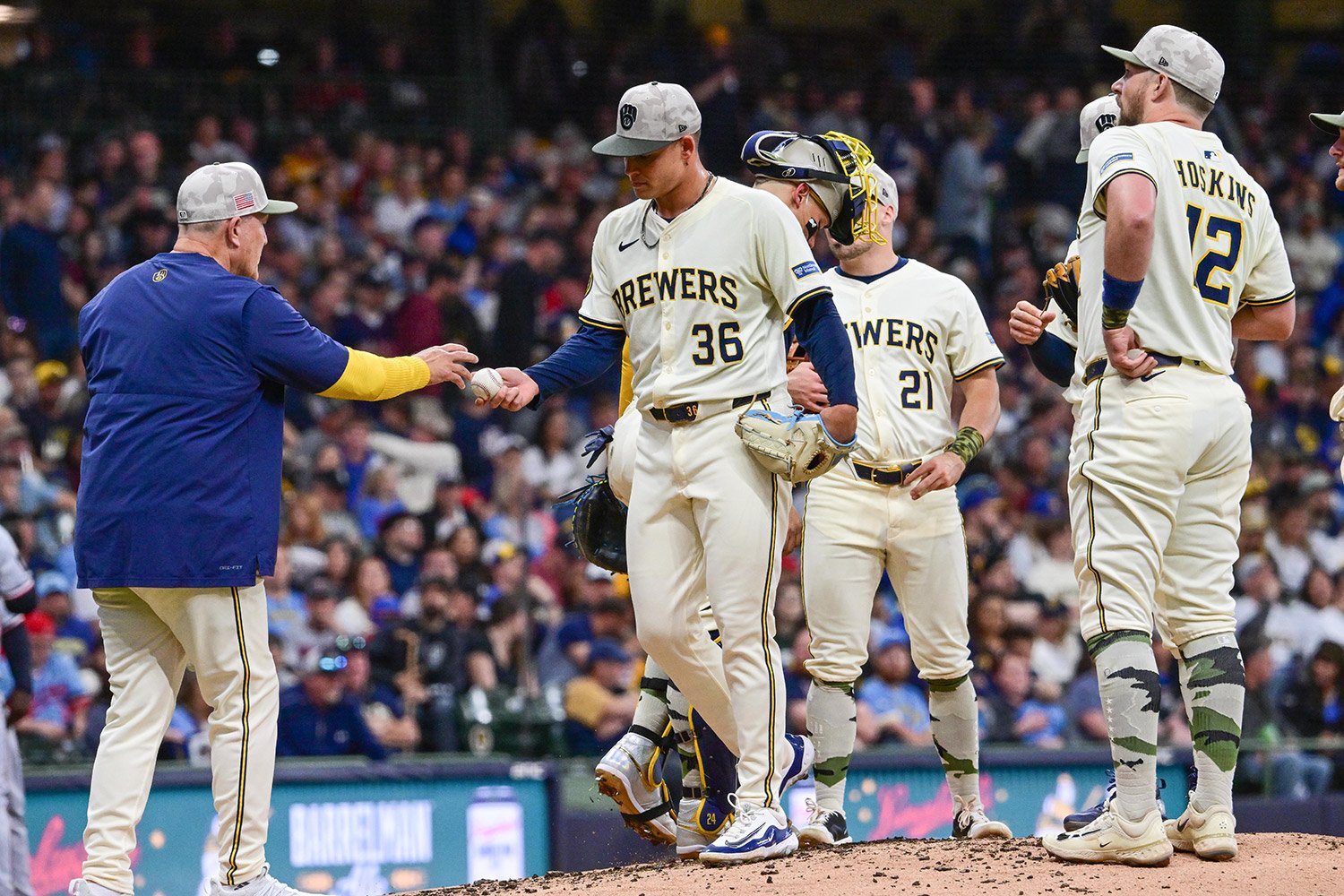 The Brewers’ starting pitching situation has changed in the space of two months. Injuries and the late signing of Jose Quintana led to a panic deal that cost the Brewers dearly, but now, the Crew contemplates a “happier” (arguably not the right word) conundrum for their rotation: Too many capable bodies. There has been some talk of using a “piggyback” approach to help alleviate the crunch, and in some ways, it can be beneficial. However, it may also be time for the Brewers to consider entering the market as sellers with some of their starting surplus. But who should they be offering? Here’s a look at five candidates for the Brew Crew to sell among their starters. Aaron Civale 1-1, 5.19 ERA in 17.1 IP Civale has missed a significant amount of time due to injuries, which was one of the reasons behind the trade for Quinn Priester. That said, should he rebound, he could be an asset for some teams. Currently, Arizona needs a starter due to the fact that old friend Corbin Burnes is undergoing Tommy John surgery. Civale might be a good stopgap for the D-Backs, especially since his rough start and his time on the injured list make converting on the conditional pick a lot less of a sure thing than it seemed. Who might the Brewers ask for in this case? How about LHP Yu-Min Lin? It would give the Brewers some added roster flexibility, not to mention Lin is the kind of pitcher who the Brewers have maximized in recent years. Carlos F. Rodriguez 1-0, 8.10 ERA in 3.1 IP (Milwaukee) 3-2, 2.64 ERA in 47.2 IP (Triple-A Nashville) Currently on the 7-day injured list, Rodriguez is one of a substantial crop of young pitchers at Triple-A Nashville. While his combined arsenal is an outlier, he hasn’t translated that into success at the MLB level in two small samples. Still, though, he’s done well in his rise through the system, and with the crowded Brewers’ rotation, the best option might be to find a place where he can get an extended opportunity. One possible place? Colorado. The Rockies need some starting pitching talent, and if the Brewers decide Ryan McMahon is worth the risk to handle the hot corner, then Rodriguez could be part of a package to secure McMahon’s services for the Crew (let’s call the rest of the package Oliver Dunn and Jorge Quintana). Tobias Myers 1-1, 4.95 ERA in 20 IP (Milwaukee) 0-2, 3.38 ERA in 29.1 IP (Triple-A Nashville) Myers was a surprise hero in 2024, posting solid top-of-the-rotation numbers for the Crew all season and adding a solid outing against the Mets in the Wild Card series. In 2025, injuries and some initial struggles sent him back to Triple-A. With the Brewers looking at a breakout from Chad Patrick, top prospects Logan Henderson and Jacob Misiorowski knocking on the door of MLB rotation spots, the steep price paid for Priester, and the presence of DL Hall, Aaron Ashby, Robert Gasser, and Coleman Crow, among others, Myers could be a trade asset. Myers might be an option to send to a team looking to sell an asset for long-term help, or he could be used to help the Brewers increase their options in the farm system. One option could be Baltimore, with the Crew sending Myers for infielder Aron Estrada and catcher/first baseman Ethan Anderson. Jose Quintana 4-1, 2.77 ERA in 39 IP Quintana has been a steal for the Brewers in the offseason, but he is going to be a free agent at year’s end. That said, securing some return for him may be an option, especially if he pitches like he did early in the season. One possible option might be to send Quintana to the Blue Jays in return for a prospect. The Crew will ultimately have to gamble, either with a couple of Rookie-level prospects or talent with some tarnish. In this case, the Crew could consider Ricky Tiedemann, a left-handed pitcher with dominant stuff, but coming off Tommy John surgery. Freddy Peralta 5-4, 2.92 ERA in 71 IP Dealing Peralta might be controversial, especially if the team is in the middle of a pennant race, but given his control through 2026 and the relatively cheap price ($8 million salary for 2026), Peralta could net the Brewers a significant haul – one exceeding that obtained in the Josh Hader deal of 2022. Here, the Cleveland Guardians could make for an intriguing partner for Peralta and reliever Nick Mears. Who could the Crew get in return? Consider that Peralta is an ace pitcher with a year of extra control and coming at a relatively low price; they could ask for and get the moon. How about a prospect package starting with OF Jaison Chourio, IF Welbyn Francisca, and catcher Cooper Ingle, along with reliever Hunter Gaddis? It's a short-term hit, but there could be some real long-term gains for the Crew - and with the way Logan Henderson has pitched, the team might not miss a beat. The need to clear out some starting rotation space is becoming clear for Milwaukee. Perhaps the best route might be to be a seller before the trade deadline. Which starters would you deal, and what would you want in return? Let us know in the comments below!
 -
Image courtesy of © Benny Sieu-Imagn Images The Brewers’ starting pitching situation has changed in the space of two months. Injuries and the late signing of Jose Quintana led to a panic deal that cost the Brewers dearly, but now, the Crew contemplates a “happier” (arguably not the right word) conundrum for their rotation: Too many capable bodies. There has been some talk of using a “piggyback” approach to help alleviate the crunch, and in some ways, it can be beneficial. However, it may also be time for the Brewers to consider entering the market as sellers with some of their starting surplus. But who should they be offering? Here’s a look at five candidates for the Brew Crew to sell among their starters. Aaron Civale 1-1, 5.19 ERA in 17.1 IP Civale has missed a significant amount of time due to injuries, which was one of the reasons behind the trade for Quinn Priester. That said, should he rebound, he could be an asset for some teams. Currently, Arizona needs a starter due to the fact that old friend Corbin Burnes is undergoing Tommy John surgery. Civale might be a good stopgap for the D-Backs, especially since his rough start and his time on the injured list make converting on the conditional pick a lot less of a sure thing than it seemed. Who might the Brewers ask for in this case? How about LHP Yu-Min Lin? It would give the Brewers some added roster flexibility, not to mention Lin is the kind of pitcher who the Brewers have maximized in recent years. Carlos F. Rodriguez 1-0, 8.10 ERA in 3.1 IP (Milwaukee) 3-2, 2.64 ERA in 47.2 IP (Triple-A Nashville) Currently on the 7-day injured list, Rodriguez is one of a substantial crop of young pitchers at Triple-A Nashville. While his combined arsenal is an outlier, he hasn’t translated that into success at the MLB level in two small samples. Still, though, he’s done well in his rise through the system, and with the crowded Brewers’ rotation, the best option might be to find a place where he can get an extended opportunity. One possible place? Colorado. The Rockies need some starting pitching talent, and if the Brewers decide Ryan McMahon is worth the risk to handle the hot corner, then Rodriguez could be part of a package to secure McMahon’s services for the Crew (let’s call the rest of the package Oliver Dunn and Jorge Quintana). Tobias Myers 1-1, 4.95 ERA in 20 IP (Milwaukee) 0-2, 3.38 ERA in 29.1 IP (Triple-A Nashville) Myers was a surprise hero in 2024, posting solid top-of-the-rotation numbers for the Crew all season and adding a solid outing against the Mets in the Wild Card series. In 2025, injuries and some initial struggles sent him back to Triple-A. With the Brewers looking at a breakout from Chad Patrick, top prospects Logan Henderson and Jacob Misiorowski knocking on the door of MLB rotation spots, the steep price paid for Priester, and the presence of DL Hall, Aaron Ashby, Robert Gasser, and Coleman Crow, among others, Myers could be a trade asset. Myers might be an option to send to a team looking to sell an asset for long-term help, or he could be used to help the Brewers increase their options in the farm system. One option could be Baltimore, with the Crew sending Myers for infielder Aron Estrada and catcher/first baseman Ethan Anderson. Jose Quintana 4-1, 2.77 ERA in 39 IP Quintana has been a steal for the Brewers in the offseason, but he is going to be a free agent at year’s end. That said, securing some return for him may be an option, especially if he pitches like he did early in the season. One possible option might be to send Quintana to the Blue Jays in return for a prospect. The Crew will ultimately have to gamble, either with a couple of Rookie-level prospects or talent with some tarnish. In this case, the Crew could consider Ricky Tiedemann, a left-handed pitcher with dominant stuff, but coming off Tommy John surgery. Freddy Peralta 5-4, 2.92 ERA in 71 IP Dealing Peralta might be controversial, especially if the team is in the middle of a pennant race, but given his control through 2026 and the relatively cheap price ($8 million salary for 2026), Peralta could net the Brewers a significant haul – one exceeding that obtained in the Josh Hader deal of 2022. Here, the Cleveland Guardians could make for an intriguing partner for Peralta and reliever Nick Mears. Who could the Crew get in return? Consider that Peralta is an ace pitcher with a year of extra control and coming at a relatively low price; they could ask for and get the moon. How about a prospect package starting with OF Jaison Chourio, IF Welbyn Francisca, and catcher Cooper Ingle, along with reliever Hunter Gaddis? It's a short-term hit, but there could be some real long-term gains for the Crew - and with the way Logan Henderson has pitched, the team might not miss a beat. The need to clear out some starting rotation space is becoming clear for Milwaukee. Perhaps the best route might be to be a seller before the trade deadline. Which starters would you deal, and what would you want in return? Let us know in the comments below! View full article
-
In Trying to Save 2025, Could Brewers Flub Their Future?
Harold Hutchison posted an article in Brewers
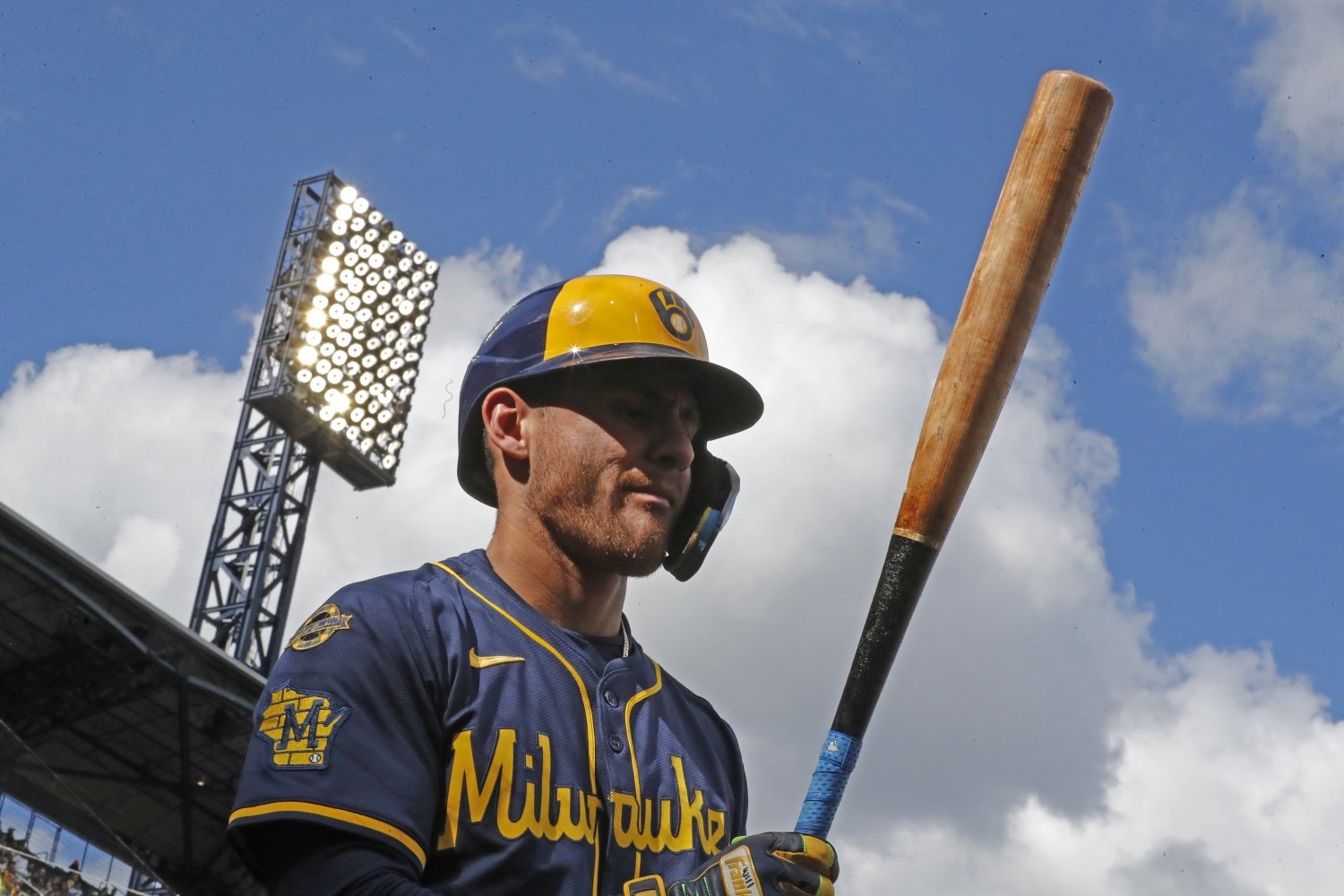 The 2025 season has not gone as well as many Brewers fans hoped it would. That’s arguably an understatement, especially given what many of the players showed in the 2024 season, when the team outperformed many projections to win the National League Central. There is some question about whether the Brewers should look to bolster the left side of their infield in the trade market, which has been badly underperforming all season. In fact, shortstop and third base have gone from positions of strength in 2024 to offensive black holes in 2025, and it appears the team could be on the verge of a panic-driven deal to save a season that is not likely to look good. That could make a bad season even worse for the Brewers. How could that be possible, when the team is currently in fourth place in the NL Central? Simple: The team could make more deals like that April 7 trade with Boston. Yes, there is a decent shot Quinn Priester could become a Derek Lowe clone, or at least a Dollar General version of the Giants' ace, Logan Webb. But the price the Brewers paid was high: Yophery Rodriguez, a pretty good outfield prospect; pitcher John Holobetz, who looked like a fifth-round steal from the 2024 draft; and their 2025 Competitive Balance A pick at #33 overall. Here's how bad losing that pick was: That draft pool money could very well be the difference between the Crew being able to get another Cooper Pratt, Josh Adamczewski, or Luke Adams in the system, or watching them go to the NCAA for three years, especially with colleges able to put together name/image/likeness deals for prospects. The fact the Brewers don’t have that money to spend (and the talent it would buy) is bad enough. The fact the big-market Boston Red Sox end up with the pick and the draft pool money, when the Brewers had plenty of young options at Triple-A Nashville, is even worse. The Priester deal is the type of trade the Brewers need to avoid making at almost all costs. That deal, while probably a net negative for the team’s long-term prospects, is survivable, especially if Priester develops the way the Brewers hope he does. Multiple deals of that nature to try to salvage the 2025 season could jeopardize the team’s future, even if they bring quality players in return. Is this being a Debbie Downer? Maybe, but with a media market that is one of the smallest in Major League Baseball combined with declining attendance due to the team’s on-field struggles, the Brewers need to load up their farm system as much as possible. That is the key to the team’s ability to compete year in and year out. There is help on the horizon for 2026, in the form of Cooper Pratt and Brock Wilken. Tyler Black and Ernesto Martinez could also be offensive assets as early as the All-Star Break, if not sooner. It is tempting to deal from a deep farm system to bolster the 2025 team, but it comes at a risk: The talented prospects that would need to be dealt to acquire the short-to-medium-term solutions to salvage this season could come to bite the Brewers down the road, for starters. It also thins out the depth of the farm system down the road. That depth is helping keep the Crew afloat in 2025. The Brewers have already had one elite starter come up from their farm system (Logan Henderson), as well as a more-than-serviceable back-end rotation asset (Chad Patrick) in 2025. Jacob Misiorowski’s major-league debut is just a matter of time. That’s three out of five spots in the rotation, before one considers Tobias Myers (who could still be a fourth or fifth starter), Priester, Aaron Ashby, and DL Hall. This is without the return of Jose Quintana, Aaron Civale, Nestor Cortes, and Brandon Woodruff from the injured list, along with continued, sturdy performance from Freddy Peralta. Maybe that's an argument for trading from this segment of the roster to improve a struggling one, but such deals are tough to pull off. More traditional deadline upgrades, meanwhile, come with the heavy risk of giving up a top prospect. The Brewers are at risk of panicking at this point. When people (or teams) panic, they end up making decisions they regret down the road. The front office needs to take a deep breath, and be willing to use 2025 for talent from the farm to make adjustments to major-league baseball—not trade that talent for a playoff run that may or may not bear fruit.
 -
Is it time to turn Hudson into a starter?
-
The 2025 season has not gone as well as many Brewers fan have hoped it would. That’s arguably an understatement, especially given what many of the players showed in the 2024 season, where the team outperformed many projections to win the National League Central. There is some question about whether the Brewers should look to bolster the left side of their infield in the trade market, which has been badly underperforming all season. In fact, shortstop and third base have gone from positions of strength in 2024 to offensive black holes in 2025, and it appears the team could be on the verge of a panic-driven deal to save a season that is not likely to look good. That could make a bad season even worse for the Brewers. How could that be possible when the team is currently in fourth place in the NL Central? Simple: The team could make more deals like that April 7 trade with Boston. Yes, there is a decent shot Quinn Priester could become a Derek Lowe clone, or at least a Dollar General version of the Giants ace. But the price the Brewers paid was high: Yophery Rodriguez, a pretty good outfield prospect; pitcher John Holobetz, who looked like a fifth-round steal from the 2024 draft; and worst of all, their 2025 Competitive Balance A pick at #33 overall. Here's how bad losing that pick was: That draft pool money could very well be the difference between the Crew being able to get another Cooper Pratt, Josh Adamczewski, or Luke Adams in the system or watching them go to the NCAA for three years, especially with the colleges able to put together name/image/likeness deals for prospects. The fact the Brewers don’t have that money (and the pick) is bad enough. The fact the big-market Boston Red Sox do get the pick and the draft pool money is even worse. The Priester deal is the type of trade the Brewers need to avoid making at almost all costs. That deal, while probably a net negative for the team’s long-term prospects, is survivable, especially if Priester develops the way the Brewers hope he does. Multiple deals of that nature to try to salvage the 2025 season could jeopardize the team’s future, even if it brings quality players in return. Is this being a Debbie Downer? Maybe, but with a media market that is one of the smallest, if not the smallest in Major League Baseball combined with declining attendance due to the team’s on-field struggles, the Brewers need to load up their farm system as much as possible. That is the key to the team’s ability to compete year-in and year-out. There is help on the horizon for 2026 in the form of Cooper Pratt and Brock Wilken, and Tyler Black and Ernesto Martinez could also be offensive assets as early as the All-Star Break, if not sooner. It is tempting to deal from the deep farm system to bolster the 2025 team, it comes at a risk: The talented prospects that would need to be dealt to acquire the short-to-medium-term solutions to salvage this season could come to bite the Brewers down the road, for starters. It also thins out the depth of the farm system down the road. That depth is helping keep the Crew afloat in 2025. The Brewers have already had one elite starter come up from their farm system (Logan Henderson), as well as a more-than-serviceable back-end rotation asset (Chad Patrick) in 2025. Jacob Misiorowski’s major-league debut is just a matter of time. That’s three out of five spots in the rotation, before one considers Tobias Myers (who could still be a fourth or fifth starter), Priester, Aaron Ashby, and DL Hall. This is without the return of Jose Quintana, Aaron Civale, Nestor Cortes, and Brandon Woodruff from the injured list along with continued performance from Freddy Peralta. The Brewers are at risk of panicking at this point. When people – and teams – panic, they end up making decisions they regret down the road. The front office needs to take a deep breath, and be willing to use 2025 for talent on the farm to make adjustments to major-league baseball - not trade that talent for a playoff run that may or may not bear fruit. View full article
-
Image courtesy of © Wm. Glasheen/USA TODAY NETWORK-Wisconsin via Imagn Content Services, LLC The truncated 2020 draft has been a reasonably productive one for the Milwaukee Brewers, given they had only five picks. Garrett Mitchell has been a solid option in the outfield when he’s healthy. At the same time, Joey Wiemer was a great stopgap in center field in 2023 before he landed the Brewers some pitching help in a 2024 trade, and Hayden Cantrelle landed the Brewers' emergency catching depth in 2022. Zavier Warren is looking to be putting things together as a utility player, finally. But the Brewers’ 2020 second-round pick, Freddy Zamora, may be the stopgap answer the Crew needs at shortstop. He was an MLB Pipeline Top-30 prospect as late as 2023, having struggled with injuries while displaying excellent defense and a contact/OBP-oriented offensive profile. The injuries allowed Andruw Monasterio to bypass Zamora in 2022 en route to becoming one of the 2023 NL Central Champion team’s unsung heroes. As of May 25, Zamora is posting a .840 OPS in 80 at-bats in Triple-A Nashville, highlighted by 11 walks to only 14 strikeouts in that sample, while adding two stolen bases. He has six extra-base hits in that sample, and is hitting .325. Given the struggles of Joey Ortiz at shortstop, Zamora may be the answer to their current conundrum – how do the Brewers field a respectable team in 2025 without mortgaging the club’s future, especially with trades that could dip into the team’s deep farm system? During his time in Milwaukee, Monasterio has demonstrated his ability to get on base and shown that he is not a horrible option at third base, holding the position acceptably well in 2023. Zamora could offer something similar at shortstop, succeeding where Vinny Capra played his way to being designated for assignment and claimed by the White Sox. Zemora doesn’t have some of the “sunk cost” that Oliver Dunn, who has not impressed in two short stints with the Brewers, despite costing the Crew two solid prospects and blocking Tyler Black at the hot corner. He certainly lacks the ceiling of Cooper Pratt or Jesus Made at shortstop, but those matter less than the fact that he is an internal option for the Brewers. With his demonstrated on-base ability and the fact that he controls his strikeouts, Zamora’s floor is reasonably high, and his defense has been solid. He’s also flashed some skill on the basepaths. In one sense, he would be a valuable lineup-extender at the bottom of the order or a superb backup infielder, the same niche capably filled by Monasterio in recent seasons. A solid stopgap season at shortstop for Zamora could also help the Brewers in the long term. By proving himself in a somewhat extended 2025 MLB stint, there could be the chance the Crew could flip Zamora (or Monasterio) over the 2025-2026 MLB offseason to help re-stock their farm system and to create space at shortstop for Pratt on Opening Day 2026. The Brewers have invested much into building up their farm system and improving their scouting over the last decade – an effort that has been very fruitful for the team. It is time for them to place their trust in that investment, make a call to Nashville, and see if Freddy Zamora can help the big-league club win both in the present and in the future. View full article
-
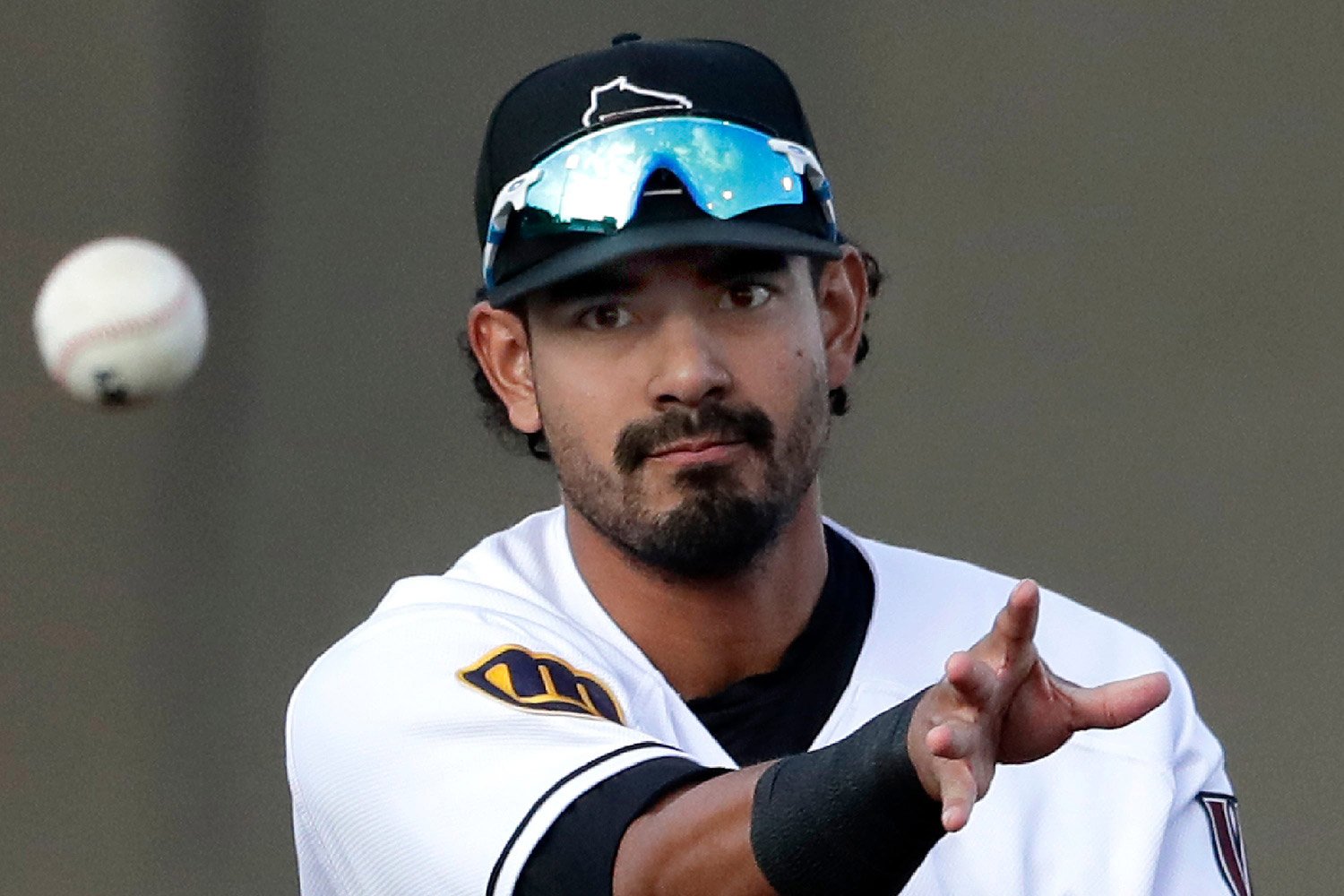 The truncated 2020 draft has been a reasonably productive one for the Milwaukee Brewers, given they had only five picks. Garrett Mitchell has been a solid option in the outfield when he’s healthy. At the same time, Joey Wiemer was a great stopgap in center field in 2023 before he landed the Brewers some pitching help in a 2024 trade, and Hayden Cantrelle landed the Brewers' emergency catching depth in 2022. Zavier Warren is looking to be putting things together as a utility player, finally. But the Brewers’ 2020 second-round pick, Freddy Zamora, may be the stopgap answer the Crew needs at shortstop. He was an MLB Pipeline Top-30 prospect as late as 2023, having struggled with injuries while displaying excellent defense and a contact/OBP-oriented offensive profile. The injuries allowed Andruw Monasterio to bypass Zamora in 2022 en route to becoming one of the 2023 NL Central Champion team’s unsung heroes. As of May 25, Zamora is posting a .840 OPS in 80 at-bats in Triple-A Nashville, highlighted by 11 walks to only 14 strikeouts in that sample, while adding two stolen bases. He has six extra-base hits in that sample, and is hitting .325. Given the struggles of Joey Ortiz at shortstop, Zamora may be the answer to their current conundrum – how do the Brewers field a respectable team in 2025 without mortgaging the club’s future, especially with trades that could dip into the team’s deep farm system? During his time in Milwaukee, Monasterio has demonstrated his ability to get on base and shown that he is not a horrible option at third base, holding the position acceptably well in 2023. Zamora could offer something similar at shortstop, succeeding where Vinny Capra played his way to being designated for assignment and claimed by the White Sox. Zemora doesn’t have some of the “sunk cost” that Oliver Dunn, who has not impressed in two short stints with the Brewers, despite costing the Crew two solid prospects and blocking Tyler Black at the hot corner. He certainly lacks the ceiling of Cooper Pratt or Jesus Made at shortstop, but those matter less than the fact that he is an internal option for the Brewers. With his demonstrated on-base ability and the fact that he controls his strikeouts, Zamora’s floor is reasonably high, and his defense has been solid. He’s also flashed some skill on the basepaths. In one sense, he would be a valuable lineup-extender at the bottom of the order or a superb backup infielder, the same niche capably filled by Monasterio in recent seasons. A solid stopgap season at shortstop for Zamora could also help the Brewers in the long term. By proving himself in a somewhat extended 2025 MLB stint, there could be the chance the Crew could flip Zamora (or Monasterio) over the 2025-2026 MLB offseason to help re-stock their farm system and to create space at shortstop for Pratt on Opening Day 2026. The Brewers have invested much into building up their farm system and improving their scouting over the last decade – an effort that has been very fruitful for the team. It is time for them to place their trust in that investment, make a call to Nashville, and see if Freddy Zamora can help the big-league club win both in the present and in the future.
 -
There was a guy who also had about 114 games at the hot corner in `07... had a very good career with the Crew (NL Rookie of the Year), led the league in slugging in `07. Was MVP in 2011... put together a lot of very good year at the plate. Might have been the long-term answer Brewers fans were seeking...
-
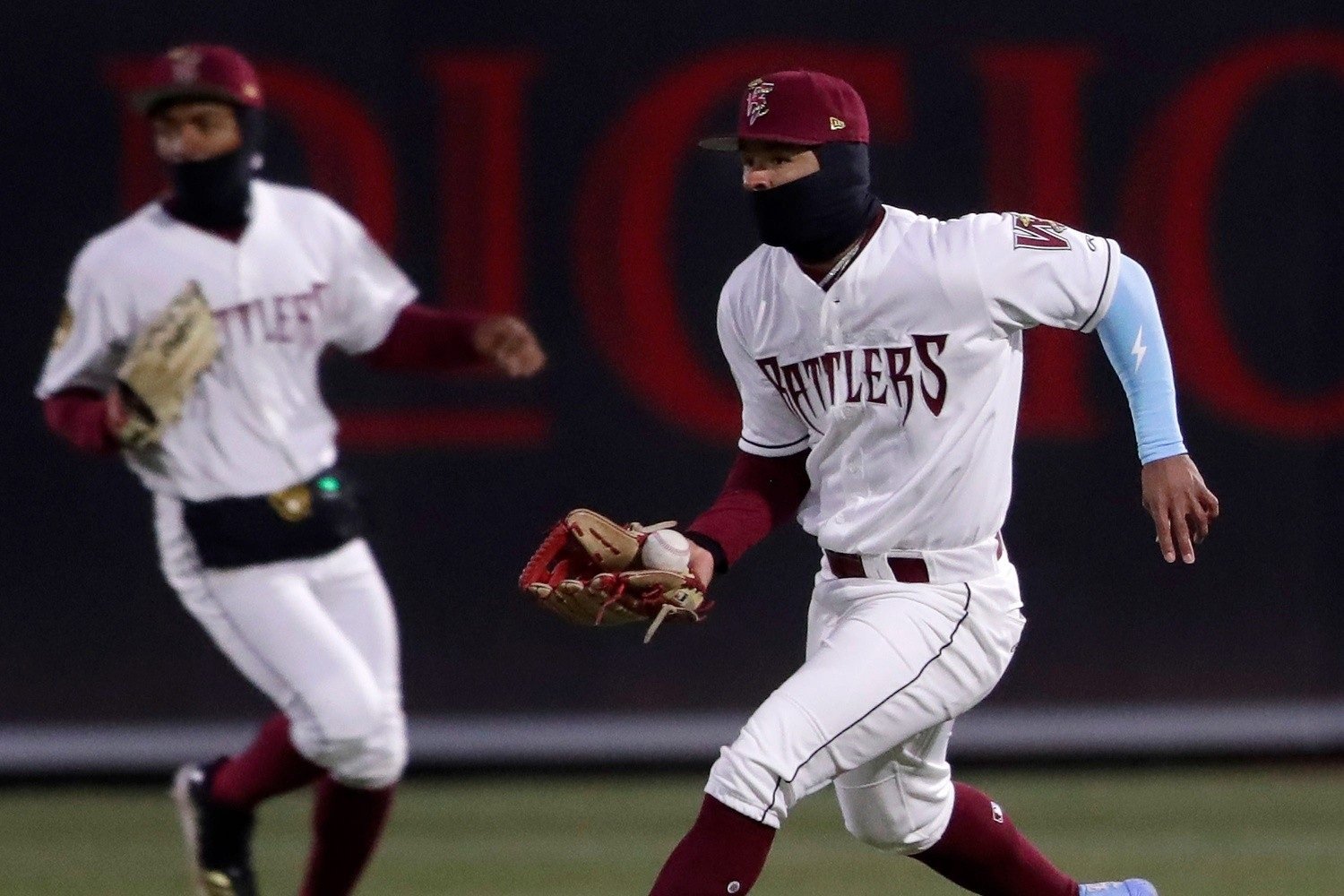 Brewers fans are impressed with Luis Pena and Jesus Made, and for good reason. Both players seem poised to follow the rapid-ascent trail that Jackson Chourio blazed up the mountainside of the Brewers’ farm system—particularly since the two play on the left side of the infield, a real area of doubt for the current team. But not all prospects rise so quickly. Before the COVID-19 pandemic, Eduardo Garcia and Hedbert Perez were two of the more exciting international free-agent prospects the Brewers had picked up. Both had plus tools (power for Perez, defense for Garcia) and looked like high-upside prospects. For each, though, the journey has been less like a blitz up the cliff face and more like a zigzagging, boulder-strewn corniche. Hedbert Perez The Brewers signed Perez in July 2019. He didn’t see action until 2021, when he had a strong debut in the Arizona Complex League—but one marred by a stint on the 60-day injured list. After that, he went to Low-A Carolina in 2022, where he flashed power, but also had trouble making contact. In 2023, he returned to Carolina, where another injured list stint kept him out of action. In 2024, he again missed a lot of time due to injury, playing only 19 games for the High-A Wisconsin Timber Rattlers. By this point, he was arguably bypassed by Yophery Rodriguez, part of the Brewers’ 2023 international free agent class, and both players were assigned to the Timber Rattlers for the 2025 season. However, the Brewers traded Rodriguez to Boston as part of the package for Quinn Priester. Perez seems to be making something of this second chance stemming from the trade. The strikeout total is still high (39 in 125 at-bats), but he’s taken a big step up in plate discipline, with 20 walks in 25 games. That's just two short of his 2023 total, which he took 63 games to accumulate. It means Perez could end up as a version of Jake Bauers who could play center field: not a superstar, but a solid asset off the bench. Eduardo Garcia Garcia arrived with the international free agent class of 2018. In 2019, he saw all of 10 games for the DSL Brewers before a horrible injury wiped out the rest of that season. In 2021, he went to the Arizona Complex League, where he posted a solid offensive season before a brief stint with the Carolina Mudcats. In 2022, he split time between Carolina and Wisconsin. He’d spend 2023 repeating in Appleton, where he also missed some time with injuries in addition to struggling offensively. The one thing that remained solid, though, was his defense. In 2024, Garcia missed a lot of time with an injury after starting at Double-A Biloxi. Over the course of the season, 2023 draftee Cooper Pratt bypassed Garcia due to Garcia missing time with his injury. Garcia began to see significant time at other positions, and has now shown defensive versatility at third base, second base, and center field in addition to playing shortstop. In 2025, though, Garcia is putting together a decent offensive season, and like Perez, he’s made a big improvement in his OBP skills, drawing 13 walks in 36 games. In 2024, he drew nine walks in 80 games. He may not be the shortstop of the future, but he could be a bench asset who provides excellent defense, along with some power and speed. Overview Despite their lengthy tenures in the Brewers farm system, Perez and Garcia still have time to become solid assets. Both players are still in their age-22 seasons, only a year younger than top pitching prospects Carlos Rodriguez and Logan Henderson. As Ernesto Martinez has demonstrated, sometimes the path to being major league-ready is a longer, more winding one for some prospects. Garcia will be a minor-league free agent this offseason, while Perez will be Rule 5-eligible. While they may not be cornerstones, there is a very good chance they could become assets for the Brewers in the 2027/2028 timeframe, if the team can keep them around.
 -
Image courtesy of © William Glasheen / USA TODAY NETWORK via Imagn Images Brewers fans are impressed with Luis Pena and Jesus Made, and for good reason. Both players seem poised to follow the rapid-ascent trail that Jackson Chourio blazed up the mountainside of the Brewers’ farm system—particularly since the two play on the left side of the infield, a real area of doubt for the current team. But not all prospects rise so quickly. Before the COVID-19 pandemic, Eduardo Garcia and Hedbert Perez were two of the more exciting international free-agent prospects the Brewers had picked up. Both had plus tools (power for Perez, defense for Garcia) and looked like high-upside prospects. For each, though, the journey has been less like a blitz up the cliff face and more like a zigzagging, boulder-strewn corniche. Hedbert Perez The Brewers signed Perez in July 2019. He didn’t see action until 2021, when he had a strong debut in the Arizona Complex League—but one marred by a stint on the 60-day injured list. After that, he went to Low-A Carolina in 2022, where he flashed power, but also had trouble making contact. In 2023, he returned to Carolina, where another injured list stint kept him out of action. In 2024, he again missed a lot of time due to injury, playing only 19 games for the High-A Wisconsin Timber Rattlers. By this point, he was arguably bypassed by Yophery Rodriguez, part of the Brewers’ 2023 international free agent class, and both players were assigned to the Timber Rattlers for the 2025 season. However, the Brewers traded Rodriguez to Boston as part of the package for Quinn Priester. Perez seems to be making something of this second chance stemming from the trade. The strikeout total is still high (39 in 125 at-bats), but he’s taken a big step up in plate discipline, with 20 walks in 25 games. That's just two short of his 2023 total, which he took 63 games to accumulate. It means Perez could end up as a version of Jake Bauers who could play center field: not a superstar, but a solid asset off the bench. Eduardo Garcia Garcia arrived with the international free agent class of 2018. In 2019, he saw all of 10 games for the DSL Brewers before a horrible injury wiped out the rest of that season. In 2021, he went to the Arizona Complex League, where he posted a solid offensive season before a brief stint with the Carolina Mudcats. In 2022, he split time between Carolina and Wisconsin. He’d spend 2023 repeating in Appleton, where he also missed some time with injuries in addition to struggling offensively. The one thing that remained solid, though, was his defense. In 2024, Garcia missed a lot of time with an injury after starting at Double-A Biloxi. Over the course of the season, 2023 draftee Cooper Pratt bypassed Garcia due to Garcia missing time with his injury. Garcia began to see significant time at other positions, and has now shown defensive versatility at third base, second base, and center field in addition to playing shortstop. In 2025, though, Garcia is putting together a decent offensive season, and like Perez, he’s made a big improvement in his OBP skills, drawing 13 walks in 36 games. In 2024, he drew nine walks in 80 games. He may not be the shortstop of the future, but he could be a bench asset who provides excellent defense, along with some power and speed. Overview Despite their lengthy tenures in the Brewers farm system, Perez and Garcia still have time to become solid assets. Both players are still in their age-22 seasons, only a year younger than top pitching prospects Carlos Rodriguez and Logan Henderson. As Ernesto Martinez has demonstrated, sometimes the path to being major league-ready is a longer, more winding one for some prospects. Garcia will be a minor-league free agent this offseason, while Perez will be Rule 5-eligible. While they may not be cornerstones, there is a very good chance they could become assets for the Brewers in the 2027/2028 timeframe, if the team can keep them around. View full article
-
And he's gotta be adding muscle mass and getting a little taller, too.
-
Brewer Fanatic Minor League Hitter Of The Month - Mar/Apr 2025
Harold Hutchison posted an article in Minor Leagues
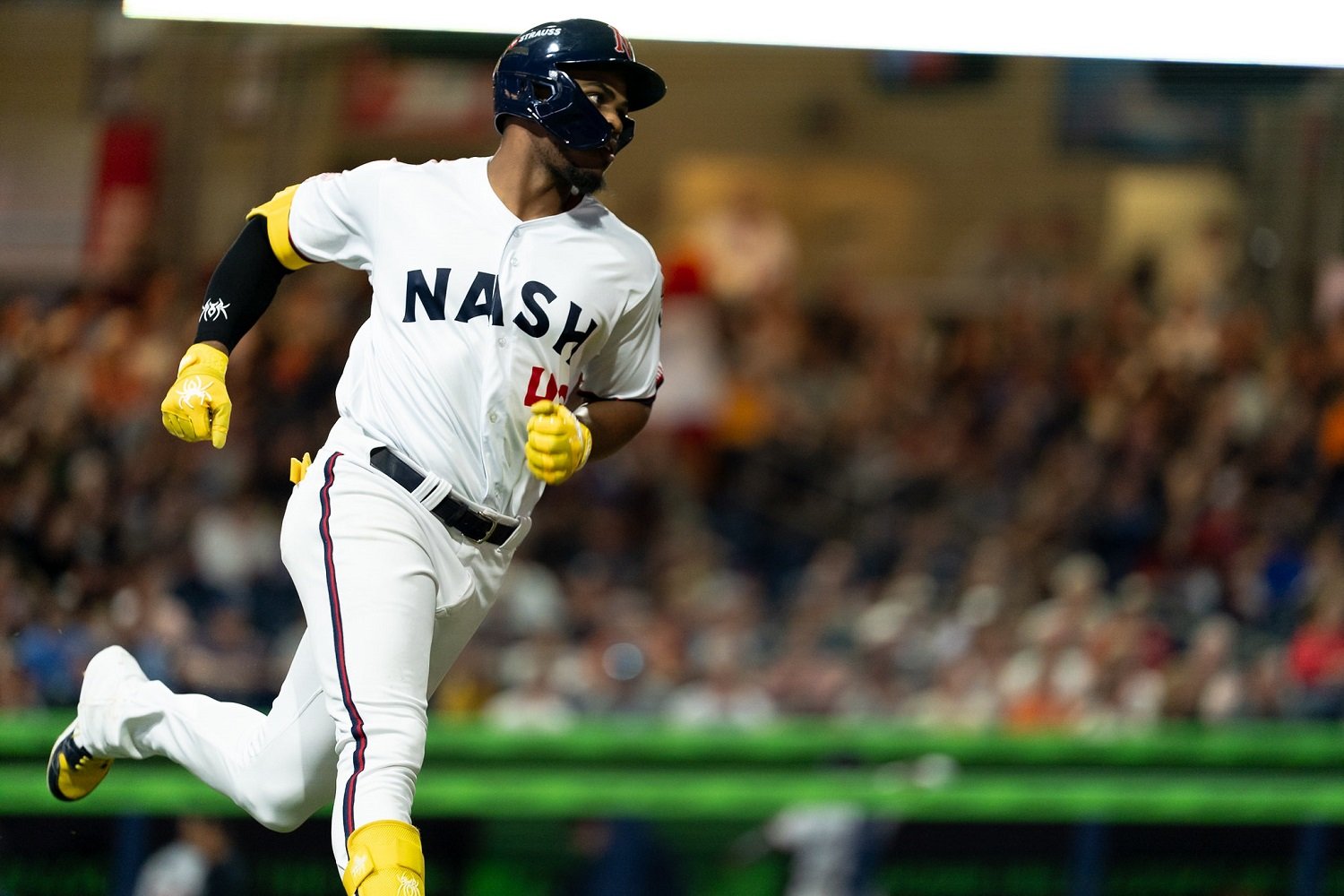 Ernesto Martinez has been around for a while. He first played in the Brewers system in 2018—the same year Christian Yelich led the Brewers to Game 7 of the National League Championship Series. His proximity to MLB and a very productive month of April have made Martinez Brewer Fanatic’s April 2025 Minor League Hitter of the Month. Martinez hit the MLB Pipeline Top 30 Prospects list for the team in April, at the age of 26, but the flashes of potential have been there from his first pro season. They’ve come together in Triple-A Nashville, where Martinez has benefited from getting the bulk of playing time at the cold corner due to Tyler Black suffering a hamate injury. The numbers speak for themselves: After the games of May 2, Martinez has posted a .303/.390/.485 slash line while at Music City, adding a double, a triple, and three home runs over 66 at-bats in 18 games. For a Brewers team struggling to generate consistent offense, Martinez could be an in-house option. Past profiles on Brewer Fanatic noted the exit velocity Martinez is posting—comparable to figures posted by Giancarlo Stanton, Shohei Ohtani, and Aaron Judge. Among Triple-A hitters with at least 50 plate appearances this year, Martinez leads the way with a 90th-percentile exit velocity of 111.5 mph. Given the monster years left-handed power hitters have had playing half the time in American Family Field, Martinez looks to be well-suited for the Brewers. Nor has he just provided offense. Martinez has been an outstanding defender at first base, something the Brewers have emphasized in recent years. He's a big target (6’6” tall, 254 pounds, per MLB Pipeline), who has been able to do the splits to make some of the plays at first base. His initial offensive profile seemed a lot like that of Eric Thames, a legitimate three-true-outcome threat who played first base and corner outfield spots for the Brewers from 2017-2019. While his size and power have been impressive, Martinez’s offensive profile also includes being a threat on the base paths. Since the start of the 2021 season, Martinez has 75 steals and has been caught only 19 times. His defensive profile has also expanded. In 2021, he not only mashed to the tune of an .862 OPS, but stole 30 bases in 34 attempts over 79 games, and saw some limited action in center field. During his 2024 breakout in Double-A Biloxi, he again manned center a few times. Given the proximity to MLB, and the Brewers’ need for some serious offensive help, Ernesto Martinez is the April 2025 Minor League Hitter of the Month. Honorable Mentions Other major contributors at the plate in April down on the farm: Cooper Pratt posted a .750 OPS as he excelled defensively at Double-A Biloxi at the age of 20; Josh Adamczewski posted a .986 OPS as part of a dominating Carolina Mudcats team; Jesus Made made the leap to full-season Single-A without initial issue with a .948 OPS;
 -
Ernesto Martinez has been around for a while. He first played in the Brewers system in 2018 – the same year Christian Yelich led the Brewers to Game 7 of the National League Championship Series. His proximity to MLB and a very productive month of April have made Martinez Brewer Fanatic’s April 2025 Minor League Hitter of the Month. Martinez hit the MLB Pipeline Top 30 prospects list in April at the age of 26, but the flashes of potential have been there from his first pro season. They’ve come together in Triple-A Nashville, where Martinez has benefited from getting the bulk of playing time at the cold corner due to Tyler Black suffering a hamate injury. The numbers, in one sense, speak for themselves: After the games of May 2, Martinez has posted a .303/.390/.485 slash line while at Music City, adding a double, a triple, and three home runs over 66 at-bats in 18 games. For a Brewers team struggling to generate consistent offense – having lost by 24-4 over the last three games – Martinez could be an in-house option for the team searching for an impact bat to help the lineup. Past profiles on Brewer Fanatic noted the exit velocity Martinez is posting – comparable to figures posted by Giancarlo Stanton, Shohei Ohtani, and Aaron Judge. Given the monster years left-handed power hitters have had playing half the time in American Family Field, Martinez looks to be well-suited for the Brewers. He’s not just provided offense – Martinez has been an outstanding defender at first base, something the Brewers have emphasized in recent years. Martinez is a big target (6’6” tall, 254 pounds per MLB Pipeline), who has been able to do the splits to make some of the plays at first base. His initial offensive profile seemed a lot like that of Eric Thames, a legitimate three-true outcome threat who played first base and corner outfield spots for the Brewers from 2017-2019. While his size and power have been impressive, Martinez’s offensive profile also includes being a threat on the base paths. Since start of the 2021 minor-league baseball season, Martinez has 75 steals and has been caught only 19 times. His defensive profile has also expanded. In 2021, he not only mashed an .862 OPS, he stole 30 bases in 34 attempts over 79 games, and saw some limited action in center field. During his 2024 breakout in Double-A Biloxi, he again manned center field. Given the proximity to MLB, and the Brewers’ need for some serious offensive help, Ernesto Martinez is the April 2025 Minor League Hitter of the Month. Honorable Mentions Other major contributors at the plate in April down on the farm: Cooper Pratt posted a .750 OPS as he excelled defensively at Double-A Biloxi at the age of 20; Josh Adamczewski posted a .986 OPS as part of a dominating Carolina Mudcats team; Jesus Made made the leap to full-season Single-A without initial issue with a .948 OPS; View full article
-
Cooper PrattErnesto MartinezJesus MadeCraig YohoJacob MisiorowskiTyler BlackJeferson QueroChad PatrickLuis PenaBraylon PayneJadher AreinamoLogan HendersonMike BoeveRobert GasserCarlos F RodriguezLuke AdamsEric BitontiLuis LaraJosh AdamczewskiCaleb Durbin
-
Cooper PrattErnesto MartinezJesus MadeCraig YohoJacob MisiorowskiTyler BlackJeferson QueroChad PatrickLuis PenaBraylon PayneJadher AreinamoLogan HendersonMike BoeveRobert GasserCarlos F RodriguezLuke AdamsEric BitontiLuis LaraJosh AdamczewskiCaleb Durbin
-
A 2-5 start to their end-of-April road trip has the Brewers under .500 and looking up at two teams in the NL Central. This isn't the starts fan were hoping for. Image courtesy of © Benny Sieu-USA TODAY Sports It's easy to attribute the Brewers' relatively slow start to the team's struggles on the road. Through the first 29 games of the season, the Crew are 9-4 at home against just 5-11 on the road. The whole team seems to just play better in the confines of American Family Field. Before the season, we covered best- and worst-case scenarios for each position on the Brewers. How are each of those cases faring through the first month of the season? Catcher: So Far, So Good At this point, the Brewers can’t complain too much. William Contreras is holding down the bulk of the starts and Eric Haase is doing more than okay as a backup. The only bad news is Jeferson Quero’s hamstring troubles, which have complicated his return from a lost 2024, and Darrien Miller’s slump in Biloxi. First Base: Better Than Hoped For Rhys Hoskins is posting a 137 OPS+ and providing a power bat to the lineup, partially making up for the loss of Willy Adams. This could be good if the Crew wants to flip him at the deadline. The Crew has also seen Ernesto Martinez perform very well at Triple-A Nashville. It's worth keeping an eye on Jake Bauer’s presence on the 26-man roster. Bauers is hitting well so far, but Tyler Black is nearing the end of the initial timeline given on his hamate injury. Second Base: Close To Best-Case Brice Turang is holding his own in the leadoff slot and hitting like he did in the first half of 2024. It’s an open question if he can keep it up, but to date, he is leading the league in hits. Peculiarly, he's had two errors already, though that probably isn't much to worry about for the reigning Gold Glover. Third Base: At Worst-Case Oliver Dunn and Vinny Capra have posted sub-.500 OPS totals at the hot corner for the Crew — Caleb Durbin’s .670 OPS looks Ruthian in comparison. The good news is Durbin has stuck out exactly once through his first 32 plate appearances. The bad news is his walk total is the same. The team may need to think about some options, but trading prospects for a veteran might be a bad way to go. Could it be a desperate enough situation for Tyler Black to man the hot corner when he is healthy? Shortstop: Teetering Close To Worst-Case Brewers fans hoped Joey Ortiz would take his offense up a level, or at least keep up his 2024 pace. Instead, his batting average is looking up at the Uecker line, his defense has dropped a notch, and he has one extra-base hit (a double). The only good news is he's working a very impressive walk rate. Left Field: Middle Case A lot has been made of Jackson Chourio struggling at the plate so far in 2025. The “struggling” phenom still is tied for the team lead in homers (five), second in RBIs (20 to Christian Yelich’s 21), has spanked another ten extra-base hits, and has a 108 OPS+. When a guy’s struggles still result in above-average offense, that says a lot of good things about him. Center Field: Heading For Worst Case? First, Blake Perkins injured his shin. Now, Garrett Mitchell was off to a cold start and left the April 25 game against the Cardinals with a left oblique issue, subseuqently resulting his placement on the 10-day IL. It's not that Sal Frelick or Jackson Chourio are horrible backup options, but the chain reaction of injuries could force the Brewers into sub-optimal choices for the corner outfield spots. Right Field: Best Case… But Trending Down Sal Frelick is arguably one of the hotter hitters on the Crew. The injury to Garrett Mitchell, combined with the move of Blake Perkins to the 60-day injured list, now has the Brewers on their third-string center fielder. Will it be Frelick, or is it Chourio? Designated Hitter: Almost The Best Case Christian Yelich is hitting close to his 2024 form. He’s also held down the bulk of the starts at the position. The bad news is that Yelich may have to see more time in the field due to the center field injury situation. Starting Rotation: Close To Best-Case Now, Worst-Case Scenario For The Future Yes, the Brewers are getting excellent performance from Chad Patrick, Jose Quintana, Freddy Peralta, and many of their starting pitchers. And while Quinn Priester is also performing well, the trade for him is exactly what the Brewers needed to avoid — they lost one top prospect and they lost their Competitive Balance A pick to get Priester. This is because of injuries to Tobias Myers, Aaron Civale, and Nestor Cortes. Short-term, the team’s doing fine, but the injuries will likely cost the team down the road, both in terms of the Priester trade and the probable loss of “conditional” picks in the 2026 MLB draft. Bullpen: Closer To Best-Case Than Worst-Case The Brewers' bullpen has, for the most part, locked down leads when the team has been able to generate them. The big questions center around how the bullpen will shake out with the return of other pitchers (Brandon Woodruff, Civale, and Cortes), but for the most part, the Brewers have a lot of good options, even with Joel Payamps and Bryan Hudson struggling. Overview The 2025 Brewers have been inconsistent, to put it mildly. The team’s looking very solid in most places, with the biggest problem being the left side of their infield and their top two center fielders being injured. Worse, the rash of injuries in the starting rotation has a potential long-term cost of up to four prospects for the Brewers, a serious hit for a team in one of MLB’s smallest markets. View full article
-
After A Rocky April, Can The Brewers Avoid Worst-Case Scenarios?
Harold Hutchison posted an article in Brewers
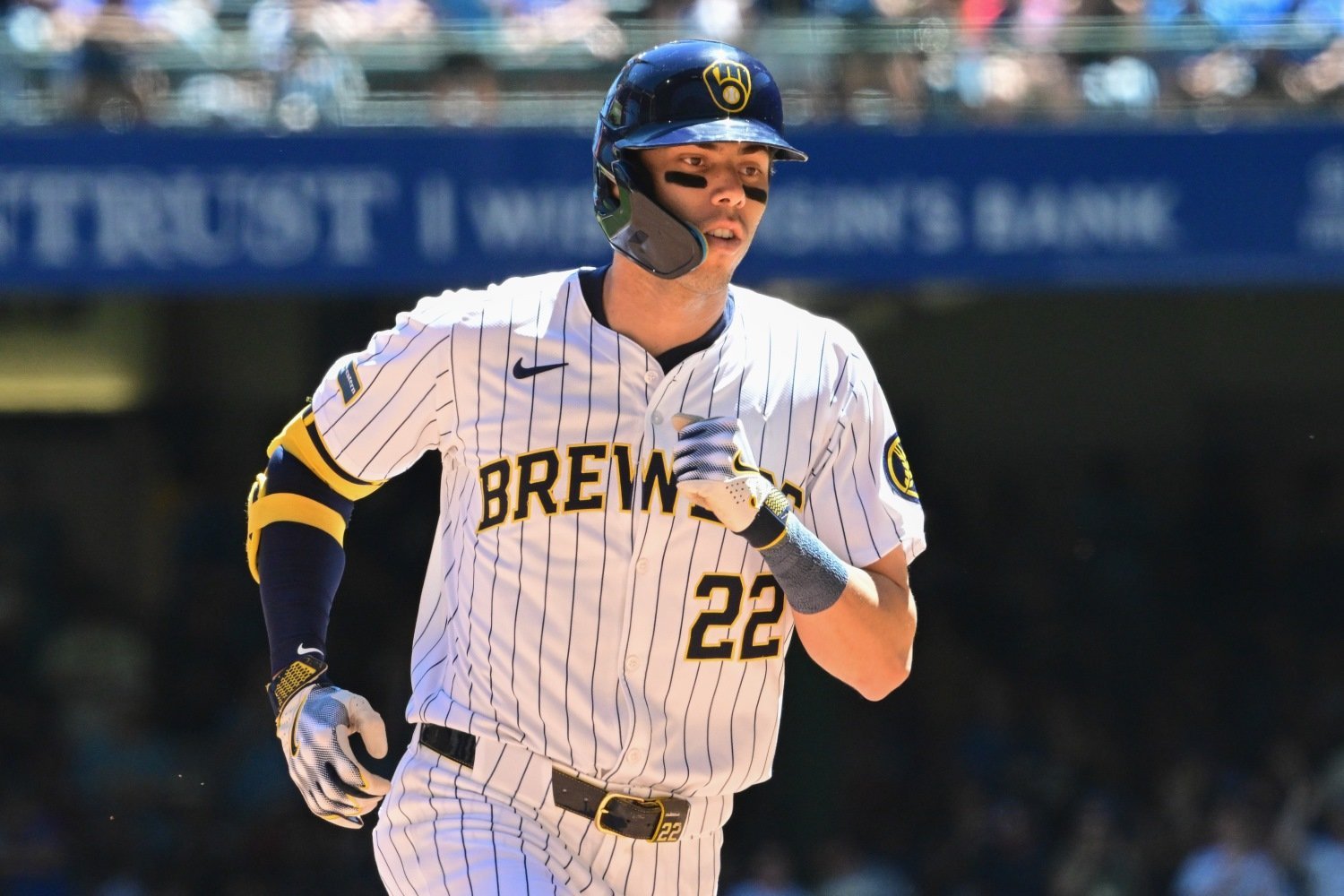 It's easy to attribute the Brewers' relatively slow start to the team's struggles on the road. Through the first 29 games of the season, the Crew are 9-4 at home against just 5-11 on the road. The whole team seems to just play better in the confines of American Family Field. Before the season, we covered best- and worst-case scenarios for each position on the Brewers. How are each of those cases faring through the first month of the season? Catcher: So Far, So Good At this point, the Brewers can’t complain too much. William Contreras is holding down the bulk of the starts and Eric Haase is doing more than okay as a backup. The only bad news is Jeferson Quero’s hamstring troubles, which have complicated his return from a lost 2024, and Darrien Miller’s slump in Biloxi. First Base: Better Than Hoped For Rhys Hoskins is posting a 137 OPS+ and providing a power bat to the lineup, partially making up for the loss of Willy Adams. This could be good if the Crew wants to flip him at the deadline. The Crew has also seen Ernesto Martinez perform very well at Triple-A Nashville. It's worth keeping an eye on Jake Bauer’s presence on the 26-man roster. Bauers is hitting well so far, but Tyler Black is nearing the end of the initial timeline given on his hamate injury. Second Base: Close To Best-Case Brice Turang is holding his own in the leadoff slot and hitting like he did in the first half of 2024. It’s an open question if he can keep it up, but to date, he is leading the league in hits. Peculiarly, he's had two errors already, though that probably isn't much to worry about for the reigning Gold Glover. Third Base: At Worst-Case Oliver Dunn and Vinny Capra have posted sub-.500 OPS totals at the hot corner for the Crew — Caleb Durbin’s .670 OPS looks Ruthian in comparison. The good news is Durbin has stuck out exactly once through his first 32 plate appearances. The bad news is his walk total is the same. The team may need to think about some options, but trading prospects for a veteran might be a bad way to go. Could it be a desperate enough situation for Tyler Black to man the hot corner when he is healthy? Shortstop: Teetering Close To Worst-Case Brewers fans hoped Joey Ortiz would take his offense up a level, or at least keep up his 2024 pace. Instead, his batting average is looking up at the Uecker line, his defense has dropped a notch, and he has one extra-base hit (a double). The only good news is he's working a very impressive walk rate. Left Field: Middle Case A lot has been made of Jackson Chourio struggling at the plate so far in 2025. The “struggling” phenom still is tied for the team lead in homers (five), second in RBIs (20 to Christian Yelich’s 21), has spanked another ten extra-base hits, and has a 108 OPS+. When a guy’s struggles still result in above-average offense, that says a lot of good things about him. Center Field: Heading For Worst Case? First, Blake Perkins injured his shin. Now, Garrett Mitchell was off to a cold start and left the April 25 game against the Cardinals with a left oblique issue, subseuqently resulting his placement on the 10-day IL. It's not that Sal Frelick or Jackson Chourio are horrible backup options, but the chain reaction of injuries could force the Brewers into sub-optimal choices for the corner outfield spots. Right Field: Best Case… But Trending Down Sal Frelick is arguably one of the hotter hitters on the Crew. The injury to Garrett Mitchell, combined with the move of Blake Perkins to the 60-day injured list, now has the Brewers on their third-string center fielder. Will it be Frelick, or is it Chourio? Designated Hitter: Almost The Best Case Christian Yelich is hitting close to his 2024 form. He’s also held down the bulk of the starts at the position. The bad news is that Yelich may have to see more time in the field due to the center field injury situation. Starting Rotation: Close To Best-Case Now, Worst-Case Scenario For The Future Yes, the Brewers are getting excellent performance from Chad Patrick, Jose Quintana, Freddy Peralta, and many of their starting pitchers. And while Quinn Priester is also performing well, the trade for him is exactly what the Brewers needed to avoid — they lost one top prospect and they lost their Competitive Balance A pick to get Priester. This is because of injuries to Tobias Myers, Aaron Civale, and Nestor Cortes. Short-term, the team’s doing fine, but the injuries will likely cost the team down the road, both in terms of the Priester trade and the probable loss of “conditional” picks in the 2026 MLB draft. Bullpen: Closer To Best-Case Than Worst-Case The Brewers' bullpen has, for the most part, locked down leads when the team has been able to generate them. The big questions center around how the bullpen will shake out with the return of other pitchers (Brandon Woodruff, Civale, and Cortes), but for the most part, the Brewers have a lot of good options, even with Joel Payamps and Bryan Hudson struggling. Overview The 2025 Brewers have been inconsistent, to put it mildly. The team’s looking very solid in most places, with the biggest problem being the left side of their infield and their top two center fielders being injured. Worse, the rash of injuries in the starting rotation has a potential long-term cost of up to four prospects for the Brewers, a serious hit for a team in one of MLB’s smallest markets.
 -
Four Brewers Are In A Hall Of Fame You've Never Heard Of
Harold Hutchison posted an article in History
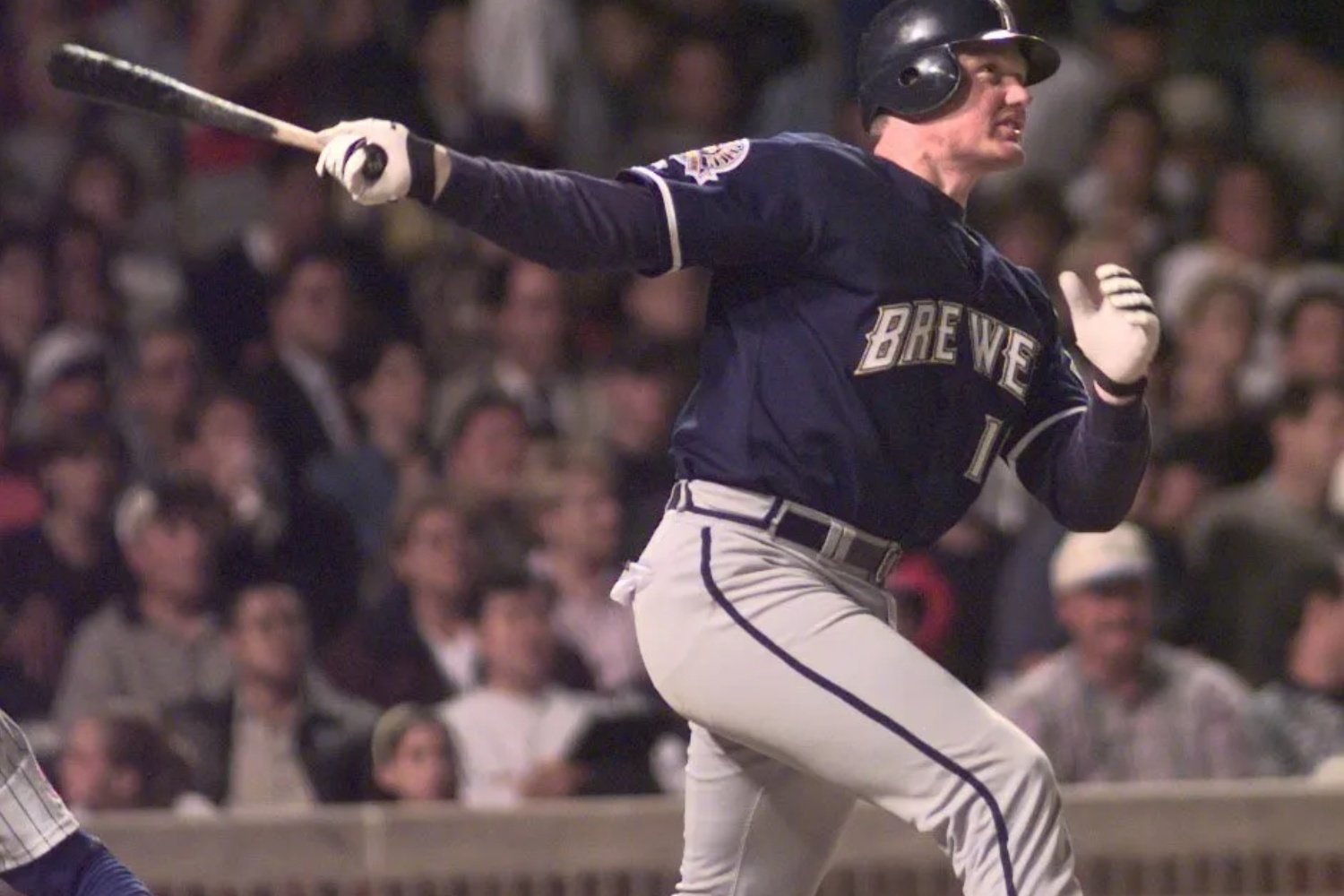 Those nine players, along with two broadcasters (Bob Uecker and Pat Hughes) and executive Larry Whiteside from the team’s early days in Milwaukee comprise the team's representatives in the National Baseball Hall of Fame. However, there are four more Brewers who can call themselves Hall-of-Famers—albeit not in Cooperstown. Instead, they are in the Australian Baseball Hall of Fame, including two Brewers who had significant impact through the team’s nadir following the retirement of Robin Yount and the departure of Paul Molitor via free agency, and one whose legacy arguably includes the CC Sabathia trade. Let’s take a look at these four Brewers. C/1B/OF/DH Dave Nilsson (1992-1999) Nilsson came up as a catcher in 1992 and handled that position on and off during his eight seasons with the Brewers. He also played first base, both corner outfield spots, and designated hitter, often to get his potent left-handed bat in the lineup. In 1999, he secured an All-Star Game nod, the first for an Australian, as he was the team’s primary catcher that season, en route to the best year of his career. He went to NPB in 2000 in order to be eligible to represent Australia in the Olympics, and did not return to the US until a brief stint in the Brave’s Triple-A affiliate in Richmond in 2004, the year Australia’s baseball team earned a silver medal in the Olympics. Nilsson was part of the Australian Baseball Hall of Fame’s inaugural class in 2005, inducted alongside his brother, Bob. Nilsson currently manages the Brisbane Bandits, where the Brewers have sent some minor-league prospects in recent years, and Australia’s national team. LHP Graeme Lloyd (1993-1996) Like Nilsson, Lloyd was part of the inaugural class of the Australian Baseball Hall of Fame. His legacy for the Brewers, though, extended beyond not just his departure via an August 1996 trade with the Yankees, but even beyond his retirement from MLB in 2003. The reason for this may sound like an episode of James Burke’s Connections, but it shows how a player can impact a team for years beyond a departure. Lloyd was a left-handed reliever during his time in Milwaukee, often serving as a bridge to closer Mike Fetters during that window. He arrived after a trade between the Brewers and the Phillies, who took him in the Rule 5 draft. The return for including Lloyd in the 1996 trade with the Yankees included reliever Bob Wickman—and the legacy only continued from there. In 2000, Wickman was part of the package that netted the Brewers first baseman Richie Sexson. After Lloyd’s final MLB season in 2003, Sexson was dealt to the Diamondbacks for a package that included starter Chris Capuano, infielder Craig Counsell (later arguably the best manager in Brewers’ history), and first baseman Lyle Overbay. Overbay was later traded to the Blue Jays for starter Dave Bush, who would secure a win in the 2008 National League Wild Card series against the Phillies. Lloyd’s legacy, in essence, included Milwaukee breaking a lengthy playoff drought and securing the current era of competitiveness down the line. UT Trent Durrington (2004-2005) Durrington had two cups of coffee with the Crew, one in 2004, the other in 2005. His calling cards during his professional career were versatility (during his pro career, he played all nine positions on the field between MLB and the minors) and speed (377 career stolen bases in the minors, 14 more in the majors). With the Brewers, Durrington mostly served as a pinch-hitter and pinch-runner off the bench, stealing nine bases and scoring 16 runs. Notably, he hit three triples in just 82 at-bats at the major-league level in 2004. During the 2004 season, he made an appearance on the mound with the Brewers, and retired the only hitter he faced on one pitch. He is the only player to have just one pitch in MLB, according to Stathead. Durrington did not have eye-popping numbers for the Brewers, but he was a contributor to the 2004 and 2005 Brewers teams, the latter of which posted a .500 winning percentage, the team’s first non-losing season since 1992. Durrington was inducted into the Australian Baseball Hall of Fame in 2015. RHP Grant Balfour (2007) Balfour had a brief tenure with the Brewers in 2007, making a comeback after missing the 2005 season with an injury and spending 2006 in the Reds’ system. In fact, his numbers with the Brewers that year were awful (0-2 record, 20.25 ERA). However, as the 2007 season’s trade deadline neared, the Crew flipped Balfour to the Tampa Bay Devil Rays for right-handed pitcher Seth McClung, who became a valuable swingman on the 2008 club that secured the National League Wild Card berth after the trade for CC Sabathia, giving Balfour a legacy similar to that of Lloyd, albeit in a more immediate sense. Balfour blossomed into a valuable late-inning reliever with the Rays, then went to Oakland, where he became a solid closer for the Athletics before closing out his MLB career with two more seasons in Tampa. Balfour was inducted alongside Trent Durrington into the Australian Baseball Hall of Fame in 2015.
- 1 comment
-
- 3
-

-
- dave nilsson
- graeme llloyd
- (and 2 more)
-
When it comes to Brewers who are Hall of Famers, the names Paul Molitor and Robin Yount immediately come to mind, with seven other players who wore the blue and gold during their careers also achieving immortality in Cooperstown. Image courtesy of Benny Sieu/Milwaukee Journal Sentinel Those nine players, along with two broadcasters (Bob Uecker and Pat Hughes) and executive Larry Whiteside from the team’s early days in Milwaukee comprise the team's representatives in the National Baseball Hall of Fame. However, there are four more Brewers who can call themselves Hall-of-Famers—albeit not in Cooperstown. Instead, they are in the Australian Baseball Hall of Fame, including two Brewers who had significant impact through the team’s nadir following the retirement of Robin Yount and the departure of Paul Molitor via free agency, and one whose legacy arguably includes the CC Sabathia trade. Let’s take a look at these four Brewers. C/1B/OF/DH Dave Nilsson (1992-1999) Nilsson came up as a catcher in 1992 and handled that position on and off during his eight seasons with the Brewers. He also played first base, both corner outfield spots, and designated hitter, often to get his potent left-handed bat in the lineup. In 1999, he secured an All-Star Game nod, the first for an Australian, as he was the team’s primary catcher that season, en route to the best year of his career. He went to NPB in 2000 in order to be eligible to represent Australia in the Olympics, and did not return to the US until a brief stint in the Brave’s Triple-A affiliate in Richmond in 2004, the year Australia’s baseball team earned a silver medal in the Olympics. Nilsson was part of the Australian Baseball Hall of Fame’s inaugural class in 2005, inducted alongside his brother, Bob. Nilsson currently manages the Brisbane Bandits, where the Brewers have sent some minor-league prospects in recent years, and Australia’s national team. LHP Graeme Lloyd (1993-1996) Like Nilsson, Lloyd was part of the inaugural class of the Australian Baseball Hall of Fame. His legacy for the Brewers, though, extended beyond not just his departure via an August 1996 trade with the Yankees, but even beyond his retirement from MLB in 2003. The reason for this may sound like an episode of James Burke’s Connections, but it shows how a player can impact a team for years beyond a departure. Lloyd was a left-handed reliever during his time in Milwaukee, often serving as a bridge to closer Mike Fetters during that window. He arrived after a trade between the Brewers and the Phillies, who took him in the Rule 5 draft. The return for including Lloyd in the 1996 trade with the Yankees included reliever Bob Wickman—and the legacy only continued from there. In 2000, Wickman was part of the package that netted the Brewers first baseman Richie Sexson. After Lloyd’s final MLB season in 2003, Sexson was dealt to the Diamondbacks for a package that included starter Chris Capuano, infielder Craig Counsell (later arguably the best manager in Brewers’ history), and first baseman Lyle Overbay. Overbay was later traded to the Blue Jays for starter Dave Bush, who would secure a win in the 2008 National League Wild Card series against the Phillies. Lloyd’s legacy, in essence, included Milwaukee breaking a lengthy playoff drought and securing the current era of competitiveness down the line. UT Trent Durrington (2004-2005) Durrington had two cups of coffee with the Crew, one in 2004, the other in 2005. His calling cards during his professional career were versatility (during his pro career, he played all nine positions on the field between MLB and the minors) and speed (377 career stolen bases in the minors, 14 more in the majors). With the Brewers, Durrington mostly served as a pinch-hitter and pinch-runner off the bench, stealing nine bases and scoring 16 runs. Notably, he hit three triples in just 82 at-bats at the major-league level in 2004. During the 2004 season, he made an appearance on the mound with the Brewers, and retired the only hitter he faced on one pitch. He is the only player to have just one pitch in MLB, according to Stathead. Durrington did not have eye-popping numbers for the Brewers, but he was a contributor to the 2004 and 2005 Brewers teams, the latter of which posted a .500 winning percentage, the team’s first non-losing season since 1992. Durrington was inducted into the Australian Baseball Hall of Fame in 2015. RHP Grant Balfour (2007) Balfour had a brief tenure with the Brewers in 2007, making a comeback after missing the 2005 season with an injury and spending 2006 in the Reds’ system. In fact, his numbers with the Brewers that year were awful (0-2 record, 20.25 ERA). However, as the 2007 season’s trade deadline neared, the Crew flipped Balfour to the Tampa Bay Devil Rays for right-handed pitcher Seth McClung, who became a valuable swingman on the 2008 club that secured the National League Wild Card berth after the trade for CC Sabathia, giving Balfour a legacy similar to that of Lloyd, albeit in a more immediate sense. Balfour blossomed into a valuable late-inning reliever with the Rays, then went to Oakland, where he became a solid closer for the Athletics before closing out his MLB career with two more seasons in Tampa. Balfour was inducted alongside Trent Durrington into the Australian Baseball Hall of Fame in 2015. View full article
- 1 reply
-
- 1
-
-
- dave nilsson
- graeme llloyd
- (and 2 more)
