Harold Hutchison
-
Posts
6,920 -
Joined
-
Last visited
Content Type
Profiles
Forums
Blogs
Events
Milwaukee Brewers News, Rumors & Analysis
2026 Milwaukee Brewers Top Prospect Rankings
Milwaukee Brewers Videos
2022 Milwaukee Brewers Draft Picks & Signing Bonuses
Milwaukee Brewers Trade & Free Agent Rumors
Milwaukee Brewers Fan Guides & Resources
2023 Milwaukee Brewers Draft Picks & Signing Bonuses
2024 Milwaukee Brewers Draft Picks & Signing Bonuses
The Milwaukee Brewers Players Project
2025 Milwaukee Brewers Draft Picks & Signing Bonuses
2026 Milwaukee Brewers Draft Picks & Signing Bonuses
Store
Downloads
Gallery
Everything posted by Harold Hutchison
-
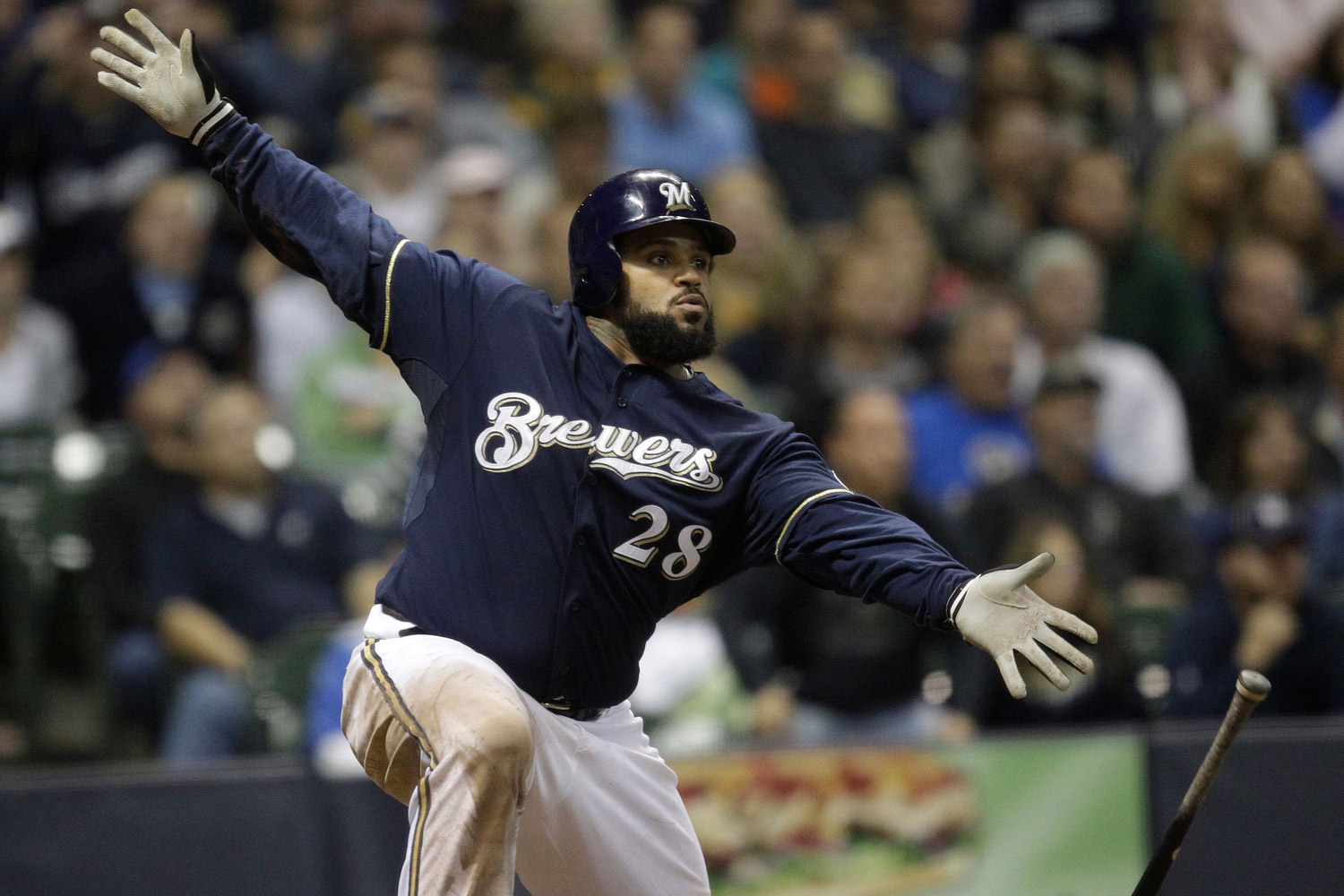 But which first basemen were the best the Brewers had manning the position? Let’s take a look at the top five. 5. Greg Brock .261/.348/.387 with 39 HR and 243 RBI in 5 seasons Greg Brock was acquired before the 1987 season for Tim Leary and Tim Crews. That deal wasn’t too shabby as Brock was the primary starter for four seasons, and he filled the shoes of Cecil Cooper quite well, walking more than he struck out. He didn’t quite provide the power he hoped for, but he didn’t do poorly. He was released in the middle of the 1991 season. 4. George Scott .283/.352/.486 with 115 HR, 463 RBI in 5 seasons “Boomer” delivered a lot of booms for the Brewers in the early 1970s as the franchise sought its footing, including the AL home run crown in 1975. Acquired in a deal that sent Tommy Harper to Boston, he made one All-Star Game appearance and earned five Gold Gloves with the Brewers. After 1976, he was dealt back to Boston for Cecil Cooper. 3. Cecil Cooper .302/.339/.470 with 201 HR, 944 RBI in 11 seasons Cecil Cooper is arguably one of the Brewers' all-time greats. Acquired in the deal that sent George Scott to Boston, all he did was set single-season records for batting average, runs batted in, and OPS at some point in his career. Coop had five All-Star Game appearances, three Silver Sluggers, a Gold Glove, and three top-five MVP finishes, including one in 1982 – and we know who won the award that year. 2. Richie Sexson .276/.366/.566 with 133 HR and 398 RBI in 3.5 seasons Richie Sexson was the primary first baseman for only three seasons. Still, what he lacked in longevity, he made up for by twice tying Gorman Thomas for the single-season record in home runs at 45 and coming close to matching Cooper’s single-season RBI record twice. After the 2003 season, the Brewers traded Sexson to Arizona, landing six players who later played roles with the team in one form or another. 1. Prince Fielder .282/.390/.540 with 230 HR and 646 RBI in 6 seasons The top two single-season home run totals in Brewers history, the top single-season RBI mark in Brewers history. The Brewers’ all-time leader in OBP, SLG, and OPS. Prince Fielder held down first base, made two All-Star Game appearances, and had three top-five MVP finishes, including in 2011, when the Brewers made the NLCS. After that year, Fielder left as a free agent and went on to play for five more seasons before a neck injury ended his career. Honorable Mentions John Jaha was the primary first baseman for four seasons and delivered some big power numbers, but they could only stay healthy for part of the season. Lyle Overbay was known more for hitting a ton of doubles than for home runs but was well-loved during his two seasons in Milwaukee before Prince Fielder’s emergence forced a trade. Eric Thames was the primary first baseman for two of his three seasons in Milwaukee (he divvied up time in the outfield and first in 2018).
-
Baseball Executives Surveyed About Prospects
Harold Hutchison replied to markedman5's topic in Milwaukee Brewers Talk
Prince had 23.8 career WAR. The seven first-round picks Oakland had in the first round combined for 36 (Swisher 21.5, Blanton 11.8, Brown 0.1, Teahan 2.6), or an average of 5.14 WAR over their career. -
Baseball Executives Surveyed About Prospects
Harold Hutchison replied to markedman5's topic in Milwaukee Brewers Talk
Very nice, indeed. -
Plus, there is one other factor: Just how good is the farm system? If there are a lot of promising rookies (Turang, Mitchell, Frelick, Wiemer...) who would be better options for the Brewers in the near future, why shouldn't the Crew go with them instead of spending big money on a free agent arguably on the wrong side of 30?
-
What to do about 3rd Base ?
Harold Hutchison replied to Jeff Meyer's topic in Transaction Rumors & Proposals
Turang can probably give us .340 OBP, 8 HR, 45 RBI and 20 steals, with superb defense. -
Why would the Brewers want Santander when they already have Yelich-Mitchell-Taylor-Winker-Frelick-Wiemer-Perkins as OF depth? Doesn't make sense. Now, Houser for DL Hall, who could be good help in the bullpen, might be an option.
-
Why would the Brewers want Santander when they already have Yelich-Mitchell-Taylor-Winker-Frelick-Wiemer-Perkins as OF depth? Doesn't make sense. Now, Houser for DL Hall, who could be good help in the bullpen, might be an option.
-
If the Crew could work out an extension with Houser to keep him in Milwaukee as a key member of the bullpen, maybe 5 years, $17.5 million, it would be a good idea. Otherwise, I'd rather take the lottery tickets for some chance at finding the next Freddy Peralta.
-
If the Crew could work out an extension with Houser to keep him in Milwaukee as a key member of the bullpen, maybe 5 years, $17.5 million, it would be a good idea. Otherwise, I'd rather take the lottery tickets for some chance at finding the next Freddy Peralta.
-
Van Meter has pretty good OBP skills and flashed some decent power and versatility. Great AAA depth at worst, but he's 27, so he could break out and put it all together.
-
A Counsell extension, if he is willing, is a must-do. He's the most successful manger in Brewers history. If not, it would be much better to have a potential replacement lined up.
-
In the 54 seasons (1969-2022) the Milwaukee Brewers/Seattle Pilots have played, there have been a lot of players. Some have stood out more than others, though. So who were the best players to play each position? We will start with catcher – those who donned the “tools of ignorance” and work our way around the diamond. Image courtesy of © Mark Hoffman / Milwaukee Journal Sentinel / USA TODAY In the 54 seasons (1969-2022) the Milwaukee Brewers/Seattle Pilots have played, there have been a lot of players. Some have stood out more than others, though. So who were the best players to play each position? We will start with catcher – those who donned the “tools of ignorance” and work our way around the diamond. Twenty-three players were primary starters at catcher for the Brewers. Some have been great; others held down the position for a long time and did a solid job. 5. Manny Pina .245/.315/.414 with 42 HR, 148 RBI in six seasons (2016-2021) Pina was the primary starter for only two seasons, but he was also a valuable complement to Omar Narvaez and Yasmani Grandal after the 2018 season. Pina took over for Jonathan Lucroy after Lucroy was traded in 2016. He was no black hole on offense and provided solid defense. He later left as a free agent for Atlanta, then was part of the three-team deal in which the Brewers acquired William Contreras. Not too bad for someone acquired as the player to be named later in the K-Rod trade. 4. Charlie Moore .262/.320/.355 with 36 HR, 408 RBI in 14 seasons (1973-1986) Moore was the primary starter behind the plate for six seasons but also saw action at multiple other positions (notably, he was the primary right fielder for the 1982 World Series team and the following year) over his 14 seasons with the Brewers. He would have been a valuable bench asset in the National League, pre-universal DH. His offensive production primarily hinged on batting average since he lacked power and didn’t take a lot of walks. For the most part, he was a solid player to have around. 3. B.J. Surhoff .274/.323/.380 with 57 HR, 524 RBI in 9 seasons (1987-1995) Like Moore, Surhoff was the primary starter at catcher for six seasons in Milwaukee and flashed a lot of versatility. Surhoff has time at third base (serving as the team’s primary third baseman in 1993) and in the outfield for the Brewers in addition to being a catcher and had 102 starts in 1995 at six positions (counting designated hitter). Unlike Moore, Surhoff batted left-handed and had more power and speed (102 stolen bases with the Brewers). Surhoff later exploded offensively after leaving Milwaukee for Baltimore as a free agent before 1996, but getting nine seasons from a number one overall pick is not too shabby. 2. Darrell Porter .229/.334/.375 with 54 HR, 226 RBI in 6 seasons (1971-1976) Porter served as the primary catcher for the Crew in four seasons, with two cups of coffee before earning a third-place finish in the 1973 Rookie of the Year vote. Porter added an All-Star Game appearance for the Brewers, showing outstanding OBP skills and some left-handed power for the team. He was traded to the Royals before 1977, which brought the Brewers Bob McClure, who served as a starter and reliever from 1977-1986, as a player to be named later. He also haunted the Crew with the Cardinals in the 1982 World Series. 1. Jonathan Lucroy .284/.342/.436 with 79 HR, 387 RBI in 7 seasons (2010-2016) Lucroy was the primary starter at catcher for seven seasons, more than any other Brewer in franchise history. He also provided a potent bat to the team, posting a franchise-record 53 doubles in 2014 and making two All-Star Game appearances. His trade to Texas in 2016 provided a key piece (Lewis Brinson) in the package that brought Christian Yelich to Milwaukee before the 2018 season. Lucroy was a third-round pick in the 2007 draft and outperformed Matt LaPorta (who was dealt for CC Sabathia in 2008) in terms of a major-league career. Honorable Mentions Two other players deserve at least an honorable mention. First, there is Dave Nilsson, who served as the primary catcher for three seasons but saw much more action at other positions. The second is Ted Simmons, who was the primary catcher for three seasons, but initially slumped in Milwaukee and then spent a lot of time as a first baseman/designated hitter after 1983. Brewer Fanatics, who are your top five all-time Brewers catchers? View full article
-
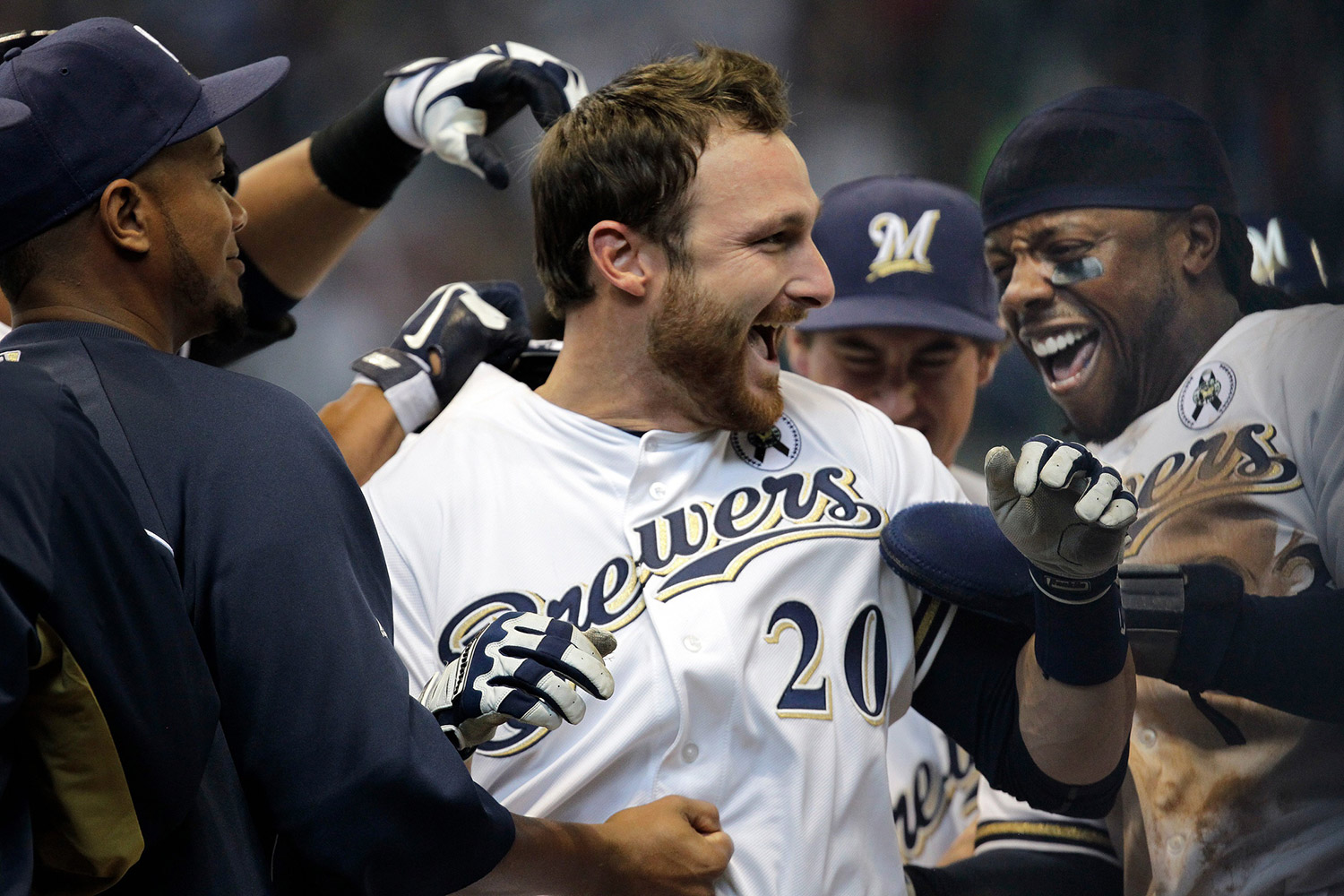 Twenty-three players were primary starters at catcher for the Brewers. Some have been great; others held down the position for a long time and did a solid job. 5. Manny Pina .245/.315/.414 with 42 HR, 148 RBI in six seasons (2016-2021) Pina was the primary starter for only two seasons, but he was also a valuable complement to Omar Narvaez and Yasmani Grandal after the 2018 season. Pina took over for Jonathan Lucroy after Lucroy was traded in 2016. He was no black hole on offense and provided solid defense. He later left as a free agent for Atlanta, then was part of the three-team deal in which the Brewers acquired William Contreras. Not too bad for someone acquired as the player to be named later in the K-Rod trade. 4. Charlie Moore .262/.320/.355 with 36 HR, 408 RBI in 14 seasons (1973-1986) Moore was the primary starter behind the plate for six seasons but also saw action at multiple other positions (notably, he was the primary right fielder for the 1982 World Series team and the following year) over his 14 seasons with the Brewers. He would have been a valuable bench asset in the National League, pre-universal DH. His offensive production primarily hinged on batting average since he lacked power and didn’t take a lot of walks. For the most part, he was a solid player to have around. 3. B.J. Surhoff .274/.323/.380 with 57 HR, 524 RBI in 9 seasons (1987-1995) Like Moore, Surhoff was the primary starter at catcher for six seasons in Milwaukee and flashed a lot of versatility. Surhoff has time at third base (serving as the team’s primary third baseman in 1993) and in the outfield for the Brewers in addition to being a catcher and had 102 starts in 1995 at six positions (counting designated hitter). Unlike Moore, Surhoff batted left-handed and had more power and speed (102 stolen bases with the Brewers). Surhoff later exploded offensively after leaving Milwaukee for Baltimore as a free agent before 1996, but getting nine seasons from a number one overall pick is not too shabby. 2. Darrell Porter .229/.334/.375 with 54 HR, 226 RBI in 6 seasons (1971-1976) Porter served as the primary catcher for the Crew in four seasons, with two cups of coffee before earning a third-place finish in the 1973 Rookie of the Year vote. Porter added an All-Star Game appearance for the Brewers, showing outstanding OBP skills and some left-handed power for the team. He was traded to the Royals before 1977, which brought the Brewers Bob McClure, who served as a starter and reliever from 1977-1986, as a player to be named later. He also haunted the Crew with the Cardinals in the 1982 World Series. 1. Jonathan Lucroy .284/.342/.436 with 79 HR, 387 RBI in 7 seasons (2010-2016) Lucroy was the primary starter at catcher for seven seasons, more than any other Brewer in franchise history. He also provided a potent bat to the team, posting a franchise-record 53 doubles in 2014 and making two All-Star Game appearances. His trade to Texas in 2016 provided a key piece (Lewis Brinson) in the package that brought Christian Yelich to Milwaukee before the 2018 season. Lucroy was a third-round pick in the 2007 draft and outperformed Matt LaPorta (who was dealt for CC Sabathia in 2008) in terms of a major-league career. Honorable Mentions Two other players deserve at least an honorable mention. First, there is Dave Nilsson, who served as the primary catcher for three seasons but saw much more action at other positions. The second is Ted Simmons, who was the primary catcher for three seasons, but initially slumped in Milwaukee and then spent a lot of time as a first baseman/designated hitter after 1983. Brewer Fanatics, who are your top five all-time Brewers catchers?
-
With the mega-deals to Jacob deGrom and Justin Verlander setting what looks like an impossible market for the Brewers to extend Corbin Burnes, trading Burnes seems the best option. Image courtesy of © Michael McLoone-USA TODAY Sports With the mega-deals to Jacob deGrom and Justin Verlander setting what looks like an impossible market for the Brewers to extend Corbin Burnes, trading Burnes seems the best option. The question is, of course, what sort of return? The Brewers will not get some star on a mega-deal in return. The best bet is to secure some excellent young players for the short term and some good prospects for the medium term. So which teams are likely to provide that return? We can look at Bleacher Report’s Top 100 prospect list to get an idea. This list also offers 50 honorable mentions. We’ve looked for teams who could provide at least one pitcher, who would have limited exposure to the Brewers in the regular season, and who could also help boost the team elsewhere. Baltimore Orioles The Orioles have six prospects in BR’s Top 100, and if the Brewers were to send them Burnes, a good return package would be RHP Grayson Rodriguez, LHP DL Hall, and IF Jordan Westburg. All three are nearly major-league-ready. Rodriguez and Hall could be pieces for rotation depth, while Westburg offers an option at third base, giving the Brewers more upside than the Owen Miller/Abraham Toro duo. In addition, Baltimore is in the American League, and the Brewers are less likely to face Burnes. This is the best-case scenario for the Brewers in a Burnes trade. Cleveland Guardians Like the Orioles, the Guardians have six players in BR’s Top 100. They could be another excellent partner, given their presence in the American League. A good return package from Cleveland would be RHPs Daniel Espino, Gavin Williams, and Tanner Bibee. Espino, though, only started four games in 2022 with shoulder soreness, so there is a risk. All three would be about a year away, but the Brewers could also end up having to deal Brandon Woodruff and Eric Lauer, so having plenty of replacements in the pipeline is a good thing. Should the Brewers work out an extension with Woodruff, it never hurts to have excellent pitching prospects to get help elsewhere (third base, perhaps?). The quantity could be very good for the Brewers, but Espino’s shoulder makes this trade a bit riskier than Baltimore's. The Brewers could also ask for C Bo Naylor in place of Espino, giving them a 1-2 punch behind the plate in a left-right platoon with William Contreras. Tampa Bay Rays The Brewers have had some mutually beneficial deals with the Rays – see the Willy Adames trade. The Crew got a top-10 shortstop in MLB; the Rays turned Drew Rasmussen into an ace. Here, the Brewers could send Burnes and get back RHP Taj Bradley, IF Curtis Mead, and LHP Mason Montgomery. Bradley and Mead could compete for 26-man roster spots, while Montgomery could be an eventual replacement for Lauer. This deal would be tricky because the Brewers would have to get an extension for Adames done, but the Rays would make an excellent match for another deal. Toronto Blue Jays Yes, a third AL East team could be in the mix for Burnes. The Blue Jays would be a little trickier, as they only have one player in the top 100: LHP Ricky Tiedemann, who the Brewers would have to insist be included. Here, the Brewers would have two options for additional players. One would be to ask for players from the honorable mentions: LHP Brandon Barriera, RHP Yosver Zulueta, and IF Orelvis Martinez. The problem is that Barriera is more of a long-term prospect (being a 2022 draftee), while Martinez hits for power but struggles with OBP and contact. The other option would be to ask for a young player or two: RHP Alek Manoah and IF Cavan Biggio could be part of the return. Still, a Tiedemann-Manoah return for Burnes alone would give the Brewers a rotation to contend for years. Houston Astros Making a deal with the defending World Series champs is the riskiest short-term option. The Brewers could be handing a Cy Young winner to potential opponents in the post-season (this risk also exists with Tampa, Cleveland, Toronto, and Baltimore). But in this case, the Brewers could get some good help. But their only two Top 100 prospects are RHP Hunter Brown, who split between the rotation and the bullpen, and catcher Yainer Diaz. The Brewers could also ask for OF Justin Dirden, a left-handed OF who has played all three positions, but that leaves the pitching return thin, a long-term risk for the team. But suppose the Crew could talk Houston into taking Burnes and Victor Caratini for a Brown-Diaz-Dirden package. In that case, they could package an outfielder with Lauer for pitching help, but extending Woodruff, Lauer, and Adames would become “must-do” items to keep the team competitive. View full article
-
Which Teams Can Offer the Brewers the Best Prospects for Burnes?
Harold Hutchison posted an article in Brewers
 The question is, of course, what sort of return? The Brewers will not get some star on a mega-deal in return. The best bet is to secure some excellent young players for the short term and some good prospects for the medium term. So which teams are likely to provide that return? We can look at Bleacher Report’s Top 100 prospect list to get an idea. This list also offers 50 honorable mentions. We’ve looked for teams who could provide at least one pitcher, who would have limited exposure to the Brewers in the regular season, and who could also help boost the team elsewhere. Baltimore Orioles The Orioles have six prospects in BR’s Top 100, and if the Brewers were to send them Burnes, a good return package would be RHP Grayson Rodriguez, LHP DL Hall, and IF Jordan Westburg. All three are nearly major-league-ready. Rodriguez and Hall could be pieces for rotation depth, while Westburg offers an option at third base, giving the Brewers more upside than the Owen Miller/Abraham Toro duo. In addition, Baltimore is in the American League, and the Brewers are less likely to face Burnes. This is the best-case scenario for the Brewers in a Burnes trade. Cleveland Guardians Like the Orioles, the Guardians have six players in BR’s Top 100. They could be another excellent partner, given their presence in the American League. A good return package from Cleveland would be RHPs Daniel Espino, Gavin Williams, and Tanner Bibee. Espino, though, only started four games in 2022 with shoulder soreness, so there is a risk. All three would be about a year away, but the Brewers could also end up having to deal Brandon Woodruff and Eric Lauer, so having plenty of replacements in the pipeline is a good thing. Should the Brewers work out an extension with Woodruff, it never hurts to have excellent pitching prospects to get help elsewhere (third base, perhaps?). The quantity could be very good for the Brewers, but Espino’s shoulder makes this trade a bit riskier than Baltimore's. The Brewers could also ask for C Bo Naylor in place of Espino, giving them a 1-2 punch behind the plate in a left-right platoon with William Contreras. Tampa Bay Rays The Brewers have had some mutually beneficial deals with the Rays – see the Willy Adames trade. The Crew got a top-10 shortstop in MLB; the Rays turned Drew Rasmussen into an ace. Here, the Brewers could send Burnes and get back RHP Taj Bradley, IF Curtis Mead, and LHP Mason Montgomery. Bradley and Mead could compete for 26-man roster spots, while Montgomery could be an eventual replacement for Lauer. This deal would be tricky because the Brewers would have to get an extension for Adames done, but the Rays would make an excellent match for another deal. Toronto Blue Jays Yes, a third AL East team could be in the mix for Burnes. The Blue Jays would be a little trickier, as they only have one player in the top 100: LHP Ricky Tiedemann, who the Brewers would have to insist be included. Here, the Brewers would have two options for additional players. One would be to ask for players from the honorable mentions: LHP Brandon Barriera, RHP Yosver Zulueta, and IF Orelvis Martinez. The problem is that Barriera is more of a long-term prospect (being a 2022 draftee), while Martinez hits for power but struggles with OBP and contact. The other option would be to ask for a young player or two: RHP Alek Manoah and IF Cavan Biggio could be part of the return. Still, a Tiedemann-Manoah return for Burnes alone would give the Brewers a rotation to contend for years. Houston Astros Making a deal with the defending World Series champs is the riskiest short-term option. The Brewers could be handing a Cy Young winner to potential opponents in the post-season (this risk also exists with Tampa, Cleveland, Toronto, and Baltimore). But in this case, the Brewers could get some good help. But their only two Top 100 prospects are RHP Hunter Brown, who split between the rotation and the bullpen, and catcher Yainer Diaz. The Brewers could also ask for OF Justin Dirden, a left-handed OF who has played all three positions, but that leaves the pitching return thin, a long-term risk for the team. But suppose the Crew could talk Houston into taking Burnes and Victor Caratini for a Brown-Diaz-Dirden package. In that case, they could package an outfielder with Lauer for pitching help, but extending Woodruff, Lauer, and Adames would become “must-do” items to keep the team competitive.
-
Expansion teams: Las Vegas, Charlotte NL East: Mets, Nationals, Phillies, Pirates NL South: Braves, Marlins, Charlotte, Reds NL North: Cubs, Brewers, Cardinals, Rockies NL West: Dodgers, Giants, Diamondbacks, Padres AL East: Red Sox, Yankees, Blue Jays, Orioles AL South: Rays, Astros, Rangers, Royals AL North: Guardians, White Sox, Tigers, Twins AL West: Mariners, Angels, A's, Las Vegas Each division winner and the top four non-division winners in each league make the playoffs. First round: Best of 5 Division Series: Best of 5 LCS: Best of 7 World Series: Best of 7
-
Bleacher Report puts 4 Brewers farmhands in its Top 100, plus fifth is an honorable mention: https://bleacherreport.com/articles/10060507-updated-top-100-mlb-prospects-at-the-start-of-2023 IF/OF Bryce Turang (honorable mention) OF Garrett Mitchell (92) OF Joey Wiemer (81) OF Sal Frelick (55) OF Jackson Chourio (5)
-
1. Too much in terms of a 40-man spot or prospects to crowd the OF further. 2. Not much - probably not even what the Crew got for Adam Lind. 3. More likely Lauer, but it's not hard to see Ashby bumped to the bullpen for 2023, either.
-
I would find it unimaginable to not lock in the most successful manager in Brewers history.
-
Ashby to the pen. Here's what he did in 2022: https://www.baseball-reference.com/players/split.fcgi?id=ashbyaa01&year=2022&t=p Reliever 0 2 .000 2.79 8 0 2 0 0 1 19.1 19 6 6 0 6 0 23 2 0 1 82 1.293 10.7 3.83 And in 2021: https://www.baseball-reference.com/players/split.fcgi?id=ashbyaa01&year=2021&t=p as Reliever 2 2 .500 4.50 9 0 3 0 0 1 20.0 13 11 10 3 8 0 30 1 0 0 81 1.050 13.5 3.75 So, I think, if the Crew wants to win in 2023, Ashby to the pen is a good move. Use him as a long man to keep him stretched out, just in case.
-
If Arnold is blown away by an offer for Lauer, sure, make the deal. But at this point, to have someone who'd be a #2 as the #4/#5 starter for the Crew (depending on how you see Houser/Ashby/Miley) is not a bad thing, assuming Alexander/Small are in AAA, with Junk either there or in Milwaukee's pen. Ashby also has options and only is getting $1 million this year. A move to the pen for this year is not a bad thing.
-
Still a pretty solid pitcher. Lauer on the move is possible... or perhaps they shift Ashby to the pen for 2023, to solidify that.
-
Devanny flashed good numbers in 2019, then seemed to be readjusting when he jumped from Rookie ball to AA in 2021 after 2020 got wiped out. In 2022, his OPS was higher in Nashville (small sample) than Biloxi. Quite frankly, I could see him as a cheap RH 3B/SS depth option for the Crew - maybe even making a Luis Urias trade possible.
-
Mitchell can get away with hitting a lot on the ground - he's got speed, as we've seen through the minors. Mendez doesn't have speed, but could be a very good power hitter. Here's what Brewer Fanatic's prospect profile says: In this case, make Mendez do push-ups every time he hits the ball on the ground.
-
Mendez has a swing that generates a negative launch angle on average, and he's not a speed merchant, to say the least. Quero did well in Carolina, but so did Feliciano, who sputtered at the higher levels and eventually got the DFA. Still a long way to the majors, and who knows what might happen? It's the ghost of past catching prospects, really, that haunts Quero. Turang's got to show he can hit major-league pitching, or at least draw lots of walks. For the most part in his career, he has, but early 2021, with the jump to AA, he struggled a bit. I don't think Kolten Wong was traded for Abraham Toro to be the 2B, I think it was to clear the way for Turang.