



Spencer Michaelis
-
Posts
1,119 -
Joined
-
Last visited
-
Days Won
17
Content Type
Profiles
Forums
Blogs
Events
News
2026 Milwaukee Brewers Top Prospects Ranking
Milwaukee Brewers Videos
2022 Milwaukee Brewers Draft Picks
Milwaukee Brewers Free Agent & Trade Rumors, Notes, & Tidbits
Guides & Resources
2023 Milwaukee Brewers Draft Picks
2024 Milwaukee Brewers Draft Picks
The Milwaukee Brewers Players Project
2025 Milwaukee Brewers Draft Pick Tracker
2026 Milwaukee Brewers Draft Tracker: Picks & Bonuses
Store
Downloads
Gallery
Everything posted by Spencer Michaelis
-
 Kruzan has some Holobetz to him. Had heard this name as a possible 7-10 guy, believe he was actually roommates with Isaac Morton, who I know the Brewers liked. Bummer he wound up with the Cubs. Think the fact Morton just had TJS after the season hurt him in the Brewers' eyes a bit.
 -
It's not the same pitch mix, but Perry reminds me of Braylon Owens a bit. He's a big dude, with a pretty deep pitch mix and pitches with some fire on the mound. Big time competitor it seems.
-
My guess is there won’t be any issues with any of them, Tod Johnson was very casual in saying all four day 1 guys will sign and I’d be surprised if any of the 5-10 don’t. But those are the two I could see being further overslot than I have them on there for sure.
-
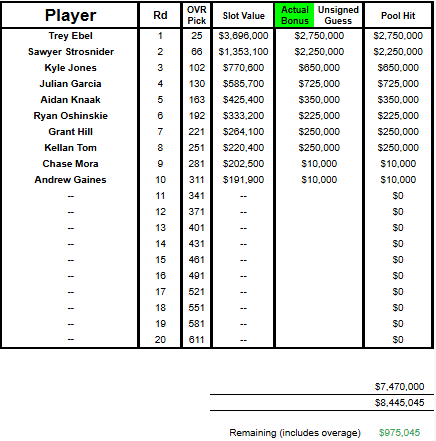
I'm here haha, just been writing up all the picks all day and also doing socials on X/Twitter/WhateverItIs and Bluesky. The number of tabs I have open currently is not something I want to count, nor would I like to admit how many if I did count. Nice break for the next hour though, so it's a good time to check in. I like the Grant HIll pick quite a bit the more I've looked into it, and Tom is intriguing too, because there's just not a ton of HS kids hitting oppo homers with relative regularity. He also ran a 6.72 60 yard dash in October which is not the speed I expected based on the body type. Oshinskie's stuff looks crazy interesting to me. Sounds like he had TJS, which means we won't see him until some time next year (hopefully), but that's a legit pitch mix and he did well on the Cape. As for bonus pools, I genuinely have no clue what things will look like, but I put together some initial guesses (again this is quite possibly the least confident I have ever been in these guesses), but if I'm close to right, they could conceivably still have around $1 mil to work with if you include the overage, and obviously that doesn't include the $150k per player that won't count toward the pool.
-
Image courtesy of © Patrick Breen/The Republic / USA TODAY NETWORK via Imagn Images The Brewers began Day Two of the draft with the selection of RHP Aidan Knaak of Clemson. Who did they select in rounds 6-10? Round 6, Pick 192: RHP Ryan Oshinskie -- Brown University Oshinskie missed the entire 2026 season with what is believed to be Tommy John surgery. He possesses a deep pitch mix, and there is a bit of a rare fastball shape here, with a lot of armside-run, but also decent carry on the pitch. He will get into the mid-90s on the fastball at times. The changeup flashes as a plus pitch with over 20 inches of armside run at times, and there is feel and ability to spin multiple different breaking balls as well. The slider has a chance to be a good pitch for him as well, though a pro team will likely try to get him to throw it a bit harder. The curveball is a distant fourth offering right now, but it gets good enough velocity and movement separation from the slider to serve a purpose in the pitch mix. The command is a work in progress, but it was the best it had ever been on the Cape, where he was a standout performer in 2025, with a 1.93 ERA in 28 innings, with 38 strikeouts and only 8 walks. Round 7, Pick 221: RHP Grant Hill -- Chelsea HS (AL) -- Grand Canyon commit Probably the greatest Grant Hill in the history of sports, this Grant Hill is not an NBA All-Star, but rather an intriguing prep pitcher with a commitment to Grand Canyon. Hill stands 6-foot-4, and at 17 years old, he definitely has some projection left in the tank at 205 pounds. His fastball appears to be one that would benefit from leaning into a cutter shape, as he sits around 70% spin efficiency. He could get to a cut-ride fastball shape too, as he did flash some fastballs close to 20" of Induced Vertical Break. His slider is thrown in the 82-84 MPH range, and he spins it decently, averaging around 2,400 RPMs. He also has a changeup that he sells well and gets pretty good run on it, but it could use some more depth. Hill will likely need to add some velocity in pro ball, but he has the build to do it. Command has been solid for him on the circuit and in high school games as well. Round 8, Pick 251: 1B Kellan Tom -- -- Arizona State commit Tom was the Prep Baseball Player of the Year in Arizona this season. A two-way player in high school, he was announced as a first baseman. There is big raw power, with exit velocities close to 110 MPH, this past October in a batting practice setting. He showed the ability to hit home runs to the opposite field throughout his high school season, which isn't a common trait for prep bats and is a trait the Brewers place a lot of value in. Despite his size, he did run a 6.72 60-yard dash this past October, which is better than average in terms of pure speed. There are some Luke Adams similarities here, though Tom's swing looks to be simpler than Adams' was out of high school. Perhaps the Brewers believe he could handle some other positions outside of first base with his sneaky athleticism. Arizona State isn't often an easy school to sign players away from, but the Brewers probably feel like they can get him at a pretty reasonable number at this point in the draft. Round 9, Pick 281: RHP Chase Mora -- Texas State Mora got a lot of attention for his freshman year at Texas State when he slashed .316/.382/.653 for a 1.035 OPS and hit 17 home runs. That production slipped over time, and the Brewers are actually drafting him as a pitcher. He only threw 1 1/3 total innings in college, so this is a very intriguing development. Jim Callis reported on the live broadcast of the draft that Mora has been up to 96 MPH on the mound and has a good feel for spinning the ball. This is likely to be a $10,000 senior sign pick for the Brewers, and they clearly like what they've seen in a tiny sample on the mound. There isn't any pitching video, but here he is hitting a go-ahead, 9th inning home run against USC this year; Round 10, Pick 311: RHP Andrew Gaines -- St Joseph's Gaines began his career at Iona, transferred to Pittsburgh, and eventually wound up at St Joseph's, where he was their closer this season. He finished the year with 47 strikeouts in 30 2/3 innings, but also with 15 walks and a 4.11 ERA. Gaines has a fastball in the mid-90s that has good carry and can generate a good Vertical Approach Angle, helping it miss bats when used up in the zone. He also throws an intriguing changeup, as well as a hard slider or cutter-type pitch. Command is not a strong suit right now, but the repertoire is one that is built to miss bats. If the Brewers can help him hone in his command a bit, there could be an intriguing relief prospect here. Gaines is also likely to sign for close to the (unofficial) $10,000 minimum. View full article
- 5 replies
-
- 2
-

-
- ryan oshinskie
- grant hill
- (and 5 more)
-
 The Brewers began Day Two of the draft with the selection of RHP Aidan Knaak of Clemson. Who did they select in rounds 6-10? Round 6, Pick 192: RHP Ryan Oshinskie -- Brown University Oshinskie missed the entire 2026 season with what is believed to be Tommy John surgery. He possesses a deep pitch mix, and there is a bit of a rare fastball shape here, with a lot of armside-run, but also decent carry on the pitch. He will get into the mid-90s on the fastball at times. The changeup flashes as a plus pitch with over 20 inches of armside run at times, and there is feel and ability to spin multiple different breaking balls as well. The slider has a chance to be a good pitch for him as well, though a pro team will likely try to get him to throw it a bit harder. The curveball is a distant fourth offering right now, but it gets good enough velocity and movement separation from the slider to serve a purpose in the pitch mix. The command is a work in progress, but it was the best it had ever been on the Cape, where he was a standout performer in 2025, with a 1.93 ERA in 28 innings, with 38 strikeouts and only 8 walks. Round 7, Pick 221: RHP Grant Hill -- Chelsea HS (AL) -- Grand Canyon commit Probably the greatest Grant Hill in the history of sports, this Grant Hill is not an NBA All-Star, but rather an intriguing prep pitcher with a commitment to Grand Canyon. Hill stands 6-foot-4, and at 17 years old, he definitely has some projection left in the tank at 205 pounds. His fastball appears to be one that would benefit from leaning into a cutter shape, as he sits around 70% spin efficiency. He could get to a cut-ride fastball shape too, as he did flash some fastballs close to 20" of Induced Vertical Break. His slider is thrown in the 82-84 MPH range, and he spins it decently, averaging around 2,400 RPMs. He also has a changeup that he sells well and gets pretty good run on it, but it could use some more depth. Hill will likely need to add some velocity in pro ball, but he has the build to do it. Command has been solid for him on the circuit and in high school games as well. Round 8, Pick 251: 1B Kellan Tom -- -- Arizona State commit Tom was the Prep Baseball Player of the Year in Arizona this season. A two-way player in high school, he was announced as a first baseman. There is big raw power, with exit velocities close to 110 MPH, this past October in a batting practice setting. He showed the ability to hit home runs to the opposite field throughout his high school season, which isn't a common trait for prep bats and is a trait the Brewers place a lot of value in. Despite his size, he did run a 6.72 60-yard dash this past October, which is better than average in terms of pure speed. There are some Luke Adams similarities here, though Tom's swing looks to be simpler than Adams' was out of high school. Perhaps the Brewers believe he could handle some other positions outside of first base with his sneaky athleticism. Arizona State isn't often an easy school to sign players away from, but the Brewers probably feel like they can get him at a pretty reasonable number at this point in the draft. Round 9, Pick 281: RHP Chase Mora -- Texas State Mora got a lot of attention for his freshman year at Texas State when he slashed .316/.382/.653 for a 1.035 OPS and hit 17 home runs. That production slipped over time, and the Brewers are actually drafting him as a pitcher. He only threw 1 1/3 total innings in college, so this is a very intriguing development. Jim Callis reported on the live broadcast of the draft that Mora has been up to 96 MPH on the mound and has a good feel for spinning the ball. This is likely to be a $10,000 senior sign pick for the Brewers, and they clearly like what they've seen in a tiny sample on the mound. There isn't any pitching video, but here he is hitting a go-ahead, 9th inning home run against USC this year; Round 10, Pick 311: RHP Andrew Gaines -- St Joseph's Gaines began his career at Iona, transferred to Pittsburgh, and eventually wound up at St Joseph's, where he was their closer this season. He finished the year with 47 strikeouts in 30 2/3 innings, but also with 15 walks and a 4.11 ERA. Gaines has a fastball in the mid-90s that has good carry and can generate a good Vertical Approach Angle, helping it miss bats when used up in the zone. He also throws an intriguing changeup, as well as a hard slider or cutter-type pitch. Command is not a strong suit right now, but the repertoire is one that is built to miss bats. If the Brewers can help him hone in his command a bit, there could be an intriguing relief prospect here. Gaines is also likely to sign for close to the (unofficial) $10,000 minimum.
- 5 comments
-
- 2
-

-
- ryan oshinskie
- grant hill
- (and 5 more)
-
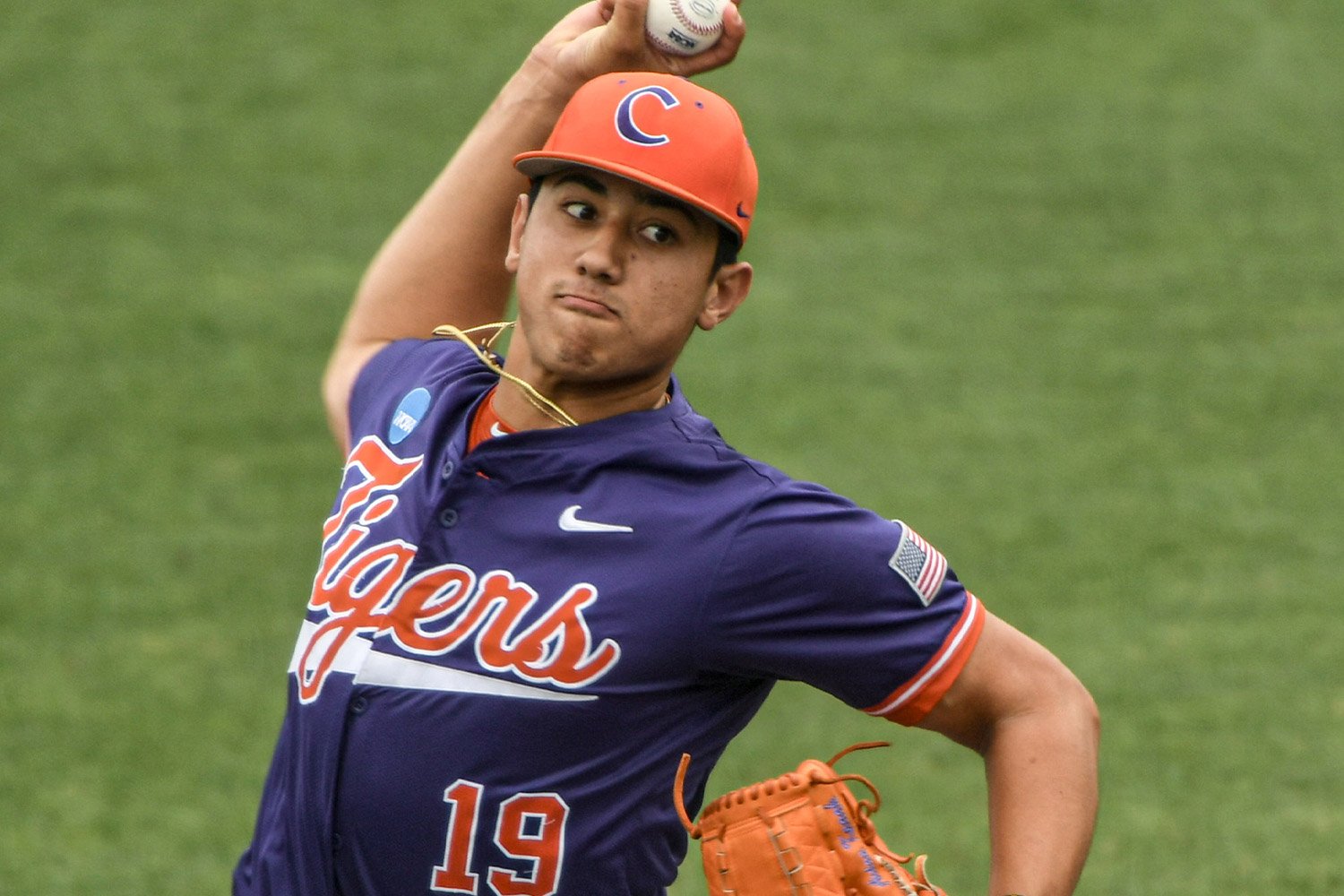
The Milwaukee Brewers selected Aidan Knaak at pick No. 163 in the 2026 MLB Draft. Knaak is a right-handed pitcher out of Clemson. The slot value for the pick is $425,400, and the Brewers will likely be looking to sign Knaak for slot or below. Knaak was ranked 210th on the MLB Pipeline board. He is known most for his changeup, which grades out as a 60-grade pitch, and is a pitch he manipulates the shape and velocity of. Beyond the changeup, Knaak throws a four-seam fastball with some late life, above-average carry, and has been up to 96 MPH, while sitting more in the 92-93 range. There's an upper-70s curveball, as well as a gyro slider in the mid-80s, though he does not generate much spin on the breaking balls. Knaak got off to a tremendous start in his college career, but his draft value slipped this season when he pitched to a 5.81 ERA, though he still struck out 88 batters in 57 1/3 innings. The Brewers are likely looking to buy low on a talented arm here, with some untapped potential left. View full rumor
-
 The Milwaukee Brewers selected Aidan Knaak at pick No. 163 in the 2026 MLB Draft. Knaak is a right-handed pitcher out of Clemson. The slot value for the pick is $425,400, and the Brewers will likely be looking to sign Knaak for slot or below. Knaak was ranked 210th on the MLB Pipeline board. He is known most for his changeup, which grades out as a 60-grade pitch, and is a pitch he manipulates the shape and velocity of. Beyond the changeup, Knaak throws a four-seam fastball with some late life, above-average carry, and has been up to 96 MPH, while sitting more in the 92-93 range. There's an upper-70s curveball, as well as a gyro slider in the mid-80s, though he does not generate much spin on the breaking balls. Knaak got off to a tremendous start in his college career, but his draft value slipped this season when he pitched to a 5.81 ERA, though he still struck out 88 batters in 57 1/3 innings. The Brewers are likely looking to buy low on a talented arm here, with some untapped potential left.
 -
Image courtesy of © Dave Kallmann / Milwaukee Journal Sentinel / USA TODAY NETWORK via Imagn Images Following in the steps of Cooper Pratt, Luis Lara also signed a long-term extension this year. Lara signed a seven-year deal with $31 million guaranteed, with the potential to reach 10 years and $78 million with incentives and team options. After waiting nearly a month from the time he signed the deal to the day he got the call, he has officially arrived. The question now is, what should fans (realistically) expect from a rookie version of Lara at the big-league level? Before diving too deeply into the production, one thing that is abundantly clear if you have ever watched Lara for an extended period of time is that fans should be expecting a ton of energy from him on a day-in, day-out basis. He plays with a lot of passion; hustle should not be a concern at any point. As for what his production will likely look like, Lara's glove will almost certainly provide the most value early on. He was the 2025 MiLB Rawlings Gold Glove winner in center field, awarded to the best defensive player at each position in all of Minor League Baseball. The scouting grades on the glove are impressive, as well. He received a future 60 grade (plus) from FanGraphs, and a 70 (plus-plus) from both Baseball America and MLB Pipeline. He plays with reckless abandon, willing to crash into walls and lay out in the gap. He has improved his routes and his jumps every year, and there's an expectation that with regular playing time, he can be one of the best defensive outfielders in baseball. Despite only standing 5-foot-7, Lara also has a plus arm and had 10 outfield assists in 2025, adding three more in Triple-A this season. Lara's baserunning should be a plus. He's got plus straight-line speed, possibly closer to plus-plus. However, he has also improved his jumps on the bases. He doesn't quite have the same success rate that Pratt had in the minors, but he did steal 44 of 51 in Double-A last year, and was 24 of 31 with Nashville at the time of his call-up. The 86.3% number in Double-A is really strong. The 77.4% in Triple-A is still serviceable, but ideally, the Brewers will hope to see that number over 80%. At the plate, there will be more questions for Lara early on. He got off to an incredible start at the plate this season, though there were a lot of signs below the surface that the production was not especially sustainable. For example, after his first 114 plate appearances of the season, he had already surpassed his career-high home run total with five, and was posting an incredible 1.000 OPS, with a .430 wOBA. However, his xwOBA was only at .291 at that point. Over the course of the season, the xwOBA has closed the gap a bit, but it would still be a mistake to assume that Lara's surface stats in Triple-A will lead to immediate success in MLB. The chart below is courtesy of TJ Stats and clearly shows the difference between the production and the peripheral numbers. One of the peripheral stats that shows as a clear positive is his very strong ability to make contact. His whiff rate was among the best at the Triple-A level, and he showed decent swing decisions as well. Those are two skills that should translate well in MLB—especially the bat-to-ball ability. His previous career high in home runs was only four, but he already has nine in 2026. While there have been some signs of legitimate growth in the power department, a look at the quality of the contact in general, and even on his home runs specifically, points to some small Triple-A stadium flukiness in those home run numbers. Only three of Lara's home runs have left the bat at 100+ MPH, and three have been 95 MPH or lower. He does have enough power to get into a home run once in a while, but expecting much game power from Lara in MLB this season will lead to disappointment. There is a possibility that there will be more down the line, though, as he has pretty continually added strength and some power every year of his career. One thing to keep in mind as well is that Lara has been much better from the right side this season, at least in terms of his contact quality. In fact, all three of the aforementioned 100+ MPH home runs were hit off of left-handed pitchers. This will lead to him getting a lot of playing time against lefties, which does make it a decent fit with the current roster, because Sal Frelick and Garrett Mitchell are both platoon candidates. Courtesy of TJ Stats It will be interesting to see how often the Brewers get Lara on the field against right-handed pitchers, though. He still shows the strong bat-to-ball and swing decisions from that side, and it would be short-sighted to bring him up and only use him as the short side of a platoon. Assuming he does get semi-regular playing time against righties too, it would be safe to expect more of a line drive approach, with singles from that side, and if we see much power, it will likely come from the right side. Lara handled fastballs and breaking balls very well in Triple-A. Changeups and splitters were the only pitches that gave him much of an issue; that could be something pitchers will look to expose more often in MLB. Despite the overall struggles against offspeed pitches, he didn't swing and miss at them any more than any other pitch; he just struggled to make quality contact. The odds of Lara hitting at a league-average or better clip in his rookie season are not especially high, though they are higher than Pratt's. Still, it would be wise to keep the offensive expectations in check. Lara is here for his defense and his speed. The hope is that there is enough immediate impact offensively to help this Brewers team right now. Luis Lara is officially a big leaguer. Keeping expectations in check for the bat will be important, but this should be an exciting time for Brewers fans, and Lara will bring even more excitement to the field almost every night he makes it out there. View full article
-
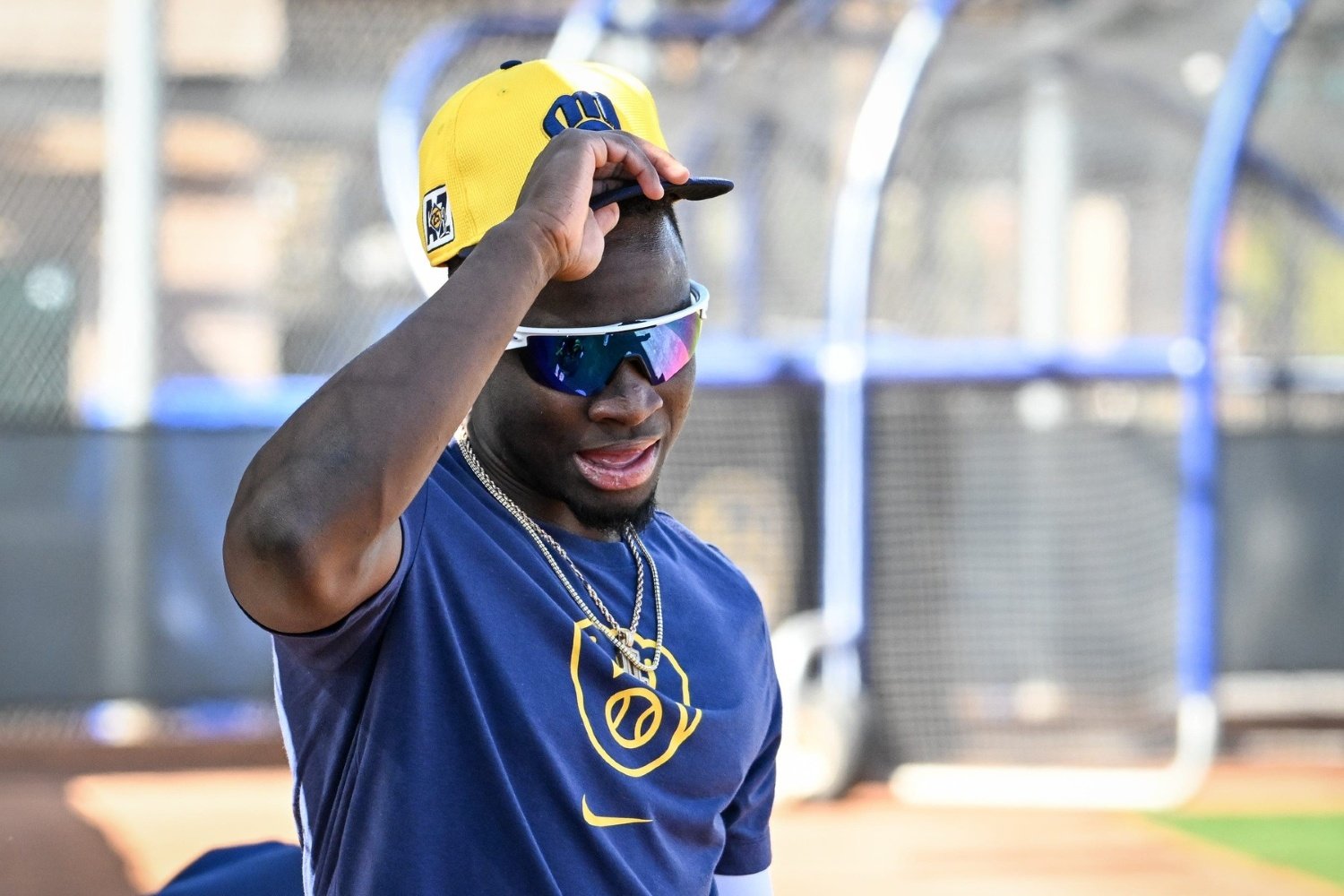 Following in the steps of Cooper Pratt, Luis Lara also signed a long-term extension this year. Lara signed a seven-year deal with $31 million guaranteed, with the potential to reach 10 years and $78 million with incentives and team options. After waiting nearly a month from the time he signed the deal to the day he got the call, he has officially arrived. The question now is, what should fans (realistically) expect from a rookie version of Lara at the big-league level? Before diving too deeply into the production, one thing that is abundantly clear if you have ever watched Lara for an extended period of time is that fans should be expecting a ton of energy from him on a day-in, day-out basis. He plays with a lot of passion; hustle should not be a concern at any point. As for what his production will likely look like, Lara's glove will almost certainly provide the most value early on. He was the 2025 MiLB Rawlings Gold Glove winner in center field, awarded to the best defensive player at each position in all of Minor League Baseball. The scouting grades on the glove are impressive, as well. He received a future 60 grade (plus) from FanGraphs, and a 70 (plus-plus) from both Baseball America and MLB Pipeline. He plays with reckless abandon, willing to crash into walls and lay out in the gap. He has improved his routes and his jumps every year, and there's an expectation that with regular playing time, he can be one of the best defensive outfielders in baseball. Despite only standing 5-foot-7, Lara also has a plus arm and had 10 outfield assists in 2025, adding three more in Triple-A this season. Lara's baserunning should be a plus. He's got plus straight-line speed, possibly closer to plus-plus. However, he has also improved his jumps on the bases. He doesn't quite have the same success rate that Pratt had in the minors, but he did steal 44 of 51 in Double-A last year, and was 24 of 31 with Nashville at the time of his call-up. The 86.3% number in Double-A is really strong. The 77.4% in Triple-A is still serviceable, but ideally, the Brewers will hope to see that number over 80%. At the plate, there will be more questions for Lara early on. He got off to an incredible start at the plate this season, though there were a lot of signs below the surface that the production was not especially sustainable. For example, after his first 114 plate appearances of the season, he had already surpassed his career-high home run total with five, and was posting an incredible 1.000 OPS, with a .430 wOBA. However, his xwOBA was only at .291 at that point. Over the course of the season, the xwOBA has closed the gap a bit, but it would still be a mistake to assume that Lara's surface stats in Triple-A will lead to immediate success in MLB. The chart below is courtesy of TJ Stats and clearly shows the difference between the production and the peripheral numbers. One of the peripheral stats that shows as a clear positive is his very strong ability to make contact. His whiff rate was among the best at the Triple-A level, and he showed decent swing decisions as well. Those are two skills that should translate well in MLB—especially the bat-to-ball ability. His previous career high in home runs was only four, but he already has nine in 2026. While there have been some signs of legitimate growth in the power department, a look at the quality of the contact in general, and even on his home runs specifically, points to some small Triple-A stadium flukiness in those home run numbers. Only three of Lara's home runs have left the bat at 100+ MPH, and three have been 95 MPH or lower. He does have enough power to get into a home run once in a while, but expecting much game power from Lara in MLB this season will lead to disappointment. There is a possibility that there will be more down the line, though, as he has pretty continually added strength and some power every year of his career. One thing to keep in mind as well is that Lara has been much better from the right side this season, at least in terms of his contact quality. In fact, all three of the aforementioned 100+ MPH home runs were hit off of left-handed pitchers. This will lead to him getting a lot of playing time against lefties, which does make it a decent fit with the current roster, because Sal Frelick and Garrett Mitchell are both platoon candidates. Courtesy of TJ Stats It will be interesting to see how often the Brewers get Lara on the field against right-handed pitchers, though. He still shows the strong bat-to-ball and swing decisions from that side, and it would be short-sighted to bring him up and only use him as the short side of a platoon. Assuming he does get semi-regular playing time against righties too, it would be safe to expect more of a line drive approach, with singles from that side, and if we see much power, it will likely come from the right side. Lara handled fastballs and breaking balls very well in Triple-A. Changeups and splitters were the only pitches that gave him much of an issue; that could be something pitchers will look to expose more often in MLB. Despite the overall struggles against offspeed pitches, he didn't swing and miss at them any more than any other pitch; he just struggled to make quality contact. The odds of Lara hitting at a league-average or better clip in his rookie season are not especially high, though they are higher than Pratt's. Still, it would be wise to keep the offensive expectations in check. Lara is here for his defense and his speed. The hope is that there is enough immediate impact offensively to help this Brewers team right now. Luis Lara is officially a big leaguer. Keeping expectations in check for the bat will be important, but this should be an exciting time for Brewers fans, and Lara will bring even more excitement to the field almost every night he makes it out there.
 -
Hey everyone, this is another call for questions for this week's episode, recording on Thursday. I will also be recording a draft preview with Jamie Cameron tonight (7/7). So, if you have draft questions, make sure to get those in ASAP. The draft preview will be released with the normal episode on Friday still.
-
Sorry, I am not in the habit of putting this out on here yet, so this is late notice, but we will be recording our next episode tonight around 7 PM CT, so if you have questions, please drop them below! We can't guarantee to answer every question we receive, but we will do our best to get to as many as we can!
-
Luis Peña's back in the lineup
-
Have until about 5:00 PM CT to get questions in if you have them!
-
Image courtesy of © Dan Powers/USA TODAY NETWORK-Wisconsin / USA TODAY NETWORK via Imagn Images The Brewers' farm system continues to impress, despite several big-time graduations over the last few years. International signings continue to make names for themselves, which accounts for one of the new additions to our top 20 prospects list this month. Meanwhile, the other was a college draft pick who signed for $25,000 in 2024. The organization continues to find talent through all possible avenues. You can find the full list here! New Additions #18 OF Alexander Frias Frias signed out of the Dominican Republic in the Brewers' 2025 International signing class. His $350,000 signing bonus was tied for the sixth-highest in the Brewers' class. Frias missed the first month of the Dominican Summer League season due to injury, but began to produce the moment he got on the field, posting a 112 wRC+ over the first 112 plate appearances of his professional career. Frias was brought stateside this spring, and there were some whispers that he was performing extremely well in minor-league spring training games. He even posted a video of himself hitting a ball 115 MPH in a spring training game. Those whispers got louder once the Arizona Complex League season began, and Frias started posting ludicrous surface-level stats. Before his promotion to Low-A, which occurred this past weekend, Frias's 191 wRC+ was second among qualified batters between both Complex leagues. He finished with a bang at the level, going 8-for-10 in his final 10 at-bats, including a 6-for-6 game in his penultimate contest. Frias possesses plus-plus raw power. In games played on Statcast-equipped fields, Frias had an average exit velocity of 91.6 MPH, and maxed out at 117 MPH, which would be the hardest-hit ball by a big-league Brewer in 2026, and would trail only Oneil Cruz and Yordan Alvarez's max numbers for all of MLB. Frias is only 18 years old and doesn't turn 19 until March. To tap into that raw power more often, though, Frias will need to learn to elevate the ball more consistently. His ground ball rate was 44.1%, and the average launch angle in Statcast games was -3.9°. Not only does Frias show the potential for big-time power, but he also shows an impressive feel for limiting strikeouts. He only struck out at a 15.3% clip in the ACL. His whiff rates point to strikeouts still being a bigger part of the profile as he gets older, but they appear to be unlikely ever to be a major issue for him. He walked at a reasonable clip, too, though he does have a propensity to chase, which will be something to keep an eye on. Frias has a cannon of an arm (some scouts think he could throw upper-90s as a pitcher if he ever needed or wanted to go that route) and likely fits in right field long-term. He's an average runner, though probably better than average for his size. He could steal double-digit bases in his prime, though he will need to cut down on some of the aggressiveness the higher he climbs. Frias has started to generate major buzz. He just entered this list for the first time, but looks to be the type of talent that could find his way into the upper levels of the list in short order. He has already begun generating buzz among national evaluators for a future Top 100 spot. #19 RHP Jaron DeBerry DeBerry was the Brewers' third-round selection in the 2024 draft, signing for a measly $25,000 out of Dallas Baptist. Less than two years later, he finds himself among the top 20 prospects in the organization. The right-handed pitcher may have been drafted as a college senior, but there was always a lot of untapped potential there, despite his advanced age. DeBerry was mainly throwing in the 89-91 MPH range in college, but had a lot of room to pack good weight onto his frame. It was a six-pitch mix at the time, and has expanded to seven pitches in pro ball. DeBerry throws all three fastball variations, with his four-seam shape reportedly improving this season, while also sitting in the 92-94 MPH range and touching 96. His sinker is used against right-handed hitters as a ground-ball pitch, and his cutter is used against batters on either side of the plate. He spins the ball extremely well, which shows up mainly in his breaking ball mix. He will throw a big sweeper in the low 80s, a curveball with more depth and similar velocity, and also a shorter slider in the mid-80s. The sweeper is mostly used against righties, while the others are used more against lefties. His changeup has come a long way since college, as well. It gives him a solid pitch that fades away from the lefty bats. DeBerry had a slow start to the season, with a 7.25 ERA after his first six starts and a 20.6% walk-rate, which was the same as his strikeout rate in that time. Since then, though, he has posted a 2.51 ERA, while striking out 26.5% of the batters he's faced and only walking 6.6%. He has also gone deep into games, never working fewer than five innings in a start, working through the sixth in all but one of them and getting through seven in two of them. DeBerry has tapped into a lot of that potential he was showing out of college, and could get a chance in Triple-A relatively soon. At that point, he would become an option for the big-league club in short order. Biggest Risers #9 OF Braylon Payne -- Up four spots from #13 Payne got off to a really hot start this season. He cooled off a bit, but in 197 plate appearances has now settled into an .978 OPS and a 139 wRC+ for the Timber Rattlers. His season has been highlighted by his ability to tap into even more raw power, both in terms of his exit velocities and his ability to hit the ball in the air. His PullAir% of 17.3% is well above-average for High-A hitters. One of his home runs left the bat at 115 MPH earlier this season. He’s also a plus-plus runner, though his 14/20 success rate on stolen bases leaves a lot to be desired. The defense has taken a step forward in center, where his athleticism is always on display. The reads and jumps still need some work, but they are much better than in 2025. Payne has the tools to be a power and speed threat, though he will still need to limit his whiffs (35.5%) and strikeouts (28.9%) as much as possible. #16 RHP Craig Yoho -- Not ranked in May update Yoho has proven over and over that he is too advanced for Triple-A. His 0.90 ERA and 2.01 xERA at the level this season emphasize that. The inability to throw his pitches in the zone had cost him in his brief MLB stints in the past. With Nashville in 2025, he generated chases on 32.6% of pitches out of the zone, with 46.4% thrown in the zone, but only got chases on 21.4% of pitches out of the zone in MLB, where his zone rate was 44.3%, both well below average. This year in Triple-A, the zone rate is up to 50.5%, and in his last two MLB outings, it's at 60%. Overall, he's generated chases on 33.3% of pitches out of the zone in MLB this year, which is well above-average. It seems as though he could be on the verge of putting it together and becoming a key piece of the Brewers' bullpen in 2026. #6 OF Josh Adamczewski -- Up three spots from #9 Adamczewski laid waste to Midwest League pitching this season. After a slow start at the level in a small sample to close out the 2025 season, he returned with a vengeance. He posted a 162 wRC+ and a 1.026 OPS at the level. He has already surpassed his career high in home runs with nine (previously five in 2025), and he’s also kept his strikeout rate under 20%. His move to left field has also gone well, showing instincts that are better than expected, given his relative inexperience out there. Adamczewski could continue his climb up this list over the course of this season. He was promoted to Double-A last week and is 7-for-18 with two doubles at the level in his first five games. #5 3B Andrew Fischer -- Up three spots from #8 Like Adamczewski, Fischer also crushed Midwest League pitching this season. He posted an even more impressive 170 wRC+ and 1.118 OPS at the level. He hit 20 home runs in 191 at-bats, averaging one every 9.6 at-bats. Strikeouts (33.3%) and whiffs (39.2%) will be something to keep an eye on, but the overall production has been elite. His defense at third base has been more than serviceable, as well, though he still has work to do at the position. The arm plays more than well enough to handle the spot. Fischer was promoted with Adamczewski to Double-A last week and has already added three more home runs to his tally through five games—and has added a double and triple to the tally to account for all five of his hits. Biggest Fallers #7 3B Jett Williams -- Down three spots from #4 Williams has had a very up-and-down 2026. He got off to a very slow start, had a very strong stretch from the end of April through mid-May, but then slowed down again. The overall numbers in Triple-A are relatively pedestrian at the moment, with an 89 wRC+ and an OPS of .701. He has cut down some of the whiff concerns, but the power has not shown up as hoped, and the peripherals aren't screaming positive regression to the mean, either, as his xwOBA is .310 and his wOBA is .312, He's looked comfortable defensively at third base, and has played more shortstop since Cooper Pratt was promoted to the majors. That said, he will need to show quite a bit more offensively if he hopes to make it to Milwaukee in the near future. #13 C Marco Dinges -- Down three spots from #10 Dinges has performed well offensively in High-A this season. He's got a 115 wRC+ and an .863 OPS, while hitting eight home runs. The strikeouts and whiffs are both in similar places to 2025, and the walks are, too. The bat isn't a big concern, though it would have been nice to see positive steps in year two at High-A, rather than holding steady or regressing a bit in most categories. The defense is the bigger concern and is causing the slippage in the rankings. Some of the concern is that he simply has not been able to catch for the last month or so. He's reportedly dealing with a shoulder injury that has not allowed him to get behind the plate in that time. It's fair to wonder if the shoulder issue has affected the offense, as well. However, when he was healthy, he was showing some progress behind the plate. He had thrown out 7 of 23 players attempting to steal against him and had zero passed balls in his 16 games behind the plate this year. It seems that health, along with so many players performing well in the system, might be causing this fall, more than anything Dinges can control himself. Graduations #3 RHP Logan Henderson Henderson earned himself a spot in the Brewers' rotation, and looks like a potential mid-rotation arm for the future. He is currently on the IL with a back issue, and health will be one of the main things to watch for Henderson moving forward. #17 LHP Shane Drohan Drohan is also currently in the Brewers' rotation. While he could shift back into a bullpen role at some point this season, he has handled that rotation spot extremely well, and that should be his long-term role with the Brewers. Thank you to all of you who voted! View full article
- 5 replies
-
- 2
-
-
- braylon payne
- jesus made
- (and 8 more)
-
 The Brewers' farm system continues to impress, despite several big-time graduations over the last few years. International signings continue to make names for themselves, which accounts for one of the new additions to our top 20 prospects list this month. Meanwhile, the other was a college draft pick who signed for $25,000 in 2024. The organization continues to find talent through all possible avenues. You can find the full list here! New Additions #18 OF Alexander Frias Frias signed out of the Dominican Republic in the Brewers' 2025 International signing class. His $350,000 signing bonus was tied for the sixth-highest in the Brewers' class. Frias missed the first month of the Dominican Summer League season due to injury, but began to produce the moment he got on the field, posting a 112 wRC+ over the first 112 plate appearances of his professional career. Frias was brought stateside this spring, and there were some whispers that he was performing extremely well in minor-league spring training games. He even posted a video of himself hitting a ball 115 MPH in a spring training game. Those whispers got louder once the Arizona Complex League season began, and Frias started posting ludicrous surface-level stats. Before his promotion to Low-A, which occurred this past weekend, Frias's 191 wRC+ was second among qualified batters between both Complex leagues. He finished with a bang at the level, going 8-for-10 in his final 10 at-bats, including a 6-for-6 game in his penultimate contest. Frias possesses plus-plus raw power. In games played on Statcast-equipped fields, Frias had an average exit velocity of 91.6 MPH, and maxed out at 117 MPH, which would be the hardest-hit ball by a big-league Brewer in 2026, and would trail only Oneil Cruz and Yordan Alvarez's max numbers for all of MLB. Frias is only 18 years old and doesn't turn 19 until March. To tap into that raw power more often, though, Frias will need to learn to elevate the ball more consistently. His ground ball rate was 44.1%, and the average launch angle in Statcast games was -3.9°. Not only does Frias show the potential for big-time power, but he also shows an impressive feel for limiting strikeouts. He only struck out at a 15.3% clip in the ACL. His whiff rates point to strikeouts still being a bigger part of the profile as he gets older, but they appear to be unlikely ever to be a major issue for him. He walked at a reasonable clip, too, though he does have a propensity to chase, which will be something to keep an eye on. Frias has a cannon of an arm (some scouts think he could throw upper-90s as a pitcher if he ever needed or wanted to go that route) and likely fits in right field long-term. He's an average runner, though probably better than average for his size. He could steal double-digit bases in his prime, though he will need to cut down on some of the aggressiveness the higher he climbs. Frias has started to generate major buzz. He just entered this list for the first time, but looks to be the type of talent that could find his way into the upper levels of the list in short order. He has already begun generating buzz among national evaluators for a future Top 100 spot. #19 RHP Jaron DeBerry DeBerry was the Brewers' third-round selection in the 2024 draft, signing for a measly $25,000 out of Dallas Baptist. Less than two years later, he finds himself among the top 20 prospects in the organization. The right-handed pitcher may have been drafted as a college senior, but there was always a lot of untapped potential there, despite his advanced age. DeBerry was mainly throwing in the 89-91 MPH range in college, but had a lot of room to pack good weight onto his frame. It was a six-pitch mix at the time, and has expanded to seven pitches in pro ball. DeBerry throws all three fastball variations, with his four-seam shape reportedly improving this season, while also sitting in the 92-94 MPH range and touching 96. His sinker is used against right-handed hitters as a ground-ball pitch, and his cutter is used against batters on either side of the plate. He spins the ball extremely well, which shows up mainly in his breaking ball mix. He will throw a big sweeper in the low 80s, a curveball with more depth and similar velocity, and also a shorter slider in the mid-80s. The sweeper is mostly used against righties, while the others are used more against lefties. His changeup has come a long way since college, as well. It gives him a solid pitch that fades away from the lefty bats. DeBerry had a slow start to the season, with a 7.25 ERA after his first six starts and a 20.6% walk-rate, which was the same as his strikeout rate in that time. Since then, though, he has posted a 2.51 ERA, while striking out 26.5% of the batters he's faced and only walking 6.6%. He has also gone deep into games, never working fewer than five innings in a start, working through the sixth in all but one of them and getting through seven in two of them. DeBerry has tapped into a lot of that potential he was showing out of college, and could get a chance in Triple-A relatively soon. At that point, he would become an option for the big-league club in short order. Biggest Risers #9 OF Braylon Payne -- Up four spots from #13 Payne got off to a really hot start this season. He cooled off a bit, but in 197 plate appearances has now settled into an .978 OPS and a 139 wRC+ for the Timber Rattlers. His season has been highlighted by his ability to tap into even more raw power, both in terms of his exit velocities and his ability to hit the ball in the air. His PullAir% of 17.3% is well above-average for High-A hitters. One of his home runs left the bat at 115 MPH earlier this season. He’s also a plus-plus runner, though his 14/20 success rate on stolen bases leaves a lot to be desired. The defense has taken a step forward in center, where his athleticism is always on display. The reads and jumps still need some work, but they are much better than in 2025. Payne has the tools to be a power and speed threat, though he will still need to limit his whiffs (35.5%) and strikeouts (28.9%) as much as possible. #16 RHP Craig Yoho -- Not ranked in May update Yoho has proven over and over that he is too advanced for Triple-A. His 0.90 ERA and 2.01 xERA at the level this season emphasize that. The inability to throw his pitches in the zone had cost him in his brief MLB stints in the past. With Nashville in 2025, he generated chases on 32.6% of pitches out of the zone, with 46.4% thrown in the zone, but only got chases on 21.4% of pitches out of the zone in MLB, where his zone rate was 44.3%, both well below average. This year in Triple-A, the zone rate is up to 50.5%, and in his last two MLB outings, it's at 60%. Overall, he's generated chases on 33.3% of pitches out of the zone in MLB this year, which is well above-average. It seems as though he could be on the verge of putting it together and becoming a key piece of the Brewers' bullpen in 2026. #6 OF Josh Adamczewski -- Up three spots from #9 Adamczewski laid waste to Midwest League pitching this season. After a slow start at the level in a small sample to close out the 2025 season, he returned with a vengeance. He posted a 162 wRC+ and a 1.026 OPS at the level. He has already surpassed his career high in home runs with nine (previously five in 2025), and he’s also kept his strikeout rate under 20%. His move to left field has also gone well, showing instincts that are better than expected, given his relative inexperience out there. Adamczewski could continue his climb up this list over the course of this season. He was promoted to Double-A last week and is 7-for-18 with two doubles at the level in his first five games. #5 3B Andrew Fischer -- Up three spots from #8 Like Adamczewski, Fischer also crushed Midwest League pitching this season. He posted an even more impressive 170 wRC+ and 1.118 OPS at the level. He hit 20 home runs in 191 at-bats, averaging one every 9.6 at-bats. Strikeouts (33.3%) and whiffs (39.2%) will be something to keep an eye on, but the overall production has been elite. His defense at third base has been more than serviceable, as well, though he still has work to do at the position. The arm plays more than well enough to handle the spot. Fischer was promoted with Adamczewski to Double-A last week and has already added three more home runs to his tally through five games—and has added a double and triple to the tally to account for all five of his hits. Biggest Fallers #7 3B Jett Williams -- Down three spots from #4 Williams has had a very up-and-down 2026. He got off to a very slow start, had a very strong stretch from the end of April through mid-May, but then slowed down again. The overall numbers in Triple-A are relatively pedestrian at the moment, with an 89 wRC+ and an OPS of .701. He has cut down some of the whiff concerns, but the power has not shown up as hoped, and the peripherals aren't screaming positive regression to the mean, either, as his xwOBA is .310 and his wOBA is .312, He's looked comfortable defensively at third base, and has played more shortstop since Cooper Pratt was promoted to the majors. That said, he will need to show quite a bit more offensively if he hopes to make it to Milwaukee in the near future. #13 C Marco Dinges -- Down three spots from #10 Dinges has performed well offensively in High-A this season. He's got a 115 wRC+ and an .863 OPS, while hitting eight home runs. The strikeouts and whiffs are both in similar places to 2025, and the walks are, too. The bat isn't a big concern, though it would have been nice to see positive steps in year two at High-A, rather than holding steady or regressing a bit in most categories. The defense is the bigger concern and is causing the slippage in the rankings. Some of the concern is that he simply has not been able to catch for the last month or so. He's reportedly dealing with a shoulder injury that has not allowed him to get behind the plate in that time. It's fair to wonder if the shoulder issue has affected the offense, as well. However, when he was healthy, he was showing some progress behind the plate. He had thrown out 7 of 23 players attempting to steal against him and had zero passed balls in his 16 games behind the plate this year. It seems that health, along with so many players performing well in the system, might be causing this fall, more than anything Dinges can control himself. Graduations #3 RHP Logan Henderson Henderson earned himself a spot in the Brewers' rotation, and looks like a potential mid-rotation arm for the future. He is currently on the IL with a back issue, and health will be one of the main things to watch for Henderson moving forward. #17 LHP Shane Drohan Drohan is also currently in the Brewers' rotation. While he could shift back into a bullpen role at some point this season, he has handled that rotation spot extremely well, and that should be his long-term role with the Brewers. Thank you to all of you who voted!
- 5 comments
-
- 3
-
-
-
- braylon payne
- jesus made
- (and 8 more)
-
Hey all, @Jack Sternand I realized we were likely missing out on some great questions from the Brewer Fanatic community when putting the call out on Twitter/X, so moving forward, we will also post a call for questions every week in this forum. We will be recording our next episode this Thursday (6/25) in the evening, so ideally, you can get them in before then. We can't guarantee to answer every question we receive, but we will do our best to get to as many as we can!
-
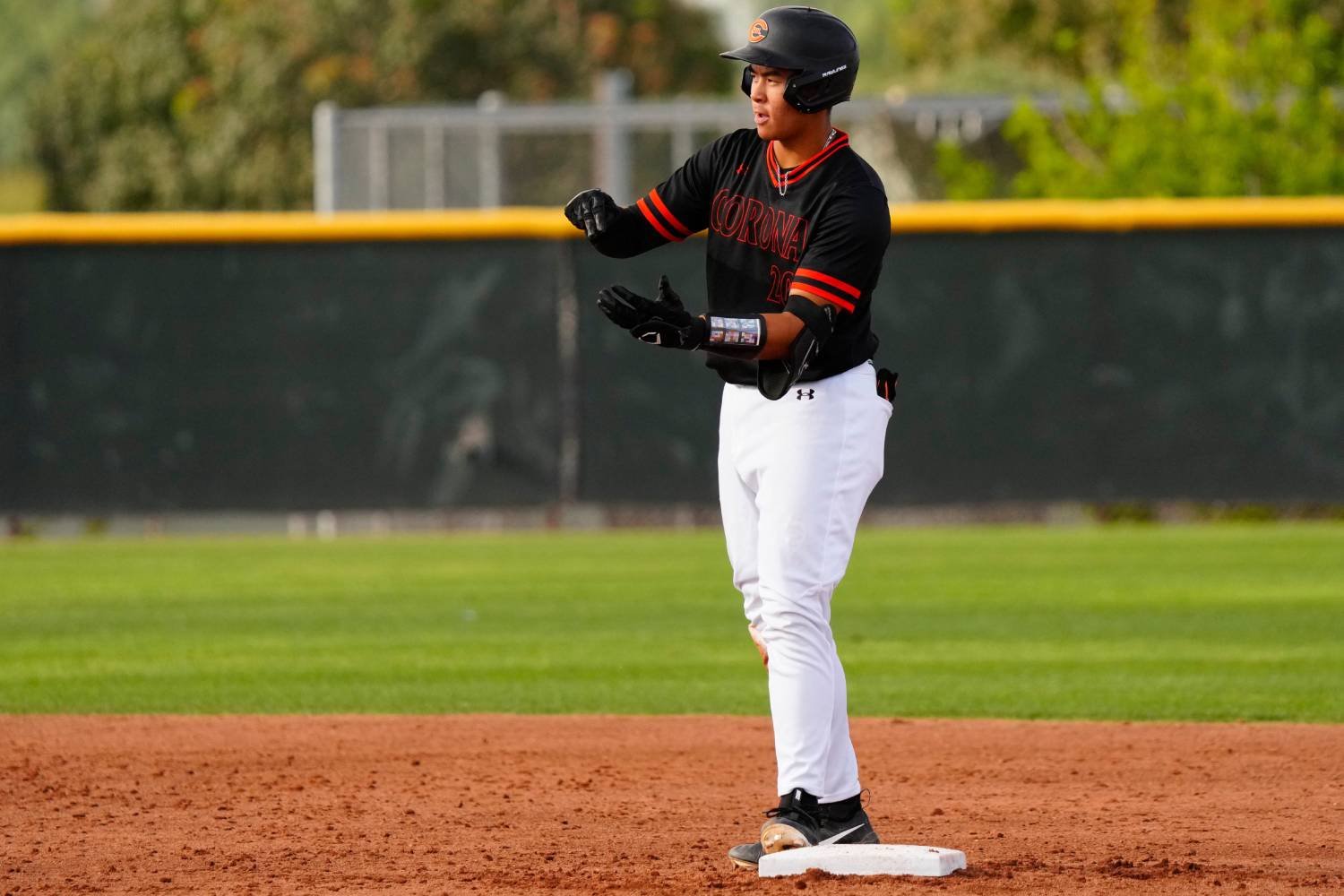
Image courtesy of © Dave Kallmann / Milwaukee Journal Sentinel / USA TODAY NETWORK via Imagn Images The Brewers have a history of drafting infielders with good gloves, strong baseball IQ to set a high floor, and offensive traits that need patience and development, but if they come together, they can provide a high ceiling. Brice Turang has evolved into one of the best examples of that model, turning elite defensive ability, speed, and contact skills into major league value early on, and then growing into impactful power at the plate, which has elevated him into a different tier. More recently, Cooper Pratt made his big league debut and is already showing similar traits. Brady Ebel may be the latest player attempting to follow a similar path. In fact, the parallels to Turang go pretty deep. They went to different high schools, but both are from the same city (Corona, CA), both are left-handed-hitting shortstops, and both were drafted, and signed, away from LSU commitments out of high school. While Ebel has not received quite the same level of attention or prospect status as Turang and Pratt did at similar stages, there are enough similarities in their profiles to make the comparison worth looking at. He brings a solid defensive floor, a high baseball IQ (Ebel grew up around MLB players, with his father being a coach for the Angels and now the third-base coach for the Dodgers since 2019), and budding offensive ability. Unlike the two before him, there's less certainty that he will stick at an up-the-middle defensive position, though if he winds up at third base, he will likely be above-average or better at the spot. Looking first at a surface level, Ebel has 287 plate appearances this season. How does his production compare to Turang and Pratt through the same sample size in Low-A? Player Season Age PA H 2B 3B HR K% BB% AVG OBP SLG OPS wRC+ SB CS Brice Turang 2019 18.5 288 71 9 3 1 15.60% 14.90% .295 .399 .369 .769 129 15 4 Cooper Pratt 2024 19.7 288 72 10 3 3 19.10% 12.50% .298 .394 .401 .795 133 23 2 Brady Ebel 2026 18.9 287 53 11 2 4 22.60% 18.50% .236 .394 .356 .749 111 21 2 Ebel has gotten off to a slower start than his predecessors, especially when normalized for the offensive environment (wRC+). However, Ebel got off to an especially slow start to the season. He posted a 68 wRC+ through the end of April but has taken off since then. What if we compare the same numbers from Pratt and Turang with the numbers Ebel's been putting up since the start of May? Player Season Age PA H 2B 3B HR K% BB% AVG OBP SLG OPS wRC+ SB CS Brice Turang 2019 18.5 288 71 9 3 1 15.60% 14.90% .295 .399 .369 .769 129 15 4 Cooper Pratt 2024 19.7 288 72 10 3 3 19.10% 12.50% .298 .394 .401 .795 133 23 2 Brady Ebel (since 5/1) 2026 18.9 187 40 9 1 4 23.50% 18.70% .272 .422 .429 .851 134 16 2 He compares much more favorably when you take the April results out of the equation. It should be noted that Ebel is doing it a little differently from those two. Since May 1st, Ebel has a .157 ISO, compared to the .074 Turang was posting in Low-A and the .103 Pratt was showing. He's also walking at a higher clip than those two were, while they were striking out less and had a higher batting average. Turang's power gains came in MLB, and the hope is that Pratt will be able to do the same. Ebel, meanwhile, already seems to be adding legitimate power compared to what he showed in high school. One adjustment he's made has been to the finish of his swing. Ebel looks to be extending through his swing more consistently now, and also finishing higher, which can be a cue that helps the bat path have more loft to it for some hitters. Video from his debut in 2025, compared to a swing from 2026, shows the difference pretty clearly. eycme4.mp4 The other thing that stands out in the comparison video above is that he seems to have already added some good weight to his frame. Brice Turang is listed at 190 pounds now, but he was only 170 pounds when he debuted in MLB, and even that seemed generous. Ebel is already listed at 195 pounds, and that was his weight at draft time. Looking at the difference in his lower half from last season to this season, he is likely over 200 pounds already. Another way to illustrate the power Ebel shows compared to the other two is in his exit-velocity data. According to Baseball America, thus far Ebel has a "102 mph 90th percentile exit velocity along with a league-average hard-hit rate, barrel rate, and air-pull percentage." Pratt's 2025 90th percentile exit velocity in Double-A was 100.7 MPH, and Turang's was 100.8 in MLB, as recently as 2024. While they were facing tougher competition, they were also multiple years older than Ebel at that time. As mentioned earlier, Turang and Pratt had lower strikeout rates than Ebel does at the same level. However, his swing decisions and contact skills are still well above average. There's a strong argument that Ebel is actually further ahead of those two offensively at the same stages of their career. If you look only at the power part of the equation, there's not much of an argument for the other two. Defense is where it's a bit of a different story. Ebel is no slouch with the glove. He's grading out well at shortstop this season, and in a lot of organizations, he'd likely have a chance to stick at the position in the long term. In fact, he likely will remain there as he continues to climb the ladder. To continue the comparison with the other two, Ebel has a .970 fielding percentage this season, while Turang had a .949 fielding percentage at shortstop in Low-A, and Pratt was at .973. Fielding percentage is a bit of a misleading stat, however, and the other two showed better range and more fluid actions, which are extremely important traits for middle infielders and tend to translate into better defensive metrics at the big-league level. Ebel has a cannon of an arm, garnering a 70 on the scouting scale from Baseball America, which would play extremely well at third base if that is where he eventually winds up. That arm helped make up for a couple of bobbles in the Spring Breakout game earlier this year. Jesse Borek of MLB Pipeline wrote that, "All three assists came with a throw that exceeded 88 mph, including the final out of the frame, which clocked in at 91.8 mph." ivqlte.mp4 Pratt is probably the best comparison for Ebel when it comes to running the bases. It's more about instincts and IQ than pure speed for both of them. They have both shown an ability to steal bases at a very efficient clip, and both show a good ability to read balls off the bat, go first to third on singles, and take advantage of defensive mistakes or laziness. Turang is a good baserunner, but he relies a bit more on his pure speed than on the intangibles that Pratt and Ebel have. Ebel seems to be paving a slightly different path than Turang and Pratt, or perhaps he's just ahead of schedule in the power development portion of the blueprint. Either way, there are still two recent, shining examples of high school infielders for him to look to when envisioning his path to an MLB debut in the future. Given his background, his advanced profile, and his early power gains, Ebel has the looks of a player who could rise through the system pretty quickly, much like Cooper Pratt did. What are your thoughts on Ebel? Do you think he's the next in line? View full article
-
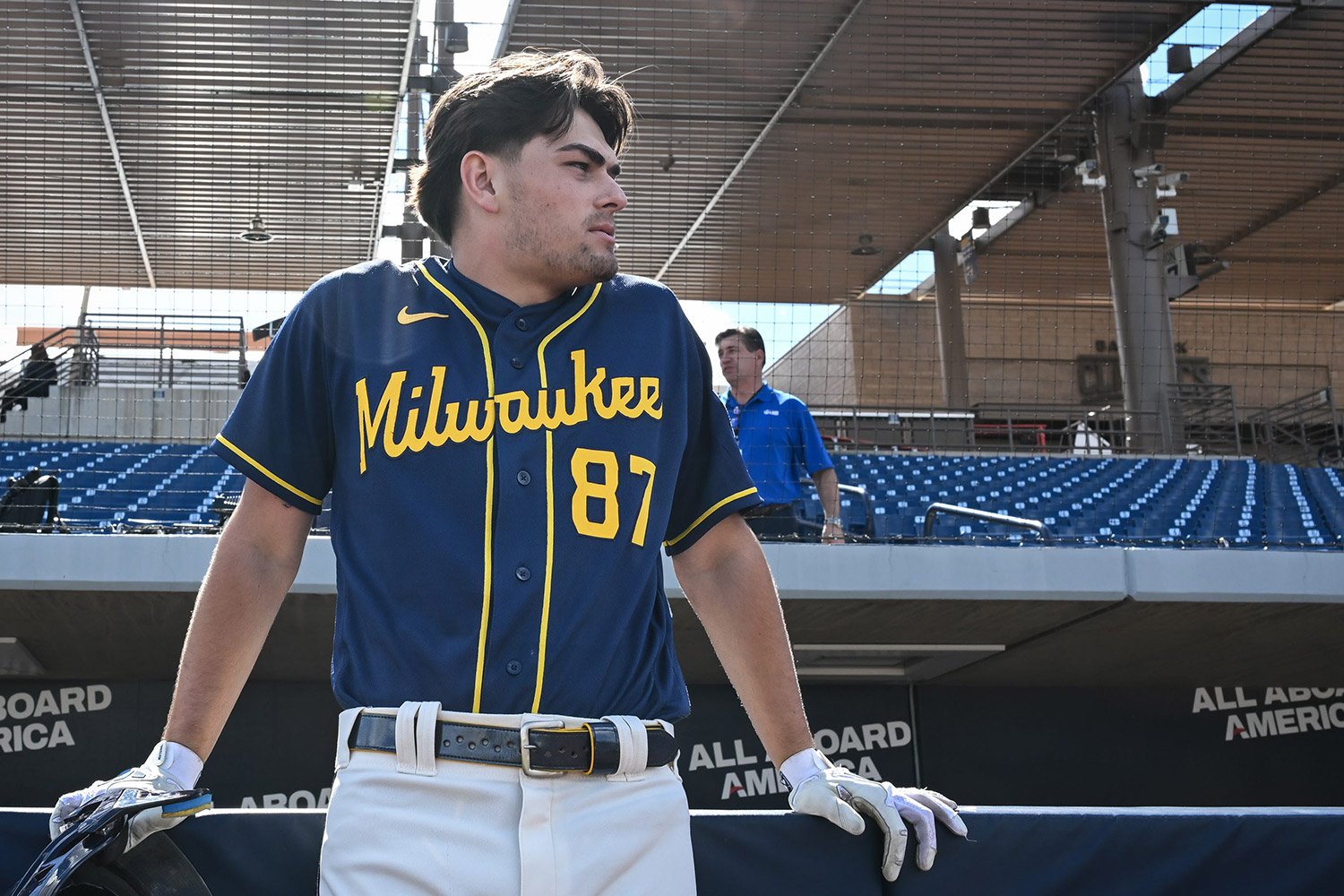 The Brewers have a history of drafting infielders with good gloves, strong baseball IQ to set a high floor, and offensive traits that need patience and development, but if they come together, they can provide a high ceiling. Brice Turang has evolved into one of the best examples of that model, turning elite defensive ability, speed, and contact skills into major league value early on, and then growing into impactful power at the plate, which has elevated him into a different tier. More recently, Cooper Pratt made his big league debut and is already showing similar traits. Brady Ebel may be the latest player attempting to follow a similar path. In fact, the parallels to Turang go pretty deep. They went to different high schools, but both are from the same city (Corona, CA), both are left-handed-hitting shortstops, and both were drafted, and signed, away from LSU commitments out of high school. While Ebel has not received quite the same level of attention or prospect status as Turang and Pratt did at similar stages, there are enough similarities in their profiles to make the comparison worth looking at. He brings a solid defensive floor, a high baseball IQ (Ebel grew up around MLB players, with his father being a coach for the Angels and now the third-base coach for the Dodgers since 2019), and budding offensive ability. Unlike the two before him, there's less certainty that he will stick at an up-the-middle defensive position, though if he winds up at third base, he will likely be above-average or better at the spot. Looking first at a surface level, Ebel has 287 plate appearances this season. How does his production compare to Turang and Pratt through the same sample size in Low-A? Player Season Age PA H 2B 3B HR K% BB% AVG OBP SLG OPS wRC+ SB CS Brice Turang 2019 18.5 288 71 9 3 1 15.60% 14.90% .295 .399 .369 .769 129 15 4 Cooper Pratt 2024 19.7 288 72 10 3 3 19.10% 12.50% .298 .394 .401 .795 133 23 2 Brady Ebel 2026 18.9 287 53 11 2 4 22.60% 18.50% .236 .394 .356 .749 111 21 2 Ebel has gotten off to a slower start than his predecessors, especially when normalized for the offensive environment (wRC+). However, Ebel got off to an especially slow start to the season. He posted a 68 wRC+ through the end of April but has taken off since then. What if we compare the same numbers from Pratt and Turang with the numbers Ebel's been putting up since the start of May? Player Season Age PA H 2B 3B HR K% BB% AVG OBP SLG OPS wRC+ SB CS Brice Turang 2019 18.5 288 71 9 3 1 15.60% 14.90% .295 .399 .369 .769 129 15 4 Cooper Pratt 2024 19.7 288 72 10 3 3 19.10% 12.50% .298 .394 .401 .795 133 23 2 Brady Ebel (since 5/1) 2026 18.9 187 40 9 1 4 23.50% 18.70% .272 .422 .429 .851 134 16 2 He compares much more favorably when you take the April results out of the equation. It should be noted that Ebel is doing it a little differently from those two. Since May 1st, Ebel has a .157 ISO, compared to the .074 Turang was posting in Low-A and the .103 Pratt was showing. He's also walking at a higher clip than those two were, while they were striking out less and had a higher batting average. Turang's power gains came in MLB, and the hope is that Pratt will be able to do the same. Ebel, meanwhile, already seems to be adding legitimate power compared to what he showed in high school. One adjustment he's made has been to the finish of his swing. Ebel looks to be extending through his swing more consistently now, and also finishing higher, which can be a cue that helps the bat path have more loft to it for some hitters. Video from his debut in 2025, compared to a swing from 2026, shows the difference pretty clearly. eycme4.mp4 The other thing that stands out in the comparison video above is that he seems to have already added some good weight to his frame. Brice Turang is listed at 190 pounds now, but he was only 170 pounds when he debuted in MLB, and even that seemed generous. Ebel is already listed at 195 pounds, and that was his weight at draft time. Looking at the difference in his lower half from last season to this season, he is likely over 200 pounds already. Another way to illustrate the power Ebel shows compared to the other two is in his exit-velocity data. According to Baseball America, thus far Ebel has a "102 mph 90th percentile exit velocity along with a league-average hard-hit rate, barrel rate, and air-pull percentage." Pratt's 2025 90th percentile exit velocity in Double-A was 100.7 MPH, and Turang's was 100.8 in MLB, as recently as 2024. While they were facing tougher competition, they were also multiple years older than Ebel at that time. As mentioned earlier, Turang and Pratt had lower strikeout rates than Ebel does at the same level. However, his swing decisions and contact skills are still well above average. There's a strong argument that Ebel is actually further ahead of those two offensively at the same stages of their career. If you look only at the power part of the equation, there's not much of an argument for the other two. Defense is where it's a bit of a different story. Ebel is no slouch with the glove. He's grading out well at shortstop this season, and in a lot of organizations, he'd likely have a chance to stick at the position in the long term. In fact, he likely will remain there as he continues to climb the ladder. To continue the comparison with the other two, Ebel has a .970 fielding percentage this season, while Turang had a .949 fielding percentage at shortstop in Low-A, and Pratt was at .973. Fielding percentage is a bit of a misleading stat, however, and the other two showed better range and more fluid actions, which are extremely important traits for middle infielders and tend to translate into better defensive metrics at the big-league level. Ebel has a cannon of an arm, garnering a 70 on the scouting scale from Baseball America, which would play extremely well at third base if that is where he eventually winds up. That arm helped make up for a couple of bobbles in the Spring Breakout game earlier this year. Jesse Borek of MLB Pipeline wrote that, "All three assists came with a throw that exceeded 88 mph, including the final out of the frame, which clocked in at 91.8 mph." ivqlte.mp4 Pratt is probably the best comparison for Ebel when it comes to running the bases. It's more about instincts and IQ than pure speed for both of them. They have both shown an ability to steal bases at a very efficient clip, and both show a good ability to read balls off the bat, go first to third on singles, and take advantage of defensive mistakes or laziness. Turang is a good baserunner, but he relies a bit more on his pure speed than on the intangibles that Pratt and Ebel have. Ebel seems to be paving a slightly different path than Turang and Pratt, or perhaps he's just ahead of schedule in the power development portion of the blueprint. Either way, there are still two recent, shining examples of high school infielders for him to look to when envisioning his path to an MLB debut in the future. Given his background, his advanced profile, and his early power gains, Ebel has the looks of a player who could rise through the system pretty quickly, much like Cooper Pratt did. What are your thoughts on Ebel? Do you think he's the next in line?
 -
Jesus MadeLuis PenaCooper PrattJett WilliamsJosh AdamczewskiAndrew FischerJeferson QueroLuis LaraBraylon PayneBishop LetsonTyson HardinMarco DingesBlake BurkeLuke AdamsJD ThompsonJaron DeBerryBrady EbelColeman CrowJayden DubanewiczAlexander Frias
-
Jesus MadeLuis PenaCooper PrattJett WilliamsJosh AdamczewskiAndrew FischerJeferson QueroLuis LaraBraylon PayneBishop LetsonTyson HardinMarco DingesBlake BurkeLuke AdamsJD ThompsonJaron DeBerryBrady EbelColeman CrowJayden DubanewiczAlexander Frias
-
Matos definitely grabbing some attention. Exit velocities are strong from what I’ve seen and heard, seems like he gets to good angles too. Think there’s a little whiff so far, so that’ll be one thing to watch. Looking like a very interesting signing for sure.
-
Sort of late now, but the Gold game is being streamed again by the Orioles:
-
Running 2026 MLB Draft Thread
Spencer Michaelis replied to wiguy94's topic in MLB Draft & International Signings
Fair point, I think they're still going to be able to get some guys in those rounds, but I'm just saying I'd be surprised if it's close to what we've seen these last three drafts. Somewhere between the two extremes, would be my guess. Maybe somewhere between $750-900k of the pool? Of course, they could also go heavy on senior signs in 5-10 and give themselves some more room for 11-20, so who really knows. -
He was definitely grabbing at his leg after reaching on a dropped third strike last week. Looked like it was around the hamstring area but couldn't say for sure.

