Spencer Michaelis
-
Posts
1,119 -
Joined
-
Last visited
-
Days Won
17
Content Type
Profiles
Forums
Blogs
Events
News
2026 Milwaukee Brewers Top Prospects Ranking
Milwaukee Brewers Videos
2022 Milwaukee Brewers Draft Picks
Milwaukee Brewers Free Agent & Trade Rumors, Notes, & Tidbits
Guides & Resources
2023 Milwaukee Brewers Draft Picks
2024 Milwaukee Brewers Draft Picks
The Milwaukee Brewers Players Project
2025 Milwaukee Brewers Draft Pick Tracker
2026 Milwaukee Brewers Draft Tracker: Picks & Bonuses
Store
Downloads
Gallery
Everything posted by Spencer Michaelis
-
 For the truest sickos... Here's a live link to the Brewers Blue DSL extended spring game against the Cubs DSL team and the lineup the Brewers are running out to start this one, which includes two of their top three signing bonuses from this past class in Jose Rodriguez and Diego Frontado.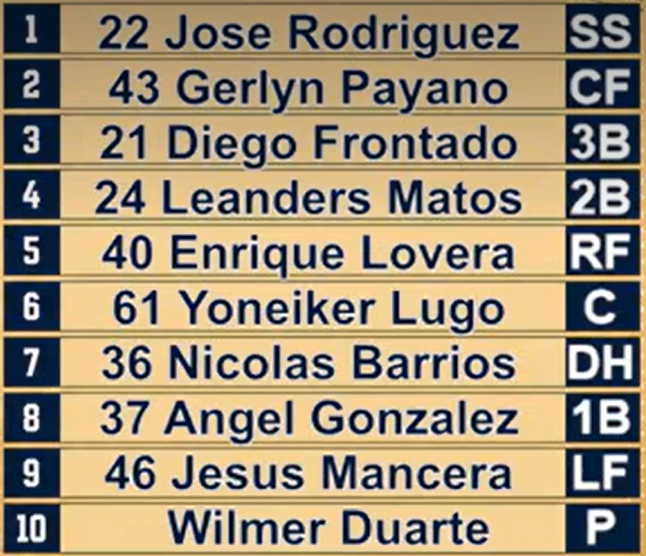
-
Image courtesy of © Dave Kallmann / Milwaukee Journal Sentinel / USA TODAY NETWORK via Imagn Images The Brewers' farm system continues to impress despite several big-time graduations over the last few years. Some trades have brought new names in, and one of them is currently helping the big-league team out of the bullpen, which led to our lone brand-new addition to the list. You can find the full list here! #17 LHP Shane Drohan Milwaukee acquired Drohan in the Caleb Durbin trade after spending most of his time in the Red Sox organization, as well as a spring with the White Sox. Injuries have impacted much of his professional career, including a 2024 Rule 5 stint with Chicago that resulted in his return to Boston. When healthy, however, he features a polished, deep pitch mix that seems scalable between the bullpen and the rotation. In Nashville, Drohan was being stretched out as a starter, and he made his MLB debut against Boston as a starter as well. After being sent down, he made one more start in Nashville before injury forced Drohan back up to the big-league club. Since then, he's pitched exclusively out of the bullpen, both in single-inning and multi-inning roles. His fastball typically sits 92-94 MPH as a starter and plays effectively enough to support the rest of the arsenal, though the secondary pitches are the foundation of the profile. Since moving into the bullpen role with the Brewers' big-league team, the fastball has averaged 95.3 MPH, and he has touched 97 at times. He also mixes in a cutter in the low-90s, and a sinker thrown about a tick slower than his four-seam. They both are best used against left-handed hitters, but the cutter can work as a bridge pitch for him against righties as well. The slider is Drohan's best pitch and his primary swing-and-miss weapon. Since his move to the bullpen, the pitch has averaged 86 MPH, with a spin rate of nearly 2900, and a 33.3% whiff rate. He also mixes in a solid curveball in the 78-80 MPH range, also spinning around 2900 RPM as a reliever, and also with a 33.3% whiff rate against it. His changeup has always been a reliable option against right-handed hitters with roughly 8-10 MPH of separation off the fastball. However, he seems to have switched to a splitter lately, as the spin rate has gone from ~1500 to ~990 on average. Drohan's command showed improvement in 2025, and since his move to the bullpen, he's only walked 3.2% of batters he's faced. There is still legitimate rotation upside if he can stay healthy enough, though the arsenal and bat-missing ability are showing that they can translate very well in the bullpen right now. Drohan appears firmly entrenched in the Brewers' future pitching plans right now, though the role beyond 2026 is still up for debate. Biggest Risers #6 OF Luis Lara -- Up five spots from #11 Lara has shown some improvements in the power department, already nearly doubling his career high of four home runs, with seven at the time of this article. There is some reason to doubt the power output as of this moment, playing in some of the bandbox ballparks Nashville plays at and posting a wOBA of .409, compared to an xwOBA of .313. Despite that, there does still appear to be real growth in the power department as well, as evidenced by his 109 MPH max exit velocity. His 13.9% whiff rate is elite, and he’s limited strikeouts extremely well, while walking at a high rate as well. Lara is 15 of 18 on stolen base attempts, and he’s a plus defender who could be elite in center field at the big league level. Lara looks like a player who will make his MLB debut at some point this season. #16 Coleman Crow -- Previously Not Ranked (#19 in 2025) Crow made his big-league debut in April and immediately put his ability to spin the ball on display. His spin rates rank among the highest in MLB on all of his offerings. The breaking balls are his best pitches, but his cutter has made nice strides from where it was in 2025 and is now a strong offering for him. Neither his four-seam nor sinker is a great pitch on its own, but they work well with the cutter to create enough hesitation for batters to struggle to square them up regularly. Crow is a big-league arm that is waiting for his chance in Triple-A right now. Much like the next guy on this list had to do in 2025. #3 RHP Logan Henderson -- Up three spots from #6 Henderson worked his way up to number three by significantly improving what has always been the biggest question mark in his game, his glove-side secondaries, this offseason. His slider is now thrown more like a slurve, and it has played pretty well in MLB games so far. The cutter has been inconsistent, but as a “bridge pitch,” it has fared pretty well against right-handed batters. Henderson has the look of a pitcher who may have graduated from this list next time the voting takes place, because he appears to have grabbed hold of a rotation spot, with Chad Patrick moving into more of a bullpen role. #9 OF Josh Adamczewski -- Up three spots from #12 Adamczewski has been destroying Midwest League pitching this season. After a slow start at the level in a small sample to close out the 2025 season, Adamczewski has returned with a vengeance. He’s currently posting a .992 OPS and a 150 wRC+. He has already surpassed his career high in home runs with seven (previously five in 2025), and he’s also kept his strikeout rate under 20%. His move to left field has also gone well, showing instincts that are better than expected, given his relative inexperience out there. Having just been added to Baseball America’s Top 100 this week, Adamczewski could continue his climb up this list over the course of this season. He could also continue his climb through the system, as a Double-A call-up feels like it can’t be too far away if he keeps up this production for much longer. #13 OF Braylon Payne -- Up three spots from #16 Payne got off to a really hot start this season. He’s cooled off a bit over the last couple of weeks, but has still settled into an .863 OPS and a 118 wRC+ for the Timber Rattlers. His season has been highlighted by his ability to tap into even more raw power, both in terms of his exit velocities and his ability to hit the ball in the air. His PullAir% of 20.0% is in the 85th percentile for High-A hitters. One of his home runs left the bat at 115 MPH earlier this season. He’s also a plus-plus runner, though his 8/11 success rate on stolen bases leaves something to be desired. The defense has taken a step forward in center, where his athleticism is always on display. The reads and jumps still need some work, but they are better than in 2025. Payne has the tools to be a power and speed threat, though he will still need to curb his whiffs (33.2%) and limit his strikeouts (27.4%) as much as possible. Biggest Fallers #18 3B Brock Wilken -- Down three spots from #15 Wilken got off to a very slow start in 2026, though he is currently in the midst of a 28-game on-base streak. During that stretch, he is posting a 118 wRC+ and has walked almost as much as he has struck out. The overall numbers are far less encouraging, though, as evidenced by his 77 wRC+ and his 28.5% strikeout rate. We will likely find out which version of Wilken is closest to the real version over the next couple of months. #11 RHP Bishop Letson -- Down two spots from #9 Letson has gotten off to a tough start in Double-A this season. The walks have skyrocketed this season, rising from 7.5% in 2025 to 15.7% in 2026. The ERA is at 6.75, and the FIP is over 6 as well. The strikeouts are down nearly 10% as well. All that said, Letson’s stuff looks to be in a similar spot to where it was in the past, even getting the velocity up a bit higher than in the past. Letson’s drop is likely due more to the players below him forcing their way up the list, but he will need to rein in the command moving forward and limit walks at a much higher level to reach his full potential. Thank you to all of you who voted! View full article
-
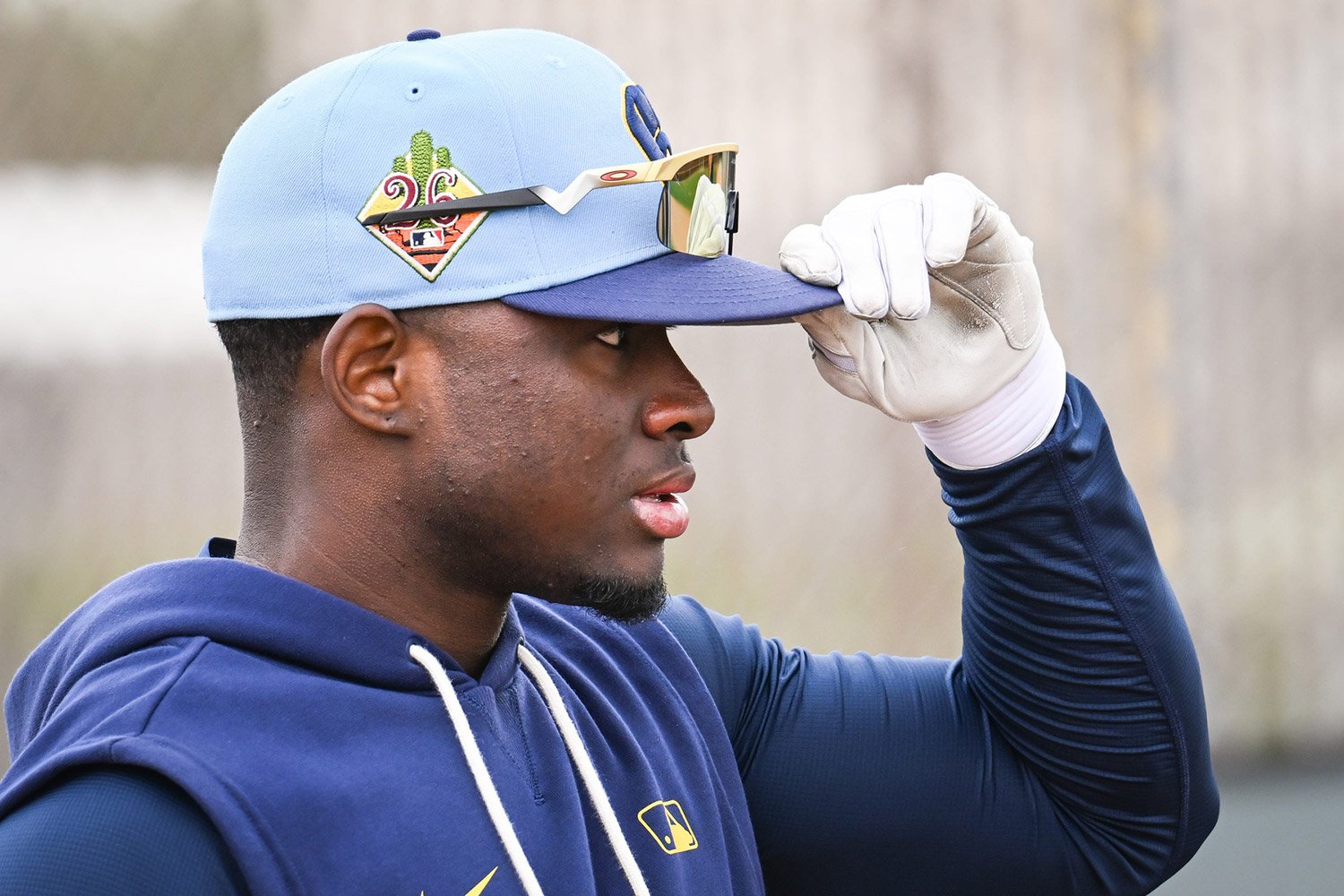 The Brewers' farm system continues to impress despite several big-time graduations over the last few years. Some trades have brought new names in, and one of them is currently helping the big-league team out of the bullpen, which led to our lone brand-new addition to the list. You can find the full list here! #17 LHP Shane Drohan Milwaukee acquired Drohan in the Caleb Durbin trade after spending most of his time in the Red Sox organization, as well as a spring with the White Sox. Injuries have impacted much of his professional career, including a 2024 Rule 5 stint with Chicago that resulted in his return to Boston. When healthy, however, he features a polished, deep pitch mix that seems scalable between the bullpen and the rotation. In Nashville, Drohan was being stretched out as a starter, and he made his MLB debut against Boston as a starter as well. After being sent down, he made one more start in Nashville before injury forced Drohan back up to the big-league club. Since then, he's pitched exclusively out of the bullpen, both in single-inning and multi-inning roles. His fastball typically sits 92-94 MPH as a starter and plays effectively enough to support the rest of the arsenal, though the secondary pitches are the foundation of the profile. Since moving into the bullpen role with the Brewers' big-league team, the fastball has averaged 95.3 MPH, and he has touched 97 at times. He also mixes in a cutter in the low-90s, and a sinker thrown about a tick slower than his four-seam. They both are best used against left-handed hitters, but the cutter can work as a bridge pitch for him against righties as well. The slider is Drohan's best pitch and his primary swing-and-miss weapon. Since his move to the bullpen, the pitch has averaged 86 MPH, with a spin rate of nearly 2900, and a 33.3% whiff rate. He also mixes in a solid curveball in the 78-80 MPH range, also spinning around 2900 RPM as a reliever, and also with a 33.3% whiff rate against it. His changeup has always been a reliable option against right-handed hitters with roughly 8-10 MPH of separation off the fastball. However, he seems to have switched to a splitter lately, as the spin rate has gone from ~1500 to ~990 on average. Drohan's command showed improvement in 2025, and since his move to the bullpen, he's only walked 3.2% of batters he's faced. There is still legitimate rotation upside if he can stay healthy enough, though the arsenal and bat-missing ability are showing that they can translate very well in the bullpen right now. Drohan appears firmly entrenched in the Brewers' future pitching plans right now, though the role beyond 2026 is still up for debate. Biggest Risers #6 OF Luis Lara -- Up five spots from #11 Lara has shown some improvements in the power department, already nearly doubling his career high of four home runs, with seven at the time of this article. There is some reason to doubt the power output as of this moment, playing in some of the bandbox ballparks Nashville plays at and posting a wOBA of .409, compared to an xwOBA of .313. Despite that, there does still appear to be real growth in the power department as well, as evidenced by his 109 MPH max exit velocity. His 13.9% whiff rate is elite, and he’s limited strikeouts extremely well, while walking at a high rate as well. Lara is 15 of 18 on stolen base attempts, and he’s a plus defender who could be elite in center field at the big league level. Lara looks like a player who will make his MLB debut at some point this season. #16 Coleman Crow -- Previously Not Ranked (#19 in 2025) Crow made his big-league debut in April and immediately put his ability to spin the ball on display. His spin rates rank among the highest in MLB on all of his offerings. The breaking balls are his best pitches, but his cutter has made nice strides from where it was in 2025 and is now a strong offering for him. Neither his four-seam nor sinker is a great pitch on its own, but they work well with the cutter to create enough hesitation for batters to struggle to square them up regularly. Crow is a big-league arm that is waiting for his chance in Triple-A right now. Much like the next guy on this list had to do in 2025. #3 RHP Logan Henderson -- Up three spots from #6 Henderson worked his way up to number three by significantly improving what has always been the biggest question mark in his game, his glove-side secondaries, this offseason. His slider is now thrown more like a slurve, and it has played pretty well in MLB games so far. The cutter has been inconsistent, but as a “bridge pitch,” it has fared pretty well against right-handed batters. Henderson has the look of a pitcher who may have graduated from this list next time the voting takes place, because he appears to have grabbed hold of a rotation spot, with Chad Patrick moving into more of a bullpen role. #9 OF Josh Adamczewski -- Up three spots from #12 Adamczewski has been destroying Midwest League pitching this season. After a slow start at the level in a small sample to close out the 2025 season, Adamczewski has returned with a vengeance. He’s currently posting a .992 OPS and a 150 wRC+. He has already surpassed his career high in home runs with seven (previously five in 2025), and he’s also kept his strikeout rate under 20%. His move to left field has also gone well, showing instincts that are better than expected, given his relative inexperience out there. Having just been added to Baseball America’s Top 100 this week, Adamczewski could continue his climb up this list over the course of this season. He could also continue his climb through the system, as a Double-A call-up feels like it can’t be too far away if he keeps up this production for much longer. #13 OF Braylon Payne -- Up three spots from #16 Payne got off to a really hot start this season. He’s cooled off a bit over the last couple of weeks, but has still settled into an .863 OPS and a 118 wRC+ for the Timber Rattlers. His season has been highlighted by his ability to tap into even more raw power, both in terms of his exit velocities and his ability to hit the ball in the air. His PullAir% of 20.0% is in the 85th percentile for High-A hitters. One of his home runs left the bat at 115 MPH earlier this season. He’s also a plus-plus runner, though his 8/11 success rate on stolen bases leaves something to be desired. The defense has taken a step forward in center, where his athleticism is always on display. The reads and jumps still need some work, but they are better than in 2025. Payne has the tools to be a power and speed threat, though he will still need to curb his whiffs (33.2%) and limit his strikeouts (27.4%) as much as possible. Biggest Fallers #18 3B Brock Wilken -- Down three spots from #15 Wilken got off to a very slow start in 2026, though he is currently in the midst of a 28-game on-base streak. During that stretch, he is posting a 118 wRC+ and has walked almost as much as he has struck out. The overall numbers are far less encouraging, though, as evidenced by his 77 wRC+ and his 28.5% strikeout rate. We will likely find out which version of Wilken is closest to the real version over the next couple of months. #11 RHP Bishop Letson -- Down two spots from #9 Letson has gotten off to a tough start in Double-A this season. The walks have skyrocketed this season, rising from 7.5% in 2025 to 15.7% in 2026. The ERA is at 6.75, and the FIP is over 6 as well. The strikeouts are down nearly 10% as well. All that said, Letson’s stuff looks to be in a similar spot to where it was in the past, even getting the velocity up a bit higher than in the past. Letson’s drop is likely due more to the players below him forcing their way up the list, but he will need to rein in the command moving forward and limit walks at a much higher level to reach his full potential. Thank you to all of you who voted!
- 3 comments
-
- 2
-

-

-
- shane drohan
- luis lara
- (and 7 more)
-
Jesus MadeLuis PenaJett WilliamsLogan HendersonCooper PrattJeferson QueroAndrew FischerBraylon PayneLuis LaraBishop LetsonTyson HardinJosh AdamczewskiMarco DingesBlake BurkeLuke AdamsJD ThompsonColeman CrowEthan DorchiesShane DrohanBryce Meccage
-
Antunez and Frias (likely going off Brewers internal data) have weighed in, and... It has not helped clarify anything 😂
-
My final "verdict" is that the Statcast at Goodyear probably isn't reliable. However, odds are those five batted balls were still all smoked. I had a source confirm Frias had popped 115 MPH on internal data 3 or 4 times in spring, so you can't totally rule out 117, but I would guess it was a bit lower. I know Antunez had broken 110 multiple times as well, so I'm guessing his were also a bit lower (but still very well hit). Had some other people confirm a lot of Reds prospects and players had their highest EV's ever at Goodyear in spring too, so it just seems to be hot somehow.
- 6 replies
-
- 1
-
-
- tyler rodriguez
- brailyn antunez
- (and 2 more)
-
Looks like it yeah. There were a few ACL teams playing yesterday though. Maybe make-up games or something.
-
Quero's arm...how is it progressing?
Spencer Michaelis replied to Trail's topic in Brewers Minor League Talk
It's not a perfect science because you're relying on a timely camera flip that didn't mess with anything, but I grabbed a few of them a couple weeks ago, and the flip looked very good from what I could tell, so they should be pretty accurate. Every time I've checked this year, they have been in the 1.85-2.05 range. Haven't seen anything higher than 2.05. He double-clutched one early in the season because he didn't have a grip so I wouldn't count that one. It's not an elite arm like it once was, but I'd say it's moving back into the above-average category personally. -
Indeed it was!
-
Handelfry remains blazing hot
-
2026 Minor League Transaction Thread
Spencer Michaelis replied to Jim Goulart's topic in Brewers Minor League Talk
Cameron Wagoner also got assigned to a full-season team, as he's headed to Double-A for the first time. -
2026 Minor League Transaction Thread
Spencer Michaelis replied to Jim Goulart's topic in Brewers Minor League Talk
Per the transactions page: LHP J.D. Thompson assigned to Wisconsin Timber Rattlers from ACL Brewers. -
Very excited for some ACL ball, especially because I imagine there will be a *lot* more Statcast data than in the past with all the teams spring stadiums having it installed now. Frias and Antunez are my two guys that have legit breakout potential down there on the offensive side. Mayorquin and Bryan Regalado are two international arms I'll be keeping an eye on, and of course the healthy draft picks from last year.
-
Running 2026 MLB Draft Thread
Spencer Michaelis replied to wiguy94's topic in MLB Draft & International Signings
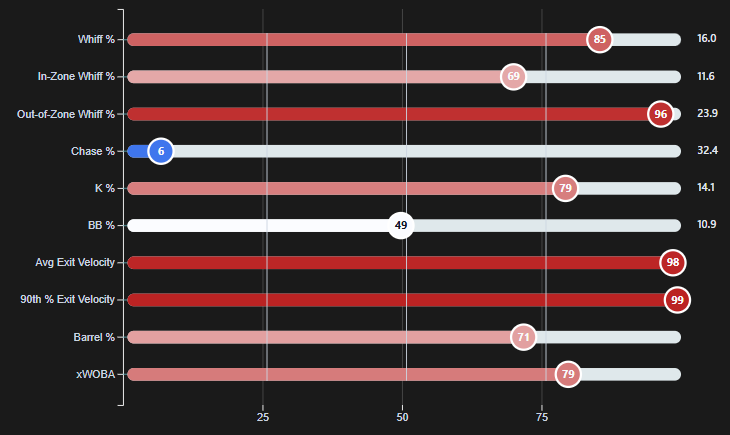
Little late to the party, but yeah 107 with wood is nothing special. It's fine, but Eric Brown Jr was doing that in college. Luis Lara is the same age as Sasaki and he got up to 110 last year with wood, and he's 5'7. That said, that's just a random output and I'm sure he's been higher than that at times with wood, and his EV's compare very favorably to the rest of college baseball this season, though I'm not sure what the exact numbers are. He's definitely made some legitimate strides though, and I know for sure that he has been up to at least 114 MPH this year. I think he's a fringy day one guy, but not sure he's one I'd be overly interested in the Brewers drafting at that point. Maybe a bit more intrigued if not for Burke's existence and so many other potential first base options in the upper levels right now. Here is Burke's data from his final season FWIW. Much better bat-to-ball and a bit higher EV's, worse swing decisions.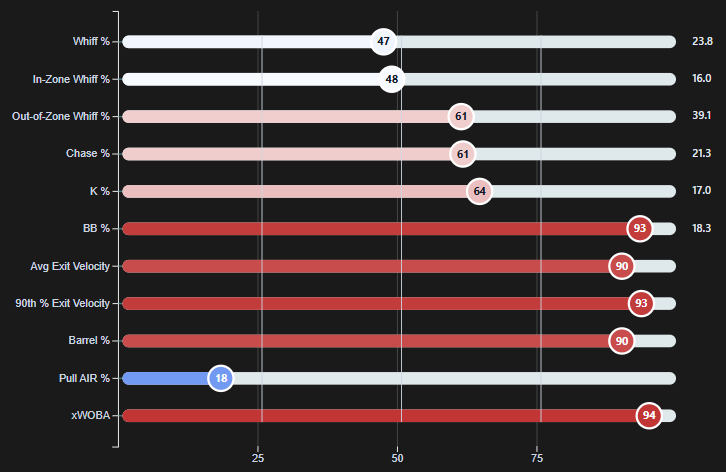
-
Here's some video of Broughton throwing in extended spring games recently: MiLB clips by Paul (@prospectsaz) • Instagram reel WWW.INSTAGRAM.COM 7 likes, 0 comments - prospectsaz on April 22, 2026: "Joey Broughton on the mound in extended Spring Training yesterday 🎥 The Brewers left-hander was drafted out of High School in...
-
I’ve had college players I coach get pretty close to passing out, having major cramping issues, etc. in that type of 60-70 degree weather because they don’t recognize the need to hydrate when they don’t feel like it’s crazy hot. Being as he’s so used to DR/AZ heat I could easily see a young kid like Peña doing something similar. My educated guess is that this is more of a pure dehydration situation than truly "overheating", but I don't know for sure. Like you said, I'm certain they're running tests to make sure there's nothing underlying though.
-
Thurs. 4/16: Back to Evening Action
Spencer Michaelis replied to Jim Goulart's topic in Brewers Minor League Talk
The Brewers were quite excited about what they were seeing from Manfredi in spring from what I heard. Purely speculation but would not be surprised if he's in Nashville soon. -
When I was watching the MiLB TV stream, this happened during a commercial break, so I'm glad there was actual video still!
-
I have a hard time worrying about anybody in a couple start sample. In MLB and MiLB I think it’s valuable to try to judge early season performances as if they happened in June or July. If a rough two start sample happened mid-season it would just be a case of hoping they’ll be better next time out. That’s how I’ll be viewing these slow starts until the sample gets more meaningful.
-
2026 Minor League Transaction Thread
Spencer Michaelis replied to Jim Goulart's topic in Brewers Minor League Talk
Signed free agent RHP Reiss Knehr to a minor league contract -
Well, I can absolutely assure you that is not the case, haha. I always use Grammarly to clean up some of the grammar before submitting my articles, and I have noticed that it can sound a bit less personal when I do that, but I would never use *anything* else to write an article. Now, I did try using the headers as a means of breaking it down in a different way than I normally do. Perhaps that’s not a great way for me to do it moving forward, if it reads like that.
-
Your 2026 Wilson Warbirds
Spencer Michaelis replied to Jim Goulart's topic in Brewers Minor League Talk
Another first time full season player (and a player who had some fans in the Arizona scouting community), Frederi Montero looks like he’ll be with the Warbirds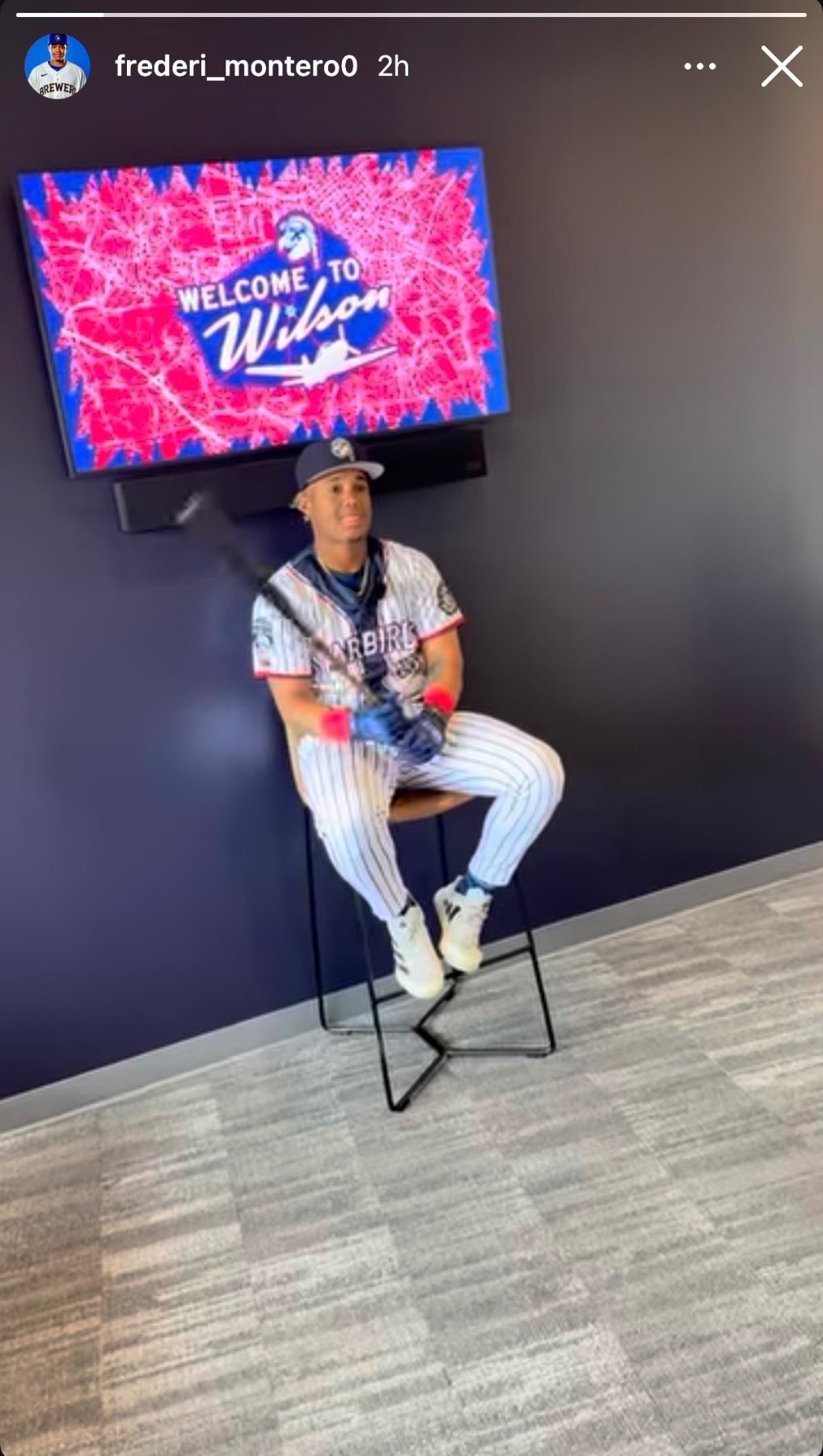
-
Your 2026 Wilson Warbirds
Spencer Michaelis replied to Jim Goulart's topic in Brewers Minor League Talk
NDFA pitchers Jarrette Bonet and Tanner Perry will both be with the Warbirds to start the season. As will catcher Luis Corobo. -
Image courtesy of © Mark J. Rebilas-Imagn Images It’s not often a player signs an eight-year deal (plus two club options), worth $50 million guaranteed, after just three games in Triple-A. It’s even more rare when that player was a sixth-round pick out of high school less than three years ago. But the Brewers aren’t betting on what Cooper Pratt has already done. They’re betting on what he’s going to do. A Foundation Built on Instincts To understand this move, start with some of the traits that don't show up on Pratt's FanGraphs page: his instincts, leadership qualities, and baseball IQ. Pratt is one of the most instinctive players in the organization, and that shows up everywhere. He doesn’t need top-of-the-scale tools to impact the game because his internal clock, positioning, and decision-making consistently put him in the right place on both sides of the ball. Defensively, that translates into a player who already looks like a long-term shortstop. The range plays above the raw speed, thanks to strong first steps and advanced reads off the bat. On the bases, it’s the same story. He went 31-for-36 on stolen bases in 2025, not because he’s a burner, but because he understands timing, pitchers, and situations. Those kinds of instincts are scalable to higher levels. On the leadership side of things, according to Adam McCalvy, “(Pratt) spent the spring trying to learn Spanish to better communicate with Latin American teammates.” That’s the type of person and personality the Brewers are drawn to, and really appreciate in their clubhouse. When teams hand out early extensions, they’re often paying for traits they believe will age well. Instincts, defensive value, and baseball IQ are at the top of that list, and just so happen to be the greatest strengths of Pratt. This is a profile Milwaukee has come to trust, develop, and ultimately build a large part of their team around. Bat-to-Ball Ability Offensively, Pratt’s profile is not built on loud power. It’s built mainly on his bat-to-ball skills. In Double-A in 2025, he posted a 108 wRC+ in the Southern League, while spending most of the season as a 20-year-old. That matters. The raw .691 OPS doesn’t jump off the page, but the added context of the Southern League’s hitting environment clarifies the picture. He was producing above league average in one of the tougher hitting environments in the minors, against older competition. Pratt struck out just 15.2 percent of the time, while walking at a 12.7% clip. That combination points to a hitter who controls at-bats, puts the ball in play, and doesn’t give away plate appearances. His 22.3% whiff rate reinforces that this is real bat-to-ball ability. The Brewers have had a lot of success leaning into this archetype before, with hitters who can make consistent contact, manage the zone well enough, and let the rest of their game add value. There’s also a level of consistency in his swing that evaluators trust. It’s controlled, repeatable, and adaptable across pitch types. That gives him a high floor offensively, even as other parts of the profile continue to develop. Defensive Value at a Premium Position Shortstop defense still carries weight, and Pratt checks a lot of boxes. He projects as an above-average defender at the position, with a chance to be even better. For an organization that prioritizes run prevention, that matters. The arm is a separator, too. Pratt can make throws from multiple angles with accuracy, giving him a toolset teams trust on the left side of the infield. If Pratt can provide steady offense and plus defensive value at shortstop, that’s an everyday player. If the bat takes another step, it’s more than that. Milwaukee has shown a willingness to invest early in up-the-middle players they believe in. Pratt fits that philosophy almost perfectly. The Big Questions: Impact and Approach For all the strengths in the profile, the biggest X-factor remains Pratt’s power (or lack thereof). Pratt’s 101.2-MPH 90th-percentile exit velocity points to below-average game power right now. He hit eight home runs in 527 plate appearances in 2025, and much of his offensive value came from contact and on-base ability, rather than damage. However, that’s where some physical projection comes in. There’s room on Pratt's frame to add strength, and more importantly, there’s a path to impact through bat speed gains. If he can add even fringe-average power, the entire profile changes. Suddenly, you’re looking at a shortstop who gets on base, puts the ball in play, runs well, and does enough damage to matter. The approach is another piece of that puzzle. Pratt’s chase tendencies, particularly against breaking balls away, can undercut his strong contact skills. Improving swing decisions would allow him to tap into more favorable counts and better pitches to drive. Those are developmental areas for Pratt, not huge red flags, at least at this moment. And clearly, the Brewers believe in their ability to help him make the needed adjustments. Why the Brewers Moved Now Of course, this extension isn’t about anything the Brewers' brass saw in three games in Triple-A. It’s about taking a calculated risk on a player they view as a long-term major-league contributor. Pratt offers a relatively high floor built on contact, defense, high baseball IQ, and instincts. He brings a high likelihood of high-level defense at a premium defensive position. He also still has youth on his side, which means physical development can still be part of the equation. Finally, he has clear and attainable paths to achieving some of the offensive growth that the team will be looking for. If the power comes, the deal looks like a bargain for Milwaukee. If it doesn’t fully arrive, there’s still a realistic outcome where Pratt is an everyday shortstop who contributes in multiple ways, and this deal is more than reasonable for an everyday infielder in the prime of his career. What Comes Next Pratt will continue to face upper-level pitching in Triple-A, where he will look to translate the same underlying skills against better arms, and hopefully start to tap into some of the power. This could expedite his promotion to MLB a bit, but it doesn't seem like that's the main impetus for the deal—as it often is, with extensions like these. Still, if the contact quality ticks up and the approach tightens, he could push his way into Milwaukee sooner, rather than later. The defensive value gives him a path to the majors even without major offensive gains, but the ceiling will be determined by how much impact the bat develops. The Brewers didn’t wait for an answer on the bat. They decided they already had enough to go off of to make Cooper Pratt a core member of the big-league team for the next 8-10 years. What do you think of the Cooper Pratt extension? Let us know! View full article