



Spencer Michaelis
-
Posts
1,119 -
Joined
-
Last visited
-
Days Won
17
Content Type
Profiles
Forums
Blogs
Events
News
2026 Milwaukee Brewers Top Prospects Ranking
Milwaukee Brewers Videos
2022 Milwaukee Brewers Draft Picks
Milwaukee Brewers Free Agent & Trade Rumors, Notes, & Tidbits
Guides & Resources
2023 Milwaukee Brewers Draft Picks
2024 Milwaukee Brewers Draft Picks
The Milwaukee Brewers Players Project
2025 Milwaukee Brewers Draft Pick Tracker
2026 Milwaukee Brewers Draft Tracker: Picks & Bonuses
Store
Downloads
Gallery
Everything posted by Spencer Michaelis
-
 Image courtesy of © Dave Kallmann / USA TODAY NETWORK via Imagn Images #9 Bishop Letson (Wisconsin Timber Rattlers, Biloxi Shuckers) Bishop Letson brings one of the highest-upside pitching profiles in the Brewers’ system, and showed why during his limited time on the mound in 2025. The 11th-round pick from the 2023 draft, signed by area scout Ginger Poulson, delivered dominant results when healthy, showcasing a rare blend of swing-and-miss ability, ground-ball induction, and overall stuff. Although shoulder fatigue limited him to just 41 1/3 innings, his performance during that stretch was extremely impressive. ERA FIP xFIP IP G GS CG ShO K% BB% K-BB% HR/9 SwStr% Whiff% WHIP BABIP LOB% LD% GB% FB% IFFB% HR/FB 2.40 2.59 2.70 41.1 11 9 0 0 30.8% 7.5% 23.3% 0.44 12.6% 28.0% 1.04 0.305 72.8% 14.7% 52.6% 32.6% 9.7% 6.5% What to Like Letson ranked in the 90th percentile across Minor League Baseball in both strikeout rate and ground-ball rate. This combination highlights both his ability to overpower hitters and generate weak contact. His fastball serves as the foundation of the arsenal. While the average velocity sits around 94 MPH, the pitch plays well above its radar gun reading due to elite extension and release characteristics. Letson generates approximately 7.5 feet of extension, helping the fastball to get on hitters quickly and giving it additional perceived velocity. That level of extension compares favorably to some of the most dominant power arms in the game, and it allows the pitch to miss bats consistently while also setting up the rest of his repertoire. The sweeper stands out as another potential plus offering and serves as a key secondary weapon. The pitch averages around 16 inches of glove-side movement and shows consistent shape and command against both right-handed and left-handed hitters. Letson demonstrates confidence in using the pitch in multiple counts and situations, making it a reliable swing-and-miss option, especially against righties. Beyond those two primary pitches, Letson features a deep, well-rounded mix. His sinker and changeup both project as above-average offerings. The sinker generates roughly 17 inches of arm-side run, producing significant movement and helping generate ground-ball contact. The changeup shows similar horizontal movement with roughly 18 inches of run, but adds additional vertical depth, giving it strong deception and effectiveness against opposite-handed hitters. While further separation in movement profiles between the two pitches could enhance their effectiveness, both offerings already provide value within his arsenal. During a stint on the injured list in 2025, Letson also developed a cutter that sits around 90 MPH. The pitch currently grades as average but shows encouraging traits, and given how new it is, it could also develop into an above-average offering. The presence of five usable pitches gives Letson multiple ways to attack hitters and supports a long-term starting profile. In addition to the quality of the arsenal, Letson’s delivery and overall mechanics add to his appeal. He features a fluid, repeatable motion that allows him to generate that big extension and consistent movement profiles across his pitches. What to Work On Health and durability remain the most significant areas to monitor moving forward. Shoulder fatigue limited Letson’s workload in 2025, and building the ability to handle a full-season starter’s workload will be an important step in his development. Establishing consistent availability and maintaining his stuff over longer outings will be key to reaching his ceiling. Command and overall pitch consistency also remain developmental priorities. While his walk numbers were strong in 2025, the underlying command is still developing and may face greater challenges against more advanced hitters. Continued refinement of his control within the strike zone would maximize the effectiveness of his arsenal and improve his ability to work through lineups more than two times. Separating the shape of his sinker and changeup further could also enhance the overall effectiveness of his pitch mix. While both pitches feature strong arm-side movement, adding more vertical differential between them could make each offering more difficult for hitters to recognize. Continued development of his cutter will also be important, as turning that pitch into a reliably average offering would strengthen an already deep arsenal and make him more platoon-proof. What’s Next Letson’s development in 2026 will largely center on health. If he remains healthy, can throw more innings, and builds on the dominance he showed in 2025, while beginning the year in Double-A, he has the potential to jump much higher on not only this list, but also the Top 100 lists nationally. The long-term profile points toward significant upside in a major-league rotation. With a five-pitch mix that includes multiple potential plus offerings and a delivery that features elite extension, the ingredients are present for a high-impact starter if things continue to go well—and if he’s consistently on the mound. What are your thoughts on Letson? What are you hoping to see from him in 2026? Let us know in the comments! View full article
 -
Milwaukee Brewers 2026 Top Prospects, No. 9: Bishop Letson
Spencer Michaelis posted an article in Minor Leagues
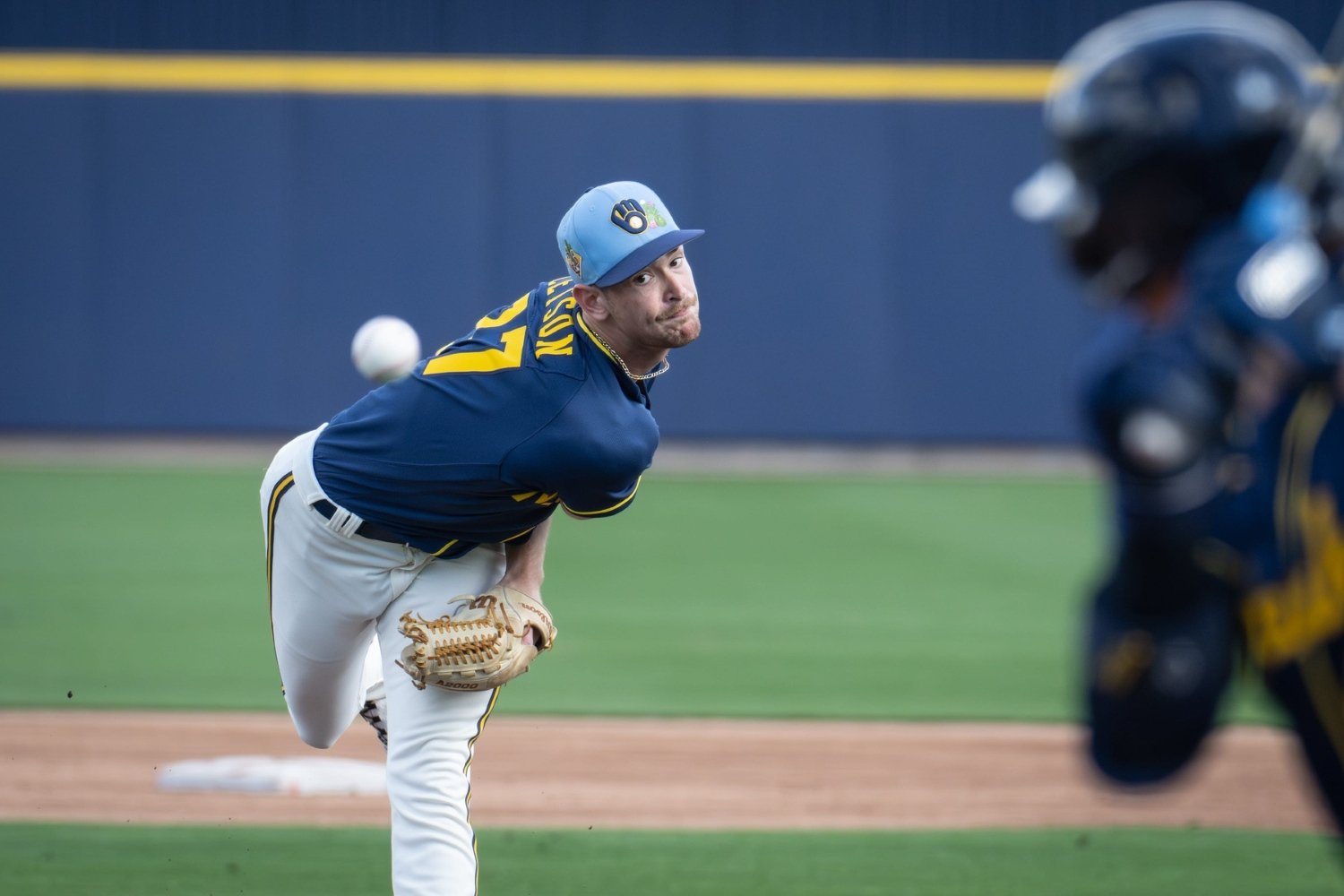 #9 Bishop Letson (Wisconsin Timber Rattlers, Biloxi Shuckers) Bishop Letson brings one of the highest-upside pitching profiles in the Brewers’ system, and showed why during his limited time on the mound in 2025. The 11th-round pick from the 2023 draft, signed by area scout Ginger Poulson, delivered dominant results when healthy, showcasing a rare blend of swing-and-miss ability, ground-ball induction, and overall stuff. Although shoulder fatigue limited him to just 41 1/3 innings, his performance during that stretch was extremely impressive. ERA FIP xFIP IP G GS CG ShO K% BB% K-BB% HR/9 SwStr% Whiff% WHIP BABIP LOB% LD% GB% FB% IFFB% HR/FB 2.40 2.59 2.70 41.1 11 9 0 0 30.8% 7.5% 23.3% 0.44 12.6% 28.0% 1.04 0.305 72.8% 14.7% 52.6% 32.6% 9.7% 6.5% What to Like Letson ranked in the 90th percentile across Minor League Baseball in both strikeout rate and ground-ball rate. This combination highlights both his ability to overpower hitters and generate weak contact. His fastball serves as the foundation of the arsenal. While the average velocity sits around 94 MPH, the pitch plays well above its radar gun reading due to elite extension and release characteristics. Letson generates approximately 7.5 feet of extension, helping the fastball to get on hitters quickly and giving it additional perceived velocity. That level of extension compares favorably to some of the most dominant power arms in the game, and it allows the pitch to miss bats consistently while also setting up the rest of his repertoire. The sweeper stands out as another potential plus offering and serves as a key secondary weapon. The pitch averages around 16 inches of glove-side movement and shows consistent shape and command against both right-handed and left-handed hitters. Letson demonstrates confidence in using the pitch in multiple counts and situations, making it a reliable swing-and-miss option, especially against righties. Beyond those two primary pitches, Letson features a deep, well-rounded mix. His sinker and changeup both project as above-average offerings. The sinker generates roughly 17 inches of arm-side run, producing significant movement and helping generate ground-ball contact. The changeup shows similar horizontal movement with roughly 18 inches of run, but adds additional vertical depth, giving it strong deception and effectiveness against opposite-handed hitters. While further separation in movement profiles between the two pitches could enhance their effectiveness, both offerings already provide value within his arsenal. During a stint on the injured list in 2025, Letson also developed a cutter that sits around 90 MPH. The pitch currently grades as average but shows encouraging traits, and given how new it is, it could also develop into an above-average offering. The presence of five usable pitches gives Letson multiple ways to attack hitters and supports a long-term starting profile. In addition to the quality of the arsenal, Letson’s delivery and overall mechanics add to his appeal. He features a fluid, repeatable motion that allows him to generate that big extension and consistent movement profiles across his pitches. What to Work On Health and durability remain the most significant areas to monitor moving forward. Shoulder fatigue limited Letson’s workload in 2025, and building the ability to handle a full-season starter’s workload will be an important step in his development. Establishing consistent availability and maintaining his stuff over longer outings will be key to reaching his ceiling. Command and overall pitch consistency also remain developmental priorities. While his walk numbers were strong in 2025, the underlying command is still developing and may face greater challenges against more advanced hitters. Continued refinement of his control within the strike zone would maximize the effectiveness of his arsenal and improve his ability to work through lineups more than two times. Separating the shape of his sinker and changeup further could also enhance the overall effectiveness of his pitch mix. While both pitches feature strong arm-side movement, adding more vertical differential between them could make each offering more difficult for hitters to recognize. Continued development of his cutter will also be important, as turning that pitch into a reliably average offering would strengthen an already deep arsenal and make him more platoon-proof. What’s Next Letson’s development in 2026 will largely center on health. If he remains healthy, can throw more innings, and builds on the dominance he showed in 2025, while beginning the year in Double-A, he has the potential to jump much higher on not only this list, but also the Top 100 lists nationally. The long-term profile points toward significant upside in a major-league rotation. With a five-pitch mix that includes multiple potential plus offerings and a delivery that features elite extension, the ingredients are present for a high-impact starter if things continue to go well—and if he’s consistently on the mound. What are your thoughts on Letson? What are you hoping to see from him in 2026? Let us know in the comments!
 -
Good lord, what was I doing there... Fixed it. It was a 28.3% whiff rate and 19.2% strikeout rate. I even have the correct numbers up above in the article lol. This is what happens when I finish articles at 1 in the morning apparently.
-
Image courtesy of © Dan Powers/USA TODAY NETWORK-Wisconsin / USA TODAY NETWORK via Imagn Images #10 Marco Dinges (Carolina Mudcats, Wisconsin Timber Rattlers) The Brewers drafted Marco Dinges in the fourth round of the 2024 Draft, giving him $500,000 to join the organization. Having mostly functioned in a designated hitter role at Florida State, Dinges was announced as a catcher on draft day. He briefly debuted in Carolina at the end of the 2024 season and caught a couple of games there, before returning to Carolina to begin his 2025 season. Dinges performed extremely well in Carolina, and was moved up to High-A Wisconsin by mid-May. PA H 2B 3B HR OPS wRC+ wOBA K% BB% SwStr% Whiff% PULL% CENT% OPPO% LD% GB% FB% IFFB% SB CS SB% 90th EV 317 77 12 2 13 .930 161 .437 19.2% 15.5% 12.5% 28.3% 40.8% 24.4% 34.8% 20.3% 40.6% 39.1% 23.4% 5 1 83% 107.2 What to Like Dinges showed one of the more intriguing offensive profiles in the system in 2025, producing at a high level despite missing time due to multiple soft tissue injuries. Considering the broader context of his development, simply appearing in regular game action was a significant step forward. Just two years prior, he was battling hemophagocytic lymphohistiocytosis (HLH), a life-threatening condition that required extensive treatment. His ability to get back on the field relatively consistently and perform at a high level represented a notable milestone in his progression. When healthy, Dinges demonstrated middle-of-the-order offensive potential. He finished the season with a .930 OPS, 161 wRC+, and .437 wOBA, all strong indicators of impact production. Power is the defining trait of his offensive profile. The swing is built to do damage. Dinges generates some of the best bat speed in the organization, allowing him to drive the ball with authority. His 107.2 MPH 90th-percentile exit velocity reflects legitimate plus raw power, and his 13 home runs in 317 plate appearances highlight his ability to get the power to show up in games. His offensive approach also shows encouraging signs beyond power production. Dinges posted a strong 12.5% walk rate, demonstrating a willingness to work counts and avoid expanding the zone. For a hitter with this level of power and bat speed, maintaining strong plate discipline is an important foundation for future development. While his offensive profile currently leans heavily toward power, the underlying approach gives him a chance to remain productive even during stretches when the power output dips. There's also notable upside tied to his defensive ability. Catchers with this level of offensive potential are difficult to find, and Dinges shows the athletic traits necessary to remain behind the plate. He possesses good overall mobility for the position and flashes advanced defensive ability. His arm strength is a clear asset, grading as plus and giving him the tools needed to control the running game once his mechanics improve. The combination of offensive upside and the potential to stick at catcher significantly raises his overall profile and long-term value. What to Work On Swing-and-miss remains the most significant area of weakness in Dinges’ offensive profile. His aggressive, power-focused swing produces considerable impact, but also leads to empty hacks, as reflected in his 28.3% whiff rate and 19.2% strikeout rate. While he showed some ability to manage strikeouts relative to his power output, improving contact consistency will be important against higher-level pitching. Continued development in understanding when to prioritize contact over maximizing power could stabilize his offensive production, without sacrificing his impact potential. Defensively, Dinges does show plenty of moments where it’s obvious that he’s still relatively inexperienced at the catcher position and will need to refine the technical aspects. Much of his development behind the plate centers on improving consistency in receiving, blocking, and throwing mechanics. His caught-stealing rate of 17.8% reflects a need for improvement in footwork and overall throwing efficiency, rather than arm strength, which is already a clear positive. With cleaner mechanics, his defensive performance could take a meaningful step forward. Improving his durability will also be important. While it’s not a huge deal that Dinges missed some time in 2025, demonstrating the ability to handle the physical demands of regular catching duties over a full season will be an important step in his development. What’s Next Dinges is likely to return to Appleton to begin the 2026 season, where he will have the opportunity to build on his offensive production while continuing to refine his defensive skills. If he remains healthy and shows improvement in his receiving and throwing consistency, a promotion to Double-A Biloxi could come relatively quickly. His long-term outlook will largely depend on the balance between offensive impact and defensive development. If he continues to produce at the plate while making steady progress behind it, he could emerge the top catching prospect in the system. The combination of power production and the potential to remain at catcher gives him a particularly high ceiling, relative to many prospects at the level. What are your thoughts on Dinges? What are you hoping to see from him in 2026? Let us know in the comments! View full article
-
Milwaukee Brewers 2026 Top Prospects: No. 10, Marco Dinges
Spencer Michaelis posted an article in Minor Leagues
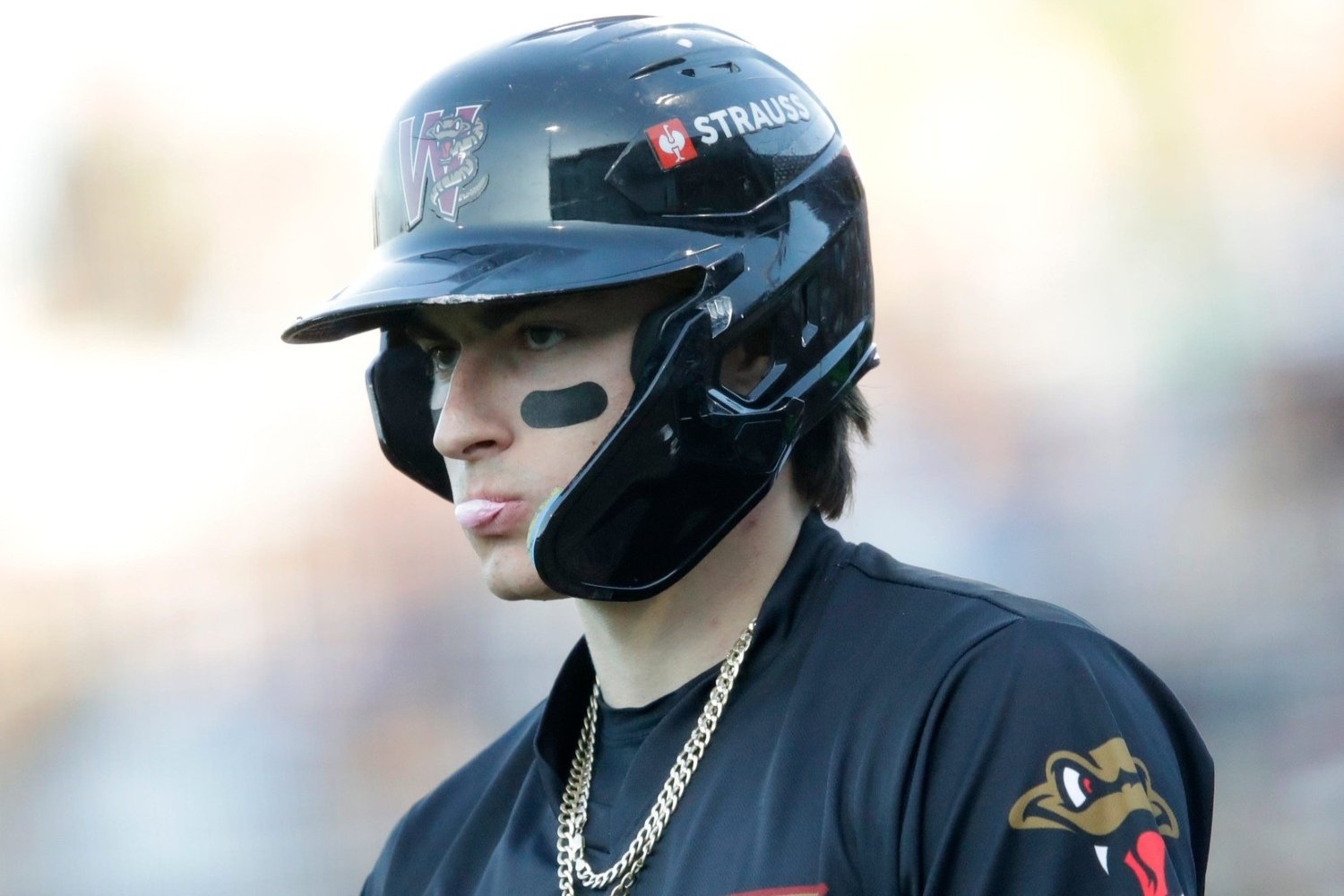 #10 Marco Dinges (Carolina Mudcats, Wisconsin Timber Rattlers) The Brewers drafted Marco Dinges in the fourth round of the 2024 Draft, giving him $500,000 to join the organization. Having mostly functioned in a designated hitter role at Florida State, Dinges was announced as a catcher on draft day. He briefly debuted in Carolina at the end of the 2024 season and caught a couple of games there, before returning to Carolina to begin his 2025 season. Dinges performed extremely well in Carolina, and was moved up to High-A Wisconsin by mid-May. PA H 2B 3B HR OPS wRC+ wOBA K% BB% SwStr% Whiff% PULL% CENT% OPPO% LD% GB% FB% IFFB% SB CS SB% 90th EV 317 77 12 2 13 .930 161 .437 19.2% 15.5% 12.5% 28.3% 40.8% 24.4% 34.8% 20.3% 40.6% 39.1% 23.4% 5 1 83% 107.2 What to Like Dinges showed one of the more intriguing offensive profiles in the system in 2025, producing at a high level despite missing time due to multiple soft tissue injuries. Considering the broader context of his development, simply appearing in regular game action was a significant step forward. Just two years prior, he was battling hemophagocytic lymphohistiocytosis (HLH), a life-threatening condition that required extensive treatment. His ability to get back on the field relatively consistently and perform at a high level represented a notable milestone in his progression. When healthy, Dinges demonstrated middle-of-the-order offensive potential. He finished the season with a .930 OPS, 161 wRC+, and .437 wOBA, all strong indicators of impact production. Power is the defining trait of his offensive profile. The swing is built to do damage. Dinges generates some of the best bat speed in the organization, allowing him to drive the ball with authority. His 107.2 MPH 90th-percentile exit velocity reflects legitimate plus raw power, and his 13 home runs in 317 plate appearances highlight his ability to get the power to show up in games. His offensive approach also shows encouraging signs beyond power production. Dinges posted a strong 12.5% walk rate, demonstrating a willingness to work counts and avoid expanding the zone. For a hitter with this level of power and bat speed, maintaining strong plate discipline is an important foundation for future development. While his offensive profile currently leans heavily toward power, the underlying approach gives him a chance to remain productive even during stretches when the power output dips. There's also notable upside tied to his defensive ability. Catchers with this level of offensive potential are difficult to find, and Dinges shows the athletic traits necessary to remain behind the plate. He possesses good overall mobility for the position and flashes advanced defensive ability. His arm strength is a clear asset, grading as plus and giving him the tools needed to control the running game once his mechanics improve. The combination of offensive upside and the potential to stick at catcher significantly raises his overall profile and long-term value. What to Work On Swing-and-miss remains the most significant area of weakness in Dinges’ offensive profile. His aggressive, power-focused swing produces considerable impact, but also leads to empty hacks, as reflected in his 28.3% whiff rate and 19.2% strikeout rate. While he showed some ability to manage strikeouts relative to his power output, improving contact consistency will be important against higher-level pitching. Continued development in understanding when to prioritize contact over maximizing power could stabilize his offensive production, without sacrificing his impact potential. Defensively, Dinges does show plenty of moments where it’s obvious that he’s still relatively inexperienced at the catcher position and will need to refine the technical aspects. Much of his development behind the plate centers on improving consistency in receiving, blocking, and throwing mechanics. His caught-stealing rate of 17.8% reflects a need for improvement in footwork and overall throwing efficiency, rather than arm strength, which is already a clear positive. With cleaner mechanics, his defensive performance could take a meaningful step forward. Improving his durability will also be important. While it’s not a huge deal that Dinges missed some time in 2025, demonstrating the ability to handle the physical demands of regular catching duties over a full season will be an important step in his development. What’s Next Dinges is likely to return to Appleton to begin the 2026 season, where he will have the opportunity to build on his offensive production while continuing to refine his defensive skills. If he remains healthy and shows improvement in his receiving and throwing consistency, a promotion to Double-A Biloxi could come relatively quickly. His long-term outlook will largely depend on the balance between offensive impact and defensive development. If he continues to produce at the plate while making steady progress behind it, he could emerge the top catching prospect in the system. The combination of power production and the potential to remain at catcher gives him a particularly high ceiling, relative to many prospects at the level. What are your thoughts on Dinges? What are you hoping to see from him in 2026? Let us know in the comments!
 -
Image courtesy of © Dave Kallmann / Milwaukee Journal Sentinel / USA TODAY NETWORK via Imagn Images The depth in the Brewers' system means many players outside the top 10 would make the majority of teams' top 10, if not their top 5. Let's take a look at prospects 11-15, as voted on and compiled by the Brewer Fanatic writers. #15 3B Brock Wilken (Biloxi Shuckers) PA H 2B 3B HR OPS wRC+ wOBA K% BB% SwStr% Whiff% PULL% CENT% OPPO% LD% GB% FB% IFFB% SB CS SB% 90th EV 344 61 17 0 18 .876 159 .413 27.0% 20.1% 9.4% 29.1% 55.3% 24.6% 20.1% 21.6% 35.2% 43.2% 22.4% 2 0 100% 106.0 Several challenges marked Wilken's 2024 season. He was hit in the face by a pitch early in the year, which led to lingering vision issues that affected him throughout the season. Off the field, he and his wife also welcomed their first child. That's a positive personal milestone, but at the same time, balancing professional responsibilities with family life added another layer of adjustment during the season. He spent the offseason focused on recovery and on restoring his vision. The early results in 2025 were very encouraging, highlighted by an outstanding May in which he hit nine home runs and posted a 170 wRC+. However, a knee injury suffered while celebrating Biloxi's first-half playoff clinch limited him to just 14 games the rest of the year, and he did not appear fully healthy during that stretch. Even so, his first 280 plate appearances showed clear signs of offensive improvement. Power production remains a defining part of Wilken's profile. Despite playing roughly two-thirds of a full season, he finished third in the Southern League with 18 home runs. His plate discipline was a strength, reflected in a 20% walk rate, though he did allow a notable number of hittable pitches in the zone to pass by, and it's fair to question whether the overall approach is a bit too passive at the moment. Swing-and-miss remains part of the profile, with elevated whiff and strikeout rates contributing to a definite power-over-contact approach. Defensively, Wilken has shown steady progress at third base. While some evaluations have graded him below average at the position, his play has suggested the potential to develop into a serviceable defender. His arm strength is a clear plus, and he has generally handled routine plays well. At times, he has shown some difficulty charging softly hit balls, which seems to be tied more to his reads off the bat than to any athletic limitations. Wilken is expected to begin the 2026 season at Triple-A, and may have reached that level earlier if not for the knee injury. With the Brewers continuing to evaluate long-term options at third base, his performance and defensive development could position him as a major-league option in the near future. #14 1B Blake Burke (Wisconsin Timber Rattlers, Biloxi Shuckers) PA H 2B 3B HR OPS wRC+ wOBA K% BB% SwStr% Whiff% PULL% CENT% OPPO% LD% GB% FB% IFFB% SB CS SB% 90th EV 567 143 27 2 16 .832 139 .393 23.8% 11.5% 12.9% 27.9% 34.3% 26.8% 39.0% 22.7% 49.6% 27.8% 21.4% 15 5 75% 108.8 Drafted in Competitive Balance Round A (just after the first round) of the 2024 draft, Burke got off to an interesting start at High-A in 2025. He posted a 124 wRC+ across 95 games at the level, but the power production did not match the underlying contact quality. Despite consistently hitting the ball hard (highlighted by an elite 108.8-MPH 90th-percentile exit velocity), he produced just five home runs in 408 plate appearances—a shockingly low total, given his size and raw power. That changed following his promotion to Double-A. Burke's ground-ball rate dropped from 52.4% at High-A to 42.4%, and the shift in batted-ball profile quickly translated into more over-the-fence production. He had been making hard contact throughout the season, but a lack of consistent elevation limited his power output earlier in the year. With Biloxi, he hit 11 home runs in just 159 plate appearances. Even during the stretch in High-A when the power had not yet emerged, Burke did show the ability to hit for average and make a reasonable amount of contact, pointing to the potential for an average hit tool paired with above-average or even plus power. Defensively, Burke's glove work at first base has generally translated well from his time at Tennessee. He shows reliable hands and solid instincts around the bag. While his mobility may not stand out, he has shown more athleticism and reaction ability than many players with a similar build. His overall defensive profile is that of an average first baseman, perhaps even a tick better. That athleticism also shows up in subtle ways. Burke is not a traditional speed threat, but he moves well once he gets moving and shows strong instincts on the bases. He was successful on 15 of 20 stolen base attempts and regularly shows awareness, taking extra bases on balls in play. As Josh Naylor showed this year, you can be a good baserunner without being very fast, though you probably won't see Burke go on any stolen-base binges akin to what Naylor did in the second half of last year. As a first base-only prospect, Burke's long-term value will depend heavily on his offensive production. If his late-season power surge at Double-A proves sustainable, his overall profile could rise significantly, with the potential to position himself as a major league option as early as 2026. He's more likely to have an impact on the 2027 season. #13 1B Luke Adams (Biloxi Shuckers) PA H 2B 3B HR OPS wRC+ wOBA K% BB% SwStr% Whiff% PULL% CENT% OPPO% LD% GB% FB% IFFB% SB CS SB% 90th EV 315 54 15 0 11 .853 158 .413 20.3% 16.5% 7.1% 23.5% 52.9% 22.7% 24.4% 25.0% 37.2% 37.8% 40.0% 10 3 77% 104.3 A 12th-round selection in the 2022 draft, Adams is one of the more interesting players in the system, with a profile that continues to produce despite some unusual characteristics. At the plate, Adams presents a unique offensive profile. He has gradually simplified his swing mechanics in pro ball. While some unconventional elements remain, the overall operation is more controlled than earlier in his career, though it still has more moving parts than most players. Despite this, his production has consistently been strong at every level. That production continued at Double-A, where he posted a 159 wRC+ across his first 278 plate appearances. Power production also took a step forward this season, as Adams accessed his in-game power more consistently and posted a .218 isolated slugging at the Double-A level, the highest mark of his career. His plate discipline remains a defining strength, though his extremely passive approach (33% swing-rate) will require adjustment against the highest levels of pitching. Increased aggressiveness on pitches in the strike zone, particularly earlier in counts, could help maximize his offensive impact as he advances. His defensive home has been a notable part of his development. While he has the tools to play third base at an average level, he saw limited time there this season, spending the majority of his time at first base. While his defensive profile suggests he could develop into an above-average defender at first but merely average at third, there's more value (all else equal) in being passable at the hot corner than in being a grade better at the cold one. If he's to stick at the hot corner, continued refinement of his footwork and throwing mechanics will be important, as he's shown a tendency to throw off-balance at times when there is no real need to. Adams appears ready for a move to Triple-A, though roster construction could result in a return to Biloxi to begin the season. He will become Rule 5 Draft-eligible next winter, making this a big year for him to show he'll be ready to contribute at the big-league level in short order. #12 2B Josh Adamczewski (Carolina Mudcats, Wisconsin Timber Rattlers) PA H 2B 3B HR OPS wRC+ wOBA K% BB% SwStr% Whiff% PULL% CENT% OPPO% LD% GB% FB% IFFB% SB CS SB% 308 81 18 5 5 .910 155 .434 17.2% 14.0% 12.1% 26.6% 46.9% 20.8% 32.4% 21.1% 41.7% 37.3% 17.1% 7 1 88% Both Adams and Adamczewski were Day 3 draft picks, with Adamczewski going in the 15th round in 2023. Committed to Ball State at the time, he was a great find by area scout Ginger Poulson. Adamczewski has been an intriguing offensive prospect since entering pro ball, with his swing mechanics standing out early and pointing to a strong overall hitting foundation. He showed some increased swing-and-miss during a brief stint with the Timber Rattlers to close out the 2025 season, as well as during his time in the Arizona Fall League, but his overall approach at the plate remains a clear strength. He consistently makes strong swing decisions and shows the ability to drive the ball to all fields. The underlying power and contact quality have been encouraging. Adamczewski has recorded exit velocities above 110 MPH in the minor leagues and reached 109.6 MPH in the AFL. While he hit just five home runs during the regular season, he added four more in the Fall League, further highlighting his power potential. The offensive profile points to the possibility of an above-average hit tool with power production that could develop into at least the 20-home run range. Defensively, his long-term position remains less certain. He has primarily played second base, though his defense at the position continues to draw mixed evaluations and may not fully align with the defensive expectations typically associated with the Brewers' middle infield. He also saw significant time in left field during the Arizona Fall League, where his above-average speed and athleticism translated well despite limited experience. A move to the outfield remains a realistic long-term possibility. Adamczewski experienced some struggles in a 16-game sample at High-A late in the 2025 season. He's likely to return to Appleton to begin the year, with the opportunity to move quickly to Double-A if his offensive production returns to the level he showed in Carolina. #11 CF Luis Lara (Biloxi Shuckers) PA H 2B 3B HR OPS wRC+ wOBA K% BB% SwStr% Whiff% PULL% CENT% OPPO% LD% GB% FB% IFFB% SB CS SB% 612 132 32 3 2 .712 117 .348 16.2% 14.1% 6.7% 17.3% 38.0% 20.8% 41.1% 22.1% 50.9% 27.0% 20.7% 44 7 86% After slipping down the rankings in 2024, Lara quickly moved back up the board following a strong 2025 season at Double-A, where he was one of the youngest players at the level and did not turn 21 until November. The switch-hitter showed meaningful offensive growth, lowering his whiff rate by roughly three percentage points in a more challenging hitting environment while also increasing his walk rate by nearly six percentage points. Lara's power production remained limited, with just two home runs, and he's listed at 5-foot-8, so it's never likely to be a plus tool for him. However, he still demonstrated the ability to impact the baseball. He recorded multiple exit velocities of 110 MPH, suggesting more underlying strength than the traditional power numbers indicate. Speed has long been a key part of his profile, and he took another step forward in that area in 2025, posting plus-plus run times. Improved instincts and better jumps on the bases helped him convert that speed into production, as he went 44-for-51 on stolen base attempts. His 86% success rate represented a clear improvement over the 75% and 76% marks he posted in 2023 and 2024. While the offensive development was encouraging, Lara's defense remained the most impactful part of his game and reached another level in 2025. He earned a Minor League Gold Glove, a result of his highlight-reel plays, but also his improved reads and routes. Those improvements allowed his athleticism to play up even further, and he regularly showed a willingness to make aggressive plays in the field, running into walls or laying out to make plays. Already a plus defender, he has the tools to develop into one of the premier defensive outfielders in the game. He also features a strong, accurate arm, which adds to his value. Lara could return to Biloxi to begin the season. However, his performance suggests he's ready for a move to Triple-A. He could position himself as a depth option at the major-league level with continued success. His combination of speed, defense, and improved offensive approach provides a high floor, and continued development at the plate would further elevate his overall profile. A median outcome for Lara could be a Blake Perkins-type fourth-outfield profile. On the higher end, you could be looking at a switch-hitting Sal Frelick, who's consistently playing center field. What stands out from 11-15 in this list? Let us know your thoughts in the comments! View full article
- 21 replies
-
- 1
-

-
- luis lara
- brock wilken
- (and 3 more)
-
Milwaukee Brewers 2026 Top Prospects Rankings, #11-15
Spencer Michaelis posted an article in Minor Leagues
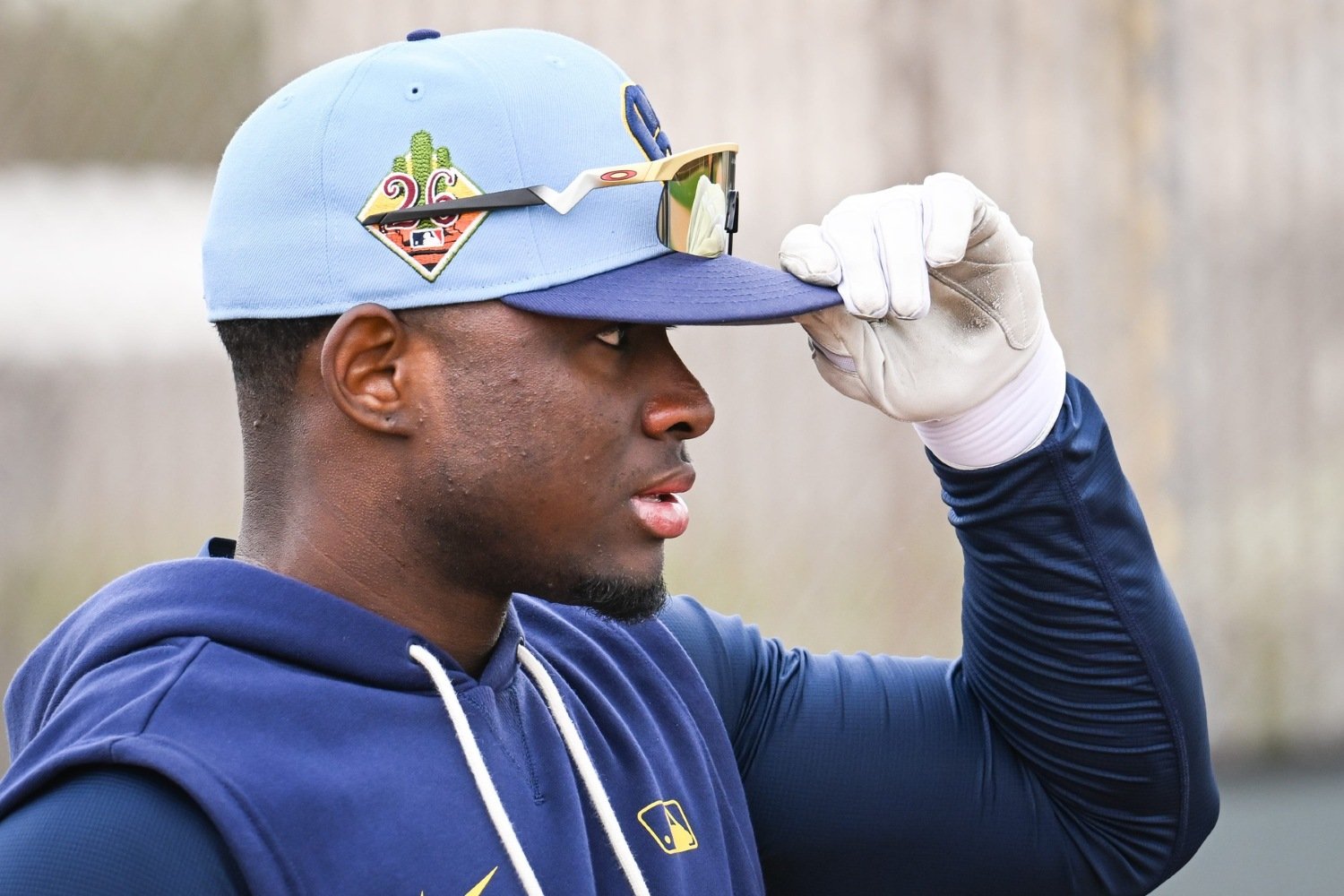 The depth in the Brewers' system means many players outside the top 10 would make the majority of teams' top 10, if not their top 5. Let's take a look at prospects 11-15, as voted on and compiled by the Brewer Fanatic writers. #15 3B Brock Wilken (Biloxi Shuckers) PA H 2B 3B HR OPS wRC+ wOBA K% BB% SwStr% Whiff% PULL% CENT% OPPO% LD% GB% FB% IFFB% SB CS SB% 90th EV 344 61 17 0 18 .876 159 .413 27.0% 20.1% 9.4% 29.1% 55.3% 24.6% 20.1% 21.6% 35.2% 43.2% 22.4% 2 0 100% 106.0 Several challenges marked Wilken's 2024 season. He was hit in the face by a pitch early in the year, which led to lingering vision issues that affected him throughout the season. Off the field, he and his wife also welcomed their first child. That's a positive personal milestone, but at the same time, balancing professional responsibilities with family life added another layer of adjustment during the season. He spent the offseason focused on recovery and on restoring his vision. The early results in 2025 were very encouraging, highlighted by an outstanding May in which he hit nine home runs and posted a 170 wRC+. However, a knee injury suffered while celebrating Biloxi's first-half playoff clinch limited him to just 14 games the rest of the year, and he did not appear fully healthy during that stretch. Even so, his first 280 plate appearances showed clear signs of offensive improvement. Power production remains a defining part of Wilken's profile. Despite playing roughly two-thirds of a full season, he finished third in the Southern League with 18 home runs. His plate discipline was a strength, reflected in a 20% walk rate, though he did allow a notable number of hittable pitches in the zone to pass by, and it's fair to question whether the overall approach is a bit too passive at the moment. Swing-and-miss remains part of the profile, with elevated whiff and strikeout rates contributing to a definite power-over-contact approach. Defensively, Wilken has shown steady progress at third base. While some evaluations have graded him below average at the position, his play has suggested the potential to develop into a serviceable defender. His arm strength is a clear plus, and he has generally handled routine plays well. At times, he has shown some difficulty charging softly hit balls, which seems to be tied more to his reads off the bat than to any athletic limitations. Wilken is expected to begin the 2026 season at Triple-A, and may have reached that level earlier if not for the knee injury. With the Brewers continuing to evaluate long-term options at third base, his performance and defensive development could position him as a major-league option in the near future. #14 1B Blake Burke (Wisconsin Timber Rattlers, Biloxi Shuckers) PA H 2B 3B HR OPS wRC+ wOBA K% BB% SwStr% Whiff% PULL% CENT% OPPO% LD% GB% FB% IFFB% SB CS SB% 90th EV 567 143 27 2 16 .832 139 .393 23.8% 11.5% 12.9% 27.9% 34.3% 26.8% 39.0% 22.7% 49.6% 27.8% 21.4% 15 5 75% 108.8 Drafted in Competitive Balance Round A (just after the first round) of the 2024 draft, Burke got off to an interesting start at High-A in 2025. He posted a 124 wRC+ across 95 games at the level, but the power production did not match the underlying contact quality. Despite consistently hitting the ball hard (highlighted by an elite 108.8-MPH 90th-percentile exit velocity), he produced just five home runs in 408 plate appearances—a shockingly low total, given his size and raw power. That changed following his promotion to Double-A. Burke's ground-ball rate dropped from 52.4% at High-A to 42.4%, and the shift in batted-ball profile quickly translated into more over-the-fence production. He had been making hard contact throughout the season, but a lack of consistent elevation limited his power output earlier in the year. With Biloxi, he hit 11 home runs in just 159 plate appearances. Even during the stretch in High-A when the power had not yet emerged, Burke did show the ability to hit for average and make a reasonable amount of contact, pointing to the potential for an average hit tool paired with above-average or even plus power. Defensively, Burke's glove work at first base has generally translated well from his time at Tennessee. He shows reliable hands and solid instincts around the bag. While his mobility may not stand out, he has shown more athleticism and reaction ability than many players with a similar build. His overall defensive profile is that of an average first baseman, perhaps even a tick better. That athleticism also shows up in subtle ways. Burke is not a traditional speed threat, but he moves well once he gets moving and shows strong instincts on the bases. He was successful on 15 of 20 stolen base attempts and regularly shows awareness, taking extra bases on balls in play. As Josh Naylor showed this year, you can be a good baserunner without being very fast, though you probably won't see Burke go on any stolen-base binges akin to what Naylor did in the second half of last year. As a first base-only prospect, Burke's long-term value will depend heavily on his offensive production. If his late-season power surge at Double-A proves sustainable, his overall profile could rise significantly, with the potential to position himself as a major league option as early as 2026. He's more likely to have an impact on the 2027 season. #13 1B Luke Adams (Biloxi Shuckers) PA H 2B 3B HR OPS wRC+ wOBA K% BB% SwStr% Whiff% PULL% CENT% OPPO% LD% GB% FB% IFFB% SB CS SB% 90th EV 315 54 15 0 11 .853 158 .413 20.3% 16.5% 7.1% 23.5% 52.9% 22.7% 24.4% 25.0% 37.2% 37.8% 40.0% 10 3 77% 104.3 A 12th-round selection in the 2022 draft, Adams is one of the more interesting players in the system, with a profile that continues to produce despite some unusual characteristics. At the plate, Adams presents a unique offensive profile. He has gradually simplified his swing mechanics in pro ball. While some unconventional elements remain, the overall operation is more controlled than earlier in his career, though it still has more moving parts than most players. Despite this, his production has consistently been strong at every level. That production continued at Double-A, where he posted a 159 wRC+ across his first 278 plate appearances. Power production also took a step forward this season, as Adams accessed his in-game power more consistently and posted a .218 isolated slugging at the Double-A level, the highest mark of his career. His plate discipline remains a defining strength, though his extremely passive approach (33% swing-rate) will require adjustment against the highest levels of pitching. Increased aggressiveness on pitches in the strike zone, particularly earlier in counts, could help maximize his offensive impact as he advances. His defensive home has been a notable part of his development. While he has the tools to play third base at an average level, he saw limited time there this season, spending the majority of his time at first base. While his defensive profile suggests he could develop into an above-average defender at first but merely average at third, there's more value (all else equal) in being passable at the hot corner than in being a grade better at the cold one. If he's to stick at the hot corner, continued refinement of his footwork and throwing mechanics will be important, as he's shown a tendency to throw off-balance at times when there is no real need to. Adams appears ready for a move to Triple-A, though roster construction could result in a return to Biloxi to begin the season. He will become Rule 5 Draft-eligible next winter, making this a big year for him to show he'll be ready to contribute at the big-league level in short order. #12 2B Josh Adamczewski (Carolina Mudcats, Wisconsin Timber Rattlers) PA H 2B 3B HR OPS wRC+ wOBA K% BB% SwStr% Whiff% PULL% CENT% OPPO% LD% GB% FB% IFFB% SB CS SB% 308 81 18 5 5 .910 155 .434 17.2% 14.0% 12.1% 26.6% 46.9% 20.8% 32.4% 21.1% 41.7% 37.3% 17.1% 7 1 88% Both Adams and Adamczewski were Day 3 draft picks, with Adamczewski going in the 15th round in 2023. Committed to Ball State at the time, he was a great find by area scout Ginger Poulson. Adamczewski has been an intriguing offensive prospect since entering pro ball, with his swing mechanics standing out early and pointing to a strong overall hitting foundation. He showed some increased swing-and-miss during a brief stint with the Timber Rattlers to close out the 2025 season, as well as during his time in the Arizona Fall League, but his overall approach at the plate remains a clear strength. He consistently makes strong swing decisions and shows the ability to drive the ball to all fields. The underlying power and contact quality have been encouraging. Adamczewski has recorded exit velocities above 110 MPH in the minor leagues and reached 109.6 MPH in the AFL. While he hit just five home runs during the regular season, he added four more in the Fall League, further highlighting his power potential. The offensive profile points to the possibility of an above-average hit tool with power production that could develop into at least the 20-home run range. Defensively, his long-term position remains less certain. He has primarily played second base, though his defense at the position continues to draw mixed evaluations and may not fully align with the defensive expectations typically associated with the Brewers' middle infield. He also saw significant time in left field during the Arizona Fall League, where his above-average speed and athleticism translated well despite limited experience. A move to the outfield remains a realistic long-term possibility. Adamczewski experienced some struggles in a 16-game sample at High-A late in the 2025 season. He's likely to return to Appleton to begin the year, with the opportunity to move quickly to Double-A if his offensive production returns to the level he showed in Carolina. #11 CF Luis Lara (Biloxi Shuckers) PA H 2B 3B HR OPS wRC+ wOBA K% BB% SwStr% Whiff% PULL% CENT% OPPO% LD% GB% FB% IFFB% SB CS SB% 612 132 32 3 2 .712 117 .348 16.2% 14.1% 6.7% 17.3% 38.0% 20.8% 41.1% 22.1% 50.9% 27.0% 20.7% 44 7 86% After slipping down the rankings in 2024, Lara quickly moved back up the board following a strong 2025 season at Double-A, where he was one of the youngest players at the level and did not turn 21 until November. The switch-hitter showed meaningful offensive growth, lowering his whiff rate by roughly three percentage points in a more challenging hitting environment while also increasing his walk rate by nearly six percentage points. Lara's power production remained limited, with just two home runs, and he's listed at 5-foot-8, so it's never likely to be a plus tool for him. However, he still demonstrated the ability to impact the baseball. He recorded multiple exit velocities of 110 MPH, suggesting more underlying strength than the traditional power numbers indicate. Speed has long been a key part of his profile, and he took another step forward in that area in 2025, posting plus-plus run times. Improved instincts and better jumps on the bases helped him convert that speed into production, as he went 44-for-51 on stolen base attempts. His 86% success rate represented a clear improvement over the 75% and 76% marks he posted in 2023 and 2024. While the offensive development was encouraging, Lara's defense remained the most impactful part of his game and reached another level in 2025. He earned a Minor League Gold Glove, a result of his highlight-reel plays, but also his improved reads and routes. Those improvements allowed his athleticism to play up even further, and he regularly showed a willingness to make aggressive plays in the field, running into walls or laying out to make plays. Already a plus defender, he has the tools to develop into one of the premier defensive outfielders in the game. He also features a strong, accurate arm, which adds to his value. Lara could return to Biloxi to begin the season. However, his performance suggests he's ready for a move to Triple-A. He could position himself as a depth option at the major-league level with continued success. His combination of speed, defense, and improved offensive approach provides a high floor, and continued development at the plate would further elevate his overall profile. A median outcome for Lara could be a Blake Perkins-type fourth-outfield profile. On the higher end, you could be looking at a switch-hitting Sal Frelick, who's consistently playing center field. What stands out from 11-15 in this list? Let us know your thoughts in the comments!
- 21 comments
-
- 4
-
-
- luis lara
- brock wilken
- (and 3 more)
-
Image courtesy of © Charles LeClaire-Imagn Images (Craig Yoho) The Brewers graduated a number of their top prospects throughout the 2026 season, including Jacob Misiorowski. They also had breakouts throughout the farm and made some trades involving prospects, so there are some new names to look at heading into this season. Let's take a look at the first installment of prospects number 16-20, as voted on and compiled by the Brewer Fanatic writers. #20 LHP JD Thompson (Vanderbilt) Thompson was the Brewers' second-round pick in 2025, where he struck out 122 batters in only 90 innings, while only walking 30 along the way. A strike-throwing lefty, Thompson features strong pitchability, interesting underlying data, and a deep arsenal. There's not a ton of projection remaining physically, but what stands out most is his overall feel for pitching. He throws a ton of strikes, sequences well, and shows the type of command and pitchability you expect from an advanced college arm. The fastball sits 92–95 MPH and plays extremely well for its velocity, generating roughly 18 inches of vertical break from a lower 5.6-foot release height. He was consistently in the zone with the pitch, but the whiff rate was still north of 30% at Vandy, which tells you the shape and deception are doing a lot of work. His changeup is his best secondary in terms of shape, coming in about 10 MPH slower than the fastball with strong vertical and arm-side movement, giving it real bat-missing potential. However, he does lose his command of it at times, which has turned some evaluators off to the pitch. The slider sits in the low-80s with some cut action, and it will be interesting to see if the Brewers try to push it toward a more cutter-like profile in pro ball, with a little more velocity, or perhaps add a cutter separately. He also mixes an upper-70s curveball that produced big whiff numbers in college thanks to its two-plane shape, and while the lower spin could lead to less swing-and-miss in pro ball, it has a chance to be an above-average offering for him as well. Given his age and experience, Thompson is a candidate to move faster than most pitchers in the system. He is a good candidate to skip Low-A and start his professional career in Appleton in 2026, and potentially push toward the upper minors sooner rather than later. Barring a velocity jump, the ceiling probably looks like a back-end starter, but he has flashed higher velocity in college. However, the combination of strike-throwing, feel, and pitch mix gives him a safe path to contributing in some form. This is the type of arm the Brewers tend to get more out of than other organizations. #19 SS Brady Ebel (Carolina Mudcats) PA H 2B 3B HR OPS wRC+ wOBA K% BB% SwStr% Whiff% PULL% CENT% OPPO% LD% GB% FB% IFFB% SB CS SB% 66 14 1 0 0 .592 79 .308 25.8% 9.1% 11.0% 27.1% 39.0% 17.1% 43.9% 37.5% 42.5% 20.0% 0.0% 0 1 0% Drafted in the Competitive Balance Round A in the 2025 draft, Ebel entered pro ball with a high level of experience and polish for a player his age. His background includes spending a lot of time around big league players and the game, as his father, Dino Ebel, has been the Dodgers' third base coach for an extended period. The early stat line comes from a very limited sample size, so it's unfair to read too much into it, especially given that several underlying traits have stood out, going back to his prep days. He's shown strong swing decisions, consistent bat-to-ball ability, and an overall offensive approach that looks more advanced than most prep hitters at this stage of development. The profile is built around contact ability, with the chance for a strong hit tool and the possibility of average or better power down the road. For the moment, Ebel's power shows up more in batting practice than in games. He's an average runner who likely won't make a major impact with speed, but he moves well enough to handle multiple positions defensively. On the defensive side, Ebel played third base in high school, as he shared the left side of the infield with 2025 number 10 pick Billy Carlson. In pro ball, though, he has primarily played shortstop, with his long-term home still up in the air. The range is solid, and he shows good instincts along with clean infield actions, but as he continues to fill out physically, a move to second or third base remains possible. His arm strength projects to be a clear plus tool and should be more than enough for either spot on the left side of the infield. There's still plenty of development ahead, but the combination of baseball awareness, offensive foundation, and defensive versatility gives Ebel a strong starting point. He went through some adjustment periods in his first exposure to pro pitching, and a return to Low-A for a full season in 2026 should provide a clearer picture of how quickly the bat might progress. #18 RHP Craig Yoho (Nashville Sounds, Milwaukee Brewers) ERA FIP xFIP IP G GS SV BS K% BB% K-BB% HR/9 SwStr% Whiff% WHIP BABIP LOB% LD% GB% FB% IFFB% HR/FB 0.99 2.53 3.62 45.1 41 0 8 2 31.7% 10.9% 20.8% 0.00 14.8% 36.9% 0.99 0.248 85.7% 19.8% 51.5% 28.7% 27.6% 0.0% Yoho moved quickly through the Brewers' system in 2024, reaching Triple-A in his first professional season after signing for just $10,000 as an eighth-round pick. He returned to Triple-A in 2025 and continued to dominate, posting a sub-1.00 ERA with a 31.7% strikeout rate while missing bats at an elite level. At 26 years old and already on the 40-man roster, he is much closer to a finished product than most players in this range. His brief struggles at the major league level came in a very limited sample and did little to change the overall outlook. The standout pitch in Yoho's arsenal is his changeup, a true plus-plus offering and one of the most effective pitches in the minor leagues. It generates high swing-and-miss rates due to its significant movement and spin characteristics. Early in his Triple-A run in 2024, the pitch even got tagged as a left-handed curveball by Statcast because of its shape. He complements the changeup with a low-to-mid 90s four-seam fastball that features heavy run and often resembles a two-seam profile. He also throws a sweeping breaking ball that underwent adjustments late in the season, tightening its movement while increasing velocity by several miles per hour. These changes aim to improve the pitch's command, above all else. Yoho will also mix in a cutter in the upper 80s, though it currently serves more as a secondary option within the arsenal. While his walk rates at Triple-A Nashville were manageable, major-league hitters showed an ability to stay off his pitches when they fell out of the strike zone. That ability to consistently locate his stuff remains the main hurdle preventing him from securing a long-term role at the big-league level. The recent adjustments to his breaking ball and continued refinement of his command will likely determine how quickly he establishes himself. Yoho's raw stuff is clearly major league caliber. With improved strike-throwing, he has the tools to develop into a leverage reliever for Milwaukee, potentially as soon as this season. #17 RHP Tyson Hardin (Wisconsin Timber Rattlers, Biloxi Shuckers) ERA FIP xFIP IP G GS CG ShO K% BB% K-BB% HR/9 SwStr% Whiff% WHIP BABIP LOB% LD% GB% FB% IFFB% HR/FB 2.72 2.35 2.66 96.0 21 21 1 1 24.7% 4.4% 20.4% 0.28 12.9% 26.9% 1.18 0.346 74.2% 26.7% 48.1% 25.2% 22.4% 4.5% A 12th-Round pick in the 2024 draft, Hardin emerged as one of the biggest surprises coming out of 2025 spring training. He continued that success into the regular season, making it all the way to Double-A and winning Brewers Minor League Pitcher of the Year. After working primarily as a two-pitch reliever in college, he showed up with a much deeper arsenal, flashing an intriguing five-pitch mix and reaching the upper-90s with his fastball at times. That peak velocity didn't consistently carry over into a starting role, where he generally sat in the 93–95 MPH range, but the ability to reach back for more velocity remains notable. There are some similarities in Hardin's development path to Brandon Woodruff's early career. Both pitchers showed more arm talent than production during their time at Mississippi State and were selected in the middle rounds of the draft, with Woodruff going in the 11th round and Hardin in the 12th. Woodruff initially operated in a similar velocity range after being drafted before gradually adding more consistent upper-90s velocity as he developed, providing a general framework for what Hardin's progression could look like. Hardin, however, is moving much faster through pro-ball than Woodruff did. Hardin's four-seam fastball stands out as the foundation of his arsenal. The pitch generates good carry for his arm slot, producing roughly 15 inches of vertical break from a 23-degree arm angle. He shows a consistent ability to elevate the fastball, leading to a very flat vertical approach angle that can reach extreme levels, recorded at -3.6 degrees during his lone spring training Statcast appearance. The overall shape and velocity of the pitch resemble Bryan Woo's four-seam fastball in Seattle, which has generated strong swing-and-miss results at the major league level. Hardin's cutter also shows traits comparable to Woo's slider, and the movement profiles of his changeup and sinker, along with his arm slot, are similar as well. Hardin also generates above-average spin across his arsenal, adding to the effectiveness of his pitch mix. Command played a big role in Hardin's success as well, as he limited his walks to a stellar 4.3% rate. Hardin experienced some arm fatigue late in the season, which was not a shock given his limited experience handling a starter's workload. How he manages durability and adapts to a full season will be an important area to monitor moving forward. If he remains healthy and continues to refine his arsenal, the profile points to a pitcher with major league starter potential and the upside to develop into a significant rotation piece. #16 CF Braylon Payne (Carolina Mudcats) PA H 2B 3B HR OPS wRC+ wOBA K% BB% SwStr% Whiff% PULL% CENT% OPPO% LD% GB% FB% IFFB% SB CS SB% 90th EV 342 69 9 4 8 .736 113 .364 30.1% 15.2% 14.5% 35.8% 51.1% 24.5% 24.5% 16.4% 50.3% 33.3% 23.0% 31 10 76% 105.1 The Brewers surprised many when they selected Payne with the 17th overall pick in the 2024 draft, though Curt Hogg has reported that the Dodgers would have selected him in the first round if he had still been on the board. At the time of the draft, Payne was widely viewed as more of a speed-first, slash-and-dash type of player. Since entering pro ball, however, he has shown significantly more raw power than expected. He posted a 105.1 MPH 90th percentile exit velocity in 2025, an impressive mark for a player who spent roughly 90% of the season as an 18-year-old. While the powerful output was encouraging, it also raised some concerns. Payne posted a 35.8% whiff rate, much higher than anticipated entering the year, and also produced ground balls at a very high rate. His elite speed helps offset some of the impact of the ground-ball profile, but it can limit the value of his hard contact. Defensively, Payne showed his upside, but also some areas for continued work. He played over-aggressively early in the season, which occasionally led to miscommunication in the outfield, but his range and willingness to make difficult plays were evident. His top-tier speed helps compensate for the currently underdeveloped jumps and reads, and those aspects did show improvement as the season progressed. The tools point to potential plus defense in center field, supported by an arm that currently grades around average. At the plate, Payne's profile shares similarities with Garrett Mitchell, particularly in batted-ball tendencies, walk rates, and swing-and-miss numbers. The defensive skill set also follows a similar path, with Mitchell representing a more developed version of the same general profile. Payne's early professional career has also been marked by health concerns, contributing to an uneven 2025 season. He opened the year strongly before experiencing a downturn that led to adjustments in his stance and load. The changes appear aimed at creating a more stable base and improving consistency, though injuries limited extended game action following the adjustment. The 2026 season should provide a clearer picture of how the new setup affects his performance. As one of the youngest players in full-season ball, Payne's up-and-down results were not unexpected. Despite the inconsistency, he still finished the season roughly 13% above league average offensively. Continued refinement of his swing path and overall contact ability will be key areas of improvement for him moving forward. His speed and defensive value provide a strong foundation, and if the bat develops, the overall profile carries significant upside. If the hit tool does not progress, his athleticism and defensive ability could still allow him to maintain a role in professional baseball, but reaching the big leagues could prove difficult. What stands out from 16-20 in this list? Let us know your thoughts in the comments! View full article
- 8 replies
-
- 2
-

-
- jd thompson
- brady ebel
- (and 3 more)
-
Milwaukee Brewers 2026 Top Prospects Rankings, #16-20
Spencer Michaelis posted an article in Minor Leagues
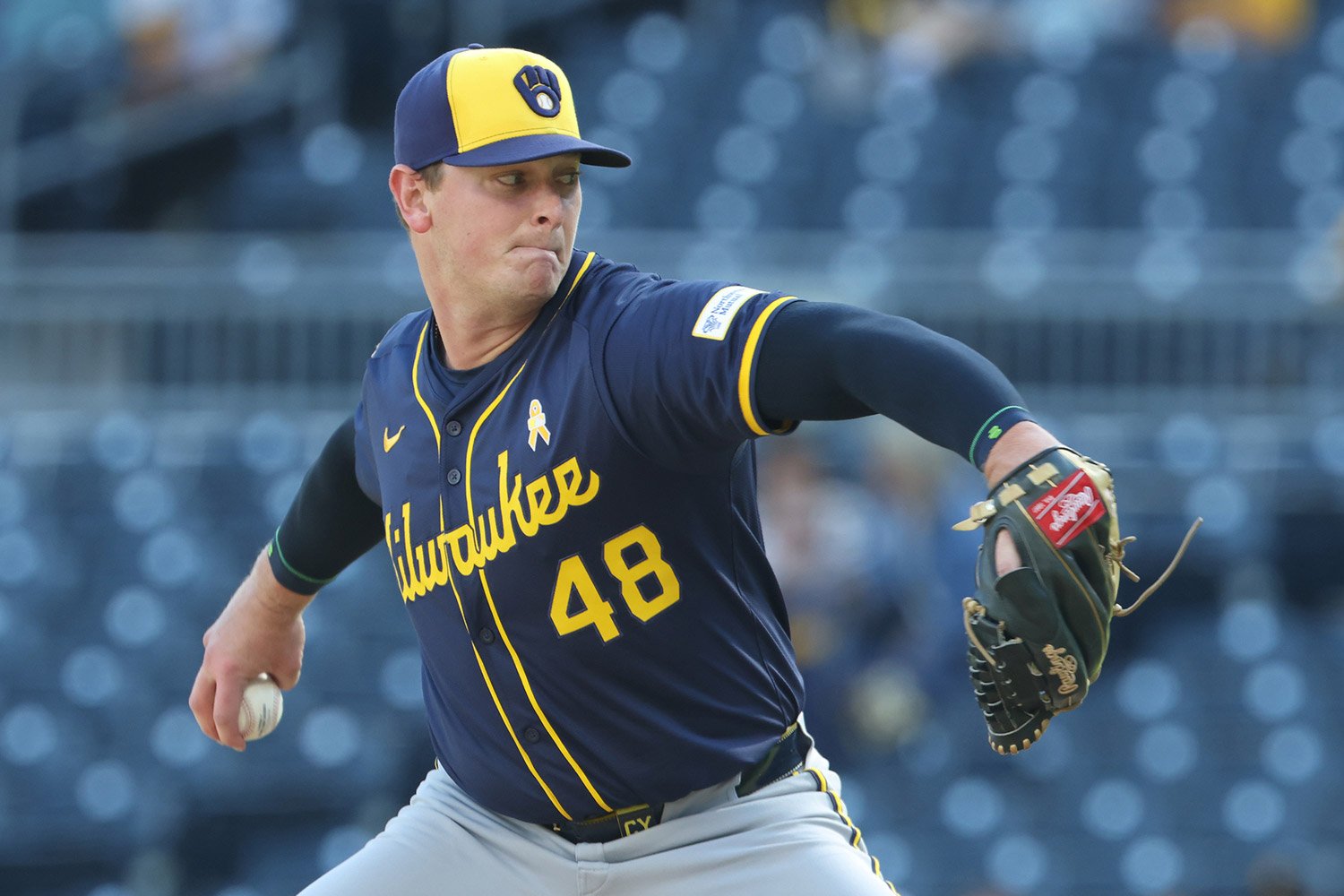 The Brewers graduated a number of their top prospects throughout the 2026 season, including Jacob Misiorowski. They also had breakouts throughout the farm and made some trades involving prospects, so there are some new names to look at heading into this season. Let's take a look at the first installment of prospects number 16-20, as voted on and compiled by the Brewer Fanatic writers. #20 LHP JD Thompson (Vanderbilt) Thompson was the Brewers' second-round pick in 2025, where he struck out 122 batters in only 90 innings, while only walking 30 along the way. A strike-throwing lefty, Thompson features strong pitchability, interesting underlying data, and a deep arsenal. There's not a ton of projection remaining physically, but what stands out most is his overall feel for pitching. He throws a ton of strikes, sequences well, and shows the type of command and pitchability you expect from an advanced college arm. The fastball sits 92–95 MPH and plays extremely well for its velocity, generating roughly 18 inches of vertical break from a lower 5.6-foot release height. He was consistently in the zone with the pitch, but the whiff rate was still north of 30% at Vandy, which tells you the shape and deception are doing a lot of work. His changeup is his best secondary in terms of shape, coming in about 10 MPH slower than the fastball with strong vertical and arm-side movement, giving it real bat-missing potential. However, he does lose his command of it at times, which has turned some evaluators off to the pitch. The slider sits in the low-80s with some cut action, and it will be interesting to see if the Brewers try to push it toward a more cutter-like profile in pro ball, with a little more velocity, or perhaps add a cutter separately. He also mixes an upper-70s curveball that produced big whiff numbers in college thanks to its two-plane shape, and while the lower spin could lead to less swing-and-miss in pro ball, it has a chance to be an above-average offering for him as well. Given his age and experience, Thompson is a candidate to move faster than most pitchers in the system. He is a good candidate to skip Low-A and start his professional career in Appleton in 2026, and potentially push toward the upper minors sooner rather than later. Barring a velocity jump, the ceiling probably looks like a back-end starter, but he has flashed higher velocity in college. However, the combination of strike-throwing, feel, and pitch mix gives him a safe path to contributing in some form. This is the type of arm the Brewers tend to get more out of than other organizations. #19 SS Brady Ebel (Carolina Mudcats) PA H 2B 3B HR OPS wRC+ wOBA K% BB% SwStr% Whiff% PULL% CENT% OPPO% LD% GB% FB% IFFB% SB CS SB% 66 14 1 0 0 .592 79 .308 25.8% 9.1% 11.0% 27.1% 39.0% 17.1% 43.9% 37.5% 42.5% 20.0% 0.0% 0 1 0% Drafted in the Competitive Balance Round A in the 2025 draft, Ebel entered pro ball with a high level of experience and polish for a player his age. His background includes spending a lot of time around big league players and the game, as his father, Dino Ebel, has been the Dodgers' third base coach for an extended period. The early stat line comes from a very limited sample size, so it's unfair to read too much into it, especially given that several underlying traits have stood out, going back to his prep days. He's shown strong swing decisions, consistent bat-to-ball ability, and an overall offensive approach that looks more advanced than most prep hitters at this stage of development. The profile is built around contact ability, with the chance for a strong hit tool and the possibility of average or better power down the road. For the moment, Ebel's power shows up more in batting practice than in games. He's an average runner who likely won't make a major impact with speed, but he moves well enough to handle multiple positions defensively. On the defensive side, Ebel played third base in high school, as he shared the left side of the infield with 2025 number 10 pick Billy Carlson. In pro ball, though, he has primarily played shortstop, with his long-term home still up in the air. The range is solid, and he shows good instincts along with clean infield actions, but as he continues to fill out physically, a move to second or third base remains possible. His arm strength projects to be a clear plus tool and should be more than enough for either spot on the left side of the infield. There's still plenty of development ahead, but the combination of baseball awareness, offensive foundation, and defensive versatility gives Ebel a strong starting point. He went through some adjustment periods in his first exposure to pro pitching, and a return to Low-A for a full season in 2026 should provide a clearer picture of how quickly the bat might progress. #18 RHP Craig Yoho (Nashville Sounds, Milwaukee Brewers) ERA FIP xFIP IP G GS SV BS K% BB% K-BB% HR/9 SwStr% Whiff% WHIP BABIP LOB% LD% GB% FB% IFFB% HR/FB 0.99 2.53 3.62 45.1 41 0 8 2 31.7% 10.9% 20.8% 0.00 14.8% 36.9% 0.99 0.248 85.7% 19.8% 51.5% 28.7% 27.6% 0.0% Yoho moved quickly through the Brewers' system in 2024, reaching Triple-A in his first professional season after signing for just $10,000 as an eighth-round pick. He returned to Triple-A in 2025 and continued to dominate, posting a sub-1.00 ERA with a 31.7% strikeout rate while missing bats at an elite level. At 26 years old and already on the 40-man roster, he is much closer to a finished product than most players in this range. His brief struggles at the major league level came in a very limited sample and did little to change the overall outlook. The standout pitch in Yoho's arsenal is his changeup, a true plus-plus offering and one of the most effective pitches in the minor leagues. It generates high swing-and-miss rates due to its significant movement and spin characteristics. Early in his Triple-A run in 2024, the pitch even got tagged as a left-handed curveball by Statcast because of its shape. He complements the changeup with a low-to-mid 90s four-seam fastball that features heavy run and often resembles a two-seam profile. He also throws a sweeping breaking ball that underwent adjustments late in the season, tightening its movement while increasing velocity by several miles per hour. These changes aim to improve the pitch's command, above all else. Yoho will also mix in a cutter in the upper 80s, though it currently serves more as a secondary option within the arsenal. While his walk rates at Triple-A Nashville were manageable, major-league hitters showed an ability to stay off his pitches when they fell out of the strike zone. That ability to consistently locate his stuff remains the main hurdle preventing him from securing a long-term role at the big-league level. The recent adjustments to his breaking ball and continued refinement of his command will likely determine how quickly he establishes himself. Yoho's raw stuff is clearly major league caliber. With improved strike-throwing, he has the tools to develop into a leverage reliever for Milwaukee, potentially as soon as this season. #17 RHP Tyson Hardin (Wisconsin Timber Rattlers, Biloxi Shuckers) ERA FIP xFIP IP G GS CG ShO K% BB% K-BB% HR/9 SwStr% Whiff% WHIP BABIP LOB% LD% GB% FB% IFFB% HR/FB 2.72 2.35 2.66 96.0 21 21 1 1 24.7% 4.4% 20.4% 0.28 12.9% 26.9% 1.18 0.346 74.2% 26.7% 48.1% 25.2% 22.4% 4.5% A 12th-Round pick in the 2024 draft, Hardin emerged as one of the biggest surprises coming out of 2025 spring training. He continued that success into the regular season, making it all the way to Double-A and winning Brewers Minor League Pitcher of the Year. After working primarily as a two-pitch reliever in college, he showed up with a much deeper arsenal, flashing an intriguing five-pitch mix and reaching the upper-90s with his fastball at times. That peak velocity didn't consistently carry over into a starting role, where he generally sat in the 93–95 MPH range, but the ability to reach back for more velocity remains notable. There are some similarities in Hardin's development path to Brandon Woodruff's early career. Both pitchers showed more arm talent than production during their time at Mississippi State and were selected in the middle rounds of the draft, with Woodruff going in the 11th round and Hardin in the 12th. Woodruff initially operated in a similar velocity range after being drafted before gradually adding more consistent upper-90s velocity as he developed, providing a general framework for what Hardin's progression could look like. Hardin, however, is moving much faster through pro-ball than Woodruff did. Hardin's four-seam fastball stands out as the foundation of his arsenal. The pitch generates good carry for his arm slot, producing roughly 15 inches of vertical break from a 23-degree arm angle. He shows a consistent ability to elevate the fastball, leading to a very flat vertical approach angle that can reach extreme levels, recorded at -3.6 degrees during his lone spring training Statcast appearance. The overall shape and velocity of the pitch resemble Bryan Woo's four-seam fastball in Seattle, which has generated strong swing-and-miss results at the major league level. Hardin's cutter also shows traits comparable to Woo's slider, and the movement profiles of his changeup and sinker, along with his arm slot, are similar as well. Hardin also generates above-average spin across his arsenal, adding to the effectiveness of his pitch mix. Command played a big role in Hardin's success as well, as he limited his walks to a stellar 4.3% rate. Hardin experienced some arm fatigue late in the season, which was not a shock given his limited experience handling a starter's workload. How he manages durability and adapts to a full season will be an important area to monitor moving forward. If he remains healthy and continues to refine his arsenal, the profile points to a pitcher with major league starter potential and the upside to develop into a significant rotation piece. #16 CF Braylon Payne (Carolina Mudcats) PA H 2B 3B HR OPS wRC+ wOBA K% BB% SwStr% Whiff% PULL% CENT% OPPO% LD% GB% FB% IFFB% SB CS SB% 90th EV 342 69 9 4 8 .736 113 .364 30.1% 15.2% 14.5% 35.8% 51.1% 24.5% 24.5% 16.4% 50.3% 33.3% 23.0% 31 10 76% 105.1 The Brewers surprised many when they selected Payne with the 17th overall pick in the 2024 draft, though Curt Hogg has reported that the Dodgers would have selected him in the first round if he had still been on the board. At the time of the draft, Payne was widely viewed as more of a speed-first, slash-and-dash type of player. Since entering pro ball, however, he has shown significantly more raw power than expected. He posted a 105.1 MPH 90th percentile exit velocity in 2025, an impressive mark for a player who spent roughly 90% of the season as an 18-year-old. While the powerful output was encouraging, it also raised some concerns. Payne posted a 35.8% whiff rate, much higher than anticipated entering the year, and also produced ground balls at a very high rate. His elite speed helps offset some of the impact of the ground-ball profile, but it can limit the value of his hard contact. Defensively, Payne showed his upside, but also some areas for continued work. He played over-aggressively early in the season, which occasionally led to miscommunication in the outfield, but his range and willingness to make difficult plays were evident. His top-tier speed helps compensate for the currently underdeveloped jumps and reads, and those aspects did show improvement as the season progressed. The tools point to potential plus defense in center field, supported by an arm that currently grades around average. At the plate, Payne's profile shares similarities with Garrett Mitchell, particularly in batted-ball tendencies, walk rates, and swing-and-miss numbers. The defensive skill set also follows a similar path, with Mitchell representing a more developed version of the same general profile. Payne's early professional career has also been marked by health concerns, contributing to an uneven 2025 season. He opened the year strongly before experiencing a downturn that led to adjustments in his stance and load. The changes appear aimed at creating a more stable base and improving consistency, though injuries limited extended game action following the adjustment. The 2026 season should provide a clearer picture of how the new setup affects his performance. As one of the youngest players in full-season ball, Payne's up-and-down results were not unexpected. Despite the inconsistency, he still finished the season roughly 13% above league average offensively. Continued refinement of his swing path and overall contact ability will be key areas of improvement for him moving forward. His speed and defensive value provide a strong foundation, and if the bat develops, the overall profile carries significant upside. If the hit tool does not progress, his athleticism and defensive ability could still allow him to maintain a role in professional baseball, but reaching the big leagues could prove difficult. What stands out from 16-20 in this list? Let us know your thoughts in the comments!
- 8 comments
-
- 3
-
-
- jd thompson
- brady ebel
- (and 3 more)
-
Running 2026 MLB Draft Thread
Spencer Michaelis replied to wiguy94's topic in MLB Draft & International Signings
Morton is one I would absolutely revisit after he didn’t sign in 2023. The sweeper is probably a 70 grade pitch. -
Another very encouraging update here! Genuinely can't believe he's already at this point. Truly incredible.
-
Think we avoided any this time lol. Thanks for listening!
-
Lugo is part of the 2028 class, but they have reached a pre-agreement with him for that class.
-
Darrien Miller is fine minor league depth. There’s really not much else there on offense outside of being willing to take walks and HBP’s (tends to not work out at the highest levels because pitchers will just make you beat them). As BiederGB said above, the defense is also nothing to write home about and while experience with the current big league arms is nice, that’s pretty much all it is.
-
They did have some late pitcher signings in the 2025 signing period, but that’s not out of the ordinary for the Brewers. Tends to be the case for them. FWIW, Chang Tzu-Chun Lin was also stateside for instructs so I don’t think he will be factoring into the DSL picture next year.
- 7 replies
-
- 1
-
-
- diego frontado
- jose rodriguez
- (and 8 more)
-
Pretty good timing for Twitter/X to go down lol, hopefully the videos will actually be viewable once that starts working properly again.
- 7 replies
-
- 2
-

-
-
- diego frontado
- jose rodriguez
- (and 8 more)
-
The jersey has to be an organizational "pouring one out" for Nick Mears, I'd think 😉 Bonuses were a little higher for sure, though not by a ton. Perhaps the smaller class is due in part to the larger bonuses though.
-
The Brewers have $7.3 million in bonus pool money to spend this period, the vast majority of which has gone toward the names listed below. There will, however, be other signings interspersed throughout the next 11 months before the signing period officially closes on December 15th. Those are not to be ignored, certainly, but the players who signed today are usually the ones with the highest chance of making an impact in MLB one day. We will take a look at the full group of signees, grouped into a few categories. Big Bonus, Big Potential The Brewers are reportedly handing out bonuses of at least $1 million to three prospects in this class, and another will receive $700,000. More often than not, this is the cream of the crop and the bonus level where you will find your top prospects. Jackson Chourio received $1.8 million in 2021, and Jesús Made ($950,000) and Luis Peña ($800,000) also fit into this category. SS Diego Frontado -- Venezuela -- Bonus of approximately $1.6 million MLB Pipeline Rank: 24 │ Baseball America Bonus Rank: 24 Frontado has been tied to the Brewers, even publicly, for years now, and Baseball America views him as a player "trending up" heading into this signing period. Referring to an international signing as having a "high floor" is often disingenuous, but in this class, Frontado has a much higher floor than most international signings. The right-handed hitter has a mature approach, an impressive ability to put the ball in play, and the potential for his hit tool to be above-average or better overall. He combines that feel for hit with big-time bat speed, which leads evaluators to believe he has the potential for 20+ home run seasons in the future as well. To add to that, he is said to have plus-speed and has run a 60-yard dash in 6.5 seconds. Defensively, he has good actions and hands in the field, though his arm is thought to be closer to average than above average. The lack of arm strength isn't always a precursor to moving off shortstop, but it lowers the odds that he'll remain there long-term. SS José Rodríguez -- Venezuela -- Bonus of approximately $1.5 million MLB Pipeline Rank: 49 │ Baseball America Bonus Rank: 28 Rodriguez's value is derived mainly from his defense. Evaluators peg him as one of the best defensive shortstops in the class, if not the best. He has above average or better tools across the board, including his range, hands, and arm strength and accuracy. He has a general fluidity to his movements that plays very well in games. Rodriguez bats from the right side and takes a definite hit-over-power approach. He has a short swing, aimed at hitting line drives, with the expectation that power will never be a big part of his game. An average runner, the hope is that the offense can play well enough to allow the defense to carry him. However, if the offense does come around in pro ball, in a surprise fashion, you could be looking at the Orlando Arcia route to prospect notoriety. SS Ricki Moneys -- Dominican Republic -- Bonus of approximately $1.15 million MLB Pipeline Rank: 20 │ Baseball America Bonus Rank: 39 Moneys is a right-handed hitter with the type of power you dream about. It's plus power, with potential for it to be plus-plus, as he has already posted in-game exit velocities of 108 MPH as a 16-year-old. While he walked seven times to only one strikeout in seven games played in the Amateur Scouting League (earning him MVP honors), there are long-term concerns when it comes to potential swing-and-miss issues. If he can limit the whiffs and show a decent hit tool, the sky is the limit for him offensively. Defensively, Moneys has good hands and is expected to get the opportunity to play shortstop as a professional. However, due to a lack of range expected from most shortstops, most scouts expect him to wind up at third base long-term, where his arm should have no issues holding up. C Moises Salazar -- Venezuela -- Bonus of approximately $700,000 Baseball America Bonus Rank: 67 Another "trending up" player according to Baseball America, Salazar is a switch-hitter who is expected to keep hitting from both sides as a professional. However, he currently shows more polish from the right side of the plate. He has above-average bat speed for his age and has demonstrated an ability to drive the ball to all fields, and should mature into average or better power. It's Salazar's defense, however, that draws the most attention. He is seen as a potential plus defender behind the plate and has the potential for a plus or better arm, already posting in-game pop times in the 1.9-second range. Mid-Tier Bonuses While most top prospects sign for bigger bonuses, there are plenty of examples of big-time players signing in this tier, money-wise, as well. A Brewers example would be Jeferson Quero, who signed for $200,000. SS Angeni Fernandez -- Dominican Republic -- Bonus of approximately $500,000 Baseball America Bonus Rank: 97 Baseball America notes that Fernandez is one of the youngest players in the class, not turning 17 until August of this year. They also note that he has a lot of room to add strength and mass to his current 6-foot, 145-pound frame. The slight frame reportedly has no impact on his bat speed, which is well above average. He makes a lot of contact and shows present gap-to-gap power; if he can add strength, that could turn into the over-the-fence variety later on. Baseball America also notes that, "he's athletic and an above-average runner who could end up moving around the infield and also has experience in center field." INF Osiris Ramirez Jr -- Dominican Republic -- Bonus of approximately $450,000 Ramirez is another player who shows some real potential at a lower cost. Batting from the right side, he shows potential for above-average power and a good feel for hitting as well. A good athlete with better-than-average speed, he should be capable of stealing some bases during his professional career. Defensively, Ramirez can handle all of the infield spots, though it's unlikely that shortstop will be his ultimate home. INF Santiago Garcia -- Venezuela -- Bonus of approximately $400,000 Both Garcia and Moises Salazar were signed out of the Geno Baseball Academy. Garcia bats from the right side and shows the ability to hit line drives from gap-to-gap, with the potential to grow into some more over-the-fence power, though it seems likely to be a hit over power profile. A plus runner on the bases, he has shown himself capable of playing all the infield spots, where his arm holds up more than fine at any of the three positions. OF Manny De Los Santos -- Dominican Republic -- Bonus of approximately $325,000 De Los Santos is a switch-hitter with some sneaky pop in the bat from both sides. He currently seems to have a better feel for generating the loft needed to hit home runs from the right side, but he looks like a better overall hitter from the left side. He has plus speed and smooth actions in the infield, though he is being signed as an outfielder according to the Brewers press release, where his speed should play well. Though he is a bit undersized, the available video indicates a player capable of playing bigger than his frame and outplaying his signing bonus. INF Leanders Matos -- Dominican Republic -- Bonus of approximately $300,000 Matos has more bat speed than one would expect from a player of his stature and has shown the ability to drive balls into the gaps for doubles and triples, though his primary value at the plate is his plate discipline and swing decisions. On the infield, Matos seems unlikely to stick at shortstop, winding up at second or third base, but he has enough athleticism to handle some outfield work as well. SS Ruben Revost -- Dominican Republic -- Bonus of approximately $200,000 Revost has quick hands and a fluid swing from the left side. A good athlete, Revost is not the biggest player, but he gets the most out of his frame, with some even referring to him as "pequeno gigante" or "little giant." His energy is palpable, and he shows quite a bit of emotion on the field. Revost has played infield and outfield as an amateur, but it appears he will be spending most of his time in the outfield as a professional. Other Position Players to Know This tier is often forgotten, but there have been plenty of talented players who signed in this range. Elly De La Cruz famously signed for $65,000, and the Brewers signed an exciting prospect, Jose Anderson, for only $60,000 just two classes ago. OF Enrique Lovera -- Venezuela -- Bonus of approximately $140,000 Lovera was once thought to be signing with Arizona, but a late change led him to sign with Milwaukee. A well-built outfielder known for his energy, Lovera has some pop in his bat and has shown strong instincts in all three phases of the game, allowing him to play above his skill level and earning him a "gamer" label. C Sebastian Franeites -- Venezuela -- Bonus N/A Franeites is a tremendous athlete at the catcher spot, and has even spent some time in the outfield when he isn't catching, where his arm strength is solid-average. At the plate, he has a noisy setup and first movement, but the athleticism is evident, and he has already simplified the swing a bit from where it was a year ago. C Francisco Mir -- Dominican Republic -- Bonus N/A Taller than most catchers, Mir moves well for his size. On video, he receives the ball decently and has a good arm. At the plate, he has a line-drive approach, but the frame suggests he could grow into better-than-average power as he matures. Pitchers to Know Pitchers rarely get big bonuses, especially when it comes to the Brewers. However, the team has discussed making pitching a greater focus in this market, so that may change a bit moving forward. For now, they seem to have held to the strategy of lower bonuses for pitchers. RHP Marcos Veras -- Dominican Republic -- Bonus of approximately $130,000 According to Baseball America, Veras' fastball has "ticked up to 93 MPH," and he has more projection left in the tank. He mixes in a changeup and a curveball as his secondaries, with the changeup reportedly the better of the two, acting as a good put-away pitch. Information has been sparse, and it's been challenging to track down any video. Still, any six-figure bonus for a pitcher is noteworthy, and Baseball America's report paints an intriguing picture. LHP Alexander Mercedes -- Dominican Republic -- Bonus of approximately $100,000 Mercedes is already sitting in the 92-94 MPH range, with plenty of time and projection to add more. He has the appearance of a pitcher who could eventually reach the upper-90s from the left side. He mixes in a good-looking curveball with some sweep as his primary secondary. He is reported to have strong strike-throwing abilities as of this moment as well. RHP Joan Gonzalez -- Dominican Republic -- Bonus N/A A lanky body type, Gonzalez has a lot of projection left in terms of strength and potential velocity. He appears to be a natural pronator and thus throws a changeup as his primary secondary offering, though he has shown a breaking ball on video before as well. RHP Daniel Muñoz -- Venezuela -- Bonus of approximately $25,000 Information is sparse regarding Muñoz. Per Curt Hogg of the Milwaukee Journal Sentinel, "Muñoz is a right-hander with a powerful arm." RHP Jean Rivero -- Venezuela -- Bonus N/A Like Muñoz, there isn't much out there about Ortiz, and video is hard to come by. Per Curt Hogg, Rivero is a "right-hander with loose, strong mechanics on the mound." Others Signing -- No Information RHP Diego Trillo -- Venezuela -- Bonus N/A RHP Miguel Andrade -- Venezuela -- Bonus N/A RHP Jordy Brache -- Dominican Republic -- Bonus N/A INF Josue Rodríguez -- Dominican Republic -- Bonus N/A The Brewers signed 22 players in this class, a smaller class than they've had in a long time. This is likely due in part to the depth of the talent they have in the low minors right now, and the number of players who are likely to repeat in the DSL in 2026. Despite being smaller in size, there is a potential impact at the top of the class and some interesting names throughout. If any new information becomes available, especially in regard to the final four in this article, we will look to keep you updated! View full article
- 7 replies
-
- 3
-
-
- diego frontado
- jose rodriguez
- (and 8 more)
-
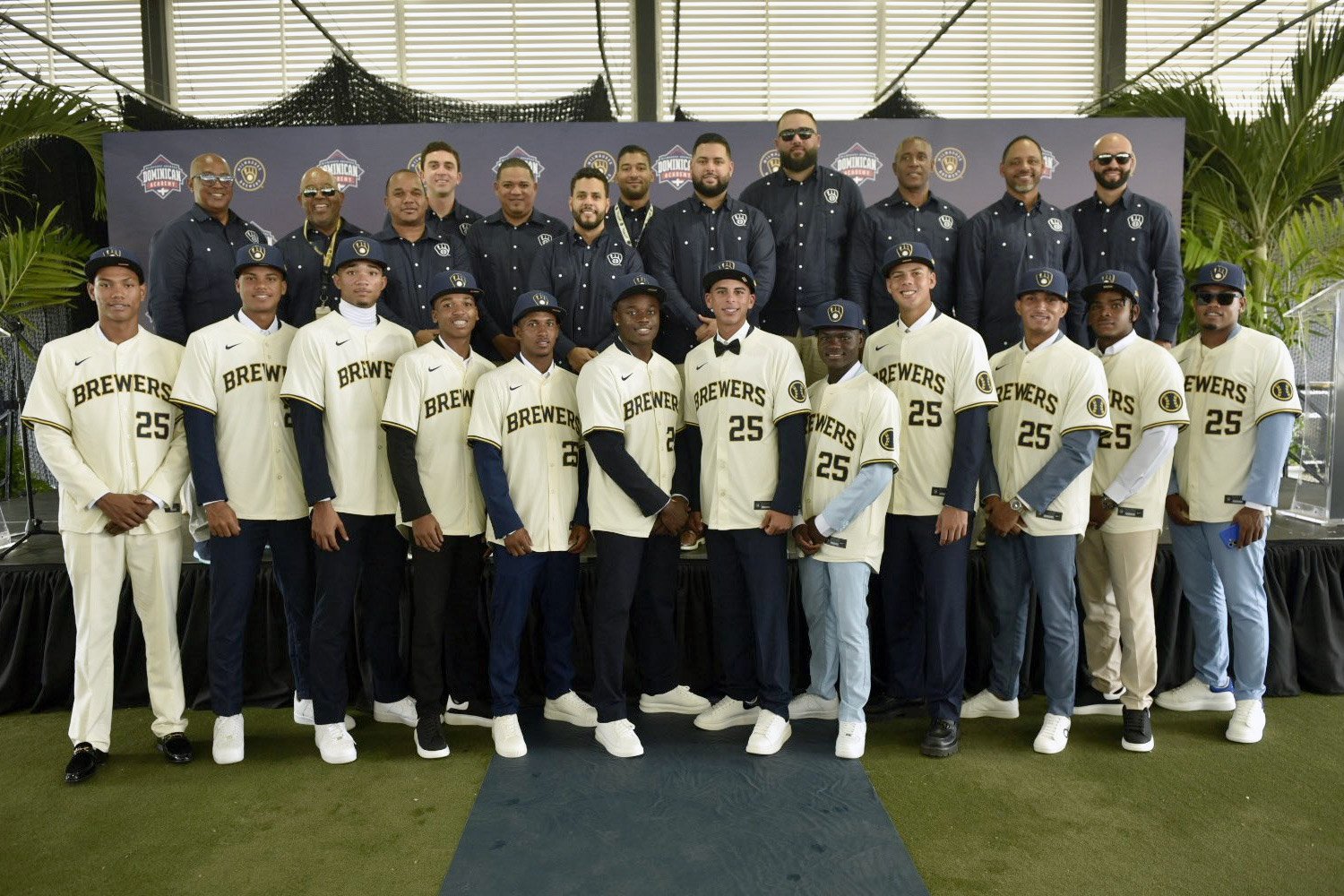 The Brewers have $7.3 million in bonus pool money to spend this period, the vast majority of which has gone toward the names listed below. There will, however, be other signings interspersed throughout the next 11 months before the signing period officially closes on December 15th. Those are not to be ignored, certainly, but the players who signed today are usually the ones with the highest chance of making an impact in MLB one day. We will take a look at the full group of signees, grouped into a few categories. Big Bonus, Big Potential The Brewers are reportedly handing out bonuses of at least $1 million to three prospects in this class, and another will receive $700,000. More often than not, this is the cream of the crop and the bonus level where you will find your top prospects. Jackson Chourio received $1.8 million in 2021, and Jesús Made ($950,000) and Luis Peña ($800,000) also fit into this category. SS Diego Frontado -- Venezuela -- Bonus of approximately $1.6 million MLB Pipeline Rank: 24 │ Baseball America Bonus Rank: 24 Frontado has been tied to the Brewers, even publicly, for years now, and Baseball America views him as a player "trending up" heading into this signing period. Referring to an international signing as having a "high floor" is often disingenuous, but in this class, Frontado has a much higher floor than most international signings. The right-handed hitter has a mature approach, an impressive ability to put the ball in play, and the potential for his hit tool to be above-average or better overall. He combines that feel for hit with big-time bat speed, which leads evaluators to believe he has the potential for 20+ home run seasons in the future as well. To add to that, he is said to have plus-speed and has run a 60-yard dash in 6.5 seconds. Defensively, he has good actions and hands in the field, though his arm is thought to be closer to average than above average. The lack of arm strength isn't always a precursor to moving off shortstop, but it lowers the odds that he'll remain there long-term. SS José Rodríguez -- Venezuela -- Bonus of approximately $1.5 million MLB Pipeline Rank: 49 │ Baseball America Bonus Rank: 28 Rodriguez's value is derived mainly from his defense. Evaluators peg him as one of the best defensive shortstops in the class, if not the best. He has above average or better tools across the board, including his range, hands, and arm strength and accuracy. He has a general fluidity to his movements that plays very well in games. Rodriguez bats from the right side and takes a definite hit-over-power approach. He has a short swing, aimed at hitting line drives, with the expectation that power will never be a big part of his game. An average runner, the hope is that the offense can play well enough to allow the defense to carry him. However, if the offense does come around in pro ball, in a surprise fashion, you could be looking at the Orlando Arcia route to prospect notoriety. SS Ricki Moneys -- Dominican Republic -- Bonus of approximately $1.15 million MLB Pipeline Rank: 20 │ Baseball America Bonus Rank: 39 Moneys is a right-handed hitter with the type of power you dream about. It's plus power, with potential for it to be plus-plus, as he has already posted in-game exit velocities of 108 MPH as a 16-year-old. While he walked seven times to only one strikeout in seven games played in the Amateur Scouting League (earning him MVP honors), there are long-term concerns when it comes to potential swing-and-miss issues. If he can limit the whiffs and show a decent hit tool, the sky is the limit for him offensively. Defensively, Moneys has good hands and is expected to get the opportunity to play shortstop as a professional. However, due to a lack of range expected from most shortstops, most scouts expect him to wind up at third base long-term, where his arm should have no issues holding up. C Moises Salazar -- Venezuela -- Bonus of approximately $700,000 Baseball America Bonus Rank: 67 Another "trending up" player according to Baseball America, Salazar is a switch-hitter who is expected to keep hitting from both sides as a professional. However, he currently shows more polish from the right side of the plate. He has above-average bat speed for his age and has demonstrated an ability to drive the ball to all fields, and should mature into average or better power. It's Salazar's defense, however, that draws the most attention. He is seen as a potential plus defender behind the plate and has the potential for a plus or better arm, already posting in-game pop times in the 1.9-second range. Mid-Tier Bonuses While most top prospects sign for bigger bonuses, there are plenty of examples of big-time players signing in this tier, money-wise, as well. A Brewers example would be Jeferson Quero, who signed for $200,000. SS Angeni Fernandez -- Dominican Republic -- Bonus of approximately $500,000 Baseball America Bonus Rank: 97 Baseball America notes that Fernandez is one of the youngest players in the class, not turning 17 until August of this year. They also note that he has a lot of room to add strength and mass to his current 6-foot, 145-pound frame. The slight frame reportedly has no impact on his bat speed, which is well above average. He makes a lot of contact and shows present gap-to-gap power; if he can add strength, that could turn into the over-the-fence variety later on. Baseball America also notes that, "he's athletic and an above-average runner who could end up moving around the infield and also has experience in center field." INF Osiris Ramirez Jr -- Dominican Republic -- Bonus of approximately $450,000 Ramirez is another player who shows some real potential at a lower cost. Batting from the right side, he shows potential for above-average power and a good feel for hitting as well. A good athlete with better-than-average speed, he should be capable of stealing some bases during his professional career. Defensively, Ramirez can handle all of the infield spots, though it's unlikely that shortstop will be his ultimate home. INF Santiago Garcia -- Venezuela -- Bonus of approximately $400,000 Both Garcia and Moises Salazar were signed out of the Geno Baseball Academy. Garcia bats from the right side and shows the ability to hit line drives from gap-to-gap, with the potential to grow into some more over-the-fence power, though it seems likely to be a hit over power profile. A plus runner on the bases, he has shown himself capable of playing all the infield spots, where his arm holds up more than fine at any of the three positions. OF Manny De Los Santos -- Dominican Republic -- Bonus of approximately $325,000 De Los Santos is a switch-hitter with some sneaky pop in the bat from both sides. He currently seems to have a better feel for generating the loft needed to hit home runs from the right side, but he looks like a better overall hitter from the left side. He has plus speed and smooth actions in the infield, though he is being signed as an outfielder according to the Brewers press release, where his speed should play well. Though he is a bit undersized, the available video indicates a player capable of playing bigger than his frame and outplaying his signing bonus. INF Leanders Matos -- Dominican Republic -- Bonus of approximately $300,000 Matos has more bat speed than one would expect from a player of his stature and has shown the ability to drive balls into the gaps for doubles and triples, though his primary value at the plate is his plate discipline and swing decisions. On the infield, Matos seems unlikely to stick at shortstop, winding up at second or third base, but he has enough athleticism to handle some outfield work as well. SS Ruben Revost -- Dominican Republic -- Bonus of approximately $200,000 Revost has quick hands and a fluid swing from the left side. A good athlete, Revost is not the biggest player, but he gets the most out of his frame, with some even referring to him as "pequeno gigante" or "little giant." His energy is palpable, and he shows quite a bit of emotion on the field. Revost has played infield and outfield as an amateur, but it appears he will be spending most of his time in the outfield as a professional. Other Position Players to Know This tier is often forgotten, but there have been plenty of talented players who signed in this range. Elly De La Cruz famously signed for $65,000, and the Brewers signed an exciting prospect, Jose Anderson, for only $60,000 just two classes ago. OF Enrique Lovera -- Venezuela -- Bonus of approximately $140,000 Lovera was once thought to be signing with Arizona, but a late change led him to sign with Milwaukee. A well-built outfielder known for his energy, Lovera has some pop in his bat and has shown strong instincts in all three phases of the game, allowing him to play above his skill level and earning him a "gamer" label. C Sebastian Franeites -- Venezuela -- Bonus N/A Franeites is a tremendous athlete at the catcher spot, and has even spent some time in the outfield when he isn't catching, where his arm strength is solid-average. At the plate, he has a noisy setup and first movement, but the athleticism is evident, and he has already simplified the swing a bit from where it was a year ago. C Francisco Mir -- Dominican Republic -- Bonus N/A Taller than most catchers, Mir moves well for his size. On video, he receives the ball decently and has a good arm. At the plate, he has a line-drive approach, but the frame suggests he could grow into better-than-average power as he matures. Pitchers to Know Pitchers rarely get big bonuses, especially when it comes to the Brewers. However, the team has discussed making pitching a greater focus in this market, so that may change a bit moving forward. For now, they seem to have held to the strategy of lower bonuses for pitchers. RHP Marcos Veras -- Dominican Republic -- Bonus of approximately $130,000 According to Baseball America, Veras' fastball has "ticked up to 93 MPH," and he has more projection left in the tank. He mixes in a changeup and a curveball as his secondaries, with the changeup reportedly the better of the two, acting as a good put-away pitch. Information has been sparse, and it's been challenging to track down any video. Still, any six-figure bonus for a pitcher is noteworthy, and Baseball America's report paints an intriguing picture. LHP Alexander Mercedes -- Dominican Republic -- Bonus of approximately $100,000 Mercedes is already sitting in the 92-94 MPH range, with plenty of time and projection to add more. He has the appearance of a pitcher who could eventually reach the upper-90s from the left side. He mixes in a good-looking curveball with some sweep as his primary secondary. He is reported to have strong strike-throwing abilities as of this moment as well. RHP Joan Gonzalez -- Dominican Republic -- Bonus N/A A lanky body type, Gonzalez has a lot of projection left in terms of strength and potential velocity. He appears to be a natural pronator and thus throws a changeup as his primary secondary offering, though he has shown a breaking ball on video before as well. RHP Daniel Muñoz -- Venezuela -- Bonus of approximately $25,000 Information is sparse regarding Muñoz. Per Curt Hogg of the Milwaukee Journal Sentinel, "Muñoz is a right-hander with a powerful arm." RHP Jean Rivero -- Venezuela -- Bonus N/A Like Muñoz, there isn't much out there about Ortiz, and video is hard to come by. Per Curt Hogg, Rivero is a "right-hander with loose, strong mechanics on the mound." Others Signing -- No Information RHP Diego Trillo -- Venezuela -- Bonus N/A RHP Miguel Andrade -- Venezuela -- Bonus N/A RHP Jordy Brache -- Dominican Republic -- Bonus N/A INF Josue Rodríguez -- Dominican Republic -- Bonus N/A The Brewers signed 22 players in this class, a smaller class than they've had in a long time. This is likely due in part to the depth of the talent they have in the low minors right now, and the number of players who are likely to repeat in the DSL in 2026. Despite being smaller in size, there is a potential impact at the top of the class and some interesting names throughout. If any new information becomes available, especially in regard to the final four in this article, we will look to keep you updated!
- 7 comments
-
- 6
-
-
-
- diego frontado
- jose rodriguez
- (and 8 more)
-
Dang, in the end I missed two 😂. Josue Rodriguez (I actually found him but thought it was just Jose Rodriguez spelling it differently) and Jordy Brache. From my list, I believe Roni Pinales is the one that was remaining on the list at the end that did not sign. I'm not sure if that's just going to happen later in the year or if I had the class wrong on that one...
-
Noticed one new name amongst the 12 listed on this post. Jordi Brache, pitcher, is not one I’ve seen before. Can’t find anything on him or what he throws or anything to this point. ELPADITV (@elpaditv) • Instagram photo WWW.INSTAGRAM.COM 27 likes, 0 comments - elpaditv on January 15, 2026: "Firmas internacionales Milwaukee Brewers 1-Ricky Moneys Inf 2-Osiris Ramírez Inf...
-
Video thread for the players officially listed by BA as signed. Will add a few more once they become official, and they will all be included in the write-up later (after the class has become official via the Brewers) as well!
-
2026 International Free Agent Market
Spencer Michaelis replied to Jake McKibbin's topic in MLB Draft & International Signings
Here's a thread of video for the players that BA has listed as officially signed so far. These will be included in the write-up later as well, and I'll add a few more people to it as names become "official" on there. -
One final update on the names I have, and feel confident in, before the signings become official today. I will have a write-up with a bunch of video included once the signings do actually become official. Pos Name Pipeline Rank BA Bonus Rank Social Other Social SS Diego Frontado ($1.6 mil) 24 24 Instagram SS Jose Rodriguez ($1.5 mil) 49 28 Instagram INF Osiris Ramirez Jr ($300k) N/A N/A Instagram TikTok INF Ricky Money ($1 mil) 19 39 Instagram TikTok INF Leander Matos N/A N/A Instagram TikTok C Sebastian Franeites N/A N/A Instagram TikTok OF Ruben Rebost ($200k) N/A N/A Instagram INF Manny De Los Santos ($325k) N/A N/A Instagram LHP Alexander Mercedes ($100k) N/A N/A Instagram IG Video C Moises Salazar ($700k) N/A 67 Instagram TikTok INF Santiago Garcia ($400k) N/A N/A Instagram RHP Joan Gonzalez N/A N/A Instagram RHP Diego Trillo N/A N/A IG Post RHP Daniel Muñoz ($25k) N/A N/A Instagram IG Post C Francisco De Marchena Mir N/A N/A Instagram INF/OF Argenis Fernandez ($450k) N/A 97 Instagram RHP Miguel Andrade N/A N/A Instagram RHP Jean Rivero N/A N/A Instagram IG Post LHP Roni Pinales N/A N/A Instagram TikTok OF Enrique Llovera ($140k) N/A N/A Instagram IG Post RHP Marcos Vera ($130k) N/A N/A N/A
- 47 replies
-
- 12
-
-
-
Minor League Coaching Thread
Spencer Michaelis replied to Jim Goulart's topic in Brewers Minor League Talk
Ours are quick and a half

