



Spencer Michaelis
-
Posts
1,121 -
Joined
-
Last visited
-
Days Won
17
2 Followers

Recent Profile Visitors
22,712 profile views


Spencer Michaelis's Achievements






-
Arizona Fall League Thread
Spencer Michaelis replied to jay87shot's topic in Brewers Minor League Talk
Looks like Peyton Niksch will be with the Scorpions as well. Not sure if he’s replacing someone or how that’s working.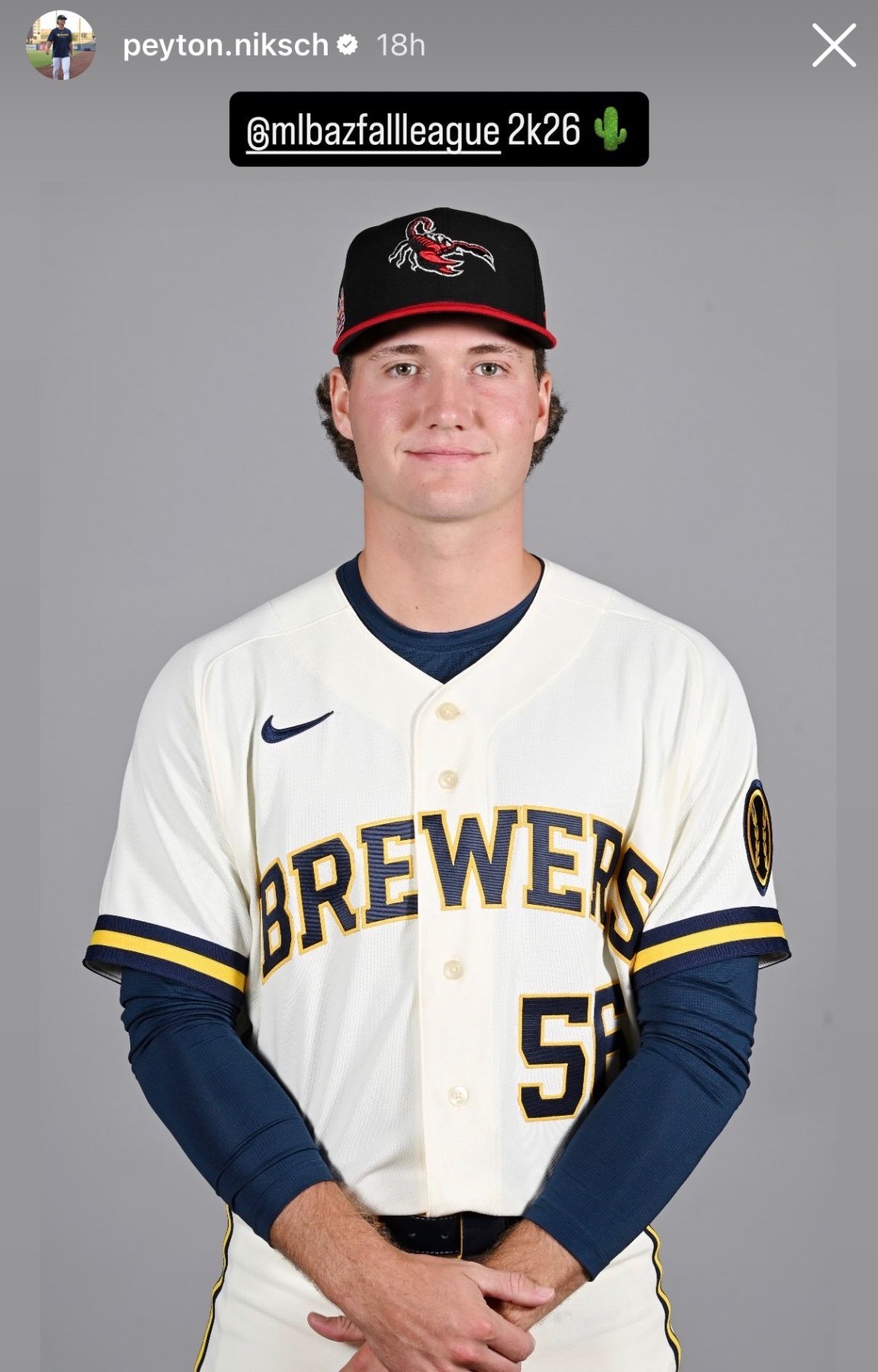
-
The link reports played a big part in getting me into minor league baseball and in fostering my love of following prospects, which has taken me to places I never would have expected and given me the opportunity to meet and interact with people I have long admired. Not sure it ever would have happened if I hadn't stumbled across Brewerfan.net in 2016. Thanks, Jim, and to all of you who have contributed to them over the years! The work that went into these was always much appreciated!
- 11 replies
-
- 10
-

-

-
- ro mueller
- ben lepak
- (and 2 more)
-
Reminder that we are recording around 6 PM today if you've got questions!
-
Hi everyone, Jack is going to be at Wrigley tomorrow night, so it will be me and Ryan Topp recording this week. If you've got questions for us, please drop them below!
-
If you’ve got questions for us, drop them below!
-
Live stream for the DSL Playoff game:
-
We'll record this episode tomorrow night and discuss the two most recent series: the Dodgers and Mariners. If you've got MLB or MiLB questions, drop them below!
-
2027 Draft discussion
Spencer Michaelis replied to jay87shot's topic in MLB Draft & International Signings
Assuming all remains the same post-CBA discussions (or even if there's a change that it might not affect the first draft after), the Brewers will be in line for a Competitive Balance A pick, yes. This is correct, no compensation for not signing Knaak. -
Likely recording around 6:00 today, try to get any questions in that you may have before then!
-
I'd agree. I think the options are probably more along the lines of protect him or trade him to a team that will protect him than to actually leave him completely unprotected.
- 3 replies
-
- 4
-
-
- ricki moneys
- diego frontado
- (and 4 more)
-
Image courtesy of USA TODAY Network via Reuters Connect - Brady Ebel Shown The Brewers' farm system continues to impress, despite several big-time graduations over the last few years. International signings continue to make names for themselves, which accounts for one of the new additions to our top 20 prospects list this month. Meanwhile, the other was a college draft pick who signed for $25,000 in 2024. The organization continues to find talent through all possible avenues. You can find the full list here! New Additions #19 SS Ricki Moneys Moneys signed for $1,100,000 as part of the Brewers' 2026 international class, out of the Dominican Republic. He has plus power, with potential for it to be plus-plus. He's already posted exit velocities of up to 111 MPH in the DSL this season, and has a 90th percentile exit velocity over 106 MPH. According to a Brewers Player Development social media post, Moneys ranks highest among all Brewers DSL players since 2017 in 90th percentile exit velocity, hard-hit rate, and barrel rate. He also has shown solid speed, successfully stealing 27 of 31 bases to this point in 2026. He's likely to be an average runner long-term. He has limited strikeouts pretty well in his debut season, at an 18.6% clip, while walking in 19% of his plate appearances. Despite that, there are some concerns about his ability to make contact long-term, and that will be something to monitor as he makes his way to the United States, likely in 2027. Defensively, Moneys has pretty good hands and has spent about 75% of his time in 2026 at shortstop. However, due to a lack of range expected from most shortstops, most scouts expect him to wind up at third base long-term, where his strong arm should have no issues holding up. Overall, when you have as much power as Moneys does, there's a really high ceiling offensively. If he can make enough contact, he could find himself moving quickly toward the top of this list next year. #20 SS Diego Frontado Prior to signing this past January for $1,600,000, Frontado had been tied to the Brewers for years now, and Baseball America viewed him as a player "trending up" heading into this signing period. Referring to an international signing as having a "high floor" is often disingenuous, but Frontado fits that bill more than most. The right-handed hitter has a mature approach, an impressive ability to put the ball in play, and the potential for his hit tool to be above-average or better overall. He combines that feel for hitting with impressive bat speed, which leads evaluators to believe he has the potential for 20+ home run seasons in the future as well. He doesn't have standout exit velocities, though they are better than average for his age. He's gotten to a lot of power in games this season, though, mainly due to his impressive ability to lift the ball in the air to his pull side. To add to his offensive profile, he is said to have above-average speed and had run a 60-yard dash in 6.5 seconds prior to signing. He has missed some time this season, but he is 14-for-17 on stolen bases. Defensively, he has good actions and hands in the field, and his arm has been a bit stronger than expected in pro ball. Right now, he looks like he has a pretty good chance of sticking at shortstop for a while. Overall, Frontado might not have quite the same ceiling as some of the other recent DSL prospects to make this list, but he has a higher floor than almost all of them. Biggest Risers #8 SS Brady Ebel -- Up five spots from #13 Ebel has been on the rise on national lists as well as here on Brewer Fanatic. He's even been ranked 63rd by Fangraphs on their most recent Top 100 list. After a really slow start in April (66 wRC+), Ebel has been tremendous. Since May 1st, he's posted a 147 wRC+ and has shown an extremely well-rounded game on offense and defense. He's walked almost as much as he's struck out, and has an ISO of almost .200 in that time. He is also 29-of-32 on stolen-base attempts since then (34-of-37 for the season). His glove at shortstop has looked the part as well, and the arm strength is top-tier too. He looks the part of a player who could continue rising up this list. #14 RHP Josh Knoth -- Up five spots from #19 Knoth's results don't jump off the page, with an ERA of 4.85 in High-A, but he has shown flashes of being the most talented pitcher in the system since returning from Tommy John surgery. His breaking balls spin at 3000 RPMs, including a curve that spun at 3500 RPMs in the ACL earlier in the year. He sits in the mid-90s on his fastball with a cut-ride shape that is a bit different than any other fastball in the Brewers' system. There is really high-level pure stuff in his repertoire. The command is a work in progress, and he's still building up his pitch counts and stamina coming off of surgery. Biggest Faller #13 3B Jett Williams -- Down three spots from #10 Williams has been steadily falling down these rankings over the course of the season. He has run into some tough injury luck, twice getting injured the same day a big league infielder got hurt, meaning he would likely have gotten called up for his MLB debut if he had stayed healthy throughout either game. The production has been below average for the season, with a 94 wRC+. He is Rule 5 eligible this offseason, and while he will likely be protected, this could be a more interesting decision than originally expected. Thank you to all of you who voted! View full article
-
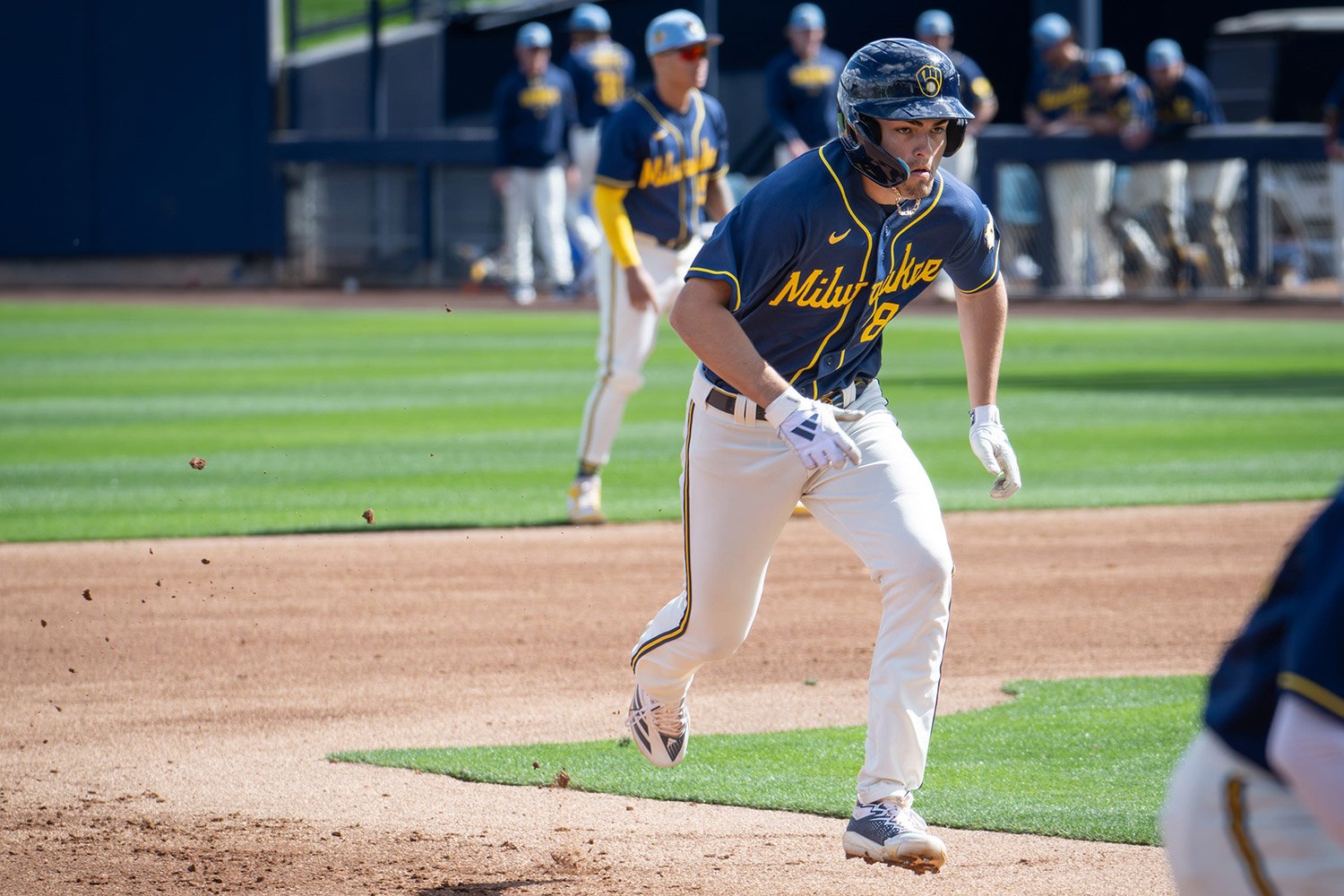 The Brewers' farm system continues to impress, despite several big-time graduations over the last few years. International signings continue to make names for themselves, which accounts for one of the new additions to our top 20 prospects list this month. Meanwhile, the other was a college draft pick who signed for $25,000 in 2024. The organization continues to find talent through all possible avenues. You can find the full list here! New Additions #19 SS Ricki Moneys Moneys signed for $1,100,000 as part of the Brewers' 2026 international class, out of the Dominican Republic. He has plus power, with potential for it to be plus-plus. He's already posted exit velocities of up to 111 MPH in the DSL this season, and has a 90th percentile exit velocity over 106 MPH. According to a Brewers Player Development social media post, Moneys ranks highest among all Brewers DSL players since 2017 in 90th percentile exit velocity, hard-hit rate, and barrel rate. He also has shown solid speed, successfully stealing 27 of 31 bases to this point in 2026. He's likely to be an average runner long-term. He has limited strikeouts pretty well in his debut season, at an 18.6% clip, while walking in 19% of his plate appearances. Despite that, there are some concerns about his ability to make contact long-term, and that will be something to monitor as he makes his way to the United States, likely in 2027. Defensively, Moneys has pretty good hands and has spent about 75% of his time in 2026 at shortstop. However, due to a lack of range expected from most shortstops, most scouts expect him to wind up at third base long-term, where his strong arm should have no issues holding up. Overall, when you have as much power as Moneys does, there's a really high ceiling offensively. If he can make enough contact, he could find himself moving quickly toward the top of this list next year. #20 SS Diego Frontado Prior to signing this past January for $1,600,000, Frontado had been tied to the Brewers for years now, and Baseball America viewed him as a player "trending up" heading into this signing period. Referring to an international signing as having a "high floor" is often disingenuous, but Frontado fits that bill more than most. The right-handed hitter has a mature approach, an impressive ability to put the ball in play, and the potential for his hit tool to be above-average or better overall. He combines that feel for hitting with impressive bat speed, which leads evaluators to believe he has the potential for 20+ home run seasons in the future as well. He doesn't have standout exit velocities, though they are better than average for his age. He's gotten to a lot of power in games this season, though, mainly due to his impressive ability to lift the ball in the air to his pull side. To add to his offensive profile, he is said to have above-average speed and had run a 60-yard dash in 6.5 seconds prior to signing. He has missed some time this season, but he is 14-for-17 on stolen bases. Defensively, he has good actions and hands in the field, and his arm has been a bit stronger than expected in pro ball. Right now, he looks like he has a pretty good chance of sticking at shortstop for a while. Overall, Frontado might not have quite the same ceiling as some of the other recent DSL prospects to make this list, but he has a higher floor than almost all of them. Biggest Risers #8 SS Brady Ebel -- Up five spots from #13 Ebel has been on the rise on national lists as well as here on Brewer Fanatic. He's even been ranked 63rd by Fangraphs on their most recent Top 100 list. After a really slow start in April (66 wRC+), Ebel has been tremendous. Since May 1st, he's posted a 147 wRC+ and has shown an extremely well-rounded game on offense and defense. He's walked almost as much as he's struck out, and has an ISO of almost .200 in that time. He is also 29-of-32 on stolen-base attempts since then (34-of-37 for the season). His glove at shortstop has looked the part as well, and the arm strength is top-tier too. He looks the part of a player who could continue rising up this list. #14 RHP Josh Knoth -- Up five spots from #19 Knoth's results don't jump off the page, with an ERA of 4.85 in High-A, but he has shown flashes of being the most talented pitcher in the system since returning from Tommy John surgery. His breaking balls spin at 3000 RPMs, including a curve that spun at 3500 RPMs in the ACL earlier in the year. He sits in the mid-90s on his fastball with a cut-ride shape that is a bit different than any other fastball in the Brewers' system. There is really high-level pure stuff in his repertoire. The command is a work in progress, and he's still building up his pitch counts and stamina coming off of surgery. Biggest Faller #13 3B Jett Williams -- Down three spots from #10 Williams has been steadily falling down these rankings over the course of the season. He has run into some tough injury luck, twice getting injured the same day a big league infielder got hurt, meaning he would likely have gotten called up for his MLB debut if he had stayed healthy throughout either game. The production has been below average for the season, with a 94 wRC+. He is Rule 5 eligible this offseason, and while he will likely be protected, this could be a more interesting decision than originally expected. Thank you to all of you who voted!
- 3 comments
-
- 2
-
-
- ricki moneys
- diego frontado
- (and 4 more)
-
Hey all, I am back this week, thanks to Owen Jonas for filling in last week! Drop your MLB and MiLB questions below if you've got them!
-
I'd be pretty surprised if he did, if I'm being honest. It was better than I expected when he entered pro ball, but it hasn't improved at all since then. He can probably handle it in a pinch, but I think he's a first baseman.
-
Jesus Made 70 OFPLuis Pena 60 OFPJosh Adamczewski 50+ OFPLuis Lara 50+ OFPBrady Ebel 50+ OFPBraylon Payne 50 OFPTyson Hardin 50 OFPJeferson Quero 50 OFPAndrew Fischer 50 OFPBishop Letson 50 OFPBlake Burke 45+ OFPMarco Dinges 45+ OFPLuke Adams 45+ OFPJosh Knoth 45+ OFPJett Williams 45 OFPJaron DeBerry 45 OFPSawyer Strosnider 45 OFPJD Thompson 45 OFPEric Bitonti 45 OFPRicki Moneys 40+ OFP

