Joseph Zarr
-
Posts
18,796 -
Joined
-
Last visited
-
Days Won
232
Content Type
Profiles
Forums
Blogs
Events
News
2026 Milwaukee Brewers Top Prospects Ranking
Milwaukee Brewers Videos
2022 Milwaukee Brewers Draft Picks
Milwaukee Brewers Free Agent & Trade Rumors, Notes, & Tidbits
Guides & Resources
2023 Milwaukee Brewers Draft Picks
2024 Milwaukee Brewers Draft Picks
The Milwaukee Brewers Players Project
2025 Milwaukee Brewers Draft Pick Tracker
2026 Milwaukee Brewers Draft Tracker: Picks & Bonuses
Store
Downloads
Gallery
Everything posted by Joseph Zarr
-
 And, how about 'Brewers Player Development' twitter giving us some O'Rae highlights today. Oh yeah baby. Check out the full stretch sprinting diving catch in CF alluded to above right off the bat. Heck of a play:
 -
The ACL Crew were off as they often are mid-week but the DSL Crew squads were able to complete make-up games. In the evening hours we continued road series throughout with Nashville the lone home club looking to even things up versus Charlotte. And, the Sounds sure did in dramatic fashion. Let's get into the report! Image courtesy of Biloxi Shuckers and Joshua Sumrall - Nick Bennett Pictured Game Balls: RHP Cameron Wagoner is trending up and I am absolutely here for the turnaround. He is starting to put together multiple very solid outings. He's riding his off-speed and breaking pitch arsenal and it's a beautiful thing. 5 IP, 4 H, 0 BB, 5 K, 1 HR, 1 R. 1B Keston Hiura smacked two long balls powering the Sounds offense and pulling them within one in the eighth inning. 2-for-3, 2 R, 2 RBI, 1 BB, 2 HR. He is making his case for a September call-up. LHP Brian Fitzpatrick pitched five no-hit innings. He was pounding the zone for the most part and he kept the Cannonballer hitters (a lefty dominant lineup) off-balance: 4 IP, 1 BB, 5 K, 0 H, 0 R. A fantastic second start in Low-A ball for the big left-hander. RHP Yerlin Rodriguez gets the nod for his pivotal work in the 8th and 9th innings. He rescued RHP Jesus Rivero's final line in a bases loaded situation with a one-pitch DP grounder to INF Jadher Areinamo at SS. He buckled down and grabbed his 10th save as well securing the Mudcats victory. Thanks to the Mudcats media team, you get to take a deep look: OF Luis Lara was once again phenomenal in CF and he collected his first High-A RBI on a liner through the infield gap into LF. He's a special and exciting talent and we're lucky to watch him on a nightly basis. 2-for-5, 1 RBI, 1 K. Transactions: C Jesus Garcia was assigned to the ACL Brewers from the Nashville Sounds Final: Nashville 7, Charlotte (White Sox) 5 Box Score / Game Log Game Notes Via the Sounds' site, game details, please visit and review: Sounds Win Thriller on Rowdy Tellez's Walk-Off Blast It was the Sounds ninth walk-off victory of their 2023 season. Take a look: RHP Evan McKendry was fabulous through 5 IP. Given his pitch count and a likely desire to rest an overworked bullpen (all season long, really) manager Rick Sweet left the young hurler in to pitch the sixth and seventh frames where he saw five of the nine hits he surrendered and a two-run HR in there for good measure. All told, it was a fantastic outing and then it was blemished: 7 IP, 9 H, 0 BB, 4 ER, 3 K. LHP Ethan Small picked up the victory for his scoreless ninth inning (2 H, 1 K) and the victory moved the Sounds to 21-19 in the second half. They are 4.0 GB Lehigh Valley and Worcester for a second half crown and playoff birth. Three Quick Strikes: 1) INF Tyler Black rocked his first Triple-A XBH last night with a roped double ripped down the LF line and into the Sounds bullpen. Tonight, he flexed his innate strength on a reach swing blast to RF on an off-speed pitch sinking below the zone. Black is ridiculously strong and this swing and result show it: 2) OF Jahmei Jones set the tone from the top of the order with four free passes. That's exactly what you want from your speedy lead-off and that's exactly what he delivered. With long balls leaving the yard throughout, Jones' patient approach tacked on the two winning runs when all was said and done. 3) The Knights outhit the Sounds 12-to-7. The Knights stole two bases to the Sounds zero. Neither team had an abundance of men in RISP (2-for-4 for the Knights and 1-for-3 for the Sounds). This was a tightly contested ball game and it is clear early in this series the Sounds may have their hands full with the clear last place team in the entire International League. The Knights are 7-34 in the second half. I certainly hope they aren't getting hot as the Sounds are pressing for a possible playoff spot. Final: Biloxi 5, Mississippi (Braves) 1 Box Score / Game Log Game Notes Via the Shuckers' site, game details, please visit and review: Shuckers Staff Twirls Second Straight Gem in 5-1 Win Over M-Braves The Shuckers best medicine to get their second half back on track was seeing the Smokies series come to its end. The Shuckers jumped to a 2-0 series lead after another fantastic combined pitching effort secured their team a victory . RHP Carlos F. Rodriguez wasn't especially sharp, but, as he's showed time and again he has more than enough in the tank to give solid work in any outing. What's comical here is 'wasn't especially sharp' pertaining to 4 2/3 IP, 1 H, 2 BB, 3 K, 0 R. Rodriguez was working long counts on several occasions and he was ultimately pulled after 82 pitches. The Shuckers moved to 23-18 in their second half and remain just 1.0 G ahead of the Rays' Montgomery Biscuits. Three Quick Strikes: 1) Hats off to two consecutive shutdown outings from the Shuckers bullpen. What a sight for sore eyes. If the Shuckers are serious about their second half push they are going to need many more of these types of outings. 4 1/3 IP, 3 H, 1 BB, 6 K, 1 ER combine from LHP Nick Bennet, RHP Zach Vennaro, and RHP Ryan Brady. 2) 1B Wes Clarke continues to absolutely crush baseballs in August: You read that right: 115 mph. Clarke is on one and then some. What a joy to watch. That ball made it into the parking lot for crying out loud. 3) CF Jackson Chourio Slump Watch continues: 0-for-18 over his last five games played. Over that span he has 2 RBI - tonight's a bases loaded walk after last night's RBI weak grounder to 3B, 2 BB, and 5 K. He continues to look for the way back to July. Let's not put lipstick on a pig here: it's an ugly stretch of AB's. His OPS has dipped back below 0.800 and sits at 0.798. And, as we know, this can turn around in a single AB. He's done it all season long. Final: Wisconsin 9, Cedar Rapids (Twins) 2 Box Score / Game Log Game Notes Via the T-Rats' site, game details, please visit and review: Timber Rattlers Win to Pick Up Ground in Playoff Race RHP Cameron Wagoner is trending up and I am here for it. He has tilted the balance to more solid outings than rough ones of late by a fairly good measure - he has turned his season around. We're looking at 14 2/3 IP, 12 H, 3 BB, 17 K, 1 HB, 3 ER, 1 HR in August in 3 GS after tonight's work. That's a 1.84 ERA with a 1.02 WHIP. This is precisely what the T-Rats needed to continue making a run at the Peoria Chiefs for a second half playoff birth. Wagoner is doing it with pinpoint accuracy - no more hangers and surgical precision with his off-speed offerings. After tonight's victory, the T-Rats moved to 22-22 in the second half just 3.0 GB. Three Quick Strikes: 1) 2B Mike Boeve continues to add a stabilizing and consistent approach at the dish for manager Joe Ayrault and his Timber Rattlers teammates. He wastes so few swings. He is a hitter who seems to find the hole. 2-for-4, 1 R, 3 RBI - neither RBI single hit particularly hard but they were hit in the right place. His AB's are intriguing, for lack of a better description. He also legged out an infield single tonight showing wheels I didn't know he had. What other surprises are in Boeve's bag? 2) Special mention to SS Robert 'Bob' Moore and 1B Ben Metzinger. Both young men reached base in every trip to the dish - a fantastic effort. Both young men took three free passes down the first base line. Metzinger also ripped a gapper double to left CF. To that end, let's add special mention to more of the bottom of the order - C Darrien Miller and LF Hendry Mendez also put some good wood on some balls tonight in their two hit efforts. Let's hope they can keep some semblance of this up. 3) RHP Stiven Cruz pitched quite well in relief picking up his first save of his professional career - 4 IP, 4 H, 2 BB, 5 K, 1 ER, 1 HR. It's been a disappointing season for Cruz, no doubt about it, but outings like this remind us there is always hope for these talented young men. The right adjustment, a changed mind set, whatever it may be - we shouldn't forget Cruz was one of the more pleasant surprises of the 2022 season. Final: Carolina 2, Kannapolis (White Sox) 0 Box Score / Game Log Game Notes Via the Mudcats' site, game details, please visit and review: Fitzpatrick, Rivero & Rodriguez Blank Ballers 2-0 The Mudcats left a lot of men on base in this one - 11 to be exact in a 2-for-13 with RISP evening. As LHP Brian Fitzpatrick was dealing, I saw one two men on with two out failure to execute after the next. It was feeling precariously like one of those road games that might get away. But, alas, the always dependable INF Jadher Areinamo pulled through with a clutch RBI double deep down the RF line: It's unfortunate the run support couldn't come earlier - Fitzpatrick more than deserved the 'W'. He was in and around the zone. Controlled. His off-speed dipping arsenal was getting a bevy of misses and he sprinkled in a slider versus the Kannpolis lefty-heavy lineup. The victory tied the series 1-1 and, more importantly, it moved the Mudcats to 28-16. They remain 5.0 G ahead of Lynchburg in the chase for a second half playoff bid. Three Quick Strikes: 1) CF Kay-Lan Nicasia deserves special recognition in this one. He ripped a double in a 1-for-4 night but he may have made the play of the game when he nailed the Cannonballer runner preserving a 1-0 lead in the seventh inning. Nicasia's defense is vastly underrated and, perhaps, this is due to his up-and-down year at the plate. LF Jace Avina added the insurance run in the next frame. I continue to love watching Nicasia develop. 2) I think it's fair to point out that as 3B Luke Adams continues to mostly struggle at the plate in August (0.178 BA in 45 AB's), he seems to be taking his already free-wheeling swing to new and wilder heights. I may have only noticed this tonight or my eyes may deceive me, but he really seemed to take his high leg kick and unorthodox hacks to levels I haven't seen in 2023. I'd like to, in the very least, see his pre-swing bat and his follow-thru remain consistent. I certainly understand his free spirit is part of what makes his clock tick, perhaps even more entertaining when he's fielding and throwing from third base, but at a certain point he's likely going to have to smooth some edges in and around his game if he is to reach his full and enormous potential. 3) INF/OF Dylan O'Rae is a real treat to watch play baseball. He is twitchy and he plays with urgency. He is extremely speedy and laterally quick. He made several solid plays at 2B tonight after a full stretch diving snag in CF last night. He also walked, singled, and stole a base from the lead-off spot in this tight victory. Seeing how O'Rae's small frame fills out over the net few years is one of the more intriguing middle infield/CF stories in the affiliated levels as far as I am concerned. DSL Brewers #1 2, DSL Dodgers Mega 0 *Makeup Game from 8/1 Match-Up* Box Score / Game Log One day after getting smoked in a continuation of a postponed game with the first place Dodgers Bautista, the DSL Crew Uno bounced back and shut out the second place Dodgers Mega. The really story in this one appears to be the combined pitching efforts of RHP Jesael Cabrera (5 IP, 1 H, 1 BB, 1 K, 0 R) and RHP Roman Perez (2 IP, 1 H, 0 BB, 4 K, 0 R). Cabrera picked up his fourth win of 2023 (4-1) while Perez picked up sixth save. On the offensive side of things, C Ludwin Tejada knocked both runs across via a solo shot in the fifth frame and a sac fly in the seventh frame. That was all the DSL Crew Uno needed. Also of note, 1B Gery Holguin took three free passes and INF Eduardo Charles played in just his third game of the summer going 1-for-3, 1 BB, 1 K, 1 SB, 1 CS in the lead-off spot. The Crew won this one despite their 0-for-6 mark with RISP. The Mega never had a man touch second base. The DSL Cerveceros Uno bounce back above 0.500 at 25-24 on their season. DSL Guardians Blue 4, DSL Brewers #2 3 Box Score / Game Log The lone loss in a six game Minor League set comes at the hands of the DSL Cerveceros Dos. And, they lost this one late when the Guardians Blue put up a three-spot in the sixth inning of a seven inning contest. After LHP Pedro Quintana put two men aboard with consecutive walks, RHP Dikember Sanchez was summoned to the hill and helped it all fall apart during his third blown save and fifth loss of 2023: wild pitch, walk, walk, wild pitch, single. A 3-1 lead vanished into a 4-3 deficit; the final score. The offense did little to help with an 0-for-8 mark with RISP. I will highlight CF Demetrio Nadal's 1-for-4, 1 R, 1 K, 2 SB lead-off performance. He continues to shine in various ways nearly every game. Feel free to scan the remainder of the box score - there isn't all that much there in this close loss. The ACL Crew returns tomorrow evening. The DSL Cerveceros squads play the morning tilts yet again. It will be a classic late summer seven-game Minor League set. RHP Tyler Woessner will try to give the T-Rats a 2-1 series lead at Cedar Rapids. RHP TJ Shook will look to return to from as the Shuckers aim to take a 3-0 road series lead at Mississippi. Beyond that, at the time of publish we are 'TBD' elsewhere. As always, thanks for reading and thanks for supporting Brewers Minor League baseball. Organizational Scoreboard including starting pitcher info, game times, MiLB TV links, and box scores Current Milwaukee Brewers Organization Batting Stats and Depth Current Milwaukee Brewers Organization Pitching Stats and Depth View full article
- 1 reply
-
- 1
-

-
- brian fitzpatrick
- keston hiura
- (and 3 more)
-
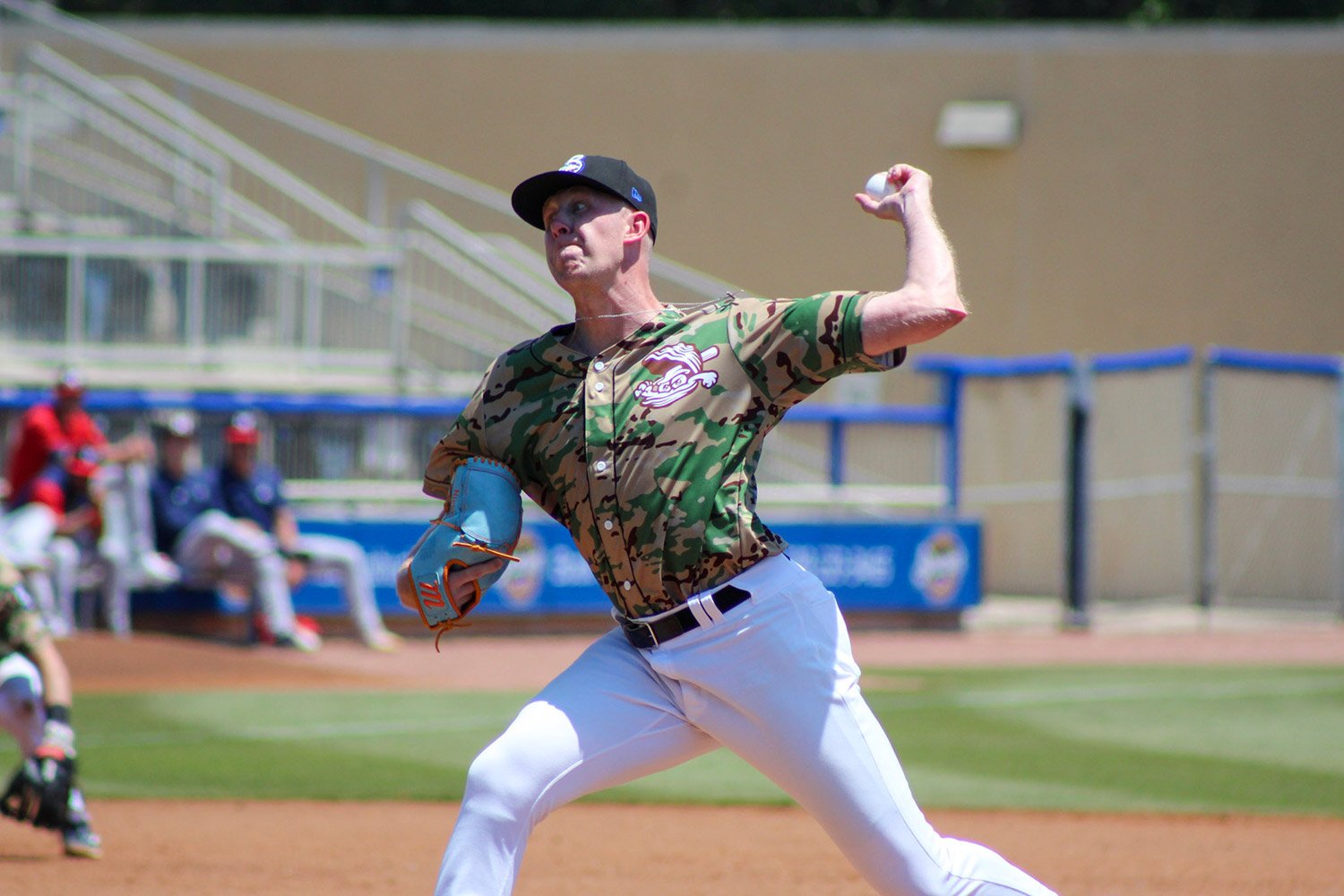 Game Balls: RHP Cameron Wagoner is trending up and I am absolutely here for the turnaround. He is starting to put together multiple very solid outings. He's riding his off-speed and breaking pitch arsenal and it's a beautiful thing. 5 IP, 4 H, 0 BB, 5 K, 1 HR, 1 R. 1B Keston Hiura smacked two long balls powering the Sounds offense and pulling them within one in the eighth inning. 2-for-3, 2 R, 2 RBI, 1 BB, 2 HR. He is making his case for a September call-up. LHP Brian Fitzpatrick pitched five no-hit innings. He was pounding the zone for the most part and he kept the Cannonballer hitters (a lefty dominant lineup) off-balance: 4 IP, 1 BB, 5 K, 0 H, 0 R. A fantastic second start in Low-A ball for the big left-hander. RHP Yerlin Rodriguez gets the nod for his pivotal work in the 8th and 9th innings. He rescued RHP Jesus Rivero's final line in a bases loaded situation with a one-pitch DP grounder to INF Jadher Areinamo at SS. He buckled down and grabbed his 10th save as well securing the Mudcats victory. Thanks to the Mudcats media team, you get to take a deep look: OF Luis Lara was once again phenomenal in CF and he collected his first High-A RBI on a liner through the infield gap into LF. He's a special and exciting talent and we're lucky to watch him on a nightly basis. 2-for-5, 1 RBI, 1 K. Transactions: C Jesus Garcia was assigned to the ACL Brewers from the Nashville Sounds Final: Nashville 7, Charlotte (White Sox) 5 Box Score / Game Log Game Notes Via the Sounds' site, game details, please visit and review: Sounds Win Thriller on Rowdy Tellez's Walk-Off Blast It was the Sounds ninth walk-off victory of their 2023 season. Take a look: RHP Evan McKendry was fabulous through 5 IP. Given his pitch count and a likely desire to rest an overworked bullpen (all season long, really) manager Rick Sweet left the young hurler in to pitch the sixth and seventh frames where he saw five of the nine hits he surrendered and a two-run HR in there for good measure. All told, it was a fantastic outing and then it was blemished: 7 IP, 9 H, 0 BB, 4 ER, 3 K. LHP Ethan Small picked up the victory for his scoreless ninth inning (2 H, 1 K) and the victory moved the Sounds to 21-19 in the second half. They are 4.0 GB Lehigh Valley and Worcester for a second half crown and playoff birth. Three Quick Strikes: 1) INF Tyler Black rocked his first Triple-A XBH last night with a roped double ripped down the LF line and into the Sounds bullpen. Tonight, he flexed his innate strength on a reach swing blast to RF on an off-speed pitch sinking below the zone. Black is ridiculously strong and this swing and result show it: 2) OF Jahmei Jones set the tone from the top of the order with four free passes. That's exactly what you want from your speedy lead-off and that's exactly what he delivered. With long balls leaving the yard throughout, Jones' patient approach tacked on the two winning runs when all was said and done. 3) The Knights outhit the Sounds 12-to-7. The Knights stole two bases to the Sounds zero. Neither team had an abundance of men in RISP (2-for-4 for the Knights and 1-for-3 for the Sounds). This was a tightly contested ball game and it is clear early in this series the Sounds may have their hands full with the clear last place team in the entire International League. The Knights are 7-34 in the second half. I certainly hope they aren't getting hot as the Sounds are pressing for a possible playoff spot. Final: Biloxi 5, Mississippi (Braves) 1 Box Score / Game Log Game Notes Via the Shuckers' site, game details, please visit and review: Shuckers Staff Twirls Second Straight Gem in 5-1 Win Over M-Braves The Shuckers best medicine to get their second half back on track was seeing the Smokies series come to its end. The Shuckers jumped to a 2-0 series lead after another fantastic combined pitching effort secured their team a victory . RHP Carlos F. Rodriguez wasn't especially sharp, but, as he's showed time and again he has more than enough in the tank to give solid work in any outing. What's comical here is 'wasn't especially sharp' pertaining to 4 2/3 IP, 1 H, 2 BB, 3 K, 0 R. Rodriguez was working long counts on several occasions and he was ultimately pulled after 82 pitches. The Shuckers moved to 23-18 in their second half and remain just 1.0 G ahead of the Rays' Montgomery Biscuits. Three Quick Strikes: 1) Hats off to two consecutive shutdown outings from the Shuckers bullpen. What a sight for sore eyes. If the Shuckers are serious about their second half push they are going to need many more of these types of outings. 4 1/3 IP, 3 H, 1 BB, 6 K, 1 ER combine from LHP Nick Bennet, RHP Zach Vennaro, and RHP Ryan Brady. 2) 1B Wes Clarke continues to absolutely crush baseballs in August: You read that right: 115 mph. Clarke is on one and then some. What a joy to watch. That ball made it into the parking lot for crying out loud. 3) CF Jackson Chourio Slump Watch continues: 0-for-18 over his last five games played. Over that span he has 2 RBI - tonight's a bases loaded walk after last night's RBI weak grounder to 3B, 2 BB, and 5 K. He continues to look for the way back to July. Let's not put lipstick on a pig here: it's an ugly stretch of AB's. His OPS has dipped back below 0.800 and sits at 0.798. And, as we know, this can turn around in a single AB. He's done it all season long. Final: Wisconsin 9, Cedar Rapids (Twins) 2 Box Score / Game Log Game Notes Via the T-Rats' site, game details, please visit and review: Timber Rattlers Win to Pick Up Ground in Playoff Race RHP Cameron Wagoner is trending up and I am here for it. He has tilted the balance to more solid outings than rough ones of late by a fairly good measure - he has turned his season around. We're looking at 14 2/3 IP, 12 H, 3 BB, 17 K, 1 HB, 3 ER, 1 HR in August in 3 GS after tonight's work. That's a 1.84 ERA with a 1.02 WHIP. This is precisely what the T-Rats needed to continue making a run at the Peoria Chiefs for a second half playoff birth. Wagoner is doing it with pinpoint accuracy - no more hangers and surgical precision with his off-speed offerings. After tonight's victory, the T-Rats moved to 22-22 in the second half just 3.0 GB. Three Quick Strikes: 1) 2B Mike Boeve continues to add a stabilizing and consistent approach at the dish for manager Joe Ayrault and his Timber Rattlers teammates. He wastes so few swings. He is a hitter who seems to find the hole. 2-for-4, 1 R, 3 RBI - neither RBI single hit particularly hard but they were hit in the right place. His AB's are intriguing, for lack of a better description. He also legged out an infield single tonight showing wheels I didn't know he had. What other surprises are in Boeve's bag? 2) Special mention to SS Robert 'Bob' Moore and 1B Ben Metzinger. Both young men reached base in every trip to the dish - a fantastic effort. Both young men took three free passes down the first base line. Metzinger also ripped a gapper double to left CF. To that end, let's add special mention to more of the bottom of the order - C Darrien Miller and LF Hendry Mendez also put some good wood on some balls tonight in their two hit efforts. Let's hope they can keep some semblance of this up. 3) RHP Stiven Cruz pitched quite well in relief picking up his first save of his professional career - 4 IP, 4 H, 2 BB, 5 K, 1 ER, 1 HR. It's been a disappointing season for Cruz, no doubt about it, but outings like this remind us there is always hope for these talented young men. The right adjustment, a changed mind set, whatever it may be - we shouldn't forget Cruz was one of the more pleasant surprises of the 2022 season. Final: Carolina 2, Kannapolis (White Sox) 0 Box Score / Game Log Game Notes Via the Mudcats' site, game details, please visit and review: Fitzpatrick, Rivero & Rodriguez Blank Ballers 2-0 The Mudcats left a lot of men on base in this one - 11 to be exact in a 2-for-13 with RISP evening. As LHP Brian Fitzpatrick was dealing, I saw one two men on with two out failure to execute after the next. It was feeling precariously like one of those road games that might get away. But, alas, the always dependable INF Jadher Areinamo pulled through with a clutch RBI double deep down the RF line: It's unfortunate the run support couldn't come earlier - Fitzpatrick more than deserved the 'W'. He was in and around the zone. Controlled. His off-speed dipping arsenal was getting a bevy of misses and he sprinkled in a slider versus the Kannpolis lefty-heavy lineup. The victory tied the series 1-1 and, more importantly, it moved the Mudcats to 28-16. They remain 5.0 G ahead of Lynchburg in the chase for a second half playoff bid. Three Quick Strikes: 1) CF Kay-Lan Nicasia deserves special recognition in this one. He ripped a double in a 1-for-4 night but he may have made the play of the game when he nailed the Cannonballer runner preserving a 1-0 lead in the seventh inning. Nicasia's defense is vastly underrated and, perhaps, this is due to his up-and-down year at the plate. LF Jace Avina added the insurance run in the next frame. I continue to love watching Nicasia develop. 2) I think it's fair to point out that as 3B Luke Adams continues to mostly struggle at the plate in August (0.178 BA in 45 AB's), he seems to be taking his already free-wheeling swing to new and wilder heights. I may have only noticed this tonight or my eyes may deceive me, but he really seemed to take his high leg kick and unorthodox hacks to levels I haven't seen in 2023. I'd like to, in the very least, see his pre-swing bat and his follow-thru remain consistent. I certainly understand his free spirit is part of what makes his clock tick, perhaps even more entertaining when he's fielding and throwing from third base, but at a certain point he's likely going to have to smooth some edges in and around his game if he is to reach his full and enormous potential. 3) INF/OF Dylan O'Rae is a real treat to watch play baseball. He is twitchy and he plays with urgency. He is extremely speedy and laterally quick. He made several solid plays at 2B tonight after a full stretch diving snag in CF last night. He also walked, singled, and stole a base from the lead-off spot in this tight victory. Seeing how O'Rae's small frame fills out over the net few years is one of the more intriguing middle infield/CF stories in the affiliated levels as far as I am concerned. DSL Brewers #1 2, DSL Dodgers Mega 0 *Makeup Game from 8/1 Match-Up* Box Score / Game Log One day after getting smoked in a continuation of a postponed game with the first place Dodgers Bautista, the DSL Crew Uno bounced back and shut out the second place Dodgers Mega. The really story in this one appears to be the combined pitching efforts of RHP Jesael Cabrera (5 IP, 1 H, 1 BB, 1 K, 0 R) and RHP Roman Perez (2 IP, 1 H, 0 BB, 4 K, 0 R). Cabrera picked up his fourth win of 2023 (4-1) while Perez picked up sixth save. On the offensive side of things, C Ludwin Tejada knocked both runs across via a solo shot in the fifth frame and a sac fly in the seventh frame. That was all the DSL Crew Uno needed. Also of note, 1B Gery Holguin took three free passes and INF Eduardo Charles played in just his third game of the summer going 1-for-3, 1 BB, 1 K, 1 SB, 1 CS in the lead-off spot. The Crew won this one despite their 0-for-6 mark with RISP. The Mega never had a man touch second base. The DSL Cerveceros Uno bounce back above 0.500 at 25-24 on their season. DSL Guardians Blue 4, DSL Brewers #2 3 Box Score / Game Log The lone loss in a six game Minor League set comes at the hands of the DSL Cerveceros Dos. And, they lost this one late when the Guardians Blue put up a three-spot in the sixth inning of a seven inning contest. After LHP Pedro Quintana put two men aboard with consecutive walks, RHP Dikember Sanchez was summoned to the hill and helped it all fall apart during his third blown save and fifth loss of 2023: wild pitch, walk, walk, wild pitch, single. A 3-1 lead vanished into a 4-3 deficit; the final score. The offense did little to help with an 0-for-8 mark with RISP. I will highlight CF Demetrio Nadal's 1-for-4, 1 R, 1 K, 2 SB lead-off performance. He continues to shine in various ways nearly every game. Feel free to scan the remainder of the box score - there isn't all that much there in this close loss. The ACL Crew returns tomorrow evening. The DSL Cerveceros squads play the morning tilts yet again. It will be a classic late summer seven-game Minor League set. RHP Tyler Woessner will try to give the T-Rats a 2-1 series lead at Cedar Rapids. RHP TJ Shook will look to return to from as the Shuckers aim to take a 3-0 road series lead at Mississippi. Beyond that, at the time of publish we are 'TBD' elsewhere. As always, thanks for reading and thanks for supporting Brewers Minor League baseball. Organizational Scoreboard including starting pitcher info, game times, MiLB TV links, and box scores Current Milwaukee Brewers Organization Batting Stats and Depth Current Milwaukee Brewers Organization Pitching Stats and Depth
 -
2023 Minor League Transaction Thread
Joseph Zarr replied to Jim Goulart's topic in Brewers Minor League Talk
- C Jesus Garcia was (re)assigned to the ACL Brewers from the Nashville Sounds (One of the random call-up, Development List, Re-Assign moves in 2023 I would love to know more about) -
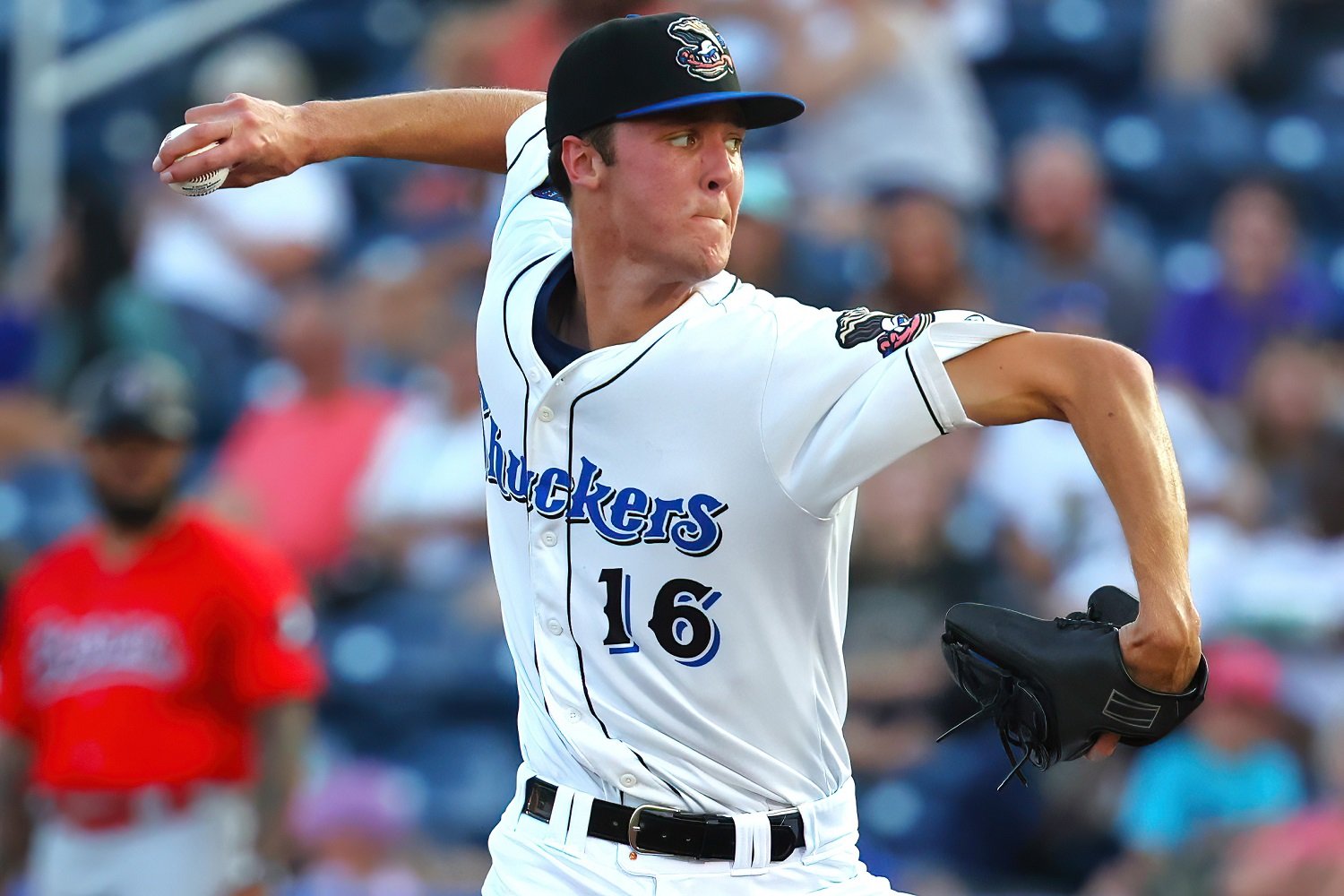 Game Balls 1) Jacob Misiorowski will lead this off with an incredibly dominant (if occasionally erratic) display at Mississippi. In six scoreless innings, he gave up one hit, walked three, and hit two batters. He also had 12 strikeouts. He carried a no-hitter into his sixth and final frame and outfielder Carlos D. Rodriguez nearly made an incredible diving catch on a tailing liner to keep the 'No No' intact. 2) Right-hander Nick Merkel gets the nod for rising up after a couple rough outings of late. His off-seed arsenal was getting many swings and whiffs. It was a pleasure to witness. He went two no-hit, no-run innings. He had one walk and struck out four batters. More of this, please, Mr. Merkel! 3) Utilityman Demetrio Nadal of the DSL Brewers #2 squad continued his run of excellence this summer. (See his line below in the DSL section.) Suffice to say, he continues to impress and is repeatedly stating his case that he is ready for stateside play. 4) Outfielder Carlos D. Rodriguez gets the nod for setting a Shuckers record with his sixth consecutive multi-hit game. Quite the feat. 5) Infielder Patrick Dorrian gets the nod for his ongoing scorching work at the dish (3-for-5, 1 K, 1 RBI). He was also a party in two double plays and made a sliding web gem grab down the first base foul line. Transactions Milwaukee Brewers outfielder Jesse Winker was sent on a rehab assignment to the Wisconsin Timber Rattlers. Nashville Sounds right-hander Trevor Megill was recalled by the Milwaukee Brewers. Righty Pedro Fernandez was activated off the 'Temporarily Inactive List' by the Nashville Sounds, and the Brewers released him. Catcher Brent Diaz was assigned to the Nashville Sounds from the Biloxi Shuckers. Highlights from the System at Large The DSL Brewers are a collection of talent and hype largely driven by the size of the signing bonus given those of us stateside have little more to go on. Make no mistake, however, infielder Pedro Ibarguen has been solid and steady all summer. For those with a Baseball America subscription, we were forewarned this was possibly a sleeper prospect to keep an eye on. Not a lot needs to be said concerning infielder Cooper Pratt. Needless to say, he has fared very well in the ACL all things considered. Lastly, he has fallen by the wayside given the deep talent pool of outfield depth across the system, but 2022 undrafted free agent outfielder Reece Walling has been garnering notice within our ongoing Minor League Game Threads for the past couple weeks. It's nice to see our observations were validated with a little bump from the Brewers Player Development Twitter folks: Final: Charlotte (White Sox) 7, Nashville 4Box Score / Game Log Game Notes Via the Sounds' site, game details, please visit and review: Sounds Have Tough Night Against Knights Southpaw Eric Lauer was stretched to 67 pitches in Tuesday's game against the last-place Charlotte Knights. @damuellesaid it best in our running Game Thread: It's hard to disagree with any of that. After trailing 4-2 in the third frame, the Sounds stranded the juiced bases when catcher Brian Navarreto hit into an inning-ending double play. I broke down Lauer's entire outing HERE, but all in all, I would say he would want two hanging, outer-half sliders back to two lefty bats. Beyond that, the outing was fine. It had its moments, and it was an affair of paper cut liners. Three Quick Strikes 1) Rowdy Tellez is heating up in Nashville, and he's making the kind of contact we've all been waiting for. He hit a 109 mph single in his first at-bat. He also scorched a likely home run that was ruled a double by the umpiring crew. We all know the Brewers could use a hot power bat in the middle of their batting order. Let's hope Tellez can keep it going to help bolster first base and DH spots for Milwaukee! 2) In his first plate appearance, Tyler Black walked and then stole second base on the next pitch (a 92 mph inside fastball). That was his 49th stolen base of 2023, and it led to a run. He also ripped a ground-rule double to left field in the second frame that would have scored outfielder Jahmei Jones from first base had it not bounced behind the bullpen chairs. It was an improved and hopeful 1-for-4 performance. We'll look for more of this as the series and season progresses. 3) Another scoreless outing from righty-hander Thyago Vieira. No hits. No walks. One punch out. He did plunk a batter. If you toss out the ugly month of June, Vieira has been one of the best high-leverage relievers in the Nashville bullpen. Sadly, we can't toss out June and, lately, Vieira has put too many base runners on the base paths. However, he can build on an outing like this. The veteran flamethrower almost always seems to precariously teeter on the brink of a meltdown or a dominant shutdown inning. If nothing else comes of his work in 2023 beyond the Sounds, we can all agree he is entertaining to watch. Final: Biloxi 3, Mississippi (Braves) 0 Box Score / Game Log Game Notes Via the Shuckers' site, game details, please visit and review: Misiorowski Dominates, Ties Strikeout Record in Shutout Win of M-Braves Jacob Misiorowski took the mound to showcase his current 'Three True Outcomes' package of goods: strikeout, hit batters, or walks. I'm being cheeky, but it's kind of like that right now. Kind of. There is no denying Misiorowski has an extremely electric set of tools and pitches, and tonight made it clear that he may even be fast-adjusting to Double-A. Misiorowski showed out in all facets. He set career-highs in strikeouts and innings pitched and handed over a near no-hitter to the bullpen in the seventh frame. He also garnered notoriety across all of MLB. Three Quick Strikes 1) This was Jackson Chourio's first game back since he took a brief respite, and here's my brief report. He was over-aggressive, well ahead of pitches, and lacked patience at the plate. We can take it with a grain of salt, that is indeed what I saw. He went 0-for-4 with an RBI groundout. His OPS is now sitting at .803 on the season. 2) How about a big round of applause to the shutdown relief work between lefty Luis Amaya and right-hander Cam Robinson. Both men came into he game and looked fantastic. Amaya deftly handled two innings of no-hit, no-walk ball. He had four strikeouts. Robinson should have been given a clean inning of work, but the scorers somehow gave a hit (a double, at that) on a fly ball that should have been caught. Sometimes I wonder aloud to the baseball gods. Regardless, Robinson tossed a scoreless inning and had one strikeout. He picked up his ninth Save in Biloxi. More important, he was poised - calm and collected - after the fielding gaffe that left a runner at second base. A sight for sore eyes! 3) If there was an 'Honorable Mention' section in the above 'Game Balls', it would certainly have gone to shortstop Ethan Murray. He went 3-for-3 with a walk. He also stole his 10th base and corralled several shallow pop flies in the left field grass. Murray has come a long, long way from his early 2022 season in High-A Wisconsin and has validated his promotion to Double-A all along the way. He's an extremely solid under-the-radar prospect who fills that utility infielder role with aplomb. Final: Cedar Rapids (Twins) 4, Wisconsin 1 Box Score / Game Log Game Notes Via the T-Rats' site, game details, please visit and review: Rattlers Suffer 4-1 Loss in Cedar Rapids Lefty Nate Peterson had a decent Game 1, road outing. He certainly didn't get all that much help from the T-Rats bats. We have seen an early propensity (in High-A) to give up long balls to right-handed bats on the road (4 HR in 7 2/3 IP at away stadiums). That number will have to be addressed moving ahead. One can't help but wonder what may have been for Peterson's outing had the T-Rats bats capitalized in two, key situations in the early going. They left the bases loaded with two outs in the third inning, and Luis Lara was stranded on third with only one out in the fifth inning. Both were costly. Regardless, Peterson finished his night after five innings. He was charged with three runs on six hits (2 homers). He had one walk and three strikeouts. The solo shots sting, but they certainly weren't fatal. The Minnesota native deserved better against the Twins affiliate. Three Quick Strikes: 1) It was a vintage 2023 display for Luis Lara's High-A debut. Lara got on base via a single and a walk, and he swiped two bags. He also took another base when a throw to second bounced off of his helmet. Naturally, he played solid, ranging defense in the center field grass. He was more than ready to meet the moment. He remains a prospect steadily on the rise at just 18 years of age. 2) With the natural lead-off work of Lara, infielder Robert Moore was slotted into the ninth spot in the batting order. It could be an interesting tactic but Moore's going to need to demonstrate a better knack at the dish than going 0-for-3 with a strikeout on a pitch high and out of the zone. Moore has filled in admirably at shortstop since Eric Brown, Jr.'s injury and unfortunate absence, but you'd be hard-pressed to consider his season as a whole anything but up-and-down with more down than up. 3) Outfielder Hendry Mendez tallied a single, an RBI, and a walk on the evening. More important, for my sake, he finally returned to the Mendoza line sitting at a ripe 0.200 batting average with a fairly woeful .551 OPS. It's been a frustrating season for Mendez, who is mired by yet another prolonged injury absence. He looks as though he has added lower body mass (as I've stated before) but those days of dreaming about a possible lead-off bat with pop have fallen to the wayside. "Will he ever stay healthy long enough to build momentum for his young career?" is the new question. It's easy to forget Mendez was considered a possible breakout candidate before he ran head first into the right field wall last season in Low-A Carolina. This is still his age-19 season. Patience is the virtue here. Miles to go. Final: Kannapolis (White Sox) 16, Carolina 3 Box Score / Game Log Game Notes Via the Mudcats' site, game details, please visit and review: Mudcats Drop Series Opener 16-3 in Kannapolis Some nights go like this. 2021 International free agent signee right-hander Alexander Vallecillo took the hill for his 10th start of the 2023 Mudcats season. Coming off a start in which he gave up one run on one hit over five innings against Delmarva, he started Tuesday's work with a free pass after jumping to an 0-2 count. It was an unfortunate portent of the inning to come. When all was said and done, after the first frame, it was an ugly 33-pitch bit of work. He gave up six runs on three hits in the inning. He walked four and struck out just one batter. That's going to hurt his season stat line which had just recently started looking very respectable. It didn't really get any better as his outing continued. All told, he gave up nine runs on six hits (1 homer) and five walks over three innings> He had three strikeouts. He came into this tilt with a solid 3.83 ERA and 1.16 WHIP. Suffice to say, those numbers went up. The Mudcats fell to 27-16 in the second half. Down East (inconsequential) gained a game and are now four games back. Lynchburg lost so they remained five back. Fredericksburg also gained a game but remain 6.5 out. Three Quick Strikes 1) This was our first live look at right-hander Gerson Calzadilla, and it went about as well as Vallecillo's. Even the outs he recorded were hit hard. It was an inauspicious debut for the young hurler who had previously faired extremely well with the ACL Crew. All told, Calzadilla was charged with four runs on six hits and two walks over two innings. 2) Dylan O'Rae provided a tremendous highlight. He sprinted deep into the left-center field gap and laid out, fully extended, to make the diving catch. If you can find video of this catch, please leave it in the comments below. Infielder Luke Adams is indeed swinging a 'hot bat' as they allude to above. However, I'd hardly consider that bloop knock a testament to a scorching run at the dish. O'Rae's diving catch was a web gem. It was an off night all around... the Mudcats media team apparently included 😂. 3) The final line won't reflect an outing to remember, but there were flashes throughout of the fantastic catcher Jose Sibrian has been for this Mudcats ball club for the duration of his Low-A season. An 0-for-4 night at the dish deserves mention? No. But, defensively, despite the throwing error, Sibrian also threw out a runner at second base in a bang-bang play. The pitch was in the dirt before the spry scoop, pop, and toss. He made several nonchalant scoops of wild pitches throughout the first half. His pitchers were struggling. The zone was restricted. Sibrian kept balling out. ACL White Sox 5, ACL Brewers 0 Box Score / Game Log There's not all that much to chat about after this one. However, as always, there are things to glean from the box score and finer details of the Game Log. Without further ado, here are my cliff notes: They bumped shorstop Cooper Pratt to the lead-off spot in this game. He went 1-for-4. I will be curious to see if he takes this role more often with O'Rae now in Low-A Carolina. A Johan Barrios sighting in the Box Score! He went 3-for-3. What a soft-spoken ACL season this one-time highly-touted prospect has had. 0-for-2 with runners in scoring position and five runners left on base isn't all that much to work with. Catcher Satchell Norman now has nine passed balls during his ACL season. His defense continues to be my primary 'concern'. Ryne Moore continues to see too many runners on the base paths. In this game, he was charged with three unearned runs over three innings. He gave up six hits and walked two batters. That is not a recipe for success most nights. Undrafted free agent right-hander Isaiah Jackson debuted with a scoreless inning of relief. He gave up a hit and walked a batter, but he also struck one batter out. A sound debut effort. The ACL Brewers fell to an overall record of 30-22 and remain four games ahead the ACL Reds. DSL Dodgers Bautista 13, DSL Brewers #1 2 *Continuation of a Lightning Suspended (top of the 4th) Game in which the ACL Crew led 2-1* Box Score / Game Log It's quite obvious to see by today's final score, the ACL Cerveceros Uno continued their run of ineffective play of late. With a second game of a possible double-header cancelled, we can still see that since the original start of this contest the Dodgers Bautista have played to a 6-2 record whereas the ACL Crew Uno have now fallen to 1-6 over that same timeframe. In the end, the young Brew Crew were outhit 10-to-4; they threw 4 WP to the Dodgers none; they hit two batters; and they walked 15 to the Dodgers 10. By every measure, this was an ugly affair symbolized by the lopsided score. So, what can we glean from this loss? Lost in the slow then sudden unraveling of this game was the original strong start from 18-year-old Dominican righty Esmir Suarez. In three scoreless innings, he gave up two his and a walk. He struck out three batters. It goes without saying, but it sure would have been nice to see Suarez continue before lightning cancelled those plans. In a game where the DSL Crew Uno managed 10 free passes, the leader in the walk department was catcher Yannic Walther with four casual jaunts down the first base line. Unfortunately, the batters following him up were 1-for-15 with 2 RBI, and a single RBI. The disappointing season for highly-touted, $1.4 million signing-bonus, infielder Kevin Ereu carries on: 0-for-4 in this one. 0.169 BA / 0.573 OPS in 123 official AB's. The early returns on this Brewers investment have certainly been lackluster. Let's hope he can finish strong. The collective DSL Crew #1 pitching line over the final three innings (RHP Wilfredo Cordero, RHP Oliver Camilo, and RHP Saul Sanchez). Combined they gave up eight runs on five hits and 10 walks. They hit a batter and had three wild pitches. The Crew Uno fall back to 0.500 at 24-24. They are now tied with the DSL Guardians in third place in the DSL North division a whopping 14.5 games behind these same DSL Dodgers Bautista. Things don't get any easier tomorrow when these young men play the second place DSL Dodgers Mega (35-14). DSL Brewers #2 6, DSL Braves 3 Box Score / Game Log I defer to our very own @sveumrulesfor the initial synopsis of this fine result for the DSL Cerveceros Dos from today's Game Thread: Nadal now has 29 SB in his 2023 summer campaign - he is really piquing our interests in advance of a likely 2024 trip stateside to the ACL. Ibarguen swiped his 7th base of 2023 - this is more a novelty as he's also been caught stealing six times. Not to be lost in these highlights is C Frieder Rojas' 2-for-3, 1 BB outing. The DSL Cerveceros Dos moved back to nine games under 0.500 at 20-29. The DSL Crew squads will attempt to play a game apiece tomorrow morning while all four affiliates will play the evening hours. At the time of publish we know we'll see the improving RHP Cameron Wagoner for Game 2 in Cedar Rapids and the talented RHP Carlos F. Rodriguez for Game 2 in Mississippi. Hopefully, we can get two Biloxi pitching gems back-to-back. Elsewhere, we are in limbo in the land of 'TBD'. Hopefully, we see some more 'W's. Tonight was sparse. As always, thanks for reading and thanks for supporting Brewers Minor League baseball. Organizational Scoreboard including starting pitcher info, game times, MiLB TV links, and box scoresCurrent Milwaukee Brewers Organization Batting Stats and DepthCurrent Milwaukee Brewers Organization Pitching Stats and Depth
-
- 1
-
-
- jacob misiorowski
- nick merkel
- (and 3 more)
-
We'll get it into it further in the game section below, but suffice to say, Jacob Misiorowski was electric. I don't care where he ultimately lands - starter or reliever - he is a lethal weapon. And folks, let me tell you, when he's ripping jaw-dropping sliders for K's, looking the idea of him as a Brewers reliever in a late-season push becomes less humorous and more drooling gif. It's much too early to tell on any of this, obviously, but tonight was special. Elsewhere, beyond the Shuckers, we saw a lot of losses and a DSL Crew #2 victory sprinkled in during the early morning hours. Let's get to the report! Image courtesy of Mike Krebs, Biloxi Shuckers Game Balls 1) Jacob Misiorowski will lead this off with an incredibly dominant (if occasionally erratic) display at Mississippi. In six scoreless innings, he gave up one hit, walked three, and hit two batters. He also had 12 strikeouts. He carried a no-hitter into his sixth and final frame and outfielder Carlos D. Rodriguez nearly made an incredible diving catch on a tailing liner to keep the 'No No' intact. 2) Right-hander Nick Merkel gets the nod for rising up after a couple rough outings of late. His off-seed arsenal was getting many swings and whiffs. It was a pleasure to witness. He went two no-hit, no-run innings. He had one walk and struck out four batters. More of this, please, Mr. Merkel! 3) Utilityman Demetrio Nadal of the DSL Brewers #2 squad continued his run of excellence this summer. (See his line below in the DSL section.) Suffice to say, he continues to impress and is repeatedly stating his case that he is ready for stateside play. 4) Outfielder Carlos D. Rodriguez gets the nod for setting a Shuckers record with his sixth consecutive multi-hit game. Quite the feat. 5) Infielder Patrick Dorrian gets the nod for his ongoing scorching work at the dish (3-for-5, 1 K, 1 RBI). He was also a party in two double plays and made a sliding web gem grab down the first base foul line. Transactions Milwaukee Brewers outfielder Jesse Winker was sent on a rehab assignment to the Wisconsin Timber Rattlers. Nashville Sounds right-hander Trevor Megill was recalled by the Milwaukee Brewers. Righty Pedro Fernandez was activated off the 'Temporarily Inactive List' by the Nashville Sounds, and the Brewers released him. Catcher Brent Diaz was assigned to the Nashville Sounds from the Biloxi Shuckers. Highlights from the System at Large The DSL Brewers are a collection of talent and hype largely driven by the size of the signing bonus given those of us stateside have little more to go on. Make no mistake, however, infielder Pedro Ibarguen has been solid and steady all summer. For those with a Baseball America subscription, we were forewarned this was possibly a sleeper prospect to keep an eye on. Not a lot needs to be said concerning infielder Cooper Pratt. Needless to say, he has fared very well in the ACL all things considered. Lastly, he has fallen by the wayside given the deep talent pool of outfield depth across the system, but 2022 undrafted free agent outfielder Reece Walling has been garnering notice within our ongoing Minor League Game Threads for the past couple weeks. It's nice to see our observations were validated with a little bump from the Brewers Player Development Twitter folks: Final: Charlotte (White Sox) 7, Nashville 4Box Score / Game Log Game Notes Via the Sounds' site, game details, please visit and review: Sounds Have Tough Night Against Knights Southpaw Eric Lauer was stretched to 67 pitches in Tuesday's game against the last-place Charlotte Knights. @damuellesaid it best in our running Game Thread: It's hard to disagree with any of that. After trailing 4-2 in the third frame, the Sounds stranded the juiced bases when catcher Brian Navarreto hit into an inning-ending double play. I broke down Lauer's entire outing HERE, but all in all, I would say he would want two hanging, outer-half sliders back to two lefty bats. Beyond that, the outing was fine. It had its moments, and it was an affair of paper cut liners. Three Quick Strikes 1) Rowdy Tellez is heating up in Nashville, and he's making the kind of contact we've all been waiting for. He hit a 109 mph single in his first at-bat. He also scorched a likely home run that was ruled a double by the umpiring crew. We all know the Brewers could use a hot power bat in the middle of their batting order. Let's hope Tellez can keep it going to help bolster first base and DH spots for Milwaukee! 2) In his first plate appearance, Tyler Black walked and then stole second base on the next pitch (a 92 mph inside fastball). That was his 49th stolen base of 2023, and it led to a run. He also ripped a ground-rule double to left field in the second frame that would have scored outfielder Jahmei Jones from first base had it not bounced behind the bullpen chairs. It was an improved and hopeful 1-for-4 performance. We'll look for more of this as the series and season progresses. 3) Another scoreless outing from righty-hander Thyago Vieira. No hits. No walks. One punch out. He did plunk a batter. If you toss out the ugly month of June, Vieira has been one of the best high-leverage relievers in the Nashville bullpen. Sadly, we can't toss out June and, lately, Vieira has put too many base runners on the base paths. However, he can build on an outing like this. The veteran flamethrower almost always seems to precariously teeter on the brink of a meltdown or a dominant shutdown inning. If nothing else comes of his work in 2023 beyond the Sounds, we can all agree he is entertaining to watch. Final: Biloxi 3, Mississippi (Braves) 0 Box Score / Game Log Game Notes Via the Shuckers' site, game details, please visit and review: Misiorowski Dominates, Ties Strikeout Record in Shutout Win of M-Braves Jacob Misiorowski took the mound to showcase his current 'Three True Outcomes' package of goods: strikeout, hit batters, or walks. I'm being cheeky, but it's kind of like that right now. Kind of. There is no denying Misiorowski has an extremely electric set of tools and pitches, and tonight made it clear that he may even be fast-adjusting to Double-A. Misiorowski showed out in all facets. He set career-highs in strikeouts and innings pitched and handed over a near no-hitter to the bullpen in the seventh frame. He also garnered notoriety across all of MLB. Three Quick Strikes 1) This was Jackson Chourio's first game back since he took a brief respite, and here's my brief report. He was over-aggressive, well ahead of pitches, and lacked patience at the plate. We can take it with a grain of salt, that is indeed what I saw. He went 0-for-4 with an RBI groundout. His OPS is now sitting at .803 on the season. 2) How about a big round of applause to the shutdown relief work between lefty Luis Amaya and right-hander Cam Robinson. Both men came into he game and looked fantastic. Amaya deftly handled two innings of no-hit, no-walk ball. He had four strikeouts. Robinson should have been given a clean inning of work, but the scorers somehow gave a hit (a double, at that) on a fly ball that should have been caught. Sometimes I wonder aloud to the baseball gods. Regardless, Robinson tossed a scoreless inning and had one strikeout. He picked up his ninth Save in Biloxi. More important, he was poised - calm and collected - after the fielding gaffe that left a runner at second base. A sight for sore eyes! 3) If there was an 'Honorable Mention' section in the above 'Game Balls', it would certainly have gone to shortstop Ethan Murray. He went 3-for-3 with a walk. He also stole his 10th base and corralled several shallow pop flies in the left field grass. Murray has come a long, long way from his early 2022 season in High-A Wisconsin and has validated his promotion to Double-A all along the way. He's an extremely solid under-the-radar prospect who fills that utility infielder role with aplomb. Final: Cedar Rapids (Twins) 4, Wisconsin 1 Box Score / Game Log Game Notes Via the T-Rats' site, game details, please visit and review: Rattlers Suffer 4-1 Loss in Cedar Rapids Lefty Nate Peterson had a decent Game 1, road outing. He certainly didn't get all that much help from the T-Rats bats. We have seen an early propensity (in High-A) to give up long balls to right-handed bats on the road (4 HR in 7 2/3 IP at away stadiums). That number will have to be addressed moving ahead. One can't help but wonder what may have been for Peterson's outing had the T-Rats bats capitalized in two, key situations in the early going. They left the bases loaded with two outs in the third inning, and Luis Lara was stranded on third with only one out in the fifth inning. Both were costly. Regardless, Peterson finished his night after five innings. He was charged with three runs on six hits (2 homers). He had one walk and three strikeouts. The solo shots sting, but they certainly weren't fatal. The Minnesota native deserved better against the Twins affiliate. Three Quick Strikes: 1) It was a vintage 2023 display for Luis Lara's High-A debut. Lara got on base via a single and a walk, and he swiped two bags. He also took another base when a throw to second bounced off of his helmet. Naturally, he played solid, ranging defense in the center field grass. He was more than ready to meet the moment. He remains a prospect steadily on the rise at just 18 years of age. 2) With the natural lead-off work of Lara, infielder Robert Moore was slotted into the ninth spot in the batting order. It could be an interesting tactic but Moore's going to need to demonstrate a better knack at the dish than going 0-for-3 with a strikeout on a pitch high and out of the zone. Moore has filled in admirably at shortstop since Eric Brown, Jr.'s injury and unfortunate absence, but you'd be hard-pressed to consider his season as a whole anything but up-and-down with more down than up. 3) Outfielder Hendry Mendez tallied a single, an RBI, and a walk on the evening. More important, for my sake, he finally returned to the Mendoza line sitting at a ripe 0.200 batting average with a fairly woeful .551 OPS. It's been a frustrating season for Mendez, who is mired by yet another prolonged injury absence. He looks as though he has added lower body mass (as I've stated before) but those days of dreaming about a possible lead-off bat with pop have fallen to the wayside. "Will he ever stay healthy long enough to build momentum for his young career?" is the new question. It's easy to forget Mendez was considered a possible breakout candidate before he ran head first into the right field wall last season in Low-A Carolina. This is still his age-19 season. Patience is the virtue here. Miles to go. Final: Kannapolis (White Sox) 16, Carolina 3 Box Score / Game Log Game Notes Via the Mudcats' site, game details, please visit and review: Mudcats Drop Series Opener 16-3 in Kannapolis Some nights go like this. 2021 International free agent signee right-hander Alexander Vallecillo took the hill for his 10th start of the 2023 Mudcats season. Coming off a start in which he gave up one run on one hit over five innings against Delmarva, he started Tuesday's work with a free pass after jumping to an 0-2 count. It was an unfortunate portent of the inning to come. When all was said and done, after the first frame, it was an ugly 33-pitch bit of work. He gave up six runs on three hits in the inning. He walked four and struck out just one batter. That's going to hurt his season stat line which had just recently started looking very respectable. It didn't really get any better as his outing continued. All told, he gave up nine runs on six hits (1 homer) and five walks over three innings> He had three strikeouts. He came into this tilt with a solid 3.83 ERA and 1.16 WHIP. Suffice to say, those numbers went up. The Mudcats fell to 27-16 in the second half. Down East (inconsequential) gained a game and are now four games back. Lynchburg lost so they remained five back. Fredericksburg also gained a game but remain 6.5 out. Three Quick Strikes 1) This was our first live look at right-hander Gerson Calzadilla, and it went about as well as Vallecillo's. Even the outs he recorded were hit hard. It was an inauspicious debut for the young hurler who had previously faired extremely well with the ACL Crew. All told, Calzadilla was charged with four runs on six hits and two walks over two innings. 2) Dylan O'Rae provided a tremendous highlight. He sprinted deep into the left-center field gap and laid out, fully extended, to make the diving catch. If you can find video of this catch, please leave it in the comments below. Infielder Luke Adams is indeed swinging a 'hot bat' as they allude to above. However, I'd hardly consider that bloop knock a testament to a scorching run at the dish. O'Rae's diving catch was a web gem. It was an off night all around... the Mudcats media team apparently included 😂. 3) The final line won't reflect an outing to remember, but there were flashes throughout of the fantastic catcher Jose Sibrian has been for this Mudcats ball club for the duration of his Low-A season. An 0-for-4 night at the dish deserves mention? No. But, defensively, despite the throwing error, Sibrian also threw out a runner at second base in a bang-bang play. The pitch was in the dirt before the spry scoop, pop, and toss. He made several nonchalant scoops of wild pitches throughout the first half. His pitchers were struggling. The zone was restricted. Sibrian kept balling out. ACL White Sox 5, ACL Brewers 0 Box Score / Game Log There's not all that much to chat about after this one. However, as always, there are things to glean from the box score and finer details of the Game Log. Without further ado, here are my cliff notes: They bumped shorstop Cooper Pratt to the lead-off spot in this game. He went 1-for-4. I will be curious to see if he takes this role more often with O'Rae now in Low-A Carolina. A Johan Barrios sighting in the Box Score! He went 3-for-3. What a soft-spoken ACL season this one-time highly-touted prospect has had. 0-for-2 with runners in scoring position and five runners left on base isn't all that much to work with. Catcher Satchell Norman now has nine passed balls during his ACL season. His defense continues to be my primary 'concern'. Ryne Moore continues to see too many runners on the base paths. In this game, he was charged with three unearned runs over three innings. He gave up six hits and walked two batters. That is not a recipe for success most nights. Undrafted free agent right-hander Isaiah Jackson debuted with a scoreless inning of relief. He gave up a hit and walked a batter, but he also struck one batter out. A sound debut effort. The ACL Brewers fell to an overall record of 30-22 and remain four games ahead the ACL Reds. DSL Dodgers Bautista 13, DSL Brewers #1 2 *Continuation of a Lightning Suspended (top of the 4th) Game in which the ACL Crew led 2-1* Box Score / Game Log It's quite obvious to see by today's final score, the ACL Cerveceros Uno continued their run of ineffective play of late. With a second game of a possible double-header cancelled, we can still see that since the original start of this contest the Dodgers Bautista have played to a 6-2 record whereas the ACL Crew Uno have now fallen to 1-6 over that same timeframe. In the end, the young Brew Crew were outhit 10-to-4; they threw 4 WP to the Dodgers none; they hit two batters; and they walked 15 to the Dodgers 10. By every measure, this was an ugly affair symbolized by the lopsided score. So, what can we glean from this loss? Lost in the slow then sudden unraveling of this game was the original strong start from 18-year-old Dominican righty Esmir Suarez. In three scoreless innings, he gave up two his and a walk. He struck out three batters. It goes without saying, but it sure would have been nice to see Suarez continue before lightning cancelled those plans. In a game where the DSL Crew Uno managed 10 free passes, the leader in the walk department was catcher Yannic Walther with four casual jaunts down the first base line. Unfortunately, the batters following him up were 1-for-15 with 2 RBI, and a single RBI. The disappointing season for highly-touted, $1.4 million signing-bonus, infielder Kevin Ereu carries on: 0-for-4 in this one. 0.169 BA / 0.573 OPS in 123 official AB's. The early returns on this Brewers investment have certainly been lackluster. Let's hope he can finish strong. The collective DSL Crew #1 pitching line over the final three innings (RHP Wilfredo Cordero, RHP Oliver Camilo, and RHP Saul Sanchez). Combined they gave up eight runs on five hits and 10 walks. They hit a batter and had three wild pitches. The Crew Uno fall back to 0.500 at 24-24. They are now tied with the DSL Guardians in third place in the DSL North division a whopping 14.5 games behind these same DSL Dodgers Bautista. Things don't get any easier tomorrow when these young men play the second place DSL Dodgers Mega (35-14). DSL Brewers #2 6, DSL Braves 3 Box Score / Game Log I defer to our very own @sveumrulesfor the initial synopsis of this fine result for the DSL Cerveceros Dos from today's Game Thread: Nadal now has 29 SB in his 2023 summer campaign - he is really piquing our interests in advance of a likely 2024 trip stateside to the ACL. Ibarguen swiped his 7th base of 2023 - this is more a novelty as he's also been caught stealing six times. Not to be lost in these highlights is C Frieder Rojas' 2-for-3, 1 BB outing. The DSL Cerveceros Dos moved back to nine games under 0.500 at 20-29. The DSL Crew squads will attempt to play a game apiece tomorrow morning while all four affiliates will play the evening hours. At the time of publish we know we'll see the improving RHP Cameron Wagoner for Game 2 in Cedar Rapids and the talented RHP Carlos F. Rodriguez for Game 2 in Mississippi. Hopefully, we can get two Biloxi pitching gems back-to-back. Elsewhere, we are in limbo in the land of 'TBD'. Hopefully, we see some more 'W's. Tonight was sparse. As always, thanks for reading and thanks for supporting Brewers Minor League baseball. Organizational Scoreboard including starting pitcher info, game times, MiLB TV links, and box scoresCurrent Milwaukee Brewers Organization Batting Stats and DepthCurrent Milwaukee Brewers Organization Pitching Stats and Depth View full article
-
August 2023 top prospect voting results
Joseph Zarr replied to Brock Beauchamp's topic in Brewers Minor League Talk
SEE! I shouldn't participate in these things. I lose sight of, well, everything apparently. -
August 2023 top prospect voting results
Joseph Zarr replied to Brock Beauchamp's topic in Brewers Minor League Talk
I can't believe I voted (a moment of hallucinatory bliss). I can't believe I didn't include RHP Logan Henderson in my tally. Amateur hour over here. 😅 Speaks to how far the Farm has come. -
Jackson ChourioSal FrelickJeferson QueroJacob MisiorowskiTyler BlackRobert GasserBrock WilkenAbner UribeCarlos F RodriguezLuis LaraEric Brown JrCooper PrattJosh KnothEric BitontiMike BoeveLogan HendersonLuke AdamsYophery RodriguezDaniel GuilarteDylan O'Rae
-
2023 Minor League Transaction Thread
Joseph Zarr replied to Jim Goulart's topic in Brewers Minor League Talk
- RHP Pedro Fernandez was activated off the 'Temporarily Inactive List' by the Nashville Sounds and then Released by the Nashville Sounds (hopefully everything is alright here!) - Nashville Sounds RHP Trevor Megill was recalled by the Milwaukee Brewers - C Brent Diaz was assigned to the Nashville Sounds from the Biloxi Shuckers - Milwaukee Brewers OF Jesse Winker was sent on a rehab assignment to the Wisconsin Timber Rattlers -
In 2023, I would politely 'argue' there isn't a single player on the doorstep of a call-up more overlooked than INF Patrick Dorrian. Not a single one by my book. He can play 2B, SS, 3B (best performing at 2B and 3B) in the drop of the hat. Reliable in the field, more athletic than given credit for, with a worthy arm. Fantastic at the dish with a smooth compact powerful lefty stroke. Whereas, last year I was leading the INF Cam Devanney hype train into the station (rightfully so) Devanney hasn't been quite the consistent and impactful two-way threat Dorrian has in 2023. This is likely due to the early-season injury to Devanney, who started slowly but certainly picked it up. Today, Dorrian would have to be considered as a notch above Devanney in the call-up department.
- 6 replies
-
- 1
-
-
- felix valerio
- dylan orae
- (and 3 more)
-
Ahhhhh yes, the incoming late summer 9-game extravaganza. I'm running laps right now to stay sharp.
- 2 replies
-
- 1
-
-
- daniel corniel
- manuel rodriguez
- (and 1 more)
-
2023 Minor League Transaction Thread
Joseph Zarr replied to Jim Goulart's topic in Brewers Minor League Talk
- 2023 15th Rd Draft Pick INF Josh Adamczewski was assigned to the ACL Brewers -
BIG compliments from manager Rick Sweet on LHP Robert Gasser and INF Patrick Dorrian. You love love love to hear the accolades from the manager - these two young men have impressed all season long and they've been an absolute joy to watch. He calls Dorrian "...the most consistent best position player we've had..." He's starting to get noticed. And, you'll recall, I brought up his worthiness for utility consideration (alá Monasterio) for the Big Club. Don't sleep on this young man.
-
2023 Minor League Transaction Thread
Joseph Zarr replied to Jim Goulart's topic in Brewers Minor League Talk
The Mudcats pitching train just keeps on chugging along. I'm very very curious to see RHP Gerson Calzadilla's first bullpen work for the first place Mudcats. Will they ease him in? OR, will they throw him right into high-leverage innings? -
2023 Minor League Transaction Thread
Joseph Zarr replied to Jim Goulart's topic in Brewers Minor League Talk
Me waiting for RHP Logan Henderson promotion news: -
2023 Minor League Transaction Thread
Joseph Zarr replied to Jim Goulart's topic in Brewers Minor League Talk
- OF Skye Bolt was activated from the 7-Day IL by the Nashville Sounds -
I can confirm, RHP Logan Henderson has definitely developed/evolved his slider in 2023. As manager Victor Estevez notes in the post-game: he's throwing it roughly 10% of the time. Just enough to keep hitters honest. Playing off his deadly change-up and that ridiculously sexy heater it's a huge development. The results speak for themselves. I would be entirely unsurprised if Henderson is promoted to Wisconsin in the next several days.
- 1 reply
-
- 1
-
-
- james meeker
- brock wilken
- (and 3 more)
-
Yeah, he had a chance to win it in the 9th with Boeve standing on 2B. He worked the count full and then struck out looking at a heater near dead center at the belt. Simply and fairly put: Wood has been pedestrian in his first High- A extended look. His days of electric Low-A play are far far behind him - honestly, it's been a real bummer. I keep waiting for him to have that classic turnaround game. It just hasn't come. Meanwhile, C Jose Sibrian continues to put on catching clinics in Carolina...
-
Misc. Minor League Alumni News & Notes
Joseph Zarr replied to Jim Goulart's topic in Brewers Minor League Talk
Big Jon Singleton went yard twice tonight for Houston in his first start since being called up this past Thursday. 5 RBI. His first MLB homers since 2015. So happy for him. -
2023 Minor League Transaction Thread
Joseph Zarr replied to Jim Goulart's topic in Brewers Minor League Talk
- INF Abraham Toro was recalled by the Milwaukee Brewers from the Nashville Sounds - LHP Bennett Sousa was placed on the 7-Day IL (retroactive to 8/9) by the Nashville Sounds -
2023 Minor League Transaction Thread
Joseph Zarr replied to Jim Goulart's topic in Brewers Minor League Talk
Corresponding with: - INF Daniel Guilarte was placed on the 7-Day IL by the Carolina Mudcats - RHP/1B Quinton Low was placed on the 7-Day IL by the Carolina Mudcats -
The DSL Crew #2 faded late in their make-up game with the DSL Red Sox Red. Nashville was called due to weather. Wisconsin fought off a rain-delay themselves but pulled away to a 2-0 series lead. Carolina won their fifth straight (even if it was sloppy on the mound at times). And, the Shuckers continue to lack the cheat code to beat the razor sharp Tennessee Smokies - they fell to 0-2 in their home series. Let's get into the report! Image courtesy of Brewer Fanatic Game Balls: INF Mike Boeve gets the nod here for a very solid debut at the dish in a DH role for manager Joe Ayrault and the T-Rats. He was patient at the plate. And, he was opportunistic in his execution. Every hit led to runners batted in: 2-for-4, 2 R, 3 RBI, 1 BB, 1 K, 1 HR. A fantastic debut. The bat is going to play at any level. The swing is that good. 3B Brock Wilken gets the nod for another solid night of work at the dish and reliable play at 3B. He finished his evening 2-for-4, 1 R, 2 RBI, 1 BB, 1 K (9-to-4 BB-to-K so far). As a matter of fact, he and Boeve (as alluded to in the title) went back-to-back to fire up the near 4,000 at Fox Cities Stadium. CF Luis Lara gets one for his ongoing stellar work in CF. His web gem of a snow cone grab in deep CF saving further damage in LHP Brian Fitzpatrick's Low-A debut was a thing of beauty: He makes these types of plays on a regular basis. His jumps and his glove are tantalizingly good. 1B Alex Hall gets on for his 4-for-5 night in the wake of all the Boeve and Brocken hype. Hall has definitely been more good than bad at the dish for two months now. I would opine he has a lovely swing that deserves better results. He goes 4-for-5, 2 R, 1 RBI, 2 2B in a fantastic night's work. In another nod to ongoing fine work, let's give LHP Karlos Morales the nod for his incredible work with inherited runners in 2023. He stranded two more (for RHP Cameron Wagoner) base runners tonight in a pivotal spot and has now successfully stranded 21-of-22 inherited runners in 2023. Just sublime work in high-pressure moments: 1 1/3 IP, 2 BB, 0 H, 3 K, 0 R, 1 Hold (5th of his season) of work in his team leading 28th appearance. Transactions: C Jeferson Quero was activated off the 7-Day IL by the Biloxi Shuckers ? OF Tristen Lutz was released by the Biloxi Shuckers RHP Jhosep Ospino was assigned to the DSL Brewers #1 (signed on 8/3) INF Mike Boeve was assigned to the Wisconsin Timber Rattlers from the ACL Brewers RHP Pedro Fernandez was temporarily placed on the Inactive List by the Nashville Sounds Final: Tennessee (Cubs) 4, Biloxi 2 Box Score / Game Log Game Notes Via the Shuckers' site, game details, please visit and review: Smokies Pitching Out-Duels Shuckers in 4-2 Biloxi Loss RHP Jacob Misiorowski was dominant in the zone. The problem was, and has been in his brief Double-A tenure, he was all too often not in the zone. No matter how good your stuff is (and, we all know Misiorowski can be electric), it is extremely difficult to win ball games with 3 HBP and 4 BB in in 3 2/3 IP. Such was the case for Misiorowski in another erratic Double-A outing: 3 2/3 IP, 3 H, 4 BB, 9 K, 2 ER. Dominant in the zone. But, simply not in it enough. This forced his bullpen mates to enter in the fourth frame. Though their efforts were largely up to the task, the game was ultimately decided early. The nail in the coffin, little known at the time, were two two-out runs off the arm of LHP Nick Bennett in the top of the 5th frame. And so it goes as the Shuckers fall to 0-2 on the home stand versus these very talented and sharp Smokies who continue to impress with their overall play. The Shuckers fell to 19-16 in the second half but remain 2.0 G ahead of Montgomery. Three Quick Strikes: 1) Small Sample Regression Alert: CF Jackson Chourio is 0-for-8, 1 BB, 2 K to start this challenging series versus the Smokies. Simply put, his AB's early in the series match that line. A stark return to normalcy after a scorching hot July. And, there's four games left to get back in the superstar saddle versus these juggernaut Tennessee Smokies. Stay tuned! 2) The big Shuckers moment came in the bottom of the 8th inning when SS Freddy Zamora struck out with the bases juiced and two down on three pitches. He looked at two swooping curves that caught the outer half of the plate. He then swung and missed late on a 93mph heater on the outer half. It was a big moment and Zamora was incapable of meeting it. It was likely the pivotal out in a game of extremely limited opportunities for the Shuckers bats (1-for-3 with RISP). 3) Let's recognize the way 1B Ernesto Martinez Jr. has landed and performed in Biloxi. The move to the Southern League, as we've discussed numerous times is a challenging one. Martinez Jr. has played very patient at the plate and he is providing that mammoth catching radius at 1B. He gave us a patented error-saving splits stretch up the 1B line saving SS Freddy Zamora another gaffe and saving LHP Luis Amaya's bottom line in the 8th inning. It's really fantastic to see this young man rising to his big moment. Let's keep it going, young man! Final: Wisconsin 9, Dayton (Reds) 3 Box Score / Game Log Game Notes Via the T-Rats' site, game details, please visit and review: Boeve Impresses in Timber Rattlers Debut RHP Stiven Cruz surrendered his 14th HR of his 2023 season early but managed to get into the third inning with a 2-1 lead in tact. Cruz, as has often been the case in 2023, wasn't especially sharp - 3 IP, 4 H, 2 BB, 3 K, 2 ER, 1 HR. Thankfully, however, despite this he managed to keep the damage to a bare minimum. A 1 hour and 26 minute rain delay ended his outing at 52 pitches. Thankfully, for the Rattlers, the plan was in place to piggyback with RHP Cameron Wagoner. Both hurlers battled men on base but they ultimately did enough damage control to maintain a tie or a lead. Full Game Highlights: Three Quick Strikes: 1) Speaking of Wagoner, we continue to see real flashes that RHP Cameron Wagoner has turned a corner. He was touching 94-95 mph at points in the early going. His off-speed stuff continues to play hammering down in the zone. He is, simply put, playing more confidently and the results are showing. After his last fantastic start on the hill in South Bend, he came on in post-rain delay relief of Cruz and gave his squad everything they needed early. It was a pleasure to watch. Though his pitch count elevated and he was hit hard on two mistake heaters dead center, I would call his outing an overall success given the circumstances: 3 2/3 IP, 5 H, 2 BB, 5 K, 1 ER. He picked up the 'W' and moved to 4-11 on his season. 2) This ultimately became a game of what either team could do with their bounty of baserunners. Where the T-Rats found those opportune moments to shine (5-for-17 with RISP), the Dragons struggled mightily (1-for-13). The Rattlers' bats rose to the moment in several key spots to add breakaway and insurance runs. As a T-Rats fan and habitual viewer, it goes without saying: the additions of INF's Mike Boeve and Brock Wilken are going to do wonders for the heart of the Timber Rattlers lineups. 3) I continue to appreciate the comfortability INF Robert Moore is showing as he gets more and more reps at SS. He made another daring throw to grab a lead runner at 3B tonight. With Wilken collecting those cannon shots at 3B and laying down confident tags, it makes the operation look smoother and easier than it is. Moore is throwing accurate darts and showing why he has always been considered a 2B/SS. Don't sleep on the overall value of Moore's steadiness and availability. We'd love better output at the dish, most definitely, but, I would also politely opine: a lot of the negative damage was done in a prolonged early-season slump. He's been swinging a better and more level bat for over two months now. Final: Carolina 6, Delmarva (Orioles) 4 Box Score / Game Log Game Notes Via the Mudcats' site, game details, please visit and review: Red-Hot Mudcats Win Fifth Straight 6-4 LHP Brian Fitzpatrick was very accurate and effective early in his debut outing for Low-A Carolina. When a pitcher debuts, you are hoping he isn't over-amped. Fitzpatrick was inducing several swings and misses with both his slider and his heater in the first frame. All weak contact in the opening top half. In the second inning, Fitzpatrick left a couple off-speed pitches dead center - one of which was hit hard off the LF wall - but he ultimately managed to escape unscathed when 1B Jesus Chirinos made an adept turn and throw to home plate after an errant INF Daniel Guilarte throw brought him off the bag. C Blayberg Diaz applied the tag in plenty of time as the runner was caught dead to rights in the base path. All in all, we'll consider this a successful debut. It's great to get more of those prolonged injury-related cobwebs off that throwing arm: 3 2/3 IP, 4 H, 2 BB, 0 K, 1 ER, 1 Balk on 56 pitches (33 strikes). He can also thank the super talented CF Luis Lara for a more palatable final line: Three Quick Strikes: 1) 1B Jesus Chirinos' continued his post-birthday hot streak. It's uncanny how Chirinos heats up as he approaches and passes his late July birthday. 1-for-1, 3 BB, 1 R while batting in the 5th spot in the batting order is a solid night of work. He also made a fantastic lunging grab at 1B during the 3B Luke Adams DP tag and running one-hop toss to 1B to end the game. You love the plate discipline and you love the steadier play at 1B. We all know Chirinos isn't the best athlete in the system, but when he's playing focused and disciplined baseball he's more than capable of giving you meaningful play at the crucial position. 2) RHP Quinton Low's ongoing inability to find the strike zone is becoming a serious problem for the young hurler. Consecutive full count walks to start his first inning of relief work is the type of Low outing I have seen all too often as his season has progressed. It's truly unfortunate because, as I've discussed previously, he has a very nice raw set of pitching tools to work with. He gave up an rbi single and a a HBP to give the Shorebirds two runs pulling within 4-3. Luckily, he induced a double play ball in a 3-1 count to end his only inning of work. All in all, Low just continues to put entirely too many runners on the base paths - often allowing batters to simply watch the pitches miss the zone. It goes without saying, but Low is absolutely going to have to sharpen this up. 1 IP, 1 H, 3 BB, 1 HBP, 2 ER, 1 K is not the outing he was looking for. I'm near certain manager Victor Estevez was wanting more innings from his suddenly troubled flamethrower. 3) With the 'W', the Mudcats ran their second half first place record to 25-13. They maintain a 5.5 G lead over the 2nd place Fredericksburg Nats and these talented young men are now 24-8 since the calendar flipped to July. And, well, I'm going to be monitoring their home stretch like no other given their Minor League leading 13-season Playoff drought. This is also a testament to the manner in which the Brewers organization has placed emphasis and built meaningful depth across the lowest of their affiliated and rookie ball levels. I celebrated their current brand of baseball and ongoing second half success in last night's report. And, well, here I am sharing this joy with you again. Let's root them. on and support this squad as they look to change history for the better. DSL Red Sox Red 12, DSL Brewers #2 9 Box Score / Game Log The DSL Crew #2 led 6-1 after one inning. They also led 9-6 after five frames of an abbreviated seven inning make-up affair. It all appears to have unraveled, in multiple directions, when RHP Dikember Sanchez came on in relief in the fifth frame. Sanchez gave up a walk, double, rbi ground out, and rbi single in that fifth frame. An 8-4 game was suddenly 8-6 headed to the bottom half. After grabbing one back in this same bottom half (INF Demetrio Nadal walk, SB, and RBI single from 1B Danny Puerta), things really fell apart in the six-run sixth frame. We see a throwing error, a fielding error, and three wild pitches helping keep the Red Sox party going strong. When Sanchez was replaced after the second out (a punch out), his replacement in LHP Pedro Quintana threw another wild pitch to help plate the 12th run. Trailing 12-9 at that juncture, that's how the game ended. Quintana actually faired well in relief beyond that wild pitch - 1 1/3 IP, 1 H, 0 BB, 3 K, 0 R, 1 WP. Let us never take for granted the inherited runner pitching savants - they are few and far between. Offensively, the Cerveceros Dos had many highlights: 5-for-13 with RIPS and only 6 LOB 5 SB to only 1 CS INF Demetrio Nadal, who swiped his 27th base in 2023, hit a three-bagger and drew a walk in lead-off The offense, as a whole, walked six times to only three strikeouts We saw multi-hit games from 1B Danny Puerta (with two two-out RBI's for good measure), OF Ramon Moreno, and INF Roderick Flores Unfortunately, what looked like another recent victory versus a team with a better record turned into an unfortunate defeat in a wild inning - literally and figuratively. The DSL Crew #2 fall back to nine games under 0.500 at 18-27. We'll be moving on to game threes of all affiliated series tomorrow and the DSL Crew and ACL Crew squads both return for regularly scheduled tilts. It will be a heavy slate of 8 + games (the DSL Crew Uno will finish a game starting in the 10th frame - let's hope for our sake it's a quick one?). Intriguing starting pitching will be happening throughout - RHP Evan McKendry; RHP Carlos F. Rodriguez; RHP Alexander Cornielle; and RHP Patricio Aquino all take the hill in evening contests. Tune in early and tune in often - to our game thread and the games themselves. Let's support these young men in their ongoing pushes for the post-season of Minor League baseball. As always, thanks for reading and thanks for supporting Brewers Minor League baseball. Organizational Scoreboard including starting pitcher info, game times, MiLB TV links, and box scoresCurrent Milwaukee Brewers Organization Batting Stats and DepthCurrent Milwaukee Brewers Organization Pitching Stats and Depth View full article
- 3 replies
-
- 2
-
-
- mike boeve
- brock wilken
- (and 3 more)
-
 Game Balls: INF Mike Boeve gets the nod here for a very solid debut at the dish in a DH role for manager Joe Ayrault and the T-Rats. He was patient at the plate. And, he was opportunistic in his execution. Every hit led to runners batted in: 2-for-4, 2 R, 3 RBI, 1 BB, 1 K, 1 HR. A fantastic debut. The bat is going to play at any level. The swing is that good. 3B Brock Wilken gets the nod for another solid night of work at the dish and reliable play at 3B. He finished his evening 2-for-4, 1 R, 2 RBI, 1 BB, 1 K (9-to-4 BB-to-K so far). As a matter of fact, he and Boeve (as alluded to in the title) went back-to-back to fire up the near 4,000 at Fox Cities Stadium. CF Luis Lara gets one for his ongoing stellar work in CF. His web gem of a snow cone grab in deep CF saving further damage in LHP Brian Fitzpatrick's Low-A debut was a thing of beauty: He makes these types of plays on a regular basis. His jumps and his glove are tantalizingly good. 1B Alex Hall gets on for his 4-for-5 night in the wake of all the Boeve and Brocken hype. Hall has definitely been more good than bad at the dish for two months now. I would opine he has a lovely swing that deserves better results. He goes 4-for-5, 2 R, 1 RBI, 2 2B in a fantastic night's work. In another nod to ongoing fine work, let's give LHP Karlos Morales the nod for his incredible work with inherited runners in 2023. He stranded two more (for RHP Cameron Wagoner) base runners tonight in a pivotal spot and has now successfully stranded 21-of-22 inherited runners in 2023. Just sublime work in high-pressure moments: 1 1/3 IP, 2 BB, 0 H, 3 K, 0 R, 1 Hold (5th of his season) of work in his team leading 28th appearance. Transactions: C Jeferson Quero was activated off the 7-Day IL by the Biloxi Shuckers ? OF Tristen Lutz was released by the Biloxi Shuckers RHP Jhosep Ospino was assigned to the DSL Brewers #1 (signed on 8/3) INF Mike Boeve was assigned to the Wisconsin Timber Rattlers from the ACL Brewers RHP Pedro Fernandez was temporarily placed on the Inactive List by the Nashville Sounds Final: Tennessee (Cubs) 4, Biloxi 2 Box Score / Game Log Game Notes Via the Shuckers' site, game details, please visit and review: Smokies Pitching Out-Duels Shuckers in 4-2 Biloxi Loss RHP Jacob Misiorowski was dominant in the zone. The problem was, and has been in his brief Double-A tenure, he was all too often not in the zone. No matter how good your stuff is (and, we all know Misiorowski can be electric), it is extremely difficult to win ball games with 3 HBP and 4 BB in in 3 2/3 IP. Such was the case for Misiorowski in another erratic Double-A outing: 3 2/3 IP, 3 H, 4 BB, 9 K, 2 ER. Dominant in the zone. But, simply not in it enough. This forced his bullpen mates to enter in the fourth frame. Though their efforts were largely up to the task, the game was ultimately decided early. The nail in the coffin, little known at the time, were two two-out runs off the arm of LHP Nick Bennett in the top of the 5th frame. And so it goes as the Shuckers fall to 0-2 on the home stand versus these very talented and sharp Smokies who continue to impress with their overall play. The Shuckers fell to 19-16 in the second half but remain 2.0 G ahead of Montgomery. Three Quick Strikes: 1) Small Sample Regression Alert: CF Jackson Chourio is 0-for-8, 1 BB, 2 K to start this challenging series versus the Smokies. Simply put, his AB's early in the series match that line. A stark return to normalcy after a scorching hot July. And, there's four games left to get back in the superstar saddle versus these juggernaut Tennessee Smokies. Stay tuned! 2) The big Shuckers moment came in the bottom of the 8th inning when SS Freddy Zamora struck out with the bases juiced and two down on three pitches. He looked at two swooping curves that caught the outer half of the plate. He then swung and missed late on a 93mph heater on the outer half. It was a big moment and Zamora was incapable of meeting it. It was likely the pivotal out in a game of extremely limited opportunities for the Shuckers bats (1-for-3 with RISP). 3) Let's recognize the way 1B Ernesto Martinez Jr. has landed and performed in Biloxi. The move to the Southern League, as we've discussed numerous times is a challenging one. Martinez Jr. has played very patient at the plate and he is providing that mammoth catching radius at 1B. He gave us a patented error-saving splits stretch up the 1B line saving SS Freddy Zamora another gaffe and saving LHP Luis Amaya's bottom line in the 8th inning. It's really fantastic to see this young man rising to his big moment. Let's keep it going, young man! Final: Wisconsin 9, Dayton (Reds) 3 Box Score / Game Log Game Notes Via the T-Rats' site, game details, please visit and review: Boeve Impresses in Timber Rattlers Debut RHP Stiven Cruz surrendered his 14th HR of his 2023 season early but managed to get into the third inning with a 2-1 lead in tact. Cruz, as has often been the case in 2023, wasn't especially sharp - 3 IP, 4 H, 2 BB, 3 K, 2 ER, 1 HR. Thankfully, however, despite this he managed to keep the damage to a bare minimum. A 1 hour and 26 minute rain delay ended his outing at 52 pitches. Thankfully, for the Rattlers, the plan was in place to piggyback with RHP Cameron Wagoner. Both hurlers battled men on base but they ultimately did enough damage control to maintain a tie or a lead. Full Game Highlights: Three Quick Strikes: 1) Speaking of Wagoner, we continue to see real flashes that RHP Cameron Wagoner has turned a corner. He was touching 94-95 mph at points in the early going. His off-speed stuff continues to play hammering down in the zone. He is, simply put, playing more confidently and the results are showing. After his last fantastic start on the hill in South Bend, he came on in post-rain delay relief of Cruz and gave his squad everything they needed early. It was a pleasure to watch. Though his pitch count elevated and he was hit hard on two mistake heaters dead center, I would call his outing an overall success given the circumstances: 3 2/3 IP, 5 H, 2 BB, 5 K, 1 ER. He picked up the 'W' and moved to 4-11 on his season. 2) This ultimately became a game of what either team could do with their bounty of baserunners. Where the T-Rats found those opportune moments to shine (5-for-17 with RISP), the Dragons struggled mightily (1-for-13). The Rattlers' bats rose to the moment in several key spots to add breakaway and insurance runs. As a T-Rats fan and habitual viewer, it goes without saying: the additions of INF's Mike Boeve and Brock Wilken are going to do wonders for the heart of the Timber Rattlers lineups. 3) I continue to appreciate the comfortability INF Robert Moore is showing as he gets more and more reps at SS. He made another daring throw to grab a lead runner at 3B tonight. With Wilken collecting those cannon shots at 3B and laying down confident tags, it makes the operation look smoother and easier than it is. Moore is throwing accurate darts and showing why he has always been considered a 2B/SS. Don't sleep on the overall value of Moore's steadiness and availability. We'd love better output at the dish, most definitely, but, I would also politely opine: a lot of the negative damage was done in a prolonged early-season slump. He's been swinging a better and more level bat for over two months now. Final: Carolina 6, Delmarva (Orioles) 4 Box Score / Game Log Game Notes Via the Mudcats' site, game details, please visit and review: Red-Hot Mudcats Win Fifth Straight 6-4 LHP Brian Fitzpatrick was very accurate and effective early in his debut outing for Low-A Carolina. When a pitcher debuts, you are hoping he isn't over-amped. Fitzpatrick was inducing several swings and misses with both his slider and his heater in the first frame. All weak contact in the opening top half. In the second inning, Fitzpatrick left a couple off-speed pitches dead center - one of which was hit hard off the LF wall - but he ultimately managed to escape unscathed when 1B Jesus Chirinos made an adept turn and throw to home plate after an errant INF Daniel Guilarte throw brought him off the bag. C Blayberg Diaz applied the tag in plenty of time as the runner was caught dead to rights in the base path. All in all, we'll consider this a successful debut. It's great to get more of those prolonged injury-related cobwebs off that throwing arm: 3 2/3 IP, 4 H, 2 BB, 0 K, 1 ER, 1 Balk on 56 pitches (33 strikes). He can also thank the super talented CF Luis Lara for a more palatable final line: Three Quick Strikes: 1) 1B Jesus Chirinos' continued his post-birthday hot streak. It's uncanny how Chirinos heats up as he approaches and passes his late July birthday. 1-for-1, 3 BB, 1 R while batting in the 5th spot in the batting order is a solid night of work. He also made a fantastic lunging grab at 1B during the 3B Luke Adams DP tag and running one-hop toss to 1B to end the game. You love the plate discipline and you love the steadier play at 1B. We all know Chirinos isn't the best athlete in the system, but when he's playing focused and disciplined baseball he's more than capable of giving you meaningful play at the crucial position. 2) RHP Quinton Low's ongoing inability to find the strike zone is becoming a serious problem for the young hurler. Consecutive full count walks to start his first inning of relief work is the type of Low outing I have seen all too often as his season has progressed. It's truly unfortunate because, as I've discussed previously, he has a very nice raw set of pitching tools to work with. He gave up an rbi single and a a HBP to give the Shorebirds two runs pulling within 4-3. Luckily, he induced a double play ball in a 3-1 count to end his only inning of work. All in all, Low just continues to put entirely too many runners on the base paths - often allowing batters to simply watch the pitches miss the zone. It goes without saying, but Low is absolutely going to have to sharpen this up. 1 IP, 1 H, 3 BB, 1 HBP, 2 ER, 1 K is not the outing he was looking for. I'm near certain manager Victor Estevez was wanting more innings from his suddenly troubled flamethrower. 3) With the 'W', the Mudcats ran their second half first place record to 25-13. They maintain a 5.5 G lead over the 2nd place Fredericksburg Nats and these talented young men are now 24-8 since the calendar flipped to July. And, well, I'm going to be monitoring their home stretch like no other given their Minor League leading 13-season Playoff drought. This is also a testament to the manner in which the Brewers organization has placed emphasis and built meaningful depth across the lowest of their affiliated and rookie ball levels. I celebrated their current brand of baseball and ongoing second half success in last night's report. And, well, here I am sharing this joy with you again. Let's root them. on and support this squad as they look to change history for the better. DSL Red Sox Red 12, DSL Brewers #2 9 Box Score / Game Log The DSL Crew #2 led 6-1 after one inning. They also led 9-6 after five frames of an abbreviated seven inning make-up affair. It all appears to have unraveled, in multiple directions, when RHP Dikember Sanchez came on in relief in the fifth frame. Sanchez gave up a walk, double, rbi ground out, and rbi single in that fifth frame. An 8-4 game was suddenly 8-6 headed to the bottom half. After grabbing one back in this same bottom half (INF Demetrio Nadal walk, SB, and RBI single from 1B Danny Puerta), things really fell apart in the six-run sixth frame. We see a throwing error, a fielding error, and three wild pitches helping keep the Red Sox party going strong. When Sanchez was replaced after the second out (a punch out), his replacement in LHP Pedro Quintana threw another wild pitch to help plate the 12th run. Trailing 12-9 at that juncture, that's how the game ended. Quintana actually faired well in relief beyond that wild pitch - 1 1/3 IP, 1 H, 0 BB, 3 K, 0 R, 1 WP. Let us never take for granted the inherited runner pitching savants - they are few and far between. Offensively, the Cerveceros Dos had many highlights: 5-for-13 with RIPS and only 6 LOB 5 SB to only 1 CS INF Demetrio Nadal, who swiped his 27th base in 2023, hit a three-bagger and drew a walk in lead-off The offense, as a whole, walked six times to only three strikeouts We saw multi-hit games from 1B Danny Puerta (with two two-out RBI's for good measure), OF Ramon Moreno, and INF Roderick Flores Unfortunately, what looked like another recent victory versus a team with a better record turned into an unfortunate defeat in a wild inning - literally and figuratively. The DSL Crew #2 fall back to nine games under 0.500 at 18-27. We'll be moving on to game threes of all affiliated series tomorrow and the DSL Crew and ACL Crew squads both return for regularly scheduled tilts. It will be a heavy slate of 8 + games (the DSL Crew Uno will finish a game starting in the 10th frame - let's hope for our sake it's a quick one?). Intriguing starting pitching will be happening throughout - RHP Evan McKendry; RHP Carlos F. Rodriguez; RHP Alexander Cornielle; and RHP Patricio Aquino all take the hill in evening contests. Tune in early and tune in often - to our game thread and the games themselves. Let's support these young men in their ongoing pushes for the post-season of Minor League baseball. As always, thanks for reading and thanks for supporting Brewers Minor League baseball. Organizational Scoreboard including starting pitcher info, game times, MiLB TV links, and box scoresCurrent Milwaukee Brewers Organization Batting Stats and DepthCurrent Milwaukee Brewers Organization Pitching Stats and Depth
- 3 comments
-
- 1
-
-
- mike boeve
- brock wilken
- (and 3 more)
-
Misc. Minor League Alumni News & Notes
Joseph Zarr replied to Jim Goulart's topic in Brewers Minor League Talk
And, that wasn't all for Wilson...1-for-1, 1 R, 1 RBI, 3 BB, 1 SB. AND, took part in RHP Michael Lorenzen's No-Hitter?!? Talk about an absolute storybook debut at the MLB level. SO awesome!