



Tim Muma
-
Posts
436 -
Joined
-
Last visited
-
Days Won
1
Content Type
Profiles
Forums
Blogs
Events
News
2026 Milwaukee Brewers Top Prospects Ranking
Milwaukee Brewers Videos
2022 Milwaukee Brewers Draft Picks
Milwaukee Brewers Free Agent & Trade Rumors, Notes, & Tidbits
Guides & Resources
2023 Milwaukee Brewers Draft Picks
2024 Milwaukee Brewers Draft Picks
The Milwaukee Brewers Players Project
2025 Milwaukee Brewers Draft Pick Tracker
2026 Milwaukee Brewers Draft Tracker: Picks & Bonuses
Store
Downloads
Gallery
Everything posted by Tim Muma
-
 It's hard to take too much stock in 2020 overall because of 1) coming off the knee injury, 2) shortened/strange spring training, and 3) short season with all the other COVID things to worry about. I'm not suggesting he "only" worry about contact. I think last year shows he needs to make adjustments to his swing, either due to his back and/or due to what appears to be a slower bat (which may be in part because of the bat). Would explain trouble barrelling up the ball as well. I would look at the 2016-17 versions of Yelich, which is probably more a true representation of him as a hitter. He broke out in a big way in 2018-19 for whatever reason...but those may be his literal peaks. A number of his metrics from last season are similar to his 2016-17 seasons where he had 38 and 34 doubles, as well as a .369 OBP and .376 OBP. Most hitters will change throughout their career, including getting better with plate discipline and hitting fewer HRs, which often results in more doubles (of course, not always). Again, I just personally think he needs a clear head without the "pressure" of being a power guy in the middle of the lineup.
 -
It's hard to take too much stock in 2020 overall because of 1) coming off the knee injury, 2) shortened/strange spring training, and 3) short season with all the other COVID things to worry about. I'm not suggesting he "only" worry about contact. I think last year shows he needs to make adjustments to his swing, either due to his back and/or due to what appears to be a slower bat (which may be in part because of the bat). Would explain trouble barrelling up the ball as well. I would look at the 2016-17 versions of Yelich, which is probably more a true representation of him as a hitter. He broke out in a big way in 2018-19 for whatever reason...but those may be his literal peaks. A number of his metrics from last season are similar to his 2016-17 seasons where he had 38 and 34 doubles, as well as a .369 OBP and .376 OBP. Most hitters will change throughout their career, including getting better with plate discipline and hitting fewer HRs, which often results in more doubles (of course, not always). Again, I just personally think he needs a clear head without the "pressure" of being a power guy in the middle of the lineup.
-
It's not like being a leadoff guy is a bad thing. It's an extremely important spot in the lineup. Most plate appearances, sets table, get on in front of power hitters. Acuna, Jr. and Springer are two guys with pop who were recent, successful leadoff guys on good/great offenses. Like I said, I doubt Counsell does it, but I would like to see it.
-
It's not like being a leadoff guy is a bad thing. It's an extremely important spot in the lineup. Most plate appearances, sets table, get on in front of power hitters. Acuna, Jr. and Springer are two guys with pop who were recent, successful leadoff guys on good/great offenses. Like I said, I doubt Counsell does it, but I would like to see it.
-
It's not like being a leadoff guy is a bad thing. It's an extremely important spot in the lineup. Most plate appearances, sets table, get on in front of power hitters. Acuna, Jr. and Springer are two guys with pop who were recent, successful leadoff guys on good/great offenses. Like I said, I doubt Counsell does it, but I would like to see it.
-
It's not like being a leadoff guy is a bad thing. It's an extremely important spot in the lineup. Most plate appearances, sets table, get on in front of power hitters. Acuna, Jr. and Springer are two guys with pop who were recent, successful leadoff guys on good/great offenses. Like I said, I doubt Counsell does it, but I would like to see it.
-
It's not about being a slap hitter, just a quality all-around hitter that isn't is relied upon for 30+ HRs. His swing has changed & I don't believe he can hit 30 in a season unless the ball is juiced or he flukes into it. His back is part of the issue, I believe. If he were to hit 40 doubles with a .375 OBP, the team will score a ton of runs. He already is a patient, selective hitter...that wouldn't really be a change.
-
It's not about being a slap hitter, just a quality all-around hitter that isn't is relied upon for 30+ HRs. His swing has changed & I don't believe he can hit 30 in a season unless the ball is juiced or he flukes into it. His back is part of the issue, I believe. If he were to hit 40 doubles with a .375 OBP, the team will score a ton of runs. He already is a patient, selective hitter...that wouldn't really be a change.
-
It's not about being a slap hitter, just a quality all-around hitter that isn't is relied upon for 30+ HRs. His swing has changed & I don't believe he can hit 30 in a season unless the ball is juiced or he flukes into it. His back is part of the issue, I believe. If he were to hit 40 doubles with a .375 OBP, the team will score a ton of runs. He already is a patient, selective hitter...that wouldn't really be a change.
-
It's not about being a slap hitter, just a quality all-around hitter that isn't is relied upon for 30+ HRs. His swing has changed & I don't believe he can hit 30 in a season unless the ball is juiced or he flukes into it. His back is part of the issue, I believe. If he were to hit 40 doubles with a .375 OBP, the team will score a ton of runs. He already is a patient, selective hitter...that wouldn't really be a change.
-
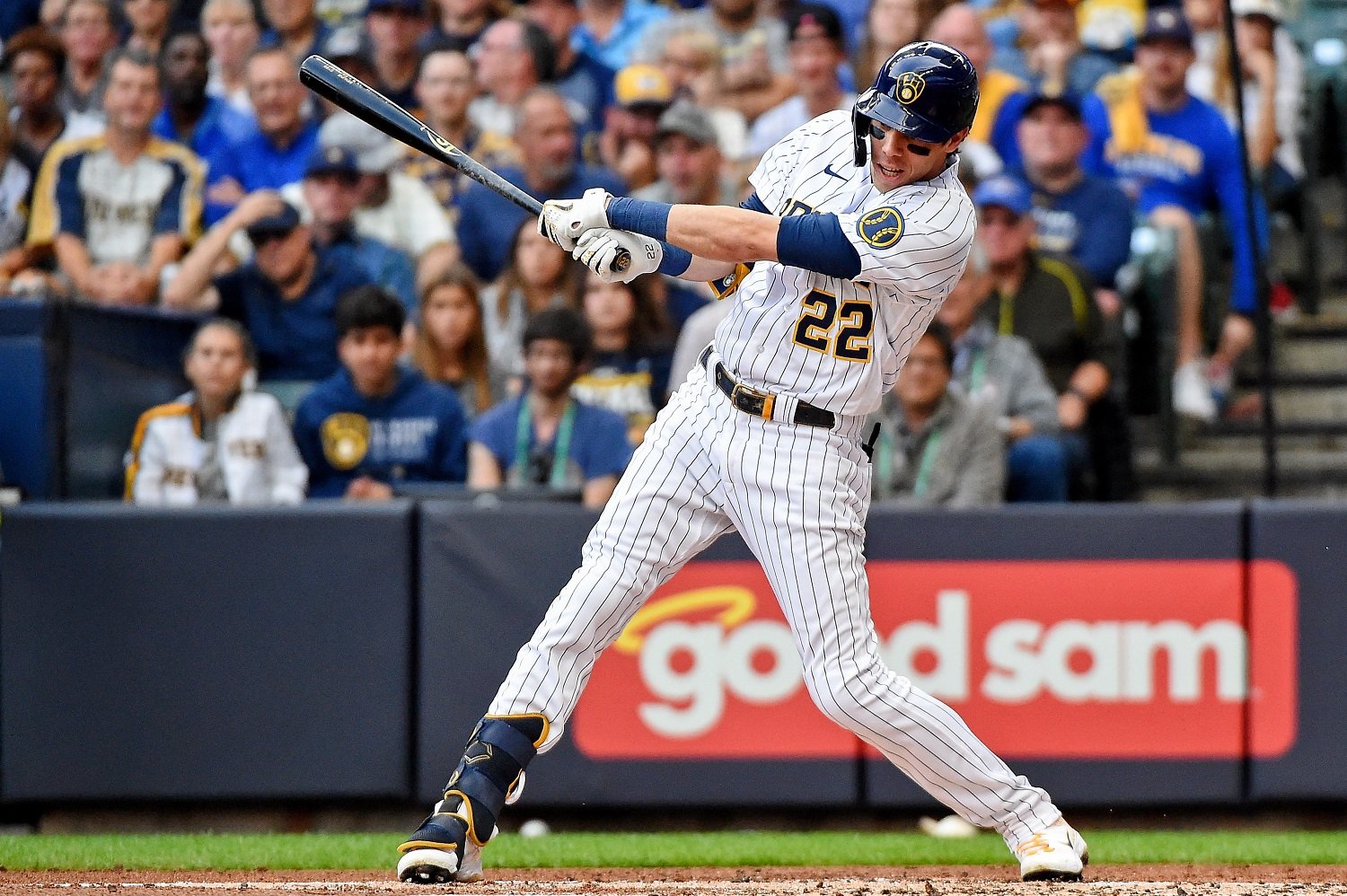 In this era of striving for more power to counteract insane pitching, many have forgotten that getting on base remains just as valuable of an asset when creating consistent offense. Especially for the leadoff man, finding a way to reach base is vital. Milwaukee has plenty of potential power bats in their lineup, and with Yelich struggling to find his home run stroke the past two seasons, his other skills are perfectly suited for the number one slot. Yelich owns a career .379 OBP, which would have been good for 6th in the NL last season. His .362 OBP in 2021 still ranked 20th had he had enough plate appearances to qualify. Amazingly, MLB leadoff hitters had a lowly .333 OBP last season. The person in that spot will get the most plate appearances, so reaching base at a higher clip creates far more opportunities for runs. It’s also reasonable to believe that if Yelich were consistently hitting leadoff, he’d focus even more on reaching base instead of worrying about power. Hitting in the middle of the order can get into many players' heads. While Brewers fans would love to see 2018-2019 Yelich reappear, chances are his 30 HR days are gone for good (for various reasons). Last season, Yelich finished with a career-worst .373 SLG, while his isolated power (ISO) of .125, a statistic that conveys a hitter's raw power and frequency of extra-base hits, was his lowest since 2015. Among hitters with at least 400 plate appearances in 2021, Yelich finished 77th out of 90 players in ISO. Not ideal for a middle-of-the-order bat. However, as you can see in the graphic below with Yelich's 2021 Baseball Savant rankings, he rated highly in some areas of hard contact; it simply didn’t translate into the production one would expect. On the flip side, he owned a 14.7% walk rate (BB%) to rank 3rd in the NL. Take that percentage and give that guy extra plate appearances over the course of an entire season, and you'll see an even more significant impact. Yelich can be even more selective with his swing in the leadoff spot, utilize a shorter and quicker stroke, and zero in on burning the defense with line drives and hard contact spread all over the diamond. A more “natural” swing for Yelich will allow him to make solid contact more frequently than he has the past couple of seasons. He batted .248 last year – a full 44 points below his career number. If he can raise that halfway to his career mark, there will likely be a noticeable jump in OBP and SLG to a point where a cross between “Miami Marlins” Yelich and MVP Yeli emerges in Milwaukee. Who wouldn’t take a slash line in the neighborhood of .275/.385/.440/.825 from number 22 in the leadoff spot? He could undoubtedly attain that with more singles, doubles, and walks with an altered approach. If Yelich is on base more often in front of the middle of the lineup, he can utilize his fantastic base running to create more runs. He may not be one of the fastest pure runners in baseball, but he is among the best at circling the bags. His long strides and sharp cuts on the corners make him an efficient gazelle on the base paths. Yelich is extraordinary at taking extra bases and could easily get back to swiping 15+ bags in a season. He’s an all-around whiz as a runner, making him an asset in front of the run producers. FanGraphs’ BsR stat is a “catch-all” number encompassing all baserunning events. Since 2017, Yelich ranks 9th in all of MLB. So if Yelich moves to the leadoff spot, many are probably wondering, what about Wong? Though Counsell likes Wong hitting first, he had an OBP of just .335 last season. Wong put more of a premium on increased power in 2021, and it paid off with a career-high in home runs (14), doubles (32), and SLG (.447). With his newfound pop and left-handed stick, I see two fits for him in the lineup: batting third against righties and sixth against lefties. Maybe I’ll get into lineup construction in a future article, but let’s focus on Yelich leading off for now. Today, it seems unlikely Counsell goes this route, whether it’s because he prefers Wong in that spot, wants Yelich in his usual two or three-hole, or is reluctant to rock the boat with either veteran. And while Counsell tends to rearrange his lineups regularly, he had Wong bat leadoff in 108 of the club’s games – every game he started. Even more telling was how Wong continued to bat there in August and September when he owned a .308 OBP and .307 OBP, respectively. So, while much more goes into scoring runs than one spot in the batting order, perhaps Counsell should be more open-minded with the Brewers leadoff spot in 2022 – like he typically is with the rest of the lineup. That’s not to say Yelich leading off is the cure-all for an offense that floundered for much of last season; however, statistical and practical evidence says it's worth a shot.
 -
With the way the 2022 Milwaukee Brewers are currently constructed, Christian Yelich is their best option to bat leadoff. Manager Craig Counsell favored Kolten Wong in the top spot for most of last year; however, there are a handful of reasons things should be different this year. It almost makes too much sense. In this era of striving for more power to counteract insane pitching, many have forgotten that getting on base remains just as valuable of an asset when creating consistent offense. Especially for the leadoff man, finding a way to reach base is vital. Milwaukee has plenty of potential power bats in their lineup, and with Yelich struggling to find his home run stroke the past two seasons, his other skills are perfectly suited for the number one slot. Yelich owns a career .379 OBP, which would have been good for 6th in the NL last season. His .362 OBP in 2021 still ranked 20th had he had enough plate appearances to qualify. Amazingly, MLB leadoff hitters had a lowly .333 OBP last season. The person in that spot will get the most plate appearances, so reaching base at a higher clip creates far more opportunities for runs. It’s also reasonable to believe that if Yelich were consistently hitting leadoff, he’d focus even more on reaching base instead of worrying about power. Hitting in the middle of the order can get into many players' heads. While Brewers fans would love to see 2018-2019 Yelich reappear, chances are his 30 HR days are gone for good (for various reasons). Last season, Yelich finished with a career-worst .373 SLG, while his isolated power (ISO) of .125, a statistic that conveys a hitter's raw power and frequency of extra-base hits, was his lowest since 2015. Among hitters with at least 400 plate appearances in 2021, Yelich finished 77th out of 90 players in ISO. Not ideal for a middle-of-the-order bat. However, as you can see in the graphic below with Yelich's 2021 Baseball Savant rankings, he rated highly in some areas of hard contact; it simply didn’t translate into the production one would expect. On the flip side, he owned a 14.7% walk rate (BB%) to rank 3rd in the NL. Take that percentage and give that guy extra plate appearances over the course of an entire season, and you'll see an even more significant impact. Yelich can be even more selective with his swing in the leadoff spot, utilize a shorter and quicker stroke, and zero in on burning the defense with line drives and hard contact spread all over the diamond. A more “natural” swing for Yelich will allow him to make solid contact more frequently than he has the past couple of seasons. He batted .248 last year – a full 44 points below his career number. If he can raise that halfway to his career mark, there will likely be a noticeable jump in OBP and SLG to a point where a cross between “Miami Marlins” Yelich and MVP Yeli emerges in Milwaukee. Who wouldn’t take a slash line in the neighborhood of .275/.385/.440/.825 from number 22 in the leadoff spot? He could undoubtedly attain that with more singles, doubles, and walks with an altered approach. If Yelich is on base more often in front of the middle of the lineup, he can utilize his fantastic base running to create more runs. He may not be one of the fastest pure runners in baseball, but he is among the best at circling the bags. His long strides and sharp cuts on the corners make him an efficient gazelle on the base paths. Yelich is extraordinary at taking extra bases and could easily get back to swiping 15+ bags in a season. He’s an all-around whiz as a runner, making him an asset in front of the run producers. FanGraphs’ BsR stat is a “catch-all” number encompassing all baserunning events. Since 2017, Yelich ranks 9th in all of MLB. So if Yelich moves to the leadoff spot, many are probably wondering, what about Wong? Though Counsell likes Wong hitting first, he had an OBP of just .335 last season. Wong put more of a premium on increased power in 2021, and it paid off with a career-high in home runs (14), doubles (32), and SLG (.447). With his newfound pop and left-handed stick, I see two fits for him in the lineup: batting third against righties and sixth against lefties. Maybe I’ll get into lineup construction in a future article, but let’s focus on Yelich leading off for now. Today, it seems unlikely Counsell goes this route, whether it’s because he prefers Wong in that spot, wants Yelich in his usual two or three-hole, or is reluctant to rock the boat with either veteran. And while Counsell tends to rearrange his lineups regularly, he had Wong bat leadoff in 108 of the club’s games – every game he started. Even more telling was how Wong continued to bat there in August and September when he owned a .308 OBP and .307 OBP, respectively. So, while much more goes into scoring runs than one spot in the batting order, perhaps Counsell should be more open-minded with the Brewers leadoff spot in 2022 – like he typically is with the rest of the lineup. That’s not to say Yelich leading off is the cure-all for an offense that floundered for much of last season; however, statistical and practical evidence says it's worth a shot. View full article
-
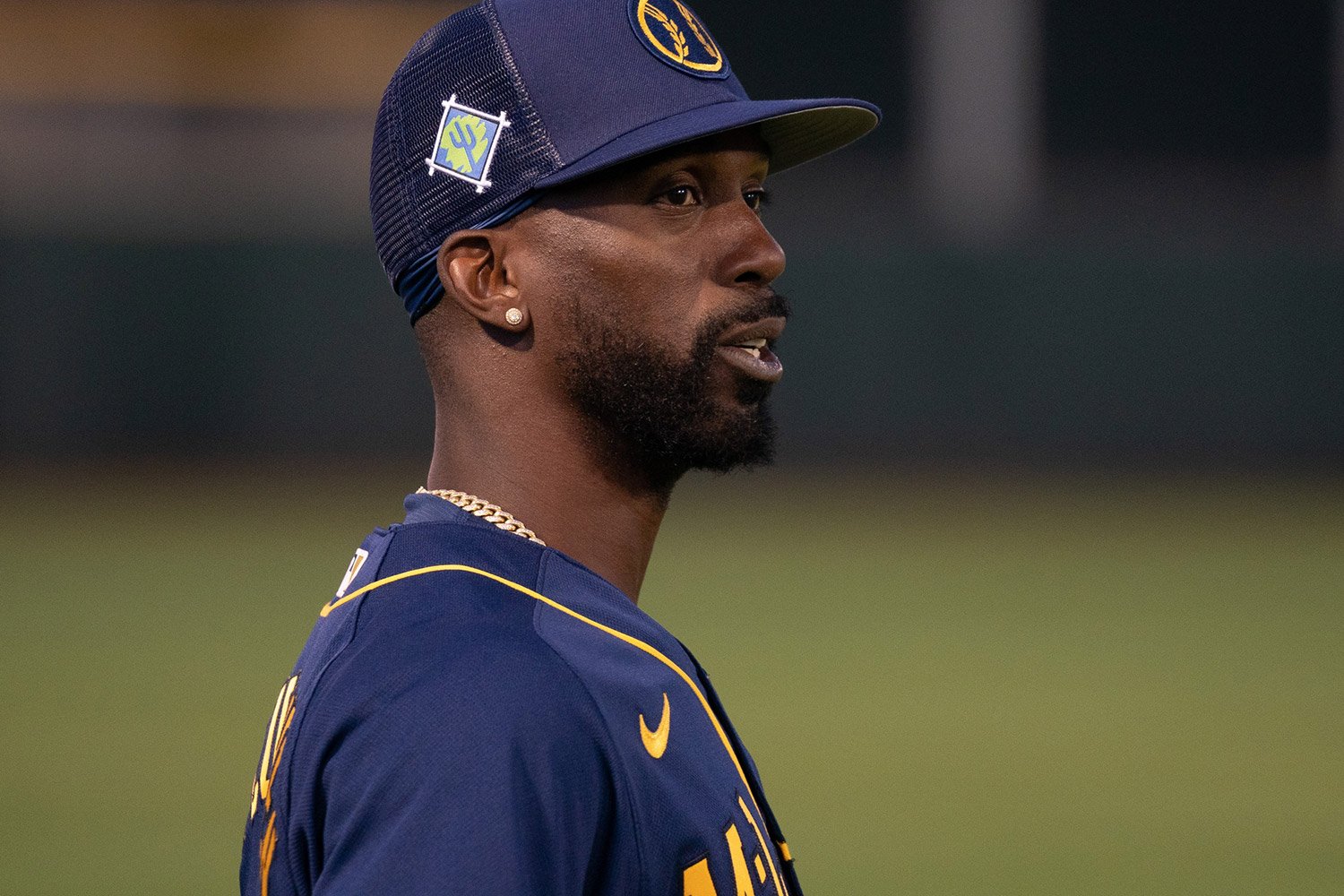 Despite historic pitching of their own and improved defense, the offense was bad enough that Milwaukee was dumped from the playoffs in just four games. It wasn’t really “the offense” that was the issue; lackluster production against left-handed pitching was a more specific problem. Have Stearns and GM Matt Arnold done enough through a couple of under-the-radar trades and one curious free agent signing? In 2021, Milwaukee’s struggles against southpaw hurlers were well documented. Considering some of their best-perceived hitters swung from the left side – such as Christian Yelich, Omar Narvaez, and Wong – it wasn’t a big surprise to see lower numbers against lefties, even with a few right-handed bats in the mix. A quick look at how the 2021 Brewers fared against left-handed pitchers reveals the rather ugly picture: You can always dig further into the numbers, but wOBA is a quality “catch-all” for hitters, and OPS tends to be reliable for a snapshot of a hitter’s production. At first glance, you might think, “Well, the Brewers weren’t special against right-handed pitchers, either.” That’s somewhat fair, but two areas tell more of the story. The Brewers’ .706 OPS versus lefties was 10th in the NL (out of 15 teams); however, they were 26 points behind the 9th-ranked Atlanta Braves, who owned a .732 OPS. Adding that context, you can see how far behind the Brewers were when facing left-handers. Even their .308 wOBA was seven points back of the next-best club. Another reason the Brewers’ righty and lefty numbers don’t seem too dissimilar comes down to Willy Adames. The shortstop sparked Milwaukee’s offense when he came over in the May 21 trade (for the most part). In 2021, Adames did far more damage against right-handers (.358 wOBA, .838 OPS) than he did versus lefties (.330 wOBA, .771 OPS). Adames’ production against righties bolstered the Brewers’ abysmal April and May numbers into respectable numbers the rest of the season, but did little against lefties. This sets the stage for the Brewers’ offseason moves and their plans to better handle left-handed pitching in 2022. If we are to trust the career success of a handful of newcomers versus southpaws, Milwaukee could turn from meek to mashers in one year. Andrew McCutchen What initially seemed like a curious free agent signing, the one-year contract deal made more sense when considering his splits. Though Andrew McCutchen will mostly fill the DH role - and may be limited against righties - he has destroyed southpaws in his career: Hunter Renfroe Seen as a replacement for Avisail Garcia, many were happy to see Bradley, Jr.’s contract off the books in the trade for Hunter Renfroe. The former Red Sox right fielder improved his production against righties in 2021 as well, but his value goes up when he has the platoon advantage. Throughout his career, Renfroe has upped his game versus left-handers: Mike Brosseau On November 13, the Brewers acquired Mike Brosseau in an under-the-radar trade with the Tampa Bay Rays. Brosseau may be best known for his go-ahead, 8th inning home run off Aroldis Chapman in Game 5 of the 2020 NLDS. The versatile infielder should see time at first and third base in Milwaukee, especially against left-handers. His career line versus lefties: The newcomers give manager Craig Counsell matchup advantages in the starting lineup and with late-game changes. A handful of returning Brewers have solid numbers against southpaws in their careers, too. Guys like Yelich (.359 wOBA, 848 OPS) and Lorenzo Cain (.355 wOBA, .829 OPS) have had success versus lefties, despite struggling last season. Luis Urias has also produced a .355 wOBA and .834 OPS. Now the Brewers need him to be healthy. Depending on the day, the Brewers could have a starting lineup featuring six players with an .825+ OPS (in bold) against left-handers: Cain CF McCutchen DH Yelich LF Renfroe RF Adames SS Urias 3B Brosseau 1B Severino C Wong 2B It may not look like a "Murderers Row" on the surface, but this lineup is balanced, relentless versus lefties, and wouldn't have a major hole in the order. Even Pedro Severino, likely the backup catcher, had had an OPS over .800 against left-handers in 2019 and 2021, the two seasons in his career when he had 150+ plate appearances. At least on paper, it looks like Stearns and Arnold have found a way to strengthen one of the Brewers' most significant weaknesses.
- 3 comments
-
- 3
-

-
- andrew mccutchen
- hunter renfroe
- (and 1 more)
-
When Milwaukee Brewers President of Baseball Operations David Stearns looks to build a roster, he targets cost-effective ways to eliminate weaknesses on the club. Before the 2021 season, Stearns shored up the defense by acquiring Kolten Wong and Jackie Bradley, Jr. The focus for this past offseason has centered on improving production against left-handed pitchers, an area the Brewers floundered in all of last season. Despite historic pitching of their own and improved defense, the offense was bad enough that Milwaukee was dumped from the playoffs in just four games. It wasn’t really “the offense” that was the issue; lackluster production against left-handed pitching was a more specific problem. Have Stearns and GM Matt Arnold done enough through a couple of under-the-radar trades and one curious free agent signing? In 2021, Milwaukee’s struggles against southpaw hurlers were well documented. Considering some of their best-perceived hitters swung from the left side – such as Christian Yelich, Omar Narvaez, and Wong – it wasn’t a big surprise to see lower numbers against lefties, even with a few right-handed bats in the mix. A quick look at how the 2021 Brewers fared against left-handed pitchers reveals the rather ugly picture: You can always dig further into the numbers, but wOBA is a quality “catch-all” for hitters, and OPS tends to be reliable for a snapshot of a hitter’s production. At first glance, you might think, “Well, the Brewers weren’t special against right-handed pitchers, either.” That’s somewhat fair, but two areas tell more of the story. The Brewers’ .706 OPS versus lefties was 10th in the NL (out of 15 teams); however, they were 26 points behind the 9th-ranked Atlanta Braves, who owned a .732 OPS. Adding that context, you can see how far behind the Brewers were when facing left-handers. Even their .308 wOBA was seven points back of the next-best club. Another reason the Brewers’ righty and lefty numbers don’t seem too dissimilar comes down to Willy Adames. The shortstop sparked Milwaukee’s offense when he came over in the May 21 trade (for the most part). In 2021, Adames did far more damage against right-handers (.358 wOBA, .838 OPS) than he did versus lefties (.330 wOBA, .771 OPS). Adames’ production against righties bolstered the Brewers’ abysmal April and May numbers into respectable numbers the rest of the season, but did little against lefties. This sets the stage for the Brewers’ offseason moves and their plans to better handle left-handed pitching in 2022. If we are to trust the career success of a handful of newcomers versus southpaws, Milwaukee could turn from meek to mashers in one year. Andrew McCutchen What initially seemed like a curious free agent signing, the one-year contract deal made more sense when considering his splits. Though Andrew McCutchen will mostly fill the DH role - and may be limited against righties - he has destroyed southpaws in his career: Hunter Renfroe Seen as a replacement for Avisail Garcia, many were happy to see Bradley, Jr.’s contract off the books in the trade for Hunter Renfroe. The former Red Sox right fielder improved his production against righties in 2021 as well, but his value goes up when he has the platoon advantage. Throughout his career, Renfroe has upped his game versus left-handers: Mike Brosseau On November 13, the Brewers acquired Mike Brosseau in an under-the-radar trade with the Tampa Bay Rays. Brosseau may be best known for his go-ahead, 8th inning home run off Aroldis Chapman in Game 5 of the 2020 NLDS. The versatile infielder should see time at first and third base in Milwaukee, especially against left-handers. His career line versus lefties: The newcomers give manager Craig Counsell matchup advantages in the starting lineup and with late-game changes. A handful of returning Brewers have solid numbers against southpaws in their careers, too. Guys like Yelich (.359 wOBA, 848 OPS) and Lorenzo Cain (.355 wOBA, .829 OPS) have had success versus lefties, despite struggling last season. Luis Urias has also produced a .355 wOBA and .834 OPS. Now the Brewers need him to be healthy. Depending on the day, the Brewers could have a starting lineup featuring six players with an .825+ OPS (in bold) against left-handers: Cain CF McCutchen DH Yelich LF Renfroe RF Adames SS Urias 3B Brosseau 1B Severino C Wong 2B It may not look like a "Murderers Row" on the surface, but this lineup is balanced, relentless versus lefties, and wouldn't have a major hole in the order. Even Pedro Severino, likely the backup catcher, had had an OPS over .800 against left-handers in 2019 and 2021, the two seasons in his career when he had 150+ plate appearances. At least on paper, it looks like Stearns and Arnold have found a way to strengthen one of the Brewers' most significant weaknesses. View full article

