



Tim Muma
-
Posts
436 -
Joined
-
Last visited
-
Days Won
1
Content Type
Profiles
Forums
Blogs
Events
News
2026 Milwaukee Brewers Top Prospects Ranking
Milwaukee Brewers Videos
2022 Milwaukee Brewers Draft Picks
Milwaukee Brewers Free Agent & Trade Rumors, Notes, & Tidbits
Guides & Resources
2023 Milwaukee Brewers Draft Picks
2024 Milwaukee Brewers Draft Picks
The Milwaukee Brewers Players Project
2025 Milwaukee Brewers Draft Pick Tracker
2026 Milwaukee Brewers Draft Tracker: Picks & Bonuses
Store
Downloads
Gallery
Everything posted by Tim Muma
-
 Fans need to hear it yearly, so here is your friendly reminder: the MLB season is incredibly long, allowing for varying degrees of challenging stretches. The 2022 Milwaukee Brewers' schedule is shifting in their favor after a grueling couple of months. Many factors go into a team's peaks and valleys throughout the season. The opponent determines some of the challenges. Some are due to the travel schedule. Other times it is a matter of multiple circumstances that you can't always explain. The critical thing to remember is that fortunes can change many times over 162 games. Teams must keep their heads above water through the tough times and take advantage of the easier stretches to survive the marathon to the playoffs. One of those nicer spurts is on the horizon. But first, a look back at what the Brew Crew has overcome. First off, in the span of 45 days, the Brewers endured a trio of three-city road trips. That is unheard of when talking about the frequency of travel in a limited period. Plus, the Atlanta Braves, San Diego Padres, St. Louis Cardinals, and New York Mets were among the teams Milwaukee played on the road during the time. All of those clubs are in first or second place in their divisions. In those 29 total road tilts, the Brewers went a respectable 15-14. Before Milwaukee embarked on its third three-city trip, the club also played 18 games in 17 days, including 11 away contests in 10 days with a doubleheader in the middle. They survived that road run with a 6-5 mark. While that might not sound like anything special, you aren't looking at those games in a vacuum. That's because all of that is even more impressive considering the slew of injuries the Brewers were dealing with at the time, missing guys like Freddy Peralta, Brandon Woodruff, Willy Adames, Hunter Renfroe, and plenty of others. Of course, the slate of games coupled with the significant injury bug eventually led to Milwaukee's low point of the season. They lost 12 of 15 games that included an eight-game losing skid to knock them out of first place. It felt and looked a bit bleak, but they got a big win over the Mets and snapped off an 8-4 stretch by taking two of three games from the Toronto Blue Jays. After an off-day Monday, the first-place Brewers (42-33) look to enjoy a new stretch of the schedule. After a quick two-game set in Tampa Bay, Milwaukee heads to Pittsburgh for a four-gamer with the Pirates. The Brewers are 6-0 versus Pittsburgh this season and match up well with their roster. Admittedly, the Pirates are a tad more formidable with the call-up of Oneil Cruz; however, they are still just 29-43 overall and have lost four of their last five contests. Then the Crew heads home for three against the 28-46 Chicago Cubs and three more versus Pittsburgh. That 10-game period is the perfect time for Milwaukee to regain some victories they lost during their most brutal stretch. It's the perfect example of the schedule balancing out as a team traverses the slog of a season. The Brewers' schedule also features other favorable advantages from here to the end of the year. After the next road series in Pittsburgh, Milwaukee will have 47 home games and 34 road games. From this point forward, the Brewers have 13 games with the Pirates, 10 contests against the Cincinnati Reds, and 14 combined matchups versus the Arizona Diamondbacks (34-41) and Colorado Rockies (33-42). Milwaukee ends the season with four games in Cincinnati, followed by nine straight home tilts: two against the Cardinals, four versus the Miami Marlins, and three contests with Arizona. Like it or not, successful teams traditionally dominate the lesser clubs in the league while holding serve with the top group. It is logical for teams with a relatively even talent level to beat each other up and rarely make up lots of ground. When the better clubs square off against inferior foes, records should start to rise. Of course, none of this favorable tilt in the schedule guarantees success. But with the team's improved health going forward (hopefully) and an optimistic view of the calendar, the Milwaukee Brewers have a ton of time to make multiple runs. Again, during such a long season, there are windows that can be used to build a lead, catch teams in front of you, and find your stride in time for the playoffs. View full article
 -
Most assume that MLB teams have concerns about trading within their division. With talented NL Central players possibly available in a deal, it would benefit the Milwaukee Brewers if those clubs were willing to listen. There are at least a couple of guys on three of the four other teams worth a long look. As the two teams fighting for the NL Central crown in 2022, the Brewers and St. Louis Cardinals will not be making a trade. But there should be an open dialogue with Milwaukee for the other three clubs in various stages of rebuilding, reorganizing, or reimagining their rosters. The supposed fear intradivisional teams have in trading with one another is that whichever players you send away, they will haunt you over and over again. It makes sense, but shouldn't the essential question be, "How do I acquire the best talent I am looking for?" Especially if the player is a rental or not in your long-term plans, who cares? With the understanding that an NL Central swap is less likely to happen or that the Brewers would need to "pay a premium" in talent to strike a deal, the three non-contenders each have a couple of intriguing players who would bolster a World Series run. CHICAGO CUBS Dream option: Ian Happ (OF, 2B, 3B) - .289/.387/.467/.854 The switch-hitting 27-year-old is precisely what this Brewers' offense needs. His high on-base skills alone would be perfect for the top of the lineup, but Happ also brings pop to the plate. He hit 25 HR last season and owns a career-best 139 OPS+ this year. Happ has hit better against righties in his career but has destroyed lefties this season, too, posting a .958 OPS. Happ's terrific OBP is the most desirable part to me, especially putting him in front of the Brewers' big bats. He primarily plays the corner outfield spots but has plenty of experience playing second and third base. Happ would be a great fit for how the Brewers play matchups and gain platoon advantages every night (for example, playing left field versus righties instead of Andrew McCutchen). Happ is under control through 2023 and is currently making $6.85 million through arbitration. Chicago's willingness to trade him will depend on if they see him as a part of their next competitive window and how much teams are willing to offer. Realistic option: Mychal Givens (RHP) - 4.21 ERA, 1.48 WHIP, 11.6 K/9 Most trades in the David Stearns era are on the "underwhelming" side when the Brewers identify a player that can improve under their tutelage and fit a need. Givens would be that acquisition and wouldn't cost much in player capital. Milwaukee will need reinforcements for its bullpen, and Givens provides experience with a certain level of success. His 102 ERA+ doesn't jump out at you, and he will walk a few guys (4.9 BB/9), but he shows flashes of brilliance each season. He posted a 144 ERA+ (44% above league average) in 51 innings last season and is striking out 11.6 batters per nine innings in 2022. Givens is making $3.5 million and has a mutual option for next season with a $1.5 million buyout. That would give the Brewers flexibility with how they move forward as well. CINCINNATI REDS Dream option: Brandon Drury (2B, 3B, OF) - .267/.331/.512/.842 Drury's name might not spark thoughts of a dream acquisition, but he certainly would be based on his 2022 production. With 14 HR and an .842 OPS, Drury would slide nicely into Milwaukee's lineup. Some may argue he is a product of Cincy's bandbox of a ballpark, but six of his homers have come on the road. One key is Drury's mashing of left-handed pitching the past two seasons. Though it's been in limited plate appearances (96), he has slugged .634 against southpaws with a .947 OPS and .399 wOBA. Drury also fills the role of utility man (like Happ), though he is an infielder first. Considering different injury risks and ineffectiveness around the diamond, Drury would be a solid piece. He is on a one-year, $700,000 contract. Realistic option: Tyler Naquin (OF) - .255/.315/.460/.775 Naquin's slash line isn't an attention-grabber, but it tops a handful of Brewers. He is currently on the IL with a quad injury, though he should be ready in a couple of weeks. Naquin has always shown promise with the bat, posting an .809 OPS with 19 HR and 70 RBI in 454 plate appearances last season. The true value will come when facing right-handed pitching. Since the start of 2021, Naquin is slugging .512 against righties with a .361 wOBA. In those 498 plate appearances, he has 22 HR and 33 doubles. Again, he would be ideal for playing LF or DH against righties instead of McCutchen. Naquin is only under contract this season, but if he is healthy in the second half, his bat would play well in Milwaukee. PITTSBURGH PIRATES Dream option: Bryan Reynolds (OF) - .254/.330/.442/.771 The 27-year-old got off to a slow start this season, but he has been phenomenal since May 17 (.306/.358/.537/.895). Reynolds is an MVP type of player who would transform the Brewers' offense ten-fold. Reports said Milwaukee tried to trade for him last season, but Pittsburgh understandably wanted a king's ransom. Moving to Milwaukee would have a similar impact as Christian Yelich did in 2018 and 2019. Reynolds is an average center fielder defensively, though no one would care if he continued to rake. The switch-hitter put up a 146 OPS+ last season (.302/.390/.522/.912) with 24 HR, 35 doubles, 93 runs, and 90 RBI for a lousy offense. Since he is under team control through 2026, the Pirates don't appear to be in a rush to move him anymore. They need to decide if his price tag will be too high or if his skills might diminish too much when Pittsburgh is ready to compete. If that is a concern, the Pirates could reconsider trading him for higher-level prospects prepared to make the MLB jump shortly. Realistic option: Jose Quintana (LHP) - 3.66 ERA, 1.33 WHIP, 7.7 K/9 The Brewers killer is a far cry from Reynolds in terms of impact; of course, that makes him more easily attainable. Quintana's strikeout rate is down, but he has also been better at limiting homers and walks than in recent seasons. He wouldn't be expected to be an ace, just effective enough. Depending on Aaron Ashby's status, Quintana can fill a hole in the rotation or be the multi-inning guy Ashby has often been. Milwaukee could even use Quintana as part of a piggyback strategy with someone like Adrian Houser to utilize matchups, save the bullpen, and give opponents a different look. The 33-year-old would be a rental, so his trade value shouldn't be too high. However, plenty of teams could be in the market for a somewhat reliable, veteran arm to use down the stretch. As is often the case, the team that acts quickest has the best chance at a quality deal. ------------------------------------- One must believe the Brewers will make at least a move or two. Will they pull off a swap within their division? How much are they willing to give up to bring back the guys they want? Some would argue Milwaukee doesn't have enough elite talent in the farm system to get Reynolds or Happ. That may be true, but every player and team has a price. Those two are easily the most talented discussed here and would easily cost the most. The other four possibilities are within the Brewers' grasp. So would the Brewers be down for trading away significant future talent for one of the best options or make the smaller moves to fill holes? If the other NL Central teams are willing to haggle, there's no reason at least one of the players mentioned above wouldn't end up in Milwaukee. What would you do? View full article
-
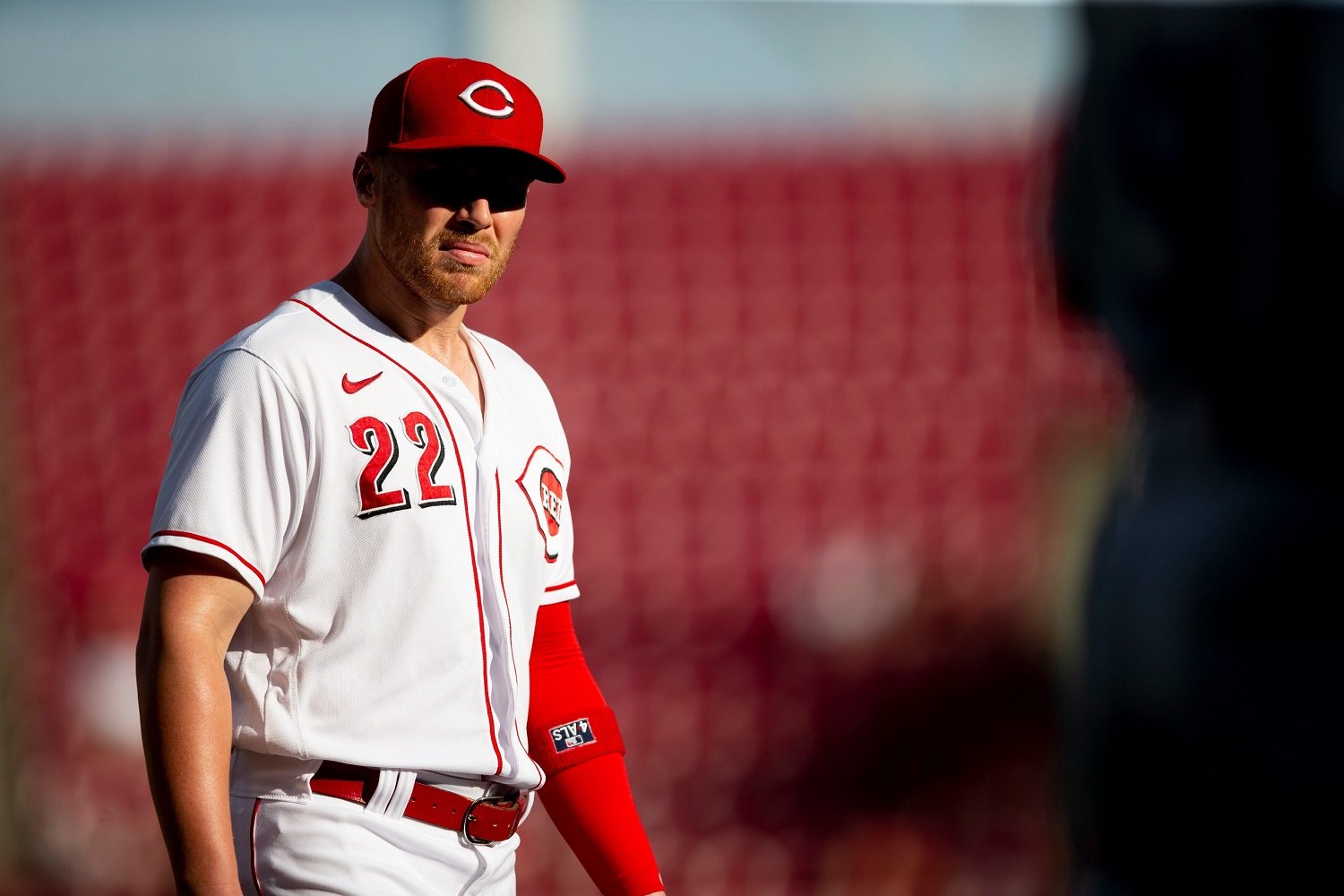 As the two teams fighting for the NL Central crown in 2022, the Brewers and St. Louis Cardinals will not be making a trade. But there should be an open dialogue with Milwaukee for the other three clubs in various stages of rebuilding, reorganizing, or reimagining their rosters. The supposed fear intradivisional teams have in trading with one another is that whichever players you send away, they will haunt you over and over again. It makes sense, but shouldn't the essential question be, "How do I acquire the best talent I am looking for?" Especially if the player is a rental or not in your long-term plans, who cares? With the understanding that an NL Central swap is less likely to happen or that the Brewers would need to "pay a premium" in talent to strike a deal, the three non-contenders each have a couple of intriguing players who would bolster a World Series run. CHICAGO CUBS Dream option: Ian Happ (OF, 2B, 3B) - .289/.387/.467/.854 The switch-hitting 27-year-old is precisely what this Brewers' offense needs. His high on-base skills alone would be perfect for the top of the lineup, but Happ also brings pop to the plate. He hit 25 HR last season and owns a career-best 139 OPS+ this year. Happ has hit better against righties in his career but has destroyed lefties this season, too, posting a .958 OPS. Happ's terrific OBP is the most desirable part to me, especially putting him in front of the Brewers' big bats. He primarily plays the corner outfield spots but has plenty of experience playing second and third base. Happ would be a great fit for how the Brewers play matchups and gain platoon advantages every night (for example, playing left field versus righties instead of Andrew McCutchen). Happ is under control through 2023 and is currently making $6.85 million through arbitration. Chicago's willingness to trade him will depend on if they see him as a part of their next competitive window and how much teams are willing to offer. Realistic option: Mychal Givens (RHP) - 4.21 ERA, 1.48 WHIP, 11.6 K/9 Most trades in the David Stearns era are on the "underwhelming" side when the Brewers identify a player that can improve under their tutelage and fit a need. Givens would be that acquisition and wouldn't cost much in player capital. Milwaukee will need reinforcements for its bullpen, and Givens provides experience with a certain level of success. His 102 ERA+ doesn't jump out at you, and he will walk a few guys (4.9 BB/9), but he shows flashes of brilliance each season. He posted a 144 ERA+ (44% above league average) in 51 innings last season and is striking out 11.6 batters per nine innings in 2022. Givens is making $3.5 million and has a mutual option for next season with a $1.5 million buyout. That would give the Brewers flexibility with how they move forward as well. CINCINNATI REDS Dream option: Brandon Drury (2B, 3B, OF) - .267/.331/.512/.842 Drury's name might not spark thoughts of a dream acquisition, but he certainly would be based on his 2022 production. With 14 HR and an .842 OPS, Drury would slide nicely into Milwaukee's lineup. Some may argue he is a product of Cincy's bandbox of a ballpark, but six of his homers have come on the road. One key is Drury's mashing of left-handed pitching the past two seasons. Though it's been in limited plate appearances (96), he has slugged .634 against southpaws with a .947 OPS and .399 wOBA. Drury also fills the role of utility man (like Happ), though he is an infielder first. Considering different injury risks and ineffectiveness around the diamond, Drury would be a solid piece. He is on a one-year, $700,000 contract. Realistic option: Tyler Naquin (OF) - .255/.315/.460/.775 Naquin's slash line isn't an attention-grabber, but it tops a handful of Brewers. He is currently on the IL with a quad injury, though he should be ready in a couple of weeks. Naquin has always shown promise with the bat, posting an .809 OPS with 19 HR and 70 RBI in 454 plate appearances last season. The true value will come when facing right-handed pitching. Since the start of 2021, Naquin is slugging .512 against righties with a .361 wOBA. In those 498 plate appearances, he has 22 HR and 33 doubles. Again, he would be ideal for playing LF or DH against righties instead of McCutchen. Naquin is only under contract this season, but if he is healthy in the second half, his bat would play well in Milwaukee. PITTSBURGH PIRATES Dream option: Bryan Reynolds (OF) - .254/.330/.442/.771 The 27-year-old got off to a slow start this season, but he has been phenomenal since May 17 (.306/.358/.537/.895). Reynolds is an MVP type of player who would transform the Brewers' offense ten-fold. Reports said Milwaukee tried to trade for him last season, but Pittsburgh understandably wanted a king's ransom. Moving to Milwaukee would have a similar impact as Christian Yelich did in 2018 and 2019. Reynolds is an average center fielder defensively, though no one would care if he continued to rake. The switch-hitter put up a 146 OPS+ last season (.302/.390/.522/.912) with 24 HR, 35 doubles, 93 runs, and 90 RBI for a lousy offense. Since he is under team control through 2026, the Pirates don't appear to be in a rush to move him anymore. They need to decide if his price tag will be too high or if his skills might diminish too much when Pittsburgh is ready to compete. If that is a concern, the Pirates could reconsider trading him for higher-level prospects prepared to make the MLB jump shortly. Realistic option: Jose Quintana (LHP) - 3.66 ERA, 1.33 WHIP, 7.7 K/9 The Brewers killer is a far cry from Reynolds in terms of impact; of course, that makes him more easily attainable. Quintana's strikeout rate is down, but he has also been better at limiting homers and walks than in recent seasons. He wouldn't be expected to be an ace, just effective enough. Depending on Aaron Ashby's status, Quintana can fill a hole in the rotation or be the multi-inning guy Ashby has often been. Milwaukee could even use Quintana as part of a piggyback strategy with someone like Adrian Houser to utilize matchups, save the bullpen, and give opponents a different look. The 33-year-old would be a rental, so his trade value shouldn't be too high. However, plenty of teams could be in the market for a somewhat reliable, veteran arm to use down the stretch. As is often the case, the team that acts quickest has the best chance at a quality deal. ------------------------------------- One must believe the Brewers will make at least a move or two. Will they pull off a swap within their division? How much are they willing to give up to bring back the guys they want? Some would argue Milwaukee doesn't have enough elite talent in the farm system to get Reynolds or Happ. That may be true, but every player and team has a price. Those two are easily the most talented discussed here and would easily cost the most. The other four possibilities are within the Brewers' grasp. So would the Brewers be down for trading away significant future talent for one of the best options or make the smaller moves to fill holes? If the other NL Central teams are willing to haggle, there's no reason at least one of the players mentioned above wouldn't end up in Milwaukee. What would you do?
- 5 comments
-
- 4
-

-
- ian happ
- mychal givens
- (and 3 more)
-
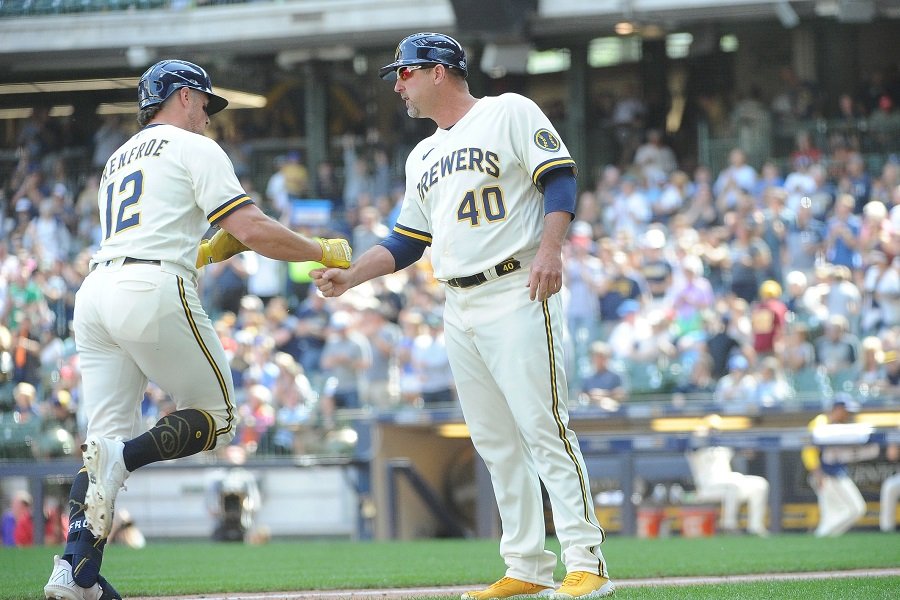 In 2021, Avisail Garcia led the Brewers in home runs (28) and RBI (86) and finished second in OPS (.820). He even had a huge July and August before falling to Earth in September. Due partly to a balky back, Garcia scuffled down the stretch and had a terrible NLDS performance with eight strikeouts, zero walks, and a slash line of .133/.188/.133/.321 in the four games. Despite the late-season concerns, the Miami Marlins inked Garcia to a four-year, $53 million deal with a club option for a fifth year. Brewers' General Manager Matt Arnold and President of Baseball Operations David Stearns had no interest in signing the now 31-year-old outfielder to a contract of that size and length. So it was on to "Plan B." Later that day, Milwaukee announced they traded Jackie Bradley Jr. and a pair of minor leaguers for Hunter Renfroe . The Brewers saw Renfroe's power as a perfect fit for Milwaukee at a more reasonable price than Garcia's. The 30-year-old veteran is making $7.65 million this season and has one year of arbitration before becoming a free agent after the 2023 season. But the Brewers are in a World Series window, so the most important aspect is production. Through June 19, Renfroe is dominating that comparison. Their slugging percentages, OPS, and wOBA (weighted on-base average) speak for themselves in terms of raw statistics. Both OPS+ and wRC+ (weighted runs created plus) consider the players' ballparks, too. Even though Miami's stadium is a pitcher's park and American Family Field is neutral, these numbers still show an enormous gap between Renfroe's production versus Garcia's. Breaking it down to an even more basic level continues to show Renfroe miles ahead. The Brewers' slugger now has 13 home runs (tied for 13th in the NL) and 27 RBI. Meanwhile, Garcia has a mere four homers and 17 RBI. Renfroe has also shown better plate discipline than Garcia, sporting a 25.9% strikeout percentage (K%) with a 6.3% walk percentage (BB%). Garcia owns a 28% strikeout rate (the highest of his career) and a 3.7% walk rate, his worst since 2013. Everything about Renfroe at the dish puts him ahead of Garcia in 2022. After Renfroe's three homers in three days over the weekend, he may be heating up at a great time. Milwaukee has needed more consistent offense with injuries to the lineup and pitching staff, and with the St. Louis Cardinals and Toronto Blue Jays coming to town, run-scoring will be critical for the Brewers. If Renfroe can solidify the middle of the order, the rest of the hitters can settle in to their own roles. Offense is key for Renfroe, but he is also delivering on the other side of the ball. Some may argue Garcia is a superior defender, and Statcast has rated him well in the past, but it is hard to see a noticeable difference. While Garcia appears quicker and has made his fair share of high-quality plays in the past, his defense has declined. He has taken more consistent poor routes the past two seasons and has often looked uneasy as he has aged. Though Renfroe also will lumber in the outfield a bit, his value lies in the cannon of a right arm he possesses. Renfroe leads the NL in outfield assists with seven after tying for the MLB top spot last season with 16. Garcia finished with just four assists in 2021 and has only a couple this year. Renfroe's ability to gun down base runners and prevent others from even trying to advance is an underrated weapon Milwaukee hasn't had in a while. Considering everything together, the Brewers deserve major kudos for deciding to acquire Renfroe and to move on from Garcia quickly. Unloading Bradley Jr.'s contract (and his inept offense) was enough for some. Adding Renfroe's power bat and arm to the mix has made the trade an "A" for now, and it could go up depending on the way things shake out for Renfroe and the Brewers come October.
 -
While the Milwaukee Brewers didn't acquire Hunter Renfroe directly for Avisail Garcia, it was clear they saw Renfroe as Garcia's replacement in right field in 2022. As we near the end of June, it is looking like a fantastic call. In 2021, Avisail Garcia led the Brewers in home runs (28) and RBI (86) and finished second in OPS (.820). He even had a huge July and August before falling to Earth in September. Due partly to a balky back, Garcia scuffled down the stretch and had a terrible NLDS performance with eight strikeouts, zero walks, and a slash line of .133/.188/.133/.321 in the four games. Despite the late-season concerns, the Miami Marlins inked Garcia to a four-year, $53 million deal with a club option for a fifth year. Brewers' General Manager Matt Arnold and President of Baseball Operations David Stearns had no interest in signing the now 31-year-old outfielder to a contract of that size and length. So it was on to "Plan B." Later that day, Milwaukee announced they traded Jackie Bradley Jr. and a pair of minor leaguers for Hunter Renfroe . The Brewers saw Renfroe's power as a perfect fit for Milwaukee at a more reasonable price than Garcia's. The 30-year-old veteran is making $7.65 million this season and has one year of arbitration before becoming a free agent after the 2023 season. But the Brewers are in a World Series window, so the most important aspect is production. Through June 19, Renfroe is dominating that comparison. Their slugging percentages, OPS, and wOBA (weighted on-base average) speak for themselves in terms of raw statistics. Both OPS+ and wRC+ (weighted runs created plus) consider the players' ballparks, too. Even though Miami's stadium is a pitcher's park and American Family Field is neutral, these numbers still show an enormous gap between Renfroe's production versus Garcia's. Breaking it down to an even more basic level continues to show Renfroe miles ahead. The Brewers' slugger now has 13 home runs (tied for 13th in the NL) and 27 RBI. Meanwhile, Garcia has a mere four homers and 17 RBI. Renfroe has also shown better plate discipline than Garcia, sporting a 25.9% strikeout percentage (K%) with a 6.3% walk percentage (BB%). Garcia owns a 28% strikeout rate (the highest of his career) and a 3.7% walk rate, his worst since 2013. Everything about Renfroe at the dish puts him ahead of Garcia in 2022. After Renfroe's three homers in three days over the weekend, he may be heating up at a great time. Milwaukee has needed more consistent offense with injuries to the lineup and pitching staff, and with the St. Louis Cardinals and Toronto Blue Jays coming to town, run-scoring will be critical for the Brewers. If Renfroe can solidify the middle of the order, the rest of the hitters can settle in to their own roles. Offense is key for Renfroe, but he is also delivering on the other side of the ball. Some may argue Garcia is a superior defender, and Statcast has rated him well in the past, but it is hard to see a noticeable difference. While Garcia appears quicker and has made his fair share of high-quality plays in the past, his defense has declined. He has taken more consistent poor routes the past two seasons and has often looked uneasy as he has aged. Though Renfroe also will lumber in the outfield a bit, his value lies in the cannon of a right arm he possesses. Renfroe leads the NL in outfield assists with seven after tying for the MLB top spot last season with 16. Garcia finished with just four assists in 2021 and has only a couple this year. Renfroe's ability to gun down base runners and prevent others from even trying to advance is an underrated weapon Milwaukee hasn't had in a while. Considering everything together, the Brewers deserve major kudos for deciding to acquire Renfroe and to move on from Garcia quickly. Unloading Bradley Jr.'s contract (and his inept offense) was enough for some. Adding Renfroe's power bat and arm to the mix has made the trade an "A" for now, and it could go up depending on the way things shake out for Renfroe and the Brewers come October. View full article
-
I completely agree. Unless you have proven skills in the OBP department with great discipline, there is far less incentive now to work counts as much. Like you said, pitching is so good - even middle relief - don't want to fall behind any pitcher.
-
I completely agree. Unless you have proven skills in the OBP department with great discipline, there is far less incentive now to work counts as much. Like you said, pitching is so good - even middle relief - don't want to fall behind any pitcher.
-
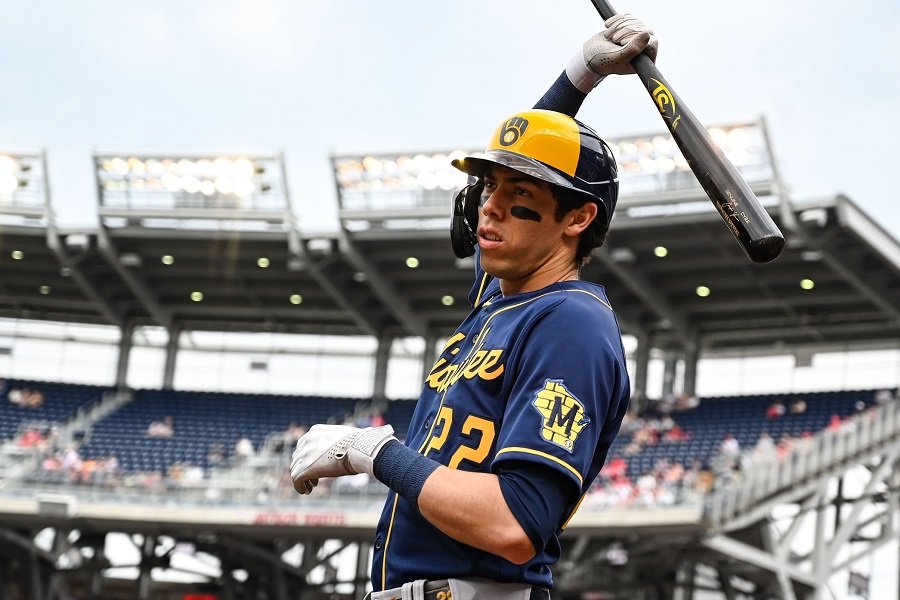 This current group is too patient at the plate. It appears to be an organizational strategy as many players are more passive at the plate this season compared to their career trends. Patience in the box can result in fantastic outcomes, but it has to work for the hitters on the club. Milwaukee is built on power, not on-base skills, and their lack of swings at pitches within the strike zone hurts them more than other teams. Entering Wednesday, the Brewers rank 21st in OBP (.304) and 15th in slugging percentage (.394), so it's not like the power has been significant thus far. Again, I argue it is because of how often they take strikes, thus wasting a chance to do damage on a hittable pitch and usually falling behind in the count. The Brewers have the fifth-highest percentage of called strikes against them at 17.7% and swing at the seventh-fewest pitches in the zone (66.8%). Of course, hitters are far better when they are ahead in the count, but for Milwaukee, the gap is immense when batters fall behind. The Brewers rank sixth in OPS when ahead in the count but drop to 19th when the pitcher has the advantage. Not all teams who are as passive as Milwaukee will struggle offensively. A club must understand what works and what doesn't for its lineup. Take the Pittsburgh Pirates and Cleveland Indians as examples. They have the two highest Called Strike Percentages (CStr%). Let's compare them to the Brewers, who have the fifth-highest CStr%. Taking strikes does not work for the Pirates as they rank 28th in runs scored. Cleveland has the ninth-best run-scoring team because they so rarely strike out. Their K% is the lowest in baseball, so their hitters have no issue working counts while still being effective. Milwaukee strikes out slightly less often than Pittsburgh and has more power, giving them a better run output, though still in the bottom half of the league. It's only because of the Brewers' pitching - which has also faltered recently - that Milwaukee has a better record than both teams. On the flip side of the patience quotient, you find the Atlanta Braves. They know who they are: a free-swinging, slugging offense with zero concern for strikeouts or walks. It helped bring them a World Series championship in 2021, and they are now two games better than the Brewers in the NL standings. Have they embraced what works better than the Brewers have? Atlanta also walks less often than Milwaukee but still ranks third in OPS (.765), while the Brewers have a .698 OPS, good for 19th in baseball. The moral of the story is that based on the skill set of many Brewers' hitters, they need to let loose and hack away to produce more runs on a daily basis instead of crushing the ball for five games before disappearing for 18 of the next 20. For example, Milwaukee has scored three runs or less in 46% of its games, leading to a 7-22 record those days. The change needs to be widespread as some evidence indicates a team-wide philosophy to take more pitches. Many guys are swinging less often at strikes than they have in their careers or have a higher percentage of called strikes against them (or both). Here is a breakdown of how some guys' 2022 approach is different than their career percentages. Higher percentage of called strikes and fewer percentage of swings in the zone: Hunter Renfroe, Rowdy Tellez, Luis Urias Lower percentage of swings in the zone: Kolten Wong, Tyrone Taylor Higher percentage of called strikes: Christian Yelich That is a lot of regulars who are not getting their hacks in. It would make sense if it were working for them, leading to increased production and consistent runs for the team. But it hasn't been effective the past year-and-a-half, so it's time to make some changes - or really just let guys be themselves. More give, less take. Short of bringing in a reliable bat or two, which is a possibility, Milwaukee doesn't have a lot of options to spark the offense. We all know the definition of insanity, and what the Brewers have been doing is driving people mad. With the pitching in a funk as well, it would be the perfect time to see the bats carry the load for a while. One can dream.
 -
The Milwaukee Brewers' offense isn't working. They are tied for the second-most shutouts this season and have shown little ability to consistently score runs. A change in their collective philosophy at the dish is required, focused on more aggressiveness with the sticks. This current group is too patient at the plate. It appears to be an organizational strategy as many players are more passive at the plate this season compared to their career trends. Patience in the box can result in fantastic outcomes, but it has to work for the hitters on the club. Milwaukee is built on power, not on-base skills, and their lack of swings at pitches within the strike zone hurts them more than other teams. Entering Wednesday, the Brewers rank 21st in OBP (.304) and 15th in slugging percentage (.394), so it's not like the power has been significant thus far. Again, I argue it is because of how often they take strikes, thus wasting a chance to do damage on a hittable pitch and usually falling behind in the count. The Brewers have the fifth-highest percentage of called strikes against them at 17.7% and swing at the seventh-fewest pitches in the zone (66.8%). Of course, hitters are far better when they are ahead in the count, but for Milwaukee, the gap is immense when batters fall behind. The Brewers rank sixth in OPS when ahead in the count but drop to 19th when the pitcher has the advantage. Not all teams who are as passive as Milwaukee will struggle offensively. A club must understand what works and what doesn't for its lineup. Take the Pittsburgh Pirates and Cleveland Indians as examples. They have the two highest Called Strike Percentages (CStr%). Let's compare them to the Brewers, who have the fifth-highest CStr%. Taking strikes does not work for the Pirates as they rank 28th in runs scored. Cleveland has the ninth-best run-scoring team because they so rarely strike out. Their K% is the lowest in baseball, so their hitters have no issue working counts while still being effective. Milwaukee strikes out slightly less often than Pittsburgh and has more power, giving them a better run output, though still in the bottom half of the league. It's only because of the Brewers' pitching - which has also faltered recently - that Milwaukee has a better record than both teams. On the flip side of the patience quotient, you find the Atlanta Braves. They know who they are: a free-swinging, slugging offense with zero concern for strikeouts or walks. It helped bring them a World Series championship in 2021, and they are now two games better than the Brewers in the NL standings. Have they embraced what works better than the Brewers have? Atlanta also walks less often than Milwaukee but still ranks third in OPS (.765), while the Brewers have a .698 OPS, good for 19th in baseball. The moral of the story is that based on the skill set of many Brewers' hitters, they need to let loose and hack away to produce more runs on a daily basis instead of crushing the ball for five games before disappearing for 18 of the next 20. For example, Milwaukee has scored three runs or less in 46% of its games, leading to a 7-22 record those days. The change needs to be widespread as some evidence indicates a team-wide philosophy to take more pitches. Many guys are swinging less often at strikes than they have in their careers or have a higher percentage of called strikes against them (or both). Here is a breakdown of how some guys' 2022 approach is different than their career percentages. Higher percentage of called strikes and fewer percentage of swings in the zone: Hunter Renfroe, Rowdy Tellez, Luis Urias Lower percentage of swings in the zone: Kolten Wong, Tyrone Taylor Higher percentage of called strikes: Christian Yelich That is a lot of regulars who are not getting their hacks in. It would make sense if it were working for them, leading to increased production and consistent runs for the team. But it hasn't been effective the past year-and-a-half, so it's time to make some changes - or really just let guys be themselves. More give, less take. Short of bringing in a reliable bat or two, which is a possibility, Milwaukee doesn't have a lot of options to spark the offense. We all know the definition of insanity, and what the Brewers have been doing is driving people mad. With the pitching in a funk as well, it would be the perfect time to see the bats carry the load for a while. One can dream. View full article
-
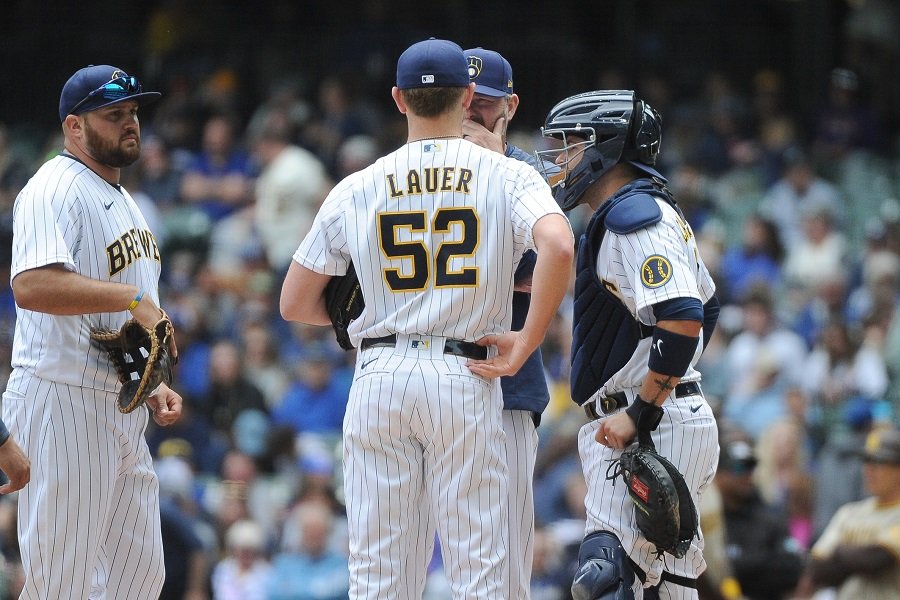 You can be mad at the offense for a lack of runs. You can want someone to hold the manager accountable. You can even curse David Stearns for not bringing in different players. The reality is, if you're going to place blame on a few people, it comes down to three starters: Corbin Burnes, Eric Lauer, and Adrian Houser. They were critical to the Brewers' fantastic start to the season but have recently dipped together. Houser was steady at the back of the rotation (2.98 ERA), while Burnes (2.18 ERA) and Lauer (2.16 ERA) were completely lights out on the mound - one more surprising than the other. As much as the trio's production carried Milwaukee to a franchise-best start, their consistent quality spared the bullpen from overuse. That is an especially valuable perk of excellent starting pitching early in the year. The way these three arms set the tone into the last week of May gave fans the belief the club was unstoppable. Unfortunately, the last three times through the rotation have not been so kind. It was an even bigger blow with Brandon Woodruff and Freddy Peralta out of commission. In fact, Burnes, Lauer, and Houser's issues have not only shown up in the stats but in the inability to go deep in games as they had before. They have had a profound, long-lasting impact on the Brewers. The comparison of the two periods is stark: Lauer and Houser crashed hard with 6.60 ERAs in their last three starts, and that is stunning. Lauer's strikeout percentage (K%) getting cut in half is an enormous reason. Couple that with nearly three times the percentage of walks, and it's significant trouble. Houser's ERA problem goes deeper into how batters have done with balls in play. Burnes' 3.60 ERA in his last three starts is respectable and shows he is human, but he has also been hurt by the increase in walks. Each pitcher has one thing in common: their innings per game average dropping to five. That compounded the Brewers' problem through this rough stretch. Falling behind early and exiting before the sixth is a recipe for disaster with a banged-up roster. In these cases, Craig Counsell then goes to the "B" and "C" bullpen arms, who often would fail to hold the opposition down. Even if the offense puts up a fight, arms get burned, and a weary relief corps goes from tired to exhausted. The cycle continues and creates a vortex of daily defeats with a dash of hopelessness until the starters return to form. Rotation stability has been a staple for the Brewers the past few seasons. As the uncertainty of the starters increased, particularly with the three we're focused on, it lessens the control of the game Counsell often enjoys. Can this trio turn things around starting Tuesday? Let's examine what has been happening. O-Contact% is the percentage of times contact is made on pitches outside the strike zone. Z-Contact% is for pitches within the zone. Swinging strike percentage (SwStr%) is swings and misses divided by total pitches thrown. All of these stats, essentially, are about hitters' contact and pitchers "missing bats." As you can see, it's gone the wrong way in most cases. Burnes' Z-Contact% is steady, but hitters are making 13% more contact on pitches out of the zone and whiffing three percent less often overall. Lauer's numbers across the board have blown up. In his last three starts, he has seen a 14% and 12% increase in contact, respectively, and seven percent fewer swinging strikes. Meanwhile, Houser remained roughly the same, except for about a five percent jump in the zone. The most stunning outcome is the 116-point jump in opponent batting average from .217 to .323. The most significant culprits for Houser have been fewer groundballs (his bread and butter) and more hard-hit balls. Harder struck balls lead to more hits, while more flies lead to homers. First eight starts: 48.4% ground balls 31% hard-hit One home run allowed Last three starts: 42.6% ground balls 37% hard-hit Five home runs allowed With this sudden change in fortune for Burnes, Lauer, and Houser, it is fair to wonder if something else is going on. Why are hitters chasing fewer bad pitches and making more contact when they swing? Their lack of whiffs is contributing to the added walks. Early in the season, hitters would go after a pitch off the plate; now that they take that ball, the pitch count and free passes rise. Have teams figured something out with how these hurlers work? Is there a predictable pattern in their pitch selection that scouting has uncovered? Some might even suggest tipping pitches; however, that would seem unlikely with three different hurlers. It could also have something to do with Omar Narvaez's absence and something he brings to the table by recognizing necessary adjustments. Or, it's simply a bad stretch of small-sample outings with bad, coincidental timing. Whatever the reasoning, the Brewers need a correction in a hurry. Struggling starters' impact is felt more on this club than any other. Should even two of Burnes, Lauer, and Houser return to their first six-week performances, it will positively spread throughout the team. Relievers won't be needed before the seventh inning, allowing more rest for guys and the best bullpen arms to pitch more often - and with the lead. The offense then, hopefully, can relax and find a groove. Going to the plate with pressure to score every inning is the opposite of ideal. Hitting, and not hitting, are contagious. With the losing streak snapped and a challenging foe in the next series, it's up to the veteran starters to step up their games and lead the way back to consistent victories.
 -
It takes an entire team to lose eight consecutive games, but some Milwaukee Brewers play a more prominent role. The struggles of the three remaining original starting pitchers had a far-reaching impact on the club losing 10 of 12 games. You can be mad at the offense for a lack of runs. You can want someone to hold the manager accountable. You can even curse David Stearns for not bringing in different players. The reality is, if you're going to place blame on a few people, it comes down to three starters: Corbin Burnes, Eric Lauer, and Adrian Houser. They were critical to the Brewers' fantastic start to the season but have recently dipped together. Houser was steady at the back of the rotation (2.98 ERA), while Burnes (2.18 ERA) and Lauer (2.16 ERA) were completely lights out on the mound - one more surprising than the other. As much as the trio's production carried Milwaukee to a franchise-best start, their consistent quality spared the bullpen from overuse. That is an especially valuable perk of excellent starting pitching early in the year. The way these three arms set the tone into the last week of May gave fans the belief the club was unstoppable. Unfortunately, the last three times through the rotation have not been so kind. It was an even bigger blow with Brandon Woodruff and Freddy Peralta out of commission. In fact, Burnes, Lauer, and Houser's issues have not only shown up in the stats but in the inability to go deep in games as they had before. They have had a profound, long-lasting impact on the Brewers. The comparison of the two periods is stark: Lauer and Houser crashed hard with 6.60 ERAs in their last three starts, and that is stunning. Lauer's strikeout percentage (K%) getting cut in half is an enormous reason. Couple that with nearly three times the percentage of walks, and it's significant trouble. Houser's ERA problem goes deeper into how batters have done with balls in play. Burnes' 3.60 ERA in his last three starts is respectable and shows he is human, but he has also been hurt by the increase in walks. Each pitcher has one thing in common: their innings per game average dropping to five. That compounded the Brewers' problem through this rough stretch. Falling behind early and exiting before the sixth is a recipe for disaster with a banged-up roster. In these cases, Craig Counsell then goes to the "B" and "C" bullpen arms, who often would fail to hold the opposition down. Even if the offense puts up a fight, arms get burned, and a weary relief corps goes from tired to exhausted. The cycle continues and creates a vortex of daily defeats with a dash of hopelessness until the starters return to form. Rotation stability has been a staple for the Brewers the past few seasons. As the uncertainty of the starters increased, particularly with the three we're focused on, it lessens the control of the game Counsell often enjoys. Can this trio turn things around starting Tuesday? Let's examine what has been happening. O-Contact% is the percentage of times contact is made on pitches outside the strike zone. Z-Contact% is for pitches within the zone. Swinging strike percentage (SwStr%) is swings and misses divided by total pitches thrown. All of these stats, essentially, are about hitters' contact and pitchers "missing bats." As you can see, it's gone the wrong way in most cases. Burnes' Z-Contact% is steady, but hitters are making 13% more contact on pitches out of the zone and whiffing three percent less often overall. Lauer's numbers across the board have blown up. In his last three starts, he has seen a 14% and 12% increase in contact, respectively, and seven percent fewer swinging strikes. Meanwhile, Houser remained roughly the same, except for about a five percent jump in the zone. The most stunning outcome is the 116-point jump in opponent batting average from .217 to .323. The most significant culprits for Houser have been fewer groundballs (his bread and butter) and more hard-hit balls. Harder struck balls lead to more hits, while more flies lead to homers. First eight starts: 48.4% ground balls 31% hard-hit One home run allowed Last three starts: 42.6% ground balls 37% hard-hit Five home runs allowed With this sudden change in fortune for Burnes, Lauer, and Houser, it is fair to wonder if something else is going on. Why are hitters chasing fewer bad pitches and making more contact when they swing? Their lack of whiffs is contributing to the added walks. Early in the season, hitters would go after a pitch off the plate; now that they take that ball, the pitch count and free passes rise. Have teams figured something out with how these hurlers work? Is there a predictable pattern in their pitch selection that scouting has uncovered? Some might even suggest tipping pitches; however, that would seem unlikely with three different hurlers. It could also have something to do with Omar Narvaez's absence and something he brings to the table by recognizing necessary adjustments. Or, it's simply a bad stretch of small-sample outings with bad, coincidental timing. Whatever the reasoning, the Brewers need a correction in a hurry. Struggling starters' impact is felt more on this club than any other. Should even two of Burnes, Lauer, and Houser return to their first six-week performances, it will positively spread throughout the team. Relievers won't be needed before the seventh inning, allowing more rest for guys and the best bullpen arms to pitch more often - and with the lead. The offense then, hopefully, can relax and find a groove. Going to the plate with pressure to score every inning is the opposite of ideal. Hitting, and not hitting, are contagious. With the losing streak snapped and a challenging foe in the next series, it's up to the veteran starters to step up their games and lead the way back to consistent victories. View full article
-
He seemed like an option when Texas was looking to deal him. Now it would definitely be a risk considering how poorly he has done since getting to New York. If he is just another low OBP, high strikeout guy, that doesn't help much. But again...is it because he can't handle New York? And now because he isn't getting regular at bats? Tough to say.
-
He seemed like an option when Texas was looking to deal him. Now it would definitely be a risk considering how poorly he has done since getting to New York. If he is just another low OBP, high strikeout guy, that doesn't help much. But again...is it because he can't handle New York? And now because he isn't getting regular at bats? Tough to say.
-
The MLB trade deadline is still eight weeks away, but the Milwaukee Brewers should be looking to add right now. After another tough loss Tuesday due to a lack of offense, and a shutout on Wednesday, it's clear Milwaukee needs a reliable bat. Baltimore Orioles first baseman Trey Mancini can provide the elixir. Milwaukee's lineup is not producing at a high enough level to make people believe the club is World Series caliber. They are missing a hitter (maybe two) because no one has truly stepped up through nearly 60 games. Trey Mancini can provide that immediate impact the Brewers desperately need. Mancini's slash line of .303/.374/.448/.822 would be an enormous jolt for the Crew. I've had my eye on him for a couple of seasons, knowing at some point the Baltimore Orioles would need to move on. He can opt for free agency at the end of this year, and they could lose him without anything in return after this season. The Brewers could offer a tempting collection of minor leaguers (or young Major Leaguers) to help the Orioles push through rebuild mode into competitive mode in a year or two. Mancini had a tremendous 2019 campaign, belting 35 home runs with 38 doubles, 106 runs, 97 RBI, and an .899 OPS (134 OPS+). Unfortunately, he had to sit out the 2020 season as he successfully battled and recovered from stage 3 colon cancer. He came back in 2021 to post solid numbers (21 HR, .758 OPS), especially considering what he went through mentally and physically. Now another year removed from his illness, Mancini is back to hitting at an All-Star level, and he could be even better at American Family Field. The Orioles created an eyesore in left field at Camden Yards, making it a problem for right-handed hitters to drive the ball out that way. That could be why Mancini ranks 15th in MLB with a .406 xwOBA (expected weighted on-base average), but only 31st with an actual wOBA of .361. Mancini has just six homers this season, but based on Baseball Savant's Expected Home Runs by Park, he would have 15 in Milwaukee - the most of any park outside of Great American Ballpark in Cincinnati. You can see from the hits spray chart below where some doubles and triples would be dingers. If the Brewers did acquire Mancini, he would immediately become the club leader in batting average, OBP, and OPS - even without the boost from Milwaukee's home park. Mancini also has rather even platoon splits versus lefty and righty pitching. While the Brewers tried to construct a roster that takes advantage of hitters with favorable splits, it has mostly failed thus far. At the same time, the 30-year-old right-handed hitter has fared better against southpaws in his career, which the Brewers continue to need as they have limped to a 9-12 record against left-handed starters. Mancini's strengths would also fit as an improvement to some of the Brewers' weaknesses offensively. Entering play Wednesday, Milwaukee ranks 21st in OBP (.307) and 13th out of 15 NL teams behind only the Pittsburgh Pirates and Arizona Diamondbacks. Mancini not only owns a terrific .374 OBP this season, his career .336 OBP is better than all but two Brewers' current 2022 OBP. The other area Mancini can bolster is within the strikeout department. Milwaukee has the 7th-worst strikeout percentage (K%) at 24.0% in 2022. Mancini's K% this season is 17.6% which is better than every Brewer with at least 60 plate appearances other than Kolten Wong. When you look at where he ranks in some key metrics, Mancini's production isn't a fluke, either. With Mancini, Milwaukee wouldn't need to figure out when he plays; he would be in the lineup every day. Though he is a first baseman by trade, he can play a corner outfield spot in a pinch and spend time as the DH. There could be some handshake agreement with Andrew McCutchen regarding playing time; however, he has not produced up to expectation. (Not even close.) Realistically, Mancini would be taking over for Cutch and filling in for Christian Yelich and Rowdy Tellez when they need a break. McCutchen is the most significant source of consternation and one of the main reasons Milwaukee needs a guy like Mancini. While McCutchen's overall stats are ugly (.224/.275/.316/.591), the Brewers brought him here to mash left-handed pitching. That isn't happening. Hitting just .218 with a .654 OPS with the platoon edge isn't going to cut it. And yet, somehow, manager Craig Counsell continues to put him in critical spots in the lineup, especially disturbing when they face a righty. Trading for Mancini pushes McCutchen down or out of the lineup most nights and ideally takes the pressure off guys like Willy Adames, Hunter Renfroe, Yelich, and Tellez. Mancini is under contract this year for $7.5 million, with a mutual option for $10 million in 2023. While it's unlikely he would exercise that option, it's also possible he might be more open to that idea if he could pump up his number in American Family Field instead of the revamped Camden Yards. That would mean Milwaukee could use him to make a postseason run for two seasons. Mancini's current performance might push the Orioles' asking price up a notch. Who would they want from Milwaukee? Would they demand Brice Turang in a deal? That seems like a high price tag at this point. Would Baltimore lean toward pitching or outfielders? The Brewers have a lot of depth across the various levels of the minor leagues to take a hit or two in those positions. Taking a couple of top-30 guys and a lower level prospect could be enough. The Orioles are a tough club to gauge right now, but there are a bevy of options to consider in a trade with the Brewers. One thing is certain, Mancini is the type of player you should be willing to give up a little more for with a possible title at stake. Not only is he a talented player, he clearly has fight. Being able to come back and perform at this level after beating cancer is a testament to his strength, perseverance, and character. His perspective on baseball and his career might also be different. Going through an actual life-and-death event can put an athlete in a more relaxed, appreciative state when they often perform better. There's no metric to measure that. But even if you simply stick to the numbers, Mancini would be a fantastic fit for the lineup, even if he doesn't fill certain holes in the field. With how good the Brewers' pitching is and can be, adding a consistent stick like Mancini's sets Milwaukee up for a deep postseason run. Like with Adames last season, striking early before other teams show interest could give the Brewers a leg up and solidify their offense sooner than later. View full article
-
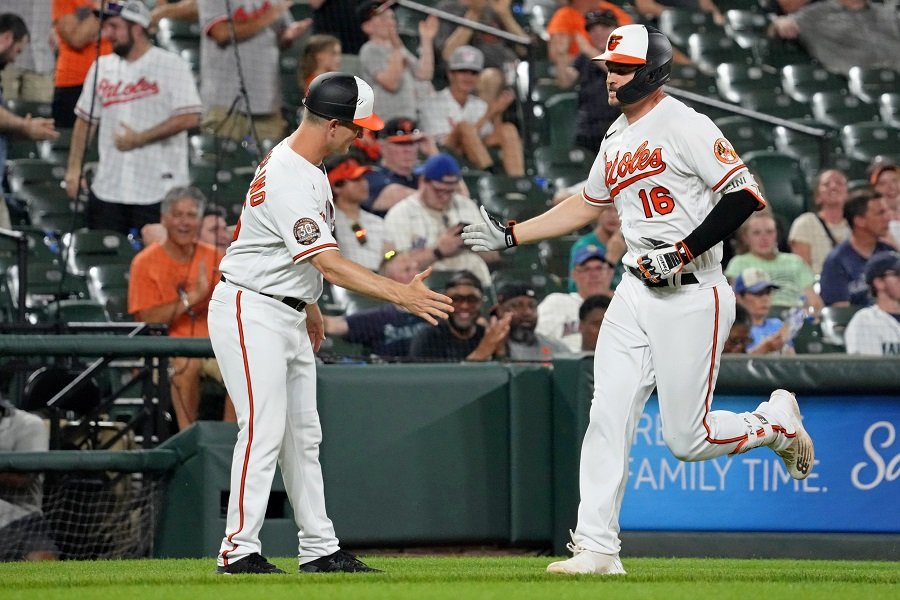 Milwaukee's lineup is not producing at a high enough level to make people believe the club is World Series caliber. They are missing a hitter (maybe two) because no one has truly stepped up through nearly 60 games. Trey Mancini can provide that immediate impact the Brewers desperately need. Mancini's slash line of .303/.374/.448/.822 would be an enormous jolt for the Crew. I've had my eye on him for a couple of seasons, knowing at some point the Baltimore Orioles would need to move on. He can opt for free agency at the end of this year, and they could lose him without anything in return after this season. The Brewers could offer a tempting collection of minor leaguers (or young Major Leaguers) to help the Orioles push through rebuild mode into competitive mode in a year or two. Mancini had a tremendous 2019 campaign, belting 35 home runs with 38 doubles, 106 runs, 97 RBI, and an .899 OPS (134 OPS+). Unfortunately, he had to sit out the 2020 season as he successfully battled and recovered from stage 3 colon cancer. He came back in 2021 to post solid numbers (21 HR, .758 OPS), especially considering what he went through mentally and physically. Now another year removed from his illness, Mancini is back to hitting at an All-Star level, and he could be even better at American Family Field. The Orioles created an eyesore in left field at Camden Yards, making it a problem for right-handed hitters to drive the ball out that way. That could be why Mancini ranks 15th in MLB with a .406 xwOBA (expected weighted on-base average), but only 31st with an actual wOBA of .361. Mancini has just six homers this season, but based on Baseball Savant's Expected Home Runs by Park, he would have 15 in Milwaukee - the most of any park outside of Great American Ballpark in Cincinnati. You can see from the hits spray chart below where some doubles and triples would be dingers. If the Brewers did acquire Mancini, he would immediately become the club leader in batting average, OBP, and OPS - even without the boost from Milwaukee's home park. Mancini also has rather even platoon splits versus lefty and righty pitching. While the Brewers tried to construct a roster that takes advantage of hitters with favorable splits, it has mostly failed thus far. At the same time, the 30-year-old right-handed hitter has fared better against southpaws in his career, which the Brewers continue to need as they have limped to a 9-12 record against left-handed starters. Mancini's strengths would also fit as an improvement to some of the Brewers' weaknesses offensively. Entering play Wednesday, Milwaukee ranks 21st in OBP (.307) and 13th out of 15 NL teams behind only the Pittsburgh Pirates and Arizona Diamondbacks. Mancini not only owns a terrific .374 OBP this season, his career .336 OBP is better than all but two Brewers' current 2022 OBP. The other area Mancini can bolster is within the strikeout department. Milwaukee has the 7th-worst strikeout percentage (K%) at 24.0% in 2022. Mancini's K% this season is 17.6% which is better than every Brewer with at least 60 plate appearances other than Kolten Wong. When you look at where he ranks in some key metrics, Mancini's production isn't a fluke, either. With Mancini, Milwaukee wouldn't need to figure out when he plays; he would be in the lineup every day. Though he is a first baseman by trade, he can play a corner outfield spot in a pinch and spend time as the DH. There could be some handshake agreement with Andrew McCutchen regarding playing time; however, he has not produced up to expectation. (Not even close.) Realistically, Mancini would be taking over for Cutch and filling in for Christian Yelich and Rowdy Tellez when they need a break. McCutchen is the most significant source of consternation and one of the main reasons Milwaukee needs a guy like Mancini. While McCutchen's overall stats are ugly (.224/.275/.316/.591), the Brewers brought him here to mash left-handed pitching. That isn't happening. Hitting just .218 with a .654 OPS with the platoon edge isn't going to cut it. And yet, somehow, manager Craig Counsell continues to put him in critical spots in the lineup, especially disturbing when they face a righty. Trading for Mancini pushes McCutchen down or out of the lineup most nights and ideally takes the pressure off guys like Willy Adames, Hunter Renfroe, Yelich, and Tellez. Mancini is under contract this year for $7.5 million, with a mutual option for $10 million in 2023. While it's unlikely he would exercise that option, it's also possible he might be more open to that idea if he could pump up his number in American Family Field instead of the revamped Camden Yards. That would mean Milwaukee could use him to make a postseason run for two seasons. Mancini's current performance might push the Orioles' asking price up a notch. Who would they want from Milwaukee? Would they demand Brice Turang in a deal? That seems like a high price tag at this point. Would Baltimore lean toward pitching or outfielders? The Brewers have a lot of depth across the various levels of the minor leagues to take a hit or two in those positions. Taking a couple of top-30 guys and a lower level prospect could be enough. The Orioles are a tough club to gauge right now, but there are a bevy of options to consider in a trade with the Brewers. One thing is certain, Mancini is the type of player you should be willing to give up a little more for with a possible title at stake. Not only is he a talented player, he clearly has fight. Being able to come back and perform at this level after beating cancer is a testament to his strength, perseverance, and character. His perspective on baseball and his career might also be different. Going through an actual life-and-death event can put an athlete in a more relaxed, appreciative state when they often perform better. There's no metric to measure that. But even if you simply stick to the numbers, Mancini would be a fantastic fit for the lineup, even if he doesn't fill certain holes in the field. With how good the Brewers' pitching is and can be, adding a consistent stick like Mancini's sets Milwaukee up for a deep postseason run. Like with Adames last season, striking early before other teams show interest could give the Brewers a leg up and solidify their offense sooner than later.
 -
It is no secret that the Milwaukee Brewers' offense is a source of concern for the club's World Series hopes. Perhaps the answer to a more consistent offense lies in the somewhat-neglected stolen base. The risk of an out while attempting stolen bases created a drop in value of the game's thievery over the past 20 years. With the surge of power at the plate and the focus on "protecting" your 27 outs, the risk-reward of stolen bases caused teams to pull back heavily. But has relying on power hitting made the Brewers susceptible to droughts and frustration? Especially as pitching has become a dominating force in MLB in recent seasons, a shift in thinking about the stolen base could help the Brewers score more often and fill in for the long ball when it dries up. Taking the chance on more steals can provide additional chances to score with one single instead of needing multiple base knocks or an extra-base hit. Swiping an extra bag here or there can also create more opportunities to strike with groundouts and sacrifice flies. While there is always some risk to steal attempts, there are a number of factors that favor more thefts. The Brewers are 9-12 this season when they don't hit a home run and 24-11 when they go deep. It's not surprising since home runs do so much damage. Even a solo blast is a guaranteed run. But failing to hit a tank shouldn't create a dramatic push toward a loss. Half of Milwaukee's defeats without a homer were one or two-run games, and a handful of them were low-scoring affairs. In games like those, which often happen in the playoffs, stealing a bag and sneaking a run makes a huge difference. It's not just about what the offense is doing, however. One the defensive side of the argument, the league caught stealing percentage (CS%) this year is 24.4%, second worst in MLB history. Only 2021 saw a lower success rate of throwing out base stealers (24.3%). Considering that trend, the risk is as low as ever to snag a bag and set up more chances to score. But the avoidance of stolen base attempts is more about what is valued offensively. At the same time, modern baseball has become incredibly challenging to hit on any consistent level. Entering play Monday, the league batting average in 2022 is at its fourth-lowest point since 1900 (.240). That may go up as warmer weather hits, but last season was the sixth worst in the previous 122 seasons (.242), so it wouldn't seem like much of a change is coming. No, batting average isn't the best gauge of offense anymore, but the point is that getting multiple hits in an inning - or getting the "big hit" - is far less likely nowadays. Even if power is your delight, the current league slugging percentage of .388 ranks just 65th in MLB history. Let's not forget nearly all those seasons included the pitcher batting in the NL, and each year before 1973 saw the AL without the DH, either. So if overall hitting and power is more of a struggle, it might be time to try something else. This isn't a small ball versus new-school argument. The cons related to sacrifice bunting are fair in that most of those bunts include at least one out. Stolen bases, however, have been far more successful in recent years. It has almost become a science for teams - well, advanced math. Swiping second or third base at a high percentage would limit the number of hits you need to score in any given inning. For a team like Milwaukee, a single additional run holds tons of value thanks to the pitching staff. A strategy to increase stolen base attempts wouldn't work for every team, but the Brewers have multiple guys on the roster who could take advantage. While pure speed isn't the only key to swiping bags, it certainly helps. Milwaukee has seven players who rank in the top 73 percentile of sprint speed in MLB: Andrew McCutchen (88.3%) Pablo Reyes (81.2%) Tyrone Taylor (79%) Jace Peterson (77.1%) Christian Yelich (76%) Willy Adames (73.7%) Lorenzo Cain (73.4%) The Brewers are currently seventh in steals (33) and have a 73% success rate (18th). Kolten Wong and Peterson are tied for the team lead with eight stolen bases. (Peterson is 8-for-8). The greatest struggle for a number of the players above is simply getting on base in order to steal. Once they actually acquire first base, pitchers often lose interest in that player, and they should take advantage. Many pitchers couldn't care less about holding runners or preventing stolen bases in the modern game. The emphasis is generally on making quality pitches and hitting their spots. This has led to most pitchers eschewing the slide step and sticking with a traditional leg kick, causing pitchers to take longer to deliver a pitch. Pay attention to this part of the game, as you will see it consistently creates more frequent opportunities to swipe bases. Not only do pitchers mostly ignore the runners, they also throw fewer fastballs than ever. Breaking balls and offspeed pitches are tougher for catchers to nab would-be thieves. As you can see below, hurlers throw the four-seam fastball, which generally travels straighter and quicker than any other pitch, less than 50% of the time in2022. That follows the recent downward trend of lower fastball percentages (FB%) and higher velocity (FBv). Pitchers' cold shoulders toward fastballs and fast runners open the door even more for Milwaukee to run through when the offense is stagnant. It has worked, theoretically, for some recent pennant winners, including some high-powered offenses. The 2021 season was the first time since 2012 that neither the AL nor the NL champion ranked in the top-six teams in MLB in stolen bases. While power will primarily drive offenses, these four World Series Champions and four runners-up took advantage of swiping many bags. 2020 Tampa Bay Rays (3rd in SB) 2019 Washington Nationals* (6th) 2018 Boston Red Sox* (3rd) 2017 Los Angeles Dodgers (1st) 2016 Cleveland Indians (4th) 2015 Kansas City Royals* (5th) 2014 Kansas City Royals (1st) 2013 Boston Red Sox* (4th) *World Series Champion Considering the Brewers haven't been to the World Series since 1982 and failed to reach the NLCS the past three seasons, what is there to lose? It might be valuable to learn how to maximize stolen bases by emphasizing the strategy more often during the regular season. Pick some key spots with select runners and specific hitters at the plate to get a feel for what works. Again, what's the harm? It would be tough to be much worse offensively and it might be a pleasant surprise. Though Milwaukee is 13th in runs scored in MLB, it's been blatantly clear the offense has been lacking the punch and steadiness you'd expect from a World Series contender. There is more than one way to create valuable runs, and the more you can diversify your tactics, the more difficult it is for the opposition to hold you down. Some may think trying to steal more bases is dumb, not worth the risk, or an outdated idea. If you're the Brewers with a world-class pitching staff and an uncertain offense, finding ways to get just one more run each game could be the difference between a dream season and another disappointment. View full article
-
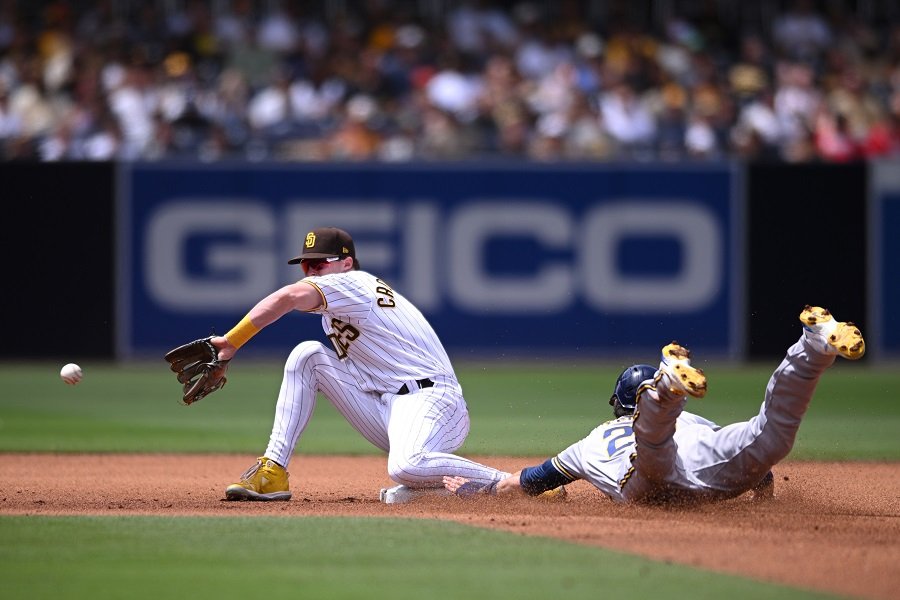 The risk of an out while attempting stolen bases created a drop in value of the game's thievery over the past 20 years. With the surge of power at the plate and the focus on "protecting" your 27 outs, the risk-reward of stolen bases caused teams to pull back heavily. But has relying on power hitting made the Brewers susceptible to droughts and frustration? Especially as pitching has become a dominating force in MLB in recent seasons, a shift in thinking about the stolen base could help the Brewers score more often and fill in for the long ball when it dries up. Taking the chance on more steals can provide additional chances to score with one single instead of needing multiple base knocks or an extra-base hit. Swiping an extra bag here or there can also create more opportunities to strike with groundouts and sacrifice flies. While there is always some risk to steal attempts, there are a number of factors that favor more thefts. The Brewers are 9-12 this season when they don't hit a home run and 24-11 when they go deep. It's not surprising since home runs do so much damage. Even a solo blast is a guaranteed run. But failing to hit a tank shouldn't create a dramatic push toward a loss. Half of Milwaukee's defeats without a homer were one or two-run games, and a handful of them were low-scoring affairs. In games like those, which often happen in the playoffs, stealing a bag and sneaking a run makes a huge difference. It's not just about what the offense is doing, however. One the defensive side of the argument, the league caught stealing percentage (CS%) this year is 24.4%, second worst in MLB history. Only 2021 saw a lower success rate of throwing out base stealers (24.3%). Considering that trend, the risk is as low as ever to snag a bag and set up more chances to score. But the avoidance of stolen base attempts is more about what is valued offensively. At the same time, modern baseball has become incredibly challenging to hit on any consistent level. Entering play Monday, the league batting average in 2022 is at its fourth-lowest point since 1900 (.240). That may go up as warmer weather hits, but last season was the sixth worst in the previous 122 seasons (.242), so it wouldn't seem like much of a change is coming. No, batting average isn't the best gauge of offense anymore, but the point is that getting multiple hits in an inning - or getting the "big hit" - is far less likely nowadays. Even if power is your delight, the current league slugging percentage of .388 ranks just 65th in MLB history. Let's not forget nearly all those seasons included the pitcher batting in the NL, and each year before 1973 saw the AL without the DH, either. So if overall hitting and power is more of a struggle, it might be time to try something else. This isn't a small ball versus new-school argument. The cons related to sacrifice bunting are fair in that most of those bunts include at least one out. Stolen bases, however, have been far more successful in recent years. It has almost become a science for teams - well, advanced math. Swiping second or third base at a high percentage would limit the number of hits you need to score in any given inning. For a team like Milwaukee, a single additional run holds tons of value thanks to the pitching staff. A strategy to increase stolen base attempts wouldn't work for every team, but the Brewers have multiple guys on the roster who could take advantage. While pure speed isn't the only key to swiping bags, it certainly helps. Milwaukee has seven players who rank in the top 73 percentile of sprint speed in MLB: Andrew McCutchen (88.3%) Pablo Reyes (81.2%) Tyrone Taylor (79%) Jace Peterson (77.1%) Christian Yelich (76%) Willy Adames (73.7%) Lorenzo Cain (73.4%) The Brewers are currently seventh in steals (33) and have a 73% success rate (18th). Kolten Wong and Peterson are tied for the team lead with eight stolen bases. (Peterson is 8-for-8). The greatest struggle for a number of the players above is simply getting on base in order to steal. Once they actually acquire first base, pitchers often lose interest in that player, and they should take advantage. Many pitchers couldn't care less about holding runners or preventing stolen bases in the modern game. The emphasis is generally on making quality pitches and hitting their spots. This has led to most pitchers eschewing the slide step and sticking with a traditional leg kick, causing pitchers to take longer to deliver a pitch. Pay attention to this part of the game, as you will see it consistently creates more frequent opportunities to swipe bases. Not only do pitchers mostly ignore the runners, they also throw fewer fastballs than ever. Breaking balls and offspeed pitches are tougher for catchers to nab would-be thieves. As you can see below, hurlers throw the four-seam fastball, which generally travels straighter and quicker than any other pitch, less than 50% of the time in2022. That follows the recent downward trend of lower fastball percentages (FB%) and higher velocity (FBv). Pitchers' cold shoulders toward fastballs and fast runners open the door even more for Milwaukee to run through when the offense is stagnant. It has worked, theoretically, for some recent pennant winners, including some high-powered offenses. The 2021 season was the first time since 2012 that neither the AL nor the NL champion ranked in the top-six teams in MLB in stolen bases. While power will primarily drive offenses, these four World Series Champions and four runners-up took advantage of swiping many bags. 2020 Tampa Bay Rays (3rd in SB) 2019 Washington Nationals* (6th) 2018 Boston Red Sox* (3rd) 2017 Los Angeles Dodgers (1st) 2016 Cleveland Indians (4th) 2015 Kansas City Royals* (5th) 2014 Kansas City Royals (1st) 2013 Boston Red Sox* (4th) *World Series Champion Considering the Brewers haven't been to the World Series since 1982 and failed to reach the NLCS the past three seasons, what is there to lose? It might be valuable to learn how to maximize stolen bases by emphasizing the strategy more often during the regular season. Pick some key spots with select runners and specific hitters at the plate to get a feel for what works. Again, what's the harm? It would be tough to be much worse offensively and it might be a pleasant surprise. Though Milwaukee is 13th in runs scored in MLB, it's been blatantly clear the offense has been lacking the punch and steadiness you'd expect from a World Series contender. There is more than one way to create valuable runs, and the more you can diversify your tactics, the more difficult it is for the opposition to hold you down. Some may think trying to steal more bases is dumb, not worth the risk, or an outdated idea. If you're the Brewers with a world-class pitching staff and an uncertain offense, finding ways to get just one more run each game could be the difference between a dream season and another disappointment.
 -
They certainly are concerns, and the Brewers have areas to address. Thankfully other guys have stepped up recently, but they are not fully loaded right now.
-
They certainly are concerns, and the Brewers have areas to address. Thankfully other guys have stepped up recently, but they are not fully loaded right now.
-
In a world of instant gratification and trouble seeing the big picture, it's important to have perspective in a 162-game baseball season. The Milwaukee Brewers have done phenomenally well, despite two straight losses to the toothless Chicago Cubs and what looked like a third consecutive defeat on the horizon Thursday. There's a rhythm and comfort to seeing baseball played every day. It's a unique security blanket where you can find a screen or speaker producing the familiar ambiance of the ballpark. The danger of its frequency lies in the unfair analysis of a player or team in a single game or week, where some overvalue a slump or a pair of losses. So when the Brewers dropped a couple of one-run contests to the Cubs, some (many?) viewed it as a travesty or a sign of the apocalypse. Social media was abuzz with negativity. Sure, the Brewers have the third-best record in the NL while the Cubs are a below-.500 club, but these games and the series are specks on the MLB calendar. If you need more proof of that, the 22-27 Pittsburgh Pirates just swept the 34-17 Los Angeles Dodgers (second-best record in the NL) in a recent three-game set in Los Angeles. In the words of Bill Veeck, "Baseball is not meant to be gulped. It's meant to be savored." Let's look at a larger portion of the cup and its contents instead of the last couple of swigs. Before their thrilling 5-4 comeback over the San Diego Padres, Milwaukee had just finished 6-5 on a three-city road trip where they played 11 games in 10 days. The Brewers had to travel to the West Coast first as they took two of three games over the 30-21 Padres. Next, they came back to the Midwest to take on the rival St. Louis Cardinals in a four-game set, which they split. St. Louis is currently 29-22. Finally, up to Chicago with a series-opening doubleheader en route to a four-game split. Considering the travel, playing more games than there were days, and the high quality of the first two opponents, a 6-5 mark deserves kudos for a healthy team. Now take into account the banged-up roster the Brewers have been dealing with, and suddenly, their performance shines brighter, especially as they notched another win Thursday. Starting shortstop Willy Adames did not play during the road trip and has missed the last 18 team games. Typical right fielder Hunter Renfroe only played in the first four innings of the road trip. Due to injury, starting pitchers Freddy Peralta and Brandon Woodruff combined to pitch just four innings on the trip. Closer Josh Hader, while not hurt, missed the first three games of the trip because of a family emergency. Talk about dealing with adversity during a rough stretch of games. It took big-time efforts from several other players, such as Devin Williams, who pitched in all three games in San Diego, picking up a pair of saves there and a hold in Chicago. Offensively, Jace Peterson has gone 8-for-16 with two doubles, two triples, one home run, eight RBI, and four runs in the last six contests. His game-tying triple in the ninth on Thursday is the most recent example of his heroics. Those two players aren't the only ones increasing their impact, but they have played vital roles. How about some more perspective on the Brewers' recent play? Milwaukee has three games left as part of a challenging stretch of 18 games in 17 days. That creates a demanding physical and mental strain on the team. Simply staying above the .500 mark across the 18-game span - especially with their injuries - would be an accomplishment. The Brewers are 9-6 with one weekend to go. That brings us to the whole picture, with the Brewers sitting at 33-20, tied for the best 53-game start in franchise history. They've done it while playing 32 of the contests on the road (60.4%), including two, three-city journeys between May 6 and June 1. Those couple of defeats at Wrigley Field should do nothing to detract from the Brewers' fantastic start when factoring everything in. Ignore the haters who argue that Milwaukee has taken advantage of weak teams, too. The Dodgers are 27-16 against clubs with a .500 record or worse. The New York Mets are 26-12 against the same group, while the Brewers are 26-14. You can only play who is on your schedule, and you can't pick your division. Take the NL East, which has four teams with losing records. Milwaukee hasn't had any extra advantage in the scheduling department. And while the opposition will undoubtedly get more difficult in the future, the Brewers will enjoy far more home games where they are 15-6 to open the season. Assuming better health and some trade deadline deals, no one will remember two random nights in Chicago, especially when Milwaukee is making a postseason run toward a World Series ring. View full article
- 16 replies
-
- 2
-
-
- willy adames
- hunter renfroe
- (and 3 more)
-
 There's a rhythm and comfort to seeing baseball played every day. It's a unique security blanket where you can find a screen or speaker producing the familiar ambiance of the ballpark. The danger of its frequency lies in the unfair analysis of a player or team in a single game or week, where some overvalue a slump or a pair of losses. So when the Brewers dropped a couple of one-run contests to the Cubs, some (many?) viewed it as a travesty or a sign of the apocalypse. Social media was abuzz with negativity. Sure, the Brewers have the third-best record in the NL while the Cubs are a below-.500 club, but these games and the series are specks on the MLB calendar. If you need more proof of that, the 22-27 Pittsburgh Pirates just swept the 34-17 Los Angeles Dodgers (second-best record in the NL) in a recent three-game set in Los Angeles. In the words of Bill Veeck, "Baseball is not meant to be gulped. It's meant to be savored." Let's look at a larger portion of the cup and its contents instead of the last couple of swigs. Before their thrilling 5-4 comeback over the San Diego Padres, Milwaukee had just finished 6-5 on a three-city road trip where they played 11 games in 10 days. The Brewers had to travel to the West Coast first as they took two of three games over the 30-21 Padres. Next, they came back to the Midwest to take on the rival St. Louis Cardinals in a four-game set, which they split. St. Louis is currently 29-22. Finally, up to Chicago with a series-opening doubleheader en route to a four-game split. Considering the travel, playing more games than there were days, and the high quality of the first two opponents, a 6-5 mark deserves kudos for a healthy team. Now take into account the banged-up roster the Brewers have been dealing with, and suddenly, their performance shines brighter, especially as they notched another win Thursday. Starting shortstop Willy Adames did not play during the road trip and has missed the last 18 team games. Typical right fielder Hunter Renfroe only played in the first four innings of the road trip. Due to injury, starting pitchers Freddy Peralta and Brandon Woodruff combined to pitch just four innings on the trip. Closer Josh Hader, while not hurt, missed the first three games of the trip because of a family emergency. Talk about dealing with adversity during a rough stretch of games. It took big-time efforts from several other players, such as Devin Williams, who pitched in all three games in San Diego, picking up a pair of saves there and a hold in Chicago. Offensively, Jace Peterson has gone 8-for-16 with two doubles, two triples, one home run, eight RBI, and four runs in the last six contests. His game-tying triple in the ninth on Thursday is the most recent example of his heroics. Those two players aren't the only ones increasing their impact, but they have played vital roles. How about some more perspective on the Brewers' recent play? Milwaukee has three games left as part of a challenging stretch of 18 games in 17 days. That creates a demanding physical and mental strain on the team. Simply staying above the .500 mark across the 18-game span - especially with their injuries - would be an accomplishment. The Brewers are 9-6 with one weekend to go. That brings us to the whole picture, with the Brewers sitting at 33-20, tied for the best 53-game start in franchise history. They've done it while playing 32 of the contests on the road (60.4%), including two, three-city journeys between May 6 and June 1. Those couple of defeats at Wrigley Field should do nothing to detract from the Brewers' fantastic start when factoring everything in. Ignore the haters who argue that Milwaukee has taken advantage of weak teams, too. The Dodgers are 27-16 against clubs with a .500 record or worse. The New York Mets are 26-12 against the same group, while the Brewers are 26-14. You can only play who is on your schedule, and you can't pick your division. Take the NL East, which has four teams with losing records. Milwaukee hasn't had any extra advantage in the scheduling department. And while the opposition will undoubtedly get more difficult in the future, the Brewers will enjoy far more home games where they are 15-6 to open the season. Assuming better health and some trade deadline deals, no one will remember two random nights in Chicago, especially when Milwaukee is making a postseason run toward a World Series ring.
- 16 comments
-
- 3
-
-
- willy adames
- hunter renfroe
- (and 3 more)
-
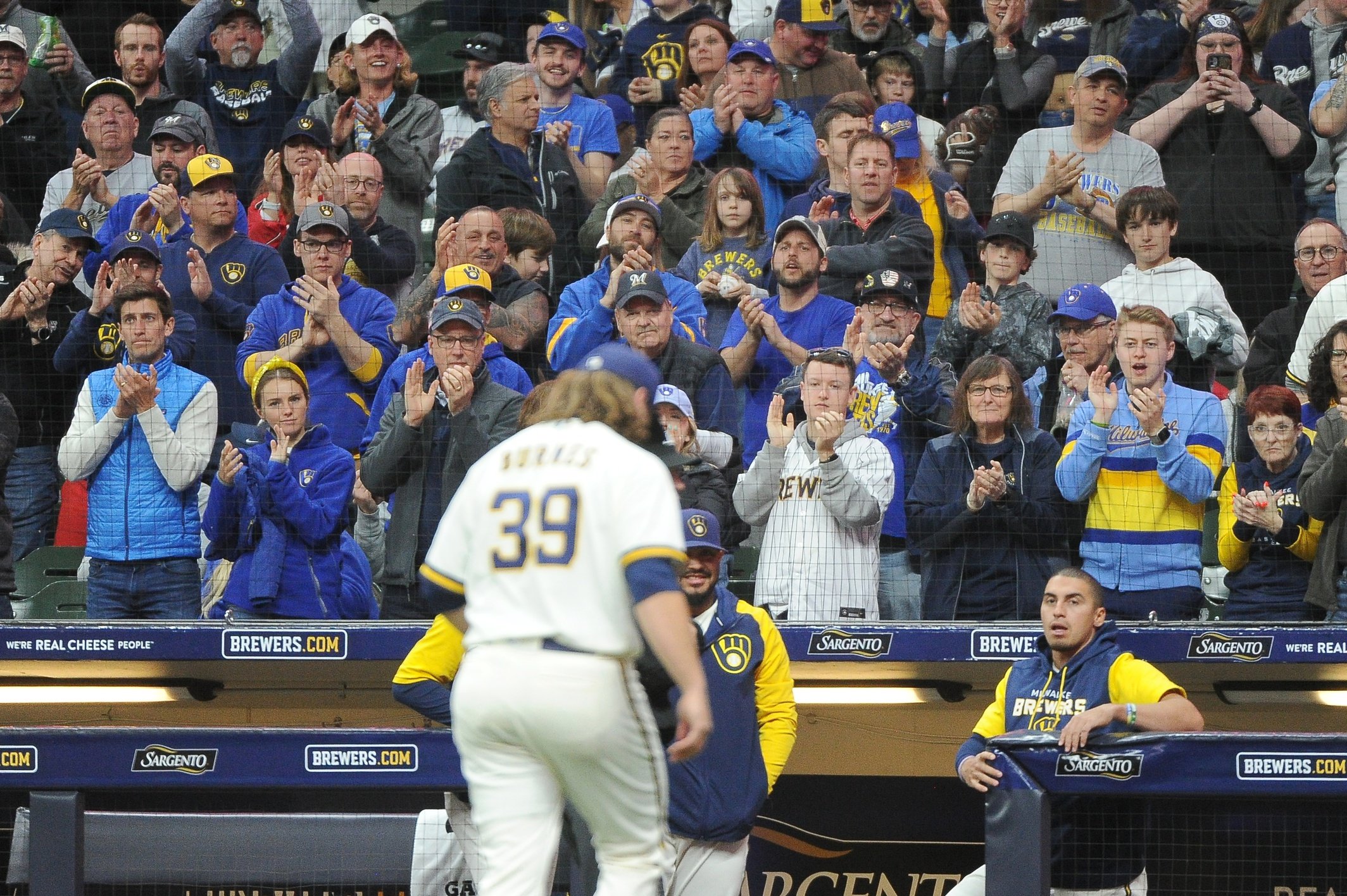 Corbin Burnes' ERA sits at 1.95 after his seven shutout innings against the St. Louis Cardinals Sunday. The reigning NL Cy Young struck out 11 Cardinals while allowing just one walk and a pair of hits in Milwaukee's 8-0 win. People expect him to be exceptional every time out; one starts to wonder if he is underappreciated at this point. In case you find yourself sleeping on the stud right-hander, Burnes can be found atop the NL leaderboard in several categories. ERA+ (210) WHIP (0.820) Strikeout percentage (31.8%) Hits per nine innings (5.8) Strikeouts (78) A 100 ERA+ is league average, so Burnes is 210% better in that statistic. Again, there are four months left to play, but if Burnes stays in the neighborhood of these stats, he might be setting franchise records. The combination of strikeouts and limited runners makes Burnes a nightmare to face. He has such a look and feel of dominance that fans negatively react when he gives up even one run. The fact is, Burnes remains among the elite in MLB when many argued he couldn't keep this up. As you can see, when a pitcher has lots of red in these Statcast percentile rankings, he is a beast. While some of these figures are "expected" results or a sign of potential success, Burnes has produced the desired output. Like with Josh Hader, it's essential to review each hurler's stats to appreciate what they're doing. That should include non-traditional performance markers that can indicate a pitcher's stuff. One of those metrics is Contact%, which is the percentage of times a hitter makes contact when swinging at a hurler's pitch. Burnes' 63.8 Contact% is nearly eight percent better than the next best qualified NL pitcher. Getting so many whiffs is indicative of terrific movement and location. His 47.8% O-Contact% (contact on pitches outside of the strike zone) is the only mark below 50% in the NL as Burnes teases hitters with borderline tosses that dart, dive, and zip past their lumber out of the zone. Once again, it's Burnes' ridiculous cutter leading the way. According to FanGraphs' pitch value metric, Burnes' cutter is the most valuable pitch in MLB. The stat measure the total runs saved by a pitcher using that pitch. The Burnes' cutter has a 10.3 value through his 10 games. While his cutter is the most valuable pitch of any type, it might be even more interesting that Burnes' curveball has saved the most runs based on that pitch. Considering their effectiveness, it's no surprise Burnes is using both pitches more than he ever has before. His six-pitch potential means it's difficult for Burnes to have a truly bad day. Hitters, however, have many rough nights. Though Burnes throws the cutter a ton, he can mix in a top-flight changeup or slider to throw a team off. A quality sign of hitters' consistent struggles is evident in the slash line against Burnes: .183 batting average (1st in NL) .233 OBP (1st in NL) .310 slugging percentage (5th in NL) .543 OPS (1st in NL) It's an incredible feeling to have a true ace to count on every five or six days. Burnes has shown no signs of slowing, and hopefully, Brewers fans can soak it all in. There will always be the question of whether or not Milwaukee can sign him long-term. All the more reason to appreciate the incredible talent you get to watch right now.
 -
There's a long way to go in the 2022 season, but the Milwaukee Brewers' Corbin Burnes is again on a Cy Young track. As is often the case with greatness, it feels like fans are taking him for granted. I implore you to admire and cherish each of his starts. Corbin Burnes' ERA sits at 1.95 after his seven shutout innings against the St. Louis Cardinals Sunday. The reigning NL Cy Young struck out 11 Cardinals while allowing just one walk and a pair of hits in Milwaukee's 8-0 win. People expect him to be exceptional every time out; one starts to wonder if he is underappreciated at this point. In case you find yourself sleeping on the stud right-hander, Burnes can be found atop the NL leaderboard in several categories. ERA+ (210) WHIP (0.820) Strikeout percentage (31.8%) Hits per nine innings (5.8) Strikeouts (78) A 100 ERA+ is league average, so Burnes is 210% better in that statistic. Again, there are four months left to play, but if Burnes stays in the neighborhood of these stats, he might be setting franchise records. The combination of strikeouts and limited runners makes Burnes a nightmare to face. He has such a look and feel of dominance that fans negatively react when he gives up even one run. The fact is, Burnes remains among the elite in MLB when many argued he couldn't keep this up. As you can see, when a pitcher has lots of red in these Statcast percentile rankings, he is a beast. While some of these figures are "expected" results or a sign of potential success, Burnes has produced the desired output. Like with Josh Hader, it's essential to review each hurler's stats to appreciate what they're doing. That should include non-traditional performance markers that can indicate a pitcher's stuff. One of those metrics is Contact%, which is the percentage of times a hitter makes contact when swinging at a hurler's pitch. Burnes' 63.8 Contact% is nearly eight percent better than the next best qualified NL pitcher. Getting so many whiffs is indicative of terrific movement and location. His 47.8% O-Contact% (contact on pitches outside of the strike zone) is the only mark below 50% in the NL as Burnes teases hitters with borderline tosses that dart, dive, and zip past their lumber out of the zone. Once again, it's Burnes' ridiculous cutter leading the way. According to FanGraphs' pitch value metric, Burnes' cutter is the most valuable pitch in MLB. The stat measure the total runs saved by a pitcher using that pitch. The Burnes' cutter has a 10.3 value through his 10 games. While his cutter is the most valuable pitch of any type, it might be even more interesting that Burnes' curveball has saved the most runs based on that pitch. Considering their effectiveness, it's no surprise Burnes is using both pitches more than he ever has before. His six-pitch potential means it's difficult for Burnes to have a truly bad day. Hitters, however, have many rough nights. Though Burnes throws the cutter a ton, he can mix in a top-flight changeup or slider to throw a team off. A quality sign of hitters' consistent struggles is evident in the slash line against Burnes: .183 batting average (1st in NL) .233 OBP (1st in NL) .310 slugging percentage (5th in NL) .543 OPS (1st in NL) It's an incredible feeling to have a true ace to count on every five or six days. Burnes has shown no signs of slowing, and hopefully, Brewers fans can soak it all in. There will always be the question of whether or not Milwaukee can sign him long-term. All the more reason to appreciate the incredible talent you get to watch right now. View full article
-
Father Time appears to be taking its toll on Milwaukee Brewers' center fielder Lorenzo Cain. The 36-year-old veteran looks like a shell of his former self at the plate, and the club may have to make a difficult decision soon. When Lorenzo Cain signed a five-year, $80 million contract before the 2018 season, most understood Milwaukee was paying for the first two or three years of production. The hope was that Cain's final couple of seasons on the deal would be tolerable. Last year, Cain posted a slightly below-average 95 OPS+ with a .257/.329/.401 slash line and was more than acceptable. His continued quality defense boosted his Baseball-Reference WAR (bWAR) to 2.2 - solid for a starter. Unfortunately for the Brewers, Cain's 2022 season has been a disaster at the plate. Aside from the 35 OPS+ (100 is league average) and ugly .182/.247/.216 slash, his Statcast rankings show zero signs of bad luck or a bounceback. Blue equals poor, and Cain's blues are both literal and theoretical. He currently sits in the third percentile in Expected Slugging (xSLG) and Expected Weighted On-base Average (xwOBA). These indicate Cain would be forecasted (essentially) to be worse than 97 percent of MLB players in slugging percentage (SLG) and weighted on-base average (wOBA). Entering play Friday, Cain's .216 SLG ranked 229th out of 231 players (minimum 90 plate appearances), while his .217 wOBA was 227th. Perhaps the two most discouraging signs are Cain's lack of contact and the inability to hit the ball with his barrel. Across his 97 PA, Cain's percentage of contact of balls in the strike zone (Z-Contact%) is 85.5%. If he stays at that rate, it would be the worst of his career by three percent and 4.7% under his career mark. When he has made contact, Cain has yet to hit the barrel of the bat. Cain has zero barrels on 66 batted balls, making it extremely difficult to hit the ball well and find base hits. Last year he found nine barrels out of 210 batted balls, which was in line with his career percentage of 4.3%. Sure, he could get hot and up his numbers, but there is nothing to foreshadow anything significant. At this point, you hate to say it, Cain has become 2021 Jackie Bradley Jr. in 2022. Cain's saving grace is that he still navigates the outfield exceptionally well and holds value roaming center. He is tied for the MLB lead in Defensive Runs Saved (DRS) among all center fielders and ranks in the 92nd percentile in Outs Above Average. Whatever he has seemingly lost at the dish has not escaped him in the field. That is where the tough decisions come into play. Tyrone Taylor is the only current Brewers outfielder ready to play the position and handle it well enough. However, he isn't hitting with much consistency either (.214/.267/.333 with a 72 OPS+) and is a better fit defensively for a corner spot. He will likely see more frequent time in center field before anything drastic happens. However, if Milwaukee tries to bring someone in to take those at-bats, do they keep Cain on the active roster as a defensive replacement? The problem is that Taylor is out of minor league options, and keeping six outfielders on the 26-man roster will not happen. Perhaps Cain could be put in the IL with a "leg injury" until he is needed. Would he go for that? Would he force the Brewers' hand into releasing him? If the Brewers wait until closer to the deadline, Cain could spend a month on the IL before rosters expand to 28 players in September. There isn't an easy answer for the current conundrum. Since the Brewers are winning games and holding down first place in the NL Central, there likely isn't urgency on the part of the club. However, they should be looking at their options now so they can strike a deal when their patience runs out on Cain's bat. It will be a sad day to move on from Cain, but barring a semi-miraculous recovery, the 2022 Brewers can't afford to have an offensive black hole in center field. View full article
-
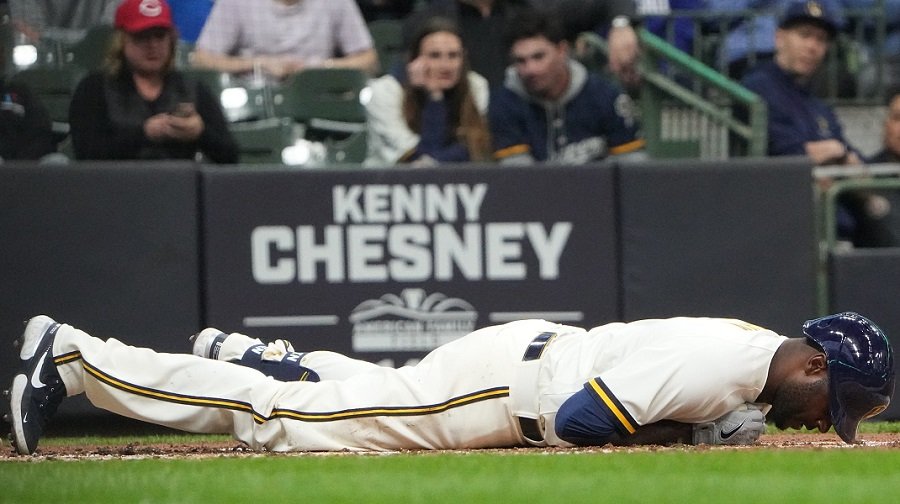 When Lorenzo Cain signed a five-year, $80 million contract before the 2018 season, most understood Milwaukee was paying for the first two or three years of production. The hope was that Cain's final couple of seasons on the deal would be tolerable. Last year, Cain posted a slightly below-average 95 OPS+ with a .257/.329/.401 slash line and was more than acceptable. His continued quality defense boosted his Baseball-Reference WAR (bWAR) to 2.2 - solid for a starter. Unfortunately for the Brewers, Cain's 2022 season has been a disaster at the plate. Aside from the 35 OPS+ (100 is league average) and ugly .182/.247/.216 slash, his Statcast rankings show zero signs of bad luck or a bounceback. Blue equals poor, and Cain's blues are both literal and theoretical. He currently sits in the third percentile in Expected Slugging (xSLG) and Expected Weighted On-base Average (xwOBA). These indicate Cain would be forecasted (essentially) to be worse than 97 percent of MLB players in slugging percentage (SLG) and weighted on-base average (wOBA). Entering play Friday, Cain's .216 SLG ranked 229th out of 231 players (minimum 90 plate appearances), while his .217 wOBA was 227th. Perhaps the two most discouraging signs are Cain's lack of contact and the inability to hit the ball with his barrel. Across his 97 PA, Cain's percentage of contact of balls in the strike zone (Z-Contact%) is 85.5%. If he stays at that rate, it would be the worst of his career by three percent and 4.7% under his career mark. When he has made contact, Cain has yet to hit the barrel of the bat. Cain has zero barrels on 66 batted balls, making it extremely difficult to hit the ball well and find base hits. Last year he found nine barrels out of 210 batted balls, which was in line with his career percentage of 4.3%. Sure, he could get hot and up his numbers, but there is nothing to foreshadow anything significant. At this point, you hate to say it, Cain has become 2021 Jackie Bradley Jr. in 2022. Cain's saving grace is that he still navigates the outfield exceptionally well and holds value roaming center. He is tied for the MLB lead in Defensive Runs Saved (DRS) among all center fielders and ranks in the 92nd percentile in Outs Above Average. Whatever he has seemingly lost at the dish has not escaped him in the field. That is where the tough decisions come into play. Tyrone Taylor is the only current Brewers outfielder ready to play the position and handle it well enough. However, he isn't hitting with much consistency either (.214/.267/.333 with a 72 OPS+) and is a better fit defensively for a corner spot. He will likely see more frequent time in center field before anything drastic happens. However, if Milwaukee tries to bring someone in to take those at-bats, do they keep Cain on the active roster as a defensive replacement? The problem is that Taylor is out of minor league options, and keeping six outfielders on the 26-man roster will not happen. Perhaps Cain could be put in the IL with a "leg injury" until he is needed. Would he go for that? Would he force the Brewers' hand into releasing him? If the Brewers wait until closer to the deadline, Cain could spend a month on the IL before rosters expand to 28 players in September. There isn't an easy answer for the current conundrum. Since the Brewers are winning games and holding down first place in the NL Central, there likely isn't urgency on the part of the club. However, they should be looking at their options now so they can strike a deal when their patience runs out on Cain's bat. It will be a sad day to move on from Cain, but barring a semi-miraculous recovery, the 2022 Brewers can't afford to have an offensive black hole in center field.

