



Tim Muma
-
Posts
436 -
Joined
-
Last visited
-
Days Won
1
Content Type
Profiles
Forums
Blogs
Events
News
2026 Milwaukee Brewers Top Prospects Ranking
Milwaukee Brewers Videos
2022 Milwaukee Brewers Draft Picks
Milwaukee Brewers Free Agent & Trade Rumors, Notes, & Tidbits
Guides & Resources
2023 Milwaukee Brewers Draft Picks
2024 Milwaukee Brewers Draft Picks
The Milwaukee Brewers Players Project
2025 Milwaukee Brewers Draft Pick Tracker
2026 Milwaukee Brewers Draft Tracker: Picks & Bonuses
Store
Downloads
Gallery
Everything posted by Tim Muma
-
 Brandon Woodruff owns a 6.16 ERA and has allowed a .925 OPS to hitters over his last four starts. It might be fair to wonder if it's time to worry about the Milwaukee Brewers' right-hander. Then again, maybe not. Indeed, Brandon Woodruff has not looked like an ace with a 5.35 ERA and 1.37 WHIP through his first seven starts in 2022. While the Brewers are 4-2 in Woodruff's starts, his outings have been inconsistent, which can be frustrating. In four of his starts, Woodruff allowed four earned runs in 21 2/3 innings (1.66 ERA). Two of those came in mid-April when he gave up no runs over 11 frames. However, his other three starts have yielded 16 earned runs in 12 innings (12.00 ERA). Woodruff himself was at a loss for his lack of consistency to open the season. Execution needs to be better, but this could be a small sample result considering Woodruff has a 33.4% fly ball rate. Woodruff's performance will warrant more concern if the percentage doesn't drop some over the next handful of starts. When you watch Woodruff on the mound, one other thing to pay attention to is how often hitters are attacking pitches in the zone. Opponents are swinging more frequently at would-be strikes 72.2% of the time, more than two percent higher than in the previous two seasons. This has led to Woodruff getting the fewest percentage of called strikes in his career. These could call for him to rethink his strategy and pitch mix as hitters get more aggressive. Despite all of this - and some fretting by fans - as a veteran pitcher with a reliable history of success, patience has been earned. From 2018-2021, Woodruff has a 3.06 ERA with a 3.05 FIP and a 1.04 WHIP across 417 innings. A small amount of decline could happen this season, but the Milwaukee Brewers have no reason to believe a drastic dropoff is coming from Woodruff. View full article
 -
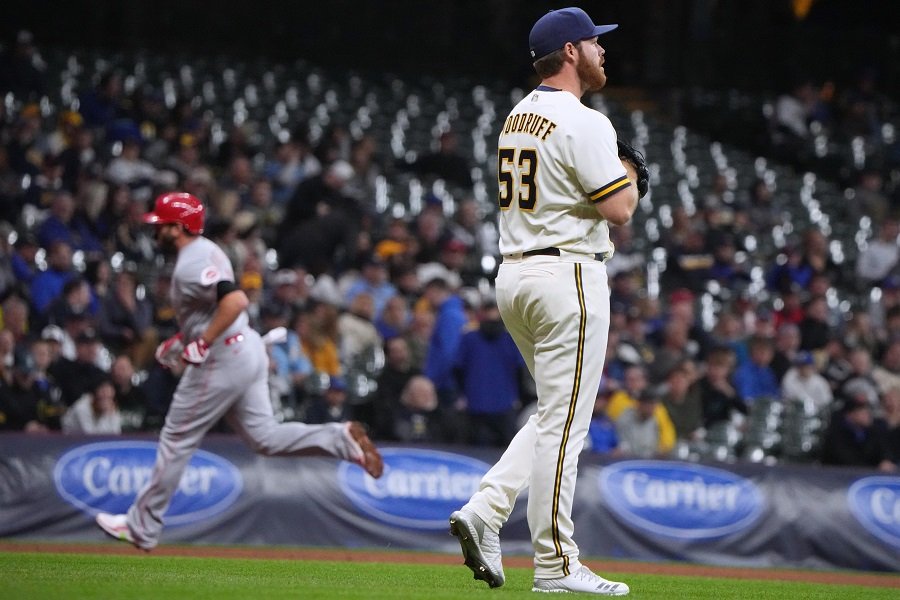 Indeed, Brandon Woodruff has not looked like an ace with a 5.35 ERA and 1.37 WHIP through his first seven starts in 2022. While the Brewers are 4-2 in Woodruff's starts, his outings have been inconsistent, which can be frustrating. In four of his starts, Woodruff allowed four earned runs in 21 2/3 innings (1.66 ERA). Two of those came in mid-April when he gave up no runs over 11 frames. However, his other three starts have yielded 16 earned runs in 12 innings (12.00 ERA). Woodruff himself was at a loss for his lack of consistency to open the season. Execution needs to be better, but this could be a small sample result considering Woodruff has a 33.4% fly ball rate. Woodruff's performance will warrant more concern if the percentage doesn't drop some over the next handful of starts. When you watch Woodruff on the mound, one other thing to pay attention to is how often hitters are attacking pitches in the zone. Opponents are swinging more frequently at would-be strikes 72.2% of the time, more than two percent higher than in the previous two seasons. This has led to Woodruff getting the fewest percentage of called strikes in his career. These could call for him to rethink his strategy and pitch mix as hitters get more aggressive. Despite all of this - and some fretting by fans - as a veteran pitcher with a reliable history of success, patience has been earned. From 2018-2021, Woodruff has a 3.06 ERA with a 3.05 FIP and a 1.04 WHIP across 417 innings. A small amount of decline could happen this season, but the Milwaukee Brewers have no reason to believe a drastic dropoff is coming from Woodruff.
 -
Although the Milwaukee Brewers rank fifth in runs scored (4.77 runs per game) after Monday, offensive concerns remain. They have crushed bad teams and struggled against better pitching. Is the key factor how infrequently they swing the bat? Swinging less often might work for some teams and certain types of hitters, but perhaps the Brewers aren't one of those clubs. This could be why Milwaukee has the chasm of difference in runs scored against the lower tier of teams versus playoff competitors. Against Baltimore Orioles, Chicago Cubs, Pittsburgh Pirates, and Cincinnati Reds (5.5 runs per game) Against St. Louis Cardinals, Philadelphia Phillies, San Francisco Giants, and Atlanta Braves (3 runs per game) Patience at the plate has historically meant consistent success by laying off bad pitches to draw walks, hitting more often when ahead in the count, and getting into the bullpen. The correlation for the Brewers might be that bad pitchers will throw more balls and offer hittable pitches Milwaukee can destroy. But when the Crew faces better hurlers, swinging less often puts them behind in the count, making it even more challenging to do damage. So despite the offense being a top-five club in runs scored, many don't get the feeling these bats are genuinely that good. Will less patience help? The Brewers lead MLB in pitches per plate appearance (Pit/PA) at 4.07. They also have a 45% swing percentage, taking a hack the sixth-fewest amount of times in baseball. That is great for pitches out of the strike zone; however, they have the seventh-highest called strike percentage against them at 17.4%. If you're like me, you have noticed how often the Brewers take pitches (especially strikes), which is often frustrating. It's been discussed before that. Christian Yelich is one of those players that many think should swing more often. Out of 124 hitters with at least 100 plate appearances, Yelich has the 19th-lowest swing percentage (40.5%). And it often feels like he takes many hittable pitches, especially early in the count—something to watch going forward. Taking a look at 2021, there wasn't much of a positive connection between pitches seen and runs scored. Among the top-10 teams of runs scored, their average rank in pitches per plate appearance was 14th in Pit/PA. The top-5 offenses with their Pit/PA standing: 1 - Houston Astros (17th) 2 - Tampa Bay Rays (14th) 3 - Toronto Blue Jays (27th) 4 - Los Angeles Dodgers (9th) 5 - Boston Red Sox (15th) These rankings show that a certain amount of aggressiveness leads to more runs regularly. There are always other factors, but it is interesting to see. Whether going after the first pitch, attacking each time they're ahead in the count, or not worrying about whiffing, four of the top five offenses in 2021 took a lot of hacks. Meanwhile, here are the top-five teams in Pit/PA last season with their runs per game ranking: 1 - New York Yankees (19th) 2 - Seattle Mariners (22nd) 3 - San Francisco Giants (6th) 4 - Detroit Tigers (23rd) 5 - Milwaukee Brewers (12th) At least when comparing pitches seen to runs scored in the 2021 season, pitching was less of a virtue and might be the case in the present and future. That could be because of how good the pitching has become. Tons of pitchers throw with tremendous velocity and crazy movement, including the soft underbellies of bullpens that used to be the batting practice offenses needed. With it being such an enormous challenge to hit the ball in modern baseball, the risk of falling behind in the count is far greater. Hitters could undoubtedly be far more productive if they attack pitches early in the count when they are more likely to get something they can drive. Furthermore, the muted run-scoring environment in 2022 could add credence to the argument that "balls in play" are more valuable now. Avoiding more strikeouts can add value, particularly with runners in scoring position. Milwaukee has the eighth-highest strikeout percentage (K%) in baseball at 24.8%. Generally, taking more pitches and strikes makes a hitter more likely to strikeout. The flip side is the more a hurler has to throw, the better chance he walks a batter. Unfortunately for the Brewers, that hasn't been a big part of their offense. They rank 12th in MLB with a 9.0% walk percentage and in the bottom half of walks per strikeouts. There isn't a black and white answer to helping Milwaukee's offense find some consistency. Plus, each player has to determine what works best for him. The patient approach is a team-wide focus for the 2022 Brewers, though it's hard to argue it has been a success on the whole. There are still 130+ games to see where the season leads, but it might be worth the Brewers making adjustments based on pitchers' quality and swinging the bat more often. View full article
-
 Swinging less often might work for some teams and certain types of hitters, but perhaps the Brewers aren't one of those clubs. This could be why Milwaukee has the chasm of difference in runs scored against the lower tier of teams versus playoff competitors. Against Baltimore Orioles, Chicago Cubs, Pittsburgh Pirates, and Cincinnati Reds (5.5 runs per game) Against St. Louis Cardinals, Philadelphia Phillies, San Francisco Giants, and Atlanta Braves (3 runs per game) Patience at the plate has historically meant consistent success by laying off bad pitches to draw walks, hitting more often when ahead in the count, and getting into the bullpen. The correlation for the Brewers might be that bad pitchers will throw more balls and offer hittable pitches Milwaukee can destroy. But when the Crew faces better hurlers, swinging less often puts them behind in the count, making it even more challenging to do damage. So despite the offense being a top-five club in runs scored, many don't get the feeling these bats are genuinely that good. Will less patience help? The Brewers lead MLB in pitches per plate appearance (Pit/PA) at 4.07. They also have a 45% swing percentage, taking a hack the sixth-fewest amount of times in baseball. That is great for pitches out of the strike zone; however, they have the seventh-highest called strike percentage against them at 17.4%. If you're like me, you have noticed how often the Brewers take pitches (especially strikes), which is often frustrating. It's been discussed before that. Christian Yelich is one of those players that many think should swing more often. Out of 124 hitters with at least 100 plate appearances, Yelich has the 19th-lowest swing percentage (40.5%). And it often feels like he takes many hittable pitches, especially early in the count—something to watch going forward. Taking a look at 2021, there wasn't much of a positive connection between pitches seen and runs scored. Among the top-10 teams of runs scored, their average rank in pitches per plate appearance was 14th in Pit/PA. The top-5 offenses with their Pit/PA standing: 1 - Houston Astros (17th) 2 - Tampa Bay Rays (14th) 3 - Toronto Blue Jays (27th) 4 - Los Angeles Dodgers (9th) 5 - Boston Red Sox (15th) These rankings show that a certain amount of aggressiveness leads to more runs regularly. There are always other factors, but it is interesting to see. Whether going after the first pitch, attacking each time they're ahead in the count, or not worrying about whiffing, four of the top five offenses in 2021 took a lot of hacks. Meanwhile, here are the top-five teams in Pit/PA last season with their runs per game ranking: 1 - New York Yankees (19th) 2 - Seattle Mariners (22nd) 3 - San Francisco Giants (6th) 4 - Detroit Tigers (23rd) 5 - Milwaukee Brewers (12th) At least when comparing pitches seen to runs scored in the 2021 season, pitching was less of a virtue and might be the case in the present and future. That could be because of how good the pitching has become. Tons of pitchers throw with tremendous velocity and crazy movement, including the soft underbellies of bullpens that used to be the batting practice offenses needed. With it being such an enormous challenge to hit the ball in modern baseball, the risk of falling behind in the count is far greater. Hitters could undoubtedly be far more productive if they attack pitches early in the count when they are more likely to get something they can drive. Furthermore, the muted run-scoring environment in 2022 could add credence to the argument that "balls in play" are more valuable now. Avoiding more strikeouts can add value, particularly with runners in scoring position. Milwaukee has the eighth-highest strikeout percentage (K%) in baseball at 24.8%. Generally, taking more pitches and strikes makes a hitter more likely to strikeout. The flip side is the more a hurler has to throw, the better chance he walks a batter. Unfortunately for the Brewers, that hasn't been a big part of their offense. They rank 12th in MLB with a 9.0% walk percentage and in the bottom half of walks per strikeouts. There isn't a black and white answer to helping Milwaukee's offense find some consistency. Plus, each player has to determine what works best for him. The patient approach is a team-wide focus for the 2022 Brewers, though it's hard to argue it has been a success on the whole. There are still 130+ games to see where the season leads, but it might be worth the Brewers making adjustments based on pitchers' quality and swinging the bat more often.
 -
The Milwaukee Brewers raised their team OPS from .599 to .724 in a mere nine contests. It has been a remarkable run of power that the metrics saw coming, culminating in an 18-run outburst Wednesday and another 10-spot Thursday in a sweep of the Cincinnati Reds. The writing was on the wall for an offensive boom over the past eight to 10 days. After some tough luck the first couple of weeks, production has picked up a ton over the last nine games as the Brewers hit 20 home runs on their six-game homestand. A quick look at the season-long Statcast numbers foreshadowed more success for a few of the Brewers. Rowdy Tellez was one of them, and he deserves the attention he's getting following his franchise-record eight RBI game Wednesday. Thanks to a grand slam, a two-run home run, and a two-run double, Tellez has vaulted to the top of Milwaukee's productivity. But players like Christian Yelich, Hunter Renfroe, and Willy Adames (the reigning NL Player of the Week) were knocking on the door for much of 2022 based on their ability to strike the ball with their bat's barrel. The most prominent example is Tellez, who came into Thursday's game ranked third in MLB in Barrels per Plate Appearance Percentage (Brls/PA%). Consistently hitting the ball on the barrel of the bat is a reliable factor in offensive production. Barrel contact creates hard-hit balls, which lead to more frequent hits, extra bases, and home runs. Tellez's 15.1 Barrels/PA% ranked him behind only Aaron Judge and Mike Trout. Not bad company to keep. Milwaukee has three other hitters in the top-12 of qualified players in baseball, with Yelich and Adames at 10.7% (10th) and Renfroe at 10.6% (12th). To have four out of the league's batters sitting within the best 15 "barrel men" is a recipe for success. How have the consistent barrels translated for this quartet lately? Over the past week or so (not counting Thursday), they have been supplying a ton of power. Renfroe had three homers in his previous seven games, but the other three have been other-worldly, going well beyond just dingers. And once again, the stats above don't include Thursday's numbers when Tellez (2-for-5, two doubles), Yelich (3-for-5, HR, double), and Adames (2-for-4, two HR) continued to go off. Thanks to these three, Milwaukee has scored 72 runs over its past nine games (8.0 per game). As of the end of the Brewers' game on Thursday, they are tied for the most home runs (35) in MLB with the New York Yankees. One key for Yelich, as has been the case for years, is that he continues to scald the baseball. Entering Wednesday, he owned a Hard-Hit Percentage (Hard Hit%) of 55.7%, good for 13th in MLB. So nearly 56% of the time he puts the ball in play, Yelich's exit velocity is 95 MPH or better. Often the difference between hits and outs for Yelich is dependent on him simply getting the ball off the ground. For Adames, he is starting to convince people that his performance with Milwaukee last season was legit. Like many hitters, he got off to a slow start. Now he's back to being that spark for the offense they needed a year ago and are now benefitting from in 2022 as well. After Thursday, he now has seven homers in his last 10 contests. Meanwhile, Tellez's recent outbursts have caught up to his Statcast rankings, which have been on fire for most of the season. Even if you don't know what all these metrics mean, you only have to understand that seeing lots of red is a fantastic sign. A true breakout for Tellez would be a massive boost to the Brewers' offense. Many people believed that if he was given the opportunity to play every day, he could become a masher, especially playing at home at American Family Field. It's still extremely early in the year, but the numbers are mouthwatering right now: .275/.341/.625/.966 with seven HR, 15 runs, and 22 RBI. None of this is to say that Tellez will be an MVP candidate, or any of them will continue to rake throughout May, let alone the entire season. However, consistent barrels are a valuable indicator of likely production. Luck and other factors can get in the way, but hitting the ball with the best part of the bat is every hitter's goal. The more one can accomplish it, the better one's chances of doing damage. View full article
-
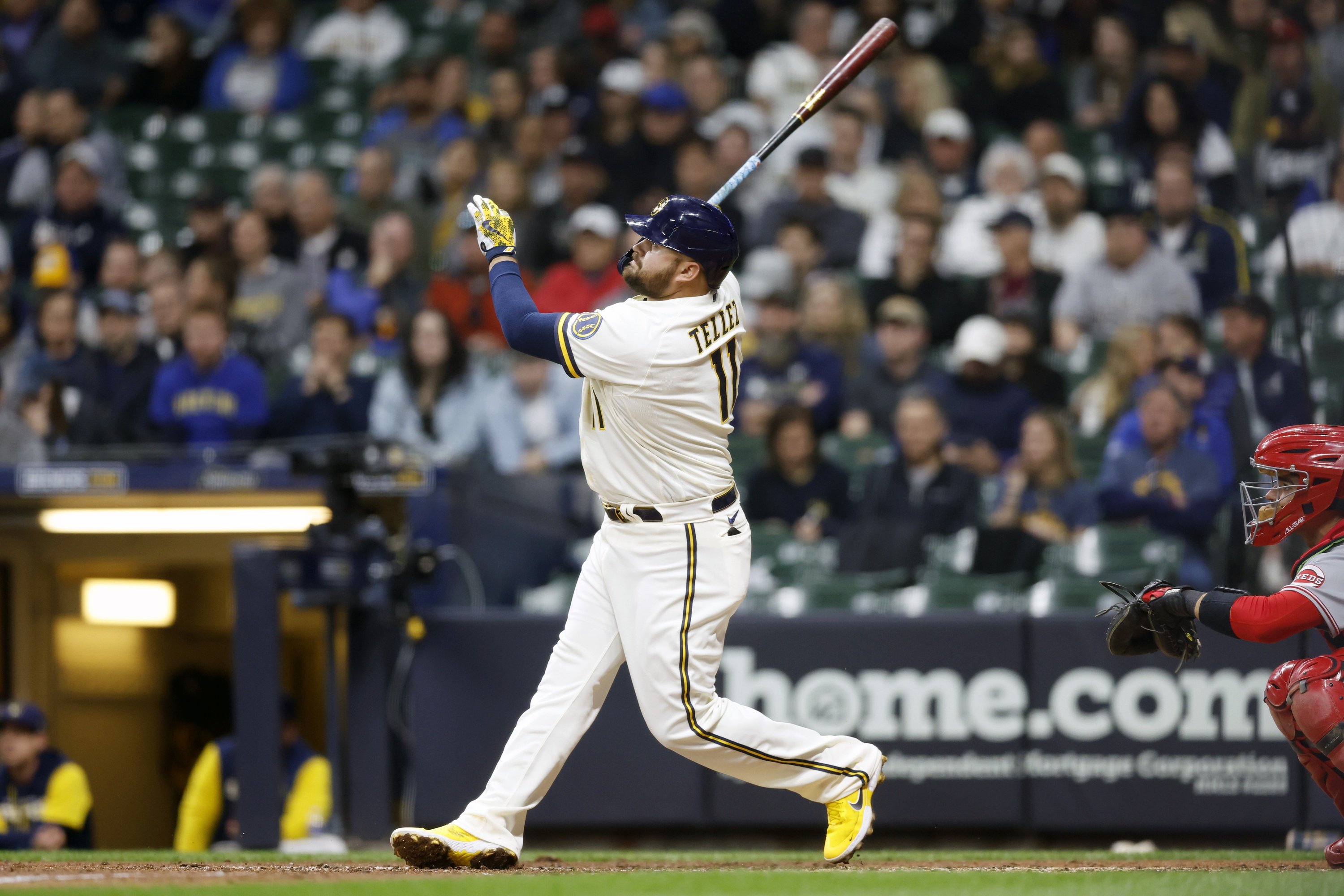 The writing was on the wall for an offensive boom over the past eight to 10 days. After some tough luck the first couple of weeks, production has picked up a ton over the last nine games as the Brewers hit 20 home runs on their six-game homestand. A quick look at the season-long Statcast numbers foreshadowed more success for a few of the Brewers. Rowdy Tellez was one of them, and he deserves the attention he's getting following his franchise-record eight RBI game Wednesday. Thanks to a grand slam, a two-run home run, and a two-run double, Tellez has vaulted to the top of Milwaukee's productivity. But players like Christian Yelich, Hunter Renfroe, and Willy Adames (the reigning NL Player of the Week) were knocking on the door for much of 2022 based on their ability to strike the ball with their bat's barrel. The most prominent example is Tellez, who came into Thursday's game ranked third in MLB in Barrels per Plate Appearance Percentage (Brls/PA%). Consistently hitting the ball on the barrel of the bat is a reliable factor in offensive production. Barrel contact creates hard-hit balls, which lead to more frequent hits, extra bases, and home runs. Tellez's 15.1 Barrels/PA% ranked him behind only Aaron Judge and Mike Trout. Not bad company to keep. Milwaukee has three other hitters in the top-12 of qualified players in baseball, with Yelich and Adames at 10.7% (10th) and Renfroe at 10.6% (12th). To have four out of the league's batters sitting within the best 15 "barrel men" is a recipe for success. How have the consistent barrels translated for this quartet lately? Over the past week or so (not counting Thursday), they have been supplying a ton of power. Renfroe had three homers in his previous seven games, but the other three have been other-worldly, going well beyond just dingers. And once again, the stats above don't include Thursday's numbers when Tellez (2-for-5, two doubles), Yelich (3-for-5, HR, double), and Adames (2-for-4, two HR) continued to go off. Thanks to these three, Milwaukee has scored 72 runs over its past nine games (8.0 per game). As of the end of the Brewers' game on Thursday, they are tied for the most home runs (35) in MLB with the New York Yankees. One key for Yelich, as has been the case for years, is that he continues to scald the baseball. Entering Wednesday, he owned a Hard-Hit Percentage (Hard Hit%) of 55.7%, good for 13th in MLB. So nearly 56% of the time he puts the ball in play, Yelich's exit velocity is 95 MPH or better. Often the difference between hits and outs for Yelich is dependent on him simply getting the ball off the ground. For Adames, he is starting to convince people that his performance with Milwaukee last season was legit. Like many hitters, he got off to a slow start. Now he's back to being that spark for the offense they needed a year ago and are now benefitting from in 2022 as well. After Thursday, he now has seven homers in his last 10 contests. Meanwhile, Tellez's recent outbursts have caught up to his Statcast rankings, which have been on fire for most of the season. Even if you don't know what all these metrics mean, you only have to understand that seeing lots of red is a fantastic sign. A true breakout for Tellez would be a massive boost to the Brewers' offense. Many people believed that if he was given the opportunity to play every day, he could become a masher, especially playing at home at American Family Field. It's still extremely early in the year, but the numbers are mouthwatering right now: .275/.341/.625/.966 with seven HR, 15 runs, and 22 RBI. None of this is to say that Tellez will be an MVP candidate, or any of them will continue to rake throughout May, let alone the entire season. However, consistent barrels are a valuable indicator of likely production. Luck and other factors can get in the way, but hitting the ball with the best part of the bat is every hitter's goal. The more one can accomplish it, the better one's chances of doing damage.
 -
No one can argue that the Milwaukee Brewers pitching staff is one of the best in baseball. Stats like ERA and ERA+ have a particular value, but those don't always tell the whole story. To see some other areas Brewers pitching has excelled in, here are five stats they led MLB in after a month (and a day). Milwaukee's pitching staff ranks in the top-5 in most categories and often sits first or second. Even in the stats mentioned above, the Brewers rank fourth in ERA (3.01) and third in ERA+ (133). When you dig a little deeper, there are five statistics Brewers hurlers hold the top spot in baseball. Strikeouts Per Nine Innings (K/9) Milwaukee's staff owns a 10.37 K/9 through 23 games, the highest rate in MLB. They finished second in baseball last season (10.14), so it's not a big surprise. However, you can't overstate the value of so many strikeouts. The more outs recorded via punchout and the fewer balls put into play help limit the chance of errors and fluky plays that can lead to defeat. Strikeouts are also vital to get out of jams, which the Brewers have done quite a few times already. The beauty is that it's not one or two hurlers leading the charge. Milwaukee has eight pitchers with a K/9 over 10 - three starters, four relievers, and swingman Aaron Ashby. There's no reason to think the K/9 rate will drop dramatically, keeping the Brewers among the elite at getting whiffs. This stat is an excellent indication of the Brewers' nastiness, and this group is likely better than the 2021 staff that had the great Joey Votto giving them high praise. Z-Swing Percentage (Z-Swing%) This statistic focuses on the plate discipline of the opposing hitters; specifically, the percent of times hitters swing at pitches in the strike zone. Brewers' opponents are swinging at only 65.2% of pitches in the strike zone, the lowest number in MLB. Stealing strikes without a swing, thus having no risk of allowing a hit, is a supremely valuable accomplishment. Hitters are always hunting for pitches in the zone to do damage; failing to pull the trigger on 35% of those lessens the opportunity for real trouble. There are a couple of reasons hitters may not take hacks at strikes. For one, if the pitcher has lots of movement on his pitches, batters may hold off, thinking it's going to be a ball or that he can't hit that pitch. The second reason is that said pitches are located exceptionally well. It could be a borderline cutter on the corner of the plate or a perfectly placed slider down and away after an inside heater. Either way, the Brewers have been the best club at getting those called strikes, keeping hitters' bats on their shoulders, putting batters on the defensive, and occasionally sending them back to the dugout. Extra-Base Hit Percentage (XBH%) It's difficult to string three singles together to score a run, making extra-base hits more critical than ever. Pitchers who prevent giving up anything but singles make it even tougher on the offense. Milwaukee hurlers have allowed the lowest percentage of extra-base hits per plate appearance at 5.6%. A leadoff double puts immediate pressure on the pitcher. With runners on first and second, a triple scores a pair while a single plates one run (maybe). A three-run homer is a gamechanger. Extra-base hits are a key to big innings and consistent offense. If the Brewers continue to keep hits to one base 94.4% of the time a batter steps to the dish, they will continue to prevent runs at a high clip. Batting Average With Runners in Scoring Position (RISP) Many people will say that performance with RISP often fluctuates year to year and is often at the will of randomness. Milwaukee's pitchers have allowed the lowest batting average with RISP (.173). In 2022, when hitting is more challenging than ever, limiting base hits with RISP is another way to keep enemies off the board. There will be times a hitter gets lucky with a bloop to the outfield or a squibber through the infield, but the Brewers have shut things down when the drama increases. As noted, leading baseball in K/9 helps their cause in this statistic as well. Limiting damage with men on second or third will become an even greater "skill" to master if home runs continue to drop in MLB. FanGraphs Wins Above Replacement (fWAR) While most don't know the exact formula for fWAR, understand it tries to give an overall value to players above or below replacement level, which is zero. Though it's more of an individual statistic, it can be used to look at a group's value. Brewers' pitchers own the highest fWAR at 4.1 through Sunday's games (led by Corbin Burnes' 0.7). If Milwaukee can continue the same pace, they will be at roughly 28.7 fWAR by the season's end. That would put them 5.1 fWAR ahead of last year's pitchers when they ranked third. One BrewerFanatic.com writer made a bold prediction that the Brewers pitching staff would set the MLB record for fWAR in a season. That mark is 30.4, established by the 2017 Cleveland Indians. So Milwaukee is currently slightly behind that pace, but there is room for improvement. Guys like Brandon Woodruff and Devin Williams have had inconsistent starts to the season, so they are likely to shoot up the rankings themselves. These five statistics don't mean everything either, but they give you another perspective on how Milwaukee has fared on the mound. It's fine to watch ERAs and count the strikeouts - be sure to keep an eye on the many ways the Brewers dominate with their arms. View full article
-
 Milwaukee's pitching staff ranks in the top-5 in most categories and often sits first or second. Even in the stats mentioned above, the Brewers rank fourth in ERA (3.01) and third in ERA+ (133). When you dig a little deeper, there are five statistics Brewers hurlers hold the top spot in baseball. Strikeouts Per Nine Innings (K/9) Milwaukee's staff owns a 10.37 K/9 through 23 games, the highest rate in MLB. They finished second in baseball last season (10.14), so it's not a big surprise. However, you can't overstate the value of so many strikeouts. The more outs recorded via punchout and the fewer balls put into play help limit the chance of errors and fluky plays that can lead to defeat. Strikeouts are also vital to get out of jams, which the Brewers have done quite a few times already. The beauty is that it's not one or two hurlers leading the charge. Milwaukee has eight pitchers with a K/9 over 10 - three starters, four relievers, and swingman Aaron Ashby. There's no reason to think the K/9 rate will drop dramatically, keeping the Brewers among the elite at getting whiffs. This stat is an excellent indication of the Brewers' nastiness, and this group is likely better than the 2021 staff that had the great Joey Votto giving them high praise. Z-Swing Percentage (Z-Swing%) This statistic focuses on the plate discipline of the opposing hitters; specifically, the percent of times hitters swing at pitches in the strike zone. Brewers' opponents are swinging at only 65.2% of pitches in the strike zone, the lowest number in MLB. Stealing strikes without a swing, thus having no risk of allowing a hit, is a supremely valuable accomplishment. Hitters are always hunting for pitches in the zone to do damage; failing to pull the trigger on 35% of those lessens the opportunity for real trouble. There are a couple of reasons hitters may not take hacks at strikes. For one, if the pitcher has lots of movement on his pitches, batters may hold off, thinking it's going to be a ball or that he can't hit that pitch. The second reason is that said pitches are located exceptionally well. It could be a borderline cutter on the corner of the plate or a perfectly placed slider down and away after an inside heater. Either way, the Brewers have been the best club at getting those called strikes, keeping hitters' bats on their shoulders, putting batters on the defensive, and occasionally sending them back to the dugout. Extra-Base Hit Percentage (XBH%) It's difficult to string three singles together to score a run, making extra-base hits more critical than ever. Pitchers who prevent giving up anything but singles make it even tougher on the offense. Milwaukee hurlers have allowed the lowest percentage of extra-base hits per plate appearance at 5.6%. A leadoff double puts immediate pressure on the pitcher. With runners on first and second, a triple scores a pair while a single plates one run (maybe). A three-run homer is a gamechanger. Extra-base hits are a key to big innings and consistent offense. If the Brewers continue to keep hits to one base 94.4% of the time a batter steps to the dish, they will continue to prevent runs at a high clip. Batting Average With Runners in Scoring Position (RISP) Many people will say that performance with RISP often fluctuates year to year and is often at the will of randomness. Milwaukee's pitchers have allowed the lowest batting average with RISP (.173). In 2022, when hitting is more challenging than ever, limiting base hits with RISP is another way to keep enemies off the board. There will be times a hitter gets lucky with a bloop to the outfield or a squibber through the infield, but the Brewers have shut things down when the drama increases. As noted, leading baseball in K/9 helps their cause in this statistic as well. Limiting damage with men on second or third will become an even greater "skill" to master if home runs continue to drop in MLB. FanGraphs Wins Above Replacement (fWAR) While most don't know the exact formula for fWAR, understand it tries to give an overall value to players above or below replacement level, which is zero. Though it's more of an individual statistic, it can be used to look at a group's value. Brewers' pitchers own the highest fWAR at 4.1 through Sunday's games (led by Corbin Burnes' 0.7). If Milwaukee can continue the same pace, they will be at roughly 28.7 fWAR by the season's end. That would put them 5.1 fWAR ahead of last year's pitchers when they ranked third. One BrewerFanatic.com writer made a bold prediction that the Brewers pitching staff would set the MLB record for fWAR in a season. That mark is 30.4, established by the 2017 Cleveland Indians. So Milwaukee is currently slightly behind that pace, but there is room for improvement. Guys like Brandon Woodruff and Devin Williams have had inconsistent starts to the season, so they are likely to shoot up the rankings themselves. These five statistics don't mean everything either, but they give you another perspective on how Milwaukee has fared on the mound. It's fine to watch ERAs and count the strikeouts - be sure to keep an eye on the many ways the Brewers dominate with their arms.
 -
 Of Milwaukee's 22 no-hitters and one-hitters, 27% have happened in the past four seasons. Of course, last September was the most recent occurrence, when Corbin Burnes and Josh Hader combined to throw the Brewers' second no-hitter in club history. Milwaukee's pitching staff also tossed a pair of one-hitters in 2021. Interestingly, Freddy Peralta started both those contests, and Brad Boxberger had a hitless appearance in each game. These games haven't happened much in franchise history, and one can find a variety of similarities and differences in the Brewers' 22 one or no-hitters. RUNS ALLOWED Thirteen of the 22 such games were shutouts, which shouldn't surprise. Wednesday's win was the seventh time Milwaukee allowed just one run, while an opponent scored twice in one contest back in 1977. However, there was one time, in 1996, that the Brewers gave up three runs during a one-hitter. The Kansas City Royals are the only team to score at least three times against Milwaukee in a one-hitter, and it resulted in the Brewers' single loss, a 4-3 defeat on a three-run home run. MOST STRIKEOUTS Brewers' hurlers picked up 12 strikeouts Wednesday, the fourth-highest total in a one or no-hitter. It was the third time they recorded exactly 12 punchouts. Milwaukee also had 13 strikeouts in 1997 and 14 in 2020. The most punchouts came last season during the Burnes-Hader no-hitter when they sat down 16 hitters via the K. On the opposite side of the spectrum, a 1973 one-hitter saw the Brewers strike out zero batters and walk eight but still prevail 2-0. MOST WALKS Speaking of walks, Milwaukee issued seven free passes on Wednesday, the third-most in this type of game. Aaron Ashby was responsible for five of them, with Josh Hader surprisingly walking a pair. It was a 1977 contest that saw Brewers' hurlers walk 11 opponents. Despite so many runners and only four strikeouts, Milwaukee won 4-2 (both opponent runs were unearned). PITCHERS USED As a sign of the times, Milwaukee utilized five pitchers to throw a one-hitter on Wednesday. This was the first time the Brewers needed that many arms to complete the game. Milwaukee used four pitchers on two occasions (1998 and 2020), with a trio of hurlers participating in three of the 22 games. The other 16 one or no-hitters are split down the middle, with the starter going the distance eight times and a lone reliever coming in eight times. MISCELLANEOUS NOTES The Brewers had an error in three of the 22 games (13.6%) Wednesday was the third time Milwaukee held Pittsburgh to one or zero hits, tied with the Baltimore Orioles for the most The longest span between Brewers' one or no-hitters is 11 years (1997-2008) In the franchise's 20 one-hitters: Eight were singles (including Wednesday) Six were doubles Five were home runs One was a triple It's no secret the Brewers have a phenomenal pitching staff from top to bottom. With the offensive struggles across baseball thus far, Milwaukee will likely add at least a couple more one or no-hitters to its franchise history in 2022.
 -
Wednesday, the 3-1 victory over the Pittsburgh Pirates marked just the 22nd time in team history that the Milwaukee Brewers' allowed one or zero hits in a game. Aaron Ashby got the start, but it was a total staff effort, which isn't necessarily the norm. Let's look at some numbers and trends from this rare Brewers' feat. Of Milwaukee's 22 no-hitters and one-hitters, 27% have happened in the past four seasons. Of course, last September was the most recent occurrence, when Corbin Burnes and Josh Hader combined to throw the Brewers' second no-hitter in club history. Milwaukee's pitching staff also tossed a pair of one-hitters in 2021. Interestingly, Freddy Peralta started both those contests, and Brad Boxberger had a hitless appearance in each game. These games haven't happened much in franchise history, and one can find a variety of similarities and differences in the Brewers' 22 one or no-hitters. RUNS ALLOWED Thirteen of the 22 such games were shutouts, which shouldn't surprise. Wednesday's win was the seventh time Milwaukee allowed just one run, while an opponent scored twice in one contest back in 1977. However, there was one time, in 1996, that the Brewers gave up three runs during a one-hitter. The Kansas City Royals are the only team to score at least three times against Milwaukee in a one-hitter, and it resulted in the Brewers' single loss, a 4-3 defeat on a three-run home run. MOST STRIKEOUTS Brewers' hurlers picked up 12 strikeouts Wednesday, the fourth-highest total in a one or no-hitter. It was the third time they recorded exactly 12 punchouts. Milwaukee also had 13 strikeouts in 1997 and 14 in 2020. The most punchouts came last season during the Burnes-Hader no-hitter when they sat down 16 hitters via the K. On the opposite side of the spectrum, a 1973 one-hitter saw the Brewers strike out zero batters and walk eight but still prevail 2-0. MOST WALKS Speaking of walks, Milwaukee issued seven free passes on Wednesday, the third-most in this type of game. Aaron Ashby was responsible for five of them, with Josh Hader surprisingly walking a pair. It was a 1977 contest that saw Brewers' hurlers walk 11 opponents. Despite so many runners and only four strikeouts, Milwaukee won 4-2 (both opponent runs were unearned). PITCHERS USED As a sign of the times, Milwaukee utilized five pitchers to throw a one-hitter on Wednesday. This was the first time the Brewers needed that many arms to complete the game. Milwaukee used four pitchers on two occasions (1998 and 2020), with a trio of hurlers participating in three of the 22 games. The other 16 one or no-hitters are split down the middle, with the starter going the distance eight times and a lone reliever coming in eight times. MISCELLANEOUS NOTES The Brewers had an error in three of the 22 games (13.6%) Wednesday was the third time Milwaukee held Pittsburgh to one or zero hits, tied with the Baltimore Orioles for the most The longest span between Brewers' one or no-hitters is 11 years (1997-2008) In the franchise's 20 one-hitters: Eight were singles (including Wednesday) Six were doubles Five were home runs One was a triple It's no secret the Brewers have a phenomenal pitching staff from top to bottom. With the offensive struggles across baseball thus far, Milwaukee will likely add at least a couple more one or no-hitters to its franchise history in 2022. View full article
-
Article: Hader Among the Best in MLB History
Tim Muma replied to Tim Muma's topic in Brewer Fanatic Front Page News
I always debate how "deep" to go into the more advanced stats since I know it will be a mix of diehard fans who know the modern metrics and casual fans who might not want all the details. That is a fantastic stat that further shows Hader's value. Appreciate the addition here. -
Article: Hader Among the Best in MLB History
Tim Muma replied to Tim Muma's topic in Brewer Fanatic Front Page News
I always debate how "deep" to go into the more advanced stats since I know it will be a mix of diehard fans who know the modern metrics and casual fans who might not want all the details. That is a fantastic stat that further shows Hader's value. Appreciate the addition here. -
Article: Hader Among the Best in MLB History
Tim Muma replied to Tim Muma's topic in Brewer Fanatic Front Page News
I always debate how "deep" to go into the more advanced stats since I know it will be a mix of diehard fans who know the modern metrics and casual fans who might not want all the details. That is a fantastic stat that further shows Hader's value. Appreciate the addition here. -
Article: Hader Among the Best in MLB History
Tim Muma replied to Tim Muma's topic in Brewer Fanatic Front Page News
I always debate how "deep" to go into the more advanced stats since I know it will be a mix of diehard fans who know the modern metrics and casual fans who might not want all the details. That is a fantastic stat that further shows Hader's value. Appreciate the addition here. -
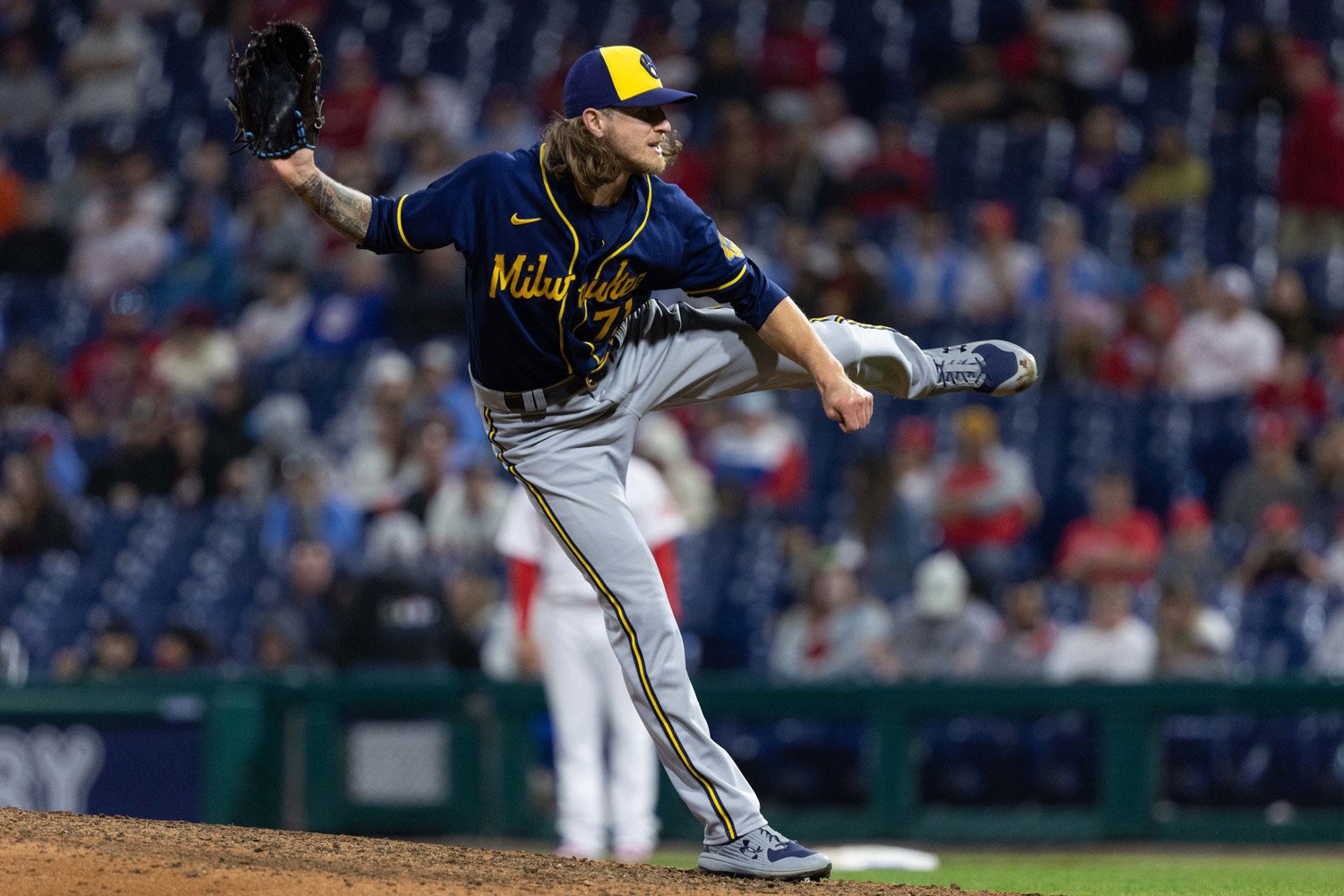 When the 28-year-old southpaw struck out Tucupita Marcano to close out the Pittsburgh Pirates Tuesday night, Josh Hader earned his MLB-best ninth save of 2022. He only needed to retire that lone hitter to secure a 12-8 Brewers win. Still, after a trio of previous relievers failed to stop the bleeding, Hader's career-long reliability was the elixir. It was the 105th save of his career, only the third Brewers pitcher with more than 100, joining John Axford (106) and Dan Plesac (133). Considering the number of close games the 2022 Brewers are likely to play, this could be Hader's finest season as a pro. Entering Wednesday's action, the three-time All-Star had faced 29 batters across 8.1 innings with the following results: 12 strikeouts Nine saves (0 blown saves) Two walks Two hits 0 runs This year, ridiculous fails to express Hader's dominance against opposing hitters with a batting average of 077, a .143 OBP, .115 slugging percentage, and .258 OPS. However, it should be no surprise to see Hader silencing bats thoroughly. Nor should it stun you to hear that he has the third-most saves after a team's first 18 games in MLB history. After Hader picked up his 100th career save earlier this season, manager Craig Counsell heaped enormous praise on his closer: The Brewers' left-handed hurler is less than a month into his sixth year, and it feels as though many fans of the Crew still don't recognize his greatness. Among all MLB pitchers with at least 200 innings pitched through their first six seasons, Hader resides at or near the top in most significant categories: WHIP: 0.844 (1st) H/9: 4.2 (1st) AVG: .139 (1st) K/9: 15.3 (2nd) OPS+: 39 (2nd) OBP: .233 (2nd) OPS: .511 (3rd) ERA+: 196 (4th) SLG: .278 (6th) K/BB: 4.56 (12th) Saves: 105 (33rd) Truly remarkable execution that places him among and above the elite hurlers in the game's annals. He only lacks the saves due to his arguably more valuable role as a "fireman" for a few years with the Brewers instead of pitching in a traditional closer's role. Counsell eschewed the idea of a save in favor of using his best reliever for the highest-leverage situations, whether it be in the 7th inning, for multiple frames, with runners on base, or when the opponents' best hitters were due up. In many ways, Hader became the epitome of modern pitching usage through a better understanding of a reliever's value. That role gradually changed over time as Hader and Counsell acknowledged the mental and physical challenges of the fireman's duties. During Spring Training in 2021, Counsell told reporters that Hader would be used in a traditional closer's role like he was during the 2020 season, and Hader was happy to hear it. "The ups and downs are what's more taxing than anything, especially the amount of pitches," Hader said. "That's something that wears and tears on you over the course of the season." Now the veteran finds comfort in knowing that most days, he will only be pitching the 9th inning to nail down a victory or keep the score tied to set up the offense to win the game. It has been effective, as Hader has converted 56 of 59 save opportunities since 2020 - a 95% success rate - thanks to an exploding fastball and a nasty slider. But how long will he do it in a Brewers' uniform remains in doubt, and that should concern fans. Hader is making $11 million this season and will become a free agent after the 2023 campaign. With his price tag going up again next season and a chance to break the bank on a long-term deal in less than two years, this could be his final six months in Milwaukee (should they trade him in the off-season). For now, fans should cherish whatever remains of Hader's time with the Brewers and fondly look back at the consistency and excellence he brought to the bullpen for more than half a decade.
 -
It is often easy to fail to appreciate Josh Hader. Rarely have Milwaukee Brewers fans had to worry when he comes into a game, and he is enjoying one of the greatest starts to a career in Major League Baseball history. When the 28-year-old southpaw struck out Tucupita Marcano to close out the Pittsburgh Pirates Tuesday night, Josh Hader earned his MLB-best ninth save of 2022. He only needed to retire that lone hitter to secure a 12-8 Brewers win. Still, after a trio of previous relievers failed to stop the bleeding, Hader's career-long reliability was the elixir. It was the 105th save of his career, only the third Brewers pitcher with more than 100, joining John Axford (106) and Dan Plesac (133). Considering the number of close games the 2022 Brewers are likely to play, this could be Hader's finest season as a pro. Entering Wednesday's action, the three-time All-Star had faced 29 batters across 8.1 innings with the following results: 12 strikeouts Nine saves (0 blown saves) Two walks Two hits 0 runs This year, ridiculous fails to express Hader's dominance against opposing hitters with a batting average of 077, a .143 OBP, .115 slugging percentage, and .258 OPS. However, it should be no surprise to see Hader silencing bats thoroughly. Nor should it stun you to hear that he has the third-most saves after a team's first 18 games in MLB history. After Hader picked up his 100th career save earlier this season, manager Craig Counsell heaped enormous praise on his closer: The Brewers' left-handed hurler is less than a month into his sixth year, and it feels as though many fans of the Crew still don't recognize his greatness. Among all MLB pitchers with at least 200 innings pitched through their first six seasons, Hader resides at or near the top in most significant categories: WHIP: 0.844 (1st) H/9: 4.2 (1st) AVG: .139 (1st) K/9: 15.3 (2nd) OPS+: 39 (2nd) OBP: .233 (2nd) OPS: .511 (3rd) ERA+: 196 (4th) SLG: .278 (6th) K/BB: 4.56 (12th) Saves: 105 (33rd) Truly remarkable execution that places him among and above the elite hurlers in the game's annals. He only lacks the saves due to his arguably more valuable role as a "fireman" for a few years with the Brewers instead of pitching in a traditional closer's role. Counsell eschewed the idea of a save in favor of using his best reliever for the highest-leverage situations, whether it be in the 7th inning, for multiple frames, with runners on base, or when the opponents' best hitters were due up. In many ways, Hader became the epitome of modern pitching usage through a better understanding of a reliever's value. That role gradually changed over time as Hader and Counsell acknowledged the mental and physical challenges of the fireman's duties. During Spring Training in 2021, Counsell told reporters that Hader would be used in a traditional closer's role like he was during the 2020 season, and Hader was happy to hear it. "The ups and downs are what's more taxing than anything, especially the amount of pitches," Hader said. "That's something that wears and tears on you over the course of the season." Now the veteran finds comfort in knowing that most days, he will only be pitching the 9th inning to nail down a victory or keep the score tied to set up the offense to win the game. It has been effective, as Hader has converted 56 of 59 save opportunities since 2020 - a 95% success rate - thanks to an exploding fastball and a nasty slider. But how long will he do it in a Brewers' uniform remains in doubt, and that should concern fans. Hader is making $11 million this season and will become a free agent after the 2023 campaign. With his price tag going up again next season and a chance to break the bank on a long-term deal in less than two years, this could be his final six months in Milwaukee (should they trade him in the off-season). For now, fans should cherish whatever remains of Hader's time with the Brewers and fondly look back at the consistency and excellence he brought to the bullpen for more than half a decade. View full article
-
After nine appearances (six starts) to begin the 2021 season, Eric Lauer owned a 5.21 ERA and an opponents' OPS of .821. Some may have given up on Lauer as anything more than "just a guy," but the southpaw was about to turn the corner. Following his six-inning, one-run performance Monday night, there's an argument that Lauer is the third-best starting pitcher in Milwaukee. Since June 27, 2021, covering Lauer's last 17 outings (16 starts), he has gone 7-2 with a 2.37 ERA and 1.01 WHIP over 91 innings. Lauer has developed into a true out-getter for the Brewers, though most fans would have difficulty recognizing him on the street. During that period of 17 appearances, Lauer has the third-lowest opponent batting average (.186), fifth-lowest ERA, and tenth-lowest WHIP in MLB (minimum 50 IP) in MLB. Lauer's success can be partly attributed to increased velocity, leading to an increase in his strikeout percentage (K%). His 23.6 K% during this stretch ranks only 62nd, but it is two percent better than his career mark (21.6%). Throwing straight gas at the top of the strike zone won't hurt his K% in the future. Suppose Lauer continues on his current path (or at least a similar one). In that case, Milwaukee must consider him just a step behind Burnes and Woodruff and far better than your typical fifth starter. His performance would legitimately make him the third-best starter. It also gives Houser and Peralta some good competition to keep fighting to prove their worth in a potentially stacked rotation. Should the Brewers make the playoffs as expected, Lauer could create some difficult decisions for manager Craig Counsell come October. That is a great place to be if you're a Brewers fan. What do you think the ceiling is for Eric Lauer? Leave your COMMENT in the forum below.
-
Cy Young Corbin Burnes and workhorse Brandon Woodruff are the Milwaukee Brewers' pocket aces. Freddy Peralta has the stuff to be the third man in line, and Adrian Houser is often underrated; Eric Lauer has made a case that he should be the final arm in a "Big Three." After nine appearances (six starts) to begin the 2021 season, Eric Lauer owned a 5.21 ERA and an opponents' OPS of .821. Some may have given up on Lauer as anything more than "just a guy," but the southpaw was about to turn the corner. Following his six-inning, one-run performance Monday night, there's an argument that Lauer is the third-best starting pitcher in Milwaukee. Since June 27, 2021, covering Lauer's last 17 outings (16 starts), he has gone 7-2 with a 2.37 ERA and 1.01 WHIP over 91 innings. Lauer has developed into a true out-getter for the Brewers, though most fans would have difficulty recognizing him on the street. During that period of 17 appearances, Lauer has the third-lowest opponent batting average (.186), fifth-lowest ERA, and tenth-lowest WHIP in MLB (minimum 50 IP) in MLB. Lauer's success can be partly attributed to increased velocity, leading to an increase in his strikeout percentage (K%). His 23.6 K% during this stretch ranks only 62nd, but it is two percent better than his career mark (21.6%). Throwing straight gas at the top of the strike zone won't hurt his K% in the future. Suppose Lauer continues on his current path (or at least a similar one). In that case, Milwaukee must consider him just a step behind Burnes and Woodruff and far better than your typical fifth starter. His performance would legitimately make him the third-best starter. It also gives Houser and Peralta some good competition to keep fighting to prove their worth in a potentially stacked rotation. Should the Brewers make the playoffs as expected, Lauer could create some difficult decisions for manager Craig Counsell come October. That is a great place to be if you're a Brewers fan. What do you think the ceiling is for Eric Lauer? Leave your COMMENT in the forum below. View full article
-
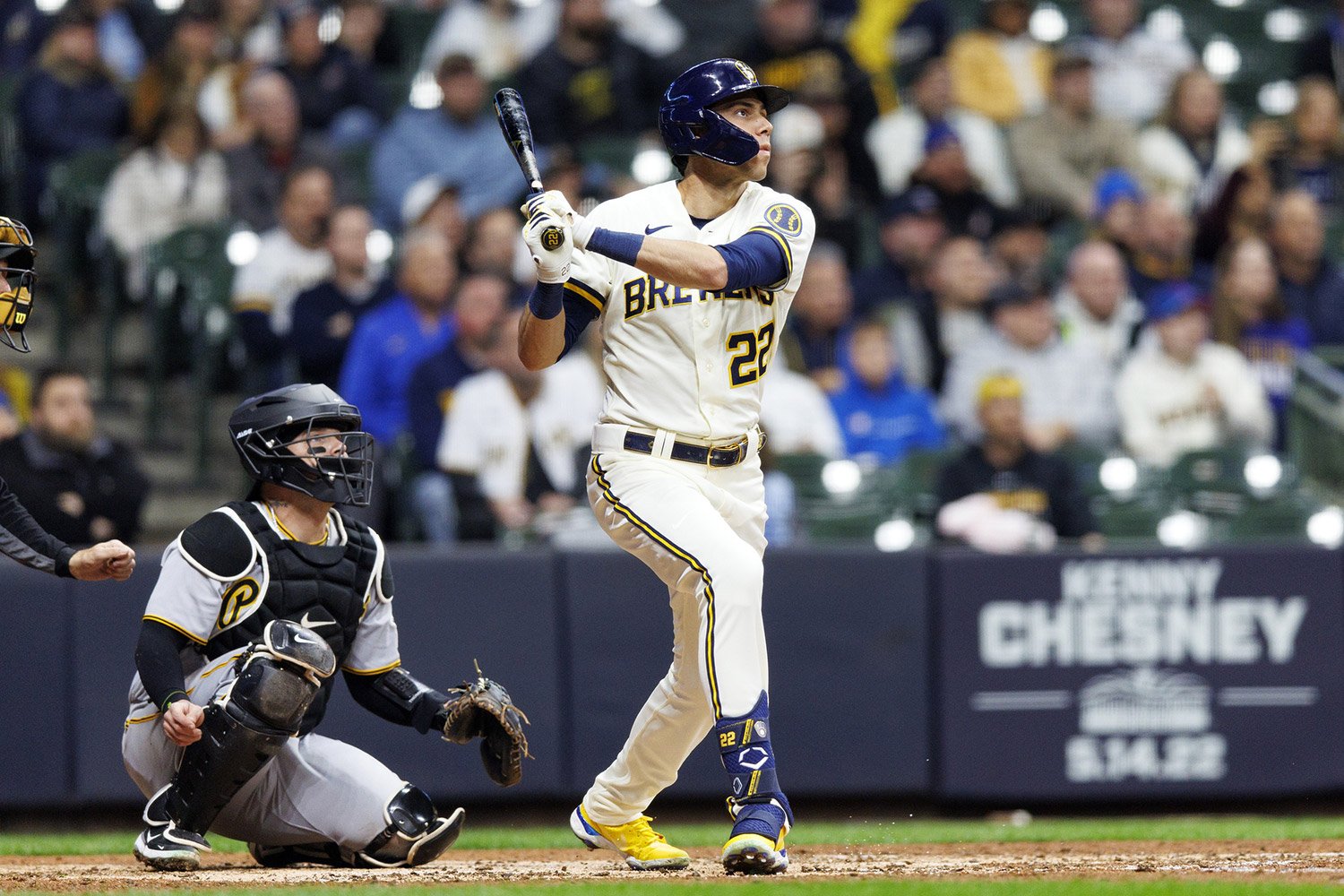 Milwaukee's 6-5 win over the St. Louis Cardinals Sunday improved the Brewers' record to 5-5 to open 2022. That's a perfectly fine record over the first ten contests, but if you listened to many fans or even watched a few games yourself, you might think they had the worst record in MLB. Much of the trepidation about the team stems from various statistical categories – individually and as a team. This is where finding a path to victory through struggle is valuable, as technically, the win is the only "stat" that matters in the end. The offense and pitching staff have their concerns through the first ten games. To look at it positively, despite the seemingly terrible struggles, the Brewers entered Monday with a .500 and lots of room for improvement. Most of the complaints early on have been pointed toward the bats. Not only has the 2022 lineup gotten off to a slow start, but the anxiety includes a carry-over effect from the 2021 campaign. Fans, in particular, clearly remember the listless offense to close out the regular season and knock the Brewers out of the playoffs. Entering play Monday, Milwaukee ranked 27th out of 30 MLB teams in runs scored at 3.10 runs per game. A more significant concern is the four games the Brewers tallied one or zero runs. Similar problems that existed last season have crept up early in 2022, namely the inability to deliver with men in scoring position and hitting against left-handed pitching. Milwaukee's .206 average with runners in scoring position (RISP) placed them 24th through Sunday's games. Few things frustrate fans more than a team putting men on second or third with less than two outs and failing to score. The success with RISP can fluctuate year to year and change as weeks become months, but that doesn't ease the minds of Brewers fans right now. The same goes for facing lefties on the hill. After scuffling against southpaws last season, Milwaukee's front office looked to address the issue with some lefty killers. After those first ten contests, the Brewers are 23rd in OPS versus left-handers (.565) with a slash line of .192/.252/.313. Milwaukee's two shutouts this year came against left-handed starters, with the team starting 1-3 when an opponent starts a southpaw. Once again, despite these two significant issues early on, the Brewers have found their way to a 5-5 record. Imagine what they could start doing across 20, or 40 games should the offense improve marginally in these couple of areas. The turnaround likely happens when some of the individual hitters find their strokes. People are focusing heavily on Christian Yelich at the plate, but many players are cold through 10 team games: It doesn't matter how bad you think any of these hitters are; these will not be the final stat lines. Willy Adames will not hit .189 or only slug .324 in a season. He is a career .260 hitter with a .441 SLG. Lorenzo Cain is at the end of his career, but a .150 OBP and 2 OPS+ (100 is average) aren't happening by the season's end. His worst numbers in those categories (65+ games) have been a .310 OBP and 80 OPS+. Not good, but nothing close to what he's at now. Omar Narvaez has never had an average below .266 in a full season Hunter Renfroe might always have a low OBP, but a .273 SLG and 59 OPS+ would be unimaginable for him. In his four seasons playing 115 or more games, he owns a .490 SLG and 107 OPS+ while averaging 29 HR. Kolten Wong with a sub-.200 AVG, .240 OBP, and 60 OPS+ will not last. His career marks are .261 AVG, .332 OBP, and 96 OPS+. Yelich's OBP is robust, but his .200 AVG and .300 SLG are well below his career-worst marks in 2021. He hit .248 last year with a .373 SLG (and he's already hitting more balls better this year). Consider all of those players underperforming in a big way through Sunday, and Milwaukee still finished with a .500 record over ten games. Only Rowdy Tellez has produced at an above-expected level, so it's not like other bats in the lineup are carrying the quiet ones. And sure, someone like Cain may not reach respectable output levels, but to think each player above will continue hitting this way into June and July – that's a giant leap of (negative) faith. So yes, as planned, the pitching is carrying the club on most nights; however, the hurlers have not been infallible. One could take that as a negative (they won't be as good as last season) or another positive, in that there is still room for improvement. The most prominent examples are Freddy Peralta and Devin Williams. Peralta owns an 11.57 ERA through two starts with a 2.29 WHIP and 12.9 H/9. Again, minimal sample size, so it could mean nothing. But Milwaukee started 5-5 despite his rough outings. Meanwhile, the Brewers somehow survived a pair of implosions by Williams and won both games he struggled in. Williams has allowed six walks, five hits, and four earned runs in his three innings (12.00 ERA, 2.25 WHIP). His performance certainly raises red flags for the usual 8th-inning reliever, but the club has still found ways to win, and he's too talented to pitch THAT poorly throughout the season. Does this make you feel any better? Especially offensively, there is a ton of room between their current situation and the ceiling. They don't even need to reach the ceiling to rack up more runs, just a midway point. Everything gets blown up early in the season, and it is easy to see the problems and think of worst-case scenarios. The facts remain that these will NOT be the final statistics, and with all the ugly numbers, the Brewers started 5-5 with 152 games to play. They are still the best team in the NL Central and a World Series contender.
- 4 comments
-
- 1
-

-
- willy adames
- lorenzo cain
- (and 3 more)
-
Baseball fans and experts look to correlate "the numbers" to team success more than in any other sport. The statistical analysis over an entire season will often net expected results. However, those wins and losses don't always fall in line over shorter periods. This season, the Milwaukee Brewers' first ten games have the feel of something not adding up – and it could be a good thing in the long run. Milwaukee's 6-5 win over the St. Louis Cardinals Sunday improved the Brewers' record to 5-5 to open 2022. That's a perfectly fine record over the first ten contests, but if you listened to many fans or even watched a few games yourself, you might think they had the worst record in MLB. Much of the trepidation about the team stems from various statistical categories – individually and as a team. This is where finding a path to victory through struggle is valuable, as technically, the win is the only "stat" that matters in the end. The offense and pitching staff have their concerns through the first ten games. To look at it positively, despite the seemingly terrible struggles, the Brewers entered Monday with a .500 and lots of room for improvement. Most of the complaints early on have been pointed toward the bats. Not only has the 2022 lineup gotten off to a slow start, but the anxiety includes a carry-over effect from the 2021 campaign. Fans, in particular, clearly remember the listless offense to close out the regular season and knock the Brewers out of the playoffs. Entering play Monday, Milwaukee ranked 27th out of 30 MLB teams in runs scored at 3.10 runs per game. A more significant concern is the four games the Brewers tallied one or zero runs. Similar problems that existed last season have crept up early in 2022, namely the inability to deliver with men in scoring position and hitting against left-handed pitching. Milwaukee's .206 average with runners in scoring position (RISP) placed them 24th through Sunday's games. Few things frustrate fans more than a team putting men on second or third with less than two outs and failing to score. The success with RISP can fluctuate year to year and change as weeks become months, but that doesn't ease the minds of Brewers fans right now. The same goes for facing lefties on the hill. After scuffling against southpaws last season, Milwaukee's front office looked to address the issue with some lefty killers. After those first ten contests, the Brewers are 23rd in OPS versus left-handers (.565) with a slash line of .192/.252/.313. Milwaukee's two shutouts this year came against left-handed starters, with the team starting 1-3 when an opponent starts a southpaw. Once again, despite these two significant issues early on, the Brewers have found their way to a 5-5 record. Imagine what they could start doing across 20, or 40 games should the offense improve marginally in these couple of areas. The turnaround likely happens when some of the individual hitters find their strokes. People are focusing heavily on Christian Yelich at the plate, but many players are cold through 10 team games: It doesn't matter how bad you think any of these hitters are; these will not be the final stat lines. Willy Adames will not hit .189 or only slug .324 in a season. He is a career .260 hitter with a .441 SLG. Lorenzo Cain is at the end of his career, but a .150 OBP and 2 OPS+ (100 is average) aren't happening by the season's end. His worst numbers in those categories (65+ games) have been a .310 OBP and 80 OPS+. Not good, but nothing close to what he's at now. Omar Narvaez has never had an average below .266 in a full season Hunter Renfroe might always have a low OBP, but a .273 SLG and 59 OPS+ would be unimaginable for him. In his four seasons playing 115 or more games, he owns a .490 SLG and 107 OPS+ while averaging 29 HR. Kolten Wong with a sub-.200 AVG, .240 OBP, and 60 OPS+ will not last. His career marks are .261 AVG, .332 OBP, and 96 OPS+. Yelich's OBP is robust, but his .200 AVG and .300 SLG are well below his career-worst marks in 2021. He hit .248 last year with a .373 SLG (and he's already hitting more balls better this year). Consider all of those players underperforming in a big way through Sunday, and Milwaukee still finished with a .500 record over ten games. Only Rowdy Tellez has produced at an above-expected level, so it's not like other bats in the lineup are carrying the quiet ones. And sure, someone like Cain may not reach respectable output levels, but to think each player above will continue hitting this way into June and July – that's a giant leap of (negative) faith. So yes, as planned, the pitching is carrying the club on most nights; however, the hurlers have not been infallible. One could take that as a negative (they won't be as good as last season) or another positive, in that there is still room for improvement. The most prominent examples are Freddy Peralta and Devin Williams. Peralta owns an 11.57 ERA through two starts with a 2.29 WHIP and 12.9 H/9. Again, minimal sample size, so it could mean nothing. But Milwaukee started 5-5 despite his rough outings. Meanwhile, the Brewers somehow survived a pair of implosions by Williams and won both games he struggled in. Williams has allowed six walks, five hits, and four earned runs in his three innings (12.00 ERA, 2.25 WHIP). His performance certainly raises red flags for the usual 8th-inning reliever, but the club has still found ways to win, and he's too talented to pitch THAT poorly throughout the season. Does this make you feel any better? Especially offensively, there is a ton of room between their current situation and the ceiling. They don't even need to reach the ceiling to rack up more runs, just a midway point. Everything gets blown up early in the season, and it is easy to see the problems and think of worst-case scenarios. The facts remain that these will NOT be the final statistics, and with all the ugly numbers, the Brewers started 5-5 with 152 games to play. They are still the best team in the NL Central and a World Series contender. View full article
-
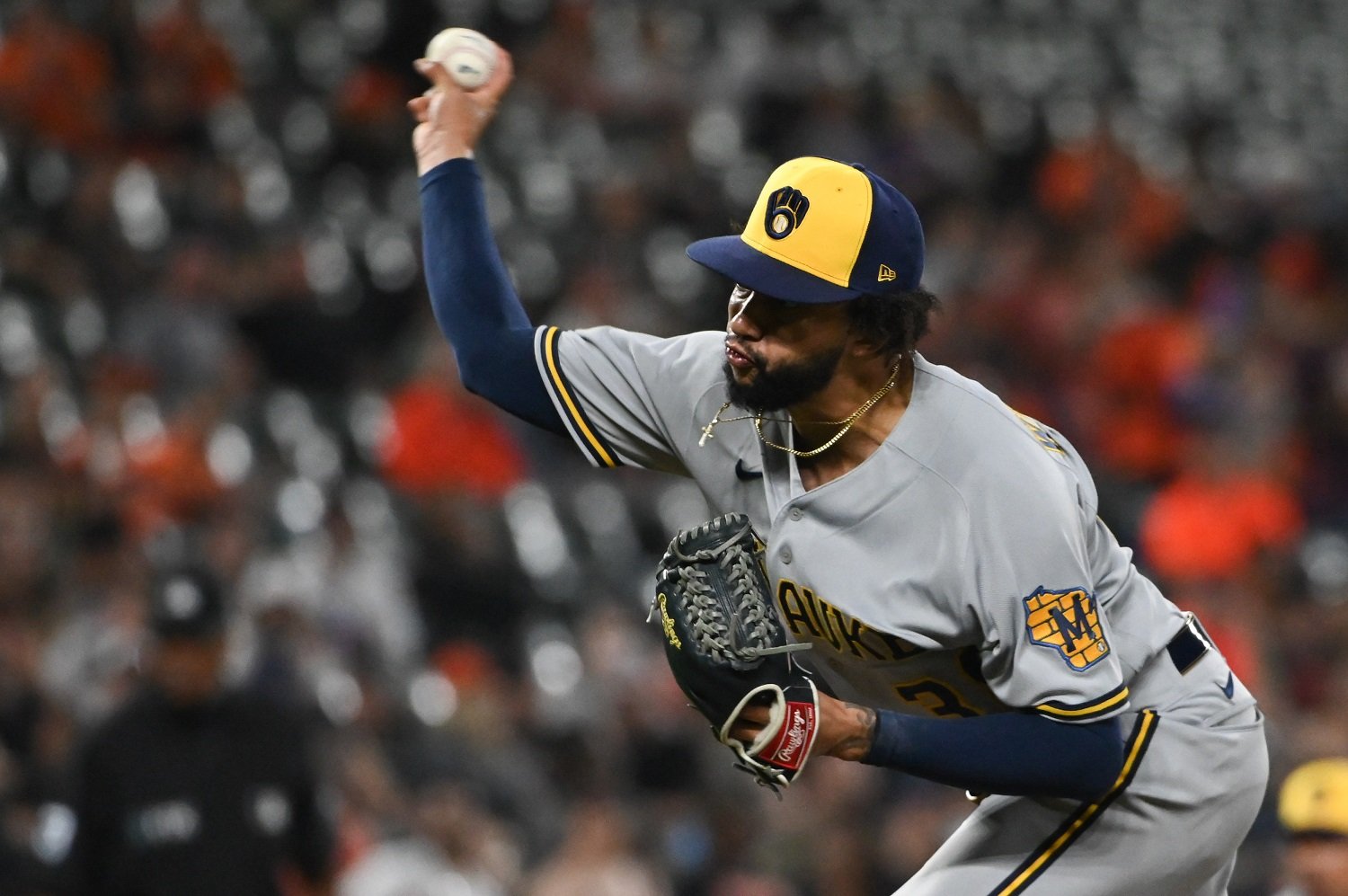 Through the Brewers’ first five contests of 2022, their pitching staff sat dead last in the National League in walk percentage (BB%) at 15%. This means Milwaukee pitchers walked opponents in 15% of their plate appearances. Keeping in mind the small sample size, it’s still quite the jump from the 9% and number six ranking in BB% last season. It was most evident among the starting rotation, where each hurler surrendered multiple walks, including three from Brandon Woodruff and Adrian Houser and four bases on balls by Freddy Peralta. Many may wonder, is this a trend to be concerned about going forward? To some extent, it depends on other considerations, such as how good has the staff’s “stuff” been, and are hitters “forcing” these walks? There isn’t a perfect way to answer these questions, especially over a five-game sample; however, a few advanced stats can help tell the story. One quick statistic to look at is strikeout percentage (K%), the complement to BB%. Milwaukee’s hurlers owned a 25.4 K% to open this season, only 1.6% below last year’s rate. That’s a quick, positive sign for the staff. FanGraphs’ “discipline numbers” are also valuable for analyzing how hitters perform against pitchers based on their swing decisions and contact. Z-Swing% represents the percentage of swings batters take at pitches inside the strike zone, while O-Swing% shows the swing percentage outside the zone. Thus, Z-Contact% and O-Contact% show the percentage of the hitters’ contact in and out of the strike zone. There are two other important categories: Contact% (contact on pitches divided by swings) and Swing% (overall swings divided by total pitches seen). Take a look at the comparison of these stats between 2021 and 2022 for Brewers’ pitchers. The numbers show that opposing hitters are swinging far less against the Brewers in 2022. The Z-Swing% is almost five percent lower, and their O-Swing% has a 3.4% drop. Overall, opponents have swung the bat 5.5% less often versus Brewers’ hurlers this year. If you watched the first handful of games, you should have noticed two things contributing to this: Milwaukee pitchers were missing the zone by wide margins, and many of the pitches had crazy movement. These factors look like the main reason for the lower swing metrics this season. When pitches are missing the strike zone by a considerable amount, hitters will become more patient and force pitchers to consistently find the plate (or at least be close). Also, with pitchers falling behind in the count regularly, hitters are often more selective when they swing. For example, a batter may take a 2-0 pitch on the outside corner for a strike, knowing he still has the count in his favor. Had the count been 1-1, he might take a hack, thinking he may not get another good pitch to hit if he falls behind 1-2. Another factor to consider is the terrific movement many pitchers have been getting on their throws. Typically, you could argue pitches that cut, tail, and drop at a higher degree will create more swings. However, movement can have the opposite effect: freezing hitters who get surprised by the break. There can also be more tentative approaches to seeing such movement with early-season at-bats. And with hitters being ahead in the count, they are more likely to check their swing at the sight of any initial movement away from their bat path. It can all create a recipe for fewer swings at the start of a new campaign. But two stats from the chart above show why Brewers fans can be confident the five-game walk issue is likely a blip and not an alarming trend due to poor pitcher performance or an unexpected dip in their abilities. The Z-Contact% (contact within the strike zone) and overall Contact% are nearly identical to last season. In 2021, Brewers’ pitchers had the best (lowest) Z-Contact% in the NL at 82.6%. This year it’s at 82.4%. The Contact% last season was 73.6%, also the top mark in the league. Through five games in 2022, it was 73.5%. Despite the walks, opponent batters are having a world of trouble making contact with Milwaukee’s pitches, and it’s most significant that the pitches within the strike zone remain tough to hit. What does it all mean? For one, the Brewers’ struggles with command are more because of a shortened Spring Training and the playing conditions in Chicago. The three contests at Wrigley Field had low temperatures and plenty of wind. The cold makes the ball slick and harder to get the proper grip and controlled release when throwing. Meanwhile, wind affects the ball’s flight between the mound and home, challenging pitchers to calculate their pitch movement with the wind’s plans. The weather in Baltimore was much better, but the short spring was still a factor. Because pitchers only had a few outings in Arizona this year, they may not have a good “feel” for all their pitches yet. It’s also challenging to perform at a high level when you aren't adequately prepared. A pitcher’s mechanics and the stress put on their arm and body are significant concerns as they get reacclimated into their routine. Getting fewer innings and opportunities to adjust before the real games begin creates uncertainty and loss of effectiveness. Despite all that, when you focus on the opposition’s struggle to put the bat on the ball, that should ease the mind. Milwaukee is poised to again have one of the best pitching staffs in baseball, and a big part of that is their ability to create whiffs. That indicates they have terrific stuff that is hard to handle, even when they can’t command it perfectly and fall behind in counts. As Cy Young winner Corbin Burnes already showed on Wednesday night vs. the Orioles (7 IP, 0 R, 3 H, 8 K, 1 BB), as the pitchers continue to get a feel for everything once again, the walks and ERAs will drop quickly.
- 4 comments
-
- 1
-
-
- brad woodruff
- devin williams
- (and 3 more)
-
Milwaukee Brewers’ pitchers have gotten off to a rough beginning in 2022. With the caveat of it being just five games, heading into Wednesday’s action, Milwaukee’s staff ranked 10th in the NL in ERA (4.80). Above all, the free pass has been the most significant contributor to the staff’s slow start. Through the Brewers’ first five contests of 2022, their pitching staff sat dead last in the National League in walk percentage (BB%) at 15%. This means Milwaukee pitchers walked opponents in 15% of their plate appearances. Keeping in mind the small sample size, it’s still quite the jump from the 9% and number six ranking in BB% last season. It was most evident among the starting rotation, where each hurler surrendered multiple walks, including three from Brandon Woodruff and Adrian Houser and four bases on balls by Freddy Peralta. Many may wonder, is this a trend to be concerned about going forward? To some extent, it depends on other considerations, such as how good has the staff’s “stuff” been, and are hitters “forcing” these walks? There isn’t a perfect way to answer these questions, especially over a five-game sample; however, a few advanced stats can help tell the story. One quick statistic to look at is strikeout percentage (K%), the complement to BB%. Milwaukee’s hurlers owned a 25.4 K% to open this season, only 1.6% below last year’s rate. That’s a quick, positive sign for the staff. FanGraphs’ “discipline numbers” are also valuable for analyzing how hitters perform against pitchers based on their swing decisions and contact. Z-Swing% represents the percentage of swings batters take at pitches inside the strike zone, while O-Swing% shows the swing percentage outside the zone. Thus, Z-Contact% and O-Contact% show the percentage of the hitters’ contact in and out of the strike zone. There are two other important categories: Contact% (contact on pitches divided by swings) and Swing% (overall swings divided by total pitches seen). Take a look at the comparison of these stats between 2021 and 2022 for Brewers’ pitchers. The numbers show that opposing hitters are swinging far less against the Brewers in 2022. The Z-Swing% is almost five percent lower, and their O-Swing% has a 3.4% drop. Overall, opponents have swung the bat 5.5% less often versus Brewers’ hurlers this year. If you watched the first handful of games, you should have noticed two things contributing to this: Milwaukee pitchers were missing the zone by wide margins, and many of the pitches had crazy movement. These factors look like the main reason for the lower swing metrics this season. When pitches are missing the strike zone by a considerable amount, hitters will become more patient and force pitchers to consistently find the plate (or at least be close). Also, with pitchers falling behind in the count regularly, hitters are often more selective when they swing. For example, a batter may take a 2-0 pitch on the outside corner for a strike, knowing he still has the count in his favor. Had the count been 1-1, he might take a hack, thinking he may not get another good pitch to hit if he falls behind 1-2. Another factor to consider is the terrific movement many pitchers have been getting on their throws. Typically, you could argue pitches that cut, tail, and drop at a higher degree will create more swings. However, movement can have the opposite effect: freezing hitters who get surprised by the break. There can also be more tentative approaches to seeing such movement with early-season at-bats. And with hitters being ahead in the count, they are more likely to check their swing at the sight of any initial movement away from their bat path. It can all create a recipe for fewer swings at the start of a new campaign. But two stats from the chart above show why Brewers fans can be confident the five-game walk issue is likely a blip and not an alarming trend due to poor pitcher performance or an unexpected dip in their abilities. The Z-Contact% (contact within the strike zone) and overall Contact% are nearly identical to last season. In 2021, Brewers’ pitchers had the best (lowest) Z-Contact% in the NL at 82.6%. This year it’s at 82.4%. The Contact% last season was 73.6%, also the top mark in the league. Through five games in 2022, it was 73.5%. Despite the walks, opponent batters are having a world of trouble making contact with Milwaukee’s pitches, and it’s most significant that the pitches within the strike zone remain tough to hit. What does it all mean? For one, the Brewers’ struggles with command are more because of a shortened Spring Training and the playing conditions in Chicago. The three contests at Wrigley Field had low temperatures and plenty of wind. The cold makes the ball slick and harder to get the proper grip and controlled release when throwing. Meanwhile, wind affects the ball’s flight between the mound and home, challenging pitchers to calculate their pitch movement with the wind’s plans. The weather in Baltimore was much better, but the short spring was still a factor. Because pitchers only had a few outings in Arizona this year, they may not have a good “feel” for all their pitches yet. It’s also challenging to perform at a high level when you aren't adequately prepared. A pitcher’s mechanics and the stress put on their arm and body are significant concerns as they get reacclimated into their routine. Getting fewer innings and opportunities to adjust before the real games begin creates uncertainty and loss of effectiveness. Despite all that, when you focus on the opposition’s struggle to put the bat on the ball, that should ease the mind. Milwaukee is poised to again have one of the best pitching staffs in baseball, and a big part of that is their ability to create whiffs. That indicates they have terrific stuff that is hard to handle, even when they can’t command it perfectly and fall behind in counts. As Cy Young winner Corbin Burnes already showed on Wednesday night vs. the Orioles (7 IP, 0 R, 3 H, 8 K, 1 BB), as the pitchers continue to get a feel for everything once again, the walks and ERAs will drop quickly. View full article
-
Yeah, look...anytime a guy takes one to the head area, I understand the anger. It's frightening. My greatest "skill" as an amateur hitter was willingly taking HBPs. Both in high school & even playing baseball as an adult. I've never been hit with 90+, but certainly mid to upper 80s. Of the many, many times I've been hit, I think maybe 3 were intentional. The only one I was mad about was when the guy threw TWO curve balls away, then blasted me in with a low--mid 80s fastball. Tucked my elbow in to protect my ribs. My whole arm went numb, but thankfully no injury.
-
Yeah, look...anytime a guy takes one to the head area, I understand the anger. It's frightening. My greatest "skill" as an amateur hitter was willingly taking HBPs. Both in high school & even playing baseball as an adult. I've never been hit with 90+, but certainly mid to upper 80s. Of the many, many times I've been hit, I think maybe 3 were intentional. The only one I was mad about was when the guy threw TWO curve balls away, then blasted me in with a low--mid 80s fastball. Tucked my elbow in to protect my ribs. My whole arm went numb, but thankfully no injury.
-
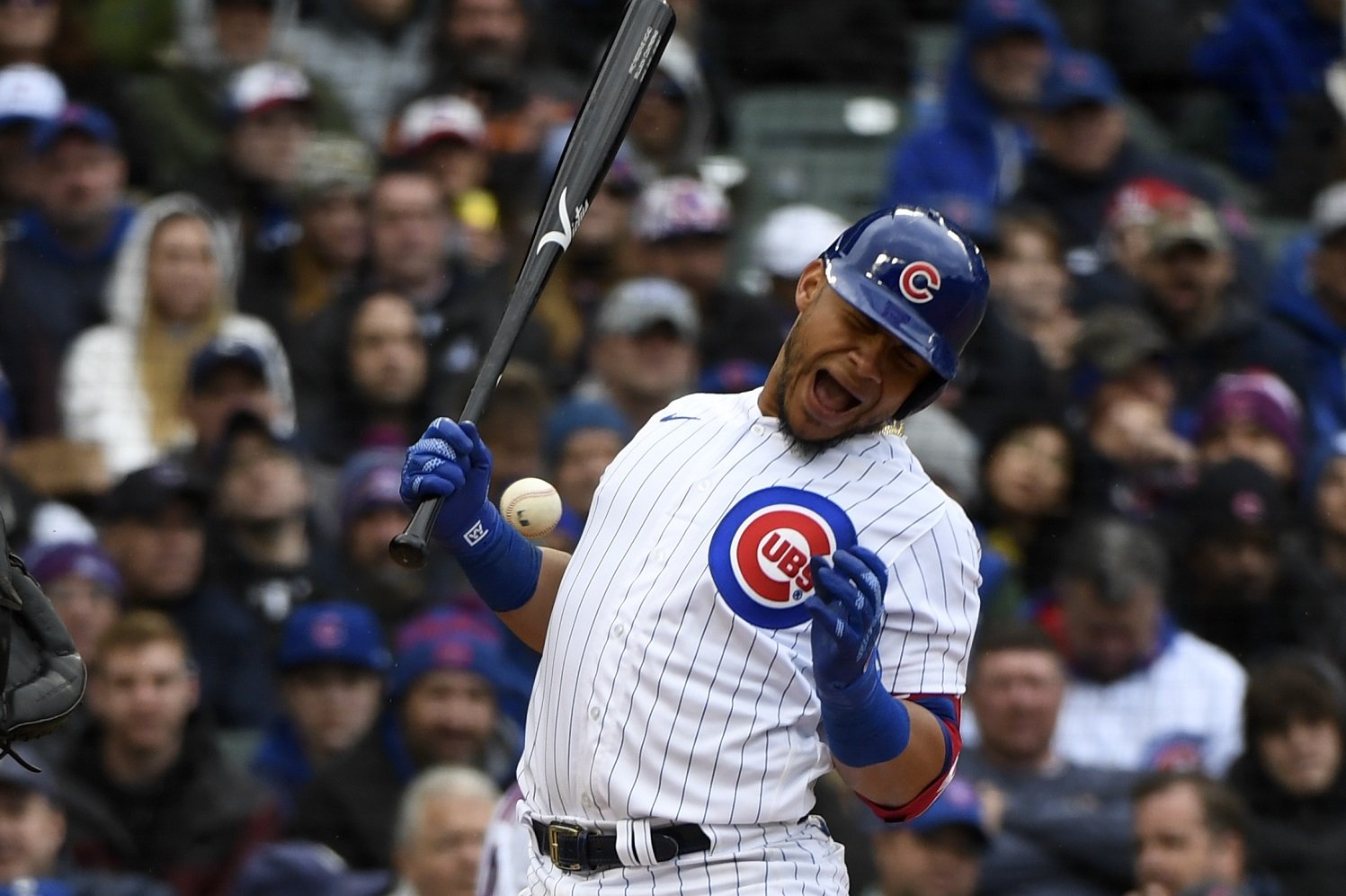 There is nothing inherently wrong with a baseball player willing to take pitches off his body to earn a free pass to first. However, when that is a regular strategy he employs, he forfeits the opportunity to complain except for rare circumstances. As has happened in previous seasons, Brewers’ pitchers plunked Contreras multiple times already this year. That was enough for Contreras and the Cubs. In the 8th inning of a 9-0 game, Keegan Thompson threw two pitches targeted for Andrew McCutchen, with the second hitting him flush. It was clearly an intentional message that many with the Brewers believed came from Contreras himself. Watch how Contreras puts his mask back down when things get heated – like he was expecting to get punched. Starting off a hitter with an outside pitch, especially anything that has movement away from the batter, is dangerous and cowardly when you plan to throw at the hitter. That initial delivery can get the batter leaning more toward the plate anticipating more pitches outside. If that pitcher then fires a fastball inside, it’s tougher for the hitter to protect himself, particularly if it’s near his head. These types of incidents go away quickly when players police themselves. The issue drags on when guys do things the wrong way and create more animosity in a back-and-forth battle. Milwaukee and Chicago will see each other 16 more times in 2022; this isn’t the last you’ll hear about possible shenanigans. The odds are excellent that Contreras will be hit at least one more time this season; how the Cubs react will indicate what they have learned.


