Tim Muma
-
Posts
436 -
Joined
-
Last visited
-
Days Won
1
Content Type
Profiles
Forums
Blogs
Events
News
2026 Milwaukee Brewers Top Prospects Ranking
Milwaukee Brewers Videos
2022 Milwaukee Brewers Draft Picks
Milwaukee Brewers Free Agent & Trade Rumors, Notes, & Tidbits
Guides & Resources
2023 Milwaukee Brewers Draft Picks
2024 Milwaukee Brewers Draft Picks
The Milwaukee Brewers Players Project
2025 Milwaukee Brewers Draft Pick Tracker
2026 Milwaukee Brewers Draft Tracker: Picks & Bonuses
Store
Downloads
Gallery
Everything posted by Tim Muma
-
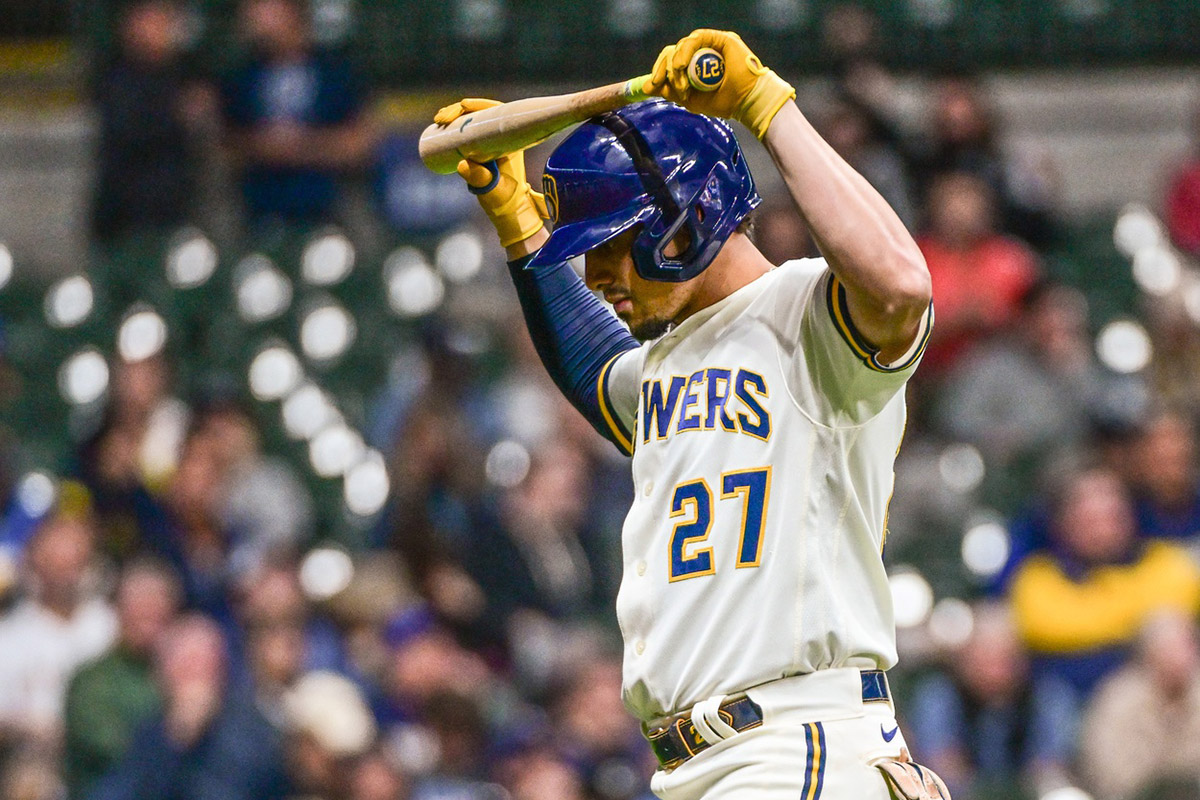 Sometimes sound judgments are made, but things don't work out. It happens on a small scale game during games (such as when to bring in a certain reliever) and on a larger scale with personnel decisions. Other times, people make foolish choices. It appears both types consistently burned the 2022 Brewers throughout the season. Regardless, MLB is a results-oriented business, so no moral victories exist. Three of the calls and outcomes that didn't go the Brewers' way had the greatest impact on a disappointing season that ended short of the playoffs. ANDREW MCCUTCHEN FREE AGENT SIGNING It has often been said that a one-year contract carries no risk. That isn't entirely true, especially when a team like the Brewers apparently have a limited budget. Signing Andrew McCutchen to a one-year, $8.5 million didn't break the bank, but it did burn Milwaukee. As the one major free agent move, the Brewers made, relying on a 35-year-old to repeat his 2021 performance was fool's gold. Therein laid the risk, counting on an aging veteran with no complementary move to cover a potential slide - which is what happened. McCutchen murdered lefties in 2021, then fell flat on his face against southpaws with the Brewers. You can see why David Stearns was intrigued, but it turned out to be a harmful move. It's almost hard to believe how far McCutchen's numbers dipped against left-handers. Was it bad luck? Was it predictable that Cutch wouldn't come close to matching his huge season versus lefties at age 35? Perhaps the problem was manager Craig Counsell using McCutchen too often against righties. While McCutchen's numbers improved slightly versus righties, Counsell gave him 35 more plate appearances (and counting) this year after two sub-.700 OPS in the past couple of years. That may have worn him down unnecessarily and hurt his performance against lefties. Technically, the Brewers' offense was statistically better this season, but they were frustratingly inconsistent and benefited from a DH in 2022. With McCutchen in the DH role for more than 60% of his plate appearances, he wasn't close to good enough. Maybe it was telling no other MLB clubs went after him - at least at that price. Perhaps if the Brewers paid McCutchen only $5 million, they would have had some leftover funds for another player to impact the team positively. PLANNING TO RELY ON ETHAN SMALL Now the 12th-rated prospect in Milwaukee's system, the Brewers thought Small was ready to contribute to the big league club in 2022. Counsell expressed in Spring Training that the 25-year-old hurler earned time with the Brewers. Small made exactly two starts with Milwaukee: 6.1 IP, five earned runs (7.11 ERA), seven strikeouts, eight walks, and a 2.526 WHIP. In a season that saw 18 fewer starts from Brandon Woodruff, Freddy Peralta, and Adrian Houser due to injuries, Milwaukee needed another quality arm to step up. Small was supposed to be that guy. One problem was that Stearns and company didn't plan a fail-safe. In past seasons, they signed guys like Brett Anderson, who could at least offer a reliable amount of average outings to keep the team in games. Instead, unknown Jason Alexander took the hill for 11 starts. He owned a 4.82 ERA in those starts but had a fair amount of blowup games that not only put the Brewers behind but caused them to burn through bullpen arms. It was a double whammy. On the one hand, the Brewers misevaluated Small, whose lack of command grew worse in 2022 (5.1 walks per nine innings). On the other hand, Milwaukee had no other young pitchers or veteran hurlers ready to take the ball when injuries predictably struck. That significantly impacted Milwaukee's decline in run prevention and the tax on the bullpen that imploded in the second half. TRADE DEADLINE DEALS AND NO DEALS I'm not here to blame all things on the trading of Josh Hader. It certainly took an emotional and mental toll on the club for a while after the move, but it was not the only problem with the Brewers' trade deadline. Milwaukee also struggled before August 2, but they had won six of eight games leading up to the trade to hold a three-game lead in the NL Central. The events at the trade deadline move them backward instead. Hader was a hot mess before the shocking deal with the San Diego Padres and struggled initially in his new threads, but lately, his luck has turned. In his last 10 outings (9.1 innings), Hader has 13 strikeouts and one walk while giving up zero earned runs on four hits. Whatever he was going through, he has figured it out just in time to push San Diego to the playoffs and give them confidence in his arm in October. Meanwhile, Stearns' three acquisitions to "replace" Hader went in the wrong direction. Trevor Rosenthal got hurt (after recovering from another injury) and never pitched for the Brewers. Matt Bush came from the Texas Rangers with a 2.95 ERA and 1.2 HR/9, only to post a 4.30 ERA and 2.3 HR/9 in Milwaukee. The third piece, who came over in the Hader deal, was lefty Taylor Rogers. He had some issues in San Diego, but things got worse with the Brewers, producing a 5.73 ERA and 2.5 HR/9 (0.2 HR/9 with the Padres). Bush and Rogers were at the heart of Milwaukee's bullpen issues and homer-happy problems that gutted the Crew on far too many occasions during the season's final two months. As for the offense at the deadline, not one move was made. Despite an offense with positions needing an upgrade and a lineup that continued to struggle against left-handed pitching, Stearns failed to acquire even one bat. Yes, it takes two teams to tango, and the price for certain players may have been too high in Stearns' mind. That doesn't excuse failing to improve the lineup or depth, especially with an offense that relies on matchups. Plus, trading for a bat may have counteracted the Hader trade and showed the remaining players, "we're still going for it this season." We'll never know what another option in the lineup could have meant for the club, physically and mentally. And considering the decline in the starting rotation's overall performance - as well as the injuries that hampered them - it was negligent to fail to acquire some type of help there, either. There are always veteran pitchers with expiring contracts that could be had, including someone like the Brewers' favorite nemesis, Jose Quintana, who went to the St. Louis Cardinals instead. It was an overall failure to replace the club's lost production from 2021. It took a total team effort to miss out on one of six playoff spots in the NL. However, these three decisions had the most immense impact on the first non-playoff season since 2017 for the Milwaukee Brewers.
 -
 Countless decisions go into a Major League offseason, and even more occur once Opening Day commences. For the Milwaukee Brewers, three costly decisions played the most significant role in their failure to reach the playoffs in 2022. Sometimes sound judgments are made, but things don't work out. It happens on a small scale game during games (such as when to bring in a certain reliever) and on a larger scale with personnel decisions. Other times, people make foolish choices. It appears both types consistently burned the 2022 Brewers throughout the season. Regardless, MLB is a results-oriented business, so no moral victories exist. Three of the calls and outcomes that didn't go the Brewers' way had the greatest impact on a disappointing season that ended short of the playoffs. ANDREW MCCUTCHEN FREE AGENT SIGNING It has often been said that a one-year contract carries no risk. That isn't entirely true, especially when a team like the Brewers apparently have a limited budget. Signing Andrew McCutchen to a one-year, $8.5 million didn't break the bank, but it did burn Milwaukee. As the one major free agent move, the Brewers made, relying on a 35-year-old to repeat his 2021 performance was fool's gold. Therein laid the risk, counting on an aging veteran with no complementary move to cover a potential slide - which is what happened. McCutchen murdered lefties in 2021, then fell flat on his face against southpaws with the Brewers. You can see why David Stearns was intrigued, but it turned out to be a harmful move. It's almost hard to believe how far McCutchen's numbers dipped against left-handers. Was it bad luck? Was it predictable that Cutch wouldn't come close to matching his huge season versus lefties at age 35? Perhaps the problem was manager Craig Counsell using McCutchen too often against righties. While McCutchen's numbers improved slightly versus righties, Counsell gave him 35 more plate appearances (and counting) this year after two sub-.700 OPS in the past couple of years. That may have worn him down unnecessarily and hurt his performance against lefties. Technically, the Brewers' offense was statistically better this season, but they were frustratingly inconsistent and benefited from a DH in 2022. With McCutchen in the DH role for more than 60% of his plate appearances, he wasn't close to good enough. Maybe it was telling no other MLB clubs went after him - at least at that price. Perhaps if the Brewers paid McCutchen only $5 million, they would have had some leftover funds for another player to impact the team positively. PLANNING TO RELY ON ETHAN SMALL Now the 12th-rated prospect in Milwaukee's system, the Brewers thought Small was ready to contribute to the big league club in 2022. Counsell expressed in Spring Training that the 25-year-old hurler earned time with the Brewers. Small made exactly two starts with Milwaukee: 6.1 IP, five earned runs (7.11 ERA), seven strikeouts, eight walks, and a 2.526 WHIP. In a season that saw 18 fewer starts from Brandon Woodruff, Freddy Peralta, and Adrian Houser due to injuries, Milwaukee needed another quality arm to step up. Small was supposed to be that guy. One problem was that Stearns and company didn't plan a fail-safe. In past seasons, they signed guys like Brett Anderson, who could at least offer a reliable amount of average outings to keep the team in games. Instead, unknown Jason Alexander took the hill for 11 starts. He owned a 4.82 ERA in those starts but had a fair amount of blowup games that not only put the Brewers behind but caused them to burn through bullpen arms. It was a double whammy. On the one hand, the Brewers misevaluated Small, whose lack of command grew worse in 2022 (5.1 walks per nine innings). On the other hand, Milwaukee had no other young pitchers or veteran hurlers ready to take the ball when injuries predictably struck. That significantly impacted Milwaukee's decline in run prevention and the tax on the bullpen that imploded in the second half. TRADE DEADLINE DEALS AND NO DEALS I'm not here to blame all things on the trading of Josh Hader. It certainly took an emotional and mental toll on the club for a while after the move, but it was not the only problem with the Brewers' trade deadline. Milwaukee also struggled before August 2, but they had won six of eight games leading up to the trade to hold a three-game lead in the NL Central. The events at the trade deadline move them backward instead. Hader was a hot mess before the shocking deal with the San Diego Padres and struggled initially in his new threads, but lately, his luck has turned. In his last 10 outings (9.1 innings), Hader has 13 strikeouts and one walk while giving up zero earned runs on four hits. Whatever he was going through, he has figured it out just in time to push San Diego to the playoffs and give them confidence in his arm in October. Meanwhile, Stearns' three acquisitions to "replace" Hader went in the wrong direction. Trevor Rosenthal got hurt (after recovering from another injury) and never pitched for the Brewers. Matt Bush came from the Texas Rangers with a 2.95 ERA and 1.2 HR/9, only to post a 4.30 ERA and 2.3 HR/9 in Milwaukee. The third piece, who came over in the Hader deal, was lefty Taylor Rogers. He had some issues in San Diego, but things got worse with the Brewers, producing a 5.73 ERA and 2.5 HR/9 (0.2 HR/9 with the Padres). Bush and Rogers were at the heart of Milwaukee's bullpen issues and homer-happy problems that gutted the Crew on far too many occasions during the season's final two months. As for the offense at the deadline, not one move was made. Despite an offense with positions needing an upgrade and a lineup that continued to struggle against left-handed pitching, Stearns failed to acquire even one bat. Yes, it takes two teams to tango, and the price for certain players may have been too high in Stearns' mind. That doesn't excuse failing to improve the lineup or depth, especially with an offense that relies on matchups. Plus, trading for a bat may have counteracted the Hader trade and showed the remaining players, "we're still going for it this season." We'll never know what another option in the lineup could have meant for the club, physically and mentally. And considering the decline in the starting rotation's overall performance - as well as the injuries that hampered them - it was negligent to fail to acquire some type of help there, either. There are always veteran pitchers with expiring contracts that could be had, including someone like the Brewers' favorite nemesis, Jose Quintana, who went to the St. Louis Cardinals instead. It was an overall failure to replace the club's lost production from 2021. It took a total team effort to miss out on one of six playoff spots in the NL. However, these three decisions had the most immense impact on the first non-playoff season since 2017 for the Milwaukee Brewers. View full article
 -
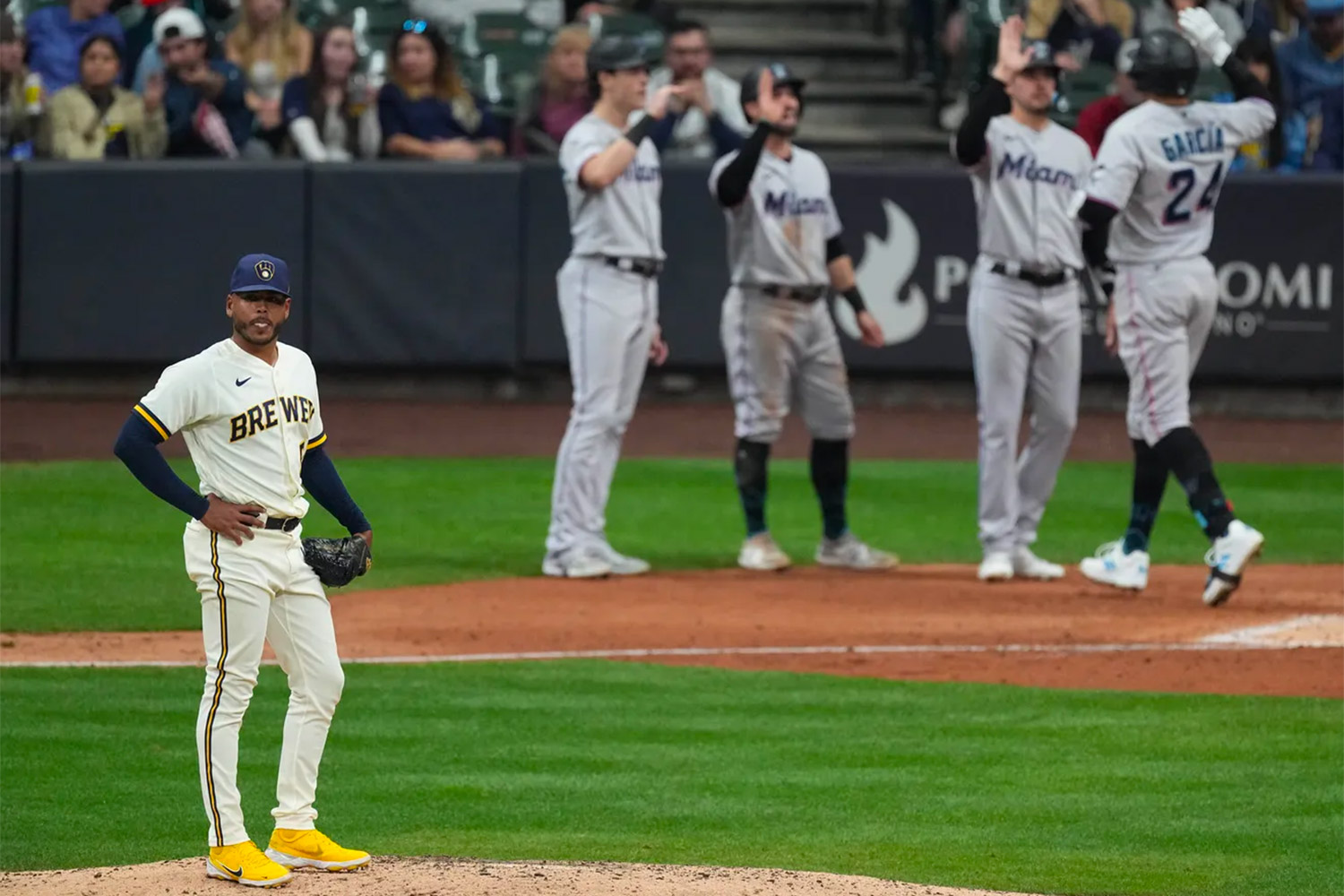 In a run environment far worse than last season (meaning runs are harder to score), Brewers' pitchers have dropped to the middle of the pack overall. One of their biggest culprits is the home run ball. Gopher balls, dingers, taters, tanks, moon shoots - whatever you call them, Milwaukee has allowed them. The Brewers' staff has the fourth-highest home run percentage (HR%) in baseball Their 3.2 HR% is better than only the Washington Nationals, Chicago Cubs, and Cincinnati Reds. Those three clubs have combined for a .390 winning percentage this season. Last year, the Brewers owned the fifth-lowest HR% with dominant pitching leading to an NL Central title. Despite the complaints about the offense, Brewers' pitching is what has held the team down this year. The homer plague has beat down both the rotation and the bullpen, making it a true team effort. Opponents have used the long ball off Milwaukee's hurlers to jump out to early leads, turn good starts ugly, and flip uplifting Brewers' wins into backbreaking losses. The late dingers, like the grand slam Freddy Peralta served up Thursday with a 2-0 lead, are the ones that hurt the most (and Milwaukee does it a lot). The Brewers have allowed the most home runs (41) in high leverage situations this season (basically, the most important moments). Milwaukee has given up the second-most homers (60) from the seventh to ninth innings. There's losing, and then there is tortuous losing. Again, keep in mind it is much harder to score and hit home runs across the league this season. League average HR% last season was 3.3%. This year, just 2.9%. So the Brewers are getting burned by the long ball when the league isn't giving up near as many as a year ago. The most surprising jump came from Corbin Burnes. Last year's NL Cy Young winner saw his home runs-per-nine innings rate (HR/9) jump from 0.4 in 2021 to 1.1 this season. That more than accounts for his rise in ERA from 2.43 to 3.11. Eric Lauer's HR/9 went from 1.2 to 1.6 this year, while Brandon Woodruff's moved slightly from 0.9 to 1.1 in 2022. Especially with ace-type pitchers like Burnes and Woodruff, home runs are vital for teams to score off of them. Rarely can an offense string three or four hits together consistently against top hurlers. Giving up three singles leads to just one run. A walk, a single, and a three-run bomb puts three on the board in a hurry. That has certainly been the case against the Brewers this season. Some of the returning relievers have had similar issues. Josh Hader, before getting traded, saw his HR/9 zoom up to 1.9 from 0.5 a year ago. Brent Suter's HR/9 saw a bump from 1.1 to 1.3 as well. To make matters worse, Milwaukee's two deadline-deal relief pitchers have had a terrible time keeping the ball in the park. Taylor Rogers and Matt Bush have combined to give up 11 home runs in 42.2 innings with the Brewers. While Rogers was scuffling with the San Diego Padres, he had a 0.2 HR/9 before the trade. Since joining Milwaukee, that has ballooned to 2.5 HR/9. Not only has Rogers been serving up taters at a high clip, most of the homers have cost the Brewers leads and led to losses. September 20: Enters seventh with a one-run lead. He walks the bases loaded and then gives up a grand slam to give the New York Mets a three-run edge. The brewers lose by one run. September 16: Enters ninth inning with a one-run lead. He gives up a lead-off home run to tie the game. Brewers would come back to win. September 6: Enters 10th inning with a one-run lead. After allowing a run-scoring double, Rogers gives up a three-run, walk-off homer. Bush has had much the same problem. His 1.2 HR/9 jumped to 2.2 with the Brewers. That is the main reason he owns a 4.43 ERA since the trade, despite a 2.95 ERA with the Texas Rangers this season. Also, like Rogers, big home runs have happened too often - though less frequently recently (until Sunday). September 25: Enters eighth inning of a tie game. He gives up a lead-off home run, and the Brewers lose 2-1. August 30: Enters seventh inning with a one-run lead. He allows a two-out, solo homer to tie the game. Brewers would lose 4-2. August 26: Enters seventh inning with a one-run lead. He gives up a two-run home run to put the Brewers behind 4-3, which would be the final score. August 16: Enters seventh inning with a one-run lead. He allows a solo home run to tie the game. Milwaukee would eventually win the game 5-4. Yes, most relievers have little margin for error, so the home runs they give up often have a greater impact. However, that is quite a disturbing number of significant homers from just a pair of pitchers in less than two months. Rogers and Bush aren't the only ones who have sunk Milwaukee's late-inning leads with home runs. Brewers' relief pitchers have allowed the fifth-most dingers in baseball this season. What is the reason behind Milwaukee's homer-allowing trend? Tough to say. Some of it might just be random or bad luck, but that seems too "simple." It's not that pitches are consistently getting hammered, either. Brewers' hurlers allow the 4th-lowest average exit velocity in MLB. It could be something with Milwaukee's pitch selection or game-planning of hitters that aren't working. It is definitely something the Brewers' coaching staff and organization will have to look into, especially with how Rogers and Bush suddenly got much worse in that department when joining the club. It will be a minor miracle if the dinger dilemma doesn't keep the Brewers out of the playoffs. If they do sneak in, homers will be the reason they sink or swim.
 -
Among the many issues that plagued the Milwaukee Brewers in 2022, their propensity to give up home runs has been the most impactful - including Freddy Peralta allowing a go-ahead grand slam in the eighth inning Thursday night. It's been a season-long problem and one that has torpedoed their playoff odds the last month, especially. In a run environment far worse than last season (meaning runs are harder to score), Brewers' pitchers have dropped to the middle of the pack overall. One of their biggest culprits is the home run ball. Gopher balls, dingers, taters, tanks, moon shoots - whatever you call them, Milwaukee has allowed them. The Brewers' staff has the fourth-highest home run percentage (HR%) in baseball Their 3.2 HR% is better than only the Washington Nationals, Chicago Cubs, and Cincinnati Reds. Those three clubs have combined for a .390 winning percentage this season. Last year, the Brewers owned the fifth-lowest HR% with dominant pitching leading to an NL Central title. Despite the complaints about the offense, Brewers' pitching is what has held the team down this year. The homer plague has beat down both the rotation and the bullpen, making it a true team effort. Opponents have used the long ball off Milwaukee's hurlers to jump out to early leads, turn good starts ugly, and flip uplifting Brewers' wins into backbreaking losses. The late dingers, like the grand slam Freddy Peralta served up Thursday with a 2-0 lead, are the ones that hurt the most (and Milwaukee does it a lot). The Brewers have allowed the most home runs (41) in high leverage situations this season (basically, the most important moments). Milwaukee has given up the second-most homers (60) from the seventh to ninth innings. There's losing, and then there is tortuous losing. Again, keep in mind it is much harder to score and hit home runs across the league this season. League average HR% last season was 3.3%. This year, just 2.9%. So the Brewers are getting burned by the long ball when the league isn't giving up near as many as a year ago. The most surprising jump came from Corbin Burnes. Last year's NL Cy Young winner saw his home runs-per-nine innings rate (HR/9) jump from 0.4 in 2021 to 1.1 this season. That more than accounts for his rise in ERA from 2.43 to 3.11. Eric Lauer's HR/9 went from 1.2 to 1.6 this year, while Brandon Woodruff's moved slightly from 0.9 to 1.1 in 2022. Especially with ace-type pitchers like Burnes and Woodruff, home runs are vital for teams to score off of them. Rarely can an offense string three or four hits together consistently against top hurlers. Giving up three singles leads to just one run. A walk, a single, and a three-run bomb puts three on the board in a hurry. That has certainly been the case against the Brewers this season. Some of the returning relievers have had similar issues. Josh Hader, before getting traded, saw his HR/9 zoom up to 1.9 from 0.5 a year ago. Brent Suter's HR/9 saw a bump from 1.1 to 1.3 as well. To make matters worse, Milwaukee's two deadline-deal relief pitchers have had a terrible time keeping the ball in the park. Taylor Rogers and Matt Bush have combined to give up 11 home runs in 42.2 innings with the Brewers. While Rogers was scuffling with the San Diego Padres, he had a 0.2 HR/9 before the trade. Since joining Milwaukee, that has ballooned to 2.5 HR/9. Not only has Rogers been serving up taters at a high clip, most of the homers have cost the Brewers leads and led to losses. September 20: Enters seventh with a one-run lead. He walks the bases loaded and then gives up a grand slam to give the New York Mets a three-run edge. The brewers lose by one run. September 16: Enters ninth inning with a one-run lead. He gives up a lead-off home run to tie the game. Brewers would come back to win. September 6: Enters 10th inning with a one-run lead. After allowing a run-scoring double, Rogers gives up a three-run, walk-off homer. Bush has had much the same problem. His 1.2 HR/9 jumped to 2.2 with the Brewers. That is the main reason he owns a 4.43 ERA since the trade, despite a 2.95 ERA with the Texas Rangers this season. Also, like Rogers, big home runs have happened too often - though less frequently recently (until Sunday). September 25: Enters eighth inning of a tie game. He gives up a lead-off home run, and the Brewers lose 2-1. August 30: Enters seventh inning with a one-run lead. He allows a two-out, solo homer to tie the game. Brewers would lose 4-2. August 26: Enters seventh inning with a one-run lead. He gives up a two-run home run to put the Brewers behind 4-3, which would be the final score. August 16: Enters seventh inning with a one-run lead. He allows a solo home run to tie the game. Milwaukee would eventually win the game 5-4. Yes, most relievers have little margin for error, so the home runs they give up often have a greater impact. However, that is quite a disturbing number of significant homers from just a pair of pitchers in less than two months. Rogers and Bush aren't the only ones who have sunk Milwaukee's late-inning leads with home runs. Brewers' relief pitchers have allowed the fifth-most dingers in baseball this season. What is the reason behind Milwaukee's homer-allowing trend? Tough to say. Some of it might just be random or bad luck, but that seems too "simple." It's not that pitches are consistently getting hammered, either. Brewers' hurlers allow the 4th-lowest average exit velocity in MLB. It could be something with Milwaukee's pitch selection or game-planning of hitters that aren't working. It is definitely something the Brewers' coaching staff and organization will have to look into, especially with how Rogers and Bush suddenly got much worse in that department when joining the club. It will be a minor miracle if the dinger dilemma doesn't keep the Brewers out of the playoffs. If they do sneak in, homers will be the reason they sink or swim. View full article
-
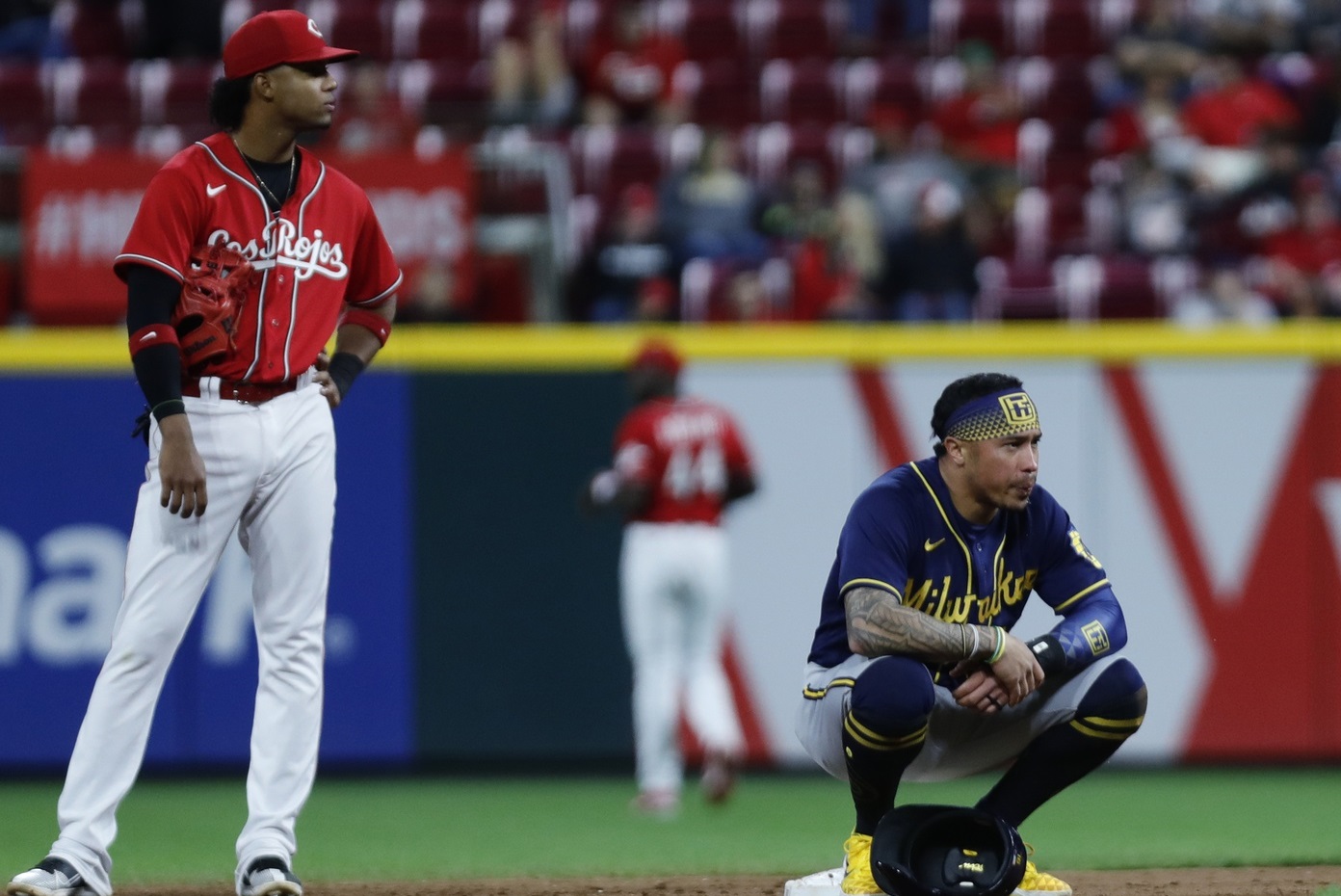 Milwaukee's club option on Kolten Wong would pay him $10 million next season; however, there is a $2 million buyout should the Brewers decline the option. Since Milwaukee will pay that $2 million regardless of their decision, the Brewers are technically looking at a one-year, $8 million commitment to Wong if they accept. On the surface, the cost seems to be in the "right" financial neighborhood in today's market. But the front office could see other ways to spend nearly $10 million on a roster with multiple top players in arbitration where sizable raises are coming. We can dive into the money side later. Let's look at Wong's performance and how on-the-field factors will influence a yea or nay. Following his first career three-homer game last Thursday, Wong is having his best offensive season (if it ended today) by OPS+ (118) and weighted runs created plus (wRC+) at 116. These stats matter as it compares a player's overall offensive output when factoring in what is happening across the league, where 100 is average. The 2022 season has been highly challenging for hitters, so while many of Wong's standard numbers aren't as high, the advanced stats show tremendous value. He also strikes out less often (17.7%) than any Brewers hitter (150+ plate appearances) this year, an essential skill for a club with too many high-K bats already. Wong's three-dinger game gives him a career-high in homers (15), and a few other stats could reach peak levels this season. For a guy who turns 32 in less than a month, do you think his production is more likely to go up again or decline? How has he compared to other second basemen this season? Following Sunday's games, Wong ranked ninth in wOBA (weighted on-base average) and 12th in wRC+ among second basemen with 150+ plate appearances. That's solid quality but not necessarily irreplaceable. Wong has primarily crushed right-handed pitching with a .497 slugging percentage and .852 OPS. On the flip side, Wong has been a complete liability against lefties this season (.141/.256/.180/.435), something the Brewers have plenty of on the roster. And again, there's a danger in thinking Wong will repeat his production versus righties next year and improve enough against southpaws. Moving to the defensive side, evaluations get even murkier. From the eye test alone, Wong has had the worst defensive season of his career. It doesn't look any better when checking on the stats. Among the 22 players with 600+ innings at second base, Kolten Wong ranks dead last in Outs Above Average (-10) and 18th in Defensive Runs Saved (-4). Both stats represent the lowest marks in his career, and his .960 fielding percentage is also the worst in his 10 seasons. Ignoring 2020 for obvious reasons, Wong's defensive metrics have shown an overall steady decline since 2018. These can be tricky on a season-to-season basis, but the trend is troubling. And as MLB puts restrictions on shifting in 2023, a second sacker with shrinking range becomes a greater drawback. Without the shortstop or third baseman playing on the right side with Wong, he will need to cover more ground on his own; that won't bode well. Second baseman range will have added value starting in 2023, and even when Wong did get to balls in play this season, he had all sorts of troubles. Milwaukee could look at him as the DH option against right-handers in 2023. Wong could still be a part-time asset at second for manager Craig Counsell, and be ready if a player is hurt or ineffective. The Brewers paid Andrew McCutchen essentially the same deal this season, and you could easily argue Wong's numbers with the platoon advantage will best McCutchen's in 2022. That brings us back to the financials and how the Brewers might handle allocation with Wong and others. Milwaukee's 2022 payroll is around $130-$132 million, and one would expect a significant increase isn't happening. With guys like Corbin Burnes, Brandon Woodruff, Willy Adames, and Hunter Renfroe poised to receive considerable raises in arbitration, the Brewers are likely looking to cut corners in other areas. Those four alone could account for $12-$16 million more in payroll, barring any extensions. Does Wong's $8 million deal tie David Stearns and Matt Arnold's hands? If they want to "go young," it probably fits in the budget. Using prospects Garret Mitchell and Sal Frelick as center fielders/bench bats would save money. As would letting go of four other key potential free agents. At the same time, $8 million isn't insignificant, so Brewers' brass might see added value in other, cheaper players. Brice Turang, Milwaukee's fourth-rated prospect, should be ready to make an impact in the Brewers' infield for a minimal cost. They could also hand the reins to second base over to Luis Urias in 2023. Urias made $2.25 million this season and won't see much of an increase in his paycheck. His fWAR of 1.6 was just behind Wong's 1.7 less than a week ago. Wong jumped up to 2.2 fWAR in just a few days, meaning the Brewers (in theory) were getting the same on-field value from the two but at a much lower price with Urias (until Wong's three-homer day). The problem is if Urias is the everyday second baseman, who is manning the hot corner? Would the Brewers try to keep Jace Peterson at a fair-market cost to platoon with Mike Brosseau? Or could Milwaukee finally bring in a true talent at third base? This is something to keep an eye on based on what the Brewers do with Wong's option. And since I am sure people will bring it up: No, Keston Hiura cannot play third base and he cannot truly play second base either. Milwaukee has to decide on the option within five days of the end of the World Series. If they exercise the option, don't expect any major moves with third base - it's likely Urias to get the majority of starts. But should the Crew decline to keep Wong at the beginning of the offseason, it could signify a more aggressive approach for 2023. Of course, it could just mean the Brewers are going with a youth movement all over. A third "plan" could be to carry Wong to start the year with one eye on the trade deadline when they could move him for another piece or release him to give others a shot. With Lorenzo Cain and McCutchen's contracts coming off the books, Wong's net $8 million might not be prohibitive in making additional moves. It will be one of the many fascinating choices Milwaukee will need to make this offseason. Wong has nine more days to make his case through his play and perhaps change minds. If I had to make the call right now, I'd lean slightly toward declining the option, using in-house options at second base, and looking to make a splash at third base. What would you do? What do you think the Brewers will do?
 -
Among the Milwaukee Brewers' most impactful decisions this offseason, Kolten Wong's club option for 2023 may set the tone for the team's overall plan. The choice to exercise or decline Wong's option is anything but cut and dried after an up-and-down 2022 campaign. Milwaukee's club option on Kolten Wong would pay him $10 million next season; however, there is a $2 million buyout should the Brewers decline the option. Since Milwaukee will pay that $2 million regardless of their decision, the Brewers are technically looking at a one-year, $8 million commitment to Wong if they accept. On the surface, the cost seems to be in the "right" financial neighborhood in today's market. But the front office could see other ways to spend nearly $10 million on a roster with multiple top players in arbitration where sizable raises are coming. We can dive into the money side later. Let's look at Wong's performance and how on-the-field factors will influence a yea or nay. Following his first career three-homer game last Thursday, Wong is having his best offensive season (if it ended today) by OPS+ (118) and weighted runs created plus (wRC+) at 116. These stats matter as it compares a player's overall offensive output when factoring in what is happening across the league, where 100 is average. The 2022 season has been highly challenging for hitters, so while many of Wong's standard numbers aren't as high, the advanced stats show tremendous value. He also strikes out less often (17.7%) than any Brewers hitter (150+ plate appearances) this year, an essential skill for a club with too many high-K bats already. Wong's three-dinger game gives him a career-high in homers (15), and a few other stats could reach peak levels this season. For a guy who turns 32 in less than a month, do you think his production is more likely to go up again or decline? How has he compared to other second basemen this season? Following Sunday's games, Wong ranked ninth in wOBA (weighted on-base average) and 12th in wRC+ among second basemen with 150+ plate appearances. That's solid quality but not necessarily irreplaceable. Wong has primarily crushed right-handed pitching with a .497 slugging percentage and .852 OPS. On the flip side, Wong has been a complete liability against lefties this season (.141/.256/.180/.435), something the Brewers have plenty of on the roster. And again, there's a danger in thinking Wong will repeat his production versus righties next year and improve enough against southpaws. Moving to the defensive side, evaluations get even murkier. From the eye test alone, Wong has had the worst defensive season of his career. It doesn't look any better when checking on the stats. Among the 22 players with 600+ innings at second base, Kolten Wong ranks dead last in Outs Above Average (-10) and 18th in Defensive Runs Saved (-4). Both stats represent the lowest marks in his career, and his .960 fielding percentage is also the worst in his 10 seasons. Ignoring 2020 for obvious reasons, Wong's defensive metrics have shown an overall steady decline since 2018. These can be tricky on a season-to-season basis, but the trend is troubling. And as MLB puts restrictions on shifting in 2023, a second sacker with shrinking range becomes a greater drawback. Without the shortstop or third baseman playing on the right side with Wong, he will need to cover more ground on his own; that won't bode well. Second baseman range will have added value starting in 2023, and even when Wong did get to balls in play this season, he had all sorts of troubles. Milwaukee could look at him as the DH option against right-handers in 2023. Wong could still be a part-time asset at second for manager Craig Counsell, and be ready if a player is hurt or ineffective. The Brewers paid Andrew McCutchen essentially the same deal this season, and you could easily argue Wong's numbers with the platoon advantage will best McCutchen's in 2022. That brings us back to the financials and how the Brewers might handle allocation with Wong and others. Milwaukee's 2022 payroll is around $130-$132 million, and one would expect a significant increase isn't happening. With guys like Corbin Burnes, Brandon Woodruff, Willy Adames, and Hunter Renfroe poised to receive considerable raises in arbitration, the Brewers are likely looking to cut corners in other areas. Those four alone could account for $12-$16 million more in payroll, barring any extensions. Does Wong's $8 million deal tie David Stearns and Matt Arnold's hands? If they want to "go young," it probably fits in the budget. Using prospects Garret Mitchell and Sal Frelick as center fielders/bench bats would save money. As would letting go of four other key potential free agents. At the same time, $8 million isn't insignificant, so Brewers' brass might see added value in other, cheaper players. Brice Turang, Milwaukee's fourth-rated prospect, should be ready to make an impact in the Brewers' infield for a minimal cost. They could also hand the reins to second base over to Luis Urias in 2023. Urias made $2.25 million this season and won't see much of an increase in his paycheck. His fWAR of 1.6 was just behind Wong's 1.7 less than a week ago. Wong jumped up to 2.2 fWAR in just a few days, meaning the Brewers (in theory) were getting the same on-field value from the two but at a much lower price with Urias (until Wong's three-homer day). The problem is if Urias is the everyday second baseman, who is manning the hot corner? Would the Brewers try to keep Jace Peterson at a fair-market cost to platoon with Mike Brosseau? Or could Milwaukee finally bring in a true talent at third base? This is something to keep an eye on based on what the Brewers do with Wong's option. And since I am sure people will bring it up: No, Keston Hiura cannot play third base and he cannot truly play second base either. Milwaukee has to decide on the option within five days of the end of the World Series. If they exercise the option, don't expect any major moves with third base - it's likely Urias to get the majority of starts. But should the Crew decline to keep Wong at the beginning of the offseason, it could signify a more aggressive approach for 2023. Of course, it could just mean the Brewers are going with a youth movement all over. A third "plan" could be to carry Wong to start the year with one eye on the trade deadline when they could move him for another piece or release him to give others a shot. With Lorenzo Cain and McCutchen's contracts coming off the books, Wong's net $8 million might not be prohibitive in making additional moves. It will be one of the many fascinating choices Milwaukee will need to make this offseason. Wong has nine more days to make his case through his play and perhaps change minds. If I had to make the call right now, I'd lean slightly toward declining the option, using in-house options at second base, and looking to make a splash at third base. What would you do? What do you think the Brewers will do? View full article
-
Let me clarify on Wong...for many in the general fanbase, it is more complicated due to his defensive reputation (waning) and his lower K rate compared to many Brewers. Value is in the eye of the beholder. Hopefully I can detail some things soon.
-
Let me clarify on Wong...for many in the general fanbase, it is more complicated due to his defensive reputation (waning) and his lower K rate compared to many Brewers. Value is in the eye of the beholder. Hopefully I can detail some things soon.
-
Of course...these almost always come down to "it depends." I'm not sure what to make of Peterson's market at his age & no elite skill. But yeah, just takes one team to overprice him. I think many teams would be willing to bet on Rogers' 2022 season as mostly "a down year."
-
Of course...these almost always come down to "it depends." I'm not sure what to make of Peterson's market at his age & no elite skill. But yeah, just takes one team to overprice him. I think many teams would be willing to bet on Rogers' 2022 season as mostly "a down year."
-
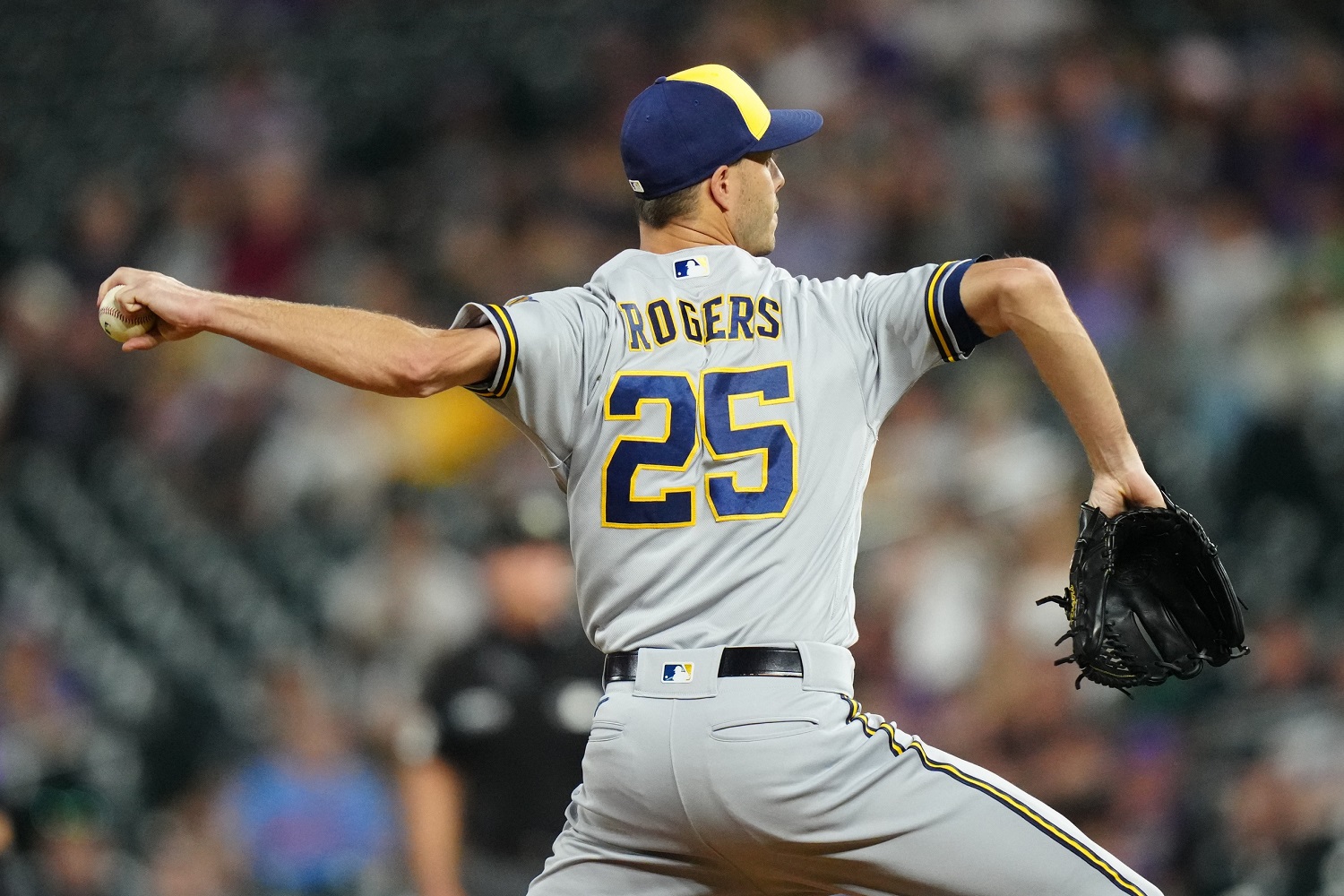 A vast majority of Brewers are under team control in 2023. Eighteen players are in their arbitration years, with a number in pre-arbitration. David Stearns, President of Baseball Operations, could decide to cut ties with any of those guys, but most are staying put. Stearns and GM Matt Arnold have tremendous flexibility with the roster, though, as only three players have guaranteed contracts in 2023: Christian Yelich, Freddy Peralta, and Aaron Ashby. So some critical decisions will need to be made when dealing with the Brewers' potential free agents. Four players, in particular, provide some choice from the club to determine if they offer more value to Milwaukee versus what is available on the market. With all due respect to Andrew McCutchen, his performance this season doesn't warrant a discussion about his return. It hasn't worked out. With Cutch off the list, here are four potential free agents who may or may not return to Milwaukee. 4 - Jace Peterson The 32-year-old utility man has been the third-most valuable position player for the Brewers with a 2.2 fWAR. Part of that stems from Milwaukee's lack of star power in the lineup. However, despite sporadic playing time, his value also comes in quality defense in multiple spots and an ability to get on base at a solid clip. Peterson is the type of veteran player you find on winning teams. These types might not jump out at you statistically, but their importance is seen throughout the season. There will be multiple factors in choosing to bring Peterson back or not. What do the Brewers plan to do at second and third base? Will prospect Brice Turang have a major role in the big leagues in 2023? The third factor is cost. Peterson made $1.825 million on a one-year deal this season. He will undoubtedly get a bump up, but how much? Fangraphs' defensive metric ranks Peterson fourth on the club in that area, and its BsR stat for overall base running has him at the top in Milwaukee. Odds of a return: 65% 3 - Brad Boxberger Based on ERA (2.95) and ERA+ (135), Brad Boxberger is having a better overall season than he did in 2021. It might not feel that way as he has more blown saves this year, and many of his other numbers are worse. While he's giving up fewer home runs per nine innings, his WHIP is 1.309 (1.067 in 2022), with more walks, more hits, and fewer strikeouts this season. One major concern should be Boxberger's Whiff% where he went from the 85th percentile of MLB last season to the 33rd percentile in 2022. At 34 years old, you start to wonder what he has left in the tank. In each of the past two seasons, Boxberger has stretches when he looks cooked. Manager Craig Counsell relies on him as a stopper of sorts and utilizes him in a variety of innings - more so than any other reliever on the club. Boxberger is making $2.5 million this season, with a team option for a $3 million contract in 2023. The buyout for the option is just $750,000, so Milwaukee loses little to cut bait. Considering the sizable free agent reliever market each season, a $3 million tag for a potentially declining bullpen arm makes Boxberger less appealing than a year ago. But they could see the cost certainty of the club option as worthwhile gamble for one more season. Odds of a return: 48% (Chances increase if the Brewers buy him out and he is willing to re-sign for less) 2 - Omar Narvaez After an All-Star selection in 2021, Narvaez's 2022 offensive performance has dipped significantly. He is 22% below average in OPS+ (78) while hitting just .214 with a .324 slugging percentage. He clearly peaked in his age-27 season in Seattle when he slugged .460 with a 119 OPS+. Narvaez turns 31 before Opening Day 2023 and has appeared worn down in the second half of the last two years. Narvaez came over as an "offense-first" backstop with defensive concerns, but that has flipped in Milwaukee (or has it?). He ranks seventh in MLB in Baseball Savant's strike rate stat at 49.7%, which shows the percentage of non-swinging strikes called on the outside edges of the strike zone. However, Narvaez is 47th in "blocking runs," according to Baseball Prospectus. If you've watched enough games, you have witnessed Narvaez's struggle to block balls consistently. He is also 35th in caught stealing percentage (24%) among catchers with 300+ frames behind the plate. Those last two statistics argue against his supposed defensive prowess. Narvaez is making $5 million this season. Considering the constant need for catching, some team is likely willing to pay more on the free agent market. Milwaukee has 29-year-old catchers Victor Caratini and Pedro Severino under team control for next year at a lower cost. They also have prospect Mario Feliciano ready for MLB opportunities. The price per production for Narvaez looks undesirable. Odds of a return: 15% 1 - Taylor Rogers The left-handed reliever acquired in the Josh Hader trade has had a down year. After never posting an ERA+ below 128 from 2017-2021 (not counting 2020), Rogers' 86 ERA+ could be a sign of declining skill. He has also dealt with some minor injury concerns, so perhaps it's a one-off dip this season. Many of his numbers improved during his short time in Milwaukee, upping his strikeout-per-nine-inning (K/9) rate to 14.5 versus 10.5 with the San Diego Padres. His WHIP has also dropped from 1.113 to 1.091. The soon-to-be 32-year-old southpaw reliever is earning $7.3 million this season and will likely get a fair amount of interest in free agency. Though he got off to a rough start with the Brewers, Rogers owns a 3.07 ERA and has held opponents to a .180 average over his last 14.2 innings pitched. For a bullpen that needs help heading into 2023, Rogers should be in play to stay, but the length and size of the contract demands could be prohibitive. I'd like to see them make something work and have him spend time in their pitch lab, although it feels like a less than a 50/50 chance the Brewers pony up enough. Odds of a return: 40% Some may ask, "Why isn't Kolten Wong on this list?" Well, his situation requires further examination, so look for a more in-depth analysis soon. As for the rest of the Brew Crew, many expect plenty of roster turnover heading into 2023. Brewers fans should expect to learn new names and faces with a combination of trades and letting players go. If Milwaukee plans to ascend to the top of the NL Central again to fight it out with the St. Louis Cardinals, the front office needs to rediscover the right mix of who stays and who goes.
 -
Even if the Milwaukee Brewers slipped into the playoffs, most would see 2022 as a disappointment unless they made a miraculous run to the NLCS (at least). Either way, there are a handful of free agent decisions the front office needs to make for next season. A vast majority of Brewers are under team control in 2023. Eighteen players are in their arbitration years, with a number in pre-arbitration. David Stearns, President of Baseball Operations, could decide to cut ties with any of those guys, but most are staying put. Stearns and GM Matt Arnold have tremendous flexibility with the roster, though, as only three players have guaranteed contracts in 2023: Christian Yelich, Freddy Peralta, and Aaron Ashby. So some critical decisions will need to be made when dealing with the Brewers' potential free agents. Four players, in particular, provide some choice from the club to determine if they offer more value to Milwaukee versus what is available on the market. With all due respect to Andrew McCutchen, his performance this season doesn't warrant a discussion about his return. It hasn't worked out. With Cutch off the list, here are four potential free agents who may or may not return to Milwaukee. 4 - Jace Peterson The 32-year-old utility man has been the third-most valuable position player for the Brewers with a 2.2 fWAR. Part of that stems from Milwaukee's lack of star power in the lineup. However, despite sporadic playing time, his value also comes in quality defense in multiple spots and an ability to get on base at a solid clip. Peterson is the type of veteran player you find on winning teams. These types might not jump out at you statistically, but their importance is seen throughout the season. There will be multiple factors in choosing to bring Peterson back or not. What do the Brewers plan to do at second and third base? Will prospect Brice Turang have a major role in the big leagues in 2023? The third factor is cost. Peterson made $1.825 million on a one-year deal this season. He will undoubtedly get a bump up, but how much? Fangraphs' defensive metric ranks Peterson fourth on the club in that area, and its BsR stat for overall base running has him at the top in Milwaukee. Odds of a return: 65% 3 - Brad Boxberger Based on ERA (2.95) and ERA+ (135), Brad Boxberger is having a better overall season than he did in 2021. It might not feel that way as he has more blown saves this year, and many of his other numbers are worse. While he's giving up fewer home runs per nine innings, his WHIP is 1.309 (1.067 in 2022), with more walks, more hits, and fewer strikeouts this season. One major concern should be Boxberger's Whiff% where he went from the 85th percentile of MLB last season to the 33rd percentile in 2022. At 34 years old, you start to wonder what he has left in the tank. In each of the past two seasons, Boxberger has stretches when he looks cooked. Manager Craig Counsell relies on him as a stopper of sorts and utilizes him in a variety of innings - more so than any other reliever on the club. Boxberger is making $2.5 million this season, with a team option for a $3 million contract in 2023. The buyout for the option is just $750,000, so Milwaukee loses little to cut bait. Considering the sizable free agent reliever market each season, a $3 million tag for a potentially declining bullpen arm makes Boxberger less appealing than a year ago. But they could see the cost certainty of the club option as worthwhile gamble for one more season. Odds of a return: 48% (Chances increase if the Brewers buy him out and he is willing to re-sign for less) 2 - Omar Narvaez After an All-Star selection in 2021, Narvaez's 2022 offensive performance has dipped significantly. He is 22% below average in OPS+ (78) while hitting just .214 with a .324 slugging percentage. He clearly peaked in his age-27 season in Seattle when he slugged .460 with a 119 OPS+. Narvaez turns 31 before Opening Day 2023 and has appeared worn down in the second half of the last two years. Narvaez came over as an "offense-first" backstop with defensive concerns, but that has flipped in Milwaukee (or has it?). He ranks seventh in MLB in Baseball Savant's strike rate stat at 49.7%, which shows the percentage of non-swinging strikes called on the outside edges of the strike zone. However, Narvaez is 47th in "blocking runs," according to Baseball Prospectus. If you've watched enough games, you have witnessed Narvaez's struggle to block balls consistently. He is also 35th in caught stealing percentage (24%) among catchers with 300+ frames behind the plate. Those last two statistics argue against his supposed defensive prowess. Narvaez is making $5 million this season. Considering the constant need for catching, some team is likely willing to pay more on the free agent market. Milwaukee has 29-year-old catchers Victor Caratini and Pedro Severino under team control for next year at a lower cost. They also have prospect Mario Feliciano ready for MLB opportunities. The price per production for Narvaez looks undesirable. Odds of a return: 15% 1 - Taylor Rogers The left-handed reliever acquired in the Josh Hader trade has had a down year. After never posting an ERA+ below 128 from 2017-2021 (not counting 2020), Rogers' 86 ERA+ could be a sign of declining skill. He has also dealt with some minor injury concerns, so perhaps it's a one-off dip this season. Many of his numbers improved during his short time in Milwaukee, upping his strikeout-per-nine-inning (K/9) rate to 14.5 versus 10.5 with the San Diego Padres. His WHIP has also dropped from 1.113 to 1.091. The soon-to-be 32-year-old southpaw reliever is earning $7.3 million this season and will likely get a fair amount of interest in free agency. Though he got off to a rough start with the Brewers, Rogers owns a 3.07 ERA and has held opponents to a .180 average over his last 14.2 innings pitched. For a bullpen that needs help heading into 2023, Rogers should be in play to stay, but the length and size of the contract demands could be prohibitive. I'd like to see them make something work and have him spend time in their pitch lab, although it feels like a less than a 50/50 chance the Brewers pony up enough. Odds of a return: 40% Some may ask, "Why isn't Kolten Wong on this list?" Well, his situation requires further examination, so look for a more in-depth analysis soon. As for the rest of the Brew Crew, many expect plenty of roster turnover heading into 2023. Brewers fans should expect to learn new names and faces with a combination of trades and letting players go. If Milwaukee plans to ascend to the top of the NL Central again to fight it out with the St. Louis Cardinals, the front office needs to rediscover the right mix of who stays and who goes. View full article
-
Fans and experts have debated the value of the Milwaukee Brewers' offense all season. In a handful of ways, the offense is better this year and has kept the club in playoff contention. But the biggest issue is the lack of top-level bats in the first four spots in the lineup, especially compared to MLB standards and the bottom half of Milwaukee's order. There are many stats one can go by to determine offense. One statistic will never tell the whole story, but some are useful for quick comparisons. Many use OPS+, but let's take a look at weighted on-base average (wOBA). This stat attempts to give hitters an all-around offensive value based on various outcomes. Looking at what each position in the lineup produces for a team isn't a full-proof way to judge an offense, especially when players change throughout the season. However, the top of the order gets more plate appearances (PA) and has a greater impact on production than the lower half. Milwaukee has a lot of "high floor" guys versus "high ceiling" hitters, meaning no one is providing elite performances to lead the way. Admittedly, there are small-sample issues and randomness with such an evaluation. However, it at least tells part of the story for an offense that is good but maybe isn't. Here are the rankings of the top four spots in the Brewers' order, and where they rank in MLB: First: .312 wOBA (14th) Second: .313 wOBA (21st) Third: .315 wOBA (22nd) Fourth: .329 wOBA (14th) Value in the leadoff spot improved when manager Craig Counsell moved Christian Yelich to the top. Yelich has the most PAs at leadoff and owns a .354 in that spot. Unfortunately, the next two players who have hit first the most - Kolten Wong and Andrew McCutchen - have a .290 and .232 wOBA at the top. Clearly a problem. The second and third slots in the lineup are even more significant problems. Willy Adames has nearly all the PAs in the two-hole (520). His .321 wOBA while hitting second ranks 20th among hitters with 250+ PAs in that spot. For those who view the second position in the lineup to be the most important, it's hard to have a consistent offense with bottom-third production from your main guy. For the three-spot, it is tougher to parse out. Yelich spent a decent amount of time there early in the season and posted an ugly .292 wOBA there. But the Brewers have also put McCutchen in that spot for 82 PAs where his .318 wOBA, while slightly better, still falls well below average. Now, Rowdy Tellez is the typical three-hole hitter with 247 PAs (six more than Yelich). His overall 30 HR, 80 RBI, and 118 OPS+ show great value in providing offensive output. However, it's less impressive when comparing his three-hole production to the rest of the league's hitters in that spot. Tellez's .328 wOBA hitting third still ranks just 22nd among players with 200+ PAs in the three-spot. As for the cleanup role, the Brewers jump back up to average as a whole. McCutchen and Hunter Renfroe own the majority of PAs batting fourth, and they've had some success. Among hitters with 170+ PAs, Renfroe's .368 wOBA ranks ninth, and McCutchen's .344 sits at 15th. Not exactly elite value, but better than other spots - at least in the first four. What's interesting is that Milwaukee fares much better later in the order, beginning with the five-hole: Fifth: .338 wOBA (1st) Sixth: .306 wOBA (15th) Seventh: .341 wOBA (1st) Eighth: .292 wOBA (13th) Ninth: .310 wOBA (6th) Is there something about the five-spot that pushes Brewers' hitters to the top wOBA? Interestingly, it's Wong and Tellez who produce best in this role, despite struggles in those other spots. Wong hitting fifth has a .400 wOBA, but .290 hitting first. Tellez is at .366 in the five-hole but just .328 two spots higher in the order. Meanwhile, Milwaukee owns the best wOBA in the seventh spot and sixth-best in the nine-hole. Again, this points toward the "high floor" strategy of President of Baseball Operations David Stearns. He may not acquire the elite hitters, but you'll find more quality with the lower-level hitters. It might also be that Counsell chooses to play more matchups down in the order where he could get more value selecting one hitter over another. The top of the lineup tends to stay the same more often. Five different hitters with at least 20 PAs in the seven-spot own a .366 wOBA or better. Tyrone Taylor has the best wOBA (.476) through 41 PA, with Tellez, Victor Caratinie, Omar Narvaez, and Keston Hiura all contributing. As for the bottom, 17 guys have at least 3 PAs batting ninth, so it's a cumulative effort to be sixth in wOBA. Taylor has the most PAs and a .330 wOBA, while Jace Peterson owns a .341 wOBA in 103 PAs hitting ninth. There's likely more variance in this spot among the Brewers and MLB. So considering the relative production of the 5-9 slots in the lineup, the negative vibe of the offense comes down to those top four spots. If one of those spots saw top-five value in wOBA, Milwaukee's sticks would be a more consistent, formidable force. That also goes back to the plan for Yelich to be "that guy" who mashes at the top. His power decline and dip to above-average (instead of MVP) hitter play a significant role in the struggle. Counsell has undoubtedly tried to play more matchups at the top of the lineup in recent games, which is the only real option to see a change at this point. If he can find the right mix up front while enjoying the production of the bottom half, the Brewers could find a hot streak at the dish. Scoring eight runs against the St. Louis Cardinals Tuesday was a terrific sight. With a pitching staff burdened by numerous injuries, this Brewers lineup must carry the club more often. View full article
-
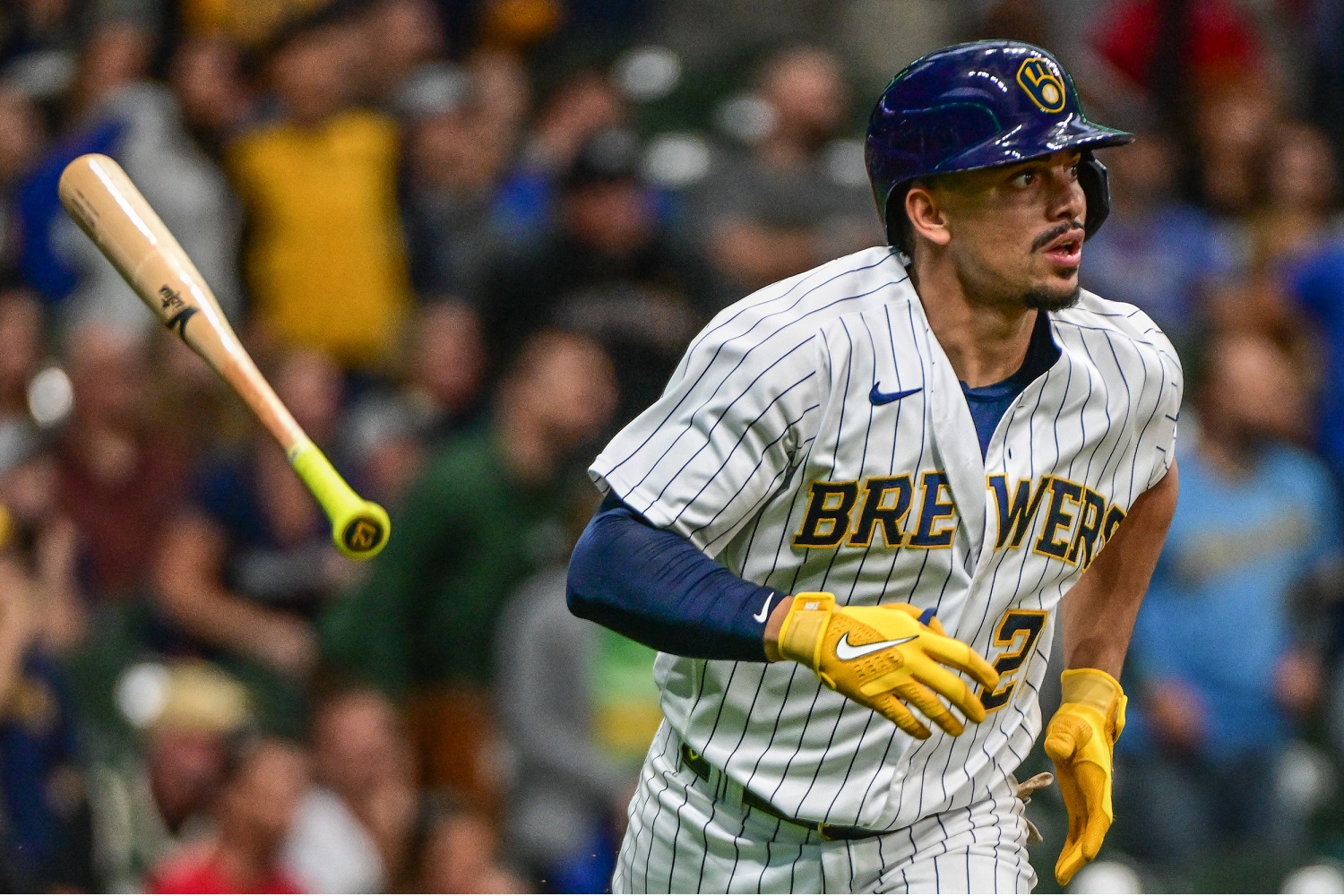 There are many stats one can go by to determine offense. One statistic will never tell the whole story, but some are useful for quick comparisons. Many use OPS+, but let's take a look at weighted on-base average (wOBA). This stat attempts to give hitters an all-around offensive value based on various outcomes. Looking at what each position in the lineup produces for a team isn't a full-proof way to judge an offense, especially when players change throughout the season. However, the top of the order gets more plate appearances (PA) and has a greater impact on production than the lower half. Milwaukee has a lot of "high floor" guys versus "high ceiling" hitters, meaning no one is providing elite performances to lead the way. Admittedly, there are small-sample issues and randomness with such an evaluation. However, it at least tells part of the story for an offense that is good but maybe isn't. Here are the rankings of the top four spots in the Brewers' order, and where they rank in MLB: First: .312 wOBA (14th) Second: .313 wOBA (21st) Third: .315 wOBA (22nd) Fourth: .329 wOBA (14th) Value in the leadoff spot improved when manager Craig Counsell moved Christian Yelich to the top. Yelich has the most PAs at leadoff and owns a .354 in that spot. Unfortunately, the next two players who have hit first the most - Kolten Wong and Andrew McCutchen - have a .290 and .232 wOBA at the top. Clearly a problem. The second and third slots in the lineup are even more significant problems. Willy Adames has nearly all the PAs in the two-hole (520). His .321 wOBA while hitting second ranks 20th among hitters with 250+ PAs in that spot. For those who view the second position in the lineup to be the most important, it's hard to have a consistent offense with bottom-third production from your main guy. For the three-spot, it is tougher to parse out. Yelich spent a decent amount of time there early in the season and posted an ugly .292 wOBA there. But the Brewers have also put McCutchen in that spot for 82 PAs where his .318 wOBA, while slightly better, still falls well below average. Now, Rowdy Tellez is the typical three-hole hitter with 247 PAs (six more than Yelich). His overall 30 HR, 80 RBI, and 118 OPS+ show great value in providing offensive output. However, it's less impressive when comparing his three-hole production to the rest of the league's hitters in that spot. Tellez's .328 wOBA hitting third still ranks just 22nd among players with 200+ PAs in the three-spot. As for the cleanup role, the Brewers jump back up to average as a whole. McCutchen and Hunter Renfroe own the majority of PAs batting fourth, and they've had some success. Among hitters with 170+ PAs, Renfroe's .368 wOBA ranks ninth, and McCutchen's .344 sits at 15th. Not exactly elite value, but better than other spots - at least in the first four. What's interesting is that Milwaukee fares much better later in the order, beginning with the five-hole: Fifth: .338 wOBA (1st) Sixth: .306 wOBA (15th) Seventh: .341 wOBA (1st) Eighth: .292 wOBA (13th) Ninth: .310 wOBA (6th) Is there something about the five-spot that pushes Brewers' hitters to the top wOBA? Interestingly, it's Wong and Tellez who produce best in this role, despite struggles in those other spots. Wong hitting fifth has a .400 wOBA, but .290 hitting first. Tellez is at .366 in the five-hole but just .328 two spots higher in the order. Meanwhile, Milwaukee owns the best wOBA in the seventh spot and sixth-best in the nine-hole. Again, this points toward the "high floor" strategy of President of Baseball Operations David Stearns. He may not acquire the elite hitters, but you'll find more quality with the lower-level hitters. It might also be that Counsell chooses to play more matchups down in the order where he could get more value selecting one hitter over another. The top of the lineup tends to stay the same more often. Five different hitters with at least 20 PAs in the seven-spot own a .366 wOBA or better. Tyrone Taylor has the best wOBA (.476) through 41 PA, with Tellez, Victor Caratinie, Omar Narvaez, and Keston Hiura all contributing. As for the bottom, 17 guys have at least 3 PAs batting ninth, so it's a cumulative effort to be sixth in wOBA. Taylor has the most PAs and a .330 wOBA, while Jace Peterson owns a .341 wOBA in 103 PAs hitting ninth. There's likely more variance in this spot among the Brewers and MLB. So considering the relative production of the 5-9 slots in the lineup, the negative vibe of the offense comes down to those top four spots. If one of those spots saw top-five value in wOBA, Milwaukee's sticks would be a more consistent, formidable force. That also goes back to the plan for Yelich to be "that guy" who mashes at the top. His power decline and dip to above-average (instead of MVP) hitter play a significant role in the struggle. Counsell has undoubtedly tried to play more matchups at the top of the lineup in recent games, which is the only real option to see a change at this point. If he can find the right mix up front while enjoying the production of the bottom half, the Brewers could find a hot streak at the dish. Scoring eight runs against the St. Louis Cardinals Tuesday was a terrific sight. With a pitching staff burdened by numerous injuries, this Brewers lineup must carry the club more often.
 -
Hope and potential are two of the most dangerous terms in sports. With three weeks left in the MLB season, the Milwaukee Brewers have given its fans hope for a potential postseason berth. The remaining schedules for Milwaukee and the San Diego Padres provide both credence. Yes, we've been down this road before, perceiving an "easy" schedule for the Brewers only to see them play just good enough to stay in the hunt. Maybe it's because the Brewers won four of five games or because the Padres gave back two games in the standings over the weekend; either way, the final 21 games for these clubs could create drama for the final Wild Card spot. There is a realistic path for the Brewers to reach a fifth consecutive postseason, but it's no guarantee. Let's start with a look at San Diego's slate. They start with two road games against the Seattle Mariners. Seattle is 79-61 overall and 42-20 (.677) since July 1. Milwaukee would love to see Seattle sweep that mini-series. The Padres then travel to Arizona to face the Diamondbacks in a four-game set. While the Diamondbacks are 4-11 against San Diego this season, they won 11 of their last 17 overall and have proven to be a tough team the past month. Following the six-game road trip, San Diego hosts the St. Louis Cardinals in a three-game series. The Cards lead the NL Central with an 83-58 mark (29-10 since August 1). Then the Padres hit the road again, this time for a three-game set with the Colorado Rockies. Colorado has taken nine of the 16 contests, including a win in four of five games in an August series. San Diego wraps up their 2022 campaign with nine straight games at home, all three-game series against the Los Angeles Dodgers, Chicago White Sox, and San Francisco Giants. Los Angeles is the cream of the crop in the NL, but they could have the one seed wrapped up by then. The White Sox are in a battle for the AL Central title, so they will fight for each game in their series. Not sure Brewers fans can rely on the Giants in the final three games. Maybe they take one out of pride for the rivalry, but their bags will already be at the airport. So what might a realistic record look like for the Padres? 1-1 at Seattle 2-2 at Arizona 1-2 vs. St. Louis 2-1 vs. Colorado 1-2 vs. Los Angeles 1-2 vs. Chicago 2-1 vs. San Francisco That 10-11 mark would put San Diego at 87-75 on the season. Because the Brewers would lose a tiebreaker to the Padres, Milwaukee needs to finish at 88-74 to nab the last spot. All of this is assuming the Philadelphia Phillies don't collapse, vying for the second Wild Card slot. As for the Brewers and their final 21 games, to reach 88 wins, the Crew would need a 13-8 to close out 2022. That might be the top end of what they're capable of with their depleted starting rotation. How can they get there? It starts Tuesday in St. Louis for a two-game series. Milwaukee would need to split the games to stay on track. The Brewers come home to face the New York Yankees and New York Mets for a pair of three-gamers. The minimum goal would be a 3-3 mark between the two east division leaders (I'd bank on two wins over the Yanks and one over the Mets). Milwaukee would be 4-4 at this point as they go on their last road trip, a four-game series against the Cincinnati Reds. A split is ok, but taking three out of four (against a team they should) puts them in a less desperate position. Like the Padres, the Brewers end the season with nine consecutive home games. First up is the Cardinals for a two-gamer, a series the Brewers need to split. The Miami Marlins come in next for a four-game set. Milwaukee will likely face ace pitcher Sandy Alcantara in one of the games, making even a 3-1 mark challenging. A split of the four games is enough in this scenario. That leaves the final series hosting Arizona. The Diamondbacks took three of four from the Brewers earlier this month, so there is no guaranteed series win. That will do if Milwaukee wins the series, based on my "realistic path" to the playoffs. Nothing laid out above is crazy or out of the question. No sweeps for the Brewers, just winning or splitting most of the series to keep chipping away at the Padres' lead. And for the Padres, nothing out of the ordinary would have to happen, either. Yes, there is a lot of "hope" in this plan. If the Brewers can't play more consistent ball and make up for their lack of starting pitching in other areas, it will not matter much. If San Diego finds another gear, the Brewers will have done too little, too late. At least there could be some high drama to watch as the season comes to a close - well, regular season at least. View full article
-
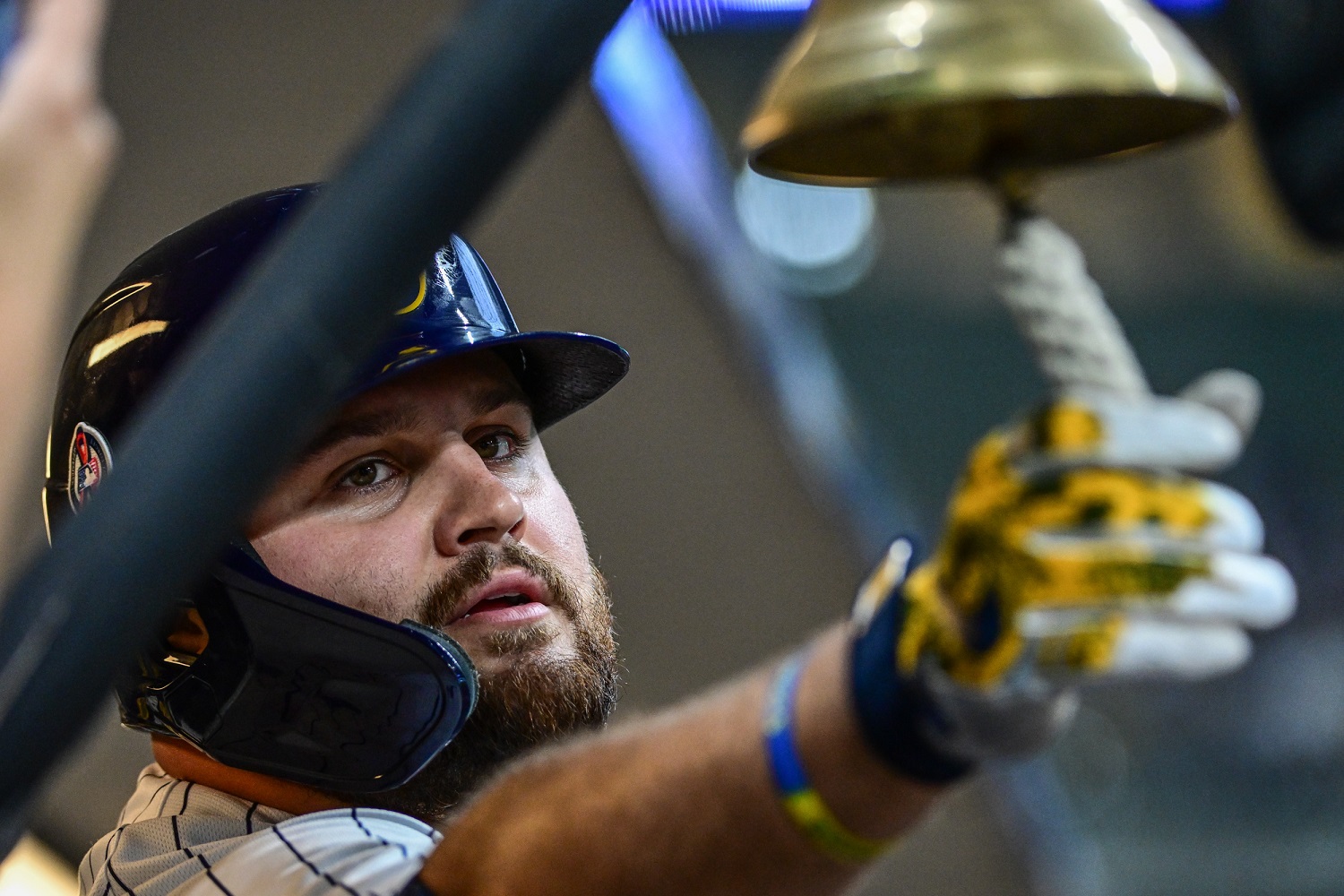 Yes, we've been down this road before, perceiving an "easy" schedule for the Brewers only to see them play just good enough to stay in the hunt. Maybe it's because the Brewers won four of five games or because the Padres gave back two games in the standings over the weekend; either way, the final 21 games for these clubs could create drama for the final Wild Card spot. There is a realistic path for the Brewers to reach a fifth consecutive postseason, but it's no guarantee. Let's start with a look at San Diego's slate. They start with two road games against the Seattle Mariners. Seattle is 79-61 overall and 42-20 (.677) since July 1. Milwaukee would love to see Seattle sweep that mini-series. The Padres then travel to Arizona to face the Diamondbacks in a four-game set. While the Diamondbacks are 4-11 against San Diego this season, they won 11 of their last 17 overall and have proven to be a tough team the past month. Following the six-game road trip, San Diego hosts the St. Louis Cardinals in a three-game series. The Cards lead the NL Central with an 83-58 mark (29-10 since August 1). Then the Padres hit the road again, this time for a three-game set with the Colorado Rockies. Colorado has taken nine of the 16 contests, including a win in four of five games in an August series. San Diego wraps up their 2022 campaign with nine straight games at home, all three-game series against the Los Angeles Dodgers, Chicago White Sox, and San Francisco Giants. Los Angeles is the cream of the crop in the NL, but they could have the one seed wrapped up by then. The White Sox are in a battle for the AL Central title, so they will fight for each game in their series. Not sure Brewers fans can rely on the Giants in the final three games. Maybe they take one out of pride for the rivalry, but their bags will already be at the airport. So what might a realistic record look like for the Padres? 1-1 at Seattle 2-2 at Arizona 1-2 vs. St. Louis 2-1 vs. Colorado 1-2 vs. Los Angeles 1-2 vs. Chicago 2-1 vs. San Francisco That 10-11 mark would put San Diego at 87-75 on the season. Because the Brewers would lose a tiebreaker to the Padres, Milwaukee needs to finish at 88-74 to nab the last spot. All of this is assuming the Philadelphia Phillies don't collapse, vying for the second Wild Card slot. As for the Brewers and their final 21 games, to reach 88 wins, the Crew would need a 13-8 to close out 2022. That might be the top end of what they're capable of with their depleted starting rotation. How can they get there? It starts Tuesday in St. Louis for a two-game series. Milwaukee would need to split the games to stay on track. The Brewers come home to face the New York Yankees and New York Mets for a pair of three-gamers. The minimum goal would be a 3-3 mark between the two east division leaders (I'd bank on two wins over the Yanks and one over the Mets). Milwaukee would be 4-4 at this point as they go on their last road trip, a four-game series against the Cincinnati Reds. A split is ok, but taking three out of four (against a team they should) puts them in a less desperate position. Like the Padres, the Brewers end the season with nine consecutive home games. First up is the Cardinals for a two-gamer, a series the Brewers need to split. The Miami Marlins come in next for a four-game set. Milwaukee will likely face ace pitcher Sandy Alcantara in one of the games, making even a 3-1 mark challenging. A split of the four games is enough in this scenario. That leaves the final series hosting Arizona. The Diamondbacks took three of four from the Brewers earlier this month, so there is no guaranteed series win. That will do if Milwaukee wins the series, based on my "realistic path" to the playoffs. Nothing laid out above is crazy or out of the question. No sweeps for the Brewers, just winning or splitting most of the series to keep chipping away at the Padres' lead. And for the Padres, nothing out of the ordinary would have to happen, either. Yes, there is a lot of "hope" in this plan. If the Brewers can't play more consistent ball and make up for their lack of starting pitching in other areas, it will not matter much. If San Diego finds another gear, the Brewers will have done too little, too late. At least there could be some high drama to watch as the season comes to a close - well, regular season at least.
 -
Article: The Dual Nature of Brewers Fans in 2022 and Always
Tim Muma replied to Tim Muma's topic in Milwaukee Brewers Talk
Thanks! That sounds awesome for you all. Hope they have a great time. We talked about going, too...but we'll have to settle for watching, listening, following on different mediums as we take are of other stuff. Sometimes adulting is the worst! Have fun! -
Article: The Dual Nature of Brewers Fans in 2022 and Always
Tim Muma replied to Tim Muma's topic in Milwaukee Brewers Talk
Thanks! That sounds awesome for you all. Hope they have a great time. We talked about going, too...but we'll have to settle for watching, listening, following on different mediums as we take are of other stuff. Sometimes adulting is the worst! Have fun! -
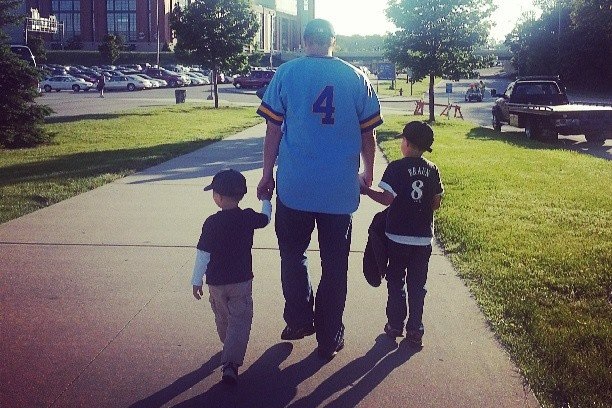 Being a Brewers fan in 2022 is the ultimate duality: spoiled yet tortured; satisfied while disgruntled; in love yet driven to hate. It feels like we're stuck in a perpetual game of tug-of-war, struggling to determine if we are being ungrateful or if we have been overly loyal. Milwaukee has reached the postseason in four straight seasons - a record for the franchise. Two years concluded with division championships, and the 2018 club came within a game of the World Series. Despite the string of playoff appearances, Milwaukee has only had one postseason series win during their consecutive bites at said apple. So again, it's fantastic to watch meaningful September baseball yearly and attend playoff games regularly. Yet, it feels like we're in a proverbial hamster wheel with the Brewers where we can never quite reach the carrot. The 2022 Brewers' campaign has been challenging to navigate for fans. It hasn't created the same frustration a 106-loss season as 2002 did, but it's borne of unmet expectations, personnel drama, and thoughts of a "lost year." The sensation of loss - though this season still has plenty of hope (believe!) - comes from considering that the Brewers have had their best pitching staff in recent years. Like many other fanatics, I keep coming back day after day because we love the team, acknowledge the peaks and valleys, and hold onto the dream that the team makes a run like the 2019 Washington Nationals and the 2021 Atlanta Braves. Of course, they both knocked the Brewers out of those respective playoffs. That's almost too "on brand" for the franchise. As I said, I feel in a unique position where as a kid, when most attach themselves to a team and players to an unhealthy level, I was trying to believe in Brewers' squads that were not "it." I was innocent and naive enough not to know the despair, partly because we didn't have access to all the stats and analysis we do now. There was a certain peace and joy at 10 years old watching my all-time favorite player, Paul Molitor, lead the Brewers to a near-division title in 1992 when no one saw it coming. Similar to me in this photo with Rob Deer. I look happy and grateful, not privy to the fact he would frustrate me if I knew about his .305 OBP and too many strikeouts for the era. Then the mid-to-late 90s arrived. Early on, my innocence and lack of complete statistical access led to believing (or convincing myself) that the Brewers could ride John Jaha, Jeff Cirillo, Kevin Seitzer, and Fernando Vina to an AL Central crown. To squint hard enough to see Scott Karl, Steve Sparks, and Ricky Bones as a "respectable" head of a rotation to set up Angel Miranda, Ron Rightnowar, and Graeme Lloyd for success in the pen before turning it over to Mike Fetters for the save each night. There's something to watching a sport with your brain shut off that I sometimes miss. If I had the advanced stats, video and constant expert insight like my two sons have now, I would have known the truth but never had that unflinching pipe dream of excitement when Opening Day arrived before quickly seeing another season slowly fading into disappointment. Speaking of my boys, now we are definitely talking about spoiled. They are 13 and 17, have attended three Brewers' playoff games already, and have watched their beloved local nine reach the postseason five and six times, respectively. I didn't get to cheer on the Brew Crew in the playoffs until I was 26 years old and had to live through the agony of so many losing years to earn that right. We were there when we went nuts as the 2005 club finished the first "non-losing" season (81-81 record) since 1993. My sons weren't even a thought in the universe then, and now they only know competitive and successful Brewers baseball - which is awesome! I'm so happy for them. At the same time, they only briefly enjoyed that innocent, "informationless" hope of simply loving your team without thought or expectation. As they walked with me to the game (below), they weren't worried about standings, preseason predictions, or where the pitching staff ranked in ERA. When they were very young, baseball was just a thrill to watch and play, and rooting for their favorite guys was as important as "going to the playoffs." For them, at their earliest ages, winning the game that day was the only thing that mattered. They still live by the day-to-day grind as I do (I'm blessed to share that with them), but in some ways, I wish all of us could watch and enjoy without the burden of wondering if they will ultimately collapse and waste a year of Corbin Burnes and Brandon Woodruff without a shot in the playoffs. Now my kids can talk with me about all sorts of stats, complain about a move by manager Craig Counsell, or question the strange 2022 trade deadline of President of Baseball Operations David Stearns. At the same time, my boys almost might not know how to handle seeing the guys they cheer on struggling to the point of missing the playoffs. Spoiled yet tortured in their own way. When they play baseball, they can control their actions and help the team. They're learning how tough it is to watch and accept the outcome (like me as a parent) instead. I can see the slumped shoulders and blank expressions when the Crew drops another game to the Chicago Cubs. It's great...and terrible. That is the beauty of the duality of being a lifelong Brewers fan: we feel multiple things sincerely. No matter how frustrating a game or season becomes, watching even bits and pieces of my baseball club can create a sense of routine, normalcy, and peace. Having the game on TV or radio in the foreground is a tradition. Going to a game with my family and taking it all in is better than almost any other day doing almost anything else. The atmosphere, the conversations, and the spurts of celebration are just a few of the many thrills. The sport has meant so much to my family and beyond since I was a child that it's more than just baseball. It would represent more than simply "winning a World Series" because of the time, energy, emotion, joy, and every other feeling I've experienced with so many friends and family in my life. It's another reality of true fandom: I admit it sounds a touch ridiculous to put so much personal emphasis on a sport or team. However, to many of us, it's like having a "music family" or an "artistic family" - it is not just something to do, it is a passion and a way of genuinely sharing in a wonderful element of life that removes you from the real hardships. Instead, you're back to the clear mind and pure heart of childlike joy that comes with no responsibilities, replaced with unfiltered enthusiasm for something you can't control. Maybe the Brewers will sneak into the playoffs again. Perhaps they come achingly close but short. As I've talked about with my boys, I know the cold doldrums of winter are coming where all of baseball is gone for a while. We hate that. We love baseball. We love the Brewers. Like with family, love comes with pain, frustration, and heartache, but also unmatched joy, support, fun, passion, and the comfort of knowing you're in this thing together. So I implore Brewers fans to take the ups with the downs and enjoy the journey as much as you can (and complain as much as you want). Remember, you never know when another 26-year playoff drought sneaks up on you, and you long for September to matter again, even if it means absorbing the hurt of losing.
 -
Though I enjoy analyzing and breaking down the Milwaukee Brewers, I'm still a fan. The Brewers appeared in their lone World Series the year I was born, so I'm in that middle ground of experience with this franchise where many younger fans and plenty of older fans exist and might see the club differently. This is my take as a baseball-obsessed fan. Being a Brewers fan in 2022 is the ultimate duality: spoiled yet tortured; satisfied while disgruntled; in love yet driven to hate. It feels like we're stuck in a perpetual game of tug-of-war, struggling to determine if we are being ungrateful or if we have been overly loyal. Milwaukee has reached the postseason in four straight seasons - a record for the franchise. Two years concluded with division championships, and the 2018 club came within a game of the World Series. Despite the string of playoff appearances, Milwaukee has only had one postseason series win during their consecutive bites at said apple. So again, it's fantastic to watch meaningful September baseball yearly and attend playoff games regularly. Yet, it feels like we're in a proverbial hamster wheel with the Brewers where we can never quite reach the carrot. The 2022 Brewers' campaign has been challenging to navigate for fans. It hasn't created the same frustration a 106-loss season as 2002 did, but it's borne of unmet expectations, personnel drama, and thoughts of a "lost year." The sensation of loss - though this season still has plenty of hope (believe!) - comes from considering that the Brewers have had their best pitching staff in recent years. Like many other fanatics, I keep coming back day after day because we love the team, acknowledge the peaks and valleys, and hold onto the dream that the team makes a run like the 2019 Washington Nationals and the 2021 Atlanta Braves. Of course, they both knocked the Brewers out of those respective playoffs. That's almost too "on brand" for the franchise. As I said, I feel in a unique position where as a kid, when most attach themselves to a team and players to an unhealthy level, I was trying to believe in Brewers' squads that were not "it." I was innocent and naive enough not to know the despair, partly because we didn't have access to all the stats and analysis we do now. There was a certain peace and joy at 10 years old watching my all-time favorite player, Paul Molitor, lead the Brewers to a near-division title in 1992 when no one saw it coming. Similar to me in this photo with Rob Deer. I look happy and grateful, not privy to the fact he would frustrate me if I knew about his .305 OBP and too many strikeouts for the era. Then the mid-to-late 90s arrived. Early on, my innocence and lack of complete statistical access led to believing (or convincing myself) that the Brewers could ride John Jaha, Jeff Cirillo, Kevin Seitzer, and Fernando Vina to an AL Central crown. To squint hard enough to see Scott Karl, Steve Sparks, and Ricky Bones as a "respectable" head of a rotation to set up Angel Miranda, Ron Rightnowar, and Graeme Lloyd for success in the pen before turning it over to Mike Fetters for the save each night. There's something to watching a sport with your brain shut off that I sometimes miss. If I had the advanced stats, video and constant expert insight like my two sons have now, I would have known the truth but never had that unflinching pipe dream of excitement when Opening Day arrived before quickly seeing another season slowly fading into disappointment. Speaking of my boys, now we are definitely talking about spoiled. They are 13 and 17, have attended three Brewers' playoff games already, and have watched their beloved local nine reach the postseason five and six times, respectively. I didn't get to cheer on the Brew Crew in the playoffs until I was 26 years old and had to live through the agony of so many losing years to earn that right. We were there when we went nuts as the 2005 club finished the first "non-losing" season (81-81 record) since 1993. My sons weren't even a thought in the universe then, and now they only know competitive and successful Brewers baseball - which is awesome! I'm so happy for them. At the same time, they only briefly enjoyed that innocent, "informationless" hope of simply loving your team without thought or expectation. As they walked with me to the game (below), they weren't worried about standings, preseason predictions, or where the pitching staff ranked in ERA. When they were very young, baseball was just a thrill to watch and play, and rooting for their favorite guys was as important as "going to the playoffs." For them, at their earliest ages, winning the game that day was the only thing that mattered. They still live by the day-to-day grind as I do (I'm blessed to share that with them), but in some ways, I wish all of us could watch and enjoy without the burden of wondering if they will ultimately collapse and waste a year of Corbin Burnes and Brandon Woodruff without a shot in the playoffs. Now my kids can talk with me about all sorts of stats, complain about a move by manager Craig Counsell, or question the strange 2022 trade deadline of President of Baseball Operations David Stearns. At the same time, my boys almost might not know how to handle seeing the guys they cheer on struggling to the point of missing the playoffs. Spoiled yet tortured in their own way. When they play baseball, they can control their actions and help the team. They're learning how tough it is to watch and accept the outcome (like me as a parent) instead. I can see the slumped shoulders and blank expressions when the Crew drops another game to the Chicago Cubs. It's great...and terrible. That is the beauty of the duality of being a lifelong Brewers fan: we feel multiple things sincerely. No matter how frustrating a game or season becomes, watching even bits and pieces of my baseball club can create a sense of routine, normalcy, and peace. Having the game on TV or radio in the foreground is a tradition. Going to a game with my family and taking it all in is better than almost any other day doing almost anything else. The atmosphere, the conversations, and the spurts of celebration are just a few of the many thrills. The sport has meant so much to my family and beyond since I was a child that it's more than just baseball. It would represent more than simply "winning a World Series" because of the time, energy, emotion, joy, and every other feeling I've experienced with so many friends and family in my life. It's another reality of true fandom: I admit it sounds a touch ridiculous to put so much personal emphasis on a sport or team. However, to many of us, it's like having a "music family" or an "artistic family" - it is not just something to do, it is a passion and a way of genuinely sharing in a wonderful element of life that removes you from the real hardships. Instead, you're back to the clear mind and pure heart of childlike joy that comes with no responsibilities, replaced with unfiltered enthusiasm for something you can't control. Maybe the Brewers will sneak into the playoffs again. Perhaps they come achingly close but short. As I've talked about with my boys, I know the cold doldrums of winter are coming where all of baseball is gone for a while. We hate that. We love baseball. We love the Brewers. Like with family, love comes with pain, frustration, and heartache, but also unmatched joy, support, fun, passion, and the comfort of knowing you're in this thing together. So I implore Brewers fans to take the ups with the downs and enjoy the journey as much as you can (and complain as much as you want). Remember, you never know when another 26-year playoff drought sneaks up on you, and you long for September to matter again, even if it means absorbing the hurt of losing. View full article
-
While the Milwaukee Brewers' offense has flaws and can frustrate the fans on any given night, the pitching has been the bigger problem. More specifically, the group of men expected to dominate opponents this year has come up short. From a pure run-scoring perspective, the Brewers' offense is essentially the same as last year. In 2021, Milwaukee scored 4.56 runs/game compared to 4.55 this season. However, the run-scoring environment in MLB is tougher in 2022, so the Brewers rank eighth in runs this season versus 12th last year. You can point to various issues with the offense and the number of games they score fewer than three runs, but overall it's hard to complain about a top-10 offense in baseball. Turning to the pitching staff and many may be surprised by the mediocre numbers. The club's 3.87 team ERA is right in the middle of MLB pitching. While ERA doesn't tell the whole story, it says a lot that Milwaukee ranked third last season in ERA at 3.50 overall. For a team that's championship aspirations are built on dominating hurlers, a dip from third to 14th in ERA is devastating. Where has it gone wrong? The first thought likely turns to the bullpen, where things have seemingly been more tumultuous than usual. Devin Williams got off to a terrible start, Brent Suter was below average most of the first half, and Brad Boxberger has looked worn down for much of the last couple of months. Throw in the usual spate of injuries, the shocking trade of Josh Hader (who was already scuffling), and the predictable issues of many others, and one would believe the relievers are the main problem. Without diving into advanced statistics, the numbers say otherwise. This simple look at the bullpen basically puts them in the same range as last season. Part of it stems from manager Craig Counsell and his strategies to limit the use of his best relievers in low leverage situations. Perhaps the back end of the bullpen has been slightly less reliable this season, but it could also be that they have been put in too many tight spots to hold up. Some of that is a lack of run-scoring, but it also falls on the starting rotation to give the relievers some breathing room. Milwaukee's starters have been the more significant problem - and it's not close. Led by Cy Young hurler Corbin Burnes, the rotation was expected to be among the best in baseball once again. It hasn't gone so well. It's quite shocking to see the stats next to each other from the past two seasons. If we people told us the Brewers' starters would be a middle-of-the-pack unit in 2022, most would have felt fortunate if Milwaukee was even in the hunt for a postseason berth. The St. Louis Cardinals might be tough to catch at this point, but that doesn't mean the season's over. With a month to play and the Wild Card still easily in sight, a spot in the postseason will come down to better, more consistent starting pitching. With essentially the same rotation as last season, the drop in performance lies mainly with those returning arms and some areas they struggled in. Now, when you scroll through these five pitchers and compare their ERAs from this year to last year, keep one thing in mind: the league-wide ERA is 0.28 lower this season than it was in 2021. So as disappointing as the ERA spikes have been, the drop in production is even more dismal than the raw stats show. CORBIN BURNES - 2.84 ERA (2.43 in 2021) The reigning Cy Young is allowing the highest fly ball percentage (FB%) in his career (36.5%). Opponents also have their best hard-hit percentage against Burnes since his disastrous 2019 campaign. Putting those two pieces together has played a prominent role in Burnes' disturbing trend of giving up gopher balls. Last year, Burnes allowed seven home runs for the entire season. With a month to go, he has already given up 19 dingers in 2022. BRANDON WOODRUFF - 3.31 ERA (2.56 in 2021) Woody has been terrific since returning from injury. However, when he has struggled, it has been due to walks. Woodruff owns a 7.2% walk rate (BB%), the highest in a season since 2018 for the righty. In each of the previous three seasons, he has finished with a 6.1 BB%. Allowing more bases runners and driving up his pitch count has led to the worse ERA and throwing the fewest amount of innings per start since 2018. ERIC LAUER - 3.58 ERA (3.19 in 2021) After getting off to a Cy Young-worthy start to the season, Lauer quickly fell back to Earth and has been about the same as last year. His biggest issue, like Burnes, has been the home run ball. Among qualified pitchers in MLB, Lauer has the highest home run per nine innings rate at 1.7 HR/9. With his BB% up and his K% down from last season, the long ball has taken a greater toll and dinged his ERA even more than in 2022. ADRIAN HOUSER - 5.15 ERA (3.22 in 2021) Houser has looked the worst of the five typical starters, even before his injury and one start upon return. His 5.15 ERA this season is driven by allowing the highest percentage of line drives and fly balls since becoming a regular starter. As a pitcher who relies heavily on getting ground balls with his sinker, when opponents get more balls in the air, they tend to be hit well and cause plenty of damage. FREDDY PERALTA - 3.56 (2.81 in 2021) Fastball Freddy has only thrown 68.1 frames due to time on the IL with a strained right lat. However, it also sticks out that his strikeout percentage (K%) is easily the worst of his career. At 26.9%, his K% is five percent below his career mark. It's difficult to fairly evaluate Peralta having had so much time off, but the dip in strikeouts during his brief time has taken away from his potential dominance. As you can see, the starters haven't been able to keep up the near-historic performances they displayed in 2022. While many of the numbers are still solid or respectable, the dip impacts the outcomes of games. Especially, as noted earlier, when it comes to the pressure on the relievers to be almost perfect on a nightly basis. Instead of handing the bullpen a 4-1 lead in the seventh inning this year, it's more likely a 4-4 game or 4-3 where the relievers have little-to-no margin for error. As much as people (like me) complained about President of Baseball Operations David Stearns's inability to acquire a bat at the trade deadline, maybe a starting pitcher would have been more valuable. That is a moot point now. Ultimately, this is the group that has to put up or shut up. Because baseball has so many individualized aspects to it, people often forget it is a team sport where each performance and action impacts others on the club. Indeed, the offense could find a hot streak to carry the team down the stretch, or the bullpen could become a lockdown beast for a month. However, if the Brewers are going to find their way deep into October, keep an eye on the starting pitchers, as they will set the tone for everything going forward. View full article
- 9 replies
-
- 1
-

-
- corbin burnes
- brandon woodruff
- (and 3 more)
-
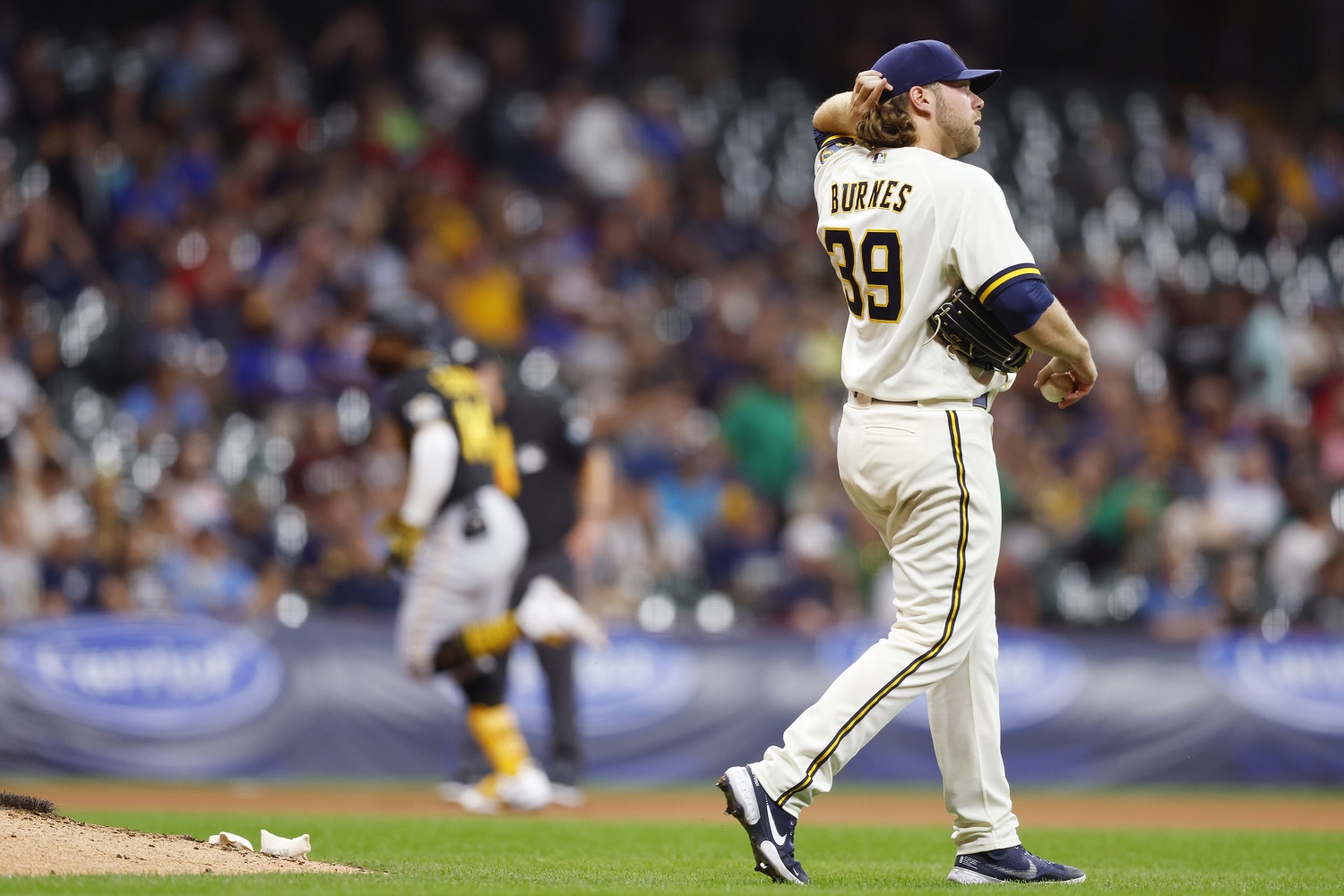 From a pure run-scoring perspective, the Brewers' offense is essentially the same as last year. In 2021, Milwaukee scored 4.56 runs/game compared to 4.55 this season. However, the run-scoring environment in MLB is tougher in 2022, so the Brewers rank eighth in runs this season versus 12th last year. You can point to various issues with the offense and the number of games they score fewer than three runs, but overall it's hard to complain about a top-10 offense in baseball. Turning to the pitching staff and many may be surprised by the mediocre numbers. The club's 3.87 team ERA is right in the middle of MLB pitching. While ERA doesn't tell the whole story, it says a lot that Milwaukee ranked third last season in ERA at 3.50 overall. For a team that's championship aspirations are built on dominating hurlers, a dip from third to 14th in ERA is devastating. Where has it gone wrong? The first thought likely turns to the bullpen, where things have seemingly been more tumultuous than usual. Devin Williams got off to a terrible start, Brent Suter was below average most of the first half, and Brad Boxberger has looked worn down for much of the last couple of months. Throw in the usual spate of injuries, the shocking trade of Josh Hader (who was already scuffling), and the predictable issues of many others, and one would believe the relievers are the main problem. Without diving into advanced statistics, the numbers say otherwise. This simple look at the bullpen basically puts them in the same range as last season. Part of it stems from manager Craig Counsell and his strategies to limit the use of his best relievers in low leverage situations. Perhaps the back end of the bullpen has been slightly less reliable this season, but it could also be that they have been put in too many tight spots to hold up. Some of that is a lack of run-scoring, but it also falls on the starting rotation to give the relievers some breathing room. Milwaukee's starters have been the more significant problem - and it's not close. Led by Cy Young hurler Corbin Burnes, the rotation was expected to be among the best in baseball once again. It hasn't gone so well. It's quite shocking to see the stats next to each other from the past two seasons. If we people told us the Brewers' starters would be a middle-of-the-pack unit in 2022, most would have felt fortunate if Milwaukee was even in the hunt for a postseason berth. The St. Louis Cardinals might be tough to catch at this point, but that doesn't mean the season's over. With a month to play and the Wild Card still easily in sight, a spot in the postseason will come down to better, more consistent starting pitching. With essentially the same rotation as last season, the drop in performance lies mainly with those returning arms and some areas they struggled in. Now, when you scroll through these five pitchers and compare their ERAs from this year to last year, keep one thing in mind: the league-wide ERA is 0.28 lower this season than it was in 2021. So as disappointing as the ERA spikes have been, the drop in production is even more dismal than the raw stats show. CORBIN BURNES - 2.84 ERA (2.43 in 2021) The reigning Cy Young is allowing the highest fly ball percentage (FB%) in his career (36.5%). Opponents also have their best hard-hit percentage against Burnes since his disastrous 2019 campaign. Putting those two pieces together has played a prominent role in Burnes' disturbing trend of giving up gopher balls. Last year, Burnes allowed seven home runs for the entire season. With a month to go, he has already given up 19 dingers in 2022. BRANDON WOODRUFF - 3.31 ERA (2.56 in 2021) Woody has been terrific since returning from injury. However, when he has struggled, it has been due to walks. Woodruff owns a 7.2% walk rate (BB%), the highest in a season since 2018 for the righty. In each of the previous three seasons, he has finished with a 6.1 BB%. Allowing more bases runners and driving up his pitch count has led to the worse ERA and throwing the fewest amount of innings per start since 2018. ERIC LAUER - 3.58 ERA (3.19 in 2021) After getting off to a Cy Young-worthy start to the season, Lauer quickly fell back to Earth and has been about the same as last year. His biggest issue, like Burnes, has been the home run ball. Among qualified pitchers in MLB, Lauer has the highest home run per nine innings rate at 1.7 HR/9. With his BB% up and his K% down from last season, the long ball has taken a greater toll and dinged his ERA even more than in 2022. ADRIAN HOUSER - 5.15 ERA (3.22 in 2021) Houser has looked the worst of the five typical starters, even before his injury and one start upon return. His 5.15 ERA this season is driven by allowing the highest percentage of line drives and fly balls since becoming a regular starter. As a pitcher who relies heavily on getting ground balls with his sinker, when opponents get more balls in the air, they tend to be hit well and cause plenty of damage. FREDDY PERALTA - 3.56 (2.81 in 2021) Fastball Freddy has only thrown 68.1 frames due to time on the IL with a strained right lat. However, it also sticks out that his strikeout percentage (K%) is easily the worst of his career. At 26.9%, his K% is five percent below his career mark. It's difficult to fairly evaluate Peralta having had so much time off, but the dip in strikeouts during his brief time has taken away from his potential dominance. As you can see, the starters haven't been able to keep up the near-historic performances they displayed in 2022. While many of the numbers are still solid or respectable, the dip impacts the outcomes of games. Especially, as noted earlier, when it comes to the pressure on the relievers to be almost perfect on a nightly basis. Instead of handing the bullpen a 4-1 lead in the seventh inning this year, it's more likely a 4-4 game or 4-3 where the relievers have little-to-no margin for error. As much as people (like me) complained about President of Baseball Operations David Stearns's inability to acquire a bat at the trade deadline, maybe a starting pitcher would have been more valuable. That is a moot point now. Ultimately, this is the group that has to put up or shut up. Because baseball has so many individualized aspects to it, people often forget it is a team sport where each performance and action impacts others on the club. Indeed, the offense could find a hot streak to carry the team down the stretch, or the bullpen could become a lockdown beast for a month. However, if the Brewers are going to find their way deep into October, keep an eye on the starting pitchers, as they will set the tone for everything going forward.
- 9 comments
-
- 2
-
-
- corbin burnes
- brandon woodruff
- (and 3 more)
-
Despite inconsistent play, dissatisfaction after the trade deadline, and still trailing in the hunt for a postseason berth, the Milwaukee Brewers have a tremendous opportunity in front of them. Starting Friday, Milwaukee has a favorable schedule that will determine their fate one way or the other. Before you go the negative route in your thinking, keep in mind the 2022 Brewers started the season 32-18. That was the best 50-game start in franchise history. Yeah, it feels like a decade ago, but this was the team that did it, and it included games against the St. Louis Cardinals, Atlanta Braves, and San Diego Padres. After dropping the series to the Los Angeles Dodgers, Milwaukee sits at 65-58. Almost immediately following that 50-game stretch, the Brewers dropped 10 of 11 contests, partly due to multiple injuries. A 162-game season creates those peaks and valleys. From that point on (June 15), Milwaukee has a 31-29 mark. Nothing special, but not the collapse of a season many like to portray. With 39 games remaining, there is plenty of time to turn a frustrating season into another playoff appearance and "bite at the apple." It begins Friday with a significant shift in Milwaukee's schedule. The Brewers play six consecutive series against teams owning a .500 or worse record (depending on the San Francisco Giants games). Yes, we've been down this road before, and it was ugly when the Brewers went 1-5 against the Pittsburgh Pirates and Cincinnati Reds after the Josh Hader trade. However, there were extenuating circumstances, and the Brewers now sense the urgency to battle. Here's a look at the breakdown of when Milwaukee can make up ground in the standings: Three-game series vs. the Chicago Cubs (54-71) Three-game series vs. the Pirates (47-77) Four-game series vs. the Arizona Diamondbacks (56-67) Three-game series vs. the Colorado Rockies (54-72) Doubleheader vs. Giants (61-62) Three-game series vs. the Reds (48-75) The combined winning percentage of those six teams is just .430 this season. These next 18 games put the Brewers in the driver's seat to fill up the win column before they face the Cardinals again on September 13. Many have started focusing on the Wild Card, with the Brewers five games behind the Cardinals in the division. However, they could erase that deficit just as quickly as St. Louis overtook Milwaukee in recent weeks. The Cards have been running hot for a while, having gone 18-4 in their last 22 games. That means some regression is coming, and the Crew must take advantage. Another positive for the Brewers is that 11 of those next 18 contests are at American Family Field, with just the seven-game trip to San Francisco and Colorado in the middle of four home series. The Brewers owns a 31-24 mark at home, while each opponent they will face is below .500 on the road. Some teams are even 15-20 games under the break-even level away from their home park. It will be crucial to make headway during those 18 matchups because then Milwaukee hits a pitfall for three series amongst the softer schedule. They get the Cardinals on the road for a two-game tilt, then come home to take on both New York clubs in three-game sets. The Yankees (76-48) and Mets (79-46) lead their respective East divisions and have top-five records in MLB. The Yankees have had a ton of trouble winning games lately, but it appears they are coming off that struggle bus, unfortunately for the Brewers. Meanwhile, the Mets have one of the top pitching staffs in the league, offering up a significant challenge for Milwaukee's already-inconsistent bats. If the Brewers can handle their business against the lesser clubs, they don't need to win each series against the New York teams. Some good news for the Brewers: They have a winning record against teams over .500, something the Cardinals can't brag about this year. Following those three tough series, the schedule bounces right back into Milwaukee's favor. They take their final road trip of the year with a four-game set in Cincy against a Reds club that has lost even more talent in the past month. Then the Brewers play their last nine games at home with two against St. Louis, a four-game series versus the Miami Marlins (54-69), and a year-end three-game against the Diamondbacks. As challenging as Milwaukee's schedule has been for most of the year, the calendar gives them every chance to make another September run into the playoffs in 2022. The chart below puts into perspective the key difference between their overall record last year versus this season: Ultimately, it comes down to the Brewers playing better baseball against lower-level opponents. Milwaukee's combined 24-20 record against the Cubs, Pirates, and Reds isn't good enough for a playoff contender. Whether the Brewers have played down to their foes' level, had mental issues creating on-field failures, or just performed poorly in recent matchups, they need to hit their stride when it matters most. Most know manager Craig Counsell has had a knack for finding ways to run off win streaks in the season's final month. He has taken on some deserved scrutiny for several of his decisions this season, so it is fair to wonder if anything will be different come September. Of course, it's the players who decide the results on the field. The division crown is still in sight, and a Wild Card entry to the playoffs is right in front of the Brewers, fighting with the Philadelphia Phillies and the sinking Padres. How Milwaukee handles the 29 games against teams at or below .500 will make or break any thoughts of a deep October run. As frustrating as this team has been at times, September and beyond could once again be a lot of fun. View full article
-
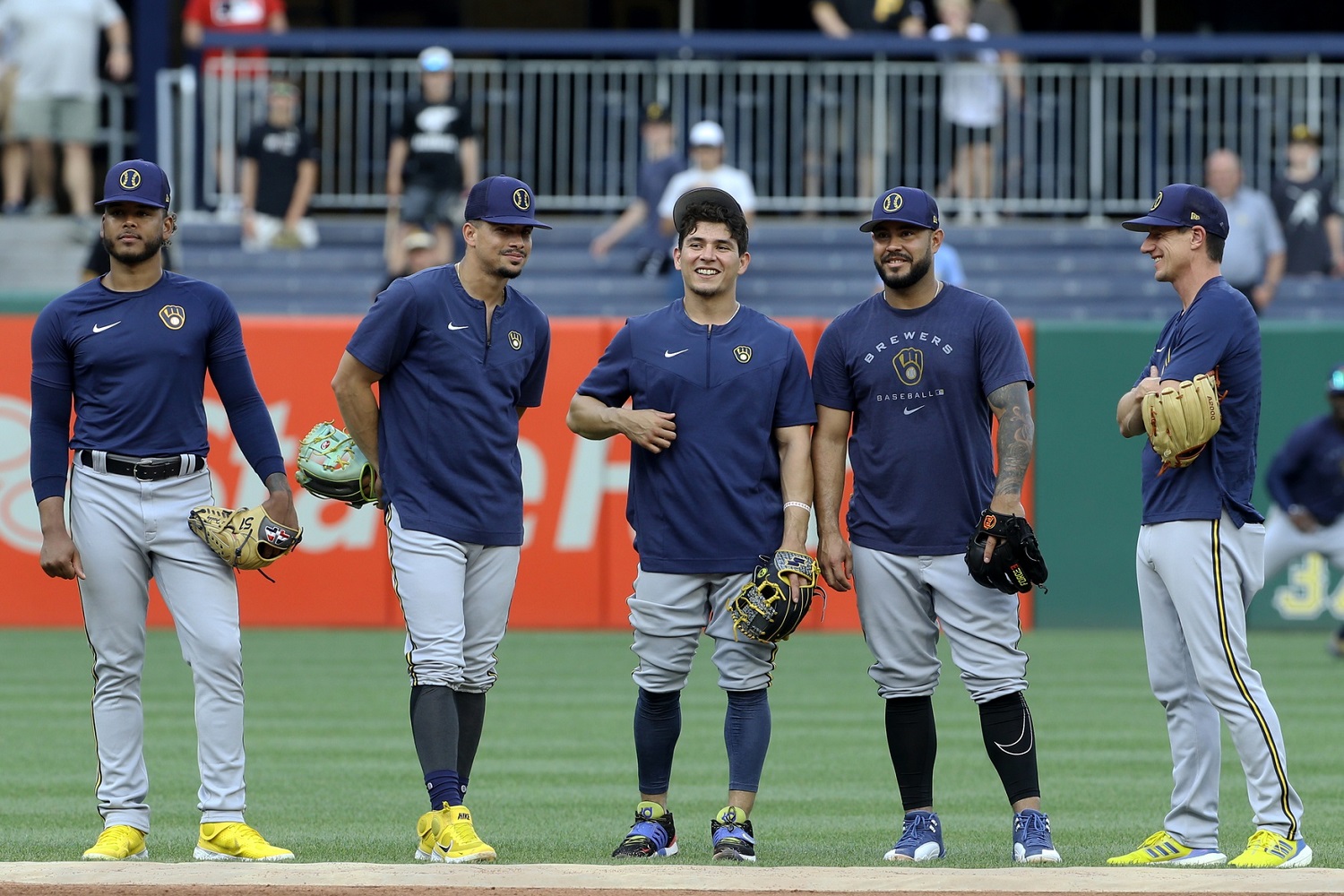 Before you go the negative route in your thinking, keep in mind the 2022 Brewers started the season 32-18. That was the best 50-game start in franchise history. Yeah, it feels like a decade ago, but this was the team that did it, and it included games against the St. Louis Cardinals, Atlanta Braves, and San Diego Padres. After dropping the series to the Los Angeles Dodgers, Milwaukee sits at 65-58. Almost immediately following that 50-game stretch, the Brewers dropped 10 of 11 contests, partly due to multiple injuries. A 162-game season creates those peaks and valleys. From that point on (June 15), Milwaukee has a 31-29 mark. Nothing special, but not the collapse of a season many like to portray. With 39 games remaining, there is plenty of time to turn a frustrating season into another playoff appearance and "bite at the apple." It begins Friday with a significant shift in Milwaukee's schedule. The Brewers play six consecutive series against teams owning a .500 or worse record (depending on the San Francisco Giants games). Yes, we've been down this road before, and it was ugly when the Brewers went 1-5 against the Pittsburgh Pirates and Cincinnati Reds after the Josh Hader trade. However, there were extenuating circumstances, and the Brewers now sense the urgency to battle. Here's a look at the breakdown of when Milwaukee can make up ground in the standings: Three-game series vs. the Chicago Cubs (54-71) Three-game series vs. the Pirates (47-77) Four-game series vs. the Arizona Diamondbacks (56-67) Three-game series vs. the Colorado Rockies (54-72) Doubleheader vs. Giants (61-62) Three-game series vs. the Reds (48-75) The combined winning percentage of those six teams is just .430 this season. These next 18 games put the Brewers in the driver's seat to fill up the win column before they face the Cardinals again on September 13. Many have started focusing on the Wild Card, with the Brewers five games behind the Cardinals in the division. However, they could erase that deficit just as quickly as St. Louis overtook Milwaukee in recent weeks. The Cards have been running hot for a while, having gone 18-4 in their last 22 games. That means some regression is coming, and the Crew must take advantage. Another positive for the Brewers is that 11 of those next 18 contests are at American Family Field, with just the seven-game trip to San Francisco and Colorado in the middle of four home series. The Brewers owns a 31-24 mark at home, while each opponent they will face is below .500 on the road. Some teams are even 15-20 games under the break-even level away from their home park. It will be crucial to make headway during those 18 matchups because then Milwaukee hits a pitfall for three series amongst the softer schedule. They get the Cardinals on the road for a two-game tilt, then come home to take on both New York clubs in three-game sets. The Yankees (76-48) and Mets (79-46) lead their respective East divisions and have top-five records in MLB. The Yankees have had a ton of trouble winning games lately, but it appears they are coming off that struggle bus, unfortunately for the Brewers. Meanwhile, the Mets have one of the top pitching staffs in the league, offering up a significant challenge for Milwaukee's already-inconsistent bats. If the Brewers can handle their business against the lesser clubs, they don't need to win each series against the New York teams. Some good news for the Brewers: They have a winning record against teams over .500, something the Cardinals can't brag about this year. Following those three tough series, the schedule bounces right back into Milwaukee's favor. They take their final road trip of the year with a four-game set in Cincy against a Reds club that has lost even more talent in the past month. Then the Brewers play their last nine games at home with two against St. Louis, a four-game series versus the Miami Marlins (54-69), and a year-end three-game against the Diamondbacks. As challenging as Milwaukee's schedule has been for most of the year, the calendar gives them every chance to make another September run into the playoffs in 2022. The chart below puts into perspective the key difference between their overall record last year versus this season: Ultimately, it comes down to the Brewers playing better baseball against lower-level opponents. Milwaukee's combined 24-20 record against the Cubs, Pirates, and Reds isn't good enough for a playoff contender. Whether the Brewers have played down to their foes' level, had mental issues creating on-field failures, or just performed poorly in recent matchups, they need to hit their stride when it matters most. Most know manager Craig Counsell has had a knack for finding ways to run off win streaks in the season's final month. He has taken on some deserved scrutiny for several of his decisions this season, so it is fair to wonder if anything will be different come September. Of course, it's the players who decide the results on the field. The division crown is still in sight, and a Wild Card entry to the playoffs is right in front of the Brewers, fighting with the Philadelphia Phillies and the sinking Padres. How Milwaukee handles the 29 games against teams at or below .500 will make or break any thoughts of a deep October run. As frustrating as this team has been at times, September and beyond could once again be a lot of fun.
 -
Baseball's statistical use and analysis have evolved, with projections becoming more critical than ever. But at some point, when does current production outweigh the concerns or expectations of a player? For the Milwaukee Brewers, that could determine how much playing time Keston Hiura gets while his positive results flow. Since being recalled on August 3 from triple-A, Keston Hiura boasts a 1.112 OPS in 25 plate appearances. That includes his enormous Sunday performance in Wrigley, going 2-for-4 with a pair of clutch home runs - first to tie the game, then to put it out of reach. Despite the production in few opportunities since his return, Hiura had made just seven starts in the Brewers' 17 contests since August 3. For a club that struggles to find offensive consistency - and wins as of late - Hiura's lack of playing time has been a hot topic. The main reason the Brewers have been reluctant to use Hiura regularly is his propensity to strike out. Entering Sunday, he had an incredibly high 43% strikeout rate, which is the worst in MLB among hitters with 160+ plate appearances. The concern is that no player has ever shown the ability to have continued success while failing to put the ball in play at such a high clip. It makes sense to think the more he plays, the more his strikeout problem is exploited. On the other hand, Hiura has adjusted his stance again to help alleviate the issue. He is clearly getting better results statistically while making better contact, but the strikeout problem is only slightly better. Even during his "hot streak," Hiura still has a 38.1 K%. Regardless, the question remains, does the damage he does when making contact create more value than an alarming strikeout rate? Milwaukee doesn't worry too much about the whiffs anyway, with the eighth-highest K% in baseball. In the words of many who don't believe strikeouts are a big problem, "an out is an out." So a bump in their K% should barely register on their radar if the hitter has the second-best wOBA (.365) on the team in August as Hiura does. Why not ride the hot hand for a while? Some don't think the idea of a hot hitter exists, at least in any quantifiable way. I believe it. Players talk about feeling invincible, seeing a "beach ball" coming in when they hit, and mentally expecting great things every time they step in the box. Sure, the streak of success will end, and you may not know precisely when, but cross that bridge when you get there. Hitters experience multiple peaks and valleys in a season, so take advantage of those high points. You can also look at it as a player "earning the at-bats," exactly what manager Craig Counsell said about Rowdy Tellez facing left-handed pitchers late in games. Hiura has earned more at-bats. The next question becomes, where and when does he play? There are a variety of options depending on many factors. The simplest and most conventional strategy would be using Hiura as a DH against righties and putting Andrew McCutchen on the bench. Though the veteran free agent pickup has had some quality stretches against right-handers, he was brought in to destroy left-handed pitching. McCutchen had a .683 OPS and .650 OPS versus righties the last two seasons. This year, after boosting his number early on, he owns a .702 OPS with a minuscule .378 SLG - making him a curious choice for the cleanup spot. Meanwhile, Hiura has always fared better against right-handed pitching, slugging .528 with an .867 OPS in his career. His 2022 campaign has produced an even better slash line: .308/.407/.680/1.086. Curiously, Counsell has often started Hiura against lefty starters like a platoon partner for Tellez. The platoon advantage for Hiura hasn't worked as he has a .597 career OPS versus southpaws (.591 OPS). However, Hiura's numbers when a left-hander starts do bump up, so there is some value in continuing that plan for more Hiura at-bats. One intriguing aspect of Hiura's Sunday performance was that he homered off a lefty and righty in the game. Another option to keep Hiura's stick in the lineup could strengthen another team weakness: center field. Hiura could find himself as the DH more often if McCutchen starts games in center, where the Brewers' offensive output has been among the worst in MLB. Milwaukee's combined center field production, led mainly by Tyrone Taylor and Jonathan Davis, ranks fifth-worst in OPS (.584). McCutchen's bat would be a clear step up, but the Brewers would sacrifice defense. You can see below how Davis and Taylor have been four outs above average defensively, while McCutchen has been below-average in far fewer innings and in the easier outfield spots in the corners. The club's run prevention has been up-and-down all season, and they already have a defensive concern playing left field in Christian Yelich. Does the value of a bat outweigh the worse range and glove in center field? When Counsell was asked Sunday if "Cutch" in center field was an option to get Hiura playing time, he said, "I will tell you that we'll explore ways to get Keston in there." That could also mean a few starts in left field in place of Yelich, which Counsell has done a few times that past couple of seasons. As for McCutchen, even if starting him in center field isn't a regular thing, the Brewers can pick their spots to use him when balls to the outfield may be less likely, such as with a ground ball pitcher like Adrian Houser or with a high-strikeout guy like Corbin Burnes. Based on Counsell's comments, it appears the Brewers believe they can no longer afford to keep Hiura out of the lineup. The calendar and the team's offensive frustrations are working together to create enough urgency for a change in strategy. If he keeps slugging like the top-hitting prospect he was touted to be, Hiura will enjoy plenty of starts down the stretch. The key could be if and when Milwaukee goes back to a cautious use of Hiura if they believe he isn't "hot" anymore. That is always the concern when playing a streak: a hitter is hot until he isn't, and you never know when his time is up. For the Brewers' sake, they hope Hiura's clock strikes midnight sometime in November. View full article