



Tim Muma
-
Posts
436 -
Joined
-
Last visited
-
Days Won
1
Content Type
Profiles
Forums
Blogs
Events
News
2026 Milwaukee Brewers Top Prospects Ranking
Milwaukee Brewers Videos
2022 Milwaukee Brewers Draft Picks
Milwaukee Brewers Free Agent & Trade Rumors, Notes, & Tidbits
Guides & Resources
2023 Milwaukee Brewers Draft Picks
2024 Milwaukee Brewers Draft Picks
The Milwaukee Brewers Players Project
2025 Milwaukee Brewers Draft Pick Tracker
2026 Milwaukee Brewers Draft Tracker: Picks & Bonuses
Store
Downloads
Gallery
Everything posted by Tim Muma
-
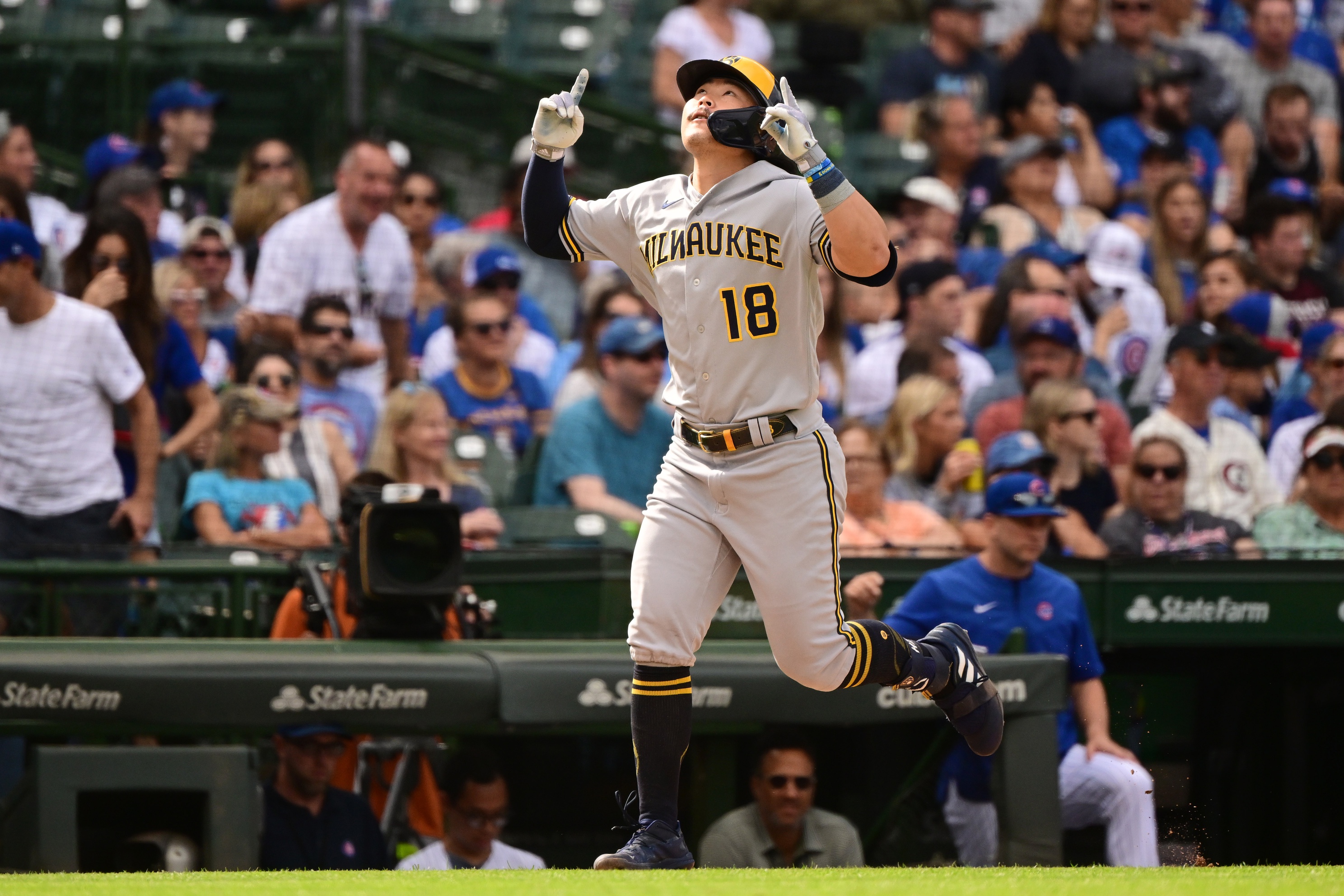 Since being recalled on August 3 from triple-A, Keston Hiura boasts a 1.112 OPS in 25 plate appearances. That includes his enormous Sunday performance in Wrigley, going 2-for-4 with a pair of clutch home runs - first to tie the game, then to put it out of reach. Despite the production in few opportunities since his return, Hiura had made just seven starts in the Brewers' 17 contests since August 3. For a club that struggles to find offensive consistency - and wins as of late - Hiura's lack of playing time has been a hot topic. The main reason the Brewers have been reluctant to use Hiura regularly is his propensity to strike out. Entering Sunday, he had an incredibly high 43% strikeout rate, which is the worst in MLB among hitters with 160+ plate appearances. The concern is that no player has ever shown the ability to have continued success while failing to put the ball in play at such a high clip. It makes sense to think the more he plays, the more his strikeout problem is exploited. On the other hand, Hiura has adjusted his stance again to help alleviate the issue. He is clearly getting better results statistically while making better contact, but the strikeout problem is only slightly better. Even during his "hot streak," Hiura still has a 38.1 K%. Regardless, the question remains, does the damage he does when making contact create more value than an alarming strikeout rate? Milwaukee doesn't worry too much about the whiffs anyway, with the eighth-highest K% in baseball. In the words of many who don't believe strikeouts are a big problem, "an out is an out." So a bump in their K% should barely register on their radar if the hitter has the second-best wOBA (.365) on the team in August as Hiura does. Why not ride the hot hand for a while? Some don't think the idea of a hot hitter exists, at least in any quantifiable way. I believe it. Players talk about feeling invincible, seeing a "beach ball" coming in when they hit, and mentally expecting great things every time they step in the box. Sure, the streak of success will end, and you may not know precisely when, but cross that bridge when you get there. Hitters experience multiple peaks and valleys in a season, so take advantage of those high points. You can also look at it as a player "earning the at-bats," exactly what manager Craig Counsell said about Rowdy Tellez facing left-handed pitchers late in games. Hiura has earned more at-bats. The next question becomes, where and when does he play? There are a variety of options depending on many factors. The simplest and most conventional strategy would be using Hiura as a DH against righties and putting Andrew McCutchen on the bench. Though the veteran free agent pickup has had some quality stretches against right-handers, he was brought in to destroy left-handed pitching. McCutchen had a .683 OPS and .650 OPS versus righties the last two seasons. This year, after boosting his number early on, he owns a .702 OPS with a minuscule .378 SLG - making him a curious choice for the cleanup spot. Meanwhile, Hiura has always fared better against right-handed pitching, slugging .528 with an .867 OPS in his career. His 2022 campaign has produced an even better slash line: .308/.407/.680/1.086. Curiously, Counsell has often started Hiura against lefty starters like a platoon partner for Tellez. The platoon advantage for Hiura hasn't worked as he has a .597 career OPS versus southpaws (.591 OPS). However, Hiura's numbers when a left-hander starts do bump up, so there is some value in continuing that plan for more Hiura at-bats. One intriguing aspect of Hiura's Sunday performance was that he homered off a lefty and righty in the game. Another option to keep Hiura's stick in the lineup could strengthen another team weakness: center field. Hiura could find himself as the DH more often if McCutchen starts games in center, where the Brewers' offensive output has been among the worst in MLB. Milwaukee's combined center field production, led mainly by Tyrone Taylor and Jonathan Davis, ranks fifth-worst in OPS (.584). McCutchen's bat would be a clear step up, but the Brewers would sacrifice defense. You can see below how Davis and Taylor have been four outs above average defensively, while McCutchen has been below-average in far fewer innings and in the easier outfield spots in the corners. The club's run prevention has been up-and-down all season, and they already have a defensive concern playing left field in Christian Yelich. Does the value of a bat outweigh the worse range and glove in center field? When Counsell was asked Sunday if "Cutch" in center field was an option to get Hiura playing time, he said, "I will tell you that we'll explore ways to get Keston in there." That could also mean a few starts in left field in place of Yelich, which Counsell has done a few times that past couple of seasons. As for McCutchen, even if starting him in center field isn't a regular thing, the Brewers can pick their spots to use him when balls to the outfield may be less likely, such as with a ground ball pitcher like Adrian Houser or with a high-strikeout guy like Corbin Burnes. Based on Counsell's comments, it appears the Brewers believe they can no longer afford to keep Hiura out of the lineup. The calendar and the team's offensive frustrations are working together to create enough urgency for a change in strategy. If he keeps slugging like the top-hitting prospect he was touted to be, Hiura will enjoy plenty of starts down the stretch. The key could be if and when Milwaukee goes back to a cautious use of Hiura if they believe he isn't "hot" anymore. That is always the concern when playing a streak: a hitter is hot until he isn't, and you never know when his time is up. For the Brewers' sake, they hope Hiura's clock strikes midnight sometime in November.
 -

Article: Yelich's Decline and the Brewers' Current Offense
Tim Muma replied to Tim Muma's topic in Milwaukee Brewers Talk
If you have some specific source or examples, I'd love to hear it. I just had a few brief convos with people that I have some connections to and there has been no discussion of that being a concern about Yelich. They acknowledge frustration about results and inability to find solutions, but zero talk about a lack of effort. The same was said about adjustments. It has been a near constant battle to figure this thing out. -
Article: Yelich's Decline and the Brewers' Current Offense
Tim Muma replied to Tim Muma's topic in Milwaukee Brewers Talk
100% that he (and anyone) making those decisions are in a tough spot because you can't predict the future. We obviously don't know what the negotiations were like, either, but in the end that is why he is paid to make those decisions. I will gladly take his role and learn to deal with such criticisms to make his money and essentially run a baseball team. That is the kind of "pressure" and "stress" I would love to have. As for the knee and bouncing back. As many have noted, it isn't all about the physical recovery. There can be other factors. Even if physically "healthy," did something change in how he can use the leg or any other ailments, like his back. If it was a "now or never" for the extension before the season, then so be it, Stearns had to make a call. If they could have waited to see how he rebounded, it would have been interesting with it being the shortened 2020 season. A lot to digest and factor for sure. -
Article: Yelich's Decline and the Brewers' Current Offense
Tim Muma replied to Tim Muma's topic in Milwaukee Brewers Talk
Zero adjustments from what point? I think that scout was either exaggerating or talking about major adjustments. He has had changes over the last 2 seasons to his hand location, front foot location (during stance and when landing), leg kick, etc. If that were true that he NOR the Brewers worked on ZERO adjustments, then that is damning of both. As for the slap hitter comment...I guess you have to decide on what you want. I think right now, he helps the team best by drawing walks and making contact with an emphasis on getting on base (not power). That is what is somewhat working. It would seem the last couple of seasons that trying to be the same hitter as 18-19 wasn't working, so why keep down that path? The defense...there is nothing to say. He is worse all around, but players don't get big deals because of their defense. So to your point, if he were hitting anywhere near like he did before, it would not matter at all. Last night's throw to home...it looked like it hurt to make a long throw. Sad, really. -
Article: Yelich's Decline and the Brewers' Current Offense
Tim Muma replied to Tim Muma's topic in Milwaukee Brewers Talk
But Yelich HAS been making adjustments and he has been somewhat productive most of this season...just obviously not to the level that his contract would indicate. I had an article earlier this year for those who begrudge him for having that contract or that he should "give money back." What about the insane value he provided when he was far underpaid. If you lookup that article, you'll find it's close to even at this point in terms of value. However, without major improvements, he will ultimately underperform what he's been paid in Milwaukee by the end - no doubt. In the end, I see a slow bat on many nights and no one knows for sure why...but it is probably a combination of factors. Again, you can blame him if you'd like. Many are to blame for the offense's issues. It stinks. My point is simply that 1) He has been trying to live up to the deal (adjustments, extra work, accountability, etc.) as noted in this piece. It's not like he is being lazy or a bad teammate or something; 2) It's not his fault the Brewers offered him the contract. If they offered it to me, I would take it right now knowing full well I wouldn't live up to 1% of it. -
Article: Yelich's Decline and the Brewers' Current Offense
Tim Muma replied to Tim Muma's topic in Milwaukee Brewers Talk
Questioning the timing of the contract extension and not knowing how he would bounce back after the knee injury (assuming that what started the decline or is a contributing factor)....that is a great point in terms of biggest criticism of Stearns when it comes to Yelich. -
Article: Yelich's Decline and the Brewers' Current Offense
Tim Muma replied to Tim Muma's topic in Milwaukee Brewers Talk
David Peralta and Tyler Naquin would have been strong deals to make as platoon options for McCutchen against RH & spell Renfore/Yelich depending on matchup. Plus quality LH options late in games. Peralta was had for the Rays' #19 prospect, so Milwaukee certainly could have made a play for a "cheap" cost there. Naquin was dealt with another player for 2 low level minor leaguers. Not sure on their rankings...but again, couldn't have cost much for Naquin himself. Yes, it takes two to tango, but we will never know. Brandon Drury was still the best fit at, I think, would have been an affordable prospect cost. I agree you weren't dealing any of your top 5 guys, but could there have been a fit for a 6-10 player that the Brewers have depth for already? Offer a pair of Top 30 guys that entice Cincy? Sounds like Stearns likely didn't even engage much for him. Again, I understand you can't force a trade, but it sounds like there was little push for a bat because of prospect hoarding, IMO. -
Article: Yelich's Decline and the Brewers' Current Offense
Tim Muma replied to Tim Muma's topic in Milwaukee Brewers Talk
There is a line between defending Yelich and recognizing that blame in certain areas is incorrect. Is he living up to the contract? No, of course not. However, he shouldn't be to blame for signing it (the Brewers offered), and his decline does not appear to be because of anything he has done negatively (lack of effort, prior PED use, etc.). As for Stearns, he has earned some benefit of the doubt; however, myself and many others have been ALL OVER him for this year's deadline. Not necessarily the Hader move on its own, but the way weaknesses weren't addressed and how it seemed like selling while they were in first place. And as I say in this article, he didn't adjust to Yelich's slide enough - if at all - to improve the offense. Lastly, yes, the Brewers are hurt by large contracts with little production - more so than many other teams. However, as has been studied and reported on many times, MLB teams typically make a ton of money every year. There is always room for more expenditures on payroll, and especially when you might be looking at a 2 or 3-year window with talent to get you a Championship. Plenty of "blame" to go around if they can't take advantage of the pitching they have had during this run and get to a World Series. -
Life (and baseball) happens fast. Christian Yelich's sudden and steep descent from MVP stud hitter to a serviceable leadoff man put the Milwaukee Brewers behind the eight-ball offensively the past few seasons. It's not Yelich's fault; it just happened. This is not a piece laying blame at the feet of Christian Yelich for the Brewers' inability to reach the World Series or for "hurting" the club with his nine-year, $215 million contract. It's simply a look at how much President of Baseball Operations David Stearns planned to lean on Yelich's incredible production, with a blueprint to surround the (basically) two-time MVP with decent but unspectacular hitters. I recently watched highlights from 2018 and 2019, and it is easy to forget just how insanely amazing Yelich performed in those years. What Yelich did in the second half of 2018 was as close to a Barry Bonds type of run as we've seen - albeit for a much shorter time. We know one fantastic hitter doesn't make a lineup potent; however, a truly feared player that delivers every night and can change a game's outcome with one swing makes a world of difference. No matter what statistics you want to use, Yelich of 2018-19 was disgusting in all the right ways. These are truly incredible numbers. Aside from Mookie Betts and Mike Trout, Yelich was the best hitter in MLB those two seasons. You can see why the Brewers relied so heavily on him when you look at 36 and 44 home runs in those seasons, leading to 110 and 97 RBI, respectively. And keep in mind Yelich's 2019 season was cut short by the fractured kneecap limiting him to only 130 games. Despite the freak injury, nobody thought Yelich would become a shell of himself in the following seasons. Maybe in six or seven years as he hit his mid-30s, but not right now. Unfortunately, the fall-off was immediate, and its depth of decline remains staggering. Even leaving out 2020 for obvious reasons, the slide from elite power bat to slap hitter with on-base skills is tragic. One number to focus on is Weighted Runs Created Plus (wRC+), the most comprehensive statistic for offensive performance. Let's say Yelich gets up to 110 wRC+ this season (he is currently at 106); that is more than 60 wRC+ "lost" from the 2019 version of Yelich. Even if you expected a slight decline each year, that is a colossal production hole you need to recoup through other players. No one has truly figured out why he ended up here, though many believe it started with the knee injury and mental barrier that could have changed his swing and aggressiveness. Being 30 years old doesn't help either, but one can't blame the swift and cavernous valley on age alone. As with most things, it's likely a combination of many factors, including the ridiculous improvement by MLB pitchers since 2019. But again, this isn't to say fans should be chastising Yelich. By all accounts, he continues to put in the work, make adjustments to find solutions, and acknowledge that he hasn't lived up to his (or anyone else's) expectations. Frustration with him is understandable, and it's not for me to say how fans should react. Yelich has been more productive this season than last, especially after manager Craig Counsell moved him into the leadoff spot where his current skill set better suits him. Despite a recent 0-for-23 cold spell, he's coming out of the St. Louis Cardinals series with a .354 OBP and 107 OPS+. No, it isn't "good enough" for what he was supposed to be and what his contract provides, but it's not an abject failure, either. The problem is that Yelich's current production has prevented the Brewers' offense from reaching stable success like Stearns planned. At the same time, Yelich's unforeseen dip doesn't absolve Stearns of the current situation. Milwaukee displayed its true offensive colors in 2021, even after acquiring Willy Adames to spark their production. Whether by choice or lack of options, Milwaukee mostly remained the same type of offense without an elite bat's legitimate, everyday threat in the lineup. And as the offense continued to be Jekyll and Hyde most nights before the trade deadline, no one was brought in to help redistribute Yelich's expected numbers elsewhere. Perhaps the Brewers thought Adames would step into that role, but unfortunately, he has had his ups and downs, too. Without a hitter like Yelich at his peak (or someone close), the offense Stearns put together isn't nearly as effective. It was never meant to be a "star and scrubs" lineup, but reliant on that key anchor in the middle that gets help from complementary pieces every game. Unfortunately, without the big bat, the offense finds it more difficult to reach their potential regularly. Sure, Yelich's contract is a hinderance to more spending (in theory). The truth is, the Brewers, like all MLB teams, could easily push their payroll higher without great risk to the bottom line. What does it all mean? Baseball, like life, is more unpredictable than we can imagine. Even things that are "guarantees" can quickly fade into disappointment. Stearns clearly had a plan that revolved around Yelich as the nucleus of the offense that would drive everyone else to succeed on a higher level. Yelich lost something, and Stearns lost his preferred offense without enough answers in time to turn things around. This doesn't mean the team is terrible, Yelich is trash, and the offense will never do enough. There is talent all around, Yelich included, but the Brewers have to find different ways to make it all work after the grand Yelich plan had to go out the window. I'll still take issue with Stearns' lack of assertiveness on the market for a hitter, grumble when the offense fails to score more than three runs, and long to see the Yelich of a few seasons ago. At the same time, I'll be there every night rooting for my team and hoping that the Brewers discover new ways to land in the win column each night until they are the last ones standing. View full article
-
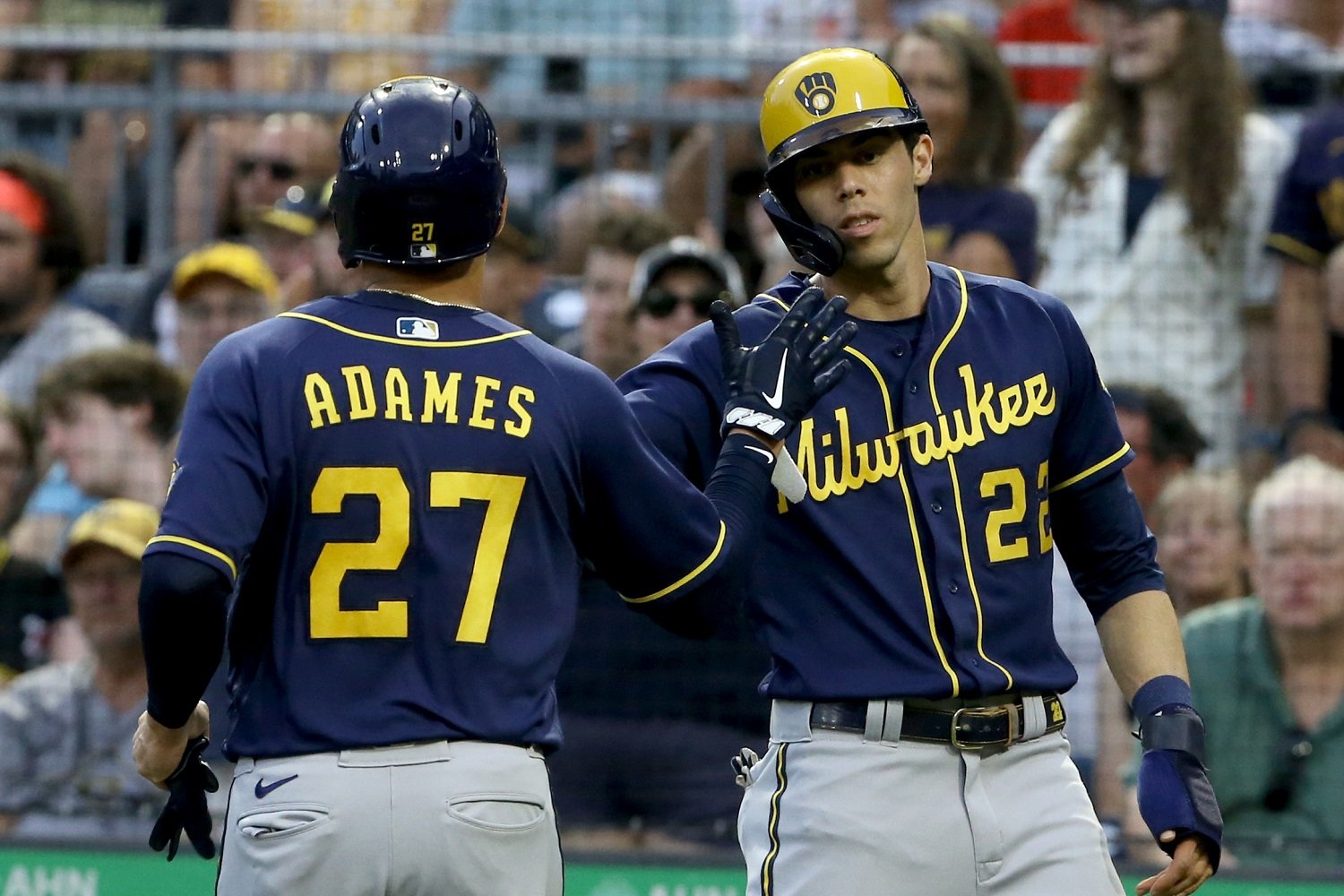 This is not a piece laying blame at the feet of Christian Yelich for the Brewers' inability to reach the World Series or for "hurting" the club with his nine-year, $215 million contract. It's simply a look at how much President of Baseball Operations David Stearns planned to lean on Yelich's incredible production, with a blueprint to surround the (basically) two-time MVP with decent but unspectacular hitters. I recently watched highlights from 2018 and 2019, and it is easy to forget just how insanely amazing Yelich performed in those years. What Yelich did in the second half of 2018 was as close to a Barry Bonds type of run as we've seen - albeit for a much shorter time. We know one fantastic hitter doesn't make a lineup potent; however, a truly feared player that delivers every night and can change a game's outcome with one swing makes a world of difference. No matter what statistics you want to use, Yelich of 2018-19 was disgusting in all the right ways. These are truly incredible numbers. Aside from Mookie Betts and Mike Trout, Yelich was the best hitter in MLB those two seasons. You can see why the Brewers relied so heavily on him when you look at 36 and 44 home runs in those seasons, leading to 110 and 97 RBI, respectively. And keep in mind Yelich's 2019 season was cut short by the fractured kneecap limiting him to only 130 games. Despite the freak injury, nobody thought Yelich would become a shell of himself in the following seasons. Maybe in six or seven years as he hit his mid-30s, but not right now. Unfortunately, the fall-off was immediate, and its depth of decline remains staggering. Even leaving out 2020 for obvious reasons, the slide from elite power bat to slap hitter with on-base skills is tragic. One number to focus on is Weighted Runs Created Plus (wRC+), the most comprehensive statistic for offensive performance. Let's say Yelich gets up to 110 wRC+ this season (he is currently at 106); that is more than 60 wRC+ "lost" from the 2019 version of Yelich. Even if you expected a slight decline each year, that is a colossal production hole you need to recoup through other players. No one has truly figured out why he ended up here, though many believe it started with the knee injury and mental barrier that could have changed his swing and aggressiveness. Being 30 years old doesn't help either, but one can't blame the swift and cavernous valley on age alone. As with most things, it's likely a combination of many factors, including the ridiculous improvement by MLB pitchers since 2019. But again, this isn't to say fans should be chastising Yelich. By all accounts, he continues to put in the work, make adjustments to find solutions, and acknowledge that he hasn't lived up to his (or anyone else's) expectations. Frustration with him is understandable, and it's not for me to say how fans should react. Yelich has been more productive this season than last, especially after manager Craig Counsell moved him into the leadoff spot where his current skill set better suits him. Despite a recent 0-for-23 cold spell, he's coming out of the St. Louis Cardinals series with a .354 OBP and 107 OPS+. No, it isn't "good enough" for what he was supposed to be and what his contract provides, but it's not an abject failure, either. The problem is that Yelich's current production has prevented the Brewers' offense from reaching stable success like Stearns planned. At the same time, Yelich's unforeseen dip doesn't absolve Stearns of the current situation. Milwaukee displayed its true offensive colors in 2021, even after acquiring Willy Adames to spark their production. Whether by choice or lack of options, Milwaukee mostly remained the same type of offense without an elite bat's legitimate, everyday threat in the lineup. And as the offense continued to be Jekyll and Hyde most nights before the trade deadline, no one was brought in to help redistribute Yelich's expected numbers elsewhere. Perhaps the Brewers thought Adames would step into that role, but unfortunately, he has had his ups and downs, too. Without a hitter like Yelich at his peak (or someone close), the offense Stearns put together isn't nearly as effective. It was never meant to be a "star and scrubs" lineup, but reliant on that key anchor in the middle that gets help from complementary pieces every game. Unfortunately, without the big bat, the offense finds it more difficult to reach their potential regularly. Sure, Yelich's contract is a hinderance to more spending (in theory). The truth is, the Brewers, like all MLB teams, could easily push their payroll higher without great risk to the bottom line. What does it all mean? Baseball, like life, is more unpredictable than we can imagine. Even things that are "guarantees" can quickly fade into disappointment. Stearns clearly had a plan that revolved around Yelich as the nucleus of the offense that would drive everyone else to succeed on a higher level. Yelich lost something, and Stearns lost his preferred offense without enough answers in time to turn things around. This doesn't mean the team is terrible, Yelich is trash, and the offense will never do enough. There is talent all around, Yelich included, but the Brewers have to find different ways to make it all work after the grand Yelich plan had to go out the window. I'll still take issue with Stearns' lack of assertiveness on the market for a hitter, grumble when the offense fails to score more than three runs, and long to see the Yelich of a few seasons ago. At the same time, I'll be there every night rooting for my team and hoping that the Brewers discover new ways to land in the win column each night until they are the last ones standing.
- 55 comments
-
- 1
-

-
- christian yelich
- willy adames
- (and 1 more)
-
That definitely can be part it. Learning to harness such movement can take years to figure out - if ever truly "getting it." You don't really want to encourage "less movement," but there can be value in doing so if it means better command. In my experience coaching youth, high school & college I have tried to get guys to throw with slightly less velocity to improve command...but even that can have unintended consequences. Never really had the issue with too much movement. Any movement problems we simply targeted different spots to hit the intended location.
-
Thank you! Well, hard to say what they are discussing internally. As for the consistent 0-2 sliders and his propensity to give up hits in that count. The pitch selection is often a team-wide discussion before the series in how to handle hitters, plus what the catcher may see/think in-game. Maybe some adjustments come late in the year. As for giving up hits in that count, that has certainly been a conversation. The high-inside location to righties...he could simply have trouble locating in that spot. I've caught at least one pitcher who just couldn't manipulate any pitch into that location, so I had to stay away from it. Obviously Ashby's skill level is way higher, so perhaps they have other reasons to avoid it. Seems worth a shot to me.
-
Aaron Ashby's skill set and "stuff" show clear signs of big-time potential. The Milwaukee Brewers agree, signing him to a five-year contract worth a guaranteed $20.5 million. Two adjustments in his mound strategy could impact how quickly Ashby begins to reach greater heights and help the 2022 club make a deep postseason run. Every pitcher goes through growing pains in MLB. Left-handers especially seem to take a bit longer to put everything together. Aaron Ashby is no different, displaying flashes of dominance with stretches of frustration. His struggles often stem from the fantastic movement he gets on his pitches. It's a blessing and a curse when you're learning to command a high-quality repertoire. Among pitchers with at least 50 innings, Ashby has the 15th-highest BB% at 10.7%; however, he also ranks 25th in MLB with a 26.9 K%. As noted, a significant factor in his strikeouts and walks is how much Ashby's pitches move, particularly his slider and changeup: Ashby's slider gets the fifth-greatest amount of vertical movement in MLB (minimum 400 pitches) His horizontal movement on the slider also ranks 14th in distance Ashby's changeup rates as the 16th-best in the amount of horizontal movement (minimum 300 pitches) With such great movement on those two offerings, and a sinker that sits 96-98 MPH, it's difficult to understand how Ashby owns a 4.32 ERA. There are two specific areas where he could make changes that would keep hitters off-balance and ideally get better, more consistent results. Ashby needs to mix up his pitch selection on 0-2 counts when hitters have a stunning .323/.333/.387/.720 line. He has been the worst in that count all season. For comparison, the average MLB slash line on an 0-2 count is .154/.164/.223/.387. Quite remarkable. From what I can see, part of the issue is that Ashby throws his slider too often in that count. As you can see, he is using the slider more than 55% of the time when he is ahead 0-2, the largest percentage of any pitch in any count. While pitchers will have their "put away" pitch, that usually means it is highly effective. For hitters facing Ashby, odds are you're getting a slider on 0-2. So they might look for it in most cases and believe they will either fight off a different offering or take it, thinking there's a good chance it's out of the strike zone. And if they get a slider that isn't a strike, they would be better prepared to take it. Using any other pitch more frequently would start to catch opponents off-guard and give them different 0-2 pitches to think about each at-bat. Especially if Ashby utilized the curve and four-seam fastball, which he rarely throws on 0-2, it immediately alters their perception. Speaking of changing things up, the second adjustment Ashby needs to make is gunning for the high-and-inside region of the strike zone on right-handers (high and away versus lefties). Baseball Savant's graphic below shows how little Ashby hits that spot - by choice or lack of execution. Targeting that location works against hitters on both sides of the plate. Again, Ashby has the velocity to succeed up there with his sinker and four-seam heater in the mid-to-upper 90s. When facing righties, the up-and-in spot location keeps batters from leaning over the plate, anticipating something softer and outside. It also helps to change the eye level as they are likely looking for a changeup or breaking ball in the bottom third of the zone. If Ashby can be close to that region, it's a challenging ball to hit well, if at all, for a right-hander. It might be slightly less effective against lefties but still has value. Typically a left-hander anticipates a slider or curveball on the outer half from southpaws, breaking to the edge or outside the zone. Of course, those also have a vertical drop, so their swing would be middle-to-low in height. Mixing in the sinker or fastball into that spot gives lefties less time to react and doubt in their minds when it comes to offspeed. While it can be easier to reach than up-and-in, it would be a worthwhile risk for Ashby to increase his overall effectiveness. Again, Ashby is still learning to command all of his pitches, use an impactful variation, and find the best balance. There are also team decisions on how to attack certain hitters in specific situations, which could mean Ashby has less control over what and where he tries to throw. But if he is going to take a quick step forward the rest of this season, Ashby and the Brewers should be willing to try some new things and see what level he can reach in 2022. View full article
-
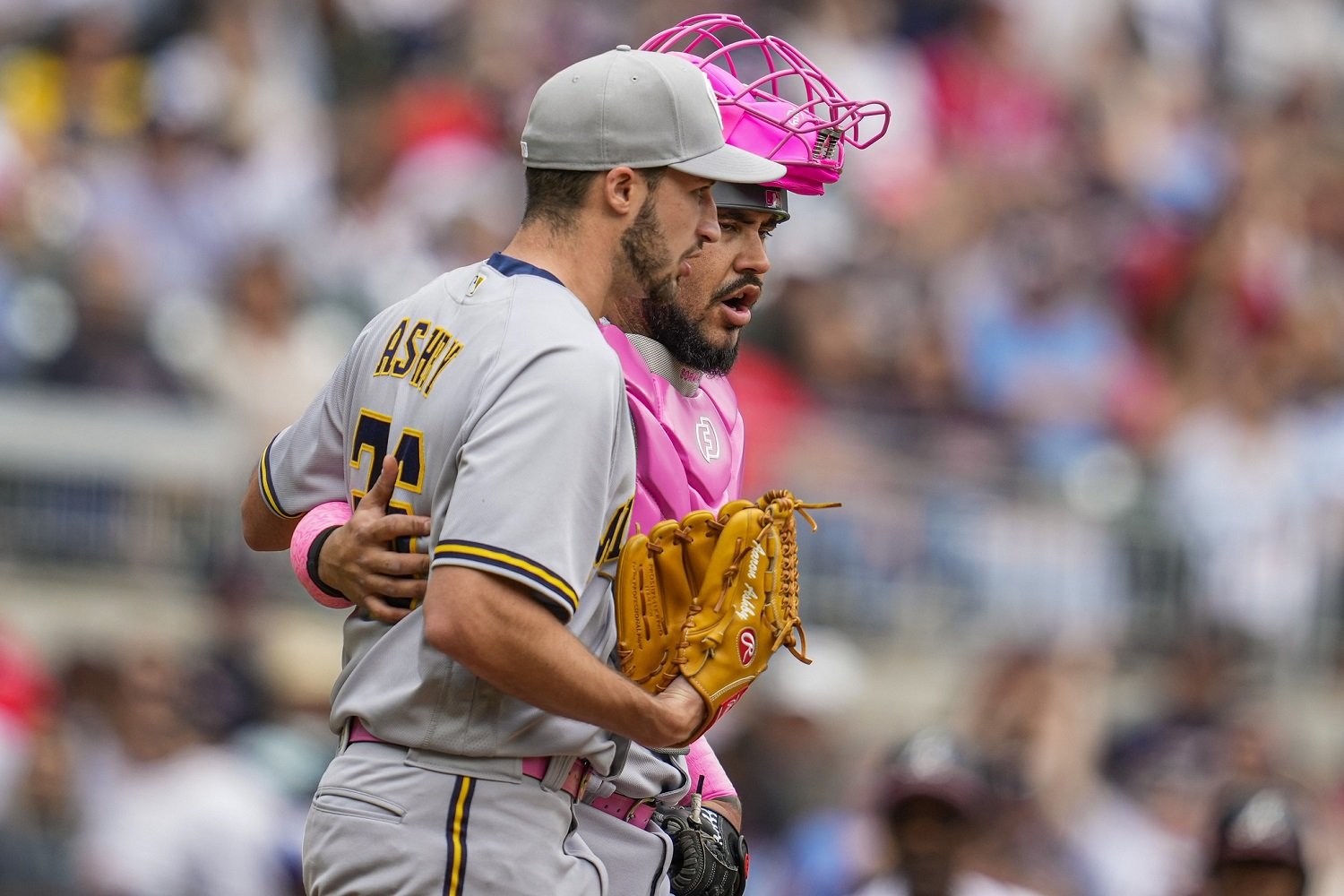 Every pitcher goes through growing pains in MLB. Left-handers especially seem to take a bit longer to put everything together. Aaron Ashby is no different, displaying flashes of dominance with stretches of frustration. His struggles often stem from the fantastic movement he gets on his pitches. It's a blessing and a curse when you're learning to command a high-quality repertoire. Among pitchers with at least 50 innings, Ashby has the 15th-highest BB% at 10.7%; however, he also ranks 25th in MLB with a 26.9 K%. As noted, a significant factor in his strikeouts and walks is how much Ashby's pitches move, particularly his slider and changeup: Ashby's slider gets the fifth-greatest amount of vertical movement in MLB (minimum 400 pitches) His horizontal movement on the slider also ranks 14th in distance Ashby's changeup rates as the 16th-best in the amount of horizontal movement (minimum 300 pitches) With such great movement on those two offerings, and a sinker that sits 96-98 MPH, it's difficult to understand how Ashby owns a 4.32 ERA. There are two specific areas where he could make changes that would keep hitters off-balance and ideally get better, more consistent results. Ashby needs to mix up his pitch selection on 0-2 counts when hitters have a stunning .323/.333/.387/.720 line. He has been the worst in that count all season. For comparison, the average MLB slash line on an 0-2 count is .154/.164/.223/.387. Quite remarkable. From what I can see, part of the issue is that Ashby throws his slider too often in that count. As you can see, he is using the slider more than 55% of the time when he is ahead 0-2, the largest percentage of any pitch in any count. While pitchers will have their "put away" pitch, that usually means it is highly effective. For hitters facing Ashby, odds are you're getting a slider on 0-2. So they might look for it in most cases and believe they will either fight off a different offering or take it, thinking there's a good chance it's out of the strike zone. And if they get a slider that isn't a strike, they would be better prepared to take it. Using any other pitch more frequently would start to catch opponents off-guard and give them different 0-2 pitches to think about each at-bat. Especially if Ashby utilized the curve and four-seam fastball, which he rarely throws on 0-2, it immediately alters their perception. Speaking of changing things up, the second adjustment Ashby needs to make is gunning for the high-and-inside region of the strike zone on right-handers (high and away versus lefties). Baseball Savant's graphic below shows how little Ashby hits that spot - by choice or lack of execution. Targeting that location works against hitters on both sides of the plate. Again, Ashby has the velocity to succeed up there with his sinker and four-seam heater in the mid-to-upper 90s. When facing righties, the up-and-in spot location keeps batters from leaning over the plate, anticipating something softer and outside. It also helps to change the eye level as they are likely looking for a changeup or breaking ball in the bottom third of the zone. If Ashby can be close to that region, it's a challenging ball to hit well, if at all, for a right-hander. It might be slightly less effective against lefties but still has value. Typically a left-hander anticipates a slider or curveball on the outer half from southpaws, breaking to the edge or outside the zone. Of course, those also have a vertical drop, so their swing would be middle-to-low in height. Mixing in the sinker or fastball into that spot gives lefties less time to react and doubt in their minds when it comes to offspeed. While it can be easier to reach than up-and-in, it would be a worthwhile risk for Ashby to increase his overall effectiveness. Again, Ashby is still learning to command all of his pitches, use an impactful variation, and find the best balance. There are also team decisions on how to attack certain hitters in specific situations, which could mean Ashby has less control over what and where he tries to throw. But if he is going to take a quick step forward the rest of this season, Ashby and the Brewers should be willing to try some new things and see what level he can reach in 2022.
 -
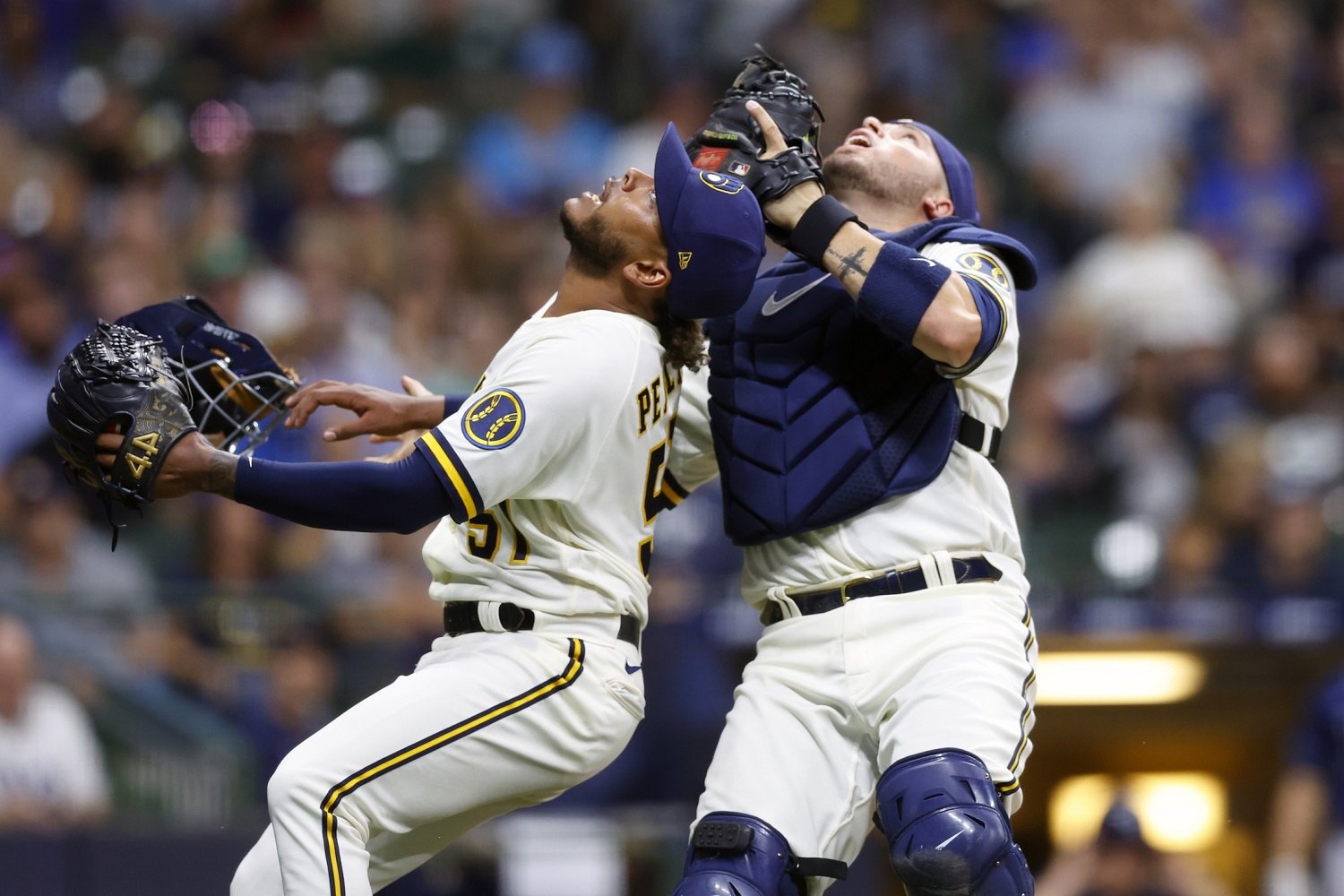 In a sport where measurables are vital, the immeasurable parts of baseball often go overlooked or undervalued. Some even feel a bit uneasy giving credence to the idea that human thought and emotion can impact professional athletes. We're not talking about a death in the family or other extremes, but regular occurrences players might experience. It's certainly been a factor with the Brewers. We were all surprised by the trade that sent all-world closer Josh Hader to the San Diego Padres while the Brewers sat in first place in the NL Central. It turns out that the guys in the Milwaukee clubhouse were just as stunned, perhaps due to the failure of management to properly communicate. That's also not to say that it was the wrong move to deal Hader now (his struggles continued in San Diego on Tuesday). Either way, you could hear the authentic disappointment in the voices of Devin Williams and Corbin Burnes. The Brewers were 7-2 after the All-Star break and before the Hader trade. They were then swept by the Pittsburgh Pirates and lost a series at home to the Cincinnati Reds - two of the three weak teams in the NL Central. Burnes walked a career-high five Pirates batters in his first start after the trade. Burnes had a 3-0 lead and allowed four runs in the sixth inning against the third-worst offense in baseball for the loss. The next day, Williams, facing his first batter since the deal, gave up a walk-off home run to the Pirates. That ended Williams' streak of 30 consecutive outings without allowing a run. In the six games after the deadline, Milwaukee had four errors and allowed five unearned runs. Poor defense, bad decisions, wild pitches, and passed balls were prevalent. In fairness, the Brewers' defense has had issues all season, but lack of focus certainly affects little things in the field. That's a lot to take in over a short period. It also didn't help that newcomer Matt Bush struggled in a couple of appearances in Pittsburgh and Taylor Rogers gave up a big run Sunday. Rogers came over in the Hader trade, while Bush was acquired to deepen the bullpen. Everything seemingly converging at once felt like something more than simply the ebb and flow of baseball. At the very least, most people would have to acknowledge the big trade had some effect on the team; how much is up for debate. Hopefully this is just a short-term impact on the club. But that's not the only place the Brewers have seen a difference in a player based on factors other than skill or stats. In this individual case, it's been a positive for Milwaukee for a longer stretch. The move to put Christian Yelich into the leadoff spot changed his season and made him a far more impactful weapon in the lineup this year. Yelich hitting first: .301/.412/.419/.831 (222 plate appearances) Yelich hitting third: .214/.312/.339/.651 (221 plate appearances) I fully believe some hitters are better or worse depending on their spot in the batting order, and most of it is a mental battle. Realizing I have only coached youth players, high schoolers, and the lower level of college guys, it's something I have always paid attention to with certain players. Some hate batting leadoff because of the first look at a pitcher. Some don't want to bat cleanup because of the perceived pressure and expectation in that spot. Others hit better in the bottom of the order and wilt as they get moved up in the lineup. No, these aren't the best hitters in the world like in MLB, but it still speaks to the human element. I wrote before the season that the leadoff spot would be perfect for Yelich. He clearly doesn't show the power anymore, and he would be better served to focus on his strengths of working counts, getting on base, and using his fantastic base-running skills. Batting in the three-hole, where expectations are to drive in runs and display power, Yelich looked uncomfortable. Maybe he was pressing to find his MVP form again. Perhaps Yelich felt he couldn't hold down that spot in the order anymore. It could be that he didn't feel like he could take walks hitting third. Whatever it was, his comfort level and production have been leaps and bounds better at the top of the order. Some will argue that he would have hit his stride anyway, that it just took him time to find his stroke, and that his improvement had nothing to do with where he hit in the lineup. All I can point to is what happened since the move, as opposed to what we've seen the past few years from Yelich. He is human, not just a stat line or measurables based on his swing. It's similar to how people say batting order doesn't matter when it comes to a team's run-scoring. Well, if hitter "A" is better leading off and hitter "B" is more productive at cleanup, that could definitely change the outcomes. The algorithms don't account for those human elements. This doesn't only apply to the numbers. You see scouts and coaches fall in love with a player's physique, his "beautiful swing," or perfect mechanics on the mound. Those all can matter, of course, but baseball has repeatedly proven that there is more to the story. The physical specimen who can't judge a fly ball or find the plate while on the mound is useless. A hitter with an excellent cut doesn't help the club if he can't make contact or find his way on base. As was a theme in "Moneyball," there is often too much of an emphasis on how a player looks versus what he produces. Maybe the player with an unorthodox style or "ugly" swing gets the job done better for other reasons. Not a perfect comparison, but Keston Hiura's season somewhat applies. Despite his solid production when given at bats with the Brewers, he has found himself in the minors and on the bench quite a bit. But regardless of his seing that may worry management, he owns a 134 OPS+ with 10 homers in just 151 plate appearances. Results outweighing the "look." Former Boston Red Sox and Chicago Cubs GM Theo Epstein started touching on this in terms of finding the new market inefficiency, such as how does a player compete, what does he do when he struggles, and how does he adjust to the opposition? Again, almost impossible to measure, but a factor at all levels of baseball. That said, it is time for the Brewers to show what heart and mental strength can do for a ballclub. That is part of being a major leaguer. They need to move on from the shock of the Hader trade, find ways to utilize their strengths and compete daily. Whether you eke out a 1-0 win or hang on in a 10-8 slugfest, wins and losses are the only measurables that will matter when the regular season ends.
 -
Fans and experts often struggle to remember that MLB players are human beings and not numbers on a screen or little men inside their TV. The 2022 Milwaukee Brewers have displayed this in several ways, showing that physical traits and stats are only part of the equation. In a sport where measurables are vital, the immeasurable parts of baseball often go overlooked or undervalued. Some even feel a bit uneasy giving credence to the idea that human thought and emotion can impact professional athletes. We're not talking about a death in the family or other extremes, but regular occurrences players might experience. It's certainly been a factor with the Brewers. We were all surprised by the trade that sent all-world closer Josh Hader to the San Diego Padres while the Brewers sat in first place in the NL Central. It turns out that the guys in the Milwaukee clubhouse were just as stunned, perhaps due to the failure of management to properly communicate. That's also not to say that it was the wrong move to deal Hader now (his struggles continued in San Diego on Tuesday). Either way, you could hear the authentic disappointment in the voices of Devin Williams and Corbin Burnes. The Brewers were 7-2 after the All-Star break and before the Hader trade. They were then swept by the Pittsburgh Pirates and lost a series at home to the Cincinnati Reds - two of the three weak teams in the NL Central. Burnes walked a career-high five Pirates batters in his first start after the trade. Burnes had a 3-0 lead and allowed four runs in the sixth inning against the third-worst offense in baseball for the loss. The next day, Williams, facing his first batter since the deal, gave up a walk-off home run to the Pirates. That ended Williams' streak of 30 consecutive outings without allowing a run. In the six games after the deadline, Milwaukee had four errors and allowed five unearned runs. Poor defense, bad decisions, wild pitches, and passed balls were prevalent. In fairness, the Brewers' defense has had issues all season, but lack of focus certainly affects little things in the field. That's a lot to take in over a short period. It also didn't help that newcomer Matt Bush struggled in a couple of appearances in Pittsburgh and Taylor Rogers gave up a big run Sunday. Rogers came over in the Hader trade, while Bush was acquired to deepen the bullpen. Everything seemingly converging at once felt like something more than simply the ebb and flow of baseball. At the very least, most people would have to acknowledge the big trade had some effect on the team; how much is up for debate. Hopefully this is just a short-term impact on the club. But that's not the only place the Brewers have seen a difference in a player based on factors other than skill or stats. In this individual case, it's been a positive for Milwaukee for a longer stretch. The move to put Christian Yelich into the leadoff spot changed his season and made him a far more impactful weapon in the lineup this year. Yelich hitting first: .301/.412/.419/.831 (222 plate appearances) Yelich hitting third: .214/.312/.339/.651 (221 plate appearances) I fully believe some hitters are better or worse depending on their spot in the batting order, and most of it is a mental battle. Realizing I have only coached youth players, high schoolers, and the lower level of college guys, it's something I have always paid attention to with certain players. Some hate batting leadoff because of the first look at a pitcher. Some don't want to bat cleanup because of the perceived pressure and expectation in that spot. Others hit better in the bottom of the order and wilt as they get moved up in the lineup. No, these aren't the best hitters in the world like in MLB, but it still speaks to the human element. I wrote before the season that the leadoff spot would be perfect for Yelich. He clearly doesn't show the power anymore, and he would be better served to focus on his strengths of working counts, getting on base, and using his fantastic base-running skills. Batting in the three-hole, where expectations are to drive in runs and display power, Yelich looked uncomfortable. Maybe he was pressing to find his MVP form again. Perhaps Yelich felt he couldn't hold down that spot in the order anymore. It could be that he didn't feel like he could take walks hitting third. Whatever it was, his comfort level and production have been leaps and bounds better at the top of the order. Some will argue that he would have hit his stride anyway, that it just took him time to find his stroke, and that his improvement had nothing to do with where he hit in the lineup. All I can point to is what happened since the move, as opposed to what we've seen the past few years from Yelich. He is human, not just a stat line or measurables based on his swing. It's similar to how people say batting order doesn't matter when it comes to a team's run-scoring. Well, if hitter "A" is better leading off and hitter "B" is more productive at cleanup, that could definitely change the outcomes. The algorithms don't account for those human elements. This doesn't only apply to the numbers. You see scouts and coaches fall in love with a player's physique, his "beautiful swing," or perfect mechanics on the mound. Those all can matter, of course, but baseball has repeatedly proven that there is more to the story. The physical specimen who can't judge a fly ball or find the plate while on the mound is useless. A hitter with an excellent cut doesn't help the club if he can't make contact or find his way on base. As was a theme in "Moneyball," there is often too much of an emphasis on how a player looks versus what he produces. Maybe the player with an unorthodox style or "ugly" swing gets the job done better for other reasons. Not a perfect comparison, but Keston Hiura's season somewhat applies. Despite his solid production when given at bats with the Brewers, he has found himself in the minors and on the bench quite a bit. But regardless of his seing that may worry management, he owns a 134 OPS+ with 10 homers in just 151 plate appearances. Results outweighing the "look." Former Boston Red Sox and Chicago Cubs GM Theo Epstein started touching on this in terms of finding the new market inefficiency, such as how does a player compete, what does he do when he struggles, and how does he adjust to the opposition? Again, almost impossible to measure, but a factor at all levels of baseball. That said, it is time for the Brewers to show what heart and mental strength can do for a ballclub. That is part of being a major leaguer. They need to move on from the shock of the Hader trade, find ways to utilize their strengths and compete daily. Whether you eke out a 1-0 win or hang on in a 10-8 slugfest, wins and losses are the only measurables that will matter when the regular season ends. View full article
-
Like Brock said, it isn't about the pure numbers. You know who would have great to use as a pinch-hitter for Wong if that is the right play...Brandon Drury! Here's the thing: The Brewers built their offense around platoons/matchups/utility. So if you are going to do that, then you can NEVER have enough guys that give you advantages on the margins. For example, they continue to stink against LHP in general. McCutchen hasn't done the job against lefties...nor Tellez...nor Adames...which means you have room to add at LEAST one bat. Brosseau is that perfect example...and you need to have as many options like that as possible, If you are going to be the team to pinch-hit for your THREE and FIVE hitters, your second option has to be better than Pedro Severino, a third catcher on a FOUR-MAN BENCH! I obviously hope it all works out and the offense is more consistently good than bad, but I just don't understand how they didn't grab even one bat.
-
The MLB trade deadline is often exciting and chaotic, but it's entirely disappointing for some teams. With one of the top rotations in baseball and a deep bullpen, the Milwaukee Brewers approached the deadline needing offensive consistency. They failed the fans by adding zero bats to the roster, a ridiculous and almost unacceptable result. At a glance, it appears the Brewers' offense isn't a concern at all. Milwaukee entered play Tuesday ranked 7th in MLB in scoring at 4.65 runs/game. They're 8th in OPS+ (106) and OBP (.320), which likely would surprise most fans. And yet, each night, it feels like a toss-up if the offense will actually show up. David Stearns, President of Baseball Operations, recently told reporters he was comfortable with their hitters. "And so if we are going to do something that impacts our position player group, it may require some level of creativity or some complementary piece. Or we may decide that ultimately what we have right now is better than what we can get elsewhere." Despite the surface-level stats favoring Stearns' comments, the lineup has holes, lacks depth, and always relies on hoping certain guys reach their supposed ceilings. A prime example of Milwaukee's issues showed up Tuesday night in a 5-3 loss to the Pittsburgh Pirates. Trailing by a pair in the 7th inning with the tying runs aboard, Craig Counsell pinch-hit for his number three and five hitters in Rowdy Tellez and Kolten Wong. Not exactly a sign of confidence when you remove two of your middle-of-the-order hitters. How often are teams taking out their three and five guys because of a platoon disadvantage? That inherently tells you the lineup has plenty of room for improvement. Compounding the issue, Wong was replaced by Pedro Severino, the third catcher on the club. If you're going to pinch-hit in the five-hole in a high leverage situation, your backup to your backup catcher shouldn't be part of the plan. If that is how they "drew it up," then the Brewers will need a lot of help from luck and randomness to make a postseason run. How can Milwaukee's front office believe this offense is set? There are clear areas where the Brewers could improve without selling the farm for top talent. There are several things to consider: Milwaukee currently has a four-man bench, with two of those position players being catchers. The Brewers have the 6th-worst OPS (.663) and 5th-lowest SLG (.357) versus left-handed pitchers. Wong has a terrible .127/.238/.127/.365 line against lefty pitching this season. Tellez owns a .324 SLG and .626 OPS versus southpaws in 2022. Until his recent hot streak, Luis Urias was an up-and-down hitter with a .379 SLG and .690 OPS. These issues show that Milwaukee easily has at least two spots they could fill with a relevant hitter. No one is talking about a top position player, but guys that fill a need. First of all, they could have benefitted greatly from a right-handed infielder who could compete for time with Urias at third base and get starts over Wong against lefties. A guy like Brandon Drury (1.016 OPS versus left-handers this season) would have been a perfect fit. He ended up in San Diego for an 18-year-old shortstop. Tellez could also use a right-handed complement. Josh Bell and Trey Mancini were dealt on Tuesday. While their asset cost may have been higher, they both would have been an upgrade as a 1B/DH and pinch-hitter against lefties like the Brewers needed Tuesday. Is keeping another mid-level prospect going to make or break the farm system? And how about a left-handed outfield stick to counter the three non-Christian Yelich outfielders? A couple of these guys were moved a few days earlier (David Peralta, Tyler Naquin), and a handful of other teams had available players. None of these players could have cost much. It wouldn't have been a center field solution by any means, but it would have created more options and matchups, which Counsell and Milwaukee love. Even looking at it from a practical standpoint should have screamed "must add bats" as the clock ticked down. Having only four bench players - with only two of them non-catchers - again fails to take advantage of platoon strategies that the Brewers are built around. Not only should Milwaukee have a fifth position player as a sub, but they should also have a legitimate option that isn't primarily a catcher. This deadline was the ideal opportunity to build up their bench and strategic choices, but instead, the Brewers did nothing. Especially since there are no longer waiver-wire trades after the deadline, Milwaukee has put itself in a precarious position with its depth. If they suffer an injury or two to the position player group, the Brewers would need to rely on rookies and inexperienced minor leaguers who are likely unprepared for prime-time games. For a team with postseason and World Series aspirations, it's incredibly frustrating that the Brewers did not improve one iota offensively at the trade deadline. Fans can hope that one or two current players take a step forward and lead the lineup to consistent success. However, all signs point to another season of needing a lot of luck to score enough runs against the best teams in the league. View full article
- 21 replies
-
- 1
-
-
- rowdy tellez
- kolten wong
- (and 2 more)
-
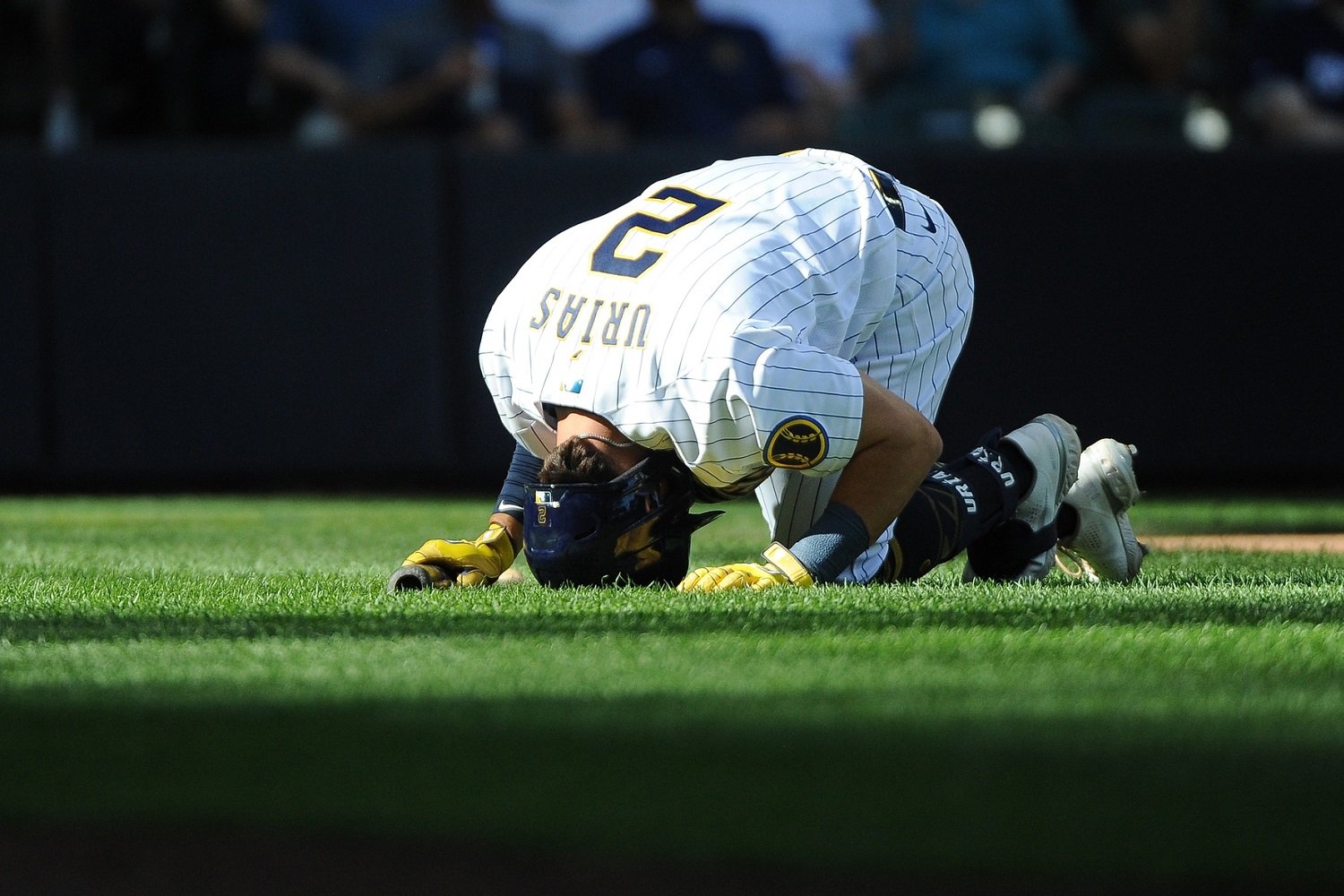 At a glance, it appears the Brewers' offense isn't a concern at all. Milwaukee entered play Tuesday ranked 7th in MLB in scoring at 4.65 runs/game. They're 8th in OPS+ (106) and OBP (.320), which likely would surprise most fans. And yet, each night, it feels like a toss-up if the offense will actually show up. David Stearns, President of Baseball Operations, recently told reporters he was comfortable with their hitters. "And so if we are going to do something that impacts our position player group, it may require some level of creativity or some complementary piece. Or we may decide that ultimately what we have right now is better than what we can get elsewhere." Despite the surface-level stats favoring Stearns' comments, the lineup has holes, lacks depth, and always relies on hoping certain guys reach their supposed ceilings. A prime example of Milwaukee's issues showed up Tuesday night in a 5-3 loss to the Pittsburgh Pirates. Trailing by a pair in the 7th inning with the tying runs aboard, Craig Counsell pinch-hit for his number three and five hitters in Rowdy Tellez and Kolten Wong. Not exactly a sign of confidence when you remove two of your middle-of-the-order hitters. How often are teams taking out their three and five guys because of a platoon disadvantage? That inherently tells you the lineup has plenty of room for improvement. Compounding the issue, Wong was replaced by Pedro Severino, the third catcher on the club. If you're going to pinch-hit in the five-hole in a high leverage situation, your backup to your backup catcher shouldn't be part of the plan. If that is how they "drew it up," then the Brewers will need a lot of help from luck and randomness to make a postseason run. How can Milwaukee's front office believe this offense is set? There are clear areas where the Brewers could improve without selling the farm for top talent. There are several things to consider: Milwaukee currently has a four-man bench, with two of those position players being catchers. The Brewers have the 6th-worst OPS (.663) and 5th-lowest SLG (.357) versus left-handed pitchers. Wong has a terrible .127/.238/.127/.365 line against lefty pitching this season. Tellez owns a .324 SLG and .626 OPS versus southpaws in 2022. Until his recent hot streak, Luis Urias was an up-and-down hitter with a .379 SLG and .690 OPS. These issues show that Milwaukee easily has at least two spots they could fill with a relevant hitter. No one is talking about a top position player, but guys that fill a need. First of all, they could have benefitted greatly from a right-handed infielder who could compete for time with Urias at third base and get starts over Wong against lefties. A guy like Brandon Drury (1.016 OPS versus left-handers this season) would have been a perfect fit. He ended up in San Diego for an 18-year-old shortstop. Tellez could also use a right-handed complement. Josh Bell and Trey Mancini were dealt on Tuesday. While their asset cost may have been higher, they both would have been an upgrade as a 1B/DH and pinch-hitter against lefties like the Brewers needed Tuesday. Is keeping another mid-level prospect going to make or break the farm system? And how about a left-handed outfield stick to counter the three non-Christian Yelich outfielders? A couple of these guys were moved a few days earlier (David Peralta, Tyler Naquin), and a handful of other teams had available players. None of these players could have cost much. It wouldn't have been a center field solution by any means, but it would have created more options and matchups, which Counsell and Milwaukee love. Even looking at it from a practical standpoint should have screamed "must add bats" as the clock ticked down. Having only four bench players - with only two of them non-catchers - again fails to take advantage of platoon strategies that the Brewers are built around. Not only should Milwaukee have a fifth position player as a sub, but they should also have a legitimate option that isn't primarily a catcher. This deadline was the ideal opportunity to build up their bench and strategic choices, but instead, the Brewers did nothing. Especially since there are no longer waiver-wire trades after the deadline, Milwaukee has put itself in a precarious position with its depth. If they suffer an injury or two to the position player group, the Brewers would need to rely on rookies and inexperienced minor leaguers who are likely unprepared for prime-time games. For a team with postseason and World Series aspirations, it's incredibly frustrating that the Brewers did not improve one iota offensively at the trade deadline. Fans can hope that one or two current players take a step forward and lead the lineup to consistent success. However, all signs point to another season of needing a lot of luck to score enough runs against the best teams in the league.
- 21 comments
-
- 5
-
-
- rowdy tellez
- kolten wong
- (and 2 more)
-
The Boston Red Sox are suddenly struggling in the talent-packed American League. With the trade deadline looming, their fall from legitimate playoff contention could open the door to a handful of more trade options for the Milwaukee Brewers. Situations change quickly in the big leagues. A few weeks ago, Boston sat 10 games over .500, in second place in the AL East, and atop the wild card standings. As the new week starts, the Red Sox have lost nine of 10 contests and 13 of their last 16 to fall to 48-48, now fourth in the division, just one-half game better than the Baltimore Orioles, and three games out of the last wild card position. If Boston management sees the road to a championship too steep with the New York Yankees and Houston Astros (among others) in the way, a turn toward next season makes sense. The Red Sox have at least eight players becoming free agents after the season or with an option to leave, so they could see this as an opportunity to quickly turn things around for 2023 and beyond. This would be good news for the Brewers. More trade options could mean lesser cost and a better chance to find a quality fit for the roster. Also, targeting players with expiring contracts typically means a team will ask for less in return which could be another key for Milwaukee. With that in mind, here are a few Red Sox targets that the Brewers might ask about should Boston start a sale. STAR POWER Xander Bogaerts: The 29-year-old standout shortstop has four years, $80 million left on his contract, but he can opt out after this season (which he will do). While Bogaerts' home runs are down, he remains a stud hitter that would do wonders for the Brewers' offense. Bogaerts owns a 129 OPS+ thanks to a .386 OBP (12th in MLB) and .445 slugging. His .364 wOBA (weighted on-base average) also ranks 27th and would be the best on the Brewers. Where would he play? He could easily slot into third base, where Luis Urias has scuffled to a .701 OPS. Bogaerts could also spell Willy Adames at shortstop and take some at-bats as the DH. With a chance at a quality hitter, position matters less. The price in a trade is tough to gauge. Boston would have to expect a return based on Bogaerts leaving his new team after the season. It also matters which other teams offer deals. Would the Red Sox be interested in Keston Hiura as a project to go along with a top-10 prospect? Shortstop Brice Turang could make sense for Boston as a future infielder or utility man. Acquiring Bogaerts is probably unlikely, but with the right high-end piece or two, there is an outside chance it happens. *Rafael Devers could have been a second star to discuss, albeit an extreme longshot for the Brewers. Unfortunately, the left-handed hitting third baseman with a .981 OPS was recently put on the IL. He is signed through 2023, but if Boston has really wanted to get nuts, Devers would have been their best trade chip. PITCHING OPTIONS Nathan Eovaldi: Eovaldi looks and feels like a Brewers type of pitcher, and I can see Milwaukee's front office offering a bit more to acquire him. I'd argue a deal has an above-average chance of going down as he is a free agent after the season. The 32-year-old fireballer has had a few more struggles than in years past, mostly stemming from his 2.2 home runs per nine innings (HR/9) rate, the highest of his career. A big reason for that could be his 11.2% barrel rate allowed, which is more than four percent higher than his career average. Eovaldi is still throwing hard (95.6 MPH fastball velocity) and getting a high percentage of whiffs, up 0.8% from last season. He also ranks in the 96 percentile of walk percentage (BB%), something the Brewers should value. Though his ERA (4.30) is up more than half a run from the past two seasons, it is primarily skewed by his last start, when he allowed nine earned runs in 2.2 innings against the Toronto Blue Jays. Eovaldi is still a valuable arm that can fill multiple roles for Milwaukee now and in the playoffs. Since Boston has not engaged in any contract talks with Eovaldi, there's little reason for them to keep him around. Two pitching prospects (one in the top 15-20 range) would seem enough unless the Red Sox preferred a single, higher-ceiling asset. Michael Wacha: The former St. Louis Cardinals' hurler has had a resurgent season of sorts. After posting a 6.62 ERA and 5.05 ERA the past two years, respectively, Wacha owns a 2.69 mark in 70.1 innings (13 starts) in 2022. His numbers are great on the surface, but it could be smoke and mirrors. While he dropped his hits-per-nine-inning rate (H/9) to 7.2 and HR/9 to just 0.9, his walks have increased while the strikeouts have decreased. Then when you look at his Statcast percentiles, you really start to wonder. Based on this, would the Brewers even want to take that chance? It could mean it would cost very little to make the trade (prospect outside the top 30), which is a plus. It is possible that, at least for this season, Wacha has figured something out that works. Essentially Milwaukee would be playing the hot hand. I'd say there's a less likely chance this happens than trading for Eovaldi, only because the Brewers might not like what they see. ROLE PLAYERS J.D. Martinez: The veteran "professional hitter" can't play the field or run, but he still knows how to swing the stick. The almost 35-year-old is in the last year of his deal but would have to be the full-time DH, which could be a challenge in Milwaukee. Acquiring Martinez would mean Andrew McCutchen is playing in the field or sitting more often, which might help the club in the long run. Martinez ranks in the top 30 in MLB in wOBA (.368), OBP (.368), and slugging (.481). His 132 OPS+ is his best mark since 2019, and his metrics remain high in a few key areas. There would likely be some competition to acquire Martinez, which might drive the price up somewhat. One would think a mid-level prospect would do the trick. There probably isn't a high percentage chance Milwaukee will make this move, but plans can change in two weeks. Enrique Hernandez: Also a free agent following this season, Hernandez would provide value and depth in the outfield, including in center. Unfortunately, Hernandez has not been able to get back on the field in the last month due to a right hip injury. He is currently on the IL, which doesn't prevent a move from happening, but is often rare and a big risk. It worked in Boston's favor last season when they traded for Kyle Schwarber while he was on the IL as he posted a .957 OPS in 41 games once he returned. As for Hernandez, should the Brewers take a shot, his defense remains strong, but his offense fell off this season (.613 OPS) after a strong 2021 (.786 OPS) and an incredible postseason run last year (.408 average, 1.260 OPS). Trading for Hernandez would be a bit of a risk offensively. However, his career numbers make him a weapon against left-handed pitchers, which Milwaukee still needs. Hernandez owns a lifetime .826 OPS versus southpaws, including .850 last season and .828 this year. He has also slugged .500 against lefties in 2022. His overall lack of offensive production and injury status should mean a deep discount for the Brewers, giving up next to nothing for a chance Hernandez recovers soon, gets hot, and continues to hammer lefties. He's at least a depth play for the current outfield, considering the group's age and proneness to injury.; of course, Hernandez would have to get back to the field (and stay there) himself. Brewers fans should watch the Red Sox over the next few days. If they continue to flounder or break even, it opens up more possibilities for Milwaukee to add talent. Even if the Brewers don't make a deal with Boston, having an additional seller on the market makes it more likely Milwaukee finds a player at the right price from somewhere. View full article
- 3 replies
-
- 1
-
-
- keston hiura
- andrew mccutchen
- (and 3 more)
-
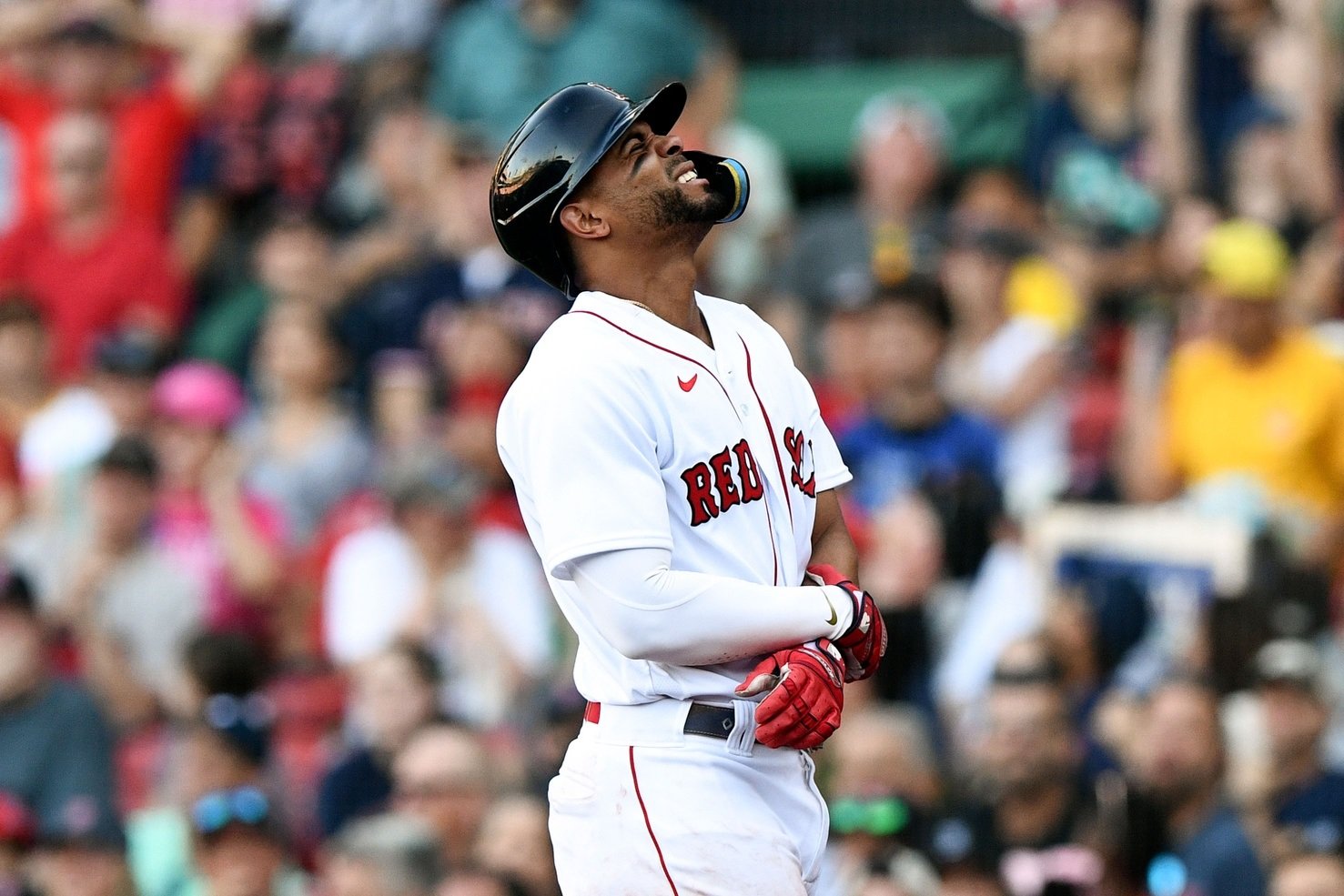 Situations change quickly in the big leagues. A few weeks ago, Boston sat 10 games over .500, in second place in the AL East, and atop the wild card standings. As the new week starts, the Red Sox have lost nine of 10 contests and 13 of their last 16 to fall to 48-48, now fourth in the division, just one-half game better than the Baltimore Orioles, and three games out of the last wild card position. If Boston management sees the road to a championship too steep with the New York Yankees and Houston Astros (among others) in the way, a turn toward next season makes sense. The Red Sox have at least eight players becoming free agents after the season or with an option to leave, so they could see this as an opportunity to quickly turn things around for 2023 and beyond. This would be good news for the Brewers. More trade options could mean lesser cost and a better chance to find a quality fit for the roster. Also, targeting players with expiring contracts typically means a team will ask for less in return which could be another key for Milwaukee. With that in mind, here are a few Red Sox targets that the Brewers might ask about should Boston start a sale. STAR POWER Xander Bogaerts: The 29-year-old standout shortstop has four years, $80 million left on his contract, but he can opt out after this season (which he will do). While Bogaerts' home runs are down, he remains a stud hitter that would do wonders for the Brewers' offense. Bogaerts owns a 129 OPS+ thanks to a .386 OBP (12th in MLB) and .445 slugging. His .364 wOBA (weighted on-base average) also ranks 27th and would be the best on the Brewers. Where would he play? He could easily slot into third base, where Luis Urias has scuffled to a .701 OPS. Bogaerts could also spell Willy Adames at shortstop and take some at-bats as the DH. With a chance at a quality hitter, position matters less. The price in a trade is tough to gauge. Boston would have to expect a return based on Bogaerts leaving his new team after the season. It also matters which other teams offer deals. Would the Red Sox be interested in Keston Hiura as a project to go along with a top-10 prospect? Shortstop Brice Turang could make sense for Boston as a future infielder or utility man. Acquiring Bogaerts is probably unlikely, but with the right high-end piece or two, there is an outside chance it happens. *Rafael Devers could have been a second star to discuss, albeit an extreme longshot for the Brewers. Unfortunately, the left-handed hitting third baseman with a .981 OPS was recently put on the IL. He is signed through 2023, but if Boston has really wanted to get nuts, Devers would have been their best trade chip. PITCHING OPTIONS Nathan Eovaldi: Eovaldi looks and feels like a Brewers type of pitcher, and I can see Milwaukee's front office offering a bit more to acquire him. I'd argue a deal has an above-average chance of going down as he is a free agent after the season. The 32-year-old fireballer has had a few more struggles than in years past, mostly stemming from his 2.2 home runs per nine innings (HR/9) rate, the highest of his career. A big reason for that could be his 11.2% barrel rate allowed, which is more than four percent higher than his career average. Eovaldi is still throwing hard (95.6 MPH fastball velocity) and getting a high percentage of whiffs, up 0.8% from last season. He also ranks in the 96 percentile of walk percentage (BB%), something the Brewers should value. Though his ERA (4.30) is up more than half a run from the past two seasons, it is primarily skewed by his last start, when he allowed nine earned runs in 2.2 innings against the Toronto Blue Jays. Eovaldi is still a valuable arm that can fill multiple roles for Milwaukee now and in the playoffs. Since Boston has not engaged in any contract talks with Eovaldi, there's little reason for them to keep him around. Two pitching prospects (one in the top 15-20 range) would seem enough unless the Red Sox preferred a single, higher-ceiling asset. Michael Wacha: The former St. Louis Cardinals' hurler has had a resurgent season of sorts. After posting a 6.62 ERA and 5.05 ERA the past two years, respectively, Wacha owns a 2.69 mark in 70.1 innings (13 starts) in 2022. His numbers are great on the surface, but it could be smoke and mirrors. While he dropped his hits-per-nine-inning rate (H/9) to 7.2 and HR/9 to just 0.9, his walks have increased while the strikeouts have decreased. Then when you look at his Statcast percentiles, you really start to wonder. Based on this, would the Brewers even want to take that chance? It could mean it would cost very little to make the trade (prospect outside the top 30), which is a plus. It is possible that, at least for this season, Wacha has figured something out that works. Essentially Milwaukee would be playing the hot hand. I'd say there's a less likely chance this happens than trading for Eovaldi, only because the Brewers might not like what they see. ROLE PLAYERS J.D. Martinez: The veteran "professional hitter" can't play the field or run, but he still knows how to swing the stick. The almost 35-year-old is in the last year of his deal but would have to be the full-time DH, which could be a challenge in Milwaukee. Acquiring Martinez would mean Andrew McCutchen is playing in the field or sitting more often, which might help the club in the long run. Martinez ranks in the top 30 in MLB in wOBA (.368), OBP (.368), and slugging (.481). His 132 OPS+ is his best mark since 2019, and his metrics remain high in a few key areas. There would likely be some competition to acquire Martinez, which might drive the price up somewhat. One would think a mid-level prospect would do the trick. There probably isn't a high percentage chance Milwaukee will make this move, but plans can change in two weeks. Enrique Hernandez: Also a free agent following this season, Hernandez would provide value and depth in the outfield, including in center. Unfortunately, Hernandez has not been able to get back on the field in the last month due to a right hip injury. He is currently on the IL, which doesn't prevent a move from happening, but is often rare and a big risk. It worked in Boston's favor last season when they traded for Kyle Schwarber while he was on the IL as he posted a .957 OPS in 41 games once he returned. As for Hernandez, should the Brewers take a shot, his defense remains strong, but his offense fell off this season (.613 OPS) after a strong 2021 (.786 OPS) and an incredible postseason run last year (.408 average, 1.260 OPS). Trading for Hernandez would be a bit of a risk offensively. However, his career numbers make him a weapon against left-handed pitchers, which Milwaukee still needs. Hernandez owns a lifetime .826 OPS versus southpaws, including .850 last season and .828 this year. He has also slugged .500 against lefties in 2022. His overall lack of offensive production and injury status should mean a deep discount for the Brewers, giving up next to nothing for a chance Hernandez recovers soon, gets hot, and continues to hammer lefties. He's at least a depth play for the current outfield, considering the group's age and proneness to injury.; of course, Hernandez would have to get back to the field (and stay there) himself. Brewers fans should watch the Red Sox over the next few days. If they continue to flounder or break even, it opens up more possibilities for Milwaukee to add talent. Even if the Brewers don't make a deal with Boston, having an additional seller on the market makes it more likely Milwaukee finds a player at the right price from somewhere.
- 3 comments
-
- 2
-
-
- keston hiura
- andrew mccutchen
- (and 3 more)
-
I completely agree part of of it because of the pay structure and timing of everything. It is a tough balance when looking at it from the team perspective. If guys reach free agency sooner, the small-mid market teams may lose guys sooner. I mean, they CAN pay players whatever they want during those first 6 years of control, but why would they go nuts, right? It's tough. On the flip side, I don't know why it seems so hard for fans to take the perspective of looking at the WHOLE time a player was there and valuing his performance compared to his overall pay. Like with Yelich who was vastly underpaid in 2018-2019, so in theory it is balancing out now.
-
 The problem for Christian Yelich is that he is in a no-win situation with many in the fanbase. If he goes 0-for-4 or fails to get the big hit in the 9th inning, he's an overpaid bum who should be cut or traded. Reach base three times and drive in a pair of runs late in the game: yeah, that's why you're paid $26 million. We know it's a "what have you done for me lately" profession, but it is sad to see how quickly people turn on a great player, lose all sense of appreciation, and look to cut him down or run him out of town - often because he makes a lot of money. This isn't to defend a professional athlete or to feel sorry for him. Yelich, like countless Major Leaguers, gets paid extremely well, and criticisms are part of the job. They should expect a certain level of negativity to come their way when they don't play up to par. At the same time, there should be a better perspective on the big picture regarding an athlete's overall time in a city. Yelich is an excellent example of this and why it is important (in my opinion) for fans to act like they actually like the team or player, and not be bitter, radio-call-in guys who yell at the clouds. Let's start with the money since that is the go-to for nearly every complaint about Yelich. He is indeed getting paid to perform like one of the best players in the league, and his stats over the past three seasons have left much to be desired. The funny thing is, people rarely brought up how little he was being paid in 2018 and 2019 compared to his incredible production. While winning MVP in 2018 and putting up better stats in 2019, Yelich made just $7 million and $9.75 million, respectively. I don't recall people organizing a fundraiser to pay the man what he deserved during those two seasons. Do you want to know what Yelich was "worth" during those two phenomenal campaigns? "You can put the work in, but you're not guaranteed results." That line should stand out. I'm all for getting on a guy who doesn't seem to adjust or work at his craft, but we have never been given any indication that Yelich lacks that drive. Perhaps even he had to recognize the best version of himself is gone, and since moving to the leadoff spot, he is focusing on how he can best help the team. In 29 games at the top of the order, Yelich owns a .391 OBP. The power isn't there, but nothing is more important as the leadoff man than getting on base. This is who he is right now, and it is the most effective way he can improve the Brewers' offense. If you can take that angle when watching him, it will give you want a more realistic view of the current player. So, back to the contract and Yelich's value, because that is what most want to lean on. From 2018 through the end of this season, Yelich will have earned just over $57 million with Milwaukee (COVID limited 2020 to $4.63 million). Here's a breakdown of what he has been paid (and will be) and the FanGraphs dollar value. Are you surprised that Yelich has been worth $10 million this season thus far? He still has time to get closer to his actual salary this year. You can also see that Yelly "outperformed" his pay in Milwaukee by more than $100 million from 2018-2021. No one complained about that. And lastly, if he can be worth a shade over $77 million during the next seven years, he would have been precisely worth his salary with the Brewers. Again, the big picture with the peaks and valleys of a career. The Milwaukee Brewers have been in the playoffs each season since he arrived in 2018. For a franchise that struggled to consistently reach the .500 mark for too many seasons, people should recognize Yelich as a significant factor in the modern Brewers' run of success that has seen them in the postseason four straight years. In fairness, when at American Family Field, it appears most fans are still cheering loudly for Yelich and honestly hoping he does well because he is "our guy" if you're a Brewers fan. Maybe it's just different on social media where Twitter tough guys can rant in public, then secretly cheer when Yelich does well. Ultimately, you can like or hate a player - that is up to you. I hope some people take a step back and maybe support a guy who has done much for the team they supposedly love. Act with encouragement and understanding instead of labeling him every negative thing you can think of and tossing him aside. What is the point? If you want the Brewers to win a World Series, Yelich has to be a part of it at this point. He isn't getting traded or released, so get that out of your head. We aren't talking about Gary Sheffield, who clearly wanted out of Milwaukee and would hurt the team to get it done. Yelich cares. He wants to be here and help bring a championship to Milwaukee. It's too bad it has gotten to this point, but barring a World Series title, Yelich is in a no-win situation with many fans.
 -
When it comes to rooting for the Milwaukee Brewers (or any team), many fans exist only to complain or find fault with players. We all fall into this trap to some extent, even if briefly, with certain athletes. Much of Brewers fans' ire has been directed at Christian Yelich the past few seasons, and frankly, it has gone too far. The problem for Christian Yelich is that he is in a no-win situation with many in the fanbase. If he goes 0-for-4 or fails to get the big hit in the 9th inning, he's an overpaid bum who should be cut or traded. Reach base three times and drive in a pair of runs late in the game: yeah, that's why you're paid $26 million. We know it's a "what have you done for me lately" profession, but it is sad to see how quickly people turn on a great player, lose all sense of appreciation, and look to cut him down or run him out of town - often because he makes a lot of money. This isn't to defend a professional athlete or to feel sorry for him. Yelich, like countless Major Leaguers, gets paid extremely well, and criticisms are part of the job. They should expect a certain level of negativity to come their way when they don't play up to par. At the same time, there should be a better perspective on the big picture regarding an athlete's overall time in a city. Yelich is an excellent example of this and why it is important (in my opinion) for fans to act like they actually like the team or player, and not be bitter, radio-call-in guys who yell at the clouds. Let's start with the money since that is the go-to for nearly every complaint about Yelich. He is indeed getting paid to perform like one of the best players in the league, and his stats over the past three seasons have left much to be desired. The funny thing is, people rarely brought up how little he was being paid in 2018 and 2019 compared to his incredible production. While winning MVP in 2018 and putting up better stats in 2019, Yelich made just $7 million and $9.75 million, respectively. I don't recall people organizing a fundraiser to pay the man what he deserved during those two seasons. Do you want to know what Yelich was "worth" during those two phenomenal campaigns? "You can put the work in, but you're not guaranteed results." That line should stand out. I'm all for getting on a guy who doesn't seem to adjust or work at his craft, but we have never been given any indication that Yelich lacks that drive. Perhaps even he had to recognize the best version of himself is gone, and since moving to the leadoff spot, he is focusing on how he can best help the team. In 29 games at the top of the order, Yelich owns a .391 OBP. The power isn't there, but nothing is more important as the leadoff man than getting on base. This is who he is right now, and it is the most effective way he can improve the Brewers' offense. If you can take that angle when watching him, it will give you want a more realistic view of the current player. So, back to the contract and Yelich's value, because that is what most want to lean on. From 2018 through the end of this season, Yelich will have earned just over $57 million with Milwaukee (COVID limited 2020 to $4.63 million). Here's a breakdown of what he has been paid (and will be) and the FanGraphs dollar value. Are you surprised that Yelich has been worth $10 million this season thus far? He still has time to get closer to his actual salary this year. You can also see that Yelly "outperformed" his pay in Milwaukee by more than $100 million from 2018-2021. No one complained about that. And lastly, if he can be worth a shade over $77 million during the next seven years, he would have been precisely worth his salary with the Brewers. Again, the big picture with the peaks and valleys of a career. The Milwaukee Brewers have been in the playoffs each season since he arrived in 2018. For a franchise that struggled to consistently reach the .500 mark for too many seasons, people should recognize Yelich as a significant factor in the modern Brewers' run of success that has seen them in the postseason four straight years. In fairness, when at American Family Field, it appears most fans are still cheering loudly for Yelich and honestly hoping he does well because he is "our guy" if you're a Brewers fan. Maybe it's just different on social media where Twitter tough guys can rant in public, then secretly cheer when Yelich does well. Ultimately, you can like or hate a player - that is up to you. I hope some people take a step back and maybe support a guy who has done much for the team they supposedly love. Act with encouragement and understanding instead of labeling him every negative thing you can think of and tossing him aside. What is the point? If you want the Brewers to win a World Series, Yelich has to be a part of it at this point. He isn't getting traded or released, so get that out of your head. We aren't talking about Gary Sheffield, who clearly wanted out of Milwaukee and would hurt the team to get it done. Yelich cares. He wants to be here and help bring a championship to Milwaukee. It's too bad it has gotten to this point, but barring a World Series title, Yelich is in a no-win situation with many fans. View full article
-
 Many factors go into a team's peaks and valleys throughout the season. The opponent determines some of the challenges. Some are due to the travel schedule. Other times it is a matter of multiple circumstances that you can't always explain. The critical thing to remember is that fortunes can change many times over 162 games. Teams must keep their heads above water through the tough times and take advantage of the easier stretches to survive the marathon to the playoffs. One of those nicer spurts is on the horizon. But first, a look back at what the Brew Crew has overcome. First off, in the span of 45 days, the Brewers endured a trio of three-city road trips. That is unheard of when talking about the frequency of travel in a limited period. Plus, the Atlanta Braves, San Diego Padres, St. Louis Cardinals, and New York Mets were among the teams Milwaukee played on the road during the time. All of those clubs are in first or second place in their divisions. In those 29 total road tilts, the Brewers went a respectable 15-14. Before Milwaukee embarked on its third three-city trip, the club also played 18 games in 17 days, including 11 away contests in 10 days with a doubleheader in the middle. They survived that road run with a 6-5 mark. While that might not sound like anything special, you aren't looking at those games in a vacuum. That's because all of that is even more impressive considering the slew of injuries the Brewers were dealing with at the time, missing guys like Freddy Peralta, Brandon Woodruff, Willy Adames, Hunter Renfroe, and plenty of others. Of course, the slate of games coupled with the significant injury bug eventually led to Milwaukee's low point of the season. They lost 12 of 15 games that included an eight-game losing skid to knock them out of first place. It felt and looked a bit bleak, but they got a big win over the Mets and snapped off an 8-4 stretch by taking two of three games from the Toronto Blue Jays. After an off-day Monday, the first-place Brewers (42-33) look to enjoy a new stretch of the schedule. After a quick two-game set in Tampa Bay, Milwaukee heads to Pittsburgh for a four-gamer with the Pirates. The Brewers are 6-0 versus Pittsburgh this season and match up well with their roster. Admittedly, the Pirates are a tad more formidable with the call-up of Oneil Cruz; however, they are still just 29-43 overall and have lost four of their last five contests. Then the Crew heads home for three against the 28-46 Chicago Cubs and three more versus Pittsburgh. That 10-game period is the perfect time for Milwaukee to regain some victories they lost during their most brutal stretch. It's the perfect example of the schedule balancing out as a team traverses the slog of a season. The Brewers' schedule also features other favorable advantages from here to the end of the year. After the next road series in Pittsburgh, Milwaukee will have 47 home games and 34 road games. From this point forward, the Brewers have 13 games with the Pirates, 10 contests against the Cincinnati Reds, and 14 combined matchups versus the Arizona Diamondbacks (34-41) and Colorado Rockies (33-42). Milwaukee ends the season with four games in Cincinnati, followed by nine straight home tilts: two against the Cardinals, four versus the Miami Marlins, and three contests with Arizona. Like it or not, successful teams traditionally dominate the lesser clubs in the league while holding serve with the top group. It is logical for teams with a relatively even talent level to beat each other up and rarely make up lots of ground. When the better clubs square off against inferior foes, records should start to rise. Of course, none of this favorable tilt in the schedule guarantees success. But with the team's improved health going forward (hopefully) and an optimistic view of the calendar, the Milwaukee Brewers have a ton of time to make multiple runs. Again, during such a long season, there are windows that can be used to build a lead, catch teams in front of you, and find your stride in time for the playoffs.

