



Tim Muma
-
Posts
436 -
Joined
-
Last visited
-
Days Won
1
Content Type
Profiles
Forums
Blogs
Events
News
2026 Milwaukee Brewers Top Prospects Ranking
Milwaukee Brewers Videos
2022 Milwaukee Brewers Draft Picks
Milwaukee Brewers Free Agent & Trade Rumors, Notes, & Tidbits
Guides & Resources
2023 Milwaukee Brewers Draft Picks
2024 Milwaukee Brewers Draft Picks
The Milwaukee Brewers Players Project
2025 Milwaukee Brewers Draft Pick Tracker
2026 Milwaukee Brewers Draft Tracker: Picks & Bonuses
Store
Downloads
Gallery
Everything posted by Tim Muma
-
 If that was the case, again, that is just a bad process and poor strategy. You already had the tying and go-ahead runners on base AND you would have Vaughn against a lefty. Pressure and multiple factors in the Brewers' favor. The 9th inning situation doesn't matter if the 8th inning goes well. Now in the 9th, you have Vaughn versus a RH with no one on base. Lower pressure and far less of an advantage.
- 15 replies
-
- 1
-

-
- pat murphy
- sal frelick
- (and 2 more)
-
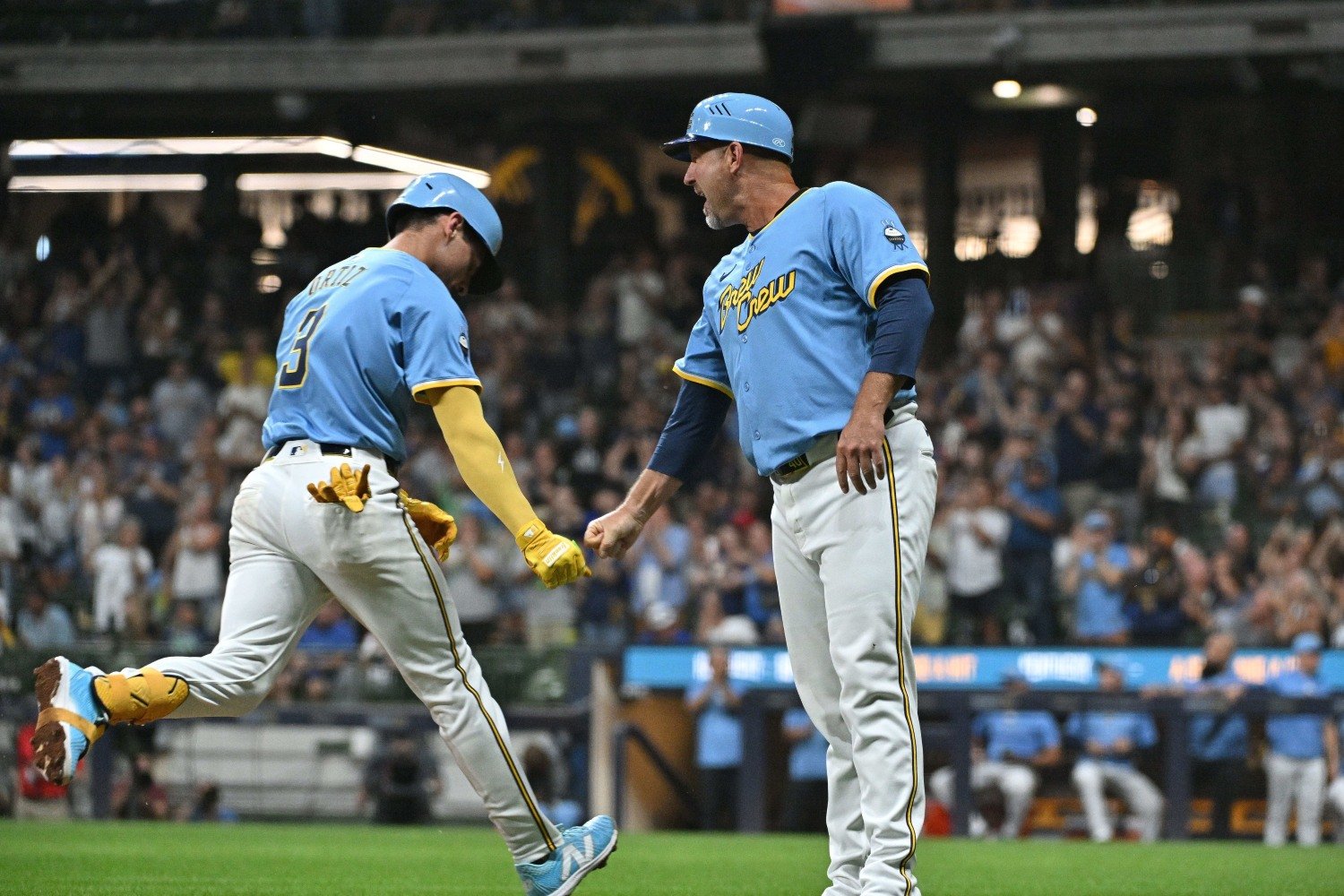
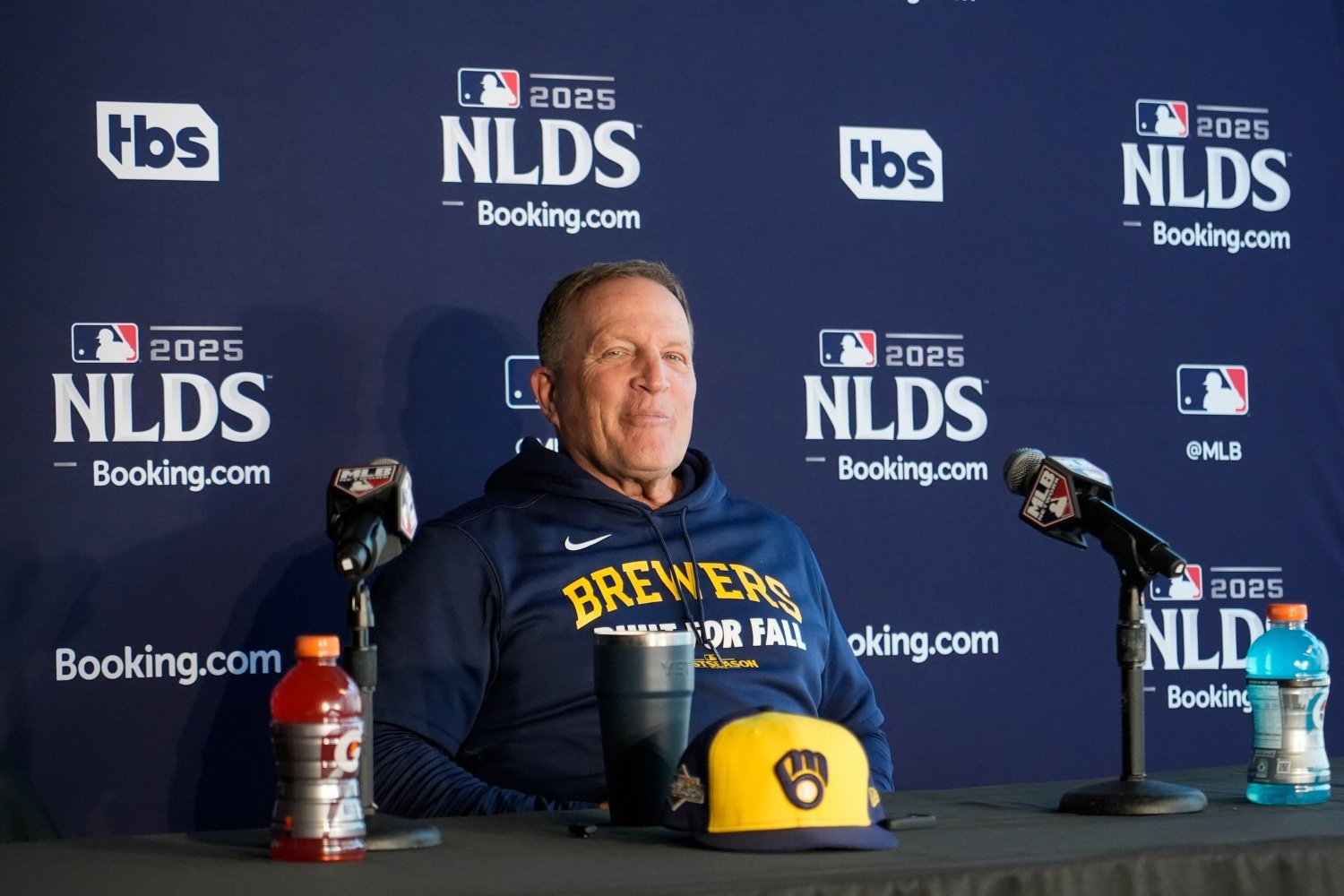 The Milwaukee Brewers failed to put away the Chicago Cubs in Game 3 of the NLDS, turning a potential sweep into hope for the North Siders. Though most of the club's opportunities were squandered by poor execution, manager Pat Murphy's decision-making in the top of the eighth inning had a negative impact. There were two key moments Murphy arguably mismanaged in the frame with the Brewers trailing 4-3. The first call is much more subjective, since it involved a potential bunt, but the second choice should have been obvious. Let's start with the latter, as that was more egregious, confusing, and potentially game-changing. Down a run, Milwaukee had runners on first and second with one out. Chicago's left-handed reliever, Caleb Thielbar, had just walked William Contreras by essentially pitching around him to bring up lefty Sal Frelick. That was the time Murphy should have gone to Andrew Vaughn off the bench. Instead, he stuck with Frelick, who bounced into a fielder's choice, and the Brewers would fail to score the rest of the contest. Vaughn should have been an obvious choice in one of the biggest spots in the game. He has crushed southpaws this season, with a slash line of .313/.389/.470 in 132 plate appearances. Meanwhile, lefties own a measly .161 average against Thielbar in 2025. (Righties haven't been that much better, at .205/.248/.342, but it's fair to say that Thielbar was a rough matchup for Frelick and would have been an enticing one for Vaughn.) Why didn't Murphy make this move? It wasn't addressed postgame, so we can only speculate. There are three possible options, but none of them are defensible. Murphy didn't want to compromise his outfield defense, as Jake Bauers would have to play the outfield after Brandon Lockridge and Isaac Collins were already out of the game. When you are trailing in the eighth inning, you don't worry about defense, at least within reason. Bauers is a viable defender. The manager was worried about Vaughn hitting into a double play to end the inning, and Frelick would be far less likely to suffer a twin killing. If this was the thought process, it is playing "not to lose," a horrible way to manage a playoff game with a chance to advance. Murphy just felt Frelick gave the Brewers a better shot; more of a gut decision. That might be the most respectable reason among the three, but it's still suboptimal; all the signs pointed to Vaughn being the best option. There's no guarantee Vaughn would have come up with the big hit, but it would have been the right move to put the Brewers in the best position to succeed. Let's hope that "non-move" doesn't open the door for the Cubs. Earlier in the eighth inning, the ideal managerial decision wasn't as clear (at least initially), but it was worth discussing, especially after the first pitch to Brice Turang. Turang stood in against Thielbar after Jackson Chourio led off the inning with a double. Representing the tying run at second base, it was imperative that Turang at least move him to third with less than two outs. With Turange hitting from the left side, it was fair to see if he could simply roll over on a ball to the pull side to get the job done. But after he whiffed terribly at a sweeper well off the plate, it should have alerted Murphy to another option: a sacrifice bunt. I know about all the numbers and reasoning for not bunting. It's also the traditional take that you don't "play for the tie" on the road, which would be the idea behind such a bunt: prioritizing getting Chourio home. But sometimes the stats and the typical way of thinking need to take a back seat to what is staring you in the face in the moment. Turang flailed helplessly at the first pitch, and (though perhaps we're being unduly influenced by him going 0-for-his-last-7 with three strikeouts) he looked like he had zero chance of making contact. The situation then screamed to drop down a bunt, put some pressure on the defense (which the Brewers often do) and see what happens. If it works, the tying run is at third with one out for Contreras. At best, Turang beats it out for a hit or (better yet) the Cubs' defense throws the ball away. Sometimes playing for one run leads to more offense, but either way, it would have given Milwaukee a path to victory in Game 3. Instead, the Brewers and Cubs will hook up at Wrigley Field on Thursday for Game 4. The series's outcome will ultimately be decided by the players, but certain moments could hinge on Murphy's in-game decision-making.
- 15 comments
-
- 1
-

-
- pat murphy
- sal frelick
- (and 2 more)
-
Image courtesy of © David Banks-Imagn Images The Milwaukee Brewers failed to put away the Chicago Cubs in Game 3 of the NLDS, turning a potential sweep into hope for the North Siders. Though most of the club's opportunities were squandered by poor execution, manager Pat Murphy's decision-making in the top of the eighth inning had a negative impact. There were two key moments Murphy arguably mismanaged in the frame with the Brewers trailing 4-3. The first call is much more subjective, since it involved a potential bunt, but the second choice should have been obvious. Let's start with the latter, as that was more egregious, confusing, and potentially game-changing. Down a run, Milwaukee had runners on first and second with one out. Chicago's left-handed reliever, Caleb Thielbar, had just walked William Contreras by essentially pitching around him to bring up lefty Sal Frelick. That was the time Murphy should have gone to Andrew Vaughn off the bench. Instead, he stuck with Frelick, who bounced into a fielder's choice, and the Brewers would fail to score the rest of the contest. Vaughn should have been an obvious choice in one of the biggest spots in the game. He has crushed southpaws this season, with a slash line of .313/.389/.470 in 132 plate appearances. Meanwhile, lefties own a measly .161 average against Thielbar in 2025. (Righties haven't been that much better, at .205/.248/.342, but it's fair to say that Thielbar was a rough matchup for Frelick and would have been an enticing one for Vaughn.) Why didn't Murphy make this move? It wasn't addressed postgame, so we can only speculate. There are three possible options, but none of them are defensible. Murphy didn't want to compromise his outfield defense, as Jake Bauers would have to play the outfield after Brandon Lockridge and Isaac Collins were already out of the game. When you are trailing in the eighth inning, you don't worry about defense, at least within reason. Bauers is a viable defender. The manager was worried about Vaughn hitting into a double play to end the inning, and Frelick would be far less likely to suffer a twin killing. If this was the thought process, it is playing "not to lose," a horrible way to manage a playoff game with a chance to advance. Murphy just felt Frelick gave the Brewers a better shot; more of a gut decision. That might be the most respectable reason among the three, but it's still suboptimal; all the signs pointed to Vaughn being the best option. There's no guarantee Vaughn would have come up with the big hit, but it would have been the right move to put the Brewers in the best position to succeed. Let's hope that "non-move" doesn't open the door for the Cubs. Earlier in the eighth inning, the ideal managerial decision wasn't as clear (at least initially), but it was worth discussing, especially after the first pitch to Brice Turang. Turang stood in against Thielbar after Jackson Chourio led off the inning with a double. Representing the tying run at second base, it was imperative that Turang at least move him to third with less than two outs. With Turange hitting from the left side, it was fair to see if he could simply roll over on a ball to the pull side to get the job done. But after he whiffed terribly at a sweeper well off the plate, it should have alerted Murphy to another option: a sacrifice bunt. I know about all the numbers and reasoning for not bunting. It's also the traditional take that you don't "play for the tie" on the road, which would be the idea behind such a bunt: prioritizing getting Chourio home. But sometimes the stats and the typical way of thinking need to take a back seat to what is staring you in the face in the moment. Turang flailed helplessly at the first pitch, and (though perhaps we're being unduly influenced by him going 0-for-his-last-7 with three strikeouts) he looked like he had zero chance of making contact. The situation then screamed to drop down a bunt, put some pressure on the defense (which the Brewers often do) and see what happens. If it works, the tying run is at third with one out for Contreras. At best, Turang beats it out for a hit or (better yet) the Cubs' defense throws the ball away. Sometimes playing for one run leads to more offense, but either way, it would have given Milwaukee a path to victory in Game 3. Instead, the Brewers and Cubs will hook up at Wrigley Field on Thursday for Game 4. The series's outcome will ultimately be decided by the players, but certain moments could hinge on Murphy's in-game decision-making. View full article
-
OK...look...I knew this whole thing would be "a thing." And it's very difficult to have a nuanced conversation about this in an article that isn't going to be too long or crazy. Here's what I'll try to express: 1) I'm far from a casual fan and in a vacuum, yeah you take the consistently good teams. But...I have experienced all of that AND I have experienced bad season after bad season. So as far the one title for 5-10 years of bad - yes, I will take that right now. Because I have NEVER experienced that Championship. You could also win a World Series & still be a good/smart enough org to not have 10 losing seasons. 2) The whole best team in regular season vs. World Series champ...I am tired of the overused tropes and "acceptance" that the playoffs are mostly random or just a crapshoot. Why is that simply accepted? You can't actually prove which team is "better" or "deserved to win." We have almost made it to a point where too much information/knowledge has taken away from the competition and just saying yeah, they are the best team because they won the World Series. I think the problem is, in my opinion, many just attach the stats and expected outcomes and perceived talent to teams and then everything else plays off of that. So even if the Brewers have the best record and win the World Series, people say, well, "The best team doesn't always win the World Series," because the Dodgers or Phillies or Blue Jays were "seen" as better. Forget all of that. The best team is the World Series champ. Why can't we just stop there? In the end you can "fan" how you want. The reality check thing is a bit tongue in cheek because the playoff failures are frustrating, but there still seems to be a general malaise about it...like well, it's fine because we always have a good record. Maybe it's from playing and still coaching that I'm just not wired to think "fine." I believe you are always playing to compete for the title...and if it's a "tournament" that is supposedly random, so be it. Again, we can argue if winning a tournament in baseball - such a small sample - is the best way to do it...but we can't actually prove that "the best team didn't win." Maybe they did...and they do...every time? :)
-
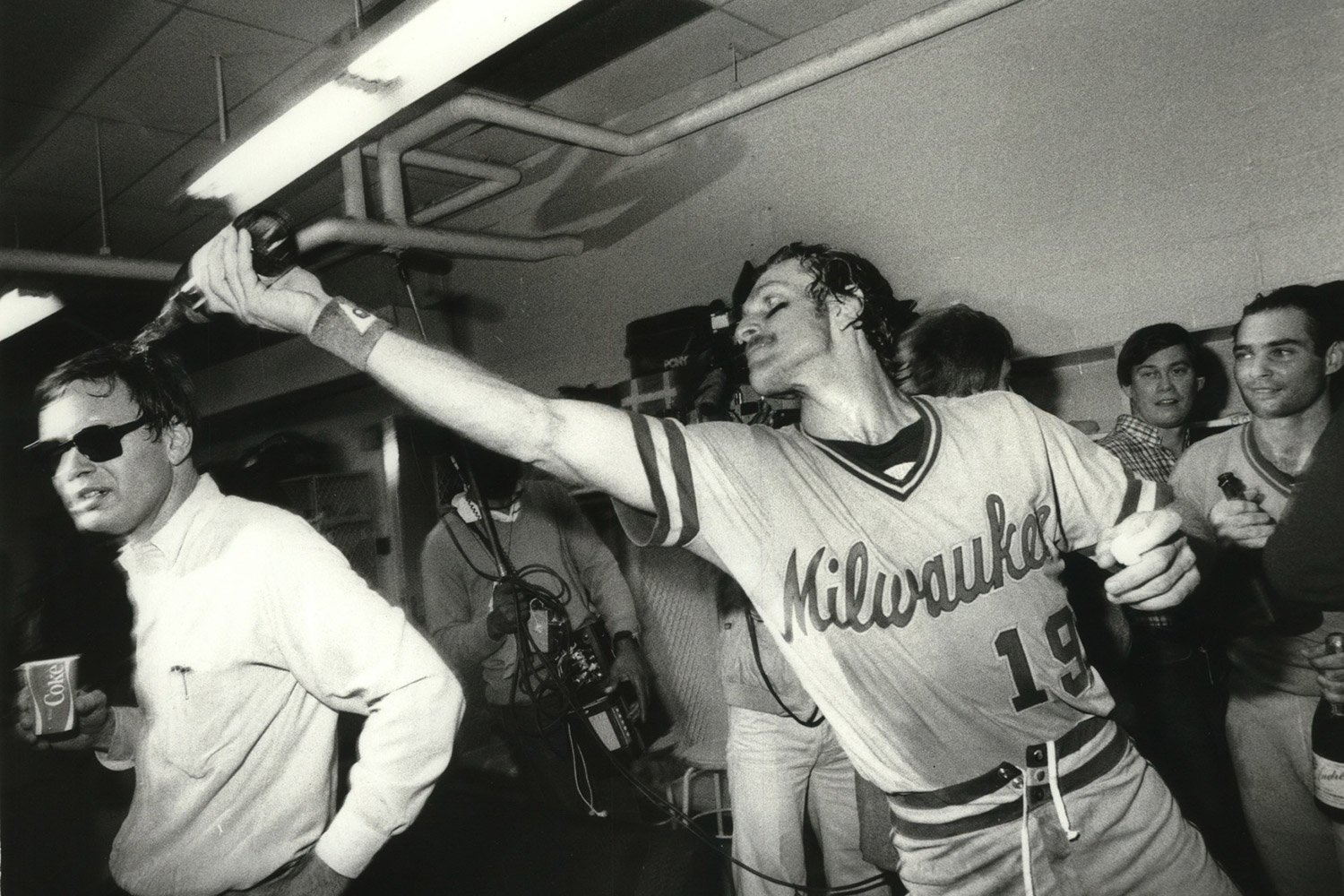 With their 97th win on the final day of the season, the 2025 Milwaukee Brewers stood alone atop the MLB mountain, finishing with the best record in baseball. It’s an incredible achievement, something the franchise has done only once before—by the beloved 1982 Brew Crew. But as history reminds us, being the regular-season “top dog” means little without October glory. The only crown that truly matters is a World Series title. Fair or not, the champion is determined in the postseason. No banner flies for “most wins,” and few fans even remember which team had the best record by the next spring. Of course, posting the league’s best record shouldn’t be dismissed. Grinding through 162 games proves a team’s talent, depth, and resilience. That consistency is worth celebrating, even if the rest of the league doesn’t see Milwaukee as the undisputed “best team.” How many experts or evaluators actually see the Brewers as champions of the regular season? Take a look around, because very few would rank Milwaukee ahead of the other three NL teams remaining, so what does the regular season’s best mark matter? Many argue the postseason is mostly luck and randomness, making it a poor way to judge to crown a champ. But there are plenty of variables in the regular season that make it “unfair,” too. Playing teams when they’re hot or cold, dealing with injuries to key players, significant schedule differences, and other factors all skew the standings. The gap between the top four NL clubs this year? Less than one win per month. That’s how slim the margin is after six months of baseball, so that bad luck stretch of ball you had in June might have cost you the division title. And that’s exactly why the playoffs are so compelling. They strip away excuses and pit the best against the best. Whether randomness plays a role or not, October baseball is the crucible where reputations are forged. Every pitch, every mistake, every unlikely hero matters. Fans don’t replay 162 games in their memories—they replay the postseason moments. Find a way to win. Christian Yelich and William Contreras both spoke this year about the importance and drive to bring a World Series title to Milwaukee. All the regular season success and earning seven postseason berths in eight years is amazing, but it’s not enough. Yelich, in a recent story in the Milwaukee Journal Sentinel, was quoted as saying: "That would be the ultimate one. Just because, as a player, obviously, everybody wants to win a World Series. But just how much it would mean to the organization and the city, everything else, to have a World Series title. To win a World Series would change this place, for sure. It's looked at in a completely different light once that happens." Meanwhile, Contreras penned an article for the Players' Tribune with his own insightful remarks: But they are far from the only ones seeing the World Series as the real crown. Just ask the 1982 Brewers: they had MLB’s best record (something no one talks about), yet what lingers is heartbreak, not celebration. Watch the end of “Just a Bit Outside” and you’ll witness what it means to players when they come up short in the postseason. The raw emotion and regret that they couldn’t pull it off is real, even more than 40 years later. Robin Yount’s reaction was the most telling as he has rarely (if ever) expressed such feelings. Despite being a Hall-of-Famer, a two-time MVP, and the most beloved player in Brewers’ history, he can’t get over it. He knows how much success his teams enjoyed and how much fans love them, but he still says that Game 7 of the 1982 World Series was "the worst day of his life." That says it all—winning the Fall Classic is the ultimate validation. A funny and frustrating side note to the ‘82 team is the reaction of some who aren’t fans of honoring that team. Especially those who think focusing on playoff and World Series success is the wrong thing to do, this has become a hypocritical challenge. Those same people make fun of fans and others for celebrating that club because they didn’t even win the title. Well, which is it? If the playoffs don’t matter, then you should have no problem celebrating that group. Still, Brewers supporters find themselves in a tricky spot. This is arguably the franchise’s golden era: three straight division titles, the franchise’s best record, and a stellar run of postseason appearances.. Yet the club hasn’t even won a playoff series since 2018. How much can fans enjoy the ride if it always ends early? Is it a coping mechanism to focus on regular-season triumphs while ignoring October frustration? No one is saying you shouldn’t celebrate and thoroughly enjoy having a consistent, high-quality baseball team that is competitive every season. I’ve often said that, outside of winning a championship, the best thing for sports fans is having a good baseball club to follow because you get to wake up every day with anticipation and excitement to watch another game. Yet, the question remains: how much does winning the World Series matter? For most, the answer is clear. Brewers fans would gladly trade five or even 10 years of losing baseball for a single championship run. It would ignite the state in a way no other celebration has, eclipsing the Bucks’ 2021 title party times 100. Although the Brewers won 97 games, for all the pride in their accomplishment, the story still feels incomplete, and fans have never experienced the incredible rush and satisfaction of ultimate victory. That’s the reality as Milwaukee begins another journey into the playoff gauntlet - and this time with an added story of facing the rival Chicago Cubs. The Brewers have proven they can dominate from March to September. But in baseball, greatness isn’t just about the grind. It’s about surviving October. The regular season shows the Brewers are good. Only the World Series can make them unforgettable and separate this group from the rest of the franchise’s pattern of success, but failure.
 -
Image courtesy of © Milwaukee Journal Sentinel-USA TODAY NETWORK With their 97th win on the final day of the season, the 2025 Milwaukee Brewers stood alone atop the MLB mountain, finishing with the best record in baseball. It’s an incredible achievement, something the franchise has done only once before—by the beloved 1982 Brew Crew. But as history reminds us, being the regular-season “top dog” means little without October glory. The only crown that truly matters is a World Series title. Fair or not, the champion is determined in the postseason. No banner flies for “most wins,” and few fans even remember which team had the best record by the next spring. Of course, posting the league’s best record shouldn’t be dismissed. Grinding through 162 games proves a team’s talent, depth, and resilience. That consistency is worth celebrating, even if the rest of the league doesn’t see Milwaukee as the undisputed “best team.” How many experts or evaluators actually see the Brewers as champions of the regular season? Take a look around, because very few would rank Milwaukee ahead of the other three NL teams remaining, so what does the regular season’s best mark matter? Many argue the postseason is mostly luck and randomness, making it a poor way to judge to crown a champ. But there are plenty of variables in the regular season that make it “unfair,” too. Playing teams when they’re hot or cold, dealing with injuries to key players, significant schedule differences, and other factors all skew the standings. The gap between the top four NL clubs this year? Less than one win per month. That’s how slim the margin is after six months of baseball, so that bad luck stretch of ball you had in June might have cost you the division title. And that’s exactly why the playoffs are so compelling. They strip away excuses and pit the best against the best. Whether randomness plays a role or not, October baseball is the crucible where reputations are forged. Every pitch, every mistake, every unlikely hero matters. Fans don’t replay 162 games in their memories—they replay the postseason moments. Find a way to win. Christian Yelich and William Contreras both spoke this year about the importance and drive to bring a World Series title to Milwaukee. All the regular season success and earning seven postseason berths in eight years is amazing, but it’s not enough. Yelich, in a recent story in the Milwaukee Journal Sentinel, was quoted as saying: "That would be the ultimate one. Just because, as a player, obviously, everybody wants to win a World Series. But just how much it would mean to the organization and the city, everything else, to have a World Series title. To win a World Series would change this place, for sure. It's looked at in a completely different light once that happens." Meanwhile, Contreras penned an article for the Players' Tribune with his own insightful remarks: But they are far from the only ones seeing the World Series as the real crown. Just ask the 1982 Brewers: they had MLB’s best record (something no one talks about), yet what lingers is heartbreak, not celebration. Watch the end of “Just a Bit Outside” and you’ll witness what it means to players when they come up short in the postseason. The raw emotion and regret that they couldn’t pull it off is real, even more than 40 years later. Robin Yount’s reaction was the most telling as he has rarely (if ever) expressed such feelings. Despite being a Hall-of-Famer, a two-time MVP, and the most beloved player in Brewers’ history, he can’t get over it. He knows how much success his teams enjoyed and how much fans love them, but he still says that Game 7 of the 1982 World Series was "the worst day of his life." That says it all—winning the Fall Classic is the ultimate validation. A funny and frustrating side note to the ‘82 team is the reaction of some who aren’t fans of honoring that team. Especially those who think focusing on playoff and World Series success is the wrong thing to do, this has become a hypocritical challenge. Those same people make fun of fans and others for celebrating that club because they didn’t even win the title. Well, which is it? If the playoffs don’t matter, then you should have no problem celebrating that group. Still, Brewers supporters find themselves in a tricky spot. This is arguably the franchise’s golden era: three straight division titles, the franchise’s best record, and a stellar run of postseason appearances.. Yet the club hasn’t even won a playoff series since 2018. How much can fans enjoy the ride if it always ends early? Is it a coping mechanism to focus on regular-season triumphs while ignoring October frustration? No one is saying you shouldn’t celebrate and thoroughly enjoy having a consistent, high-quality baseball team that is competitive every season. I’ve often said that, outside of winning a championship, the best thing for sports fans is having a good baseball club to follow because you get to wake up every day with anticipation and excitement to watch another game. Yet, the question remains: how much does winning the World Series matter? For most, the answer is clear. Brewers fans would gladly trade five or even 10 years of losing baseball for a single championship run. It would ignite the state in a way no other celebration has, eclipsing the Bucks’ 2021 title party times 100. Although the Brewers won 97 games, for all the pride in their accomplishment, the story still feels incomplete, and fans have never experienced the incredible rush and satisfaction of ultimate victory. That’s the reality as Milwaukee begins another journey into the playoff gauntlet - and this time with an added story of facing the rival Chicago Cubs. The Brewers have proven they can dominate from March to September. But in baseball, greatness isn’t just about the grind. It’s about surviving October. The regular season shows the Brewers are good. Only the World Series can make them unforgettable and separate this group from the rest of the franchise’s pattern of success, but failure. View full article
-
Image courtesy of © Michael Sears / Milwaukee Journal Sentinel You can't talk about the Milwaukee Brewers' 12-game winning streak this season without harkening back to the first club to do it in franchise history: the 1987 "Team Streak" Brewers. Most fans know the story, as the Brew Crew opened that season with a team-record 13 consecutive victories. But the most memorable game was when they reached one dozen on Easter Sunday at Milwaukee County Stadium. And yes, that was also the first time George Webb would have to make good on its "Free Burgers" promise. But the 12th win itself was the thrilling part, when a three-run home run and a two-run, walkoff homer erased a three-run Texas Rangers' ninth-inning lead in a flash. That was the perspective I wanted to explore; that of the opponents who were collectively dumbfounded as Dale Sveum's game-winning bomb left the Rangers utterly shocked in the visitor's dugout. Bob Carpenter, the current Washington Nationals TV play-by-play announcer, held the same role for the Rangers that sun-splashed day in 1987. His call of the action was perfectly toned, with dejection in his voice for his own club, but still a hint of excitement in recognizing what the Brewers were doing. "We were stunned, but I have to admit it was a sight to behold with the crowd going wild and the Brewers jumping around," Carpenter recalled. "Even though it was against my team, in some sort of roundabout way, I did soak in the spectacle and was happy for Milwaukee." Back then, home teams didn't regularly televise games, so it was up to Carpenter to describe the action for the viewing audience. "I still hear from people every time I come to Milwaukee about that game, and they seemed to appreciate the call I put on that last home run, showing my disappointment but also my respect for the Brewers. As the ball sailed out to right field, I called it '12 in a row!' - then went quiet while our director/producer Dave Burchett did a great job with the Milwaukee-based crew of capturing the ensuing celebration while I said nothing." You would have thought the Brewers had won a playoff series the way fans - many of them shirtless and fueled by adult beverages, no doubt - went absolutely crazy, emitting a deafening drone of sound and camera-shaking dancing. The Brewers, too, were jumping around like the American League pennant returned to the Cream City. In fairness, winning 12 MLB games in a row is rare, so it's understandable. On the other side of the field, the Rangers were feeling stunned and snakebitten. They came to Milwaukee that weekend on a six-game losing streak, which included a Brewers sweep over them in Texas. Carpenter says that it created an atmospheric duality to open the series. "There were two buzzes: The Rangers were 1-7 coming into the weekend, so we were desperate to win. The Brewers were 9-0 and were finding ways to win. It was the ultimate 'two teams going in different directions' scenario." After Milwaukee took the first two games, it looked like the Rangers finally found a way to snap the Crew's streak. Texas pitchers held the Brewers to just one run through eight frames, and as the Rangers' analyst Steve Busby said after the game was over, it was surprising because it seemed that the Brewers "really had no momentum at all coming into the ninth inning." Though Carpenter didn't say anything during the broadcast, he told me, "It certainly looked like the Brewers were about to be stopped. Again, we were desperate, so it had a pretty good feeling going into the bottom of the ninth." Those feelings were quickly dashed, but Carpenter, as he has done for more than four decades behind the mic, was all business. "I pride myself on being a pro, even when the opponent breaks our heart, and I feel I did it that day." You can watch and listen for yourself below. With the Nationals, Carpenter got to see this year's streaking Brewers twice: Once in the middle of their 11-game run and then again, watching the Brewers sweep Washington for a second time, this time kicking off Milwaukee's 12-gamer. Carpenter acknowledged it was a surprise to see that '87 club have such success considering the preseason prognostications weren't favorable. And while some wold argue that makes this year's team similar, Carpenter recognizes that every year, each team is its own entity. "This team (2025) has its own personality and I've been so impressed with them and the job Murph (manager Pat Murphy) has done. I don't try to compare teams from different eras, so I haven't thought much about '87 compared to '25." It's still fascinating to get the "other side's" perspective on being around a red-hot baseball team. You could tell Carpenter felt a little bit of everything, including awe and respect upon witnessing first-hand a team that fought it's way to a win every day for two weeks. And based on what we're seeing at American Family Field and across social media this season, the fans are embracing the same type of passion and spirited fervor captured in 1987. It's important to cherish those special seasons and rare moments, because they are never guaranteed. Heck, that day in '87 even sticks with Bob Carpenter, both as a Midwest guy and a broadcaster. And that is despite being on the wrong end of the Brewers' magical performance to start that season. "I'm from St. Louis and I always wanted the Midwest teams to do well - except the Cubs," Carpenter said with a laugh. "The end of that game remains one of the most striking moments of my 42-year MLB career." View full article
-
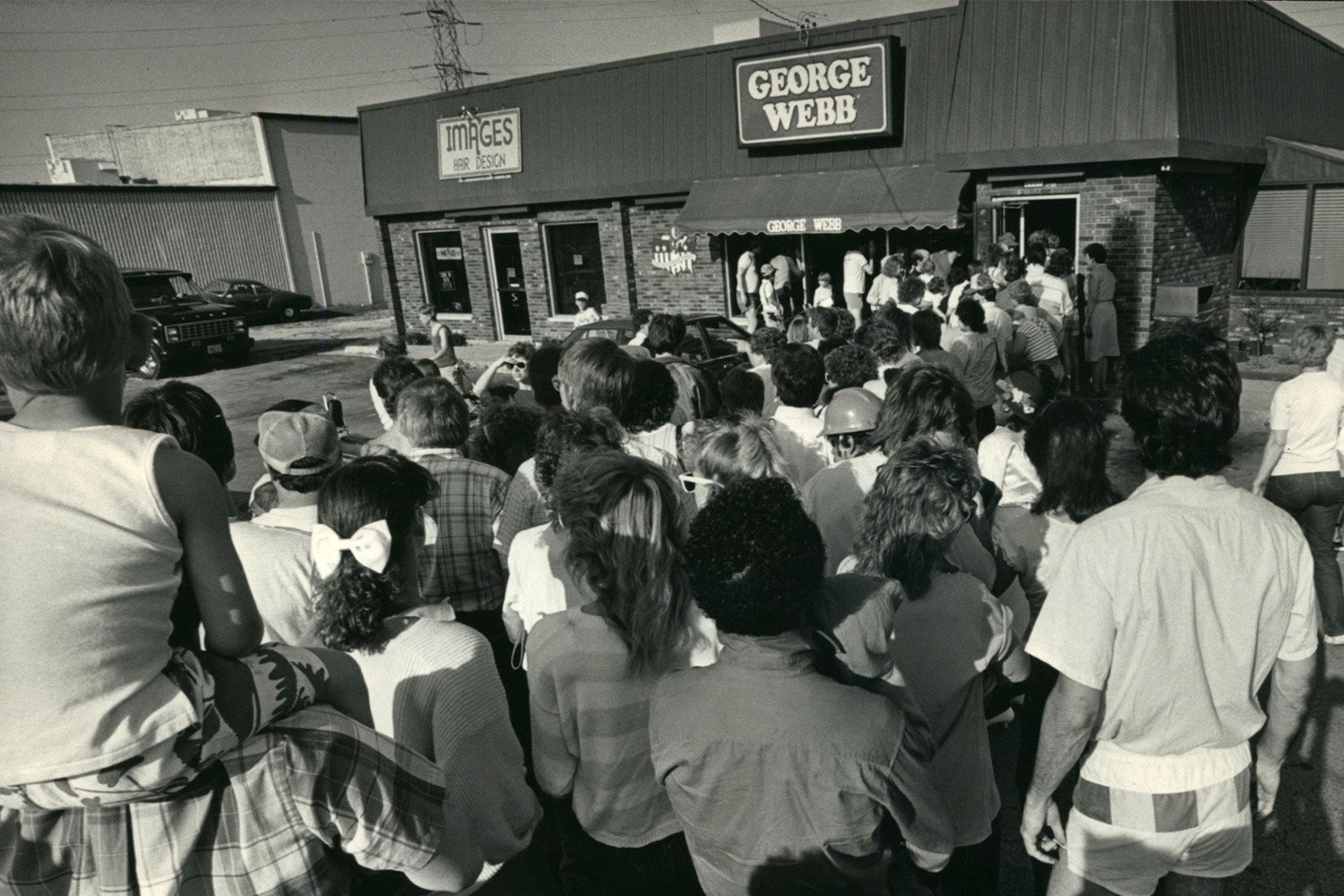 You can't talk about the Milwaukee Brewers' 12-game winning streak this season without harkening back to the first club to do it in franchise history: the 1987 "Team Streak" Brewers. Most fans know the story, as the Brew Crew opened that season with a team-record 13 consecutive victories. But the most memorable game was when they reached one dozen on Easter Sunday at Milwaukee County Stadium. And yes, that was also the first time George Webb would have to make good on its "Free Burgers" promise. But the 12th win itself was the thrilling part, when a three-run home run and a two-run, walkoff homer erased a three-run Texas Rangers' ninth-inning lead in a flash. That was the perspective I wanted to explore; that of the opponents who were collectively dumbfounded as Dale Sveum's game-winning bomb left the Rangers utterly shocked in the visitor's dugout. Bob Carpenter, the current Washington Nationals TV play-by-play announcer, held the same role for the Rangers that sun-splashed day in 1987. His call of the action was perfectly toned, with dejection in his voice for his own club, but still a hint of excitement in recognizing what the Brewers were doing. "We were stunned, but I have to admit it was a sight to behold with the crowd going wild and the Brewers jumping around," Carpenter recalled. "Even though it was against my team, in some sort of roundabout way, I did soak in the spectacle and was happy for Milwaukee." Back then, home teams didn't regularly televise games, so it was up to Carpenter to describe the action for the viewing audience. "I still hear from people every time I come to Milwaukee about that game, and they seemed to appreciate the call I put on that last home run, showing my disappointment but also my respect for the Brewers. As the ball sailed out to right field, I called it '12 in a row!' - then went quiet while our director/producer Dave Burchett did a great job with the Milwaukee-based crew of capturing the ensuing celebration while I said nothing." You would have thought the Brewers had won a playoff series the way fans - many of them shirtless and fueled by adult beverages, no doubt - went absolutely crazy, emitting a deafening drone of sound and camera-shaking dancing. The Brewers, too, were jumping around like the American League pennant returned to the Cream City. In fairness, winning 12 MLB games in a row is rare, so it's understandable. On the other side of the field, the Rangers were feeling stunned and snakebitten. They came to Milwaukee that weekend on a six-game losing streak, which included a Brewers sweep over them in Texas. Carpenter says that it created an atmospheric duality to open the series. "There were two buzzes: The Rangers were 1-7 coming into the weekend, so we were desperate to win. The Brewers were 9-0 and were finding ways to win. It was the ultimate 'two teams going in different directions' scenario." After Milwaukee took the first two games, it looked like the Rangers finally found a way to snap the Crew's streak. Texas pitchers held the Brewers to just one run through eight frames, and as the Rangers' analyst Steve Busby said after the game was over, it was surprising because it seemed that the Brewers "really had no momentum at all coming into the ninth inning." Though Carpenter didn't say anything during the broadcast, he told me, "It certainly looked like the Brewers were about to be stopped. Again, we were desperate, so it had a pretty good feeling going into the bottom of the ninth." Those feelings were quickly dashed, but Carpenter, as he has done for more than four decades behind the mic, was all business. "I pride myself on being a pro, even when the opponent breaks our heart, and I feel I did it that day." You can watch and listen for yourself below. With the Nationals, Carpenter got to see this year's streaking Brewers twice: Once in the middle of their 11-game run and then again, watching the Brewers sweep Washington for a second time, this time kicking off Milwaukee's 12-gamer. Carpenter acknowledged it was a surprise to see that '87 club have such success considering the preseason prognostications weren't favorable. And while some wold argue that makes this year's team similar, Carpenter recognizes that every year, each team is its own entity. "This team (2025) has its own personality and I've been so impressed with them and the job Murph (manager Pat Murphy) has done. I don't try to compare teams from different eras, so I haven't thought much about '87 compared to '25." It's still fascinating to get the "other side's" perspective on being around a red-hot baseball team. You could tell Carpenter felt a little bit of everything, including awe and respect upon witnessing first-hand a team that fought it's way to a win every day for two weeks. And based on what we're seeing at American Family Field and across social media this season, the fans are embracing the same type of passion and spirited fervor captured in 1987. It's important to cherish those special seasons and rare moments, because they are never guaranteed. Heck, that day in '87 even sticks with Bob Carpenter, both as a Midwest guy and a broadcaster. And that is despite being on the wrong end of the Brewers' magical performance to start that season. "I'm from St. Louis and I always wanted the Midwest teams to do well - except the Cubs," Carpenter said with a laugh. "The end of that game remains one of the most striking moments of my 42-year MLB career."
 -
Infield single Sacrifice bunt (second out) RBI single to right field – batter advances to second on the throw RBI single to right field on 0-2 pitch Single to right field on 1-2 pitch – runners on first and third Runner steals second and runner from third scores on Pirates’ throwing error That is how to take a 1-1 game and turn it into a 5-1 lead, with a bunch of quality at-bats and aggressive base running—plus a bit of help from the defense. It’s what the Brewers have done all season, and there doesn’t appear to be any sign of slowing down. Milwaukee’s 2025 run might not fit many current models, but it’s no accident. Whether it carries them deep into October remains to be seen, but for now, fans should enjoy the ride, and doubters should retire the “luck” and “fluke” narratives. The Brewers are for real. View full article
-
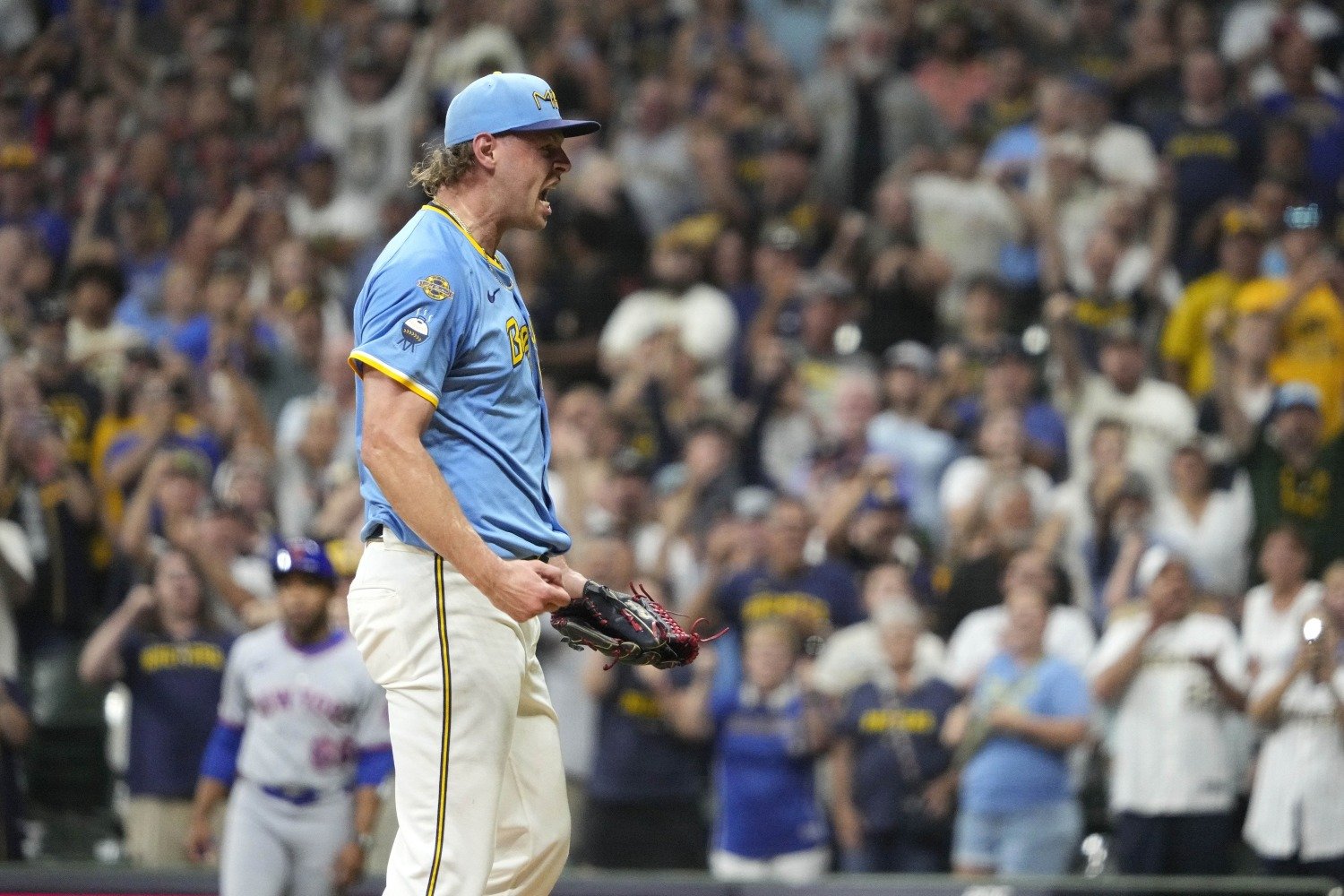 Baseball experts keep looking for reasons why the Milwaukee Brewers’ success can’t last—or, at least, a solid explanation for how it is happening. The team doesn’t care, and neither should fans. Stats and projections are valuable and have their place, but baseball is constantly evolving, and this year’s Brewers might have found a new formula that is difficult to quantify. Evaluating baseball talent is extremely challenging, but the sabersphere has spent the last two decades making it both easier and better-organized. That makes us all smarter fans, in theory, but it also oversimplifies things. As a result, rather than just assuming they were wrong, many of those who previously doubted the Brewers are trying to fit them for labels like "lucky," "fluky" and "streaky". Such descriptions don’t hold up, though, over 100-plus games of quality baseball. At 74-44 (a 102-win pace), Milwaukee owns the best record in the league, five games ahead of the next-best team. They have a very real chance to win 100 games for the first time in franchise history. Maybe they aren’t built to win like most modern teams, but their performance is undeniable and evident of true success: Best run differential in baseball (+138) Best record vs. winning teams (37-21) Most innings scoring four or more runs (40) Third in OBP (.330) Top five in ERA and opponents’ batting average, slugging and OPS There are three key areas where the Brewers prove their worth, and quotes from three legendary baseball men encapsulate them all. Manager Casey Stengel: “Most ball games are lost, not won.” The Brewers win by avoiding mistakes and forcing them from opponents. Brilliant pitching, airtight defense and situational offense keep them steady, while aggressive play rattles rivals into errors. In a race to keep pace, the Crew’s enemies bobble grounders and rush throws on defense, while freezing up on pitches in the zone and making poor baserunning decisions on offense. And when the opposition makes a mistake, the Brewers take full advantage of it. There were multiple examples of how the Brewers create wins in Milwaukee’s series sweep over the New York Mets, especially in game two. The Brewers trailed 2-0 in the fifth inning when Kodai Senga bobbled a grounder and allowed a runner to reach on his error. On the next pitch, Brice Turang blasted a two-run home run. After a pop out, the Brewers would take the lead by working two walks, earning a catcher’s interference call and taking a hit-by-pitch on an 0-2 sweeper. The previous night, in the ninth inning, the Brewers led 3-2 with two outs and Starling Marte on second base when Jeff McNeil singled to center field. Two mistakes would allow the Brewers to hang onto the win: The Mets did not pinch run for Marte (though he's a proud veteran whose speed used to be excellent, he's no longer that fleet), and Marte rounded third base too wide, lengthening his path to the plate. Thus, Blake Perkins had just enough time to fire a strike to William Contreras, who slapped on the tag for a walk-off win. Infield single Sacrifice bunt (second out) RBI single to right field – batter advances to second on the throw RBI single to right field on 0-2 pitch Single to right field on 1-2 pitch – runners on first and third Runner steals second and runner from third scores on Pirates’ throwing error That is how to take a 1-1 game and turn it into a 5-1 lead, with a bunch of quality at-bats and aggressive base running—plus a bit of help from the defense. It’s what the Brewers have done all season, and there doesn’t appear to be any sign of slowing down. Milwaukee’s 2025 run might not fit many current models, but it’s no accident. Whether it carries them deep into October remains to be seen, but for now, fans should enjoy the ride, and doubters should retire the “luck” and “fluke” narratives. The Brewers are for real.
 -
With the Milwaukee Brewers 2025 season practically upon us, we all need to lock in to prepare for the marathon. But first, it's critical for writers and fans to pretend they "know ball," by predicting what will happen across the next six months. Let's do it! Image courtesy of © Michael McLoone-Imagn Images This version of the Milwaukee Brewers might be one of the most challenging to project, as it feels like many players have wide variability in how they could perform. The key to making "bold predictions," at least in my view, is that they shouldn't be so off-the-rails crazy that they have a one percent chance of happening, meaning there is zero risk and all reward. For example, saying Aaron Civale will win the 2025 Cy Young Award is not bold; it's a throwaway statement that makes you a "genius" if it happens, but something no one will care about if it doesn't happen. They'll never take it seriously to begin with. At least give the fans some hope a bold prediction could come true. With that in mind, my five bold Brewers predictions certainly have low odds—or are perceived that way by fans—but have realistic reasoning as to why they could hit. Just make sure you bookmark this article so you can call me an idiot or a savant based on these five special thoughts. Trevor Megill Collects 40 Saves Despite having great bullpens and closers in their history, the Brewers have only had three pitchers reach the 40-save milestone in a season: John Axford's 46 saves in 2011 Francisco Rodriguez's 44 saves in 2014 Francisco Cordero's 44 saves in 2007 If you're like me, it was a bit shocking to realize so few hurlers saved 40 games. Josh Hader topped out at 37 (2019), while Corey Knebel (2017), Derrick Turnbow (2005) and Dan Kolb (2004) all finished with 39 saves in their career-best seasons. Megill saved 21 games in 2024 as Devin Williams closed out another 14 victories, meaning Megill could have easily had 35. Overall, the Brewers' bullpen finished last season with 53 saves, the second-most in team history. There were plenty of opportunities, and Milwaukee will likely play a great many close games this year, too. Plus, compared to Hader and Williams, Megill seems like the type of guy (mentally and physically) who will want the ball every night if the save situation arises. The Brewers Hit More Home Runs in 2025 Than They Did in 2024 So much of the offseason narrative about the Brewers has centered around their supposed lack of power—especially how they will replace Willy Adames's 32 homers. Though the front office didn't bring in a slugger to fill that hole, the Crew's power depth might actually serve them better this season when you think about the multiple players who could increase the Brewers' total internally. Milwaukee's 177 home runs last season tied them for 20th in franchise history. It's a fine number, but not among the very best. That leaves space for the 2025 lineup to surpass the 2024 total with incremental improvements across the board. A handful of players have realistic home run addition potential this season for various reasons if they can increase their homers from 2024 -> 2025: Christian Yelich (injury, games played): 11 → 18 Rhys Hoskins (two years post-surgery): 26 → 32 Jackson Chourio (youth, talent): 21 → 27 William Contreras (peak season): 23 → 28 Garrett Mitchell (health, playing time): 8 → 12 Sal Frelick (Italian food): 2 → 6 Add those up, and the six players above would match Adames's output. Some of these guys could take off to even greater heights than noted. Plus, you have players like Joey Ortiz and Oliver Dunn who, with full seasons, are likely to increase their home run totals from the 11 and 2 they had, respectively. Here's to the Brewers shooting for 180 long balls in 2025. Joey Ortiz is a Better Player Than Willy Adames Adames was a true fan favorite in Milwaukee, both for his production and his personality. It's tough to see a clubhouse leader go, especially one who kept the team loose, mentored younger athletes and gave the club a steady power bat and (usually) glove at a premier position. Yet, the Brewers made the best move for the team by letting Adames leave via free agency, given his age, contract length and salary demands. That paves the way for Ortiz to become the stalwart shortstop in Milwaukee for the next half-decade. He won't blast 30 homers like Adames, and his clubhouse presence will likely fall short, but there are multiple ways to be a valuable baseball player. Ortiz will prove to be more valuable than Adames overall in 2025 by putting up a higher FanGraphs WAR (fWAR). It will start with Ortiz's phenomenal defense, but be supplemented by quality baserunning and better offense than you probably expect. Adames's fielding declined significantly in 2024, clearly visible with the eye test and defensive metrics. He still posted 4.8 fWAR, the best of his career, fueled largely by his career-best 32 homers and 21 stolen bases (his previous high was eight steals). Adames got the classic "contract year boost," especially in his commitment to swiping bags. Ortiz's 3.1 fWAR was largely created by his defense; his production at the plate nose-dived following a midseason neck injury. Three factors will push Ortiz past Adames in 2025: Adames's defense will continue to be below-average, and his offense will be muted in San Francisco's challenging park. With health, Ortiz's power and speed numbers will increase, and his overall offense will not dip in the second half. Ortiz's defensive value will increase by playing shortstop for a full season versus primarily playing third base. The Brewers are a Top Five MLB Team in Doubles It might be a challenge for the Brewers to increase their home run output and find their way into the top five in doubles. More homers often mean fewer doubles, but that is team-dependent and might include some luck. The main reason for doubt is the Brewers have not finished in the top five in doubles in baseball since 2014, and haven't been better than ninth since 2015. Still, there is reason for optimism. If Milwaukee mostly uses the projected lineup that begins with Chourio, Yelich and Contreras, that is a trio of high-level hitters who would get 1,800 plate appearances to do damage. Contreras has averaged 37.5 doubles the past two years, while Yelich had 34 two-baggers in 2023 (his last full season) and Chourio finished with 29 in his rookie year. That would give the Brewers 100 doubles from those three, with added potential throughout the lineup. Ortiz profiles more as a doubles hitter than a home run threat. He had 35 and 30 doubles in the minor leagues in 2022 and 2023, respectively. Last season with the Crew, despite a brutal second half (.362 slugging) due in part to injury, he hit 25 two-baggers. Meanwhile, the speedsters Mitchell, Frelick and Brice Turang add another year of maturity and strength that can open up the door to more extra-base hits. If they stay healthy and productive to get a full season's worth of plate appearances, 25-30 doubles for each is feasible. Will it be enough? The Brewers would likely need a couple of guys to go off in the doubles department (we're talking mid-40s) to reach the top five in the league. Sometimes youth and aggressiveness surprise you. Jared Koenig is the Most Valuable Brewers Reliever by fWAR With an organization full of talented relief pitchers, it can be easy to overlook certain players. Koenig will be that arm in 2025 when he accumulates the most fWAR among Brewers relief pitchers and half the fan base still doesn't know who he is. It's been typical in most Brewers seasons that the leader in saves also owns the best fWAR in the bullpen. It makes sense. They're often pitching in the most high-leverage situations and they have great talent. That's how they earned the closer's role. But there are seasons where a multi-inning, versatile out-getter is pegged for key spots before the ninth frame, and he just keeps getting the job done. Megill, the Brewers' saves leader in 2024, had the relief corps's best fWAR at 1.0. Following him were five relievers within 0.3 fWAR of that. Williams (0.8) Hoby Milner (0.8) Aaron Ashby (0.8) Joel Payamps (0.7) Koenig (0.7) Considering Koenig came out of nowhere to play a strong role in the bullpen, 2025 could be the next step in his development. He posted a 2.73 ERA as a reliever last year—and a 2.47 overall, with six starts as an opener. There's nothing wrong with that, but if he wants to leap to the top of the relief pitcher fWAR in Milwaukee, he'll need to improve on his 22.7 K% and 9.1 BB%. What do you think? Too bold or not bold enough? Actually, I had one more prediction which many say is also quite bold. After much consideration and an initial thought in a different direction, I am picking the Brewers to win the NL Central for a third straight season. Like last year, my instincts figured the Chicago Cubs looked more the part, but as Opening Day 2024 got closer, I officially went with Milwaukee. The same thing is happening this year; the rest of the division must prove they are smarter or better than the Brewers. Heck, if even a few of my five bold predictions come true, they would almost have to win the division title. View full article
- 4 replies
-
- 1
-
-
- joey ortiz
- trevor megill
- (and 1 more)
-
 This version of the Milwaukee Brewers might be one of the most challenging to project, as it feels like many players have wide variability in how they could perform. The key to making "bold predictions," at least in my view, is that they shouldn't be so off-the-rails crazy that they have a one percent chance of happening, meaning there is zero risk and all reward. For example, saying Aaron Civale will win the 2025 Cy Young Award is not bold; it's a throwaway statement that makes you a "genius" if it happens, but something no one will care about if it doesn't happen. They'll never take it seriously to begin with. At least give the fans some hope a bold prediction could come true. With that in mind, my five bold Brewers predictions certainly have low odds—or are perceived that way by fans—but have realistic reasoning as to why they could hit. Just make sure you bookmark this article so you can call me an idiot or a savant based on these five special thoughts. Trevor Megill Collects 40 Saves Despite having great bullpens and closers in their history, the Brewers have only had three pitchers reach the 40-save milestone in a season: John Axford's 46 saves in 2011 Francisco Rodriguez's 44 saves in 2014 Francisco Cordero's 44 saves in 2007 If you're like me, it was a bit shocking to realize so few hurlers saved 40 games. Josh Hader topped out at 37 (2019), while Corey Knebel (2017), Derrick Turnbow (2005) and Dan Kolb (2004) all finished with 39 saves in their career-best seasons. Megill saved 21 games in 2024 as Devin Williams closed out another 14 victories, meaning Megill could have easily had 35. Overall, the Brewers' bullpen finished last season with 53 saves, the second-most in team history. There were plenty of opportunities, and Milwaukee will likely play a great many close games this year, too. Plus, compared to Hader and Williams, Megill seems like the type of guy (mentally and physically) who will want the ball every night if the save situation arises. The Brewers Hit More Home Runs in 2025 Than They Did in 2024 So much of the offseason narrative about the Brewers has centered around their supposed lack of power—especially how they will replace Willy Adames's 32 homers. Though the front office didn't bring in a slugger to fill that hole, the Crew's power depth might actually serve them better this season when you think about the multiple players who could increase the Brewers' total internally. Milwaukee's 177 home runs last season tied them for 20th in franchise history. It's a fine number, but not among the very best. That leaves space for the 2025 lineup to surpass the 2024 total with incremental improvements across the board. A handful of players have realistic home run addition potential this season for various reasons if they can increase their homers from 2024 -> 2025: Christian Yelich (injury, games played): 11 → 18 Rhys Hoskins (two years post-surgery): 26 → 32 Jackson Chourio (youth, talent): 21 → 27 William Contreras (peak season): 23 → 28 Garrett Mitchell (health, playing time): 8 → 12 Sal Frelick (Italian food): 2 → 6 Add those up, and the six players above would match Adames's output. Some of these guys could take off to even greater heights than noted. Plus, you have players like Joey Ortiz and Oliver Dunn who, with full seasons, are likely to increase their home run totals from the 11 and 2 they had, respectively. Here's to the Brewers shooting for 180 long balls in 2025. Joey Ortiz is a Better Player Than Willy Adames Adames was a true fan favorite in Milwaukee, both for his production and his personality. It's tough to see a clubhouse leader go, especially one who kept the team loose, mentored younger athletes and gave the club a steady power bat and (usually) glove at a premier position. Yet, the Brewers made the best move for the team by letting Adames leave via free agency, given his age, contract length and salary demands. That paves the way for Ortiz to become the stalwart shortstop in Milwaukee for the next half-decade. He won't blast 30 homers like Adames, and his clubhouse presence will likely fall short, but there are multiple ways to be a valuable baseball player. Ortiz will prove to be more valuable than Adames overall in 2025 by putting up a higher FanGraphs WAR (fWAR). It will start with Ortiz's phenomenal defense, but be supplemented by quality baserunning and better offense than you probably expect. Adames's fielding declined significantly in 2024, clearly visible with the eye test and defensive metrics. He still posted 4.8 fWAR, the best of his career, fueled largely by his career-best 32 homers and 21 stolen bases (his previous high was eight steals). Adames got the classic "contract year boost," especially in his commitment to swiping bags. Ortiz's 3.1 fWAR was largely created by his defense; his production at the plate nose-dived following a midseason neck injury. Three factors will push Ortiz past Adames in 2025: Adames's defense will continue to be below-average, and his offense will be muted in San Francisco's challenging park. With health, Ortiz's power and speed numbers will increase, and his overall offense will not dip in the second half. Ortiz's defensive value will increase by playing shortstop for a full season versus primarily playing third base. The Brewers are a Top Five MLB Team in Doubles It might be a challenge for the Brewers to increase their home run output and find their way into the top five in doubles. More homers often mean fewer doubles, but that is team-dependent and might include some luck. The main reason for doubt is the Brewers have not finished in the top five in doubles in baseball since 2014, and haven't been better than ninth since 2015. Still, there is reason for optimism. If Milwaukee mostly uses the projected lineup that begins with Chourio, Yelich and Contreras, that is a trio of high-level hitters who would get 1,800 plate appearances to do damage. Contreras has averaged 37.5 doubles the past two years, while Yelich had 34 two-baggers in 2023 (his last full season) and Chourio finished with 29 in his rookie year. That would give the Brewers 100 doubles from those three, with added potential throughout the lineup. Ortiz profiles more as a doubles hitter than a home run threat. He had 35 and 30 doubles in the minor leagues in 2022 and 2023, respectively. Last season with the Crew, despite a brutal second half (.362 slugging) due in part to injury, he hit 25 two-baggers. Meanwhile, the speedsters Mitchell, Frelick and Brice Turang add another year of maturity and strength that can open up the door to more extra-base hits. If they stay healthy and productive to get a full season's worth of plate appearances, 25-30 doubles for each is feasible. Will it be enough? The Brewers would likely need a couple of guys to go off in the doubles department (we're talking mid-40s) to reach the top five in the league. Sometimes youth and aggressiveness surprise you. Jared Koenig is the Most Valuable Brewers Reliever by fWAR With an organization full of talented relief pitchers, it can be easy to overlook certain players. Koenig will be that arm in 2025 when he accumulates the most fWAR among Brewers relief pitchers and half the fan base still doesn't know who he is. It's been typical in most Brewers seasons that the leader in saves also owns the best fWAR in the bullpen. It makes sense. They're often pitching in the most high-leverage situations and they have great talent. That's how they earned the closer's role. But there are seasons where a multi-inning, versatile out-getter is pegged for key spots before the ninth frame, and he just keeps getting the job done. Megill, the Brewers' saves leader in 2024, had the relief corps's best fWAR at 1.0. Following him were five relievers within 0.3 fWAR of that. Williams (0.8) Hoby Milner (0.8) Aaron Ashby (0.8) Joel Payamps (0.7) Koenig (0.7) Considering Koenig came out of nowhere to play a strong role in the bullpen, 2025 could be the next step in his development. He posted a 2.73 ERA as a reliever last year—and a 2.47 overall, with six starts as an opener. There's nothing wrong with that, but if he wants to leap to the top of the relief pitcher fWAR in Milwaukee, he'll need to improve on his 22.7 K% and 9.1 BB%. What do you think? Too bold or not bold enough? Actually, I had one more prediction which many say is also quite bold. After much consideration and an initial thought in a different direction, I am picking the Brewers to win the NL Central for a third straight season. Like last year, my instincts figured the Chicago Cubs looked more the part, but as Opening Day 2024 got closer, I officially went with Milwaukee. The same thing is happening this year; the rest of the division must prove they are smarter or better than the Brewers. Heck, if even a few of my five bold predictions come true, they would almost have to win the division title.
- 4 comments
-
- 2
-
-
- joey ortiz
- trevor megill
- (and 1 more)
-
.png.489e0577ac61b5efe89840b04b1e322d.png) When Brandon Woodruff spoke candidly after his first MLB outing in 18 months (yes, technically a spring training start), he reflected on his time in Milwaukee and how he is now one of the old guys. When Woodruff, Freddy Peralta and Christian Yelich officially start the 2025 season, it will be their eighth year together as Milwaukee Brewers teammates. Woodruff is the longest-tenured Brewer, with one more season under his belt with the Brewers, while Peralta and Yelich started playing for Milwaukee in 2018. Keeping three high-level contributors together for nearly a decade is a victory in itself, in Milwaukee and in today's baseball world, but the trio has meant much more to the organization. The combination of personal achievements, team success and their personalities making them fan favorites is reminiscent of the Brewers' "Triumphant Trio" on a smaller scale. Robin Yount, Paul Molitor and Jim Gantner own the MLB record for hits by a trio of teammates, with 6,401 knocks for the Brewers from 1978 to 1992. For 15 seasons, Yount and Molitor fueled the first era of exciting Brewers baseball, often headlining incredible lineups that ignited fans across the county. Meanwhile, Gantner did the dirty work at second base, getting the most out of his ability as a hard-nosed Wisconsin native sporting Coke-bottle and tinted glasses. He was a fan favorite for his everyman, local kid persona. Molitor and Yount, well, they simply were two of the best to ever play baseball. They put the national spotlight on Milwaukee and were the main cogs in the franchise's best chance to win a World Series. It's not difficult to see why they remain legends among Brewers fans. Of course, those three did it for a much longer time, and none of the new trio are likely to reach the Hall of Fame. But Woodruff, Peralta and Yelich share many other traits with the 20th-century group. They're mostly quiet leaders who go about their business, set examples for everyone else, and hold themselves accountable when they fail. Molitor and Yount, especially, were not boisterous, rah-rah guys, though they exuded consistent professionalism to set the tone. As for Gantner (nicknamed Gumby), he could be looser and wackier, with a strange version of the English language that produced "Gumby-isms." Peralta is definitely the most outgoing and free-spirited of the current group, a perfect balance to the more low-key Yelich and Woodruff. But all six of these fan favorites love their teammates, enjoy every part of the game and appreciate the Brewers fanbase. It also doesn't hurt that each trio treated their supporters to fantastic stretches of success. It's a lot easier to root for guys who make winning a priority and a habit. Winning Percentage as Teammates 1978-1992: .523 (.542 in first seven seasons) 2018-2024: .561 Winning Seasons as Teammates 1978-1992: 10-for-15 (6-for-7 in first seven seasons) 2018-2024: 6-for-7 All-Star Appearances as Teammates 1978-1992: Eight All-Stars (four All-Stars in first seven seasons) 2018-2024: Six All-Stars MVP/Cy Young Awards as Teammates 1978-1992: Two MVPs (one MVP in first seven seasons) 2018-2024: One MVP As you can see, there are quite a few parallels between the pair of trios, particularly if you only count the first seven seasons of The Kid, The Ignitor and Gumby. It's not fair to compare playoff appearances and division titles, because the format is so much different now. For multiple reasons, it's easier to make the postseason in modern baseball. That doesn't mean we should take Woody, Freddy and Yeli for granted in this era, though, because plenty of franchises would envy the Brewers right now, despite their inability to win playoff series since 2018. The Crew has reached the playoffs in six out of the last seven seasons. It's been nine years since the Pittsburgh Pirates played in the postseason, and a full decade for the Los Angeles Angels, who had Mike Trout and Shohei Ohtani on their club for six years. But again, both Brewers trios mean so much more to Milwaukee and Wisconsin than on-field wins. All six men have been wonderful spokespeople for the franchise, the quality of the organization, the passion of the fans and the overall terrific experience of wearing the blue and gold threads. They have always come across as genuine, thankful pieces of a larger, special bond between the state and the team. Despite Yelich being the lone player to not be drafted by the Brewers, and Molitor (sadly) the only one to leave Milwaukee before the end of his career, they all hold a special place in the hearts of Brewers backers, who can claim them all to be permanent True Blue Brew Crew players. How will this Triumphant Trio's story end? Will they be the first set of three teammates to bring home a World Series? Could they at least get back to the Fall Classic? If Yelich is truly back, Peralta takes a step forward as an ace and Woodruff finds lightning in his arm once again, Brewers fans can dream that this trio will be etched in stone as permanently as the OGs. Either way, it's been one heckuva run for those three.
When Brandon Woodruff spoke candidly after his first MLB outing in 18 months (yes, technically a spring training start), he reflected on his time in Milwaukee and how he is now one of the old guys. When Woodruff, Freddy Peralta and Christian Yelich officially start the 2025 season, it will be their eighth year together as Milwaukee Brewers teammates. Woodruff is the longest-tenured Brewer, with one more season under his belt with the Brewers, while Peralta and Yelich started playing for Milwaukee in 2018. Keeping three high-level contributors together for nearly a decade is a victory in itself, in Milwaukee and in today's baseball world, but the trio has meant much more to the organization. The combination of personal achievements, team success and their personalities making them fan favorites is reminiscent of the Brewers' "Triumphant Trio" on a smaller scale. Robin Yount, Paul Molitor and Jim Gantner own the MLB record for hits by a trio of teammates, with 6,401 knocks for the Brewers from 1978 to 1992. For 15 seasons, Yount and Molitor fueled the first era of exciting Brewers baseball, often headlining incredible lineups that ignited fans across the county. Meanwhile, Gantner did the dirty work at second base, getting the most out of his ability as a hard-nosed Wisconsin native sporting Coke-bottle and tinted glasses. He was a fan favorite for his everyman, local kid persona. Molitor and Yount, well, they simply were two of the best to ever play baseball. They put the national spotlight on Milwaukee and were the main cogs in the franchise's best chance to win a World Series. It's not difficult to see why they remain legends among Brewers fans. Of course, those three did it for a much longer time, and none of the new trio are likely to reach the Hall of Fame. But Woodruff, Peralta and Yelich share many other traits with the 20th-century group. They're mostly quiet leaders who go about their business, set examples for everyone else, and hold themselves accountable when they fail. Molitor and Yount, especially, were not boisterous, rah-rah guys, though they exuded consistent professionalism to set the tone. As for Gantner (nicknamed Gumby), he could be looser and wackier, with a strange version of the English language that produced "Gumby-isms." Peralta is definitely the most outgoing and free-spirited of the current group, a perfect balance to the more low-key Yelich and Woodruff. But all six of these fan favorites love their teammates, enjoy every part of the game and appreciate the Brewers fanbase. It also doesn't hurt that each trio treated their supporters to fantastic stretches of success. It's a lot easier to root for guys who make winning a priority and a habit. Winning Percentage as Teammates 1978-1992: .523 (.542 in first seven seasons) 2018-2024: .561 Winning Seasons as Teammates 1978-1992: 10-for-15 (6-for-7 in first seven seasons) 2018-2024: 6-for-7 All-Star Appearances as Teammates 1978-1992: Eight All-Stars (four All-Stars in first seven seasons) 2018-2024: Six All-Stars MVP/Cy Young Awards as Teammates 1978-1992: Two MVPs (one MVP in first seven seasons) 2018-2024: One MVP As you can see, there are quite a few parallels between the pair of trios, particularly if you only count the first seven seasons of The Kid, The Ignitor and Gumby. It's not fair to compare playoff appearances and division titles, because the format is so much different now. For multiple reasons, it's easier to make the postseason in modern baseball. That doesn't mean we should take Woody, Freddy and Yeli for granted in this era, though, because plenty of franchises would envy the Brewers right now, despite their inability to win playoff series since 2018. The Crew has reached the playoffs in six out of the last seven seasons. It's been nine years since the Pittsburgh Pirates played in the postseason, and a full decade for the Los Angeles Angels, who had Mike Trout and Shohei Ohtani on their club for six years. But again, both Brewers trios mean so much more to Milwaukee and Wisconsin than on-field wins. All six men have been wonderful spokespeople for the franchise, the quality of the organization, the passion of the fans and the overall terrific experience of wearing the blue and gold threads. They have always come across as genuine, thankful pieces of a larger, special bond between the state and the team. Despite Yelich being the lone player to not be drafted by the Brewers, and Molitor (sadly) the only one to leave Milwaukee before the end of his career, they all hold a special place in the hearts of Brewers backers, who can claim them all to be permanent True Blue Brew Crew players. How will this Triumphant Trio's story end? Will they be the first set of three teammates to bring home a World Series? Could they at least get back to the Fall Classic? If Yelich is truly back, Peralta takes a step forward as an ace and Woodruff finds lightning in his arm once again, Brewers fans can dream that this trio will be etched in stone as permanently as the OGs. Either way, it's been one heckuva run for those three. -
The Milwaukee Brewers' original "Triumphant Trio" of teammates played together for 15 seasons, from the late 1970s into the early '90s. This current group of three won't approach that mark of longevity as they begin the 2025 season, but they've had an impressive stretch of years and success together—especially in a small market. Image courtesy of © Dave Kallmann / Milwaukee Journal Sentinel / USA TODAY NETWORK via Imagn Images; (c) Rick Scuteri; (c) Jovanny Hernandez When Brandon Woodruff spoke candidly after his first MLB outing in 18 months (yes, technically a spring training start), he reflected on his time in Milwaukee and how he is now one of the old guys. When Woodruff, Freddy Peralta and Christian Yelich officially start the 2025 season, it will be their eighth year together as Milwaukee Brewers teammates. Woodruff is the longest-tenured Brewer, with one more season under his belt with the Brewers, while Peralta and Yelich started playing for Milwaukee in 2018. Keeping three high-level contributors together for nearly a decade is a victory in itself, in Milwaukee and in today's baseball world, but the trio has meant much more to the organization. The combination of personal achievements, team success and their personalities making them fan favorites is reminiscent of the Brewers' "Triumphant Trio" on a smaller scale. Robin Yount, Paul Molitor and Jim Gantner own the MLB record for hits by a trio of teammates, with 6,401 knocks for the Brewers from 1978 to 1992. For 15 seasons, Yount and Molitor fueled the first era of exciting Brewers baseball, often headlining incredible lineups that ignited fans across the county. Meanwhile, Gantner did the dirty work at second base, getting the most out of his ability as a hard-nosed Wisconsin native sporting Coke-bottle and tinted glasses. He was a fan favorite for his everyman, local kid persona. Molitor and Yount, well, they simply were two of the best to ever play baseball. They put the national spotlight on Milwaukee and were the main cogs in the franchise's best chance to win a World Series. It's not difficult to see why they remain legends among Brewers fans. Of course, those three did it for a much longer time, and none of the new trio are likely to reach the Hall of Fame. But Woodruff, Peralta and Yelich share many other traits with the 20th-century group. They're mostly quiet leaders who go about their business, set examples for everyone else, and hold themselves accountable when they fail. Molitor and Yount, especially, were not boisterous, rah-rah guys, though they exuded consistent professionalism to set the tone. As for Gantner (nicknamed Gumby), he could be looser and wackier, with a strange version of the English language that produced "Gumby-isms." Peralta is definitely the most outgoing and free-spirited of the current group, a perfect balance to the more low-key Yelich and Woodruff. But all six of these fan favorites love their teammates, enjoy every part of the game and appreciate the Brewers fanbase. It also doesn't hurt that each trio treated their supporters to fantastic stretches of success. It's a lot easier to root for guys who make winning a priority and a habit. Winning Percentage as Teammates 1978-1992: .523 (.542 in first seven seasons) 2018-2024: .561 Winning Seasons as Teammates 1978-1992: 10-for-15 (6-for-7 in first seven seasons) 2018-2024: 6-for-7 All-Star Appearances as Teammates 1978-1992: Eight All-Stars (four All-Stars in first seven seasons) 2018-2024: Six All-Stars MVP/Cy Young Awards as Teammates 1978-1992: Two MVPs (one MVP in first seven seasons) 2018-2024: One MVP As you can see, there are quite a few parallels between the pair of trios, particularly if you only count the first seven seasons of The Kid, The Ignitor and Gumby. It's not fair to compare playoff appearances and division titles, because the format is so much different now. For multiple reasons, it's easier to make the postseason in modern baseball. That doesn't mean we should take Woody, Freddy and Yeli for granted in this era, though, because plenty of franchises would envy the Brewers right now, despite their inability to win playoff series since 2018. The Crew has reached the playoffs in six out of the last seven seasons. It's been nine years since the Pittsburgh Pirates played in the postseason, and a full decade for the Los Angeles Angels, who had Mike Trout and Shohei Ohtani on their club for six years. But again, both Brewers trios mean so much more to Milwaukee and Wisconsin than on-field wins. All six men have been wonderful spokespeople for the franchise, the quality of the organization, the passion of the fans and the overall terrific experience of wearing the blue and gold threads. They have always come across as genuine, thankful pieces of a larger, special bond between the state and the team. Despite Yelich being the lone player to not be drafted by the Brewers, and Molitor (sadly) the only one to leave Milwaukee before the end of his career, they all hold a special place in the hearts of Brewers backers, who can claim them all to be permanent True Blue Brew Crew players. How will this Triumphant Trio's story end? Will they be the first set of three teammates to bring home a World Series? Could they at least get back to the Fall Classic? If Yelich is truly back, Peralta takes a step forward as an ace and Woodruff finds lightning in his arm once again, Brewers fans can dream that this trio will be etched in stone as permanently as the OGs. Either way, it's been one heckuva run for those three. View full article
-
He ran into the tarp and I think it tweaked something in his neck. Was just never the same afterwards.
-
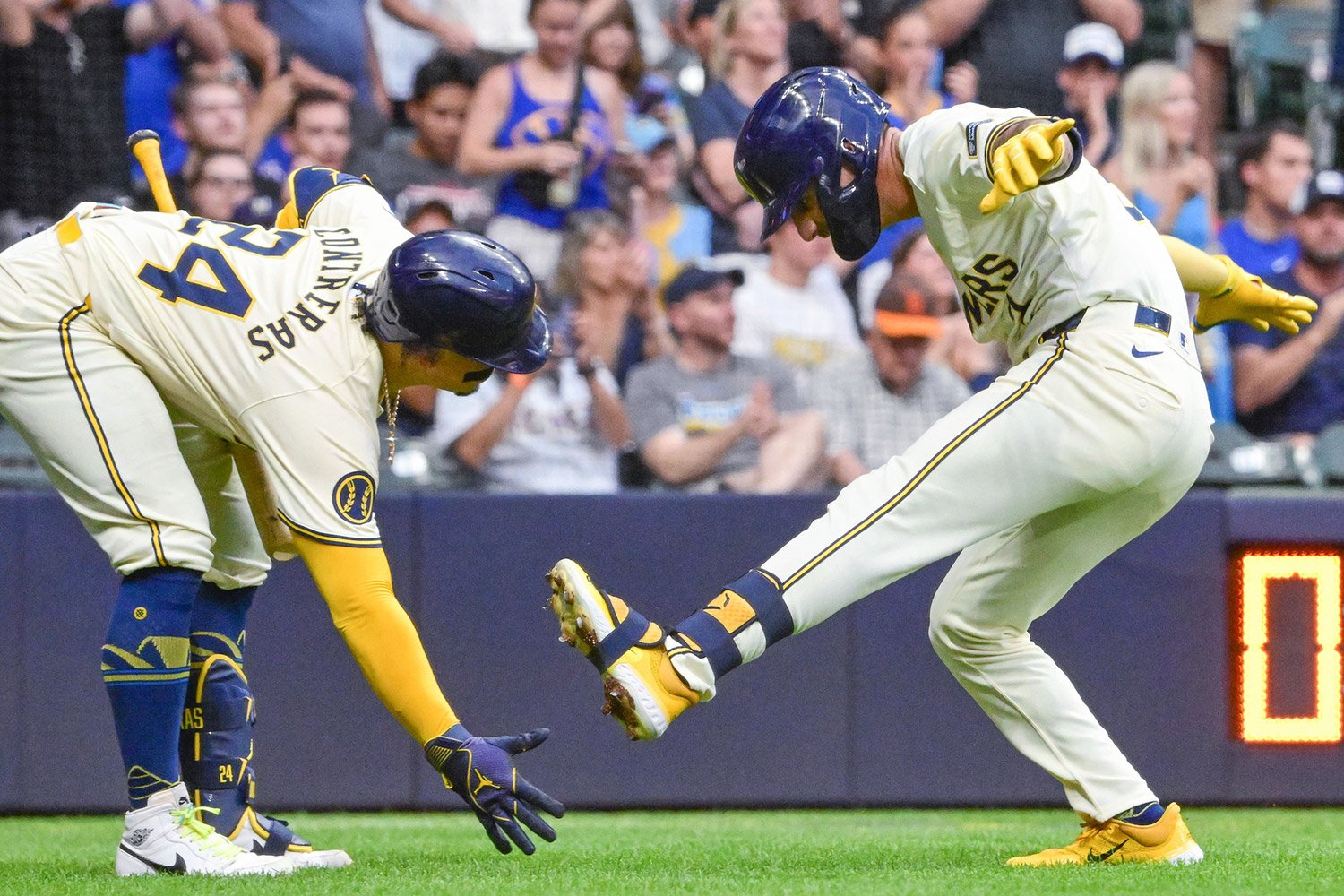 Despite some significant struggles at the plate after June last season, Joey Ortiz had the fourth-best fWAR (3.1) on the 2024 Milwaukee Brewers. While much of that value came defensively, where he played a phenomenal third base, Ortiz's bat was an enormous boost to the club's offense with a .275/.380/.455 slash line through June. Unfortunately, he was dealing with a neck injury and landed on the injured list on July 3, ultimately sapping his offense for the rest of the season. With tremendous range, a rocket arm, and aggressive fearlessness, Ortiz continued his Gold Glove-caliber defense, despite the physical setback and offensive disappointment. Contributing so much to the Brewers' run prevention philosophy, at a position he only sparingly handled in his minor league and amateur career, ensured Ortiz's spot in the lineup most nights, making him look worse offensively than he normally would be. And while he should be the everyday shortstop for Milwaukee in 2025 (other potential ideas floating around) and Ortiz will easily be a better defender than Willy Adames, few will appreciate his impact and importance to the club unless he produces on offense. Skeptics will say Ortiz's .835 OPS across his first 73 games last year is small-sample noise. So does that make his .624 OPS in his final 69 contests untrustworthy? While it would be difficult to predict a season-long OPS over .830 for Ortiz, his neck injury and the effects on him after he returned are quite stark, not only in how his production dropped but also in how he approached hitting. He was not Joey Ortiz following the IL stint - at least not the type of disciplined hitter he had always proven to be. While his power potential took some time to be realized in the minors, his pitch selection and ability to work walks while limiting strikeouts were key strengths. The following graphs give you a glimpse into how he changed as a hitter after the injury, leading to far worse production. Through those first 73 games, Ortiz had a terrific 14.7 K% while holding an equally great 13.5 BB%. But quickly after returning to the field, Ortiz's walks and strikeouts violently split in the worst possible way. This resulted in a spike to 20.2 K% to finish the season and a dip to his 11.0 BB%. He didn't just randomly become a shell of himself; his swing decisions also changed and torpedoed his offensive profile. If a player succeeds with a particular philosophy or strategy at the dish, you typically don't flip that script upside down. That is what is happening in this graph post-injury. As a refresher, O-Swing% is a percentage of pitches outside the strike zone a batter swings at, while Z-Swing% is for pitches swung at within the zone. It's easy to see in the graph Ortiz's steady climb in chasing bad pitches while subsequently letting strikes go by - and at an extremely alarming rate starting at the end of August. Many people might fail to recognize how an injury and its aftereffects can alter what a hitter thinks, sees, and feels each time in the box. Just because you're back from injury doesn't mean you're the same player. Even slight changes for a hitter can create huge problems. Any one reason - or multiple - could have led to such a swing-decision change: Head/eyes in different locations due to neck discomfort or concern Slower bat speed (or perception of it) caused by the injury and/or time off Altered stance to accommodate physical change or bat path difference Mental hurdles To the last point, as he found himself chasing more pitches, Ortiz might have started to overthink and feel that swinging less would help. That could be a major contributor to the severe drop in swinging at strikes, where he was simply in "take mode" in most cases until he got to two strikes. That has its own set of problems. With all of these potential factors, particularly how he became a completely different hitter in the second half, it's only fair to take an optimistic view of his first half and what it could mean for 2025. Ortiz finished the 2024 campaign with 11 home runs and 25 doubles in 511 plate appearances. He isn't going to replace Adames's 32 homers or .462 slugging, but with a healthy season, he has plenty of pop and a better OBP to create as much value overall in 2025. Could Ortiz get to 18-20 home runs and more than 30 doubles? Tack those onto a .335 OBP (he was at .329 last year), and you can see why Ortiz is more important to the Brewers' offense than many likely believe. And, of course, spring training stats don't matter, but it's nice to dream big on a guy with a .348/.423/.696 line with a home run, a double, and two triples in 26 plate appearances in the exhibition season. So what do you think? Did the injury and lasting impact play a bigger role than many think in 2025? Will Ortiz take a step forward and push the Brewers' offense to another level? I'm betting on it.
 -
Joey Ortiz is a solid ballplayer whose impact goes beyond the numbers. That's not to say the Milwaukee Brewers' infielder can't fill the box score and create value statistically. That is especially true if you believe his first few months last season are more indicative of what he brings to the table in the 2025 season. Image courtesy of © Benny Sieu-Imagn Images Despite some significant struggles at the plate after June last season, Joey Ortiz had the fourth-best fWAR (3.1) on the 2024 Milwaukee Brewers. While much of that value came defensively, where he played a phenomenal third base, Ortiz's bat was an enormous boost to the club's offense with a .275/.380/.455 slash line through June. Unfortunately, he was dealing with a neck injury and landed on the injured list on July 3, ultimately sapping his offense for the rest of the season. With tremendous range, a rocket arm, and aggressive fearlessness, Ortiz continued his Gold Glove-caliber defense, despite the physical setback and offensive disappointment. Contributing so much to the Brewers' run prevention philosophy, at a position he only sparingly handled in his minor league and amateur career, ensured Ortiz's spot in the lineup most nights, making him look worse offensively than he normally would be. And while he should be the everyday shortstop for Milwaukee in 2025 (other potential ideas floating around) and Ortiz will easily be a better defender than Willy Adames, few will appreciate his impact and importance to the club unless he produces on offense. Skeptics will say Ortiz's .835 OPS across his first 73 games last year is small-sample noise. So does that make his .624 OPS in his final 69 contests untrustworthy? While it would be difficult to predict a season-long OPS over .830 for Ortiz, his neck injury and the effects on him after he returned are quite stark, not only in how his production dropped but also in how he approached hitting. He was not Joey Ortiz following the IL stint - at least not the type of disciplined hitter he had always proven to be. While his power potential took some time to be realized in the minors, his pitch selection and ability to work walks while limiting strikeouts were key strengths. The following graphs give you a glimpse into how he changed as a hitter after the injury, leading to far worse production. Through those first 73 games, Ortiz had a terrific 14.7 K% while holding an equally great 13.5 BB%. But quickly after returning to the field, Ortiz's walks and strikeouts violently split in the worst possible way. This resulted in a spike to 20.2 K% to finish the season and a dip to his 11.0 BB%. He didn't just randomly become a shell of himself; his swing decisions also changed and torpedoed his offensive profile. If a player succeeds with a particular philosophy or strategy at the dish, you typically don't flip that script upside down. That is what is happening in this graph post-injury. As a refresher, O-Swing% is a percentage of pitches outside the strike zone a batter swings at, while Z-Swing% is for pitches swung at within the zone. It's easy to see in the graph Ortiz's steady climb in chasing bad pitches while subsequently letting strikes go by - and at an extremely alarming rate starting at the end of August. Many people might fail to recognize how an injury and its aftereffects can alter what a hitter thinks, sees, and feels each time in the box. Just because you're back from injury doesn't mean you're the same player. Even slight changes for a hitter can create huge problems. Any one reason - or multiple - could have led to such a swing-decision change: Head/eyes in different locations due to neck discomfort or concern Slower bat speed (or perception of it) caused by the injury and/or time off Altered stance to accommodate physical change or bat path difference Mental hurdles To the last point, as he found himself chasing more pitches, Ortiz might have started to overthink and feel that swinging less would help. That could be a major contributor to the severe drop in swinging at strikes, where he was simply in "take mode" in most cases until he got to two strikes. That has its own set of problems. With all of these potential factors, particularly how he became a completely different hitter in the second half, it's only fair to take an optimistic view of his first half and what it could mean for 2025. Ortiz finished the 2024 campaign with 11 home runs and 25 doubles in 511 plate appearances. He isn't going to replace Adames's 32 homers or .462 slugging, but with a healthy season, he has plenty of pop and a better OBP to create as much value overall in 2025. Could Ortiz get to 18-20 home runs and more than 30 doubles? Tack those onto a .335 OBP (he was at .329 last year), and you can see why Ortiz is more important to the Brewers' offense than many likely believe. And, of course, spring training stats don't matter, but it's nice to dream big on a guy with a .348/.423/.696 line with a home run, a double, and two triples in 26 plate appearances in the exhibition season. So what do you think? Did the injury and lasting impact play a bigger role than many think in 2025? Will Ortiz take a step forward and push the Brewers' offense to another level? I'm betting on it. View full article
-
'Potential' and 'expectations' are two of the most dangerous words a young athlete can hear. For the Milwaukee Brewers' Jackson Chourio, the 2025 season will be overflowing with each after a phenomenal rookie campaign. But what is fair to predict from the soon-to-be 21-year-old? Image courtesy of © Charles LeClaire-Imagn Images After a slow start to the 2024 campaign, Jackson Chourio lit up the Milwaukee Brewers' fanbase by posting a 117 OPS+ and becoming the youngest player in MLB history to put up a 20-home run, 20-stolen base season at the age of 20. Chourio will now look to build off his debut and provide the Brewers some additional punch that could be lacking in the lineup. But how much can be expected from the Venezuelan outfielder, who can't yet legally drink in his home ballpark? Player development isn't always a linear journey. In fact, most pros go through significant challenges, peaks, and valleys as they learn to traverse the MLB landscape. Throw in the added weight of the pressure to be the next young stud-turned-MVP in a flash (e.g., Mike Trout), and one wonders what projections are realistic in a sport that thrives on humbling the greatest talents. Did Chourio experience the crushing grip of pressure to open 2024? Knowing his guaranteed $82 million contract—the largest in MLB history for a player with no MLB experience—put an immediate target on his back, it's possible. Chourio owned .608 and .542 OPSes in March/April and May, respectively. Those numbers seemed nearly impossible for a player seen as a generational talent. But Chourio has a history, albeit brief, of starting slowly at each new level he reaches. His rookie year with the Brewers followed that pattern: It also shows how amazing he was from June to the end of the season, ending up third in NL Rookie of the Year voting and the third-best rookie in Brewers history by OPS+, behind Ryan Braun and Darrell Porter. Those two players are solid examples of how early careers can take different paths. After claiming Rookie of the Year, Braun earned his first of five straight All-Star appearances in year two, while finishing third in MVP voting. He, of course, would continue to skyrocket. He claimed the 2011 National League MVP and placed as the runner-up in 2012 (extenuating circumstances notwithstanding). That would be the ideal, incredible upward trajectory fans would love to see—and likely expect. Braun, however, was 23 years old in his rookie season. Porter, who was just 21 in his first year, is the cautionary tale of another way young athletes can rise and fall countless times. A quick comparison of the Brewers' trio of best rookies: Interestingly, Porter was also an All-Star in his second season, but it must have been fueled by defense and a weak catching crop. Porter's offensive stats dropped significantly in year two, from a slash line of .254/.363/.457 to .241/.326/.377 (103 OPS+). It was quite a dip in performance, but not all that uncommon. He then bounced back in his third season (123 OPS+), before posting the worst offensive season of his career, hitting .208 with a 74 OPS+. From there, Porter hit his stride, though it was now with the Kansas City Royals, with OPS+ figures of 116, 123, and 142. His up-and-down first few years, followed by a peak stretch, is something to keep in mind. Most mortal beings will go through that kind of fluctuation in sports—particularly baseball. That brings us back to Chourio and what people expect from him, whether it's the Brewers organization, so-called baseball experts, or fans. It's clear Milwaukee's leaders view Chourio as one of the Crew's top three hitters and someone who will fill the power and production void left by Willy Adames's departure. If the Brewers were worried about a drop-off, they certainly would have pushed harder to make a trade or sign a free agent to boost the offense. As for the evaluation nerds out there, one respected projection system is a bit cool on Chourio's sophomore season. Dan Szymborski's 2025 ZIPS projections tend to lean conservative on players, but for someone like Chourio, the ZIPS output is "meh," with him sliding back in his second year in most categories: Considering Chourio's consistent All-Star-caliber play over the last four months of 2024, these stats would be a disappointment for all involved. But perhaps it's good to keep those high hopes in check, just in case he has one of those "developing years" like Porter had. Nothing is guaranteed in this great game, no matter how incredible your talent, effort, and upside are. And keep in mind, these ZIPS projections are Chourio's 50th-percentile output. That means there's lots of room toward the ceiling (and the floor, for the pessimists out there). When it comes to the fans, there's definitely a tsunami-sized wave of optimism, and why shouldn't there be? It's awesome to have a "kid" with so much potential. I've seen and heard everything from 30/30 season predictions to a 40-homer campaign; an All-Star starting spot; and a top-five MVP finish. It's all about perspective. Some choose to mute their excitement to protect themselves from a letdown. Others go all-in with the hype and hope that Chourio is the next Hall of Famer coming out of Milwaukee. It's a matter of preference in how you consume Brewers' baseball. So where do you stand on what Jackson Chourio's 2025 season will look like? I believe in his talent, work ethic, and development, so I see a solid bump in overall performance. Feel free to share your predictions in the comments, too. AVG: .269 OBP: .341 SLG: .472 HR: 28 R: 91 RBI: 84 SB: 25 View full article
-
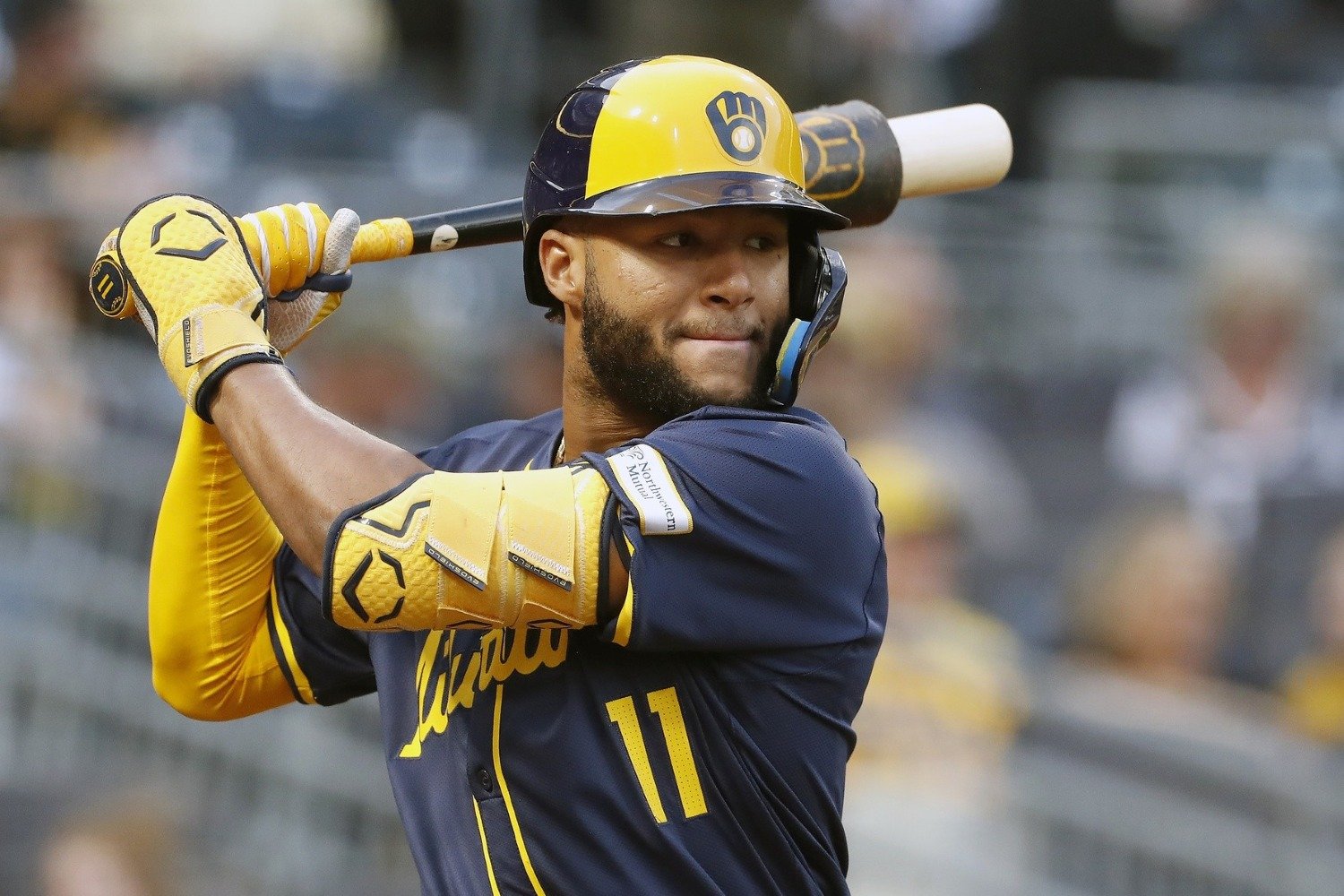 After a slow start to the 2024 campaign, Jackson Chourio lit up the Milwaukee Brewers' fanbase by posting a 117 OPS+ and becoming the youngest player in MLB history to put up a 20-home run, 20-stolen base season at the age of 20. Chourio will now look to build off his debut and provide the Brewers some additional punch that could be lacking in the lineup. But how much can be expected from the Venezuelan outfielder, who can't yet legally drink in his home ballpark? Player development isn't always a linear journey. In fact, most pros go through significant challenges, peaks, and valleys as they learn to traverse the MLB landscape. Throw in the added weight of the pressure to be the next young stud-turned-MVP in a flash (e.g., Mike Trout), and one wonders what projections are realistic in a sport that thrives on humbling the greatest talents. Did Chourio experience the crushing grip of pressure to open 2024? Knowing his guaranteed $82 million contract—the largest in MLB history for a player with no MLB experience—put an immediate target on his back, it's possible. Chourio owned .608 and .542 OPSes in March/April and May, respectively. Those numbers seemed nearly impossible for a player seen as a generational talent. But Chourio has a history, albeit brief, of starting slowly at each new level he reaches. His rookie year with the Brewers followed that pattern: It also shows how amazing he was from June to the end of the season, ending up third in NL Rookie of the Year voting and the third-best rookie in Brewers history by OPS+, behind Ryan Braun and Darrell Porter. Those two players are solid examples of how early careers can take different paths. After claiming Rookie of the Year, Braun earned his first of five straight All-Star appearances in year two, while finishing third in MVP voting. He, of course, would continue to skyrocket. He claimed the 2011 National League MVP and placed as the runner-up in 2012 (extenuating circumstances notwithstanding). That would be the ideal, incredible upward trajectory fans would love to see—and likely expect. Braun, however, was 23 years old in his rookie season. Porter, who was just 21 in his first year, is the cautionary tale of another way young athletes can rise and fall countless times. A quick comparison of the Brewers' trio of best rookies: Interestingly, Porter was also an All-Star in his second season, but it must have been fueled by defense and a weak catching crop. Porter's offensive stats dropped significantly in year two, from a slash line of .254/.363/.457 to .241/.326/.377 (103 OPS+). It was quite a dip in performance, but not all that uncommon. He then bounced back in his third season (123 OPS+), before posting the worst offensive season of his career, hitting .208 with a 74 OPS+. From there, Porter hit his stride, though it was now with the Kansas City Royals, with OPS+ figures of 116, 123, and 142. His up-and-down first few years, followed by a peak stretch, is something to keep in mind. Most mortal beings will go through that kind of fluctuation in sports—particularly baseball. That brings us back to Chourio and what people expect from him, whether it's the Brewers organization, so-called baseball experts, or fans. It's clear Milwaukee's leaders view Chourio as one of the Crew's top three hitters and someone who will fill the power and production void left by Willy Adames's departure. If the Brewers were worried about a drop-off, they certainly would have pushed harder to make a trade or sign a free agent to boost the offense. As for the evaluation nerds out there, one respected projection system is a bit cool on Chourio's sophomore season. Dan Szymborski's 2025 ZIPS projections tend to lean conservative on players, but for someone like Chourio, the ZIPS output is "meh," with him sliding back in his second year in most categories: Considering Chourio's consistent All-Star-caliber play over the last four months of 2024, these stats would be a disappointment for all involved. But perhaps it's good to keep those high hopes in check, just in case he has one of those "developing years" like Porter had. Nothing is guaranteed in this great game, no matter how incredible your talent, effort, and upside are. And keep in mind, these ZIPS projections are Chourio's 50th-percentile output. That means there's lots of room toward the ceiling (and the floor, for the pessimists out there). When it comes to the fans, there's definitely a tsunami-sized wave of optimism, and why shouldn't there be? It's awesome to have a "kid" with so much potential. I've seen and heard everything from 30/30 season predictions to a 40-homer campaign; an All-Star starting spot; and a top-five MVP finish. It's all about perspective. Some choose to mute their excitement to protect themselves from a letdown. Others go all-in with the hype and hope that Chourio is the next Hall of Famer coming out of Milwaukee. It's a matter of preference in how you consume Brewers' baseball. So where do you stand on what Jackson Chourio's 2025 season will look like? I believe in his talent, work ethic, and development, so I see a solid bump in overall performance. Feel free to share your predictions in the comments, too. AVG: .269 OBP: .341 SLG: .472 HR: 28 R: 91 RBI: 84 SB: 25
 -
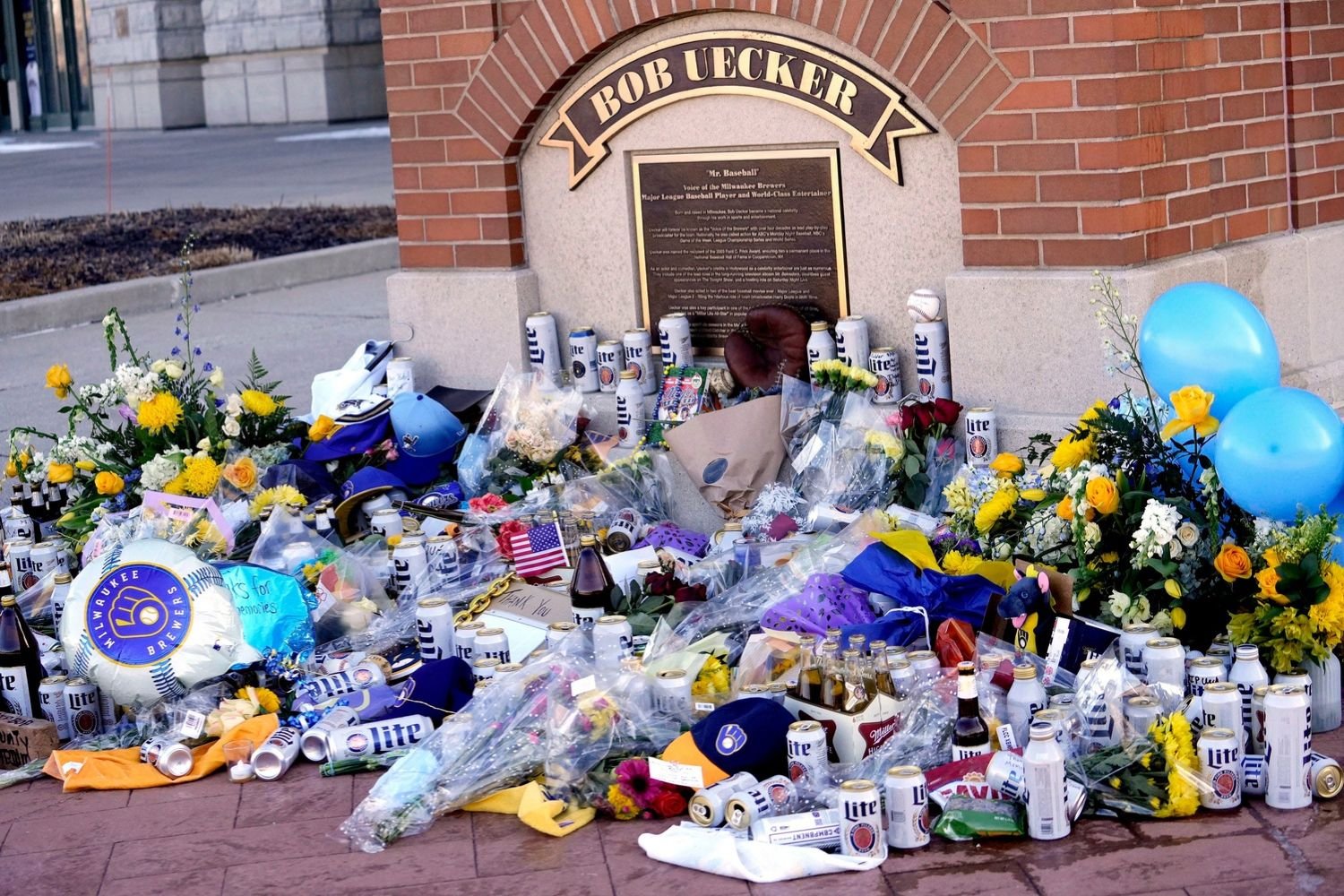 Since Bob Uecker was a Milwaukee kid who stuck with the Milwaukee Brewers for more than half a century (when he could have easily taken off to a big market), it's easy to understand his ability to connect on a basic level with "us." But it was more than that with Uecker and baseball. The game itself has an extraordinary way of rooting itself in our hearts, taking hold on a deeper emotional level the more we play, watch, and experience it. Uecker understood this profoundly, and leaned into it, with players, fellow broadcasters, the fans, and even himself. "Baseball people," however you want to define them, are different. It's hard to explain how "baseball people," like Uecker, see the game and feel it. Those of us consumed by baseball value its relentless challenges and the unique skill it demands. We hate knowing there is inevitable, constant failure, yet embrace it as an opportunity to learn, grow, and (eventually) revel in moments of triumph—whether it's breaking out of a slump or snapping a 26-year playoff drought. It fuels us. It connects us. It allows us to appreciate the success in ways unrivaled by other sports. Uecker could speak to all of that. He understood the immense difficulty as a player, struggling to a career .200 batting average. Yet, that only gave him greater insight into the game and a sense of humor to get through the rough times, which he shared with fans. He made it personal, and did it with a natural ease.
 -
Bob Uecker was the embodiment of baseball in many ways. But as countless people shared stories and celebrated the legendary Milwaukee Brewers icon, one word echoed consistently: connection. View full article
-
Hays is a depth move that could pay big dividends, especially vs. LHP. Perkins is a career .318 OBP guy with .337 SLG. Brewers need some RH pop that he won't provide. Plus, as I mentioned, there will be injuries/time off for the outfield group. I would love someone like Teoscar Hernandez - I just don't see the Brewers paying big money (I would). And yes, Drury was pitiful. But with HOW bad he was, I have to think something weird was going on. And if they look deeper into him & he is just cooked...then they leave him be. I am just not excited about any 3B options, really. Maybe via trade.
-
 This series of articles is a primer for the release of our new "You're The Brewers GM!" tool, where you play the role of Matt Arnold and build your own Brewers offseason. Please visit the tool here and join in on the fun! It's important for an organization to lean into its strengths and understand its weaknesses. For the Milwaukee Brewers, that means trusting their pitching philosophies and development, keeping many options available and favoring flexibility. Offensively, the track record through the farm system hasn't been nearly as impressive (save for Jackson Chourio). That means trusting the youth and depth of the pitching staff while going outside the club to create a more balanced, consistent lineup. After going through my offseason plan, don't forget you can also be the Brewers' GM! Trade #1: RHP Joel Payamps and RHP Elvis Peguero to the Texas Rangers for 1B Nathaniel Lowe If you read my article on trading for Lowe, you already get the idea. The Rangers' owner allegedly wants to cut payroll to get under the luxury tax threshold; Texas is desperate for relievers; and Lowe would be a solid upgrade at first base, with far better on-base skills, power potential and improved defense. Some might think Devin Williams would make more sense, but his higher salary wouldn't give Texas much salary relief and with a bare bullpen, two experienced arms are better than one. Trade #2: RHP Devin Williams to the New York Yankees for RHP Will Warren, RHP Sabier Marte and C/1B/3B Jesus Rodriguez The Yankees are another team looking for top-end bullpen help and who will have the money to make a move, especially after losing out on Juan Soto. Williams gives them a splashy closer to build the rest of their pen around. For the Brewers, Warren can have an impact this season as a reliever or even get starts on the mound, while Marte is a lanky 20-year-old who should make the Brewers' pitching lab experts' mouths water. Rodriguez might be too intriguing as a third piece for New York to give up in this deal, but let's dream a bit. His bat and plate discipline are close to MLB-ready, but trusting him defensively might be an issue. Trade #3: 1B Rhys Hoskins and $6 million to the Arizona Diamondbacks for RHP Ryan Thompson The Diamondbacks will need a power-hitting first baseman after losing Christian Walker to free agency (I assume). Milwaukee would want to unload most of Hoskins's salary, and have no need for him after trading for Lowe. Arizona is looking to deal from their surplus of pitching, and Thompson, a 32-year-old sidearmer, likely feels more expendable than younger arms. Truthfully, the Brewers could trade Hoskins for almost nothing and it would have more value than keeping him. But if they can get a useful bullpen arm to use strategically, you might as well take it. Since Thompson only makes $1.35 million and the Diamondbacks won't pay Hoskins's full $18 million, that is where the $6 million kicker comes in. Free Agent #1: Sign free agent OF Austin Hays to a one-year, $5 million contract with a mutual $7 million option for 2026 Many people will say the Brewers don't need an outfielder, but let's think this all through. Christian Yelich is aging and coming off back surgery. Garrett Mitchell has been injury-prone since day one. Sal Frelick plays with reckless abandon. Blake Perkins has a long way to go as a hitter. Not to mention, three of those four regular outfielders are left-handed, so a righty would help against pesky southpaw hurlers. Hays's poor 2024 numbers are largely due to injury and a frightening kidney infection that sidelined him. His All-Star 2023 in Baltimore (114 OPS+) is closer to what a healthy Hays can do, particularly if the Brewers prioritize his at-bats against lefties. Hays had a .941 OPS in 90 plate appearances against left-handers last season, and in two of his previous three seasons as a regular, his OPS was .897 and .796. Free Agent #2: Sign free agent IF Brandon Drury to a $2 million contract with incentives This would come three years after I pushed for the Brewers to acquire Drury as a defensively versatile, solid bat who usually mashes lefties. He was abysmal last season (35 OPS+ in 360 plate appearances), which is why his price tag projects to be so low—if he were even to get a Major League offer. But in 2023, Drury posted a 114 OPS+ with 26 home runs and 30 doubles, so there should be some optimism for a bounceback. From 2021-2023, Drury posted an OPS versus lefties of .881, .955 and .800. Drury will be average (at best) playing third base, but the free-agent market doesn't have any great defenders who can hit enough. So, you take a chance on the bat at third base after you improved at first base and shortstop while having the Platinum Glove winner at second base. These moves would leave the Brewers' payroll at $107.2 million, according to BrewerFanatic's "You're the GM!" tool. That leaves plenty of room for smaller deals that GM Matt Arnold is likely to make, particularly to add pitching options. As you'll see below, this plan keeps starting pitcher Aaron Civale in the fold at $8 million. He's another guy who could go to free up more salary flexibility, but finding a good trade for him and bringing in a valuable replacement felt too challenging. If they did ship him off, starter Spencer Turnbull should be the Brewers' target. With that, here is the breakdown of the lineups versus righties and lefties, as well as the bench and pitching staff. vs. RHP Chrisitan Yelich DH Jackson Chourio LF Nathaniel Lowe 1B William Contreras C Garrett Mitchell CF Brandon Drury 3B Sal Frelick RF Joey Ortiz SS Brice Turang 2B Vs. LHP Christian Yelich LF Jackson Chourio RF Williams Contreras C Austin Hays DH Nathaniel Lowe 1B Brand Drury 3B Sal Frelick CF Joey Ortiz SS Brice Turang 2B Additional Reserves Eric Haase C Tyler Black IF Andruw Monasterio IF I love having three high-end OBP hitters in the top of the lineup, with a chance for a fourth in Chourio. This position-player grouping also allows for many matchup games, rest for veterans and coverage in case of injury. And the Brewers should finally deliver against lefties with the new free agents—you know, maybe. Starting Rotation RHP Freddy Peralta RHP Tobias Myers RHP Brandon Woodruff RHP Aaron Civale LHP DL Hall Bullpen RHP Trevor Megill LHP Bryan Hudson RHP Nick Mears LHP Jared Koenig RHP Ryan Thompson RHP Jacob Misiorowski RHP J.B. Bukauskas LHP Aaron Ashby Expect there to be lots of movement with the pitching staff. Jacob Misiorowski could see time in the rotation. DL Hall might drop into the bullpen. In the minors, hurlers like Warren, Abner Uribe, Craig Yoho, Logan Henderson, Chad Patrick and Deivi García likely all see time in the big leagues in various roles. And once again, you just have to trust the Brewers' staff to make it all work. Go ahead and pick away. The trades don't make sense and won't happen, the pitching is too uncertain, and the back half of the lineup feels weak. That might all be true. Feel free to try your luck as the Brewers' GM! What do you think of this offseason plan? Do you think you can do better? Then build your own Brewers roster and hit the button below! Start Your Payroll Blueprint Now
 -
With MLB's Winter Meetings upon us, I felt it was time to try my hand at being the Milwaukee Brewers' GM for this offseason. It looks like there will be a fair amount of uncertainty with payroll, so my goal was to keep the team salary on the low end to start the season. That means trades! Image courtesy of © Bill Streicher-Imagn Images This series of articles is a primer for the release of our new "You're The Brewers GM!" tool, where you play the role of Matt Arnold and build your own Brewers offseason. Please visit the tool here and join in on the fun! It's important for an organization to lean into its strengths and understand its weaknesses. For the Milwaukee Brewers, that means trusting their pitching philosophies and development, keeping many options available and favoring flexibility. Offensively, the track record through the farm system hasn't been nearly as impressive (save for Jackson Chourio). That means trusting the youth and depth of the pitching staff while going outside the club to create a more balanced, consistent lineup. After going through my offseason plan, don't forget you can also be the Brewers' GM! Trade #1: RHP Joel Payamps and RHP Elvis Peguero to the Texas Rangers for 1B Nathaniel Lowe If you read my article on trading for Lowe, you already get the idea. The Rangers' owner allegedly wants to cut payroll to get under the luxury tax threshold; Texas is desperate for relievers; and Lowe would be a solid upgrade at first base, with far better on-base skills, power potential and improved defense. Some might think Devin Williams would make more sense, but his higher salary wouldn't give Texas much salary relief and with a bare bullpen, two experienced arms are better than one. Trade #2: RHP Devin Williams to the New York Yankees for RHP Will Warren, RHP Sabier Marte and C/1B/3B Jesus Rodriguez The Yankees are another team looking for top-end bullpen help and who will have the money to make a move, especially after losing out on Juan Soto. Williams gives them a splashy closer to build the rest of their pen around. For the Brewers, Warren can have an impact this season as a reliever or even get starts on the mound, while Marte is a lanky 20-year-old who should make the Brewers' pitching lab experts' mouths water. Rodriguez might be too intriguing as a third piece for New York to give up in this deal, but let's dream a bit. His bat and plate discipline are close to MLB-ready, but trusting him defensively might be an issue. Trade #3: 1B Rhys Hoskins and $6 million to the Arizona Diamondbacks for RHP Ryan Thompson The Diamondbacks will need a power-hitting first baseman after losing Christian Walker to free agency (I assume). Milwaukee would want to unload most of Hoskins's salary, and have no need for him after trading for Lowe. Arizona is looking to deal from their surplus of pitching, and Thompson, a 32-year-old sidearmer, likely feels more expendable than younger arms. Truthfully, the Brewers could trade Hoskins for almost nothing and it would have more value than keeping him. But if they can get a useful bullpen arm to use strategically, you might as well take it. Since Thompson only makes $1.35 million and the Diamondbacks won't pay Hoskins's full $18 million, that is where the $6 million kicker comes in. Free Agent #1: Sign free agent OF Austin Hays to a one-year, $5 million contract with a mutual $7 million option for 2026 Many people will say the Brewers don't need an outfielder, but let's think this all through. Christian Yelich is aging and coming off back surgery. Garrett Mitchell has been injury-prone since day one. Sal Frelick plays with reckless abandon. Blake Perkins has a long way to go as a hitter. Not to mention, three of those four regular outfielders are left-handed, so a righty would help against pesky southpaw hurlers. Hays's poor 2024 numbers are largely due to injury and a frightening kidney infection that sidelined him. His All-Star 2023 in Baltimore (114 OPS+) is closer to what a healthy Hays can do, particularly if the Brewers prioritize his at-bats against lefties. Hays had a .941 OPS in 90 plate appearances against left-handers last season, and in two of his previous three seasons as a regular, his OPS was .897 and .796. Free Agent #2: Sign free agent IF Brandon Drury to a $2 million contract with incentives This would come three years after I pushed for the Brewers to acquire Drury as a defensively versatile, solid bat who usually mashes lefties. He was abysmal last season (35 OPS+ in 360 plate appearances), which is why his price tag projects to be so low—if he were even to get a Major League offer. But in 2023, Drury posted a 114 OPS+ with 26 home runs and 30 doubles, so there should be some optimism for a bounceback. From 2021-2023, Drury posted an OPS versus lefties of .881, .955 and .800. Drury will be average (at best) playing third base, but the free-agent market doesn't have any great defenders who can hit enough. So, you take a chance on the bat at third base after you improved at first base and shortstop while having the Platinum Glove winner at second base. These moves would leave the Brewers' payroll at $107.2 million, according to BrewerFanatic's "You're the GM!" tool. That leaves plenty of room for smaller deals that GM Matt Arnold is likely to make, particularly to add pitching options. As you'll see below, this plan keeps starting pitcher Aaron Civale in the fold at $8 million. He's another guy who could go to free up more salary flexibility, but finding a good trade for him and bringing in a valuable replacement felt too challenging. If they did ship him off, starter Spencer Turnbull should be the Brewers' target. With that, here is the breakdown of the lineups versus righties and lefties, as well as the bench and pitching staff. vs. RHP Chrisitan Yelich DH Jackson Chourio LF Nathaniel Lowe 1B William Contreras C Garrett Mitchell CF Brandon Drury 3B Sal Frelick RF Joey Ortiz SS Brice Turang 2B Vs. LHP Christian Yelich LF Jackson Chourio RF Williams Contreras C Austin Hays DH Nathaniel Lowe 1B Brand Drury 3B Sal Frelick CF Joey Ortiz SS Brice Turang 2B Additional Reserves Eric Haase C Tyler Black IF Andruw Monasterio IF I love having three high-end OBP hitters in the top of the lineup, with a chance for a fourth in Chourio. This position-player grouping also allows for many matchup games, rest for veterans and coverage in case of injury. And the Brewers should finally deliver against lefties with the new free agents—you know, maybe. Starting Rotation RHP Freddy Peralta RHP Tobias Myers RHP Brandon Woodruff RHP Aaron Civale LHP DL Hall Bullpen RHP Trevor Megill LHP Bryan Hudson RHP Nick Mears LHP Jared Koenig RHP Ryan Thompson RHP Jacob Misiorowski RHP J.B. Bukauskas LHP Aaron Ashby Expect there to be lots of movement with the pitching staff. Jacob Misiorowski could see time in the rotation. DL Hall might drop into the bullpen. In the minors, hurlers like Warren, Abner Uribe, Craig Yoho, Logan Henderson, Chad Patrick and Deivi García likely all see time in the big leagues in various roles. And once again, you just have to trust the Brewers' staff to make it all work. Go ahead and pick away. The trades don't make sense and won't happen, the pitching is too uncertain, and the back half of the lineup feels weak. That might all be true. Feel free to try your luck as the Brewers' GM! What do you think of this offseason plan? Do you think you can do better? Then build your own Brewers roster and hit the button below! Start Your Payroll Blueprint Now View full article
-
I agree they likely wouldn't even try him at 3B, hence my note that it was interesting timing for this article. I also just don't see having Turang at SS, unless the 2B they get is an All-Star. As far as Polanco as a hitter - I don't necessarily see it as a one-season issue; however, I also wouldn't base my evaluation solely on K% - as much as I hate how often guys strike out now.



.png.489e0577ac61b5efe89840b04b1e322d.png)
