



Tim Muma
-
Posts
436 -
Joined
-
Last visited
-
Days Won
1
Content Type
Profiles
Forums
Blogs
Events
News
2026 Milwaukee Brewers Top Prospects Ranking
Milwaukee Brewers Videos
2022 Milwaukee Brewers Draft Picks
Milwaukee Brewers Free Agent & Trade Rumors, Notes, & Tidbits
Guides & Resources
2023 Milwaukee Brewers Draft Picks
2024 Milwaukee Brewers Draft Picks
The Milwaukee Brewers Players Project
2025 Milwaukee Brewers Draft Pick Tracker
2026 Milwaukee Brewers Draft Tracker: Picks & Bonuses
Store
Downloads
Gallery
Everything posted by Tim Muma
-
 The 2024 Milwaukee Brewers lineup is one of the most diverse groups the franchise has seen in a while. Their formula has generated a terrific start, with the club ranked third in runs scored and in the top five on various statistical measure--all while relying on a strange combo of efficiency. Image courtesy of © Troy Taormina-USA TODAY Sports It's hard to argue with the results of the Brewers' offensive mix, gathered by GM Matt Arnold and stirred by manager Pat Murphy. There were early question marks and some feeling-out of players, but it has come together in a big way. The crew is led by a couple of stars in early MVP candidate William Contreras (179 OPS+) and a rejuvenated Christian Yelich (178 OPS+). Throw in some young surprises in Brice Turang (.362 OBP) and Joey Ortiz (.549 SLG), supplemented with a host of guys making their own, unique contributions, and suddenly the Brewers are averaging 5.13 runs per game. The diversified lineup includes a blend of high on-base guys, power-driven bats, contact-focused hitters and baserunning experts to limit the opponents' ability to completely shut down the offense. Even the simple, valuable OBP and slugging percentage (SLG) numbers are stunning to examine. The top seven Brewers on the team are all well above the league average. Not everyone is ripping the cover off the ball (though four Brewers have an average exit velocity of 90+ MPH), but even the softer contact hitters are finding ways on base and swiping bags. This mash-up contrasts the recent string of offensive makeup that felt heavily reliant on the long ball while accepting less contact, more strikeouts, a lower OBP and a dearth of athleticism. It would appear the mix has allowed the Brewers to be efficient and consistent in their production, despite some curious statistical trends. They haven't had long fallow periods on offense. Heading into the weekend, the Brewers had swung at the lowest percentage of pitches in baseball, hacking just 43.2% of the time. The good news is the Brewers swing at the fewest pitches outside of the strike zone (23.3%), though it's fascinating that they also swing least often when pitches are in the zone (60.9%). One would think taking so many strikes would hurt the offense. In fact, five of the next six teams who swing least often at strikes average less than four runs per game, sitting in the bottom third of MLB. It must be that the Brewers are seriously driving the ball when they do make contact, right? Not exactly. They rank 11th in hard-hit balls, per FanGraphs, but also just 19th in medium-hit balls and 15th in soft-hit contact. That's mostly a lot of "average" contact on the whole, especially for a team that swings so infrequently, yet scores so often. Clearly, they must keep the ball off the ground where you're less likely to get hits and produce runs, then. Nope. That's not it, either, as they have the fourth-highest ground ball percentage (45.3%) in baseball. Not surprisingly, the three clubs with higher ground ball percentages score less than four runs per contest. Yet, there are the Brewers, one of only three teams tallying over five runs each night. One would think that means Brewers' hitters are getting a bit lucky with their grounders finding holes. On the contrary, Milwaukee owns a .236 batting average on ground balls, 21st in all of baseball. How does a team score so much, when numerous statistics appear to be working against them? That is where the efficiency blows everything else away. Factor one is how the Brewers perform with runners on base. They rank fourth in baseball in OBP (.335), so they create a ton of opportunities to hit in those situations. With men on, Milwaukee has the best batting average (.292), slugging percentage (.493) and OPS (.854) in MLB, and that includes having the most home runs with runners aboard (32). While fans always remember those left on base, have Brewers' backers realized how terrific their club has been this season? Scoring without a home run thanks to multiple baserunners, while also driving in multiple runs thanks to non-solo home runs, is a delicious formula--if you can keep it rolling. Another efficient use of the Brewers' skills has been the ability to turn fly balls into dingers. Though Milwaukee batters hit a ton of ground balls, they counteract that negative trait with a terrific home run-per-fly ball percentage. The Brewers own a 14.1% HR/FB in 2024, good for second in MLB. At the same time, they have the fifth-lowest infield fly ball percentage; those are guaranteed outs they are avoiding. So when the Brewers hit the ball skyward, they are driving it out of the park at a high rate or, at worst, shooting it into the outfield, where doubles and triples can be found. They would love to at least get to the middle of the pack in fly ball percentage, but at least they're doing damage when the ball is off the ground. Contreras is a fantastic example of the value of hitting more fly balls and making it count when you get lift. He has knocked off more than three percentage points from his ground-ball rate last season and that has been a contributor to his transformation from very good in 2023 to phenomenal in 2024. Of course, when the Brewers aren't relying on their third-best OPS (.759) or fourth-most homers (58) in MLB, they use the running game. Swiping a bag can have multiple benefits, aside from the obvious 90-foot advancement toward the plate. Steals take away double-play chances, create scoring opportunities without base hits, and can alter the defensive setup on the infield, which might favor the hitter. Milwaukee has 61 stolen bases entering Friday, good for third in baseball. But the Brewers have been more efficient than the two clubs in front of them, as Milwaukee base stealers own an 86% success rate, second only to the Toronto Blue Jays (90%). Of course, their efforts are led by Turang, who is 18-for-18 this season. Having a runner on second with no outs or a man on third with one out means one of those many ground balls can score a run, rather than leading to two easy outs. Efficient use of skills--and your allotted outs--can make up for other shortcomings. But what does any of this mean going forward? As noted, having different ways to score runs makes it harder on pitchers and defenses to shut down a lineup regularly. The way Milwaukee's offense is constructed, there's no reason to believe a significant decline is coming. Sure, it's unlikely Contreras will finish the season with an OPS of .980, or that Yelich will slug his current .592 all year. That is what you protect against with a more diverse lineup. You're getting major power from Gary Sánchez (.506 SLG) and Jake Bauers (.473 SLG), who can fill the valleys of others. Sal Frelick and Jackson Chourio haven't come close to their potential as players, which includes elements of contact, speed and power--again, a mix of skills that can serve the team well when they click. Overall, the offense has been fun to watch and more productive than most predicted. Missing Rhys Hoskins's power and OBP combo for a while will hurt, but Ortiz is filling that void and then some. Entering Sunday's game, Ortiz was slashing .294/.392/.549 in 120 plate appearances. Will that type of production last? Extremely doubtful. But his early performance and batted-ball profile is a significant development for the offense. The Brewers are utilizing the long ball with great success, especially with runners on base. That is key. However, they are finding different ways to contribute by getting on base, picking up clutch hits and playing some small ball. And if all else fails, the club can run around the bases until someone actually throws them out. Neither hitting with runners on base nor generating home runs on a high percentage of fly balls is an especially sticky skill, but the Brewers will try to prove that there's an exception for every such rule. Can the Brewers finish as the third-best offense in baseball? If they can extend this current run of success into the middle of June, you have to start to believe that, at worst, their offense is a legitimate top-10 group. In all likelihood, they'll only get better with more experience. That would still be one heck of an improvement over last season, when they finished 17th in runs scored at 4.49 runs per game. View full article
- 2 replies
-
- 3
-

-
- brice turang
- william contreras
- (and 1 more)
-
I didn't hear that (I only saw a small portion of the game). I think that is great. As a coach, I prefer that type of simple plan in most cases. Obviously as I coach youth players, you don't have ALL the information MLB players do. But having a plan of attack is important, even if it is simple. And sometimes, I do think it's paralysis by analysis for big league hitters instead of trusting their instincts and talent.
-
I appreciate you adding this in the comments. I contemplated including some of the swing/take values along with a graphic or two...but then I thought it'd be overkill. But it's cool you're adding to the post to give readers another look, but it doesn't make my post too long or "too much."
- 10 replies
-
- 2
-
-
- willy adames
- sal frelick
- (and 4 more)
-
The 2024 Milwaukee Brewers offense has been incredible. Heading into play on Saturday, only the Atlanta Braves had scored more runs per game than the Crew. A significant part of the Brewers' success comes from the lineup's improved swing decisions. Image courtesy of © Katie Stratman-USA TODAY Sports A portion of the Milwaukee Brewers' fanbase thought this offense could be "sneaky good" this season as they rolled out a new-look, more diverse lineup than previous years. But anyone who says they believed the Brewers would average 6.33 runs per game through the first 12 contests is a liar. Yes, it's a small sample size, and it's absurd to think they will score more than a half-dozen times per game all year. However, it isn't a fluke after Milwaukee's 11-5 victory on Saturday marked six straight games with seven or more runs scored (tying a franchise record). One immediate trend that stands out is the Brewers' improvement in swing decisions. Hitting is extremely challenging, but you can make it easier on yourself by swinging at more strikes and laying off pitches outside the zone. Milwaukee's hitters are still among the more patient clubs in baseball, just as they have been in the past few years. Choosing when to remain patient and take a hack is just as important. (Statistical Key for the chart below) O-Swing%: Percent of times swinging at pitches outside the strike zone Z-Swing%: Percent of times swinging at pitches within the strike zone Z-Contact%: Percent of times contact is made on swings within the strike zone Cutting off four percent on swings outside the strike zone is enormous, particularly throughout an entire season. By not chasing those pitches, hitters can enjoy numerous benefits within a plate appearance. The obvious advantage for a batter is getting himself into better counts to do damage. Taking a close 1-0 fastball for a ball or laying off a tough breaking ball off the plate in a 1-1 count gives the hitter a huge edge. Now, the batter can look for his pitch and location to attack instead of being on the defensive and swinging at a "pitcher's pitch." When hitters are ahead in the count and able to get the bat head out, they barrel up more pitches - a key to consistently hard contact and quality slugging percentages. This year, Milwaukee ranks 9th in Barrel% (9.1%), while last year they finished 22nd (7.4%). On the flip side, when a hitter is behind, he either waits too long trying to recognize a pitch or expands his zone for fear of striking out looking. Additionally, because the Brewers have taken a bunch more balls out of the zone, their contact with them has improved when they swing at strikes. Though they only swing one percent more often at strikes this season, they've increased contact on those pitches by more than one-and-a-half percent, up to 15th in baseball (22nd last year). These improvements are already paying dividends, as evidenced by the scoring output, so imagine what could happen across 6,000 plate appearances. While some regression will happen, these statistics tend to be more stable than others that fluctuate or indicate "luck." Another reason this early-season outburst is promising over the long haul is that the improved discipline, particularly laying off pitches out of the zone, is almost across the board compared to last season. And in some cases, the upgrade is substantial. Whether it's the same player from 2023 or a new face in 2024, the O-Swing% decrease is stunning. Returners Willy Adames: 33% -> 21.4% Sal Frelick: 31.1% -> 23.4% Christian Yelich: 25.1% -> 21.6% Brice Turang: 27.4% -> 25% William Contreras: 24.6% -> 23.5% Previous Brewers vs. Newcomers Tyrone Taylor (35.2%) -> Jake Bauers (19.5%) Owen Miller (32%) -> Rhys Hoskins (17.3%) Joey Wiemer (28.8%) -> Oliver Dunn (13.5%) Brian Anderson (28.3%) -> Joey Ortiz (17.3%) When you look at those numbers, think of how many more strikes were racked up on Brewers' hitters last season because they were chasing wildly. Not to mention, when swinging at pitches out of the zone, a batter is more likely to make weak contact and more often result in an out. The benefits of discipline have many tentacles. The beauty of what the lineup is doing thus far is that it makes pitching around certain hitters more challenging. Instead of having gaping holes with batters who will chase and get themselves out, a majority of Brewers batters are putting together quality at-bats. Getting ahead in counts allows them to remain patient on strikes on the fringes of the zone, the attack mistakes in their wheelhouses. It's been incredibly fun to watch the first two weeks. In theory, these quality approaches will provide more peaks and fewer valleys than we've seen with past Brewers' offenses. Is it the influence of manager Pat Murphy? Have the new hitters rubbed off on some of the returning guys? There likely isn't one answer, but it has been a sight to see. Now, throw in a bunch of stolen bases thanks to their team speed and add a little more power than a year ago, and suddenly, this club appears far more dangerous than many pundits thought before Opening Day. View full article
- 10 replies
-
- 1
-
-
- willy adames
- sal frelick
- (and 4 more)
-
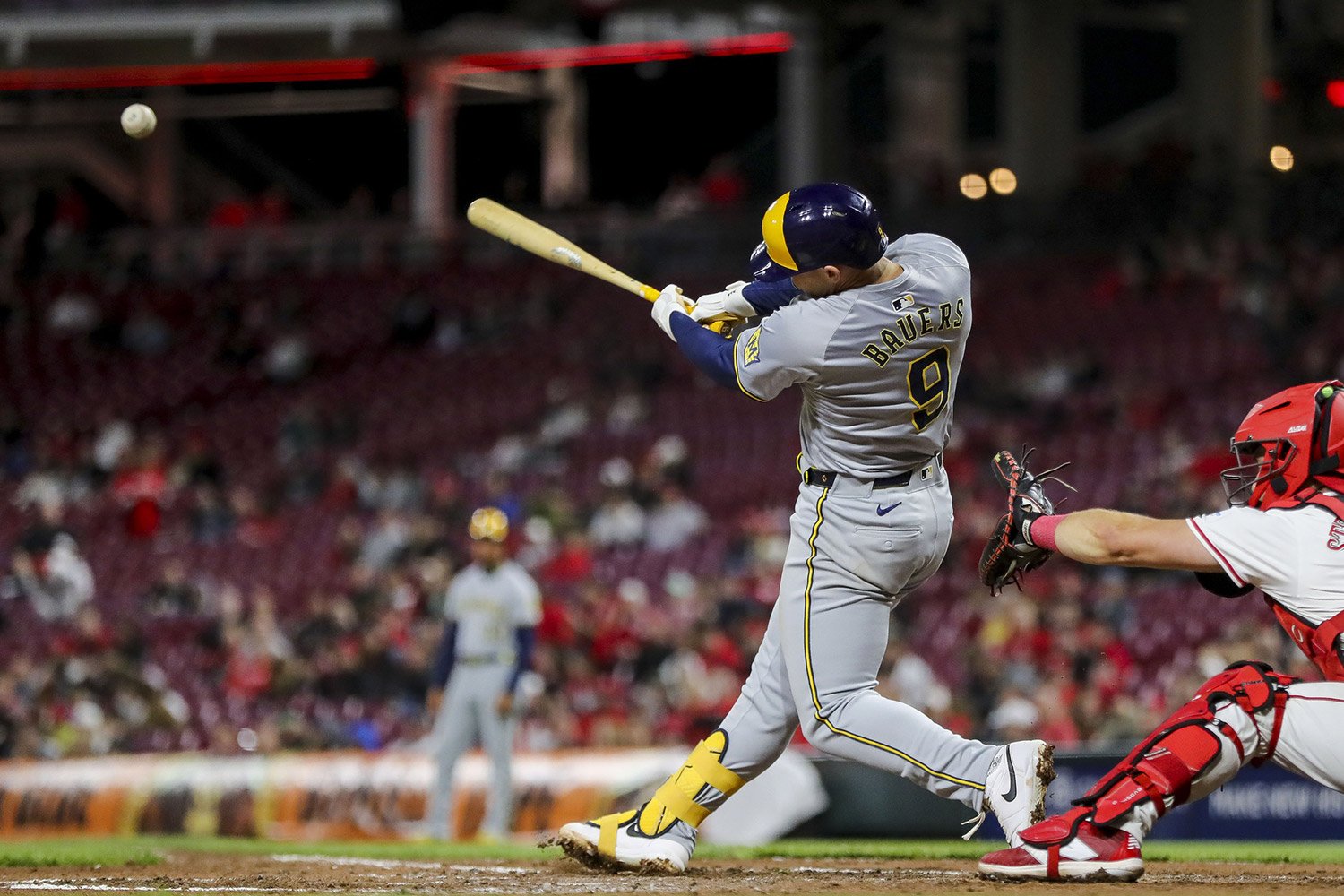 A portion of the Milwaukee Brewers' fanbase thought this offense could be "sneaky good" this season as they rolled out a new-look, more diverse lineup than previous years. But anyone who says they believed the Brewers would average 6.33 runs per game through the first 12 contests is a liar. Yes, it's a small sample size, and it's absurd to think they will score more than a half-dozen times per game all year. However, it isn't a fluke after Milwaukee's 11-5 victory on Saturday marked six straight games with seven or more runs scored (tying a franchise record). One immediate trend that stands out is the Brewers' improvement in swing decisions. Hitting is extremely challenging, but you can make it easier on yourself by swinging at more strikes and laying off pitches outside the zone. Milwaukee's hitters are still among the more patient clubs in baseball, just as they have been in the past few years. Choosing when to remain patient and take a hack is just as important. (Statistical Key for the chart below) O-Swing%: Percent of times swinging at pitches outside the strike zone Z-Swing%: Percent of times swinging at pitches within the strike zone Z-Contact%: Percent of times contact is made on swings within the strike zone Cutting off four percent on swings outside the strike zone is enormous, particularly throughout an entire season. By not chasing those pitches, hitters can enjoy numerous benefits within a plate appearance. The obvious advantage for a batter is getting himself into better counts to do damage. Taking a close 1-0 fastball for a ball or laying off a tough breaking ball off the plate in a 1-1 count gives the hitter a huge edge. Now, the batter can look for his pitch and location to attack instead of being on the defensive and swinging at a "pitcher's pitch." When hitters are ahead in the count and able to get the bat head out, they barrel up more pitches - a key to consistently hard contact and quality slugging percentages. This year, Milwaukee ranks 9th in Barrel% (9.1%), while last year they finished 22nd (7.4%). On the flip side, when a hitter is behind, he either waits too long trying to recognize a pitch or expands his zone for fear of striking out looking. Additionally, because the Brewers have taken a bunch more balls out of the zone, their contact with them has improved when they swing at strikes. Though they only swing one percent more often at strikes this season, they've increased contact on those pitches by more than one-and-a-half percent, up to 15th in baseball (22nd last year). These improvements are already paying dividends, as evidenced by the scoring output, so imagine what could happen across 6,000 plate appearances. While some regression will happen, these statistics tend to be more stable than others that fluctuate or indicate "luck." Another reason this early-season outburst is promising over the long haul is that the improved discipline, particularly laying off pitches out of the zone, is almost across the board compared to last season. And in some cases, the upgrade is substantial. Whether it's the same player from 2023 or a new face in 2024, the O-Swing% decrease is stunning. Returners Willy Adames: 33% -> 21.4% Sal Frelick: 31.1% -> 23.4% Christian Yelich: 25.1% -> 21.6% Brice Turang: 27.4% -> 25% William Contreras: 24.6% -> 23.5% Previous Brewers vs. Newcomers Tyrone Taylor (35.2%) -> Jake Bauers (19.5%) Owen Miller (32%) -> Rhys Hoskins (17.3%) Joey Wiemer (28.8%) -> Oliver Dunn (13.5%) Brian Anderson (28.3%) -> Joey Ortiz (17.3%) When you look at those numbers, think of how many more strikes were racked up on Brewers' hitters last season because they were chasing wildly. Not to mention, when swinging at pitches out of the zone, a batter is more likely to make weak contact and more often result in an out. The benefits of discipline have many tentacles. The beauty of what the lineup is doing thus far is that it makes pitching around certain hitters more challenging. Instead of having gaping holes with batters who will chase and get themselves out, a majority of Brewers batters are putting together quality at-bats. Getting ahead in counts allows them to remain patient on strikes on the fringes of the zone, the attack mistakes in their wheelhouses. It's been incredibly fun to watch the first two weeks. In theory, these quality approaches will provide more peaks and fewer valleys than we've seen with past Brewers' offenses. Is it the influence of manager Pat Murphy? Have the new hitters rubbed off on some of the returning guys? There likely isn't one answer, but it has been a sight to see. Now, throw in a bunch of stolen bases thanks to their team speed and add a little more power than a year ago, and suddenly, this club appears far more dangerous than many pundits thought before Opening Day.
- 10 comments
-
- 1
-
-
- willy adames
- sal frelick
- (and 4 more)
-
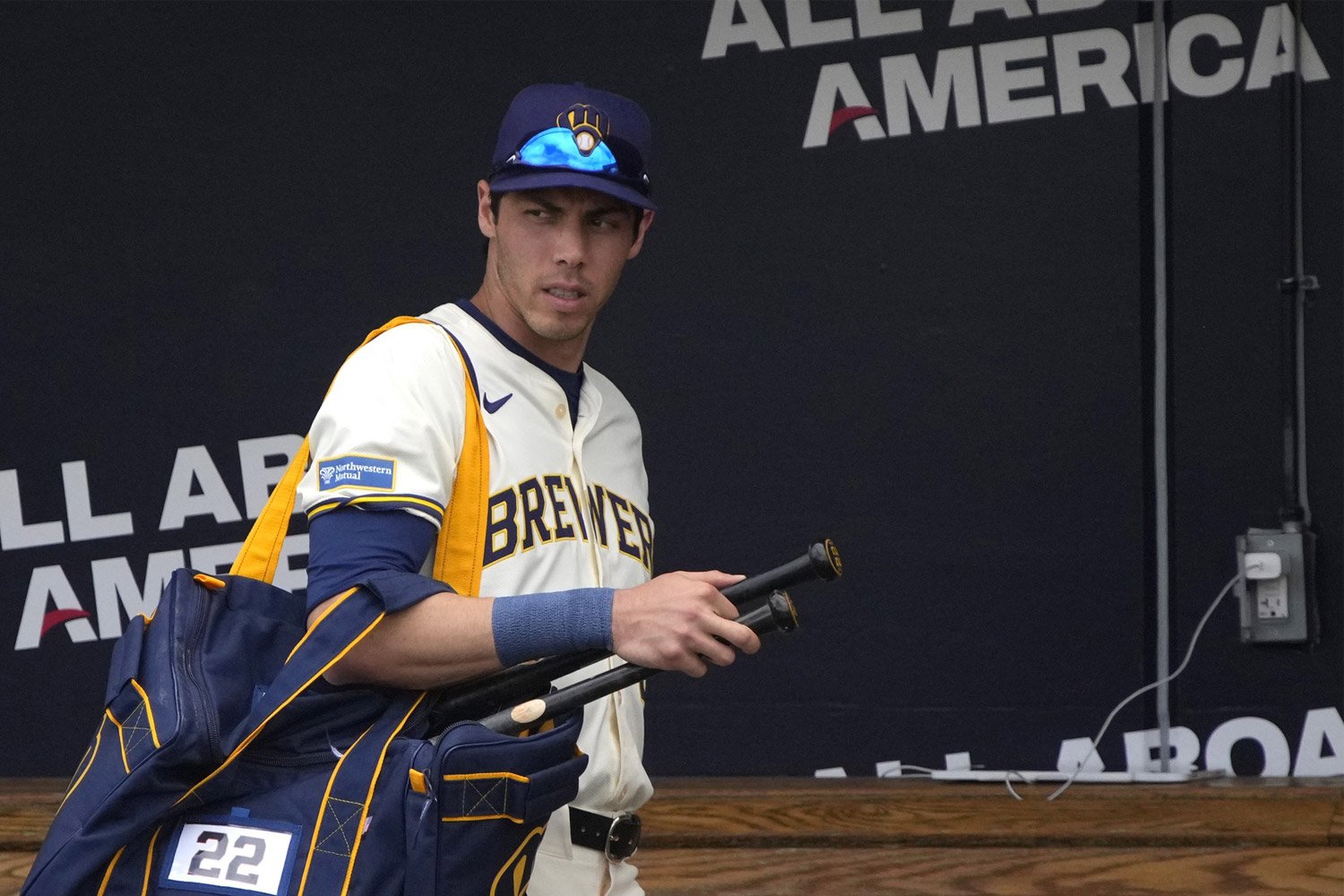 Many despise batting order discourse and contend that lineup construction has almost no impact on run scoring. The problem is that one can only theorize that its minimal effect is true because you can't see what would happen with humans hitting various spots in the lineup for multiple iterations of the same season. So, people like myself see things differently. For a team like the Brewers, who have a blend of ages, experience, and hitting styles, optimizing the lineup to create more opportunities to score consistently becomes essential. It starts with the leadoff man and the ultimate goal of being on base frequently and scoring runs. He will get the most plate appearances all season, by a sizable margin compared to the third hitter, and his presence on base for the middle of the order sets up the offense for regular success. Christian Yelich owns a .376 career OBP and finished at .370 last season. In his 11 MLB seasons, Yelich has had an OBP under .360 only twice: .356 in 2020 and .355 in 2022. That level of reliable consistency is extremely valuable. How much did his OBP and elite base running help the 2023 offense? Yelich scored the most runs (106) for any player with fewer than 25 home runs, finishing 11th in runs overall on a team that ranked 17th in offense. In the past three seasons, Yelich has been a top-eight leadoff hitter in competition with a ton of talent like Ronald Acuna Jr., Mookie Betts, and Marcus Semien. Sal Frelick posted a .393 OBP in 197 minor-league games and projects to be a quality leadoff man in the big leagues. It was encouraging to see his .341 OBP last season, but he only has 223 MLB plate appearances, making it difficult to trust he would find a 30-point bump in 2024 to match Yelich. It could happen, though it's just as likely the league makes adjustments to keep Frelick off the bags more often. And while Frelick is faster than Yelich, the 32-year-old is the better overall base runner, making his times on the sacks more valuable. Part of the decision to put Yelich first or third in the lineup is based on how you value each of those spots. Traditionally, the three-hole was reserved for your best or second-best hitter as the ideal location for production. That still can be true for clubs with deep, proven, high-quality lineups, but modern analysis often tells a divergent story. Many baseball analytics indicate the number three hitter is only the fifth most important guy in the order. The belief is that the second hitter is most valuable, followed by the cleanup man, and then the first and fifth spots, emphasizing OBP at leadoff. The Brewers' projected lineup gets most of those right, with William Contreras hitting second (best overall hitter), Rhys Hoskins batting fourth (power as the X-factor), and Willy Adames hitting fifth as his OBP is low, but his slugging potential is high. Thus, if you believe in this hitter hierarchy, it's clear Yelich should take hold of the opening slot while Frelick nestles into number three - unless you think another hitter is better. So, depending on how one assesses the role of varying lineup spots, opinions can change quickly. A significant concern with Yelich batting third is his propensity to hit ground balls, which could result in double plays. Among qualified hitters in 2023, Yelich had the second-highest ground ball percentage (GB%) at 57.4%. He ended up hitting into 15 twin killings, tied for 34th in MLB. Few things take the air out of the stadium like a double play, especially with multiple runners on base. Even when he doesn't fall victim to the double play, there was often a sense of potential dread with him up in those spots because of the extreme ground ball threat. Yelich will typically be in fewer of those situations hitting leadoff than he would be batting behind Contreras and whoever would bat first. Frelick hits his fair share of ground balls, too. His small sample in 2023 put him at a 52.6 GB%. However, he mostly stayed below 50% in the minors. Even if he does put the ball on the ground, it stands to believe he's less likely to hit into a double play than Yelich for two reasons: hard-hit balls and home-to-first speed. Ironically, part of the frustration with Yelich's high groundball rate is that he usually scalds the ball. You saw what happens when he gets more balls in the air in 2018 and 2019. But rockets on the turf are still often outs and easier to turn two on. Yelich's average exit velocity in 2023 was 91.7 MPH, while Frelick sat at a measly 83.3 MPH. Among the 343 players with at least 150 batted ball events, that ranked 342nd. He's far too good of a hitter to live in that zip code, but he isn't going to reach Yelich levels. To complement Frelick's weaker contact, he has the better home-to-first speed between the two. Frelick clocked in at 4.18 seconds (23rd) in 2023, while Yelich reached first in 4.35 seconds (149th). In theory, this combo means it's less likely that Frelick creates multiple outs on one swing, and, at worst, his contact results in a defacto sacrifice to advance runners. Of course, you'd also be more likely to have Frelick drop down a bunt than Yelich since Frelick doesn't have the same power potential as Yelich. That's not to say Frelick couldn't have a fantastic opening weekend with the Brewers like he did last year in Nashville. Speaking of contact, the ability to put the ball in play has often been a traditional value of the leadoff hitter. While you don't want a player to whiff a ton, striking out at the top of the order is less harmful than in the middle. Again, there will be many times the leadoff man is up without a runner on base - guaranteed at least once. And with the level of defensive skill in MLB, simply putting the ball in play with the bases empty has limited upside. There can be a benefit, but not as much as a middle-of-the-order bat. Since they will have more opportunities with men on base, avoiding strikeouts in the third spot can lead to productive outs, runs scored, and additional defensive chaos. To that end, Yelich has a 21.8 strikeout percentage (K%) in his career (22.2 K% in 2023). Frelick mostly hung in the 12-16% range in the minors and owned a 16.6 K% in his debut season with the Brewers. So again, by this measure, Yelich fits the leadoff role better. I recall writing a piece for a different site in 2018 that noted the difference in the offense when Lorenzo Cain hit leadoff with Yelich second versus when their spots were flipped. Up to that point (Aug. 21), the Brewers averaged 4.7 runs per game, with Cain leading off and 3.5 per game if Yelich led off. Yes, people discussed sample sizes and other factors, but why change it if something appears to be working with a particular order? So, for the 2024 Brewers campaign, Yelich in the leadoff role still makes more sense for this particular offense. Things can change during the season depending on the offense's production, Jackson Chourio's emergence, or the failures of any number of players. But for the first portion of the year, when there is already so much uncertainty, having a reliable hitter with a track record of success at the top is an ideal course of action. If it isn't broken, don't fix it.
 -
Milwaukee Brewers manager Pat Murphy expressed his preference to have Garrett Mitchell or Sal Frelick hit first in the lineup, with Christian Yelich manning the three-hole. Strong arguments favored Yelich as the Brewers' primary leadoff man even before Mitchell's injury. Image courtesy of © Rick Scuteri-USA TODAY Sports Many despise batting order discourse and contend that lineup construction has almost no impact on run scoring. The problem is that one can only theorize that its minimal effect is true because you can't see what would happen with humans hitting various spots in the lineup for multiple iterations of the same season. So, people like myself see things differently. For a team like the Brewers, who have a blend of ages, experience, and hitting styles, optimizing the lineup to create more opportunities to score consistently becomes essential. It starts with the leadoff man and the ultimate goal of being on base frequently and scoring runs. He will get the most plate appearances all season, by a sizable margin compared to the third hitter, and his presence on base for the middle of the order sets up the offense for regular success. Christian Yelich owns a .376 career OBP and finished at .370 last season. In his 11 MLB seasons, Yelich has had an OBP under .360 only twice: .356 in 2020 and .355 in 2022. That level of reliable consistency is extremely valuable. How much did his OBP and elite base running help the 2023 offense? Yelich scored the most runs (106) for any player with fewer than 25 home runs, finishing 11th in runs overall on a team that ranked 17th in offense. In the past three seasons, Yelich has been a top-eight leadoff hitter in competition with a ton of talent like Ronald Acuna Jr., Mookie Betts, and Marcus Semien. Sal Frelick posted a .393 OBP in 197 minor-league games and projects to be a quality leadoff man in the big leagues. It was encouraging to see his .341 OBP last season, but he only has 223 MLB plate appearances, making it difficult to trust he would find a 30-point bump in 2024 to match Yelich. It could happen, though it's just as likely the league makes adjustments to keep Frelick off the bags more often. And while Frelick is faster than Yelich, the 32-year-old is the better overall base runner, making his times on the sacks more valuable. Part of the decision to put Yelich first or third in the lineup is based on how you value each of those spots. Traditionally, the three-hole was reserved for your best or second-best hitter as the ideal location for production. That still can be true for clubs with deep, proven, high-quality lineups, but modern analysis often tells a divergent story. Many baseball analytics indicate the number three hitter is only the fifth most important guy in the order. The belief is that the second hitter is most valuable, followed by the cleanup man, and then the first and fifth spots, emphasizing OBP at leadoff. The Brewers' projected lineup gets most of those right, with William Contreras hitting second (best overall hitter), Rhys Hoskins batting fourth (power as the X-factor), and Willy Adames hitting fifth as his OBP is low, but his slugging potential is high. Thus, if you believe in this hitter hierarchy, it's clear Yelich should take hold of the opening slot while Frelick nestles into number three - unless you think another hitter is better. So, depending on how one assesses the role of varying lineup spots, opinions can change quickly. A significant concern with Yelich batting third is his propensity to hit ground balls, which could result in double plays. Among qualified hitters in 2023, Yelich had the second-highest ground ball percentage (GB%) at 57.4%. He ended up hitting into 15 twin killings, tied for 34th in MLB. Few things take the air out of the stadium like a double play, especially with multiple runners on base. Even when he doesn't fall victim to the double play, there was often a sense of potential dread with him up in those spots because of the extreme ground ball threat. Yelich will typically be in fewer of those situations hitting leadoff than he would be batting behind Contreras and whoever would bat first. Frelick hits his fair share of ground balls, too. His small sample in 2023 put him at a 52.6 GB%. However, he mostly stayed below 50% in the minors. Even if he does put the ball on the ground, it stands to believe he's less likely to hit into a double play than Yelich for two reasons: hard-hit balls and home-to-first speed. Ironically, part of the frustration with Yelich's high groundball rate is that he usually scalds the ball. You saw what happens when he gets more balls in the air in 2018 and 2019. But rockets on the turf are still often outs and easier to turn two on. Yelich's average exit velocity in 2023 was 91.7 MPH, while Frelick sat at a measly 83.3 MPH. Among the 343 players with at least 150 batted ball events, that ranked 342nd. He's far too good of a hitter to live in that zip code, but he isn't going to reach Yelich levels. To complement Frelick's weaker contact, he has the better home-to-first speed between the two. Frelick clocked in at 4.18 seconds (23rd) in 2023, while Yelich reached first in 4.35 seconds (149th). In theory, this combo means it's less likely that Frelick creates multiple outs on one swing, and, at worst, his contact results in a defacto sacrifice to advance runners. Of course, you'd also be more likely to have Frelick drop down a bunt than Yelich since Frelick doesn't have the same power potential as Yelich. That's not to say Frelick couldn't have a fantastic opening weekend with the Brewers like he did last year in Nashville. Speaking of contact, the ability to put the ball in play has often been a traditional value of the leadoff hitter. While you don't want a player to whiff a ton, striking out at the top of the order is less harmful than in the middle. Again, there will be many times the leadoff man is up without a runner on base - guaranteed at least once. And with the level of defensive skill in MLB, simply putting the ball in play with the bases empty has limited upside. There can be a benefit, but not as much as a middle-of-the-order bat. Since they will have more opportunities with men on base, avoiding strikeouts in the third spot can lead to productive outs, runs scored, and additional defensive chaos. To that end, Yelich has a 21.8 strikeout percentage (K%) in his career (22.2 K% in 2023). Frelick mostly hung in the 12-16% range in the minors and owned a 16.6 K% in his debut season with the Brewers. So again, by this measure, Yelich fits the leadoff role better. I recall writing a piece for a different site in 2018 that noted the difference in the offense when Lorenzo Cain hit leadoff with Yelich second versus when their spots were flipped. Up to that point (Aug. 21), the Brewers averaged 4.7 runs per game, with Cain leading off and 3.5 per game if Yelich led off. Yes, people discussed sample sizes and other factors, but why change it if something appears to be working with a particular order? So, for the 2024 Brewers campaign, Yelich in the leadoff role still makes more sense for this particular offense. Things can change during the season depending on the offense's production, Jackson Chourio's emergence, or the failures of any number of players. But for the first portion of the year, when there is already so much uncertainty, having a reliable hitter with a track record of success at the top is an ideal course of action. If it isn't broken, don't fix it. View full article
-
I guess it depends on how strongly the Brewers' brass feels about getting more out of Bauers than any other team has. I'd probably feel more confident about them pulling something more out of him if he were a pitcher. There is the chance that, depending on if/when they try to pass him through waivers that no team claims him.
-
When I saw your comment on the.other article, I laughed. And then I was worried you hacked my brain & saw this article was posting today. Something about great minds...
-
A lack of minor-league options and the Milwaukee Brewers' quest to retain key positional depth pieces could lead to an in-season competition to open the 2024 campaign. You should know, by now: the Opening Day roster is always a temporary construct. Their roles on the Brewers would differ, so evaluating the two across a small sample of regular-season games entails its own issues. But at least it buys time and allows the team more opportunity to make the "right" call. If they deem it time for Bauers to go, prospect Tyler Black can take his spot as the left-handed first baseman and DH. Remember, Black spent more time working at first base than third base this spring, and Murphy expects him to do the same in Nashville to begin the minor-league season. But Black would also provide coverage at third and second base (unlike Bauers), meaning Monasterio could be sent to Triple A to open the spot for Sánchez, who essentially becomes the DH instead of Bauers. Should the Brewers believe Haase's value is lower than Bauers' and that Sánchez will suffice as the backup backstop, Sánchez will simply replace Haase on the 26-man roster. The Brewers' margin for error to reach the postseason this year is slimmer than in the recent past. These fringe choices could make the difference in a handful of games that determine a playoff spot six months from now. What do you think about this option? Do you lean toward a specific type of roster construction a week before Opening Day? The next week-plus will be fascinating to watch. View full article
-
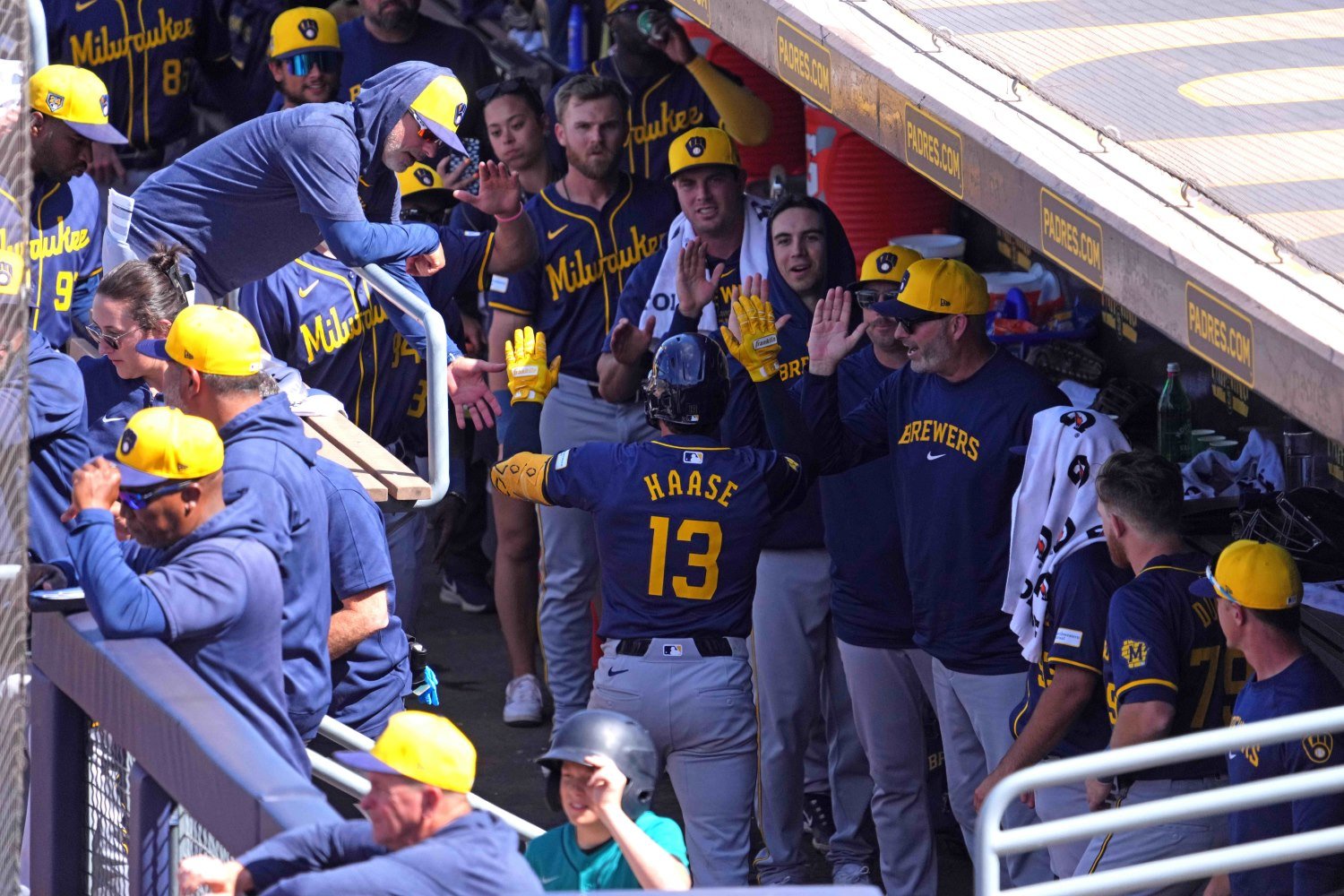 Hopefully, talent largely dictates who makes the initial 26-man roster. However, logistical considerations like minor-league options also play a large role in the Milwaukee Brewers' decisions. This can lead to some unique or suboptimal depth charts to begin the season, in an effort to retain as much organization-wide flexibility as possible. As we approach the start of the 2024 schedule, the Brewers find themselves in a difficult position centered around the off-season acquisitions of Jake Bauers and Gary Sánchez, along with the dominating spring performance of Eric Haase. None of those three players have a minor-league option, and Sánchez will be on the 26-man roster (if fully healthy) as a DH and catcher (sort of). Thus, it comes down to Bauers vs. Haase--a strange dilemma, because their lack of positional versatility would put the Brewers in a bind over the long haul. Milwaukee traded minor leaguers Jace Avina and Brian Sanchez to acquire Bauers, so GM Matt Arnold likely wants to give him some rope to start the season. Despite Bauers' .211/.302/.413 career line, it appears the Brewers saw something in his left-handed stick, or an area they could improve, to believe Bauers would bring more production to the club than he has at his other stops. Barring a sudden change, he will start the 2024 season as the backup first baseman and left-handed option as a DH and pinch-hitter. Though Bauers has played in the outfield at times, there's no indication the Brewers see him as an option out there. With Bauers locked in and unable to provide infield coverage, it would make it challenging to carry three catchers in William Contreras, Sánchez and Haase. Manager Pat Murphy has already said he's not usually a fan of it. But Haase's .414/.469/.897 spring slash is tough to ignore, and could give the front office doubts about exposing him to other teams. His Arizona performance includes four home runs, two doubles and 10 RBIs in just 32 plate appearances, while providing solid defense. However, with Sánchez seen as having a guaranteed spot and Bauers getting a look to begin the year, Haase's inclusion would leave the Brewers with one backup outfielder and only one backup infielder to cover multiple spots. C - Contreras 1B - Rhys Hoskins 2B - Brice Turang 3B - Sal Frelick SS - Willy Adames LF - Christian Yelich CF - Garrett Mitchell RF - Jackson Chourio DH - Sanchez Bench - Joey Ortiz (infield) Bench - Blake Perkins/Joey Wiemer (outfield) Bench - Bauers (1B) Bench - Haase (C) That thin setup doesn't typically work well in matchups and late-game situations. Assuming Bauers isn't going anywhere before real games begin, do you risk losing Haase after the spring he has posted? There's no doubt another club would pick him up immediately. So maybe there's an option to delay the decision and gather more information. How about a two-week tryout when the games count? The Brewers could put both Haase and Bauers on the Opening Day roster and give them about 10 games to prove they can handle their respective roles. Why two weeks? Milwaukee could start Sánchez on the 10-day injured list to give him more time to work back fully from the fractured wrist he suffered last September. Sánchez could undoubtedly use more offensive reps, but more importantly, additional work with the Brewers' catching wizards to improve his defense. Having four passed balls in two spring games is a touch concerning. Going this route allows the Brewers to keep another infielder like Andruw Monasterio on the roster to ensure versatility. Once Milwaukee's brain trust thinks Sánchez is 100 percent ready to roll, then they will have to make the decision on who is likely moving to another club: Bauers or Haase. Their roles on the Brewers would differ, so evaluating the two across a small sample of regular-season games entails its own issues. But at least it buys time and allows the team more opportunity to make the "right" call. If they deem it time for Bauers to go, prospect Tyler Black can take his spot as the left-handed first baseman and DH. Remember, Black spent more time working at first base than third base this spring, and Murphy expects him to do the same in Nashville to begin the minor-league season. But Black would also provide coverage at third and second base (unlike Bauers), meaning Monasterio could be sent to Triple A to open the spot for Sánchez, who essentially becomes the DH instead of Bauers. Should the Brewers believe Haase's value is lower than Bauers' and that Sánchez will suffice as the backup backstop, Sánchez will simply replace Haase on the 26-man roster. The Brewers' margin for error to reach the postseason this year is slimmer than in the recent past. These fringe choices could make the difference in a handful of games that determine a playoff spot six months from now. What do you think about this option? Do you lean toward a specific type of roster construction a week before Opening Day? The next week-plus will be fascinating to watch.
 -
Milwaukee Brewers manager Pat Murphy has hyped up Sal Frelick as a third baseman all spring. With the skipper seemingly set on the lefty hitter getting regular time at the hot corner, it creates a chain reaction of potential impact on other players. Either Joey Ortiz or Brice Turang loses playing time Milwaukee will still mix and match at times around the infield, but adding Frelick to the recipe takes innings and at-bats away from someone else. Since Murphy appears to be all-in on a Turang rebound, it more likely means fewer opportunities for Ortiz, at least in the early going. The slick infielder acquired in the Corbin Burnes trade would have seen a fair amount of time at third before the Frelick experiment took root, but now it's probably more of a part-time role when a southpaw is on the mound. Should Turang's bat continue to falter and Ortiz prove his mettle at the dish, that could swing more second-base playing time toward Ortiz as the year progresses. Again, this is an effect of Frelick's ability to cover the hot corner, meaning Ortiz is more available to handle second if Turang looks like his 2023 self offensively. We'll also see how it impacts Andruw Monasterio's role, if he opens the season on the 26-man roster. With Oliver Dunn optioned to Triple A and Tyler Black reassigned to minor-league camp, Monasterio has the inside track to the final position-player roster spot, assuming the Brewers don't go with three catchers. Three catchers make the Opening Day roster Murphy isn't typically a fan of carrying three catchers, as it limits in-game flexibility around the rest of the field. However, having Frelick cover infield and outfield spots is like having two players in one. That opens the door to try a trio of catchers, although it would mean one fewer backup infielder or outfielder. It's impossible to ignore what veteran Eric Haase has done in Arizona, slashing .414/.469/.897 with four home runs, two doubles and 10 RBI in 32 plate appearances. While analyzing spring stats is often a fool's errand, Haase has proved to be a valuable backstop in the past, 2023 notwithstanding. The other impetus for keeping Haase might come down to defense. Although William Contreras will catch the vast majority of innings, there could be concern about Gary Sánchez's defensive ability. Sánchez's poor reputation behind the dish with the New York Yankees might have been overblown, and the Brewers are wizards at improving catchers' defensive skill, but there is still legitimate cause for doubt. The perceived issue could be a reality, as Sánchez has four passed balls in just two games at catcher. He will be on the 26-man for his offense and (probably) see plenty of time at DH, but the defense early in the season might warrant a more extended look at Haase, too. Joey Wiemer or Blake Perkins make the Opening Day roster Since Frelick won't be an everyday outfielder in this scenario, the Brewers will want to have an additional outfielder for matchup-based offensive moves, defensive purposes, and to fill holes when Yelich takes some turns as the DH. If Frelick was planning to be only an outfielder, it wouldn't have been guaranteed that a fifth outfielder would be necessary. Now, it feels inevitable. With Yelich, Frelick, and Mitchell all left-handed sticks, Perkins (a switch-hitter) and Wiemer (a righty) complement them nicely. But who is it going to be? On offense, Perkins gives the Brewers better at-bats and walks more often than Wiemer, but strikes out at a similar rate. Wiemer has far more power and a greater upside in terms of skill. Defensively, they both cover a lot of ground, though Perkins is a purer outfielder and Wiemer has the better arm. It comes down to how much the Brewers value Wiemer getting daily at-bats, because he will not get regular chances at the plate if he remains with the big-league club. Frelick struggles at the plate Fans don't want to think about it, but position changes often dampen offensive production. Plenty of players go through issues at the plate when learning a new position or bouncing back and forth. As athletic and competitive as Frelick is, it does take exceptional talent and mental strength to pull this off in the major leagues. It's one thing to do it in spring training, or for a few innings at a time, but when the bright lights are on and the challenge is more frequent, it can take a lot out of a player. Most believe Frelick will take a step forward with the bat, regardless of other factors. It's important to remember that one facet of the game can impact another, and it will be interesting to see how Frelick handles it. Should he struggle early on at the plate while trying to balance the two positions, will Murphy decide to pull back on the experiment? As with most decisions, it will come down to weighing the overall, teamwide pros and cons and how they affect the Brewers' success. All of these roster decisions hinge on the assumption that Jake Bauers, acquired in a trade with the New York Yankees, has a spot on the roster as a left-handed first baseman and DH. Milwaukee saw something they liked in him, and he's out of options, so one would think he gets a shot to open the season. The Brewers didn't give up anything precious in exchange, but GM Matt Arnold might not be keen on exposing Bauers to other teams, risking losing him before he steps foot on the field. Regardless, the "Frelick-at-third" plan becomes more intriguing as the 2024 season draws closer. It will be fascinating to see how this strategy will impact several players (and Murphy's in-game choices) to begin the new year. How confident are you that playing Frelick at third base will help the Brewers more than it hurts? View full article
-
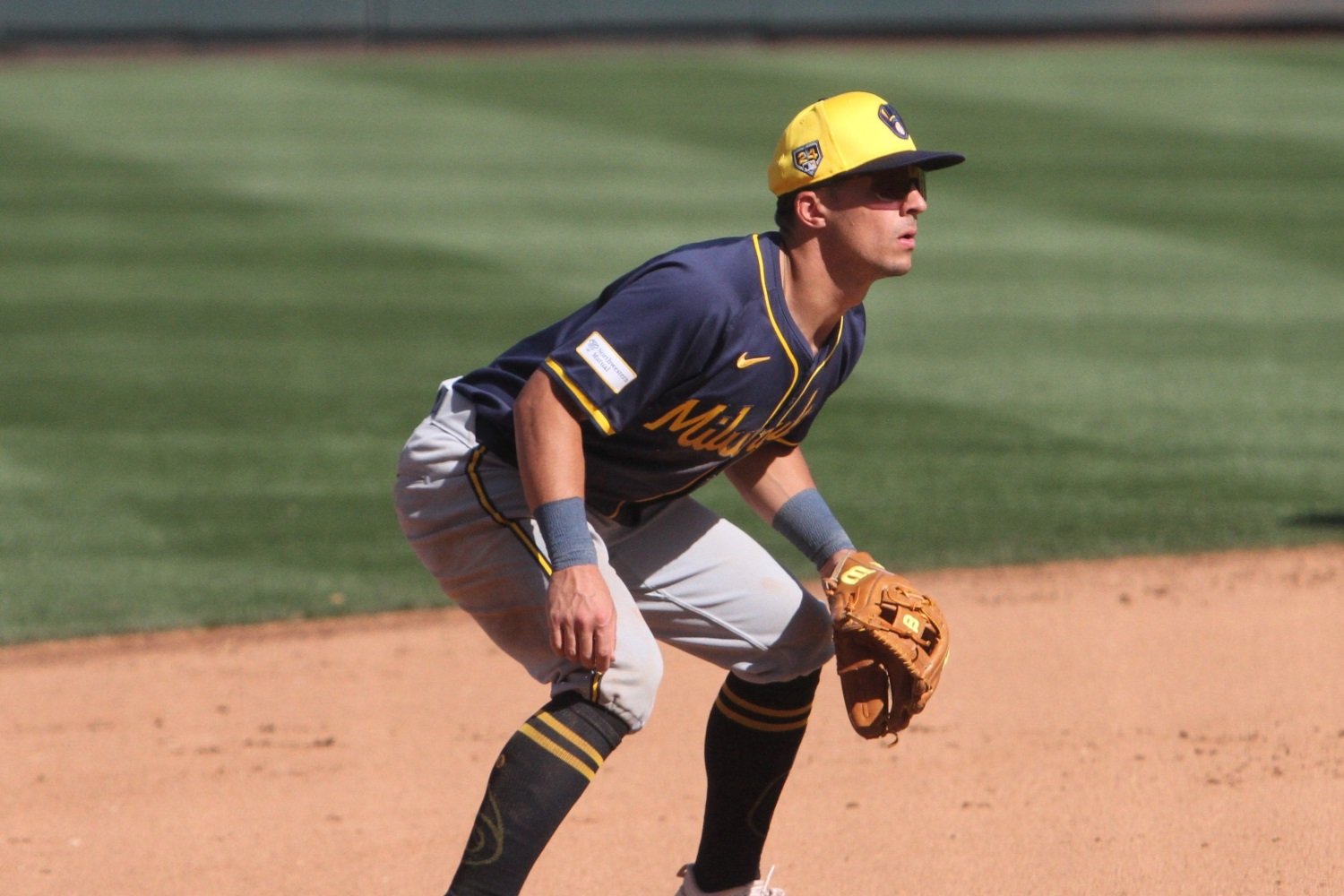 The Milwaukee Brewers have valued flexibility and welcomed unconventional defensive positioning for a while now. However, turning one of your top outfield prospects into a semi-regular third baseman within a handful of weeks during Spring Training might be a new level of craziness (or genius). With no one grabbing the third base job with authority and a surplus of highly-valued talent in the outfield, Murphy's wild idea gained traction and appears to be a legitimate part of the 2024 plan. If Sal Frelick is up to the challenge, as many have touted, it will give the Brewers greater roster malleability and affect MLB playing time for a few others. Garrett Mitchell gets a regular starting role Most saw the projected outfield trio of Christian Yelich, Jackson Chourio and Frelick leading the way in 2024. Under that plan, Mitchell was likely to serve as the fourth outfielder, with some even thinking he might start the season in Triple A to develop his bat. If Frelick is manning third base even occasionally, Mitchell's elite defense and tantalizing offensive tools become essential pieces of the puzzle. Murphy seems to like Mitchell's upside. He has had Mitchell bat leadoff quite a bit, either as a sign he might like him in that spot or simply to make sure Mitchell gets plenty of at-bats against MLB-caliber pitchers, in order to better evaluate him. Mitchell might have the biggest gap between the floor and ceiling of any player in the upper levels of the Brewers organization. His high strikeout rate (worse than Joey Wiemer's) is a significant concern, but his potential to wreak havoc by pressuring the defense on the bases could be a game-changer. Either Joey Ortiz or Brice Turang loses playing time Milwaukee will still mix and match at times around the infield, but adding Frelick to the recipe takes innings and at-bats away from someone else. Since Murphy appears to be all-in on a Turang rebound, it more likely means fewer opportunities for Ortiz, at least in the early going. The slick infielder acquired in the Corbin Burnes trade would have seen a fair amount of time at third before the Frelick experiment took root, but now it's probably more of a part-time role when a southpaw is on the mound. Should Turang's bat continue to falter and Ortiz prove his mettle at the dish, that could swing more second-base playing time toward Ortiz as the year progresses. Again, this is an effect of Frelick's ability to cover the hot corner, meaning Ortiz is more available to handle second if Turang looks like his 2023 self offensively. We'll also see how it impacts Andruw Monasterio's role, if he opens the season on the 26-man roster. With Oliver Dunn optioned to Triple A and Tyler Black reassigned to minor-league camp, Monasterio has the inside track to the final position-player roster spot, assuming the Brewers don't go with three catchers. Three catchers make the Opening Day roster Murphy isn't typically a fan of carrying three catchers, as it limits in-game flexibility around the rest of the field. However, having Frelick cover infield and outfield spots is like having two players in one. That opens the door to try a trio of catchers, although it would mean one fewer backup infielder or outfielder. It's impossible to ignore what veteran Eric Haase has done in Arizona, slashing .414/.469/.897 with four home runs, two doubles and 10 RBI in 32 plate appearances. While analyzing spring stats is often a fool's errand, Haase has proved to be a valuable backstop in the past, 2023 notwithstanding. The other impetus for keeping Haase might come down to defense. Although William Contreras will catch the vast majority of innings, there could be concern about Gary Sánchez's defensive ability. Sánchez's poor reputation behind the dish with the New York Yankees might have been overblown, and the Brewers are wizards at improving catchers' defensive skill, but there is still legitimate cause for doubt. The perceived issue could be a reality, as Sánchez has four passed balls in just two games at catcher. He will be on the 26-man for his offense and (probably) see plenty of time at DH, but the defense early in the season might warrant a more extended look at Haase, too. Joey Wiemer or Blake Perkins make the Opening Day roster Since Frelick won't be an everyday outfielder in this scenario, the Brewers will want to have an additional outfielder for matchup-based offensive moves, defensive purposes, and to fill holes when Yelich takes some turns as the DH. If Frelick was planning to be only an outfielder, it wouldn't have been guaranteed that a fifth outfielder would be necessary. Now, it feels inevitable. With Yelich, Frelick, and Mitchell all left-handed sticks, Perkins (a switch-hitter) and Wiemer (a righty) complement them nicely. But who is it going to be? On offense, Perkins gives the Brewers better at-bats and walks more often than Wiemer, but strikes out at a similar rate. Wiemer has far more power and a greater upside in terms of skill. Defensively, they both cover a lot of ground, though Perkins is a purer outfielder and Wiemer has the better arm. It comes down to how much the Brewers value Wiemer getting daily at-bats, because he will not get regular chances at the plate if he remains with the big-league club. Frelick struggles at the plate Fans don't want to think about it, but position changes often dampen offensive production. Plenty of players go through issues at the plate when learning a new position or bouncing back and forth. As athletic and competitive as Frelick is, it does take exceptional talent and mental strength to pull this off in the major leagues. It's one thing to do it in spring training, or for a few innings at a time, but when the bright lights are on and the challenge is more frequent, it can take a lot out of a player. Most believe Frelick will take a step forward with the bat, regardless of other factors. It's important to remember that one facet of the game can impact another, and it will be interesting to see how Frelick handles it. Should he struggle early on at the plate while trying to balance the two positions, will Murphy decide to pull back on the experiment? As with most decisions, it will come down to weighing the overall, teamwide pros and cons and how they affect the Brewers' success. All of these roster decisions hinge on the assumption that Jake Bauers, acquired in a trade with the New York Yankees, has a spot on the roster as a left-handed first baseman and DH. Milwaukee saw something they liked in him, and he's out of options, so one would think he gets a shot to open the season. The Brewers didn't give up anything precious in exchange, but GM Matt Arnold might not be keen on exposing Bauers to other teams, risking losing him before he steps foot on the field. Regardless, the "Frelick-at-third" plan becomes more intriguing as the 2024 season draws closer. It will be fascinating to see how this strategy will impact several players (and Murphy's in-game choices) to begin the new year. How confident are you that playing Frelick at third base will help the Brewers more than it hurts?
- 4 comments
-
- 2
-
-
- sal frelick
- garrett mitchell
- (and 5 more)
-
How the New Brewers Can Balance Their Offensive Attack
Tim Muma replied to Tim Muma's topic in Brewer Fanatic Front Page News
What proposed lineup are you referring to? -
The Milwaukee Brewers' lineup might have a different feel in 2024, as the front office tries to find the pieces to create a reliable, consistent offense. Last season, a poor statistical combo led to the club's run-scoring issues, and finding the right balance to improve efficiency is the key to flipping that script. Image courtesy of © Rick Scuteri-USA TODAY Sports It's no secret that hitting a bunch of bombs is the best path to offensive success for MLB teams. More home runs often lead to more strikeouts, and for many years, experts have downplayed the negative impact of strikeouts. However, the top offenses have enough quality hitters to keep their strikeout percentage (K%) in the league's upper half, while teams with less power can still benefit from better ball-in-play efficiency. Unfortunately for the Milwaukee Brewers, their 2023 offense ranked in the bottom half of baseball in both home runs (25th) and K% (17th). That was a significant reason for their 4.49 runs-per-game average, which ranked 17th among the 30 clubs. In some ways, they were fortunate to average that many runs scored. In 2023, eight teams ranked between 16th and 30th in both home runs and K%. Five of those clubs were 22nd or worse in runs scored, including the bottom three offenses in the Detroit Tigers (4.08 runs/game), Chicago White Sox (3.96) and Oakland A's (3.61). The Colorado Rockies were right behind the Brewers at 4.45 runs, while somehow, the San Francisco Giants averaged 4.68 runs (good for 12th) despite being below-average in K% and home runs. The 2022 season was even more lopsided, as all seven MLB teams in the bottom half of homers and strikeouts were ranked 21st or worse in runs, including the four lowest-scoring clubs. Milwaukee finished third in dingers that season, outweighing their 22nd-ranked K% to produce the 10th-best offense. Technically, they scored fewer runs per game in 2022 (4.48), but the run environment was so much lower that season that the Brewers were a top-10 lineup. But as many might recall, that offense felt incredibly inconsistent, with more peaks and valleys than the Swiss Alps and more holes than Swiss cheese. This isn't to debate the merits of "relying too much on the home run," but there is something to be said for balance in a lineup. In the last three seasons, only two teams have been in the top 15 in scoring when finishing in the bottom half of MLB in home runs and K%. Did GM Matt Arnold consider these two statistical markers when retooling the offense? First, take a look at the breakdown of home runs and K% by position last season for the Brewers: As you can see, the Brewers didn't rank in the top half of both statistics for any position. They were close in a couple of spots, but mediocrity won the day. The hope is that by enhancing these stats in multiple positions, the overall numbers will reach ideal levels. Teams who finished 15th or better in only one of these two stats had a top-10 offense 14 times since 2021. So, how did Milwaukee address these concerns, and how might they improve internally? Catcher William Contreras was fantastic last season. Plus, his profile has room for more power. He could increase his homer total by a double-digit figure in 2024. If his K% stays in the same range, that's elite pop and contact from the most demanding defensive position in the game. Of course, adding Gary Sánchez as a free agent also addresses the home run issue. Last year's backup backstop, Victor Caratini, hit just seven dingers in his 218 plate appearances as a catcher. Sánchez blasted 18 in just 20 more chances (when catching), a far more viable threat when Contreras gets a day off. He strikes out a much higher clip, but the added power is exponentially more impactful than the increase in K% at this position. First Base Rhys Hoskins was the splashy free-agent addition for the Brewers, focusing on his power at first base. Hoskins has averaged 30 homers in his previous four full seasons, seven more than all of Milwaukee's first basemen hit last season. His likely 24-25% strikeout rate will be a downgrade from what the collective did last season at first base. However, 137 plate appearances as first basemen were taken up by Luke Voit (0 HR, 37.2 K%) and Owen Miller (1 HR, 24.5 K%), with frightening results. The power bump and overall offensive improvement far outweigh the added whiffs. Second Base The offensive struggle of Brice Turang has been documented extensively, and the Brewers are looking at other options. The problem with Turang's output is that if you are going to hit so few homers, you must be a better contact hitter and on-base guy. His overall .285 OBP and 21% strikeout rate, without any power, can't justify a regular starting position. Arnold acquired several players who could handle second base, including Oliver Dunn, Christian Arroyo and Joey Ortiz. Ortiz seems to be the most likely candidate, though he could start at third base, too. Take minor-league stats for what they're worth, but Ortiz's K% in Double-A and Triple-A the past two seasons has been between 14.8% and 17.7%. He has proved to be a solid bat-to-ball prospect, and many believe his power will develop. He hit 19 homers between the top two minor-league levels in 2022 and nine more in Triple-A last season, in only 88 games. He could improve both statistics for the big-league club, and the Brewers wouldn't lose any defense, either. Third Base The hot corner started hot in 2023, but it was mostly a hot mess. Brian Anderson hit just six homers and owned a dreadful 30.3 K% in 208 plate appearances as a third baseman. Andruw Monasterio struck out only 17.8% of the time, but hit just one long ball in 202 times to bat. What happens at third base this season will be interconnected with who plays second base, and will likely be an early-season puzzle for the Brewers to solve. Ideally, Co-Brewers Minor League Player of the Year Tyler Black grabs this spot. Though he doesn't project to have top-level home run power, his overall hitting ability screams All-Star potential. He hit 18 homers in the minors last season, with 55 total extra-base hits and a K% below 19%. While he likely wouldn't boost the Brewers' third base homer production from last season, the K% would improve, and he'd bring an uncommon element to the position: speed on the bases (55 steals last season). If they go with Dunn at third base, he should bring some added power, but the strikeout rate trends toward 30% or worse, based on his minor-league results. Shortstop Not much is likely to change here. The position belongs to Willy Adames, and both his home runs and strikeouts were within his usual error bars. His overall power needs a rebound this season for Milwaukee, as his slugging percentage fell 51 points (to .407) from 2022 to 2023. One fringe positive could be Ortiz filling in for Adames instead of Turang on the rare days on which Adames takes a break. Outfield This is the sector in which things could go in any number of directions. Christian Yelich simply needs to copy his 2023 season to help this group, posting a 20.4 K% and hitting 17 homers as an outfielder to go with his .381 OBP. The rest of the outfield crew has its pros, cons and uncertainties. Jackson Chourio: The potential is enormous, but he's young, and the game power likely isn't there yet. If he can meet many projections of hitting 16-17 home runs while striking out less than 23% of the time, that's an immediate boost to the outfield's output. Sal Frelick: Assuming he's not playing third base regularly, more Frelick in the outfield will cut down the position's K% a ton, even if it sacrifices some power. In fairness, Blake Perkins (3 HR, 28.4 K%) and Anderson (3 HR, 28.9 K%) didn't set a high bar to clear. Garrett Mitchell: The superbly athletic outfielder has yet to develop the power many thought he'd gain, but it's his K% that is a significant concern. Mitchell has certainly produced in his limited MLB time (.795 OPS), but with minor-league strikeout rates in the 27% range—and a 38.3 K% in 141 MLB plate appearances—he needs to show more power to offset the whiffs. Joey Wiemer: Will his revamped hitting setup and swing reduce strikeouts and help him unlock his power in games? It felt like Wiemer struck out more than the 28.3% of the time he actually did in 2023. The 13 homers were nice, but he still needs improvements in both areas to make a positive difference in the Brewers' lineup. Designated Hitter The Brewers have not taken advantage of the DH spot in the two seasons in which it has been an official, permanent part of the NL. Only Contreras's 135 plate appearances and the trade deadline acquisition of Mark Canha saved Milwaukee from having a truly disturbing output from the DH role. As the DH, Canha hit three homers in 78 plate appearances, with a minuscule 6.4 K%. Meanwhile, Jesse Winker hit one long ball with a 26% strikeout rate, racking up the most plate appearances in that spot. And Tellez (3 HR, 31.5 K%) didn't fare much better in his 73 DH plate appearances. The 2024 season brings more reliable options. With the bevy of choices at various positions, the DH role will feature a mix of better hitters than in past years. Yelich, Hoskins, Sánchez, Contreras and Black should lead the way on a rotational basis, with Jake Bauers potentially getting an early opportunity to get swings against right-handed pitching. On a basic level, it appears that Arnold and the Brewers built an offense that addressed their key inefficiencies from last season. In some areas, the power should be boosted (e.g., first base, catcher); in others, the strikeout percentage should improve (third base, outfield). Second base could be the wild card for which way the stats swing. And simply eliminating large numbers of at-bats for subpar hitters will chip away at both. Whether there's enough give and take of home runs to strikeouts throughout the field remains to be seen. Will the sum of the Brewers' parts be enough for the lineup to carry the club more often than it has the past few seasons? View full article
-
 It's no secret that hitting a bunch of bombs is the best path to offensive success for MLB teams. More home runs often lead to more strikeouts, and for many years, experts have downplayed the negative impact of strikeouts. However, the top offenses have enough quality hitters to keep their strikeout percentage (K%) in the league's upper half, while teams with less power can still benefit from better ball-in-play efficiency. Unfortunately for the Milwaukee Brewers, their 2023 offense ranked in the bottom half of baseball in both home runs (25th) and K% (17th). That was a significant reason for their 4.49 runs-per-game average, which ranked 17th among the 30 clubs. In some ways, they were fortunate to average that many runs scored. In 2023, eight teams ranked between 16th and 30th in both home runs and K%. Five of those clubs were 22nd or worse in runs scored, including the bottom three offenses in the Detroit Tigers (4.08 runs/game), Chicago White Sox (3.96) and Oakland A's (3.61). The Colorado Rockies were right behind the Brewers at 4.45 runs, while somehow, the San Francisco Giants averaged 4.68 runs (good for 12th) despite being below-average in K% and home runs. The 2022 season was even more lopsided, as all seven MLB teams in the bottom half of homers and strikeouts were ranked 21st or worse in runs, including the four lowest-scoring clubs. Milwaukee finished third in dingers that season, outweighing their 22nd-ranked K% to produce the 10th-best offense. Technically, they scored fewer runs per game in 2022 (4.48), but the run environment was so much lower that season that the Brewers were a top-10 lineup. But as many might recall, that offense felt incredibly inconsistent, with more peaks and valleys than the Swiss Alps and more holes than Swiss cheese. This isn't to debate the merits of "relying too much on the home run," but there is something to be said for balance in a lineup. In the last three seasons, only two teams have been in the top 15 in scoring when finishing in the bottom half of MLB in home runs and K%. Did GM Matt Arnold consider these two statistical markers when retooling the offense? First, take a look at the breakdown of home runs and K% by position last season for the Brewers: As you can see, the Brewers didn't rank in the top half of both statistics for any position. They were close in a couple of spots, but mediocrity won the day. The hope is that by enhancing these stats in multiple positions, the overall numbers will reach ideal levels. Teams who finished 15th or better in only one of these two stats had a top-10 offense 14 times since 2021. So, how did Milwaukee address these concerns, and how might they improve internally? Catcher William Contreras was fantastic last season. Plus, his profile has room for more power. He could increase his homer total by a double-digit figure in 2024. If his K% stays in the same range, that's elite pop and contact from the most demanding defensive position in the game. Of course, adding Gary Sánchez as a free agent also addresses the home run issue. Last year's backup backstop, Victor Caratini, hit just seven dingers in his 218 plate appearances as a catcher. Sánchez blasted 18 in just 20 more chances (when catching), a far more viable threat when Contreras gets a day off. He strikes out a much higher clip, but the added power is exponentially more impactful than the increase in K% at this position. First Base Rhys Hoskins was the splashy free-agent addition for the Brewers, focusing on his power at first base. Hoskins has averaged 30 homers in his previous four full seasons, seven more than all of Milwaukee's first basemen hit last season. His likely 24-25% strikeout rate will be a downgrade from what the collective did last season at first base. However, 137 plate appearances as first basemen were taken up by Luke Voit (0 HR, 37.2 K%) and Owen Miller (1 HR, 24.5 K%), with frightening results. The power bump and overall offensive improvement far outweigh the added whiffs. Second Base The offensive struggle of Brice Turang has been documented extensively, and the Brewers are looking at other options. The problem with Turang's output is that if you are going to hit so few homers, you must be a better contact hitter and on-base guy. His overall .285 OBP and 21% strikeout rate, without any power, can't justify a regular starting position. Arnold acquired several players who could handle second base, including Oliver Dunn, Christian Arroyo and Joey Ortiz. Ortiz seems to be the most likely candidate, though he could start at third base, too. Take minor-league stats for what they're worth, but Ortiz's K% in Double-A and Triple-A the past two seasons has been between 14.8% and 17.7%. He has proved to be a solid bat-to-ball prospect, and many believe his power will develop. He hit 19 homers between the top two minor-league levels in 2022 and nine more in Triple-A last season, in only 88 games. He could improve both statistics for the big-league club, and the Brewers wouldn't lose any defense, either. Third Base The hot corner started hot in 2023, but it was mostly a hot mess. Brian Anderson hit just six homers and owned a dreadful 30.3 K% in 208 plate appearances as a third baseman. Andruw Monasterio struck out only 17.8% of the time, but hit just one long ball in 202 times to bat. What happens at third base this season will be interconnected with who plays second base, and will likely be an early-season puzzle for the Brewers to solve. Ideally, Co-Brewers Minor League Player of the Year Tyler Black grabs this spot. Though he doesn't project to have top-level home run power, his overall hitting ability screams All-Star potential. He hit 18 homers in the minors last season, with 55 total extra-base hits and a K% below 19%. While he likely wouldn't boost the Brewers' third base homer production from last season, the K% would improve, and he'd bring an uncommon element to the position: speed on the bases (55 steals last season). If they go with Dunn at third base, he should bring some added power, but the strikeout rate trends toward 30% or worse, based on his minor-league results. Shortstop Not much is likely to change here. The position belongs to Willy Adames, and both his home runs and strikeouts were within his usual error bars. His overall power needs a rebound this season for Milwaukee, as his slugging percentage fell 51 points (to .407) from 2022 to 2023. One fringe positive could be Ortiz filling in for Adames instead of Turang on the rare days on which Adames takes a break. Outfield This is the sector in which things could go in any number of directions. Christian Yelich simply needs to copy his 2023 season to help this group, posting a 20.4 K% and hitting 17 homers as an outfielder to go with his .381 OBP. The rest of the outfield crew has its pros, cons and uncertainties. Jackson Chourio: The potential is enormous, but he's young, and the game power likely isn't there yet. If he can meet many projections of hitting 16-17 home runs while striking out less than 23% of the time, that's an immediate boost to the outfield's output. Sal Frelick: Assuming he's not playing third base regularly, more Frelick in the outfield will cut down the position's K% a ton, even if it sacrifices some power. In fairness, Blake Perkins (3 HR, 28.4 K%) and Anderson (3 HR, 28.9 K%) didn't set a high bar to clear. Garrett Mitchell: The superbly athletic outfielder has yet to develop the power many thought he'd gain, but it's his K% that is a significant concern. Mitchell has certainly produced in his limited MLB time (.795 OPS), but with minor-league strikeout rates in the 27% range—and a 38.3 K% in 141 MLB plate appearances—he needs to show more power to offset the whiffs. Joey Wiemer: Will his revamped hitting setup and swing reduce strikeouts and help him unlock his power in games? It felt like Wiemer struck out more than the 28.3% of the time he actually did in 2023. The 13 homers were nice, but he still needs improvements in both areas to make a positive difference in the Brewers' lineup. Designated Hitter The Brewers have not taken advantage of the DH spot in the two seasons in which it has been an official, permanent part of the NL. Only Contreras's 135 plate appearances and the trade deadline acquisition of Mark Canha saved Milwaukee from having a truly disturbing output from the DH role. As the DH, Canha hit three homers in 78 plate appearances, with a minuscule 6.4 K%. Meanwhile, Jesse Winker hit one long ball with a 26% strikeout rate, racking up the most plate appearances in that spot. And Tellez (3 HR, 31.5 K%) didn't fare much better in his 73 DH plate appearances. The 2024 season brings more reliable options. With the bevy of choices at various positions, the DH role will feature a mix of better hitters than in past years. Yelich, Hoskins, Sánchez, Contreras and Black should lead the way on a rotational basis, with Jake Bauers potentially getting an early opportunity to get swings against right-handed pitching. On a basic level, it appears that Arnold and the Brewers built an offense that addressed their key inefficiencies from last season. In some areas, the power should be boosted (e.g., first base, catcher); in others, the strikeout percentage should improve (third base, outfield). Second base could be the wild card for which way the stats swing. And simply eliminating large numbers of at-bats for subpar hitters will chip away at both. Whether there's enough give and take of home runs to strikeouts throughout the field remains to be seen. Will the sum of the Brewers' parts be enough for the lineup to carry the club more often than it has the past few seasons?
- 4 comments
-
- 2
-

-
-
- rhys hoskins
- gary sanchez
- (and 4 more)
-
 When the Brewers acquired infielder Joey Ortiz as part of the Corbin Burnes trade, fans and experts surmised that a Willy Adames trade was imminent, or at least increasingly likely. With Adames's team control ending after the 2024 season, the numerous clubs looking for a reliable shortstop, and Milwaukee's current youth movement, it makes a lot of sense. But again, if the Brewers are sincere in their desire to compete this season while also keeping an eye on the future, multiple factors tell you another fan favorite is the better trade chip: closer Devin Williams. Start by looking at the makeup of the current Brewers roster. The best way to improve the overall potential success of a team is to trade from a position of strength. The 2024 bullpen is loaded with filthy stuff, proven arms, multiple-inning versatility, and tons of options in the minor leagues. Many of the Brewers' relievers (and guys like Robert Gasser and DL Hall, who come to camp as starters but could spend time in the bullpen) are also under team control for at least two years. While relief pitchers can be volatile season-to-season, that is where the deep pool of players protects the club wonderfully. No doubt, losing Williams would be a blow to the nastiness of the ninth inning in Milwaukee, but the next men up have every chance to match his production, minus the "Airbender." Here's a snapshot of what the 2023 relief corps did statistically. If you need a refresher on just how fully loaded the bullpen and its reserves are at this moment, here's a list of six players expected to be on the MLB roster, along with their 2023 stats: Joel Payamps: 169 ERA+ with 49 appearances allowing zero runs, with most of them in the 7th or 8th innings Abner Uribe: 247 ERA+ with an 11.4 K/9 and .154 batting average against Hoby Milner: 238 ERA+ with 0.96 WHIP overall, plus a .450 OPS against versus lefties Elvis Peguero: 128 ERA+ overall, and owned a 0.95 ERA and 0.68 WHIP on one day of rest Trevor Megill: 119 ERA+ with a 13.5 K/9 and 2.13 FIP Bryse Wilson: 167 ERA+ across 76.2 innings, with 23 of his 53 appearances more than one frame Now, factor in a few pitchers who could either slot into the starting rotation or be weapons in the bullpen throughout the season: Aaron Ashby: Missed 2023 with an injury but owns a 3.66 ERA and .221 opponents' batting average as an MLB reliever Hall: Acquired in the Burnes trade, has an 11.5 K/9 rate in 33 MLB frames and tossed 3 1/3 shutout innings in relief in the 2023 postseason Joe Ross: Hasn't pitched in MLB since 2021 but posted a 4.17 ERA in 108 innings that season And finally, some rookie options. All of them are viewed as hopeful starting pitchers, but they, too, could help the 2023 relief corps like Brandon Woodruff and Burnes did in 2018: Jacob Misiorowski: Brewers' third-ranked prospect by MLB Pipeline and one of the top 100 in baseball, overall. He has a 13.9 K/9 in the minors and is recognized for having elite-level stuff. Gasser: Brewers' fifth-ranked prospect by MLB Pipeline. A left-hander with an 11.0 K/9 and 3.73 ERA across three minor-league seasons. Carlos F. Rodriguez: Brewers' sixth-ranked prospect by MLB Pipeline. He owns a 2.94 ERA and 1.09 WHIP in two minor-league seasons. That is a total of 12 pitchers outside of Williams, many of whom have proved their worth, and a handful of others with incredible potential. Again, bullpen success can fluctuate wildly for individual pitchers each season, but with the number of arms the Brewers have stored up and the track record they have in this area, it hardly feels like a gamble to move Williams. Trading Adames away hurts the 2024 club much more. Yes, they could have Ortiz take over the starting role, but that would keep second- and third-base production uncertain. I like Tyler Black offensively, though there are legitimate questions about whetther he can make the throw from the hot corner. Brice Turang is fantastic defensively, but offensively, it's been rough and likely will continue to be. Of course, the Brewers have guys like Andrew Monasterio, Oliver Dunn, and Owen Miller to rotate through, but none of those guys figure to be regular forces in a contender's lineup. Losing Adames's power in the middle third of the batting order would diminish the Crew's offensive potential. Despite a rather tumultuous 2023 campaign, Adames still brings a thunderous stick to the position, and it's hard to believe he'll finish with a meager .407 slugging percentage again in 2024. This is on top of his valuable defensive play. Plus, we don't know how well Ortiz will do if given the full-time duties at short right away, and he certainly won't have the same pop as Adames. If Adames is gone, you also thin out some quality depth should injury or failure happen to any of the possible shortstops. Again, this is going off the premise that Milwaukee plans to compete in 2024. Even so, with one eye on the future, what the Brewers could get in return in a trade of Williams or Adames also plays a significant role. While a contending team with uncertainty at shortstop might be desperate enough to overpay for Adames, Williams's value is higher and, in most cases, would net better assets. People all over Twitter were salivating at their teams trading for Williams. Here's a deal that could send him to Texas. Factor one is that Williams is arguably the best closer in baseball, while Adames would be around the 10th spot among shortstops. That is high praise, but not on the same level as his airbending teammate. The second factor is years of control. As we saw with Burnes, an expiring contract dampens the return value for a player. Williams has two years of team control left, marking a sizable advantage to a club versus Adames, whom they would only have for one season. Acquiring Williams nets a team more flexibility, being able to keep him for both seasons or trade him at any number of vital points across two years. Standing pat (for now) with both players is another option that might even be the most likely scenario. It all depends on the Brewers' outlook and the offers they might receive. Some might wonder if the front office feels anxious about shipping off another popular, talented player so soon after the Burnes' trade. If it's the right move in their minds, that shouldn't matter. Of course, the 2024 trade deadline could also create more interest if Milwaukee isn't playing well. Still, if one player were to be dealt, the more valuable option remains Williams. As Spring Training quickly approaches, what are the odds that one, both, or neither will get traded? The rumors will certainly be bandied about over the next few weeks. What are your thoughts on a potential trade for either of these two?
 -
Milwaukee Brewers leaders have consistently stated the club plans to compete in 2024, and despite the trade of Corbin Burnes, that seems to be the truth. That doesn't preclude Matt Arnold from shipping off more MLB talent, but roster construction and asset value should be determining factors in his next big trade. Factor one is that Williams is arguably the best closer in baseball, while Adames would be around the 10th spot among shortstops. That is high praise, but not on the same level as his airbending teammate. The second factor is years of control. As we saw with Burnes, an expiring contract dampens the return value for a player. Williams has two years of team control left, marking a sizable advantage to a club versus Adames, whom they would only have for one season. Acquiring Williams nets a team more flexibility, being able to keep him for both seasons or trade him at any number of vital points across two years. Standing pat (for now) with both players is another option that might even be the most likely scenario. It all depends on the Brewers' outlook and the offers they might receive. Some might wonder if the front office feels anxious about shipping off another popular, talented player so soon after the Burnes' trade. If it's the right move in their minds, that shouldn't matter. Of course, the 2024 trade deadline could also create more interest if Milwaukee isn't playing well. Still, if one player were to be dealt, the more valuable option remains Williams. As Spring Training quickly approaches, what are the odds that one, both, or neither will get traded? The rumors will certainly be bandied about over the next few weeks. What are your thoughts on a potential trade for either of these two? View full article
-
From MLB Pipeline: "One of the strongest arms in the system, if not the Minor Leagues, works very well for third base. Even though he currently moves surprisingly well for his size, there are concerns that he will outgrow the ability to play third and there’s a chance he ends up at first or left field when all is said and done. The kind of consistent power production the Orioles think he can provide will work from any spot on the diamond." Chances are he would move to 1B or LF in the next 2-3 years, but again, tough to pass up (potential) elite level bats. Not sure Wilken will be great at 3B defensively. Tyler Black might struggle because of his arm. Ortiz (now) is the best option. But next year he should be at SS anyway.
-
I'd truly like to know how you think I was "disparaging" the Brewers struggles to develop young hitters? I think it's fantastic they are ranked so highly and I can't wait to see more of Black, Chourio, Frelick and others. But the truth is, they have had far more success getting guys into MLB and getting top-level results from their pitching work. They have a tremendous opportunity over the next 6-8 years to prove their offensive analysis and development has taken a turn, but that doesn't change the recent history. And I agree Wilken could be that guy at 3B. You still want power at 1B and DH...and that is IF Wilken works out. Sometimes we believe all of our own guys will reach their potential while other teams' players will struggle. Again, I get why they pulled the trigger on the deal and NONE of us know who or what was discussed between the teams, so we're ALL making some assumptions. The funny thing is...I hope the Brewers are right and successful with Hall and Ortiz, even if it "makes me look stupid."
-
Sure, I get that. But MAYBE he doesn't pan out. Or he doesn't reach his ceiling. It reminds of when I was pushing hard for the Brewers to trade for Yelich after the 2017 season. 90% of people said it was dumb because they had Braun, Keon Broxton (who I thought already peaked), Domingo Santana (who I liked a lot), and then Brett Phillips ready to play, too. "We don't need another outfielder!" Broxton played 2 more seasons in MLB (done at age 29). Sanatana played 3 more seasons in MLB (done at 27), and Phillips has been "a guy" around the league. Besides that, when you think you can acquire elite talent, you can't have enough. Maybe I will be wrong on Mayo...but the Brewers others guys might not work out, either. And you really should have power at 3B, 1B and DH, so plenty of spots to work with, IMO.
-
That is certainly possible they would have wanted more. And who knows, depending on what else the Brewers would have been willing to give up, they could have had Mayo plus Ortiz or Hall. Like I commented to the other person, we are ALL making assumptions because we aren't in the those negotiating rooms. For the record, I might have actually been good with including Payamps, especially if the Brewers are keeping Williams for this season at least. Milwaukee's bullpen is stacked. But that is how high I am on Mayo. Just my opinion of his value based on what I've seen on the field, things I've read from scouts, etc. I think people need to realize that, while I believe they COULD have gotten Mayo and should have pushed harder (IF they didn't), that doesn't mean the Brewers failed or that the return won't pan out great. Sometimes I'm right about stuff, and sometimes I'm wrong.
-
I like Ortiz a lot and value defense...probably way more than the average person. I really hope his hit tools can translate to some success in the majors. And I completely understand why they might have targeted him. In terms of Mayo, I actually think by acknowledging in the article he might not be available, that I was limiting the assumptions. And I take some exception to the idea that there are "A LOT" of assumptions. One could argue it is just as assumptious that he WASN'T available. No one has said either way. And true, he might not stick at 3B long term, but for me, considering where the Brewers have come up short, the elite power bat is extremely valuable. Even at 1B, where before they signed Hoskins, it's been a revolving door.
-
I'm sorry you didn't understand the gambling/poker reference this refers to. In that same sentence I reference ace in the hole & hold all the cards.
- 23 replies
-
- 2
-
-
- corbin burnes
- joey ortiz
- (and 2 more)
-
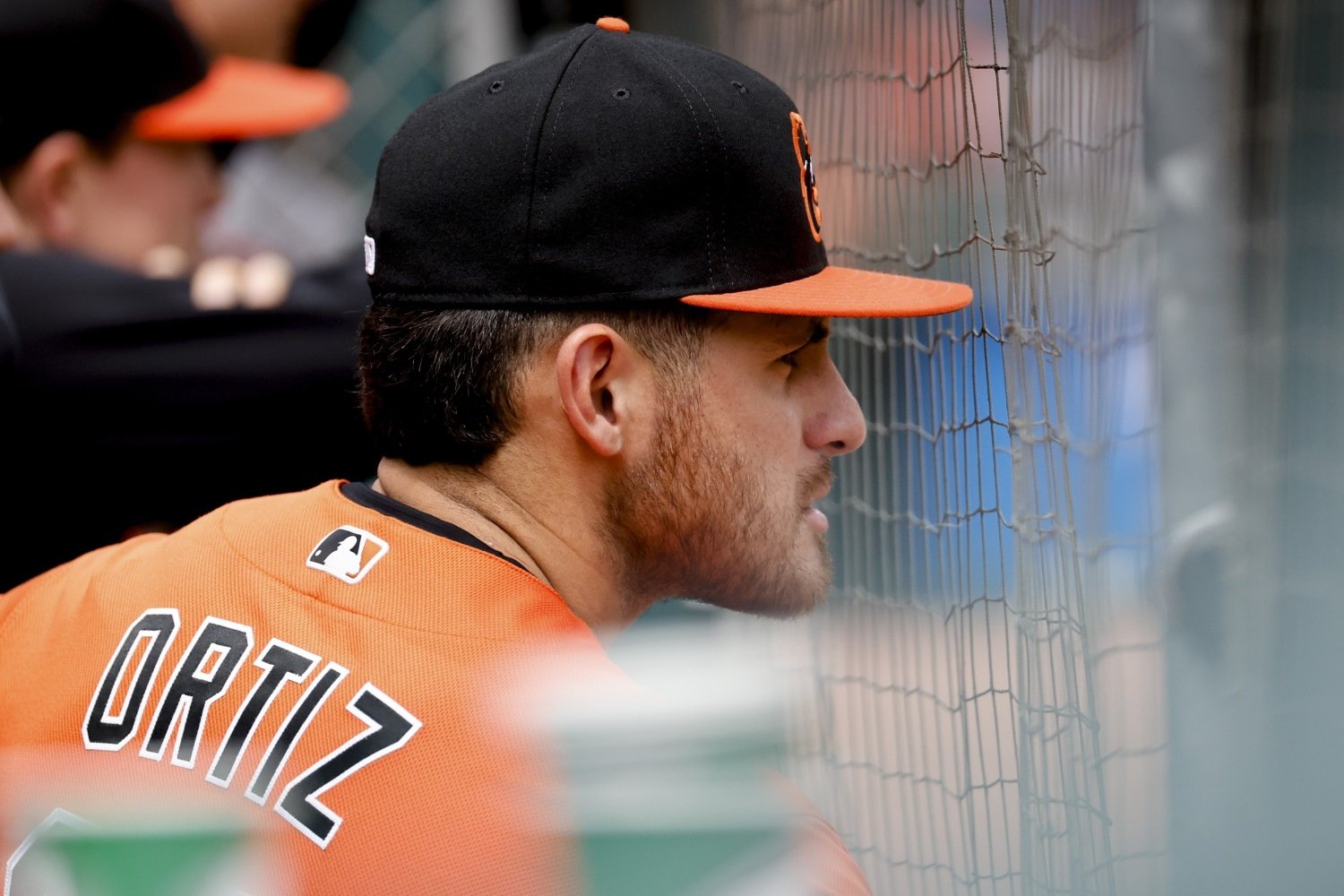 Though the Milwaukee Brewers didn't hold all the cards in a trade with the Baltimore Orioles, they had the ace in the hole that gave them an edge--but apparently not the nuts. Matt Arnold should have held out longer to acquire third baseman Coby Mayo, a truly elite offensive force with top-level bat speed and pure power. Major-league lineups need legitimate, fear-inducing hitters to lead the way. While Mayo just turned 22 years old and hasn't stepped into the box in an MLB game, he has all the makings of "that guy" for years to come. There's a reason Mayo was the Orioles' third-ranked farmhand, and a top-30 prospect in all of baseball. Between Double-A and Triple-A last season, Mayo posted a .290/.410/.563 slash line, with 29 homers, 45 doubles, 99 RBI and 93 walks across 140 games. The best offenses have dynamic hitters like Mayo and Jackson Chourio to have consistent success and (eventually) collect postseason victories. Those types of guys have been lacking in the Brewers' lineup since they lost the MVP version of Christian Yelich near the end of 2019. Having a bunch of average to above-average guys only works if you have two or three studs to throw the knockout blows. Of course, there is no such thing as a can't-miss prospect, but if you were going to come up with a prototype offensive weapon that would hit "21" in prospect blackjack, Mayo is it. Plus, he has a cannon for an arm playing the hot corner, a position the Brewers have failed to lock down for more than a year or two at a time. Mayo is the "Dude" you sell out for when trading, arguably, the best pitcher in your franchise's history. Even if the Brewers might have gotten a lower-level prospect (or just the competitive-balance pick) to go with Mayo, you have to gamble a little on perceived elite talent. Instead, pitcher DL Hall and infielder Joey Ortiz, while owning some of the tools to be impact players, aren't on the top of scouts' lists like Mayo. For various reasons, they haven't hit their original ceilings yet and have slid down the charts a touch. What adds to the disappointment in the trade is that Milwaukee has had no problem finding and developing plenty of guys like Hall and Ortiz. Their organization's skill is taking hurlers with "stuff" and turning them into bona fide, more well-rounded pitchers. They've also acquired their share of defensive stalwarts over the years, in their quest for a run-prevention-led strategy. Meanwhile, promoting high-level bats that enjoy long-term success in the big leagues has been a consistent issue for the Brewers. Whether it's been selecting the wrong options in the draft or through trades or failing to develop them once in the system, the problem has recurred. All of this screams "take the near-certain impact masher" over any other option. Plus, Baltimore had no real spot open within their stacked, young infield, and it seemed frustration was growing with Hall, at least in the Orioles' struggles to develop him. It just makes it feel like Milwaukee got some of the extra parts, instead of a true engine. Now it's on the Brewers to work their magic. Reports say the two clubs had been discussing a trade for Burnes since December, with Ken Rosenthal of The Athletic claiming it was the Brewers holding things up. (This has yet to be confirmed anywhere else, though.) Could it be they were trying to hold out for Mayo? Might the Orioles have gotten to the point of desperation once spring training hit, and dealt the big third baseman? Maybe one day we'll have an answer. Again, Ortiz has some hit tools, particularly exit velocity results, that could translate to the big club. He lost one season to Covid and another one to injury. Hall matches Ortiz on the eye-popping potential from the mound, making him a possible weapon out of the pen or a starter with a no-hit ceiling on any given night. So, the trade isn't lopsided; I just believe they missed out getting the type of hitter that is rarely available without an enormous price tag. "You can shake a dozen glove men out of a tree, but it's the bat that separates the men from the boys," Dale Long once said. Long was a slugger himself, so we'll dock him a bit for speaking out of self-interest, but that sentiment wasn't original or unique. The Brewers shook a tree and scooped up the fallen fruit, rather than fighting harder for a hitter who might have been a greater separator for them. Of course, there is the possibility that Baltimore told Arnold and company that acquiring Mayo was a non-starter. Milwaukee still could have pushed and called their potential bluff, knowing at worst the Brewers would be a contender in the NL Central and get a compensation pick for Burnes. The other thought is that the Brewers were set on getting one pitcher and one position player back, with an eye on a shortstop to take over for Willy Adames and a pitcher to replace Burnes. Plus, with guys like Tyler Black, Brock Wilken and Mike Boeve waiting in the minors for a shot at third base, it might not have been a concern for Arnold. I'd still argue you get the best offensive talent you can if you're Milwaukee, because no one has a guaranteed spot, and runs have been at a premium recently. You can always find spots on the field (or on another team) if you have "too many" good hitters. That hasn't been the case in Milwaukee for quite a while. It will be a few years before anyone will know the score of this trade. It does, in theory, fill the needs of each organization. The Brewers must always keep an eye on the future when contracts are expiring, even if it means taking a short-term dip in performance. You hope Mayo doesn't become the perennial All-Star and possible MVP that some predict could reside in the thunder of his lumber, or that one of Ortiz and Hall blossom into the star they each have some chance to become. Did the Brewers give up too easily on a chance to acquire Mayo? Do you think they can get a similar level of offensive excellence from an in-house option? Drop into the comments to weigh in.
- 23 comments
-
- 2
-
-
- corbin burnes
- joey ortiz
- (and 2 more)


