



Jake McKibbin
-
Posts
2,450 -
Joined
-
Last visited
-
Days Won
6
Content Type
Profiles
Forums
Blogs
Events
News
2026 Milwaukee Brewers Top Prospects Ranking
Milwaukee Brewers Videos
2022 Milwaukee Brewers Draft Picks
Milwaukee Brewers Free Agent & Trade Rumors, Notes, & Tidbits
Guides & Resources
2023 Milwaukee Brewers Draft Picks
2024 Milwaukee Brewers Draft Picks
The Milwaukee Brewers Players Project
2025 Milwaukee Brewers Draft Pick Tracker
2026 Milwaukee Brewers Draft Tracker: Picks & Bonuses
Store
Downloads
Gallery
Everything posted by Jake McKibbin
-
The Tampa Bay Rays should feel confident handing the ball to Nick Martinez in Game 1. They’ve won 24 of the 33 games he’s started across the regular season and postseason, and his road numbers have been particularly impressive, with a 2.38 ERA in 16 starts away from Tropicana Field. However, there’s some nuance to the decision, particularly when considering how the ball moves at the Trop compared to other major-league parks. Those conditions could favor Freddy Peralta and his fastball-heavy arsenal more than Martinez’s approach, with the additional induced vertical break that's typical in the Rays' home environment. With Tampa, there really are layers to every decision. Martinez finished the regular season with a 3.10 ERA and a 3.95 FIP, relying on a kitchen-sink arsenal to keep hitters off balance despite a fastball that typically sits at 92–93 mph. His changeup is his preferred secondary offering, and its effectiveness is closely tied to how he establishes his fastball. By attacking the zone and encouraging hitters to commit early, Martinez can use the changeup to disrupt their timing and generate weaker contact. He’s not going to give away many free bases, either, so hitters will need to be aggressive in the zone without becoming overly predictable, a similar challenge to facing Drew Rasmussen. The underlying numbers reflect that approach. Martinez posted a stingy 3.6% walk rate during the regular season, while generating very little swing-and-miss with most of his pitches. That contact-oriented approach comes with a trade-off. Martinez is a line-drive and fly-ball pitcher who relies on avoiding the barrel, rather than consistently generating ground balls. Just 35.5% of balls in play against him were hit on the ground during the regular season, leaving him dependent on keeping airborne contact in the park and allowing the Rays’ athletic outfield to clean up what they can. That could create an opportunity for Milwaukee. The Brewers have an offense capable of hitting the ball hard, even if they don’t always get the launch angle needed to turn that contact into damage. If they can square up Martinez’s offerings and elevate the ball consistently, they could put pressure on a pitcher whose margin for error is smaller when hitters make authoritative contact in the air, rather than the weak contact he typically generates from his kitchen-sink approach. The matchup becomes even more interesting when looking at Martinez’s platoon splits. He's shown reverse splits this season, and the early postseason results have followed a similar pattern. Right-handed hitters have had success squaring up the sinker-cutter combination he typically uses against them, creating a potential weakness Milwaukee could look to exploit. His approach against left-handed hitters is different. Martinez has attacked the zone with his changeup, using it to establish the bottom of the strike zone and set up chase above it with his fastball. The problem is that his fastball has been vulnerable when he leaves it over the plate, giving left-handed hitters an opportunity to punish mistakes if they recognize the pitch and avoid chasing, but doing so with a well tunnelling changeup is no easy feat. On top of that, when hitters chase, they'll find less swing and miss and more weak contact against Martinez, meaning they won't have a second chance in that at bat. That’s an important detail against a Brewers lineup whose left-handed power played a major role in its success against the Dodgers. Home runs from Brice Turang, Jake Bauers and Garrett Mitchell were all pivotal, and Milwaukee will need that same ability to capitalize on mistakes if it wants to make Martinez uncomfortable in Game 1. So how important is Martinez's command to his success? Well, as you can see from the chart above, Martinez has done a stand-up job against the top seven offenses in the National League this season when he's lived on the corners, but when he's dropped down and over the middle of the plate, those exit velocities have surged. Patience is going to be key for this Brewers line-up, in that while most of Martinez's offerings will look meaty and hittable, being able to wait on a pitch that is truly damageable and down in the zone could be the difference between a weak-contact filled five scoreless innings, and hitting him out of the game after four innings with runs on the board. Ultimately, Martinez’s command and ability to disrupt timing make him a credible option for the opener. But his reliance on contact, his limited ground-ball production and his reverse splits give the Brewers several avenues to attack him. The key will be whether Milwaukee can turn its hard contact into damage, and retaining conviction in the pitches they swing at. If Martinez can spin his web and alter the hitters timing, he will induce a lot of weak contact that the Rays outfield can eat up. On the converse, Martinez will be allowing a lot of balls to enter the field of play, and the Brewers sluggers have hit the ball consistently hard enough to expect they can continue to do so if Martinez isn't absolutely perfect with his command and sequencing. Image courtesy of David Dermer-Imagn Images View full article
-
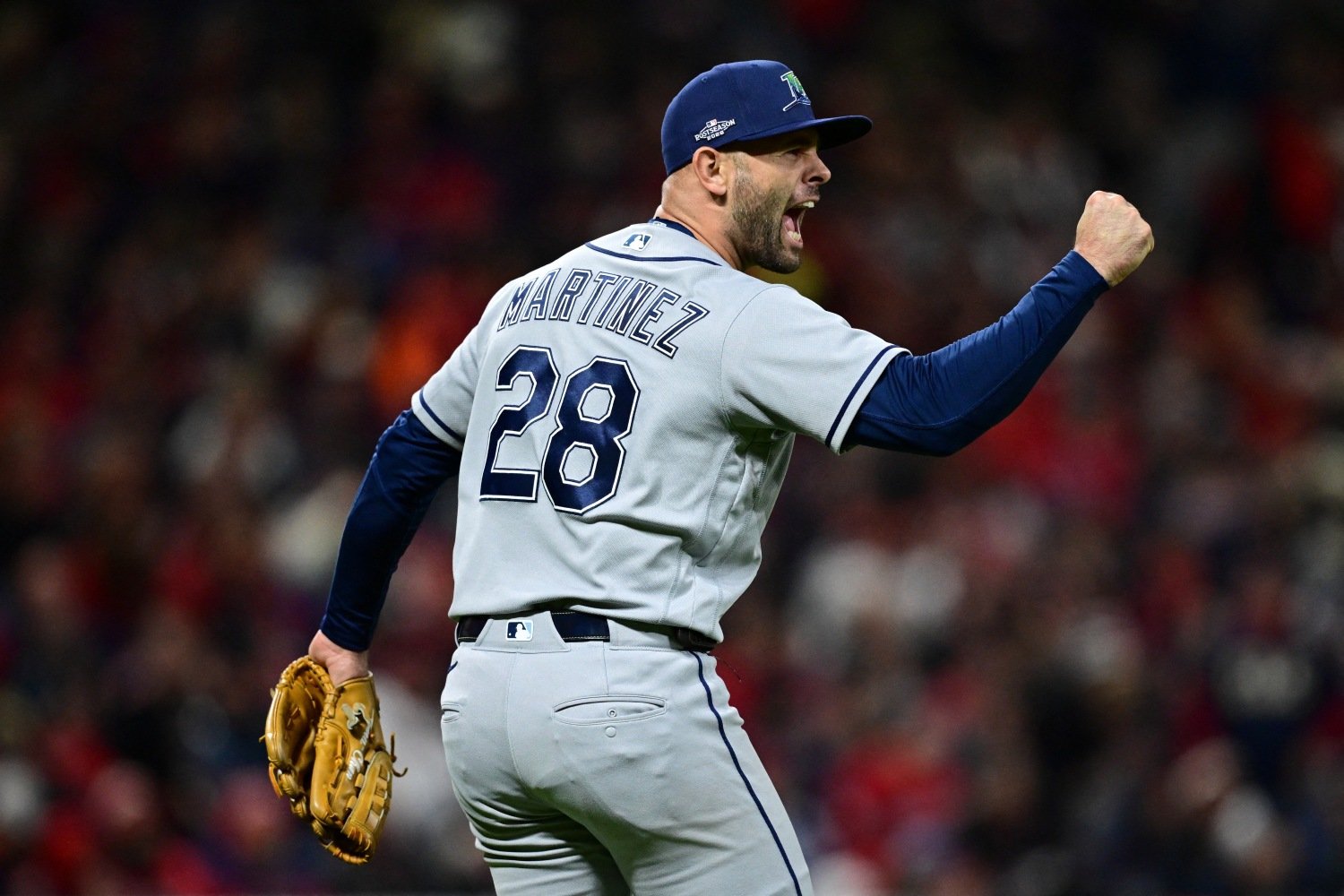 The Tampa Bay Rays should feel confident handing the ball to Nick Martinez in Game 1. They’ve won 24 of the 33 games he’s started across the regular season and postseason, and his road numbers have been particularly impressive, with a 2.38 ERA in 16 starts away from Tropicana Field. However, there’s some nuance to the decision, particularly when considering how the ball moves at the Trop compared to other major-league parks. Those conditions could favor Freddy Peralta and his fastball-heavy arsenal more than Martinez’s approach, with the additional induced vertical break that's typical in the Rays' home environment. With Tampa, there really are layers to every decision. Martinez finished the regular season with a 3.10 ERA and a 3.95 FIP, relying on a kitchen-sink arsenal to keep hitters off balance despite a fastball that typically sits at 92–93 mph. His changeup is his preferred secondary offering, and its effectiveness is closely tied to how he establishes his fastball. By attacking the zone and encouraging hitters to commit early, Martinez can use the changeup to disrupt their timing and generate weaker contact. He’s not going to give away many free bases, either, so hitters will need to be aggressive in the zone without becoming overly predictable, a similar challenge to facing Drew Rasmussen. The underlying numbers reflect that approach. Martinez posted a stingy 3.6% walk rate during the regular season, while generating very little swing-and-miss with most of his pitches. That contact-oriented approach comes with a trade-off. Martinez is a line-drive and fly-ball pitcher who relies on avoiding the barrel, rather than consistently generating ground balls. Just 35.5% of balls in play against him were hit on the ground during the regular season, leaving him dependent on keeping airborne contact in the park and allowing the Rays’ athletic outfield to clean up what they can. That could create an opportunity for Milwaukee. The Brewers have an offense capable of hitting the ball hard, even if they don’t always get the launch angle needed to turn that contact into damage. If they can square up Martinez’s offerings and elevate the ball consistently, they could put pressure on a pitcher whose margin for error is smaller when hitters make authoritative contact in the air, rather than the weak contact he typically generates from his kitchen-sink approach. The matchup becomes even more interesting when looking at Martinez’s platoon splits. He's shown reverse splits this season, and the early postseason results have followed a similar pattern. Right-handed hitters have had success squaring up the sinker-cutter combination he typically uses against them, creating a potential weakness Milwaukee could look to exploit. His approach against left-handed hitters is different. Martinez has attacked the zone with his changeup, using it to establish the bottom of the strike zone and set up chase above it with his fastball. The problem is that his fastball has been vulnerable when he leaves it over the plate, giving left-handed hitters an opportunity to punish mistakes if they recognize the pitch and avoid chasing, but doing so with a well tunnelling changeup is no easy feat. On top of that, when hitters chase, they'll find less swing and miss and more weak contact against Martinez, meaning they won't have a second chance in that at bat. That’s an important detail against a Brewers lineup whose left-handed power played a major role in its success against the Dodgers. Home runs from Brice Turang, Jake Bauers and Garrett Mitchell were all pivotal, and Milwaukee will need that same ability to capitalize on mistakes if it wants to make Martinez uncomfortable in Game 1. So how important is Martinez's command to his success? Well, as you can see from the chart above, Martinez has done a stand-up job against the top seven offenses in the National League this season when he's lived on the corners, but when he's dropped down and over the middle of the plate, those exit velocities have surged. Patience is going to be key for this Brewers line-up, in that while most of Martinez's offerings will look meaty and hittable, being able to wait on a pitch that is truly damageable and down in the zone could be the difference between a weak-contact filled five scoreless innings, and hitting him out of the game after four innings with runs on the board. Ultimately, Martinez’s command and ability to disrupt timing make him a credible option for the opener. But his reliance on contact, his limited ground-ball production and his reverse splits give the Brewers several avenues to attack him. The key will be whether Milwaukee can turn its hard contact into damage, and retaining conviction in the pitches they swing at. If Martinez can spin his web and alter the hitters timing, he will induce a lot of weak contact that the Rays outfield can eat up. On the converse, Martinez will be allowing a lot of balls to enter the field of play, and the Brewers sluggers have hit the ball consistently hard enough to expect they can continue to do so if Martinez isn't absolutely perfect with his command and sequencing.
 -
I agree on the Freddy front, although I do think his fastball, with the amount of increased IVB pitchers get at the Trop, does take on a different dimension. I'm also remembering that Michael King did a phenomenal job against these Brewers hitters, albeit with more of an East/West arsenal which I think they've had more trouble with in general this year. Rasmussen is going to be a challenge. As has proved true so far, Game 1 could really set the tone for the Brewers
-
Image courtesy of David Dermer-Imagn Images Drew Rasmussen and Freddy Peralta have been stars of the Tampa Bay Rays’ September and October run. Rasmussen has demonstrated the durability over the past two seasons to finally fulfill his potential, while Peralta has been revitalized in Tampa Bay, where the Rays have helped him become more explosive and make better use of his changeup. Both will prove formidable adversaries as the Rays arrive in Milwaukee for Games 1 and 2 this weekend. How can the Brewers get the better of their own former hurlers? Drew Rasmussen: Hit Him, Or Else Rasmussen has been the standout starting pitcher of the postseason so far. While the Guardians and Yankees have struggled offensively this year, he shut both lineups down emphatically. His three postseason starts have produced the following results: 8 innings, 1 hit, 2 walks, 10 strikeouts, 0 earned runs vs. Yankees 6 innings, 8 hits, 0 walks, 7 strikeouts, 2 earned runs vs. Guardians 7 innings, 4 hits, 1 walk, 6 strikeouts, 1 earned run vs. Guardians Rasmussen looked most vulnerable in his first start against Cleveland, allowing two home runs and (perhaps) benefitting from favorable sequencing to limit the damage to two runs. Otherwise, his three-fastball mix, devastating changeup, and relentless strike-throwing have made him a nightmare for opposing hitters. There are, however, some signs that Rasmussen has become more hittable beneath the surface this postseason. During the regular season, he excelled across several underlying metrics, ranking in the top third of the league in ground-ball rate, hard-hit rate, and called strikes plus whiffs. He consistently got ahead in counts, generated swings and misses, and limited hard contact while attacking the strike zone. That combination allowed him to work deep into games without sacrificing effectiveness. The foundation of Rasmussen’s success is the combination of above-average command and plus stuff, particularly on his cutter and fastballs. His changeup is an especially effective put-away pitch when he gets ahead in the count, disrupting hitters’ timing after they have adjusted to his fastball-heavy approach. Pitch Profiler’s metrics illustrate why this combination works. His ProPitching+ grades exceed his Stuff+ grades across his pitch mix, suggesting that his location and execution have added value beyond the quality of his raw stuff. Rasmussen keeps the ball away from the heart of the plate, disrupts timing with his fastball mix and changeup, and rarely wastes pitches. For hitters, that leaves very little margin for error. Rasmussen has also simplified his arsenal. He previously featured a curveball and sweeper, but neither pitch offered the command or swing-and-miss potential he needed, while both allowed relatively hard contact, averaging over 92 MPH on balls in play. He has since moved away from those offerings, effectively settling into a four-pitch mix. That change has helped him limit damaging contact. Of his four remaining pitches, only the four-seam fastball has an average exit velocity above 87 MPH, at 91. His sinker and cutter generate considerably more horizontal movement than is typical for a pitcher with his arm slot, making them difficult to square up. Even his four-seamer has been effective, particularly when he locates it at the top of the strike zone. Its high arm slot and induced vertical break make the pitch difficult to hit when elevated. The problem comes when Rasmussen misses down toward the middle or lower portion of the zone, where hitters have found more opportunities to do damage this year. That distinction could be particularly important for Milwaukee. Rasmussen’s contact-quality numbers have dipped this postseason, and his commitment to attacking the strike zone has begun to carry some risk. His willingness to avoid walks has contributed to an excellent 26.4% strikeout-minus-walk rate, but that same aggressiveness can leave pitches over the heart of the plate. He now ranks below average in both barrel rate and hard-hit rate prevention, while his swing-and-miss rate sits just above average. Those numbers suggest that, although Rasmussen is still missing bats and limiting walks, hitters have had more opportunities to make solid contact when he does enter the zone. His control has been elite this month. The only hope you have is that he's making a (very) few more mistakes in the middle of the zone. Here's his run from June 1 through the end of the regular season, and in the playoffs, via the FanGraphs PitchingBot Visualizer tool. The Brewers could be well placed to exploit that trade-off. They have shown they are willing to work an at-bat when a pitcher struggles to generate whiffs in the strike zone, waiting for a mistake they can drive rather than chasing pitches outside their ideal hitting zones. Against Rasmussen, that patience could be crucial—especially as the team hones its focus on assailing mistakes. The challenge is that his pitches are not easy to spoil. Without a prominent breaking ball to disrupt their timing in a different way, hitters can find themselves just late or early enough to put the ball in play, rather than foul it off and extend the at-bat. That creates a difficult balance for Milwaukee: be selective enough to punish mistakes, but avoid turning Rasmussen’s weak contact into easy outs for a Rays defense that can smother you on balls in play. I would expect Rasmussen to lean more heavily on his changeup against the Brewers. Milwaukee showed some vulnerability to changeups against the Dodgers, and their ability to recognize and adjust to that pitch could go a long way toward determining the outcome of this matchup. Rasmussen has thrown 47% of his pitches in the shadow zone (around the edges of the strike zone), highlighting just how effectively he works the margins. The Brewers’ best route to success is to make him come over the heart of the plate, without chasing the pitches he uses to get ahead. Force Rasmussen to prove he can beat them inside the zone, then capitalize when his command slips. If he continues to locate his pitches on the edges and disrupt their timing, his return to Milwaukee could make for a long, gruelling night for the Brewers. One thing is for sure: Rasmussen won't beat himself. He won't issue free passes. The Brewers are going to have to make their own fortune in this one. Freddy Peralta: Why Swing? Freddy Peralta looks like an elite arm on the surface. He has thrown 16⅔ innings this postseason (including one relief appearance) and conceded just two earned runs. He was even named ALCS MVP. The results suggest a pitcher in complete control, but the changes made by the Rays’ pitching staff have helped Peralta become more athletic in his delivery, increase his fastball velocity, and simplify his approach. He's also making greater use of his changeup, reducing his reliance on the breaking pitches that were often difficult to command during his time with the Brewers and Mets. They've got him back on the third-base side of the rubber, too, where he's always preferred to be. Peralta is throwing harder and keeping things simpler. The surface results suggest genuine progress, but they may also disguise some good fortune. For Milwaukee, the question is whether his new approach can continue to succeed against a lineup that knows his tendencies better than most. The changeup is one of baseball’s most effective weapons for disguising a fastball, and Peralta’s ability to tunnel the two pitches has helped him limit damaging contact this postseason. As the data above illustrates, hitters have struggled to square him up consistently. However, there are signs that his results have been better than his overall command. Peralta’s zone rate sits at just 44%, falling to 37% in Game 6 of the ALCS. Despite generating swings and misses, he has not consistently translated that into high strikeout totals. That combination matters: if hitters are not making enough contact to hurt him, but are also not striking out at a high rate, there may be opportunities to force him into longer at-bats and make him work harder for outs. The key is understanding how differently Peralta approaches right- and left-handed hitters. Against right-handers, the fastball has been his primary weapon. It's been in the strike zone approximately 48% of the time, and he's relied on it almost exclusively against right-handed hitters this postseason. Of the 26 pitches he has thrown to right-handers, 24 have been fastballs. That predictability could become a problem against William Contreras and Jackson Chourio, two hitters who can punish a pitcher who allows them to settle into a rhythm. Although right-handed hitters have managed just a .422 OPS against Peralta so far, the Brewers cannot afford to confuse poor results in a small sample with an inability to handle his elevated velocity. His fastball is an excellent pitch in its own right, but if he continues to lean on it so heavily, Milwaukee’s right-handed bats may eventually find their timing. Of course, in showdowns between either of those guys and Peralta, you can all but throw out the numbers. The parties involved know each other as well as any batters and pitchers who might face off, anywhere in baseball. Peralta will be trying everything he can to confound the expectations of Contreras and Chourio, but those two will also be thinking along with him more than batters usually do. Left-handed hitters have seen a more varied approach, with the changeup playing a central role in neutralizing them. That makes Christian Yelich, Jake Bauers, Brice Turang and Garrett Mitchell particularly important to this matchup. If Peralta can use the changeup to keep those four hitters off balance, he'll have a much better chance of working efficiently through the Brewers’ lineup. There is another wrinkle in his approach: the curveball. Peralta has thrown 19 curveballs this postseason, 12 of them in 0-0 counts and three in 3-2 counts. The early-count usage is particularly revealing. He's thrown the pitch in the strike zone 63% of the time, suggesting it can be an effective way to steal a strike before returning to his primary weapons. For the Brewers, recognizing that pattern could simplify the at-bat. If Peralta opens with a curveball for a strike, hitters should be prepared for the fastball and changeup to dominate the remainder of the plate appearance, rather than expecting him to continue mixing in breaking pitches. They shouldn't automatically dismiss a second curveball, but they can use his tendencies to anticipate what is most likely to come next. More importantly, there might be an opportunity to ambush that curve. Brice Turang, for instance, handles curveballs from right-handed pitchers exceptionally well, and can drive that pitch out of the park to center field. Peralta’s ability to limit hard contact this postseason has been helped by the locations he is targeting. He's keeping his fastball in the upper third of the strike zone or above it, avoiding the lower portion of the zone until his mechanics begin to falter. When he executes that approach, the elevated fastball can generate swings and misses or weak contact without giving hitters a comfortable pitch to drive. The danger for Milwaukee is chasing that fastball above the zone. Doing so would play directly into Peralta’s strengths, allowing him to generate uncompetitive swings while avoiding the risk of throwing hittable pitches over the heart of the plate. Unlike Rasmussen, who challenges hitters with a high rate of strikes and precision around the edges, Peralta presents more of a waiting game. The Brewers need to be prepared to see pitches, extend at-bats and accept walks when he cannot locate the ball. When he misses, it tends not to be in the middle of the plate, but out of the zone—especially to the arm side. That doesn't mean taking every pitch that isn't a fastball. Peralta’s changeup is a genuine weapon, particularly against left-handed hitters, and his curveball can steal strikes early in counts. Instead, Milwaukee needs to recognize the difference between a pitch it can drive and one designed to provoke a chase. As with Blake Snell, Peralta can be exceptionally difficult to hit when he controls the terms of the at-bat. But the Brewers have an opportunity to make him work differently from the Guardians and Yankees: take the borderline pitches, recognize the elevated fastball, and refuse to expand the zone. They need to make him earn every out. If the Brewers remain disciplined, the walks should come, the pitch count should climb, and the occasional fastball left in the strike zone (or attempted strike-stealing curve) could provide the opportunity for a big hit with runners on base. The main difference between the pitcher against whom the Brewers scored seven earned runs in 5 1/3 innings in July and what the Rays have now is the chase rate. The changeup has been a big part of helping Peralta induce more chase. It's had a dramatic knock-on effect on the quality of contact Peralta has given up, compared to his time with the Mets, Hitters are swinging more often against Peralta since the trade deadline, but that's unlikely to continue in the World Series, with the most patient hitters in baseball facing him. Summary Rasmussen and Peralta have been instrumental in Tampa Bay’s postseason success, particularly because the Rays' pen is not as robust as it's been in past Octobers. The two former Brewers arms are formidable front-line arms, but they don't have elite relief support. The Brewers need to get to each, but they can also win by pushing them out of the game early and pouncing on a middle reliever or two. The name of the game, against each, is to avoid quick outs. That will just require different approaches against each, given their different styles. View full article
-
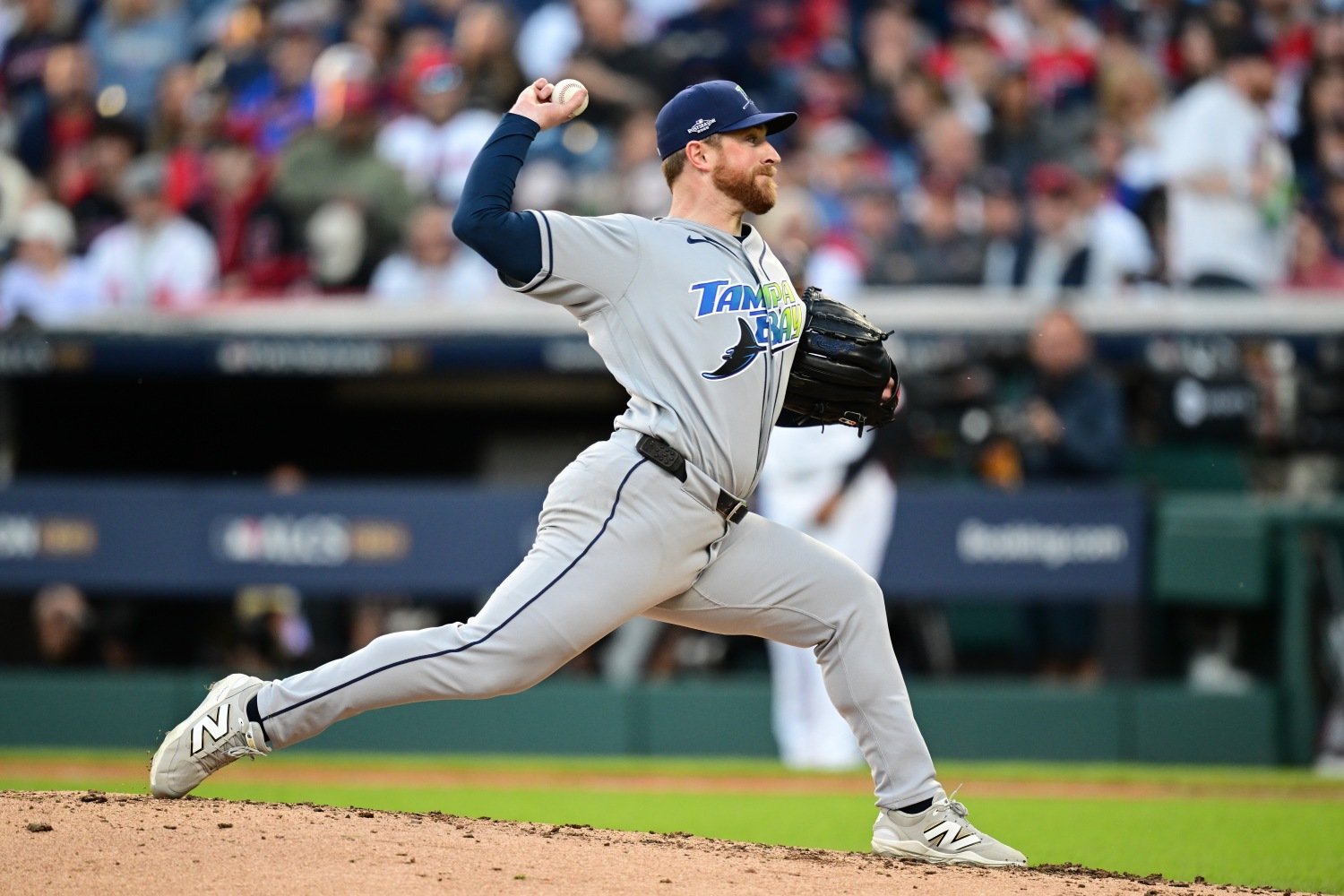 Drew Rasmussen and Freddy Peralta have been stars of the Tampa Bay Rays’ September and October run. Rasmussen has demonstrated the durability over the past two seasons to finally fulfill his potential, while Peralta has been revitalized in Tampa Bay, where the Rays have helped him become more explosive and make better use of his changeup. Both will prove formidable adversaries as the Rays arrive in Milwaukee for Games 1 and 2 this weekend. How can the Brewers get the better of their own former hurlers? Drew Rasmussen: Hit Him, Or Else Rasmussen has been the standout starting pitcher of the postseason so far. While the Guardians and Yankees have struggled offensively this year, he shut both lineups down emphatically. His three postseason starts have produced the following results: 8 innings, 1 hit, 2 walks, 10 strikeouts, 0 earned runs vs. Yankees 6 innings, 8 hits, 0 walks, 7 strikeouts, 2 earned runs vs. Guardians 7 innings, 4 hits, 1 walk, 6 strikeouts, 1 earned run vs. Guardians Rasmussen looked most vulnerable in his first start against Cleveland, allowing two home runs and (perhaps) benefitting from favorable sequencing to limit the damage to two runs. Otherwise, his three-fastball mix, devastating changeup, and relentless strike-throwing have made him a nightmare for opposing hitters. There are, however, some signs that Rasmussen has become more hittable beneath the surface this postseason. During the regular season, he excelled across several underlying metrics, ranking in the top third of the league in ground-ball rate, hard-hit rate, and called strikes plus whiffs. He consistently got ahead in counts, generated swings and misses, and limited hard contact while attacking the strike zone. That combination allowed him to work deep into games without sacrificing effectiveness. The foundation of Rasmussen’s success is the combination of above-average command and plus stuff, particularly on his cutter and fastballs. His changeup is an especially effective put-away pitch when he gets ahead in the count, disrupting hitters’ timing after they have adjusted to his fastball-heavy approach. Pitch Profiler’s metrics illustrate why this combination works. His ProPitching+ grades exceed his Stuff+ grades across his pitch mix, suggesting that his location and execution have added value beyond the quality of his raw stuff. Rasmussen keeps the ball away from the heart of the plate, disrupts timing with his fastball mix and changeup, and rarely wastes pitches. For hitters, that leaves very little margin for error. Rasmussen has also simplified his arsenal. He previously featured a curveball and sweeper, but neither pitch offered the command or swing-and-miss potential he needed, while both allowed relatively hard contact, averaging over 92 MPH on balls in play. He has since moved away from those offerings, effectively settling into a four-pitch mix. That change has helped him limit damaging contact. Of his four remaining pitches, only the four-seam fastball has an average exit velocity above 87 MPH, at 91. His sinker and cutter generate considerably more horizontal movement than is typical for a pitcher with his arm slot, making them difficult to square up. Even his four-seamer has been effective, particularly when he locates it at the top of the strike zone. Its high arm slot and induced vertical break make the pitch difficult to hit when elevated. The problem comes when Rasmussen misses down toward the middle or lower portion of the zone, where hitters have found more opportunities to do damage this year. That distinction could be particularly important for Milwaukee. Rasmussen’s contact-quality numbers have dipped this postseason, and his commitment to attacking the strike zone has begun to carry some risk. His willingness to avoid walks has contributed to an excellent 26.4% strikeout-minus-walk rate, but that same aggressiveness can leave pitches over the heart of the plate. He now ranks below average in both barrel rate and hard-hit rate prevention, while his swing-and-miss rate sits just above average. Those numbers suggest that, although Rasmussen is still missing bats and limiting walks, hitters have had more opportunities to make solid contact when he does enter the zone. His control has been elite this month. The only hope you have is that he's making a (very) few more mistakes in the middle of the zone. Here's his run from June 1 through the end of the regular season, and in the playoffs, via the FanGraphs PitchingBot Visualizer tool. The Brewers could be well placed to exploit that trade-off. They have shown they are willing to work an at-bat when a pitcher struggles to generate whiffs in the strike zone, waiting for a mistake they can drive rather than chasing pitches outside their ideal hitting zones. Against Rasmussen, that patience could be crucial—especially as the team hones its focus on assailing mistakes. The challenge is that his pitches are not easy to spoil. Without a prominent breaking ball to disrupt their timing in a different way, hitters can find themselves just late or early enough to put the ball in play, rather than foul it off and extend the at-bat. That creates a difficult balance for Milwaukee: be selective enough to punish mistakes, but avoid turning Rasmussen’s weak contact into easy outs for a Rays defense that can smother you on balls in play. I would expect Rasmussen to lean more heavily on his changeup against the Brewers. Milwaukee showed some vulnerability to changeups against the Dodgers, and their ability to recognize and adjust to that pitch could go a long way toward determining the outcome of this matchup. Rasmussen has thrown 47% of his pitches in the shadow zone (around the edges of the strike zone), highlighting just how effectively he works the margins. The Brewers’ best route to success is to make him come over the heart of the plate, without chasing the pitches he uses to get ahead. Force Rasmussen to prove he can beat them inside the zone, then capitalize when his command slips. If he continues to locate his pitches on the edges and disrupt their timing, his return to Milwaukee could make for a long, gruelling night for the Brewers. One thing is for sure: Rasmussen won't beat himself. He won't issue free passes. The Brewers are going to have to make their own fortune in this one. Freddy Peralta: Why Swing? Freddy Peralta looks like an elite arm on the surface. He has thrown 16⅔ innings this postseason (including one relief appearance) and conceded just two earned runs. He was even named ALCS MVP. The results suggest a pitcher in complete control, but the changes made by the Rays’ pitching staff have helped Peralta become more athletic in his delivery, increase his fastball velocity, and simplify his approach. He's also making greater use of his changeup, reducing his reliance on the breaking pitches that were often difficult to command during his time with the Brewers and Mets. They've got him back on the third-base side of the rubber, too, where he's always preferred to be. Peralta is throwing harder and keeping things simpler. The surface results suggest genuine progress, but they may also disguise some good fortune. For Milwaukee, the question is whether his new approach can continue to succeed against a lineup that knows his tendencies better than most. The changeup is one of baseball’s most effective weapons for disguising a fastball, and Peralta’s ability to tunnel the two pitches has helped him limit damaging contact this postseason. As the data above illustrates, hitters have struggled to square him up consistently. However, there are signs that his results have been better than his overall command. Peralta’s zone rate sits at just 44%, falling to 37% in Game 6 of the ALCS. Despite generating swings and misses, he has not consistently translated that into high strikeout totals. That combination matters: if hitters are not making enough contact to hurt him, but are also not striking out at a high rate, there may be opportunities to force him into longer at-bats and make him work harder for outs. The key is understanding how differently Peralta approaches right- and left-handed hitters. Against right-handers, the fastball has been his primary weapon. It's been in the strike zone approximately 48% of the time, and he's relied on it almost exclusively against right-handed hitters this postseason. Of the 26 pitches he has thrown to right-handers, 24 have been fastballs. That predictability could become a problem against William Contreras and Jackson Chourio, two hitters who can punish a pitcher who allows them to settle into a rhythm. Although right-handed hitters have managed just a .422 OPS against Peralta so far, the Brewers cannot afford to confuse poor results in a small sample with an inability to handle his elevated velocity. His fastball is an excellent pitch in its own right, but if he continues to lean on it so heavily, Milwaukee’s right-handed bats may eventually find their timing. Of course, in showdowns between either of those guys and Peralta, you can all but throw out the numbers. The parties involved know each other as well as any batters and pitchers who might face off, anywhere in baseball. Peralta will be trying everything he can to confound the expectations of Contreras and Chourio, but those two will also be thinking along with him more than batters usually do. Left-handed hitters have seen a more varied approach, with the changeup playing a central role in neutralizing them. That makes Christian Yelich, Jake Bauers, Brice Turang and Garrett Mitchell particularly important to this matchup. If Peralta can use the changeup to keep those four hitters off balance, he'll have a much better chance of working efficiently through the Brewers’ lineup. There is another wrinkle in his approach: the curveball. Peralta has thrown 19 curveballs this postseason, 12 of them in 0-0 counts and three in 3-2 counts. The early-count usage is particularly revealing. He's thrown the pitch in the strike zone 63% of the time, suggesting it can be an effective way to steal a strike before returning to his primary weapons. For the Brewers, recognizing that pattern could simplify the at-bat. If Peralta opens with a curveball for a strike, hitters should be prepared for the fastball and changeup to dominate the remainder of the plate appearance, rather than expecting him to continue mixing in breaking pitches. They shouldn't automatically dismiss a second curveball, but they can use his tendencies to anticipate what is most likely to come next. More importantly, there might be an opportunity to ambush that curve. Brice Turang, for instance, handles curveballs from right-handed pitchers exceptionally well, and can drive that pitch out of the park to center field. Peralta’s ability to limit hard contact this postseason has been helped by the locations he is targeting. He's keeping his fastball in the upper third of the strike zone or above it, avoiding the lower portion of the zone until his mechanics begin to falter. When he executes that approach, the elevated fastball can generate swings and misses or weak contact without giving hitters a comfortable pitch to drive. The danger for Milwaukee is chasing that fastball above the zone. Doing so would play directly into Peralta’s strengths, allowing him to generate uncompetitive swings while avoiding the risk of throwing hittable pitches over the heart of the plate. Unlike Rasmussen, who challenges hitters with a high rate of strikes and precision around the edges, Peralta presents more of a waiting game. The Brewers need to be prepared to see pitches, extend at-bats and accept walks when he cannot locate the ball. When he misses, it tends not to be in the middle of the plate, but out of the zone—especially to the arm side. That doesn't mean taking every pitch that isn't a fastball. Peralta’s changeup is a genuine weapon, particularly against left-handed hitters, and his curveball can steal strikes early in counts. Instead, Milwaukee needs to recognize the difference between a pitch it can drive and one designed to provoke a chase. As with Blake Snell, Peralta can be exceptionally difficult to hit when he controls the terms of the at-bat. But the Brewers have an opportunity to make him work differently from the Guardians and Yankees: take the borderline pitches, recognize the elevated fastball, and refuse to expand the zone. They need to make him earn every out. If the Brewers remain disciplined, the walks should come, the pitch count should climb, and the occasional fastball left in the strike zone (or attempted strike-stealing curve) could provide the opportunity for a big hit with runners on base. The main difference between the pitcher against whom the Brewers scored seven earned runs in 5 1/3 innings in July and what the Rays have now is the chase rate. The changeup has been a big part of helping Peralta induce more chase. It's had a dramatic knock-on effect on the quality of contact Peralta has given up, compared to his time with the Mets, Hitters are swinging more often against Peralta since the trade deadline, but that's unlikely to continue in the World Series, with the most patient hitters in baseball facing him. Summary Rasmussen and Peralta have been instrumental in Tampa Bay’s postseason success, particularly because the Rays' pen is not as robust as it's been in past Octobers. The two former Brewers arms are formidable front-line arms, but they don't have elite relief support. The Brewers need to get to each, but they can also win by pushing them out of the game early and pouncing on a middle reliever or two. The name of the game, against each, is to avoid quick outs. That will just require different approaches against each, given their different styles.
- 3 comments
-
- 3
-

-

-
- 2026 postseason
- drew rasmussen
- (and 1 more)
-
It's like you read my mind while I wrote that sentence. First half Kyle Harrison would take this Brewers team from probably 55/45 favourites up to 65/35 IMO, because you'd have two starts of that demon. Wishful thinking however, but there may be spots for him if the Brewers think he's ready for it
-
Image courtesy of Jonathan Dyer-Imagn Images The Rays’ offense is everything the general public thinks the Brewers are, and more. They have perhaps the fastest player in baseball in Chandler Simpson; one of the quickest bats in the league in Yandy Díaz; and Junior Caminero, a young power hitter who crushes fastballs with extreme prejudice and launched 41 home runs in the regular season. There’s also Jonathan Aranda, an underappreciated left-handed hitter who excels at putting the ball in the air, and Victor Mesa Jr., who posted a 155 wRC+ after the trade deadline. There are names in this lineup you might not know well, but don’t mistake obscurity for a lack of firepower. There’s sneaky power beyond Caminero, and an offensive approach that (as Sal Frelick puts it) is happy to “drag you to hell.” The Rays’ run prevention is just as electric. Sublime defense complements a rotation built around Drew Rasmussen, Freddy Peralta and Nick Martinez, creating a unit that will make life difficult for the Brewers if they can’t keep the offense in check. So how, exactly, can Milwaukee silence the most dangerous threats in the Rays’ lineup? Junior Caminero: Can They Keep the Ball Down and Capitalize On His Youth? Caminero’s power has been a defining feature of the Rays’ offense; he averaged roughly one home run every four games during the regular season. It’s difficult to imagine him going through this series without making a few loud connections, but the Brewers may have an opportunity to limit his impact. Caminero was red-hot in the first half of the season, but his 121 wRC+ since the trade deadline suggests he has become a more manageable threat. More importantly, his postseason chase rates have climbed considerably above their regular-season levels. For a hitter who can change a game with one swing, that aggressiveness presents an opportunity for Milwaukee: make him chase, get him into unfavorable counts, and use his eagerness to hunt fastballs against him. The first priority is understanding where Caminero’s power is most dangerous. His relationship with the four-seam fastball is particularly striking: he has posted a 68% hard-hit rate and a 19% barrel rate against the pitch, consistently elevating four-seamers with authority. His 32% ground-ball rate against them explains why they have been such a problem for opposing pitchers. Challenging him with a conventional four-seamer is asking for trouble. However, Caminero has also shown a tendency to chase four-seamers above the strike zone. He can still punish mistakes up there, but pitchers with the kind of fastball characteristics possessed by Jacob Misiorowski and Logan Henderson have a better chance of beating him at the top of the zone. Varying the fastball shape offers another route to limiting his power. Although Caminero hits the ball hard against most pitch types, certain fastball variants can encourage weaker contact and keep the ball on the ground. His 60% ground-ball rate against sinkers is particularly encouraging, although that approach may be more useful for right-handed pitchers than left-handers. By changing his eye level and preventing him from sitting on one fastball shape, Milwaukee can make it harder for Caminero to generate the elevated contact that makes him so dangerous. That's where the Brewers’ left-handed relief options become particularly interesting. Caminero has shown some vulnerability against non-fastballs from left-handed pitchers; the chart below illustrates how opposing pitchers have approached him this season. For Milwaukee’s left-handed relievers, the game plan should be straightforward: minimize hittable fastballs and use secondary pitches to disrupt his timing. Caminero’s weighted on-base average (wOBA) against sinkers and four-seamers is monstrous, but opposing pitchers have found success with cutters that break in on his hands, alongside sliders, curveballs and changeups that catch him out in front. With Caminero showing an increased willingness to chase this postseason, those pitches become even more important. Aaron Ashby and DL Hall have the weapons to attack him away from his preferred fastball locations and force him to prove he can lay off pitches outside the zone. Trevor Megill could also have a role to play. Caminero has struggled against right-handed curveballs this season, posting a .231 wOBA against them, which makes Megill’s knuckle-curve an intriguing weapon. But the same principle applies: the secondary pitch has be tantalizing enough to induce a swing from a guy who's locked in on the fastball. In a high-leverage situation, a misplaced heater could be exactly what the Rays slugger is waiting for. The postseason numbers reinforce the case for this approach. Caminero did begin making better contact toward the end of the ALCS, but his chase rates have climbed sharply compared with the regular season. He's still capable of punishing pitches in the strike zone, and his ability to barrel up a fastball has not disappeared. The concern is what happens when his aggressiveness takes him outside the zone. The Brewers have to force him to do so. A World Series offers the biggest stage of Caminero’s career, and the heightened anticipation could encourage him to force the issue in search of a defining moment. We've seen how postseason pressure can affect even the most talented young hitters. Changeups have generated a 36% put-away rate this postseason, offering a compelling reason for Milwaukee to lean on them either to get ahead or to finish off an overeager bat. Yandy Díaz: One Of The Most Complete Hitters In Baseball As modern leadoff hitters go, you could hardly ask for more than Yandy Díaz. He rarely swings and misses, has one of the flattest swing paths in baseball, and hits the ball as hard as just about anyone. The one notable limitation is his lack of swing-plane tilt, which makes it difficult for him to consistently elevate the ball. Almost everything else in his batted-ball profile is exactly what you would want from a hitter at the top of the lineup. And when Díaz does get the ball in the air, it leaves in a hurry. How do the Brewers attack a hitter who combines elite contact ability with such consistent hard contact? The first avenue is velocity. While Mesa and Caminero have had relatively little trouble turning around fastballs at 97 MPH and above, Díaz has been noticeably less effective against that level of velocity. He's managed just a .233 expected batting average and a -2.9 run value per 100 pitches against these fastballs. He can still hit them hard, but the extra velocity appears to hurry his swing and leave him late on the ball, producing more ground-ball contact. For Milwaukee, that creates an opportunity to use premium velocity not necessarily to generate whiffs, but to limit the quality of Díaz’s contact. Trying to stop Díaz from hitting the ball hard is unlikely to work. He handles a wide range of pitch types effectively and can drive the ball to all fields. He also rarely strikes out, although his desire to put the ball in play can make him susceptible to chasing pitches outside the zone. The Brewers’ best approach may therefore be to lean into their familiar fastball-heavy strategy and focus on the shape and location of their pitches, rather than trying to overpower him outright. Four-seamers and cutters are particularly interesting options. Díaz’s relatively flat swing can make it difficult for him to consistently lift these pitches, creating opportunities for ground balls that Milwaukee’s infield can turn into outs. His results against both left- and right-handed pitching support that approach, with the curveball, four-seamer and cutter producing his lowest wOBA figures among the pitch types shown below. There is, however, an intriguing wrinkle in Díaz’s platoon splits. Despite his effectiveness against pitchers from either side, he has reverse platoon splits, and his batted-ball profile against left-handed pitching is particularly interesting. He barrels the ball less often against southpaws, even though he walks more frequently and hits the ball harder overall against them. That combination makes the matchup a little more complicated than the surface numbers suggest: less frequent barrelled contact does not necessarily mean weaker contact overall. Diaz has also unleashed on left-handed breaking balls this year, and it's one category of pitches that he's been able to lift with regularity. For the Brewers, those splits could influence how they deploy their bullpen when Díaz and Jonathan Aranda come to the plate in close succession. A left-handed reliever may offer an appealing matchup against both hitters, particularly given that Caminero has been effective against pitchers from either side. The goal, though, should remain the same, regardless of who takes the mound: limit Díaz’s ability to elevate the ball, use velocity and fastball movement to encourage ground-ball contact, and trust the defense to turn those opportunities into outs. His post-season performance has mirrored Caminero's thus far. More chase, more swing-and-miss (especially on the four-seam fastball, which pitchers have kept up above the strike zone) and some prodigious chase on breaking pitches as well. The results have been there, but the raw stuff in the Brewers rotation and bullpen may be able to exploit this in a similar way that Gavin Williams and the Guardians staff managed. Jonathan Aranda - The Unheralded Weapon Often sandwiched between Díaz and Caminero in the Rays’ lineup, Aranda can be overshadowed by the bigger names around him. That would be a mistake. He's been one of Tampa Bay’s most productive hitters this postseason, leading the team with a .447 expected wOBA, almost 50% higher than his actual wOBA. Aranda’s strength lies in his ability to elevate at optimal launch angles, generally between 10° and 30°, producing consistent outfield contact despite relatively modest bat speed and some swing-and-miss concerns. Those concerns are real. Aranda struck out more than 24% of the time during the regular season, and that rate has climbed to 27% in the postseason. But when he makes contact, the quality is often excellent. He combines good barrel control with strong exit velocities, while showing a particular aptitude for punishing breaking balls. For opposing pitchers, the challenge is finding a way to exploit his tendency to miss without allowing him to turn a mistake into damaging contact. His regular-season pitch splits explain where that opportunity lies. As the chart above shows, Aranda was particularly effective against sliders, curveballs and sweepers, while his approach suggests a willingness to attack pitches in the strike zone. His swing path is almost the opposite of Díaz’s: where Díaz struggles to consistently elevate the ball, Aranda’s steeper bat path allows him to get underneath pitches in the lower part of the zone, particularly breaking balls. That makes it difficult to beat him simply by working down. However, there is a more exploitable weakness at the top of the strike zone. That's where the Brewers should look to attack. Four-seam fastballs with strong velocity and movement characteristics can challenge Aranda in a part of the zone where his swing is less effective, offering Milwaukee a way to limit his ability to generate the elevated contact that makes him dangerous. When turning to breaking pitches, right-handed pitchers should look to work down and in, changing his eye level after establishing the fastball above the zone. The objective is to prevent Aranda from settling into the lower part of the strike zone, where his swing path allows him to do considerable damage. The difficulty is that the Rays’ lineup rarely allows pitchers to focus on one hitter in isolation. A four-seam-heavy approach might be effective against Aranda, only to leave a pitcher in an uncomfortable matchup against Caminero, whose power against fastballs makes him particularly dangerous if those pitches drift into the heart of the zone. With the three-batter minimum also limiting the Brewers’ ability to make immediate pitching changes, the top of Tampa Bay’s lineup presents a difficult sequence of contrasting strengths and weaknesses. Where one hitter struggles, the next may thrive, forcing Milwaukee to weigh the best matchup across several plate appearances rather than simply attacking each batter individually. There is one particularly interesting option in a high-leverage situation. Aranda posted a .198 wOBA against left-handed four-seam fastballs during the regular season, making that combination an appealing way to attack him with the game on the line. The problem is that Milwaukee does not have an abundance of left-handed relievers who rely primarily on that pitch. Ashby, JoJo Romero and DL Hall, for example, feature sinkers as their primary fastballs, playing into Aranda’s strengths rather than exploiting his weakness. If the Brewers find themselves facing Aranda with the game in the balance, identifying a left-handed pitcher capable of challenging him with an effective four-seamer could be crucial, especially for a team who typically prefers sinkers and cutters from their pitching staff. The Margin for Error is Slim The Rays’ lineup presents a difficult puzzle for the Brewers, because there is no single approach that neatly solves it. A fastball-heavy approach that works against Aranda can leave a pitcher exposed to Caminero, while a strategy designed to induce ground balls from Díaz may not translate as neatly to the hitters around him. The Brewers will need to think beyond individual matchups and consider how each plate appearance shapes the next. Fortunately for Milwaukee, the underlying numbers suggest there are opportunities to exploit. The key will be executing those plans without leaving pitches in locations where these hitters can do their most damaging work. It's a very different challenge than that posed by the Dodgers. The Los Angeles lineup adored four-seam fastballs, whereas the Rays (aside from Caminero) typically feast more on sinkers, which isn't as strong a matchup for this Brewers bullpen—although it may lend itself to their starting pitchers if they can find their best form for the World Series. Covering all of the bases in this match-up is going to be difficult. Against a lineup with such differing profiles from its biggest hitters, the margin for error is slim. But if Milwaukee can consistently attack the right weaknesses while avoiding the strengths that make this offense dangerous, it has a path to keeping the Rays in check when the stakes are highest. View full article
-
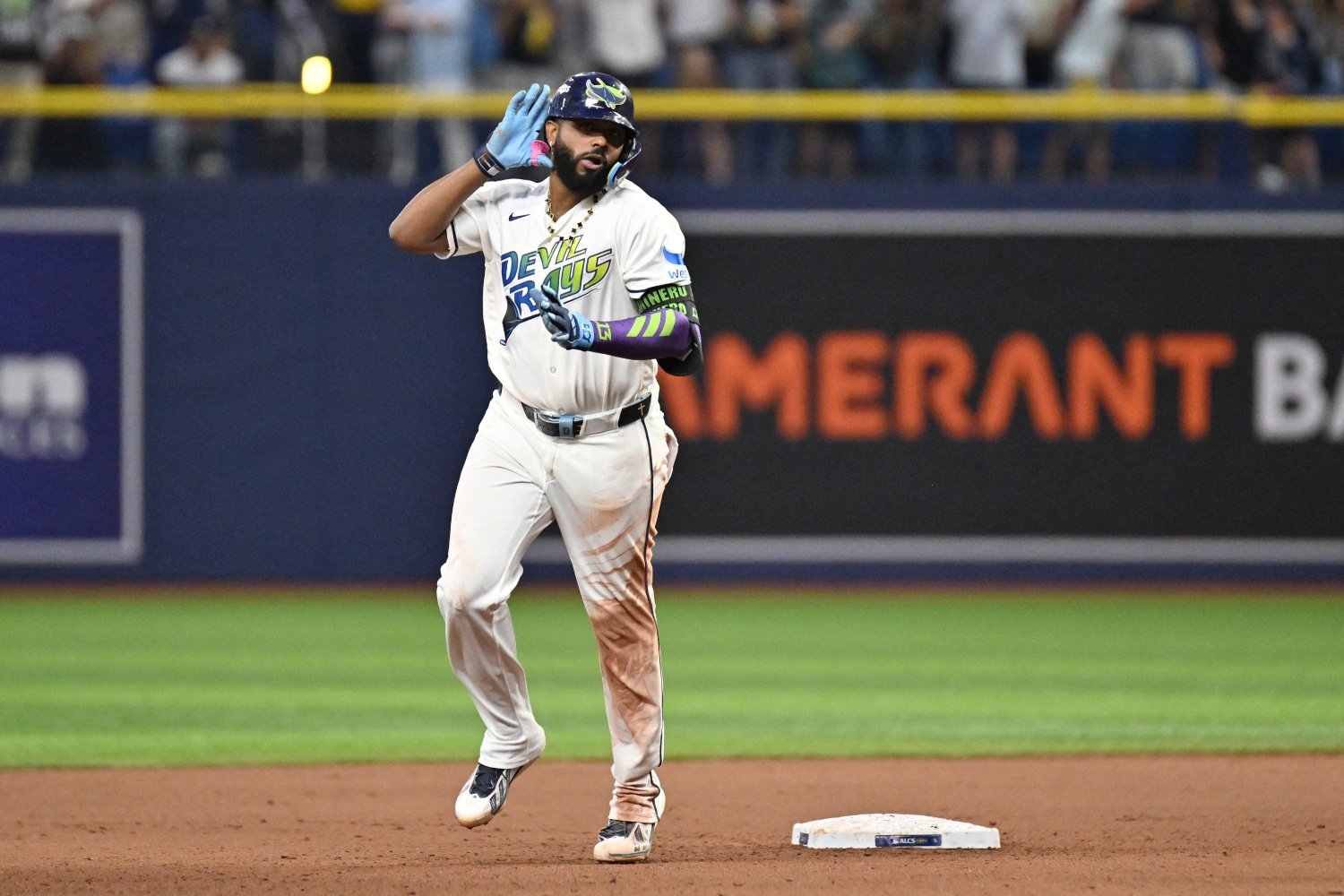 The Rays’ offense is everything the general public thinks the Brewers are, and more. They have perhaps the fastest player in baseball in Chandler Simpson; one of the quickest bats in the league in Yandy Díaz; and Junior Caminero, a young power hitter who crushes fastballs with extreme prejudice and launched 41 home runs in the regular season. There’s also Jonathan Aranda, an underappreciated left-handed hitter who excels at putting the ball in the air, and Victor Mesa Jr., who posted a 155 wRC+ after the trade deadline. There are names in this lineup you might not know well, but don’t mistake obscurity for a lack of firepower. There’s sneaky power beyond Caminero, and an offensive approach that (as Sal Frelick puts it) is happy to “drag you to hell.” The Rays’ run prevention is just as electric. Sublime defense complements a rotation built around Drew Rasmussen, Freddy Peralta and Nick Martinez, creating a unit that will make life difficult for the Brewers if they can’t keep the offense in check. So how, exactly, can Milwaukee silence the most dangerous threats in the Rays’ lineup? Junior Caminero: Can They Keep the Ball Down and Capitalize On His Youth? Caminero’s power has been a defining feature of the Rays’ offense; he averaged roughly one home run every four games during the regular season. It’s difficult to imagine him going through this series without making a few loud connections, but the Brewers may have an opportunity to limit his impact. Caminero was red-hot in the first half of the season, but his 121 wRC+ since the trade deadline suggests he has become a more manageable threat. More importantly, his postseason chase rates have climbed considerably above their regular-season levels. For a hitter who can change a game with one swing, that aggressiveness presents an opportunity for Milwaukee: make him chase, get him into unfavorable counts, and use his eagerness to hunt fastballs against him. The first priority is understanding where Caminero’s power is most dangerous. His relationship with the four-seam fastball is particularly striking: he has posted a 68% hard-hit rate and a 19% barrel rate against the pitch, consistently elevating four-seamers with authority. His 32% ground-ball rate against them explains why they have been such a problem for opposing pitchers. Challenging him with a conventional four-seamer is asking for trouble. However, Caminero has also shown a tendency to chase four-seamers above the strike zone. He can still punish mistakes up there, but pitchers with the kind of fastball characteristics possessed by Jacob Misiorowski and Logan Henderson have a better chance of beating him at the top of the zone. Varying the fastball shape offers another route to limiting his power. Although Caminero hits the ball hard against most pitch types, certain fastball variants can encourage weaker contact and keep the ball on the ground. His 60% ground-ball rate against sinkers is particularly encouraging, although that approach may be more useful for right-handed pitchers than left-handers. By changing his eye level and preventing him from sitting on one fastball shape, Milwaukee can make it harder for Caminero to generate the elevated contact that makes him so dangerous. That's where the Brewers’ left-handed relief options become particularly interesting. Caminero has shown some vulnerability against non-fastballs from left-handed pitchers; the chart below illustrates how opposing pitchers have approached him this season. For Milwaukee’s left-handed relievers, the game plan should be straightforward: minimize hittable fastballs and use secondary pitches to disrupt his timing. Caminero’s weighted on-base average (wOBA) against sinkers and four-seamers is monstrous, but opposing pitchers have found success with cutters that break in on his hands, alongside sliders, curveballs and changeups that catch him out in front. With Caminero showing an increased willingness to chase this postseason, those pitches become even more important. Aaron Ashby and DL Hall have the weapons to attack him away from his preferred fastball locations and force him to prove he can lay off pitches outside the zone. Trevor Megill could also have a role to play. Caminero has struggled against right-handed curveballs this season, posting a .231 wOBA against them, which makes Megill’s knuckle-curve an intriguing weapon. But the same principle applies: the secondary pitch has be tantalizing enough to induce a swing from a guy who's locked in on the fastball. In a high-leverage situation, a misplaced heater could be exactly what the Rays slugger is waiting for. The postseason numbers reinforce the case for this approach. Caminero did begin making better contact toward the end of the ALCS, but his chase rates have climbed sharply compared with the regular season. He's still capable of punishing pitches in the strike zone, and his ability to barrel up a fastball has not disappeared. The concern is what happens when his aggressiveness takes him outside the zone. The Brewers have to force him to do so. A World Series offers the biggest stage of Caminero’s career, and the heightened anticipation could encourage him to force the issue in search of a defining moment. We've seen how postseason pressure can affect even the most talented young hitters. Changeups have generated a 36% put-away rate this postseason, offering a compelling reason for Milwaukee to lean on them either to get ahead or to finish off an overeager bat. Yandy Díaz: One Of The Most Complete Hitters In Baseball As modern leadoff hitters go, you could hardly ask for more than Yandy Díaz. He rarely swings and misses, has one of the flattest swing paths in baseball, and hits the ball as hard as just about anyone. The one notable limitation is his lack of swing-plane tilt, which makes it difficult for him to consistently elevate the ball. Almost everything else in his batted-ball profile is exactly what you would want from a hitter at the top of the lineup. And when Díaz does get the ball in the air, it leaves in a hurry. How do the Brewers attack a hitter who combines elite contact ability with such consistent hard contact? The first avenue is velocity. While Mesa and Caminero have had relatively little trouble turning around fastballs at 97 MPH and above, Díaz has been noticeably less effective against that level of velocity. He's managed just a .233 expected batting average and a -2.9 run value per 100 pitches against these fastballs. He can still hit them hard, but the extra velocity appears to hurry his swing and leave him late on the ball, producing more ground-ball contact. For Milwaukee, that creates an opportunity to use premium velocity not necessarily to generate whiffs, but to limit the quality of Díaz’s contact. Trying to stop Díaz from hitting the ball hard is unlikely to work. He handles a wide range of pitch types effectively and can drive the ball to all fields. He also rarely strikes out, although his desire to put the ball in play can make him susceptible to chasing pitches outside the zone. The Brewers’ best approach may therefore be to lean into their familiar fastball-heavy strategy and focus on the shape and location of their pitches, rather than trying to overpower him outright. Four-seamers and cutters are particularly interesting options. Díaz’s relatively flat swing can make it difficult for him to consistently lift these pitches, creating opportunities for ground balls that Milwaukee’s infield can turn into outs. His results against both left- and right-handed pitching support that approach, with the curveball, four-seamer and cutter producing his lowest wOBA figures among the pitch types shown below. There is, however, an intriguing wrinkle in Díaz’s platoon splits. Despite his effectiveness against pitchers from either side, he has reverse platoon splits, and his batted-ball profile against left-handed pitching is particularly interesting. He barrels the ball less often against southpaws, even though he walks more frequently and hits the ball harder overall against them. That combination makes the matchup a little more complicated than the surface numbers suggest: less frequent barrelled contact does not necessarily mean weaker contact overall. Diaz has also unleashed on left-handed breaking balls this year, and it's one category of pitches that he's been able to lift with regularity. For the Brewers, those splits could influence how they deploy their bullpen when Díaz and Jonathan Aranda come to the plate in close succession. A left-handed reliever may offer an appealing matchup against both hitters, particularly given that Caminero has been effective against pitchers from either side. The goal, though, should remain the same, regardless of who takes the mound: limit Díaz’s ability to elevate the ball, use velocity and fastball movement to encourage ground-ball contact, and trust the defense to turn those opportunities into outs. His post-season performance has mirrored Caminero's thus far. More chase, more swing-and-miss (especially on the four-seam fastball, which pitchers have kept up above the strike zone) and some prodigious chase on breaking pitches as well. The results have been there, but the raw stuff in the Brewers rotation and bullpen may be able to exploit this in a similar way that Gavin Williams and the Guardians staff managed. Jonathan Aranda - The Unheralded Weapon Often sandwiched between Díaz and Caminero in the Rays’ lineup, Aranda can be overshadowed by the bigger names around him. That would be a mistake. He's been one of Tampa Bay’s most productive hitters this postseason, leading the team with a .447 expected wOBA, almost 50% higher than his actual wOBA. Aranda’s strength lies in his ability to elevate at optimal launch angles, generally between 10° and 30°, producing consistent outfield contact despite relatively modest bat speed and some swing-and-miss concerns. Those concerns are real. Aranda struck out more than 24% of the time during the regular season, and that rate has climbed to 27% in the postseason. But when he makes contact, the quality is often excellent. He combines good barrel control with strong exit velocities, while showing a particular aptitude for punishing breaking balls. For opposing pitchers, the challenge is finding a way to exploit his tendency to miss without allowing him to turn a mistake into damaging contact. His regular-season pitch splits explain where that opportunity lies. As the chart above shows, Aranda was particularly effective against sliders, curveballs and sweepers, while his approach suggests a willingness to attack pitches in the strike zone. His swing path is almost the opposite of Díaz’s: where Díaz struggles to consistently elevate the ball, Aranda’s steeper bat path allows him to get underneath pitches in the lower part of the zone, particularly breaking balls. That makes it difficult to beat him simply by working down. However, there is a more exploitable weakness at the top of the strike zone. That's where the Brewers should look to attack. Four-seam fastballs with strong velocity and movement characteristics can challenge Aranda in a part of the zone where his swing is less effective, offering Milwaukee a way to limit his ability to generate the elevated contact that makes him dangerous. When turning to breaking pitches, right-handed pitchers should look to work down and in, changing his eye level after establishing the fastball above the zone. The objective is to prevent Aranda from settling into the lower part of the strike zone, where his swing path allows him to do considerable damage. The difficulty is that the Rays’ lineup rarely allows pitchers to focus on one hitter in isolation. A four-seam-heavy approach might be effective against Aranda, only to leave a pitcher in an uncomfortable matchup against Caminero, whose power against fastballs makes him particularly dangerous if those pitches drift into the heart of the zone. With the three-batter minimum also limiting the Brewers’ ability to make immediate pitching changes, the top of Tampa Bay’s lineup presents a difficult sequence of contrasting strengths and weaknesses. Where one hitter struggles, the next may thrive, forcing Milwaukee to weigh the best matchup across several plate appearances rather than simply attacking each batter individually. There is one particularly interesting option in a high-leverage situation. Aranda posted a .198 wOBA against left-handed four-seam fastballs during the regular season, making that combination an appealing way to attack him with the game on the line. The problem is that Milwaukee does not have an abundance of left-handed relievers who rely primarily on that pitch. Ashby, JoJo Romero and DL Hall, for example, feature sinkers as their primary fastballs, playing into Aranda’s strengths rather than exploiting his weakness. If the Brewers find themselves facing Aranda with the game in the balance, identifying a left-handed pitcher capable of challenging him with an effective four-seamer could be crucial, especially for a team who typically prefers sinkers and cutters from their pitching staff. The Margin for Error is Slim The Rays’ lineup presents a difficult puzzle for the Brewers, because there is no single approach that neatly solves it. A fastball-heavy approach that works against Aranda can leave a pitcher exposed to Caminero, while a strategy designed to induce ground balls from Díaz may not translate as neatly to the hitters around him. The Brewers will need to think beyond individual matchups and consider how each plate appearance shapes the next. Fortunately for Milwaukee, the underlying numbers suggest there are opportunities to exploit. The key will be executing those plans without leaving pitches in locations where these hitters can do their most damaging work. It's a very different challenge than that posed by the Dodgers. The Los Angeles lineup adored four-seam fastballs, whereas the Rays (aside from Caminero) typically feast more on sinkers, which isn't as strong a matchup for this Brewers bullpen—although it may lend itself to their starting pitchers if they can find their best form for the World Series. Covering all of the bases in this match-up is going to be difficult. Against a lineup with such differing profiles from its biggest hitters, the margin for error is slim. But if Milwaukee can consistently attack the right weaknesses while avoiding the strengths that make this offense dangerous, it has a path to keeping the Rays in check when the stakes are highest.
 -
I keep going back to this: if the Brewers score 4 runs, they'll win a game 85% of the time. If they can keep a team under 4, same thing. It's truly a magic number for this team I think there's a chance they can get to Snell, depending on how he's feeling since coming back again in Mid-September
-
I have a little more to add on Blake Snell. He didn't faced an above .500 team in 10 starts since coming off the IL in July His "in-zone" rate in the two starts since departing early against Cincinnati in mid-September were 39% and 32.2% respectively (MLB average ~ 47%) He's always been good at avoiding home runs, but he's yet to concede one in 2026 at the major League level. The Blue Jays popped three against him in two starts in the World Series last year, which is so damaging because of how he tends to hand out free passes I feel like the changeup, which was his least used pitch against the Braves, is going to be rolled out in force against the Brewers
-
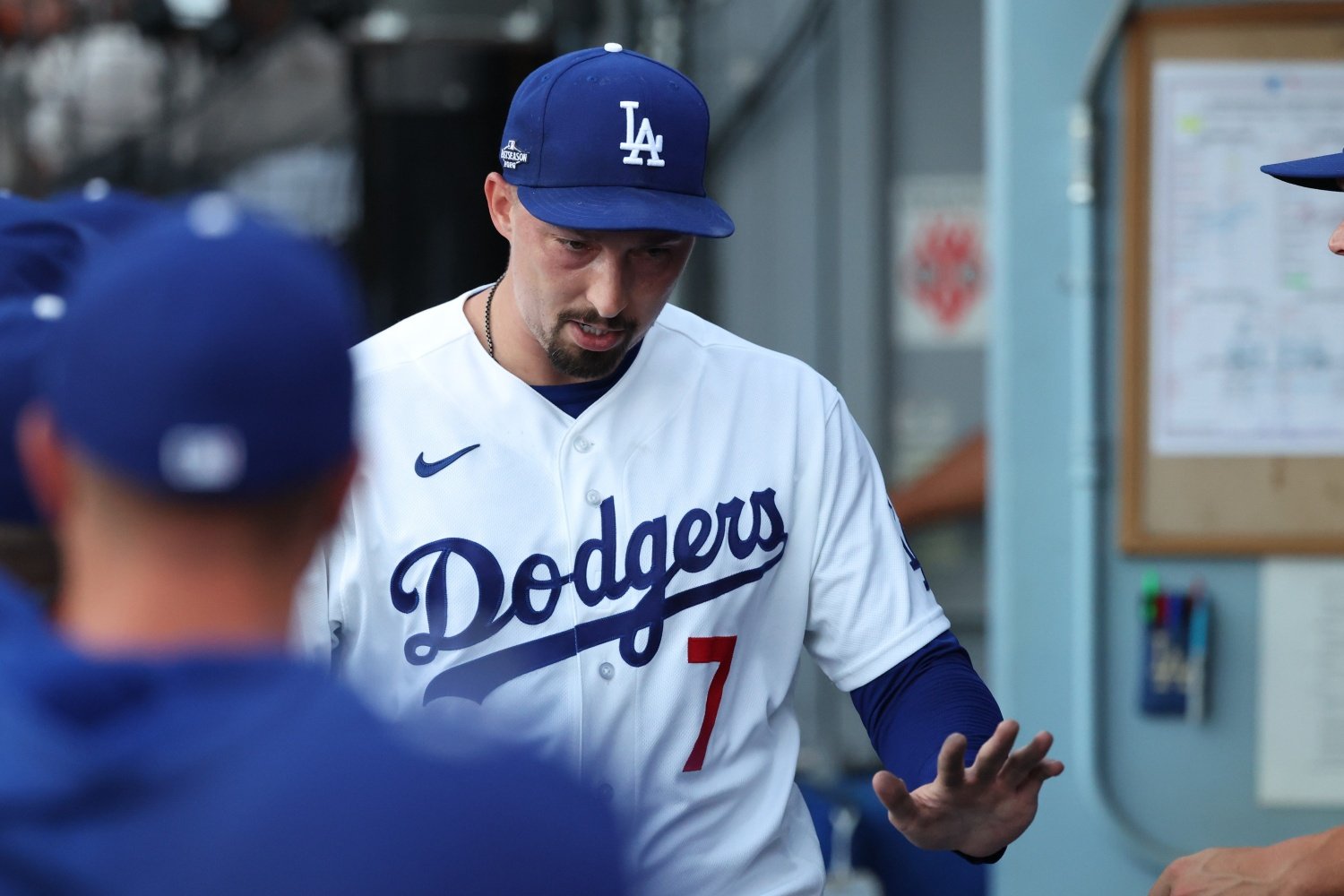 Tarik Skubal and Yoshinobu Yamamoto are the Dodgers' near-immortal October heroes. After most teams start a series with hurlers like that, there's a major step down in quality to the back half of their rotation. In Los Angeles's case, though, that step is much smaller. Here's how the Brewers can attack the other two-time Cy Young Award winner in the Dodgers rotation, and one of the most physically intimidating pitchers in baseball. Projected Game 3 Starter: Blake Snell The Brewers got a first-hand look at just how good Snell can be in 2025. He capitalized on a change in his pitch mix, throwing a heavy dose of in-zone changeups that completely befuddled Milwaukee in one of the best starts of his career: eight innings, one hit, 10 strikeouts. But that isn't always the version of Snell that opponents see. Snell is willing to nibble around the edges of the zone, making swing decisions in the shadow zone particularly important for Milwaukee against another high-release, left-handed pitcher with a devastating fastball and changeup. The difference is that Snell is much more comfortable giving up a walk than Skubal, and somehow even harder to square up when hitters do swing. His start against the Braves showed both sides of that equation. Snell lasted just 3⅔ innings, walking five hitters and striking out five, but he allowed only one run. Three hits and five walks might suggest that Atlanta simply missed its opportunity, but there is a reason Snell can survive that kind of traffic. His fastball has elite ride, and when he works at the top of the zone, it's extremely difficult to get on top of. Add a wicked slider and curveball that blend beautifully with the fastball from his high release point, plus a quality changeup, and Snell's four-pitch mix is loaded with ways to beat a hitter. This is the type of contact quality Snell has allowed this season: Snell isn't overly concerned about the walks, because he trusts his ability to strand runners once they reach base. Especially in the tense environment of a playoff game, he can induce chase, generate swing-and-miss, and force weak contact when hitters finally do get the ball in the zone. Even when he does throw strikes, Snell is difficult to hit. Fresh off the injured list, his fastball has gained roughly an inch of both ride and run compared with 2025. As a result, the one pitch that hitters had previously been able to barrel with some consistency has taken a step forward. That makes this a waiting game for Milwaukee. Can the Brewers build enough pressure on Snell that he finally blinks before they do? Can they turn the walks and deep counts into hard contact when he eventually has to come into the zone? More importantly, can they force him to throw enough pitches that the Dodgers have to turn to their bullpen earlier than they'd like? Atlanta managed to run Snell's pitch count up and get him out of the game, and white-knuckled their way to a win from there. Milwaukee may need a similar approach. They're unlikely to drop the hammer on Snell, and they'll need some batted-ball fortune when their opportunities arrive, but if they can make him work, accept the walks and punish the mistakes, they have a path to turning Snell's greatest strength, his willingness to live on the edges, into a weakness. Braves batters swung at just 34 of the 90 pitches Snell threw in the NLDS. To match that patience in last year's NLCS Game 1, the Brewers would have had to swing 10 fewer times. The key to beating Snell is those 10 fewer swings. NLCS Game Four Starter: Tyler Glasnow Tyler Glasnow works from one of the highest release points in baseball, pairing a high-velocity fastball with breaking balls that feature sharp, late movement. Like Snell, he's comfortable working outside the strike zone and using his secondary pitches to induce chases. His two breaking balls can fall off the table, making them difficult to touch—let alone hit hard. Glasnow threw just 74 innings during the regular season, but posted a 0.95 WHIP and a 34% strikeout rate, a testament to how difficult he is to handle—particularly when he gets ahead in the count. There is, however, another dimension to the matchup. Glasnow can be vulnerable to the running game: opposing runners went 14-for-17 on stolen-base attempts against him in 2026, an 82% success rate. If the Brewers can get men on base, they may have opportunities to pile on pressure with their legs. The bigger question, of course, is how they get on in the first place. Once again, the fastball could be the key. Glasnow's breaking balls have enough depth and movement to make consistent contact a challenge, particularly when hitters are forced to protect against them outside the strike zone. The Brewers will need to recognise those pitches early and avoid expanding the zone. The encouraging sign is that, unlike Yamamoto, Glasnow has shown a more conventional relationship between count leverage and pitch selection: as he falls behind, the likelihood of seeing a fastball increases. Glasnow's outing against the Braves offered a glimpse of both his vulnerability and his ability to limit the damage. He struggled to locate his secondary pitches, walking five hitters, and threw his four-seam fastball in the strike zone roughly two-thirds of the time. The Braves managed just one run, however, illustrating how difficult it can be to capitalize on Glasnow's occasional command issues. Even when Glasnow loses his feel for the secondaries, his four-seamer remains a formidable weapon. Released from a high arm slot, the pitch can play above the barrel, but it also cuts just enough to slide along the barrel. That helps him limit hard contact and keep the ball in the park, even when hitters know a fastball is coming. The offering has some similarities to the one the Brewers recently faced from Nick Pivetta, against whom they timed the fastball well. That being said, recognizing the pitch and actually squaring it up are two very different things. The Brewers' best approach will be to make Glasnow work. Extending at-bats, laying off pitches outside the zone, and forcing him to find the strike zone with his secondary offerings could create opportunities to get runners aboard. From there, they can look to apply pressure on the bases and turn a difficult matchup into a more uncomfortable one. That fits their broader approach of building pressure and forcing mistakes, but Glasnow is unlikely to unravel simply because the Brewers make him work. Ultimately, the Brewers will need to combine disciplined at-bats with timely hitting. Glasnow has the stuff to overpower even a patient lineup, and he would be an ace in most postseason rotations. The opportunity is there, but exploiting it will require the Brewers to turn the few openings he gives them into meaningful damage.
- 6 comments
-
- 1
-
-
- blake snell
- tyler glasnow
- (and 1 more)
-
Image courtesy of Kiyoshi Mio-Imagn Images Tarik Skubal and Yoshinobu Yamamoto are the Dodgers' near-immortal October heroes. After most teams start a series with hurlers like that, there's a major step down in quality to the back half of their rotation. In Los Angeles's case, though, that step is much smaller. Here's how the Brewers can attack the other two-time Cy Young Award winner in the Dodgers rotation, and one of the most physically intimidating pitchers in baseball. Projected Game 3 Starter: Blake Snell The Brewers got a first-hand look at just how good Snell can be in 2025. He capitalized on a change in his pitch mix, throwing a heavy dose of in-zone changeups that completely befuddled Milwaukee in one of the best starts of his career: eight innings, one hit, 10 strikeouts. But that isn't always the version of Snell that opponents see. Snell is willing to nibble around the edges of the zone, making swing decisions in the shadow zone particularly important for Milwaukee against another high-release, left-handed pitcher with a devastating fastball and changeup. The difference is that Snell is much more comfortable giving up a walk than Skubal, and somehow even harder to square up when hitters do swing. His start against the Braves showed both sides of that equation. Snell lasted just 3⅔ innings, walking five hitters and striking out five, but he allowed only one run. Three hits and five walks might suggest that Atlanta simply missed its opportunity, but there is a reason Snell can survive that kind of traffic. His fastball has elite ride, and when he works at the top of the zone, it's extremely difficult to get on top of. Add a wicked slider and curveball that blend beautifully with the fastball from his high release point, plus a quality changeup, and Snell's four-pitch mix is loaded with ways to beat a hitter. This is the type of contact quality Snell has allowed this season: Snell isn't overly concerned about the walks, because he trusts his ability to strand runners once they reach base. Especially in the tense environment of a playoff game, he can induce chase, generate swing-and-miss, and force weak contact when hitters finally do get the ball in the zone. Even when he does throw strikes, Snell is difficult to hit. Fresh off the injured list, his fastball has gained roughly an inch of both ride and run compared with 2025. As a result, the one pitch that hitters had previously been able to barrel with some consistency has taken a step forward. That makes this a waiting game for Milwaukee. Can the Brewers build enough pressure on Snell that he finally blinks before they do? Can they turn the walks and deep counts into hard contact when he eventually has to come into the zone? More importantly, can they force him to throw enough pitches that the Dodgers have to turn to their bullpen earlier than they'd like? Atlanta managed to run Snell's pitch count up and get him out of the game, and white-knuckled their way to a win from there. Milwaukee may need a similar approach. They're unlikely to drop the hammer on Snell, and they'll need some batted-ball fortune when their opportunities arrive, but if they can make him work, accept the walks and punish the mistakes, they have a path to turning Snell's greatest strength, his willingness to live on the edges, into a weakness. Braves batters swung at just 34 of the 90 pitches Snell threw in the NLDS. To match that patience in last year's NLCS Game 1, the Brewers would have had to swing 10 fewer times. The key to beating Snell is those 10 fewer swings. NLCS Game Four Starter: Tyler Glasnow Tyler Glasnow works from one of the highest release points in baseball, pairing a high-velocity fastball with breaking balls that feature sharp, late movement. Like Snell, he's comfortable working outside the strike zone and using his secondary pitches to induce chases. His two breaking balls can fall off the table, making them difficult to touch—let alone hit hard. Glasnow threw just 74 innings during the regular season, but posted a 0.95 WHIP and a 34% strikeout rate, a testament to how difficult he is to handle—particularly when he gets ahead in the count. There is, however, another dimension to the matchup. Glasnow can be vulnerable to the running game: opposing runners went 14-for-17 on stolen-base attempts against him in 2026, an 82% success rate. If the Brewers can get men on base, they may have opportunities to pile on pressure with their legs. The bigger question, of course, is how they get on in the first place. Once again, the fastball could be the key. Glasnow's breaking balls have enough depth and movement to make consistent contact a challenge, particularly when hitters are forced to protect against them outside the strike zone. The Brewers will need to recognise those pitches early and avoid expanding the zone. The encouraging sign is that, unlike Yamamoto, Glasnow has shown a more conventional relationship between count leverage and pitch selection: as he falls behind, the likelihood of seeing a fastball increases. Glasnow's outing against the Braves offered a glimpse of both his vulnerability and his ability to limit the damage. He struggled to locate his secondary pitches, walking five hitters, and threw his four-seam fastball in the strike zone roughly two-thirds of the time. The Braves managed just one run, however, illustrating how difficult it can be to capitalize on Glasnow's occasional command issues. Even when Glasnow loses his feel for the secondaries, his four-seamer remains a formidable weapon. Released from a high arm slot, the pitch can play above the barrel, but it also cuts just enough to slide along the barrel. That helps him limit hard contact and keep the ball in the park, even when hitters know a fastball is coming. The offering has some similarities to the one the Brewers recently faced from Nick Pivetta, against whom they timed the fastball well. That being said, recognizing the pitch and actually squaring it up are two very different things. The Brewers' best approach will be to make Glasnow work. Extending at-bats, laying off pitches outside the zone, and forcing him to find the strike zone with his secondary offerings could create opportunities to get runners aboard. From there, they can look to apply pressure on the bases and turn a difficult matchup into a more uncomfortable one. That fits their broader approach of building pressure and forcing mistakes, but Glasnow is unlikely to unravel simply because the Brewers make him work. Ultimately, the Brewers will need to combine disciplined at-bats with timely hitting. Glasnow has the stuff to overpower even a patient lineup, and he would be an ace in most postseason rotations. The opportunity is there, but exploiting it will require the Brewers to turn the few openings he gives them into meaningful damage. View full article
-
Image courtesy of Brett Davis-Imagn Images The Brewers know how quickly a series against the Dodgers can get away from them. In the 2025 NLCS, Milwaukee fell behind 0-2 as the Dodgers' rotation stifled an offense that struggled to find its footing, particularly at home. They can't afford a repeat. The challenge starts with four formidable starters: Tarik Skubal, Yoshinobu Yamamoto, Blake Snell and Tyler Glasnow. They offer an intimidating mix of power, deception, command and movement, with few easy at-bats available to left- or right-handed batters, There is no single formula for beating them. Against Skubal, the Brewers must punish mistakes without chasing his best pitches. Against Snell, patience and deep counts could be the key. Yamamoto demands precision in the swing decision, while Glasnow presents a different test of discipline against elite velocity and devastating breaking balls. Milwaukee won't have many opportunities to do damage. The challenge is making those that come count, and ensuring the series doesn't get away from them before they find their footing. Today, let's take a look at how best to attack the two hurlers who'll toe the rubber in the series-opening games at Uecker Field in Milwaukee. Game 1 Starter: Tarik Skubal The reigning two-time Cy Young Award winner in the American League, Tarik Skubal is one of the most dominant pitchers in the sport. Possessing a 1.97 ERA in seven postseason starts and averaging six and a half innings per outing, Skubal's combination of an overpowering fastball and a deadly changeup leads his pitch mix to both right- and left-handers, and allows him to manipulate timing, break barrels, and get a lot of swing-and-miss—usually. The good news is, Skubal's last start showed perhaps his most hittable pitch shapes since his first game back from injury. If we compare his playoff starts in 2025 with his start against the Braves in the National League Division Series, the stuff ratings are significantly down, not because of velocity, but because of their shape: Skubal had less ride on his four-seam fastball; less vertical and horizontal movement on his signature changeup; and less sink on his sinker. The results were intriguing. He generated virtually no meaningful swing-and-miss with his fastballs, while the sinker was hit harder than usual, even if much of that contact stayed on the ground. In fact, every pitch type Skubal threw against the Braves averaged more than 90 MPH in exit velocity. He largely survived by avoiding barrels and keeping the ball away from optimal launch angles. If it seems like I'm picking at hairs here, I am. Skubal is still an overpowering monster when he's at his best, and the Brewers will need timely hitting (perhaps one big swing) to put runs on the board against him. That being said, if they're going to do damage, they'll need to capitalize on fastballs over the heart of the plate. Skubal isn't going to beat himself with walks. If Milwaukee is passive, he'll attack this lineup with an 80th-percentile zone rate and a 94th-percentile in-zone swing-and-miss rate. If the Brewers get too aggressive, they'll run into his 97th-percentile chase rate. They need to thread the needle: be aggressive enough to punish a fastball in the zone, but disciplined enough to avoid chasing the pitches that make Skubal so difficult to hit. That challenge looks slightly different depending on which side of the plate a hitter occupies. Skubal is more predictable against left-handed hitters, opening with a sinker or four-seam fastball roughly 75% of the time. The sinker has been particularly effective, boring in on the hands and generating weak contact, but lefties have been able to do damage against the four-seamer. It carries a .541 expected weighted on-base average on contact (xwOBACON), a substantial figure: Skubal can still generate plenty of swing-and-miss with the four-seamer at the top of the zone, but when he leaves it over the middle of the plate, the Brewers need to be ready to attack. It's one of the easiest pitches to barrel against him, particularly compared with the sinker and changeup, which Skubal typically uses to generate hard contact on the ground. Expect Milwaukee to use a balanced lineup. Skubal's high arm angle makes him less deceptive against same-side hitters than most pitchers, giving left-handed hitters a better chance to see the ball out of his hand. Right-handed hitters see more of the four-seam/changeup combination, and Skubal is comfortable throwing the changeup in any count. It's an incredible swing-and-miss pitch, but it can be hit when hitters are sitting on it. Right-handers have barreled the pitch at a 9.2% clip. That's not a particularly high number, but it's enough to represent an opportunity when Skubal misses his spot. Beyond that, Milwaukee may simply have to wait for him to make a mistake with his breaking ball. The Brewers have already shown they can make Skubal work. In the middle of August, they scored two runs (only one earned) across seven innings against him, collecting seven hits and two walks. Their approach was straightforward: largely ignore the changeup and sit on his fastballs. The changeup was the only pitch against which Skubal recorded a swing-and-miss rate above 20%. That patience will be vital again. Milwaukee doesn't need to beat Skubal by chasing his best pitches. They need to make him work, stay off the changeup when they're not in a position to drive it, and wait for the fastball or a mistake pitch they can punish. Swing decisions will be a vital component, and when they get an opportunity to drive the ball, they can't afford to miss. There won't be many such opportunities; nobody said this would be easy. Game 2 Starter: Yoshinobu Yamamoto You could argue that, in an elimination game, there isn't a pitcher in baseball you'd rather have taking the rubber than Yoshinobu Yamamoto. With his complete pitch mix, impeccable command, and feel for manipulating both spin and velocity, Yamamoto is what you'd get if you designed a pitcher in a laboratory. That doesn't make him unhittable, but it does make him an incredible challenge to solve. Yamamoto finished the regular season with a 0.87 WHIP, backed by the command to work in the shadow areas of the strike zone without leaving pitches over the heart of the plate. His splitter was his most frequently-used offering, generating ample chase while proving effective against both left- and right-handed hitters. More than 80% of the pitches hitters see will be some variation of his fastball or splitter, but it's the way this particular four-pitch mix works together that makes him so difficult to handle. The pitches tunnel off one another, disrupting a hitter's timing and making it difficult to find the barrel consistently. Yamamoto has allowed three or more runs in just eight starts this season. Only one of those outings lasted fewer than six innings, and he surrendered no more than six hits in any of them. Two featured four walks, which certainly contributed to the damage, while the other six saw him issue no more than two free passes. Seven of those eight starts also included a home run allowed. So, what does that tell us about how to approach him? Scoring against Yamamoto often requires a combination of timely hitting and capitalizing on the few mistakes he makes. The Brewers may need to string together hits with runners in scoring position, or punish a mistake with a home run when they have men aboard. Yamamoto doesn't hand out many free passes, so opportunities to build a big inning will be limited. When runners do reach, the Brewers will need to make those opportunities count. One potential vulnerability stands out this season: the four-seam fastball. Looking at expected slugging by pitch type, the damage against his four-seamer has increased. Yamamoto has allowed 20 home runs this year, with 14 coming off his splitter or four-seamer. When hitters square up the four-seamer, it tends to be in the air, so damage is always a possibility. The splitter presents a different kind of opportunity. Its movement is influenced in part by seam-shifted wake effects, making its behavior hard to glean from simple spin measurements. Even with Yamamoto's exceptional feel for the pitch, the occasional mistake can leave a splitter in a hitter's wheelhouse. That's the kind of offering a hitter can turn on; Christian Yelich comes to mind as someone who has done damage against hittable changeups and splitters this season. The theme here is clear: the Brewers' swing decisions will have to be impeccable, particularly against Yamamoto's splitter and four-seamer. If they can identify a four-seam fastball that leaks into the heart of the plate, there's an opportunity to do damage. His four-seamer has allowed a 61% hard-hit rate, a .290 expected batting average, and a .775 expected slugging average. Those are numbers the Brewers can look to exploit, provided they can distinguish a hittable fastball from one designed to catch the edge. That's the challenge with Yamamoto. Even when he misses his spot, he has the pitch mix and feel to disrupt a hitter's timing and limit the damage. The Brewers will need patience without passivity—the discipline to recognize when a mistake is there to be hit. It will be a devilish game of cat-and-mouse. If they can't access the long ball, it could be a troublesome day at the office. Can the Brewers Really Dent One of the Best Rotations in Postseason History? The Brewers aren't going to bludgeon the Dodgers' rotation with their raw talent. No one has shown the ability to do that. They may not get many opportunities to do damage. But they don't need to. The key to beating the aces of the Dodgers is to stay aggressive and swing with conviction. The strikes will be there. You can't help these two out by expanding the zone, but when the hittable fastball is there, you can't be late for it or underneath it. Last year, this group—less Skubal, but with Shohei Ohtani more or less at his best on the mound—mowed the Brewers down. The team will have to prove they're better, but also that they're capable of withstanding great pitching and making the mental and physical adjustments required to turn the pressure way up when those pitchers falter. How would you go about hitting Skubal and Yamamoto? Join the discussion below. Come back early this week, as we break down Blake Snell and Tyler Glasnow in similar ways. View full article
- 2 replies
-
- 1
-
-
- yoshinobu yamamoto
- tarik skubal
- (and 1 more)
-
 The Brewers know how quickly a series against the Dodgers can get away from them. In the 2025 NLCS, Milwaukee fell behind 0-2 as the Dodgers' rotation stifled an offense that struggled to find its footing, particularly at home. They can't afford a repeat. The challenge starts with four formidable starters: Tarik Skubal, Yoshinobu Yamamoto, Blake Snell and Tyler Glasnow. They offer an intimidating mix of power, deception, command and movement, with few easy at-bats available to left- or right-handed batters, There is no single formula for beating them. Against Skubal, the Brewers must punish mistakes without chasing his best pitches. Against Snell, patience and deep counts could be the key. Yamamoto demands precision in the swing decision, while Glasnow presents a different test of discipline against elite velocity and devastating breaking balls. Milwaukee won't have many opportunities to do damage. The challenge is making those that come count, and ensuring the series doesn't get away from them before they find their footing. Today, let's take a look at how best to attack the two hurlers who'll toe the rubber in the series-opening games at Uecker Field in Milwaukee. Game 1 Starter: Tarik Skubal The reigning two-time Cy Young Award winner in the American League, Tarik Skubal is one of the most dominant pitchers in the sport. Possessing a 1.97 ERA in seven postseason starts and averaging six and a half innings per outing, Skubal's combination of an overpowering fastball and a deadly changeup leads his pitch mix to both right- and left-handers, and allows him to manipulate timing, break barrels, and get a lot of swing-and-miss—usually. The good news is, Skubal's last start showed perhaps his most hittable pitch shapes since his first game back from injury. If we compare his playoff starts in 2025 with his start against the Braves in the National League Division Series, the stuff ratings are significantly down, not because of velocity, but because of their shape: Skubal had less ride on his four-seam fastball; less vertical and horizontal movement on his signature changeup; and less sink on his sinker. The results were intriguing. He generated virtually no meaningful swing-and-miss with his fastballs, while the sinker was hit harder than usual, even if much of that contact stayed on the ground. In fact, every pitch type Skubal threw against the Braves averaged more than 90 MPH in exit velocity. He largely survived by avoiding barrels and keeping the ball away from optimal launch angles. If it seems like I'm picking at hairs here, I am. Skubal is still an overpowering monster when he's at his best, and the Brewers will need timely hitting (perhaps one big swing) to put runs on the board against him. That being said, if they're going to do damage, they'll need to capitalize on fastballs over the heart of the plate. Skubal isn't going to beat himself with walks. If Milwaukee is passive, he'll attack this lineup with an 80th-percentile zone rate and a 94th-percentile in-zone swing-and-miss rate. If the Brewers get too aggressive, they'll run into his 97th-percentile chase rate. They need to thread the needle: be aggressive enough to punish a fastball in the zone, but disciplined enough to avoid chasing the pitches that make Skubal so difficult to hit. That challenge looks slightly different depending on which side of the plate a hitter occupies. Skubal is more predictable against left-handed hitters, opening with a sinker or four-seam fastball roughly 75% of the time. The sinker has been particularly effective, boring in on the hands and generating weak contact, but lefties have been able to do damage against the four-seamer. It carries a .541 expected weighted on-base average on contact (xwOBACON), a substantial figure: Skubal can still generate plenty of swing-and-miss with the four-seamer at the top of the zone, but when he leaves it over the middle of the plate, the Brewers need to be ready to attack. It's one of the easiest pitches to barrel against him, particularly compared with the sinker and changeup, which Skubal typically uses to generate hard contact on the ground. Expect Milwaukee to use a balanced lineup. Skubal's high arm angle makes him less deceptive against same-side hitters than most pitchers, giving left-handed hitters a better chance to see the ball out of his hand. Right-handed hitters see more of the four-seam/changeup combination, and Skubal is comfortable throwing the changeup in any count. It's an incredible swing-and-miss pitch, but it can be hit when hitters are sitting on it. Right-handers have barreled the pitch at a 9.2% clip. That's not a particularly high number, but it's enough to represent an opportunity when Skubal misses his spot. Beyond that, Milwaukee may simply have to wait for him to make a mistake with his breaking ball. The Brewers have already shown they can make Skubal work. In the middle of August, they scored two runs (only one earned) across seven innings against him, collecting seven hits and two walks. Their approach was straightforward: largely ignore the changeup and sit on his fastballs. The changeup was the only pitch against which Skubal recorded a swing-and-miss rate above 20%. That patience will be vital again. Milwaukee doesn't need to beat Skubal by chasing his best pitches. They need to make him work, stay off the changeup when they're not in a position to drive it, and wait for the fastball or a mistake pitch they can punish. Swing decisions will be a vital component, and when they get an opportunity to drive the ball, they can't afford to miss. There won't be many such opportunities; nobody said this would be easy. Game 2 Starter: Yoshinobu Yamamoto You could argue that, in an elimination game, there isn't a pitcher in baseball you'd rather have taking the rubber than Yoshinobu Yamamoto. With his complete pitch mix, impeccable command, and feel for manipulating both spin and velocity, Yamamoto is what you'd get if you designed a pitcher in a laboratory. That doesn't make him unhittable, but it does make him an incredible challenge to solve. Yamamoto finished the regular season with a 0.87 WHIP, backed by the command to work in the shadow areas of the strike zone without leaving pitches over the heart of the plate. His splitter was his most frequently-used offering, generating ample chase while proving effective against both left- and right-handed hitters. More than 80% of the pitches hitters see will be some variation of his fastball or splitter, but it's the way this particular four-pitch mix works together that makes him so difficult to handle. The pitches tunnel off one another, disrupting a hitter's timing and making it difficult to find the barrel consistently. Yamamoto has allowed three or more runs in just eight starts this season. Only one of those outings lasted fewer than six innings, and he surrendered no more than six hits in any of them. Two featured four walks, which certainly contributed to the damage, while the other six saw him issue no more than two free passes. Seven of those eight starts also included a home run allowed. So, what does that tell us about how to approach him? Scoring against Yamamoto often requires a combination of timely hitting and capitalizing on the few mistakes he makes. The Brewers may need to string together hits with runners in scoring position, or punish a mistake with a home run when they have men aboard. Yamamoto doesn't hand out many free passes, so opportunities to build a big inning will be limited. When runners do reach, the Brewers will need to make those opportunities count. One potential vulnerability stands out this season: the four-seam fastball. Looking at expected slugging by pitch type, the damage against his four-seamer has increased. Yamamoto has allowed 20 home runs this year, with 14 coming off his splitter or four-seamer. When hitters square up the four-seamer, it tends to be in the air, so damage is always a possibility. The splitter presents a different kind of opportunity. Its movement is influenced in part by seam-shifted wake effects, making its behavior hard to glean from simple spin measurements. Even with Yamamoto's exceptional feel for the pitch, the occasional mistake can leave a splitter in a hitter's wheelhouse. That's the kind of offering a hitter can turn on; Christian Yelich comes to mind as someone who has done damage against hittable changeups and splitters this season. The theme here is clear: the Brewers' swing decisions will have to be impeccable, particularly against Yamamoto's splitter and four-seamer. If they can identify a four-seam fastball that leaks into the heart of the plate, there's an opportunity to do damage. His four-seamer has allowed a 61% hard-hit rate, a .290 expected batting average, and a .775 expected slugging average. Those are numbers the Brewers can look to exploit, provided they can distinguish a hittable fastball from one designed to catch the edge. That's the challenge with Yamamoto. Even when he misses his spot, he has the pitch mix and feel to disrupt a hitter's timing and limit the damage. The Brewers will need patience without passivity—the discipline to recognize when a mistake is there to be hit. It will be a devilish game of cat-and-mouse. If they can't access the long ball, it could be a troublesome day at the office. Can the Brewers Really Dent One of the Best Rotations in Postseason History? The Brewers aren't going to bludgeon the Dodgers' rotation with their raw talent. No one has shown the ability to do that. They may not get many opportunities to do damage. But they don't need to. The key to beating the aces of the Dodgers is to stay aggressive and swing with conviction. The strikes will be there. You can't help these two out by expanding the zone, but when the hittable fastball is there, you can't be late for it or underneath it. Last year, this group—less Skubal, but with Shohei Ohtani more or less at his best on the mound—mowed the Brewers down. The team will have to prove they're better, but also that they're capable of withstanding great pitching and making the mental and physical adjustments required to turn the pressure way up when those pitchers falter. How would you go about hitting Skubal and Yamamoto? Join the discussion below. Come back early this week, as we break down Blake Snell and Tyler Glasnow in similar ways.
- 2 comments
-
- 1
-
-
- yoshinobu yamamoto
- tarik skubal
- (and 1 more)
-
This is a cracking way of looking at it, thanks Matt! A quick savant search shows the xWOBA of all brewers with 10+ plate appearances against the pitchers above Bauers does seem to have trouble, but you could also point to the hard hit rate as saying, when he does get his timing right, that bat goes boom
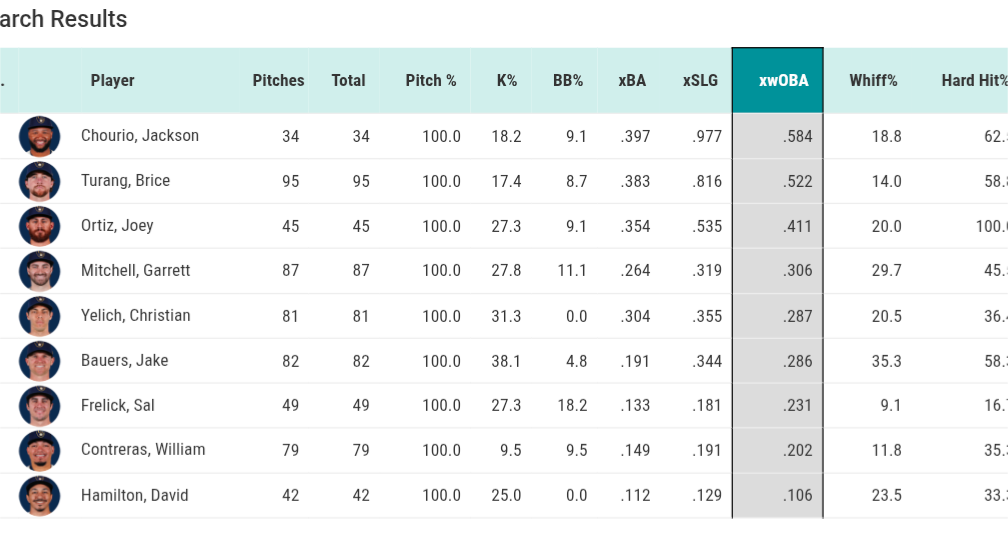
-
Haha glad you liked it Matt! Yep that's a new one for me to use in an article, but I think it's a really clear graphic showing pitch usage by count, I'll have to use it more often
-
Image courtesy of Denis Poroy-Imagn Images Nick Pivetta suffered a right elbow flexor strain that kept him out of San Diego's rotation for much of the year. Now, he's the arm the Padres are relying on to keep their season alive, as they face a Brewers lineup eager to learn from its struggles away from home during the 2025 playoffs and close out the series. Pivetta pitched to a 2.87 ERA for the Padres in 2025, throwing 181 2/3 innings. He leaned heavily on a high release point and a cut-ride four-seam fastball, pairing it with some unusually high in-zone breaking-ball usage to work hitters north and south. His pitches tunnel well together, generating above-average chase rates and in-zone swing-and-miss. That said, Pivetta is a fly-ball pitcher who allows plenty of hard contact. His pretty ERA in 2025 was underlied by an expected ERA of 3.96 and an expected FIP of 3.85. The surest way to induce weak contact is with horizontal movement. Pivetta's very vertical movement profile eschews that aim in favor of maximizing whiffs. Petco Park does a good job of holding fly balls, which has helped Pivetta since he joined the Padres. He's been one of the easiest pitchers in baseball against whom to pull the ball in the air, a tendency that typically creates damage, but Pivetta has somehow paired the second-highest air-pull rate of his career (22.6%) with a career-low home-run-per-fly-ball rate of 4.3% (in a small sample) this season. That makes this a fascinating stylistic matchup. The Brewers don't actively look to pull the ball in the air, and they hit more ground balls than any other team in baseball. Their ability to turn Pivetta's fly-ball tendencies into damage could be a central factor in this game. The challenge for Milwaukee, then, is knowing when (and how) to deviate from their usual approach fruitfully. The Brewers don't need to become a pull-heavy, fly-ball offense; they need to recognize the mistakes Pivetta gives them and punish those pitches when they arrive in their preferred hitting zones. TJStats gives Pivetta's four-seam fastball a high Stuff+ grade. The pitch has generated more than 20 inches of induced vertical break on average this season, although his high release point makes that movement slightly less of an outlier than it might initially appear. He averages around 94 miles per hour with the pitch. The four-seamer is his primary offering to both sides of the platoon, but Pivetta attacks left- and right-handed hitters quite differently with the rest of his arsenal. How Can The Left-Handed Hitters Do Damage? It may be tempting to lean heavily into a left-handed lineup against Pivetta because of his ability to spin the ball. However, he's actually posted reverse platoon splits over the last two seasons, which probably has to do with the arm slot and the verticality of his arsenal. His xFIP is higher against left-handed hitters over that span, though, and it's the left side of the platoon that has produced the highest pull rate against him, at 46%. When Brewers left-handers do pull the ball in the air, they typically do so with extreme force. How Brice Turang, Garrett Mitchell and Christian Yelich attack Pivetta could therefore be key to deciding this game. Mitchell is of particular interest. Long renowned for his struggles against high four-seam fastballs but capable of doing considerable damage against in-zone breaking balls, he could find an opportunity against Pivetta's curveball. Pivetta has located roughly 50% of his curveballs inside the strike zone against left-handed hitters, about the same rate as his in-zone fastball usage. That allows him to play with chase both above and below the zone, but against a hitter like Mitchell, it also presents an opportunity to attack a pitch that catches too much of the zone. The Brewers also have to be careful with a fastball that doesn't generate a ton of swing-and-miss, but does induce enough swings underneath it to consistently avoid the barrel. Pivetta uses that focus to disrupt the swing timing on his in-zone curveballs. He's found some fortune with both pitches again this year, with the expected results based on quality of contact suggesting that (while each is a good pitch) both have overperformed, and the Brewers would love to see a regression to the mean in Game 3. How Can Right-Handed Hitters Attack Pivetta? Right-handed hitters see a more varied diet of pitches. Pivetta prefers his sweeper to the curveball against same-handed batters, while his cutter provides another wrinkle designed to keep hitters off the barrel. The cutter isn't a pitch he locates as consistently as the four-seam fastball, however, and it's taken some damage as a result: In fact, both the four-seamer and cutter have been susceptible to hard contact against right-handed hitters. Once again, though, he's managed to get some favorable results, relative to the quality of contact he's allowed. A 57% hard-hit rate on the four-seamer is telling, as is its 15.7% barrel rate. The sweeper is therefore vital to Pivetta's success. It generates in-zone swing-and-miss and chase, while also doing an excellent job of keeping hitters away from the barrel. The cutter acts as a bridge between the sweeper and four-seam fastball, and the relationship between the three pitches is clear in the Pitch Profiler chart below. The sweeper and cutter have strong ProMatch+ scores of 115 and 132, respectively, measuring how closely they imitate the shape of the fastball before breaking away. So How Do They Dismantle the Padres' Game 3 Starter? Ultimately, the Brewers don't need to reinvent their approach against Pivetta. They need to make him work in the strike zone, avoid giving away outs on his breaking stuff, and capitalize when his fastballs drift into hittable locations. Pivetta's ability to tunnel his pitches makes that easier said than done, but the underlying contact numbers suggest there are opportunities to exploit. The Brewers don't have to beat Pivetta at his game; they simply have to recognize which pitches they can damage and punish him when he gives them those opportunities. For left-handed hitters, the opportunity is in the air. Pivetta's curveball can be squared up when he leaves it in the zone, and his four-seamer doesn't generate enough swing-and-miss to completely neutralize hitters. The Brewers' left-handed bats have the power to punish those mistakes, particularly if they can pull the ball in the air rather than allowing Pivetta to turn contact into harmless fly balls. Right-handed hitters face a slightly different challenge. The sweeper is Pivetta's best weapon against them, so staying disciplined against it will be crucial. His fastballs, particularly the cutter, offer the greater opportunity for damage, but only if hitters can resist the temptation to chase the breaking ball and stay on pitches long enough to drive them. View full article
-
How Can the Brewers Jump On Nick Pivetta and Close Out Padres in Game 3?
Jake McKibbin posted an article in Brewers
 Nick Pivetta suffered a right elbow flexor strain that kept him out of San Diego's rotation for much of the year. Now, he's the arm the Padres are relying on to keep their season alive, as they face a Brewers lineup eager to learn from its struggles away from home during the 2025 playoffs and close out the series. Pivetta pitched to a 2.87 ERA for the Padres in 2025, throwing 181 2/3 innings. He leaned heavily on a high release point and a cut-ride four-seam fastball, pairing it with some unusually high in-zone breaking-ball usage to work hitters north and south. His pitches tunnel well together, generating above-average chase rates and in-zone swing-and-miss. That said, Pivetta is a fly-ball pitcher who allows plenty of hard contact. His pretty ERA in 2025 was underlied by an expected ERA of 3.96 and an expected FIP of 3.85. The surest way to induce weak contact is with horizontal movement. Pivetta's very vertical movement profile eschews that aim in favor of maximizing whiffs. Petco Park does a good job of holding fly balls, which has helped Pivetta since he joined the Padres. He's been one of the easiest pitchers in baseball against whom to pull the ball in the air, a tendency that typically creates damage, but Pivetta has somehow paired the second-highest air-pull rate of his career (22.6%) with a career-low home-run-per-fly-ball rate of 4.3% (in a small sample) this season. That makes this a fascinating stylistic matchup. The Brewers don't actively look to pull the ball in the air, and they hit more ground balls than any other team in baseball. Their ability to turn Pivetta's fly-ball tendencies into damage could be a central factor in this game. The challenge for Milwaukee, then, is knowing when (and how) to deviate from their usual approach fruitfully. The Brewers don't need to become a pull-heavy, fly-ball offense; they need to recognize the mistakes Pivetta gives them and punish those pitches when they arrive in their preferred hitting zones. TJStats gives Pivetta's four-seam fastball a high Stuff+ grade. The pitch has generated more than 20 inches of induced vertical break on average this season, although his high release point makes that movement slightly less of an outlier than it might initially appear. He averages around 94 miles per hour with the pitch. The four-seamer is his primary offering to both sides of the platoon, but Pivetta attacks left- and right-handed hitters quite differently with the rest of his arsenal. How Can The Left-Handed Hitters Do Damage? It may be tempting to lean heavily into a left-handed lineup against Pivetta because of his ability to spin the ball. However, he's actually posted reverse platoon splits over the last two seasons, which probably has to do with the arm slot and the verticality of his arsenal. His xFIP is higher against left-handed hitters over that span, though, and it's the left side of the platoon that has produced the highest pull rate against him, at 46%. When Brewers left-handers do pull the ball in the air, they typically do so with extreme force. How Brice Turang, Garrett Mitchell and Christian Yelich attack Pivetta could therefore be key to deciding this game. Mitchell is of particular interest. Long renowned for his struggles against high four-seam fastballs but capable of doing considerable damage against in-zone breaking balls, he could find an opportunity against Pivetta's curveball. Pivetta has located roughly 50% of his curveballs inside the strike zone against left-handed hitters, about the same rate as his in-zone fastball usage. That allows him to play with chase both above and below the zone, but against a hitter like Mitchell, it also presents an opportunity to attack a pitch that catches too much of the zone. The Brewers also have to be careful with a fastball that doesn't generate a ton of swing-and-miss, but does induce enough swings underneath it to consistently avoid the barrel. Pivetta uses that focus to disrupt the swing timing on his in-zone curveballs. He's found some fortune with both pitches again this year, with the expected results based on quality of contact suggesting that (while each is a good pitch) both have overperformed, and the Brewers would love to see a regression to the mean in Game 3. How Can Right-Handed Hitters Attack Pivetta? Right-handed hitters see a more varied diet of pitches. Pivetta prefers his sweeper to the curveball against same-handed batters, while his cutter provides another wrinkle designed to keep hitters off the barrel. The cutter isn't a pitch he locates as consistently as the four-seam fastball, however, and it's taken some damage as a result: In fact, both the four-seamer and cutter have been susceptible to hard contact against right-handed hitters. Once again, though, he's managed to get some favorable results, relative to the quality of contact he's allowed. A 57% hard-hit rate on the four-seamer is telling, as is its 15.7% barrel rate. The sweeper is therefore vital to Pivetta's success. It generates in-zone swing-and-miss and chase, while also doing an excellent job of keeping hitters away from the barrel. The cutter acts as a bridge between the sweeper and four-seam fastball, and the relationship between the three pitches is clear in the Pitch Profiler chart below. The sweeper and cutter have strong ProMatch+ scores of 115 and 132, respectively, measuring how closely they imitate the shape of the fastball before breaking away. So How Do They Dismantle the Padres' Game 3 Starter? Ultimately, the Brewers don't need to reinvent their approach against Pivetta. They need to make him work in the strike zone, avoid giving away outs on his breaking stuff, and capitalize when his fastballs drift into hittable locations. Pivetta's ability to tunnel his pitches makes that easier said than done, but the underlying contact numbers suggest there are opportunities to exploit. The Brewers don't have to beat Pivetta at his game; they simply have to recognize which pitches they can damage and punish him when he gives them those opportunities. For left-handed hitters, the opportunity is in the air. Pivetta's curveball can be squared up when he leaves it in the zone, and his four-seamer doesn't generate enough swing-and-miss to completely neutralize hitters. The Brewers' left-handed bats have the power to punish those mistakes, particularly if they can pull the ball in the air rather than allowing Pivetta to turn contact into harmless fly balls. Right-handed hitters face a slightly different challenge. The sweeper is Pivetta's best weapon against them, so staying disciplined against it will be crucial. His fastballs, particularly the cutter, offer the greater opportunity for damage, but only if hitters can resist the temptation to chase the breaking ball and stay on pitches long enough to drive them.
 -
Aww Michael, that's so kind thank you! And yes absolutely, there's a reason I have four pieces out this week Game 1 is at 1.30 am BST and I'm primed and ready for it
-
Not specifically, he does have a similar arsenal in terms of the three fastball split, but as mentioned Tatis and Machado feast on sub 95 fastballs, and that would concern me if the command isn't on point Either way, Gasser/May are bulk options in one of game 3/4, but I think that's one of the reasons May has been successful so far, inducing a lot of ground balls in his starts this season
- 5 replies
-
- 1
-
-
- 2026 postseason
- manny machado
- (and 3 more)
-
My pleasure man! This was a fun one to write, hopefully two more to come in October 👀
- 5 replies
-
- 1
-
-
- 2026 postseason
- manny machado
- (and 3 more)
-
 As we prepare for the Brewers' NLDS showdown with San Diego, we’ve covered how the Padres may look to silence the Brewers’ key hitters. Now, let’s turn the tables and review how the Brewers plan to get on top of their counterparts in the Padres’ order. Four sluggers are likely to pose the greatest danger. Since July 1, Fernando Tatis Jr. boasts a 157 wRC+. Ty France is the San Diego version of Jake Bauers, with a 147 wRC+. Jackson Merrill has a 141 wRC+, and Manny Machado (though not on the same level, as he begins to decline with age) is still capable of hurting you, with a 111 wRC+. Gavin Sheets has cooled off in a big way in the second half, but he still has the thump to change a game, as Abner Uribe saw in May and the Cubs saw on Wednesday night. Even Xander Bogaerts has been about a league-average hitter since July 1. This is a potent offense, and the top half of the order will have a huge say in how this series turns out. So, how do the Brewers go about slowing them down? Fernando Tatis Jr.: Keep The Rockets On The Ground Tatis has experienced a season of two halves. After inexplicably closing his stance in the first two months of 2026 and failing to hit a home run until May 30, Tatis reverted to his old setup and immediately took off. Since July 1, he's slashed .295/.372/.563, once again resembling the superstar and perennial MVP candidate of his younger days. (Of course, it's not like he's old; he won't turn 28 until January.) Pitching to Tatis is similar, in some ways, to pitching to 2018 Christian Yelich. He has prodigious raw power and great strike-zone coverage, with a slightly passive approach. When he inevitably smokes the ball, you have to hope it's on the ground and not pulled in the air. The one weakness in Tatis's profile is how he elevates the ball. He has a below-average launch-angle sweet-spot rate (i.e., how regularly a hitter finds the optimal launch angle for a batted ball), and keeping the ball on the ground is the best way to contain him. He will square up balls, but if you can keep those hard-hit balls in the dirt and out of the air, you have a chance to subdue the rest of this offense. How do you keep the ball on the ground? It sounds simple, but it may not be, especially for the Brewers' two front-line starters. Both Logan Henderson and Jacob Misiorowski build their arsenals around the high fastball. That's something Henderson may have to be a little more cautious about with Tatis. Typically, if you can encourage Tatis to swing at a pitch down in the strike zone, you have a just-under-60% chance of getting a ground ball. That has to be the aim. For pitchers with sinkers and cutters as their primary fastballs—especially right-handers—working down in the zone with those pitches is a great choice. Tatis has barreled up four-seam fastballs at an extremely high rate. However, that rate has dropped when facing sinkers and cutters, again pointing toward how much he enjoys the high fastball, in particular. He's likely to see plenty of those pitches in Games 1 and 2. The other weapon against Tatis is velocity. He has struggled with high-velocity fastballs, notably those above 98 miles per hour. He's still put the ball in play hard, but he's found himself late on those pitches to the point where he's pounding them into the ground, with an average launch angle of -3°. That should play into the hands of Misiorowski and the Brewers' late-inning bullpen arms. Here's how the Padres have fared as a team against pitches above 98 MPH since they turned the corner in July: Ultimately, there isn't some magic formula for slowing down Tatis. He'll take his hacks, and when he gets a pitch he can handle, he's capable of doing serious damage. For the Brewers, the key is limiting those opportunities. Keep the ball down, particularly with the sinker and cutter, and force Tatis to beat you on the ground. If you've got 98+ MPH in the tank, that's another weapon worth using, but the one thing Milwaukee can't afford is leaving pitches over the heart of the plate. Ty France: A Game Of Cat and Mouse Ty France hit .295/.363/.502 this season and has been one of the only Padres hitters to remain consistent throughout the year. As you can see from the leaderboard above, velocity is no problem for France. He has a short, compact swing with enough bat speed to get the barrel to the ball, and that ability to consistently find the barrel has been a big reason for his success. France has also been fortunate this season, though, with a 46-point difference between his actual and expected weighted on-base average (xwOBA), according to Baseball Savant, ranking him fifth in baseball in that regard. France is a free swinger. He will swing and miss, and he will chase, but that's the trade-off for catching the ball out in front with more regularity than most. The combination of consistent hard contact and an exceptional rate of finding optimal launch angles makes that approach dangerous. France starts his bat early, allowing him to catch up to high velocity quicker than most hitters. The key with France is exploiting that chase rate, something we saw happen more often down the stretch: Even when chasing, France does a good job of staying alive. He lets the ball travel more with two strikes, with a 2.4-inch difference in average contact point between early counts and two-strike ones that's much greater than the league norm. That's where the cat-and-mouse game comes in: you can get France to chase, but you still have to execute. Hang one, and he has the ability to crush it. Interestingly, four-seam fastballs are one pitch France has struggled to barrel—unlike much of the rest of this Padres offense—and he's shown some swing-and-miss up in the zone. Velocity doesn't trouble him in hittable locations, but if you can keep the four-seamer up, there's an opportunity to get him to chase or miss. The Brewers don't necessarily need to overpower France; they need to get him to chase pitches he can't do damage with. The challenge with France is that simply getting him to chase isn't enough. He has the barrel control to turn a lot of those swings into productive contact, even when he's reaching outside the zone. The Brewers need to be patient and precise: get France to expand the zone, particularly with pitches he can't drive, while using the four-seamer up when they have the right count and location. Give him something he can get the barrel to, and he'll make you pay. Get him chasing pitches he can't handle, and suddenly that free-swinging approach becomes a weakness you can leverage. Jackson Merrill: A Streaky Free Swinger Merrill is a more potent, more streaky version of France. One of the most frequent swingers in baseball, Merrill gets some advantages from that approach, catching up to velocity without much trouble and damaging baseballs with impunity when he's on time and swinging at the right pitches. The key with Merrill is to keep him off balance and be unpredictable, because (unlike France) he will swing and miss if you can encourage him to expand the zone. One thing is for sure: Merrill isn't at the plate to take a walk. He wants to slug. If you want to reduce that slugging output, pitching him inside and attacking the inner third of the plate is a good place to start. Four-seamers—especially on the inner third—have been very successful, and Merrill can swing and miss against them. There is a danger, though: if he's on time, he'll barrel that ball up. In that way, he's similar to the Brewers' Jackson Chourio. Cutters on the inner third have also been very effective against Merrill, while sweepers in and changeups away from right-handers have worked as he tries to sell out for the fastball. Taken together, Merrill is a dangerous hitter, but he's also one you can pitch to. Falling behind in the count is dangerous, but pitchers can't be afraid of walking him. Attack him inside with the fastball, and if you get ahead, attack him similarly to Yelich w,ith breaking balls down and in. Most importantly, be comfortable nibbling. Leaving anything over the meat of the plate, especially up, is asking for trouble. For the bullpen, being able to play the matchup against Merrill gives the Brewers another avenue. Against left-handed pitching, Merrill has performed better on the surface, but his overall ability to damage the ball in the strike zone falls off. Against southpaws, his expected slugging looks more like this: Merrill is probably the clearest example of a hitter where command will dictate the outcome of the at-bat. The Brewers don't need to be afraid of his swing, but they do need to make sure he's swinging at their pitches, rather than his. Get ahead, make him expand, and attack the areas where his long swing can be exploited. But miss over the middle, particularly up in the zone, and Merrill has the kind of bat speed and power to make one mistake hurt. It's a fine line, but if Milwaukee can stay on the right side of it, Merrill's aggressive approach can work against him. Manny Machado: Selling Out For Fastballs Machado has 84th-percentile bat speed, great zone coverage, and good bat-to-ball skills. He doesn't need to sell out for fastballs. Yet, that's exactly what he does, particularly preying on fastballs that aren't elite pitches on their own. You can see from the Tatis breakdown how much Machado struggles with elite velocity. He can still make contact, but the quality of that contact isn't great. Then again, you could say the same for most of Major League Baseball. Machado is likely to see plenty of that velocity in this series against the Brewers. In terms of hard-hit rates, there's a lot of blue on the right-hand side against anything that isn't a fastball. If it is a fastball, however, Machado can turn and burn with the best of them. How he approaches Henderson, in particular, will be fascinating, but also note the struggles in terms of barrel rate against sinkers—something I'll come back to in the next section. Machado is preying on four-seam fastballs and cutters, essentially daring pitchers to leave something he can handle in his wheelhouse and almost cutting his strike zone in half to do so: If the Brewers can consistently work Machado away, using a heavy diet of breaking pitches, they should be able to find some success against the veteran slugger. Like the hitters above, Machado is more than capable of making good contact even when he chases outside his comfort area. The more pitches he sees, the more likely he is to eventually get something in his wheelhouse, and that's Machado's goal in every at-bat. He knows his approach well, and the Brewers need to be disciplined, because he's another slugger who can punish even a small mistake. Force him to cover the outer third of the plate, make him do damage the other way, and the Brewers will be well on their way to containing Machado. Dustin May: The Right Arsenal For This Lineup One of the biggest questions about this series has been who should start for Milwaukee on the mound, beyond Misiorowski and Henderson. Maybe an unlikely answer lurks in the data. The Padres' run value per 100 pitches shows some intriguing differences compared with the Brewers. Most notably, San Diego has generated a lot of value against four-seam fastballs, while sinkers and cutters have caused them trouble. Negative scores are negative results; the dichotomy between how the Brewers have handled cutters compared with the Padres is particularly interesting. Add curveballs into the mix, and Dustin May could be a very interesting force in this series. May has faced the Padres twice this season—once with the Cardinals in May and again with the Brewers in August. In May, he went nine innings, allowing one hit and one walk while striking out nine. In August, he went seven innings, allowing four hits and two walks while striking out six. Across those 16 innings, he allowed just one earned run. The more interesting part for me is how May got those results. His start for the Brewers featured a lot of ground balls, with Padres hitters repeatedly swinging over the top of his sinker. That's exactly the kind of contact May wants to generate against this lineup. He's also featuring his curveball more in recent outings, giving him another weapon that plays into a weakness we've already identified. On paper, May presents a fascinating matchup for this Padres lineup. The Padres want to do damage against fastballs, while their hitters have struggled to consistently handle sinkers, cutters and breaking balls. May has already shown he can get this group to beat the ball into the ground, and if his sinker and curveball are both working, Milwaukee may have a pitcher whose strengths line up particularly well with San Diego's weaknesses. Ultimately, there isn't one way to attack this Padres lineup. Tatis needs to be kept on the ground, France needs to be coaxed into chasing without giving him something he can barrel, Merrill needs to be kept off balance, and Machado needs to be denied the fastballs he's looking to punish. That puts a premium on command and pitch selection for the Brewers. There will be plenty of swings and plenty of hard contact along the way, but if Milwaukee can consistently force these hitters away from their preferred areas, the individual strengths of this lineup become a little easier to manage. May has already shown what that can look like. Now, the Brewers need to find a way to replicate it in a playoff series.
- 5 comments
-
- 2
-
-
- 2026 postseason
- manny machado
- (and 3 more)
-
Image courtesy of Jayne Kamin-Oncea-Imagn Images As we prepare for the Brewers' NLDS showdown with San Diego, we’ve covered how the Padres may look to silence the Brewers’ key hitters. Now, let’s turn the tables and review how the Brewers plan to get on top of their counterparts in the Padres’ order. Four sluggers are likely to pose the greatest danger. Since July 1, Fernando Tatis Jr. boasts a 157 wRC+. Ty France is the San Diego version of Jake Bauers, with a 147 wRC+. Jackson Merrill has a 141 wRC+, and Manny Machado (though not on the same level, as he begins to decline with age) is still capable of hurting you, with a 111 wRC+. Gavin Sheets has cooled off in a big way in the second half, but he still has the thump to change a game, as Abner Uribe saw in May and the Cubs saw on Wednesday night. Even Xander Bogaerts has been about a league-average hitter since July 1. This is a potent offense, and the top half of the order will have a huge say in how this series turns out. So, how do the Brewers go about slowing them down? Fernando Tatis Jr.: Keep The Rockets On The Ground Tatis has experienced a season of two halves. After inexplicably closing his stance in the first two months of 2026 and failing to hit a home run until May 30, Tatis reverted to his old setup and immediately took off. Since July 1, he's slashed .295/.372/.563, once again resembling the superstar and perennial MVP candidate of his younger days. (Of course, it's not like he's old; he won't turn 28 until January.) Pitching to Tatis is similar, in some ways, to pitching to 2018 Christian Yelich. He has prodigious raw power and great strike-zone coverage, with a slightly passive approach. When he inevitably smokes the ball, you have to hope it's on the ground and not pulled in the air. The one weakness in Tatis's profile is how he elevates the ball. He has a below-average launch-angle sweet-spot rate (i.e., how regularly a hitter finds the optimal launch angle for a batted ball), and keeping the ball on the ground is the best way to contain him. He will square up balls, but if you can keep those hard-hit balls in the dirt and out of the air, you have a chance to subdue the rest of this offense. How do you keep the ball on the ground? It sounds simple, but it may not be, especially for the Brewers' two front-line starters. Both Logan Henderson and Jacob Misiorowski build their arsenals around the high fastball. That's something Henderson may have to be a little more cautious about with Tatis. Typically, if you can encourage Tatis to swing at a pitch down in the strike zone, you have a just-under-60% chance of getting a ground ball. That has to be the aim. For pitchers with sinkers and cutters as their primary fastballs—especially right-handers—working down in the zone with those pitches is a great choice. Tatis has barreled up four-seam fastballs at an extremely high rate. However, that rate has dropped when facing sinkers and cutters, again pointing toward how much he enjoys the high fastball, in particular. He's likely to see plenty of those pitches in Games 1 and 2. The other weapon against Tatis is velocity. He has struggled with high-velocity fastballs, notably those above 98 miles per hour. He's still put the ball in play hard, but he's found himself late on those pitches to the point where he's pounding them into the ground, with an average launch angle of -3°. That should play into the hands of Misiorowski and the Brewers' late-inning bullpen arms. Here's how the Padres have fared as a team against pitches above 98 MPH since they turned the corner in July: Ultimately, there isn't some magic formula for slowing down Tatis. He'll take his hacks, and when he gets a pitch he can handle, he's capable of doing serious damage. For the Brewers, the key is limiting those opportunities. Keep the ball down, particularly with the sinker and cutter, and force Tatis to beat you on the ground. If you've got 98+ MPH in the tank, that's another weapon worth using, but the one thing Milwaukee can't afford is leaving pitches over the heart of the plate. Ty France: A Game Of Cat and Mouse Ty France hit .295/.363/.502 this season and has been one of the only Padres hitters to remain consistent throughout the year. As you can see from the leaderboard above, velocity is no problem for France. He has a short, compact swing with enough bat speed to get the barrel to the ball, and that ability to consistently find the barrel has been a big reason for his success. France has also been fortunate this season, though, with a 46-point difference between his actual and expected weighted on-base average (xwOBA), according to Baseball Savant, ranking him fifth in baseball in that regard. France is a free swinger. He will swing and miss, and he will chase, but that's the trade-off for catching the ball out in front with more regularity than most. The combination of consistent hard contact and an exceptional rate of finding optimal launch angles makes that approach dangerous. France starts his bat early, allowing him to catch up to high velocity quicker than most hitters. The key with France is exploiting that chase rate, something we saw happen more often down the stretch: Even when chasing, France does a good job of staying alive. He lets the ball travel more with two strikes, with a 2.4-inch difference in average contact point between early counts and two-strike ones that's much greater than the league norm. That's where the cat-and-mouse game comes in: you can get France to chase, but you still have to execute. Hang one, and he has the ability to crush it. Interestingly, four-seam fastballs are one pitch France has struggled to barrel—unlike much of the rest of this Padres offense—and he's shown some swing-and-miss up in the zone. Velocity doesn't trouble him in hittable locations, but if you can keep the four-seamer up, there's an opportunity to get him to chase or miss. The Brewers don't necessarily need to overpower France; they need to get him to chase pitches he can't do damage with. The challenge with France is that simply getting him to chase isn't enough. He has the barrel control to turn a lot of those swings into productive contact, even when he's reaching outside the zone. The Brewers need to be patient and precise: get France to expand the zone, particularly with pitches he can't drive, while using the four-seamer up when they have the right count and location. Give him something he can get the barrel to, and he'll make you pay. Get him chasing pitches he can't handle, and suddenly that free-swinging approach becomes a weakness you can leverage. Jackson Merrill: A Streaky Free Swinger Merrill is a more potent, more streaky version of France. One of the most frequent swingers in baseball, Merrill gets some advantages from that approach, catching up to velocity without much trouble and damaging baseballs with impunity when he's on time and swinging at the right pitches. The key with Merrill is to keep him off balance and be unpredictable, because (unlike France) he will swing and miss if you can encourage him to expand the zone. One thing is for sure: Merrill isn't at the plate to take a walk. He wants to slug. If you want to reduce that slugging output, pitching him inside and attacking the inner third of the plate is a good place to start. Four-seamers—especially on the inner third—have been very successful, and Merrill can swing and miss against them. There is a danger, though: if he's on time, he'll barrel that ball up. In that way, he's similar to the Brewers' Jackson Chourio. Cutters on the inner third have also been very effective against Merrill, while sweepers in and changeups away from right-handers have worked as he tries to sell out for the fastball. Taken together, Merrill is a dangerous hitter, but he's also one you can pitch to. Falling behind in the count is dangerous, but pitchers can't be afraid of walking him. Attack him inside with the fastball, and if you get ahead, attack him similarly to Yelich w,ith breaking balls down and in. Most importantly, be comfortable nibbling. Leaving anything over the meat of the plate, especially up, is asking for trouble. For the bullpen, being able to play the matchup against Merrill gives the Brewers another avenue. Against left-handed pitching, Merrill has performed better on the surface, but his overall ability to damage the ball in the strike zone falls off. Against southpaws, his expected slugging looks more like this: Merrill is probably the clearest example of a hitter where command will dictate the outcome of the at-bat. The Brewers don't need to be afraid of his swing, but they do need to make sure he's swinging at their pitches, rather than his. Get ahead, make him expand, and attack the areas where his long swing can be exploited. But miss over the middle, particularly up in the zone, and Merrill has the kind of bat speed and power to make one mistake hurt. It's a fine line, but if Milwaukee can stay on the right side of it, Merrill's aggressive approach can work against him. Manny Machado: Selling Out For Fastballs Machado has 84th-percentile bat speed, great zone coverage, and good bat-to-ball skills. He doesn't need to sell out for fastballs. Yet, that's exactly what he does, particularly preying on fastballs that aren't elite pitches on their own. You can see from the Tatis breakdown how much Machado struggles with elite velocity. He can still make contact, but the quality of that contact isn't great. Then again, you could say the same for most of Major League Baseball. Machado is likely to see plenty of that velocity in this series against the Brewers. In terms of hard-hit rates, there's a lot of blue on the right-hand side against anything that isn't a fastball. If it is a fastball, however, Machado can turn and burn with the best of them. How he approaches Henderson, in particular, will be fascinating, but also note the struggles in terms of barrel rate against sinkers—something I'll come back to in the next section. Machado is preying on four-seam fastballs and cutters, essentially daring pitchers to leave something he can handle in his wheelhouse and almost cutting his strike zone in half to do so: If the Brewers can consistently work Machado away, using a heavy diet of breaking pitches, they should be able to find some success against the veteran slugger. Like the hitters above, Machado is more than capable of making good contact even when he chases outside his comfort area. The more pitches he sees, the more likely he is to eventually get something in his wheelhouse, and that's Machado's goal in every at-bat. He knows his approach well, and the Brewers need to be disciplined, because he's another slugger who can punish even a small mistake. Force him to cover the outer third of the plate, make him do damage the other way, and the Brewers will be well on their way to containing Machado. Dustin May: The Right Arsenal For This Lineup One of the biggest questions about this series has been who should start for Milwaukee on the mound, beyond Misiorowski and Henderson. Maybe an unlikely answer lurks in the data. The Padres' run value per 100 pitches shows some intriguing differences compared with the Brewers. Most notably, San Diego has generated a lot of value against four-seam fastballs, while sinkers and cutters have caused them trouble. Negative scores are negative results; the dichotomy between how the Brewers have handled cutters compared with the Padres is particularly interesting. Add curveballs into the mix, and Dustin May could be a very interesting force in this series. May has faced the Padres twice this season—once with the Cardinals in May and again with the Brewers in August. In May, he went nine innings, allowing one hit and one walk while striking out nine. In August, he went seven innings, allowing four hits and two walks while striking out six. Across those 16 innings, he allowed just one earned run. The more interesting part for me is how May got those results. His start for the Brewers featured a lot of ground balls, with Padres hitters repeatedly swinging over the top of his sinker. That's exactly the kind of contact May wants to generate against this lineup. He's also featuring his curveball more in recent outings, giving him another weapon that plays into a weakness we've already identified. On paper, May presents a fascinating matchup for this Padres lineup. The Padres want to do damage against fastballs, while their hitters have struggled to consistently handle sinkers, cutters and breaking balls. May has already shown he can get this group to beat the ball into the ground, and if his sinker and curveball are both working, Milwaukee may have a pitcher whose strengths line up particularly well with San Diego's weaknesses. Ultimately, there isn't one way to attack this Padres lineup. Tatis needs to be kept on the ground, France needs to be coaxed into chasing without giving him something he can barrel, Merrill needs to be kept off balance, and Machado needs to be denied the fastballs he's looking to punish. That puts a premium on command and pitch selection for the Brewers. There will be plenty of swings and plenty of hard contact along the way, but if Milwaukee can consistently force these hitters away from their preferred areas, the individual strengths of this lineup become a little easier to manage. May has already shown what that can look like. Now, the Brewers need to find a way to replicate it in a playoff series. View full article
-
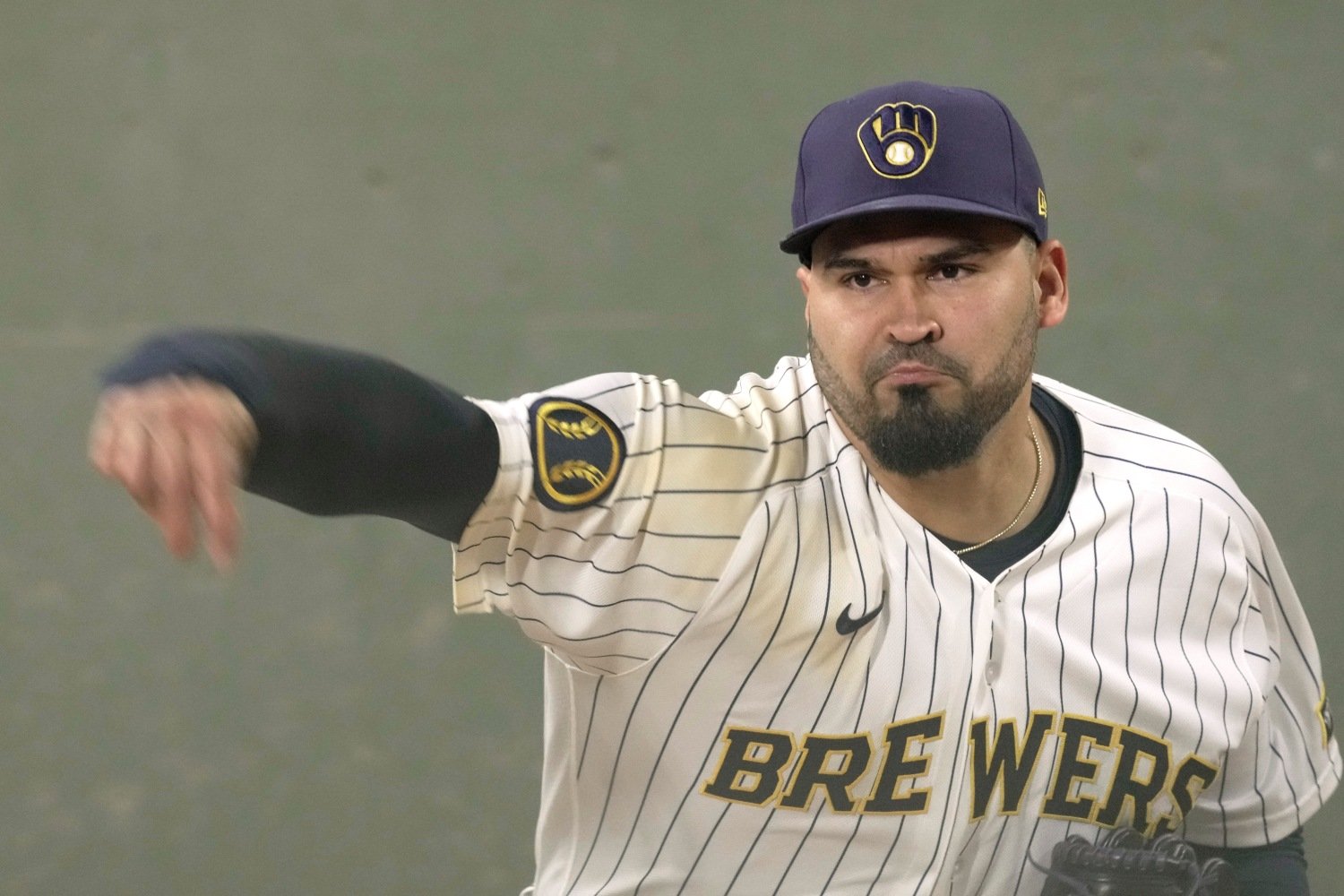 When they arrived ahead of the MLB trade deadline, Dustin May and Antonio Senzatela looked like matches made in heaven for the Milwaukee Brewers. Each had a three-fastball mix of the kind the Brewers adore, while both had breaking balls (albeit with differing degrees of feel) to keep hitters from simply selling out for velocity. The problem, as you'll have heard about extensively if you tune in to the Brewer Fanatic Podcast every Friday, is what happens when a pitcher becomes too predictable. If hitters know they're getting a fastball (and know roughly how fast that fastball is going to arrive), they can get their 'A' swing off without having to worry about looking foolish out in front of a breaking ball. The ability to vary shapes on the heater becomes problematic when they're all you have—when everything a pitcher throws lives in a similar velocity band. Rather than having to account for different speeds and shapes, hitters can get their foot down, time themselves for the fastball, and let it rip. Antonio Senzatela: What's A Breaking Ball? Senzatela is the better example of the two, if only because there's slightly less nuance to the problem. Comparing his pitch usage before and after joining the Brewers showcases it pretty clearly. He's gone from around 80% fastball usage with the Rockies to 95% fastballs with the Brewers. Previously, roughly one in five pitches was a breaking ball. With the Brewers, it's one in 20; that means a hitter can go through an entire plate appearance without having to account for one. At that point, the breaking ball is barely part of the hitter's attack plan. Since being dealt to Milwaukee, Senzatela has scrapped his slider and his changeup. For that matter, he's also dramatically reduced his four-seamer usage. His cutter has sharp break that distinguishes it from the sinker and four-seamer, but it's only a few miles per hour slower than they are. There's a movement differential, but not a velocity one. The swing data shows exactly what that predictability is doing. Hitters are swinging harder more often, and they're no longer finding themselves swinging underneath the fastball as frequently: You'd expect this, not only based on the elimination of the curve (and its velocity gap) but based on the absence of the four-seamer, which is the version of the fastball hitters would typically swing underneath. With the Rockies, Senzatela saw about 38% of swings at fastballs end up underneath the meat of the ball. With the Brewers, that number has dropped to around 20%. Part of that comes from the change in usage to a more sinker-heavy arsenal compared to a four-seam-heavy one, but that doesn't explain the whole problem. Because batters aren't worrying about changes of speed, they're swinging faster, on average, and a higher percentage of their swings are full, convicted ones. The data are telling us everything Spencer and Jack have been talking about on the aforementioned podcast: without the curveball, Senzatela isn't doing enough to push hitters off their timing, and that's affecting the performance of his fastball. Even if he uses it purely as a waste or chase pitch, a breaking ball forces the hitter to account for a different speed and shape. The swing can become so out of time that, when the fastball comes back into the zone, the hitter has less chance of squaring it up, having lost the rhythm of their timing mechanism. There is some compensation for this, of course. The lateral movement profiles of his sinker and cutter mean that more of opponents' swings lately have found them making contact off the barrel, be it at the end of the bat or up toward the handle. That should produce plenty of weak contact. If batters can swing 2 MPH harder, though, that offsets the loss of efficiency of contact, and the ball gets hit hard just as often. Senzatela's breaking ball is by no means a great pitch on its own. That's part of why the Brewers have distanced themselves from it. He doesn't have much feel for spinning it, and that creates problems, but it's an important cog to make sure the wheel turns smoothly. It needs to be reintroduced to generate whiffs; weak contact isn't a sufficient goal. Whether he pivots his arsenal ahead of the NLDS will be fascinating, especially for a Brewers team that has some questions in right-handed middle relief. Dustin May - Stuff+ Matters, But So Does Command The Brewers have made similar tweaks with Dustin May. He's using more fastballs than ever, up from 67% to 74%, but most of the tinkering has come from how he's redistributed those fastballs. May has leaned more on his cutter and sinker with the Brewers (until his last start, at least), while slightly reducing the four-seam fastball. Here's how his pitch mix looks in St. Louis compared to Milwaukee: The biggest downgrades have come on the sweeper and four-seamer. I've gone into depth about May effectively being two different pitchers, with a low arm slot for his two-seamer and sweeper. Both pitches break so much from that slot that they can be relatively easy to pick up early in the ball's flight, and that may partially explain why he hasn't recorded a single swing-and-miss on his sweeper against a right-handed hitter since joining the Brewers. The Brewers have moved him toward a curveball, something that tunnels better with his four-seamer and cutter, but May has also struggled to command it consistently. That's where the raw stuff can become a little misleading. The movement is outrageous, but if the breaking ball isn't landing close enough to its intended spot, hitters can simply spit on it and sit on the fastball. That's one reason why the expected run value on batted balls has skyrocketed with the Brewers. There is some good news. For the first time since June, hitters have been off-time on his breaking pitches. The problem is that without being able to command those pitches, or tunnel them effectively with the fastballs, May has been forced to lean too heavily on the fastballs themselves. That's where the predictability comes in. Hitters have a higher fast-swing rate in September, they're making more competitive swings overall, and May is struggling to disrupt their timing in the way someone with his stuff typically could. The stuff hasn't disappeared. He's just not consistently using it in a way that forces hitters to account for it. He's beginning to find some comfort with the curveball, though, and that could go a long way. In his final outing on Saturday, May used his pitches in a way that more closely resembled his Cardinals usage, with some fascinating results. He used the curveball 15% of the time, generating some ugly swings and misses, while using the four-seamer to attack hitters at the top of the strike zone. That might be the way forward for May. The curveball doesn't need to become his best pitch; it just needs to be good enough, and well-commanded enough, to make hitters respect it. If he has the confidence to continue throwing it, the rest of the picture might start to come together. There is enough stuff to create disruption for May, but he isn't consistently commanding or using it well enough to actually create that disruption. Without it, hitters are finding it too easy to get on time and on plane with his three-fastball mix, and that's why we're seeing him blow between hot and cold within an outing. The Brewers have plenty of fastballs capable of getting outs. The question, particularly with May and Senzatela, is whether they're giving hitters enough reason to worry about everything else. A breaking ball doesn't have to be a putaway pitch to be valuable. Sometimes, it just has to be good enough (and well-commanded enough) to make a hitter hesitate. Once a hitter knows he can sit on the fastball, all that velocity and movement becomes a lot easier to handle.
 -
Image courtesy of USA TODAY Network via Reuters Connect When they arrived ahead of the MLB trade deadline, Dustin May and Antonio Senzatela looked like matches made in heaven for the Milwaukee Brewers. Each had a three-fastball mix of the kind the Brewers adore, while both had breaking balls (albeit with differing degrees of feel) to keep hitters from simply selling out for velocity. The problem, as you'll have heard about extensively if you tune in to the Brewer Fanatic Podcast every Friday, is what happens when a pitcher becomes too predictable. If hitters know they're getting a fastball (and know roughly how fast that fastball is going to arrive), they can get their 'A' swing off without having to worry about looking foolish out in front of a breaking ball. The ability to vary shapes on the heater becomes problematic when they're all you have—when everything a pitcher throws lives in a similar velocity band. Rather than having to account for different speeds and shapes, hitters can get their foot down, time themselves for the fastball, and let it rip. Antonio Senzatela: What's A Breaking Ball? Senzatela is the better example of the two, if only because there's slightly less nuance to the problem. Comparing his pitch usage before and after joining the Brewers showcases it pretty clearly. He's gone from around 80% fastball usage with the Rockies to 95% fastballs with the Brewers. Previously, roughly one in five pitches was a breaking ball. With the Brewers, it's one in 20; that means a hitter can go through an entire plate appearance without having to account for one. At that point, the breaking ball is barely part of the hitter's attack plan. Since being dealt to Milwaukee, Senzatela has scrapped his slider and his changeup. For that matter, he's also dramatically reduced his four-seamer usage. His cutter has sharp break that distinguishes it from the sinker and four-seamer, but it's only a few miles per hour slower than they are. There's a movement differential, but not a velocity one. The swing data shows exactly what that predictability is doing. Hitters are swinging harder more often, and they're no longer finding themselves swinging underneath the fastball as frequently: You'd expect this, not only based on the elimination of the curve (and its velocity gap) but based on the absence of the four-seamer, which is the version of the fastball hitters would typically swing underneath. With the Rockies, Senzatela saw about 38% of swings at fastballs end up underneath the meat of the ball. With the Brewers, that number has dropped to around 20%. Part of that comes from the change in usage to a more sinker-heavy arsenal compared to a four-seam-heavy one, but that doesn't explain the whole problem. Because batters aren't worrying about changes of speed, they're swinging faster, on average, and a higher percentage of their swings are full, convicted ones. The data are telling us everything Spencer and Jack have been talking about on the aforementioned podcast: without the curveball, Senzatela isn't doing enough to push hitters off their timing, and that's affecting the performance of his fastball. Even if he uses it purely as a waste or chase pitch, a breaking ball forces the hitter to account for a different speed and shape. The swing can become so out of time that, when the fastball comes back into the zone, the hitter has less chance of squaring it up, having lost the rhythm of their timing mechanism. There is some compensation for this, of course. The lateral movement profiles of his sinker and cutter mean that more of opponents' swings lately have found them making contact off the barrel, be it at the end of the bat or up toward the handle. That should produce plenty of weak contact. If batters can swing 2 MPH harder, though, that offsets the loss of efficiency of contact, and the ball gets hit hard just as often. Senzatela's breaking ball is by no means a great pitch on its own. That's part of why the Brewers have distanced themselves from it. He doesn't have much feel for spinning it, and that creates problems, but it's an important cog to make sure the wheel turns smoothly. It needs to be reintroduced to generate whiffs; weak contact isn't a sufficient goal. Whether he pivots his arsenal ahead of the NLDS will be fascinating, especially for a Brewers team that has some questions in right-handed middle relief. Dustin May - Stuff+ Matters, But So Does Command The Brewers have made similar tweaks with Dustin May. He's using more fastballs than ever, up from 67% to 74%, but most of the tinkering has come from how he's redistributed those fastballs. May has leaned more on his cutter and sinker with the Brewers (until his last start, at least), while slightly reducing the four-seam fastball. Here's how his pitch mix looks in St. Louis compared to Milwaukee: The biggest downgrades have come on the sweeper and four-seamer. I've gone into depth about May effectively being two different pitchers, with a low arm slot for his two-seamer and sweeper. Both pitches break so much from that slot that they can be relatively easy to pick up early in the ball's flight, and that may partially explain why he hasn't recorded a single swing-and-miss on his sweeper against a right-handed hitter since joining the Brewers. The Brewers have moved him toward a curveball, something that tunnels better with his four-seamer and cutter, but May has also struggled to command it consistently. That's where the raw stuff can become a little misleading. The movement is outrageous, but if the breaking ball isn't landing close enough to its intended spot, hitters can simply spit on it and sit on the fastball. That's one reason why the expected run value on batted balls has skyrocketed with the Brewers. There is some good news. For the first time since June, hitters have been off-time on his breaking pitches. The problem is that without being able to command those pitches, or tunnel them effectively with the fastballs, May has been forced to lean too heavily on the fastballs themselves. That's where the predictability comes in. Hitters have a higher fast-swing rate in September, they're making more competitive swings overall, and May is struggling to disrupt their timing in the way someone with his stuff typically could. The stuff hasn't disappeared. He's just not consistently using it in a way that forces hitters to account for it. He's beginning to find some comfort with the curveball, though, and that could go a long way. In his final outing on Saturday, May used his pitches in a way that more closely resembled his Cardinals usage, with some fascinating results. He used the curveball 15% of the time, generating some ugly swings and misses, while using the four-seamer to attack hitters at the top of the strike zone. That might be the way forward for May. The curveball doesn't need to become his best pitch; it just needs to be good enough, and well-commanded enough, to make hitters respect it. If he has the confidence to continue throwing it, the rest of the picture might start to come together. There is enough stuff to create disruption for May, but he isn't consistently commanding or using it well enough to actually create that disruption. Without it, hitters are finding it too easy to get on time and on plane with his three-fastball mix, and that's why we're seeing him blow between hot and cold within an outing. The Brewers have plenty of fastballs capable of getting outs. The question, particularly with May and Senzatela, is whether they're giving hitters enough reason to worry about everything else. A breaking ball doesn't have to be a putaway pitch to be valuable. Sometimes, it just has to be good enough (and well-commanded enough) to make a hitter hesitate. Once a hitter knows he can sit on the fastball, all that velocity and movement becomes a lot easier to handle. View full article

